II CHAIN MAIL
Reading edition
The immense antiquity of chain mail, and that it originated in the East, are the two facts beyond dispute in its history. Its fine-linked structure exposes, however, the maximum surface of the perishable iron to atmospheric decay, and hence few specimens of great antiquity are known. The two shapeless masses of iron rust in the British Museum, brought from Nineveh by Layard, only reveal on close examination that they were once supple and glittering coats of mail. Whether these are to be assigned to the Nineveh of Sennacherib or to the Sassanian period, they equally claim to be the oldest actual relics of chain mail in existence. The jackets sculptured on the Trajan column are unusually faithful and realistic renderings of chain-mail armour, for the labour and difficulty of an exact reproduction of the minute and complicated repetitions of form into which the links of mail group themselves are generally evaded by a variety of conventional ways of expressing its texture.
The wearers of mail were nomadic horse—Persian, Parthian, and Scythian, and inhabited a belt stretching obliquely from the Caspian in the direction of Scandinavia, the mysterious and imperfectly known amber trade perhaps keeping these peoples in touch. The Viking became acquainted with mail and brought a knowledge of it to Western Europe; his descendants wore it in their expeditions to the East, completing the circle when the mail-clad Crusaders under Cœur de Lion met the mail-clad horse in alliance with the Saracens on the plains of Ascalon. Coats of Eastern mail called gasigans, as told by Geoffrey de Vinsauf, formed part of the spoils of victory taken by Richard, especially on the capture of the great caravan near Galatin in 1192.
Although an immense quantity of mail exists in collections at home and abroad, it can as yet neither be dated nor located upon its intrinsic structure. The links of the Viking suits discovered in the peat morasses of Denmark are as carefully formed as those from Persia or India of the present century. The fashion of the garment is the only guide, but whether the mail is of the period of the garment, or older material made up, cannot be determined. It continued to be used in the West until the seventeenth century, and to a much later time in Eastern Europe; and it is probable that no scrap of such a costly material was ever discarded. It was not passed on and absorbed by foot soldiers, who seem rarely to have cared to use it.
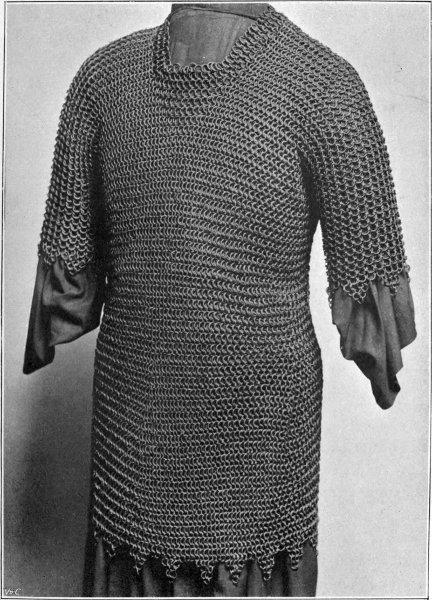
Fig. 1.—Mail hauberk from Sinigaglia. Sir Noël Paton’s Collection.
The Norman hauberk did not open down the front, but was drawn over the head by the attendants just before the engagement commenced. Wace relates that Duke William’s mail was drawn on wrong side in front in sight of the English. The Norman Duke is the only person represented with leggings of mail in the Bayeux tapestry, and to the absence of these Harold’s death and the fate of the day were directly due. His first wound was the turning-point of the battle, twenty Norman knights breaking in and securing the standard. An armed man, says Wace, struck him on the ventaille of the helmet and beat him to the ground, and as he sought to recover himself a knight beat him down again, cutting him on the thick of the thigh to the bone. Girth and Leofwine fell in this onset. The manner of a death which sealed the fate of England must have made a deep impression on the victors, and thenceforth mail chausses became an essential part of the knight’s equipment. That any genuine specimens of either the sleeveless or the long-sleeved hauberks of the eleventh or twelfth or even the thirteenth century have been handed down, is improbable. Many mail suits, however, have been acquired in the belief that they were European, and of great antiquity, to the disappointment of their owners, like those adorning the Hall of the Middle Temple, which are modern Persian. One of the oldest, perhaps, is that said to have been found in making a road in Phœnix Park in 1876, and alluded to in Armour in England. The oft-repeated statement that it was found associated with a silver badge of the O’Neills has been ascertained by Mr. T. H. Longfield, F.S.A., to be baseless, the badge having been purloined from the ancient harp in Trinity College, Dublin, on which it is now replaced. The hauberk, now in the writer’s possession, is of large size and reaches to the middle of the thighs, with short sleeves, and is exquisitely made. Mail shirts, sleeves, etc., of later date than the fourteenth century are far from uncommon, and are represented in every collection. By the kindness of Sir Noël Paton a most perfect fourteenth century specimen is illustrated. It is close fitting, and was exhibited in 1880, and described by Burgess as “one of the few coats of mail which have any decided history.” In Meyrick’s Critical Enquiry we are told that “it had been purchased by a Jew from an ancient family at Sinigaglia, near Bologna, in whose possession it had been beyond any of their records.” A note further informs us that “the Jew bought it by the ounce and paid for it forty guineas.” Sir Samuel Meyrick observes that it corresponds to the coat of mail on the statue of Bernabo Visconti at Milan. It may be described as a single coat of mail with no slits and no reinforcement. It measures 2 feet 9 inches from the top of the collar, and has sleeves which are 10 inches long from the armpit. “It is wider at the bottom than at the waist, two gussets being inserted for this purpose. The rings average a good half-inch in their interior diameter; half are riveted and half are continuous, the latter have a pear-like section, the rounded parts being on the inside circumference. The riveted rings appear to have been made of circular wire, but have become rather flattened, probably by wear. The rivets are of the pyramid shape, like those of the Dublin coat of mail, but much bolder and larger. There is a row of brass rings round the neck, and the bottom of the edge and sleeves are finished by vandykes, also in brass rings, riveted with iron. This is probably the finest coat of mail that has come down to us.” One of the figures guarding the Maximilian cenotaph wears a precisely similar hauberk. Italian pictures in the National Gallery show that the custom of finishing off mail defences with several rows of brass links, to form some sort of scolloped edging, was universal in Italy during the fifteenth and sixteenth centuries. French and English monuments and manuscripts prove that this custom extended to Western Europe, the scolloped edge commonly showing over the tassets from beneath the pourpoint.
Vestiges of the camail are found on fourteenth century bassinets just as they are seen in the conical helmets from Nineveh and on the Trajan column. The standing collar or gorget superseded it. Fig. 2 reproduces a perfect specimen belonging to the Royal Artillery Institution at Woolwich, of exquisite work, with the links round the throat reinforced or doubled. Though gorgets of plate were introduced as early as 1330, many still preferred to wear the mail, so that they continued more or less in use for two centuries longer. Mail was generally worn bright. In the fourteenth century Anturs of Arthur we read:
His mayles were mylke quyte, enclawet full clene His stede trappet with that ilke, as true men me told.
An early fourteenth century stanza, the 39th of the “Armynge of King Arthur,” suggests that the surcoat over mail was to keep off rain and not sun. The colour green was almost universally used from the reign of King John.
With scharfe weppun and schene Gay gownes of grene To hold theyr armour clene And werre it from the wette.
For a brief period in the sixteenth century, mail was again worn without plate armour. The custom was revived in Italy when assassination was rife, and is seen in portraits of Italian noblemen in the National Gallery.
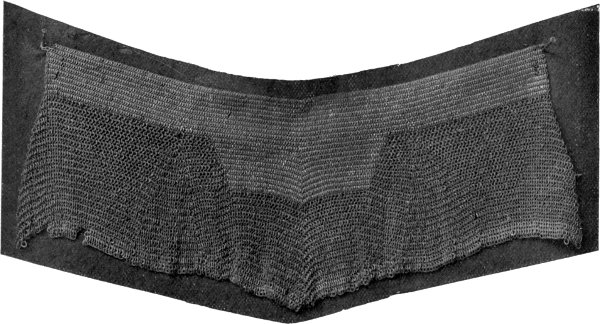
Fig. 2.—Standard Collar of Mail. Royal Artillery Institution.
The costume of the unfortunate Wyatt on his rebellion is described in the chronicles of Jane and Queen Mary as “a shert of mayll with sleves, very fayre and thereon a velvet cassoke and an yellowe lace with the windelesse of his dag hanging thereon, and a paire of botes and spurres on his legges; on his hedd he had a faire hat of velvet with broade bonne-work lace about it.” Soon after a “shippe laden with shertes of mayll” was brought in by Strangwyshe the Rover, “who came from the French king and submitted to the Queen’s mercy.” The celebrated duel between Jarnac and La Chateigneraye was fought in shirts of mail.
In the Scottish wars of Edward I. it was a common saying that “arrows can penetrate the hardest mail”; and more efficient armour had to be devised. Simon de Montfort, standing like a tower and wielding his sword with both hands, was pierced in the back by a foot soldier who lifted up his mail. The hero died with “Dieu merci” on his lips; not the only victim who met his death in this manner. The change in the fashion of armour was hastened by such events. The process has already been traced: it began at the knee-caps, which were covered by plates called poleyns. Three actual and perfectly unique specimens of these, belonging to Sir Noël Paton, show that they were not laid upon or over the mail, but replaced it, as represented in monumental effigies. One pair with parallel sides is finely embossed and vandyked, closely resembling those of some early fourteenth century effigies. A globose example formed of three articulated plates is still more interesting, having been richly damascened with an arabesque design worked in thin brass lines, the field being delicately and closely cross-hatched with incised lines. The really remarkable and unexpected surface decoration this discloses explains the nature, and confirms the accuracy, of certain fourteenth century representations of black armour covered with fine gold arabesques. The cross-hatching served to retain the black pigment, and gave a dark cast to the steel surface, enhancing the value of the delicate brass inlay.
The process of reinforcing the mail defence was continued, as we have seen, until it was entirely cased with an outer shell of plate. A quilted coat was worn beneath the mail, if not a second one between the mail and plate armour. These multiplied defences must have made active fighting difficult and most fatiguing, and were discarded so soon as a light armour of fine steely quality, and without crevices, was procurable.