PLAN (continued 2)
Reading edition
Punishment for Murder.
If a man commits murder, the friends of the murdered claim redress of the alkaid, if in a town,--of the bashaw of the province, if in the country. If the murderer is discovered, he is taken into custody, to suffer death, unless the relations of the murdered man choose to compromise with the relations of the murderer: in which case, a sum of money is paid to the former, and the matter is thus settled.
Insolvency Laws.
An insolvent cannot be detained in prison after his insolvency is ascertained. He gives up his property to his creditors; but if he should afterwards become a man of substance, his creditors can claim the amount of their debts, deducting what they have already received.
Dances.
The dances of the Arabs are peculiar to themselves. The youths dance without females, and the females without youths. On all marriages and rejoicings, music and dancing continue till the dawn of day. Among the encampments of Arabs, in the summer season, the whole country, at night, is in a blaze of light. The kettle-drum, the triangle, the shepherd's pipe, and the erbeb an instrument resembling the fiddle, with two strings, form the band of music.
The youths form a double row of six or eight in each, and carry themselves erect, with their arms hanging down close to their side; moving obliquely to the right, then to the left, without taking their feet from the ground, but moving their heels, then their toes on the ground, advancing or gliding slowly along; keeping exact time with the music: they then vault in the air, perform somersets and various feats of agility. They sing also with great taste and judgment, and some of them have excellent voices, being selected for the purpose of affording entertainment to the spectators. The ladies dance also in a similar manner, but without the vaulting and somersets. They have a very elegant shawl-dance, which some of them dance with great taste, and with much graceful movement.
Circumcision.
Invoice from Timbuctoo to Santa Cruz.
M. Doll
200 camel loads of gum-sudan, each weighing 250 lb. net, bought at Timbuctoo, at four Mexico dollars per load, 800 Charges.--Cow-skins to pack it in, sticks to stow it on the camels, &c. 25 200 camels hired to Akka, at 18 Mexico dollars each, 3600 Stata, i.e. convoy through the Sahara, from Timbuctoo to Arawan, at 20 cents per camel, 40 Do. from Arawan to East Tagrassa, at 20 cents per camel, 40 Do. from East Tagrassa to Akka, at 40 cents per camel, 40 20 per cent., or one-fifth, on the first cost, to be allowed to the purchaser on safe arrival at Akka, 160 ____ 4705 ____
The adventure is subject to this charge, provided it arrive safe at Akka, not otherwise, as also to encourage the agent at Timbuctoo, to exert himself in procuring trusty guides and competent statas, which he would not do, without having a certain interest in the safe delivery.
N.B. No stata is necessary from Akka to Santa Cruz, but the hire is 3 dollars per camel.
Translation of a Letter from Timbuctoo, which accompanied the foregoing Consignment.
Praise be to God alone; for there is nothing durable but the kingdom of heaven.
To the Christian merchant, Jackson, at Agadeer. Peace be to those who follow the right way.
This being premised, know that I have sent you by this akkabah, two hundred camel load of gum-sudan, agreeable to the account herewith transmitted. The stata will be paid by my friend, L'Hage Aly, sheik of Akka, whom I request you will reimburse according to the account which I have sent to you by him; and if he goes to Agadeer, be kind, friendly, and hospitable to him on my account, for he stands high in my esteem; and peace be with you.
Written at Timbuctoo, 10th of the month Muharram, year of the Hejra 1208, (corresponding with 15th Feb. A.C. 1794). By your friend,
L'HAGE MUHAMED O----n. God be merciful to him.
Invoice from Timbuctoo to Fas.
Transport of gold, gum, and cottons, from Timbuctoo to Fas, consigned to L'Hage Seyd and L'Hage Abdrahaman Elfellely, Timbuctoo merchants at Fas, by (akkaba el Kheriffy) the autumnal caravan. Dispatched 29th Duelhaja el Hurem, year 1204, corresponding with 10th October, A.C. 1790.
500 skins (Tibber Wangâree) gold dust of Wangara, each skin containing 4 ounces, bought on their account, in barter for 800 Flemish plattilias.
100 (Sibikat deheb Wangaree). Wangara gold in bars, weighing 20 ounces each, bought in exchange for 400 pieces (Shkalat) Irish cloth, averaging 44 cubits each piece (7 cubits are equal to 4 English yards).
10 bed-covers, 9 cubits long, 4 wide, chequered pattern, blue and white cotton, with scarlet silk between the chequers, manufactured at Timbuctoo, bought in barter for 100 lb. sugar, 30 loaves.
50 camel-load gum-sudan, weighing net 120 quintals.
Charges.--Hire of 50 camels to Akka, at 18 dollars each.
Stata to ditto, 1 dollar per load, to be paid by Sheik Aly ben A----r.
Copy of the Letter accompanying the foregoing Remittance.
Praise be to God alone; for there is neither beginning nor strength, without God, the eternal God.
To my friends, L'Hage Zeyd and L'Hage Abdrahaman Elfellely. Peace be with ye, and the mercy of the High God; and after that, know, that I have sent to our agents at Akka, by the autumnal caravan, 50 camel loads of gum-sudan, being 100 skins; in each skin of gum I have packed 5 skins of gold dust, and 1 bar of gold. L'Hage Tahar ben Jelule will deliver to our agent at Akka, for you, 10 very handsome cotton covers for beds, of Sudan manufacture. May all this arrive safe, with the blessing of God. I will inform you by the spring caravan what merchandize to send here next autumn. I refer you to a long letter, which I have sent to you by L'Hage Tahar. Peace be with you, and the blessing of God be upon you.
Written at Timbuctoo, the 29th Duelhaja El Huram, year 1204.
Food of the Desert.
The people, whose interest induces them to cross the desert, (for there are no travellers from curiosity in this country,) obviate the objection to salt provisions, which increases the propensity to drink water, by taking with them melted butter, called smin; this is prepared without salt. They also cut beef into long pieces, about six inches long, and one inch square, without fat; these are called el kuddeed, which are hung on a line, exposed to the air till dry; they then cut them into pieces, two inches long; these are put into (buckul) an earthen pot; they then pour the smin into the buckul till it is covered. This meat and butter, besides being palatable, is comprised in a small compass, and feeds many. When this butter has been thus prepared and kept twelve or fifteen years, it is called budrâ, and is supposed to contain penetrating active medicinal qualities. I have seen some thirty years old.
Antithesis, a favourite Figure with the Arabs.
Mahmoud, sultan of Ghezna in the beginning of the eleventh century, though the son of a slave, was very powerful. He sent to the khalif Alkader, requesting a title suited to his exalted dignity. The latter hesitated; but fearing the power of the sultan, sent him at the expiration of a year the ambiguous title, Uly, i.e. a prince, a friend, a slave. Mahmoud penetrated the khalif's meaning, and sent him immediately 100,000 pieces of gold, with a wish to know whether a letter had not been omitted. Alkader received the treasure, and took the hint, instantly dispatching letters patent in full form, creating him Uäly which signifies, without equivocation, a sovereign independent prince.
Arabian Modes of Writing.
The Arabs have various modes of writing, the principal of which is that used by the Koreish, the most learned of all the Western tribes, and is denominated the Niskhi, or upright character: if this is understood, the others may be easily comprehended. This is the character in which the Koran was originally written. In the seventh century, the Arabs adopted the invention of Moramer ben Morra, a native of Babylonian Irak, which was afterwards improved by the Kufik. The Kufik and the Niskhi are synonymous. Richardson, in his Arabic Grammar, p. 4. say, "The Mauritannick character, which is used by the Moors of Marocco and Barbary, descendants of the Arabians, differs in many respects considerably from the other modes of writing." But this is incorrect; for the Mauritannick alphabet, excepting in the order of the letters, is precisely the same with the Oriental, as now written and spoken, with the exception only of the letters Fa and Kaf, and the formation even of these characters are alike. The punctuation only, differs in the West, that is, west of the Egyptian Nile. The Western punctuation of Fa, is one point below the letter, and the punctuation of the letter Kaf is one point above. In the East, the former letter has one point above, the latter has two. This is the only difference between the Eastern and the Western alphabets. Richardson, (see his Grammar, page 5,) also says, that "the purest Arabic is spoken at Grand Cairo," but this is not correct: the language of Grand Cairo and of Tunis, Tripoli, Algiers, and Marocco are much alike, but none of them are the pure Koraisch or Korannick Arabic, which is only spoken at Mekka, and among some of the tribes of Bedouins in the West. The language of the Woled Abbusebah, of the Howara, and of the Mograffra is the pure Arabic. Finally, in a note in Richardson's Grammar, page 18, it is said, "Some of our European writers, and amongst others Voltaire, substitute Koran for Alcoran, but perhaps improperly, as D'Herbelot and other learned Orientalists, write uniformly l'Alcoran, il Alcorano, the Alcoran." We have been too apt to copy the orthography of Oriental names from the French, whose pronunciation of the Roman or European characters differs from ours. There cannot be a doubt that D'Herbelot is incorrect. The word Koran (for there is no c in the Arabic language) is derived from the verb Kora, to read; koran, reading: Al is the article; but, in this instance, D'Herbelot uses this article twice, which is certainly erroneous, for l' is the French article in the word in question, and al is the Arabic article; whereas one article only should precede a noun. L'Alcoran and the Alcoran are therefore equally incorrect; for the word in French should be Le Coran; in English, the Koran; therefore Voltaire was correct. I have thought it expedient to make these observations, because standing in Richardson's Grammar on the authority of learned orientalists, they are calculated to mislead the Arabic student.
Decay of Science and the Arts among the Arabs.
The literary fire of the Arabs and Persians has been extinguished upwards of 300 years; but before that period, the encouragement to learning in the East was unprecedented, and has never been equalled by any European nation either before or since that period. Kadder Khan, king of Turquestan, was the greatest support to science. When he appeared abroad, he was preceded by 700 horsemen, with silver battle-axes, and was followed by an equal number bearing maces of gold. He supported with magnificent appointment a literary academy in his palace, consisting of 100 men of the highest reputation. Amak, called Abu Näib El Bokari, who was the chief poet, exclusive of a great pension and a vast number of slaves, had, in attendance wherever he went, thirty horses of state richly caparisoned, and a retinue in proportion. The king before-mentioned used to preside at their exercises of genius, on which occasions, by the side of his throne were always placed four large basons filled with gold and silver, which he distributed liberally to those who excelled.
Lebid suspended over the gate at Mecca a sublime poem; Muhamed placed near it the opening of the second chapter of the Koran, which was conceived to be something divine, and it gained the prize of the Ocadh assembly.
The remains of this custom of suspending over gates Arabic poems, is perceived at this day among the western Moors. The gates or entrances to Mogodor, Fas, Mequinas, Marocco, &c. have writing over them, which is a kind of Arabic short-hand, that none but the learned understand; these writings, however, are not moveable, being engraven on a square table on the stone itself.
Extraordinary Abstinence experienced in the Sahara.
The Arabs or inhabitants of the Sahara, can support the most extraordinary abstinence. Occasions occur, wherein they will travel several days without food. After suffering a privation of a day or two, they tie their (hazam) belt round their loins, every morning tighter than the preceding day, thereby preventing, in some measure, that action of the bowels which promotes appetite. A Saharawan will thus go five or six days without food of any kind, in which case, when he reaches a habitation, or a (wah) cultivated spot in the Desert, he will drink about half-a-pint of camel's milk; this remains on the stomach but a short time: he then takes another draught, which, with some, remains and gives nourishment, but with others it is also rejected by the stomach; a third draught is then taken, which restores the exhausted traveller! I have been assured, that instances have been known in Sahara, wherein a man has been without food of any kind for seven days, and has afterwards been restored by the foregoing regimen!
LANGUAGES OF AFRICA.
Various Dialects of the Arabic Language.--Difference between the Berebber and Shelluh Languages.--Specimen of the Mandinga.--Comparison of the Shelluh Language with that of the Canary Islands, and Similitude of Customs.
Besides these, there are other letters, whose power is extremely difficult to be acquired by an European, because no language in Europe possesses sounds similar to the Arabic letters خ غ ع, nor has any language, except, perhaps, the English, a letter with the power of the Arabian ث. Those who travel into Asia or Africa scarcely ever become sufficiently masters of the Arabic to speak it fluently, which radical defect proceeds altogether from their not learning, while studying it, the peculiar distinction of the synonymous letters. No European, perhaps, ever knew more of the theory of this language than the late Sir William Jones, but still he could not converse with an Arabian; a circumstance of which he was not conscious until he went to India. This great man, however, had he been told that his knowledge of this popular eastern language was so far deficient, that he was ignorant of the separate powers of its synonymous letters, and consequently inadequate to converse intelligibly with a native Arab, he would certainly have considered it an aspersion, and have disputed altogether that such was the fact. Considering how much we are indebted to the Arabians for the preservation of many of the works of the ancients, which would otherwise have never, perhaps, been known to us, it is really surprising, that their language should be so little known in Europe. It is certainly very difficult and abstruse, (to learners particularly,) but this difficulty is rendered insurmountable by the European professors knowing it only as a dead language, and teaching it without due attention to the pronunciation of the before mentioned synonymous letters, a defect which is not likely to be remedied, and which will always subject the speaker to incessant errors.
To show the Arabic student the difference between the Oriental and Occidental order of the letters of the alphabet, I shall here give them opposite each other.
Oriental Occidental
1 Alif 2 ba 3 ta 4 thsa 5 jim 6 hha 7 kha 8 dal 9 dsal 10 ra 11 za 12 sin 13 shin 14 sad 15 dad 16 ta 17 da 18 ain 19 gain 20 fa 21 kaf 22 kef 23 lem 24 mim 25 nun 26 waw 27 he 28 ya 29 lam-alif ا ب ت ث ج ح خ د ذ ر ز س ش ص ض ط ظ ع غ ف ق ك ل م ن و ه ي 1 Alif 2 ba 3 ta 4 tha 5 jim 6 hha 7 kha 8 dal 9 dth'al 10 ra 11 zain 12 ta 13 da 14 kef 15 lam 16 mim 17 nune 18 sad 19 dad 20 ain 21 g'rain 22 fa 23 kaf 24 sin 25 shin 26 hha 27 wow 28 ia 29 lam-alif ا ب ت ث ج ح خ د ذ ر ز ط ظ ێ ل م ن ص ض ع غ ڢ ف س ش ه و ي

Besides this difference of the arrangement of the two alphabets, the Arabic student will observe that there is also a difference in the punctuation of two of the letters: thus--
Oriental Occidental
1 fa 2 kaf ف ق 1 fa 2 kaf ڢ ف
Among the Western Arabs, the ancient Arabic figures are used, viz. 0, 1, 2, 3, 4, 5, 6, 7, 8, 9: they often write 100 thus, 1..--200, 2..
To explain the force of the synonymous letters on paper would be impossible; the reader, however, may form some idea of the indispensable necessity of knowing the distinction by the few words here selected, which to one unaccustomed to hear the Arabic language spoken, would appear similar and undistinguishable.
ENGLISH ARABIC Rendered as near to European pronunciation as the English Alphabet will admit. ARABIC
A horse Wood To repeat Fish A gun A foolish woman A frying pan A lion Morning Seventh Hatred Harvest Learning A flag Granulated paste The dish it is made in Heart Dog Mould Captain Feathers Mud Smell Poison Absent Butter-milk White A black Eggs Afar off A pig An oath Feed for horses A thousand Aoud Awad Aoud Hout Mokhalla Mokeela Makeela Seban Seban Seban Hassed Hassed Alem, or El Alem El Alem Kuscasoe Kuscas Kul'b Kil'b Kal'b Rice Rish G'ris Shim Sim 206 G'raib Raib Bead El Abd Baid Baid Helloof Hellef Alf Elf




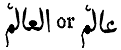

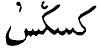
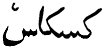





It is difficult for any one who has not accurately studied the Arabic language, to imagine the many errors which an European commits in speaking it, when self taught, or when taught in Europe. This deficiency originates in the inaccuracy of the application of the guttural and synonymous letters.
The ain ع and the غ grain cannot be accurately pronounced by Europeans, who have not studied the language grammatically when young. The aspirated h, and the hard s, in the word for morning (sebah), are so much like their synonymes, that few Europeans can discern the difference; the one is consequently often mistaken for the other; and I have known a beautiful sentence absolutely perverted through an inaccuracy of this kind. In the words rendered Hatred and Harvest, the two synonymes of س and ص or s hard and s soft, are indiscriminately used by Europeans in their Arabic conversations, a circumstance sufficient to do away the force and meaning of many a sentence.
The poetry as well as prose of the Arabians is well known, and has been so often discussed by learned men, that it would be irrelevant here to expatiate on the subject; but as the following description of the noblest passion of the human breast cannot but be interesting to the generality of readers, and, without any exception, to the fair sex, I will transcribe it.
"Love beginneth in contemplation, passeth to meditation; hence proceeds desire; then the spark bursts forth into a flame, the head swims, the body wastes, and the soul turns giddy. If we look on the bright side of love, we must acknowledge that it has at least one advantage; it annihilates pride and immoderate self-love; true love, whose aim is the happiness and equality of the beloved object, being incompatible with those feelings.

"Lust is so different from true love , and so far from a perfection, that it is always a species of punishment sent by God, because man has abandoned the path of his pure love."
In their epistolary writing, the Arabs have generally a regular and particular style, beginning and ending all their letters with the name of God, symbolically, because God is the beginning and end of all things. The following short specimen will illustrate this:
Translation of a letter written in the Korannick Arabic by Seedy Soliman ben Muhammed ben Ismael, Sultan of Marocco, to his Bashaw of Suse, &c. &c.
"Praise be to the only God! for there is neither power, nor strength, without the great and eternal God."
L.S.
Containing the Emperor's name and titles, as Soliman ben Muhamed ben Abdallah, &c, &c.
"Our servant, Alkaid Abdelmelk ben Behie Mulud, God assist, and peace be with thee, and the mercy and grace of God be upon thee!"
"26th of the (lunar), month Saffer, year of the Hejra 1221. (May, 1806.)"
The accuracy of punctuation in the Arabic language is a matter that ought to be strictly attended to.
If the present ardour for discovery in Africa be persevered in, the learned world may expect, in the course of a few years, to receive histories and other works of Greek and Roman authors, which were translated into the Arabic language, when Arabian literature was in its zenith, and have ever since been confined to some private libraries in the cities of the interior of Africa, and in Arabia.
Having said thus much with regard to the Arabic of the western Arabs, which, with little variation, is spoken throughout all the finest districts of North Africa, I shall proceed to say a few words respecting the other languages spoken north of Sahara: these are the Berebber and its dialects, viz. the Zayan and Girwan, and Ait Amor; the Shelluh of Suse and South Atlas, all which, though latterly supposed by some learned men to be the same, differ in many respects; any one possessing a knowledge of the Berebber language might, with little difficulty, make himself understood by the Zayan of Atlas, the Girwan, or the Ait Amor; but the Shelluh is a different language, and each so different from the Arabic, that there is not the smallest resemblance, as the following specimen will demonstrate:
BEREBBER. SHELLUH. ARABIC. ENGLISH. Tumtoot Tayelt Ishira A girl Ajurode Ayel Ishire A boy Askan Tarousa Hajar A thing Aram Algrom Jimmel Camel Tamtute Tamraut Murrah A woman Ishiar Issemg'h L'Abd A slave Aouli Izimer Kibsh A sheep Taddert Tikimie Dar House Ikshuden Asroen Lawad Wood Eekeel Akfai Hellib Milk Tifihie Uksume El Ham Meat Buelkiel Amuran Helloof A hog Abreede Agares Trek A road Bishee Fikihie Ara Give me Adude Asht Agi Come Alkam Aftooh Cire Go Kaym Gäuze Jils Sit down Imile Imeek Serire Little
Specimen of the Difference between the Arabic and Shelluh Languages.
SHELLUH. ARABIC. ENGLISH. Is sin Tamazirkt Wash katarf Do you understand Shelluh Shelluh? Uree sin Man arf huh I do not understand it. Matshrult Kif enta How are you? Is tekeete Wash gite min Are you come from Marokshe Marockshe Marocco? Egan ras Miliah Good Maigan Ala'sh Wherefore? Misimmink As'mek What is your name? Mensh kat dirk Shall andik How much have you got? Tasardunt Borella A mule Romi Romi An European Takannarit Nasarani A Christian Romi Kaffer An infidel Misem Bebans Ashkune mula Who is the owner? Is'tkit Tegriwelt Washjite min Are you come from Tegriwelt Cape Ossem? Auweete Imkelli Jib Liftor Bring the dinner Efoulkie Meziana Handsome Ayeese El aoud A horse Tikelline El Baid Eggs Amuran Helloof Hog Tayuh Tatta Camelion Tasamumiat Adda Green lizard Tenawine Sfune Ships.
ENGLISH. Sun Head Camel Sheep Cow Mountain Have you a horse? Milk Bread Dates SIWAHAN. Itfuckt Achfé Lgum Jelibb Tfunest Iddrarn Goreck Ackmar Achi Tagor Tena SHELLUH. Atfuct Akfie Arume Jelibb Tafunest Iddra 211 Is derk Achmar? 212 Akfie Tagora 213 Tenia (sing.)Tena (plural.)
South of the Desert we find other languages spoken by the blacks; and are told by Arabs, who have frequently performed the journey from Jinnie to Cairo, and the Red Sea, that thirty-three different Negro languages are met with in the course of that route, but that the Arabic is spoken by the intelligent part of the people, and the Muhamedan religion is known and followed by many; their writings are uniformly in Arabic.
It may not be improper in this place, seeing the many errors and mutilated translations which appear from time to time, of Arabic, Turkish and Persian papers, to give a list of the Muhamedan moons or lunar months, used by all those nations, which begin with the first appearance of the new moon, that is, the day following, or sometimes two days after the change, and continue till they see the next new moon; these have been mutilated to such a degree in all our English translations, that I shall give them, in the original Arabic character, and as they ought to be spelt and pronounced in the English character, as a clue whereby to calculate the correspondence between our year and theirs. They divide the year into 12 months, which contain 29 or 30 days, according as they see the new moon; the first day of the month Muharam is termed Ras Elame, i.e. the beginning of the year.
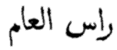
As we are more used to the Asiatic mode of punctuation, that will be observed in these words.
Muharam Asaffer Arabia Elule Arabea Atthenie Jumad Elule Jumad Athenie Rajeb Shaban Ramadan Shual Du'elkada Du Elhajah




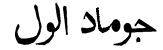
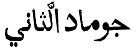






The first of Muharram, year of the Hejra 1221, answers to the 19th March of the Christian æra, 1806.
Among the various languages spoken south of the Sahara, we have already observed that there are thirty-three different ones between the Western Ocean and the Red Sea, following the shores of the Nile El Abeed, or Niger: among all these nations and empires, a man practically acquainted with the Arabic, may always make himself understood, and indeed, it is the language most requisite to be known for every traveller in these extensive regions.
The Mandinga is spoken from the banks of the Senegal, where that river takes a northerly course from the Jibel Kuthera to the kingdom of Bambarra; the Wangareen tongue is a different one; and the Housonians speak a language differing again from that.
Specimen of the difference between the Arabic and Mandinga language; the words of the latter extracted from the vocabularies of Seedi Muhamed ben Amer Sudani.
ENGLISH. MANDINGA. ARABIC. One Kalen Wahud Two Fula Thanine Three Seba Thalata Four Nani Arba Five Lulu Kumsa Six Uruh Setta Seven Urn'klu Sebba Eight Säae Timinia Nine Kanuntée Taseud Ten Dan Ashra Eleven Dan kalen Ahud ash Twelve Dan fula Atenashe Thirteen Dan seba Teltashe Nineteen Dankanartée Tasatasli Twenty Mulu Ashreen Thirty Mulu nintau Thalateen Forty Mulu fula Arbä'in Fifty Mulu fula neentan Kumseen Sixty Mulu sebaa Setteen Seventy Mulu sebaa nintan Sebä'in. Eighty Mulu nani T'aramana'een Ninety Mulu nani neentaan Tasa'een One hundred Kemi Mia One thousand Uli Elf This Neen Hadda That Waleem Hadduk Great Bawa Kabeer Little Nadeen Sereer Handsome Nimawa Zin Ugly Nuta Uksheen (k guttur.) White Kie Bead Black Feen Khal Red Williamma Hummer How do you do? Nimbana mcuntania Kif-enta Well Kantée Ala-khere Not well Moon kanti Murrede What do you want Ala feta matume Ash-bright Sit down Siduma Jils Get up Ounilee Node Sour Akkumula Hamd Sweet Timiata Helluh True Aituliala Hack False Funiala Kadube Good Abatee Miliah Bad Minbatee Kubiah A witch Bua Sahar A lion Jatta Sebaâ An elephant Samma El fele A hyæna Salua Dubbah A wild boar Siwa El kunjer A water horse Mali Aoud d'Elma A horse Suhuwa Aoud A camel Kumaniun Jimmel A dog Wallee Killeb Hel el Killeb Hel Wallee Hel El Killeb or the dog-faced race. A gazel Tankeen Gazel (g guttural) A cat Niankune El mish A goat Baâ El mâize A sheep Kurenale Kibsh A bull Nisakia Toôr A serpent Saâ Hensh A camelion Mineer Tatta An ape Ku'nee Dzatute A fowl or chicken Susee Djez A duck Beruee El Weese A fish Hihu El hout Butter Tulu Zibda Milk Nunn El hellib Bread Mengu El khubs (k guttur.) Corn Nieu Zra Wine Tangee Kummer (k guttur.) Honey Alee Asel Sugar Tobabualee Sukar Salt Kuee Mil'h Ambergris Anber Anber Brass Tass Tass Silver Kudee Nukra Gold-dust Teber Tiber Pewter Tass ki Kusdeer A bow Kula El kos An arrow Binia Zerag A knife Muru Jenui A spoon Kulia Mogerfa A bed El arun El ferrashe A lamp El kundeel El kundeel A house Su Ed dar A room Bune El beet A light-hole Jinnee Reehâha or window A door Daa Beb A town Kinda Midina Smoke Sezee Tkan (k guttural) Heat Kandia Skanna (k guttural) Cold Nini Berd Sea Bedu baha Bahar River Bedu Wed A rock Berri Jerf Sand Kinnikanni Rummel The earth Binku Dunia Mountain Kuanku Jibbel Island Juchüi Dzeera Rain Sanjukalaeen Shta God Allah Allah Father Fa Ba Mother Ba Ma Hell Jahennum Jehennume A man Kia Rajil A woman Musa Murrah A sister Bum musa Kat (k guttural) A brother Bum kia Ka The devil Buhau Iblis A white man Tebabu Rajil biad A singer Jalikea Runai (r guttural) A singing woman Jalimusa Runaiah (r guttural) A slave June Abeed A servant Bettela Mutalem
Having now given some account of the languages of Africa, we shall proceed to animadvert on the similitude of language and customs between the Shelluhs of Atlas and the original inhabitants of the Canary Islands. The words between inverted commas, are quotations from Glasse's History of the Discovery and Conquest of the Canary Islands.
"The inhabitants of Lancerotta and Fuertaventura are social and cheerful;" like the Shelluhs of Atlas; "they are fond of singing and dancing; their music is vocal, accompanied with a clapping of hands, and beating with their feet;" the Shelluhs resemble them in all these respects; "Their houses are built of stone, without cement; the entrance is narrow, so that but one person can enter at a time."
The houses of the Shelluhs are sometimes built without cement, but always with stone; the doors and entrances are low and small, so that one person only can enter.
"In their temples they offered to their God milk and butter."
Among the Shelluhs milk and butter are given as presents to princes and great men; the milk being an emblem of good will and candour.
"When they were sick (which seldom happened) they cured themselves with the herbs which grew in the country; and when they had acute pains, they scarified the part affected with sharp stones, and burned it with fire, and then anointed it with goat's butter. Earthen vessels of this goat's butter were found interred in the ground, having been put there by the women, who were the makers, and took that method of preparing it for medicine."
The custom of the Shelluhs on such occasions is exactly similar; the butter which they use is old, and is buried under ground many years in (bukul) earthen pots, and is called budra: it is a general medicine, and is said to possess a remarkably penetrating quality.
"They grind their barley in a hand-mill, made of two stones, being similar to those used in some remote parts of Europe".
In Suse, among the Shelluhs, they grind their corn in the same way, and barley is the principal food.
"Their breeches are short, leaving the knees bare;" so are those worn by the Shelluhs.
"Their common food was barley meal roasted and mixed with goat's milk and butter, and this dish they call Asamotan."
This is the common food of the Shelluhs of Atlas, and they call it by a similar name, Azamitta.
The following vocabulary will show the similarity of language between the natives of Canaria and the Shelluhs (inhabitants of the Atlas mountains south of Marocco).
LANCEROTTA AND SHELLUH OR ENGLISH. FUERTAVENTURA DIALECT. LYBIAN TONGUE. Temasin Tumzeen Barley Tezzezes Tezezreat Sticks Taginaste Taginast A palm-tree Tahuyan Tahuyat A blanket, covering, or petticoat. Ahemon Amen Water Faycag Faquair Priest or lawyer Acoran M'koorn God Almogaren Talmogaren Temples Tamoyanteen Tigameen Houses Tawacen Tamouren Hogs Archormase Akermuse Green figs Azamotan Azamittan Barley meal fried in oil Tigot Tigot Heaven Tigotan Tigotan The Heavens Thener Athraar A mountain Adeyhaman Douwaman A hollow valley Ahico Tahayk A hayk, or coarse garment Kabeheira Kabeera A head man or a powerful Ahoren ---- Barley meal roasted Ara ---- A goat Ana ---- A sheep Tagarer ---- A place of justice