THE NON-DEALER’S PLAY AGAINST A DECLARED TRUMP
Reading edition
Remember that in playing against a trump declaration, unless it be spades, you are sure to find trump strength, probably five or more, with the maker. If you are weak in the trump suit, and your partner does not show strength by doubling, your best defence is an endeavour to save the game by making high cards early in the hand.
In playing against a red declaration, be on the defensive from the start. The only time that you can afford to be aggressive is when it is evident that the dealer is trying to establish a “cross-ruff,” or a “ruff” in the weak trump hand.
It is an advantage to win the first trick, as this enables you to see the thirteen cards in dummy. The scheme of play of a hand may be changed after the dummy is seen; therefore, it is not possible to state what should be done after the opening lead; but, as a general principle, it is safe either to continue the suit led originally or to endeavour to help your partner’s hand by leading through strength. You should be careful at all times neither to establish a suit for the adversary, nor to give the dealer an opportunity to discard his worthless cards.
When there is an established suit against you, unless you can stop the dealer’s lead of trumps, make all possible tricks before you give up the lead. If the dealer once obtains the lead, he may exhaust the trumps, and make the established suit.
As the dealer sees the dummy hand and his own, and therefore knows the cards that are against him, give your partner correct information regarding the cards you hold. While this may be valuable to the dealer in placing the cards, the knowledge will be of greater benefit to your partner and yourself.
THE OPENING LEAD
When trumps are against you, unless you lead your high cards early in the hand you may lose them. The dealer may be able to exhaust trumps, and make some one suit on which to discard his losing cards. When your hand is strong in each suit, there is not this danger; there can be no established suit against you.
No doubt the best opening that can be made against a trump declaration is from a combination containing both ace and king. The lead of the king from this combination gives you an opportunity to see the dummy and does not clear the suit for the adversary. While the king lead should usually be followed by the ace, in some cases, where it is apparent that the dealer’s weak hand can trump on the second round, or that the lead may clear the suit for the dealer or dummy, the suit should not be continued. It is rarely wrong to lead from a sequence, especially from one of three high cards. If you hold no sequence of three, perhaps those containing two honours in sequence, such as king queen, queen jack, or even jack ten, may be classed as good openings. Often when you hold no high card sequence, the lead is a disadvantage; experience shows that you make more tricks in a suit if it is led to you; for that reason it is often advisable to refrain from opening tenace suits or suits with a single honour.
The following are given as examples of combinations from which it is not advisable to lead:
A Q x x
A J x x
K J x x
K x x x
In opening a suit headed by the ace, avoid the lead of a low card. The dealer may win the first round and find means to discard his remaining losing cards in that suit.
No objection can be raised to the lead of an ace with four or more other cards in the suit, but with less than five it is better play to avoid leading that suit. If the lead comes up to you, the ace may kill some high cards in the adversary’s hand and promote the value of the cards held by your partner; whereas if you lead the ace presumably only small cards will fall, making high ones good for the dealer.
If your hand is hopelessly weak in trumps and in side suits, even with but three cards in the suit, an ace should be led in order to save a grand slam.
If you are forced to open a suit containing a single honour, or a suit with two honours not in sequence, not including suits headed by the ace, the fourth best card should be led.
The following are given as examples of combinations from which the fourth best card should be led:
K J x x
K 10 x x
K x x x
Q x x x
Q 10 x x
J x x x
10 x x x
With a long weak suit it is better play to lead the fourth best card. Any irregular lead may suggest a short suit to your partner, and loss may result from his incorrect interpretation of the lead.
EXAMPLES OF OPENING LEADS
THE UNDERLINED CARD INDICATES THE LEAD.
(Hearts) Trump Declared by Dealer.
Holding the Lead.
♥ ♠ ♦ ♣
J 8 2 K J 7 6 A K Q 5 3 7
8 A Q 6 5 4 2 Q 8 4 K 9 8
J 10 10 8 4 K J 9 A 8 7 4 3
J 6 4 A Q J 10 9 7 3 2 9 6 4
10 4 A 6 A J 7 5 3 2 8 7 5
9 7 A K 4 A 8 6 4 3 7 6 3
6 5 3 8 6 5 2 K J 5 3 A K
J 6 5 9 6 4 2 A 10 9 7 4 3
9 5 3 A 6 K 9 5 2 A Q 5 4
8 6 5 9 6 3 A J 9 4 10 5 3
Leading from a Sequence.
♥ ♠ ♦ ♣
8 6 A 5 A J 5 K Q J 7 6 4
9 8 6 4 7 A 8 5 3 K Q J 10
K 8 5 8 5 4 10 6 5 3 Q J 10
K 10 5 K 6 3 K Q 8 5 A 7 3
A J 6 K 6 4 8 6 4 3 K Q J
Q 7 5 Q J 10 6 A 8 5 A Q 7
J 6 4 10 K Q J 9 7 5 Q 7 3
Leading from Long Suits.
♥ ♠ ♦ ♣
Q J 7 4 K 10 8 4 A 7 J 9 5
K 6 Q J 9 6 4 9 8 6 6 5 2
8 5 A J 6 K J 10 8 5 K 7 4
J 10 Q J 7 3 A Q 6 3 A J 8
A J 7 5 4 3 10 8 7 4 2 Q 5
J 8 5 3 K 10 7 5 3 A 8 6 8
8 6 4 9 5 2 8 6 3 Q 9 6 4
10 6 K 10 8 3 10 7 6 2 A J 5
K 10 7 A J 8 10 7 5 4 Q 9 2
A J J 6 4 Q 10 8 6 2 8 5 3
INFERENCES FROM HIGH CARD LEADS
It is not easy to determine from the lead of a high card how many cards are held in the suit. You can only assume the length from the number of cards you hold and the number in dummy. The fall of the cards may give the information, but you cannot rely altogether on the dealer’s play; it is his object to make it difficult for you to place the cards.
The lead of an ace denies the king. If the king is neither in dummy nor in your own hand, it should be placed with the dealer. Should your partner, however, lead an ace and follow with the king, the lead indicates that he holds no other card of that suit, and should enable you to locate the queen.
Among the better players the lead of an ace also denies the queen, since if the suit is led up to the ace, queen, tenace, two tricks may be made. This inference, however, should not be too rigidly drawn, because great length in the suit might justify an opening from an ace-queen combination.
The lead of an ace followed by the queen indicates the jack.
The lead of an ace followed by the jack indicates the ten, or no other card in the suit.
If it develops that your partner has led the ace from ace and two small cards, it indicates either a very weak hand or a tenace in some other suit.
The lead of a king indicates the ace, the queen, or both. Should the king win the first trick, you should infer that your partner holds the ace. If the king is taken by the ace, the queen is marked in your partner’s hand. If the king is followed by the ace, it denies the queen.
A K Q
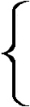
A K J
The king should be led from A K x
K Q J
K Q x
The lead of a queen denies the ace and the king, consequently the lead places both of these high cards.
If a queen is led by your partner, you should infer that the lead is from jack ten; perhaps it would be better to say that the lead shows the jack. If you find the jack is either on the table or in your own hand, the lead was evidently from a short suit; queen and one or a singleton.
The queen should be led from Q J 10
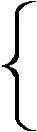
Q J 9
Q J x
Q J
Q x
Q
The lead of a jack denies the ace, the king, and the queen; consequently your partner holds no higher card of the suit; against a declared trump, it usually indicates a short suit.
There is some difference of opinion among Bridge players as to this lead; the jack is sometimes led from king queen jack, from king jack ten, and even from ace jack ten. The lead of a jack as the top card does away with the confusion that is caused by numerous interior leads. It simplifies the lead and facilitates the placing of higher cards.
The jack should be led from J 10 9

J 10
J x
J
The lead of the ten indicates the king jack and ten and denies both ace and queen. If either the king or the jack is in your hand or in dummy, the ten lead denies any higher card, and is probably the top of a short suit.
K J 10 x
10 9 x
The ten should be led from 10 9
10 x
10
The lead of a nine denies all higher cards of the suit; it is led only as a top card, and usually indicates a short suit.
9 8 x

The nine should be led from 9 x
9
INFERENCES FROM LOW CARD LEADS
An application of the Rule of Eleven will materially assist you to draw correct inferences from the lead of a small card. It will indicate whether the lead is from a short or a long suit.
If you see more high cards than the Rule of Eleven would allow, you can mark the lead, not as fourth best, but as the top of a short suit. If the lead indicates a long suit, you can often determine the exact combination of cards from which it has been made.
The Rule of Eleven
Deduct the size of the card led from eleven, and the difference will show how many cards higher than the one led are held outside the leader’s hand.
The lead of an eight or a seven (except at no-trumps) is more apt to be from a short than from a long suit; combinations in which these cards would be fourth best are seldom opened by good players.
It will be easier for your partner to read your lead, if with long weak suits, headed by jack, ten, or nine, you lead the fourth best card. These cards can be led to indicate a short suit.
You can determine the length of your partner’s suit by noticing the fall of the low cards.
When it is evident that your partner has led the lowest card of his suit, his lead indicates exactly four cards. If your partner is leading from a long suit and plays down on the second round, he holds more than four cards.
EXAMPLES OF INFERENCE FROM OPENING LEADS
A is the leader, Y the dummy, Z the dealer.


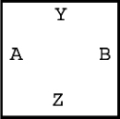


A’s lead of the ace denies the king and probably the queen; both of these cards should be placed in the dealer’s hand.


Third hand should play ace on queen; king is in the dealer’s hand. A has probably led from queen jack ten.


B should play the three; his partner’s lead indicates the top card, and also shows that both ace and queen are in the dealer’s hand.

A’s lead of ten with jack on the table indicates the top of a short suit. King and queen should be placed in the dealer’s hand.
The lead indicates the top, probably, of a short suit. King, queen, and jack are all marked in the dealer’s hand.
ORIGINAL TRUMP OPENINGS
If a trump has been declared by the dealer it is not, as a rule, good play to lead trumps up to his strong hand; this lead would necessarily place any high trump cards that your partner may hold in a bad position. If, however, you hold a sequence in trumps and strength in the side suits consisting of combinations from which you do not wish to lead, a trump lead is admissible.
The following are given as examples of hands from which the trump should be led when the dealer is the maker. In these cases hearts are trumps.
♥ ♦ ♣ ♠
K Q J A Q x x K x K J x x
K Q K J x x A Q x K x x x
Q J 10 A J x x A Q x K x x
The underlined card indicates the lead.
When dummy is the maker of the trump, there are many hands from which the trump should be led as an initial opening. If you hold tenace suits, or suit containing single honours, and the adversary or your partner leads to you, you are in a better position to make your high cards, hence a trump opening in order to throw the lead.
If, however, you hold a sequence in any one suit, the trump lead is not necessary. Leading from a sequence is always good play, and rarely results in loss.
The following hands are given as examples of original trump openings when dummy is the maker.
♥ ♦ ♣ ♠
J 10 A Q x K J x x A Q x x
9 x A J x x A x x x K x x x
7 3 A Q x K x x x K J x x
8 5 A Q x x x A J x
The underlined card indicates the lead.
ORIGINAL TRUMP OPENINGS FROM STRENGTH
It is advisable to lead trumps from strength in comparatively few hands, for the reason that the lead indicates to the dealer the position of the trump strength held against him. If, however, you hold four or five trumps without an honour, and combinations in the plain suits from which you do not wish to lead, the trump may be led through the strong hand. This is especially true of a four-trump hand, which contains three cards of each of the other suits.
Avoid opening the trump from strength when you hold a single honour, or even two honours. You will gain, by waiting for the lead to come to you.
THE TRUMP LEAD AGAINST A SPADE MAKE
As a rule, the aggressive spirit that should characterise the non-dealer’s play of a spade hand is lacking. While a spade is not necessarily made from weakness, the declaration in itself shows sufficient weakness in the side suits to embolden the adversaries’ play. With a hand containing five trumps (spades) the initial opening should be the trump. Your partner must hold suit strength which your trump lead will protect.
If your five trumps contain a tenace and you can advantageously lead from another suit, it may be advisable to wait for your partner to lead to your tenace, particularly if by doubling you have indicated trump strength.
If you have been redoubled and your hand contains four trumps and strength in the side suits, the trump lead requires more careful consideration.
Unless your partner has doubled the spade declaration it is impossible for you to place the trump strength, and you should be cautious about leading originally from a short trump suit.
HOW TO PLAY TO PARTNER’S TRUMP OPENING
Any trump opening from your partner is an indication of strength, usually of strength in the side suits. It does not necessarily follow that your partner wants the trumps out, but it is an indication that he is anxious to have his suits led to. If you win the first trick in the trump suit, look to see if dummy offers you an advantageous lead. If you hold fair strength in the side suits with no protected honour in trumps and no short suit, there can be no objection to the return of the trump lead; but if you hold a tenace over dummy’s strength in trumps, or a high card that is protected, it would be a bad play to return the trump lead. Wait until your partner or the adversary leads up to you. Do not return the trump lead if you hold a short suit. Lead the short suit. You may be given an opportunity to make one of your trumps.
LEADING TRUMPS TO PREVENT A RUFF IN THE WEAK TRUMP HAND
When the dealer seems backward about leading trumps, the inference is that he is trying to establish a ruff in the weak trump hand, and you should be on the alert to prevent this by leading trumps (through the strength). It may be necessary for you to lead the trump after your initial lead. It may be advisable to stop leading a suit, which would help to establish a ruff in the weak hand; or it may be essential that you try to place your partner in the lead, so that he can lead the trumps through the strong hand. If you are weak in dummy’s long suit, it is always more or less dangerous to lead trumps. When this is the case, your lead might help the dealer to exhaust trumps and make this long suit.
SHORT SUIT OPENINGS
In Bridge the term short suit implies a singleton or a two-card suit, although, strictly speaking, any suit of fewer than four cards is short. With a very weak hand (no high cards in any suit) it is evident that the only possible way of making tricks is by a short lead, which may enable you to ruff the suit on the second or third round. With a hand that contains tenace suits or suits with a single honour, it is often advisable to lead short; this opening gives you a double advantage; you may have an opportunity to ruff, and you throw the lead with the purpose of having your honour suits led up to.
With most players the desire to make a small trump is very strong, and often leads to thoroughly unsound openings. It is always wrong to open a short suit when you hold an ace king suit. Why play in the dark, when by leading the king of your ace king suit, you are in a position to hold the lead until you have seen dummy and can judge as to the advisability of the weak lead? A suit headed by king queen is also a safer opening than a short lead, which may establish the suit for the dealer; although, if you hold an honour that will stop the adversaries’ trump lead, say an ace or a guarded king, you are almost certain to be in the lead before the dealer has an opportunity to discard worthless cards on his established suit. Any short lead may establish a suit for the dealer or dummy; in fact, the chances are that it will. If you are weak in trumps and have little or no strength in the side suits, you have not much to lose by the short lead. The dealer will establish and make his suit with or without help. On the other hand, if you are strong in trumps, you may be able to make it most difficult for the dealer to exhaust the trumps and make a suit unless, by your weak lead, you establish it for him.
With strength in trumps the short opening is unsound, particularly with four trumps is it apt to ruin your hand. One force given your hand makes it easy for the dealer to exhaust your trumps and to make the suit that you, by your short lead, have established.
With four trumps open your long suit. The maker probably holds five trumps, and when one force is given to his hand, you have an equal number. Even though your trumps are small the dealer must exhaust his own to draw them, and a card of re-entry in your hand or that of your partner will probably enable you to make your suit. At any rate, you have made it difficult for the dealer to establish his suit, or retrieve any subsequent error in his play.
With five trumps and any good suit the latter should be opened. When the make has been passed, should you hold no long suit, choose preferably a short red suit. In other words lead up to the dealer’s supposed weakness.
With six trumps little or no objection can be raised to the short lead. When the trump situation is known you may be forced to lead them to the maker, so that you should early in the hand try to take as many trump tricks as possible.
At all times select the highest card of a short suit for the lead. This is done to give requisite information to your partner. Unless he can see, in his hand or dummy, great strength in the suit, the lead of a very low card is most difficult to read as short.
The following are given as examples of hands from which a short suit may be led. The trump (hearts) declared by the dealer. The card underlined indicates the lead.
♥ ♣ ♦ ♠
K 5 2 A J 6 4 10 9 A Q 5 3
A 9 3 8 6 9 7 4 2 Q 8 6 4
A Q 8 K J 6 3 J 10 K 8 4 2
A 9 3 Q K 8 6 4 2 J 8 5 3
Q 5 2 J 10 4 K 8 4 K 5 4 2
J 7 3 A Q 9 6 K Q K J 4 2
8 6 2 9 J 8 6 4 2 10 8 4
7 5 Q 6 4 3 9 8 10 6 5 3 2
LEADING THROUGH STRENGTH
The fundamental idea of leading through strength is to help your partner to make his high cards by allowing him to play after the exposed hand. “Leading through” means to make a person play second hand to the trick. You always lead through your left hand adversary.
Should your partner hold K J x with A Q x in dummy, it is obvious that if you lead through the suit, your partner may win two tricks, whereas if he is forced to lead up to the strength, one trick at least would be lost. Players will often say, “How can I know that my partner has any high cards in that suit?” Perhaps you cannot be certain of the distribution of the high cards; in leading through strength you hope that your partner holds the missing honours, realising that if all the strength is with the dealer, nothing is lost. “Leading through strength” is simply looking ahead and foreseeing what may happen. In other words, not placing your partner in a position whereby he may be forced to lead up to the strength in dummy.
WHEN TO LEAD THROUGH STRENGTH
After taking the first trick, study the dummy carefully in order to see which suit may be led through advantageously. If there are two suits to choose from, select the suit in which you are short, hoping it may afford you an opportunity to make a small trump.
The fall of the cards will often indicate that your partner can trump the second or third round of the suit you are leading. Before giving him the ruff, consider that he will be compelled to lead, and if there is no suit in dummy that he can lead to advantageously, it is better for you to lead through the strength on the table than to force your partner to lead up to the strong hand. Of course, if it is necessary to save the game by all means give your partner the ruff, but if, on the other hand, you hold the ace or guarded king of trumps, i.e. a high card that will stop the adversary’s trump lead, it is preferable to lead through dummy’s strength. Later you can stop the trump lead and give your partner the ruff.
CHOICE OF SUITS TO LEAD THROUGH
In leading through strength, certain suits are preferable to others. A guarded king in the dummy is an ideal suit to lead through when you hold the queen, jack, ten of the same suit. By leading the queen, if your partner holds the ace, you can prevent dummy’s king from making.
In leading through strength, avoid a suit in which you yourself hold a protected honour. For instance, holding king, jack, small, it would be bad play to lead through ace, queen, ten, as this would give the dummy an opportunity to make three tricks in the suit.
The following may be classed as good combinations from which to lead through strength in dummy:
Holding Lead through
J 10 9 A Q x in Dummy

10 9 x
x x x
x x x } A J x or A x x in Dummy
10 9 x K J x in Dummy

x x x
Q J 10 K x x in Dummy
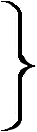
Q J x
Q x
J 10 x
10 9 x
x x x
J 10 9 Q x x in Dummy
J 10 x
x x x
In leading through any of these combinations, the top card of a sequence should be led. In fact, with three cards or fewer in a suit, it is almost an invariable rule to lead the highest card.
The following are combinations which should be led through only as a last resort:
Holding Avoid leading through
Q x x A J x
A 10 x in Dummy
K J x
K 10 x
K x x A Q x
A J x
A x x in Dummy
Q J x
Q x x
Q x
J x x x A 10 x

K 10 x in Dummy
SUGGESTIONS FOR THIRD HAND PLAY
When you are trying to win the trick, play high third in hand; but if your cards, or your cards combined with those in the dummy are in sequence, play the lowest card of the sequence.
Do not finesse against your partner; help his hand at the sacrifice of your high card. If, however, you hold ace, jack, small,—with king or queen in dummy,—the play of the jack is permissible; your partner’s lead practically shows one of these honours.
When you hold the ace and your partner leads a jack through a guarded king or queen in dummy, it is often good play to pass the first trick. By playing the ace you will probably establish two high cards for the dealer.
If your partner’s lead clearly indicates a short suit, with the ace marked in the dealer’s hand, do not sacrifice a king. Allow the dealer to win the trick cheaply, if necessary, but keep your king guarded. By playing a low card you may deceive an unwary dealer, and at any rate you will put the dealer to some trouble to catch your king.
At “no-trump,” provided the dummy holds an honour, you should finesse deeply in your partner’s suit. The application of the Eleven Rule will materially help you in finessing. When there is a guarded queen in the dummy and you hold the king, ten, small, or ace, ten, small, to finesse is sound play. If dummy holds a twice guarded king and you hold the ace, jack, small, it often pays not to take the finesse, for should you abandon the suit to wait until your partner can again lead through the king, you may take out the only re-entry card in his hand.
Unless your partner holds two re-entries, you gain nothing by the finesse.
INFERENCES FROM THIRD-HAND PLAY
It is very important for the leader, especially in a “no-trump” hand, to be in a position to determine whether his suit should be continued or abandoned. Careful notice of the card your partner plays to the first trick will often enable you to place the high cards in that suit, and in this way suggest your subsequent play.
The following are given as illustrations of inferences to be drawn by the leader from third-hand play:
A and B are partners, and the underlined card in each example indicates A’s lead; Y’s cards are exposed.
B’s play of queen denies the jack, which should therefore be marked in the dealer’s hand. The small cards cannot be placed.
B’s play of the nine denies the eight and the queen. Both of these cards must be in the dealer’s hand. The ten should be placed with B. The leader, in order to catch the dealer’s queen, must await a return of the suit.
The play of the jack denies the ten and the king; both of these cards are marked in the dealer’s hand. Should A continue this suit, it would allow the dealer to make tricks with both ten and king. The suit must be abandoned until the lead can come from B’s hand.
B’s play of the queen with the jack exposed on the table denies the ten, which must be in the dealer’s hand.
B’s play of the king denies the queen. To continue the suit might allow the dealer to make two tricks. A should abandon the suit until B can return it through the dealer’s hand.

It is impossible to tell whether the king is held by the dealer or by B. The suit, however, may be continued with the ten. If B holds the king this may shut out the jack. If the dealer holds the king probably nothing will be lost.
B’s play of the ace denies the king, which should be placed with the dealer.
It is customary holding the ace and jack with the king or queen in dummy to finesse the jack third in hand. B’s play of ace would, therefore, deny the jack, which is marked with the dealer. Avoid continuing the suit.
As the dealer does not take the ten, the ace and jack are presumably in B’s hand. B’s play of ten denies the nine, which should be placed with the dealer.
B plays ace to the first trick, and returns the king; this indicates no more cards in the suit, and marks the queen in the dealer’s hand.
LEADING UP TO DUMMY
With dummy on your right, you should invariably lead up to the weak suit. This is especially important when you hold no high cards in the suit, for in this case the strength lies between your partner and the dealer. By leading through the dealer’s hand you give your partner the advantage of position; otherwise he may be forced to lead up to the dealer’s strength.
In leading up to weakness, the general rule of leading the highest card of a sequence should be followed. It is often good play, when dummy holds no honour in the suit, to lead a card higher than dummy’s best. This permits your partner, if the lead is not covered, to pass the trick.
If dummy’s weakness is in the trump suit, your best play will often be to lead trumps through the dealer’s strong hand, rather than to lead up to the high cards in dummy. If you hold a guarded king and dummy a guarded queen, do not be tempted to lead up to this honour.
It would be obviously wrong to lead up to a king if you hold the ace. You must wait until this suit is led by the adversary or your partner. Do not lead up to an ace in dummy if you hold the king. You are reasonably sure to make a trick with this card if you wait until the suit is led by the dealer or your partner. If you hold a sequence headed by the queen or jack, little or no objection can be raised to your leading up to an ace or king, and on each occasion the highest card of the sequence should be led.
Should you lead a low card up to dummy’s strong suit, your lead would indicate a singleton and a desire to “ruff.”
THE ECHO
In Whist the play to a lead of a high and then a lower card is a signal for a lead of trumps, and is necessarily an indication of strength in trumps.
In Bridge this convention is used to show control of the third round of the suit led. Some players use this echo or signal to show that they can trump the third round of the suit, while with others it implies control of the third round either with the high card or by a “ruff.”
This signal should not be used except on your partner’s lead of king, as otherwise it would give information to the dealer. To use it on the adversary’s lead would help the dealer to make successful finesses, and to mark the distribution of the suits. Be careful when you use this signal not to echo with an honour. If you hold Q x, J x, 10 x, do not play the honour to the first trick; not only is your partner apt to think you have no more of the suit, but these honours are too valuable to throw away.
FORCING
To force is to make a player trump. This will, of course, reduce his trump strength and weaken his hand. It is as a rule good play to force the adversary’s strong trump hand. It will often prevent his exhausting the trumps, and hinder his bringing in an established suit.
The beginner hesitates to force the strong trump hand. He feels that he is wasting a high card and allowing the adversary to make a small trump, not realising that no card of this suit can make, unless the trumps are exhausted.
If no force be given to the strong hand, it is, ordinarily, an easy matter for the dealer to exhaust trumps and make a suit; unless there is unusual length in trumps, judicious forcing will do more than anything else to break down a strong trump hand.
Do not lead a suit with the intention of forcing the strong hand unless you hold the commanding card or can mark this card with your partner; you may give the dealer an opportunity to win the trick and to discard a worthless card.
You should hesitate to force when by doing so you establish the remaining cards of the suit for your opponent.
You should not attempt to force the strong hand when there is an established suit against you, particularly when it can be inferred that the dealer has all the high cards in the trump suit. At this time, make what you can in the remaining suit before you give up the lead.
It is wrong to force the weak hand. You lose one of your high cards, and the maker’s trumps are still intact. Do not continue a suit when it is shown that the weak hand can “ruff.”
In playing against the make, if you infer that your partner is weak in trumps and also short in a side suit, it is usually advisable to allow him to make small trumps by forcing him. This should always be done when a short suit has been led by your partner. His lead practically asks for the “ruff.”
If, however, your partner has doubled, be more careful about forcing him. By reducing his trump strength you may severely injure his hand.
It is bad play to lead a suit that both the dealer and the dummy can trump. It allows the dealer to trump in one hand and to discard a worthless card in the other.
RETURNING PARTNER’S LEAD
Ordinarily it is not possible to establish a suit against the dealer’s strong trump hand, and this does away with the usual argument in favour of returning your partner’s original lead. On the contrary, it is probably the last thing that should be done. Your play is to make any high cards you may hold, and then to search for a weak suit in the dummy hand. If you lead up to this weakness, the dealer cannot place the strength in the suit, and your partner is in a very good position to win a trick cheaply.
After making your high cards, should there be no weak suit in dummy to lead up to, return your partner’s lead.
SECOND-HAND PLAY
When opposed to the dealer the question of correct second-hand play is relative to your position at the table. That is whether you play before the dummy or before the dealer. In other words, whether the dummy is at your left or whether the dealer is at your left.
If you will try to infer why the dealer is leading that suit, it will assist you to decide on the correct second-hand play. It is, of course, reasonable to suppose that he has some strength in the suit. What this strength may be you must judge from the cards that you hold and those that you see on the table.
WHEN YOU PLAY BEFORE THE DUMMY
It is evident that when dummy is weak the second-hand play is greatly simplified. You either play higher than dummy’s best, or pass the trick to your partner. Should dummy hold strength or a high card in the suit, it is usually better to play higher than any card dummy holds. For instance, if you hold K x x, with the queen and others on the table, your second-hand play would be the king; otherwise the queen in dummy may win the trick. In this position, however, there are times when a low card should be played. For instance, dummy holds K with others, and you hold A J x; the second-hand play is low; for should the adversary take the trick with the king and return the same suit you win two tricks instead of one. If you hold ace and one or two small cards with king and jack in dummy, the second-hand play should be a low card. Should the dealer finesse the jack, your partner may win the trick.
Should dummy hold over you in a position to overtake any card you may play, unless you hold two honours in sequence, always play your lowest card. For instance, when you hold K J x, and dummy holds A Q x, it is useless to play any card but the lowest. Dummy is sure to win two tricks in the suit.
If you hold K Q x with A J x in dummy, your two honours are in sequence and the lower honour should be played.
Should you hold A Q x with K J x in dummy, the ace is the best second-hand play. If a low card be played, the dealer, by finessing the jack, can place the ace and the queen in your hand, and of course he will not continue the suit; while if the ace is played, the queen, not being so clearly marked, may win the third round.
Usually cover an honour with an honour even though you know that your high card will be lost. Do so whenever you hold a fourchette; whenever you hold the ten of the same suit, which you may eventually make good; or whenever, by covering, you can reasonably hope to make a card good in partner’s hand. It is not, however, advisable to cover a queen led holding K x x x unless one of the small cards be a nine or better; the adversary will find it difficult to catch a king that is three times protected. On the other hand, a king that is once or even twice guarded can be easily captured, and for that reason, and with the object of promoting a card in your partner’s hand, it is usually good play to cover the lead of a jack or queen.
Do not give the dealer an indication of the cards that you hold by hesitating in your play. Decide on and play a card quickly. If there is a doubt as to your play, play your lowest, remembering that the dealer must guess the position of missing honours.
WHEN YOU PLAY BEFORE THE DEALER
When the dummy is weak and you play before the dealer, it is with the assurance that the missing strength in the suit is over you. This strength may be held by the dealer or by your partner. As he is leading the suit, the chances are that the balance of strength is with the dealer; therefore, unless you know that you can win the trick, do not play a high card.
With ace and others in a suit, if you do not play the ace second in hand, the dealer may win the trick and discard his worthless cards in that suit. The second-hand play of an ace is particularly necessary later in the hand, and when the trumps are against you.
When you play before the dealer follow the same general rules as to covering an honour, and as to playing the lower of two honours in sequence. If dummy holds an ace and others of a suit, and you hold K J x play the king second hand. With small cards of a suit in dummy and ace queen and others in your own hand, the ace should be played second in hand.