THE DEALER’S PLAY OF A “NO-TRUMP” DECLARATION
Reading edition
As soon as the hand has been opened, make a comprehensive examination to determine the possibilities of your combined hands. Are you strong enough to win the game? Can you win the odd trick? Shall you be able to save the game?
With no other possibility in the hand, make a determined effort to save the game. If you are weak in one suit and hold the command of the suit that is opened, your danger may lie in allowing the adversaries to retain the lead.
When you hold an established suit, you cannot but gain by forcing the opponents to discard; they may unguard honours in their weaker suits or give you information that will locate high cards.
Do not forget that your strength is in your long suit, and that you are often dependent on your other high cards to establish this suit. To the mind of the novice, the loss of the lead is a calamity, and he will often lead all his high cards, leaving the command of his own suit, as well as of the others, with the adversaries.
Remember that it requires no skill to make aces and kings, and that your goal in a “no-trump” hand must be the establishment of the small cards of your long suit.
With fair possibilities in the hand, ascertain before you play a card from dummy, first: which is your longest suit; second, how can it be most advantageously led; and, third, in which hand there is the greater need of an entry card.
CHOICE OF SUITS
There is no rule so necessary to good play as that of retaining the control of the shorter suits and playing to establish the longest suit in the combined hands. Do not let the fact that your long suit contains but a few high cards discourage you—the lead can entail but small loss as the commanding cards would probably make in any case.
When, as frequently happens, your combined hands contain two suits of equal length, make a careful selection of the suit to be played for.
When the ace of one suit and the king or the queen of the other are against you, play for the suit of which the adversary holds the ace. The ace must win, while the fuller information that comes later in the hand may enable you to catch the king or queen by a finesse. Then you can better afford to discard from a suit headed by the ace than from a suit in which an honour must be protected. Moreover, you deprive the adversary of a sure re-entry card.
With two suits of equal length, be careful not to play for one in a hand that contains no re-entry card.
When you hold two suits of equal length, it is usually wise to play for the suit that is exposed on the table and conceal the strength in your own hand. In other words, don’t give the adversaries unnecessary information.
In choosing between two suits select the one that will gain you the greater number of tricks. For instance, when you hold two eight-card suits, one divided five and three and the other four and four, there are clearly more tricks to be made in the former.
Be cautious about playing for a suit of no more than seven cards, for you will often find the remaining cards most unequally divided. When you hold but six cards in the combined hands the balance of strength is with the adversaries, one of whom must hold at least four cards. Try to force your opponents to discard before you indicate strength in six- or seven-card suits.
With two entire suits against you, you cannot afford to lose the lead. Make what tricks you need to save the game and pin your hope on successful finesses.
With but one suit against you, do not fear to establish your long suit. It is not so dangerous to give up the lead when you hold a protection in the suit led originally. The adversary, not knowing your weakness, will probably return the original lead.
KEEPING THE COMMANDING CARD OF THE ADVERSARIES’ SUIT
As a general rule, do not part with the command of the adversaries’ suit until one adversary is exhausted in the suit, and therefore unable to return his partner’s lead; unless the original leader has a sure card of entry you may be able to prevent this player from getting into the lead. Usually do not refuse to take a trick with a king or queen when the higher card or cards have not been played. The adversaries may lead through and capture a single guarded honour.
If you find that there is another entire suit against you, it pays to take the first lead and make what tricks you can in the two remaining suits. Even in some rare cases, the play of a well-guarded king in dummy is the one chance to make or save the game.
Sometimes the cards of your long suit will be so unfortunately placed that the continued lead would establish it for the adversaries. In this situation, keep the command of that suit, and make a bid for better luck in establishing another.
Unless there is no possibility of losing the game, do not hesitate to take the first lead whenever you are assured of a sufficient number of tricks to win the game.
Often by taking the first trick you promote the value of another card in your own hand or in dummy. In other words, you temporarily give up the control, with the knowledge that you will eventually hold the master card of the opponents’ suit.


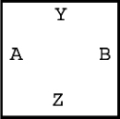


In these cases, by taking an honour led or played, the dealer can eventually stop the adversaries’ suit.
At times, if you take the first trick, the suit will be protected, provided it is not led by your right-hand adversary.
In these two cases, if an honour is led, the first trick should be passed. If a low card is led and an honour played, the first trick should be taken. Otherwise the opponent may immediately lead through your hand.
Holding the king, queen, and a small card of the adversaries’ suit, you are assured of at least one trick, with the possibility of two, but remember, if you take the first trick, your hand may be led through; it is often safer to win the third round than the first.


Should you win the first trick in any one of these cases, endeavour to prevent your right-hand adversary from obtaining the lead.
When the adversaries can take two tricks in your long suit, it is better to win the first and third than the first and second tricks in their suit.
In this case a low card is led, and you can win the first trick with the queen. By doing this you are forced to take the first and second rounds. If you take the first trick with the ace, your queen will be sacrificed to the king, but your jack controls the third round.
Unless there is another suit against you, it is safer to win the second and third tricks of the adversaries’ suit than the first and third.

Should you wait to win the second trick with the ace, there is a chance that your right-hand adversary will be exhausted in the suit, and unless the original leader has two cards of re-entry his suit cannot be made.
RE-ENTRY CARDS
Clear your long suit before you take out your card of re-entry is a simple rule that is often violated. When you have made the “no-trump” declaration, any possible re-entry in the dummy hand should be used to bring in a suit or to lead a suit advantageously from the weak hand. In fact, much of the success of a “no-trump” hand depends on the dealers’ skill in saving and making re-entries in the weaker hand.
A re-entry may be an ace or a three. It may be the master card of your long suit or a guarded honour in the adversaries’ suit.
When you can win the original lead in either hand, consider well the question of re-entries before you touch one of dummy’s cards.
Save all possible re-entry cards, remembering that often in order to gain any material advantage from a finesse you must be in a position to lead twice from the weak hand.
For instance, holding any one of the following combinations:
In order to make an entry card in the suit led originally, it may occasionally be necessary to overtake a card played by the dummy.
When your long suit is blocked, try to establish an entry card before you make the situation clear to the opponents. Otherwise they will not allow you to enter and make your suit.
If you hold four cards of a suit in each hand, it may be possible to obtain the lead twice in one hand. For instance, holding
If you lead the deuce and play the king, you have deprived dummy of the only entry card in the suit. If, however, you lead the eight, dummy’s seven will probably be the master card on the fourth round. Such a re-entry is often of great assistance in opening the next suit.
When you hold a nine-card suit divided five and four, it may be necessary to use both the third and fourth rounds of the suits as re-entries to lead another suit advantageously. This is a chance for good play that is often overlooked in the pleasure of making a long suit.
When dummy’s re-entry is a guarded king or queen, and you have no means of knowing the position of the ace, try to establish this re-entry by sacrificing a high card from your own hand.
In both of the examples given above, the dealer to make a re-entry card for the dummy should sacrifice a high card from his hand.
UNBLOCKING
There is frequent necessity in the dealer’s play for ridding one hand of high cards in order not to interrupt the lead of smaller cards from the other hand. It is well to look ahead and prepare for this contingency, for often in the middle of a hand you will quite unexpectedly find that unblocking will enable you to make small cards that the adversaries have made good by reckless discarding.
When you hold more cards of a suit in one hand than in the other, you can invariably prevent blocking, if you lead or play the high cards from the shorter hand. At times a suit may be unblocked by discarding the winning card or cards from one hand, but the first rule covers the majority of cases where there is necessity for unblocking.
In both of the above examples the dealer, holding nine cards of a suit in the combined hands, hopes to catch the queen by leading the ace and king. Blocking in these cases can be avoided by retaining the lowest card in the dummy hand.
When you hold but one re-entry card, be careful not to take a finesse, which will block your suit.
In the above examples dummy is supposed to hold one re-entry card in another suit. Should the dealer make an unsuccessful finesse, the adversary will at once take out the re-entry card, and the suit, being blocked, cannot be made.
OVERTAKING
It not infrequently happens on the initial opening of a hand that you have the option of winning the trick either in your own hand or in dummy; if you find that your cards of the suit led are all of equal value it is essential that you consider the advisability of overtaking a trick that you have already won.
With no re-entry in a hand, overtaking is often the only means of making a suit.
In the above examples, if the dealer holds no re-entry card, he must overtake one of dummy’s high cards in order to make the suit.
The adversary will often attempt to block the dealer’s lead by holding up the winning card until one of the dealer’s hands is exhausted in the suit. Whenever this is the apparent object of the adversary, you can still continue and establish your suit by overtaking the last card from the shorter hand.
In the above examples, if the dealer holds but one re-entry card he must overtake the second lead. Otherwise, if the adversary holds up the ace, the dealer must use his re-entry card to establish the suit, which he can then never make.
Overtaking is not confined to the dealer’s play, and it is much more difficult for the adversaries to determine when to resort to this strategy. As a rule, when the dealer is apparently holding up the winning card, and when the cards of your suit are of equal value, it is safer to overtake your partner’s card than to risk his being unable to continue the lead.
“DUCKING”
When a hand contains no re-entry card, the successful play of the long suit may depend on a refusal to win the first trick; at times both the first and second tricks in the suit must be passed.
When you wish to make a long suit in a hand containing no re-entry card, do not play the commanding card of the suit until you are reasonably sure that the remainder of the cards will fall. Use care not to exhaust the shorter of the two hands before the suit is established.
The situation is more clearly shown by the following examples:
The dealer should refuse to win the first round of the suit. With no card of re-entry, should he lead the ace and king, the command would be left with the adversaries and the suit would not be made.
The dealer must allow the adversaries to win the first and second tricks; otherwise the suit cannot be made.
The dealer should lead the queen toward the ace, but should the second in hand adversary cover with the king the dealer must pass the trick; otherwise the third round will be blocked by the nine or ten.
The dealer should pass the first trick and not attempt the queen finesse until the second round. One trick, it is true, may be lost, but the play may win four tricks.
One or two leads of a suit may show a distribution of the cards which must give the adversary one trick. When this is the case, be careful to lose that trick while you have still another card of the suit to lead to the opposite hand.
NONE
The dealer finds at the first lead that the second in hand adversary has no card of the suit. The jack is, therefore, three times protected in the opposite hand and the dealer should pass the first trick.
With nine cards of a suit in the combined hands headed by ace and king, all the remaining cards will probably fall on two leads, but when the suit is divided, six and three, with no card of re-entry in the long hand, it is safer to make sure of five tricks by passing the first round.
Even when there is a re-entry card in the hand containing the long suit, if the adversaries must make a trick in the suit it is better play to lose the first trick. The re-entry may be an important card to retain.
When you hold a guarded honour in the suit led originally, or with a once-guarded king in an unopened suit, place the lead so that these honours will be lead up to. This can often be done by “ducking” or passing a trick.
“OVERTAKING AND UNBLOCKING”
The double necessity arises only on rare occasions. When the dummy contains no re-entry and the adversary opens a suit in which dummy has length, arrange the play of your own cards so as not to block the dummy’s suit.
Should the first trick be won with the eight, the dealer cannot overtake the ten without loss. The ten should, therefore, be played and the lead continued with the queen. If the adversary covers, the trick must be passed. The eight should then be led through the jack.
“OVERTAKING AND DUCKING”
Occasionally the initial opening will prove to be the dummy’s long suit. To make this suit without a card of re-entry in dummy it may be necessary for the dealer not only to overtake dummy’s trick in order to lead the suit through the original leader’s hand, but also to allow the adversary to win the second trick, if an attempt is made to force dummy’s high card.
The dealer should in both cases overtake dummy’s trick in order to continue the lead from the weaker hand. The original leader will probably attempt, by playing a high card, to force the ace; in which case the dealer must pass the second trick. The dummy will then hold a tenace over the remaining honour, and the dealer can make four tricks in the suit.
THE DEFENCE AGAINST OVERTAKING AND “DUCKING”
When you open a suit and find that it is dummy’s strength do not attempt to win the second trick if the dealer leads through your hand, that is, unless you can mark the dealer with no other card of the suit to lead; by taking the third round instead, you will often save a trick or two.
NONE
In this case the dealer takes the first trick with the jack and leads the queen. No attempt should be made to cover the card. In this way the dealer is forced to win the third round and dummy’s suit is blocked.