Front matter
Reading edition
J.Y.F. BLAKE Colonel Boer-Irish Brigade at time of general surrender in June, 1902.
A WEST POINTER WITH THE BOERS
Personal Narrative of
COLONEL J.Y.F. BLAKE,
Commander
of the
IRISH BRIGADE
1903
Angel Guardian Press, Boston
Copyright, 1903
Colonel J.Y.F. Blake
Dedicated
TO THE MEMORY OF THE TWENTY-TWO THOUSAND BOER WOMEN AND CHILDREN MURDERED IN THE ENGLISH PRISON CAMPS OF SOUTH AFRICA DURING THE ANGLO-BOER WAR. 1899-1902
Introduction.
Friends have advised me to say a little something about myself, by way of a beginning, and to please them, I will commence with the statement that I was born in the State of Missouri, in 1856, and waked up on a horse and cattle ranch on the plains of Denton County, Texas. At least, here it was that I first saw light, as far as I can remember. As I grew up I learned to ride the Texas pony, and became fairly well acquainted with the character and habits of horses and cattle, by having, year after year, to look after them, and see that none strayed away. Happy were those days of loneliness and ignorance spent on those far-stretching plains, where roamed hundreds of thousands of horses, cattle and buffalo!
In 1871, my father started me to school at the Arkansas State University, at Fayetteville. In 1876, while still at the University, I received the cadet appointment to the U.S. Military Academy at West Point, through the kindness of Hon. Thomas M. Gunter, M.C., an old friend of my father. I entered the Academy in September, of the same year, and graduated in June, 1880. I was assigned as 2nd Lieutenant of the 6th U.S. Cavalry stationed in Arizona. I passed through the Apache wars, serving first under General Wilcox, then under General Crook, and lastly under Gen. Nelson A. Miles.
General Crook put me in command of the Apache Indian scouts, and with them I roamed about the mountains till 1885, when my troop was ordered to Fort Leavenworth, Kansas. I passed through the Infantry and Cavalry school, and, on being promoted to the rank of 1st. Lieutenant in 1887, was ordered to Fort Wingate, New Mexico. Now General Miles put me in command of the Navajo Indian scouts.
The Indians remained quiet and peaceful on their reservations. Post life became monotonous, and I resigned in 1889.
I went to Grand Rapids, Michigan, to try my hand in business, but soon found that the "tricks of the trade" were too deep for me, so I made up my mind to go to South Africa, where the gold mining prospects were attracting adventurous men from every part of the world.
Preface.
I wish the following pages to be considered as a simple narrative of some of the important events of the Anglo-Boer War and a very terse and unpolished narrative at that. I have endeavored to tell the truth in as brief a way as possible and, to speak the truth again, I believe I have been too brief in many instances.
Ordinary readers sicken of long military details of battles and I have purposely refrained from giving them. During the first nine months of the war, many American correspondents were present and I think they can give a pretty correct account of what happened during their time, and I don't believe my account will in any way conflict with any they may give. Among many whom I know, are Rev. Peter MacQueen, Richard Harding Davis, Mr. Unger, Mr. Hillegas, Allen Sangree and E.E. Easton, and such men as these will not lie because the English are happy to call themselves our "Cousins across the Sea."
Some criticism has been made of Captain Patrick O'Connor, Lieutenants John Quinn and Mike Enright, who were in charge of the Chicago Ambulance Corps, sent by Colonel John F. Finerty and Patrick J. Judge to South Africa to assist the Boers, for laying aside the Red Crosses and taking up the mauser. These were all good and true men and had the Boers asked them to do Red Cross duty, they would have willingly consented. But they were not needed in this line, so they were equipped for fighting.
At Spion Kop, General Buller had many of the ambulance men remove their Red Crosses and take the rifle during the battle. We captured several of these and they told the whole story. After the battle was over, all those not captured were required to pin on the Red Cross again and look after the numerous dead and wounded. If the English ambulance men could remove their Red Crosses and take up rifles at the pleasure of the British commander, I can't understand why the Boer ambulance men could not do the same.
I have not said as much about the English commanders of the war as I might have said; and now a word about them may not be taken amiss.
The Boers generally acknowledge General Buller as by far the ablest commander the English had in the field. True it is, he made mistakes on the Tugela, but it should be remembered that he had but 35,000 or 40,000 men to dislodge some 6,000 Boers intrenched for a distance of thirty miles along the river. Had Buller been in supreme command, I firmly believe the war would have been brought to an end within six months after the relief of Ladysmith.
Lords Roberts and Kitchener had treble the number of men, an open country and only about 4,000 Boers in front of them; yet Buller relieved Ladysmith by the time they could relieve Kimberly.
In fighting negroes armed with sticks both Roberts and Kitchener were enabled to add a list of letters to their names almost equal to the number in the alphabet; but when confronted with an armed Boer, both found themselves practically helpless.
Roberts for his proclamations received from the British Government $500,000, and an earldom. Kitchener received $150,000 for wiping out of existence 22,000 women and children. It must be added, however, that he was simply carrying out Lord Roberts' instructions, to his great pleasure. Though degenerate and incompetent, yet the English soldier knows a little something. The 29th of September, 1902, was the King's Procession Day. I was present and witnessed the circus. Between Trafalgar Square and St. Paul's Cathedral, Lord Roberts was violently hissed and the people called for General Buller, who had done all the fighting and reaped disgrace as his reward. Roberts bit his lip but that is all the satisfaction he got.
There is no doubt about it, the English lords and generals in command of the British army are degenerate and incompetent and that, too, far more so than the English soldier. In hundreds of instances, I am quite sure had an English sergeant been in command, we would have been badly beaten where we gained successes. The English commanders had large numbers, but small brains.
The quiet, modest little de la Bey, with his dancing, hazel eyes, was unquestionably the ablest of the Boer generals and the greatest man of the war.
The stalwart, restless, commanding General De Wet was the great strategist and Stonewall Jackson of the war. The handsome, refined and polished General Louis Botha proved a most brilliant commander and fighter, and another war will mark him as one of the brightest military stars of modern times. He is young and cool-headed and has in him all the necessary material to make a great military leader. May the time soon come for him to make use of his material.
Although the Boers had three such able leaders, yet the two little Republics lost their liberty and independence because the 25,000 patriots under their command thought it better to surrender and save their women and children and therefore their race from extinction. Horses, mules and men from the United States of America destroyed the two little republics.
We can always point with pride to our great liberty lovers, Washington, Jefferson, Madison, Adams, Jackson, Monroe, and Lincoln, but since the days of these great patriots and Americans our leader-ship has degenerated; trade and greed have taken the place of lofty ideals which made the country the hope and model of every people aspiring to freedom; vulgar ambition for territorial extension has put us on the low level of all the conquering nations of old; the late war with Spain developed all the latent greed of an ambitious upstart among nations; neither the plausible protestations of one president nor the open boldness of another justified our un-American policy in the far East.
When it came to the question of acting towards the republics of South Africa as our forefathers had acted towards the republic of Texas, neither the oily McKinley nor the vociferous Roosevelt showed the honor and courage of a pure-blooded American. I do not mean they were bought by England. Our State Department is not the kind of a courtesan whose favors have to be paid for in anything but smiles and flattery. England smiled and flattered and America smiled back as she strangled the liberties of a brave people. The Philistines captured Samson, thanks to the American Delilah.
Contents.
Introduction
Preface
I.Lobengula and the Chartered Company
II. A Carnival of Murder—Preceding Jameson's Raid and Chamberlain's Conspiracy
III. Boer Commissary—"Mealie Pap" as a Ration—I Take Command of the Irish Brigade—War Declared
IV. The Boer Ultimatum—The Brigade at the Front—Butchery of Prisoners by English Lancers
V. Besieging Ladysmith
VI. British Treachery at Colenso
VII. Spion Kop
VIII. White's Incapacity
IX. The Fighting in the Free State
X. Magersfontein and Paardeberg
XI. De Wet Looms Up
XII. Paying an Instalment on the Irish Debt
XIII. Lord Roberts Breaks his Pledge Made in Proclamation—Boers in Great Disorder on Leaving Pretoria—Make Grand Stand at Donkerhoek—General Buller Arrives in Transvaal—Battle of Dalmanutha
XIV. Dark Period of the War—President Kruger Forced to Leave for Holland
XV. War Declared at an End by Roberts—Lady Roberts Captured—De Wet Cornered—General Clement's Camp taken by General De la Rey—De Wet's Strategy
XVI. Boers Become Aggressive—American Government Comes to England's Assistance and Furnishes Horses, Mules and Men
XVII. Kitchener Alarmed and Asks for More Troops—French Tries to Corner Botha—Failing, Makes War on Boer Women—Botha Attacks English at Lake Chrissi— De Wet Alarms the English—Defeats Them, Goes to the Colony and Returns
XVIII. Horses, Mules and Men Arrive from America—The Author and Major Pretorius Make a Long Ride with Despatches—An Exciting Trip
XIX. De Wet Cornered Again—De la Rey Cornered too—General Kemp Fights a Good Fight—The Way by Which the Boers so Successfully Outwitted the English
XX. An Irish Boy's Strategy—His Sad Death—Cavalry Far Superior to Infantry
XXI. Kitchener Tries to Frighten the Boers—Failing, Takes Revenge on Women and Children—Capture of Fort Pison—English Surprise the Boers and are Routed
XXII. Artillery Boys Surprised—A Great Race—Murder of Two Young Boers under the Impression they were Members of the Irish Brigade—The only Naval Battle of the War
XXIII. General Louis Botha's Brilliant Charge—Our French Gun Captured—Major Pretorius Captured—A Close Call but all Ends Well—General De Wet's Daring Work
XXIV. Destruction of Women and Children—The Only Way to End the War—Scots Greys Routed—English Troops and Armed Kaffirs Fight Side by Side—General De Wet Completely Cornered
XXV. Peace Terms—Procedure to be Adopted in Selecting Prisoners of War for Return to South Africa
XXVI. Brutality of British Officers—Suffering in the Concentration Camp—Poisoning of Boer Prisoners at St. Helena
XXVII. A Perfect Spy System—Captain Naude and His Female Spies of Great Service—The Attitude of American Consuls
XXVIII. The English Arm Kaffirs—The Hague Conference and Civilization—Hands-Uppers and Their Position
Conclusion
A West Pointer With the Boers.
CHAPTER I.
LOBENGULA AND THE CHARTERED COMPANY.
On the fifth day of December, 1894, I sailed on the City of Berlin from New York.
We started in a storm, continued in a storm, and landed in a mud bank off the Isle of Wight, just below the Needles. This caused quite a commotion among the passengers, and all seemed inclined to make the last stand at those points of the deck nearest to the life-boats. By reversing the screws, the old death-trap, after a few hours' hard work, succeeded in releasing itself, and we were again on the high sea.
On the 14th, we landed, and I saw a foreign land for the first time. I spent a week in London trying to see something, but the fog was so thick that I could scarcely see myself, so I decided to move on toward South Africa.
I left Southampton December 22d, 1894, on board the Lismore Castle for Cape Town where I arrived January 12th, 1895. On the voyage I could hear nothing talked but C.J. Rhodes and Dr. Jameson. We had them for breakfast, dinner and supper, and at all intervening hours.
Connected with these names was a country known as Rhodesia, lying north of the Transvaal, and it was always Golden Rhodesia, a land overladen with diamonds and gold. I made up my mind on that voyage to look up this C.J. Rhodes and his "pal," Dr. Jameson. One thing was certain in my mind, and that was that either these two men were really great men or monstrous rascals, and that Golden Rhodesia was either a marvellous land or a smartly advertised fraud. I said to myself: "I will investigate both the men and the new country before I am in South Africa many months." On arriving at Cape Town, a city that expired many years ago, I immediately went to Johannesburg, the Golden City of the Transvaal.
January 16th I beheld this lively, wonderful city that rested then and rests now on the greatest gold bed known in the world. Money was so plentiful that there were no poor men in the city and I was simply appalled by the very prosperity of the place. I had never seen anything like it before and shall probably never see anything like it again. Yet in this phenomenally prosperous city, I heard from the lips of everyone with whom I conversed, of that far more wonderful country lying far to the north, the land of Golden Rhodesia. Strange to say, however, I could not find anyone who had visited this country so heavily laden with gold.
First I will tell how Rhodesia received the name and became the property of the notorious Chartered Company.
In 1889, C.D. Rudd, R. Maguire and F.R. Thompson, aided by a missionary who knew a few Kaffir words, induced Chief Lobengula, of Matabeleland and Mashonaland, to sign a paper which was first interpreted to Lobengula and his Indunas, (sub chiefs) by the missionary. This fellow told them that the three white men had said in the paper that they would give the chief $500 per month, 1,000 rifles and 100,000 cartridges, for the right to put up a mill on a certain piece of gold bearing ground. Lobengula told them to bring the money, rifles, etc., and then he would show them the ground and they could mine it. The white men also agreed to give Lobengula a steamboat, to run up the Zambesi River. This missionary convinced Lobengula that there was nothing more in the paper, and he signed. By the document, he had given Rudd, Maguire and Thompson, all the mining rights of his whole domain; but, of course, he did not know it, as it had not occurred to him that possibly the missionary had lied. In a short time, Lobengula learned the truth and at once assembled his Indunas and called the white men to attend. He could get no satisfaction, so in April, 1889, he wrote the following letter to Queen Victoria:
To Her Majesty, Queen Victoria:—
Some time ago, a party of men came into my country, the principal one appearing to be a man named Rudd. They asked me for a place to dig for gold and said they would give me certain things for the right to do so. I told them to bring what they would give me and I would show them what I would give. A document was written and presented to me for signature. I asked what it contained and was told, that in it were my words and the words of those men. I put my hand on it. About three months afterwards, I heard from other sources that I had given by that document, the rights to all the minerals in my country. I called a meeting of my Indunas and also of the white men, and demanded a copy of the document. It was proved to me that I had signed away the mineral rights of my whole country to Rudd and his friends. I have since had a meeting of my Indunas and they will not recognize the paper, as it contains neither my words nor the words of those who got it. After the meeting, I demanded that the original document be returned to me. It has not come yet, although it is two months since and they promised to bring it back soon. The men of the party who were in my country at the time were told to remain till the document was brought back. One of them, Maguire, has now left, without my knowledge and against my orders. I write to you, that you may know the truth about this thing and may not be deceived. With renewed and cordial greetings, I am your friend,
Lobengula.
Rudd, Maguire, Thompson and C.J. Rhodes were all in the same Company, and working to the same end. They were determined to rob Lobengula of his country. The Queen took no notice of Lobengula's letter, but Rudd and his men knew that they could not swindle Lobengula without a fight. He was honest, and in earnest, and did not know that he was dealing with unscrupulous people. In the past, Lobengula and his father, Umsiligaas, had befriended Dr. Livingston and other white men who had ventured into their far away land, and had always in return been treated honorably; so they were not prepared for sharpers. The English boast of fair play and justice, but they give neither, unless forced to it.
Now I will tell how just the Queen was to Lobengula and how humane her subjects were to his people. Whether Lobengula told the truth or lied, in his letter to the Queen, made no difference, for the British Government on October 15th, 1889, granted a charter to C.J. Rhodes, Alfred Beit, George Cawston, A.H.G. Grey, Duke of Abercorn and Duke of Fife, as petitioners, under the corporate name of the British South Africa Co., commonly known as the Chartered Company.
The Charter having been granted under the impression that Lobengula had voluntarily given his country away, the Chartered Company must continue to keep the English people in the dark. C.J. Rhodes now employed and armed about seven hundred men, with the permission and approval of the High Commissioner. That everything might appear well on paper, he sent Jameson to Lobengula to get permission for this armed, christianizing force to enter Mashonaland. Of course Jameson soon returned and reported that Lobengula was delighted with this idea of such an armed force entering his country.
Now everything being made satisfactory to the outside world, by deliberate lying, the march began and was continued for four or five months, when the band of humanity lovers reached Mount Hampden, without the loss of a single life; and, having established Fort Salisbury in honor of their Lord, declared the Chartered Company Monarch of Mashonaland. The Company then hoisted its flag, bearing its motto of "Justice, Commerce and Freedom," and all set to work to spread civilization and Christianity. Sir John Willoughby, in the ecstacy of joy, now wrote for the benefit of the general public that the "Government in granting the Royal Charter, had secured 'Fairest Africa' to England and spread blessings of hope, peace and security, among all the nations of the land."
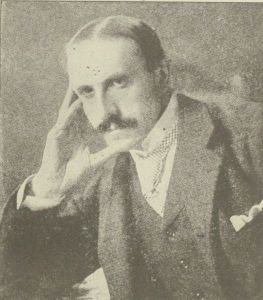
ALFRED LORD MILNER High Commissioner of South Africa, who fell into Rhodes' hands because of his money.
It required about two and a half years to completely relieve the Mashonas of all they possessed, spread terror among their women, and rob the innocent public of about half a million pounds sterling, by floating as gold mines a large number of sand hills. Now that their real object in Mashonaland had been gained, and that it was evident the Company would soon be forced again into hard straits, unless a new field was opened up, all set to work to prepare the public mind for the invasion of Matabeleland.
They sent out reports to the effect that Lobengula was making raids on his own people, the Mashonas, killing many of them, and taking their cattle, and that every effort was being made to convince him that such conduct was highly condemned by his loving friends in England. Such reports were sent out daily, for some time, that the public might be thoroughly aroused as to the awful state of affairs, and finally, it was made known that Dr. Jameson, Rhodes' most willing tool, had determined to invade Matabeleland, in order to instil into Lobengula and his people the principles of love and humanity, and, by example, make known to them the good effects of civilization and Christianity.
So in July, 1893, he mustered together his band of 600 full fledged angels, and Major Wilson and Colonel Forbes, of the English Army, and proceeded to old Buluwayo, the Royal Kraal; where he arrived without scarcely seeing a Kaffir, till the end of his journey. Here he found a fellow Scotchman and another white man, and expressed himself as much astonished to see them safe and sound among a people so bent on war. Strange to say, they knew nothing about a war till Jameson arrived. He learned from them, that Lobengula was not in old Buluwayo, so having nothing to fear, he proceeded to slaughter about 800 old men, women and children.
Now they hoisted the British flag on top of a tree, to wave in peace and love over the many hundred women and children whom they had murdered, in the name of humanity. Then the band set out to kill Lobengula, and having found him and his soldiers, on the banks of the Shangani, they turned loose upon him and his men, as so many engines of wholesale slaughter, but they soon found out that they had something else to contend with besides women and children; for in a short time, Major Wilson and his whole command, excepting two men, were completely destroyed, and then Colonel Forbes' command made a rapid retreat to old Buluwayo.
The two men who escaped were Americans, one being known as "Burnham the Scout," and the other as "Ingram the honest man." As this man Burnham often ran to America to boast and deceive, I will say half a dozen words about him. He first claimed that he was a scout in America, but all soon learned that there was no truth in his claim. At the time of the Matabele War in 1896, he showed himself in his true light. He was of no earthly use at Buluwayo, for all knew him, so he went to Mangwe, a few miles to the south. Here he shot an innocent, unarmed Kaffir, if he shot one at all, and reported that he had shot and killed M'Limo, the Kaffir war-god. He was told that he was really a wonderful man and undoubtedly the greatest shot in the world. So ignorant is he, that Burnham did not know that M'Limo was a myth, a great Spirit, to whom the Matabele would pray and look to as their guide.
But Burnham, the scout, managed to shoot and kill the great Spirit, and, on receiving a report of this wonderful achievement, the London Graphic brought out his picture and his long story of how he killed M'Limo, the war-god, and the terror of the Rhodesians. The Americans in Rhodesia made it so warm for him, that Burnham left for the United States to give a course of lectures. He now wears Khaki and is in the British service, and his native land feels thankful.
Lobengula now sent in word that there was no cause for war with his white brothers, and that he could not understand why they had suddenly appeared in such a state of frenzy. Captain Blank, the famous scout, and another man,—or beast,—were now employed, and sent out to negotiate with Lobengula, and after a few days absence, returned to report that he had died suddenly on the Zambesi River, which, you know, is about three hundred miles distant. They were sure he was dead, Because Poison Seldom Lies.
The Matabeles had no desire to fight, and did not know that the whites contemplated attacking them, till it was too late, otherwise it might have been a very different thing. Lobengula, who had ever been a warm friend of his white brother, who had fed him, protected him and granted him his every wish, within reason, had now, in return for his many kindnesses, been foully murdered, because he was chief, and controlled thousands of cattle which the Chartered Company must have, in order to postpone, for a few years, its inevitable downfall. The truth is, that Jameson sent word to Lobengula, that some of his people had come in and killed some of the Mashonas, and that he must arrest and punish them. Lobengula immediately sent a party to arrest the murderers, and Jameson at once, on their approach, made it an excuse to invade Matabeleland. The men who composed the police force tell the truth when they say it was a put up job, and the Chartered Company and its officials maliciously lie, when they say the war was provoked and prosecuted for the cause of humanity. Matabeleland and Mashonaland together were now christened Rhodesia. There was nothing more to fear, now that Lobengula was dead, and the great Rhodesian swindle prospered for several years, or until the Jameson raid.
CHAPTER II.
A CARNIVAL OF MURDER—PRECEDING JAMESON'S RAID AND CHAMBERLAIN'S CONSPIRACY.
Having remained in Johannesburg for just thirty days, I secured four pack donkeys, and in company with three friends, started for this fabulously rich country, Golden Rhodesia. It was the rainy season, and it was rain, rain, rain, day and night, but we were determined not to be balked by anything; we would see Buluwayo, the gold center, 600 miles away, or go down in the attempt. We had before us eight swollen rivers, wicked rivers at this season, but almost dry beds at any other time of the year. We had to swim all of them, and what a struggle it was for us! I can't understand now just how we succeeded, and do not know how we escaped the crocodiles, yet we landed safely in Victoria, Mashonaland, on Easter Sunday, in the early part of April.
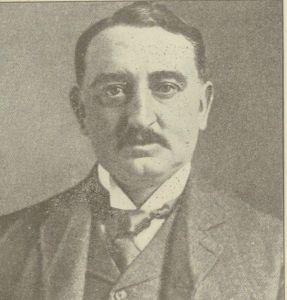
CECIL J. RHODES Notorious for his greed and inhumanity.
Here I found about 600 people sleeping in the graveyard, and about 300 lying on cots and on the counters in the stores and various other places, all down with the fever. I did not like the situation at all. To buy anything one had to help himself and then hand the money to the sick man on the counter. I found that Salisbury, Gwelo and Buluwayo were all practically in the same condition. It was fever, fever, nothing but fever everywhere, and all this talk of gold, gold, gold, was entirely misleading. It did not take us but about one minute to discover that Golden Rhodesia was a golden fraud, and so it was then, and so it is now, and will forever be. However, I was not satisfied, so I traversed the whole land, penetrated into the jungles of the Zambesi, roamed about in company with the elephant, rhinoceros, the hippopotamus, the savage buffalo, giraffe, zebra, the lion, leopard, hyena, wild dog, jackal and all the many and various kinds of antelope that swarm in that far-a-way, God-forsaken, fever-stricken country, where Livingstone breathed his last, and where the natives, in thousands, naked as nature made them, swarm about you, and look at you and treat you royally in their simple way. Here was wild nature, in all its glory, and here I was supremely happy. Thousands of baboons and monkeys made music during the day, and at night-fall the lions, hyenas and jackals took up the strain and kept a curious, nature-loving white man, with his rifle on his knee, delightfully entertained. After several months of exploring, I returned to Buluwayo, on March 21st, 1896; and on March 23rd, the Matabeles broke out in rebellion against the great C.J. Rhodes, and his great fraud, the Chartered Company.
The Matabeles surrounded this miserable, drunken, fever-stricken town, and, of course, I was one of the victims. These Kaffirs, 15,000 or 20,000 strong, would dance on the ridges about us, make sport of us, and have a good time generally during the day, and when night came, all women and children were shut up in the market building, while the men were in the laager surrounding it. During the night every house in town was abandoned. False alarm after false alarm was the order of the night; and how often have I seen loving mothers, with their arms around the necks of their two, three or four children, moaning, shrieking, praying, appealing to God and kissing their little ones the last farewell! Those awful scenes still haunt me, and will till the day of my death. During the day the men would go out and fight for a while, and then fly back with the Matabeles after them, and proceed to get on a big drunk, and then have a riot meeting.
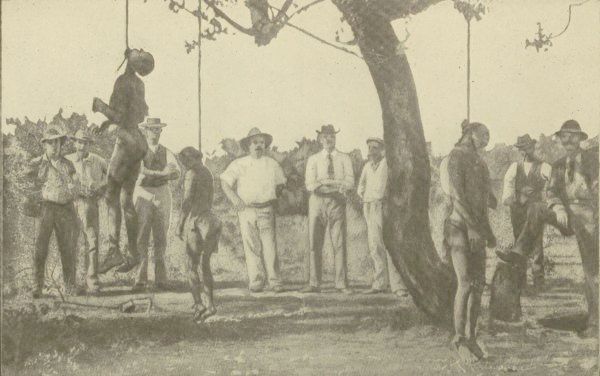
Innocent Matabele Kaffirs hung on the lone tree on Fife Street in Buluwayo, in 1896, by order of C.J. Rhodes and his Chartered Co., in order to amuse his fellow British subjects.
During the siege, many small parties of Kaffirs would come into Buluwayo for safety, as they would not take any part in the war. Chartered officials made use of these small parties, as a means to amuse the people with interesting street scenes. On reaching the town, the party of two, or three, or four, or possibly ten Kaffirs, would be arrested and ordered shot. The poor devils would be marched up the street, lined up, and in the presence of a large crowd, shot down. After several hours, when all had feasted their eyes and satisfied their curiosity, the innocent whites, among the Company's convicts, were made to carry these mangled bodies in their arms to the veldt, and bury them. These convicts were not allowed to make use of wagons or carts. In order to have a change of scene, the guards would sometimes make these refugees climb the big tree on Fife Street, and having attached ropes to their necks and a limb of the tree, would make them jump for their lives.
Then again the guards would sometimes take others to the same tree, and, having tied the ropes to their necks and passing it over the limb of the tree, would draw them up till their toes would just touch the ground, that the people might see them struggle and slowly strangle to death. Again, they would be marched into the street, and many guards being placed behind and near them, they would be commanded to run for their lives. Of course, all would be shot down, and the wounded sometimes shot five or six times before they died. These were horrible murder scenes, but Rhodesians seemed to enjoy them. Having seen all this, I do not hesitate to tell the public, that all may know just what a civilized people the English are.
In June we were relieved, by troops coming from the south, and I said farewell to the miserable hole, Buluwayo, and returned to Johannesburg in August, 1896.
I will tell in a few words the causes of that war, because I know them. The Matabeles had not forgotten that white men had poisoned their chief, Lobengula. The Chartered Company sent its police and forcibly took all the cattle from the Kaffirs. This caused the death of thousands of their little ones, who lived almost exclusively on the milk of the cows. The Company allowed its police and its people generally to go to the Kaffir Kraals, and, with their rifles, force young girls to go to their huts, where they could use them at their pleasure. This struck the Kaffirs to the very heart, because they are an extremely moral people, and immorality with them is punished by death. The Company allowed its Police Commissioners to force the Kaffirs to work in the mines. The Commissioners received from the Mining Company $2.50 for each Kaffir, and, in return, guaranteed the Kaffir to work for three months.
Just before the expiration of the three months, the mine captain would take his cowhide whip and so slash them that they would run away. He would then call upon the Commissioners to make good their contract and bring back the Kaffirs. The Commissioner would then send his police to arrest the runaways, and, having got them in his possession, would himself give them twenty lashes and return them to work. Finally the Kaffir, after running away, would hide in the hills. Then it was that the Commissioner would arrest the fugitive's wife and children and hold them as hostages, till he came and gave himself up to receive the twenty lashes. If the Kaffir left before his three months expired, the mine captain did not have to pay him any wages. To get his $2.50, the Commissioner had to make the Kaffir work three months, or put another one in his place, so that the poor Kaffir must be cut and slashed to pieces whether he worked or not. So universal was this cutting and slashing, that life to the Kaffir became worse than hell itself, and thereupon they rebelled, and killed every white man they could lay hands on. I said, "Well done." They would have taken the country, but Rhodes paid them $2,500,000, in kind, and bought peace; and to-day there is no whipping, no cutting Kaffirs to pieces, and they are as independent as kings, in Rhodesia, because they are the masters.
While I was enjoying myself in the jungles of the Zambesi, Rhodes completed all his arrangements for a raid into the Transvaal, but I must tell why it became necessary for Rhodes to make a raid into the Transvaal. He had painted Rhodesia yellow, and through flaming advertisements had led the world to believe that it was the richest gold bearing country on earth.
He knew there was no gold of any account in the country, and he knew, too, that the English public had been swindled out of more than $120,000,000. He knew also that the Chartered Company could not exist, would fall flat, and prove worse than the South Sea bubble, if something were not done, and that quickly, too. Now if he could only manage to seize the world-known, rich gold fields of the Rand, at Johannesburg, and annex them to Rhodesia, why then he and the Chartered Company would be safe, and could easily fill their chest with many more millions.
If the Rand gold-fields were once annexed, then he could advertise the marvellous gold output of Rhodesia, and would find no trouble in floating all the sand banks of that desert land, as veritable gold mines, and thus save and enrich himself and the Chartered Company.
I will say a few words about the Raid.
In December, 1895, Rhodes put about 600 of the Rhodesian police, with Dr. Jameson in command, on the western border of the Transvaal, near Mafeking. Of course, Rhodes had every thing arranged in Downing Street, London, so that at the proper time the English Government could step in, with its troops, to protect its citizens and thus take the rich Rand gold-fields from the Boers. Rhodes had a telegram sent to the London Times that the Boers were about to murder the English women and children in Johannesburg. Many of Jameson's men refused to cross the border, but when they were called into line and told they must go and help protect the English women and children from the savage Boers, they consented. The raiding column made a rapid march, reached Doornkop, about twenty miles from Johannesburg and were there captured by 180 Boers, who had come to meet them on hearing of the raid. There were some prominent Americans in the Johannesburg Reform Committee of seventy, who with Rhodes were implicated in this most outrageous piece of piracy, and when President Kruger refused to put Dr. Jameson and his staff, together with his seventy members of the Reform Committee, in a line and shoot them down, (and what a blessing it would have been for humanity,) he made the fatal mistake of his life and in the end lost his country, at least, temporarily. It was by wilful lying that Rhodes, Jameson and the Reform Committee induced those 600 police to make that raid, and on the tombstones of the twenty-five or thirty men killed at Doornkop, there should be engraved the words, "Murdered by C.J. Rhodes and his followers." All the miscreants who were connected with that infamous raid were soon set free, and they began at once in another way to create trouble for the Boers, and, as a result of their labor, one of the greatest wars in the history of man was fought by a handful of patriotic Boers, against the so-called mightiest empire of the world.
As a result of the raid, the names of something like a hundred low, greed-loving conspirators were made know to the world, and the Transvaal still held possession of its precious gold fields.
Rhodes had now failed, and in order to avert the catastrophe, he put up money himself, and pulled in his faithful allies, Alfred Beit, Lionel Phillips and several others, and succeeded in preventing a great financial calamity.
Immediately after Jameson and his 600 men were captured, Rhodes swore he knew nothing about the raid, and that it was a surprise to him. Of course Joe Chamberlain knew nothing about it because he said so. With Jameson, was captured a lot of cipher telegrams, as well as the keys. These gave Rhodes away, and proved conclusively that he was the organizer of the raid, and that Chamberlain was implicated with him. I will give one or two letters, just to show how much faith can be placed on an English official's word.
30 Mincing Lane, E.C., London, February 20th, 1897. My Dear Grey:
Thanks for your letter of the 9th ult., which I read with great interest. You will, of course, have heard that the committee was reappointed and has got to work. I send you official prints of the evidence already taken. Rhodes has done well, and I think will come out on top. He was nervous on the first day, though his evidence was good even then. Yesterday he was simply splendid. I do not think that we are by any means out of the woods, but there does not seem an off-chance of the plea of public interest being recognized, and the cables of the last of the year 1895, or rather the negotiations of that period, not being disclosed, though I am bound to say that personally I think the balance of probability is that they will have to come out. If they do, Mr. Chamberlain will have no one but himself to thank. I am very sorry I have been such a bad correspondent, but really the work and anxiety of the last fifteen months, or nearly two years, that is, since Harris came to England on the subject of the Protectorate, in July, 1895, have been most trying, and I sometimes fear that even my constitution will not stand it much longer, though, happily, I am still very well. I will try and write you more fully next week.
Believe me, Very truly yours, Bouchier F. Hawkesley.
P.S.—Rhodes has received your letter and cable about Lawley.
The Right Hon. Earl Grey.
The following came out in the Select Committee of the House of Commons that was appointed to investigate the Jameson Raid. The suppressed cables mentioned were never produced, because Mr. Chamberlain must be protected. The above letter, however, is pretty strong evidence and it made Mr. Chamberlain shake in his boots. Mr. Hawkesley is Rhodes' solicitor, and with him Chamberlain and the London Times were deeply implicated in the raid.
[PRIVATE] 39 Cadogan Square, London, S.W. (No Date) Dear Mr. Hawkesley:
So many thanks for yours. I knew you would feel as I do, that we owe Allingham a great deal, and must give the brother any (or every) help we could. I will tell him to make an appointment to come and see you one morning. He sails in the beginning of next month. I quite agree with you that very little good, if any, can be done with J.C. He knows what he has to expect, and will have had plenty of time to think it over, by the time C.J.R. arrives. As long as you make it impossible for C.J.R. to give away Jameson, he will be loyal to him; but I am sure from what I've said (heard), that at one time Rhodes contemplated sacrificing the Dr. The Dr. must never know this, and if any one can keep Rhodes up to mark, you can. I want to talk to you one day about the Dr.'s future—to see what you think of my plan, which he has already taken kindly to.
You do not know how grateful I am to you for all you have done for him, but I think you can perhaps partly understand how much it means to me to feel he has got a friend like you.
Can I come and see you one morning about 11.30?
Yours sincerely, R.L. Chamberlain.
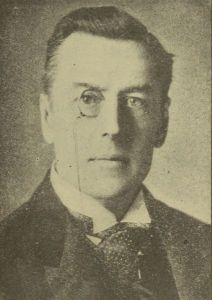
RT HON. JOSEPH CHAMBERLAIN Colonial Secretary, who with Rhodes and Milner is directly responsible for the death of thousands of innocent people.
The above shows that C.J. Rhodes was ready to prove traitor to his most faithful tool, who had done all his dirty work. The initials J.C. stand for Joe Chamberlain and all want to know what he had to expect. The initials C.J.R. stand for C.J. Rhodes.
On the arrival of Mr. Tatton Egerton in London after the circulation of a report that Mr. Chamberlain was cognizant of the plans connected with the Jameson Raid, this gentleman was confronted by the Colonial Secretary, and asked who had told him that Mr. Chamberlain was in the raid. The reply was, "Mr. Rhodes himself." The Colonial Secretary's answer to this blunt statement of the case was, "The Traitor!"
As neither Mr. Egerton nor Mr. Chamberlain has ever denied the above report, one can draw his own conclusion. If Rhodes "peached" on Chamberlain to Mr. Egerton, then I think that he was guilty of treason to one of his most trustworthy fellow-conspirators.
Rhodes and his crew did not remain idle for a moment, they started more newspapers in Johannesburg, got possession of all the newspapers in South Africa, except three or four, and then began a paper war against the Government, President Kruger, all Boer officials, Hollanders, and in fact all who were in any way in sympathy with the Boers. There was nothing too low, too mean, too maliciously false for them to say about the Netherlands Railroad Company, the Dynamite Factory, the price of coal or the treatment of some Cape niggers caught in a drunken brawl. There were many other grievances, among them was the five per cent tax levied on the gold output, by the Government. Then again, the capitalists wished to establish the "compound" system, and thus make slaves of all Kaffirs employed at the mines. This the Government refused to grant.
In addition to this came the cry for the franchise. It was claimed that the Uitlanders furnished the money that carried on the Government, that they were in a majority, and that therefore they were entitled to vote and hold office. They claimed the franchise by the fact of residence in the Transvaal. Under no circumstances, were they to forswear allegiance to their Queen and thus forfeit their British citizenship. They claimed the right to vote and hold office, as long as they saw fit to reside in the Transvaal, and at the same time to remain British subjects.
The Government changed the law from fourteen to seven years' residence necessary for the franchise, with an oath requiring the applicant to renounce all allegiance to the State of which he was last a citizen. The press cried this down as an act of impertinence and injustice on the part of the Government, because no British subject could for one moment think of giving up his citizenship and Queen for the sake of becoming a citizen in a country run by an ignorant Boer.
Remember, reader, that all this was purely the work of the press of South Africa, whose object was to give Joe Chamberlain a chance to put his mouth into the business. The Uitlanders of the Transvaal, including Englishmen, Americans, Germans, Frenchmen, in fact, representatives of all nationalities, took little or no interest in the reports which the press was spreading, because all knew that they were manufactured and utterly false; and besides all were freer, happier and making more money than ever before in any other country. All were making from $5 to $25 per day of eight hours' work, depending on each one's individual skill and smartness. I was there, knew them, heard them talk, and I say, there was not one in a hundred who wanted the franchise, who would have made use of it if given to him, or who ever discussed the subject. Each was trying to make his little fortune, that he might leave that far away land and return to his old home.
The horrible condition of affairs in the Transvaal existed only in the press and was the work of Rhodes, his crew and his ally in Downing Street, London. The press continued its dirty work day after day and month after month, without variation, except in a few instances where the imagination, under heavy strain, was able to squeeze out a little more venom. The English pursue the same tactics in their fighting, they bombard day after day, increasing the number of guns from time to time, and at last when they have concluded that the Boers are all killed or so demoralized that they could offer no resistance, they advance the line for the general attack. Just so the press continued to spit out its venom and spread it over the civilized world, month after month, until it was deemed that the time was ripe for making the final crushing blow that must rob the Boers of their gold fields and their country. This brings me to that notorious petition of 21,000 names that was deliberately manufactured in Johannesburg. Excluding women and children, I think it is safe to say that there were not 2,000 genuine signatures on that petition.
A hired bar-room specimen would go from house to house and have the mother put her name down and the names of all her children, first telling her it was the wish of Rhodes and the so-called big men of Johannesburg. Cape niggers would give their names, and the bar-room specimen would write them down, for the niggers could not write their names. There were men in Johannesburg who made it a profession to get up petitions, charging so much for every hundred names. The Rhodes crew employed these fellows at $25 per hundred names. These fellows would then go to their rooms, write down a few hundred names, as they came to their minds, and would then turn in the list, receive their money, and proceed to their rooms to repeat the process. That is the way that petition was gotten up, and it recited enough grievances to stagger the world. I used to talk with the people, and many of them, too, every day, and it was a rare exception when I found one who ever saw the petition. When completed, it was forwarded to Sir Alfred Milner, Cape Town. He looked at it, pronounced it correct, and forwarded it to Downing Street. When Sir Alfred Milner reported that he had investigated the names on that petition, and found them correct, he knows, I know, and the people of Johannesburg know, that he was guilty of a deliberate falsehood. Milner was sent to South Africa for a purpose. His predecessor would have thrown that petition into the waste basket. He could not be handled by Rhodes; so it became necessary to get rid of him, and out he went. Milner was just the man for the place, for he was an educated man, suave and gentlemanly, and, best of all, he was easily led by such a moneyed man as Rhodes.
Now you have what I call a trinity, three in one, but apparently three distinct individuals, Chamberlain, Milner, Rhodes, three names that will in time appear on the first page of the history of the decline and fall of the British Empire, as the cause of the beginning of the end. With Chamberlain in Downing Street, Rhodes and all his money in South Africa, and weak Mr. Milner in the middle and ready at hand, it was inevitable that the great struggle must come, in which thousands of innocent people must fall, and the plains of South Africa be reddened with their blood.
As a result of this petition, the conference in Bloemfontein between Presidents Kruger and Stein and Sir Alfred Milner was held. This conference was simply a farce, as the world knows, for Milner had his orders and all the concessions made by Presidents Kruger and Stein were simply declined. Had President Kruger told Milner that he was willing to cut off the Rand Gold-Fields, and allow them to be annexed to Rhodesia, why, that would have prevented the war, and war could not have been avoided in any other way, for Milner positively refused to let any of their differences go to arbitration. He came there to bring on war; he succeeded, and what a pity it is that he, Chamberlain and Rhodes thought it prudent to remain so far removed from the immediate scenes of action! But that is the way in this wicked world—those who are responsible for suffering and loss of life in a cruel and uncalled-for war, are the very ones who escape unharmed, and receive the congratulations of the civilized world for the masterly way they have carried out their designs.
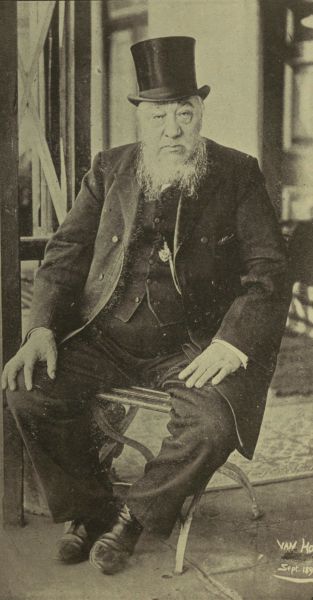
KRUGER
From now on telegrams fly thick and fast, the pot is boiling, and ready to flow over at any moment. President Kruger is praying for arbitration and peace, while Chamberlain, as chief of the Trinity, is clamoring for gold and war. He had lyddite, too much lyddite, and it must be exploded; and on the mountains of Natal, and the plains of the Transvaal and the Free State, the explosion must take place. Every shell exploded means so many dollars to Chamberlain and Co., and thousands upon thousands were exploded before the bloody struggle came to an end. I am glad to add, however, that but few Boers owe their death to lyddite.
If you read the London Times from June to October, 1899, you will find that the British Government had no intention of going to war with the Boers. But during this time about 15,000 English Troops were assembled at Dundee and Ladysmith, on the Transvaal border, and about the same number on the border of the Free State in Cape Colony.
A goodly number were also sent to Mafeking on the western border. About $2,000,000 worth of ammunition and war supplies were put into Dundee, and about $10,000,000 worth into Ladysmith. In Kimberly and Mafeking, the same provisions were made as regards ammunition and war supplies. At the same time there were something like 20,000 troops on the water, bound for South Africa. There can be no question about it, the British Government had no idea of making war on the Transvaal, for Chamberlain said so in Parliament, Milner said so in Cape Town, and Rhodes backed up both of them with his money.
These great bases of war supplies were established, and thousands of troops landed in South Africa, simply to keep the Commissary and Quartermaster's Department in good training, and allow the troops to enjoy some holiday exercises in a far-away land. Long before the war, many English officers, disguised in civilian clothes, had labored hard in making military maps of the Transvaal and Free State, showing every road, path, farm, sluit, hill, etc., and yet the British Government had no idea of forcing war upon the Transvaal; and this must be true, too, for the London Times said so, Chamberlain said so, Milner said so, and all were backed by Rhodes and his millions. We captured so many of these military maps that I can make the above statement without fear of contradiction.
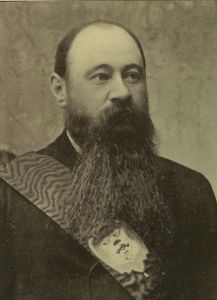
M.T. STEYN, PRESIDENT ORANGE FREE STATE
Years ago, the Orange Free State had been robbed of the Kimberly Diamond Fields by the English, and thereafter the English Government never complained of any grievances in that Republic. The South African Republic and the Orange Free State formed an offensive and defensive alliance because it was a certainty that if the English took one of them, it would be but a question of time when an excuse would be manufactured to take the other; so they wisely concluded to stand shoulder to shoulder and live as Republics, or fall together and exist as dependencies.
They did stand together, they fought together and although they were brought to their knees, they are not down yet, and the price the English have so far paid, if the English graves in South Africa are to be taken as an index, is certainly enough to stagger humanity. How many graves are yet to be dug on the very same battle-fields, of those two little countries, in order to keep the Boer on his knees, or to put him quite down, is the question for the future to answer.
Now I come to the point where the two little Republics are brought face to face with the military forces of war-prepared England; when war is inevitable, when the immortal gods could not prevent a clash of arms; when the first shot is fired in a struggle destined to stir the world, humiliate the English officer and lord, and destroy the name and prestige of the great degenerate British Empire.
CHAPTER III.
BOER COMMISSARY—-"MEALIE PAP" AS A RATION—I TAKE COMMAND OF THE IRISH BRIGADE—WAR DECLARED.
Before we begin to fight I must say something about the fighters, and will commence with the Boer and his readiness for war. The Boer is a simple, unpretentious farmer, with a long beard, rather long hair, a powerful physical frame, a man inured to all kinds of hardships, who daily looks after his horses, cattle and sheep. He has a lot of Kaffir families on his farm, to whom he gives all the land they wish for cultivation, on the condition that they put in his little patch of mealies (corn), and oats. To the Kaffir boys who stay at the farm house, and make themselves useful at all kinds of odd jobs, he gives each a cow at the end of the year. This means a great deal to the Kaffir boy, for when he has as many as eight head of cattle, he has the price he must pay for a wife; and to have a wife is every Kaffir boy's ambition.
Every night and every morning the Boer has religious services in his house, and all the family attend. A visitor may attend or not as he pleases.
The Boer cares not what your religion is, nor of what your church may be, and it does not concern him whether you have any religion or not. He looks after his own soul, and grants you the privilege of looking after yours. He will never impose his beliefs upon you, nor will he ask you your religion. He simply takes it for granted that you are a Christian, a God-fearing individual. He is a domestic man whose greatest happiness is in his home, with his wife and children—and he generally has plenty of children. When he visits his neighbors on Sunday, the whole family visits with him. They all go to church on Sunday, and after the services are over, they all remind me of a happy reunion of a family that has long been separated. In his way, he is as simple as a child, hospitable and generous to a fault, ready to extend the helping hand to friend or stranger, modest and retiring; but when once you try to deprive him of his liberty, you will find that he will fight to the bitter end, regardless of the odds against him.
For months previous to the war, the English Press was busy trying to let the world know what a savage the Boer really was, and especially how intolerant he was, as regards the Catholics. There was an object in spreading broadcast all these outrageous lies; because England wished the world to believe, that in waging war against the Boer, she was really doing a service toward God and humanity. The Irish people were Catholics; so the press told how bitter the Boer is against the Catholic, how he tramples him down, and tries to drive him out of the country. All this infamous lying was for the sole purpose of inducing the Irish to enlist in the British army, and I regret to say that the Irish fell into the trap. Thousands of them joined the British army, and to-day thousands of them are buried in South Africa. Few English are buried in South Africa, but the graves of the Irish and Scotch can be counted by the thousand.
Leaving aside the religious aspect of the man, the Boer reminds me very forcibly of our South-westerners, in appearance; and especially in his riding and shooting ability. I have given a lengthy, but an honest and faithful portrait of the Boer, because the subsidized press of England spent itself in trying to disgrace him in the eyes of the world, for no other reason than to cover up the English Government's infamy in forcing a most unholy and damnable war on the God fearing Boer race of South Africa.
During the time of intense excitement in the towns of South Africa, and in London, the unmindful Boer was quietly and religiously pursuing his daily routine work on his remote farm. It never occurred to him that his quiet was liable to be disturbed at any moment by an exploding bomb that might force him to leave his wife and little ones for two years and eight months, and possibly forever. Occasionally he heard the distant rumble of impending war, but he gave it no heed, for his ear had become accustomed to such sounds during the last twenty years. He could see no reason for war and therefore dismissed the subject from his mind. The Transvaal Government and the Free State Government had, all told, a standing army of about 900 artillerymen who manned their forty cannon and sixty maxims. The artillerists were farmer boys, smooth-faced, and from sixteen to eighteen years old. They were trained by Boer officers principally. I think there were as officers, also, two young Hollanders, and two Germans, who had long resided in the Transvaal.
These young Boer officers and smooth-faced farmer boys proved themselves the most remarkable artillerists in the world. The Free State and Transvaal were exactly on the same footing as to readiness for war, and neither was, therefore, in any sense of the word, prepared for a struggle with the mightiest Empire of the world.
The total population of the Free State and Transvaal combined did not exceed 250,000 men, women and children; while that of Great Britain and her colonies runs up to something like 350,000,000. The Transvaal and the Free State are two inland countries several hundred miles from the coast; so England had no reason to fear trouble in landing her troops at any of her many coast towns. The Transvaal and the Free State are divided into districts, and each district is divided into veldtcornetcies. In each veldtcornetcy there is a veldtcornet, elected by his constituents, who is a civil officer in time of peace and the military leader of the men in his veldtcornetcy, in time of war.
A commandant is appointed, and given command of one, two, or more veldtcornetcies, depending upon circumstances. Each veldtcornet divides up his men into corporalships of twenty-five men, and over each corporalship he appoints a corporal. The commandant general (commander-in-chief), who is elected by the whole people, appoints a vecht-general (fighting general), who commands one, two or more commandancies, also depending upon circumstances. Assistant commandant-generals are appointed by the chief, to assist him in various districts; these, of course, hold command over the vecht-generals. In time of peace there is but one general, and that is the commandant-general, who is also a member of the President's staff, called the Executive Council. In time of war all the other generals are appointed as they are required.
At the beginning of the war, there existed what you might call a Commissary and Quartermaster Department. These Departments load the trains with rations and clothing, and ship them to the front for the supply of the burghers. Each veldtcornet, on their arrival, sends his wagons, and gets all they can haul without requisition. The corporal in charge simply signs a receipt for what he gets. On the wagons arriving at the camp, the burghers go and help themselves to what they want. This never causes any trouble, for the burghers are always ready to divide up with each other whatever food or clothing they may have. I mention these two departments, because it is the first time in Boer history that they ever existed. They continued to exist for about ten months and then disappeared, and it is my opinion that all were better off; for then we had to come down to straight mealie pap (corn meal mush), and fresh beef. Commissary Departments kill more soldiers than are killed by bullets. When living on nothing but "mealie pap" and fresh meat, all are healthy, strong, energetic and full of fight. The Boer war has proved this; for during the last two years of the war we had nothing else to eat, and we lost but one man from sickness; and did the hardest work and best fighting, and in the end, when the general surrender came, the world had never seen 24,000 stronger, healthier and more dashing patriots than those who laid down their faithful rifles to save their women and children from extinction.
I now arrive at the point when the rapidity with which telegrams were passing back and forth on the telegraph lines was such, that the iron poles were fairly melting to the ground, and when President Kruger was finally convinced that war could not by any possibility be averted, and that the so-called great Christian nation, his foe, was bent on spilling the blood of thousands of innocent people, in order to satiate its thirst for gold.
The feeble old man, the time-battered old soldier, the fervent old patriot, the bulwark of the Boer nation, now prayed God to direct him and his people and give them strength to preserve and enjoy their liberty and independence. Commandant-General Piet Joubert, being authorized to proceed to the defence of the land, sent messengers to all the veldtcornets, with directions to call the burghers to arms, and proceed to Laing's Nek, on the Natal border, to meet the invasion of the British Army. The same orders were given in the Free State, for the burghers to go to the Cape Colony border, and resist the British Army assembled there. A small body of burghers was sent toward Mafeking to protect the western border. These orders were issued during the last days of September, 1899.
On October 1st, there were more than 10,000 burghers on the Natal border, and at the same time the Free State burghers had assembled on the border of the Colony.
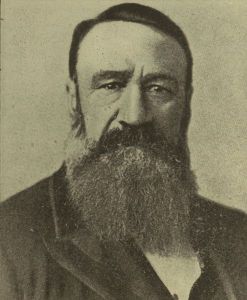
COMMANDANT GENERAL PIET JOUBERT.
It was at this time that the Irish and the Irish-Americans of Johannesburg and Pretoria, about 300 strong, had assembled, and asked me to take command of them to help the Boers in their battle for freedom. I accepted the command on the condition that not one of them would expect or accept one cent of money for his services, and that all would fight purely for their love of liberty, and for down-trodden Ireland. This condition having been unanimously accepted, horses, arms, ammunition, etc., were at once procured, and off we went for the Natal border, where we joined the Boers on October 6th. It was quick work, but it is so easy to do things quickly, with a command of true and patriotic Irishmen, overjoyed and brimming full of enthusiasm at the prospect of giving a blow to Ireland's life-long enemy and oppressor.
Laing's Nek and Majuba Hill are on the border, between Natal and the Transvaal. We were on one side of the Nek, and the English on the other, both parties awaiting further developments. Finally, on October 9th, General Joubert sent a demand to the British Government for the recall of the English troops from the Transvaal border. The British declined, all communications were broken off, and war was declared on the following day, October 11th.
CHAPTER IV.
THE BOER ULTIMATUM—THE BRIGADE AT THE FRONT—BUTCHERY OF PRISONERS BY ENGLISH LANCERS.
"The Government of the South African Republic feels itself compelled to refer the Government of Her Majesty, the Queen of Great Britain and Ireland, once more to the Convention of London, 1884, concluded between this Republic and the United Kingdom, and which in its XIVth Article secures certain rights to the whole population of the Republic; namely, that 'All persons, other than natives, conforming themselves to the laws of the South African Republic, (a) will have full liberty, with their families, to enter, travel, or reside in any part of the South African Republic; (b) they will be entitled to hire or possess houses, manufactories, warehouses, shops and premises; (c) they may carry on their commerce either in person or by any agents whom they may think fit to employ; (d) they will not be subject, in respect of their persons or property, or in respect of their commerce or industry, to any taxes, whether general or local, other than those which are or may be imposed upon citizens of the said Republic.' This Government wishes further to observe, that the above are only rights which Her Majesty's Government have reserved in the above Convention with regard to the Uitlander population of this Republic, and that the violation only of those rights could give that Government a right to diplomatic representations or intervention while, moreover, the regulation of all such questions affecting the position or the rights of the Uitlander population under the above-mentioned Convention, is handed over to the Government and the representatives of the people of the South African Republic. Amongst the questions, the regulation of which falls exclusively within the competence of the Government and the Volksraad, are included those of the franchise and representation of the people of this Republic, and, although thus the exclusive right of this Government, and of the Volksraad, for the regulation of that franchise and representation is indisputable, yet this Government has found occasion to discuss, in a friendly fashion, the franchise and the representation of the people, with Her Majesty's Government, without, however, recognizing any right thereto on the part of Her Majesty's Government. This Government has also, by the formulation of the now existing Franchise Law, and the Resolution with regard to representation, constantly held these friendly discussions before its eyes. On the part of Her Majesty's Government, however, the friendly nature of these discussions has assumed a more threatening tone, and the minds of the people in this Republic and in the whole of South Africa have been excited, and a condition of extreme tension has been created, while Her Majesty's Government could no longer agree to the legislation respecting franchise and the Resolution respecting representation in this Republic, and finally, by your note of the twenty-fifth of September, 1899, broke off all friendly correspondence on the subject, and intimated that they must now proceed to formulate their own proposals for a final settlement, and this Government can only see in the above intimation from Her Majesty's Government, a new violation of the Convention of London, 1884, which does not reserve to Her Majesty's Government the right to a unilateral settlement of a question which is exclusively a domestic one for this Government, and has already been regulated by it.
"On account of the strained situation and the consequent serious loss in, and interruption of, trade in general, which the correspondence respecting the franchise and representation in this Republic carried in its train, Her Majesty's Government have recently pressed for an early settlement, and finally pressed, by your intervention, for an answer within forty-eight hours (subsequently somewhat modified), to your note of the twelfth of September, replied to by the note of this Government of the fifteenth of September, and your note of the twenty-fifth of September, 1899, and thereafter further friendly negotiations broke off, and this Government received the intimation that the proposal for a final settlement would shortly be made, but although this promise was once more repeated, no proposal has up to now reached this Government. Even while friendly correspondence was still going on, an increase of troops on a large scale was introduced by Her Majesty's Government and stationed in the neighborhood of the borders of this Republic. Having regard to occurrences in the history of this Republic, which it is unnecessary here to recall to mind, this Government felt obliged to regard this military force in the neighborhood of its borders as a threat against the independence of the South African Republic, since it was aware of no circumstances which could justify the presence of such a military force in South Africa, and in the neighborhood of its borders. In answer to an enquiry with respect thereto, addressed to His Excellency the High Commissioner, this Government received, to its great astonishment, in reply, a veiled insinuation that from the side of the Republic (van Republikeinsche zyde) an attack was being made on Her Majesty's Colonies, and at the same time a mysterious reference to possibilities; whereby it was strengthened in its suspicion that the independence of this Republic was being threatened. As a defensive measure, it was therefore obliged to send a portion of the burghers of this Republic, in order to offer the requisite resistance to similar possibilities. Her Majesty's unlawful intervention in the internal affairs of this Republic, in conflict with the Convention of London, 1884, caused by the extraordinary strengthening of troops in the neighborhood of the borders of this Republic, has thus caused an intolerable condition of things to arise, whereto this Government feels itself obliged, in the interest not only of this Republic but also of South Africa, to make an end as soon as possible, and feels itself called upon, and obliged to press earnestly and with emphasis for an immediate termination of this state of things, and to request Her Majesty's Government to give it the assurance.
(a) That all points of mutual difference shall be regulated by the friendly course of arbitration, or by whatever amicable way may be agreed upon by this Government with Her Majesty's Government.
(b) That the troops on the borders of this Republic shall be instantly withdrawn.
(c) That all reinforcements of troops which have arrived in South Africa since the first of June, 1899, shall be removed from South Africa, within a reasonable time, to be agreed upon with this Government, and with a mutual assurance and guarantee on the part of this Government, that no attack upon or hostilities against any portion of the possessions of the British Government shall be made by the Republic, during further negotiations within a period of time to be subsequently agreed upon between the Governments, and this Government will, on compliance therewith, be prepared to withdraw the armed burghers of this Republic from the borders.
(d) That Her Majesty's troops which are now on the high seas shall not be landed in any part of South Africa.
"This Government must press for an immediate and affirmative answer to these four questions, and earnestly requests Her Majesty's Government to return such an answer before or upon Wednesday the eleventh of October, 1899, not later than 5 p.m., and it desires further to add, that in the event of unexpectedly no satisfactory answer being received by it within that interval (it) will with great regret be compelled to regard the action of Her Majesty's Government as a formal declaration of war, and will not hold itself responsible for the consequences thereof, and that in the event of any further movement of troops taking place within the above mentioned time in the nearer direction of our borders, this Government will be compelled to regard that also as a formal declaration of war."
The reply was as follows:
"H.M.'s Agency, Pretoria, "October 11th, 1899.
"Sir,—I am instructed by the High Commissioner to state to you that Her Majesty's Government have received with great regret the peremptory demands of the Government of the South African Republic, conveyed to me in your note on the 9th inst., and I am to inform you in reply that the conditions demanded by the Government of the South African Republic are such as Her Majesty's Government deem it impossible to discuss.
"I have the honour to be, Sir, "Your obedient servant, "W. Conyngham Green, C.B."
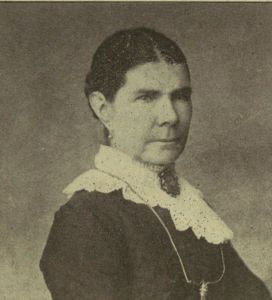
MRS. JOUBERT Widow of Commandant General Piet Joubert
Those assembled on the Natal border, October 11th, will never forget that day, not only because it was the first day of the war which was to be recorded as one of the greatest in the annals of history, but because it was so bitterly cold and stormy. A strong wind was blowing, heavy and murderous looking clouds were rolling and tumbling about our heads. Snow was falling on the mountains, and while the heavens and the earth were thus warring with each other, the Boers filed across Laing's Nek, to defend their homes and country against aggressive and greedy England. Among the Boers there are no discipline, no drilling, no inspections, no roll calls, every man feeling himself a general with full authority to do as he pleases. So they began the war, so they prosecuted the war, and so they finished the war. The severe cold and apparent confusion and disorder among the Boers, as they cantered off like so many Apache Indians toward Laing's Nek, did not seem to make the slightest impression on the boys of the Irish Brigade. They had something else to think about, and they were doing a lot of thinking. Of all the horses for them, there were not over twenty broken to the saddle, and among the boys themselves, there were not over a half a dozen who had ever tried to ride a horse. Now, one can easily see why the Irish boys were doing so much thinking. They did not wish to be left behind, yet each one felt that there was a great uncertainty as to how friendly the relations between himself and the horse might be.
The time came when the order was given to saddle up. Every one, with the enthusiasm of a true soldier hastened to make good the order. After a good two hours' struggle, every horse was ready for his rider. The men were told to mount, each in his own way, and to make every effort to hold the saddle after once he found it. As they were told to lay aside their rifles until they had become on friendly terms with their horses, they were not hampered with any impediment except their inexperience. Having mounted, I scarcely know what happened during the next five minutes, but I saw men in camp, on the veldt, in fact, all about me, picking themselves up, shaking the sand off them, and chasing here and there and everywhere a lot of horses from which they had just separated. Having caught their horses they were told to try again and keep trying again, until they and their horses became thoroughly acquainted with each other. For hours I sat and witnessed and enjoyed the best show I had ever seen or ever expect to see. But the men were Irish, and were not to be defeated as long as there was life in them. I kept no account of how many times each mounted his horse, and immediately thereafter turned a somersault, but, when, at the conclusion of the performance, each rode up and said he was ready for his rifle, I felt proud of them, for they showed the real Irish pluck and grit that are destined some day to free Ireland. Within one week from that day I could call each one of those Irish boys a truly good cavalryman. They learned to ride much sooner than they learned to know their horses.
A few of them, to be sure, would tie a piece of ribbon in the mane or tail, and would always hunt for their ribbons instead of their horses. This gave rise, months after, to some trouble in which Father Van Hecke, the Brigade Chaplain, was implicated. Father Van Hecke always tied a green rag into his horse's mane so that he could find him quickly. He rode a bay pony, and a good pony he was, that Father Van Hecke thoroughly appreciated.
One day one of the mischievous boys thought he would play a trick on the good Father. He went out, caught the Father's pony, removed the green rag and tied it into the mane of a sorrel pony, not half so good as the Father's. When the order was given to saddle-up, out went the Father, and the boys and Boers, each for his own horse. Father Van Hecke found the green rag, caught the sorrel pony and started to camp with him. At this moment up came the Boer who owned the pony, claimed him and accused the Father of trying to steal his horse. Father Van Hecke informed the Boer that he thought he had ridden that horse long enough to know him, and that the green rag was his mark. The Boer used rather strong language, but the Father would not surrender his pony to any one. Finally I was sent for to settle the matter.
About twenty feet from the two equally certain owners of that sorrel pony, stood the Father's pony. I pointed him out to the Father and told him I thought that some of the boys had played a trick on him by removing the green rag from his pony and transferring it to the Boer's. The Father smiled and gave the Boer his horse, but I think to-day that that Boer is convinced that Father Van Hecke was trying to steal his horse. Father Van Hecke is a noble, good man with a warm, sympathetic heart, and as such he will always be remembered by the boys of the Irish Brigade.
Already the last of the Boers had disappeared over Laing's Nek, when the boys reported that they were ready for their rifles, so each secured his piece, and off we started without further delay. All were worrying for fear the Boers would have a fight with the English before we arrived. After travelling about twenty minutes we began to feel the biting cold and I was asked to give them a gallop.
I told them the idea was a good one, but I had grave fears about the consequences. "Oh, that's all right. We are all right, Colonel, we have shown these horses what we can do." I started off on a slow gallop, and within two minutes at least one-third of the boys were deposited on the veldt, and it took the other two-thirds about half an hour to round up the loose horses and put matters into marching order again. After that I had no further delay, but I never repeated the gallop until near Dundee, where every man sat his horse in true cavalryman style. Late that night we overtook the Boers at Newcastle, the boys being very tired and stiff, but none complained, for they had, so far, not missed the first fight.
What an enthusiastic and patriotic body of men those Irish boys were! They seemed to feel that if they could give England one good blow, their happiness would be an assured fact. The very fact that the Irish, where ever you find them, so utterly despise the English, and so earnestly long to blow the whole English race into eternity, is in itself sufficient proof that the English rule in Ireland is cruel and brutal.
All had now passed over Laing's Nek and down the mountains into the valley. Here it was warm, but as disagreeable as ever, in fact more so, for it was rain, rain, rain, day and night, and the thick clouds of mist were actually rolling along the ground. At times we could not see twenty paces ahead of us, so it was necessary to move cautiously, because we knew that the English were falling back toward Dundee just ahead of us. Thoroughly soaked to the very skin, all plowed through the mud, felt their way through the mist and clouds, passed Danhausser, and camped about seven miles from Dundee. On the following day, the clouds were motionless, but resting heavily on the adjacent mountains and foothills, while the valleys were quite clear. It was apparent to all now, that a battle must take place, and that, too, in a very short time. Just as all horses were saddled and the artillery inspanned, and ready to move out, about two miles to our left and front we discovered a column of English emerging from a cloud on the foothills across the valley. Every Boer that happened to see them put spurs to his horse, and after them he went. Of course a lot of the Irish boys followed suit in great haste. The English whirled about and took refuge in a great stone cattle kraal. In five minutes the rifles began to speak on both sides—in another five minutes a French cannon was sent out, and fired a couple of shells, and five minutes later the white flag was waving above the heads of the English, and all was quiet again. Colonel Moller with his 196 well trained Eighteenth Hussars, had surrendered to forty untrained farmers. We now learned that Lucas Meyer, who had taken a road much to the east of us, had attacked Dundee, and been forced back because General Daniel Erasmus, who was to co-operate with him, had failed to show up. Colonel Moller had been sent out to follow up the Boers, and according to his own statement had lost himself, and hadn't the slightest idea where he was, although Dundee was only six miles away. Of the 196 Irishmen captured, eighty-five begged to join the Irish Brigade and fight with the Boers. I wanted to take them on the spot, but the Boer officers did not consider it right, because, they said, if any of them were afterwards captured, the English would surely shoot them. When first captured, all were half scared to death and the first thing they wished to know was whether the Boers would shoot them or not. When told that they would be sent to Pretoria, where they would probably spend most of their time in playing cricket and football, they were, one and all, positively delighted that they had surrendered. They said that their officers had told them in Natal, that the Boers were savages, worse than the Zulus, and that so sure as any of them were captured, just so sure they would be killed.
While the men scarcely believed all their officers had told them, yet they were uncertain, because they had never seen a Boer and didn't know just what kind of a ruffian he was. The men of the Eighteenth Hussars had now learned what a liar and a hypocrite the English officer is.
These are harsh words, but it requires just such words to bring out the naked truth about the English officer. There were very few officers who were not branded as liars by their men, after it was learned how the savage Boer treated the Eighteenth Hussars.
Within the next few months we had captured several thousand prisoners, and they all told the same story and it was just as related above. That is enough about the English officer at this stage of the war, but I assure him that I will give him plenty of attention before this narrative is finished. To continue, we now heard that the English were moving out of Dundee to take possession of the hills lying between us and the town. The Irish Brigade were ordered to move at a gallop and reach the hills first, and we succeeded. The English were to be seen at different places in the little circular valley in which Dundee is situated. This valley is about six miles in diameter and surrounded by hills and mountains. Several deep ravines run through it, and in them a whole army could easily be concealed. Dundee was near the hills on the east side, and Glencoe near the hills on the west side of the valley. Had the English troops taken possession of the hills and mountains around Dundee, I do not believe we could have taken the place. General Penn-Symons had about 6,000 men there and eighteen cannon, and for defence his position was most excellent. Fortunately for the Boers, he did not take advantage of his position, and the result was that 1,000 Boers were chasing the Lancers armed with cold British steel, about that little valley nearly a whole day. The English seemed afraid to move eastward of Dundee, yet there were no Boers there, as Lucas Meyer had fallen back some fifteen miles. The Boers in bands of 100 or 200 placed themselves about the north and west sides of the valley, and here it was that the Lancers, in bands of 400 strong, would try to find an outlet. At every point the Boers would meet them with a few shots, and off went the cold British steel in search of another outlet. The mountains were rugged and steep on the southeast side, and there was but one pass through to the valley, and that leads to Ladysmith. At times it would rain, and then again the heavy clouds would roll over the valley and totally obscure the whole scene of action.
The whole day, however, was to the Boer something like a day of sports, for they had enjoyed themselves chasing the Lancers about the valley as so many springboks. When night came, it was terribly dark, and now it was that Colonel Yule and his 6,000 men, armed with cold British steel, took advantage of the only outlet to the south and made their escape to Ladysmith, some thirty miles away. During the battle with Lucas Meyer, General Penn-Symons was killed, and Colonel Yule succeeded him. For this masterly escape of Colonel Yule and 6,000 men from about 1,000 Boers at Dundee, the English proclaimed to the world their great victory, and promoted Yule to the rank of Major-General. In any other army he would have been put aside in disgrace. I am not sure whether he received a Victoria Cross or not, but if he didn't he certainly deserved one. On the following day Dundee surrendered, with about 250 officers and wounded men, and almost an equal number of prisoners. Enough food and ammunition fell into our hands to provide our command for many months. The English, as usual, after one of their great victories, had forgotten to bury the dead who had fallen at Talana Hill two days before, in the fight with Lucas Meyer; they had dug a shallow pit and thrown in some of them.
But when we arrived, their hands and feet and stomachs were protruding above its surface and presented a most revolting scene. Thirty-nine dead bodies were left unburied, and the savage Boer gave them decent interment. It was near this very spot that, two days beforehand, the English, on getting possession of Dr. Van Der Merwe and his ambulance, tied ropes about his neck, and the necks of his Red Cross assistants, and then, having fastened the ropes to their wagons, dragged them off as prisoners of war.
Mr. Englishman can't deny this, but he may lie about it. Something else fell into our hands here, something that has caused Mr. Chamberlain to tell many a falsehood to the world. We captured thousands of dum-dum bullets and split bullets, and gave plenty of them to the different foreign consuls. I had the pleasure of supplying the whole Irish Brigade with these dum-dum bullets and split bullets, and the English Lee-Metford rifles captured at Dundee. The Boers thought it a pity to waste them also, so they too supplied themselves. We gave the English back their own medicine in big doses at Ladysmith, and many and numerous graves in and about that town mark the results.
The prisoners captured at Kraaipan were all carrying dum-dum bullets, and all the cartridges fired at Rietfontein near Elandslaagte were dum-dum bullets; and, Mr. Englishman, we would never have known what dum-dum bullets were, had you not brought them to South Africa and given them to us. Bring some more, next time. If asked why we didn't capture Colonel Yule and his 6,000 men, as well as all they possessed, I answer that we had no generals—we had only Lucas Meyer and Daniel Erasmus, and the fighting brains of the two together, would not suffice to make an efficient corporal; much as we deplored their determination not to fight, yet we found a little satisfaction in the fact that we saw that awfully, awful death-dealing "cold British steel" in an awfully, awful, terrible tremble. How is that, Mr. Englishman?
We now passed on towards Ladysmith where we hoped to have a shake not only with Colonel Yule, but also with General Sir George White, Generals French, Hunter and other terrors of the English army. Lucas Meyer fought General Penn-Symons on October 20th, and on October 21st was fought the Battle of Elandslaagte. That good, unfortunate old soldier, General J.H.M. Koch, was in command of a mixed commando of Boers, Germans and Hollanders, numbering something like 600 or 700 men, all told. He should have closed up the only pass through which Colonel Yule could escape, but he didn't. He was persuaded by his under officers to go towards Ladysmith, and at Elandslaagte, fifteen miles from Ladysmith, his men unfortunately captured a supply train on its way to Dundee. On that train was plenty of whiskey and wines, and all the men thought it best to dispose of such beverages by drinking them; the result was that many were not in very good fighting trim. General French was sent out with his thousands of trained soldiers, bristling with cold, British steel, to meet General Koch and his little band of 600. They met, and a bloody battle was fought, in which the Boers were defeated, General Koch mortally wounded, and many other distinguished men lost their lives, among them being that brave and patriotic Hollander and States Prosecutor, Dr. Hermanus Coster. General Koch had no position at all, for it was open to cavalry movements on all sides, and offered no protection in any sense of the word. He should have retreated at once, but he didn't, so it simply remains for me to tell what happened.
We lost forty-five men killed, about 100 wounded, and something like 190 taken prisoners. Not over 300 escaped, so it proved a bad day's work for us, and allowed the British to boast of the prowess of cold British steel throughout the civilized world. The British officer, and the soldier, too, are both justified in their boasting, for they used their cold British steel as it had, I hope, never been used before. They went about the battle field driving their lances through the bodies of both the dead and wounded, that each might carry his bloody lance back into Ladysmith, display it, and boast to the men, women and children of the town, of the bravery of him who carried it. I will here insert a letter or two, to convict the boasters in their own words. These letters have often been published before, but they cannot be published too often, for the people of the world should know all about cold British steel, and how it is invariably used. Many an unarmed negro has fallen victim to cold British steel, so it is well for all to read the following letters, and, having read them, apply to the British army for lessons in chivalry, and on the best methods of carrying on civilized warfare in the twentieth century.
"After the enemy were driven out, one of our squadrons pursued, and got right in among them in the twilight, and most excellent pig-sticking ensued, for about ten minutes, the bag being about sixty. One of our men stuck his lance through two, killing them both at once. Had it not been getting dark we should have killed more."
The above is a published extract from a British officer's letter and speaks for itself.
The Lancers wrote many letters, boasting of their savagery and many acts of murder, as the following published extracts will show.
"We charged them, and they went on their knees begging of us to shoot them, rather than stab them with our lances, but in vain. The time had come for us to do our work and we did it."
Another Lancer boasts as follows:—
"I got hold of one Boer,"—he had taken an enemy prisoner,—"he did not know what I intended doing, so I made motions to him to run for his life. So he went, and I galloped after him with the sergeant's sword, and cut his head right off his body."
Another Lancer writes:—
"We just gave them a good dig as they lay. Next day most of the lances were bloody."
Now read this extract from a happy Lancer, and I will pass the rest:—
"Many of our soldiers are quite rich with the loot that has fallen to them. The infantry regiments profited to the largest extent. One Tommy secured a pocket-book containing 270 pounds in Transvaal money. Our boys are parading about now with gold watches, chains, and other trinkets."