Volume 4 — DISEASES OF THE GENITO-URINARY SYSTEM. (continued 13)
Reading edition
Death occurs from exhaustion, hemorrhage, septicæmia, uræmia, or from infiltration interfering mechanically with the function of the bladder, kidneys, or intestine.
For the purpose of correcting the offensive odor and lessening pain there seems to be nothing superior to chloral and glycerin (drachm j-drachm ij ad ounce ij) on a tampon of cotton; the fluid extract of eucalyptus combined with the chloral and glycerin (ounce ss ad ounce ij) has proven an excellent deodorizer in the author's hands.
Vaginismus.
DEFINITION.—This affection, which was first called vaginismus by our distinguished countryman the lamented J. Marion Sims, consists in a hyperæsthesia or peculiar sensibility of the site of the hymen and vaginal outlet, associated with involuntary spasmodic contraction upon irritation of the sphincters of the vagina.
ETIOLOGY.—Predisposing Causes.—This is sometimes an idiopathic affection, but more frequently is symptomatic of some other disorder. When idiopathic, it is due to a diathesis generally termed hysterical, or an excessive nervous irritability affecting the entire system. The symptomatic causes are quite numerous—more frequently some insignificant local disorder than any grave form of disease. The more common causes are irritated or inflamed carunculæ myrtiformes, excoriation, and irritable ulcers and eruptions about the vulva, vaginitis, uterine catarrh, inflammation, growths and fissures of the urethra, disorders of the bladder, fissure of the anus, and inflamed hemorrhoids. Other less frequent causes have been mentioned by writers, as neuromata, an unusually rigid perineum, and a disproportionately large male organ. Neftel of New York asserts that lead-poisoning has been the cause of some cases under his own observation.9 It is sometimes associated with or apparently caused by congestive dysmenorrhoea and uterine displacements and engorgements.
9 N. Y. Med. Journ., vol. ix. p. 81.
Emmet's views regarding the etiology and pathology of this affection differ from those of the majority of writers on the subject. He regards it as purely a symptom denoting reflex irritation, and says that with it he has never failed to find some condition, as a displacement, a limited cellulitis, or a fissure in either the rectum or the neck of the bladder, as the exciting cause.10
10 The Principles and Practice of Gynæcology, by Thomas Addis Emmet, M.D., 2d ed., Philada., 1880, p. 607.
SYMPTOMATOLOGY, COURSE, DURATION, TERMINATION, AND COMPLICATIONS.—The most prominent symptom is excessive pain upon the sexual intercourse; this is often so marked that subsequent attempts, or even a digital examination, will throw the patient into a state of extreme nervous trepidation and apprehension. If attempts at coition are persevered in, the symptoms are further intensified, so that the spasm and violent contraction of the sphincter vaginal muscles induce agonizing pain. Besides having the characteristic pain, patients with this disorder are, as a rule, sterile. If a physical examination be made in a well-marked case of vaginismus, it frequently occurs that the slightest touch on the part of the physician about the site of the hymen will bring on painful contraction of the vagina and sphincters, and cause the patient to spring up and show much nervous disturbance. In the same class of cases it may be brought on by walking. Thomas says that "in some cases a marked tendency to spasm will have been noticed upon sudden changes of position or washing the genital fissure."11
11 Op. cit., p. 206.
Barnes remarks that in some women the irritability of the nervous centres becomes so great, the sensitiveness of the peripheral nerves at the vulva so acute, and reflex action thereby so intensified, that the attempt at intercourse will induce convulsion or be followed by syncope.12
12 Edis, Diseases of Women, p. 533.
One case came under the writer's observation where the sensitiveness was so marked that a slight touch with cotton or a camel's-hair brush would bring on severe painful contraction.
Course and Duration.—This is an affection of indefinite duration; unless relieved it may continue through years of discomfort and misery. Cases are reported as lasting twenty-five or thirty years. There is a mild form sometimes occurring among the recently married which will either disappear of itself or yield to simple treatment. More generally, the discomfort and pain continue unless successfully treated, and in well-marked cases attempts at intercourse increase the suffering; there is nervous exhaustion, the health breaks down in consequence and from what has been called "the disappointment of nature under an unfulfilled function."
PATHOLOGY.—In certain morbid conditions the nerves distributed about the outlet of the vagina may possess such a high degree of irritability that a foreign substance coming in contact with them will cause contraction and spasm of the tissue in which they are distributed and connecting muscles.
Sinéty13 is of the opinion that "in milder forms of the disorder the constrictor vaginal muscles alone may be the seat of the spasm; but more generally all of the muscles forming the floor of the perineum, the constrictors of the vulva and vagina, muscles of the anus and of the urethra, superficial and deep," in truth, "all the muscles of the region," can "simultaneously be the seat of spasm." Emmet14 considers vaginismus as kindred to neuralgia, for the reason that it more frequently occurs among anæmic and excessively nervous women, and those who have in some manner overtaxed their nervous systems, the locality being determined as it were by accident, and that only in exceptional instances can there be any local exciting cause. Thomas15 says that it is curious to perceive how, from different standpoints regarding the pathology, "both parties were led to the same surgical resource."
13 Manuel pratique de Gynécologie, par L. de Sinéty, Paris, 1879.
14 Op. cit., p. 607.
15 Op. cit., p. 205.
The author's own observation will not permit of his ascribing the majority of cases wholly to morbid constitutional conditions, to the exclusion of local lesions. The reason of his belief is that the greater number of cases he has observed have been treated and cured by surgical measures, having in view the relief of morbid conditions of some pelvic structures.
DIAGNOSIS.—The diagnosis is attended with no difficulty, as there is no other affection presenting similarities.
PROGNOSIS.—Sims remarks that he knows of "no serious trouble that can be so easily, so safely, and so certainly cured." Scanzoni, Tilt, and others, who hold different views as to the pathology and means of cure, express themselves as favorably regarding prognosis. Thomas has never met with a case that he could not relieve or cure. Nearly all gynecologists are of the opinion that a favorable prognosis is warrantable in the majority of cases.
TREATMENT.—In cases where it seems quite difficult to ascertain the etiology and pathology a palliative course may at first be pursued, such as vaginal injections of acetate of lead or borax in warm water (drachm j ad pint j), to which may be added carbolic acid or laudanum or the wearing of the vaginal rest or dilator, and total abstinence from any attempts at coition. If the chief cause seems to be in some constitutional trouble, then as complete physiological rest as possible should be enjoined. With this in view, all attempts at sexual intercourse must be discontinued, as it will keep up nervous suffering and local pain and discomfort. The vaginal dilator of Sims secures a rest by keeping the walls apart; it also dilates and benumbs the parts, thus rendering them more tolerant of a foreign body. With every mode of treatment or in cases occurring from any cause the vaginal dilator is required; this is to be worn for two or more hours at intervals of six to twelve hours, according to the degree of tolerance with which it is borne. It should be smeared previous to insertion with some soothing lubricant, as iodide of lead and glycerin (drachm j ad ounce j) or atropia and vaseline (gr. ij ad ounce j) or stramonium ointment. Vaginal suppositories containing morphia, extract of opium, belladonna, hyoscyamus, or stramonium will usually prove of great benefit as local sedatives. In some instances suppositories containing five to ten grains of iodoform may be of service. Copious vaginal injections of warm or hot water alone are beneficial in the majority of cases, as they wash away irritating discharges that aggravate the disease, and by lessening the congestion frequently do away with the necessity of surgical operations.
A careful examination should be made in every case for the purpose of ascertaining whether the vaginismus is not caused or aggravated by fissures, ulcers, or excoriations about the parts; if any are found, they should be properly treated. If any symptoms point toward the rectum or urethra, they should be examined. A patient of the author's suffered from vaginismus during some years, owing wholly to a fissure of the anus, and was cured by an operation for the anal disease alone.
Owing to the pain an ordinary examination produces, it will generally be necessary to etherize the patient before attempting to make a thorough and careful examination.
In anæmic or excessively nervous patients other treatment than local is necessary. Tonics, such as iron, quinia, strychnia, sea-bathing, etc., change of scene, and such kinds of exercise as improve the tone of the nervous organism, should be prescribed. If the trouble is due to some uterine or pelvic disorder, a cure can be effected only by attention to the primary affection.
Some of the modes of treatment that have been mentioned, if persevered in, will succeed in curing many cases without having recourse to any surgical procedure. If, however, a case has not yielded to any of the means heretofore suggested, then some form of surgical operation becomes necessary. The simplest is the one advocated by Scanzoni and Tilt, and consists in a forcible dilatation of the ostium vaginæ with the thumbs, after the manner first practised by Récamier of forcible dilatation of the sphincters in fissure of the anus. Temporary paralysis of the vaginal sphincters is by this means effected, and should be followed by the insertion of a large vaginal dilator, to be worn for several days and held in position by a T-bandage. This sometimes effects a permanent cure, but if a single trial fails to accomplish it, yet the patient is considerably benefited, it ought to be repeated; in the mean time the use of the dilator with one of the ointments previously mentioned should be persevered in.
When the disorder has existed a long time, the muscular power has increased, and the forcible dilatation may require more exercise of strength than can be exerted by the thumbs alone; under such circumstances the writer has been in the habit of using Symes's universal speculum or a tri-bladed rectal speculum, and gradually dilating the vagina to the extent required.
If any of the modes of treatment that have been mentioned fail to effect a cure, or reasons exist for not making use of them, then the radical treatment of Sims or some one of its modifications will be requisite.
A full description of the various surgical procedures and the views of different authorities cannot with appropriateness be presented in this work.
Sims's operation is made as follows: The patient is fully anæsthetized and placed upon her back; then with curved scissors every vestige of the hymen is removed. It is important that this be most thoroughly done, for it has occurred that by leaving a small portion success has not been complete. As soon as the bleeding has stopped the fourchette is put upon the stretch by inserting the middle and index fingers, and with a scalpel a Y-shaped incision is made through the mucous membrane and part of the muscular fibres on each side of the perpendicular line extending into the perineum. After this a glass vaginal dilator is placed in the vaginal canal and worn two hours each morning and night, or as much of the night as it can be tolerated. This should be continued for about a month. There are several sizes of the dilator, and in selecting one to be worn care should be taken not to use one that is too large. Morphine suppositories per rectum should be used as often as is requisite for the relief of pain. A copious vaginal injection is necessary for the sake of cleanliness after each removal of the dilator.
Sims's dilators are made of glass, the outer end open, the inner closed, and of a conical shape; on the upper side is a depression to avoid pressure on the urethra.
FIG. 27.
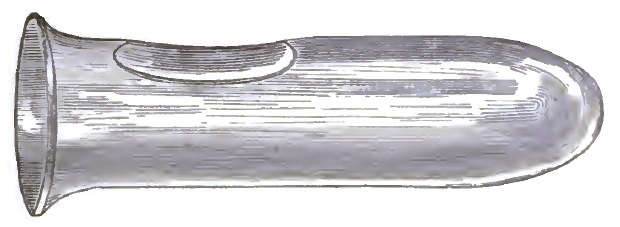
Sims's Vaginal Dilator.
Emmet's operation is a modification of the above, and consists in inserting an index finger in the rectum, and then putting the sphincter on the stretch, when with scissors he divides the fibres encircling the vagina on each side just within the fourchette and about three-fourths of an inch apart. He claims that this method "does not allow a prolapse of the vaginal wall, as when the perineum is lacerated, but does permit of an equal extent of dilatation of the outlet by the glass plug."16
16 Op. cit., p. 609.
The plan of dividing the pudic nerve, as practised by Sir James Y. Simpson, has met with little favor.
The author has been successful in several instances by a less formidable operation than any herein described. His operation has simply consisted of entire removal of every vestige of the hymen or carunculæ myrtiformes with scissors, followed by wearing of the glass plug such length of time as is requisite. This procedure is simply the first part of Sims's operation.
Parturition would, as a rule, cure this affection in an effectual manner but its subjects are generally sterile. The reason of sterility in vaginismus is often owing to the extreme suffering whenever there is an attempt at coition; this pain prevents its perfect performance, and often all further attempts are abandoned. When we are convinced that such a condition is the cause of sterility, the patient may be etherized, and while in that condition complete coition may result in fruitfulness and ultimately perfect cure of the vaginismus.
DISEASES OF THE VULVA.
The subject will be considered in the following order: Anatomy, Vulvitis, Phlegmonous Inflammation of the Labia, Furuncles, Pruritus, Hyperæsthesia of the Vulva, Tumors, Atresia, and Eruptions.
Anatomy.
As regards the anatomy of the generative organs of women in this and the preceding chapter, it has not been deemed necessary by the author to consider the subject in extenso, but to give a brief résumé, as better suited to the needs and wishes of the busy practitioner.
The generative organs of women external to the hymen, in their relative order from before backward, consist of the mons veneris, clitoris, vestibule, meatus urinarius, and orifice of the vagina, and the labia majora and minora on either side. All these are known under the name of pudendum or vulva.
The mons veneris is a rounded cushion of fatty tissue immediately over the os pubis, and from puberty is covered with hair.
The labia majora are two folds of skin extending longitudinally from the mons veneris to the perineum. In them are found all the elements of the skin. The subcutaneous tissue is of loose texture. A noticeable fact is that here the sebaceous glands are remarkable for their size, some of them being 0.5 millimeters in diameter and opening directly on a free surface. The labia majora resemble the skin of other portions of the body in that they contain papillæ, nerves, vessels, and Pacinian bodies. Internally they are lined with mucous membrane in which are numerous sebaceous follicles. A quantity of fat, areolar tissue, and tissue analogous to the dartos of the scrotum, including vessels, nerves, and glands, constitutes the contents of the labia, and gives them a rounded appearance, larger in front and decreasing in size toward the perineum. The extremities of these folds, joining together, form the anterior and posterior commissures of the vulva.
The labia minora, sometimes called nymphæ, are two membranous folds of erectile tissue within the labia majora, beginning at the anterior commissure and passing down and disappearing midway between the two commissures. They also contain sebaceous glands.
The clitoris is an erectile organ covered with mucous membrane, and is the analogue of the penis. It arises by two crura, is situated beneath the anterior commissure, and is partially concealed by the labia minora.
The vestibule and the fossa navicularis are triangular spaces on the mucous membrane, the first immediately posterior to the clitoris, the second anterior to the perineum.
The meatus urinarius is the external orifice of the urethra, and is situated in the vestibule about one inch posterior to the clitoris. The mucous membrane is slightly raised above the meatus, giving it prominence, and thus serves as a guide to the introduction of the catheter without exposing the person.
The orifice of the vagina is an elliptical opening just below the meatus urinarius. It is partially covered over in the virgin by a fold of mucous membrane called the hymen.
The vulvo-vaginal glands, or the glands of Bartholin, are two in number, situated anterior to the hymen, each with a single duct opening on the inner side of the nymphæ. They are analogous to the glands of Cowper in the male.
The bulbi vestibuli, on either side of the vestibule, extend downward from the clitoris for about one inch. They consist of a thin layer of fibrous membrane ensheathing a plexus of veins.
Vulvitis.
DEFINITION.—Vulvitis is the term used to designate inflammation of the vulva. It may be purulent, follicular, or occasionally but rarely gangrenous.
ETIOLOGY.—The purulent form may be specific or the result of want of cleanliness, exposure to cold, over-exertion, the strumous diathesis, pruritus, urinary fistula, or cancer. It is also produced by awkward or excessive coitus and masturbation, the irritation of urine, and frequently is caused by pregnancy. Vulvitis is not uncommon with little girls, resulting from some of the innocent causes mentioned, though the symptoms may expose the patient unjustly to the suspicion of having been tampered with.
SYMPTOMATOLOGY, COURSE, AND DURATION.—At first there is heat, dryness, and more or less pain in the affected parts, followed by a profuse flow of yellow pus. There is also tumefaction, hypersensitiveness, and often pruritus. Follicular vulvitis is the term employed to indicate an inflammation of the mucous or sebaceous glands and of the hair-follicles of the vulva. This disease may be the result of any of the causes of purulent vulvitis, as alluded to in the preceding clause. The subjective symptoms are common also to the purulent form. Objectively, the mucous membrane will appear to be very red in spots, resembling in this respect the raised papillæ of the tongue. These spots frequently bleed on slight provocation. The internal surface of the nymphæ and vestibule is the seat of the disease when the mucous glands are involved, but where the sebaceous glands are mainly affected the inflamed papillæ will be found on the surface of the labia and at their juncture anteriorly. In the course of the inflammation a drop of pus will exude from the papules, and they then gradually disappear. Occasionally, collections of exudate from the diseased glands accumulate beneath the labia minora, concealing the diseased surfaces and becoming quickly very offensive. The disorder, though sometimes persistent, is seldom chronic. The acute affection may be the cause of urethritis in the male closely resembling gonorrhoea if coition occurs during its existence, and thus not infrequently giving rise to suspicion of infidelity.
TREATMENT.—In the matter of treatment, touching the inflamed points with carbolic acid or caustic sometimes favorably influences the course of the disease. Cleanliness is the most important item in the treatment of the two forms of the disease, for without it the application of remedies will be of little avail. Strict attention to this, with perfect rest of the parts, will not infrequently be all that is requisite to effect a cure, but in cases that do not yield to this treatment sedative, astringent, or alterative applications are indicated. These should be applied after bathing. In the purulent variety such remedies as the lead-and-opium wash after the following formula will prove serviceable:
Rx. Tinct. opii, fluidounce j;
Plumbi acetat. drachm j;
Aquam ad fluidounce viij.
Lint may be saturated with this lotion and applied between the labia. If the disease does not yield to the treatment already mentioned in the course of two or three days, a solution of argentic nitrate (gr. x to ounce j) should be brushed upon the parts, and between the intervals of its application bismuth or starch may be kept constantly on the parts. In cases associated with vaginitis a much stronger solution is sometimes required. (Vide chapter on Vaginitis.) The author has used powdered iodoform in some cases with very good results.
FIG. 28.
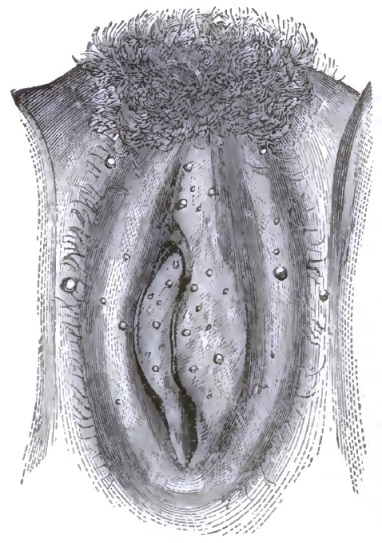
Follicular Vulvitis (Huginer).
In the follicular variety the disease is more severe and usually of longer duration than the purulent, although the principles of treatment are essentially the same. In this as in the other variety cleanliness is of paramount importance, frequent washing being very essential. To the inflamed follicles such applications as nitrate of silver, persulphate of iron, and carbolic acid are the more frequent remedies used in this disease. After the application of any of these remedies the parts should be rendered dry, and then a piece of soft linen or a roll of absorbent cotton should be smeared with vaseline or soaked with carbolized glycerin and inserted within the vulva in a way to keep the labia apart. Occasionally the practitioner will meet with a chronic form of vulvitis, and the rareness of its occurrence is fortunate, for the reason that it is a very obstinate and intractable variety of the disease. Vulvitis is very frequently associated with vaginitis, owing to the fact that the mucous membrane is continuous in both vulva and vagina. On this account the principle of treatment of inflammation of either locality is essentially the same. To avoid repetition, the reader is therefore referred to the section on Vaginitis for a more detailed description of treatment.
There is a form of this disease described by Vinay17 as ulcerous or aphthous vulvitis. This is an affection peculiar to childhood, occurring only when the general health is much impaired. It is often a sequel of fevers, and may even become epidemic. It attacks children of any age, but is of more common occurrence in infancy. The disease appears first upon the mucous membrane in the form of small and round patches of a white or grayish-white color, which soon ulcerate, and at a more advanced stage are liable to become gangrenous. This variety of vulvitis has long been known, and is mentioned in the works of Hippocrates. This disease is rarely met with in this country.
17 Nouveau Dict. de Méd., tome xxxiii., 1885.
Phlegmonous Inflammation of the Labia Majora.
DEFINITION.—The adipose and areolar tissue which compose the greater bulk of the labia majora often become the seat of acute inflammation, in consequence of direct injury, excessive or awkward coition, exposure to cold, from irritating discharges, scratching in pruritus, vulvitis, or that peculiar blood-state which predisposes to the formation of boils or carbuncles.
SYMPTOMATOLOGY AND DIAGNOSIS.—The patient will first complain of heat and pain, increased by standing or walking, and later throbbing and shooting pains in the affected parts. In the outset the part is congested, followed by induration from effusion in the loose tissues, and next suppuration ensues. An examination in the last-named stage will reveal the existence of an abscess in one labium. The diagnosis is by no means difficult, but the physician, however, should bear in mind that this same locality may be the site for pudendal hernia, a dislocated ovary, hæmatocele, or vulvitis.
TREATMENT.—In the outset the inflammation may be caused to disappear by resolution, by means of cold and sedative lotions, such as the lead-and-opium wash, saline laxatives, non-stimulating diet, and perfect rest. In the majority of cases the disease proceeds to suppuration. When it is found that resolution is unattainable, then means should be taken to promote and hasten suppuration. This is best effected by the frequent application of hot poultices. The mistake is often committed of permitting too long intervals to elapse between the application of poultices, and allowing the one applied to become cold before another one takes its place. The patient can be saved many hours of suffering by keeping hot applications constantly on the inflamed labium. As soon as suppuration is detected the abscess should be opened, for two reasons aside from the one of affording relief: First, the tissue resists early natural evacuation; second, owing to the laxity of the tissues, pus will sometimes force itself upward toward and through the abdominal ring.
Furuncles of the Labia.
DEFINITION.—Closely resembling phlegmonous inflammation are the furuncles or boils which are quite common on the labia. They occasion much pain and distress, for the reason that they are very obstinate and apt to recur, one forming as soon as its predecessor has apparently healed. In many instances these boils seem to be consequent upon inflammation of sebaceous glands. They differ in size, some being no larger than a pea, while others are the size of a filbert.
TREATMENT.—This should be constitutional and local. Quinine, arsenic, cod-liver oil, and other remedies of a tonic character should be administered. The bromide of arsenic has been used by the author in a few cases with quite satisfactory results. As soon as one of these furuncles shows that it contains pus, it should be freely opened and a crucial incision made to prevent immediate healing; after which poultices should be applied. These small boils are extremely painful, and are very troublesome, owing, as previously stated, to their liability of recurrence. To prevent their recurrence is one of the reasons why immediate healing of the incisions should be prevented. If contraction of the sacs of the abscesses does not occur, pus will continue to be formed and the tissues in their immediate neighborhood will become indurated. In this way the furuncles may become of a chronic character. To further facilitate healing and aiding their contraction the sacs should have applied to them some stimulating remedy, such as carbolic acid or nitrate of silver. Edis says that painting the surface of the affected labium with tincture of iodine is beneficial in some instances.
One of the most important requisites in treatment is perfect cleanliness.
Pruritus Vulvæ.
DEFINITION.—Pruritus vulvæ, although merely a symptom of disease, characterized by itching of the vulva and contiguous neighborhood at times wellnigh intolerable, has, because of its occasional obscure etiology and severity, always been considered by medical authors as a disease of itself, instead of a symptom of other disorders, in treatises on diseases of women.
ETIOLOGY.—Predisposing and Exciting Causes.—It frequently occurs from external irritation, as animal parasites, or such as may be produced by acrid discharges, particularly in gonorrhoea and uterine cancer, changes in the normal composition of the urine, especially diabetic, and not infrequently during the menstrual flow. Pruritus may occur in connection with inflammation of the uterus and vagina without any irritating discharge; likewise it occurs in diseases of the urethra, bladder, and kidneys. Sometimes masturbation may be the cause as well as the effect of pruritus. Secondarily, there may be an insufferable itching in consequence of the continued titillation or irritation of the parts, although masturbation by no means invariably leads to pruritus. The habitual use of opium or alcoholic drinks often causes intractable forms of this disorder. Edis states "that the custom of immoderate tea-drinking is a by no means infrequent cause of pruritus." But instances of pruritus occur where all of the causes mentioned are lacking, and they are instead purely of a reflex character, such as are met with in women about the time of the change of life and during the latter months of pregnancy, or from the presence of worms in the rectum. If the worms migrate to the vulva, as they sometimes do, the irritation then becomes direct. Interference with the circulation of the vulva by pregnancy and tumors may cause pruritus: unquestionably, certain varieties of the disorder are idiopathic or neurotic.
SYMPTOMATOLOGY AND COURSE.—When the complaint has existed for some time, the itching will be pretty well diffused from the pubis backward, but in more recent cases it may be localized at the perineum, nymphæ, clitoris, or portions of labia. The itching is not always constant, but subject to exacerbations. It is usually much worse when the patient becomes heated from exercise or is warm in bed, thus preventing comfort or sleep, and thereby adding an additional complication to treatment. The sufferer naturally seeks relief by scratching the involved tissues, and for this very transient satisfaction spreads the disease by increasing the irritability of the parts and inducing a condition closely resembling eczema.
TREATMENT.—Inasmuch as the etiology of the complaint is often uncertain, as heretofore stated, it is highly important that the physician should ascertain if possible the cause of the disease, and thereby be better enabled to treat the complaint intelligently. In case the itching can be traced to the animal parasites most common in this region, such remedies as the black or yellow wash, mercurial ointment, or the oleate of mercury will usually prove sufficient; but if it be found that the Acarus scabei is the cause of the itching, the application of the ordinary sulphur ointment will destroy this parasite and the itching will consequently cease. If due to uterine catarrh or any vaginal affection, attention should be directed to the removal of the primary disorder by appropriate means, for it cannot be expected that itching of the vulva can be relieved so long as there is any irritating discharge constantly exciting it. The most important measure of all is perfect cleanliness. This can be secured by sitz-baths, sometimes several being necessary daily. At the same time, the vagina should be syringed with warm water or water with the addition to it of such remedies as are used for the relief of leucorrhoea. The irritated surfaces of the vulva should be prevented from coming in contact by vaseline spread upon absorbent cotton or lint, or by powders, such as bismuth, starch, etc.
In case there is an unmistakable acrid discharge from the uterus causing pruritus, proper topical applications should be made to as much of the endometrium as is diseased; the vagina should be thoroughly douched night and morning, and then there should be placed against or around the neck of the womb one or more tampons of cotton saturated with the boro-glyceride or with glycerin, in which has been dissolved borax or acetate of lead in the proportion of ounce ss of one of these salts to ounce ij of glycerin.
In some instances, where there is a profuse discharge, simply packing the vagina with dry salicylated or borated cotton will suffice. This should never be allowed to remain longer than twelve hours without removal. In those cases where the discharge is less acrid a single tampon saturated with one of the remedies named or glycerin alone, and placed against the cervix daily, will suffice, as it will prevent the discharge from coming in contact with the vulva. In severer forms of this affection a number of tampons saturated in the same manner will be more efficacious, and still permit the patient to move about. When several tampons are used they should be loosely rolled, and each one should have a string attached for convenient removal. In the mean time, topical applications can be made to the vulva, and washing of the parts will not interfere with the tampons. The author has found the following prescription of Thomas very efficacious as a vaginal injection and wash for the vulva:
Rx. Plumbi acetatis, drachm ij;
Acidi carbolici, scruple ij;
Tr. opii, fluidounce j;
Aquæ, pint iv. M.
Another prescription which has demonstrated its value is:
Rx. Bismuthi subnitratis, Acaciæ pulv. aa drachm ij. M.
Sig. Add water to the consistency of cream and apply frequently with a brush.
A somewhat similar prescription, to be applied in the same way, is the following:
Rx. Pulv. acaciæ, drachm ij;
Bals. Peru, drachm j;
Ol. amygdalæ, drachm iss;
Aquæ rosæ, fluidounce j; M.;
or,
Rx. Acidi carbolici, drachm ij;
Glycerinæ, fluidounce j;
Aq. rosæ, q. s. fluidounce viij. M. Ft. lotio.
In all cases of pruritus, except from parasites, much benefit can be derived from washing the parts two or three times daily in a weak solution of bicarbonate of sodium (half a tablespoonful in a quart of water, with a tablespoonful of eau de Cologne).
In pruritus from diabetes some relief may be afforded by the administration of alkaline mineral waters or salicylate of sodium. In pruritus associated with chronic cystitis the last-named remedy is very useful.
In pruritus of a neurotic character a solution of the muriate of cocoaine of the strength of 4 per cent., sprayed upon the parts or applied with a camel's-hair brush, has often in the author's hands afforded relief when every other application has failed.
One of the latest publications relating to the treatment of pruritus vulvæ is a paper by Kustner,18 agreeing with Schroeder that the results of operative treatment for pruritus vulvæ are encouraging. This author publishes several cases resulting successfully. A synopsis of one will suffice to show his mode of treatment. A patient, unmarried, suffered for a long time from uterine catarrh and pruritus vulvæ: the former was relieved after prolonged treatment, but there still remained two symmetrical spots between the hymen and labia minora which were the seats of most troublesome itching and were exceedingly sensitive to touch. These portions of the mucous membrane were rich in sebaceous glands, and were also studded with small retention-cysts. The author dissected off the two elliptical portions of mucous membrane, each 1 cm. broad and 3 or 4 cm. long, and containing the small retention-cysts, and then united each wound with interrupted sutures. The pruritus entirely disappeared, and did not again return, though some years after the patient again suffered with uterine catarrh. Other cases are related by the same author, notably one case of pruritus where there was a lacerated perineum. The operation for repair of this perineum was performed, with the result of the permanent disappearance of the pruritus. The author does not give any definite rule as to how and in what cases he should have recourse to operative treatment, but, admitting that pruritus may arise from causes heretofore mentioned in this article, he asks whether those cases where secondary pathological changes have occurred in the vulvar mucous membrane cannot be definitely cured by excision of the affected portion. Not enough cases of cure of pruritus by surgical treatment have been reported to fully establish the theory of Kustner, yet it is a matter of sufficient importance to merit our attention and warrant further investigation.
18 Centralbl. f. Gyn., No. 12, 1885.
Hyperæsthesia of the Vulva.
DEFINITION.—This is a disorder first described by Thomas under the above caption.19 It consists of a hypersensitiveness of the nerves supplying some portion of the mucous membrane of the vulva. Sometimes the area of tenderness will be confined to one of the lesser lips or it will be limited to the vestibule, and in other cases a number of parts may be simultaneously affected. "It is a condition of the vulva closely resembling that hyperæsthetic state of the remains of the hymen which constitutes one form of vaginismus," and doubtless is often confounded with the latter.
19 Op. cit., p. 145.
ETIOLOGY.—It is more common about the time of change of life, and occurs more frequently among women of hysterical diathesis where there exists a morbid mental condition with a tendency to melancholia. In some instances the disease seems to be excited by vulvitis or vascular growths in the urethra.
SYMPTOMATOLOGY.—The slightest friction causes intense pain and nervousness, and even a current of cold air produces very great discomfort. Coition causes such severe pain that for this cause the subject usually consults her physician. As in vaginismus, the mental distress is often of an exaggerated character, in some instances bordering upon monomania.
PATHOLOGY.—In this disorder there are no indications of inflammation except occasional spots of erythematous redness. It is not a neuralgia in a true sense of the term, but an abnormal sensitiveness of diseased nerves supplying the vulva.
DIAGNOSIS.—The affections most liable to be confounded with this are vascular growths (or irritable caruncles) of the urethra and vaginismus, but ocular inspection and digital examination will enable the physician to determine the character of the disease.
TREATMENT.—This is far from satisfactory in many cases. Thomas speaks most discouragingly concerning it, and states that "the treatment of this condition is most unsatisfactory."
The author has at this time a patient with hyperæsthesia of the vulva who has been treated by him for many months, and up to the time of this writing has obtained no relief. Thomas recommends sending the patient "away from home, where, in addition to enjoying changes of air, scene, and surroundings, she would live absque marito."
In this, as in all disorders which depend on or are associated with the hysterical diathesis, galvanism and massage are, as a rule, of decided benefit. In addition, general tonics, such as arsenic, strychnia, quinia, and iron, should be prescribed. If any local affection exist, such as vulvitis or urethral vegetations, it should be cured first. Warm fomentations, the frequent use of warm water, sedative lotions, and ointments consisting of opium or its salts, carbolic acid, chloroform, and iodoform, are useful topical remedies. Much benefit may be derived by the application of a 4 per cent. solution of hydrochlorate of cocoaine by means of a spray or soft brush. Strong solutions of alum and tannin have sometimes proved beneficial.
No good results have been derived from the use of the knife or caustics in cases where they have been used.
Tumors of the Vulva.
Under this head will be included any enlargement, neoplasm, or adventitious growth which has the vulva for its site. The most common are the following, which will be considered in the order named: viz. Cysts, Hydrocele, Hernia, Hypertrophy, Elephantiasis, Hæmatoma, Cancer, and Urethral Caruncle. There are other growths of the vulva, such as fibroma, lipoma, sarcoma, lupus, etc., but they are of such rare occurrence that their discussion is necessarily omitted.
Cysts and Inflammation of the Vulvo-Vaginal Glands.
The frequent concomitance of cysts and abscesses in these glands has caused the author to consider them here under the same caption.
The most frequent cysts of the vulva are those springing either from the ducts or glands of Bartholini, or, as more commonly known, the vulvo-vaginal glands, situated near the lower part of the labia. Cysts having their origin in the ducts are single and are invariably of an oval form; such also is the more common shape of those springing from the gland, yet sometimes they are lobulated, of an irregular form, and comprise one or more in number. Inasmuch as this same locality is sometimes the site of hernia, and cysts of the labia often of a similar form, the physician should be positive that the tumor is a cyst before having recourse to any active mode of treatment.
If fluid accumulates in a cyst in such quantity as to cause the subject inconvenience or discomfort, surgical treatment will be required, of which there are three different modes in common use.
The first mode is to remove by scissors a segment of the sac, allowing escape of its contents, after which the cavity is filled with marine lint or carbolized cotton, which is allowed to remain for about forty-eight hours before renewal. By this plan of treatment the sac will usually be obliterated. Another method is to freely open the cyst and apply some caustic, preferably the galvano- or thermo-cautery. In the absence of either of the last named nitric acid may be used with good effect. The third and last method has in the author's experience proven the most efficacious, though objection has been made to it on account of its being a more bloody operation—namely, complete extirpation of the gland.
The causes of inflammation of these glands are the same as those that cause vulvitis; in truth, they are often accompanying disorders. The symptoms are pain, heat, itching, and an increased redness, particularly about the opening of the duct. If a finger be pressed over the location of the gland, it will elicit signs of pain.
FIG. 29.
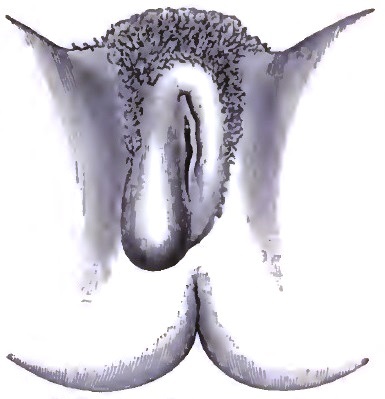
Abscess of Glands of Bartholini.
In the outset of the inflammation it is felt hard and unyielding, but two or three days later a fluctuating tumor may be easily discerned. An abscess of the gland should be easily distinguished and rarely mistaken for a cyst. There are the history and ordinary signs of inflammation to aid in diagnosis. If, on the contrary, there is simply a cyst, it can be rolled about under the finger and no indications of pain produced. Further, it may exist an indefinite length of time, and unless the gland from some cause become inflamed no great inconvenience is experienced. It is not an infrequent occurrence, from some cause, for inflammation to attack a cyst-wall, in which event the symptoms of inflammation ensue. Where such is the case the treatment should be the same as in inflammation of the gland—namely, absolute rest and any soothing or anodyne lotions which favor restoration. Should indications of suppuration occur, it should be promoted by the frequent application of hot poultices. If the pain is not severe, the abscess may be left to nature; but if it be severe, then the abscess should be emptied by a free incision at the most prominent point.
Hydrocele, or Cysts of the Canal of Nuck.
DEFINITION.—An accumulation of fluid in the canal of Nuck, constituting a hydrocele or cyst, is of rare occurrence. It is to be found in the upper part of the vulva. Owing to the rarity of this affection the greatest caution should be exercised in its diagnosis. The absence of inflammatory symptoms, of resonance when percussed, and the ordinary signs of hernia, together with a gradual growth of the tumor without constitutional disturbance, would by the exclusive mode of diagnosis leave but little room for doubt as to its character. If, however, the physician still feels uncertain, the means which are used for the cure of this disorder will also aid in diagnosis—namely, aspiration with a fine needle about the size of those used on a hypodermic syringe. Even where hernia exists no harm will be done, for this is not an uncommon practice for the reduction of hernia in this locality.
TREATMENT.—Frequently nothing further is required in the way of treatment than the reduction of the tumor by aspiration. If, however, additional treatment seems to be necessary, it is best to inject tincture of iodine by reversing the action of the syringe. The use of iodine in this manner is for the purpose of obliterating the sac by inducing adhesive inflammation, as is done in the treatment of hydrocele in the male.
Pudendal Hernia.
DEFINITION.—If the process of peritoneum surrounding the round ligaments as they emerge from the inguinal canal to become lost in the dartos-like tissue of the labia is not obliterated at birth, the channel thus formed is known as the canal of Nuck, and furnishes a path for hernia. Besides a loop of intestine or portion of mesentery the ovary or bladder may descend through this canal and constitute an inguinal or labial hernia. The uterus has even been said to have descended by this route. The infrequency of pudendal hernia makes it all the more important to recognize it when it does occur, that serious injury may be avoided when operating on supposed cases of labial abscesses or cysts.
ETIOLOGY.—Pudendal hernia may be produced by blows, falls, coughing, or sneezing, and by violent muscular exertions, as in the male.
SYMPTOMS.—The presence of a part of the intestine can be diagnosticated by the peculiar crackling feeling, the impulse communicated on coughing, and sometimes the disappearance of the tumor on taxis. Occasionally reduction is very difficult, and exceptionally it may become strangulated.
TREATMENT.—The patient being placed on her back with her hips elevated, a gentle taxis will usually suffice to cause reduction. The physician should be positive that the tumor has been returned to the abdomen. After this is accomplished a truss should be adjusted so as to press on the inguinal canal. Usually a perineal band will be necessary to keep the truss sufficiently low to accomplish the purpose for which it was adjusted.
If taxis has proved inefficacious, and strangulation has occurred, a surgical operation will be necessary.
Hypertrophy of the Vulva.
Hypertrophy of the vulva occurs among certain peoples, as the Bushmen and Hottentots, so commonly as to constitute a race-peculiarity, and on account of size and form has been designated as the Hottentot apron. There is also said to be a peculiar deposit of fat in the nates of Hottentot women, but this should not be confounded with the vulvar peculiarity of the same race. Occasionally in our own country hypertrophy of one or more labia will be met with. Sometimes the nymphæ are hypertrophied, so that they hang down much lower than the greater lips; owing to this dependency and their usual pigmentation of a brownish color they bear some resemblance to elephantiasis. In simple hypertrophy the progress is gradual, and there is an entire absence of the inflammatory attacks to which a labium affected with elephantiasis is subject, nor are there any superficial abscesses as in the latter affection. Although there is usually the brown color on the surface in simple hypertrophy, the color is not the same as in elephantiasis. In the latter there is the peculiar pigmentation, also roughness and deep crevices in the skin, so closely resembling in appearance an elephant's skin that there need be no difficulty in the differential diagnosis of simple hypertrophy and elephantiasis of the vulva.
Hypertrophy of the clitoris sometimes occurs as a congenital deformity, and sometimes it is acquired. There has seemed to be quite a general belief that masturbation is one of its most common causes, but there are no substantial grounds for such belief. On the contrary, it has been frequently observed where women were known to have indulged in this habit that no increase in the size of the normal clitoris could be perceived.
TREATMENT.—If a subject of hypertrophy of the vulva suffers any degree of inconvenience therefrom, the affected parts should be removed. A surgical operation for this purpose is an exceedingly simple one and demands no special description.
An operation for the removal of an hypertrophied clitoris is more bloody than one for the removal of the labia; still, with ordinary precautions it need be neither a severe nor dangerous one. Clitoridectomy for the purpose of curing masturbation or various neurotic affections is happily not of as frequent occurrence as formerly. The author is firmly of the opinion that neither in cases of masturbation, epilepsy, nor hystero-epilepsy is the removal of the normal clitoris beneficial or even justifiable.
Elephantiasis of the Vulva.
DEFINITION.—The vulva is sometimes the site of neoplasms known as elephantiasis arabum. The labia may become so hypertrophied that they hang down to the middle of the thighs in the form of tumors; the clitoris and perineum may also be affected. The skin is generally of the peculiar brownish color of an elephant's skin, and hence the name of the disease. The surface of the skin will present many tuberosities due to hypertrophy of the cutaneous papillæ. Superficial abscesses and ulcerations often occur, causing discomfort and pain.
ETIOLOGY.—It is said that elephantiasis of the nymphæ sometimes results from onanism; it is also congenital. Scrofula, malaria, syphilis, and filth are generally considered as among the direct causes of elephantiasis arabum in the countries where it is the most common. Occasionally it is produced by a blow or contusion. Although this disease is not very common in this country, yet a sufficient number of cases have been seen from time to time to call forth a number of articles in the medical periodicals of our country.
PATHOLOGY.—The pathological changes, according to Mayer, consist in a dilatation of the lymphatic spaces and ducts with secondary formation of connective tissue and thickening of the layers of the cutis vera; sometimes the papillæ are specially enlarged, producing swellings which resemble condylomata in form. The labia majora are most frequently affected, next in frequency the clitoris; more rarely are the labia minora hypertrophied. This affection is developed during that period of life when sexual activity is the greatest.
FIG. 30.
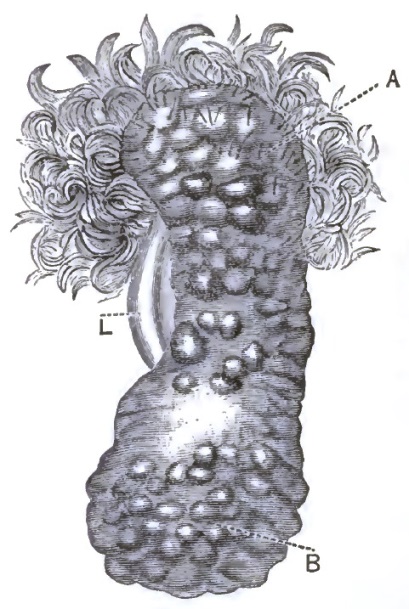
L, Right labium majus, healthy; A, upper part of pachydermatous tumor, covering a part of the mons veneris; B, lower portion of the tumor, occupying the perineum. This tumor measured from anterior to posterior margins nearly nine inches. In its widest portion it measured three inches.
TREATMENT.—The treatment of elephantiasis of the vulva must necessarily be surgical, and therefore will be omitted here, excepting that which is embodied in the following report of cases by the author in the Detroit Review of Medicine in December, 1875, and are briefly reproduced here:
Case No. 1.—Fig. 30 shows the condition of Mrs. ——, aged thirty, the mother of several children and four months advanced in pregnancy at the time she came to my clinic. She walked with difficulty and complained of pain on the left side of the genitalia. She had been troubled with the tumor hereafter described for more than two years, and during her last pregnancy, because of its becoming larger and more painful, it proved a serious impediment to childbirth. For these reasons she wished it removed before being further advanced in pregnancy. The contiguous parts were irritated by fluid discharged from small integumentary abscesses. I removed the tumor by a surgical operation, and the patient made a perfect recovery without any return of the growth. A feature of the case observed during the operation was that an incision made in any portion of the tumor caused a serous discharge to exude, so that at all times it was possible to tell whether I was cutting beyond the diseased tissue or not.
FIG. 31.
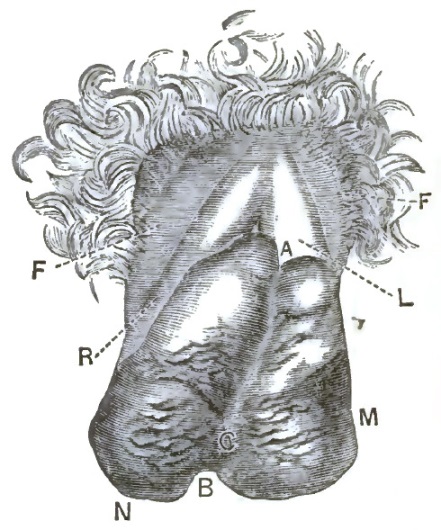
FF, Folds of anterior portion of labia majora, the remaining portion of the great lips being hidden from view; L, anterior part of the left labium minus; R. middle part of the right labium minus; M, enlarged left labium minus; N, enlarged right labium minus. A B, the light line between these letters, is designed to indicate the introitus vaginæ, but the actual opening to the canal had its anterior boundary immediately backward of the nodule seen near the letter B. The urine was voided just above the nodular point, near the letter C. The figure does not well exhibit the elongated clitoris, which was fully an inch and a half long, and could be felt in the mass like a hard cord. The tumor seemed to begin at the clitoris and the anterior portions of the labiæ minora, and as it increased in size the introitus was filled by it anteriorly.
Case No. 2.—Miss ——, æt. twenty-two, a brunette of French parentage, came to the clinic for the purpose of having removed from the vagina a tumor of a year's growth, which she said was still rapidly growing, making it difficult and painful for her to walk or engage in any pursuit. The tumor of which she spoke is the one represented by Fig. 31. The operation for the removal of the tumor simply consisted in excising the entire mass and putting a ligature around the base of the hypertrophied clitoris. Three days after a hard-rubber vaginal dilator was inserted, and ordered to be worn most of the time until the parts were healed.
In the first case here reported there was no evidence of any syphilitic taint, but the woman lived in a markedly malarial district. In the last one there were indications of a syphilitic taint. A microscopic examination of the tumor of each case plainly showed its pachydermatous character. Both women were very dark brunettes, each having a coarse, tawny skin, and neither was over-cleanly in her habits.
An important indication relating to operative treatment in this locality is the use of the galvano- or thermo-cautery, particularly the latter, owing to the great vascularity of the parts and the lack of points upon which to exercise counter-pressure to control hemorrhage.
Hæmatoma.
DEFINITION.—Hæmatoma of the vulva is also designated as thrombus or pudendal hæmatocele. This affection consists of an effusion of blood in subcutaneous or submucous cellular tissue of the vulvo-vaginal region; the effusion occurs usually in one labium or in the cellular tissue surrounding the vaginal walls, and, later becoming coagulated, forms a tumor which may vary in size. The tumors sometimes attain the size of a foetal head.
ETIOLOGY.—Hæmatoma generally occurs during pregnancy or during labor, usually from some injury, but rarely spontaneously or in the non-pregnant. Muscular effort during childbirth, blows, kicks, falls, the passage of the foetal head, or anything which can obstruct the return of venous blood or produce rupture of the veins, may be a cause.
SYMPTOMATOLOGY.—The patient will have a feeling of discomfort, later pain of a throbbing character, and often difficult urination on account of the tumor encroaching upon the urethra. If the tumor is very large she will experience some degree of faintness.
DIAGNOSIS.—The sudden appearance of the tumor with the symptoms alluded to usually renders diagnosis an easy task. The affections which may possibly be confounded with this are abscess of the labia, inflammation or cysts of the glands of Bartholini, and pudendal hernia.
TREATMENT.—If the effusion should be small and the symptoms light, but little is demanded except quiet and cooling lotions, like the lead-and-opium wash. If there is effusion in the labia and there are indications of suppuration, it should be treated as phlegmonous inflammation by hot poultices, etc.20
20 Vide Phlegmonous Inflammation of the Labia, p. 391.
It is sometimes necessary during labor, in order to complete it, that a free incision is made in the tumor and the clot turned out with the fingers. This same treatment is often requisite when the tumor is very large and there are good reasons for believing that it will not undergo absorption. It is generally advisable to pursue the same course if a thrombus has existed for some time and there are no signs of absorption or suppuration, by reason of the continued discomfort and pain to which the patient is subject.
After the clot is removed there is often a renewal of the bleeding, in which case the cavity should be plugged with lint or surgical cotton and pressure applied by means of vaginal tampons and external bandages. Sometimes it is requisite to saturate lint or cotton with liquid persulphate of iron, and finally pack the cavity with it in order to check the bleeding. If there is no hemorrhage after the evacuation of one of these tumors, then there is no need of packing or making use of styptics, but it is necessary to prevent phlegmonous inflammation or septicæmia. For this purpose iodoform or carbolic acid should be used and a free outlet provided for the discharge of pus. Washing out the cavity with a weak solution of the permanganate of potassium21 also serves a good purpose.
21 The author usually directs that from 4 to 8 grains of this salt shall be added to each pint of warm water when it is to be used as an injection or wash.
Cancer of the Vulva.
Cancer is not a common disease of the vulva, yet as a primary affection it attacks this locality more frequently than the vagina.
Epithelioma is the most common form, and generally appears in the outset near the clitoris or on one labium as a small hard and warty growth, which at first itches and later smarts, but is not painful.
After an indefinite length of time the growth, which has increased somewhat in size, becomes painful, ulcerated, and there is more or less of an offensive ichorous discharge. If the disease pursues its natural course, the ulceration will rapidly extend until neighboring tissue becomes involved; the inguinal glands become affected, and after the characteristic cachexia becomes apparent there is no known remedy or means of treatment that can prevent the progress of the disease to a fatal termination.
If the clitoris becomes affected with this form of malignant disease, it can be detected earlier than epithelioma of any other portion of the organs of generation on account of its more external position, its greater sensitiveness, and the increasing pain which the affection and its enlargement produce.
TREATMENT.—If the disease is detected sufficiently early, an entire removal of all the affected parts, including a wide margin of healthy tissue, will generally effect a cure; but postponement until neighboring parts, more particularly the lymphatic glands, are implicated leaves little or no hope of cure through any mode of treatment. Carcinoma of the vulva is generally an extension of the same disease from the uterus or the inguinal glands, and rarely occurs as a primary affection.
Urethral Caruncle.
This painful affection, commonly included by medical authors as among diseases of the vulva, will be very briefly considered.
DEFINITION.—The most common neoplasm to which the urethra is subject is known as urethral caruncle, vascular tumor, or irritable vascular excrescence of the urethra. These growths consist of all excrescences located at the mouth of the urethra, and sometimes extending within the canal for a short distance. They are of a deep-red color, soft and friable, sometimes regular in shape, but more frequently irregular, and then resemble a small cockscomb. They vary in size from the head of a pin to a raspberry, occasionally attaining that of a walnut.
ETIOLOGY.—No definite cause can be given for the development of urethral caruncle. These growths occur among married and single, old and young.
SYMPTOMS.—The first symptom generally is that the patient experiences a severe smarting pain during or immediately after voiding urine. Pain is also caused by walking, pressure, friction, or even the slightest contact of clothing. Also sleep is frequently disturbed in consequence of slight movements of the body. Coition not only causes a severe pain, but, owing to the friable and vascular character of the growth, it often causes a flow of blood, which leads the subject to believe she has cancer or some other serious disorder. In addition to the foregoing symptoms the patient usually becomes fretful, nervous, hysterical, and melancholy. The severity of one's suffering when thus affected is very much out of proportion to the size of the growths giving rise to it.
Occasionally there will be a feeling of weight and pain in the pelvic region, extending down the thighs. There will also be a muco-purulent discharge from the urethra.
PATHOLOGY.—Urethral caruncles may be briefly defined as consisting of "dilated capillaries in connective tissue, the whole being covered with squamous epithelium."22
22 Hart and Barbour.
DIAGNOSIS.—(This has been given in part under head of Symptoms.) If there is protrusion of any portion of the caruncle the diagnosis is easy. Yet a prolapse of the urethral mucous membrane or of the urethra may be mistaken for a vascular tumor, but there will not be the characteristic pain attending either of these conditions that invariably accompanies caruncle of the urethra.
Syphilitic growths are sometimes located here, but they are wart-like and painless, and generally have companions in the same neighborhood.
By placing the patient on her back in the lithotomy position and carefully inspecting the parts a diagnosis is by no means difficult. When the growths are within the meatus slight dilatation may be requisite to see them, for which purpose a pair of ordinary dressing-forceps will usually suffice.
TREATMENT.—Owing to the liability of the recurrence of caruncles their simple removal by a cutting instrument will not, as a rule, suffice. Various modes of treatment have been recommended, but the most efficacious can be very briefly stated as follows: The patient being anæsthetized and placed on her back, the growths are then removed and their bases thoroughly cauterized by Paquelin's thermo-cautery at a dull heat; if of a large size it is a better plan to first remove them by scissors and then apply the cautery. If a thermo- or galvanic cautery is not at hand, a knitting-needle heated in the flame of a spirit-lamp will serve a good purpose.
Atresia.
Although the subject is referred to here in its regular order, yet for the greater convenience of the reader vulvar atresia has been included by the author in the preceding section on Diseases of the Vagina (see p. 373).
Eruptions.
The skin and mucous membrane of the vulva may develop eruptions common to such tissues in other parts of the body. Those most often found are eczema, erythema, herpes, and acne. They are not distinguished from eruptions located elsewhere, except it may be their greater obstinacy in responding to treatment.
DISORDERS OF PREGNANCY.
BY W. W. JAGGARD, A.M., M.D.
"Gestation," says Mauriceau, "is a disease of nine months' duration." Robert Barnes1 more truthfully remarks: "Since in pregnancy every organ and the whole organism are specially weighted, undergoing extraordinary developmental and functional activity, so any defect or fault inherited or acquired, however latent, will be liable to be evolved or intensified under the trial. Hence pregnancy is the great test of bodily soundness." The pregnant woman is liable to many disorders which can be distinctly traced to the existence of pregnancy. The study of the natural history of gestation renders it highly probable that these disorders are merely pathological exaggerations of physiological functions. Then, pregnancy confers upon the individual no immunity from the diseases to which the non-pregnant woman is liable. But certain acute and chronic diseases, sustaining the relation of accidental complications, are variously modified in their course and effects by pregnancy, and accordingly are of interest to the general practitioner.
1 Obstetric Medicine and Surgery, 1884, London, p. 205.
For convenience of discussion the disorders of pregnancy may be classified under two headings: I. The Pathological Exaggerations of Physiological Processes; and II. The Peculiarities of Certain Accidental Acute and Chronic Diseases occurring in the Course of Pregnancy.
I. THE PATHOLOGICAL EXAGGERATIONS OF PHYSIOLOGICAL PROCESSES.
It is always difficult, frequently impossible, to draw the boundary-line at which normal functional activity becomes pathological. As remarked by Spiegelberg, all the diagnostic penetration of the physician is demanded to recognize this transition. Then, a high exercise of judgment is necessary to determine when to preserve a wise and masterly inactivity, when to adopt measures of active interference.
Alterations in the Constitution of the Blood.
CHLOROSIS AND HYDRÆMIA.
Recent investigations show that qualitative and quantitative changes occur in the constitution of the blood of the normal pregnant woman. The red corpuscles, albumen, and iron diminish, while the white corpuscles, fibrin, and aqueous elements increase. Virchow describes this increase in the number of white corpuscles as a physiological leucocytosis dependent upon the growth of the lymph-vessels and corresponding hypertrophic changes in the pelvic and lumbar lymphatic glands. The total blood-mass is also increased—a change especially notable in the second half of pregnancy. When the number of red blood-corpuscles is abnormally diminished the woman becomes chlorotic. If, in addition, the albumen is abnormally diminished, hydræmia results. Chlorosis and hydræmia can only be regarded as independent affections in the absence of cardiac and renal lesions. They are seldom traceable to pregnancy in the absence of individual predisposition. Effusions into the subcutaneous connective tissue, pleural and peritoneal cavities, are liable to occur. Sudden exudations into the pleural cavity are particularly dangerous, while effusions into the subcutaneous tissue of the abdomen, vulva, and lower extremities are annoying and may interrupt pregnancy.
TREATMENT.—The indications for treatment are obvious. The quality of the blood must be improved, elimination of the aqueous elements attempted, and local disturbances alleviated. Nutritious food, iron in combination with non-irritant diuretics, fulfil the first two indications. Blaud's pill, which Niemeyer and Spiegelberg extol so highly, is an excellent tonic preparation. Basham's iron mixture is admirable in its effects.
PROGRESSIVE PERNICIOUS ANÆMIA.
Gusserow2 was the first to observe and describe a peculiar form of progressive pernicious anæmia occurring during gestation. The disease is of rare occurrence, and nothing is known as to its etiology. Chlorosis and hydræmia, however, may be mentioned as predisposing causes.
2 Arch. f. Gyn., ii. p. 218.
PATHOLOGY.—The alterations in the constitution of the blood are identical with those in anæmia and hydræmia, and produce similar effects. Evidences of fatty degeneration are found in the musculature of the heart, intima of the arteries, and portions of the capillary walls; retinal hemorrhages are constant lesions. The number of white corpuscles is not increased, and signs of leukæmia—splenic tumor, swelling of the lymphatic glands—are wanting. The condition is that of oligæmia or oligocythosis.
The prodromal symptoms occur during the first half of pregnancy, are obscure, and cannot be distinguished from the effects of chlorosis and hydræmia. After the disease has passed through its incipient stages, food, iron, and tonics seem to have no influence upon its course. During the second half of pregnancy abortion or premature labor usually occurs spontaneously. Under these conditions the shock and hemorrhage resulting from parturition are sufficient to cause a lethal issue in many cases.
PROGNOSIS.—Graefe3 has collected 25 cases of this rare affection: 1 case recovered, 2 cases were discharged improved; the others died before or shortly after labor. The prognosis is obviously grave.
3 Diss., Halle, 1880.
TREATMENT.—As food, iron, and tonics have little or no effect upon the disease after it has passed through its incipient stages, therapeutic resources are limited. The evacuation of the uterine cavity, as shown by Graefe's cases, exercises a favorable influence upon the course of the affection. Gusserow advises the artificial interruption of pregnancy whenever grave symptoms occur, and the weight of professional opinion is very decidedly in favor of such a course. Negative results have attended all efforts at transfusion.
HÆMOPHILIA.
Kehrer4 has recently called attention to the apparent influence of pregnancy in the development of the hemorrhagic diathesis. This influence, however, is seldom observed, and then only in cases of distinct, individual predisposition.
4 Arch. f. Gyn., x. p. 201.
TREATMENT.—The induction of premature labor, or, at times, of abortion, is indicated.
PLETHORA.
The experiments and observations of Spiegelberg5 and Gscheidlen prove the possibility of the occurrence of plethora during gestation. Actual increase of the red corpuscles, albumen, and iron in the blood is observed during the second half of pregnancy, and then only under the most favorable conditions. As described by Spiegelberg, the symptoms are—mammary and cerebral congestions, palpitation, vertigo, constipation, hepatic torpor.
5 Lehrbuch d. Geburtshülfe, Lahr, 1882, p. 58.
TREATMENT.—Restricted diet, muscular exercise, and an occasional saline purge will relieve the troublesome symptoms. Spiegelberg is convinced of the value of bleeding in selected cases.
Circulatory Disturbances.
Among the circulatory disturbances due to pregnancy, mechanical oedema and the varices of the pelvis and lower extremities deserve attention.
De Cristoforis of Milan describes a mechanical inferior venous hyperæmia, the result of the pressure of the gravid uterus on the iliac veins. The mechanical oedema of the abdominal walls, vulva, and lower extremities, intensified by chlorosis and hydræmia, is usually associated with venous ectasis. The oedema may become so excessive that locomotion is rendered difficult, while the labia are enormously distended and the subcutaneous tissue of the abdominal walls becomes pendulous. Toward the end of pregnancy, when the uterus sinks into the pelvic cavity, the oedema and varices frequently abate.
Active measures for the relief of the symptoms produced by oedema are frequently indicated. Threatened gangrene of the skin from hyper-distension may render puncture of the hydropsical regions necessary. It is quite possible to interrupt pregnancy by this little operation, especially if the labia are punctured. Elevation of the lower extremities, rest in the horizontal position, elastic bandages and stockings, local hot packs, mild diuretics, usually fulfil all indications for treatment.
Varices are observed more frequently among multiparæ, but may occur in primiparæ. They are usually developed during the second half of pregnancy. The principal trunk of the saphena is first involved, and subsequently the lateral branches. Congeries of veins are observed on the inner sides of the legs and thighs, especially in the vicinity of the knees. The iliac veins may become dilated, as shown by the condition of the vulvar veins and the occurrence of hemorrhoids. Varices incommode the patient, but seldom cause serious disturbances. Sometimes, however, their tunics are lacerated, and serious even fatal hemorrhage may result. Spiegelberg6 records four cases of fatal hemorrhage from the rupture of varices in pregnancy. Then there is always the danger of phlebitis and the processes of thrombosis and embolism, even when the loss of blood is insignificant.
6 Lehrbuch d. Geburtshülfe, Lahr, 1882, p. 235.
TREATMENT.—The regular and gentle evacuation of the bowels will frequently relieve the distressing symptoms due to hemorrhoids. Fordyce Barker points out the fact that aloes is not contraindicated by pregnancy. A pill containing a grain or a grain and a half of powdered aloes, with a quarter of a grain of extract of nux vomica, is a very good remedy. Frequent hot fomentations in conjunction with narcotic ointments will relieve the pain from the congestion of the piles. Attempts at reduction must be instituted with extreme care. It is usually impossible to completely cure the condition during pregnancy, and there is danger of interrupting gestation. Elevation of the lower extremities and equable compression by an elastic bandage or rubber stocking relieve the symptoms caused by varices of the saphena. P. Ruge7 and A. Martin have seen favorable results from the hypodermatic injection of ergotin.
7 Berl. Beitr. z. Geb. u. Gyn., Bd. iii. p. 7.
Disorders of the Alimentary Canal.
THE UNCONTROLLABLE VOMITING OF PREGNANCY.
Nausea, even vomiting, in the morning, before or shortly after meals, during the early months of gestation, is so common and devoid of injurious effect that it is regarded as physiological. Robert Barnes views it as a normal means of discharging superfluous nervous energy. The uncontrollable vomiting of pregnancy, in which the stomach retains absolutely nothing, is a grave disorder. The patient vomits glairy mucus, clear or colored by the bile. Ultimately the vomit is mixed with blood. Violent retching, intense nausea, pyrosis, and hiccough are constant and distressing symptoms. The woman becomes emaciated. The buccal cavity is dry, the tongue red and shining, the teeth and gums covered with sordes, the breath horribly fetid, the skin dry and harsh. Salivation is frequently observed. Constipation and extreme thirst usually coexist. The epigastrium is tender upon pressure. The woman becomes restless and irritable from loss of sleep and painful efforts at vomiting. A fever of typhoid type is developed, with a quick, rapid, thready pulse. The urine is sparingly secreted, concentrated, and contains albumen and tube-casts. Jaundice is frequently noticed. Extreme marasmus supervenes, and the woman succumbs to some intercurrent disease or dies of exhaustion in muttering delirium. Phthisis and diarrhoea are intercurrent affections which may hasten the lethal issue.
Between the slight nausea upon rising in the morning and the state of extreme marasmus thus briefly sketched every degree of pathological variation may be observed.
It is a remarkable fact that the incessant vomiting, retching, and hiccough seldom interrupt pregnancy until near its end. The muscular effort and loss of blood at this time may precipitate the fatal termination.
Occasionally, spontaneous abortion or premature labor occurs before the patient's condition is desperate. Under these circumstances the severe symptoms may disappear immediately. The same sudden cessation of the vomiting is frequently observed after quickening, rapid excentric hypertrophy of the uterus, and death of the foetus.
The COURSE of the disorder is chronic. Cases terminate by recovery or death in from two to three months. Alarming symptoms are usually developed from the second to the sixth month—very seldom during the seventh and eighth months.
Fortunately, the uncontrollable vomiting of pregnancy is a rare affection. So few cases are recorded in German medical literature that Hohl8 has denied the existence of the condition. Carl Braun9 in a fabulous experience of over one hundred and fifty thousand obstetrical cases has never seen a fatal case.
8 Grundriss d. Geburtshülfe, Kleinwächter, 1881, p. 197.
9 Lehrb. d. Gynaekologie, Wien, 1881, p. 842.
PATHOLOGY AND ETIOLOGY.—As the essential predisposing cause of this disorder it is necessary to bear in mind the increased functional activity of the nervous system in general, and of the spinal cord in particular, during pregnancy. Increased reflex mobility is apparent in all the so-called sympathetic affections.
Peripheral irritants are not wanting. The growing ovum stretches the uterine fibres, and consequently irritates the uterine nerves. Bretonneau adduces many facts in favor of this theory. Vomiting is severer in first pregnancies, and occurs during the first half of pregnancy. Vomiting is observed in connection with passive distension of the uterus caused by the unusually rapid growth of the ovum, as in hydramnion and multiple pregnancy. Immediate cessation of all symptoms is frequently noted after quickening, rapid excentric hypertrophy of the uterus, death of the foetus, evacuation of the uterine contents. Henry Bennet directs attention to the importance of congestions, inflammations, and lacerations of the cervix uteri as etiological factors. Graily Hewitt maintains that uterine displacements, with or without incarceration, producing irritation of the uterine nerves, are potent causes. The round gastric ulcer, chronic catarrhal gastritis, are sufficient causes in many cases.
Diseases of the endometrium, decidua, foetal envelopes, or of the foetus itself may supply adequate excentric irritants.
Frerichs has pointed out the connection of hyperemesis with the renal insufficiency of Bright's disease. Kiwisch finds a sufficient cause in the relation between the hyperæsthetic gastric nerves and the hydræmic condition of the blood of the pregnant woman. Lebert and Rosenthal are of the opinion that hyperemesis is symptomatic of extreme general inanition of nervous tissue. Numerous other theories more or less ingenious, and adequately explanatory of certain cases, exist in the literature of the subject. Notwithstanding the extent and accuracy of etiological research into the uncontrollable vomiting of pregnancy, a large class of cases remains in which no organic change capable of objective demonstration can be found.
DIAGNOSIS.—The diagnosis of the uncontrollable vomiting of pregnancy is not so easy as at first apparent. Guéniot10 pertinently calls attention to three distinct elements: (1) The diagnosis of pregnancy; (2) the diagnosis of the adjuvant or determining cause of hyperemesis; (3) the differential diagnosis between the uncontrollable vomiting of pregnancy and obstinate vomiting from some other cause entirely independent of the pregnant condition.
10 Thèse Agrégation, Paris, 1863.
Experienced clinicians have committed mistakes, particularly in the third element. Trousseau once made the diagnosis of uncontrollable vomiting of pregnancy in a case in which the autopsy revealed cancer of the stomach. This case was observed by Depaul. Charpentier11 reports a serious error in diagnosis made by Beau. The case was diagnosticated as hyperemesis of pregnancy. The autopsy showed that the obstinate vomiting was probably due to tuberculous meningitis.
11 Traité pratique des Accouchements, Paris, 1883, t. i. p. 621.
PROGNOSIS.—Severe vomiting in pregnancy is always ground for anxiety, and the prognosis must always be guarded. The majority of cases terminate in recovery without the interruption of pregnancy. Guéniot records 118 cases: of these, 46 died; of the 72 survivals, 42 recovered after the spontaneous or artificial evacuation of the uterine contents. Recovery usually, though not always, rapidly follows the cessation of pregnancy. The prognosis is absolutely unfavorable after the appearance of fever and typhoid symptoms.
TREATMENT.—The treatment of hyperemesis may be effective. Its efficiency, however, depends largely upon the accurate recognition of the adjuvant and determining causes. A rational therapeusis must consist in the elimination of these etiological factors. The treatment naturally resolves itself into (1) hygienic; (2) medical; (3) gynæcological; (4) obstetrical.
Hygienic.—The hygienic treatment is of avail in the minor degrees of the disorder, although not without influence in the more serious cases. Diet is of primary importance. Let the patient breakfast upon a small cup of strong coffee or tea, half a cup of milk and lime-water, a morsel of cracker or toast early in the morning, in bed, and lie quietly for one or two hours following the meal. Small quantities of easily-digestible food at short intervals will be tolerated when the patient has given up all pretence at keeping to regular meals. Liquid foods, as sparkling koumiss, egg-albumen in water, iced milk with lime- or soda-water, commend themselves. Absolute dietetic rules, however, cannot be maintained. The stomach of the pregnant woman is proverbially capricious and fanciful. Charpentier narrates the history of a case suggestive in connection with this subject. The patient, four months advanced in pregnancy, in a critical condition from uncontrollable vomiting, came under the care of Beau in the Hôpital de la Charité. One day she asked for Bordeaux crawfishes. Beau granted her request. On the first day two crawfishes were retained; on the second, six; on the third, crawfishes ad libitum, bouillon, and milk. Within six days the vomiting disappeared. Cazeaux and Guéniot cite cases in which ham and paté de foie gras were retained after the rejection of easily-digestible foods. It is necessary to respect these caprices and fancies.
When everything is rejected absolute stomach-rest is indicated. Then nutrient enemata may be tried. Of the great value of rectal alimentation under these conditions there can be no doubt. Henry F. Campbell of Georgia relates the history of a case in which he nourished the patient for fifty-two days by the rectum alone. There is danger, however, of irritating the rectum and causing diarrhoea—a peculiarly unfavorable complication at this time; and this fact must be clearly borne in mind. Of the various nutrient enemata, peptonized milk, cream, defibrinated blood, Leube's beef-and-pancreas mixture, eggs, and beef-tea containing albumens are among the best. From four to six ounces should be exhibited not more frequently than once every six hours.
Inunctions of oil are of undoubted value. Absolute moral and physical rest frequently exercises a favorable influence. Seyfert advised his patients to go home on a visit to their mothers, and return to the conditions to which they were accustomed prior to marriage. Coitus may be a disturbing factor. Rest in the horizontal decubitus exercises as favorable an influence as in sea-sickness.
Medical.—There are few drugs in the Pharmacopoeia which have not been vaunted as specifics by some and found utterly worthless by others. This fact indicates, as remarked by Schroeder, that all remedies are unreliable, and that spontaneous cures frequently occur. Various effervescent liquids, as dry champagne, carbonic-acid water containing one drachm of potassium bromide to the siphon, are sometimes grateful. Subnitrate of bismuth and the antacids are of great value in cases of excessive gastric acidity. Oxalate of cerium, a much-vaunted remedy, is of very little value. Small doses of the tincture of nux vomica are useful in cases of gastric catarrh. The various local anæsthetics are of great importance. Small doses of creasote, carbolic acid, tincture of aconite-root, hydrocyanic acid, and the volatile oils have been used with varying degrees of success. Of this class of remedies cocaine hydrochlorate deserves especial attention. On a priori grounds there is much in its favor. Clinical experience with the drug is not such as to warrant very positive deductions. W. Otto12 has employed cocaine in sea-sickness, especially in pregnant women, with favorable results. Manassein13 reports several cases of hyperemesis of pregnancy cured by its exhibition. The subject is certainly worthy of thorough investigation. G. Gaertner of Vienna states that 0.1 cocainum muriaticum has no toxic effect upon adults. Doses of 0.015-0.02 of the solution (cocain. muriat. sol. Merck, 1.0; aq. destill. 9.0) may be given to an adult three times daily without fear of toxæmia. Goodell recommends drop doses of wine of ipecacuanha and tincture of belladonna, repeated every fifteen minutes.
12 Berl. klin. Woch., 1885, No. 43.
13 Ibid., 1885, No. 35.
Of all medical agents, however, opium, the bromides, and chloral are the most reliable. A clyster containing thirty or forty drops of the deodorized tincture, or a half-grain suppository of the aqueous extract of opium, sometimes produces a happy effect. Hypodermatic injections of morphine will frequently allay the distressing symptoms after the failure of other measures. In the German hospitals large doses of the bromides and chloral are exhibited per rectum with gratifying success in many cases.
Flying blisters, the ether spray, and the faradic current applied to the pit of the stomach may give relief in the milder forms of the disorder.
Gynæcological.—Under the gynæcological treatment of hyperemesis quite a number of important operative procedures are included: 1. If bimanual examination reveals a displacement of the uterus capable of producing symptoms, the organ must be replaced if possible, and retained in position by a properly fitting pessary. 2. Henry Bennet suggested the cauterization of the cervix in all cases, basing his therapy upon his peculiar views of the pathology of the condition. Welponer, Sims, and Jones recommend the application of a 10 per cent. solution of argentic nitrate to the vaginal portion of the cervix in all cases, irrespective of the condition of the cervical tissues, when other means have proved useless. Carl Braun14 bears testimony as to the value of this procedure. 3. As an ultimate resource before artificially interrupting gestation, the plan of dilating the os externum and cervix uteri with the index finger should be tried. Copeman15 of Norwich, England, desirous of inducing abortion in the case of a patient afflicted with hyperemesis, pushed his finger through the cervical canal to the membranes and attempted to puncture the amnion with a sound. Failing to accomplish his purpose, he went home for assistance, and returned at the expiration of two hours. To his surprise, the uncontrollable vomiting had ceased. Since 1875, when he published the results of this experience, cases have accumulated proving the great value of this method. W. Gill Wylie16 of New York has devised a steel dilator to substitute the finger. When the os externum is at all patulous, the index finger is the safest and most efficient dilator. The method is a purely empirical one, does not always secure the desired result, and frequently causes abortion or premature labor. Still, as the ultimate gynæcological resort it has important functions.
14 Lehrb. d. g. Gynaekoloqie, 1881, p. 841.
15 Brit. Med. Journal, 1875, 1879.
16 N. Y. Med. Record, Dec. 6, 1884.
Obstetrical.—The evacuation of the uterine contents, if effected before the development of the febrile stage, is usually followed by immediate disappearance of all distressing symptoms. In the large majority of cases, however, the same end may be secured by a judicious combination of the hygienic, medical, and gynæcological methods of treatment to which attention has been directed. The weight of professional opinion is decidedly opposed to the procedure. For practical purposes the induction of premature labor may be excluded from consideration. The woman usually recovers or dies before the period of foetal viability. Carl Braun17 gives expression to the very general professional conviction upon this subject in the following words: "I myself have never observed a lethal issue in consequence of the uncontrollable vomiting of pregnancy, lay the greatest weight upon the expectant management and more modern medicamentation, and am of the opinion that after a conscientious estimate of all considerations and contraindications, artificial abortion can be omitted, notwithstanding its permissibility from a scientific point of view when extreme danger to maternal life has been determined by several physicians."
17 Lehr. d. g. Gynaekologie, 1881, p. 842.
PTYALISM.
The excessive secretion of saliva is a rare disorder of pregnancy. At all times distressing, it may seriously endanger the patient's life when the quantity of fluid amounts to several quarts per diem. The parotid and submaxillary glands are swollen and tender. The buccal mucous membrane is red and tumid. The absence of fetor serves to distinguish the salivation of pregnancy from the ptyalism of mercurial poisoning. A generous diet and the free exhibition of iron mitigate in some degree the distressing symptoms. Dewees recommends a strictly animal diet. Astringent mouth-washes, small doses of potassium iodide, and subcutaneous injections of atropine over the submaxillary glands are indicated, but seldom influence the condition.
TOOTHACHE.
Toothache in pregnancy may be a purely functional disorder. In the majority of cases, however, actual caries is present. During gestation the secretions of the buccal cavity are sometimes altered, and become sufficiently acid to dissolve the lime salts out of the enamel. Again, when for any reason an insufficient quantity of lime salts is ingested with the food, the foetus is supplied with ossific materials derived in part from the maternal teeth. The condition of pregnancy is not infrequently detected in the dentist's chair from these changes. Popular recognition of these dental changes gave origin to the familiar saw, "For every child a tooth." The indications for treatment are obvious. Quinine and local anæsthetics relieve the symptoms of the functional forms of the disorder. Caries may be prevented, to a certain degree, by extreme attention to the teeth and secretions of the buccal cavity and a free, generous mixed diet. Doubtless, the popular belief, that an absolute fruit diet will limit the deposition of ossific material in the foetal skeleton and render labor easier, is responsible for much of the caries observed in American women. It is needless to say that such a belief is utterly without foundation in fact. When structural changes in the teeth have occurred the decalcified dentine should be excavated, and temporary fillings of oxyphosphates or gutta-percha inserted. This little operation can be performed rapidly, without pain or fatigue, and preserves the contour of the teeth.
CONSTIPATION.
Constipation is a usual, sometimes a troublesome, attendant upon gestation. The etiological factors are mechanical interference of the gravid uterus with intestinal peristalsis, defective innervation of the bowels, and alterations in the intestinal secretions. When the rectum becomes filled with scybalous masses the condition predisposes to abortion or premature labor. Diet is of primary importance in securing regular evacuations of the bowels. Fresh fruits, brown bread, oatmeal porridge are useful to this end. Enemata have obvious advantages over all drugs. In the selection of aperient remedies care must be taken to choose laxatives and avoid drastic cathartics. The compound licorice powder and confection of senna of the U. S. Pharmacopoeia, Hunyadi, Friederichshalle, and Pullna mineral waters, may be included in the list.
DIARRHOEA.
Diarrhoea is a less frequent but more dangerous disorder during pregnancy than constipation. In the early and latter months of gestation diarrhoea is liable to occur from mechanical compression of the rectum by the gravid uterus. Dysentery, with tormina and tenesmus, is a particularly unfavorable complication. The dangers are apparent. Not only is the blood impoverished, but abortion or premature labor may be induced. Every diarrhoea occurring during pregnancy demands immediate attention. Small doses of argentic nitrate in combination with opium, in pill form, are useful in mild cases of diarrhoea, while the deodorized tincture of opium in starch-water enemata is indicated in dysentery.
Diseases of the Liver.
In normal pregnancy the functions of the liver in the secretion of bile and the excretion of cholesterin are not materially modified. The case is different with the glycogenic function. Blot in 1856 detected the presence of glycogen in the urine of nearly half the pregnant women examined. He concluded that this glycosuria was physiological. Tarnier in 1857 called attention to certain structural changes in the liver occurring during normal gestation. The liver is enlarged in volume, and a peculiar fatty infiltration within the lobule is perceptible. De Sinéty confirmed Tarnier's observations, finding the fatty infiltration within the centre of the lobule, seldom near the periphery. Robert Barnes and Ewart have added corroboratory testimony. Tarnier ascribes the physiological glycosuria announced by Blot to the fatty infiltration observed by himself. Each of these three functions of the liver, the secretion of bile, the excretion of cholesterin, and the glycogenic function, may undergo pathological exaggeration during pregnancy.
ICTERUS.
Icterus is observed with relative infrequency during gestation. Two distinct forms are recognized—simple jaundice, with bright-yellow coloration of conjunctivæ and skin, without fever and cerebral symptoms; and malignant jaundice, with dull-yellow coloration of conjunctivæ and skin, with fever and cerebral symptoms.
Simple Jaundice.—Simple icterus may occur at any time during pregnancy, runs its usual course, and exercises, as a rule, no serious influence upon the maternal health. The effect upon the foetus is grave. If the icterus is intense and lasts for a considerable period of time, the foetus dies and gestation is interrupted. All the foetal tissues are found to be stained with the biliary coloring matters—a condition termed by Lobstein cirrhonosis.
ETIOLOGY.—The causes of simple jaundice in pregnancy are identical with those which produce the condition in the non-gravid state, and are frequently obscure. It is in a high degree probable that pressure from the gravid uterus is without influence, since the symptom may appear at any time during gestation. The pathological condition usually present is catarrh of the mucous membrane of the duct or of the duodenum in the vicinity of the orifice, causing a narrowing of its lumen.
SYMPTOMS.—The conjunctivæ, skin, and urine are colored bright yellow, and there is entire absence of febrile and cerebral symptoms.
The PROGNOSIS and TREATMENT, so far as the mother is concerned, are the same as in the non-pregnant state. In view of the possible causative relation between simple and malignant icterus, and the injurious effect upon the foetus, medical treatment should be instituted at once. Restricted diet, mercurials or ipecacuanha, followed by saline cathartics, are the more important measures. Artificial abortion or the induction of premature labor has no effect upon the condition. This operative procedure is indicated in the interest of the child, however, when the icterus is intensive, of long duration, the foetus living and viable, the frequency of the foetal heart-beats diminished, and there is reason to fear its death. Carl Braun recognizes very distinctly the force of this indication.
Malignant Icterus.—Malignant icterus, due to the acute yellow atrophy of the liver of the pregnant woman (Rokitansky), is a very rare disease. Carl Braun has observed the condition only once in twenty-eight thousand cases from 1857 to 1863.
ETIOLOGY AND PATHOLOGY.—Very little is known as to the causes of acute yellow atrophy of the liver. Virchow ascribes one case coming under his own observation to compression of the lower half of the liver and gall-bladder by the growing uterus. The rarity of the affection and its occurrence irrespective of the time of pregnancy prove the limited operation of this etiological factor. It is in a high degree probable that the disease may have its starting-point in simple catarrhal icterus.
The liver is ochre-colored, shrunken to one half its volume, and flaccid. On section no signs of lobular structure are visible. Microscopical examination reveals total destruction of the acini and hepatic cells. In the place of the glandular elements, fat-globules, fine granular detritus, crystals of leucin and tyrosin are noted. The spleen is enlarged and the kidneys show acute inflammatory changes. Extensive ecchymoses are observed under the skin, pericardium, and gastric mucous membrane.
SYMPTOMS.—The prodromal symptoms of acute yellow atrophy of the liver are usually overlooked. A trivial jaundice with slight elevation of temperature may precede by several days the development of cerebral symptoms. Difficulty in speech, headache, disorders of the senses followed by delirium, convulsions (cholæmic eclampsia), and coma are the more important symptoms of cerebral origin. The pulse is remarkably frequent and small. The temperature is at first elevated several degrees, but becomes subnormal prior to death. The urine is sparingly secreted, highly colored by the bile-pigments, and contains albumen, tube-casts, leucin, tyrosin, and cholesterin. Urea, uric acid, and the urates are diminished. The combination of symptoms points to the retention within the system of the waste products usually excreted by the liver and kidneys. Ultimately, a condition of complete hepatic and renal insufficiency obtains.
DIAGNOSIS.—The dull yellow color of the skin and conjunctivæ, with fever and cerebral symptoms, is a sign of greatest diagnostic value. Physical exploration reveals tenderness on pressure over the hepatic region, and rapidly diminishing area of hepatic dulness on percussion. Care must be taken to exclude acute phosphorus-poisoning—a toxæmia simulating very closely acute yellow atrophy, and repeatedly confounded with that affection.
PROGNOSIS.—No case of recovery has been recorded up to the present time. The disease pursues a rapidly fatal course, terminating within a few days after the development of the icterus.
TREATMENT.—Therapeutic measures must be addressed to prophylaxis. It is necessary to regard simple icterus as a possible prodrome of the malignant form of the disorder.
DIABETES MELLITUS.
The most superficial discussion of the disorders of pregnancy would not be complete without some mention of diabetes. The existence of physiological glycosuria during pregnancy and lactation has been demonstrated. Bernard has shown that sugar appears in the placenta of calves at an early period, attains its maximum in the third or fourth month, and when the glycogenic function of the foetal liver is established entirely disappears. The relation between physiological glycosuria and that pathological exaggeration of a normal process, diabetes mellitus, is very obscure. It is, however, a clinical fact that diabetes mellitus occurs more frequently in the pregnant than in the non-gravid woman. Diabetic women are less apt to conceive. When conception does occur, pregnancy is liable to interruption from the death of the foetus. Under these circumstances glucose is found in the amniotic liquor and foetal urine. A case related by Bennewitz and cited by Matthews Duncan indicates that diabetes mellitus may be developed during successive pregnancies, and entirely disappear during the intervals. The influence of pregnancy in developing a latent diabetic tendency may be accepted as established. A clinical observation of some importance is that diabetic coma is seldom developed.
PROGNOSIS.—Matthews Duncan18 has collected the histories of 22 pregnancies in fifteen women varying in age from twenty-one to thirty-eight years: 4 of the 22 pregnancies terminated fatally by collapse, rather than by coma. The majority of the children died during pregnancy after attaining to the age of viability. Two children were feeble at birth, and died a few hours later. One infant was diabetic.
18 Obstet. Trans., vol. xxiv. p. 256.
TREATMENT.—The hygienic and medical treatment of diabetes mellitus occurring during pregnancy does not differ from the therapy in the non-gravid state. There is great diversity of opinion upon the subject of the induction of premature labor. On a priori grounds it would seem to be indicated in the interest both of the mother and the child in the graver cases. In the entire absence of authoritative clinical experience, however, the operation must be resorted to with an extreme degree of caution.
Diseases of the Kidneys.
Albumen is found in the urine of from 3 to 5 per cent. of all pregnant women.19 In parturient women albuminuria is of much more frequent occurrence. Leube's researches indicate the existence of physiological albuminuria in the pregnant as in the non-gravid state. It is a matter of great practical difficulty to determine the limits of this normal functional activity. In a large proportion of cases the boundary-line between health and disease is passed. The physiological function undergoes pathological exaggeration, and various forms of nephritis are produced.
19 Schroeder, Lehrb. d. Geburtshülfe, Bonn, 1884, p. 373.
ETIOLOGY AND PATHOLOGY.—The types of renal disease to which pregnancy stands in more or less direct causal relation are numerous.
1. Leyden describes a condition, the kidney of pregnancy, which may be regarded as the intermediate stage between health and disease. The amount of albumen is increased; hyaline and granular casts, with renal epithelium, showing fatty changes, appear in the urine. This fatty degeneration of the cells covering the glomeruli and lining the uriniferous tubules is not of an inflammatory nature. Anasarca of the lower extremities is usually present. The condition may last for an indefinite period of time without causing serious symptoms. With the expiration of the term of pregnancy it may disappear, leaving no trace of its former existence. On the other hand, the kidney of pregnancy may be the starting-point of some serious renal lesion.