THE PREPARATION (continued 4)
Reading edition
ReachesBut does not reachAdditionsDeductions
s. d.s. d.
3 104 0NoneNone
4 04 21¼"
4 24 42½"
4 44 63¾"
4 64 85"
4 84 106¼"
4 105 07½"
5 05 28¾"
5 25 410"
5 45 611¼"
5 65 812½"
5 85 1013¾"
5 106 016¼"
6 06 218¾"
6 26 420"
6 46 621¼"
6 66 822½"
And so on upwards, 1¼ per cent. for each 2d., the 2½ per cent. variations for the two ranges of 2d. each in price between 5s. 10d. and 6s. 2d. being limited to those special ranges.
3 83 10—1¼
3 63 8—2½
And so on downwards.
It had to continue in force until 30th June 1883, to be terminated by six months' notice given any time after that date.
It will be of interest if we insert the scales proposed by the owners and Board before the agreement.
OWNERS' SCALE
When the Net Average Selling Price of Coal There shall be made the following percentage additions to, or deductions from, the now prevailing tonnage rates and wages, being those prevailing at November 1879
ReachesBut does not reachAdditionsDeductions
s. d.s. d.
4 24 4NoneNone
4 44 61¼"
4 64 82½"
4 84 103¾"
4 105 05"
5 05 26¼"
5 25 47½"
5 45 68¾"
5 65 810"
5 85 1011¼"
5 106 013¾"
6 06 216¼"
6 26 417¼"
6 46 618¾"
6 66 820"
And so on upwards, 1¼ per cent. for each 2d., the 2½ per cent. variations for the two ranges of 2d. each in price between 5s. 10d. and 6s. 2d. being limited to those special ranges.
4 04 2—1¼
3 104 0—2½
3 83 10—3¾
3 63 8—5
And so on downwards.
WORKMEN'S SCALE
When the Net Average Selling Price of Coal There shall be made the following percentage additions to, or deductions from, the now prevailing tonnage rates and wages, being those prevailing at November 1879
ReachesBut does not reachAdditions
s. d.s. d.(5s minimum wage)
4 84 102½"
4 105 05"
5 05 27½"
5 25 410"
5 45 612½"
5 65 815"
5 86 017½"
6 06 220"
6 26 422½"
6 46 625"
6 66 827½"
6 86 1030"
6 107 0"
And so on upwards, 2½ per cent. for each 2d.
It will be obvious that the difference between the two is very wide. The workmen sought to renew the minimum wage, although but two years had intervened since the dark experience of 1877-79, and when it was impossible for the condition to have been forgotten.
DEATH OF MR MACDONALD
On October 31st, 1881, Mr Macdonald, M.P., died at Wellhall, near Hamilton, Scotland. He was the ablest leader the miners of Scotland had, and one of the first Labour representatives in the House, being elected with our good friend Mr Burt in 1874. He was often called the "Miners' Friend." Although not a Durham man he was so intimately and closely connected with our early history and progress up to his death that there would be a great hiatus if no mention were made of him. The Executive Committee was represented at his funeral, and the first Council meeting after his death passed a resolution expressing deep sorrow at his death, and regarding it as an irreparable loss and national calamity to the mining population of England, Scotland, and Wales. His self-sacrificing efforts for a number of years on their behalf cannot be fully known, but his memory will ever be held dear by a grateful people. A movement was immediately started to commemorate his work, the result of which was the statue which is in front of the Hall in Durham. As Mr Crawford said, "It is the last tribute of respect we can pay to one who through good and evil report kept steadily in view the one object of his life—viz. to reduce the misery, and alleviate the sorrows of the mining population, while following their hazardous occupation."
It will be interesting to place on record an outline of his life. He was born in the year 1821, and began work at eight years of age. When he was born the condition of the mining population was dreadful. There was no law to protect the miner, and there was little regard for health or life. The hours were fearfully long. Women worked in the mines under the most debasing conditions. In the midst of this he set himself the uphill task of self-education—uphill now, but how much more so then! In early life he left the mines, and became a teacher. The knowledge he acquired he determined to devote to bettering the condition of the miners. Between 1850 and 1855 he was assiduous in procuring amended Miners' Acts, and those of 1855 and 1860 were mainly due to his efforts. From that time until his death he was earnestly working in efforts to ameliorate the conditions of the life he knew so well, and at his death was busily engaged in further amending the Mines Act. He was a sample of men who have been endowed with splendid powers, and who might have made a fortune if they had followed commercial pursuits as eagerly as they followed after reform and better temporal conditions for others, but who, when there was nothing to gain, counted it their highest good if they could in any way assist their class on to a higher platform and into brighter conditions of life. They chose rather to suffer with the people in their affliction, and help those who needed it, than to make for themselves monetary positions. When he died a truly great man left the ranks of reformers, and to the honour of Englishmen be it said, they honoured him in death as they appreciated him in life, as witness the splendid statue which was unveiled on 17th November 1883 by his colleague in Union and Labour representation in Parliament, Mr T. Burt.
In the beginning of 1882 a matter arose which, were it not for the fact that it would leave an incompleteness in our record, might have been passed over unnoticed. Some doubts were felt as to the state of the accounts, and it was resolved to have a thorough inquiry into and examination of the books. Mr John Staton, the accountant, was employed for the purpose. His report was to the effect that the treasurer was indebted to the Association to the amount of £282, 11s. 1d. This examination covered the period commencing with December 1876. He not only described the amount, but he suggested a system of book-keeping. The result of the affair was the suspension of the treasurer (Mr Forman acting pro tem.), and his removal on the 6th of May, and the appointment of Mr J. Wilson. The whole circumstance was unfortunate. There were many (the writer among them) who doubted if there had been any defrauding, and who were convinced he had only been careless. He was an earnest worker in the Association.
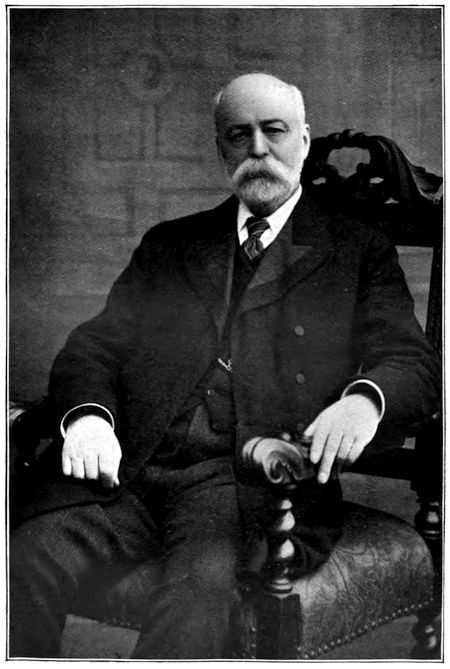
Alderman John Wilson, J.P., M.P.
1883-84
Five Days per Week Movement—Fourth Sliding Scale—Second Relief Fund—Wheatley Hill "Putt Pay"
The question of restriction of the output was again brought under discussion at the beginning of the year. It was not peculiar to nor spontaneous in Durham, but was of extraneous suggestion. It was the result of a miners' conference in Leeds, and was set forth under two phases: the reduction in the hours per day and the days per week to five—all the pits being off on the Saturday. The members were told plainly by Mr Crawford what the real issue was and what was the condition of the mining districts. While in other districts the hours had to be reduced, in Durham they would remain, but the days per week would apply to all alike. He, however, pointed out that there was only one-sixth of the miners of the county represented. A special Council was called, and the matter placed before it, when it was decided "that pits ought to work not more than five days per week and draw coal not more than ten hours per day—each and every pit being idle every Saturday, irrespective of how many of the preceding days of the week have been worked."
A Second National Conference was held on the question. A report was issued by the representatives, Messrs Crawford and Wilson, which showed the fallacy of attempting any national movement. The conference was called to hear how far the decision had been carried out. The report showed that there were only 81,000 paying members in the districts represented, the total number employed being about 379,000; that there were only 9500 persons who had adopted the Leeds Resolution of Restriction, and some districts positively refused to carry it out. In the face of these facts the conference reaffirmed the restriction resolution, and resolved that the ballot should be taken in each district, and that there should be an adjournment to hear the result.
In the meantime a meeting was held between the Executive Committee in Durham and the owners. The Committee stated their reasons for requesting the meeting, and hoped the owners would assist them to carry the conference decisions into effect. The reply was that the question was so important to both employers and employed that it would require serious consideration. Could the workmen point out any probable good which would result? How far it had been carried out? Unless it were generally adopted it would mean ruin to those districts attempting it. They were willing to take part in a national conference for the purpose of discussing the subject. The matter was again brought before a conference in Birmingham on April 10th. There were twenty-seven delegates present from districts where 229,000 men were employed. The only item of business was the appointment of a Committee to meet the Mine Owners' National Association, each district to appoint its own representative on the Committee. Mr Crawford was afterwards appointed to act for Durham. The request for a meeting was sent to Mr Maskell W. Peace, the owners' secretary. It was refused, as they considered it outside their province. Beyond the disorganisation in the other districts it was found in Durham to be incompatible with the sliding scale, and as a consequence the attempt at a national regulation of labour proved abortive. That which oft looks easy when at a distance is often found impracticable when we are brought face to face with it. If a national restriction be ever carried out it will need solid unions, and all men of one mind, or it will fail at the start.
THE FOURTH SLIDING SCALE
As the period approached when the definite year of the scale would end there were growing signs that the requisite six months' notice would be given. At a meeting of the Federation Board held on May 23rd it was decided to give such notice to terminate the scale at the end of the year, and the Board prepared to meet the emergency, and if possible renew the scale or modify it. A resolution was come to at their meeting in October, expressive of their opinion that "a sliding scale is the best mode of adjusting the wages questions." They further resolved that each section should meet the owners for the purpose of discussing any alteration peculiar to themselves. Acting on that arrangement the Executive Committee sent out a circular urging the maintenance of the principle. In addition they called a special Council, and asked for suggested amendments. In response there were seventy-seven suggestions returned, embracing every kind of alteration or grievance, to be considered before the scale was re-established. These were sent to the employers, who replied by sending a counter list containing (if not as many) a very large number of questions. The Federation Board asked why they were making so many claims. These reasons were supplied, each section being taken seriatim. The various Committees and the Federation Board were doing their best to get the settlement placed in the hands of some body of men, so that the scale might be rearranged. This advice was not accepted, for at a special Council the power to settle was retained by the county so far as the miners were concerned.
The reasons assigned by the owners in support of their claims were unacceptable to the Board. They felt justified, they said, in refusing, but were willing to meet to discuss the respective alterations. The meeting took place, but it was found that the representatives of the miners could not proceed, as their Council had refused to accept the scale until all the notices of men who were discharged for depression of trade were withdrawn and all the pits recommenced. "The owners said that such a thing was an impossibility, seeing that a want of trade was the only cause of pits being stopped and men dismissed. If the pits could be worked they would work them, but this they could not do in consequence of the terrible depression of trade. It was nonsense to say that the pits were stopped by an arrangement among the owners. That was a monstrous absurdity." These remarks were sent out to the miners with a most earnest appeal not to delay the matter any longer, because it could only result in danger. A form accompanied the circular upon which the lodges were asked to vote whether they would place the question of a sliding scale in the hands of the Federation Board. This appeal was successful, and the Board was instructed to proceed with it by a majority of 104. At the earliest possible moment a meeting was arranged, and the scale agreed to on the lines of the previous one, to commence on 1st August 1884, and to continue for two years certain, subject to two calendar months' notice. But such notice was to be given on a date to permit of a termination on the 31st of July. This fourth sliding scale was similar to the third one, which appears on page 177, so we need not reproduce it.
SECOND RELIEF FUND
The formation of the Second Relief Fund was forced upon the county by the fact that there were so many men out of work, and their poverty was a peril to those who were in employment. Men's necessities are a strong force, oft compelling them to do things they would otherwise shrink from. It was thought, therefore, it would be sound economy to ease off the poverty, if luxury could not be afforded, and thus save men from overcrowding the labour market, or at least from accepting conditions which, if once established, would prove a general injury. Then there was a feeling of sympathy for the distress seen on all hands, and a desire to alleviate, if not obliterate it; for the miners of Durham may have little, but they never hesitate to share it. They are not the men "who, seeing their brother in distress, shut up their bowels of compassion against him." The sight of distress, or a knowledge that someone is in danger, never appeals in vain.
The Council meeting held on May 3rd, 1884, dealt with the question of providing for the relief of those men who were discharged through depression of trade. It decided that a special Council should be called on the 7th for the purpose of discussing the best means, and in the meantime suggestions might be sent in—"motions of all kinds, including levies, to be admissible." Without describing these in detail, suffice it to say that there were eighty-eight in number, covering all phases of the subject, both as to means of raising money and amount of benefit. The Council decided for a levy of 3d. per full and 1½d. per half member per fortnight. That £2000 should be advanced from the General Fund, to be redeemed by the levy, and "that the amount of money the levy will bring be equally divided by the Executive Committee amongst the men idle or who may be idle." It was soon found that the income from the levy would not give anything near 10s., and often it was found to run as low as 5s., per week.
WHEATLEY HILL "PUTT PAY"
As this, although belonging to an individual colliery, is yet of a peculiar character, it will be well to note it here. On the pay Friday falling on April 4th it was found that the company had become bankrupt, and the wages of the workmen were not forthcoming. This being the second occasion at these collieries, and only half the amount for the previous occasion having been paid, there was great consternation, and the presence of an agent was urgently requested. The treasurer immediately went out, and found the people ready for a riot. This, of course, was to be expected. Mr Ramsay, the agent of the colliery, desirous to meet in part the wants of the people, sold a branch engine, but when the N.E.R. engine came to take it away men, women, and children commenced and pulled the rails up, thus keeping both engines as it were in "pound." It was arranged that there should be a mass meeting the next day (Saturday), and the treasurer was to attend to persuade the men to allow the sale to proceed, and accept the money as an instalment of their wages. The meeting was held in a field. The day was fine, there was a large crowd, and the treasurer was in his most eloquent mood, when a very laughable incident occurred. There was a pigeon-flying match from Newcastle to Thornley. It was about the time when the birds were expected. Some of the men were watching the heavens more closely than they were listening to the speaker or at the time thinking about their wages. Just when the orator was in the midst of one of his best sentences a voice was heard (which was the descent from the sublime to the ridiculous): "Haud thee hand till th' 'Slate Cock' comes in." In a moment speaker and occasion were lost, and the gathering generally watched the bird, hero of the hour, as, like an arrow shot from some great bow, he came right on to his "ducket." Then in deliberate manner the same voice was heard exclaiming: "There, he's landed; thoo can gan on wi' thee speech." But rhetoric and reason were both ineffective after the "Slate Cock" had landed.
The Executive Committee, however, were quick in their action, and put in men as bailiffs at each colliery to prevent anything being taken away. After a year had been taken up by the process of law, and £1000 spent in money, the entire wages, slightly over £4724, with the colliery pay sheets, were handed over to the treasurer. That sum included the wages of Union and non-Union men alike, and was paid to all with this difference, that the members got their money free of cost, but the non-members were charged 7s. each towards the cost incurred in procuring the money. This sum was all paid out as per the pay sheets. The last man to turn up was five years after.
1885
Industrial Remuneration Conference—Extension of the Franchise—Labour Representation—Lloyd Jones
In January 1884 a peculiar but very useful conference was held in London. It was, and is, known as the "Industrial Remuneration Conference." In the preface to the proceedings, which were published, we are told why the conference was called.
"In the spring of 1884, a gentleman of Edinburgh determined to devote a considerable sum of money to the purpose of keeping before the public mind this vital question, viz.: What are the best means, consistent with justice and equity, for bringing about equal division of the daily products of industry between Capital and Labour, so that it may become possible for all to enjoy a fair share of material comfort and intellectual culture, and possible for all to lead a dignified life, and less difficult for all to lead a good life?"
For the purpose indicated he gave £1000, vested in seven trustees, Mr T. Burt being one of them. To the trustees there was a Committee added, and Mr Crawford was, by the consent of the Miners' Council, amongst the number. That Committee considered that the best means of carrying out the trust was by organising a conference and inviting all sorts and conditions of opinion. There were two main branches of inquiry: "Is the present system or manner whereby the products of industry are distributed between the various persons and classes of the community satisfactory; or if not, are there any means by which that system could be improved?" These general propositions were divided into many branches. The purpose of this historical outline is served by mentioning the connecting link being Mr Crawford's appointment on the Committee. The chairman of the conference was Sir C. Dilke.
While these important industrial matters were taking place the political affairs had not been neglected. The Franchise Association had kept up a close and instructive agitation not only at home, but outside the county, pressing the demand for an assimilation of county to borough. They urged that it was a glaring anomaly for a man to be eligible to vote in a borough, and because he passed over an arbitrary line (yet in all respects the same man in trade and duties of citizenship) he was not permitted to do so. At the Trades Union Congress held in Nottingham in 1883 the following resolution was proposed by the representatives from Durham:—
That, without accepting an equalisation of the county with the borough franchise as a final solution of the great question of Parliamentary Reform, this congress is of opinion that the Government should lose no time in introducing their promised measure, and calls upon the organised trades of the country to assist by every means in their power in promoting the popular movement in support of this long-expected reform, and authorises the Parliamentary Committee to join with the Durham Franchise Association and other Associations of all kinds in the proposed deputation to the Prime Minister.
The result of this resolution was the reception by Mr Gladstone of a very large deputation, representative of all the Trades Unions in the country, on January 3rd, 1884. Three speakers—J. Arch, A. Wilkie, and J. Wilson—were selected, and they received the assurance that the Government would introduce the Bill. It was introduced, and occupied nearly the whole of the session; was carried through the Commons, but was defeated by the Lords, or as Mr Gladstone said, they put "an effectual stoppage on the Bill; or in other words, they did practically reject it." The Liberals, however, were determined that the matter should be settled, and for that purpose summoned an autumn session. By the tact and eloquence of the Prime Minister the great measure was carried in spite of the most bitter opposition, in which constitutional means were stretched to their utmost limit, and the deepest depths of vulgarity were ransacked for the foulest epithets to use against the working classes, some of whom appear to have very short memories, as they forget this and other great acts done for them by the Liberals.
The passing of the Act did not take the miners of Durham or their colleagues over the Tyne by surprise, but found them expectant, and ready to use their newly acquired power. The twelve years of the teaching of the Franchise Association bore fruit at once. During the summer of 1884 numerous district meetings were held. The Miners' Executive and the Committee of the Franchise worked together. The two great questions were the political right withheld and the action of the irresponsible House of Lords in thwarting the will of the nation as expressed by the duly elected representatives of the people. The 4th of October was the appointed day to hold district meetings simultaneously all over the county. The people were urged to make them a success. The Committee was appointed to take charge, and the owners were notified that all the collieries would be off on that day. The whole county was in a political fever. John Morley had uttered his memorable words, which have passed into one of our epigrams: "End them or mend them." The political creed of the progressives was "Down with the Lords" and "Faith in Gladstone." One sentence may be quoted from Mr Crawford's circular of that time:
Mr Gladstone and the Government deserve the highest praise for their action in this matter, and with the support of the people they will yet carry the Bill against the organised and determined opposition of a class of men who have amassed immense wealth by, in past times, taking that which belonged to the people.
The practical effect of the Act in Durham was seen on January 24th, 1885, when the Federation Board called a special Council to consider the following programme:—
programme, 1885
(1) Shall there be Labour Representatives?
(2) If so, how many?
(3) If it be decided to have Labour Representatives, who shall he or they be?
(4) The ways and means of supporting such person or persons from the Associations.
(5) What should the salary of such man or men be?
(6) Should we nominate men other than Labour Representatives? That is, men who hold similar views to ourselves, but who will pay their own costs, both in contesting and otherwise.
(7) If this be done, who should they be?
(8) The selection of divisions.
The resolutions come to were—(1) there should be Labour representatives; (2) there should be bona fide Labour candidates selected from the workmen, but run in connection with the Liberals; (3) the candidates should be J. Wilson, W. Crawford, and L. Trotter; (4) the ways and means should be left in the hands of the Federation Board, and that the salaries should be £500 per year. On the same day the Board met, and decided to select the Bishop Auckland, Mid-Durham, and Houghton-le-Spring divisions—Mr Trotter for Bishop Auckland; Mid-Durham, W. Crawford; Houghton-le-Spring, J. Wilson. They further decided to inform the North and South Durham Liberal Associations what had been done, and asked them if they would co-operate with the Board.
A meeting between the representatives of the Liberal Associations, the Federation Board, and the Franchise Association was held in the County Hotel, Durham, when the following resolutions were agreed to:—
resolutions, 1885
That it is highly desirable for all sections of the new electorate to arrange for the object of securing the return of Liberal Members at the next election, and that this meeting is prepared to give support to the persons nominated by the Miners' Federation Board, providing their candidature is endorsed by the Liberals in each division.
That this meeting requests the constituencies to form Liberal organisations, and that small committees from the South and North Durham Liberal Associations, the Federation Board, and the Miners' Franchise Association be appointed to aid such organisations.
January 24th, 1885.
So far as the Mid-Durham and the Houghton divisions were concerned, all went on smoothly. The candidates were accepted with complete unanimity, but in the Auckland division the feeling in some quarters was in strong opposition. The Board were asked to withdraw Mr Trotter, which they refused to do. There were other two gentlemen in nomination, and he was asked to put himself in competition with them, and if rejected retire. He refused, and they, the Board, approved of his refusal, and arranged a meeting of the lodges in the division for the purpose of explaining the situation. At this point there arose a complication of a different order. At their meeting on October 22nd, 1885, the Board decided "that each candidate must be responsible for the returning officer's fees in their respective divisions." Shortly after this was made known Mr Trotter withdrew, the reason assigned being the refusal of the Board to pay the returning officer's fees, although all the candidates were treated alike. As a consequence the division was vacant, and open to any candidate. This only need be added, that at the General Election in November Mr Crawford and Mr Wilson were both returned by great majorities—the latter being defeated in 1886, but succeeding Mr Crawford in 1890 as the Member for Mid-Durham.
This may be a fitting place to try to remove a false impression, which has lingered in some minds unto this day, as to what they are pleased to call "the shameful treatment" of Mr Lloyd Jones, while in the Chester-le-Street division, by the Federation Board. There never was a grosser misstatement. The Board did nothing but what was fair and honourable throughout the whole proceedings, although they were made the object of a somewhat bitter attack by The Newcastle Chronicle, which attack was entirely founded upon a too slight knowledge of the facts. As mentioned above, an arrangement was made whereby the workmen were to have their divisions undisputed, and with the rest there was no claim for interferences set up. Mr J. (now Lord) Joicey was selected by the Liberals for the Chester-le-Street division, the Federation Board having no part or lot in the transaction. Mr Jones, who was an intimate friend of Mr J. Cowen, was brought out, it is well known, as Mr Cowen's nominee, and as such, contested the division. The Board, as such, did nothing in it in any way. If they had, their action would have been dishonourable in the light of the agreement. This, however, they did do: as soon as Mr Trotter withdrew from Bishop Auckland, they sent a deputation to interview Mr Jones and to make him an offer of that division. The writer was one of the deputation, and with the others did all possible to persuade him, but he refused. It was felt he was not free, or he would have accepted. This can be said without fear of contradiction: the Board as a whole regretted the refusal, for Mr Jones was a great orator, respected very much by the miners in Durham, as witness their continual choice of him for their arbitration cases, and he could have had a safe seat.
1887-89
In Dark Days—The Eight Hours—The Sliding Scale—Advance of Ten per Cent.—Second Advance of Ten per Cent.—Death of the Scale—The County Council
The year 1886 passed over uneventfully, and in a routine manner, except in the matter of trade, which continued very much depressed, and wages very low. At the beginning of 1887 the average selling price at the pit mouth was 4s. 5.56d. The Relief Fund (even with the principle of division of income) was in debt to the General Fund £3548, 4s. 11d. as per the balance sheet for quarter ending December 1886. The condition of trade was so bad generally that a Royal Commission was appointed to inquire into it, the present county court judge of Durham being one of the members. He differed from the majority report, and signed a minority report. This objection was in relation to the fragmentary character of the evidence. In the coal and iron industries the witnesses were entirely from the employers. Without stating the whole of his able report, dealing as it did with every phase of our industrial life, a portion may be mentioned. Four causes of depression and low wages upon which he laid emphasis, were the land question and the royalties, way leaves and dead rents. Those who hold the land, claim these from the employers and employed who risk their capital and their lives to get the mineral which he, as landlord, does nothing to assist. In the midst of the dark times the Executive Committee was compelled to face two evils: a small banking account, and a heavy expenditure. The banking account for the quarter ending December 1886 was £16,000, exclusive of the deposit and shares in the Industrial Bank, which amounted to £1841, but which were nominal and, so far as use was concerned, simply on paper. In addition, there was a sum nearing £900 invested in buildings. In a short circular the Committee placed the whole financial position before the members. For the year 1886 the income was £44,506, with an expenditure of £54,126. "You will thus see that we cannot exist long at the rate of £9620 on the wrong side of the ledger. Soon all our funds will be gone, and nothing left for the members who have paid so long." They were compelled by rule to keep £10,000 in the funds, and were therefore driven to consider two propositions: either to increase the subscription by 3d. a fortnight or reduce the benefits. For that purpose they proposed to call a special Council to consider the questions. The reductions suggested would reduce the expenditure by £1600 per quarter. At the Council meeting an all-round reduction of 2s. per week for sickness, breakage, strikes, and sacrificed allowance was made, and £1 off the death legacies, to take place from the rising of the Council, which was held on 9th April. Happily, however, the trade began to turn and the position of the Association to amend, for on August 27th a slip was sent out informing the members "that the funds have so far recouped as to enable the Society to pay all benefits according to rule from Monday the 29th."
THE EIGHT HOURS—A RESTRICTION
On October 11th, 1887, and three following days a miners' conference was held in Edinburgh. The main purpose of the conference was the limitation of the output. There were a large number and variety of propositions discussed: five days per week, a week or fortnight's holiday, and the eight hours per day. Part of the resolution on the last question was in words that have become familiar to Durham in these later years: "That no miner be allowed to work more than eight hours in the twenty-four." The first resolution on the question did not appeal to the State, but on the fourth day it was brought forward containing an appeal to the legislature, and carried. The position of Durham was the same then as now (1906), and the opposition of to-day is based upon the thought of that day. Before the conference was held the Executive Committee gave their opinion upon the various questions on the programme of business.
On the eight hours they said:
EIGHT HOURS' RESOLUTION
Eight Hours.—This is to be sought for by Act of Parliament. To seek to fix the hours of men by Act of Parliament is, in the year 1887, a monstrous and illogical proceeding. If you fix the working hours by Act of Parliament, why not fix the rate of wages also? In the old feudal times wages were so fixed by Act of Parliament. Under such laws, men were serfs and slaves, and became as much the property of their employers as the horses that filled his stables. To demand eight hours, and even less, is in the hands of all men if they will only utilise their own organised power.
But if such an Act were passed, it would result in our own county in one of two ways, (1) the turning off of 10,000 or 15,000 hands; or (2) the adoption of two shifts of hewers, and two shifts of offhanded men and lads, and thus increase the hewers' hours by one hour, and, in many cases, one and a half hours per day. Again, if you seek by Act of Parliament an Eight Hours' Bill, it logically follows that you regard eight hours as the number of hours men should work. In such a case, you endanger your own position, and would strongly tend to bring upon you an eight hours' system. But why is this sought? It is sought because men are indifferent, apathetic, and consequently disorganised. If this law passed to-morrow, it would be an inducement to indifference and disorganisation, and as such materially injure you.
In September 1887 the Trades Union Congress decided to take a ballot of all the unions on the general eight hours. The questions submitted were: Should an eight hours' day be sought; if so, by what means, by Trades Union effort or by law? Again the Executive Committee advised the members to vote against it, which they did. "If this became law to-morrow," they said, "you could not make it operative. To do so you must turn off some thousands of coal hewers, or have two shifts of offhanded men and boys, and draw coals sixteen hours per day instead of as now drawing them ten and eleven hours. If this be sought it follows by clear implication that the men voting for it regard eight hours as a normal and fair time to work per day." The Congress of 1888 decided in favour of eight hours by law.
The question came again before a miners' conference held in Birmingham on 8th October 1889. There were three items discussed: "The International Miners' Congress, an advance in wages, and the eight hours." The delegates from Durham, Mr J. Johnson and Mr J. Wilson, drew up a report of the proceedings, which was sent out to the members. They were sent to the conference with definite instructions from the Council: "That we don't take any part in the agitation for an eight hours' day for underground workmen." The representatives in the report say:
Beyond that we could not (nor desired to) go. When the conference came to discuss the question we laid our position before the meeting, and told them we could not take any part in the agitation. We make no remarks about the sarcastic reflections which were made by some of the delegates on our position. They were no doubt natural reflections, although their repetition was galling, and evoked from us replies which were not of the calmest order. We stood firm to our instructions, and abstained from either voting or speaking, except in self-defence.
The conference resolved that on the 1st of January all men and boys represented there should commence working eight hours from bank to bank. Northumberland and the Forest of Dean voted against, with Durham neutral. Then followed a resolution pledging all the districts to give in notices to terminate with the year. This placed the conference in a dilemma. They were ready to pass resolutions, but few were prepared to say their members would give their notices in for it. Then it was decided to take a ballot and hold another conference in November. At our Council meeting on November 9th it was decided not to be represented.
THE SLIDING SCALE
The programme for the Council to be held on February 2nd, 1889, contained a resolution asking for a ballot to be taken for or against the sliding scale. In their notes on the questions to be discussed the Committee strongly urged the maintenance of the scale. It steadied trade, made work and wages more regular than any other means. Where sliding scales existed the districts were in better condition. They (the Committee) were as much interested as the members. The gain or loss was alike. Having fully considered the question they were convinced that it was the most just and equitable way of fixing and settling wages. The resolution to ballot was carried. About the same time the mechanics decided to give notice to have the scale amended. The Federation Board not only found themselves called upon to consider the scale, but they had to deal with a demand for an advance in wages. A meeting was held on June 17th. The employers placed before the Board three propositions: arbitration, two and a half per cent. to commence on July 1st, and two and a half on September 1st. These advances would raise the wages to ten per cent. above the standard, or they were willing to arrange for a new scale. The Board were reminded that the scale would run until July 31st, and therefore their application was in violation of that agreement. These offers were recommended to the members, with a request that they, the Board, should be vested with full power to negotiate a settlement, which should be submitted to the county. The offer and request were refused, and another meeting took place on July 9th. The employers then modified their offer, and were willing to give five per cent. advance for the months of August, September, and October, and a further five per cent. for November, December, and January, or they would refer it to open arbitration. Again the question was submitted to the members. The Board said: "There were three courses to pursue: accept the owners' offer, go to arbitration, or ballot the county." Of the three they strongly preferred the offer, as to take the ballot was a repudiation of arbitration as a means of settlement. Arbitration was a lingering and uncertain course. It would last three months, and they would thus lose for that time a clear five per cent., or something like from four to five thousand pounds per week in wages. "Remembering all the difficulties which now surround us, and looking at all the facts, we would very strongly advise you, as men alike interested with yourselves, to accept the offer the owners now make." The reply of the county was to demand twenty per cent. advance. The Federation Board was driven to take the ballot. The result of the ballot was for pressing the demand, and the Miners' Executive made preparation for giving in the notices on August 1st. The employers made another offer: instead of giving two fives they offered a full and immediate ten per cent.
durham coal owners' association
The Owners' Wages Committee is unable to recommend its Association to give an advance of 15 per cent.
The actual invoice price of coals and coke has not yet materially advanced. Recent contracts at high prices can only have a gradual and deferred influence. The owners have already given a special advance of 10 per cent., which has been in operation less than four months. Any advance which they now give must, like that previous advance, be in anticipation of the higher prices which will alone allow of higher wages being paid.
They are willing to stretch a point in this respect in the expectation that wages will be thereby settled for a period which will allow of equivalent prices being actually realised, but they are not prepared to do more than recommend a general advance of 10 per cent. on the basis rates, to take effect in the first pay commencing after the date of acceptance of this offer.
Reginald Guthrie, Secretary. Newcastle-on-Tyne, November 23rd, 1889.
The Federation Board urged the acceptance of that offer. "Everyone (unless it be the unobservant and inexperienced) must be fully alive to all the dangers to our social, and it may be our permanent condition, which always follows a strike, such as we should have in this county. It does not mean a few hands, but the entire county, comprising 500,000 folks laid commercially prostrate; and who can conceive the social and moral disaster arising from such a state of things." They felt confident that it would be for the good of the whole county, for they would reap an immediate and certain gain of from £8000 to £10,000 per week.
The ballot was taken. The miners' vote was in favour of a strike, but the whole vote of the Federation was in favour of accepting the ten per cent. Within three months of the acceptance the Miners' Council on September 14th decided that the Committee should demand a further advance of fifteen per cent., to commence on November 1st; if refused, the county to be balloted at once. That request was forwarded to the employers from the Federation Board. They were informed that, after very carefully considering the improved condition of trade and the increased prices at which coal and coke were sold in the open market, the Board considered that they had a just claim for an advance of fifteen per cent. The reply of the employers was contained in the following resolution:—
The Owners' Association, taking an account of the fact that the ascertained price of coal for the quarter just ended is only 5s. 2.93d. (or 4.44d. above the price of the previous quarter), is not prepared to give an advance approaching that which is asked, but is willing to appoint a Committee to confer with the Federation Board, having full authority to negotiate for a settlement of wages, to begin at such a date, and extend over such period, as may afford a reasonable opportunity of actually realising those higher prices which would alone allow higher wages to be paid.
The question arose whether the miners should seek the advances themselves or through the medium of the Federation Board, as that was the only regular and effective means. It was at the same time pointed out to the workmen that their claim for the fifteen per cent. was in violation of the understanding that three months must elapse from the date of a previous change before a new application could be considered. The voting on the body to negotiate resulted in favour of the Board, but there was a further question to decide. What was to be the line of procedure? Had the Board to make the best settlement, or should they press for the full fifteen per cent., and, if refused, the members be balloted? The miners' special Council voted by a large majority for the full demand or strike, the voting being 297 for strike and 45 for placing the power in the hands of the Board. It was found that the other three sections had remitted the question absolutely to the Federation by large majorities, and the Miners' Executive naturally felt the advance was being delayed for weeks, whereas the Board might have settled it, and the workmen have got an early increase in wages. It was, therefore, felt imperative that the miners should be asked to reconsider their position, seeing that in the other sections there was unanimity. The Committee resolved to again submit it to a Council meeting, but there was no change, the instruction of the previous one being repeated, the majority being slightly decreased. That Council was held on November 14th. The Federation Board met the same night, and on the 15th Mr Crawford handed Mr R. Guthrie (who had been appointed secretary as successor to Mr Bunning, deceased) a request for a meeting. That was fixed for the 23rd of November. When the Board met the owners they were asked what power they had, and the reply was simply to ask for the fifteen per cent. Mr L. Wood, the owners' chairman, then said: "We only agreed to meet the Federation Board on condition that they had power to settle the entire matter. Have you that power?" The Board had to give the humiliating answer: "No." An adjournment for three hours took place, when an offer of ten per cent. was handed to the Board. They then resolved to take a ballot of the whole of the sections, the decision being to accept the offer.
There are two remarks necessary anent the industrial matters of 1889—first, the termination of the sliding scale, which happened on the 31st of July; several attempts were made to revive it again. The latest in the year was a new scale submitted by the Enginemen's Association. It was drawn up by Mr T. Hindmarsh, the treasurer of that Association (who was a very useful man), but it was never proceeded with. The scales had been in existence twelve years. The misfortune was that the trial of the system took place in a series of years which covered the most unbroken period of depression within the experience of the Association. The ascertainment showed that prices never reached (except at the last stage) higher than 5s. per ton, being most of the time below 4s. 8d. We are so much inclined to judge from appearances and not righteous judgment that the blame for bad trade was thrown entirely upon the scale, as if its existence or non-existence could influence the coal markets and their prices. To the superficial observer the collateral conditions of the scale would appeal with force; but men who look at the fitness of things, and who do not measure that fitness by a small period or single phase of our industrial life, are fully aware that all kind of trade seasons are required to supply a proper test—these recognise that the scale, with proper adjustments, is bound to be an equitable means of adjusting wages. There was this coincidence which strengthened the position of the objector: the scale ended just when a boom in trade set in, and many men believed that it had been the incubus which had in an evil manner weighted the trade and kept wages down. "See," they said, "how the conditions have altered since its removal, and shall we not be foolish if we give it another lease of life?"
The second remark applied to the delay in securing the advance through not trusting those at the head to negotiate a settlement, and this in spite of urgent appeals. This remark applies not merely to the distrust of that day, but to all such occasions. The foolishness is not merely for a day, but for all time. It is a great check upon men's ardour to find themselves doubted, and it is a grand incitant and inspiration to feel they have the confidence of their people behind them. If a leader is not such as can be relied upon to do his best he is not fit to be in the position. Generals win battles most assuredly when the men trust them. There is always danger when with suspicion those in the ranks are watching the head.
THE COUNTY COUNCILS' ACT
For a considerable time prior to 1888 there had been a great desire amongst the people for a more active part in local affairs. This was running currently with the national and parliamentary idea. The opposition which reared itself against the national was found striving to prevent an extension of home affairs. It was in relation to this that the Marquis of Salisbury, "that master of jeer and gibe," said what the people wanted was a circus, as they were more eager for that class of amusement than seriously taking part in the management of parish or county business. However, as in the parliamentary suffrage, so in the transferring of the local affairs from the parish magnates and the petty sessions to the people; the spirit of reform, the friends of freedom, and the trustees of the people were too strong. Those who were in power—the masters in the art of "grasping the skirts of happy chance"—those skilful plagiarisers of other people's ideas, calling them their original property, those who have always waited to be forced to do right, introduced and carried the "Local Government Act."
As the men of Durham were eager and expectant in 1885 with reference to the extension of the suffrage—not merely eager to receive, but to use—so in relation to the county affairs, they were earnestly desiring to receive the long withheld right and to put it into operation. In this matter they were and are unique. The system of political teaching carried on by their Franchise Association had not been in vain. While in other parts of the country men had been at fever heat until they were incorporated into the electorate, and then lapsed into indifference or misuse, in Durham the same keen zest was manifest after the passing of the Act as before. Between the Royal assent being given and the time of operation a serious preparation took place. A very large number of meetings were held, and in a business manner the election was prepared for, with the result that about one-fourth of the new-formed Council were working men, and fully seventy per cent. of the parish and district councillors were from their ranks. In this respect the county occupied a proud and peculiar position, for in no other county was any such use made of the Act. Instead of that, the lethargy seen in other counties was such as to justify the Salisburian jeer as to the circus. It may be said without fear of contradiction that no selfish or ill use was made of the power thus gained. No county anywhere more needed reform in matters pertaining to the home life of the people, for in matters of convenience and sanitation the condition of many parts was deplorable. There was a general idea that these working men when they were placed in this responsible and new position, with the public purse to draw upon, would act the part of prodigals, and run into all kinds of waste. Those who said that, based their reasoning on a very false position. They said (and no doubt believed) that the miners did not contribute to the rates, and therefore would rush into useless expenditure. Some of the miners asked where the rates came from if not from them. The fear has been falsified. There was great need in the home surroundings for rushing, but with all that, gradual reforms were the order of the day, and no one suffered.
1890
Another Advance sought—Death of Mr Crawford—The Ten Hours' Drawing and Hewers' Hours—The second Advance—International Miners' Conference
This year opened with another claim for an advance. In the Federation Minutes for January 8th is the following:—
That the secretary write to the secretary of the Coal Owners' Association asking a meeting requesting an advance of 15 per cent. on all classes.
That motion was the outcome of a resolution passed at the Miners' Council on the 4th. Not merely was the amount of advance named, but the 1st of February was to be the date of its commencement, with the alternative that the ballot be taken if it were refused. The Board met the owners on the 21st of January, when they were given the following resolution:—
The Durham Coal Owners' Association is unable to make any further advance in wages unless, or until, a much higher invoice price of coal is realised than has yet been attained. The owners' accountants have ascertained the selling price for the last three months (ending December 31st, 1889) and they certify the net average invoice price to be 5s. 9.88d. This, according to the recent sliding scale agreement, would make wages 13¾ per cent. above the standard of 1879. Wages are, as a matter of fact, now 25 per cent. in advance of that standard brought up to this point, by the special advance of 10 per cent. given only 5 or 6 weeks ago, in anticipation, as the owners then declared, of higher prices yet to be got.
The owners invite the Federation Board to verify these figures, and to join in a further ascertainment for the first three months of this year, with a view to thus determining whether any advance in wages is justified, either now or in April next.
The owners regard it as all-important that the men employed in the collieries in the county of Durham should be afforded, and should avail themselves of, an opportunity of correcting the serious misapprehension under which they labour from regarding the prices quoted in the newspapers for what is but a small proportion of the output as representing the entire volume of trade.
Lindsay Wood, Chairman.
Coal Trade Office, Newcastle, January 21st, 1890.
The Federation Board resolved to submit the question to a ballot, as it was found that the miners were not in favour of either joining the owners in an ascertainment, or allowing their representatives to meet the employers. The result of the miners' ballot was most perplexing. At that time there were only 48,500 full members, and of these only 25,807 voted for a strike, those against the strike and neutrals amounting to 22,708. Taking the Federation as a whole, the situation was unsatisfactory. For a strike there were 29,048, and against 26,696. There were more than 15,000 unrecorded votes. Under these circumstances they considered their best policy was to call sectional councils, to be held on February 13th. The voting at the Miners' Council was a very large majority for giving in the notices on the 24th. The Federation Board met on the same day, when it was found that the enginemen refused to give in their notices; but the Board decided that the other three sections should tender theirs, and the owners should be informed of the same. Great regret was shown at the refusal of the enginemen. Mr Crawford, acting on the instruction of the Board, at once notified the employers, and received from them a long reply. They were surprised to find no reference made, either in the letter or in the submission to the members, as to the joint ascertainment of the selling price of coal. They reaffirmed their statement that the average price did not warrant the advance. If a strike were entered upon, the responsibility would rest with the side which refused to avail themselves of the full opportunities offered for ascertaining the condition and prospects of the trade. They were prepared to consider whether by arbitration, or by any other course, a strike might be averted, and they invited the Board to meet them again on February 22nd. At that meeting the owners offered an advance of five per cent., making the underground men thirty, and the surface men twenty-seven, per cent. above the standard of 1879. Another ballot was taken—(1) upon this offer; (2) open arbitration; (3) strike. The result of the ballot was to accept the offer of five per cent.
On the 9th of May another demand was made for fifteen per cent. advance. This meeting was in response to a letter sent by Mr Crawford from the Executive Committee notifying the employers of the demand. This they could not accede to. Their reasons were the serious reaction which had set in in the coal trade. Whether it would continue, or there would be a recovery, was uncertain. The most they could offer was to leave wages where they were, and reconsider them in a month. For some time there had been a growing desire for shorter hours, and it was felt by some of the leaders of the Union that instead of pressing for wages it would be better to devote all their attention to the shortening of the hours, and even going so far as giving up the advance. In keeping with that idea the question was introduced to the owners; but the Executive felt that these two subjects were too much for successful consideration at the same time, and they therefore asked the lodges to send delegates to a special Council on May 31st to say whether—(1) they had to press for the entire programme—viz. fifteen per cent., with ten hours' drawing and seven hours from bank to bank; (2) should the cases be separated; (3) which one should be preferred. Finally, it was agreed that the claim for an advance should be withdrawn and the whole attention of the county placed upon the shortening of the hours. A more beneficial decision has never been come to in the whole of our history. In this case time has meant money, and has proved the wisdom of applying the spirit of compromise and arrangement to these matters by men who know the technicalities of the trade.
DEATH OF MR CRAWFORD
We must stay our record of industrial changes to consider a serious blow which fell upon the Association in the death of Mr Crawford on July 1st 1890. It was a blow the force of which can only be realised by those who were intimately acquainted with him, and whose good fortune it was to be colleagues with him. Never yet had an Association a stronger or more capable leader. To see him at his best one had to be with him in a complex question and in a committee. He was not an eloquent orator, moving men's minds by speech, but he was a pilot skilful in guiding their affairs through the perilous times. No man was ever more attacked by men who were never able to reach his excellence in the sphere of life in which he was placed; but this was always certain, those who made the attack were sure to receive cent per cent. in return. His ability was only fully known by those who were in close contact with him. His temper was sudden, fierce for a short time, but soon burnt out. Ofttimes, therefore, he was apt to give offence. He had his failings. Is he to be for that condemned, for where is there a man without them? The Pecksniffs of life may pose as being pure, but men know how far they fall short of that state. Pure spirits are a terror to common mortals, and beyond their reach, and especially to men whose lives, like Crawford's, are cast amid the complexities and complications of an earnest Trades Union leader.
Let us place on record the opinion of his colleagues in the circular notifying the county of his death:
"It is our sorrowful duty to announce to you that Mr Crawford died this morning at 6 A.M. On this occasion our words will be few, but they must not be taken as the measure of our feelings. We are in a position which enables us to form an estimate of his worth to us as secretary of our Association, and we are therefore the more fully conscious of the loss sustained. He has died doing his duty—as he was at Newcastle at Joint Committee on Monday the 30th of June, and took part both in discussions inside and settling cases outside. He went to that meeting in opposition to the persuasions of his colleagues, who saw the delicate state of his health, and how dangerous it was for him to go to the meeting."
He died comparatively young, aged only fifty-eight. If any of the young men want to see his style let them turn to his circulars, which are scattered profusely through our documents. He had been feeble for some time before his death, but when in health he was ready and vigorous with his pen. He passed from us, but his work still lives, and will live so long as the Durham Miners' organisation remains; and if the workmen in folly should allow it to fall, then the work he did for them will be their greatest condemnation.
The vacancies caused by his death were filled up by Mr Patterson becoming corresponding secretary, Mr Wilson being made financial secretary, and Mr Johnson being elected treasurer. The political vacancy was supplied by the nomination and election of Mr Wilson for Mid-Durham.
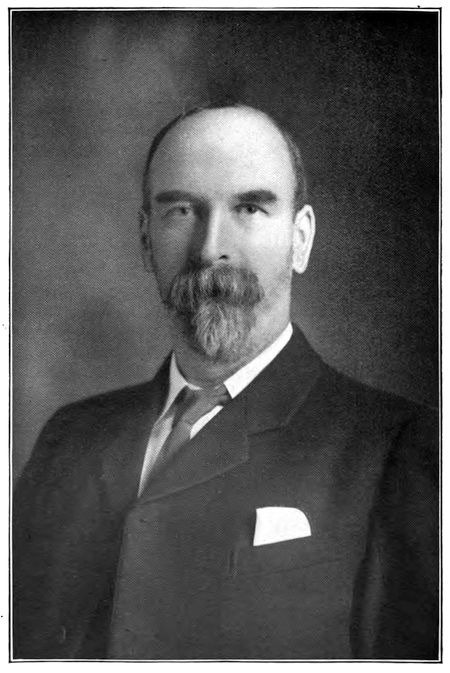
John Johnson, M.P.
THE SHORTENING OF HOURS
At the Executive Committee meeting on July 3rd this matter was under discussion, and it was resolved to ask for a meeting with the owners "on the seven hours' and ten hours' drawing." The interview did not effect a settlement, and the Committee decided to ballot the county. It was submitted as "Strike," "No strike," and the result was, for strike 30,484, with 2728 against. This result was sent to the employers, with a request for an early meeting. It was held on August 14th. The original request was a reversion to the hours worked prior to Mr Meynell's award:
"Foreshift men to go down at 4 A.M., back shift to be loosed to commence to ride at 4 P.M., and no colliery to draw coals more than ten hours per day, for two shifts of hewers. The drawing hours in the night-shift collieries to be in proportion to the day shift."
In that request there is no mention of the seven hours. This omission the Committee explained. If they had asked for seven hours they would have lengthened the hours of those men who were loosed by their marrows in the face. In their opinion the plain request of seven hours would have increased the hours in those cases on an average of at least half-an-hour per day, and would have compelled a system of overlapping in all such cases, because a signed agreement would supersede all customs. As a counter proposal the employers submitted the following:—
August 19th, 1890.
seven hours' and ten hours' coal drawing
The Owners' Committee offer as a settlement that hewers' shifts be on an average of foreshift, and back shift not more than seven hours, reckoned from the last cage descending to the first cage ascending, and from the last cage descending to the last cage ascending; the present coal-drawing arrangements remaining unchanged. The custom of shifts changing in the face to be maintained. Failing the acceptance of this offer, the Owners' Committee propose that the whole question of hours be referred to arbitration.
You, on the other hand, have urged that there should be simply a return to the drawing hours, and arrangements consequent thereon, prevailing prior to Mr Meynell's award in April 1878.
It will be the duty of the Owners' Committee to report this to a general meeting, but in order that that meeting may fully understand what such a proposal means, it is necessary to obtain information from each colliery as to its hours and arrangements prior to April 1878. The Owners' Committee will proceed to ascertain this, and it suggests that your deputation meet the Owners' Committee on Friday, the 29th inst., at 1.30, for a further discussion prior to the owners' general meeting which will be called for this day fortnight.
Yours faithfully, Reginald Guthrie, Secretary.
The whole subject was placed before a special meeting, and sundry questions were asked. Should the question stand adjourned as the owners requested? Should the seven hours be withdrawn? Should the owners' offer be accepted? Should arbitration be offered? Should the notices go in; if so, when? The conclusions of the Council were to wait for another meeting with the employers, and to withdraw the seven hours as a separate question.
At the meeting held on August 29th the employers placed before the Committee their proposals. Their chief objection lay in the serious loss of output which would follow a reduction of one hour in the coal-drawing time. In any case it would be impossible to bring the change into operation till the contract engagements could be adapted to new conditions; that the change should not take effect till the first pay in January; that if there were a reduction in hours there should be a proportionate reduction in wages; that the Committees of the two Associations should have full power to settle certain points: "Mode of reckoning the hours in ten and twenty hour pits; for coal drawing; for offhanded men and boys above and below ground; arrangements in cases of accidental stoppage; drawing hours on Saturdays; changing at the face; 'Led tubs'; travelling time in relation to distance; co-operation of miners in making the ten hours of coal drawing as full and effective as possible." The Council meeting before which these were placed decided to accept the owners' offer of ten hours, to operate on January 1st, 1891, and that the Executive Committee meet the owners, with full power to settle the conditions.
The appointment of the Committee resulted in the "Ten Hours' Agreement," which need not be inserted here, but a difference arose as to the number of hours the double-shift pits should draw coals. Finding they could not agree, the Committees arranged to refer the matter to an umpire, and two on either side were appointed to place the case before him. The umpire chosen was Mr J. R. D. Lynn, coroner in Northumberland. He decided as follows on December 22nd, 1890:—
durham coal owners' association and the durham miners' association re drawing hours of double-shift pits
Whereas, by an agreement between the Durham Miners' Association and the Durham Coal Owners' Association, the question of whether the coal-drawing hours of double-shift pits should be 19 or 20 hours per day was left to my decision; Mr Hall and Mr Parrington on behalf of the Owners' Association; and Mr Forman and Mr Patterson on behalf of the Miners' Association.
Now having taken upon myself the said reference, and heard what was alleged by Messrs Hall and Parrington and Messrs Forman and Patterson, on behalf of the said parties respectively, and having heard and considered all the evidence produced to me, and duly weighed and considered the terms of the request of the Miners' Association, contained in their resolution of August 14th, 1890—the terms of the offer of the owners—the terms of the agreement or qualified acceptance of the owners' offer by the Council of the Miners' Association—the agreed working hours of the datal men and boys—the time occupied by the different classes of men and boys descending and ascending the pits—the prevailing custom of the county and all the matters and things bearing upon the question referred to me—I am forced to the conclusion that the drawing hours of double-shift collieries can only be reduced in proportion to the agreed reduction of the drawing hours of the single-shift collieries, and not in proportion to the number of hewers' shifts; and now make and publish this, my award, in writing, as follows:—
I do Award and Determine that the coal-drawing hours of double-shift pits shall be twenty hours per day.
J. R. D. Lynn.
Dec. 22nd, 1890.
The negotiations were complicated and a settlement hindered by the action of the Wearmouth Lodge. It arose out of the seven hours' resolution. When the Council carried the resolution that the hewers' day should be seven hours, that lodge, without waiting for any general action on the question, commenced to put it into operation. We need not mention the circumstances beyond saying that the colliery was on strike, causing great friction between them and the Committee, and delaying a settlement of the general question, although they were told repeatedly that they were violating rule, and retarding progress.
Before the hours agreement was come to another advance was asked for. As usual, it emanated from the miners. The amount claimed was twenty per cent., and again the date was fixed for commencing, with the alternative of the ballot, and notices if refused. The resolution was brought before the Federation Board, accepted by them, and sent on to the owners, with a request for an early meeting. The discussion on the subject took place on October 27th, when the employers said: "As the application was based upon an alleged increase in the price of coal they must have time to verify the price by the accountants' ascertainment, and as soon as this was done they would meet the Board and give a definite answer."
The Federation Board, feeling the anomaly of their position, and being loath to meet the owners with restricted powers, resolved to ask their constituents to give them full power to negotiate as to the amount of the advance. The result of this voting was a large majority in favour of placing the whole matter in their hands. As soon as possible (November 14th) a meeting with the employers was held. The first question asked of the Board was what was the extent of their powers, and they, the owners, were informed the workmen had placed the matter entirely in the hands of the Board to settle. This, the owners said, cleared the ground and prepared for a settlement, as they had resolved not to make any offer if such had not been the case. It was, however, ultimately resolved to give an advance of five per cent., making the percentage above the standard of 1879 thirty-five for the underground workmen, banksmen, mechanics, enginemen, and cokemen, and thirty-two per cent. for the surface workmen, the agreement to take effect with the pays commencing December 29th, 1890, and January 5th, 1891, according to the pays at the various collieries. By that arrangement the shortened hours and the increase in wages were simultaneous.
Before leaving 1890 we will notice a very important step taken by the miners of Great Britain—the holding of the first International Miners' Conference at Jolimont in Belgium. As this was the first of the series it will be interesting if we give the origin.
The first idea originated in 1889. In that year two Labour Congresses were held in Paris: the Marx or Socialist, and the Possibilist or Trades Unionist. To the latter the Northumberland miners sent Messrs Burt and Fenwick. Prior to the meeting of the Congress those gentlemen sent a joint letter inviting the miners' representatives attending either the Marx or Trades Union Congress to meet for the purpose of a friendly interchange of opinions on questions relating to the condition of the miners. Some eighteen delegates responded, and the meeting took place in a dingy coffee-house in a back street.
The interpreter on that occasion was Miss Edith Simcox. The result was the miners of Great Britain were requested to take the initiative in the formation of an International. This request was conveyed to the Central Board of the National Miners' Union (Mr Crawford being at that time secretary). The matter was brought forward at a subsequent miners' conference at Birmingham. The outcome was the Congress held at Jolimont in Belgium in 1890.
1891-1892
Silksworth Strike—Claim for a Reduction—The General Strike—Aftermath of the Strike—The Eight Hours again
The year opened with a strike at Silksworth. It is mentioned here because of its being connected with, and being the last of, the disputes about the deputies. In order that there may be a proper understanding it will be necessary to retrace our steps a little. At the Miners' Council held on August 16th, 1890, a resolution was carried giving the Silksworth Lodge power "to take the ballot with a view of giving in their notices to compel the deputies to join the Union." The ballot resulted in the notices being tendered. They expired on November 22nd, and on November 26th, at a Federation Board Meeting, it was reported that the dispute between the deputies and the lodge had been settled amongst themselves, and they were ready to return to work. This had been forwarded to the employers by Mr Patterson and Mr Forman, from whom they had received a reply acknowledging the receipt of the information. They having, however, been informed "that many of the deputies, non-members of the Miners' Association, have been compelled by coercion and violence to join that Association, are not prepared to take any further steps with regard to the strike until they have consulted a general meeting of the owners, and this they will take an early opportunity of doing." Mr Patterson and Mr Forman wrote denying all knowledge of any force, reminding the owners that in all previous cases, whether general or local, the withdrawal of notices had always been mutual, and that they had instructed the workmen to present themselves for work. This action produced a deadlock, and three meetings were held between the Federation Board and the owners—on November 29th in Durham, and on December 1st and 2nd in Newcastle. The owners said they were convinced that some of the deputies had been driven through fear to join the Miners' Association, and therefore they could not sanction the resumption of work at Silksworth until the Federation agreed to provide for the security and freedom of the deputies who refused to join the Miners' Association pending the consideration of the question "whether it is consistent with the duties and responsibilities of deputies to belong to the Miners' Association, and that the deputies at Silksworth should have the opportunity, under proper safeguards, of freely declaring whether they wished to remain in the Miners' Association."
To these the workmen made reply that the action of the owners was against all former arrangements made between the two Associations. "In every case that has taken place the men either before or after giving the notices have had to agree to resume work" before the Urgency Committee was appointed, and yet the employers were asking, in the Silksworth case, to reverse that well-established practice, and were demanding that the pit should stand until a settlement was come to. That course of action the Board repudiated, and expressed their willingness to join any body or committee as soon as the pit started. The employers then modified the claim, and asked that a Joint Committee should be formed, and the deputies who had been compelled to join the miners should be allowed to appear before that Committee, and say whether they wanted to remain in such Association. With that understanding the pit should go to work as soon as got ready, and the Committee meet within the next three days, which would mean prior to work being resumed, except very partially. The Board was willing to agree to form the Committee. No settlement was come to, although strong endeavours were made. At last the employers decided to evict the men from the houses. The evictions commenced on February 19th, 1891, and in all there were 106 families turned out, many of whom found shelter with their friends and in the places of worship. To effect that purpose a very large contingent of police was drafted in from other parts of the country, with the usual accessories to these circumstances, the "candymen," to whom the occasion was a harvest, and just the kind of work their natures were akin to, and their minds eagerly desiring, and therefore ready to accept. There were most serious riots, and at one time a violent collision took place, between the crowd and the police. It was not the result of any action on the part of the Silksworth people, but was owing to the presence of strangers. It was customary for the police to escort the candymen out of the village to a large house a short distance off, which afterwards was given the name of "Candy Hall" because of the use it was put to. On a certain night when the escorting took place, the police and their charge were followed by a large concourse of people, some of whom threw stones and various kinds of missiles. In a few instances the officers were hurt. This they bore until they got outside the village, when suddenly wheeling they charged with their batons upon the crowd, many of whom were seriously injured. Before the whole of the people were evicted negotiations re-opened, and the proceedings stayed, which eventuated in the following agreement:—
It is agreed that the Owners' Committee advise the Silksworth deputies who joined the Durham Miners' Association after the notices were handed in to pay up at once their arrears of subscriptions to the present date, on the distinct understanding that they are to be at perfect liberty from this date to be members or non-members of the Miners' or any other Association pending the settlement of the general question of deputies between the two Associations.
On the arrears being paid work to be resumed at Silksworth, Seaham, and Rainton, all men being reinstated in the positions occupied by them before work ceased.
That ended the last of the privileges given to deputies.
THE CLAIM FOR A REDUCTION
In the beginning of July the Federation Board met the owners. The employers had made a claim for a reduction on April 25th which the Board met by asking for an advance. As this is the first of the series of events and negotiations which led up to the strike of 1892 it will enable us to better understand that occurrence if we record it in detail. At the meeting referred to, the employers said that as the Board had asserted that the state of trade did not warrant a reduction, but, on the contrary, an advance, they would officially ascertain present and prospective invoice prices, and would then ask the Board to meet and consider them. If that did not lead to an agreement they would ask that the question should be submitted to arbitration. The matter was delayed until November 27th, when another meeting took place. The following statement was handed to the Federation Board:—
owners' statement
The Durham Coal Owners' Association feel that the time has come when they must press for a substantial reduction of wages. They are paying 35 per cent. above the standard rates, whilst the ascertainment of selling prices for the quarter ending September 30th last brought out results corresponding with wages only 23¾ per cent. above the standard. The excess measured in this manner is therefore 11¼ per cent.; but prices are continuing to decline, and this should also be taken into account in considering what reduction ought to be made. The last advance of 5 per cent. arranged in November 1890, to take effect from January 1st, 1891, was given in the expectation that prices were likely to rise; instead of this proving to be the case they have declined to an extent equivalent to a 5 per cent. reduction in wages, thus placing the owners in a worse position to the extent of 10 per cent. as compared with this time last year.
This is the smallest amount of reduction that the owners feel ought to at once be conceded, and they are willing either to accept this as an instalment of the relief that the state of trade imperatively calls for, or to submit to open arbitration the question of what change in wages ought to be made.
Lindsay Wood, Chairman.
Coal Trade Office, November 27th, 1891.
The Board promised to place the statement before the members as soon as they had time to examine it, and at the same time they would send the employers a statement with regard to the application for an advance.
Nothing more was heard of the subject until the 19th of December, when the owners wrote to the Federation Board as follows:—
I am desired to ask you when the Owners' Association may expect the reply to the proposal as to the reduction of wages made to your Federation Board at the meeting on November 27th.
This was brought before the Board, when they suggested that the questions should lie in abeyance until the New Year, after which they would be prepared to arrange for an early meeting. On January 14th, 1892, the Board met the Owners' Wages Committee, when three propositions were handed to them—(1) An immediate reduction of ten per cent.; (2) to submit to open arbitration the question of what change in wages ought to be made; (3) to submit any proposal the Board might have to make to the Coal Owners' Association. Failing to receive an intimation from the Board at the earliest date that they accepted one of those propositions, then the Wage Committee must at once lay the position of affairs before their Association, and obtain instructions as to the steps to be taken to press for an immediate reduction.
These questions were at once placed before the workmen by the Board. They, in the first instance, said they did not consider they had the power to make any settlement, and therefore were compelled to take that course. Then they reminded their constituents that when the markets were advancing (and on sufficient reason being shown) the employers gave advances by mutual arrangement, and therefore that mutuality should be reciprocated. They hoped the members would not be rash nor doubtful, for these were dangerous and destructive to their interests. "We must meet these situations like business men. The greatest safeguard is confidence in each other, and, as in the past, we have done all we could to merit that confidence from you, so in this most critical period, if you entrust us with the care of this matter, we shall do all we can to bring about the greatest benefit for our various Associations."
There were three modes of settlement open to them: the first to grant the immediate reduction of ten per cent.—this they would not recommend; the second was arbitration; and the third to place the matter in the hands of the Board to negotiate the best settlement possible. They pointed to the last advance of five per cent., which was got so speedily by acting in the latter manner. Upon these three questions the ballot would be taken, the papers to be returned on or before February 3rd. The voting was: for accepting the ten per cent., 605; arbitration, 2050; Board to have power to settle, 7102; for refusing the whole, 41,887.
The Board then put in operation Rule 14, which gives them power to call the Committees of the four sections if they deem it necessary. They arranged for such a meeting, and laid before it an amended offer made by the employers: an immediate reduction of seven and a half per cent., or five per cent. immediate, and five per cent. on the first of May. If neither of these was accepted then notices would be given on February 27th. With these offers the united Committees sent out a circular. In it they supplemented the one sent out by the Board in January, prior to the last voting being taken, and they warned the county not to be deceived, because it was quite clear that the owners were in earnest, and resolved not to be put off any longer. The question had waited six months. If they accepted one of the alternatives the dispute would be arranged. If they chose a strike, then they must prepare for taking the consequences. On the 27th of February, the day upon which the notices were given, they met and decided:
"That all members of any of the four sections who have not received notice from the owners must put them in at once, except the collieries who are not associated with the Durham Coal Owners' Association, who must work on, providing their wages are not interfered with."
These instructions were altered three days after, and the members were informed that "all workmen, whether employed at associated or non-associated collieries, and who have not received notices, must give them in at once."
The voting on the amended proposals of the employers was largely in favour of a strike. For agreeing to the seven and a half per cent. 926 voted, for the two five per cents. 1153; for giving the Board full power 12,956, and for strike 40,468. It was then resolved to submit the two highest to another ballot. In the meantime the Board endeavoured to induce the owners to modify their demand still further. On the 10th of March, two days before the notices expired, numerous telegrams passed between the two parties. Those from the Board were urgent; those from the employers as if inspired by indifference, the last one reading: "Owners regret position, but have no suggestion to make."
The Board then turned their attention to the prevention of the filling of the coals that were stacked, and they promised that, if any man or men refused to fill at the pits in the county during the strike, they would see them reinstated into their former work. In some places the colliery officials interfered with the enginemen. The Committee of that Association entered their protest, and brought the matter before the Board, who decided:
That we endorse the action of the Enginemen's Association in the prompt means taken by them in reference to officials of collieries tampering with the enginemen, and should any action be taken against the enginemen they will have the protection of this Board.
On March 11th the Miners' Executive decided to call a special Council meeting of their members on the 12th to consider the situation, and informed the Federation Board of their decision. After a long discussion the Council decided against any reduction, and on the 16th the votes of the whole Federation as per ballot showed:
StrikeFederation to Settle
Miners39,3908,473
Enginemen664821
Mechanics1,8751,122
Cokemen1,1271,440
——————
43,05611,856
In spite of all these efforts to prevent the strike and induce the members to settle there were some who charged the leaders with not giving the members full information and not daring to put the matter as clearly and as forcibly as they should. In defence they asked the lodge secretaries to look at the circulars and minutes which had been sent to them, and they would find these people were speaking either without full knowledge of the facts or maliciously stating that which they knew was untrue. The Board had placed before the members the various offers, and had in an unequivocal manner advised them that the most beneficial mode of procedure was to give the Board power to settle.
"To this we still adhere, as the wisest, surest, and best course to be pursued, and we have no doubt that, were it adopted, a speedy settlement might be arrived at, and all the misery and hardships that are necessarily attached to a strike or lockout, whether it be long or short, would be obviated."
The question of the sick members was somewhat perplexing, for the members of the sick department who were not receiving anything beyond the small amount of strike pay, found they could not keep their payments up, and the question was brought before the Council, when the following resolution was carried:—
This meeting deems it advisable to let the sick members who are now on strike cease paying their contributions for the present, and at the same time they be not allowed to come on to the Sick Fund. But those who are now on the Sick Fund have their sick pay continued until they recover from such illness, and at the same time they will have to continue paying their contributions, but death benefits to be paid to all.
The banking account as per the balance sheet for December 1891 was £36,000. There was £15,834 in property in the various halls in the county, and there had been so much money spent in local strikes that it had been impossible to accumulate money to the extent they should have done. The members were informed that the amount available would only enable the Committee to pay 10s. to each full member and 5s. to each half member, for they were compelled by rule to reserve £10,000 for the Sick Fund.
The strike being fairly started the Federation Board found themselves in a position analogous to that of 1879. The best they did receive (from a large number of people) was slander and vile names, and all because they, realising the dangers of the situation, dared to advise the county and take an unpalatable but manly stand. Meetings were held everywhere, and the speeches delivered were interlarded with epithets of the lowest order; and if the estimate of the agents was even only approximately true they were fit for no place outside a prison, for the most corrupt motives were attributed to them. They were betrayers of their trust, and were selling the interest of the men for their own gain. The main spreaders of those untruths were men from the outside: sailors who loved to sail on land better than sea, and coal porters from London, who thought they knew more about the miners' affairs than the men of the county did. In addition, there were those who believed in brotherhood, and thought the most effective means to establish it was by sowing discord broadcast among a people engaged in an industrial death struggle. The severity of the struggle may be gathered from the fact that 10s. per member and 5s. per half member was all that was available in the funds, and after being off nearly eight weeks the money gathered in from helping friends amounted to 5s. and 2s. 6d. respectively. It took £1000 to give each member of the Federation 4d. each.
After being off work close upon eight weeks the Federation Board sought a meeting with the owners for the purpose of talking "over the situation with a view of putting before the members of the various Associations any suggestions that might arise." Three days after the parties met, when the whole question was fully discussed. The position taken up by the Board was that, according to Joint Committee rules, no question could be negotiated during a stoppage, and therefore the owners should open the pits, after which the men would consider their demands for a reduction. That offer was refused, and a reduction of 2s. in the £ was pressed. In connection with it they suggested the formation of a Wage Board as a means of preventing the recurrence of a suspension of work. They were then asked if they would refer the question to arbitration. Their reply was very short and decisive: "No; thirteen and a half per cent. reduction must be conceded before we will agree to open the pits." When asked why they increased their demand they said they had done so because the stoppage of the pits had entailed a great loss upon them, and they thought the men should pay for it. In addition, they chided the Board with simply being message carriers instead of men of influence.
There were three results from the action of the owners. The first was to bring the Federation Board and Committees into closer relations with the people as a whole. There had been a tendency towards peace, when the employers took the false step. They had an idea that the workmen were beaten, and there is no doubt there would have been a much earlier settlement but for that mistake. Before, the leaders were doing their best to persuade their people to let them settle the dispute, but afterwards they were in determined opposition to the settlement on the lines of the increased demand.
The second result was to throw public sentiment against the owners. It was very clear that, so long as the employers stood by their original demand, there was at least a silent condemnation of the workmen for refusing to place confidence in their leaders, but after the thirteen and a half per cent. was asked for the public veered round to the side of the workmen.
The third result was to change the feeling of the miners in relation to their trust in the leaders. What persuasion could not do the extreme demand did. At a Miners' Council held on May 7th it was decided to leave the entire case in the hands of the Board. On the 9th, at a united meeting of the four Committees, the subject was discussed for a considerable time, when it was decided that the Board meet the owners, but the Committees to be in attendance. A telegram was sent to Mr Guthrie informing him that:
"The Federation Board having received full power to settle the wages question, can you fix a day as soon as possible for us to meet your Wages Committee? Board waiting reply."
To this Mr Guthrie replied that he would call a meeting for the 11th, and lay the message before their members. The meeting took place on the 13th of May. The owners stood firm to their thirteen and a half per cent. The united Committees offered to give five per cent. That offer was refused. The Committees then proposed the following:—
workmen's offer
May 13th, 1892.
That we, the united Committees, representing the four sections of the workmen employed in the county, cannot accede to the demands of the owners for a thirteen and a half per cent., but in order that we may end this dispute, with the consequent stoppage of trade and deprivation amongst the people, we are willing to accept an immediate reduction of seven and a half per cent. from the thirty-five per cent., leaving the wages twenty-seven and a half per cent. above the 1879 basis; and further, that we are willing at the earliest moment after the starting of work to recommend to our members the formation of a Wages Board for the settlement of all county wage questions in the future.