THE PREPARATION (continued 2)
Reading edition
The next subject was as to how many tubs should constitute a score. There was no uniformity in the county. Although twenty of anything is generally reckoned a score, yet at some collieries it was as high as twenty-five. The object was to reduce it to twenty, and the deputation was willing to rearrange the prices wherever the number was reduced. The owners thought it unwise to alter the arrangements, and suggested an adjournment, which was agreed to.
The last question was the arrangement of a uniform time for the foreshift men to go down. The custom varied; at some places it was as early as one or two in the morning. The hour named by the representatives of the workmen was from four o'clock. The employers had no very strong objection, except that of interfering with other classes of labour—such as cokemen, waiters-on, and others who would have to commence later, and therefore be later at work. The deputation replied by instancing the Peases firm, where the system had been introduced and was working satisfactorily. The employers asked for time to consult the trade, and promised to inform the coal trade how emphatic the workmen were in their desire for the change.
THE FIRST GALA ON THE RACE-COURSE, DURHAM
Beyond this gala, which may be truly classed as the first, there will not be any need to mention the yearly gatherings in this history. Its importance compels notice. Important it was, for two reasons—first, its place in the series; and second, because of the public feeling, and in many quarters fear, which was felt as to the consequence of bringing such a large number of the miners and massing them in the city. As showing the state of feeling I will insert a portion of an article which appeared in The Durham Chronicle for Friday, June 14th, 1872.
The coming demonstration has occasioned not a few timid residents much uneasiness during the past few days, on account, as they imagine, of the extreme likelihood of the affair resulting in a scene of riot and disorder, and two or three nervous females in business in the town have so far given way to their fears that they have actually consulted their friends as to the propriety of closing their shops in order to protect their persons and property from "those horrid pitmen!" Even the borough magistrates, too, seem to have had an idea that the dog-fighting and pitch-and-toss portion of the mining community was going to be introduced into the city by the approaching gathering, for they declined when first requested to grant the usual licences to the proprietors of the refreshment booths. A full meeting of the borough magistrates was, however, subsequently held, and the Bench after hearing a statement from Mr Crawford, the principal agent of the Durham Miners' Association, relative to the object of the miners in assembling together agreed to issue the required certificates. For our own part, we have not the slightest doubt of the proceedings being characterised by anything but the best of feeling and order on the part of the men taking part in the demonstration, which we are sure is intended to partake more of the character of a monster "outing" of a class of men whose only desire is to discuss amongst themselves the best means of improving, in a rational and legal manner, their condition, rather than an assemblage of either political or social conspirators and agitators. Almost the worst contingency, however, has been anticipated, as there will be a force of 40 policemen on the ground, the expense of the attendance of 20 of whom will be borne by the Miners' Association, whilst the remuneration of the remaining 20 will be defrayed from the funds of the borough watch rate.
In addition to this, many tradesmen barricaded their shop windows, and an urgent request was made to the Mayor to have soldiers in readiness. Mr J. Fowler stood in defence. His reply was characteristic, but correct: "I know the pitmen better than you, and there is no fear." He was borne out by the proceedings, which were in the highest degree satisfactory. The first part of the procession came in at 7.30 A.M., and from first to last the most complete good order obtained. There were in all 180 collieries present—the membership of the Association being 32,000. The speakers were A. M'Donald, then President of the National Association of Miners; W. Brown, Stafford; and T. Burt, Northumberland. The local speakers were W. Crawford, W. H. Patterson, H. Davison (Thornley), N. Wilkinson, T. Mitcheson, G. ("General") Jackson, T. Ramsey, and W. Askew. The following resolutions were submitted:—
1. The change which during the past twelve months has taken place in the position of the Durham Miners' Association, both numerically and financially, ought to be encouraging to all who take an interest in its welfare. During that period differences, as in other places, have arisen; but, so far, they have been managed without a single pit having been stopped, or the loss of any work whatever. This is a condition of things which, taken all together, ought to give the utmost satisfaction to all parties concerned.
2. This meeting begs to utter its indignant protest against the action of the Select Committee in the way they have amended the Payment of Wages Bill. It at the same time most earnestly calls upon Government to restore it to its original form by amendment whilst it is under the consideration of the committee of the whole House. It further begs to state that no measure will be satisfactory to the miners of the county of Durham that does not contain payment of wages weekly without any reduction whatever.
3. That this meeting also has learnt with surprise that it has been stated that the miners of Durham do not want weekly payment of their wages, and that they are not aggrieved with the present reduction. They beg to give the statement, by whomsoever made, an unqualified denial.
4. This meeting likewise looks upon the Criminal Law Amendment Act of 1871 as an insult to the working classes of this country. It at the same time pledges itself to every legal means to have the law repealed or so modified as that all classes in the country will be alike in the eye of the law.
5. That this meeting regards arbitration as a logical way of settling those differences which in trade necessarily arise between employers and employed. Arbitration recognises the right of both parties to put forth views, and leads to examination or investigation, which tends to avoid strikes and lockouts, with all their commercial ruin and social misery. It has now for a short time been in operation amongst the miners of Durham, and we are able to speak to beneficial results; and we most heartily wish to have a continuance and extension of the principle.
6. That a copy of the foregoing resolutions be sent to the Prime Minister and Home Secretary.
With this all too brief reference we must leave this, our first race-course gathering. If anyone be desirous of reading a very full description of the collieries attending, with their numbers on the books, the banners with their inscriptions and designs, and the speeches, let him refer to The Durham Chronicle for June 21st of that year. Suffice it here to say that the day was all that could be desired. The old city was enlivened and its trade enhanced. The great crowd came and went in good order. The fears of the fearful were shown to be groundless, and the good behaviour initiated that day, amid the firing of the cannons in Wharton Park, has never varied up to the last of this series of gatherings. The cannons were fired at the expense of T. Ramsey.
THE SECOND ADVANCE IN WAGES
On Friday, the 12th of July 1872, a meeting took place between the employers' and workmen's representatives. The meeting was arranged in response to a request for an advance of fifteen per cent. on the rate of wages. Mr H. Taylor occupied the chair. The deputation was headed by Mr W. Crawford. At the outset of the meeting the owners complained that the men were neglecting work to a very great extent, causing a diminution in the output of not less than twenty per cent. as compared with the previous twelve months. Statistics showed that the average working time of the hewers was not more than eight days per fortnight. That entailed heavy loss on the owners, and while such neglect of work continued they could not grant the advance asked for, and they suggested the propriety of having a clause inserted in all agreements, that the men should be compelled to work at least thirty-five hours per week before claiming the highest price paid at the colliery. That meant the system of bonus money paid at many collieries, and the deputation emphatically refused it, and said they were not asking because of the state of trade only, but because of the very low condition of their wages which had obtained in Durham for so long, and which they hoped to raise, even if trade became depressed. The deputation was asked to retire, and on their return were handed the following resolution:—
The Association [Owners'] has decided to give 10 per cent. advance to all underground workmen, including banking-out men; but excepting pony putters, who are to be dealt with after the putting question has been settled in Northumberland; and 7½ per cent. to the whole of the above-ground labour; enginemen, both above and below ground, to be excepted. This advance to be on present prices, and to date from the pay commencing nearest the first day of August.
This offer was brought before a special Council meeting held on Saturday, the 13th, Mr John Forman presiding. The report of the meeting with the employers was given by Mr Crawford, who went very fully into the reasons why the advance of fifteen per cent. was claimed. The Council adopted the following series of resolutions:—
1. That in the opinion of this meeting we are more than justified in asking the 15 per cent. on present prices, which is being sought by our Association. There never was a time when the price of coals approximated to what they are at the present time, and in justice we believe that we ought to fully share in that increase and increasing prosperity. On the 8th day of the present month the following are quotations from the London Coal Market:—Kelloe, 26s. 3d.; South Hetton and Lambton, 27s.; and Hetton, 27s. 6d.
Having seen coals sold in the same market for as little as 13s. per ton, or more than cent. per cent. less than now, we certainly conclude that we are more than justified in seeking 6d. or even 1s. out of 14s. or 15s. This being so, we abide by the 15 per cent. now being asked for all classes of workmen, above and below ground.
2. That the owners be requested to meet our deputation on Friday next for the purpose of reconsidering the 15 per cent. advance, or if possible on a more early day.
3. That this meeting deplores the oft-repeated statement of coal owners and others relative to the amount of work at present lost by the miners in the county of Durham. We cannot with our present knowledge admit the accuracy of these statements, but believe, on the contrary, that such statements are very greatly overdrawn, and thus an entire false impression is being conveyed to the public mind, and a positive injury done to a large body of men. We have again and again declared that in our opinion men ought to attend their work as regularly as possible, believing that to do so is for the benefit of themselves as well as the employers, and we again urge our members to be as regular as possible in their attendance at work, so as alike to benefit themselves and deprive all parties from so maligning them.
The adjourned meeting with the owners took place on Friday, July 19th, when Mr H. Taylor again occupied the chair. The owners repeated their complaint about the loss of work, and asked whether the deputation were willing to give any guarantee that the men would in future work more regularly. They could not give such a guarantee, but said their Council meeting had agreed to recommend the men to work as regularly as possible. With this assurance the owners then handed the following resolution to the deputation:—
We have decided to give 15 per cent. advance to all underground workmen—including banking-out men—except pony putters (who are to be dealt with after the putting question has been settled in Northumberland), and 10 per cent. to the whole of the above-ground workmen, enginemen (both above and below) excepted. This advance to be on present prices, and to date from pays commencing nearest to Monday the 22nd and Monday the 29th of July.
The deputation were not satisfied with the reservation as to the putters, and after some further discussion it was agreed to make the advance applicable to them as to the other underground workmen.
FORMATION OF JOINT COMMITTEE
It will be interesting to give this important step in detail. It was first mentioned in connection with certain meetings which were held mainly on the wages question or the abolition of the yearly bond. While discussing these matters Mr Crawford, on behalf of the deputation, mentioned the advisability of forming a committee of six on either side to consider local disputes and changes in wages. The first formal action taken by the employers was on July 12th, 1872, when the following resolution was adopted at their meeting:—
Joint Committee.—Mr Crawford was also informed that on the motion of Mr Lindsay Wood, seconded by Mr Hunter, a Committee consisting of the following gentlemen:—Hugh Taylor, W. Stobart, W. Hunter, C. Berkley, R. F. Matthews and Lindsay Wood had been appointed to meet a Committee from the Miners' Union, to draw up rules for guiding the Association in receiving demands from the workmen.
It was arranged with Mr Crawford, that the Committee from the Miners' Union should meet the above-formed Committee at 10.30 on Friday, the 19th inst.
The suggested meeting was held on 19th July, when the following recommendation was agreed to:—
Joint Committee.—It was agreed to recommend—That six members of each Association should meet every fortnight and discuss all demands except cases of consideration in temporary bad places, the consideration to be given in such places to be settled from fortnight to fortnight by the agents of the collieries affected. All demands to come through Mr Crawford, who is to give the agents of the colliery and the Secretary of this Association, at least three clear days' notice of the nature of the demands that it is intended to prefer at the next meeting.
As a result of this recommendation a meeting was held on the 2nd of August, and the first code of rules was arranged. The names of the parties at the meeting are in the following list:—
OwnersWorkmen
Hugh Taylor.W. Crawford.
W. Stobart.W. H. Patterson.
Lindsay Wood.N. Wilkinson.
John Taylor.J. Jackson.
J. B. Simpson.J. Forman.
C. Berkley.T. Mitcheson.
P. Cooper.
W. Hunter.
R. F. Matthews.
T. T. Smith.
R. B. Sanderson occupied the chair. The following rules were agreed to:—
The object of the Committee shall be to arbitrate, appoint arbitrators, or otherwise settle all questions (except such as may be termed county questions or questions affecting the general trade) relating to matters of wages, practices or working, or any other subject which may arise from time to time at any particular colliery, and which shall be referred to the consideration of the Committee by the parties concerned. The Committee shall have full power to settle all disputes, and their decision shall be final and binding upon all parties in such manner as the Committee may direct.
The Committee shall consist of six representatives chosen by the Miners' Union and six representatives chosen by the Coal Owners' Association.
At meetings of this Committee it shall be deemed that there shall be no quorum unless at least three members of each Association be present.
Each meeting shall nominate its own chairman, who shall have no casting vote. In case of equality of votes upon any question, it shall be referred to two arbitrators, one to be chosen by the members of each Association present at the meeting. These arbitrators to appoint an umpire in the usual way.
Each party to pay its own expenses. The expenses of the umpire to be borne equally by the two Associations.
Should any alteration of or addition to these rules be desired, notice of such change shall be given at the meeting previous to its discussion.
If any member of the Committee is directly interested in any question under discussion, he shall abstain from voting, and a member of the opposite party shall also abstain from voting.
When any subject is to be considered by the Committee, the Secretary of the Association by whom it is brought forward shall give notice thereof to the Secretary of the other Association, at least three clear days before the meeting at which it is to be considered.
The Committee to meet every alternate Friday at half-past eleven o'clock.
The first meeting of Joint Committee was held on 16th August. The members were:
OwnersWorkmen
R. B. Sanderson, Chairman.W. Crawford.
C. Berkley.W. H. Patterson.
J. B. Simpson.J. Forman.
J. Taylor.N. Wilkinson.
P. Cooper.J. Jackson.
R. F. Matthews.T. Mitcheson.
There were in all six cases, which, with their decisions, are as follows:—
August 16th, 1872.
Murton (Stonemen).—Demand for an advance of from 6d. to 8d. per day. To stand over for a fortnight to ascertain the average wages of the district.
Oakenshaw.—Demand for 1s. per score on the broken and a sliding scale similar to that in the whole. The 1s. per score in the broken was granted to date from (uncertain?).
The sliding scale was waived by Mr Crawford and his Committee.
Seaham.—Mr Matthews' report objected to,—referred, together with a question of removing bottom coal (Mr T. Taylor was chosen arbitrator by the Association); any concessions made by the arbitrators to date from Monday the 19th August.
Etherley.—Complaint that the banksmen and others have not received the different advances granted by the Association. Mr Lishman was desired to carry out the resolutions of the Association in their entirety.
South Derwent.—Complaint that the deputies have not got the 20 per cent. advance. Mr Dickenson, having stated the circumstances of the case and the wages paid, the complaint was withdrawn; it being considered that the deputies are fully in the receipt of the advances decided upon.
Wardley.—Longwall skirting.—This turned upon the question as to whether it was intended by the arbitrators to include skirting in their award of the 25th March 1872, but it was decided that it was not so included, and that 8d. per yard extra should be given for skirting.
Shifters' Wages.—Demand withdrawn.
Ramble.—To be considered at the next meeting.
It was agreed that full particulars of subjects to be discussed before the meeting should be given at least three clear days before the meeting.
THE MINES REGULATION ACT
In the session of 1871 a Mines Bill was under discussion, but was not carried through its various stages. It was again introduced in the session of 1872, and for a long time its fate was uncertain. Men from all the districts were up lobbying on behalf of the Bill. Mr Crawford was sent from Durham. A Council meeting was held on Saturday, 27th July. While the meeting was in progress a telegram was received from Mr Crawford as follows:—
Crawford, London, to Mr John Forman, Town Hall, Durham.—Many hours in the Lords last night. Happily disappointed. Bill passed satisfactory. Weighing clause safe. Boys ten hours from bank to bank.
A vote of thanks was carried to Mr Crawford, the Government, and to the Home Secretary for the able manner in which he had conducted the Bill through Parliament.
CLAIM FOR ADVANCE OF FIFTEEN PER CENT.
At the ordinary Council meeting held on Saturday, 7th September, the number of members reported was 35,000. Mr Crawford gave the result of a conference which had taken place with the coal owners with respect to another advance of fifteen per cent. Nothing definite had been done, as the employers were indisposed to comply with the request, and it was adjourned for a fortnight. That meeting was held on Friday, September 27th, in Newcastle. The deputation was informed that the subject had been fully considered. Coals were falling in price, the demand was declining, and the commercial prospects were assuming a more unfavourable aspect, and therefore they could not give any further advance in wages. The meeting terminated, but the deputation expressed their dissatisfaction with the result, and they were supported in their objection by a Council which was held on Saturday, September 28th, and they were instructed to again meet the employers.
1873
The Mines Act—The third Advance—Death of "Tommy" Ramsey—The drawing Hours—The second Gala—Advance in Wages
On January 1st the new Mines Act came into force. It is no part of this history to enter into all the changes made by the new measure, but there are three portions of it which deserve a brief notice—these are the weighing of minerals, the position of the checkweighman, and the hours of the boys.
The weighing of minerals clause was to provide against the "Rocking" customs such as had obtained at the Brancepeth Collieries, and which had caused the "Rocking" strike. The new Act set forth that:
Where the amount of wages paid to any of the persons employed in a mine to which this Act applies depends on the amount of mineral gotten by them, such persons shall, after the first day of August one thousand eight hundred and seventy-three, unless the mine is exempted by a Secretary of State, be paid according to the weight of the mineral gotten by them, and such mineral shall be truly weighed accordingly.
The clause further provided for deductions and for exemptions by the Secretary of State from the weighing clause if it were proved that the exigencies of the mine warranted it. In a note to this section Mr Maskell W. Peace, Solicitor to the Mining Association of Great Britain, warned the employers that: "This is an entirely new enactment. Care must be taken to provide the necessary machines for carrying out the provisions by the 1st of August 1872."
The portion of the Act relating to the appointment of the checkweighman was a great advance in the direction of freedom of choice. Prior to this the choice of the workmen was confined to those employed on the colliery subject to the confirmation of the manager, and the man chosen was as liable to be discharged as any other of the workmen for any reason. The new Act provided that one of the workmen could be chosen either from the mine or under the firm. He need not be sanctioned by the manager, and could only be removed "on the ground that such checkweigher has impeded or interfered with the working of the mine, or interfered with the weighing or has otherwise misconducted himself." The last provision gave rise to some very glaring removals for acts done away from the mine. These anomalies were corrected by the Act of 1887.
THE HOURS OF BOYS
There were two provisions in the new Act relating to the hours of boys. One was for those between the ages of ten and twelve, and they were for the purpose of employment in thin seams; their time was to be for only "six hours in any one day." The other provision (which still exists) was for boys between twelve and sixteen years. The weekly hours were fixed at fifty-four. This latter provision was the cause of some confusion, seeing the hours of drawing coal were twelve, and the difficulty was to bring these boys away without interfering with that.
A very important Council was held in the Town Hall, Durham. There were two questions before the meeting—first, the demand for fifteen per cent. advance; and second, the working hours under the new Mines Regulation Act. As stated in the review of the previous year, meetings had been held on the advance in September, but the employers would not give way, and asked us to wait. In consequence there was a very strong feeling in the county which found expression at the Council. There was some complaint that the Executive Committee had not been so energetic in the matter as they ought to have been. Mr Crawford defended the Committee. An attempt was made to increase the amount claimed to thirty-five per cent., but in the end the original request was confirmed. The question of the number of hours the pits should draw coal was next considered. The employers were asking for eleven hours, but this was felt to be difficult because of the Act in its application to the boys under sixteen. There was a desire on the part of many delegates that the coal drawing should be limited to ten. During the discussion Mr Crawford said:
No more important question could occupy their attention than that before the meeting. Not even the question of an advance exceeded it in importance, because whether or not that was given a great deal depended on how they settled the question of the hours. He might hold views very different to what were entertained by many in that room, but he was bound to state them. The question had occupied his attention, and he was of the opinion that the owners would be unable to keep the men fully employed for eleven hours. They had, however, requested to be allowed to work those hours, and they had a perfect right to do so if they could employ the men. At the same time, he did not believe they could keep the men employed during the last hour after the lads had gone to bank.
Eventually it was resolved that the employers should have the unreserved right to draw coal eleven hours per day, providing they did not violate the Mines Act relative to the boys under sixteen, nor keep the men in the pit the last hour doing nothing.
The meeting with the employers on the advance was held on February 8th, Mr Hugh Taylor presiding. In a very long statement he reviewed the state of the coal trade. He reminded the deputation that, although there had been delay, there had not been any breach of faith. He brought before them the question of short time, which was an evil not only to those engaged in the coal trade, but to the country at large. He urged again the request of the employers that there should be an agreement binding men to work so many hours at the coal face. The Mines Act had been passed. It did not satisfy anyone. All they asked was that the men should do their duty. In the face of these difficulties, but in the hope that the men would help them, they had decided on an all-round advance of fifteen per cent.
There were some of the lodges who refused to carry out the eleven hours' arrangement, and with a view to induce them to do so the following circular was issued:—
TO THE MEMBERS OF THE DURHAM MINERS' ASSOCIATION
Fellow-workmen,—In the inauguration of any new system, difficulties always occur; whether these difficulties are easily overcome, or otherwise, will much depend on the manner and extent to which men, or classes, are affected thereby. As a matter of consequence, we have found these difficulties amongst ourselves in putting into operation the new "Mines Regulation Bill."
These have arisen from various causes.
We have, first, a very erroneous impression gone forth, to the effect, that after the commencement of the new Mines Bill, on the first day of the present year, no pit, or no person in a pit, must work more than 10 hours per day, or 54 hours in any one week. In the Minutes of Committee Meeting, held on the 4th inst., we clearly and distinctly stated that this view was a wrong one. We again beg to emphatically state that the law, in this particular, affects only boys under 16 years of age, and that so far as regards all parties above this age, matters remain identically as they have been. It would appear, however, that in the face of this intimation, some collieries of men are still insisting on the general adoption of the 10 hours per day, and 54 hours per week. In addition to this, we have existing at many collieries, both where men work two and three shifts per day, difficulties as to what the working hours ought to be.
Under these circumstances, the owners asked your deputation to meet them last week, for the purpose of discussing, and if possible arranging, some understood mode of action. This meeting took place, at Newcastle, on Friday last.
The first question asked was, what objection we had to owners working their pits 11 hours per day, and 11 or 12 days per fortnight as usual, so long as they did not violate the Act of Parliament relative to boys under 16 years of age? After talking over the matter for a long time, we retired, and in consulting among ourselves, failed to see any reason why pits should not draw coals 11 hours per day as heretofore they had done. We returned and told them that we could see nothing to prevent them from working the pits 11 hours per day, if they thought desirable to do so, and they could find men or boys to bring the coals to bank; but that, in trying to carry this into effect, they must not keep men laying at their work for the last hour doing absolutely nothing, as, if such cases did occur, they would most certainly be complained of, and a remedy sought by an appeal to the Joint Committee, in which case they would be exposed to the entire county throughout.
Respecting boys being brought into the pit an hour or two after work commences, or sent home an hour or two before the pit is done at night, we cannot see that any difficulties should exist. The question was asked, should a boy be sent home for the first 5 days, having worked less by far than the allotted 10 hours' per day, and such boy should purposely remain at home on the Saturday, would such boy claim his 5 days' pay, remembering that for 5 days he had worked short time for the very purpose of going to work on the Saturday? To this the owners demurred, when we suggested the desirability of seeing boys, or their parents, and making with them necessary arrangements.
We may be told that the boys are sent home to suit the owner's convenience, but we must not forget, for whatever purpose sent home, that while they worked short time they were paid full hours, and we certainly cannot see the wisdom of preventing boys from receiving 6 days' pay for working 54 hours, when, but a short time ago, they worked 66 hours for the same money.
The employers, by Act of Parliament, are compelled to reduce the working hours of boys under 16 years of age, but we cannot expect them to reduce the hours of all datal men, if work can be found for them for the ordinary time. We must not lose sight of one very important fact, viz., that a reduction of working hours to those who are paid a datal wage means an advance of price, a reduction of hours, from 11 to 10 per day, is equal to 9 per cent., which practically means 9 per cent. advance, seeing that the productive powers are lessened by so much. In this manner it must be seen too, that no boy under 16 years of age is allowed to be in the pit more than 10 hours in any one single day, or 54 hours in any one week. If this is strictly seen to, a great work has been accomplished, and don't let us spoil that which is really good by trying to accomplish too much.
Those lodges who object to the pit drawing coal 11 hours per day, ought to bear in mind that a reduction to 10 hours is a very serious curtailment in the drawing or producing powers of the pit, and as such only tends to lessen the power of owners to pay good wages. The profits arising from the produce of any article are up to a given quantity consumed in paying current expenses; and, therefore, the more the produce is restricted, the less means are there at command wherewith to pay all classes of workmen. The disadvantages arising from the operation of the new Mines Act must necessarily tell heavily on the mine owners in the two Northern Counties, where the double-shift system is worked, and it would be an act of imprudence—not to say injustice—and materially militate against our own interests, to increase drawbacks beyond an absolutely necessary point. We would, therefore, strongly urge on all our associated collieries to allow the employers (1) to work their pits 11 hours per day, where they can find men or boys to keep them going that time, without, of course, infringing the law, relative to boys under 16 years of age. And (2) to allow boys to be sent home on one or more days, so as to make up six nine-hour shifts in the week. By this plan no workman can lose, while the boys would materially gain thereby.
We have so far worked successfully, but that success has been greatly, if not altogether, owing to the caution we have exercised, and the general reasonableness of our requests, having at all times a respect for the right, while we have tried to bring into active operation the duties of capitalists. Let us not then mar that success by an imprudent or forward act of ours, particularly at a time when a change which must tell very severely on the interests of mine owners, and which, moreover, is of our own seeking, is just being introduced amongst us, and from which boys at least must gain immense advantages.
By order of the Committee, Wm. Crawford, Secretary.
Offices—16 North Road, Durham.
Jan. 20th, 1873.
While these questions were claiming and received the attention of Mr Crawford and his colleagues a foul attack was made upon him by G. ("General") Jackson of Nettlesworth. He published a number of letters, which were not very choice in language, but prolific in the lowest form of abuse. He spoke of "that fellow Crawford," "that bully" who was feathering his nest by defrauding. This went on until the Executive came to the defence of Mr Crawford. They published a circular, pointing out the false charges which had been made, and that Jackson was a member of the Committee during the period in which he alleged the misappropriation of money had taken place. They reminded him of the neglect of duty implied in his not exposing such things before, and ended the circular by saying: "Further this Committee begs respectfully to say that they have the greatest esteem for their secretary, Mr Crawford, and are fully convinced that he has always acted in harmony with the highest principles of moral rectitude."
On Thursday, 8th of May, the first of the pioneers who crossed the border line, "Tommy" Ramsey, died at the house of his brother at Blaydon at the age of sixty-two. He was buried in the cemetery at Blaydon on Monday, the 12th. The number of people attending his funeral was a proof of the high esteem in which he was held. According to the account there were fifty of the Trimdon miners, where he worked last, present, while from collieries around Durham large numbers also attended. The procession was headed by the Blaydon Main banner. We have made a note about him, as one of the leaders, but we may add a few words from an obituary which was published at the time of his death.
"Old Tommy," as his brother miners of every degree loved to call him, was chiefly known to the pitmen at large as a Unionist. With a face furrowed with care and the hardships of his laborious calling, and scarred by many an accident in the pits, he was never afraid to stand up before his brethren and agitate for that amelioration in the condition of the working pitmen which has at length been conceded. His style of oratory, if it were not strictly grammatical, was gifted with a warmth of expression that told forcibly on his hearers of his own class, and his perfect knowledge of the one subject he engaged upon—the danger and the excessive toil of the miner's life—caused him to be held in respect by masters and men alike. In every movement that had for its object the freedom from the bondage the miner was held in, Ramsey was always to the front, and none mourned in bygone years more sincerely than he did the failure to establish on a firm and lasting basis the Union, by which alone he maintained were they likely to obtain their rights as workmen. When the present Association was started, amongst the dozen delegates or so who assembled at the Market Hall, Durham, bent if they could on forming a union, was "Old Tommy"; and there he attended every meeting, when to be identified as a delegate was to almost sign his own death warrant so far as employment was concerned. "Men and brothers," he said, addressing a public meeting near Thornley a few weeks after the Association was formed, "I've been a Unionist all my days, and with the help of God I will remain one to the end of the chapter."
At the Council meeting held on 31st May we have the first mention of a hall for the use of the Association, with offices and agents' houses. After a lengthy discussion the project was endorsed, the money to be taken from the general funds, and the Executive were appointed a Building Committee. The Committee immediately commenced operations by purchasing a block of houses known as Monks Buildings, the site of the Hall and houses, and offering a premium of £25 for the best design for hall and offices. This was won by Mr T. Oliver, Architect, of Newcastle.
The other important question was the eleven hours' drawing of coals. The system received general condemnation. At the conclusion of the consideration a very long resolution was adopted. It set forth that when the Mines Act came into operation the workmen did not think it right to curtail the producing powers of the pits, and they, therefore, fell in with the views of the owners. Having tried the system they had no hesitation in pronouncing it an utter failure on the following grounds:—
"1. Because of the great difficulty, if not impossibility, of working the pits full time on both the first and last hour of the day, thus inflicting a positive injustice on large bodies of men. We have the testimony of Lindsay Wood, Esq., in his evidence before the Coal Committee that the system of eleven hours' work entails great danger on the boys going and coming out of the mine while the pit is at full work. We regret to say that this system has already borne fruit in the slaughter of one or more boys in going and coming out of the mine during the day. This being so we now find ourselves compelled to make an emphatic appeal to the mine owners of the county to work their pits only ten hours per diem in order to obviate both this injustice and danger."
As I have said, it will not assist the history we have on hand if we dwell upon the whole series of our galas, and therefore we will only make a reference to the second one in the series. It was held on Saturday, the 14th of June, and the gathering was larger than the year prior. There were three platforms. The chairmen were J. Cowen, J. Laverick, and J. Fowler. The speakers outside were P. Casey, Yorkshire; A. M'Donald, Scotland; B. Pickard, Yorkshire; Lloyd Jones, London; J. Shepherd, Cleveland; T. Burt, Northumberland; and R. Fynes, Blyth, with the addition of the Executive Committee. The speeches need not be referred to beyond the references by Mr Crawford, as indicating the progress of the Association during the year. They had added 5000 to their numbers, bringing the membership up to 40,000, and they had increased their funds from £12,000 to £34,000. They had proved their leading principle was amicability. "That principle had been not to get a thing because they had the power, but first of all to ask the question was it right that they ought to have it."
The ordinary Council meeting was held in the Town Hall on July 26th. It is important because of the attempt that was made to censure Mr Crawford. For some weeks a personal controversy had been taking place between Mr E. Rhymer and Mr Crawford. Mr Rhymer had complained that, although the miners had invited him to the demonstration, yet Mr Crawford had stood in his way. This was denied very strongly, and some very curious epithets were applied to him (Mr Crawford) for making the statement. At the Council a resolution was on the programme from Ushaw Moor as follows:—
"That Mr Crawford receive three months' notice from next delegates' meeting, for his behaviour to E. Rhymer and also the Bearpark men."
In a note he sent out with the programme he said "he was prepared to account for all he had done in open day, and after that, if the Association was so minded, he was prepared to leave them not in three months, but in three days or three hours." The result of the discussion was the withdrawal of the Ushaw Moor resolution and the carrying of one from Hetton which not only exonerated him, but expressed their high approval of his conduct and work in the county.
On the 4th of October a Council meeting was held. The object of the meeting was to consider the advisability of applying for a twenty per cent. advance. In the end the resolution was carried, and Mr Crawford was instructed to arrange for a meeting with the employers. This meeting was held on October 17th, but was refused by the owners, and in refusing they intimated that, as the state of trade was, they would shortly be making a claim for a reduction. The refusal was reported to a special Council, when the deputation was again instructed to meet the employers. The second meeting was held on November 14th. After the question had been discussed the following resolution was handed the deputation:—
"This Association cannot accede to the application of the Durham Miners' Association for an advance in wages, but is prepared to refer to arbitration the question of whether since the last settlement of wages in February 1873 there has been such a change in the condition of the Durham coal trade as to call for an alteration in the wages now paid, and if so whether by way of advance or reduction and the amount in either case."
This offer was discussed at a Council meeting, when the arbitration was agreed to; but the submission was disapproved of, and the Executive Committee instructed to draw up a counter proposal, to be submitted to a subsequent meeting for approval.
Another meeting with the employers was held on Friday, the 12th of December. At the conclusion of the meeting the employers intimated that they would send their decision to Mr Crawford. On the 13th a Council meeting was held. A letter was read from the employers, in which they objected to accede to the request of the workmen for an alteration of the submission they had proposed. After a further discussion the following resolution was proposed:—
"Having fully considered the objections of the employers to our suggested basis for arbitration we fail to see the soundness of such objections. Nevertheless in order that no difficulties may arise in carrying out this matter, we are willing to alter that basis by leaving the question entirely open. Allowing both parties to bring forward all reliant matter which may bear upon their respective positions, leaving it to the arbitrator to say whether any advance ought to be given and that the Durham Coal Owners' Association be urgently requested to consider this matter on the earliest day possible."
There are two matters which deserve a brief notice here, although not essentially part of the Association. These were the Royal Commission to inquire into the coal supply and the causes of the high prices, and the rise of the Franchise Association. The former of these was appointed on 21st February 1873 by the following resolution of the House of Commons:—
"That a Select Committee be appointed to inquire into the causes of the present dearness and duration of coal, and report thereon to the House."
This Committee examined a large number of witnesses, including all classes connected with the coal trade. The following is a portion of their report:—
"1. Considering the great extent of the coal fields in Great Britain, the number of collieries at work, and the variety of coals produced, which though primarily used for particular purposes, will, at certain prices, be used for others, your Committee, notwithstanding intermittent and startling fluctuations in price due to temporary causes, do not believe that any combination either of employers or workmen can by artificial means succeed in permanently affecting the ordinary results of the relations of demand and supply in adjusting the quantity of coal produced to the demand, or can permanently affect the price resulting from the state of the market; nor do your Committee believe that the interference of Parliament with the course of industry and trade in coal could produce any useful or beneficial result to the public beyond what has been arrived at in recent legislation, namely, the prevention of injury to the health and morals of young children and young persons, and the prevention of accidents from wilful neglect of recognised precautions.
"2. Much evidence has however been given to show the great increase in the rate of wages, and the earnings of the working miners; but whilst it is true that in some cases the earnings have enormously increased, and have been improvidently spent, your Committee conclude that in general the condition of the workmen has been much improved, and that the rise in the rate of wages has not, under the exceptional circumstances, been unreasonable, nor been unattended with considerable benefit to the workers; indeed in some cases the workmen have preferred improving the conditions under which they work to increasing the amount of their wages in money.
"3. It is clearly shown that the real order of events has been the rise in the price of iron, the rise in the price of coal, and the rise in the rate of wages. The increased payment per ton for labour employed in getting the coal cannot therefore be considered as the primary cause of the large increase in the price of coal; a rise in wages followed upon rather than preceded a rise in the price of coal. To the extent to which increased rates of wages have induced workmen to labour for a shorter number of hours than heretofore, resulting in a reduced output per man, a higher payment for labour has contributed indirectly in an important degree to maintain the high price of coal, but having regard to the great danger to which coal miners are exposed, and the character of their labour, the average rate of wages in collieries has not been more than sufficient to attract the requisite labour to the mine. The workmen, like all others connected with coal mining, should only regard their present earnings as a temporary profit, which may, at no distant day, approach towards former rates."
With respect to the Franchise Association, during the year there was a strong agitation in favour of an extension of the Franchise to the householders in the county, as such had been done by the Act of 1868 to those in the borough. The spirit of reform found ready response in the minds of the Durham miners, and a very active Association was formed. Although incidental to the labour organisation, and with a voluntary contribution, it was managed by the leading men in that Association. The names found prominently in one are found in the other. A Council meeting of the Miners' Association was held in November of this year, at which it was proposed that Mr Crawford should be nominated for one of the county divisions, and the matter was remitted to the Franchise Association. There were but two of these divisions at that time—the North and South, each having two members. There was a General Election in prospect, and it was deemed advisable to run Mr Crawford as a Liberal candidate. To anticipate a little, he was duly put forward on Wednesday, the 28th of January 1874. His candidature was publicly announced, but on Friday, the 30th, at a meeting of the ex-Committee, he withdrew. His aim in so doing was to avoid a division of the Liberal forces. There were two Tories in the field and three Liberals, and it was highly necessary that this should be avoided. This decision was reported to a Council held on the 31st. There was a general consensus of opinion that he had acted wisely, although the delegates regretted the necessity. Some of them had brought money—as much as £30 in one instance—towards the election expenses. A resolution was adopted which had for its object the formation of an election fund with the view to strengthen the hands of the Franchise Association, and it was agreed that whenever there was a vacancy in the county, where there was a chance of success, he should be at once brought forward.
1874
The first Reduction—Co-operative Colliery—The Strike of 1874—The Wheatley Hill Revolt and Evictions—Second Reduction—First Arbitration
We finished 1873 with a demand for an advance and a difference as to the submission for a reference to arbitration. During the interval the trade had declined to such an extent that the employers sent a claim for a reduction, and thus the young Society was beginning to find itself entering its first dark cloud of depression. Up to that moment the booming times arising out of the Franco-Prussian War had been with it, but now the relapse which generally follows a fever in trade had set in, and the demand for coals had fallen off seriously; and whereas a month or two previously they had expected another advance, it was felt by Mr Crawford and his colleagues that it would not be possible to stave off a reduction.
Before coming to the consideration of the first reduction let us, for the sake of chronological order, note one or two matters of some importance. The first of these is the demand for men being trained before being left to themselves in a mine. At the Council meeting held on Saturday, 21st March, the following resolution was carried:—
"We have again to protest against the introduction of strangers into our mines—men to whom mining with all its dangers is thoroughly unknown, whereby the limbs and lives of other men are constantly endangered. We therefore emphatically ask the owners to put such men under the care of some practical miner for a period of not less than six months, who will be responsible for any danger arising from such person's ignorance of mines."
Another point worthy of note was the resolve to join in the movement to form a co-operative mining company. At the Council meeting on 4th April it was resolved:
"That we take £5000 out of the General Fund, and invest it in the Co-operative Mining Co., as we believe productive co-operation to be the only solution to the many difficulties that exist between Capital and Labour."
At the same Council a copy of the owners' request for a reduction was read. It conveyed the decision of their full meeting: "That the state of the Durham Coal Trade imperatively calls for a reduction of twenty per cent. in all colliery wages, both above and below ground, to take effect from the 18th of next month." A meeting was held between the two Associations on the 16th of April, when the employers stated the reasons for their demand. They held "(1) that there was no connection between profit and wages, and the workmen had, therefore, no legitimate right to interfere in such a matter; (2) that trade was vastly more dull, and prices materially less, than was supposed; (3) that in various parts of our own country and also in Germany, reductions had taken place, in the latter 25 per cent., and having to compete in the same markets with firms and districts so brought down, they had no choice but to enforce the reduction."
This was brought before a Council meeting on April 25th, but the delegates refused to discuss it then, and referred the question to a special meeting to be held on the 29th. Steps were taken to prepare for a stop should a reduction take place, and men were arranged to visit various districts. Those going to Ireland and Scotland had £30 each. The owners had in the meantime given notice at certain collieries, and the workmen were told to remain at their own collieries. On the 27th the Executive Committee issued the following circular:—
April 27th, 1874.
Fellow Workmen,—According to arrangement, Messrs Patterson, Wilkinson and Crawford, saw Messrs Burt and Nixon yesterday, and from information received it appears that the 10 per cent., or a reduction from 50 to 40, has to affect all, both above and below ground.
We cannot but call your attention to our present position. The adjoining county, much more compact than ours, and many years older in organisation,—two elements of strength and power,—have just accepted a reduction of wages. Miners, immediately south of us,—West Yorkshire,—have expressed their willingness to accept a reduction of 12½ per cent. on wages all round. This, however, the owners refused to accept. They seek a reduction of 25 per cent., and the matter is, therefore, going to arbitration. With these facts before us, is it possible that we can, at the present time, by any means, which we might adopt, altogether stave off a reduction, more or less, without referring it to arbitration, in some way or other? We will not attempt to point out all the terrible effects which must arise from anything like a general strike. Many of you experimentally know the direful effect and heartrending destitution which has arisen from partial strikes amongst ourselves. Suppose a general stop now ensues, what are the probabilities of success? Can we make our efforts successful? Suppose we should strike against a receding market, and a surplus number of men, and lose, what would be the consequences? These are questions worthy your earnest consideration, because on them depend your weal or woe for years to come.
We have to-day very fully thought over the matter, and considering everything, we think it wise, if not absolutely necessary, to make some advances, with a view to a settlement of this important question. We, therefore, strongly advise that an offer of 10 per cent. reduction be made to the owners; and should they refuse this, let the whole matter go to arbitration. If arbitration be offered and accepted, we would suggest the appointment of two men on both sides, and let these four men find a basis or starting-point for arbitration. Should they fail to agree as to what such basis ought to be, let the matter go to an umpire, appointed by the four arbitrators.
Let no one regard this as in the slightest degree dictatorial. We have too much respect for your collective judgment to attempt anything of the kind. But we think it our duty to point out that, if not careful, we may drift amongst shoals and quicksands, which may endanger the very existence of our Association. And if this should come to pass, we need not name—not our probable, but certain condition, for years to come.
On the 29th of April the special Council was held, which approved of the Committee's circular by offering a reduction of ten per cent. This decision was conveyed by telegram to Mr Bunning, the employers' secretary. No sooner was it known in the county than a general protest was made, not only by the miners, but by the mechanics and enginemen. They objected to being included in the reduction. These bodies held meetings in Durham on the race-course on May 2nd, and passed resolutions not to accept any reduction. The spirit of revolt was rampant in the county amongst the members of the Miners' Association. Meetings to protest against it were held throughout the county. Circulars were sent out by District Councils, in which the Executive Committee was held up to ridicule. To these the agents replied, boldly pointing out the danger of the course which was being adopted and the disaster which would assuredly follow if more moderate action were not taken. Some of the members of the Executive Committee were found amongst the protestors and the loudest in their condemnation of Mr Crawford, who came in for a large share of abuse. It was calculated that at one of those meetings in Houghton there were 10,000 people present. On May 5th the coal owners held a meeting. The resolutions dealt mainly with the action of the enginemen. From these the employers offered to accept five per cent. if acceded promptly, but no man should be allowed to work for less reduction than that offer. During the owners' meeting a telegram was read from Mr Crawford as follows:—
"For reasons previously given both to the Standing Committee and full meeting of owners, we shall begin on Monday to work five days per week or pits be laid idle on Saturday, so far as the working and drawing of coal is concerned."
To that telegram the owners sent the following reply:—
"The Provisional Committee give notice to the Durham Miners' Association that unless the Owners' Association receive before the end of the week a satisfactory assurance that collieries will continue to work the same number of days per fortnight, as heretofore, they will advise the Coal Owners' Association to insist upon the full twenty per cent.—first demanded; such demand only having been withdrawn on the condition that no change whatever was to be made in the usual mode of working."
On the 7th of May a Council meeting was held, when the ten per cent. was under consideration. By a majority of 15 the delegates decided in favour of the ten per cent., 112 voting for it and 97 against. This brought the dispute to an end so far as the wages were concerned.
The strike, if it could be called such, was of the most desultory kind, there being a division as to the acceptance of the ten per cent. reduction. It is generally known as the "Week's Strike"; but even the Executive were in ignorance of the time off, and sent out a slip asking the lodges to tell them "what number of days they were off, when they stopped, and when they resumed work and the reasons why they were off." The returns show that there were none off more than a week. None of them were entitled to strike pay seeing that a colliery had to be off a fortnight before they could claim. The Executive by their Minute of June 5th, 1874, said the strike commenced on May 8th and ended on the 14th.
The strike being settled generally, all the collieries commenced work except Wheatley Hill, Thornley, and Ludworth. These were in a peculiar position. For some time they had been ten-day collieries, and at Wheatley Hill the hours of stonemen, shifters, and wastemen had been six every day. When the strike ended the Executive Committee sent word out to the county that work should be resumed under the same conditions as obtained before the strike. The workmen at the three collieries claimed they should work the ten days. That position the following Minute of the Executive Committee bears out:—
"We have again had the case of Thornley, Ludworth and Wheatley Hill brought before us, and beg to give the following statement: As will be understood by all lodges, before the stop these places were working ten days under protest. After the settlement of the working days matter at our Council, the question arose between the manager and men whether these were ten or eleven day collieries, the men holding to the former, while the manager held to the latter. On Friday, May 15th, Mr Bunning telegraphed, stating that the owners still held these to be eleven-day places. We replied that they had been working ten days under protest, and that in some way or other they ought to recommence on the same conditions."
The three collieries, on the strength of the notice to resume work, corroborated by the above Minute, refused to start except as ten-day collieries. The owners offered arbitration, but conditioned it by asking for the men to work eleven days, and suspended the Joint Committee until the case was settled. The letter from Mr Bunning contained the words: "The action of the Thornley etc. men renders the resumption of the Joint Committee impossible," and asked whether the Executive were supporting them or not. The men were willing to go to arbitration, but asked to be allowed to start at the ten days. The Executive ordered them to work on the employers' terms, summoned a representative from each colliery to the Committee, and sent out large deputations to attend meetings. Still the men stood firm. On Monday, June 1st, the evicting of the men from the houses commenced. A very large contingent of "Candymen" were imported, and a force of seventy or eighty policemen, in charge of Superintendent Scott, to maintain order. There never was an occasion where better humour prevailed throughout and where there was so little need of police. It would afford a break in this dry matter-of-fact history if some of the incidents were related: how a Jew who had come to gather his fortnightly instalments wrung his hands, and, Shylock-like, cried about his "monish"; how some of the women were to carry out in arm-chairs, and one of them stuck hat pins in the Candymen, to the hilarity of all but themselves; how once in a while a "Candyman," sick of the work, broke through the crowd, and ran off, chased by the police and the cheers of the crowd; and how the people dwelt in tents for three weeks, having continuous sunshine by day and jollity by night, making a continual round of "picnicking."
We must, however, leave the pleasurable for the historical. The lodge made an attempt at Council to get strike pay on an appeal against the Committee. The merits of the case were with them, but their case was prejudiced by the temper of the delegate, Mr J. Wood. During the discussion of the question some contention rose as to Wood (who could write shorthand) taking notes. Mr Wilkinson (the treasurer) expressed himself in doubt as to Wood's honesty, and the latter struck at the treasurer on the platform—the consequence being the Council decided against, and the men were left to their own resources.
An attempt was made to settle the strike by the Rev. W. Mayor of Thornley. He called upon some of the leading men, and asked them to meet Mr Cooper, the manager, who with Mr Bunning agreed to allow the pit to resume work on the old conditions with regard to the number of days, and that the dispute should be left to the two Associations. The arrangement was come to on the Monday, and on the Tuesday the horses and ponies were sent down, and about 100 men commenced. It then transpired that Mr Cooper objected to three of the leading men, and the men alleged that there had been some reduction in prices. The result was the stoppage again. The dispute was as to the submission for the arbitration. The difference lay in this: the owners wanted the men to start as an eleven-hour colliery, and then arbitrate. The workmen were willing to start as at ten hours, and arbitrate. In the end that was accepted. The arbitrators decided that the men were right in considering their collieries ten-day collieries and refusing to resume work except as such; but they concluded that the collieries should work eleven days, "although at the same time we strongly censure the conduct of Mr Cooper, the manager, throughout the entire struggle." They further awarded that the whole expense of the arbitration should be borne by the owners, thus proving the men to be right in their contention as to starting.
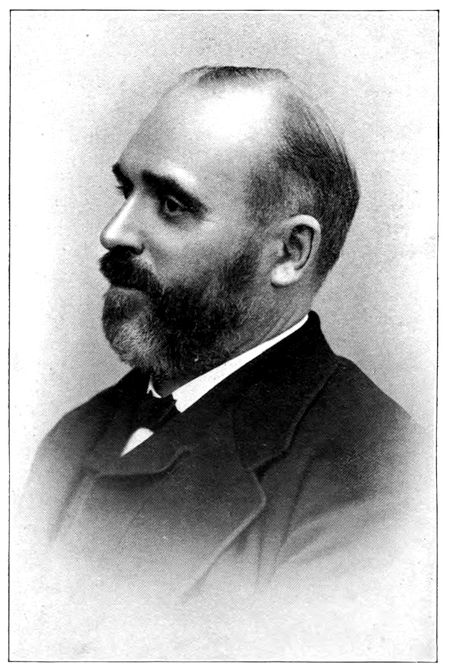
William Crawford, M.P.
We now come to the second claim for a reduction in wages. On July 17th Mr Crawford read to the Committee a resolution he had received from the employers making a claim for a reduction:
"That the Durham Coal Miners' Association, through Mr Crawford, be informed that the associated Coal Owners consider that it is necessary to reduce wages substantially and promptly. That the amount of such reduction, as well as the date of the commencement, will be considered by the owners on the 7th day of August next, and that in the meantime the Association will be ready to give their best consideration to anything the representatives of the workmen may desire to lay before it."
To this request the Executive Committee could not accede, and on 7th August the employers sent another claim for a reduction of twenty per cent. They said "that the best policy to pursue in the exigencies of the trade, and to restore the activity of the coal and iron trades, was for the men to submit to a twenty per cent. reduction." In the event of the workmen not agreeing to such a reduction the owners would be prepared to leave the whole case to the arbitration of any gentleman mutually appointed, each party being left free to produce such evidence as they may think fit and satisfactory, arrangement being made for prompt decision, and for securing the operation of the arbitrator's award from the 29th of this month.
Mr Crawford was instructed by the Executive Committee to inform the employers that, while they did not offer any opinion on the reduction, they would call the attention of the owners to the last portion of their resolution, wherein the date of the reduction was fixed, and said:
"In seeking advances we never yet fixed a date, even when coal was going up in an unparalleled manner and certainly very much more rapidly than ever it has come down. Both in March last and now you wish to fix the date in what seems to us rather an arbitrary manner. Had we in seeking advances pursued this course, you would have been more than justified in doing the same thing, but having pursued a course diametrically opposite, we fail to see the grounds of your justification for the course you are at present pursuing."
A Council meeting was held on August 22nd, when the first question discussed was the owners' application for the twenty per cent. reduction. The following resolution was carried:—
(1) We cannot see where in the Cleveland, or the Coasting, or other markets the prices of coal and coke are down sufficiently low to warrant a further reduction of wages. (2) The stacking of coal and coke may be made to have—but ought not to have—any very material effect on the workmen's wages, seeing that, if too much is being produced, we have no objection to be put on short time, or any other fair process whereby a reduction of wages can be averted.
We fail to see why the employers ought to seek arbitration. We are now in the same position which they were in during the last two and a half years. They were at that time so fully certain that trade would not give any further advance that arbitration was pointedly refused. We are now so sure that the present, as compared with past prices of coal and coke, does not warrant any further reduction, that we think arbitration is only an unnecessary waste of time and money, causing no end of annoyance without any good resulting therefrom.
This resolution was sent, accompanied by a demand for fifteen per cent. advance, to the employers, who held a meeting on 28th August, under the presidency of Mr Stobart, for the purpose of considering it and what action they should take. After considerable discussion a resolution was passed to enforce the twenty per cent. reduction and to give the men fourteen days' notice, to expire on the 19th of September, seeing that their claim and arbitration had been refused. The notices were issued in keeping with that resolve, but not to all men alike. The form of notice was as follows:—
On behalf of—— Colliery I do hereby give you notice to determine your existing hiring on the nineteenth day of September eighteen hundred and seventy-four, and that the wages and prices heretofore paid at this colliery will from that date be reduced to the rate of twenty per cent. and that if your service be continued, it must be on these terms.
In these circumstances the Executive Committee issued a circular and called a special Council. The lodges were asked to send their delegates prepared to discuss and decide upon three questions:
"1. Ought bankmen, horsekeepers, furnacemen, etc., to give in their notices?
"2. Ought collieries of men (hewers included) who have not received any notice to give in their notices?
"3. The matter of arbitration."
We will quote a portion or two of the circular. It is very serious and impressive:
"It must be clear to all that we are passing through the most important crisis which has marked the history of the present organisation on the need or otherwise of a further reduction; we here offer no opinion, that being a matter which will take the collective wisdom of the county to determine. We wish, however, to point out what seems to us to be one of two ultimatums to the present unpleasant condition of matters in the county. If a stolid and unreasoning resistance be persevered in, a strike is inevitable. We feel certain that nothing can or will prevent a stop. How long such struggle might continue it is impossible to say. But whether it might be for a longer or a shorter period an immense amount of suffering would be entailed. We want you therefore to very carefully consider the whole matter. View the entire position with an unbiased mind, not from the standpoint of mere abstract justice, but from that of probabilities or even possibilities. We are offered arbitration. If we refuse, the press and public will most assuredly say that our position is untenable. If we persistently refuse to submit the entire matter to arbitration, we must prepare to cope with the following difficulties in conducting a struggle.
"(1) The strongest combination of employers the North of England ever saw.
"(2) Stacks of coal and coke laid up in every direction of the county.
"(3) Coal and coke brought from other districts to supply what we may be short of supplying from our own heaps.
"(4) The press and public opinion would be against us."
The dispute was brought to an amicable settlement by the whole question being referred to open arbitration. By that decision the Association passed out of the era of negotiations into that of arbitration re underground wages. As that was the first step in the path of conciliation it may be useful to give in detail the proceedings. The inquirer after further information may very usefully consult the printed proceedings of the case. There were for arbitrators Mr G. Leeman and Mr D. Dale acting for the owners, and Mr L. Jones and Mr T. Burt for the workmen. The case was conducted by Mr W. Armstrong and Mr L. Wood (now Sir Lindsay Wood) on behalf of the employers. Mr W. Crawford and Mr J. Forman were for the employed. There were with these arbitrators and conductors other gentlemen, whose names we can find no record of either in the press, the owners' books, or in ours.
The first meeting was held on Tuesday, 13th October, in the Queen's Head Hotel (now the Liberal Club), Newcastle. After a long sitting the case was adjourned until the 15th, when Mr Forman on behalf of the workmen, and because there had not been sufficient time to prepare a reply to the employers' case, asked for an adjournment. Mr Crawford said they had "sat twenty-eight consecutive hours, and never moved the whole of the time." It was therefore decided to adjourn until the 16th. During the discussion Mr Crawford made the request that the owners should produce their books in order that both costs of production and the selling prices of coal might be obtained. The fourth day's proceedings was held on the 19th. The arbitrators met on the 26th in London. Failing to agree, they agreed to refer the question to the Right Hon. Russell Gurney, M.P., whom they met on the 30th in the Abbey Hotel, Malvern. On November 3rd he gave his award. Without giving the whole of the award it will be explained by a quotation from a circular sent out by Mr Crawford: "The reduction is as follows:—At present time our advances amount to 43 per cent. over 1871 prices. This by Mr Gurney's award is reduced to 30. That is a reduction of 9 per cent. on the gross wages and will take effect from Monday, November 2nd."
At that time the attention of the county was turned to the sanitary condition of the mining villages. The Committee took a return in which they asked eleven questions:
"What is the size of your best houses? What size are the rooms, and how many to a house? Size of single houses? Is there attached to your houses or on the colliery any private accommodation? Are there any channels or underground sewers to take away the dirty water and other refuse made in the houses? Are the houses damp and incompatible with health, or dry and healthy? Are there many of the members who have houses of their own? What number of double and single houses have you? Have you a good or bad supply of water and whence supplied? What is your school accommodation, national or colliery? Have you a Mechanics' Institute? Is it colliery or private property? Are there any gardens to the houses?"
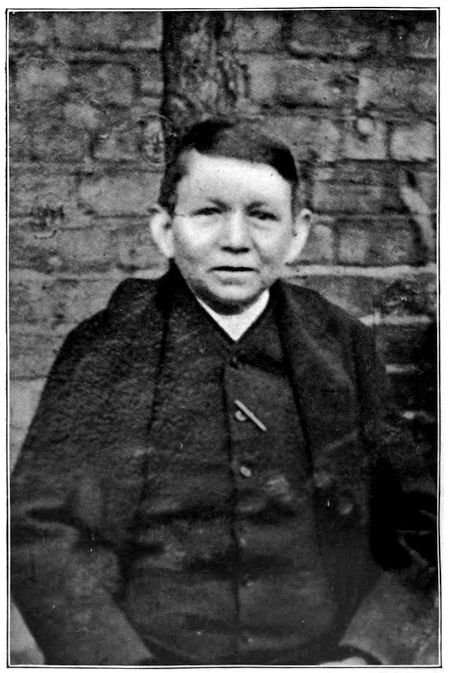
W. Golightly
On Saturday, November 7th, the owners made a claim for a reduction from all the men at bank. This was before the Executive Committee. They by resolution expressed their surprise, and their opinion that they had not been treated fairly, as the employers ought to have dealt with the classes now to be affected in the arbitration just concluded. They considered that "such a mode of procedure cannot but have an injurious effect on that good and desirable understanding which has so long existed between the two Associations." The owners gave the surface men notice to terminate their engagement on 12th December. A special Council meeting was called. The questions to be decided were—first, should the Miners' Committee act for the cokemen, seeing those men were forming an association of their own, and over two-thirds of that class had joined it? Of the other classes three questions were asked: "Ought these men to follow Russell Gurney's award? Ought the reduction to be resisted or ought arbitration to be sought?" The Council decided on Saturday, December 5th, that the Cokemen's Association meet the employers themselves, but "that the members of the Joint Committee should meet them on the banksmen, screeners, labourers, etc." The arrangement come to by the Joint Committee was:
"The banking-out men having been generally classed with the underground men, should in all cases be dealt with strictly according to the terms of Mr Gurney's award, that is, remain 30 per cent. in excess of March 1871 and it was recommended that the case of men earning less than 3s. per diem be left to the consideration of individual owners."
There are two matters not dealt with in the general statement of this year. These are the appointment of Mr Forman as permanent president on 2nd May and the appointment of the first clerk. The first was Mr A. Hall Shotton; but his stay was short, and he was succeeded by Mr W. Golightly, who was in the office for over thirty-one years.
1875
The third Reduction—Co-operative Colliery—The demand for better Houses—The fourth Reduction
Early in the year the Association was called upon to face another reduction in wages. The Executive Committee had sent some requests with respect to hewers putting in the foreshifts and working hard places. The owners sent a reply on January 15th refusing the requests, and at the same time saying, such things being asked of them in depressed times were offensive, and would not have to be repeated. In the same letter Mr Crawford was told that the employers had that day "unanimously decided to ask for a reduction in the wages of all men employed about coal mines and that the Standing (Joint) Committee be instructed to discuss the matter of such reductions and the date when it should commence."
To this the Executive Committee replied that they would pass over the question of reduction as it was premature to interfere with it, but they complained of the tone of the letter sent to them, which was very unbecoming, to say the least. They had a perfect right to send the requests. No doubt they were annoying. "But however annoying a request properly made may be, it ought, in keeping with the common courtesies of life, to be denied without imperiousness. It was annoying to them as workmen to receive an application for a reduction."
The response to that reached Mr Crawford on the 30th. It informed him that they (the owners) felt it needful to claim such reduction as will leave the wages of both underground and surface men ten per cent. in excess of 1871, to take effect from the pay ending 13th March. Mr Bunning added: "As it is our usual custom not to carry out a resolution of this nature without first having a consultation with you, I am requested to ask you to make such arrangements with your clients as may enable you to meet our Committee at an early date to decide."
A special Council meeting was called for the 6th of February to consider whether a deputation should meet the employers; if so, how many and whom they should be. The Council decided that as a deputation the members of the Joint Committee should meet the employers, and Mr Crawford was deputed to go to South Wales to inquire into the condition of things amongst the miners there.
At an adjourned Council held on February 10th it was again considered, and the following resolution carried:—
In looking at the last reduction, and the undue advantage the coal owners have taken on us in making a call on the bankmen so soon after the arbitration case, that we in future entertain no more reductions on one separate class of workmen, without knowing their intentions as to the rest of the workmen in our Association.
The meeting with the employers took place on 16th February, when six reasons were given by them why the reduction was needed: Many collieries were working at ruinous losses; a terribly increased cost of production; at many collieries the men were restricting their work; a greatly increased number of men were needed; the increased cost owing to the great decrease in the working hours; and the fact that Mr Gurney's award was delayed two months.
The employers again issued notices, but not to all men or all collieries. The Committee immediately called a Council, and drew the attention of the lodges to two resolutions which were passed on April 21st and December 5th, 1874.
That in future when there are notices given for a reduction of wages throughout the county, and where a colliery or collieries of men do not get their notices, they be requested to give them in.
Where men who are members of our Association and who have not received notice should these refuse to give in their notices, their names be struck from our books and never again re-entered.
In addition to this the Committee issued a circular in which they reviewed the condition of trade, and pointed out that in many districts life and death struggles were taking place. These men were being supported by voluntary contributions from other mining districts and the public. If Durham came out large support would be cut off, and the state here rendered more dangerous. In Northumberland and Cleveland arbitrations were proceeding. There was only two weeks' money in the funds, therefore the best policy was to accept arbitration. Facing these circumstances they advised the acceptance of arbitration. The employers would be compelled to show sufficient reasons for a reduction. If this were not done no umpire would reduce the wages. This advice was accepted at the Council on 8th March, and it was resolved to refer the whole matter to arbitration on the prices and wages ruling at hearing of the last case, that Mr L. Jones and W. Crawford be arbitrators, and the preparing and conducting of the case be left to the Executive Committee. On March 10th they met the employers, and made arrangements for the proceedings and the withdrawal of the notices, and they informed the members that in every case where the workmen had given notices they must at once be withdrawn.
The first meeting on the arbitration case was held on April 15th in the Queen's Head Hotel, Newcastle. The Right Hon. W. E. Forster, M.P., was the umpire. The arbitrators for the employers were Mr W. Armstrong and Mr D. Dale; for the workmen Mr L. Jones and Mr W. Crawford. The case was a dual one, a combination of the Miners' and Cokemen's Associations. The latter agreed to accept the statement made by the employers in the miners' case and then put in a separate reply. The following was the order of the procedure:—The employers stated their case. Then the miners replied on the first day. Second day, the owners' reply to the miners, the miners' rejoinder; the cokemen's reply to the employers, then their reply to the cokemen. The third day's sitting was taken up by the cokemen's rejoinder. The same arbitrators acted in both cases, but Mr Jackson Wilson presented the cokemen's case. The umpire gave his award on the 23rd of April—the reduction being five per cent. from the underground wages and four per cent. from those of the surface men.
At the Council meeting held on May 4th a resolution was carried urging upon the Miners' National Association to use their influence to have established an important Board of Arbitration, such Board to say: "First, what amount of interest ought to be claimed for capital invested in coal-mining operations; secondly, whether or not the books showing the profit and loss accounts of the employers ought to be laid before the Arbitrators in deciding a matter in dispute as to the rise or fall of the wages of their workmen; and thirdly, what portion of the profits ought to go to the capitalist and what portion to the labourer."
The programme for a Council meeting held on 21st August 1875 contained a resolution dealing with the providing of a better class of houses.
"That we appeal to the owners to have better houses right throughout the county for the members of the Durham Miners' Association, and not to make such difference between brakesmen and members of the Association. We believe that one man has the same right to a good house as another."
In the balance sheet for the first quarter of the year is found an item relating to the Coop Colliery—3100 shares in the Coop Mining Company, £15,500. For some time, and especially during 1874, the idea of a co-operative mine had been agitating the two northern counties. Meetings were held in various parts, addressed chiefly by gentlemen from Northumberland. The idea fell upon good ground in Durham, for from time to time it was found on the Council programme, and, so far as the Association is concerned, bore fruit in the shares mentioned. The fruit was not merely collective, but on every hand those who could took out shares, even to the extent of all their savings. The Committee of management were:
Dr J. H. Rutherford, Chairman.Mr W. Crawford.
Mr T. Burt, M.P.Mr J. Forman.
Mr J. Nixon.Mr W. H. Patterson.
Mr R. Young.Mr J. Byson.
Mr J. Brown.Mr G. Fryer.
Mr R. Cramon.E. Lowther, Secretary.
—all good men, and, if it could have been established, would have been. They were all tried co-operators and ardent believers in productive co-operation. But the enterprise was doomed from the first. The name of the colliery was Monkwood, near Chesterfield, Derbyshire.
On the 25th of September 1875 the Committee submitted a balance sheet for the year ending 30th June. The auditors were Benson, Eland & Co. They informed the members that after depreciation as per rule the net loss up to date was £10,863, 15s. 8d. The Committee in presenting the balance sheet said it had arisen from circumstances over which they had no control. The output of the colliery had never reached to their anticipations. The cost of production, and the unsatisfactory state in which the Society found the colliery, had occasioned the loss. The vendor had not truthfully represented the output. They had filed a Bill in Chancery against him for the recision of the contract and the return of the purchase money. The loss to Durham was £15,500.
On 6th November the ex-Committee was called upon to face the fourth reduction. They received a letter on that date from the employers conveying to them a demand for twenty per cent. reduction from all underground earnings, including banksmen, and twelve and a half per cent. off all above-ground labour, to take effect from the 27th. The Committee replied protesting against the imperative way in which the demand was made, and resolved to ask the county whether a deputation should attend Newcastle to hear the reasons assigned for the reduction. The county agreed to send a deputation and offer open arbitration, the deputation being the Joint Committee, and that a Council meeting be held on the 27th to hear the report. The Committee met the owners on Monday, the 22nd, and the offer of open arbitration was accepted, the Court to consist of four arbitrators and an umpire.
1876
Death of Burdon Sanderson—Appointment of Mr Meynell—The third Arbitration—The General Treasurer and Executive—The new Hall—Deputies' Association
JOINT COMMITTEE CHAIRMAN
In January 1876 the Joint Committee chairman, Mr R. B. Sanderson, was in a serious railway collision on the Great Northern Railway at Abbots Ripton. He was not killed outright, but was so seriously injured that he died shortly afterwards. He was the first chairman, and sat all through the meetings up to his death. The Joint Committee at their meeting on January 28th passed a resolution paying high respect to his character and to his ability and impartiality in his decisions. From that time until 11th September the chairman was selected from the meeting pro tem. On that date Mr Meynell was appointed, and from that time until his death in 1900 he occupied that position to his credit and with fairness to everyone concerned. It would be incorrect to say that no fault was ever found with him; but it is well known that at his death all who had been at the Joint Committee regretted it, and he has been sorely missed, because he had years of experience—experience which is worth a great deal in that position.
The proceedings in the arbitration did not proceed further in 1875, but rested over until January 1876. The arbitrators were the same as in the previous case, and the umpire chosen by them was C. H. Hopwood, M.P. The advocates for the owners were Mr H. T. Morton, Mr Lindsay Wood, and Mr T. Wood Bunning, the Secretary of the Owners' Association, and for the workmen Mr J. Forman and Mr W. H. Patterson. The names of the Committee who assisted were:
N. Wilkinson.J. Holliday.
M. Thompson.W. Prentice.
G. Parker.J. Cummings.
C. Kidd.C. Cooper.
J. Crowther.F. Smith.
G. Jackson.J. Day.
G. Newton.
The first meeting was held on Tuesday, 18th January 1876, in the Queen's Head Hotel, Newcastle. There were two days' sittings. At the close of the sittings in Newcastle the arbitrators and umpire held a meeting in London on 16th February, when the umpire gave his award that there should be a reduction of seven per cent. underground and four per cent. on the surface.
Out of this case and the meeting in London there arose a serious disturbance. The treasurer (Mr Wilkinson) refused to pay the Committee for going to London. He alleged that they went without authority. They went on the vote of seven out of seventeen members of the Committee, the rest being either absent or lying neutral. Their going, he said, was a waste of public money. He finally showed there had been an extravagant expenditure and charges for unnecessary meetings. Along with his explanation he sent out a detailed statement in which it is shown that for one fortnight they had received sums varying from £7, 1s. 9d. to £11, 15s. 7d., or an average of £8, 14s. 11d. per man. For another fortnight the average worked out at £12, 12s. each. To this the Committee made a long reply, but all unavailing, for at the Council meeting held on March 4th, 1876, the following resolution was carried:—
"That the members of Executive Committee who went to London be expelled, and that they have no payment for going."
By another resolution the number of the Committee was reduced to nine.
The result was to leave only three Committee men to transact the business until a new Committee was elected. A word of explanation may be necessary. At the election of Committee in December 1875 three new men were elected. These were C. Simpson, W. Gordon, and J. Wilson. As the arbitration was proceeding when the election of 1875 took place the Executive Committee asked the members whether they should be allowed to continue in office until it was finished. This was granted, and as a consequence the newly elected members did not take their places until the decision was given. The Durham Miners' Triumvirate ruled until May 4th, when the full Committee was elected.
As a further result of the dispute between the treasurer and Committee certain rules were suggested by the Executive Committee and approved by Council on 29th April.
(1) That in future there be no night sittings of the Committee.
(2) For a long time, a custom has existed of the Committee, asking questions on their reassembling after dinner hours. These questions were put on paper during the forenoon and handed in to be read after dinner. It will be seen, that this practice can be abused, and made to lengthen out Committee meetings to any extent. That this practice be entirely abolished unless it be a mere asking a question from the Secretary. The question and answer to be printed on the Minutes; but no discussion whatever to be held on the matter.
(3) That the General Secretary alone have the power both to call and disperse Committee meetings.
(4) That the Committee have no power to either shorten their hours or alter modes of payment.
In a letter bearing date May 19th the employers made another demand for a considerable reduction of wages both above and below ground, and fixing Saturday, the 27th, as the date for a meeting upon the matter. On that date nothing definite was done, and an adjournment took place until 13th June. A special Council was called for June 17th, when lodges were asked to instruct their representatives what should be done in the matter. In the meantime the Committee issued a circular, giving an account of the meeting with the employers, and informing the members that the owners' demand was for fifteen per cent. off underground labour and ten per cent. off surface labour, or they were willing to refer the whole question to arbitration in order to avoid a stoppage of work. They (the Committee) then urged the acceptance of arbitration at once. To refuse it would be to run counter to the efforts of working men in the past who "had fought some of their most severe struggles in trying to enforce arbitration as a means of settling their trade disputes." Many hundreds of thousands of pounds had to be spent before the employers would even recognise the right of the workmen to the merest inquiry in advances or reductions of wages. The employers claimed the right to be the sole judges in matters of that kind.
"When the employers arrogated to themselves the right to judge both for them and us, we were not slow in applying the words tyranny, despotism, and even villainy to their actions. Don't let us then be guilty of an imprudence, both by a repudiation of our own principles and going into a battle when everything is against us."
The Committee supported that bold and candid statement by drawing attention to the success which had attended the arbitration in the past. "If ever a body of men ought to be satisfied with a means of adjusting differences we ought with arbitration. It has in every instance so far immensely reduced the application of the owners. There is no other means by which we could have fared better. On every occasion the owners complained about the insufficient amount awarded them." The alternative to arbitration was a strike. That course would be madness. There was a complete stagnation in trade, nowhere more felt than in Durham. Pits were working half time, and there were hundreds of men who could not find an hour's work. To strike would be to jeopardise "an organisation which in the very short space of time has done more for its members than any other trades' organisation that ever existed." They urged other reasons in as forcible a manner, and concluded by saying, if arbitration were refused and a struggle entered upon, there could be but one end, "that of utter and terrible defeat for the miners of this county."