Chapter IV · CRITICAL CHANGES
Reading edition
A critical presidential election had marked the very outset of the war. Mr. Madison had, no doubt, been Mr. Jefferson’s lieutenant and chosen successor, and had meant to walk in his footsteps, preserving peace at the price of embargoes and domestic agitation, and keeping the federal government in the background, even though it should cost it its strength and prestige. But there had been men of his own party from the first who earnestly objected to the succession, wishing a leader of a different temperament and fibre. “We ask for energy,” they said, “and we are told of his moderation; we ask for talent, and the reply is, his unassuming merit.” The very war itself had come because Mr. Madison and his cabinet, like Mr. Jefferson and those who counselled him, had nothing to suggest, whatever wrong was wrought upon them,—except to withdraw from the seas, close the ports, build gunboats to defend the harbors, and wait until the inevitable should be at hand. While they waited every condition of national politics shifted and was altered, and watchful men who wished for action had grown deeply uneasy.
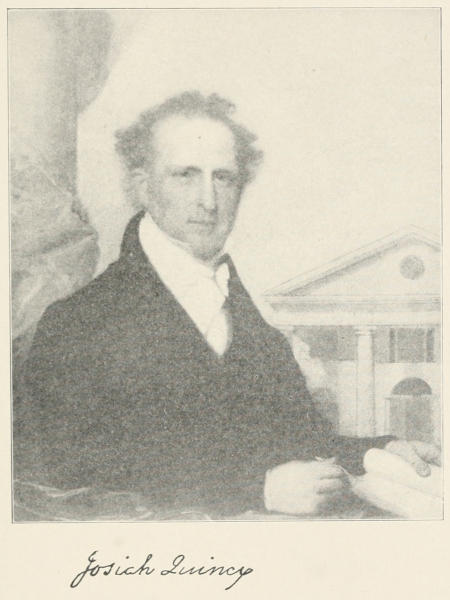
JOSIAH QUINCY
Sixteen years of Jeffersonian supremacy had culminated in a war which was against all Jeffersonian principles, and there had come about, while no one planned, an unlooked for disorder of parties, a bewildering reversal of parts in every matter of policy. In June, 1813, Mr. Josiah Quincy, no Jeffersonian, but a Federalist, professing to be of the school of Washington and Hamilton, had moved, in the legislature of Massachusetts, that “in a war like the present, waged without justifiable cause and prosecuted in a manner which indicates that conquest and ambition are its real motives, it is not becoming a moral and religious people to express any approbation of military or naval exploits which are not immediately connected with the defence of our sea-coasts and soil,”—words which rang true to the earlier tones of Jeffersonian profession. The young leaders of the new Republican Congress, on the other hand, Jeffersonian Republicans though they professed to be, had pressed the war forward in the spirit, if not with the method, which had been Washington’s and Hamilton’s. Mr. Madison was not their real party head. Only eighty-three of the one hundred and thirty-three Republican senators and representatives attended the congressional caucus which gave him his nomination for a second term (May, 1812); and he won the election only by the vote of Pennsylvania. Mr. De Witt Clinton, of New York, Republican though he was, had put himself forward as an independent candidate, had carried New York with him into opposition, had received the support of the Federalists, desperate for success, and had been voted for by the electors of every northern State except Pennsylvania and Vermont. Mr. Madison had received the solid support of the South and the votes of Vermont and Pennsylvania. Pennsylvania’s twenty-five electoral votes had decided the election (128-89). Parties were breaking up, and Mr. Madison’s personality was not strong enough to hold his own party together. It had been a hazardous test of party allegiance with which to begin a war.
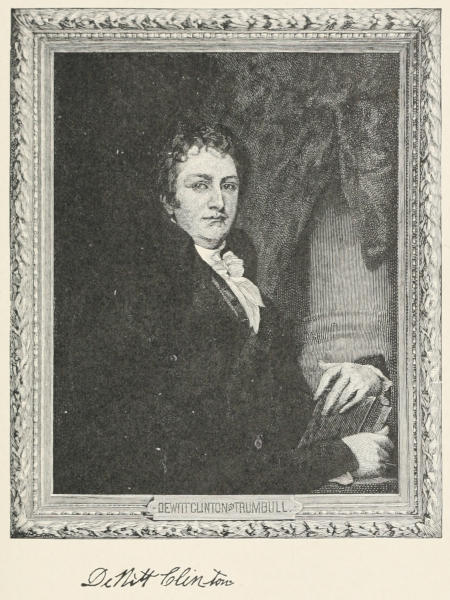
DE WITT CLINTON
And then, when the war was over and Mr. Madison’s eventful second term at an end, there had been another choice of President which seemed to go by rule of thumb rather than by the real preference of those who guided affairs. Mr. Monroe received the succession,—not because of his personal force or because of any gift of leadership discoverable in him, but because, by long public service and by intimate association with the leaders of his party, he had made his way into the inner group of politicians long since gathered about Mr. Jefferson. Virginia, one of the most populous and influential States of the Union, was the Republican party’s centre of gravity. Her public men, with twenty-five electoral votes behind them, dominated Republican party counsels; and Mr. Monroe was their choice for fourth Virginian President. His nomination was carried in caucus, it is true, only by the narrow margin of eleven votes over Mr. Crawford, of Georgia; but, that initial victory won, the presidency followed as of course. Mr. Madison had shown himself a statesman rather in the framing of institutions and the formulation of law than in the government of events. Mr. Monroe, without his studious comprehension of principles, stood for at least a like experience in affairs. The country, it seemed, was not yet ready for younger men, and there was no party set against him that could defeat him. The Federalists knew themselves discredited. What with their factious support of Mr. Clinton, who had never avowed any principle which they could pretend was their own, and the ugly threat of the Hartford convention,—their loss of principle in following the men they did follow and the openly avowed disunionist principles of the one-time leaders whom they did not follow,—the country at large had turned from them in contempt and deep distaste. Their electoral vote fell off to thirty-four again: the votes of Massachusetts, Connecticut, and Delaware.
No doubt it was a fortunate choice which preferred Mr. Monroe at such a time. A man of aggressive force and enterprising initiative would too much have disturbed the quiet, spontaneous processes by which, in those years of peace and yet of quick transition, parties were finding themselves and making ready for a new age. That the new President was no master of men had become evident enough while he was a member of Mr. Madison’s cabinet. He had accepted the Secretaryship of State in April, 1811, with the avowed intention of extricating the country from the entanglements into which Mr. Jefferson and Mr. Madison had suffered it to be drawn; but the dark tide of perplexed diplomacy which swirled about the Napoleonic wars, and which had overwhelmed Mr. Madison, had caught him also in its fatal drift, and he had become Mr. Madison’s comrade merely, not his guide. He lacked originative strength, but not sound character; he fell short of the equipment of a statesman, but not of the equipment of an upright and serviceable public officer. He was able, his colleagues found, “to keep important matters steadily under his attention until he had mastered them and could form his judgment accurately concerning them”; and looked into his duties with “a mind of capital integrity and ingenuous honesty.” Without the social gift to preside with grace, he brought dignity and good temper to his task, and the safe traditions of an elder school in politics.
While he steadily held the government to its accepted and established mode of action and of growth, many things disclosed themselves in the life of the country, and politics moved forward to a new order. Hitherto the country had known the leadership only of New England and the South, regions peopled straight out of the Old World: the one ruled by a professional aristocracy of ministers and lawyers, the other by a social and proprietary aristocracy of land owners; both governed, alike in thought and action, by old traditions and both smacking, whatever their professions of democratic principle upon occasion, of an old-world taste for privilege and for the authority of a trained, experienced, disciplined minority. But since the new century opened and Mr. Adams gave place to Mr. Jefferson new States had come crowding faster and faster into the Union, and came crowding still: Ohio (1802), Louisiana (1812), Indiana (1816), Mississippi (1817), Illinois (1818), Alabama (1819); most of them springing up in the far valley of the Mississippi, where new communities bred a new air and the sap of a new nation was rising. Transplantation thither seemed to create a new race,—not the mere offspring of New England or the South, not mixed or compounded of the two in such ways as to reproduce the East, not moulded from the Old World, not homogeneous even, but full of racy elements united in a new and free combination, more like New York and Pennsylvania than like Virginia or Massachusetts, and yet different also from these, with a flavor and spirit distinctively its own.
The country was at last in a position to feel at their full these forces from within, and to respond to them quickly and naturally. By the mastery of Wellington and Blücher at Waterloo (June 18, 1815) Europe had found peace again. For the first time since the Revolution in France, since the setting up of the federal government in America, the seas were cleared of hostile armaments. Questions of impressment and of the rights of neutral carriers at sea fell quietly out of sight amidst a general peace. Every strain was eased, and the young state in the West, which the great storm of war over sea, spreading blackly from continent to ocean till it seemed to fill the world, had at last touched and tested, could turn to its own affairs with a novel sense of freedom from outside influences or interruption.
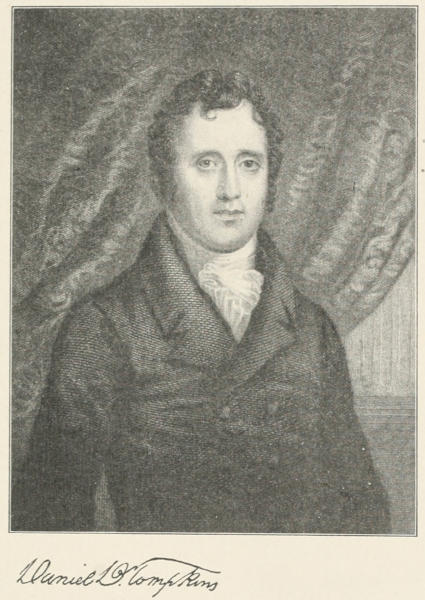
DANIEL D. TOMPKINS
She found her affairs and her life singularly altered. Peace changed the very face of trade. American skippers no longer had the lucrative advantage of commanding the only vessels free to pass from port to port amidst a world at war. There was, indeed, still plenty of carrying to be done at sea. Crops fell short in Europe after the scourge of war, and America filled all the ships she could get with grain for the markets over sea. English merchants poured their goods once again into the American ports, so long shut against them by embargoes and war. But seamen of every nation could compete for the trade, and the Yankee skipper had no longer any advantage except such as his wit and sea-bred fitness gave him.
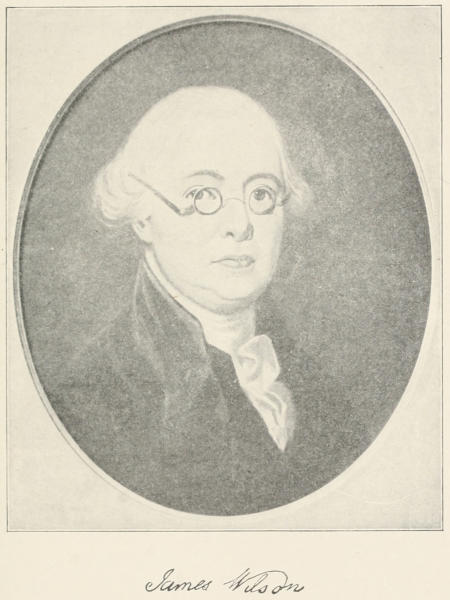
JAMES WILSON
The very freedom with which trade moved, besides, altered the attitude of the country towards it. Manufactures had sprung up while the ports were closed. The very ship owners of the trading ports had in many instances sold their craft and put their capital into the manufacture of such things as were most immediately needed for the home market. By the year 1815 close upon fifty million dollars had been invested in the manufacture of textile fabrics alone. In 1808, when feeling ran so hot in the East over the embargo, there were but eight thousand spindles employed in the manufacture of cotton, and only some fifteen hundred bales of cotton per year were needed to supply them; but in 1815 there were five hundred thousand, and ninety thousand bales of cotton were used within the year to keep them busy. In 1814 Mr. Francis Lowell, of Boston, had set up at Waltham the first factory ever established in which every process in the manufacture of cotton, from the cleansing and carding of the raw material to the weaving of the cloth, was carried through under a single roof, each step intelligently and economically coördinated and fitted to the next. The secret of the power loom successfully put into operation in England in 1806 had been very jealously and carefully guarded by its inventors, but Mr. Lowell, with the assistance of shrewd mechanics, worked its principle out to a successful application for himself, and the American factory system was once for all established. The new movement did not stop with the establishment of cotton factories. The manufacture of wool and flax and hemp and even silk was added. The machinery which could not be bought in England was made in America. Iron manufactures, long ago set up but tentative and feeble hitherto, increased from hundreds of thousands to millions in value under the stimulation of foreign trade cut off. Hides and skins were extensively prepared; liquors were distilled and fermented from the abounding grain and fruits of the country-sides; glass, earthenware, furniture, almost everything that was in general use in the country, was sooner or later added to the growing list. Industries long ago begun upon a small scale took heart to grow, and those which Americans had hitherto not dreamed of attempting were hardily embarked upon. Distinct manufacturing regions began sensibly to develop in the middle States and in the East, with interests and characteristics which statesmen could not afford to overlook.
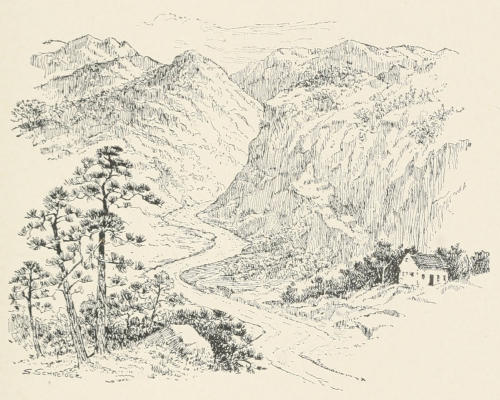
CUMBERLAND GAP, NEAR WHEELING, VIRGINIA
It was manifestly a menace to every young industry that a flood of English imports should continue to pour into the country at the open ports. The remedy was a protective tariff, such as Mr. Hamilton had wished to see at the first; and the young Republican leaders of Congress did not hesitate to advocate and establish it (April, 22, 1816). Mr. Madison himself favored and even urged it, as he had favored and urged also the re-establishment of the national bank. Western members of Congress supported it because they wanted and could get duties on flax and hemp. Every State in the Union except Delaware and North Carolina was represented by at least one member in the vote which established it. Men of the most diverse views and interests united in wishing to give the country not only political but also economic independence. Mr. Clay urged that it ought to be put into a position to develop every resource that could serve it or make it powerful in time of war. The duties imposed were not high: twenty-five per cent. upon cotton and woollen goods, and upon other manufactured goods in proportion. But the duties on cottons and woollens were made very formidable, as it turned out, by a provision that in no case should they amount to less than six and a quarter cents a yard. At the very outset that represented a tax of more than twenty-five per cent. on the coarse goods which the southern planters bought for the use of their slaves; and as the processes of manufacture cheapened this fixed minimum represented, of course, a larger and larger fraction of the price. It was pretty sure in the end to become an effectual barrier against all foreign competition.
The men who planned these things saw also the danger of mere development, the risk in growth itself, unless the country, with its long coast and scattered settlements, spreading more and more upon the unlimited spaces of the great continent, were in some way bound together by easy means of intercourse and union. It had been found next to impossible to handle armies in the northern forests during the war, or in the long wilderness which lay upon the lower Mississippi between the Atlantic settlements and the Gulf: difficult to handle them anywhere at the heart of the country, even amidst the oldest settlements,—for lack of roads or any open way of transport except where rivers or the lakes themselves lay like highways. The troops had been time and again likely to starve, not because there was not food enough to be had upon the order of the government, but because it could not be got to them. The commissary had infinitely more difficult duties than the general in command. Great highways were needed, alike for war time and for times of peace, and a system of canals cut from watercourse to watercourse. Mr. Gallatin had outlined what ought to be done so long ago as April, 1808, in a forcible report to Congress, planning a whole scheme of intercommunication with all his wide-eyed, statesmanlike sagacity in such matters; but Mr. Jefferson, though he felt nothing less than enthusiasm for the Secretary’s plan, had demanded first a constitutional amendment to make it legal. Mr. Gallatin’s broad purpose of “internal improvements” upon a national scale and at the nation’s expense slumbered, therefore, until the Congress came which the young Republicans led who made war on England. Then (December, 1816) Mr. Calhoun, of South Carolina, proposed that the million and a half dollars which the new national bank had paid the government for its privileges should be set aside as a fund “for constructing roads and canals and improving the navigation of watercourses.” But, though the bill passed, Mr. Madison vetoed it, entertaining Mr. Jefferson’s scruples in the matter; and for a little while longer the plan was put aside. The federal government did nothing but slowly push forward through the Cumberland Gap into the West a single great road which was meant to be the nation’s highway to the lands on the Ohio, its common estate in the far western valleys. This road the government had begun in 1806, and from year to year small appropriations had been made for its extension as opportunity or money permitted. But for anything more than this the time was not yet quite ripe.
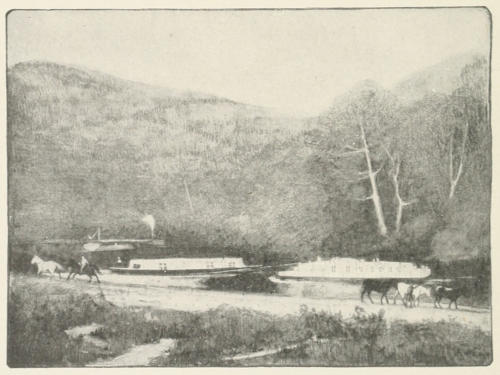
CANAL BOATS CROSSING THE MOUNTAINS
The new national principles of the Republican leaders found fuller scope and a wider application in affairs when Mr. Monroe became President,—not so much because of any change from the old order of thinking in Mr. Monroe himself, as because events overruled party creeds and made their own terms with abstract principles. Subtly, insensibly, by an alchemy whose processes no man knew or guided, the transformations of growth were becoming also transformations of character in the young body politic of the Union. Young men, and men not hitherto looked to for leadership, were pushing themselves to the front. Mr. Madison had already called Mr. Crawford, of Georgia, one of the new group of congressional leaders, into his cabinet, and Mr. Monroe retained him as Secretary of the Treasury. He called Mr. Calhoun, of South Carolina, to the Secretaryship of War. The State Department, hitherto the chief post of each administration, he put into the hands of Mr. John Quincy Adams, whose defection from the Federalist ranks in 1808 had shown in him the temper and the audacity of the man who dares interpret the signs of the times and is not subject to the discipline of parties retrogressive or gone astray.
Letters written by Mr. Jefferson and Mr. Madison from their quiet places of retirement could not hold the country back from radical change. Every year the mere scale of affairs, if nothing more, was enlarged and altered,—by the tidelike movement of population into the western country, the setting up of new States, the quick transfigurements of economic conditions, the incalculable shiftings and variations of a society always making and to be made. It was found when the census of 1820 came to be taken that the total population of the country had increased from 7,215,791 to 9,638,191 within the decade. Twenty thousand immigrants had come in at the ports the year Mr. Monroe became President (1817). It was not merely a growth along the old lines and at the old seats of population. The restless, unceasing, adventurous movement of the nation made a deeper impression upon its politics than did its mere growth. The boatman’s song on the long western rivers, the crack of the teamster’s whip in the mountain passes, the stroke of the woodman’s axe ringing out in the stillness of the forest, the sharp report of the rifle of huntsman, pioneer, and scout on the fast advancing frontier, filled the air as if with the very voices of change, and were answered by events quick with the fulfilment of their prophecy.
Five States were admitted to the Union within the first four years of Mr. Monroe’s administration, as many as had been admitted within the five-and-twenty years preceding, as many as were to be admitted within the five-and-twenty years to follow. And the list of new States was not complete before an issue had been raised whose significance was only too plainly of the future: not a thing to be settled at a stroke, but a thing to be slowly tried out by the long processes of the nation’s life. It startled him, Mr. Jefferson said, “like a fire-bell in the night.” It arose out of the application of the Territory of Missouri to be admitted to the Union (March 6, 1818). Missouri had been settled out of the South; slave owners had followed the hardy first settlers thither; and now they asked leave to come into the Union as a State with the institution of slavery secured to them in their constitution. Here was a question which aroused passion and challenged principle upon the instant,—an issue between the North, which had rejected slavery, and the South, whose industries and whose very social order were founded upon it.
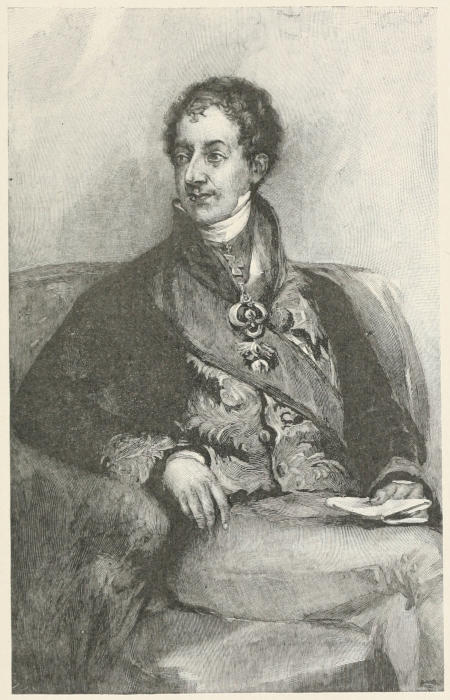
PRINCE METTERNICH
Southern statesmen had dominated the counsels of the ruling party of the nation these sixteen years and more. Men out of the South were also making and governing the West. The broad stretches of the great State of New York, themselves but half peopled and full of fair regions inviting to settlement, lay between New England and the far-away valleys where new States were to be built; the unoccupied forests of Maine were near at hand and easy of access at the north; many a tract within the borders of New England’s own little commonwealths still awaited occupation and development. By special effort an “Ohio Company,” organized in Massachusetts by veterans of the Revolution, had sent bands of settlers out of New England to lands which it had purchased and reserved upon the northern bank of the great river the French had coveted, and little hamlets of their making had sprung up there and flourished. Its settlers, crowding slowly in, had played a notable part in making the young State of Ohio ready for admission into the Union (1802). But it was not men out of New England, or even out of Pennsylvania and New York, which lay so close at hand, who were as yet playing the chief part in the West. Kentucky and Tennessee, themselves but the other day built into States by hunters, woodsmen, pioneers, adventurers, while the Revolution was being fought out and the Union brought into existence, furnished the men who were fittest for the first enterprises of conquest and settlement beyond the Ohio and the Mississippi: the conquest of nature and of the doughty tribes of red men who were still knights challengers there in the daunting wilderness.
The Ohio poured its open flood along all the northern front of Kentucky from northeast to southwest; the Mississippi itself was at her doors at the west, and swept slowly down, below her, along all the western front of Tennessee. Kentuckians had constituted the chief part of the rough-and-ready muster which beat the English and Tecumseh’s braves, their allies, at the Thames by Lake St. Clair, to make safe the northwestern border in the war of 1812. Tennesseeans, under a Tennesseean commander, had lain in the trenches at New Orleans in the mist of a January morning in 1815, and saved the South on a famous field. Men upon those frontiers had the initiative, the training, and the zest for every sort of daring and endurance, and a sense of comradeship which made the whole long border seem to them their common home and field of endeavor. It was they who crowded first across the great streams at their front into Indiana, of which they had been prompt to make a State in 1816; into Illinois, presently to be admitted (December, 1818); and into Missouri, which they now insistently asked leave to bring in. Indiana and Illinois lay above the Ohio, and were parts of that great Northwest Territory which Virginia and her sister States had consented to part with as a preparation for the setting up of the Confederation. It had become, as they intended, a national domain, for whose organization and development the Congress of the Confederation had made well-considered plans in the famous Ordinance of 1787. That Ordinance was still the law of the land. It forbade slavery forever. The pioneers who had pressed across the Ohio from the south, to make the new commonwealths now established there, had been promptly followed by men out of the older settlements behind them, out of Virginia and North Carolina, and out of the long-settled neighborhoods of Kentucky and Tennessee themselves. These men had again and again petitioned Congress for permission to own and employ slaves in their new homes; but Congress had refused to relax the law. In Missouri there was no such bar. Slave owners could take up lands there and put their slaves upon them. It was a region carved out of the vast Louisiana purchase beyond the Mississippi. Its lands stretched wide upon the open prairies of a new region for which Congress had made no law. Institutions might shape themselves there at will; and did shape themselves, accordingly, to the masterful will of the aggressive men who had gone over to possess the land.
It was, indeed, a masterful race, which the men of the East were slow to understand or sympathize with,—a race bred to warfare and a lawless mastery. It had made short work of overcoming nature in the wilderness, and as short of driving the Indians with slaughter and savage force from their hunting grounds and bits of tillage. It had meant to cross the river and make itself free of the great province of Louisiana whether Mr. Jefferson had bought the inviting region or not. Not content with such trade as they could get upon the rivers at the east, its pioneers sent caravans of white-hooded wagons across the long plains into the far southwest, from their new seats in the Missouri country to the Spanish settlements which lay upon the Rio Grande del Norte. Their talk was already of a time when they should thrust the Spaniard out there also, and have all the continent from ocean to ocean, north and south, as one unbroken national domain.
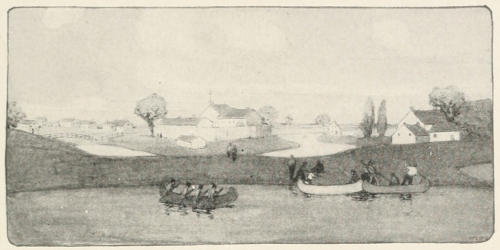
CHICAGO IN 1821
Such men were not likely to take a refusal when they asked to be admitted to the Union, whatever their proffered state constitution contained of institutions distasteful to politicians in the East. But their request threw Congress and the country itself into a very fever of debate. Here was indeed a critical choice to be made concerning the extension of slavery. Slavery had found no suitable place in the economy of the northern States, where free labor had from the first predominated, and was now abolished: though it had been permitted in every one of them no longer ago than the year of the Declaration of Independence, and had been abolished in some but the other day. In the South, on the other hand, it had long been habitual and of the fixed and accepted order of society, the very foundation of an aristocratic system and way of life; and was now about to get a new hold and enjoy a new reason for being. In the days of the Revolution there had seemed a considerable body of sentiment against slavery even in the South. Many a generous protest had been uttered there against it, especially in Virginia, by men who were no closet philosophers, but the trusted representatives and leaders of their State; who declared that it discouraged arts and manufactures, degraded labor, and had a most pernicious effect on manners. But such sentiments had given way before the fact of its inveterate rootage and before the increasing value and serviceableness of slave labor in the cotton fields, as the crop rose from, hundreds to hundreds of thousands of bales, and the spindles both of Old and New England waited on the bursting of the boles. The cotton gin which Mr. Whitney had invented enabled even an unskilful slave to cleanse a thousand pounds of cotton of its tenacious seed in a single day. Without it he had been able to cleanse but five or six pounds. The negro could endure the heat of the southern day in the open field as the white man could not. His labor had become the very sinews of the South.
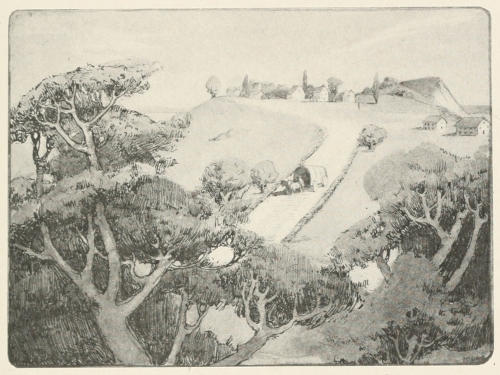
JERSEY CITY IN 1820
Southern men had seen already what the system must cost them. Its mere existence meant that the North must outstrip them in population and in wealth. White immigrants, free laborers, would not come into the South; and manufactures could not be built up where the only laborer was the awkward, careless, inapt slave. If the South could not keep her place in the race for men and wealth, she must lose also her place in the race for power. Slowly and surely, as representation was reapportioned from decade to decade, to correspond with the changes disclosed by the decennial census, her representation in the lower house of Congress must grow smaller and smaller, that of the northern States larger and larger, until she should be overwhelmed in matters of legislation by a governing majority which could neglect her peculiar interests at pleasure. Southern men did not doubt that such a majority would be used against the South. Their leaders felt sensibly enough the subtle antagonisms which radically different social standards, radically different economic conditions, radically different interests and ways of thought made more and more intense from year to year. Here was already, they began to see, a nation of two disparate halves, whose interests, if indeed irreconcilable, as they seemed, must be kept at a nice balance over against each other,—a balance hazardous to maintain, fatal to give up.
This was the unpleasant light that shone upon the question of Missouri’s admission to the Union with a slave constitution. What division was to be made of the Louisiana territory as between the southern system and the northern? East of the Mississippi all was plotted out and settled that concerned this vexatious matter. The line of the Ohio, it had been agreed, should mark the cleavage between free States and slave. Mississippi and Alabama had offset Illinois and Indiana in the list of States created this side the Louisiana purchase. If the Senate was not to pass, like the House, entirely into the hands of a northern majority, there must be some similar division of the Louisiana country also, which stretched beyond the river, wide as the original domain of the Union. The case of Missouri must turn upon fundamental questions of interest, development, and political power.
For two years it hung doubtful, held in debate both within and without the houses of Congress; and it was settled at last only by compromise. It was agreed that Missouri should be admitted upon her own terms, with slavery sanctioned in her fundamental law, but that from all the rest of the Louisiana purchase tying north of latitude 36° 30′,—a line drawn beyond Missouri as if straight into the west from the mouth of the Ohio,—slavery should be forever excluded, as it was from the Northwest Territory; and Missouri was with that understanding authorized (March 3, 1820) to organize a state government with slavery in its constitution. At the same time a bill was passed admitting Maine, in far New England, into the Union, as a counterpoise to the new slave State in the West. For a time the troublesome question was quieted; but many a sinister token of agitation and change had been brought to light in the long processes of debate. A sense of divided interests, sectional antagonisms, bitter personal feeling on the one side and on the other, a consciousness that fundamental contrasts and diversities of principle underlay the apparent agreement, wrought very seriously upon the minds of thoughtful men and could not soon or easily be thrown off.
Meanwhile other events pushed steadily forward the process of expansion and growth which was inevitably to hasten the solution of that and every other question of interest or of power. In 1810 Mr. Madison had taken possession of West Florida, the strip of coast which lay upon the Gulf between the Mississippi and the river Perdido, with its key at Mobile: upon the pretext that it was in fact part of the original territory of Louisiana, and had become the property of the United States by the cession of 1803. For seven years after that cession it had remained in the hands of the Spaniards, who considered it an integral part of Florida, in no way affected by Napoleon’s sale of Louisiana to the United States. But settlers had crowded in from the States. Their self-assertion and independence of action there and their manifest determination to be quit as soon as possible of Spanish rule had thrown affairs into confusion; and Mr. Madison made their interests his excuse for interfering. It was April, 1813, before the Spanish garrison at Mobile suffered itself to be crowded out and relinquished its post; but Congress had not waited for it to go. It had already apportioned the territory (1812), in part to the new State of Louisiana, that year created and admitted to the Union, in part to the Territory of Mississippi. Spain was in no position to resist. Napoleon’s armies had overrun her (1810); she had become the battlefield upon which Wellington pitted himself against the marshals of France (1811-1812); her South American colonies had revolted against her and she was powerless to recover them; she could do nothing while Napoleon swept Europe with his power.
The government of the United States pushed its claims upon that frontier, accordingly, at every opportunity, and found opportunities enough in the disorders of the ill-governed province. Early in 1811 Congress had not scrupled to authorize the President to take “temporary possession” of East as well as of West Florida, by a couple of resolutions which were not made public until 1818; and only the President’s good principle in the matter had prevented additional acts of aggression and virtual conquest. Finally war with the restless, marauding Seminoles who were still upon the border (1818) brought the inevitable outcome. Andrew Jackson was in command at Mobile. When once in the field against the red men he would not stop because they crossed the frontier into Spanish Florida, but followed them over the border as he would have followed them anywhither, with a vigor that never hesitated or relented. Suspecting the Spaniards at St. Marks and Pensacola of giving shelter and encouragement to the Indians, he incontinently seized both places until he should have reported his business finished and learned what his government wished to have done with them. Deeming Alexander Arbuthnot, a Scots trader whom he found there in the Indian country, and Robert Ambrister, an English ex-lieutenant of marines who could not give a satisfactory account of himself, to all intents and purposes “outlaws and pirates,” paid emissaries of the English government to keep trouble brewing for the United States among the Indians of Florida, he hanged the one and shot the other out of hand, British subjects though they were and within the territory of Spain. He had understood his real errand to be the virtual conquest of East Florida, time out of mind the refuge of smugglers, runaway slaves, and broken and hostile tribes of Indians, and in time of war a constant menace to all the southern border because of the weakness or the unfriendly alliances of Spain.
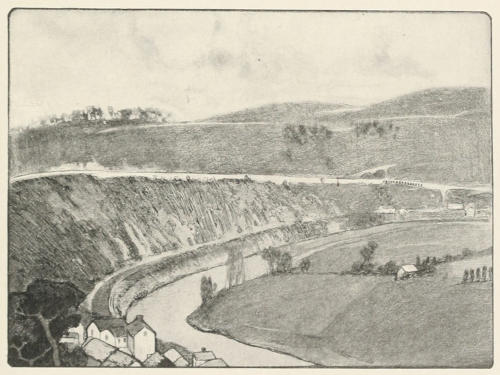
CUMBERLAND ROAD, NEAR WHEELING, VIRGINIA
Mr. Monroe and his cabinet were greatly shocked to learn what he had done in his headstrong masterfulness, and promptly restored Pensacola and St. Marks to the Spanish authorities; they saw nothing for it, however, so long as affairs stood as they did upon the border, but to defend their general’s course for the rest, upon the ground that he had only pursued his Indian foes to their habitual refuge amidst the forests of the peninsula, and performed in Spain’s stead the indispensable duties of police in districts infinitely disturbed and an undoubted menace to every neighbor. The Spanish government, on its part, saw clearly enough how defenceless and how useless Florida was, thus cornered and detached by the spreading power of the United States throughout the continent. On February 22, 1819, therefore, the Spanish minister in Washington, acting under new instructions from his government, signed a treaty by which Florida was ceded entire to the United States, in consideration of the payment by the United States of five million dollars in satisfaction of all claims, and the relinquishment by the United States of all right to the Texas country, where their title to possession was much better than it had ever been in any part of Florida. The Senate confirmed the treaty at once; the Spanish government tardily returned its ratification within a couple of years (February, 1821); and the questionable business was at an end.
Both Mr. Madison and Mr. Monroe addressed themselves very diligently, the war of 1812 being over and all the world having come into a breathing time of peace, to clearing all foreign complications away. In 1815 Mr. Monroe, being then himself Secretary of State, had arranged with Great Britain a tolerably satisfactory commercial convention, which opened at any rate a part of the trade of the British West Indies to American ships. The same year the Dey of Algiers, who had taken advantage of the war to prey upon the commerce of the United States, was obliged upon Commodore Decatur’s quarterdeck to sign a treaty of peace and amity which he was not likely soon to break, having read his lesson at the port-holes of a formidable fleet in his harbor. In 1818 Mr. John Quincy Adams, acting under Mr. Monroe, negotiated fresh treaties with England under which the United States gained permanent rights in the Canadian fisheries, Great Britain gave up her claims to the navigation of the Mississippi, and the northern boundary line of the United States was determined from the Lake of the Woods to the Oregon country.
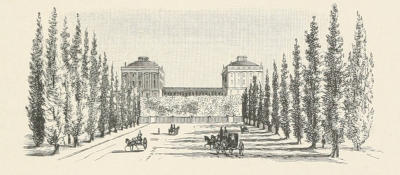
THE CAPITOL AT WASHINGTON, 1804
Fair skies at home and abroad cheered the country ere the time for choosing presidential electors came round again, in the autumn of 1820, foreign difficulties having cleared away and the ill-omened Missouri question being apparently settled; and Mr. Monroe’s re-election was agreed upon as of course. When the electors met in their several States to vote only a single one of their number, an elector of New Hampshire, indulged himself in an individual choice, voting, not for Mr. Monroe, but for Mr. John Quincy Adams. Every other vote was cast for Mr. Monroe. Even eight Federalist electors, chosen, along with seven Republicans, in Massachusetts, joined in the all but unanimous choice; and the election passed as if it were hardly more than an incident, a formality, at mid-term of the President’s eight years of office.
There was no longer any Federalist party to be reckoned with in the field of national politics. Though Federalist views persisted, the name was a name discredited. The manufacturers of New England had been won over to the Republican party by the tariff of 1816; and had not cooled towards it because the Senate rejected the still higher duties which Mr. Monroe had recommended and the House had adopted. The rich merchants at the eastern ports did not like the tariff, but did like the President and the treaties of commerce and of peace he had secured. He had declared himself opposed to “internal improvements” at the national expense, upon which, progressive men thought, the movements and the expansion of commerce must in no small degree depend; and in 1822, when Congress put him to the test, he vetoed even an appropriation for the Cumberland road; but he presently modified his views on that point, and, for the rest, held so steady and reasonable and open a course, and was upon occasion so spirited in defending the nation’s interests, that criticism gathered no head against him. Politicians schemed for personal advantage behind the scenes, not forgetting the next presidential election. Now one group and again another essayed to gain control of affairs. To those who read very curiously the signs of the times new parties seemed to be perceptibly enough outlined just beneath the surface of events. But on the surface there was a great calm, and to the country at large it seemed an acceptable time of concord, an “era of good feeling.” The strain of politics was eased.
With the return of peace all questions had become domestic questions, and there seemed now, for the nonce, to be no serious differences of opinion concerning them. Mr. Monroe took an early opportunity to domesticate, as it were, the very foreign policy of the government, by confining its issues to the Americas. European statesmen were putting their houses in order after the convulsions of the Napoleonic wars: setting up thrones which had been overturned, rehabilitating states which had been torn asunder, reassigning territory, establishing once more the balance of power and the rights of shaken dynasties. Finding their careful work likely to be marred and rendered of no avail by the passion for liberty which had spread like an unquenchable fire out of France and touched the subjects of almost every sovereign of Europe, they drew their states together under the leadership of Austria and her consummate Metternich to crush every rising, silence every demand for liberal reform, and make good the jeoparded absolutism of their kings throughout the length and breadth of Europe. Their reactionary purposes having been accomplished with some touch of thoroughness on the continent itself, Spain prayed them to assist her to win the revolted colonies of South America back to her crown, and they seemed about to accede to her prayer.
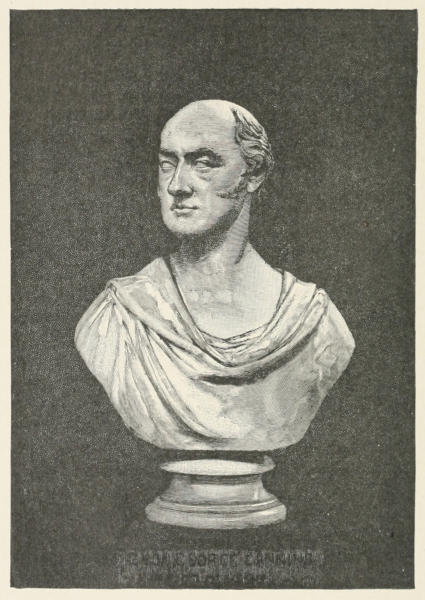
BUST OF GEORGE CANNING
Mr. Canning, England’s watchful minister, saw at once the peril there would be in that to England’s trade in the south. He knew, too, how hearty a sympathy the people of the United States entertained for the newly liberated peoples and the newly established republics of the southern continent of America, and how profitable a trade American as well as English merchants were finding in the ports which only revolution could have opened to them. He proposed, therefore, to Mr. Rush, the American minister in London, that the United States should join with England in protesting against the attempt of any outside power to restore Spain’s authority in America. Mr. Adams, the Secretary of State, did not relish the suggestion, though he approved the object. He thought such a course too likely to make the United States merely “a cock-boat in the wake of the British man-of-war,” and so draw them again and at a disadvantage into European politics; and Mr. Monroe accepted his view in the matter. A different but no less effective step was taken. In 1822 the President had recognized the independence of the South American republics. In his annual message of December, 1823, he told Congress and the world what attitude he meant to take towards any attempt on the part of the European powers “to extend their system to any portion of this hemisphere.” He should deem such an act, he declared, dangerous to the peace and safety of the United States. “With the existing colonies or dependencies of any European power,” he said, “we have not interfered and shall not interfere. But with the governments who have declared their independence, and maintained it, and whose independence we have, on great consideration and on just principles, acknowledged, we could not view any interposition for the purpose of oppressing them, or controlling in any other manner their destiny, by any European power, in any other light than as the manifestation of an unfriendly disposition toward the United States.” No one could mistake the meaning of the words, and Spain’s plans in the south were given up. This Mr. Adams and Mr. Monroe meant to be American, not European, policy.
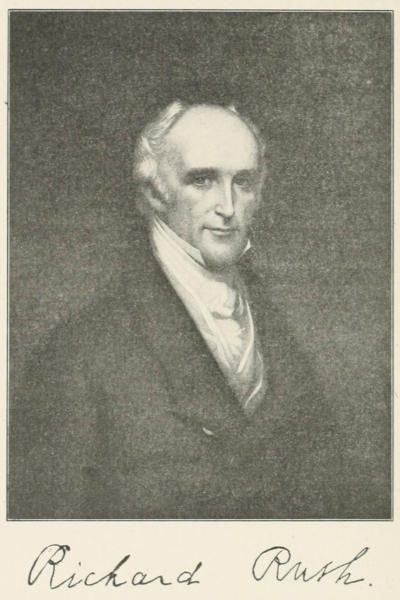
RICHARD RUSH
What had made the matter seem the more exigent and important was the unpleasant fact that Russia was gaining a foothold in North America itself. Russian fur traders were pushing and extending their trade not only in Alaska, which the Russian government claimed by right of discovery (1741), but also along the coasts to the southward, nearer and nearer to Oregon, which England and the United States, suspending their rival claims for the present, had agreed (1818) to occupy in common. The Czar claimed all the coast waters of the region as his own, and forbade seamen of any other nation (1821) to approach within one hundred miles of the American coast north of the fifty-first parallel. Mr. Adams had feared that, should the European coalition of which the Czar was so influential a member interfere in the affairs of Spain at the south, Russia might take the Spanish province of California as compensation for her trouble, and shut the doors of the Pacific once for all against the expanding Union. Mr. Monroe, therefore, spoke very plainly upon that point also in his message. “The American continents,” he said, “by the free and independent condition which they have assumed and maintain, are henceforth not to be considered as subjects for future colonization by any European power.” These decisive words proved sufficient. Whatever may have been Russia’s plans, she did not care to force them now; and in the closing months of Mr. Monroe’s administration (April, 1824) she agreed to a treaty in which it was stipulated that the fisheries and the navigation of the Pacific were to be open to both parties, and that the line 54° 40′, north latitude, should divide their future settlements. The next year she made a similar agreement with Great Britain.
In 1824 Congress passed and the President approved a bill increasing duties on metals and on wool and hemp, in order that the protective system might be a little strengthened; and a bill providing for extensive surveys for a national system of canals, in order that an adequate improvement of the means of trade and intercourse might accompany the quickening of industry.
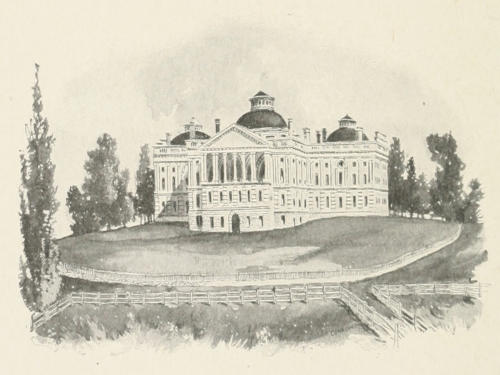
REAR VIEW OF THE CAPITOL AT WASHINGTON, 1820
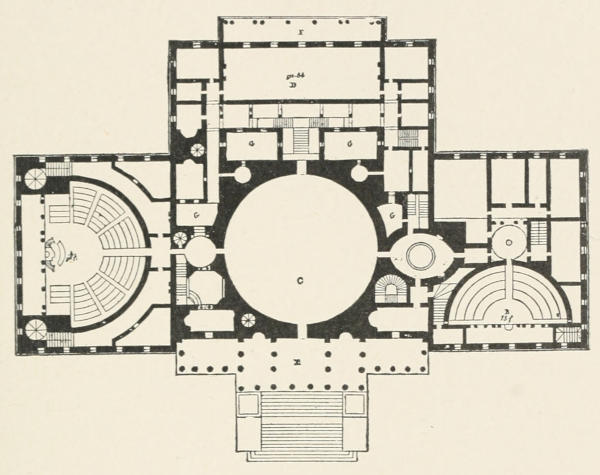
GROUND PLAN OF THE CAPITOL, 1825
A. House of Representatives, 96 feet radius; B. Senate Chamber, 75 feet radius; C. Central Rotunda, 96 feet in diameter; D. Library, 96 × 34 feet; E. Eastern Portico; F. Western Portico; G. Open Areas. The eastern front is 350 feet long.
And then, amidst a general scramble for the presidency, the country found how deceptive had been the political calm of the last few years. Personal rivalries disclosed, almost of a sudden, a new cleavage of parties. It was natural that Mr. Adams, as Secretary of State, should expect the succession to the presidency. Mr. Madison had been Secretary of State under Mr. Jefferson, Mr. Monroe under Mr. Madison: the Secretaryship of State had come to be looked upon as the post to which the natural successor of the President should be called, and twenty-four years had given that understanding the dignity of precedent. Mr. Crawford, the Secretary of the Treasury, however, was determined that he should not again be passed by in the choice, and took pains to make himself, so far as might be, the official nominee of his party through the accustomed congressional caucus. Only a handful of his personal followers, indeed, and of the better disciplined adherents to old practice attended the caucus when it met: the country had already grown impatient of that method of naming candidates, and Mr. Adams was understood, despite the caucus, to be the real candidate of the older elements of the party,—if party there was where all acted as if with common principles. The legislatures of Kentucky, Louisiana, Missouri, Illinois, and Ohio, the field being open, took leave to nominate Mr. Clay, the popular Speaker and acknowledged leader of the House, through whose eloquent tongue the new West rejoiced to hear itself given utterance. The legislature of Tennessee and several conventions in various parts of the country nominated Andrew Jackson, the headstrong, redoubtable Tennesseean soldier, now, though almost unnoticed there, a member of the Senate.
The nomination of General Jackson could very well be ignored, it seemed at first, as a mere rally of his personal friends here and there, so much of an outsider did he seem in every circle of politicians. “He is respected as a gallant soldier,” said the chief political newspaper of New York, “but he stands, in the minds of the people of this State, at an immeasurable distance from the executive chair.” The vote of the electors, however, put a very different color on the matter. It stood, for General Jackson, ninety-nine; for Mr. Adams, eighty-four; for Mr. Crawford, forty-one; for Mr. Clay, thirty-seven. Over the vice presidency there had been little contest: Mr. Calhoun was chosen, as had been expected, by a handsome majority. No one having received a majority of the votes for President, the election went, as the constitution provided, to the House, whose choice was limited to the three candidates who stood highest in the electors’ list. Voting by States, as was prescribed, the House chose Mr. Adams, to whom Mr. Clay’s friends gave their support.
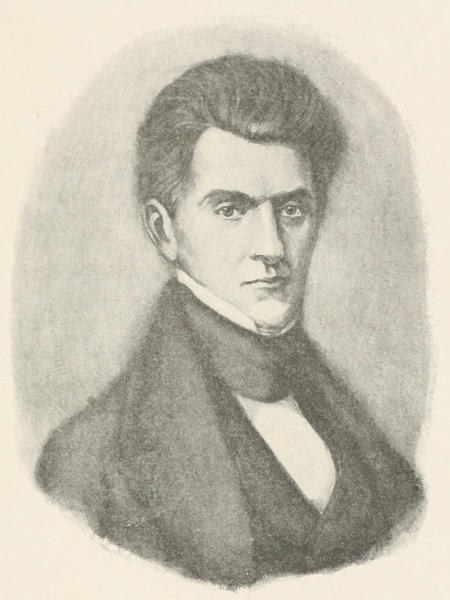
JOHN C. CALHOUN
There was in this sharp and doubtful struggle for the presidency, with its closing appeal to the managing politicians of the House, just shock enough, just thrill and zest enough of direct challenge and open contest, to bring the hidden lines of party to the surface. The four years of Mr. Adams’s administration completed their disclosure, and changed the whole face of politics. The new President was undeniably the choice of a minority of the nation. He seemed to the impatient men of the new generation to be holding the government arbitrarily back from the touch of renewal and of democratization which they were eagerly waiting to give it. Mr. Adams seemed to them to represent the traditions of the old order which had passed, and to be a mere obstacle to the acknowledgment of the new order which had come. His very stiffness and precision of manner, as of the old school; his cool, unsympathetic aloofness from the men about him, repelling intimacy or any warm confidence; the dash of acid in his careful rectitude; his whole attitude, as of a man who administered his great office as a purely personal trust, for which he alone was responsible, and kept all others at arm’s length, enhanced the impression of his separateness, his single survival out of an age gone by. John Adams, his father, and Thomas Jefferson, whom he had first opposed and then followed, died the next year after he came to the presidency, passing away together on the fiftieth anniversary of the Declaration of Independence (July 4, 1826), the last great figures of the nation’s first generation of statesmen. The President seemed to have their principles without their warmth, to stand older than his years amidst a scene transformed.
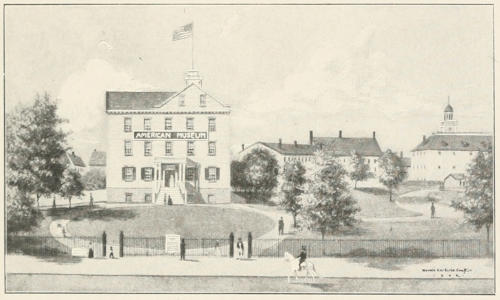
NORTH END OF CITY HALL PARK, NEW YORK, 1825
Social changes had come upon the nation thick and fast with the passing away of that first age, in which the government had been set up and had received its life and structure, and radical political changes had inevitably followed in their train. In the gathering host of new States at the west there could be nothing but levels of privilege: no special class, trained and preferred for government, as in New England and the South, but universal manhood suffrage; and the example of the West had reacted powerfully upon the East. There, too, social change was touching affairs with the touch of transformation. Airs blew everywhere out of the West. Because its lands were open and not too far away, and every man could betake himself thither if he chose and be his own master, those who stayed at home in the East, whether common or gentle, had the flavor of independence, the choice of individual initiative in their lives, and counted, not in the mass merely, but as efficient units in every reckoning, social or political. New industries raised new classes, to rank with the merchants and the lawyers of the older order. The quick, incessant initiative of individuals broke the lines between class and class so often athwart that they became at last confused and lost. The suffrage was inevitably widened in the East, as in the West; and with the number of voters the number of those who played a managing and organizing and originative part in politics also increased. Every right, as far as might be every function of politics, was thrown open to every man. Nine out of the fifteen States which took part in the second election of General Washington chose their electors through their legislatures; only six gave the people any direct part in the choice. In the election just decided by the vote of the House, on the contrary, the electors had been chosen by the direct vote of the people in eighteen out of the twenty-four States of the Union. Before another presidential election came around every State except Delaware and South Carolina had adopted the same popular system.
It was the pulse of these changes that now beat in affairs. A new democracy stood eager for its triumph,—now a second time, as first in 1800. It was tired of the “Virginian dynasty” that had ruled it, as if by prescriptive privilege, since the century opened, and was infinitely impatient of Mr. Adams as its heir and successor. Mr. Clay had seemed for a little while the preferred spokesman of the new generation, a veritable voice of the West and of democracy upon a new field, uttering its hearty ardor for a policy at once continental and of the people. The new State of Missouri had added Mr. Thomas H. Benton to the roll of Senators, to put his mass also into the western scale, a new leader among Democrats. But Mr. Clay lacked the unhesitating boldness and audacity loved on the frontier; had the address of the careful politician; brought his free and telling eloquence to the service of old ideals, merely quickened by new affairs; was not wholly of the West. Mr. Benton was heavy with a touch of pedantry, and had the self-assertion of the egotist, not of the leader. The new impulse of the time craved a hero rather than a statesman. No one knew or asked General Jackson’s opinions. His friends put him forward, not as a thinker or even as an organizer of parties, but simply as a man, whom the nation could trust: a man with rugged strength enough to break the old order in politics, now grown artificial, and inaugurate a new, under which the people, whose child and type he was, should come to their own.
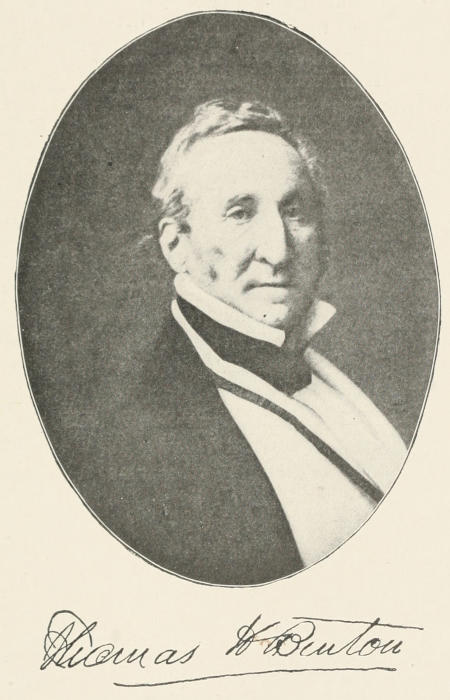
THOMAS H. BENTON
That was the significance of the ninety-nine electoral votes cast for General Jackson in 1825. It was a bitter thing to bear, his supporters found, to see Mr. Adams preferred before him, and Mr. Clay’s support given, out of the West itself, to the candidate of an eastern minority,—so bitter that they protested in their anger against the constitution itself, which made the thing possible: against any law, though it were the fundamental law of the land, which could thus restrain and defeat “the will of the people.” Their bitterness turned to malice when Mr. Adams asked Mr. Clay to become Secretary of State under the new administration and Mr. Clay consented. There was here, they said, palpable evidence of a bargain, an office given for an office received, a self-seeking combination to keep the people’s candidate out,—“a coalition,” exclaimed John Randolph, with bitter jest, “unheard of until now, of the Puritan and the blackleg.” The charge was shown to be absolutely groundless. There had been no previous understanding whatever between Mr. Adams and Mr. Clay. But they were facing men who in the vehemence of their passion believed what they chose, and whose leader was as implacable and as obstinate in error as he was honest and direct in action.
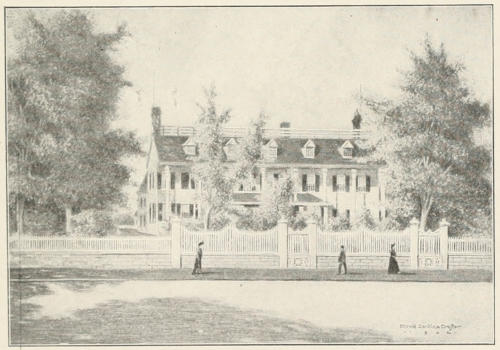
THE ADAMS MANSION, QUINCY, MASS.
General Jackson had been bred by the rough processes of the frontier; had been his own schoolmaster and tutor; had made himself a lawyer by putting his untaught sagacity and sense of right to the test in the actual conduct of suits in court, as he had made himself a soldier by taking the field in command of frontier volunteers as unschooled as himself in discipline and tactics. There was a certain natural grace and sweetness in the man when he was at ease, and an impressive dignity always. “General Jackson’s manners are more presidential than those of any of the candidates,” wrote a leading member of the House who was his opponent. “He is grave, mild, and reserved. My wife is for him decidedly.” But his nature was compact of passion. His prejudices, once fixed, were ineradicable. He believed with all the terrible force that was in him, when once engaged in any public matter, that those who were with him were his friends and the country’s, those who were against him enemies of the country as well as of himself. Knowing his own convictions to be honest and formed without selfishness, he took their wisdom and their reasonableness for granted, and believed every one who held opinions opposed to them to be moved by some sort of public or private malice. He had declined at first to let his name be used in connection with the presidency, deeming himself old at fifty-four (1821), feeling ill from the effects of the hardships he had undergone in Florida, and believing himself unfit for the office. But, candidacy once undertaken, his passion played along every line of emotion and conviction opened by the novel business, as if he were again in the field with troops, and his friends were themselves at a loss how to govern him.
It had needed such a striking personality as this to bring parties to a head. They took form rapidly enough when he came upon the field. The coalition between Mr. Adams and Mr. Clay had been not only incorrupt, but an arrangement to be looked for in the nature of things. Mr. Clay stood in all his thought for the same principles of liberal construction in applying the constitution and for the same purposes of legislative action in furthering national interests that Mr. Adams frankly avowed and earnestly advocated: protective tariffs, internal improvements; the deliberate building up and binding together of the nation. General Jackson’s friends, on the contrary, were found for the most part among the men who had reacted against this new programme, in which every principle and purpose of the old Federalists seemed revived, and who were harking back to the principles upon which the Republican party of Mr. Jefferson had been founded: a scrupulous limitation of the powers of the federal government, a studious regard for the separate powers of the several States, a democratic diffusion of power throughout the body politic. Mr. Crawford had latterly been of these principles; but Mr. Crawford was now broken in health, and his followers had turned to General Jackson. Whether General Jackson definitely or consciously held their views or not they did not stop to ask. What was of moment to them was, that he stood in the eyes of the whole nation an unmistakable type of the unsophisticated man of the people. His instincts, they felt sure, could be trusted to make and keep him a partisan of popular privilege and local self-government. And so parties formed: National Republicans, as they began to call themselves, turned to Mr. Clay and Mr. Adams for leadership, while all “Democrats” of the older type turned to those who pressed the candidacy of General Jackson.
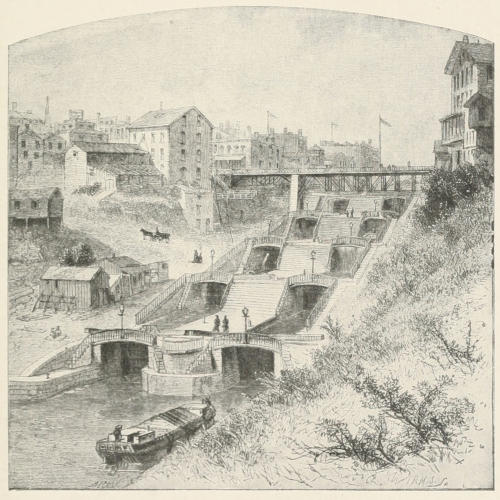
LOCKS ON THE ERIE CANAL
Though the men who thus drew apart into the one group or the other did not at once recognize their new comradeships in affairs as the permanent comradeships of principle or feel at first the bonds of party in their new association, it soon became evident enough that the election of 1825 had marked a parting of the ways, at which, consciously or unconsciously, public men had made their individual choices upon principles which must henceforth permanently separate them; had arrayed themselves in opposite camps upon a set field of party contest. They awaited only Mr. Adams’s going out to put the fight afoot.
The four years Mr. Adams was President yielded, accordingly, scarcely a single important measure either of legislation or of policy. They proved to be a season between times, in which the new parties got their first drill and organization, and merely manœuvred for advantage in the final struggle, the decisive victory and defeat, to come. Hitherto the President had been always the real leader of the government. His messages had in no small degree constituted the programmes of party action, in Congress hardly less than in executive policy. Now, of a sudden, they counted almost for nothing. Mr. Adams was treated as if he were the leader of a faction. Congress seldom vouchsafed so much as a respectful consideration to his suggestions. Fresh congressional elections filled the House with his opponents. Now and again a measure passed which the Administration was known to favor; but only, it seemed, because the discipline of parties was not yet recast, and some men were guided, when they chose to be, by old ties or individual preferences.
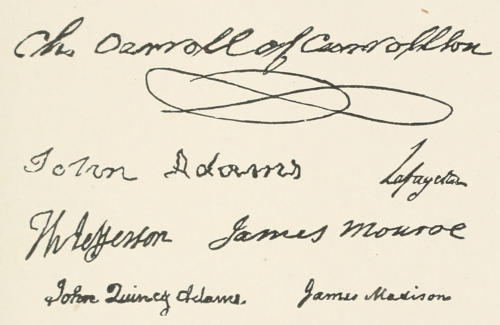
AUTOGRAPHS OF INVITED GUESTS, ERIE CANAL CELEBRATION
Mr. Adams performed his duties with the diligence, the intelligence, the high-minded regard for principle that had always characterized him. No man of his generation was better acquainted than he with the field of foreign policy, still here and there perplexed and ominous; and he applied himself like a statesman to the settlement of every question that was likely to affect either the trade or the peace of the country. His successful treaties of commerce nearly equalled in number those of all the preceding Administrations put together. But in the chief matter of all he failed, and his opponents noted that alone. In 1815 Mr. Monroe, then Secretary of State, had succeeded in obtaining from England the right of trade with the British West Indies, in which, the ports once open, American merchants and skippers easily gained a virtual monopoly; but in 1825, when that agreement lapsed, England changed her policy, opened the West Indian ports to all the world on terms which put the United States at a disadvantage, and, because the United States did not, within a year set, accept the new arrangement, flatly refused so much as to open the matter again for negotiation (1826). Congress, not Mr. Adams, had been at fault; but the country, indifferent to him at best, made no inquiry into details: remembered only that he had failed to secure the invaluable West Indian trade.
The party contests of those barren years of divided counsel turned chiefly upon the tariff and upon the question of internal improvements. Mr. Adams was an avowed advocate of internal improvements upon a national scale, conceived and carried forward in accordance with a comprehensive system thought out beforehand, and completed from session to session as the resources of the Treasury permitted,—such a scheme as Mr. Gallatin had long ago conceived and advocated and Mr. Jefferson had postponed till the constitution could be amended. But the new “Democrats” made that impossible. Money in very liberal sums was voted from time to time for specific works of general or local utility, but the idea of a system of national improvements undertaken by the federal government had to be given up.
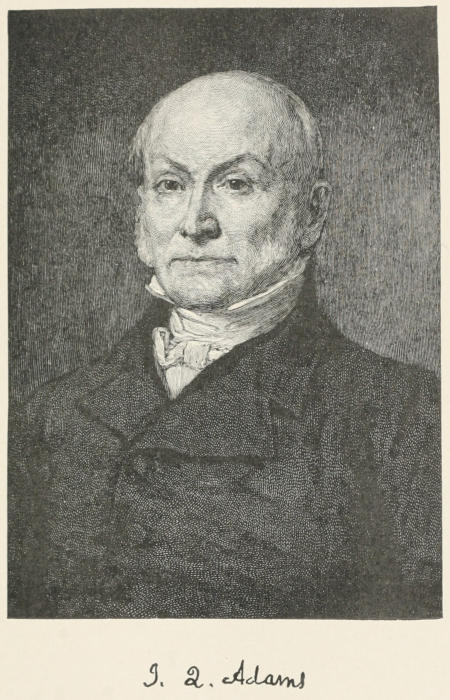
JOHN QUINCY ADAMS
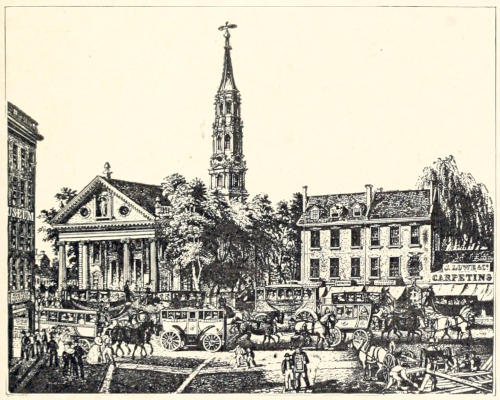
ST. PAUL’S CHURCH AND BROADWAY, 1831
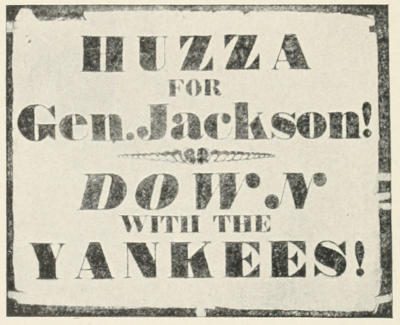
CAMPAIGN POSTER OF 1828
The tariff was another matter. The systematic protection of domestic industries, once undertaken, could not be kept squared with its object or maintained in good repair without frequent alterations and adjustments. The very system itself, moreover, was an incitement to every industry in the country, new or old, to clamor lustily, in season and out of season, for its share in the gainful arrangement. There was no one to govern the competition. First, interest vied with interest in an open field; then, rather than destroy each other, interests combined in an ill-assorted muster, whose demands the committees of Congress could neither reconcile nor withstand. The result was the tariff of 1828. In July, 1827, a convention of protectionists had been held at Harrisburg, upon the initiative and invitation of the Pennsylvania Society for the Promotion of Manufactures and the Mechanic Arts. It had been called in the interest of the wool growers and manufacturers, but the politic general invitation by which it had been made up had bidden every other industry that chose send its delegates also. Many came who recked nothing of wool; and every industry represented put its own demands into the petition which the convention addressed to Congress. Congress, responding to the petition, put into its bills a like incongruous miscellany of provisions,—protection for all who asked it. The opponents of the tariff tried the too subtile game of discrediting the threatened legislation by thickening at every point its confusion of contradictory items; heightening in every possible way its absurdities and inconsistencies. They especially counted on forcing the New England manufacturers to vote against it by filling it with provisions which increased the cost of their raw materials. But the game was too subtile and failed. The New England members hardily voted for the measure as it stood,—“the Tariff of Abominations.” It passed both houses, Mr. Adams signed it, and it became law.
For the southern men that was a day of awakening. Only a trifle here and there could come to them in this reckless distribution of favors. They were obliged in any case to content themselves with the agricultural system to which slave labor shut them in. Their prosperity depended, therefore, most of all, upon the free movement of trade: particularly upon a free and normal market for their cotton. Tariff measures which strangled trade at their ports put them at a distressing disadvantage. They got no more for their cotton than before: got less and less, indeed, as the crop increased; and yet they paid more for almost everything they bought. And what did they not buy? Each successive increase of duties seemed a heavier blow than the last to them, and even Mr. Calhoun put himself forward to stop the mischief. Many a southerner, many a South Carolinian, in Congress and out, had cried sharp warning ere he heeded. He yielded at last rather to the compulsion of opinion in his own State than to his individual observation and conviction in the matter, so thoroughly national were his instincts, so clear and imperative hitherto had been his bent towards a statesmanship which should take the whole country into its view. But his mind once engaged, and his passion for the interests of the people he served, and he seemed of a sudden the leader, almost the originator, of sectional opposition.
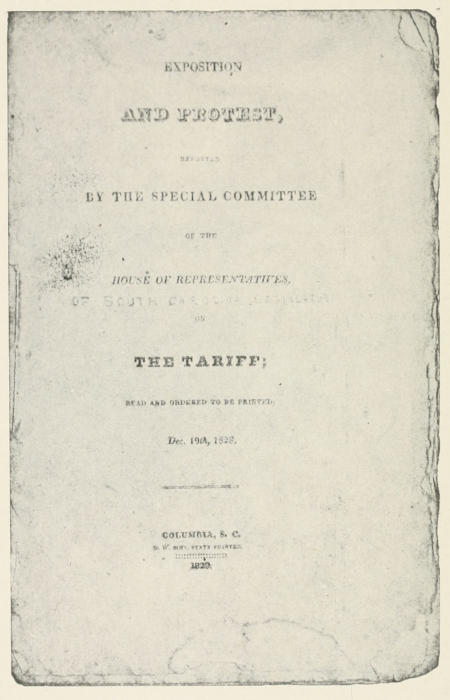
TITLE-PAGE OF CALHOUN’S “EXPOSITION”
Assuredly, though a section, the South was making contributions to the wealth and commerce of the country which entitled her spokesmen to a hearing. The total value of the exports from the United States in 1829 was $55,700,193, and to this total the southern States contributed no less than $34,072,655, in cotton, tobacco, and rice,—very nearly three-fifths of the whole. The total value of agricultural exports for the entire Union was $44,000,000. Of that total three-fourths came from the South. The value of manufactured articles exported footed up but $6,000,000, all told. The value of the cotton alone that went out at the ports was $26,575,311. And South Carolina was entitled to speak for her sister States. Her exports in 1829 were valued at $8,175,586. Only Louisiana in the South and New York and Massachusetts in the North showed a larger total.
It was the scope and precision of his mind that gave Mr. Calhoun his instant pre-eminence. He based his opposition directly upon the constitution itself, as his friends in South Carolina had done; but the argument in his hands seemed new because he made it so striking; seemed radical because he made it cut with so keen an edge of logic. It was, in fact, the old argument of the Virginia and Kentucky Resolutions, made but a little more definite, pushed but another step towards practical application. The southern States, Mr. Calhoun pointed out, were set apart from the rest of the Union, and, so far as any man could see, permanently set apart, by reason of their “soil, climate, habits, and peculiar labor,” to be “staple States,” without diversification of industry. In matters of commercial policy their interests could never be wholly coincident with those of the rest of the country, and if Congress suffered their interests, which did not change, to be sacrificed to the interests of the rest of the country, which shifted and were new with each generation, their case would be intolerable, and the understandings of the federal arrangement clearly set at naught. Was it not, in truth, the right of States put thus at a fatal disadvantage in respect of their very means of subsistence to have recourse once again to the ultimate authority underlying the whole structure of the government? Must they not in such a peril take their defence into their own hands, and declare the statutes under which they suffered null and without effect within their borders until a convention of the States should once more have considered the fundamental law and its meanings? Should three-fourths of the States, upon the recommendation of such a convention, declare the power complained of to be constitutional, protest must end, or revolution begin: but no other power could righteously force States protesting thus of their fundamental rights to be still and submit.
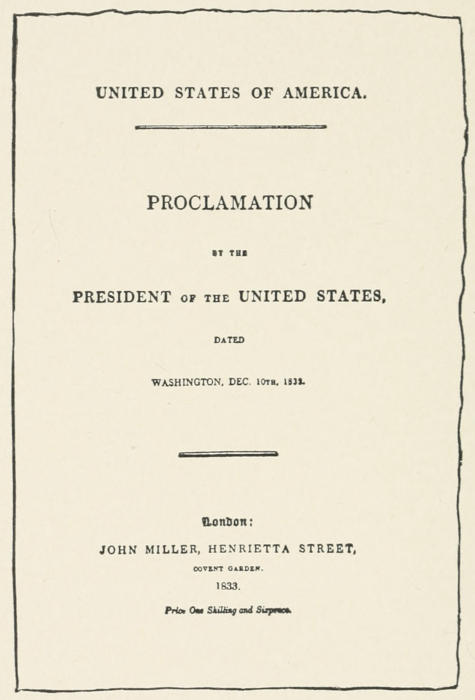
TITLE PAGE OF JACKSON’S “PROCLAMATION”
Feeling had at length come to such a pitch in South Carolina that her leaders were constrained to speak very boldly in this matter; and this was Mr. Calhoun’s exposition of her rights, undertaken at their urgent request. He had not acted upon his own initiative. His own thought was still of the nation as a whole and of local interests reconciled, not set against each other in rivalry and antagonism. He had yielded to the views of his friends at home, where passion was astir. Men whom he trusted came to him to be their spokesman in a matter which seemed to them to touch the very life of the State,—to be their spokesman, not in passion, but in the grave argument of rights. Unquestionably the most fundamental material interests of the State seemed to be at stake; unquestionably his own settled view of the nature of the federal arrangement and the reserved rights of the States furnished a formidable weapon against the tariff of abominations. He turned from his dreams of national development to vindicate the interests of his neighbors and constituents, and, turning, put his strength into the new task as heartily as he had put it into the old. The manifesto, the “South Carolina Exposition,” which he put forth rang as clear as any call to party battle could have rung; and his friends had the spokesman they had coveted.
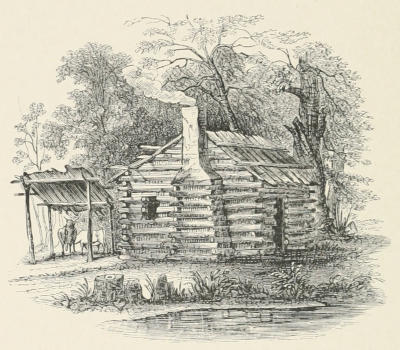
ANDREW JACKSON’S FOREST RESIDENCE
It was a document written with the full passion of his mind. Lover of the Union though he was, he conceived this to be its just and pristine model: a body of States sovereign in all that they had not deliberately relinquished for the sake of union; protected in the sovereignty which they retained, against the federal government no less than against one another, by inherent, inalienable rights never surrendered, never impaired. These rights, inherent and unrelinquished, he conceived to be as much a part of the constitution as the powers transferred to the federal government. It was to these he would have recourse in time of crisis, not to the crude right of revolution. He would save the Union by an appeal to its ultimate principle: the deliberate concert of sovereign States. In this case of the tariff he hoped that a mere assertion of the constitutional right to a radical remedy would suffice. He had set himself, he believed, to keep the Union pure, not to destroy it. The government was about to change hands. It was evident to all observant men, in the summer of 1828, while he wrote, that General Jackson was to be the next President, and that the government was to pass out of the hands of the party that stood for high tariffs and an aggressive use of federal power into the hands of the new Democrats, who professed doctrines of strict construction and purposes of moderate action in the use of constitutional authority. South Carolina could afford to wait for the change. In December the legislature of the State adopted Mr. Calhoun’s exposition as its own declaration of rights and put it forth as South Carolina’s official creed and earnest of policy; but it, too, waited for General Jackson and a propitious change of temper in Congress, and took no step towards action.
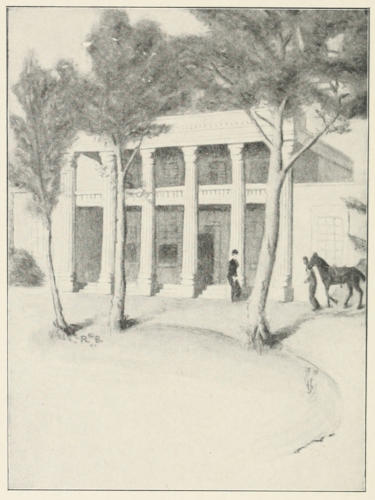
THE HERMITAGE. RESIDENCE OF GENERAL JACKSON
Already presidential electors had been chosen (November, 1828), and it was known that General Jackson commanded a large majority of their votes. In due course their votes were formally cast, and were found to be, when counted (February, 1829), one hundred and seventy-eight for General Jackson, eighty-three for Mr. Adams. Mr. Calhoun, who had transferred his allegiance from Mr. Adams to General Jackson, was re-elected Vice President. In every State except South Carolina and Delaware the electors had been chosen by popular vote: 647,276 of the people’s votes had been cast for General Jackson, 508,064 for Mr. Adams. For four years the astute and active men who had constituted themselves General Jackson’s managers had been preparing this triumph. Even men whom Mr. Adams kept in high office had openly assisted them, Mr. Adams, so punctiliously did he judge of his duty in the matter, leaving them unmolested so long as they performed their official tasks with faithfulness and propriety. Their plans had covered the whole Union. Ever since October, 1825, before Mr. Adams had met his first Congress as President, legislatures and assemblies of every sort had been nominating General Jackson for the presidency, one after the other, in a succession that did not flag. Now they were satisfied. They had had their revenge for the defeat of 1824, and had put their idolized man of the people in.
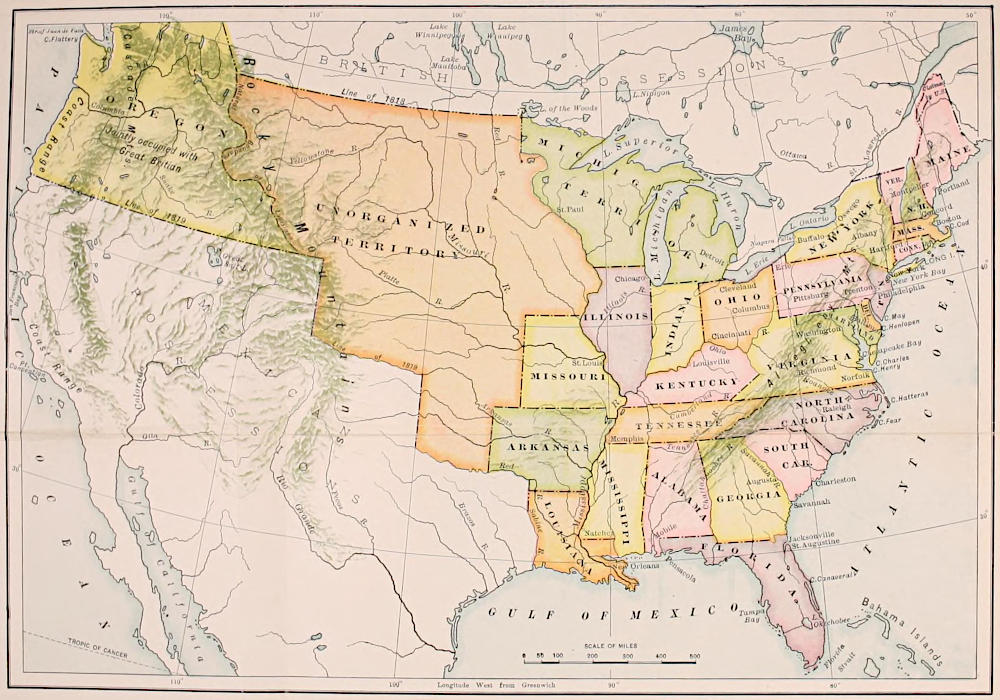
THE UNITED STATES, MARCH 4TH 1825.
BORMAY & CO., N. Y.
Authorities: For the period covered by this chapter our general authorities are the last volume (IX.) of Mr. Henry Adams’s History of the United States, the sixth volume of Hildreth, the fourth volume of Bryant and Gay, the fourth and fifth volumes of McMaster’s History of the People of the United States, the first volume of Hermann von Holst’s Constitutional and Political History of the United States, the second and third volumes of James Schouler’s History of the United States under the Constitution, and the third volume of George Tucker’s History of the United States. For accounts of the period more personal, more particular, or more limited in view we have Thomas H. Benton’s Thirty Years’ View, vol. I., Martin Van Buren’s Inquiry into the Origin and Growth of Political Parties in the United States, both of which are also contemporary sources of information, Judson S. Landon’s Constitutional History and Government of the United States, The Constitutional History of the United States as Seen in the Development of American Law, a series of lectures by Thomas M. Cooley, Henry Hitchcock, and others, Edward Stanwood’s History of the Presidency, Alden Bradford’s History of the Federal Government, R. McK. Ormsby’s History of the Whig Party, A. W. Young’s The American Statesman, James Parton’s Life of Andrew Jackson, George Ticknor Curtis’s Life of Daniel Webster, Daniel C. Gilman’s James Monroe (in the American Statesmen Series), Carl Schurz’s Henry Clay (in the same series), J. T. Morse, Jr.’s John Quincy Adams (in the same series), Henry Cabot Lodge’s Daniel Webster (in the same series), William G. Sumner’s Andrew Jackson (in the same series), the second volume of Calvin Colton’s Life, Correspondence, and Speeches of Henry Clay, Henry Adams’s John Randolph (in the American Statesmen Series), Theodore Roosevelt’s Thomas H. Benton (in the same series), George Ticknor Curtis’s Life of James Buchanan, Edward M. Shepard’s Martin Van Buren (in the American Statesmen Series), Andrew C. McLaughlin’s Lewis Cass (in the same series), N. M. Butler’s Influence of the War of 1812 (in the fifth volume of the Johns Hopkins University Studies in Historical and Political Science), H. V. Poor’s Sketch of the Rise and Progress of Internal Improvements, Albert S. Bolles’s Financial History of the United States, F. W. Taussig’s Tariff History of the United States, and William G. Sumner’s History of American Currency.
The sources are to be found for the most part in The Annals of Congress, Thomas H. Benton’s Abridgment of the Debates of Congress, The American State Papers, the Messages and Papers of the Presidents, Hezekiah Niles’s Weekly Register, Williams’s Statesman’s Manual, the collected Works or Writings of Clay, Calhoun, Webster, Gallatin (edited by Henry Adams), Madison, Jay, Marshall, and Jefferson, W. W. Story’s Life and Letters of Joseph Story, G. J. McRee’s Life and Correspondence of James Iredell, G. M. Dallas’s Life of A. J. Dallas, the Memoirs of John Quincy Adams, Josiah Quincy’s Life of John Quincy Adams and Figures of the Past, Nathan Sargent’s Public Men and Events, Richard Rush’s Narrative of a Residence at the Court of London, John Taylor’s controversial Construction Construed and the Constitution Vindicated and Inquiry into the Principles and Policy of the Government of the United States, William Cobbett’s A Year’s Residence in the United States (1817-1818), Basil Hall’s Travels in North America (1827-1828), Amos Kendall’s Autobiography, Henry A. Wise’s Seven Decades of the Union, Clark and Hall’s Legislative and Documentary History of the Bank of the United States, C. F. Dunbar’s Laws Relating to Finance, F. W. Taussig’s State Papers and Speeches on the Tariff, and James B. Thayer’s Cases in Constitutional Law.