81. Snake-weed
Reading edition
Common throughout the Southwest, particularly on overgrazed rangelands and deserted clearings, this plant, also called “matchweed” or “turpentine-weed,” often occurs in almost pure stands. The resinous stems burn readily, throwing off black smoke. Most abundant on dry hills and mesas, 3,000 to 6,000 feet elevation, this perennial is found from 1,000 to 7,000 feet, blossoming from June to October. Bees obtain nectar and pollen from the small but densely crowded, yellow flower clusters. The many stiff, upright branches cause some plants to appear almost globular in shape and a foot to 2 feet in diameter. Plants of this genus are reported as poisonous to sheep and goats if eaten in quantity, but are apparently unpalatable, as they are rarely grazed.
Gutierrezia lucida Sunflower Family
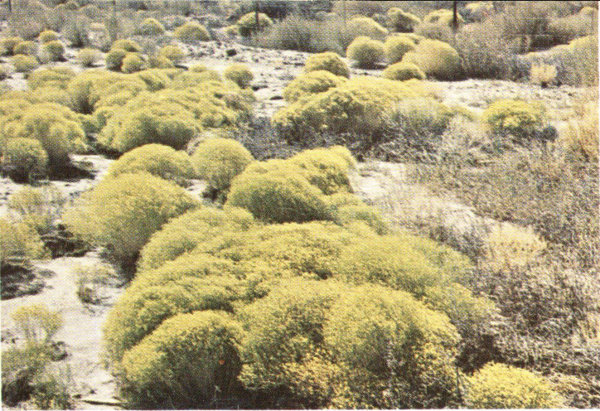
SNAKE-WEED