40. Creosotebush
Reading edition
Often erroneously called “greasewood,” creosotebush is generally recognized as the most adaptable of all desert plants, and a definite indicator of the Lower Sonoran Life Zone. The shrubs cover thousands of square miles, often in pure stands, and flower throughout much of the year, but most profusely in April and May. Fuzzy white, globular fruits are almost as spectacular as the flowers. The plant can endure long periods of drought. Following rains its foliage gives off a musty, resinous odor, suggestive of creosote, stimulating the Mexican name hediondilla (little stinker). In Mexico the plant is considered to have medicinal values and many uses. The Pima Indians boiled the leaves, using the decoction as an emetic and to poultice sores. They used the lac, found as an incrustation on the branches, to cement arrow-points and to mend pottery.
Larrea tridentata Caltrop Family
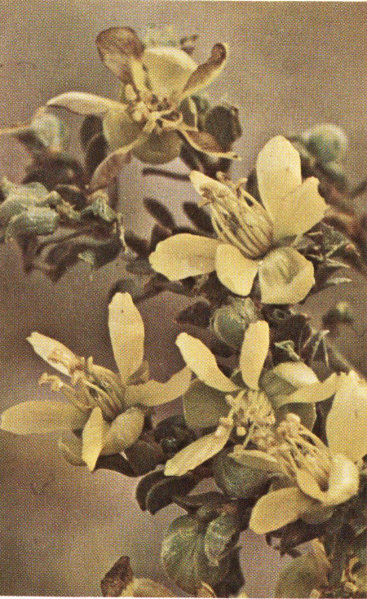
CREOSOTEBUSH
25