Volume 6 — A SONG. (continued 3)
Reading edition
A BALLAD by the late Lord DORSET, when at Sea.
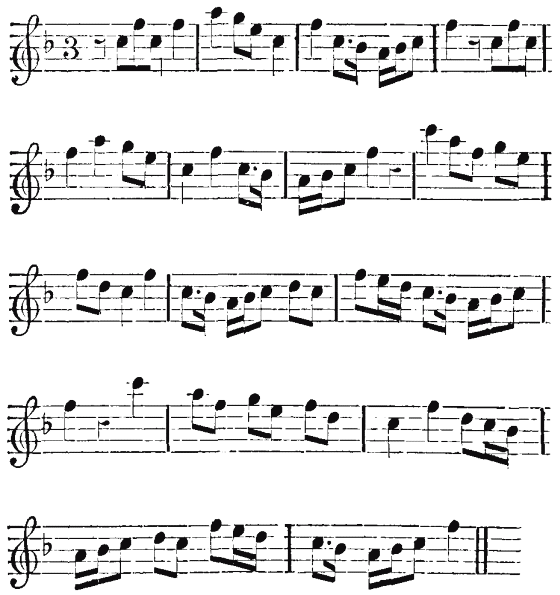
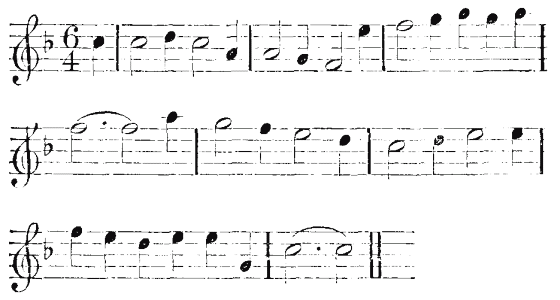
TO you fair Ladies now at Land, We Men at Sea indite; But first wou'd have you understand, How hard it is to write: The Muses now, and Neptune too, We must implore to write to you; With a Fa la, la, la, la, The Muses now, &c. But tho' the Muses should be kind, And fill our empty Brain; Yet if rough Neptune cause the Wind, To rouse the Azure Main: Our Paper, Pens, and Ink and we, Rowl up and down our Ships at Sea, With a Fa la, &c. Then if we write not by each Post, Think not that we're unkind; Nor yet conclude that we are lost, By Dutch, by French, or Wind, Our grief will find a speedier way, The Tide shall bring them twice a day, With a Fa la, &c. The King with wonder and surprize, Will think the Seas grown bold; For that the Tide does higher rise, Then e'er it did of old: But let him know that 'tis our Tears, Sends floods of Grief to White-Hall Stairs, With a Fa la, &c. Shou'd Count Thoulouse but come to know, Our sad and dismal Story; The French wou'd scorn so weak a Foe, Where they can get no Glory: For what resistance can they find, From Men as left their Hearts behind, With a Fa la, &c. To pass our tedious time away, We throw the merry Main; Or else at serious Ombra play, But why shou'd we in vain, Each others ruin thus pursue, We were undone when we left you, With a Fa la, &c. When any mournful Tune you hear, That dyes in e'ery Note; As if it sigh'd for each Man's care, For being so remote: Think then how often Love we've made, To you while all those Tunes were play'd, With a Fa la., &c. Let Wind and Weather do its worst, Be you to us but kind; Let French-men Vapour, Dutch-men Curse, No Sorrows we shall find: 'Tis then no matter how things go, Nor who's our Friend, nor who our Foe, With a Fa la., &c. Thus having told you all our Loves, And likewise all our Fears; In hopes this Declaration moves, Some Pity to our Tears: Let's hear of no Inconstancy, We have too much of that at Sea, With a Fa, la, la, la, la.

Bonny Kathern Loggy. A Scotch Song.
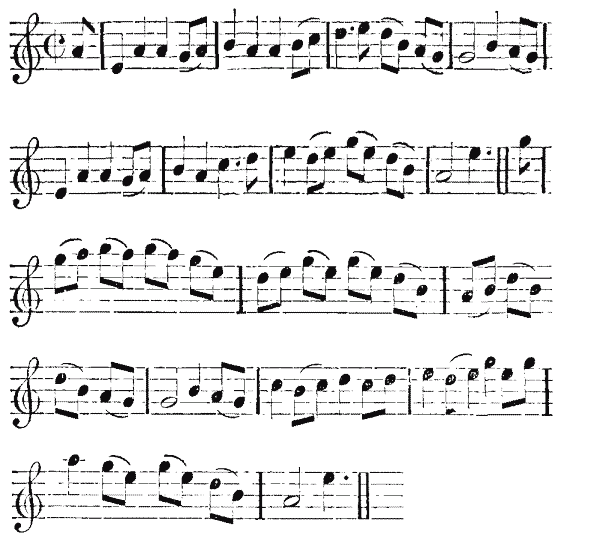
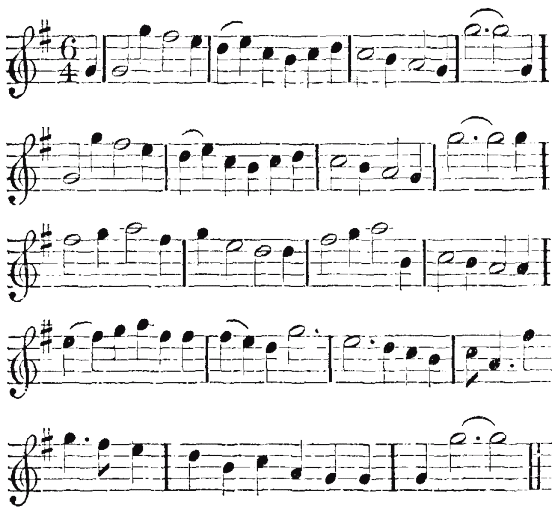
AS I came down the hey Land Town, There was Lasses many, Sat in a Rank, on either Bank, And ene more gay than any; Ise leekt about for ene kind Face, And Ise spy'd Willy Scroggy; Ise spir'd of him what was her Name, And he caw'd her Kathern Loggy. A sprightly bonny Gurl sha was, And made my Heart to rise Joe; Sha was so fair sa blith a Lass, And Love was in her Eyes so: Ise walkt about like ene possest, And quite forgot poor Moggy; For nothing now could give me rest, But bonny Kathern Loggy. My pratty Katy then quoth I, And many a Sigh I gave her; Let not a Leard for Katy die, But take him to great Favour: Sha laught aloud, and sa did aw, And bad me hemward to ge; And still cry'd out awaw, awaw, Fro bonny Kathern Loggy. A Fardel farther I would see, And some began to muse me; The Lasses they sat wittally, And the Lads began to Rooze me: The Blades with Beaus came down she knows, Like ring Rooks fro Strecy Boggy; And four and twanty Highland Lads, Were following Kathern Loggy. When I did ken this muckle Trame, And every ene did know her; I spir'd of Willy what they mean, Quo he they aw do Mow her: There's ne'er a Lass in aw Scotland, From Dundee to Strecy Boggy; That has her Fort so bravely Mann'd, As bonny Kathern Loggy. At first indeed I needs must tell, Ise could not well believe it; But when Ise saw how fow they fell, Ise could not but conceive it. There was ne'er a Lad of any note, Or any deaf young Roguey; But he did lift the welly Coat, Of bonny Kathern Loggy. Had I kenn'd on Kittleness, As I came o'er the Moore Joe; Ise had n'er ban as Ise ha dun, Nor e'er out-stankt my seln so: For I was then so stankt with stint, I spurr'd my aw'd Nagg Fogey; And had I kenn'd sha had been a Whore, I had ne'er Lov'd Kathern Loggy.

(The Catholick Brother) A Song.
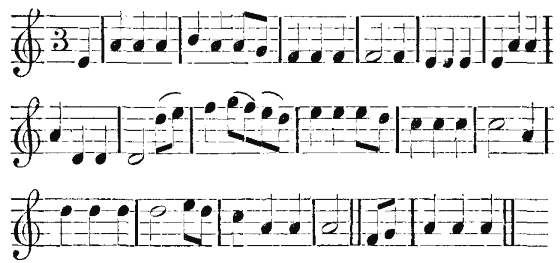
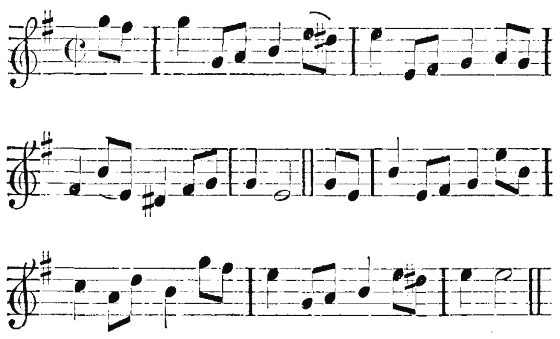
DEAR Catholick brother are you come from the Wars, So lame of your foots and your Face full of Scars; To see your poor Shela who with great grief was fill'd, For you my dear Joy when I think you were kill'd. With a Fa la, la. O my shoul my dear Shela, I'm glad you see me, For if I were dead now, I could not see thee; The Cuts in my Body, and the Scars in my Face, I got them in Fighting for Her Majesty's Grace. But oh my dear Shela dost thou now love me, So well as you did, e're I went to the Sea; By Cri—— and St. Pa—— my dear Joy I do, And we shall be Married to morrow Just now. I'll make a Cabin for my dearest to keep off the Cold, And I have a Guinea of yellow red Gold; To make Three halfs of it I think will be best, Give Two to my Shela and the Tird to the Priest. Old Philemy my Father was full Fourscore Years old, And tho' he be dead he'll be glad to be told; That we Two are Married, my dear spare no cost, But send him some Letter, upon the last Post.
The Triumphs of Peace, or the Widdows and Maids Rejoycing.
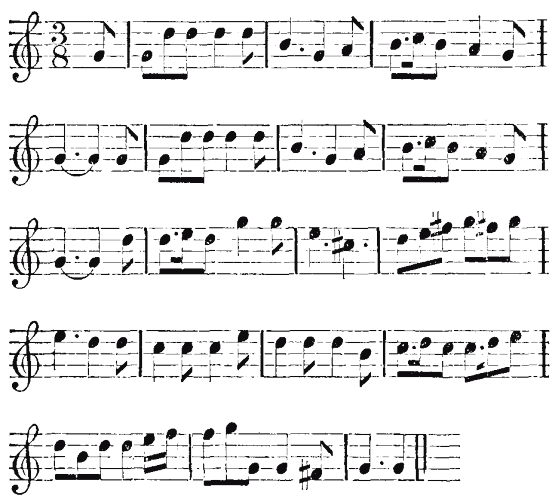
DEAR Mother I am Transported, To think of the boon Comrades; They say we shall all be Courted, Kind Widows as well as maids, Oh! this will be joyful News: We'll dress up our Houses with Holly, We'll broach a Tub of humming Bub, To treat those that come with a rub a dub dub, For dear Mother they'll make us Jolly. Dear Mother to see them mounted, 'Twou'd tickle your Heart with Joy; By me they all shall be counted, Heroical Sons of Troy: The Bells in the Steeples shall ring, We'll stick all our Houses with Holly, We'll broach a Tub of humming Bub, To treat those that comes with a rub a dub dub, For dear Mother they'll make us Jolly. I'll dress me as fine as a Lady, Against they come into the Town; My Ribbonds are all bought ready, My Furbelow-Scarf and Gown; To pleasure the Warlike Boys, We'll dress up our Houses, &c. They are delicate brisk and Brawny, Troth neither too lean nor fat; No matter for being Tawny, They're never the worse for that; We'll give them a welcome Home, And dress up our Houses, &c. They come from the Field of Battle, To quarter in Ladies Arms; 'Tis pretty to hear them Prattle, And tell of their loud Alarms: We'll Crown them with Garlands gay, And dress up our Houses, &c. Those boys are the Pride of Britain, They love us and so they may; Dear Mother it is but fitting, We shou'd be as kind as they: The Conduits shall run with Wine, We'll dress up our Houses, &c. Those battling Sons of Thunder, Now at their returning back; I know they will be for Plunder, Virginities go to wrack: But let them do what they please, We'll dress up our Houses, &c.
A Song.
Set and Sung by Mr. Leveridge at the Theatre.
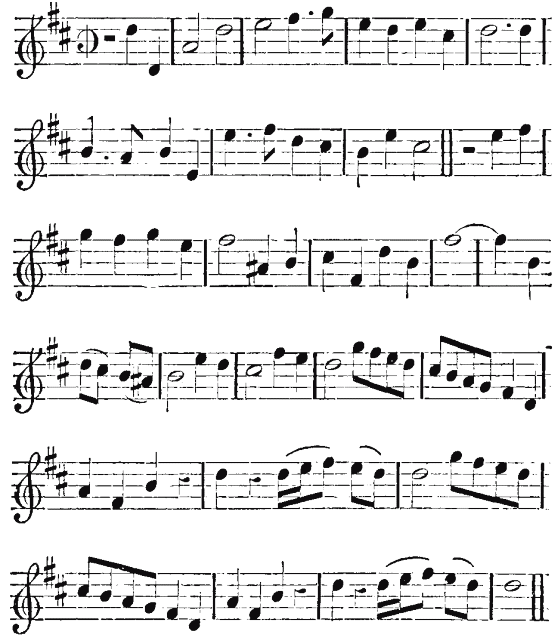
FILL the Glass, fill, fill, fill the Glass, Let Hautboys sound, whilst bright Celinda, Bright Celinda's Health go round. Fill the Glass, fill, fill, fill the Glass, Let Hautboys sound, whilst bright Celinda, Bright Celinda's Health goes round. With eternal Beauty blest, ever blooming, Ever blooming still be best; Drink your Glass, drink your glass, Drink your Glass and think, Think, think the rest, Drink your Glass and think, Think, think the rest.

An IRISH Song.
HUB ub, ub, boo; Hub ub, ub, boo; Dish can't be true, De War dees cease, But der's no Peash, I know and find, 'Tis Sheal'd and Sign'd, But won't believe 'tis true, Hub, ub, ub, boo, Hub ub, ub, boo. A hone, a hone, Poor Teague's undone, I dare not be, A Rapparee, I ne'er shall see, Magraw Macree, Nor my more dear Garone, A hone, a hone. Awa, awa, I must huzza, 'Twill hide my Fears, And save my Ears, The Mob appears, Her'sh to Nassau, Dear Joy 'tis Usquebaugh, Huzza, Huzza, Huzza.
The Bath Teazers: Or a Comical Description of the Diversions at Bath.
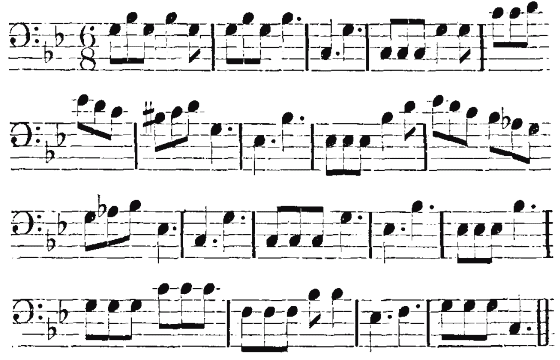
I'LL tell thee Dick where I have lately been, There's rare doings at Bath, Amongst Beauties divine, the like was ne'er seen, There's rare doings at Bath, And some dismal Wits that were eat up with Spleen, There's rare doings at Bath. There's rare doings at Bath. Raffling and Fidling, and Piping and Singing, There's rare doings at Bath. Where all drink the Waters to recover Health, And some sort of Fools there throw off their Wealth, And now and then Kissing, and that's done by stealth, There's rare doings, &c. And now for the Crew that pass in the Throng, That live by the Gut, or the Pipe, or the Song, And teaze all the Gentry as they pass along, There's rare doings, &c. First Corbet began my Lord pray your Crown, You'll hear a new Boy I've Just brought to Town, I'm sure he will please you, or else knock me down, There's rare doings, &c. Besides I can boast of my self and two more, And Leveridge the Bass, that sweetly will roar, 'Till all the whole Audience joins in an ancore, There's rare doings, &c. Next H——b L——r and B——r too, With Hautboy, one Fidle, and Tenor so bleu, And fusty old Musick, not one Note of New, There's rare doings, &c. Next Morphew the Harper with his Pigg's Face, Lye tickling a Treble and vamping a Bass, And all he can do 'tis but Musick's disgrace, There's rare doings, &c. Then comes the Eunuch to teaze them the more, Subscribe your two Guineas to make up fourscore, I never Perform'd at so low rate before, There's rare doings, &c. Then come the Strolers among the rest, And little Punch Powel so full of his Jest, With pray Sir, good Madam, it's my Show is best, There's rare doings, &c. Thus being Tormented, and teaz'd to their Souls, They thought the best way to get rid of these Fools, The Case they referr'd to the Master of the R——ls, There's rare doings, &c. Says his Honour, and then he put on a Frown, And since you have left it to my Thoughts alone, I'll soon have them all whipp'd out of the Town, O rare doings at Bath, Raffling, and Fidling, &c.
The Distress'd Shepherd, A Song.
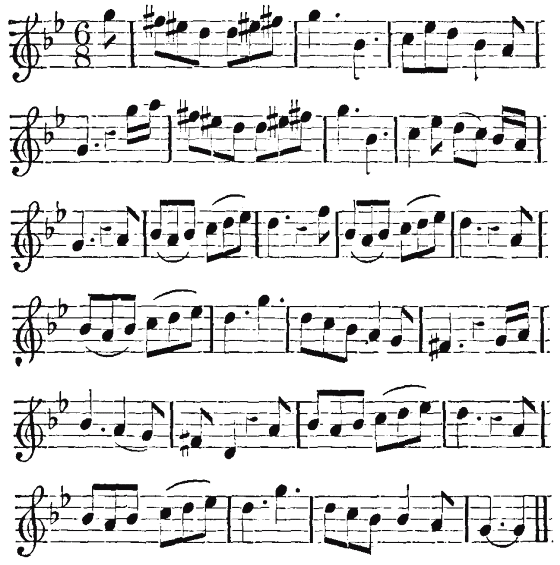
I Am a poor Shepherd undone, And cannot be Cur'd by Art; For a Nymph as bright as the Sun, Has stole away my Heart: And how to get it again, There's none but she can tell; To cure me of my Pain, By saying she loves me well: And alass poor Shepherd, Alack and a welladay; Before I was in Love, Oh every Month was May. If to Love she cou'd not incline, I told her I'd die in an Hour; To die says she 'tis in thine, But to Love 'tis not in my Power. I askt her the Reason why, She could not of me approve; She said 'twas a Task too hard, To give any Reason for Love: And alass poor Shepherd, &c. She ask'd me of my Estate, I told her a Flock of Sheep; The Grass whereon they Graze, Where she and I might Sleep: Besides a good Ten Pound, In old King Harry's Groats; With Hooks and Crooks abound, And Birds of sundry Notes: And alass poor Shepherd, &c.

A SONG.
I Love to Madness, rave t'enjoy, But heaps of Wealth my Progress bar; Curse on the Load that stops my way, My Love's more Rich and Brighter far: Were I prest under Hills of Gold, My furious Sighs should make my escape; I'd sigh and blow up all the Mould, And throw the Oar in Cælia's Lap. Were thou some Peasant mean and small, And all the spacious Globe were mine; I'd give the World, the Sun and all, For one kind brighter Glance of thine: This Hour let Cælia with me live, And Gods cou'd I but of you borrow, I'd give what only you can give, For that dear Hour, I'd give to morrow.
The loving Couple: Or the Merry Wedding.
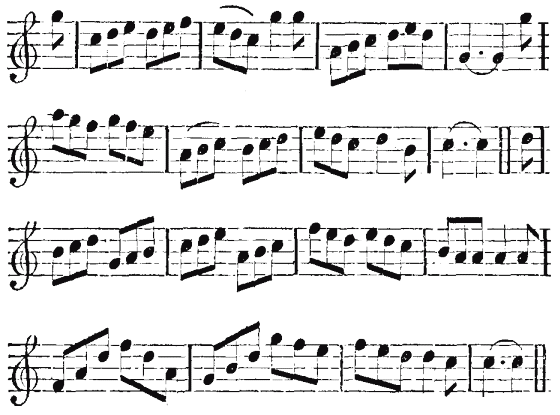
A Jolly young Grocer of London Town, Fell deeply in Love with his Maid: And often he courted her to lye down, But she told him she was afraid: Sometimes he would struggle, But still she would Boggle, And never consent to his wicked Will; But said he must tarry, Until he would marry, And then he should have his fill. But when that he found he could not obtain, The Blessing he thus pursu'd; For tho' he had try'd her again and again, She vow'd she would not be leud: At last he submitted, To be so outwitted, As to be catch'd in the Nuptial snare; Altho' the young Hussie, Before had been busie, With one that she lov'd more dear. The Morning after they marry'd were, The Drums and the Fiddles came; Then oh what a thumping and scraping was there, To please the new marry'd Dame: There was fiddle come fiddle, With hey diddle diddle, And all the time that the Musick play'd; There was Kissing and Loving, And Heaving and Shoving, For fear she should rise a Maid. But e'er three Months they had marry'd been, A Thumping Boy popp'd out; Ads—— says he you confounded Queen, Why what have you been about? You're a Strumpet cries he, You're a Cuckold cries she, And when he found he was thus betray'd; There was Fighting and Scratching, And Rogueing and Bitching, Because she had prov'd a Jade.

A Song, Tune of Chickens and Sparrow-grass.
WHAT sayest thou, If one should thrust thee thro'? What sayest thou, If one shou'd Plough? I say Sir, you may do what you please, I shall scarce stir, Tho' you ne'er cease, Thro', thro', you may thrust me thro'. Such Death is a Pleasure, When Life's a Disease.
The precaution'd Nymph, Set by L. Ramondon.
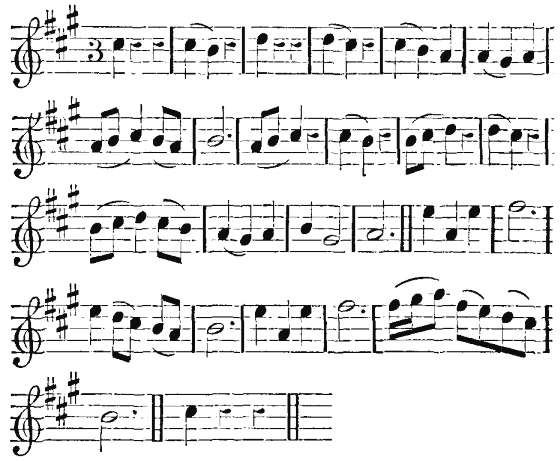
GO, go, go, go falsest of thy Sex be gone, Leave, leave, oh leave, leave me to my self alone; Why wou'd you strive by fond pretence, Thus to destroy my Innocence. Know, Cælia you too late betray'd, Then thus you did the Nymph upbraid; Love like a Dream usher'd by night, Flyes the approach of Morning light. Go falsest of your Sex begone, Oh! Leave me to my self alone; She that believes Man when he swears, Or but regards his Oaths or Pray'rs, May she, fond she, be most accurst, Nay more, be subject to his Lust.
The Life and Death of Sir HUGH of the GRIME. To the Tune of Chevy-chace.
or
AS it befel upon one time, About Mid-summer of the Year; Every Man was taxt of his Crime, For stealing the good Lord Bishop's Mare. The good Lord Screw sadled a Horse, And rid after the same serime; Before he did get over the Moss, There was he aware of Sir Hugh of the Grime. Turn, O turn, thou false Traytor, Turn and yield thy self unto me; Thou hast stol'n the Lord Bishop's Mare, And now thinkest away to flee. No, soft Lord Screw, that may not be, Here is a broad Sword by my side; And if that thou canst Conquer me, The Victory will soon be try'd. I ne'er was afraid of a Traytor bold, Altho' thy Name be Hugh in the Grime; I'll make thee repent thy Speeches foul, If Day and Life but give me time. Then do thy worst, good Lord Screw, And deal your blows as fast as you can; It will be try'd between me and you, Which of us two shall be the best Man. Thus as they dealt their blows so free, And both so Bloody at that time; Over the Moss ten Yeomen they see, Come for to take Sir Hugh in the Grime. Sir Hugh set his Back again a Tree, And then the Men compast him round; His mickle Sword from his Hand did flee, And then they brought Sir Hugh to the Ground. Sir Hugh of the Grime now taken is, And brought back to Garland Town; Then cry'd the good Wives all in Garland Town, Sir Hugh in the Grime, thou'st ne'er gang down. The good Lord Bishop is come to Town, And on the Bench is set so high; And every Man was tax'd to his crime, At length he call'd Sir Hugh in the Grime. Here am I, thou false Bishop, Thy Humours all to fulfil; I do not think my Fact so great, But thou may'st put into thy own Will. The Quest of Jury-Men was call'd, The best that was in Garland Town; Eleven of them spoke all in a-breast, Sir Hugh in the Grime thou'st ne'er gang down. Then other Questry-men was call'd, The best that was in Rumary; Twelve of them spoke all in a-breast, Sir Hugh in the Grime thou'st now Guilty. Then came down my good Lord Boles, Falling down upon his Knee; Five hundred Pieces of Gold will I give, To grant Sir Hugh in the Grime to me. Peace, peace, my good Lord Boles, And of your Speeches set them by; If there be Eleven Grimes all of a Name, Then by my own Honour they all should dye. Then came down my good Lady Ward, Falling low upon her Knee; Five hundred Measures of Gold I'll give, And grant Sir Hugh of the Grime to me. Peace, peace, my good Lady Ward, None of your proffers shall him buy, For if there be Twelve Grimes all of a Name, By my own Honour all should dye. Sir Hugh of the Grime's condemn'd to dye, And of his Friends he had no lack; Fourteen Foot he leapt in his Ward, His Hands bound fast upon his Back. Then he look'd over his left Shoulder, To see whom he could see or 'spye; There was he aware of his Father dear, Came tearing his Hair most pitifully. Peace, peace, my Father dear, And of your Speeches set them by; Tho' they have bereav'd me of my Life, They cannot bereave me of Heaven so high. He look'd over his right Shoulder, To see whom he could see or 'spye; There was he aware of his Mother dear, Came tearing her Hair most pitifully. Pray have me remember'd to Peggy my Wife, As she and I walk'd over the Moor; She was the cause of the loss of my Life, And with the old Bishop she play'd the Whore. Here Johnny Armstrong, take thou my Sword; That is made of the metal so fine; And when thou com'st to the Border side, Remember the Death of Sir Hugh of the Grime.
The disappointed Taylor: Or good Work done for Nothing.
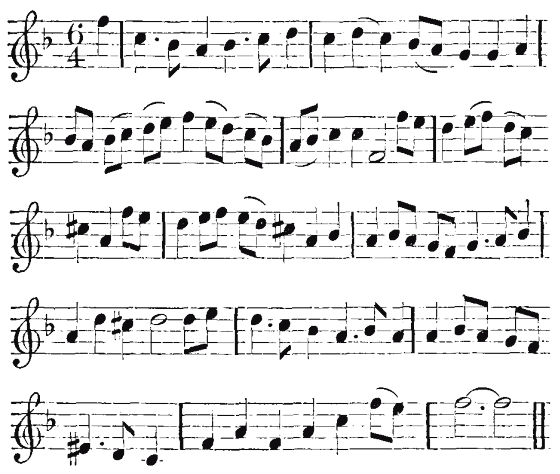
A Taylor good Lord, in the Time of Vacation, When Cabbage was scarce and when Pocket was low, For the Sale of good Liquor pretended a Passion, To one that sold Ale in a Cuckoldy Row: Now a Louse made him Itch, Here a Scratch, there a Stitch, And sing Cucumber, Cucumber ho. One Day she came up, when at Work in his Garret, To tell what he Ow'd, that his Store he might know; Says he it is all very right I declare it, Says she then I hope you will pay e'er I go? Now a Louse, &c. Says Prick-Louse my Jewel, I love you most dearly, My Breast every Minute still hotter does grow, I'll only says she for the Juice of my Barly, And other good Drink in my Cellar below: Now a Louse made him Itch, Here a Scratch, there a Stitch, And sing Cucumber, Cucumber ho. Says he you mistake, 'tis for something that's better, Which I dare not Name, and you care not to show; Says she I'm afraid you are given to flatter, What is it you Mean, and pray where does it grow: Now a Louse, &c. Says he 'tis a Thing that has never a handle, 'Tis hid in the Dark, and it lies pretty low; Says she then I fear that you must have a Candle, Or else the wrong way you may happen to go: Now a Louse, &c. Says he was it darker than ever was Charcole, Tho' I never was there, yet the way do I know; Says she if it be such a terrible dark Hole, Don't offer to Grope out your way to it so: Now a Louse, &c. Says he you shall see I will quickly be at it, For this is, oh this is the way that I'll go; Says she do not tousle me so for I hate it, I vow by and by you will make me cry oh: So they both went to work, Now a Kiss, then a Jirk, And sing Cucumber, Cucumber ho. The Taylor arose when the business was over, Says he you will rub out the Score e'er you go; Says she I shall not pay so dear for a Lover, I'm not such a Fool I would have you to know: Now a Louse made him Itch, Here a Scratch, there a Stitch, And sing Cucumber, Cucumber ho.
The Penurious Quaker: Or, the High priz'd Harlot.
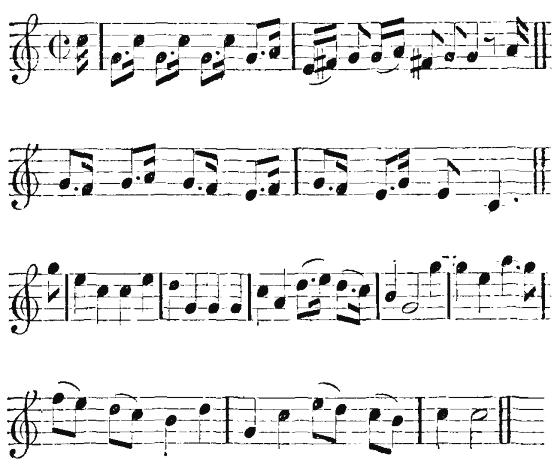
Quaker. MY Friend thy Beauty seemeth good, We Righteous have our failings; I'm Flesh and Blood, methinks I cou'd, Wert thou but free from Ailings. Harlot. Believe me Sir I'm newly broach'd, And never have been in yet; I vow and swear I ne'er was touch'd, By Man 'till this day sennight. Quaker. Then prithee Friend, now prithee do, Nay, let us not defer it; And I'll be kind to thee when thou Hast laid the Evil Spirit. Harlot. I vow I won't, indeed I shan't, Unless I've Money first, Sir; For if I ever trust a Saint, I wish I may be curst, Sir. Quaker. I cannot like the Wicked say, I Love thee and Adore thee, And therefore thou wilt make me pay, So here is Six pence for thee. Harlot. Confound you for a stingy Whig, Do ye think I live by Stealing; Farewel you Puritannick Prig, I scorn to take your Shilling.

A Song. Tune of the Old Rigadoon:
LAIS when you Lye wrapp'd in Charms, In your Spouses Arms, How can you deny, The Youth to try, What is his due. Sure you ne'er have Been touch'd by Man, That you ne'er can, Admit the Slave. Come let him in, And if he does Not pay what he owes, Ne'er trust the Fool again. Let another Spark supply his Place, For a Woman should not want; And Nature sure ne'er made a Man so base, But with asking he would grant: But if all Mankind were agreed to spoil your Race, By Jove my Dear they shan't.
The travelling Tinker, and the Country Ale-Wife: Or, the lucky Mending of the leaky Copper.
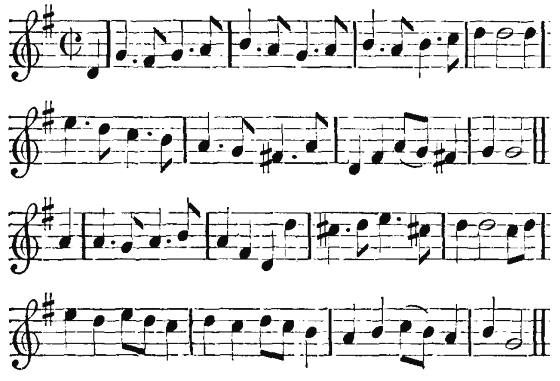
A Comely Dame of Islington, Had got a leaky Copper; The Hole that let the Liquor run, Was wanting of a Stopper: A Jolly Tinker undertook, And promised her most fairly; With a thump thump thump, and knick knack knock, To do her Business rarely. He turn'd the Vessel to the Ground, Says he a good old Copper; But well may't Leak, for I have found A Hole in't that's a whopper: But never doubt a Tinkers stroke, Altho' he's black and surly, With a thump thump thump, &c. He'll do your Business purely. The Man of Mettle open'd wide, His Budget's mouth to please her, Says he this Tool we oft employ'd, About such Jobbs as these are: With that the Jolly Tinker took, A Stroke or two most kindly; With a thump thump thump, &c. He did her Business finely. As soon as Crock had done the Feat, He cry'd 'tis very hot ho; This thrifty Labour makes me Sweat, Here, gi's a cooling Pot ho: Says she bestow the other Stroke, Before you take your Farewel; With a thump thump thump, &c. And you may drink a Barrel.

A SONG. Set by Mr. John Abell.
I'LL press, I'll bless thee Charming fair, Thou Darling of my Heart; I'll press, I'll bless thee Charming fair, Thou darling of my Heart: I'll clasp, I'll grasp thee close my Dear, And Doat on every Part. I'll clasp, I'll grasp thee close my Dear, And Doat on every Part! I'll bless thee now thou Darling, Thou Darling of my Heart; I'll bless thee now, &c. With fond excess of Pleasure, I'll make the Panting cry, Panting cry; Then wisely use your Treasure, Then wisely use your Treasure, Refusing, still comply.
A Song.
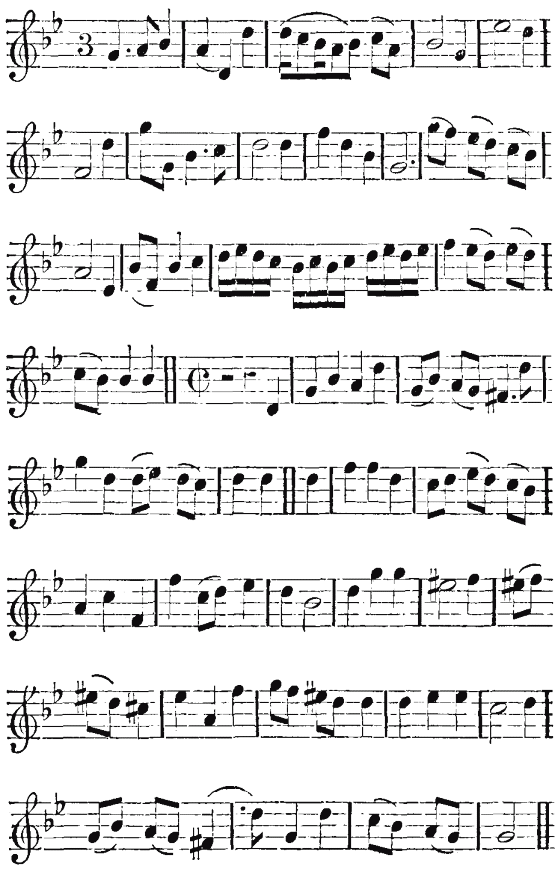
WHAT shall I do, I've lost my Heart, 'Tis gone, 'tis gone I know not whither; Love cut its strings, Then lent it Wings And both are flown together: Fair Ladies tell for Love's sweet sake, Did any of you find it? Come, come it lies, In your Lips or Eyes, Tho' you'll not please to mind it. But if't be lost, Then farewel Frost, I will enquire no more; For Ladies they Steal Hearts away, But only to restore: For Ladies they, &c.

Tune, si votr' epousa.
CHLORIS can you Forgive the fault that I have done; Chloris can you Forgive me when I sue, Faith it is true, That had you let me farther gone, I had ruin'd you, And mischiev'd my self too: Yet I ne'er should Have ventur'd on a Maid so Chast, Had not your Eye, Shot thro' my Soul, And conjur'd all the Sense away, That there did lye.
Lumps of PUDDING.
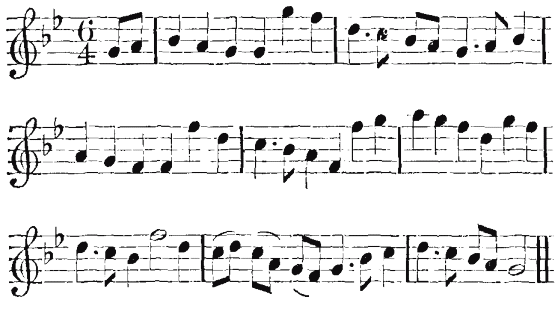
WHEN I was in the low Country, When I was in the low Country; What slices of Pudding and pieces of Bread, My Mother gave me when I was in need. My Mother she killed a good fat Hog, She made such Puddings would choak a Dog; And I shall ne'er forget 'till I dee, What lumps of Pudding my Mother gave me. She hung them up upon a Pin, The Fat run out and the Maggots crept in; If you won't believe me you may go and see, What lumps, &c. And every Day my Mother would cry, Come stuff your Belly Girl until you die; 'Twou'd make you to laugh if you were to see, What lumps, &c. I no sooner at Night was got into Bed, But she all in kindness would come with speed; She gave me such parcels I thought I should dee, With eating of Pudding, &c. At last I Rambled abroad and then, I met in my Frolick an honest Man; Quoth he my dear Philli I'll give unto thee, Such Pudding you never did see. Said I honest Man, I thank thee most kind, And as he told me indeed I did find; He gave me a lump which did so agree, One bit was worth all my Mother gave me.

The QUAKER's Song.
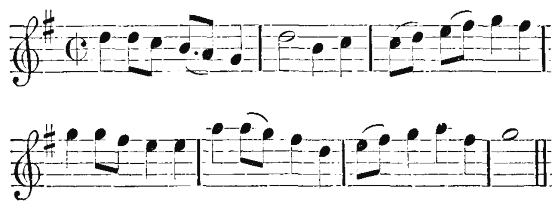
WALK up to Virtue Strait, And from all Vice retire; Turn not on this Hand nor on that, To compass thy Desire. Side not with wicked ones, Nor such as are Prophane; But side with good and goodly ones, That come from Amsterdam. Arm not thy self with Pride, That's not the way to Bliss; But Arm thy self with holy Zeal, And take this loving Kiss.
A SONG.
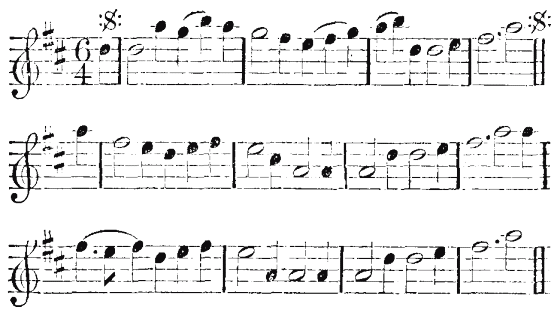
LORENZO you amuse the Town, And with your Charms undo, Sir; Laurinda can resist a Frown, But must not be from you, Sir: You make them all resign their Hearts, And fix their Eyes a gazing; The Porcupine has not more Darts, From every part amazing. You Bill and Cooe when you are kind, And happy's the Nymph believes you; You are true, but you are not Blind, For never a Nymph deceives you; Tho' she were naught, you'll ne'er be caught, But still have your Wits about you; You're a Hero, and you have Fought, There's ne'er a Hector can flout you. You are good, and you are bad, And you can be what you please, Sir; You are an honest trusty Lad, And I'll Wager ne'er had the Disease, Sir: Then here's to you, a Glass or two, For farther I dare not venture; And then my Dear I bid thee adieu, For I must be now a Dissenter.

A Song.
Tune of Oh! how happy's he. Pag. 104.
AH! how happy's he, Lives from drinking free, Can enjoy his Humour, Paper and his Pen; Nor ensnar'd with Wine, Or some Whores design, But in harmless Sonnets thinking does ever mend; Prigs shall never vex him, Pox shall ne'er perplex him, If his Pocket's full, sits down and counts his Joy; If it be not so, Takes a Tune or two, 'Till by wise Content, his trouble does destroy. When a Monarch reels, He his Thoughts conceals, Whether Whig or Tory, never does express; With a sober Dose Of Coffee funks his Nose, And reading all the News does leave the World to guess: But when his Noddle's full, O then he hugs his Soul, And homeward flush'd with Joy does trudge apace, When on Pillow laid, Then with Mind display'd Argues with himself the Queen and Nation's Case.
A Song.
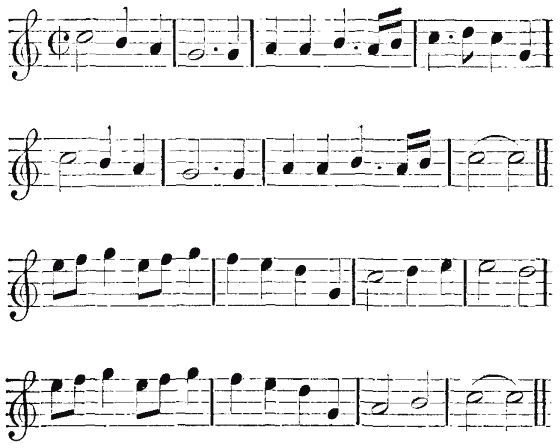
HAD I but Love, I'd quit all Treasure, Had I but Love, I'd Envy none above: Camp and Court, Have no such Pleasure; Camp and Court, Have both such pretty Sport. Wo. Let me alone, let me alone, Says the Fool, Or I'll cry out, Sir; Man. Prithee do, prithee do, With all my Soul, But you shan't stir. Such is Love, And such is living, Such is Love, And such was mighty Jove: Gods and Kings, Have both been contriving, Gods and Kings, To catch these pretty things. Wo. Let me go, what d'ye do, pray forbear, Alass I cannot bear it; Man. Hold your Tongue, hold your Tongue, Never fear you peevish Chit.

A Song. Set by Mr. FRANK.
LOVE's Passion never knew 'till this, A blissful Happiness like mine; With Joy now Cælia crowns my wish, And Cupid both our Hearts does joyn: With Joy now Cælia crowns my wish. And Cupid both our Hearts does joyn. Whene'er our Hearts dart fiery Beams, Fierce as the pangs of our Desires; The meeting Glances kindle flames More pure than fancyed fires: Then Cælia let's no Pleasure want, To perfect the most happy State; The bliss you fear too soon to grant, You'll rather think enjoyed too late.
A Song. Set by Mr. ABELL.
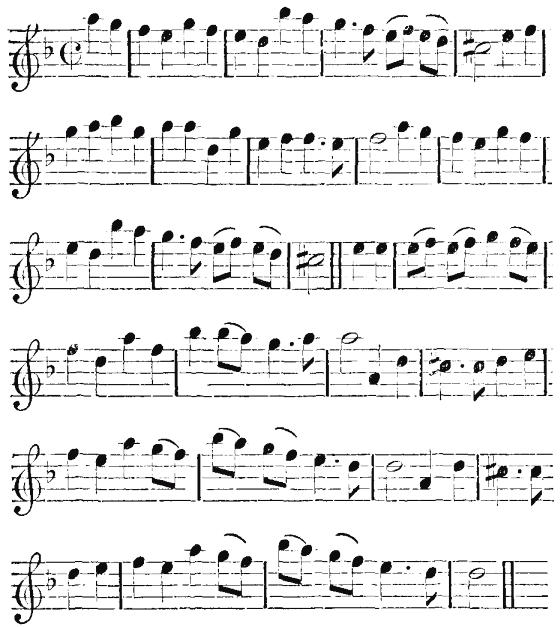
CÆLIA be not too complying, Ease not soon a Lovers pain; Love increases by denying, Soon we leave what soon we gain. Cælia be not too complying, &c. If in Courtship you're delighting, And wou'd no Adorer loose; Let your looks be still inviting, But your Vertue still refuse. Let your looks be still inviting, &c.
A Song. Set by Mr. ABELL.
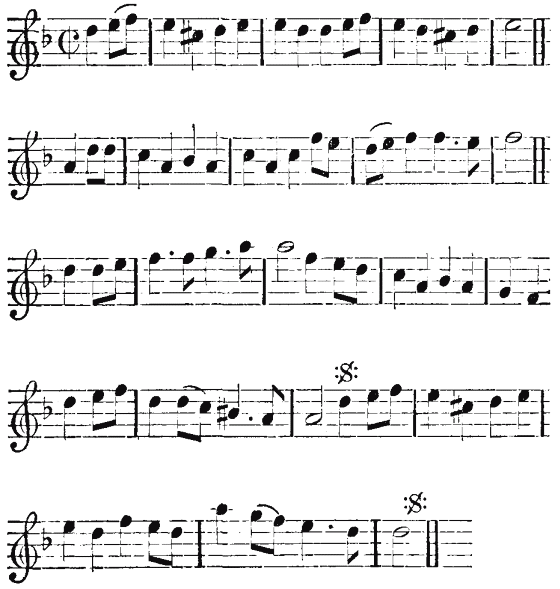
A Little Love may prove a Pleasure, Too great a Passion is a Pain; When we our Flame by reason measure, Blest is our Fate, and light our Chain: Who then would long a Slave remain? True Hearts are like a Fairy Treasure, Talk'd of, but ever sought in vain; A little Love may prove a Pleasure, Too great a Passion is a Pain.
A Song.
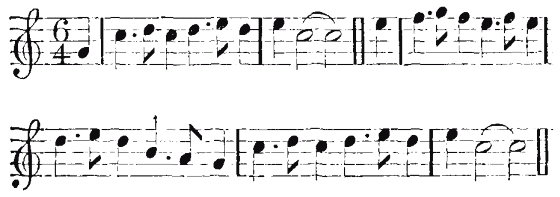
WHEN first I lay'd Siege to my Chloris, When first I lay'd Siege to my Chloris: Cannon Oaths I brought down, To batter the Town, And boom'd her with amorous Stories. Billet deux like small Shot did so ply her, Billet deux like small Shot did so ply her; And sometimes a Song, Went whistling along, Yet still I was never the nigher. At length she sent Word by a Trumpet, At length she sent Word by a Trumpet, That if I lik'd the Life, She would be my Wife, But she would be no Man's Strumpet. I told her that Mars wou'd ne'er Marry, I told her that Mars wou'd ne'er Marry; I swore by my Scars, Got in Combates and Wars, That I'd rather dig Stones in a Quarry. At length she granted the Favour, At length she granted the Favour; With the dull Curse, For better for worse, And saved the Parson the Labour.
A Song. Set by Seignor Baptist.
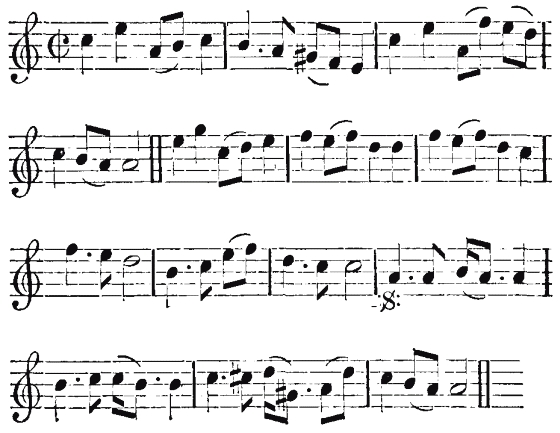
WHY alas do you now leave me, You who vow'd a Love so true; Can you hope whilst you deceive me, Others will be just to you? Oh you know what you forsake, You're pursuing, My undoing, But you know not what you take. Is your fit of Passion over, Will you Kill me dear unkind; Is your Heart then such a Rover, As no Vows, no Oaths can bind: Hear at least my last adieu, See me lying, See me dying, And remember 'tis for you.
A Song. Set by Mr. Akeroyde.
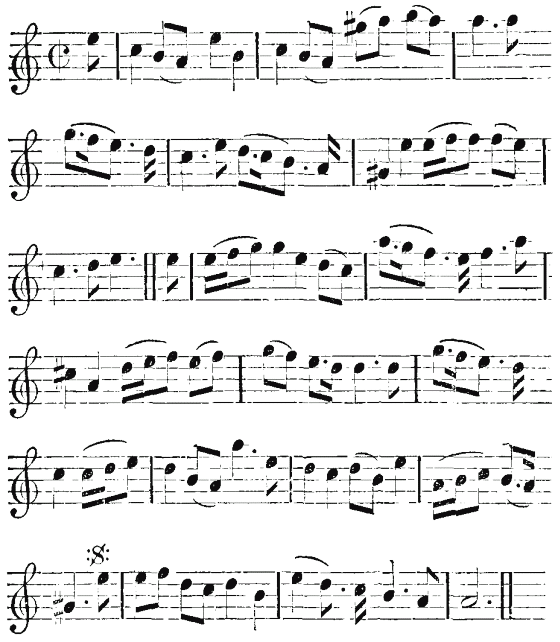
WHEN Beauty such as yours has mov'd desires, A kind return, a kind return, Should raise the glowing Fires; But tho' you hate me, I am still Devoted wholly to your Will: Not all your Frowns can quench my Flame, My Love is something more than Name, And as it ought, will ever, ever be the same.
A Song. Set by Mr. FRANK.
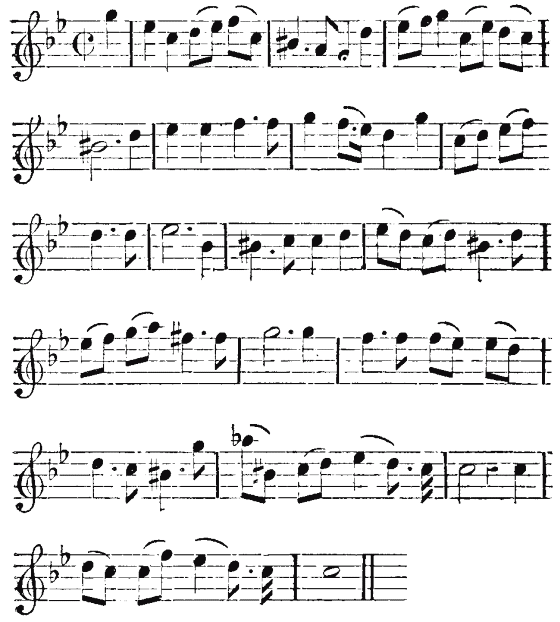
SEE bleeding at your Feet there lies, One murder'd by Disdain; That Heart you wounded with your Eyes, Is by your Rigour slain: Expiring now I cannot live, Death no delay will brook, Unless some pitying word you give, Or kind relenting Look, Or kind relenting Look. For then from Fate by Rapture born, And taken from your Arms; The Heart thus rescued from your Scorn, I'll offer to your Charms: Love's eager Rites, I'll then pursue, And Sacrificing dye; Altar and Beauteous Goddess you, And Priest, and Victim I.

The good Fellow's Resolve: Tune as May was in her youthful Dress. Vol. 3. P. 199.
NOW I'm resolv'd to Love no more, But Sleep by Night, and Drink by Day; Your Coyness Chloris pray give o'er, And turn your tempting Eyes away: I'll place no happiness of mine, On fading Beauty still to court; And say she's glorious and divine, When there's in Drinking better sport. Love has no more Prerogative, To make me desperate Courses take; Nor me of Bacchus Joys deprive, For them I Venus will forsake: Despise the feeble Nets she lays, And scorn the Man she can o'ercome; In Drinking we see happy Days, But in a fruitless Passion none. 'Tis Wine alone that cheers the Soul, But Love and Women make us sad; I'm merry while I court the Bowl, Whilst he that Courts his Madam's mad. Then fill it up Boys to the brim, Since in it we refreshment find; Come here's a Bumper unto him, That courts good Wine, not Woman-kind.
A Song. Set by Mr. FRANK.
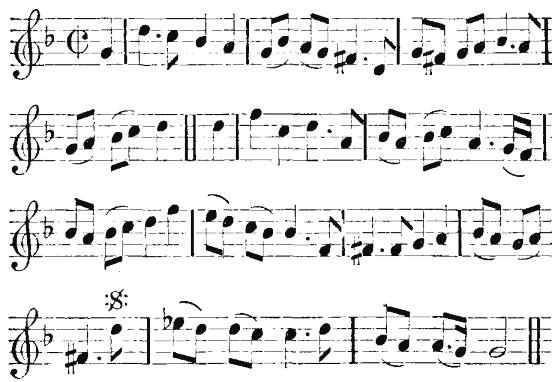
WHEN crafty Fowlers would surprize, The harmonious Lark that soars on high It is by glancing in his Eyes, The Sun-shine Rays which draws him nigh: It is by, &c. Charm'd with Reflections from the Glase, He flies with eager hasty speed; Ceasing the Musick of his Lays, Into the Nets the Fowler spread. So when Clemelia would obtain, The Prey her Fancy most desires; She spreads her Dress like Nets in vain, And all her Youthful gay attires. 'Till watching Opportunity, She throws an Amorous charming Glance, Then to her Net the Youth does flie, And lies entangled in a Trance.
A Song. Set by Dr. BLOW.
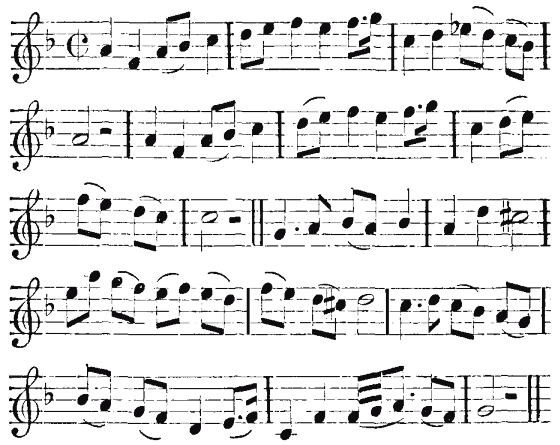
BOASTING Fops who court the Fair, For the Fame of being lov'd; You who daily prating are Of the Hearts your Charms have mov'd, Still be vain in talk and dress, But while Shadows you pursue; Own that some who boast it less, May be blest as much as you. Love and Birding are Ally'd, Baits and Nets alike they have; The same Arts in both are try'd, The unwary to inslave; If in each you'd happy prove, Without Noise still watch your way; For in Birding and in Love, While we talk it flies away.
A Song.
MUST Love, that Tyrant of the Breast, Have all our Songs, have all our Hours; Whilst he alone disturbs our Rest, And with his Cares our Hearts devours, And with his Cares our Hearts devours: No more let's blame ignoble Souls, Who doat on Arbitrary Powers; Since cruel Love our Wills controuls, Yet all the World, yet all the World the Toy adores. For shame let's break the feeble Bonds, And our old Liberty regain; Love against Reason seldom stands, Whenever that sways, its Power is vain: When Man the prize of Freedom knows, Cupid is easily out-brav'd; The Bug-bear only conquers those, Who fondly seek to be enslav'd.

The Woman's Complaint to her Neighbour.
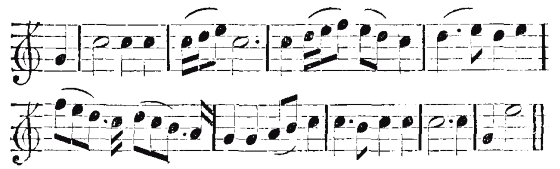
GOOD morrow Gossip Joan, Where have you been a Walking? I have for you at Home, A Budget full of Talking, Gossip Joan. My Sparrow's flown away, And will no more come to me; I've broke a Glass to Day, The Price will quite undo me, Gossip Joan. I've lost a Harry Groat, Was left me by my Granny; I cannot find it out, I've search'd in every Cranny, Gossip Joan. My Goose has laid away, I know not what's the Reason; My Hen has hatch'd to Day, A Week before the Season, Gossip Joan. I've lost my Wedding-Ring, That was made of Silver gilt; I had Drink would please a King, And the whorish Cat has spill'd it, Gossip Joan. My Duck has eat a Snail, And is not that a Wonder; The HORNS bud out at Tail, And have split her Rump asunder, Gossip Joan. My Pocket is cut off, That was full of Sugar-candy; I cannot stop my Cough, Without a Gill of Brandy, Gossip Joan. O I am sick at Heart, Therefore pray give me some Ginger; I cannot Sneeze or Fart, Therefore pray put in Finger, Gossip Joan. O pitty, pitty me, Or I shall go Distracted; I have cry'd 'till I can't see, To think how things are acted, Gossip Joan. Let's to the Ale-house go, And wash down all my Sorrow; My Griefs you there shall know, And we'll meet again to morrow, Gossip Joan.
A Song, Set by Mr. Jer. Clark.
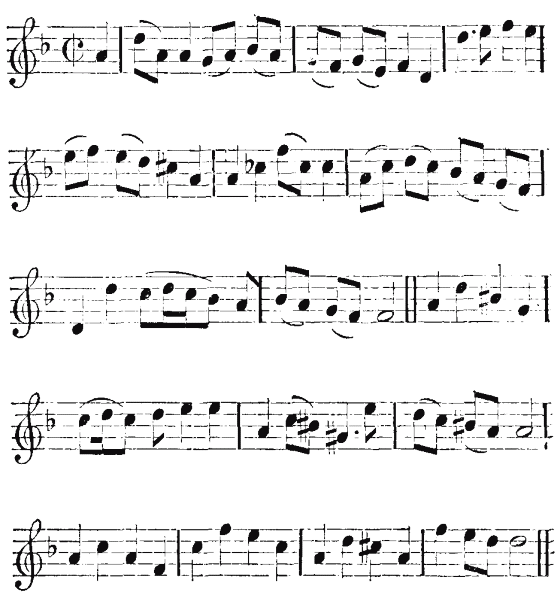
I'M vext to think that Damon wooes me, Who with Sighs and Tears pursues me; He still whining and repining, Of my Rigour does complain: I'd not see him, yet wou'd free him, And my self, my self from pain: I'll enjoy him, and so cloy him, Love cures Love, more, more than Disdain.
A Song, by Mr. Burkhead.
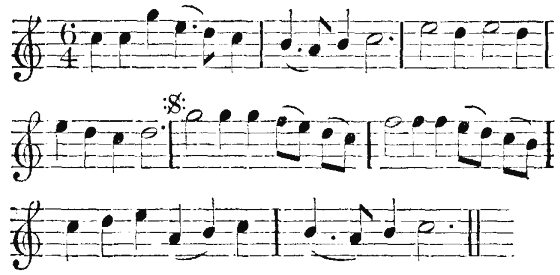
CLASPT in my dear Melinda's Arms, Soft engaging, oh how she Charms; Graces more divine, In her Person shine, Then Venus self cou'd ever boast. In the softest Moments of Love, Melting, Panting, oh how she moves; Come, come, come my Dear, Now we've nought to fear, Mortal sure was never so blest, Come, come, come, &c. Pray don't trifle, my dearest forbear, I shall die with Transports I fear; Clasp me fast my Life, 'Twill more Pleasure give, Both our stocks of Love let's Joyn, Clasp me, &c. Now our Souls are charm'd in Bliss, Raptures flow from every Kiss; Words cannot reveal, The fierce Joys I feel, 'Tis too much to bear and live, Words cannot, &c.
A Song, in the Play call'd the Ladies Fine Aires: Sung by Mr. Pack, in the Figure of a Bawd. Set by Mr. Barrett.
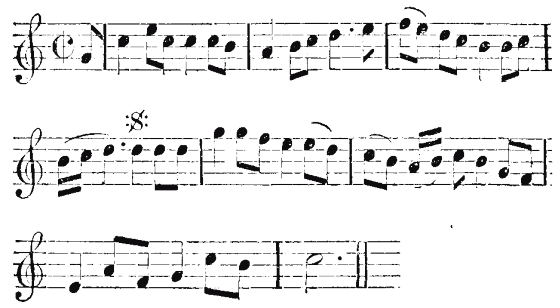
HOW happy are we, Who from thinking are free, That curbing Disease o'the Mind: Can indulge every Tast, Love where we like best, Not by dull Reputation confin'd. When we're young fit to toy, Gay Delights we enjoy, And have crowds of new Lovers wooing; When we're old and decay'd, We procure for the Trade, Still in ev'ry Age we're doing. If a Cully we meet, We spend what we get, E'ery day for the next never think: When we dye where we go, We have no Sense to know, For a Bawd always dyes in her drink.
A Song. Set by Mr. FORCER.
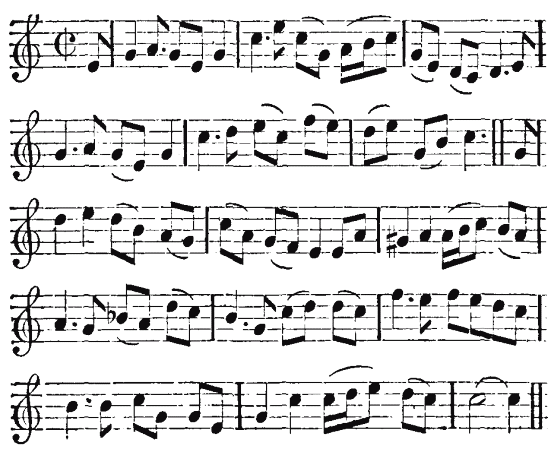
FAREWEL my useless Scrip, And poor unheeded Flocks; No more you'll round me trip, Nor cloath me with your Locks: Feed by yon purling Stream, Where Jockey, where Jockey first I knew: I only think, I only think, I only think on him, I cannot, cannot, cannot think on you. Farewel each Shepherdess, The bonny Lads adieu; May each his Wish possess, And to that Wish be true: Your Oaten Pipes cou'd please, But Jockey then was kind; Your bonny Tunes may cease, The Lad has chang'd his Mind.
A Song. Set by Mr. FRANK.
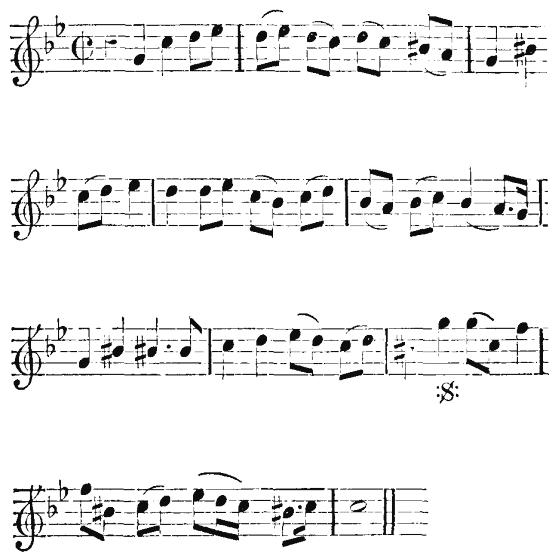
ERE Phillis with her looks did kill, My Heart resisting, My Heart resisting them was ill; Now in its Wounds it finds a Cure, When most they bleed, I least endure. For tho' 'tis Death those looks to meet, There's Life in dying at her feet; Kill Phillis then, kill with your Eyes, If you let Strephon live he dyes.
A Song. Set by Mr. KING.
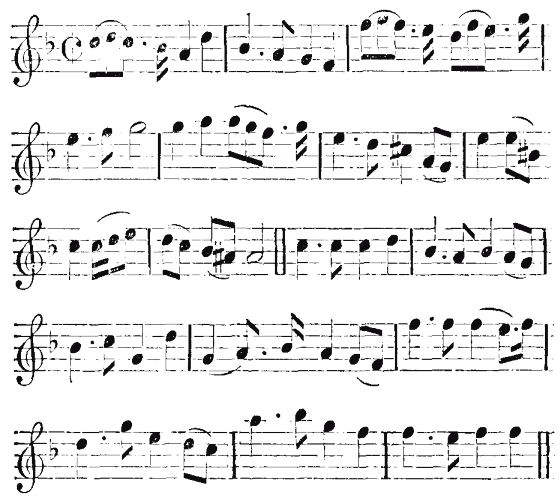
NOT your Eyes Melania move me, Not your flowring Charms or Wit; Not your daily Vows to love me, Make my easy Soul submit. Shape nor Dress can never sway me, Nor the softest looks betray me; Shape nor Face can never sway me, Nor the softest looks betray me. But your Mind, my Dear, subdues me, Where a thousand Graces shine; Goodness, Love, and Honour moves me, And my Passion's all Divine. Goodness as a boundless Treasure, Yields the purest sweetest pleasure.
A Song.
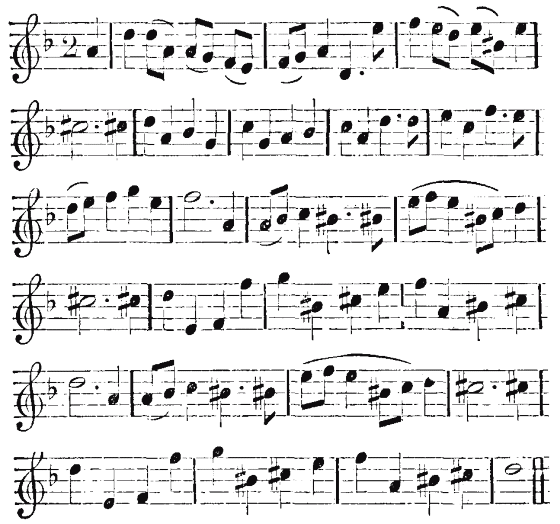
THEN come kind Damon, come away, To Cynthia's power advance: The Sylvians they shall pipe and play, And we'll lead up, and we'll lead up, And we'll lead up the Dance: The Sylvians they shall pipe and play, And we'll lead up, and we'll lead up, And we'll lead up the Dance; The Sylvians they, &c. Smile then with a Beam Divine, We'll be blest if you but shine; Happy then our Pains and Toils, Wit only lives when Beauty smiles: Happy then our Pains and Toils, Wit only lives, Wit only lives, When Beauty smiles; Wit only lives, &c.

The Soldiers return from the Wars, or the Maids and Widdows Rejoycing. Tune Page 278.
AT the Change as I was walking, I heard a Discourse of Peace; The People all were a Talking, That the tedious Wars will cease: And if it do prove but true, The Maids will run out of their Houses, To see the Troopers all come Home, And the Grenadiers with their Drum a Drum Drum, Then the Widdows shall all have Spouses. The Scarlet colour is fine, Sir, All others it doth excel; The Trooper has a Carbine, Sir, That will please the Maidens well: And when it is Cock'd and Prim'd, Sir, The Maids will run out of their Houses, To see the Troopers come come come, &c. There's Joan, and Betty, and Nelly, And the rest of the Female Crew; Each has an Itch in her Belly, To play with the Scarlet hue: And Marg'ret too must be peeping, To see the Troopers, &c. The Landladys are preparing, Her Maids are shifting their Smocks; Each swears she'll buy her a Fairing, And opens her Christmas-box: She'll give it all to the Red-coats, When as the Troopers, &c. Jenny she lov'd a Trooper, And she shew'd her all her Gear; Doll has turn'd off the Cooper, And now for a Grenadier: His hand Grenadoes they will please her, When as the Troopers, &c. Old musty Maids that have Money, Although no Teeth in their Heads; May have a Bit for their Bunny, To pleasure them in their Beds: Their Hearts will turn to the Red-coats, When as the Troopers, &c. The Widdows now are a Singing, And have thrown their Peaks aside; For they have been us'd to stinging, When their Garters were unty'd: But the Red-coats they will tye 'em, When as the Troopers, &c. Wives and Widdows and Maidens, I'm sure this News will please ye; If any with Maiden-heads laden, The Red-coats they will ease ye: Then all prepare to be happy, To see the Troopers all come Home, &c.

A Song. Tune of Old Boree.
COME Cælia come, let's sit and talk a while, About the Affairs of Loving: Let a mutual Kiss our Cares and Fears beguile, Far distant from this Grove: Let's pass our Time in Mirth away, Now we're remov'd from the noisy, noisy Court, Now we're got out of the stormy Sea, Into the safer Port.
A Song. Set by Mr. Damascene.
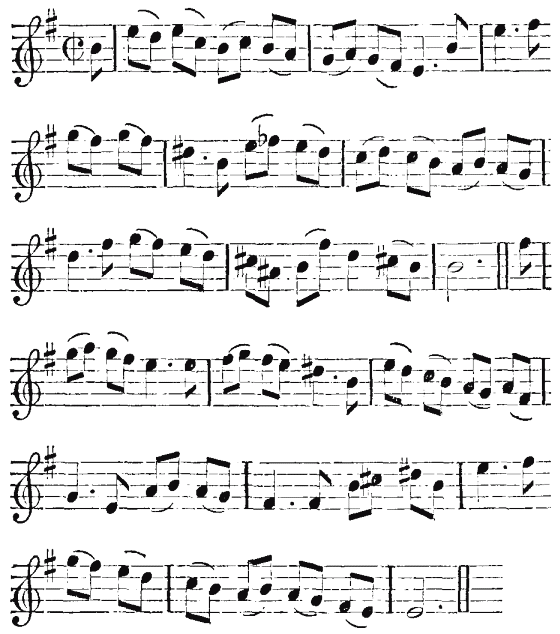
WHO can Dorinda's Beauty view, And not her Captive be; Apollo, Daphne did pursue, Embraced the Maid, though chang'd to a Tree: If God's could love at such a rate, Poor Mortals must adore: Dorinda's Merit is as great; 'Tis just, 'tis just to love her more.
A Hymn upon the Execution of two Criminals, by Mr. Ramondon.
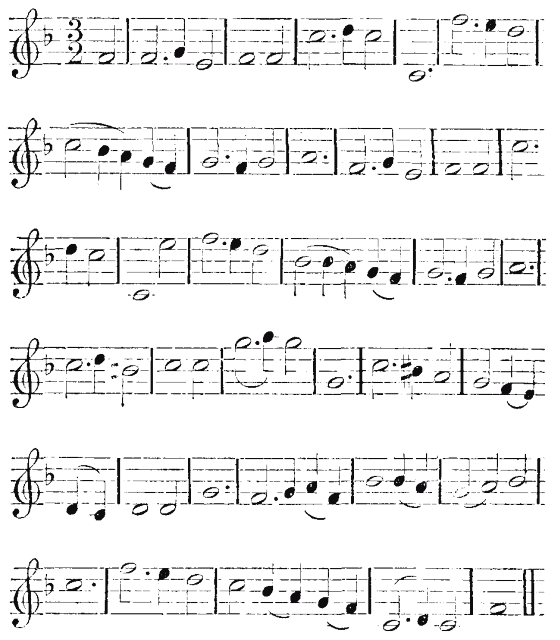
ALL you that must take a leap in the Dark, Pity the Fate of Lawson and Clark; Cheated by Hope, by Mercy amus'd, Betray'd by the sinful ways we us'd: Cropp'd in our Prime of Strength and Youth, Who can but weep at so sad a Truth; Cropp'd in our Prime, &c. Once we thought 'twould never be Night, But now alass 'twill never be light; Heavenly mercy shine on our Souls, Death draws near, hark, Sepulchres Bell Toles: Nature is stronger in Youth than in Age, Grant us thy Spirit Lord Grief to assuage: Courses of Evil brought us to this, Sinful Pleasure, deceitful Bliss: We ne'er shou'd have cause so much to repent, Could we with our Callings have been but Content: The Snares of Wine and Women fair, First were the cause that we now Despair. You that now view our fatal End, Warn'd by our Case your Carriage mend; Soon or late grim Death will come, Who'd not prepare for a certain Doom: Span long Life with lifeless Joys, What's in this World but care and noise. Youth, tho' most blest by being so, As vast thy Joy, as great thy Woe; Ev'ry Sin that gives Delight, Will in the end the Soul affright: 'Tis not thy Youth, thy Wealth nor Strength, Can add to Life one Moments length. God is as Merciful as Just, Cleanse our Hearts, since die we must: Sweet Temptations of worldly Joys, Makes for our Grief, and our Peace destroys, Think then when Man his Race has run, Death is the Prize which he has won. Sure there's none so absurd and odd, To think with the Fool there is no God; What is't we fear when Death we meet, Where't not t' account at the Judgment-Seat: That Providence we find each Hour, Proves a supernatural Power; In Mercy open thy bright Abode, Receive our Souls tremendous God.
The British Accountant.
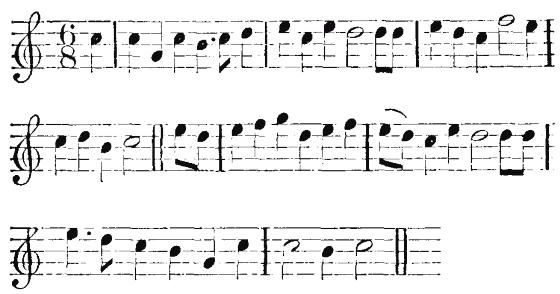
YOU Ladies draw near, I can tell you good News, If you please to give Ear, or else you may Choose; Of a British Accountant that's Frolick and free, Who does wondrous Feats by the Rule of Three. Addition, Division, and other such Rules, I'll leave to be us'd by your Scribling Fools; This Art is Improv'd unto such a Degree, That he manages all by the Rule of Three. You Dames that are Wed who can make it appear, That you lose an Estate for want of an Heir: This Accountant will come without e'er a Fee, And warrants a Boy by his Rule of Three. Is the Widdow distress'd for the loss of her Spouse, Tho' to have him again she cares not a Louse; Her Wants he supplys whatsoever they be, And all by his Art in the Rule of Three. Do you Dream in the Night and fret at your Fate, For want of the Man when you happen to wake; You may presently send and satisfy'd be, That he Pacifies all by the Rule of Three. You Ladies who are with a Husband unblest, And are minded to make him a delicate Beast; He'll fix the Brow-antlers just where they should be, And all by his Art in the Rule of Three. You Lasses at large of the true Female Race, Who are glad of the Men who will lye on their Face; Do but try the bold Britton, you all will agree, That you never did know such a Rule of Three.

A Song. Set by Mr. FRANK.
THE Night is come that will allow, No longer any Coyness now, But every freedom must to Love be given; What tho' the Shadows of the Night, Withdraw her Beauty from his sight, The Youth another way, another way, Another way will find his Heav'n. See, see the charming Nymph is lay'd, Never again to rise a Maid, The vigorous Bridegroom now impatient grown; Thrown himself by her side, With eager Joy, and amourous Pride, Ready to seize the Prey that's now his own. And now that all have left the Place, Transporting Joys crowd on apace, The Nymph contends like one that would not win; Entrain'd with Pleasure now she lies, The Youth has gain'd the noble Prize, And now her Fears are past, and Joys begin.
A Song. The Words by Mr. Escourt.
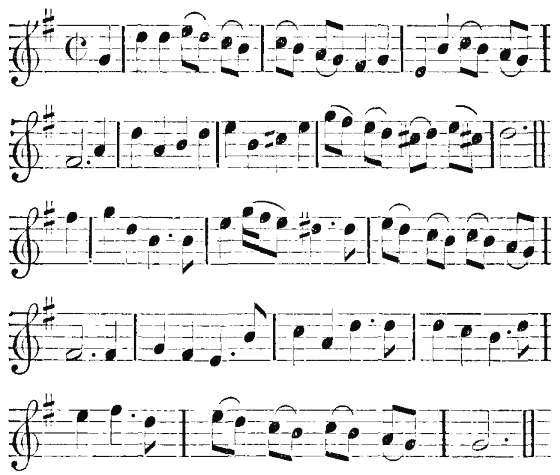
YOU tell me Dick you've lately read That we are beaten in Spain; But prithee Boy hold up thy Head, We'll beat 'em twice for it again With a Fal la la la la la la la. Is this the Courage you us'd to boast, Why thou art quite cast down; You can reflect on what we've lost, But ne'er think what we've won, With a Fal, &c. What tho' Jack Spaniard crack and bounce, He ne'er shall do so again; We took last Year as many Towns, As they have now took Men, With a Fal, &c. In War and Gaming it is the same, According to the old Saying; Who's sure to conquer ev'ry Game, Quite loses the Pleasure of playing: With a Fal, &c. I think we have a Man of our own, A Man if I may call him so; For after those great Deeds he has done, I may question if he's so or no, With a Fal, &c. But now if you wou'd know his Name, 'Tis Johnny Marlborough; The beaten French has felt his Fame, And so shall the Spaniards too, With a Fal, &c. And since we cannot Justice do, To ev'ry Victory; In a full Glass our Zeal let's show, To our General's Family, With a Fal, &c. For he has Eight fair Daughters, And each of them is a Charmer; There's Lady Railton, Bridgwater, Fine Sunderland, Lady Mount-Hermer, With a Fal, &c. The other Four so Charming are, They will with Raptures fill ye; There's Lady Hochstet, Schellenburgh, Bright Blenheim, and Lady Ramillie, With a Fal, &c. The last were got so fair and strong, As in Story ne'er was told; The first Four always will be Young, And the last will never be Old, With a Fal, &c. At ev'ry Feast, e'er we are all deceas'd, And the Service begins to be hard; 'Tis surely your Duty, to Toast a young Beauty, Call'd Madamosel Audenard, With a Fal, &c. All Joy to his Grace, for the ninth of his Race, She's as fair as most of the former; But where is that he, dare so impudent be, To compare her to Lady Mount-Hermer, With a Fal, &c. And now to make thy Hopes more strong, And make you look like a Man; Remember that all these belong, To the Queen of Great Britain, With a Fal, &c. Then prithee Dick hold up thy Head, Altho' we were beaten in Spain; As sure as Scarlet Colour is Red, We'll beat them twice for it again: With a Fal, &c.

A SONG.
LET those Youths who Freedom prize, Far from the conquering Sylvia run, Never see her killing Eyes, Or hear her soft enchanting Tongue: For such sure Destruction waits, On those Darts with which she wounds; No shepherd ever can escape, But falls if Sylvia does but Frown. Damon to his cost has prov'd, All resistance is but vain; Heaven has form'd her to be lov'd, And made her Queen of all the Plain: Damon when he saw her Face, From her Beauty would have fled; But the Charmer turn'd her Voice, And with a Song she struck him dead.
A Song.
YOUR Melancholy's all a Folly, The Peace I'm sure is Sign'd; The French are for't, so is our Court, And the Dutch must be inclin'd: What is't to us who's King of Spain, So we are Masters of the Main, Our Fleet must always the Trade maintain, If we are not Banter'd and Bubbl'd. And Cheated and Banter'd and Bubbl'd. We very well know when Marlborough, Did take the Towns in Flanders; 'Twas English-men, did pay for them, Tho' they put in Dutch Commanders; So that while we were humbling France, Hollands Power we did advance, And made 'em Great at our expence, And so we were Banter'd, &c. We must suppose, the Whigs are Foes, When Treatys they will Sign a; To give the Dutch so plaguy much, And call it the Barrier Line a: For how can we Great Europe Sway, Or keep the Ballance every way, I fear we shall pay for't another Day, For we have been Banter'd, &c. For Liberty, and Property, 'Twas once we us'd to Fight; 'Gainst Popery, and Slavery, We did it with our Might: But now the Taxes make us poor, The Emperor may Swear and roar, We neither can nor will do more, For we have been Banter'd, &c. Fanaticks then, are now the Men, Who Kingly Pow'r divide; Their Villany to Monarchy, 'Tis makes 'em France deride: If Hollanders wou'd choose a King, As much as now their Praises Sing, They wou'd Curse, and Damn, and Fling, And cry they were Banter'd, &c. I swear adsnigs, the Canting Whigs, Have run their Knavish Race; The Church and Queen, are Flourishing, Now they are in Disgrace: Great Harly he has set us right, And France will banish Perkenite, So we're no more the Holland Bite, Nor will we be Banter'd and Bubbl'd, And Cheated and Banter'd and Bubbl'd.
The MOHOCKS. A Song.
THERE's a new set of Rakes, Entitled Mohocks, Who infest Her Majesties Subjects; He who meets 'em at Night, Must be ready for flight, Or withstanding he many a Drub gets. In their nightly Patrole, They up and down rowle, To the Bodily fear of the Nation; Some say they are Gentle- men, otherwise Simple, And their Sense like their Reputation. Others say that the Van's Led by Noblemen, Tho' to Forreigners this will but sound ill; But let 'em take care, How they manage th' Affair; For a Lord may be kill'd by a Scoundrel. Some count it a Plot, And the Lord knows what, Contriv'd by the Whigs out of Season; But shou'd it be so, By the High-Church or Low, Rebellion was always high Treason. Fie, curb the Disgrace, 'Tis imprudent and base, Pray take the advice of a Stranger; But if you go on, Like Fools as ye've done, When ye're Hang'd ye'll be quite out of Danger.

Tune of Joy to the Bridegroom.
MY Theodora can those Eyes, From whence those Glories always shine: Give light to every Soul that prys, And only be obscure to mine: Give light to every Soul that prys, And only be obscure to mine. Send out one Beam t' enrich my Soul, That doth in Clouds of darkness roul; And chase away this gloomy Shade, That in my Breast a Hell has made: And chase away this gloomy Shade, That in my Breast a Hell has made. Where fire burns, where Flame is bright, Yet I the Comfort want of light: O shine, then shine upon the Man, That else in Darkness is undone: O shine, then shine upon the Man, That else in Darkness is undone.
A Song in Praise of Begging: Or, the Beggars Rivall'd.
THO' Begging is an honest Trade, Which wealthy Knaves despise; Yet Rich Men may be Beggars made, And we that Beg may rise: The greatest Kings may be betray'd, And lose their Sov'raign Power, But he that stoops to ask his Bread, But he that stoops to ask his Bread, Can never fall much lower. What lazy Foreigns Swarm'd of late, Has spoil'd our Begging-trade; Yet still we live and drink good Beer, Tho' they our Rights invade: Some say they for Religion fled, But wiser People tell us, They were forc'd Abroad to seek their Bread, For being too Rebellious. Let heavy Taxes greater grow, To make our Army fight; Where 'tis not to be had you know, The King must lose his Right: Let one side laugh, the other mourn, We nothing have to fear; But that great Lords will Beggars be, To be as great as we are. What tho' we make the World believe, That we are Sick or lame; 'Tis now a Virtue to Deceive, Our Teachers do the same: In Trade Dissembling is no crime, And we may live to see; That Begging in a little time, The only Trade will be.

Tune, Let CÆSAR rejoyce.
ALPHONZO, if you Sir, Your Heart have resign'd; Take care what you do, Sir, For a Lover is blind. Beware of the Snare, That for Lovers is laid: Beware of the Fair, But more treacherous Maid: For when tir'd with the Joy, Of a Minutes delight; You'll repent the next Morn, What you did over Night.
A new Ballad, Sung at Messieurs Brook and Hellier's Club, at the Temple-Tavern in Fleet-Street.
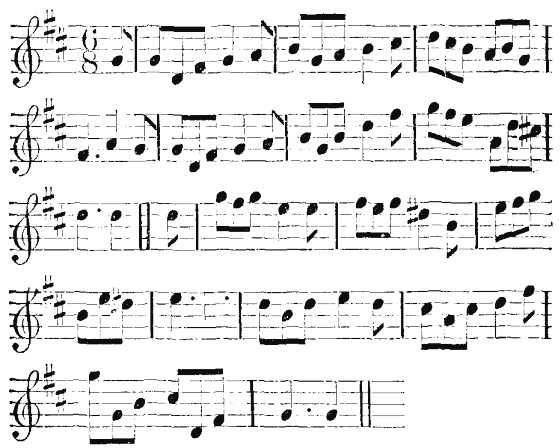
SINCE Tom's in the Chair, and e'ery one here Appears in Gay humour and easie; Say, why shou'd not I, a new Ballad try, Bright Brethren o'th' Bottle to please ye. This Wine is my Theme, this is all on's Esteem, For Brook and Hellier cannot wrong us; Let them get Wealth, who keeps us in Health, By bringing neat Liquors among us, Let them get Wealth, &c. Each Vintner of late, has got an Estate, By Brewing and Sophistication: With Syder and Sloes, they've made a damn'd Dose, Has Poisoned one half of the Nation: But Hellier and Brook, a Method have took, To prove them all Scoundrels and Noddys; And shew'd us a way which (if we don't stray) Will save both our Pockets and Bodies. This generous Juice, brisk Blood will produce, And stupid ones raise to the bonny'st: Make Poets and Wits, of you that are Cits, And Lawyers (if possible) honest: If any are Sick, or find themselves Weak, With Symptoms of Gout or the Scurvy; This will alone, the Doctor must own, Probatum est Healthy preserve ye. Have any here Wives, that lead 'em sad lives, For you know what pouting and storming; Then drink of this Wine, and it will incline, The weakest to vig'rous performing: Each Spouse will say then, pray go there agen, Tho' Money for the reck'ning you borrow; Nay, for so much Bub, here I'll pay your Club, So go there agen Dear to morrow. Tho' one drinks red Port, another's not for't, But chuses Vienna or White-Wine; Each takes what suits best, his Stomach or Tast, Yet e'ery one's sure he drinks right Wine; Thus pledg'd we all sit, and thus we are knit, In Friendship together the longer; As Musick in Parts, enlivens our Hearts, And renders the Harmony stronger. Now God bless the Queen, Peers, Parliament Men, And keep 'em like us in true Concord; And grant that all those, who dare be her Foes, At Tyburn may swing in a strong Cord; We'll Loyalists be, and bravely agree, With Lives and Estates to defend Her; So then she'll not care, come Peace or come War, For Lewis, the Pope, or Pretender.
The London PRENTICE.
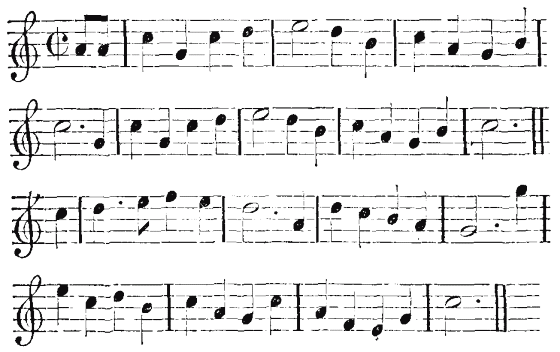
A Worthy London Prentice, Came to his Love by Night; The Candles were lighted, The Moon did shine so bright: He knocked at the Door, To ease him of his Pain; She rose and let him in Love, And went to Bed again. He went into the Chamber, Where his true Love did lye; She quickly gave consent, For to have his Company: She quickly gave consent, The Neighbours peeping out; So take away your Hand, Love let's blow the Candle out. I would not for a Crown Love, My Mistress should it know; I'll in my Smock step down Love, And I'll out the Candle blow; The Streets they are so nigh, And the People walk about; Some may peep in and spy Love, Let's blow the Candle out. My Master and my Mistress, Upon the Bed do lye; Injoying one another, Why should not you and I: My Master kiss'd my Mistress, Without any fear or doubt; And we'll kiss one another, Let's blow the Candle out. I prithee speak more softly, Of what we have to do; Least that our noise of Talking, Should make our Pleasure rue: For kissing one another, Will make no evil rout; Then let us now be silent, And blow the Candle out. But yet he must be doing, He could no longer stay; She strove to blow the Candle out, And push'd his Hand away: The young Man was so hasty, To lay his Arms about; But she cryed I pray Love, Let's blow the Candle out. As this young Couple sported, The Maiden she did blow; But how the Candle went out, Alas I do not know: Said she I fear not now, Sir, My Master nor my Dame; And what this Couple did, Sir, Alas I dare not Name.
A Song out of the GUARDIAN.
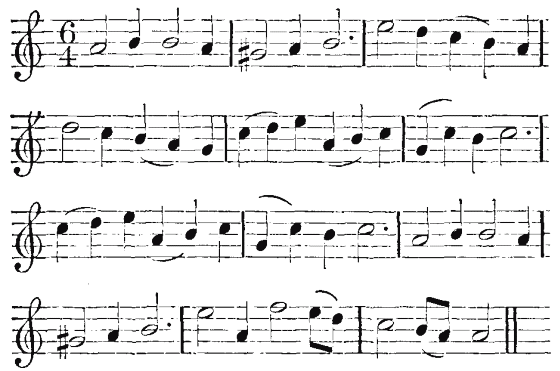
OH the Charming Month of May, When the Breezes fan the Trees, is Full of Blossoms fresh and gay, Full of Blossoms fresh and gay: Oh the Charming Month of May, Charming, Charming Month of May. Oh what Joys our Prospect yields, In a new Livery when we see every, Bush and Meadow, Tree and Field, &c. Oh what Joys, &c. Charming Joys, &c. Oh how fresh the Morning Air, When the Zephirs and the Hephirs, Their Odoriferous Breaths compare, Oh how fresh, &c. Charming fresh, &c. Oh how fine our Evenings walk, When the Nightingale delighting, With her Songs suspends our Talk, Oh how fine, &c. Charming fine, &c. Oh how sweet at Night to Dream, On mossy Pillows by the trillows, Of a gentle Purling Stream, Oh how sweet, &c. Charming sweet, &c. Oh how kind the Country Lass, Who her Cows bilking, leaves her Milking, For a green Gown upon the Grass, Oh how kind, &c. Charming kind, &c. Oh how sweet it is to spy, At the Conclusion, her deep confusion, Blushing Cheeks and down cast Eye, Oh how sweet, &c. Charming sweet, &c. Oh the Charming Curds and Cream, When all is over she gives her Lover, Who on her Skimming-dish carves her Name, Oh the Charming Curds and Cream, Charming, Charming Curds and Cream.

Tune, Hopes farewel.
FATES I defie, I defie your Advances, Since Cælia has crown'd My true Love with a Smile; I'll laugh at your Darts, Your Arrows and Lances, Since her Bosom abounds, With the Pleasures of Nile. You shall never, Me from her sever, Since that my Cælia has thrown by her Scorn: Then forbear, To come so near, For I from Cælia can never be torn.
The Country Farmer's Campaign: By the Author of Banter'd and Bubbl'd, &c.
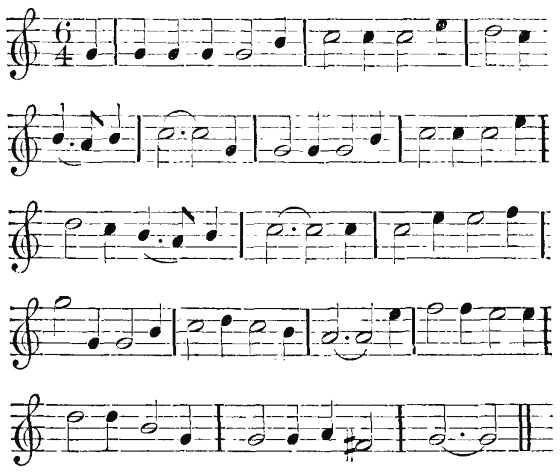
OH Roger I've been to see Eugene, By Villars over-reach'd; And that Dutch Earl, great Albermarle, So foolishly Detach'd: For Phil of Spain, saw Doway tain, And Quesnoy close beset; Saw Frenchmen grin, at Count Rechstrin, And Dutchmen in a Sweat. With both my Eyes Auxiliaries, I saw desert our Cause; Old Zinzendorf did buy 'em off, But never stopp'd their Maws: Whilst ORMOND he most orderly, Did march them towards Ghent; The German Dogs, with great Dutch Hogs, Their towns against him Pent. Were not we mad to spend our Blood, And weighty Treasure so; Do they deserve, that we should serve, Adad we'll make them know: They'll be afraid, of Peace and Trade, And downfal of the Whigs; Our glorious ANN, with France and Spain, Will dance then many a Jigg. If they have a mind, 'fore Peace be Sign'd, To own Great ANNA'S Power; Such Terms she'll get, as she thinks fit, And they shall have no more: Great Oxford's Earl, that weighty Pearl, And Minister of State: With Bollingbrook, I swear adzooks, Old England will be great. We Farmers then, shall be fine Men, And Money have good store; Their Whigish Tax they'll have with a Pox, When Monarchy's no more: My Son I'm sure, will ne'er endure, To pay their plaguy Funds; 'Tis with reproach, they ride in Coach, It makes me mad Ads— For twenty Years, with Popish fears, We have been Banter'd much; With Liberty, and Property, And our very good Friends the Dutch: But now I hope, our Eyes are ope, And France is more Sincere; Then Emperor with all his stir, Or Dounders Divil myn Heir.
STRAWBERY.
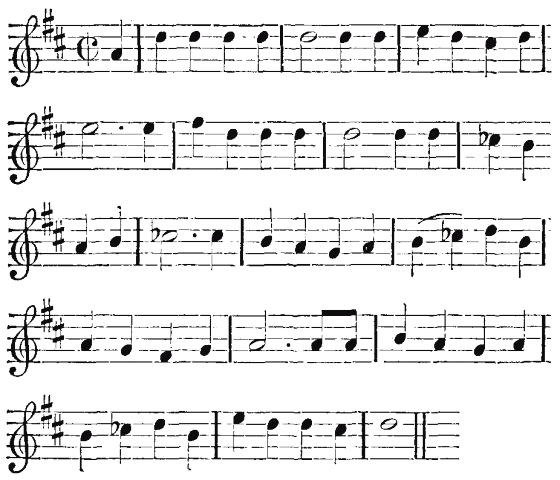
OF all the handsome Ladies, Of whom the Town do talk; Who do frequent the Opera's, And in the Park do walk: The many lovely Beauties, There are who do excel; Yet my Strawbery, my Strawbery, Does bear away the Bell. Some cry up Madam Mar—— For this thing and for that; And some her Grace of Sh—— Tho' she grows something fat: And tho' I love her Ma—— And all her Ladies well, Yet my Strawbery, &c. The Kit Cat and the Toasters, Did never care a Fig; For any other Beauty, Besides the little Whig: But for all that Sir Harry, That witty Knight can tell, 'Tis my Strawbery, &c. The red Coats think the Ch——ls, The Fairest in the Land; Because the D. their Father, The Ar——y does Command: But the noble D. of B—— Who does all Dukes excel, Says my Strawbery, &c.

Tune, Now the Fight's done.
NOW, now the Night's come, And the great God of Love Lyes lurking in Shades, His bright Arrows to prove: He laughs at our Rest, And he Darts at our Hearts; And a Will that won't still, To each Lover imparts. He smiles when he feels The sharp point of his Dart; And tho' our Breast's Steel, Yet he drives to the Heart. Whilst we court and we play, He makes a full pass; And ne'er does delay, 'Till we're link'd on the Grass.
The Scotch Wedding: Or, Lass with the Golden Hair.
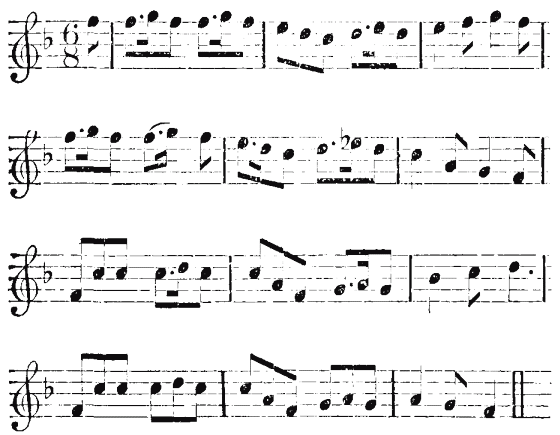
NOW Jockey and Moggy are ready, To gang to the Kirk to sped; As fine as a Laird or Lady, For they are resolv'd to wed: Come aw let's awa to the Wedding, For there will be Lilting there; Jockey'll be Married to Moggy, The Lass with the Golden Hair, And for a whole Month together, Brisk Jockey a wooing went; 'Till Moggy's Mother and Vather, At last gave their Consent, Come aw let's, &c. And there'll be long Keel and Pottage, And bannarks of Barly Meal; And ther'll be good Sawt Herring, To relish a Cogue of good Ale, Come aw let's, &c. And there'll be Sawney the Soater, And Will with muckle mow; And there'll be Tommy the Blutter, And Andrew the Tinker I trow, Come aw let's, &c. And there'll be Bow-legg'd Bobby, And thumbless Kate's geud Man; And there'll be blue cheek'd Dolly, And Luwry the Laird of the Land, Come aw let's, &c. And there'll be low lipper Betty, And pluggy fac'd Wat of the Mill; And there'll be farnicled Huggy, That wins at the Ho of the Hill, Come aw let's, &c. And there'll be Annester Dowgale, That splay footed Betty did wooe; And mincing Bessey and Tibely, And Chrisly, the Belly gut Sow, Come aw let's, &c. And Craney that marry'd Steney, That lost him his Brick till his Arse; And after was hang'd for stealing, It's well that it happen'd no worse, Come aw let's, &c. And there'll be hopper-ars'd Nancy, And Sarey fac'd Jenny by Name; Glud Kate and fat legg'd Lissey, The Lass with the codling Wem. Come aw let's, &c. And there'll be Jenny go Gibby, And his glack'd Wife Jenny Bell; And messed skin blosen Jordy, The Lad that went Scipper himsel. Come aw let's, &c. There'll be all the Lads and Lasses, Set down in the middle of the Hall; To Sybouse, and Rastack, and Carlings, They are both sodden and raw. Come aw let's, &c. There'll be Tart Perry and Catham, And Fish of geud Gabback and Skate; Prosody, and Dramuck and Brandy, And Collard, Neats-feet in a Plate. Come aw let's, &c. And there'll be Meal, Kell and Castocks, And skink to sup 'till you rive; And Roaches to roast on the Gridiron, And Flukes that were tane alive, Come aw let's, &c. Cropt head Wilks and Pangles, And a Meal of good sweting to ney; And when you're all burst with eating, We'll rise up and Dance 'till we dey: Come aw let's awaw to the Wedding, For there will be Lilting there; Jockey'll be marry'd to Moggy, The Lass with the Golden Hair.

The Mistresses: A Song Set by Mr. James Townsend, the Words by Mr. Rolfe.
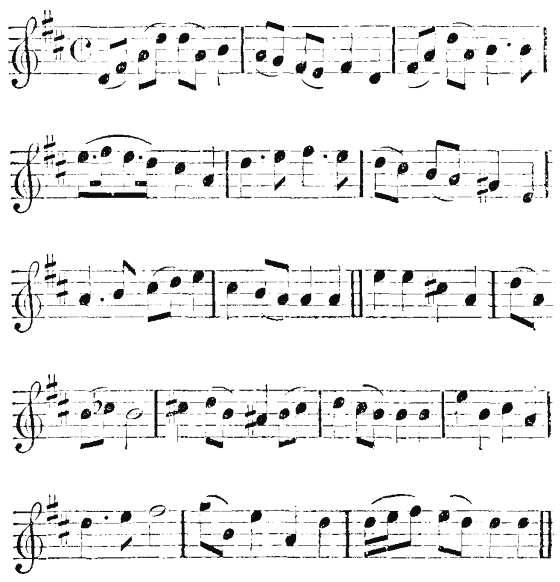
LAVIA would, but dare not venture, Fear so much o'er-rules her Passion; Chloe suffers all to enter, Subjects Fame to Inclination: Neither's Method I admire, Either is in Love displeasing; Chloe's fondness gluts desire Lavia's Cowardise is Teazing. Cælia by a Wiser Measure, In one faithful Swains embraces; Pays a private Debt to Pleasure, Yet for Chast in publick Passes: Fair ones follow Cælia's Notion, Free from fear and censure wholly; Love, but let it be with Caution, For Extreams are Shame or Folly.

A Song. Set by an Eminent Master.
WHEN embracing my Friends, And quaffing Champain; Dull Phlegmatick Spleen, Thou assault'st me in vain; Dull Phlegmatick Spleen, Thou assault'st me in vain: My Pleasures flow pure, Without Taint or Allay; And each Glass that I drink, Inspires with new Joy. My Pleasures thus heighten'd, No Improvement receive; But what the dear Sight Of my Phillis can give: The Charms of her Eyes, The Force of my Wine, Do then in Harmonious Confed'racy joyn: To wrap me with Joys, To wrap me with Joys, Seraphick, Seraphick, and Divine.
A TENEMENT to Let.
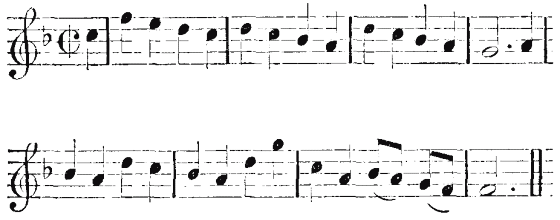
I Have a Tenement to Let, I hope will please you all, And if you'd know the Name of it, 'Tis called Cunny Hall. It's seated in a Pleasant Vale, Beneath a rising Hill; This Tenement is to be Let, To whosoe'er I will. For Years, for Months, for Weeks or Days, I'll let this famous Bow'r; Nay rather than a Tennant want, I'd let it for an Hour. There's round about a pleasant Grove, To shade it from the Sun; And underneath is Well water That pleasantly does run. Where if you're hot you may be cool'd, If cold you may find heat; It is a well contrived Spring, Not little nor too great. The place is very Dark by Night, And so it is by Day; But when you once are enter'd in, You cannot lose your way. And when you're in, go boldly on, As far as e'er you can; And if you reach to the House top, You'll be where ne'er was Man.

Tune, Draw Cupid Draw.
HERE, Chloe hear, And do not turn away, From my Desire, but quench my Fire. And my Love's flames allay: And let my Song go along, Unto Compassion move; And make you kind, And bend your mind, And melt you into Love. If Chloe Loves, and Constant proves, Oh! happy, happy then am I; But if that she unconstant be, And do's delight to rove: As sure as Gun, I am undone, And shan't have power to move.

Fashionable Shepherdess, Set by Mr. Ramondon.
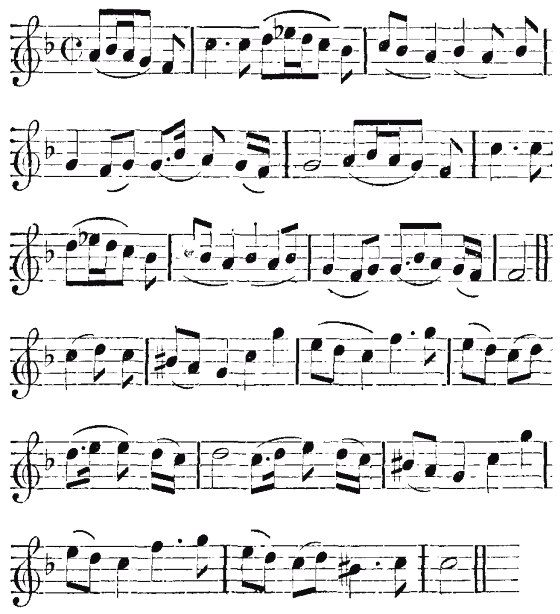
AT the break of morning light, When the marbled Sky look gay; Nature self all perfect bright, Smil'd to see the God of Day: Charming prospect, verdant Trees, Azure Hill, enamell'd Sky; Birds with warbling Throats to please, Striving each which shall outvey. Lisbea then with wond'rous hast, O'er a green sword Plain she flew; Thus my Angel as she past, The Eyes of ev'ry Shepherd drew: When they had the Nymph espyed, All amazed cry'd there she goes; Thus by blooming Beauty tryed, Thought a second Sun arose. Ev'ry Swain the Sun mistook. Dazled by refulgent Charms; And with Joy their Flocks forsook, For to follow Love's Alarms: All 'till now were perfect Friends, Bound by Innocence and Truth; 'Till sly Love to gain his ends, Made a difference 'twixt each Youth. Each expected which should be, Made the happy Man by Love; While for want of Liberty, None could truly happy prove: But at length they all arriv'd, To a charming easie Grove; Where the Nymph had well contriv'd, To be happy with her Love. There in amorous folding twin'd, Strephon with his Lisbea lay; Both to mutual Joys enclin'd, Let their Inclinations stray: As the curling Vines embracing, Fondly of the Oak around; So the blooming Nymphs caressing, Of her Swain with pleasure crown'd. How surpriz'd were ev'ry Swain, When they found the Nymph engaged; Disappointment heighten'd Pain, 'Till it made them more enraged: Arm your self with Resolution, Cry'd the most revengeful he; We'll contrive her Swains Confusion, Let him fall as much as we. Several Punishments they Invented, For to Torture helpless he; All revengeful, ne'er contented, Cruel to a vast Degree: One more envious in the rear, Thus his Sentiments let slip; Make him like the Cavalier, And for the Opera him Equip.

A Scotch Song in the Play call'd Love at first Sight: Set by the late Mr. Jer. Clark.
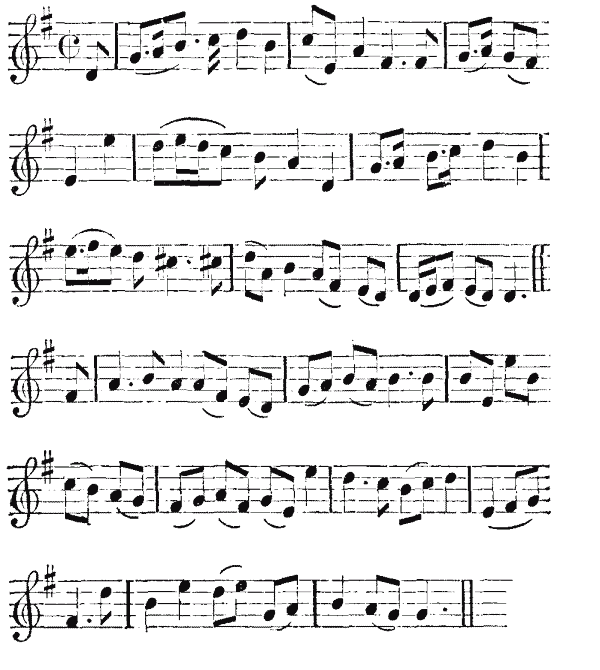
THE Rosey Morn lukes blith and Gay, The Lads and Lasses on the Plain; Her bonny, bonny sports pass o'er the Day, And leave poor Jenny tol complain: My Sawndy's grown a faithless Loon, And given, given Moggy that wild Heart; Which eance he swore was aw my own, But now weese me I've scarce a part. Gang thy gate then perjur'd Sawndy, Ise nea mere will Mon believe; Wou'd Ise nere had trusted any, They faw Thieves will aw deceive: But gin ere Ise get mere Lovers, Ise Dissemble as they do; For since Lads are grown like Rovers, Pray why may na Lasses too.

The Restauration: Or the Coventry Song.
1710.
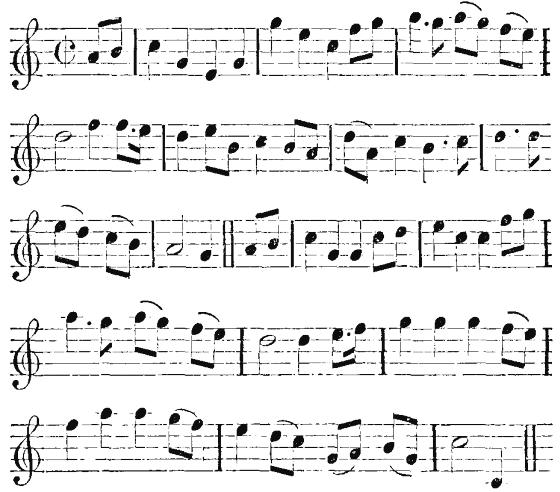
THE Restauration now's the Word, A blessed Revolution; That has secur'd the Church, the Crown, And England's Constitution: May ev'ry Loyal Soul rejoice, May Whigs and Canters mourn, Sir; Who ever thought that Coventry, Shou'd make a due Return, Sir. We Rally'd the Church-Militant, And fell to work ding-dong, Sir; Craven and Gery are the Names, That do adorn our Song, Sir: Beaufort, Ormond, Rochester, And more than we can tell, Sir; Are Themes that well deserve the Pen, Of brave Sacheverell, Sir. The glorious Sons of Warwickshire, May justly be commended; There's ne'er a Member now Elect, That ever has offended: Denbigh and Craven we esteem, A Loyal Noble pair, Sir; And hope to see our worthy Friend, Great Bromly in the Chair, Sir.

A Song.
SUCH an happy, happy Life, Ne'er had any other Wife; As the loose Corinna knows, Between her Spark, Her Spark and Spouse: The Husband lies and winks his Eyes, The valiant makes Addresses, The wanton Lady soon complies, With tenderest Caresses. The Wife is pleas'd, The Husband eas'd, The Lover made a drudge, His Body's drain'd, his Pocket's squeez'd; And who'll his Pleasure grudge, Such an happy, &c. Corinna's gay, As Flow'rs in May, And struts with slanting Ayre; The Lovers for her Pride doth pay, The Cuckold's free from Care, Such an happy, &c.
COLLIN's Complaint.
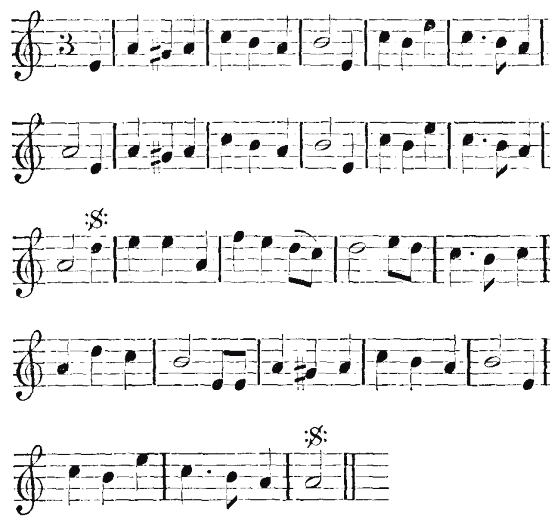
DESPAIRING besides a clear stream, A Shepherd forsaken was laid; And whilst a false Nymph was his Theme, A Willow supported his Head: The Winds that blew over the Plain, To his Sighs with a Sigh did reply; And the Brook in return of his Pain, Ran mournfully murmuring by. Alas silly Swain that I was, Thus sadly complaining he cry'd; When first I beheld that fair Face, 'Twere better by far I had dy'd: She talk'd, and I blest the dear Tongue, When she smil'd 'twas a Pleasure too great; I listned, and cry'd when she Sung, Was Nightingale ever so sweet. How foolish was I to believe, She cou'd doat on so lowly a Clown; Or that a fond Heart wou'd not grieve, To forsake the fine Folk of the Town: To think that a Beauty so gay, So kind and so constant wou'd prove; Or go clad like our Maidens in Gray, Or live in a Cottage on Love. What tho' I have skill to complain, Tho' the Muses my Temples have crown'd; What tho' when they hear my soft Strains, The Virgins sit weeping around: Ah Collin thy Hopes are in vain, Thy Pipe and thy Lawrel resign; Thy false one inclines to a Swain, Whose Musick is sweeter than thine. And you my Companions so dear, Who sorrow to see me betray'd; Whatever I suffer forbear, Forbear to accuse my false Maid, Tho' thro' the wide World we shou'd range, 'Tis in vain from our Fortunes to fly; 'Twas hers to be false and to change, 'Tis mine to be Constant and die. If whilst my hard Fate I sustain, In her Breast any Pity is found; Let her come with the Nymphs of the Plain, And see me laid low in the Ground; The last humble Boon that I crave, Is to shade me with Cypress and Yew; And when she looks down on my Grave, Let her own that her Shepherd was true. Then to her new Love let her go, And deck her in Golden Array; Be finest at every fine Show, And Frolick it all the long Day: Whilst Collin forgotten and gone, No more shall be talk'd of or seen; Unless that beneath the Pale Moon, His Ghost shall glide over the Green.

The Constant Warrior: Set by Mr. Ramondon.
FAREWEL Chloe, O farewel, I'll repair to Wars alarms; And in foreign Nations tell, Of your Cruelty and Charms: Come ye briny Billows rowl, And convey me from my Soul, Come ye briny Billows rowl, And convey me from my Soul: Since the cruel Fair, The cause of my Despair, Has forc'd me hence to go, Where stormy Winds do blow; Where raging Seas do toss and mount, With dangers that I can't recount, Forgive me showing thus my Woe; Where raging Seas do toss, &c. When you hear of Deeds in War, Acted by your faithful Swain; Think, oh think, that from afar, 'Twas you conquer'd all were slain: For by calling on your Name, I Conquer'd whereso'er I came; Shou'd my Fate not be, To keep my Body free, From Wounds and Bruises too, Whilst Honour I pursue; 'Twou'd raise my Reputation, My Pain I'd lose in Passion, And glory that 'twas done for you. Shou'd grim Death once assail me, It cou'd never fright your Slave, Fortune self cou'd never fail me, Only you can make my Grave: My Destiny shou'd grant reprieve, I cou'd not Die, if you said live: Were it to be found, In all the World around, An instance of such Love, As you in me may prove: I'd never ask return, But patiently wou'd burn, Nor more your generous pity move. O my guardian Angel say, Can such proofs your Passion gain; If it can I'll bless the Day, That I venture on the Main: Then with Joy cry Billows rowl, And convey me to my Soul: Return with glory Crown'd, Upon the lowly Ground, Kneel at your Feet a while, And there my Fears beguile: And think my Toyl repaid, If you'd vouchsafe dear Maid, To crown my Labours with a Smile.

The true Use of the BOTTLE.
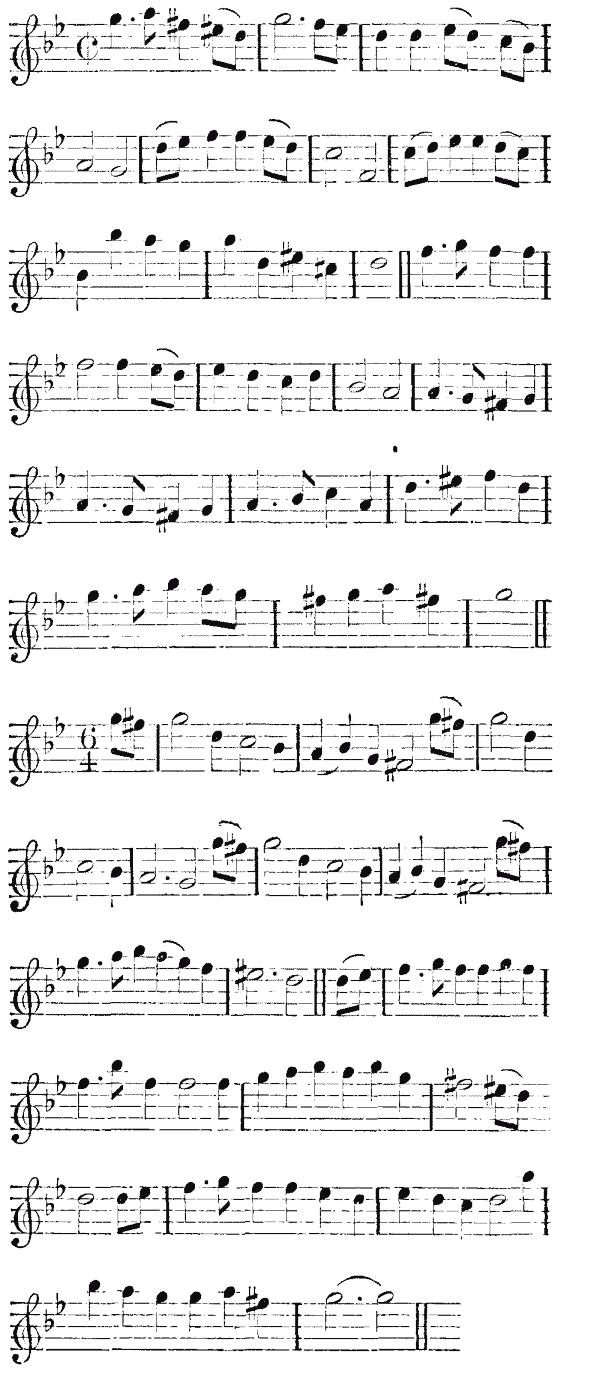
LOVE, the sweets of Love, are the Joys I most admire, Kind and active Fire, Of a fierce Desire, Indulge my Soul, compleat my Bliss; But th' affected coldness Of Cælia damps my boldness, I must bow, protest and Vow, And swear aloud, I wou'd be Proud, When she with equal Ardour longs to Kiss: Bring a Bowl, then bring a Jolly Bowl, I'll quench fond Love within it; With flowing Cups I'll raise my Soul, And here's to the happy Minute: For flush'd with brisk Wine, When she's panting and warm; And Nature unguarded lets loose her Mind, In the Amorous moment the Gipsie I'll find, Oblige her and take her by Storm.
A Song in the Farce call'd the Younger the Wiser: Set by Mr. Daniel Purcell. Sung by Mr. Leveridge.
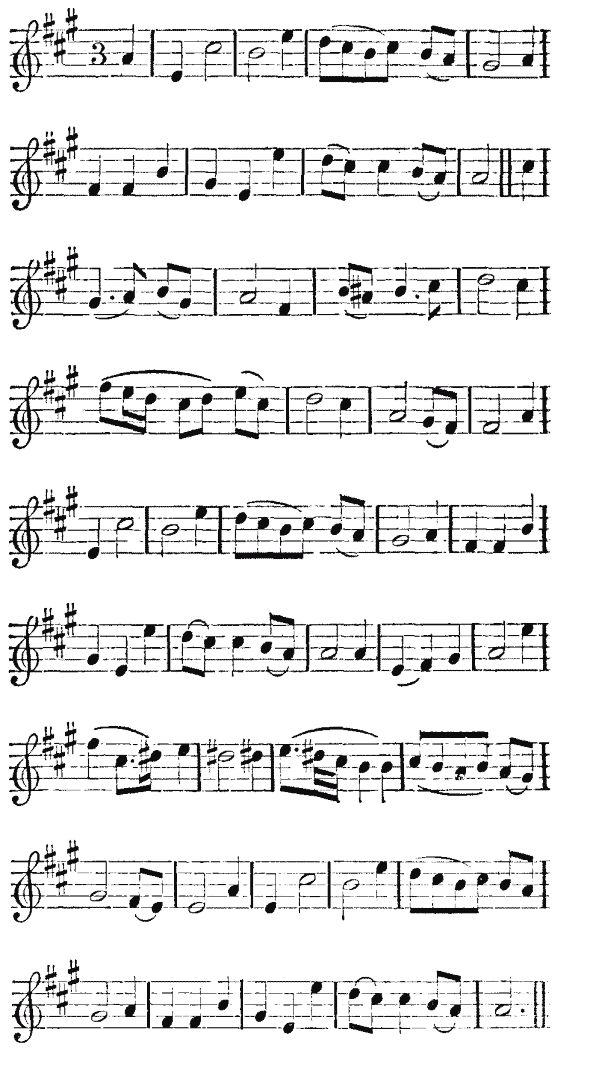
HOW happy's he who weds a Wife, Well practis'd, well practis'd in the London Life; Dull Country Brides a Sense may want, To hide the Favours which they grant. How happy's he who weds a Wife, We'll practis'd, well practis'd in the London Life; But London Wives Coquet by Rule, Discreetly please the Men they Fool. How happy's he who weds a Wife, Well practis'd, well practis'd in the London Life.

A Song. Set by Mr. Ramondon. Sung at the Theatre.
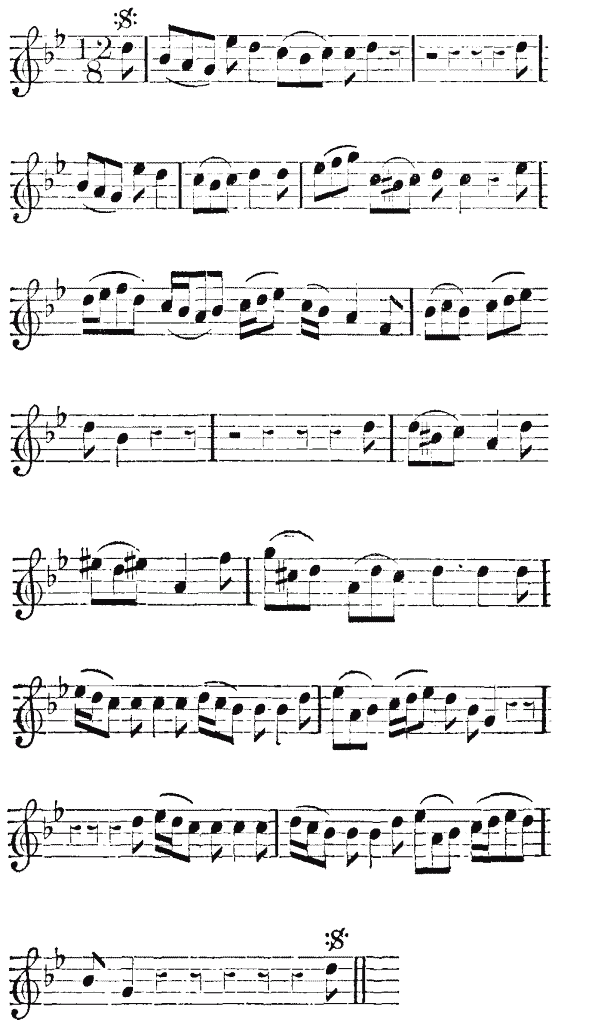
HOW Charming Phillis is, how Fair, How Charming Phillis is, how Fair, O that she were as willing, To ease my wounded Heart of Care, And make her Eyes less killing: To ease my wounded Heart of Care, And make her Eyes less killing, To ease my wounded Heart of Care, And make her Eyes less killing, To ease my wounded Heart of Care, And make her Eyes less killing: I sigh, I sigh, I languish now, And Love will not let me rest; I drive about the Park and Bow, Where'er I meet my Dearest.

A Song. Set by Mr. Berenclow.
WHY will Clemene, when I gaze, My ravish'd Eyes reprove; And chide 'em from the only Face, That they were made to Love: Was not I born to wear your Chain, I should delight to rove; From your cold Province of Disdain, To some warm Land of Love. But shou'd a gentle Nymph when try'd, To me prove well inclin'd; My destin'd Heart must yet reside, With you the most unkind; So destin'd Exiles as they roam, While kindly us'd elsewhere; Still languish after Native home, Tho' Death, Death is threatned there.
FINIS.
Transcriber's Note The Title Page is from the original 1720 printing, by Thomas D'Urfey (1653-1723), found at: http://www . archive.org/details/songscompleatple06durfuoft. (View Title Page of Vol. I) There are around 200 songs in this book. To avoid confusion, the page numbers have been used to identify the songs, and the various accompanying files: Sibelius Scorch (two files each: .htm and .sib) Midi file (.mid) PDF file (.pdf) The Alphabetical Table of Songs gave the page numbers for the lyrics. Page numbers for the music scores have been added, for clarification, as often the two are different. Also some songs use the music of other songs in the book, and these page numbers have been given. Some songs do not have music, and some have tunes which are not in this book. There are numerous apparent errors in the original printed music: missing notes, incorrect note and rest lengths, incorrect accidentals (naturals were not used; a sharp corrected a flat, and a flat corrected a sharp), which have been retained in the images, but have been corrected in the Scorch (Sibelius) web pages, and in the pdf and midi files. The excess accidentals have mostly been retained. The original Time Signatures have been retained in the Scorch web pages and in the pdf files. A couple of tunes are in Common Time (C). A lot are in "Cut-Common" Time (C with a vertical line cutting it: roughly twice as fast as Common Time); and a few have an inverted "Cut-Common" signature: twice as fast as "Cut-Common time. Sibelius has a Prolation symbol for this purpose. Some Time signatures are simply 2, or 3. The Signature 3 usually indicates a faster time than "Cut-Common", especially in the same song. [Note (from Wikipedia): Prolation is a term used in the theory of medieval music to describe its rhythmic structure on a small scale. The term is derived from the Latin prolatio, first used by Philippe de Vitry in describing Ars Nova, a musical style that came about in 14th-century France. Prolation, together with tempus, corresponds roughly to the concept of time signature in modern music. Prolation describes whether a semibreve (whole note) is equal in length to two minims (half notes) (minor prolation or imperfect prolation) or three minims (major prolation or perfect prolation). Early medieval music was often structured in subdivisions of three, while the note values in modern music are unambiguously subdivided into two parts, meaning that only minor prolation has survived in our time signature system. We now indicate subdivisions of three by modifying note values with dots or triplets. The history of written medieval music shows a gradual shift from major to minor prolation being common.] Some readers would still remember the old style of crotchet (quarter note) rest, which was used in this book. Here is an example in compound duple time (2 dotted crotchets or 6 quavers (eighth notes) to the bar). The first image is from the original 1720 book, showing old-style crotchet (quarter note) rests. Note that the minim (half note) rest is used as a half-bar rest. The second image is as we would see it printed nearly 300 years later, using the modern crotchet rest, and a dotted crotchet rest as the half-bar rest. The bass, or F clef on page 282 is a little different from our modern F clef, but still recognisable as an F clef. There are many instances of anacruses where the last bar has not been shortened by the length of the anacrusis bar. These have not been corrected, as it would seem to have been a convention at the time. The lyrics have been added to most of the songs in the .sib and .pdf versions, where the words could reasonably fit the music. This is a 'best guess' interpretation. There may be other interpretations; some interpretation was apparently left to the singer's discretion. The playable Sibelius Scorch version has been provided as a guide only; it has been furnished with hidden instructions (speeds, repeats, etc.) to allow a comfortable rendition, and is not necessarily historically accurate. (The transcriber is not a musicologist). Speeds may be slowed down or speeded up, using the pointer in the Scorch interface. The Scorch file may be started by clicking the Start button (arrow) or by clicking the first note, or any other note to start in a different place. Stop the Scorch file with the [Esc] button, or by clicking the Stop (black square) button. The midi files should start playing automatically after the link is clicked. Repeated passsages are indicated in the original by the 'signe' (%). The repeat was from the 'signe' to the next double barline. In the absense of a convenient double barline, a second (end) 'signe' was included. The book is not always gramatically correct, e.g.: "There was three Travellers". Odd spellings, and odd grammatical constructions, if they make sense, have been preserved. There is some dialect, which has also been preserved. (e.g.: "Wo'as me poor Lass! what mun I do?") Apostrophes of ownership are conspicuous by their absence. Spelling is sometimes quaint...'spight' for 'spite', 'dye' for 'die', 'chuse' for choose', 'seaze' for 'seize', 'quere' for 'queer', etc. Where a spelling makes sense, and is merely discretional and not obviously incorrect, it has been retained. 'Their' instead of 'there' has appeared twice (page 4 and page 201), retained, and 'Pharoah' (page 225), retained: it is a drinking song. pp. 245-246: 'Monsieur Grabeau' (twice) on page 245 becomes Monsieur Grabeu (four times) on page 246. [Note (from Wikipedia): Louis Grabu, Grabut, Grabue, or Grebus (fl. 1665-1690, died after 1693) was a Catalan-born, French-trained composer and violinist who was mainly active in England. While he was probably born in Catalonia - he was later referred to as 'Lodovicus Grabeu of Shalon in Catalunnia' - details of his early life are lacking. Sometime in his youth he moved to Paris, where he was most likely trained by Lully. At the time of the Restoration he went to England, where French music, especially opera, was much in vogue. Charles II of England appointed him as a composer for his own private music in 1665, and with the death of Nicholas Lanier in 1666 he became the second person to hold the title Master of the King's Musick. He adapted Robert Cambert's opera Ariadne for a London performance in 1674, and wrote music for John Dryden's Albion and Albanius in 1685. In 1693 he left England, the only land where he had achieved any kind of fame, and completely disappeared from historical record.] Consonants were not necessarily doubled where we would now expect. Standardised modern spelling is a fairly recent (mid 19th century) imposition, probably coinciding with the various Public Education Acts. Some spellings may be left over from Middle English, e.g. 'sily' from 'sely', dialect 'seely', from OE 'sælig' (luck, happiness); thus 'sily' (p. 58) may have meant 'lucky' or 'happy' instead of the modern 'silly'. Or 'sily' may be our modern 'silly', with an undoubled middle consonant. Damaged or missing punctuation has been repaired and sundry indents have been adjusted for consistency. Errata (Corrections are also indicated, in the text, by a dotted line underneath the correction. Scroll the mouse over the word and the original text will appear.) Page 96: 'VVidow' corrected to 'Widow'. (Possibly a printer's error....). ... "Which way to take the Widow Brown," Page 103: 'do' corrected to 'to': "They'll hourly study to deceive," Page 107: 'VVho' corrected to 'Who': "Who dare not their Grief declare," (... or maybe the printer was short of 'W's). Sundry other instances of 'VV' have been corrected to 'W'. Page 131: 'Ny' corrected to 'My': "My Nose takes the burthen...." Page 161: 'MORTAL's' corrected to 'MORTALs': "Mortals learn your Lives to measure," Page 238: 'maguanime' corrected to 'magnanime': "Sat notus pro magnanime" Page 312: missing 'I' added to last line to complete rhyme: "And Priest and Victim I." Page 316: 'I'ye' corrected to "I've": "I've lost a Harry Groat," [Note: Harry was King Henry; a groat was an old English silver coin, first coined by Henry III in 1249, and by Edward III in 1351. Originally worth one penny, it later rose to the value of fourpence. The groat was revived between 1836 and 1856, and withdrawn from circulation in 1887 (from Collins New Age Encyclopedia, 1963)]. Return to Top



