VIOLET FAMILY. VIOLACEÆ.
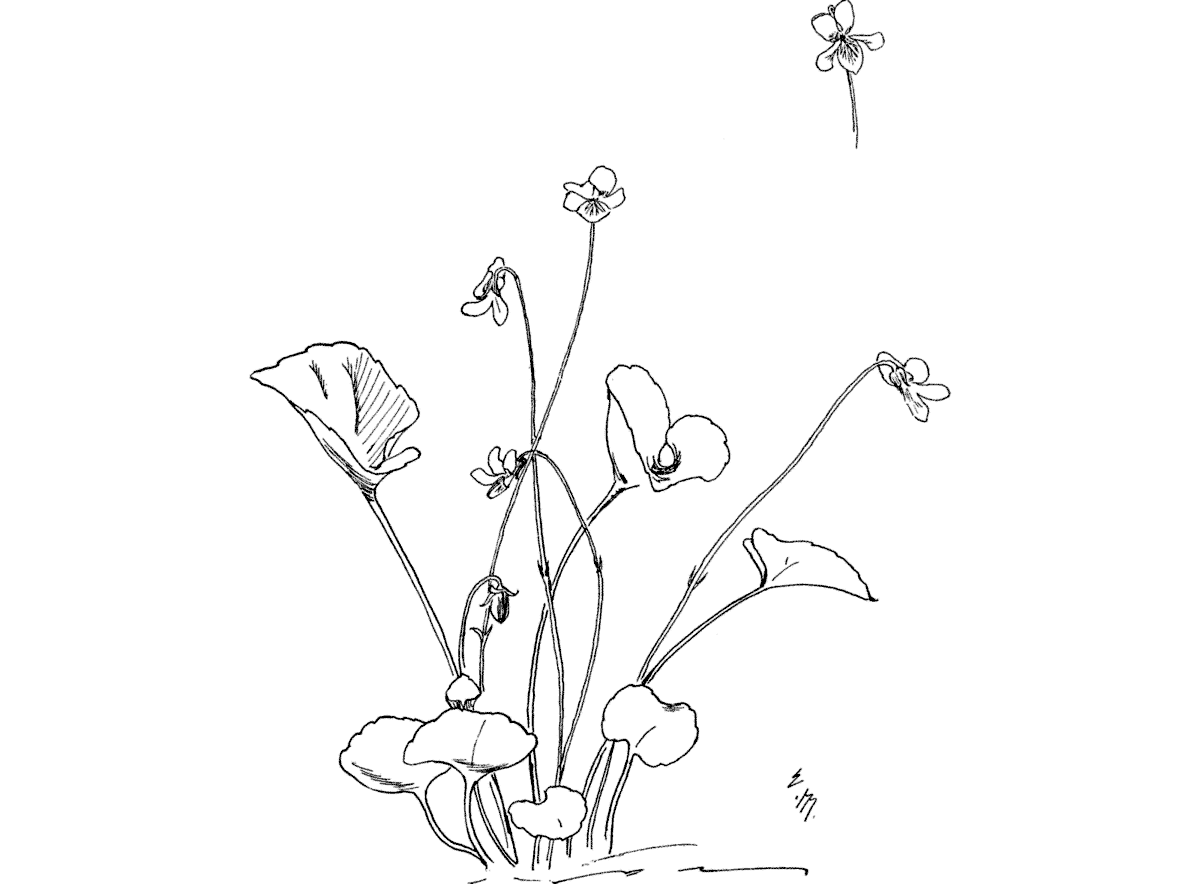
Reading edition
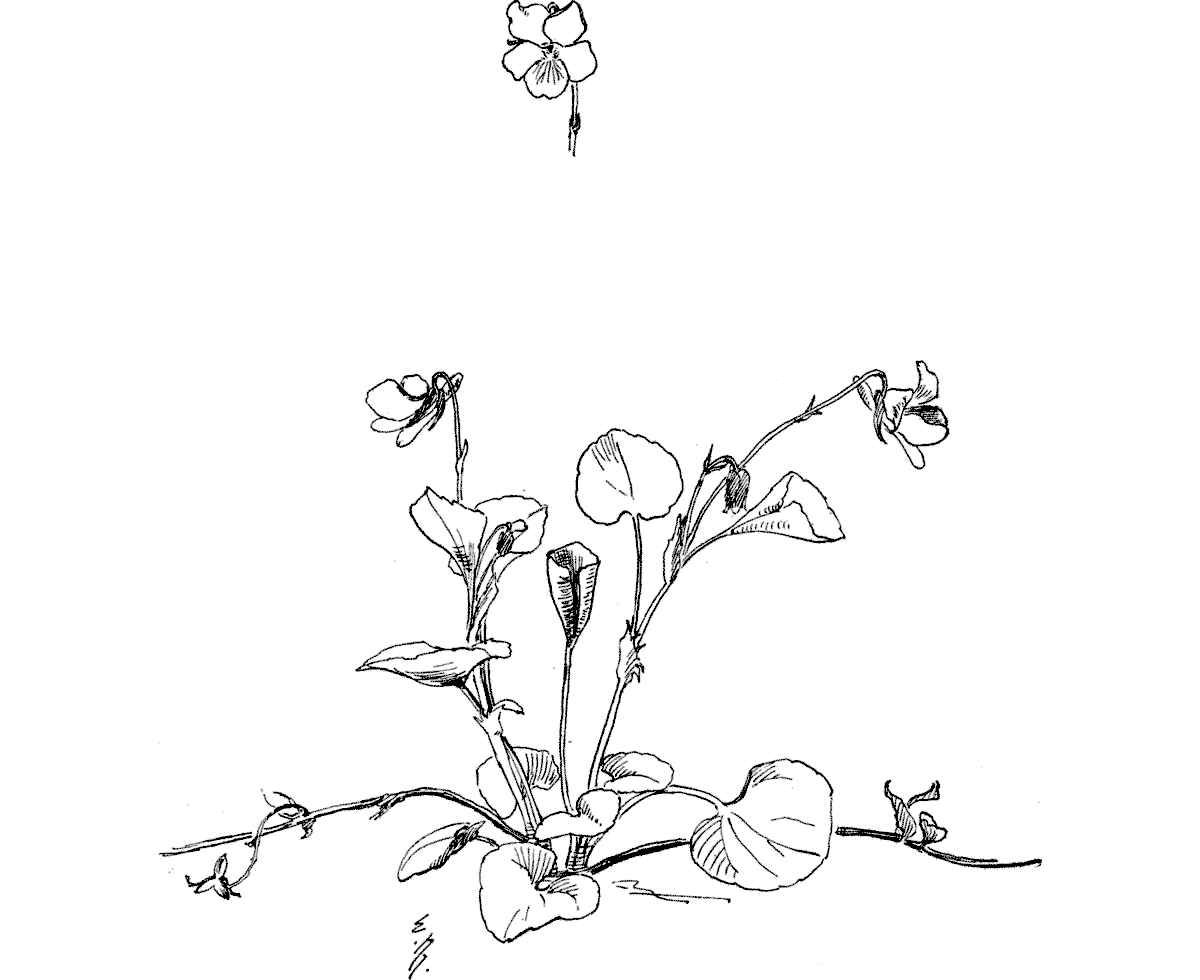
Sweet White Violet.Viola blanda.
Found in swamps, by roadside runnels, and in moist meadows, in April.
The leaves and flowers, on stems 4 or 5 inches in height, grow from the root.
The leaf is a round heart-shape, with a toothed margin, fine strong fibre, and smooth surface; in color, a light yellowish-green. The stem is slender.
The flower is small in all parts, the spur not conspicuous, the 5 petals much recurved and white, veined on the lower petal by reddish-violet hair-lines. It is set on a slender pale stem.
This is one of the earliest Violets, sweet-scented and graceful in growth.
SWEET WHITE VIOLET: Viola blanda.
Arrow-Leaved Violet.Viola sagittata.
Upland Violet.
Found in upland pastures in May.
The leaves and flowers, from the roots, are set on very short stems.
The leaf is arrow-shaped, with a blunt tip and slightly heart-shaped base; the margin is minutely notched, the upper surface, particularly, is softly downy, and the color is green, with a slight grayish bloom. The stem is flattened on its upper side and furnished with narrow margins.
The side-petals of the small flower are bearded, and the spur is small; the corolla is violet; the stem is hairy.
A small Violet, which grows close to the ground on high pastures, and puts forth few demands upon our attention.
ARROW-LEAVED VIOLET: V. sagittata.

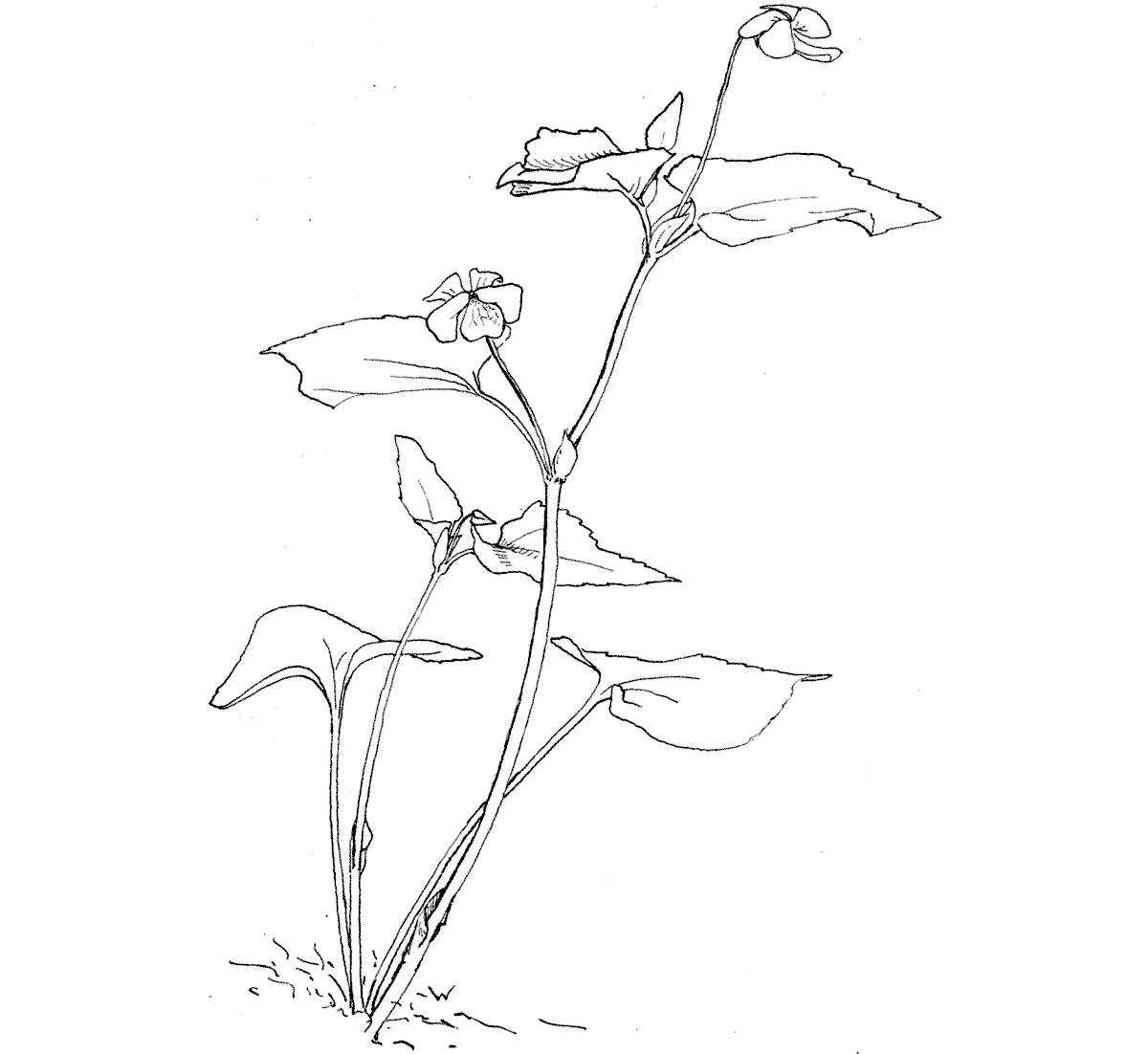
Downy Yellow Violet.Viola pubescens.
Found in woods and moist shade, in May.
The branching, leafy, slightly angular stalk is shining near the foot, but hairy above, and grows from 5 to 12 inches high. It is light green. Near the foot a small sheathing leaf may be observed.
The leaf is large, usually broader than it is long, and varying in form from a round-pointed to a sharp-pointed shape; its ribs show plainly underneath, its margin is slightly notched, and the surface is soft and downy to the touch; in color, a clear green, lighter underneath. The leaves, on their long, grooved stems, grow alternately, with a pair of up-pointing little wings at the joint.
The lower petal of the flower is scoop-shaped, shallow and short, and notched into two scallops at the tip, with a very short spur; the 4 other petals are rounding and nearly equal in size. In color, a pure golden-yellow, with many dark markings on the lower petal, and fainter lines on the others. The single flowers grow on slender stems from the angles of the leaves.
The branches are wide-spreading, and the flower-stem springs away from the leaves with a decided gesture, nor does the Yellow Violet bend its head; the leaves are generally flat in manner of growth save for the little scoop at the stem. A few separate leaves on independent stems rise about the foot of the flowering stalk. This plant bears a profusion of blossoms, and continues to flower for a considerable time.
DOWNY YELLOW VIOLET: V. pubescens.
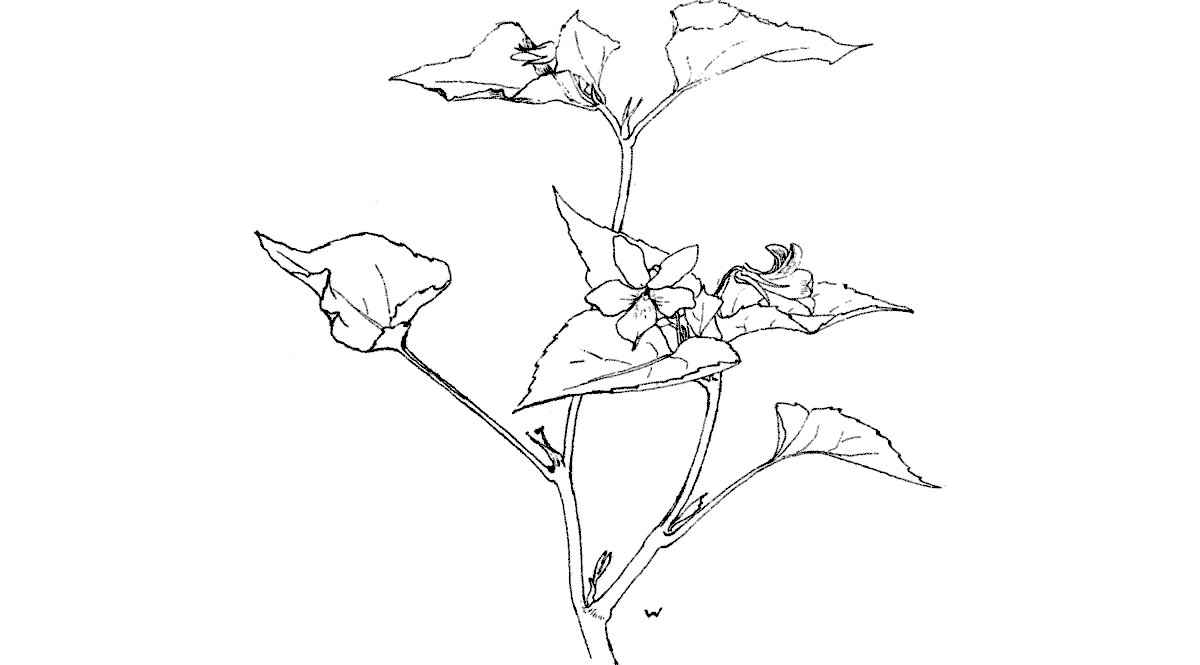
Canada Violet.Viola Canadensis.
Found in May, and again less profusely in August, in forests and woodlands to the north, or in high regions.
The branching, leafy stalk varies from 6 inches to 2 feet in height; it is smooth to the touch. Light green in color.
The heart-shaped leaf with its tapering point has a strong midrib, a slightly notched and wavy margin, and a thin, firm texture; it is a clear green color. The leaves, on stems, grow alternately, with a pair of little wings at the stalk; they are gathered close at the ends of the branches.
The small flower has an inconspicuous spur, its lower broadest petal is pinched sharply together in the middle at the edge, the other 4 petals are all long oval, the side petals are bearded and flaring, while the upper two turn back. The texture of the petals is fine and thin. This is a two-colored flower—the face of the corolla is white, while the outside is lavender or dark rich violet; the heart of the blossom is yellow-tinged, and its markings are in bluish-lavender lines. The 5-parted green calyx is possessed of a violet lining which it displays to the world by daintily turning back its uppermost tip. The flowers, on stems, spring from the angles of the leaves.
Sometimes the lavender facing of the petals is betrayed by a faint tinge of the color showing through their thin texture. This is an odorous Violet, and particularly pretty, with a kindly habit of blossoming a second time in the late summer,—a not uncommon custom in the family, but followed by no other member with such regularity and generosity of bloom.
CANADA VIOLET: V. Canadensis.
Running Violet.Viola canina, var. Muhlenbergii.
Dog Violet.
Found in May and June in light woods and along shady roads.
The small, round, leafy stems, from 3 to 7 inches high, are at first upright, but later send out creeping branches; they are smooth, and pale green.
The small leaf is rounding, and heart-shaped at the base, sometimes slightly pointed at the tip; the margin is faintly notched, the surface smooth, and the color light yellowish-green. The leaves, on short stems, are arranged in pairs, with long-pointed wings at the joint.
The flower is small; its spur rather long, the two side-petals bearded, and the color of the corolla pale violet, running into white at the base of the petals, the lower one being marked with fine lines of dark Violet; the tips of the stamens are orange; the 5-parted calyx light green. The flowers are set on slender pale green stems, and rise from the angles of the leaves.
This charming and profusely flowering Violet is invidiously nicknamed “Dog” by the English, because it is scentless.
RUNNING VIOLET: V. canina, var. Muhlenbergii.
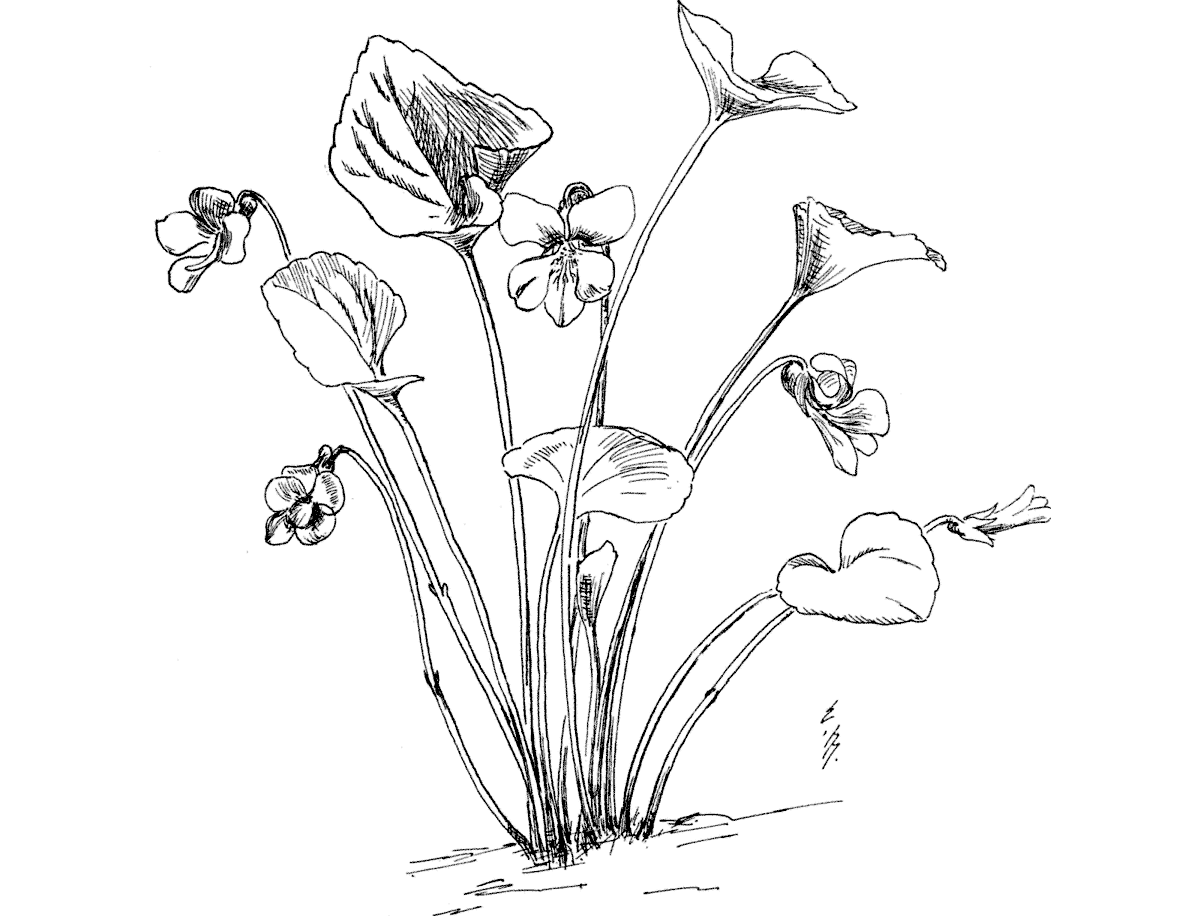
Common Blue Violet.Viola palmata, var. cucullata.
Meadow Violet.
Found in meadows and roadsides, among the grass everywhere, in May and June.
The leaf and flower stems vary in height from 3 to 6 or 7 inches.
The large heart-shaped leaf (1 or 2 inches wide at the base) is strongly ribbed, minutely hairy, and cut in rounded scallops along its margin; full green in color. The stem is half-round, and grooved on its flat side.
The 5 petals and the spur of the flower are variable in color from dark to light (rarely white), from blue- to red-violet; the bearded side-petals and the lower petal are white at the base. The flower-stem is long, slender and smooth.
“The flower-stems are the length of the leaf-stems usually, or a little shorter, and the blossoms appear in the midst of the rich green foliage. In the new growths the lower edges of the leaves at the base are rolled inwards.
“This violet was taken from N. America to England in 1762, and in some English botanies is called V. obliqua.”—Sir D. Wooster.
COMMON BLUE: V. palmata, var. cucullata.
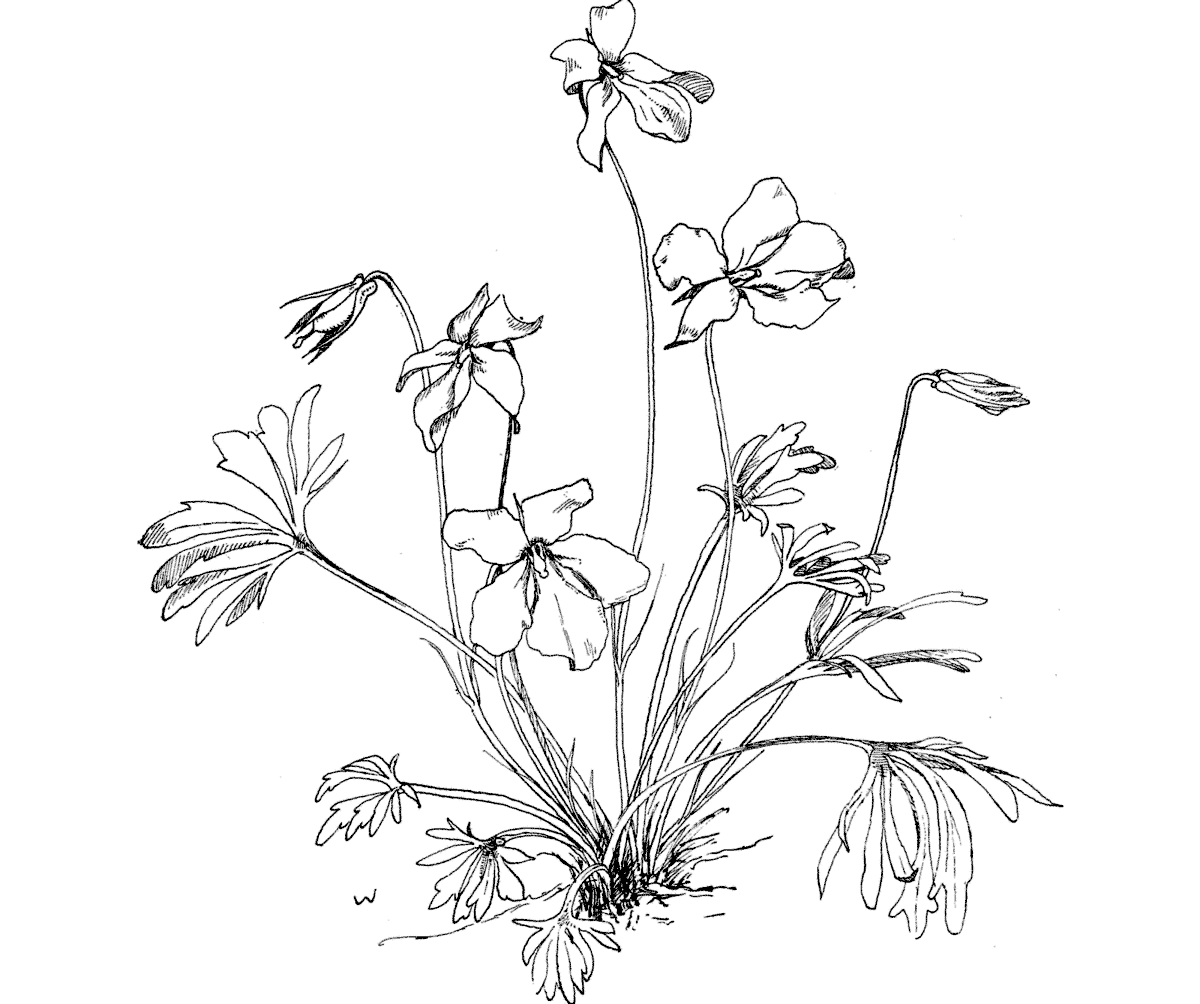
Sand Violet.Viola pedata.
Bird-Foot Violet.
Found in May (later than the Meadow Violet) on dry banks and gravelly soil.
The leaves and flowers rise from the root on slender stems.
The leaf is deeply divided into 3 or 5 narrow and long parts, which are sometimes again cleft into 2 or 3 segments; the middle parts are notched by 2 or 3 rounding scallops, the side parts being shorter, with taper-pointed tips; the ribs show obscurely, the texture is thickish, and the surface is dull above and shining underneath; the color is a dull green. The leaves, on half-rounding stems, that are a darker-hued green than the leaves, spread widely. The early spring leaves are less often divided.
This is the largest of the Violet flowers, with 5 flat petals, the upper ones curling backwards on the stem, and a small, very flat spur; the texture is fine and close, and the color varies from deep red-violet to pale lavender, with a dash of white at the base of the lower petals, just beneath the green-tipped pistil, and dry tawny-orange stamens; the 5-parted calyx is pale green. The flowers are set on large shining, smooth stems, which bear a little pair of wings near the ground.
The Bird-Foot Violet flower does not droop, or nod, but holds itself out at an angle almost parallel with the stem; its bud shows white, and generally the paler lavender tints prevail in the full-blown flowers. Many folk-names are given this plant, which grows in little clumps and sometimes thickly spreads all over a favorably located sand-barren,—it is often found in burnt-over fields, and stump-lots. Its flowering season is not so long as many others of its family and as observed, it seldom blooms again in the autumn.
SAND VIOLET: V. pedata.