Chapter VII · EXAMPLES OF WELLS EXECUTED, AND OF DISTRICTS SUPPLIED BY WELLS.
Reading edition
Permian Strata.
Durham.—Large quantities of water are pumped from the lower Permian sandstone beneath the magnesian limestone of this county, and are used for the supply of the towns of Sunderland, South Shields, Jarrow, and many villages. The quantity, calculated by Daglish and Foster to reach five millions of gallons a day, is obtained from an area of fifty square miles overlying the coal measures. The water-level has not been lowered in the rock by these operations. Along the coast it is that of mean tide, and inland rises to a level of 180 feet. In the coal measures below there is little water, and that little is saline. Sedgwick gives the strata as red gypseous marls, 100 feet; thin bedded grey limestone, 80 feet; red gypseous marls, slightly salt, 200 feet; magnesian limestone, 500 feet; marl slate, 60 feet; lower red sandstone, 200 feet.
Coventry.—Warwickshire. The town is supplied with 750,000 gallons of water a day from two bore-holes made in the bottom of the reservoir. The bore-holes are respectively 6 inches and 8 inches diameter, and 200 feet and 300 feet deep. The town is situated on the Permian formation, but Latham states that the supply is procured from the red sandstone, and, from observations made, it has been found that the two bore-holes yield water at the rate of 700 gallons a minute.
Trias Strata.
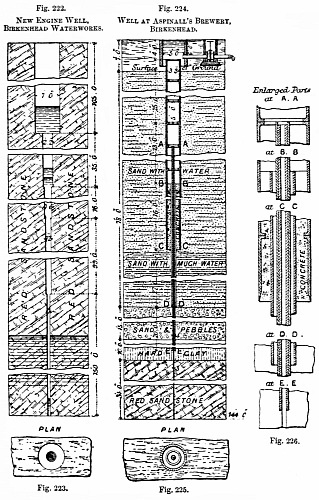
Birkenhead.—There are here several deep wells belonging to the Tranmere Local Board, the Birkenhead Commissioners, and the Wirral Water Company, yielding together about 4,000,000 gallons a day. Figs. 222, 223, show a section and plan of the No. 2 or new engine well at the Birkenhead Waterworks. The shaft is 7 feet diameter for 105 feet, with a bore-hole 26 inches for 35 feet, 18 inches for 16 feet, 12 inches for 99 feet, and 7 inches for 150 feet, or a total depth from surface of 405 feet. The water-level is about 95 feet from surface when the engine is not at work. At the upper water-level, shown in the 26-inch hole, the yield was at the rate of 1,807,400 gallons in twenty-four hours, at the lower level at the rate of 2,000,000 gallons in the same time. At the water-level indicated in the 7-inch bore, water was met with in large quantities. The old engine well is almost identical.
Figs. 222-226.
Larger image (363 kB)
Fig. 222. New Engine Well, Birkenhead Waterworks. Fig. 223. PLAN Fig. 224. Well at Aspinall’s Brewery, Birkenhead. Fig. 225. PLAN Fig. 226. Enlarged Parts at A. A at B. B at C. C at D. D at E. E
Figs. 224, 225, are a section and plan, and Fig. 226 enlarged parts of the well at Aspinall’s brewery, Birkenhead. It consists of a shallow shaft 5 feet in diameter and steined, continued by means of iron cylinders 3 feet 3 inches in diameter and 50 feet in depth. When sand with much water of poor quality was met with, a series of lining tubes was introduced from the point A A, the space between these and the cylinders being filled with concrete. The tubes were discontinued at the sandstone, and the lowest portion of the hole, 3 inches in diameter, is unlined. The water overflows.
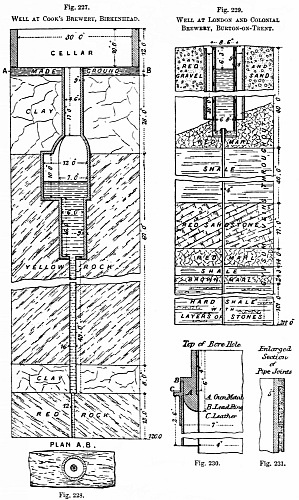
Figs. 227, 228, are a section and plan of the well at Cook’s brewery, Birkenhead. The shaft is 6 feet diameter, lined with 9-inch steining, and is 66 feet deep. At 29 feet from surface it is enlarged for the purpose of affording increased storage room for the water. There is a 16-inch pipe at bottom of shaft 49 feet deep, continued by a 12-inch bore-hole 13 feet into the red sandstone. The water-level is 27 feet from the surface of the ground.
Birmingham.—Out of the 7,000,000 gallons a day supplied to the town in 1865 by the Waterworks Company, 2,000,000 were derived from wells in the new red sandstone. In that year an Act was passed authorizing the sinking of several new wells, whereby the quantity may be greatly increased.
Burton-on-Trent.—Fig. 229 is a section of the well at the London and Colonial Brewery. Extraordinary precautions were taken in constructing this well to obtain the water from the lower strata perfectly free from admixture with that from above. There is a steined shaft within which is an iron cylinder, and this again is lined with brick steining backed with concrete. The bore-hole, 182 feet deep and 4 inches diameter, is lined throughout with copper tubes. At the top the bore-hole is surrounded with a short tube upon which a thread is cut, so that, if necessary, a pipe may be screwed on and up to surface. The water rises to within 6 feet 3 inches of the level of the ground. Fig. 230 is an enlarged section of the arrangements at the top of the bore-hole, and Fig. 231 an enlarged section of the pipe joints.
Crewe.—Cheshire. A very plentiful supply of water for the supply of the town and works of Crewe is obtained from a well sunk in the new red sandstone. The water is said to be very pure, and from the analysis of Dr. Zeidler it appears that there are only 6·10 grains of solid matter to the gallon.
Leamington.—The well in this town is situated at the foot of Newbold Hill, and is 5 feet in diameter and sunk to a depth of 50 feet. At the bottom of the well a bore-hole, part of the way 18 inches and the remainder 12 inches in diameter, is carried down 200 feet. It passes through alternating beds of marl and sandstone, and the surface water met with has been bricked or puddled out. The yield is about 320,000 gallons in twenty-four hours. Previously to this well being made, a trial boring, of which Figs. 232, 233, are sections, was made. This boring was lined with iron tubes 9 inches in diameter for 17 feet, inside this 8 inches in diameter for 22 feet 9 inches, and within this again a 5-inch tube. It was continued by a 5-inch bore reduced to 41⁄2 inches, and at bottom to 3 inches.
Figs. 227-231.
Larger image (359 kB)
Fig. 227. Well at Cook’s Brewery, Birkenhead. Fig. 228. PLAN A.B. Fig. 229. Well at London and Colonial Brewery, Burton-on-Trent. Fig. 230. Top of Bore-hole Fig. 231. Enlarged Section of Pipe Joints
Liverpool.—The oldest wells are at Bootle, to the north of the town; these consisted in the first instance of three lodges or excavations in the rock, covering about 10,000 feet super and about 261⁄2 feet deep. These were covered with timber or slate roofs, and in them 16 bore-holes were sunk, of various diameters and at depths ranging from 13 feet to 600 feet. In 1850 the yield of one of these bore-holes was 921,192 gallons in twenty-four hours, and the total yield in the same time only 1,102,065.
The water was collected in the lodges and conveyed by a tunnel 255 feet to a well 8 feet in diameter and 50 feet deep, from which it was pumped. The yield of the Bootle well in 1865 was 643,678 gallons a day. Since this time a new well of oval form, 12 feet by 9 feet and 108 feet deep, has been sunk, and at its completion the yield rose to 1,575,000 gallons a day, but it has again diminished considerably.
The Green Lane wells were commenced in 1845, the surface being 144 feet above the sea-level and their depth 185 feet, or 41 feet below the sea-level. Headings extend in all about 300 feet from the shafts in various directions, three separate shafts being carried up to the surface. At first the yield was 1,250,000 gallons a day. A bore-hole, 6 inches in diameter, was then driven to a depth of 60 feet from the bottom of the well, when the yield increased to 2,317,000 gallons. In June, 1856, the bore-hole was widened to 9 inches and carried down 101 feet farther, when the yield amounted to its present supply of over 3,000,000 gallons a day.
The large quantity of water yielded by the Green Lane well is probably due to the existence of a large fault which is considered to pass in a north-westerly direction by the well. In 1869 a bore-hole, 24 inches in diameter at the top and diminishing to 18 inches in diameter, was sunk from the bottom of a new shaft, 174 feet deep, to a depth of 310 feet, and the additional quantity of water derived from the new hole was about 800,000 gallons a day.
The Windsor Station well is of oval form, 12 feet by 10 feet and 210 feet deep, with a length of headings of 594 feet, and a bore-hole 4 inches in diameter and 245 feet deep. The yield is 980,000 gallons a day.
The Dudlow Lane well is also oval, 12 feet by 9 feet, and is sunk to a depth of 247 feet from the surface of the ground. Headings have been driven from the bottom of the well for a total distance of 213 feet, and an 18-inch bore-hole has been sunk to a depth of 196 feet from the bottom of the well, which is chiefly in a close hard rock, with occasional white beds from which the water is mainly obtained. The yield is nearly 1,500,000 gallons a day.
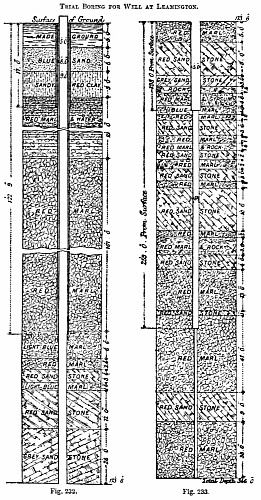
Figs. 232, 233. Trial Boring for Well at Leamington.
Larger image (352 kB)
The total weekly supply from wells in Liverpool is upwards of 41,000,000 gallons, and there are also a great number of private wells drawing water from the sandstone, and their supply may be roughly estimated at 30,000,000 gallons a week.
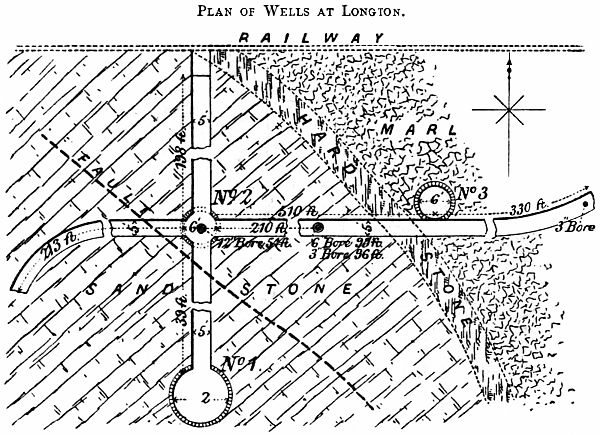
Fig. 234. Plan of Wells at Longton.
Longton, Staffordshire.—The Potteries obtain a portion of their supply from a series of wells at Longton, which are shown in the diagrammatic sectional plan, Fig. 234. The well marked No. 1 is 12 feet in diameter, and 135 feet deep in the new red sandstone. When finished the water rose to within 35 feet from the surface. The cost of the first 45 feet was 3l. 10s. a yard; of the second 45 feet, 6l. 10s. a yard; and the third 45 feet, 9l. a yard. When this well was 36 feet down, a large quantity of water was met with, so a heading was driven at that depth in the direction of No. 2 well; this, after 30 feet, passed through a fault which drained off the water, and the sinking of No. 1 was proceeded with. After the engine had been erected and pumping some short time, it was proposed to drive headings from the bottom; but owing to the pumps taking up so much room in the shaft, there was not space enough for sinking operations to be carried on, and No. 2 well was therefore sunk for convenience sake, at the cost of about 30s. a yard. When No. 2 was down 54 feet, a trial bore-hole 3 inches diameter was put down, and water rose in a jet about 3 feet high. The well was then continued to the level of No. 1, and a heading, 39 feet long, driven between the two shafts. No. 2 has now a 12-inch bore-hole at bottom, down 54 feet.
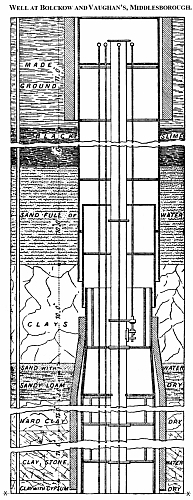
Fig. 235. Well at Bolckow and Vaughan’s, Middlesborough.
Larger image (270 kB)
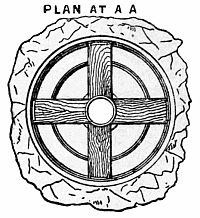
Fig. 237.
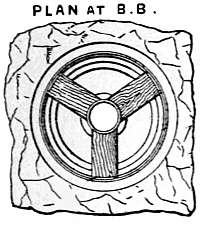
Fig. 238.
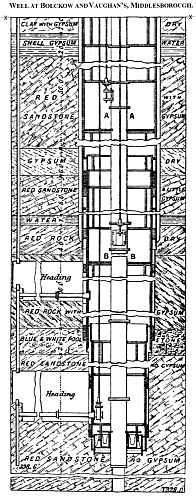
Fig. 236. Well at Bolckow and Vaughan’s, Middlesborough.
Larger image (284 kB)
Headings have also been driven W. and N. of No. 2 well, at a cost of 30s. a yard. The western heading is 213 feet long, driven with a slight rise, and gave much water. There are two headings N., running in the direction of the railway, one over the other. The lower was driven level with the bottom of the shaft, but no water met with; the upper is 36 feet from the surface, and is intended to carry away surplus water down to a line of earthenware pipes which are led along the railway to a low-level reservoir.
In the eastern heading there is a rise of 4 feet, owing to the nature of the strata; and after it had been driven 510 feet, well No. 3 was sunk for ventilation and for drawing out material. A bed of very hard sandstone, 63 feet long, was passed, cost 4l. 10s. a yard, and beyond came marl, in which driving cost 45s. a yard. This heading was continued 330 feet beyond No. 3, and an air-hole 3 inches diameter put down 126 yards deep, but no water was met with. The bed of hard sandstone was also found in driving the lower N. heading, which was discontinued after going into it some 5 or 6 feet. The yield from these wells is about 600,000 gallons a day, and recently a new bore-hole at No. 3 well, when down 350 feet, gave some 380,000 gallons a day additional.
Leek.—The Potteries waterworks have also wells at the Wallgrange Springs, near Leek; these rise from the conglomerate beds, and are stated to yield 3,000,000 gallons daily. The water from these springs is pumped into Ladderidge reservoir, and is distributed from thence into the town of Newcastle-under-Lyme and the Potteries.
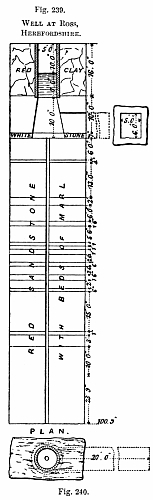
Figs. 239, 240. Well at Ross, Herefordshire.
Larger image (298 kB)
Middlesborough.—The Figs. 235 to 238 are sections and plans of a well at the works of Messrs. Bolckow and Vaughan, Middlesborough, made under the direction of S. C. Homersham, C.E. A trial hole was first put down to a depth of 398 feet 6 inches, and a shaft afterwards sunk by Messrs. Docwra and Son to that depth, through alternating beds of clay, sand, gypsum, and sandstone. At the bottom of the shaft a bore-hole of 18 inches diameter throughout was made with Mather and Platt’s apparatus to a depth of 1312 feet; the first 1160 feet of which were through new red sandstone interspersed with beds of clay, white sandstone, red marl, and gypsum. Next came 40 feet of gypsum, hard white sandstone, and limestone; and the remaining 100 feet were through red sandstone, pure salt rock, occasional layers of limestone, and then salt rock to the bottom. The gross time spent in sinking this bore-hole was 510 days, or an average of 2 feet 5 inches a day.
Ross, Herefordshire.—The well at the Alton Court Brewery is shown in Figs. 239, 240. The shaft, 5 feet in diameter and 27 feet deep, is steined with 9-inch brickwork for a distance of 17 feet. At the bottom is a 12-inch bore-hole 100 feet 9 inches deep, unlined. The water is abundant. At level of the bore a heading, 6 feet high, 5 feet wide, and 27 long, has been driven, to afford storage room.
Wolverhampton.—This town is partially supplied from wells sunk in the new red sandstone. There are two shafts, 7 feet in diameter and 300 feet deep, a heading 459 feet long, and in this a boring of 390 feet. The yield when first completed was 211,000 gallons a day.
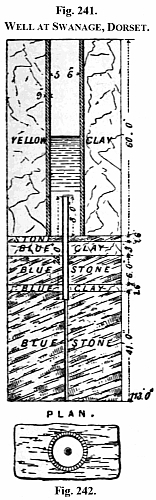
Figs. 241, 242. Well At Swanage, Dorset.
Larger image (329 kB)
St. Helens, Lancashire.—Supplied with about 570,000 gallons daily from two wells, each 210 feet deep, in the new red sandstone. Each well has a bore-hole at the bottom.
Oolitic Strata.
Northampton.—The well at the waterworks is sunk and bored 253 feet 3 inches in the lias. The shaft is steined with brickwork and iron cylinders in the following order: for 16 feet 9 inches in depth the well is 7 feet 6 inches in diameter, lined with brickwork; at this depth two cast-iron cylinders 5 feet 6 inches diameter are introduced, which are again succeeded by 9-inch brickwork, commencing at 5 feet 6 inches internal diameter and widening out to 7 feet 6 inches in diameter. The bottom of the shaft is floored with bricks at a distance of 120 feet from surface. At this point the bore-hole commences, and for the first 31 feet it is lined with 14-inch pipes, which rise into the shaft 5 feet above the floor. The remaining portion of the bore-hole, 102 feet, is 9 inches diameter.
Swanage, Dorset.—The section and plan, Figs. 241, 242, are of a well at Swanage, sunk 60 feet and bored 53 feet, the lining tube rising 8 feet into the shaft, which is 5 feet 6 inches in diameter, and lined with 9-inch steining. The strata passed through are clays and limestones, and may perhaps be referred to the Purbeck beds. At first this well yielded little or no water, but it now gives a sufficient supply.
Cretaceous Strata.
Bishop Stortford.—The waterworks and well are situate west of the town, near the farm buildings known as Marsh Barns. The shaft is 160 feet deep, the bore-hole 140 feet. The following is a section of the strata;—
Feet.
Boulder Clay 17
London Clay, 54 feet;—
Brown Clay 14
Black Clay 2
Black Sandy Loam, with iron pyrites 12
Black Clay, with lignite 11
Dark Grey Sand, with large pieces of sandstone and shells 15
Reading Beds, 451⁄2 feet;—
Black Clay 2
Brown Clay 20
Light Brown Sand 01⁄2
Variegated Sand 18
Brown Clay 4
Flints and Pebbles 1
To Chalk 1161⁄2
Chalk 1831⁄2
Total 300
The water rises to within 140 feet of the surface of the ground. The yield is 10,000 gallons a minute; only 25 gallons a minute from the bore; the rest from the headings driven north and south respectively at a depth of 154 feet.
Braintree.—The well sunk for the Local Board is in a field near Pod’s Brook. The shaft is 8 feet in diameter, steined with 9-inch steining, and carried down 55 feet, the remainder of the well being bored. Strata;—
Drift, 14 feet;— Feet.
Sandy Gravel 5
Drift Clay 9
London Clay, 136 feet;—
Clay, with sand, shells, and septaria, the bottom part more sandy 126
Dark Sand, with a few shells, yielding much water 10
Reading Beds, 45 feet;—
Mottled Plastic Clays, getting more sandy lower down, and with specks of chalk 44
Coarse Black Sandy Clay 1
Thanet Sand (?), 33 feet;—
Light-coloured Sands, firm and hard, getting darker and more friable lower down 20
Light-coloured Sands, firm, changing to coarse and dark 13
To Chalk 228
Chalk, with much water, rising to about 12 feet from the surface 17
Total 245
The level of the ground is 140 feet above the sea-level; water stands 29 feet deep; yield about 11,500 gallons an hour.
Brighton.—This town has always been supplied from wells sunk in the chalk. One well is sunk near the Lewes Road, and has a total length of 2400 feet of headings driven in a direction parallel with the sea, and at about the coast-level of low water. These headings intercept many fissures and materially add to the yield.
A second well was sunk in 1865, at Goldstone Bottom, and headings driven to the extent of about a quarter of a mile across the valley parallel to the sea.
Goldstone Bottom is a naturally formed basin in the chalk, the lowest side of which, nearest the sea, is more than 60 feet higher than the middle or bottom of the basin. The water is obtained as at Lewes Road, from fissures running generally at right-angles to the coast-line, but they are of much larger size and at far greater distances from each other; whereas at the Lewes Road well it is rare that 30 feet of headings were driven without finding a fissure, and the yield of the largest was not more than 100 to 150 gallons a minute. At Goldstone nearly 160 feet were traversed without any result, and then an enormous fissure was pierced which yielded at once nearly 1000 gallons a minute; and the same interval was found between this and the next fissure, which was of a capacity nearly as large. The total length of the headings at Goldstone Bottom is 13,000 feet. The yield from each well is about 3,000,000 gallons daily.
Chelmsford.—The well belonging to the Local Board of Health, situated at Moulsham, yields about 95,000 gallons of water a day. It is sunk for 200 feet; the rest bored. Water overflowed at first, but now that the well is in use and pumped from, the water only rises to 76 feet from the surface. The following strata were pierced;—
Feet. In.
Black Soil (Mould) 3 0
Drift, 631⁄2 feet;—
Yellow Clay 2 6
Gravel 12 6
Quicksand 44 6
Sand, with stones 4 0
London Clay, 1861⁄2 feet;—
Clay 104 0
Clay, with sand 50 0
Dark Sand 12 6
Clay Slate (? septaria) 0 9
Clay and Shells 4 0
Clay Slate (? septaria) 0 3
Dark Sand and Clay 9 6
Sand and Shells 4 0
Pebbles 1 6
Woolwich Beds;—
Sand 7 0
Red Clay 12 0
Clay and Sand 64 0
Dark Thanet Sand 30 0
To Chalk 366 0
Chalk, 202 feet;—
Chalk 88 0
Rubble 1 0
Chalk 113 0
Total 568 0
Cheshunt, New River Company.—Situate at the engine-house between the two reservoirs. The well is 171 feet deep, and is steined partly with brickwork and partly with iron cylinders. For 12 feet in depth the well is 11 feet 6 inches in diameter, and steined with 14-inch brickwork; for a farther depth of 44 feet it is 9 feet diameter, and steined with 9-inch brickwork; of the 44 feet, 41 feet are lined with cast-iron cylinders, 8 feet diameter, which are also carried to a depth of 105 feet from the surface. There are fifteen cylinders of this size in use, and they are succeeded by others 6 feet 10 inches diameter, of which there are six in use; these are again succeeded by two cylinders 6 feet diameter. The whole of the cylinders are 6 feet in depth. The bottom of the last cylinder is 118 feet from the surface, at which point they rest upon a foundation of 9-inch brick steining 7 feet in depth. At the bottom of the 6-feet cylinders the well widens out in the form of a cone 12 feet 6 inches diameter at the floor, which is 26 feet below the bottom of the 6-feet cylinder. In the centre of the well a bore-hole, 3 inches diameter and 27 feet deep, was made, and the well is provided on the floor-level with headings.
Section of Strata. Feet. In.
Surface Earth 1 6
Gravel 8 0
London Clay, 47 feet;—
Blue Clay 45 0
Yellow Clay 2 0
Reading Beds, 51 feet;—
White Sand 12 0
Dark Sand 39 0
To Chalk 107 6
Chalk 63 6
Total 171 0
Dorking, Surrey, obtains its water supply from a well sunk into the outcrop of the lower greensand, at the south side of the town. The shaft is 11 feet in diameter and 160 feet deep, steined with 9-inch work laid dry. The yield is not more than 30 gallons a minute, owing to the unfortunate position of the well, but might be considerably increased if suitable means were adopted.
Harrow Waterworks.—The well is situate 430 yards to the west of the church. The surface of the ground is 226 feet above the Ordnance datum. There is a shaft for 1931⁄2 feet; the rest is a bore. In a bed of dark red sand 144 feet down, the water was very foul. Strata;—
Feet. In.
Light Blue Clay, with light-coloured stone 19 11
Brown Clay, with white stone 54 11
Dark Mottled Clay 15 0
Similar Clay, with dark and green sand 4 0
The same, very hard 3 0
The same, very hard, and dark sand 2 0
Lighter-coloured Hard Clay 5 0
The same, and dark sand 6 0
Large Pebbles 0 6
Clay and Sand 5 0
Light Blue Clay 0 4
Light-coloured Stone, with red and blue spots 1 3
Mottled Clays 7 11
Yellow, Light Blue, and Green Clay 1 0
Dark Green Clay, with black veins and spots 5 0
Blue Clay 1 6
Very Hard Brown, Yellow, and Blue Clay 4 0
Light Brown Running Sand, with water 2 6
Hard Mottled Clays 6 6
Light Brown Dead Sand 8 8
Black Peat, with dark pebbles 0 6
Brown and Green Gravel, with flints 3 2
Green Clay 0 4
To Chalk 158 6
Chalk, with beds of flint 4 to 15 inches in thickness, 15 to 24 inches apart; 3951⁄2 feet down, from surface, a bed of flint 6 feet thick 254 0
Total 412 6
Water rises to a height of 125 feet below the surface. The yield is about 190 gallons a minute.

Figs. 243-245. Well at Highbury.
Larger image (366 kB)
Highbury, Middlesex.—Well at the residence of H. Rydon, Esq., New Park. Figs. 243 to 245. The shaft is 4 feet 6 inches diameter, and 136 feet deep, steined with 9-inch work set in cement. The bore was commenced with a 12-inch hole, but the character of the ground was such that the successive reductions in size, shown in the enlarged section of the lining tubes, Fig. 245, had to be made. When in the chalk the bore was continued some 48 feet unlined. The strata passed were;—
Gravel 3 feet.
London Clay, 111 feet;—
Blue Clay 110 „
Claystone 1 „
Reading and Thanet Sand, 85 feet;—
Mottled Clay 25 „
Coloured Sand 60 „
To Chalk 199 „
Chalk 50 „
Total 249 „
Kentish Town.—This well was sunk under the supposition that as the outcrop of the subcretaceous formations was continuous around the margin of the cretaceous basin surrounding and underlying the London tertiaries, except at the eastern border, those subcretaceous formations would be found under London, just as they actually were at Paris. This proved to be the case until the gault was passed, when a series of sandstones and clays was encountered, occupying the place of the lower greensand, but evidently of older geological character, and having many of the features of the new red sandstone.
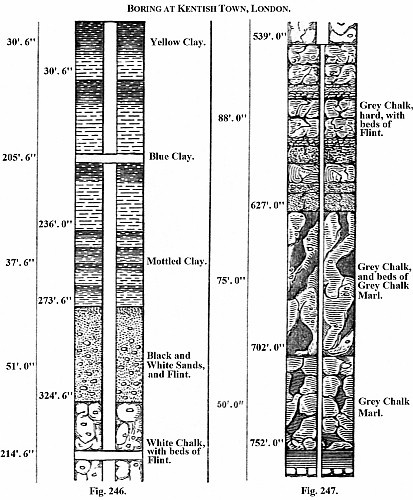
Figs. 246, 247. Boring at Kentish Town, London.
The surface of the ground, Fig. 246, is 174 feet above Thames high-water mark. There is a shaft for 539 feet; the remainder being bored. The following detailed account of the strata is due to Prestwich.
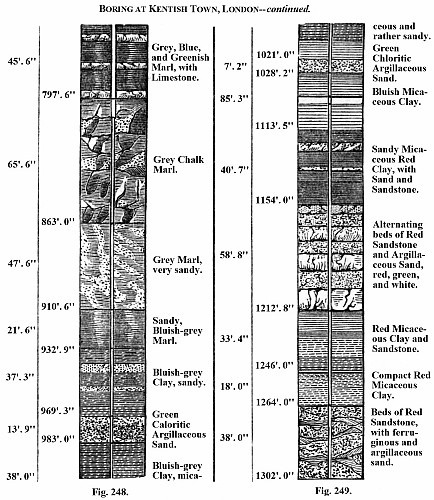
Figs. 248, 249. Boring at Kentish Town, London—continued.
London Clay, 236 feet;— Feet. In.
Yellow Clay 30 6
Blue Clay, with septaria 205 6
Reading Beds, 611⁄2 feet:—
Red, Yellow, and Blue Mottled Clay 37 6
White Sand, with flint pebbles 0 6
Black Sand, passing into the bed below 2 0
Mottled Green and Red Clay 1 0
Clayey Sand 3 0
Dark Grey Sand, with layers of clay 9 6
Ash-coloured Quicksand 6 6
Flint Pebbles 1 6
Thanet Sand, 27 feet;—
Ash-coloured Sand 10 0
Clayey Sand 4 0
Dark Grey Clayey Sand 11 0
Angular Green-coated Flints 2 0
Chalk, with Flints (? Upper Chalk), 2441⁄2 feet;—
Chalk, with flints 119 6
Hard Chalk, without flints 8 0
Chalk, softer, with a few flints 31 6
Nodular Chalk, with three beds of tabular flints 13 6
Chalk, with layers of flint 32 6
Chalk, with a few flints and patches of sand 9 6
Very Light-grey Chalk, with a few flints 30 0
Chalk, without Flints (Lower Chalk), 341 feet;—
Light Grey Chalk, and a few thin beds of marl 133 0
Grey Chalk Marl, with compact and marly beds and occasional pyrites 161 0
Grey Marl 20 0
Harder Grey Marl, rather sandy and with occasional pyrites 27 0
Chalk Marl, 591⁄4 feet;—
Hard Rocky Marl (? Tottenhoe Stone) 0 6
Bluish Grey Marl, rather sandy, lower part more clayey 58 9
Upper Greensand;—
Dark Green Sand, mixed with grey clay 13 9
Gault, 1301⁄2 feet;—
Bluish Grey Micaceous Clay, slightly sandy 39 0
The same, with two layers of clayey greensand 6 7
Micaceous Blue Clay; at base a layer full of phosphatic nodules 84 11
Lower Greensand (?), 1881⁄2 feet;—
Red and Yellow Clayey Sand and Sandstone 1 0
Compact Red Clay, with patches of variegated sandstone 4 0
Dark Red Clay 4 7
Red Clay, Whitish Sand, and Mottled Sandstone 3 0
Hard Red Conglomerate, with pebbles from the size of a marble to that of a cannon-ball 2 0
Micaceous Red Clay, mottled in places 26 0
Layers of White Sandstone and Red Sand 3 8
Mottled Sandstone 0 4
Red Sand and Sandstone, with pebbles (a spring) 2 0
Layers of Red Sandstone and White Sand 4 0
Pebbly Red Sand and Sandstone 1 0
White and Red Sandstone 5 0
Fine Light Red Sand 2 9
Hard Sandstone 0 3
Very Fine Light Red Sand 4 0
Red Clay 2 0
Clayey Sand 1 3
Red Sandy Micaceous Clay, with sandstone 2 5
Compact Hard Greenish Sandstone 10 0
Very Micaceous Red Clay 1 0
Grey and Red Clayey Sand 1 1
Light-coloured Soft Sandstone 2 1
Red Sand and Sandstone 6 2
Greenish Sandstone 4 0
White and Grey Clayey Sand, with iron pyrites 2 0
Reddish Clayey Sand, with layers of sandstone 3 8
Micaceous Red Clay 18 4
Greenish Sandstone 0 5
Red Mottled Micaceous Clay, with patches of sand 34 6
Red Quartzose Micaceous Sandstone 2 0
Brownish-red Clayey Sand and Sandstone 4 0
Very Hard Micaceous Sandstone, with pebbles of white quartz 4 0
Light Red Clayey Sand 10 0
Red Micaceous Quartzose Sandstone 8 0
Light Red Clayey Sand, small fragments of chalk 2 0
Whitish and Greenish Hard Micaceous Sandstone 6 0
Total 1302 0
The engravings, Figs. 246 to 249, which are on the authority of G. R. Burnell, do not exactly agree with Prestwich’s section, but in the main they are both alike. The following summary may be found of service;—
Feet. In.
London Clay 236 0
Lower London Tertiaries 88 6
Chalk 644 9
Upper Greensand 13 9
Gault 130 6
Lower Greensand (?) 188 6
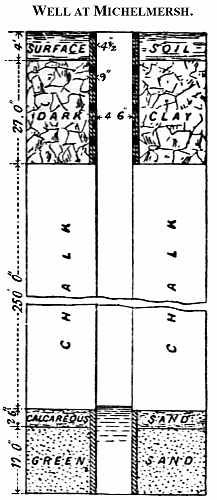
Fig. 250. Well at Michelmersh.
Michelmersh, Hants.—Fig. 250 shows a section of a well in this village, comprised within the writer’s practice. The shaft is 4 ft. 6 in. in diameter and 400 feet deep, steined both above and below the chalk with 9-inch work, the upper course having rings of cement at every 12 inches.
The strata pierced were;—
Feet. In.
Surface Soil 4 0
Dark Clay 27 0
Chalk 250 0
Band of Calcareous Sand 2 6
Upper Greensand 17 0
Total 300 6
The water rises some 19 feet in the shaft, and is abundant, although up to the present its quantity has not been tested.
Mile End, Middlesex.—Well at Charrington, Head, and Co.’s brewery. Figs. 251 to 253. The surface is 331⁄2 feet above Trinity high-water mark.
In the upper part there are three iron cylinders built upon 9-inch brickwork, which is carried down into the mottled clay. A 9-inch iron cylinder, partially supported by rods from the surface, rises some 28 feet into the brick shaft into which it is built by means of rings. Another iron cylinder is carried down into the chalk, the space between the cylinders being filled in with concrete.
The strata passed were;—
Feet. In.
Made Earth 7 0
Valley Drift, 6 feet;—
Sand 3 0
Gravel 3 0
London Clay, 86 feet;—
Blue Clay 7 0
Hard Brown Clay, with claystones 68 0
Brown Sandy Clay 2 0
Hard Brown Sandy Clay, rotten at bottom 9 0
Woolwich and Reading Beds 63 0
Thanet Sand, 40 feet;—
Green Sand 2 0
Brownish-green Quicksand and Pebbles 2 0
Brown Sand 2 0
Grey and Brownish-green Sand 2 0
Green Sand and Pebbles 2 0
Brown Sand 2 0
Green Sand and Pebbles 15 0
Grey Sand and small Pebbles 2 0
Dark Grey and Green Sand 10 6
Green Sand and Green-coated Flints 0 6
To Chalk 202 0
Chalk Flints 0 6
Hard Chalk and Water 2 0
Total 204 6
The water-level is some 103 feet from surface, and the yield 60,000 to 70,000 gallons a day.
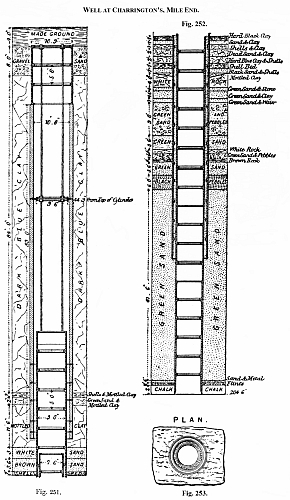
Figs. 251-253. Well at Charrington’s, Mile End.
Larger image (280 kB)
Norwich.—Well at Coleman’s works. After a few feet of alluvium the borer passed through hard chalk with flints at distances of about 6 or 7 feet apart, for 700 feet, with the exception of 10 feet at the depth of 500 feet where the rock was soft and of a rusty colour, thence the flints were thicker, namely, about 4 feet apart to the depth of 1050 feet. After this 102 feet were pierced of chalk, free from flints, to the upper greensand, a stratum of about 6 feet, and then gault for 36 feet. The whole boring being full of water to within 16 feet of the surface.
Section of strata;—
Feet.
Alluvium 12
Hard Chalk, with flints 483
Soft Chalk 10
Hard Chalk 190
Hard Chalk, flints closer 350
Chalk without flints 102
Upper Greensand 6
Gault 36
Total 1189
Paris.—The wells sunk in the Paris basin, of which Fig. 254 is a section, are very numerous, and many of them of great depth. Fig. 255 is a plan indicating the position of the principal wells, and Figs. 256 to 258 sections giving each a summary of the nature and thickness of the formations passed through.
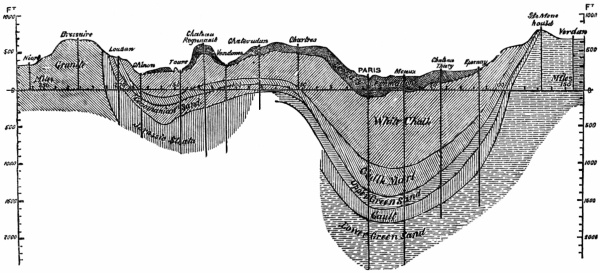
Fig. 254. Geological Section from Niort to Verdun, through the Paris Basin. Horizontal scale, 90 miles the inch. Vertical scale, 1500 feet the inch.
Larger image (201 kB)
For boring these wells special tools had to be used, which have already been described at length in Chap. VI.
A large Artesian well was, in 1867, being constructed by Dru at Butte-aux-Cailles, Fig. 255, for the supply of the city of Paris, which is intended to be carried down through the greensand to a depth of 2600 or 2900 feet to reach the Portland limestone. The boring in 1867 was 490 feet deep, and its diameter 47 inches.
During the previous 21⁄2 years, M. Dru was engaged in sinking a similar well of 19 inches diameter for supplying the Sugar Refinery of M. Say, in Paris, Fig. 255; 1570 feet deep of this well had been bored in 1867, see Fig. 258.
The well at Grenelle was sunk by Mulot in 1832, and after more than eight years’ incessant labour, water rose on the 26th of February, 1842, from the total depth of 1806 feet 9 inches. The diameter of the bore-hole is 8 inches, ending, as is seen in the detail sections, Figs. 259 to 262, in the lower greensand.
The well of Passy was intended to be executed in the Paris basin which it was to traverse with a diameter, hitherto unattempted, of 1 mètre (3·2809 feet); that of the Grenelle well being only 20 centimètres (8 inches). It was calculated that it would reach the water-bearing stratum at nearly the same depth as the latter, and would yield 8000 mètres or 10,000 cubic mètres in twenty-four hours, or about 1,786,240 gallons to 2,232,800 gallons a day.
Figs. 263 to 266 show a detail section of the strata passed.
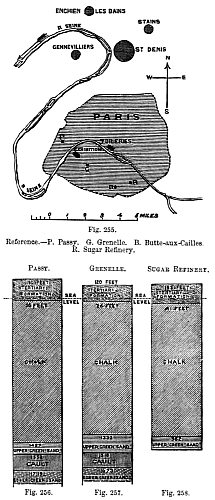
Figs. 255-258. Reference.—P. Passy. G. Grenelle. B. Butte-aux-Cailles. R. Sugar Refinery.
Larger image (208 kB)
The operations were undertaken by Kind under a contract with the Municipality of Paris, by which he bound himself to complete the works within the space of twelve months from the date of their commencement, and to deliver the above quantity of water for the sum of 300,000 francs, 12,000l. On the 31st of May, 1857—after the workmen had been engaged nearly the time stipulated for the completion of the work, and when the boring had been advanced to the depth of 1732 feet from the surface—the excavation suddenly collapsed in the upper strata, at about 100 feet from the ground, and filled up the bore. Kind would have been ruined had the engineers of the town held him to the strict letter of his contract; but it was decided to behave in a liberal manner, and to release him from it, the town retaining his services for the completion of the well, as also the right to use his patent machinery. The difficulties encountered in carrying the excavation through the clays of the upper strata were found to be so serious that, under the new arrangement, it required six years and nine months of continuous efforts to reach the water-bearing stratum, of which time the far larger portion was employed in traversing the clay beds. The upper part of this well was finally lined with solid masonry, to the depth of 150 feet from the surface; and beyond that depth tubing of wood and iron was introduced. This tubing was continued to the depth of 1804 feet from the surface, and had at the bottom a length of copper pipe pierced with holes to allow the water to enter. At this depth the compound tubing could not be made to descend any lower; but the engineers employed by the city of Paris were convinced that they could obtain the water by means of a preliminary boring; and therefore they proceeded to sink in the interior of the above tube of 3.2809 feet diameter, an inner tube 2 feet 4 inches diameter, formed of wrought-iron plates 2 inches thick, so as to enable them to traverse the clays encountered at this zone. At last, the water-bearing strata were met with on the 24th of September, 1861, at the depth of 1913 feet 10 inches from the ground-line; the yield of the well being, at the first stroke of the tool that pierced the crust, 15,000 cubic mètres in 24 hours, or 3,349,200 gallons a day; it quickly rose to 25,000 cubic mètres, or 5,582,000 gallons a day; and as long as the column of water rose without any sensible diminution, it continued to deliver a uniform quantity of 17,000 mètres, or 3,795,000 gallons a day. The total cost of this well was more than 40,000l., instead of 12,000l., at which Kind had originally estimated it.
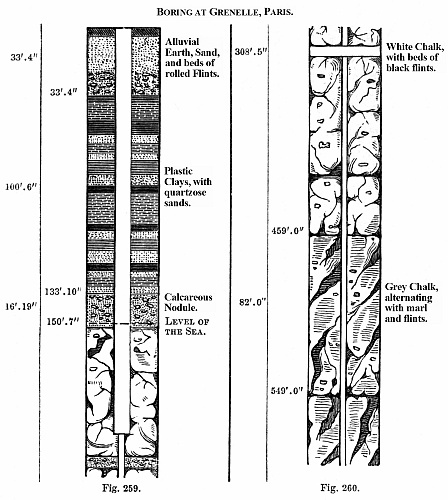
Figs. 259, 260. Boring at Grenelle, Paris.
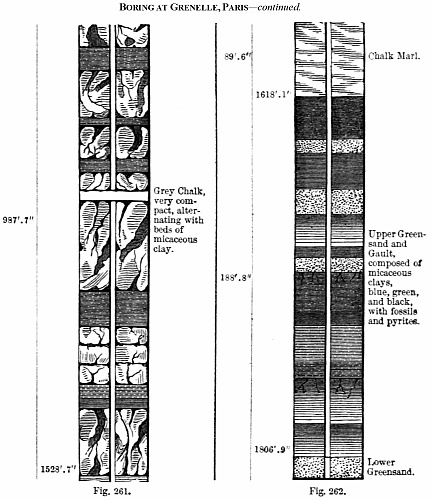
Figs. 261, 262. Boring at Grenelle, Paris—continued.
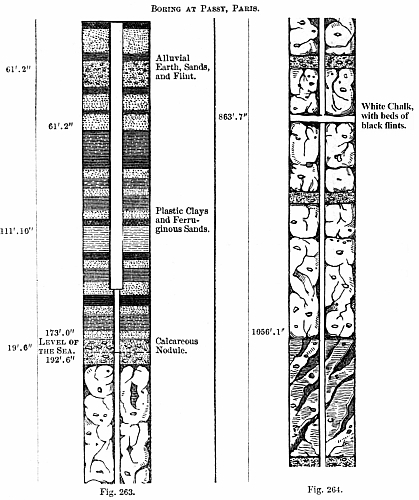
Figs. 263, 264. Boring at Passy, Paris.
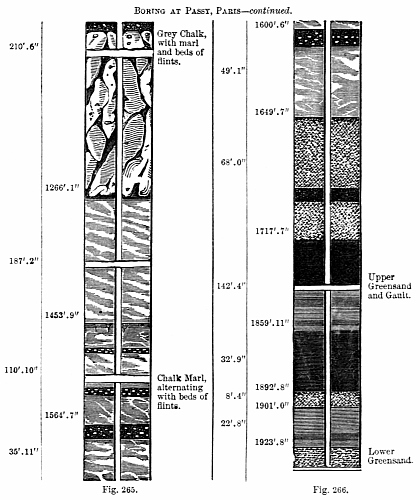
Figs. 265, 266. Boring at Passy, Paris—continued.

Figs. 267, 268. Well at Ponders End.
Larger image (217 kB)
It may be questioned whether the engineers of the town were justified in passing the contract with Kind to finish the work within the time, and for the sum at which he undertook it; but they certainly treated him with kindness and consideration, in allowing him to conduct the work at the expense of the city of Paris, for so long a period after the expiration of his contract. It seems, however, that the French well-borers could not at the time have attempted to continue the well upon any other system than that introduced by Kind; that is to say, upon the supposition that it should be completed of the dimensions originally undertaken. Experience has shown that both steining and tubing were badly executed at the well of Passy. The masonry lining was introduced after Kind’s contract had expired, and when he had ceased to have the control of the works; the wrought-iron tubing at the lower part of the excavation being a subsequent idea. It has followed from this defective system of tubing—the wood necessarily yielding in the vertical joints—that the water in its upward passage escaped through the joints, and went to supply the basement beds of the Paris basin, which are as much resorted to as the London sand-beds for an Artesian supply; and, in fact, the level of the water has been raised in the neighbouring wells by the quantity let in from below, and the yield of the well itself has been proportionally diminished, until it has fallen to 450,000 gallons a day. That the increased yield of the neighbouring wells is to be accounted for by the escape of the water from the Artesian boring is additionally proved by the temperature of the water in them; it is found to be nearly 82° Fah., or nearly that observed in the water of Passy. This was an unfortunate complication of the bargain made between Kind and the Municipal Council; but it in no respect affects the choice of the boring machinery, which seems to have complied with all the conditions it was designed to meet. The descent of the tubes and their nature ought to have been the subject of special study by the engineers of the town, who should have known the nature of the strata to be traversed better than Kind could be supposed to do, and should have insisted upon the tubing being executed of cast or wrought-iron, so as effectually to resist the passage of the water. At any rate, this precaution ought to have been taken in the portions of the well carried through the basement beds of the Paris basin, or through the lower members of the chalk and the upper greensand.
Ponders End, Middlesex.—At the works of the London Jute Company. It will be seen from the Figs. 267, 268, that this well is bored all but the top 4 feet, which is 5 feet across and steined with 9-inch work. The uppermost tube is 12 inches in diameter, decreased to 9 inches, and then to 8 inches, and ending with a 6-inch bore, unlined, in the chalk.
The strata passed were;—
Alluvium, 6 feet;— Feet. In.
Clay and Mud 3 6
Peat 2 6
Sand and Shingle (Gravel). 7 0
London Clay, 15 feet;—
Blue Clay 8 0
Sandy Clay (basement bed?) 7 0
Reading Beds, 491⁄2 feet;—
Dead Sand 10 0
Mottled Clays 22 0
Sand and Metal (pyrites?) 1 0
Sandy Clay 3 0
Sand and Pebbles 4 0
Dead Sand 1 6
Dead Sand and Pebbles 1 0
Sand and Pebbles 7 0
Thanet Sand (?), 35 feet;—
Green Sand 27 0
Dead Sand 8 0
To Chalk 112 6
In Chalk 290 6
Total 403 0
The water at this well overflows.
Freshwater, Isle of Wight.—Well, Figs. 269, 270, sunk at Golden Hill for H.M. Government. The diameter of the shaft is 4 feet 6 inches, brickwork 9 inches thick, there are 3 feet in cement at the top of the well, and 3 feet 9 inches at the bottom. There are four courses in cement every 5 feet, internal work four courses in cement every 10 feet. The bore-hole is lined throughout with pipes of 6 inches, 5 inches, and 4 inches diameter respectively.
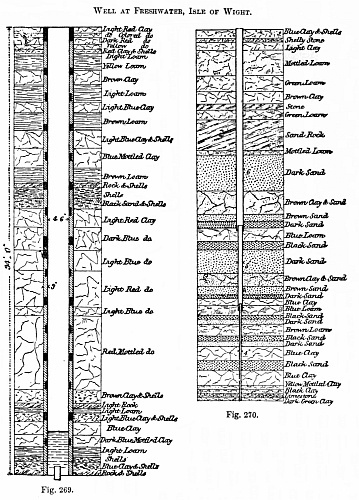
Figs. 269, 270. Well at Freshwater, Isle of Wight.
Larger image (296 kB)
Winchfield, Hants.—Well, Figs. 271 to 273, at the brewery of Messrs. W. Cave and Son. The shaft above the steining is lined with iron cylinders into which the bore-pipe is carried up.
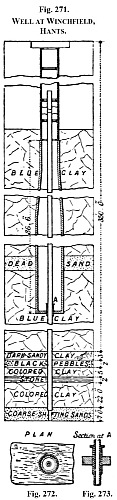
Figs. 271-273. Well at Winchfield, Hants.
Larger image (137 kB)
The strata passed were;—
Feet.
Made Earth, Soil, Gravel, Blue Clay and Dead Sand 350
Dark Sandy Clay 3
Black Pebbles 2
Coloured Clay 5
Stone (septaria?) 2
Coloured Clay 22
Coarse Shifting Sands 7
Total 391
The following Table, compiled from the Government Memoirs and other reliable sources, furnishes in a condensed form the most important particulars relating to wells, and trial bore-holes comprised within the geographical area known as the London Basin.
The first column gives the name of the place where the well is situated, the second column that of the county, and the third column the precise locality. The following abbreviations have been employed: B. for Bedfordshire; Berks, Berkshire; Bucks, Buckinghamshire; E., Essex; H., Hampshire; Herts, Hertfordshire; K., Kent; M., Middlesex; S., Surrey.
O.D. stands for, above Ordnance Datum; T., above Trinity high-water mark.
PARTICULARS OF WELLS.
Name of Place. County. Locality. Depth.
of Shaft. of Bore. in Tertiary Strata. in Chalk. to Water from Surface.
feet. feet. feet. feet. feet
Remarks.
Abridge E. Brewery 100 190 290 — 30
London Clay, 280 feet.
Acton M. Mr Engleheart’s — — 284 119 12
Ditto „ Mr. Wood’s — — 315 135 40
Ditto, East „ Mr. Davis’s — — 267 68
Albany Street „ London — — 182 125 —
100 feet O.D.
Aldershot Place H. — — — — 194 — —
260 feet O.D.
Ditto „ — — — — 148 691⁄2 —
245 feet O.D.
Amwell End Herts. New River Company 72 3473⁄4 36 3833⁄4 —
Yield about 2,500,000 gallons a day.
Arlesey B. Asylum 100 365 7 120 —
233 feet O.D.; water rises into shaft; yield 2640 gallons an hour.
Ash S. S.W. Railway Station — 600 370 230 —
290 feet O.D.
Bank of England M. London 137 1971⁄2 2341⁄2 100 88
About 27 feet T.; yield, 35 gallons a minute.
Bagshot S. Orphan Asylum 123 523 646 — —
Last 192 feet London Clay.
Balham Hill „ Near Clapham Common — — 347 — —
Last 40 feet Thanet sands.
Barking E. Byfron’s 140 — 140 — 30
Bottom in hard pebbles.
Barnet, East Herts. Lion’s Down 122 270 162 230 130
Shaft half steined, half iron cylinders.
Ditto, New „ Near Railway Station 137 302 159 280 130
Battersea S. Jones’s Works 249 — 249
Ditto „ Beaufoy’s Works 240 — 240 — —
Yield said to equal 15,000 gallons a day.
Bearwood Berks. Mr. Walters’s — — 350 15
Beaumont Green Herts. Near Cheshunt 1831⁄2 — 1261⁄2 57
Belleisle M. Pashes and Co.’s — — 185 118 118
Berkeley Square „ London 160 156 224 92 80
Bermondsey S. Crimscott Street — — 120 — —
9 feet O.D.; yield plentiful.
Ditto „ Donkin’s Works — 232 911⁄2 1401⁄2 16
Yield 30 gallons a minute.
Berry Green Herts. Hadham 40 20 60 — 8
Bexley K. Brickfield 65 110 1291⁄4 453⁄4 60
Bishop Stortford Herts. Waterworks 160 140 1161⁄2 1831⁄2 140
Supply 10,000 gallons a minute.
Ditto „ Hockerill 85 125 90 120 78
Good supply.
Ditto „ New Road 77 — 56 21
Blackfriars M. Apothecaries’ Hall — — 218 76
Blackheath K. Near Enfield Terrace — — 109 30
Boston Heath „ Near Woolwich — — 130 70
Bow M. Starch Works 176 148 174 150
Boxley Wood K. Near Maidstone 3861⁄2 2131⁄2 3 600 —
382 feet T.; last 781⁄2 feet in chalk, marl, and gault.
Braintree E. Near Pod’s Brook 55 190 228 7 216
Yield, 11,500 gallons an hour.
Brentford M. Brewery 30 338 315 53 5
Bromley K. Gas Works 50 120 150 20 —
Supply abundant.
Ditto „ Widmore Kiln 52 98 140 10
Ditto „ Ditto 55 85 120 10 61
Ditto „ Tylney Road 77 85 137 25
Ditto „ Waterworks — — 70 180 —
Yield, 500 to 600 gallons a minute.
Broxbourne Herts. — — 84 — 84 6
Water overflowed.
Bushey „ Near Watford 142 24 145 21
Camberwell S. The Grove — — 208 3001⁄2 90
Camden Station M. L. and N.W. Railway 180 220 234 166 150
100 foot O.D.
Camden Town M. Pickford’s — — 215 82 120
Good supply.
Ditto „ Whitaker’s Brewery 235 75 210 90 190
Canterbury K. Orphan Asylum — — 145 — 120
Caterham S. Waterworks — — 89 349 —
709 feet T.; through chalk, and 39 feet into upper greensand.
Chelmsford E. Moulsham 200 368 366 202 76
Water overflowed at first.
Cheshunt Herts. New River Company 144 27 1071⁄2 631⁄2 120
Yield, 702,000 gallons a day.
Ditto „ Theobald’s Park 71 1311⁄2 1211⁄2 81 65
Chiswell Street M. Whitbread’s Brewery 183 150 183 150 132
Chiswick „ Griffin Brewery 204 200 297 107 —
Yield, 14 gallons a minute.
Ditto „ Lamb Brewery 203 194 293 104
Ditto „ Ditto 8 339 297 50
Clewer Green Berks. Capt. Winterbottom’s 42 294 270 66
Ditto „ Wycombe Cottage 20 246 169 97
Colnbrook M. Paper Mills — — 207 175 —
Water found at 203 feet down.
Colney Hatch „ Asylum 137 193 189 141
Covent Garden „ Market 140 218 260 98 120
70 feet O.D.
Cricklewood „ Near Hampstead 225 85 291 19 110
157 feet T.
Croydon S. Well for Local Board 77 — 11 62 —
Yield 1,500,000 gallons a day.
Ditto „ New Well — — 15 137 111⁄2
Dartford Creek K. Paper Mills 34 49 33 50 —
Supply good.
Ditto „ Ditto 10 2401⁄2 30 2201⁄2 2
Denham Bucks. Tile House 110 85 67 128 85
Deptford K. Waterworks 27 — 14 13 —
20 feet O.D.
Dulwich S. Champion Hill — — 210 298
East Ham Level E. Beckton Gas Works 25 175 117 83 2
Edgware M. Mr. Day’s — — 290 45 40
Edgware Road „ The Hyde — — 101 37
Edlesborough Bucks. Well, near Mill — 301 — — 70
6-inch bore; through 50 feet of chalk marl to lower greensand.
Eltham K. Dr. King’s 46 — 46 — 17
Ditto „ The Moat 110 — 100 10
Ditto „ Mr. Tuck’s 44 123 1221⁄2 441⁄2 25
Ditto „ Well Hall — 107 104 3
Ditto Park „ — — — — 122 94 170
Enfield Lock E. Small Arms Factory 45 2391⁄2 1521⁄2 132 4
Epping „ Waterworks 275 129 400 4 260
Slow spring.
Erith K. Mineral Oil Company 166 — 146 20
Farnham S. Near Hale Farm 176 — 80 96
Fleet Street M. London, Shoe Lane 100 225 100 225
Fulmer Bucks. J. Kay’s 85 — 473⁄4 371⁄4 —
Through gravel and Reading beds.
Golden Lane M. Baths and Washhouses 158 — 1511⁄2 61⁄2 —
65 feet O.D.
Gravesend K. Church Street 10 234 120 124 8
Supply good and abundant.
Greenwich „ Brewery 22 158 80 100 11
Ditto „ East Street 189 — 159 30
Ditto „ Hospital Brewery 155 150 1241⁄2 1801⁄2 19
7 feet T.; supply 120 gallons a minute.
Hackney Road M. Wiltshire Brewery 96 3153⁄4 1523⁄4 259 80
Haggerstone „ Imperial Gas Works 1181⁄2 302 1641⁄2 256
Hainault Forest E. — — 165 — 110 55
Halstead „ The White Hart — — 170 30
Hammersmith M. Average of four wells — — 245 68 —
Yield, 16 gallons a minute.
Hampstead „ Lower Heath 320 130 378 72 —
Now not used.
Hampstead Road „ Eagle Brewery 138 94 146 86 147
Ditto „ Reservoir 244 — 152 92 106
77 feet T.
Hanwell „ Asylum 230 90 290 30 —
Water to surface.
Harrow „ Waterworks 1931⁄2 219 1581⁄2 254 125
226 feet O.D.
Haverstock Hill „ Orphan School 230 160 312 78 196
176 feet O.D.
Hayes „ Dawley Court 19 300 231 88 27
Hendon „ Mr. Booth’s — — 244 132 76
Highbury „ Brewery 104 210 180 134 95
Yield, 1000 gallons an hour.
Ditto „ New Park 136 113 199 50
Hoddesdon Herts. New River Company 52 234 241⁄2 2611⁄2 2
Holloway M. — — 140 200 240 100
Ditto „ City Prison — — 217 102
Ditto „ Hanley Road — — 67 13
Ditto „ Redcap Lane — — 210 90
Ditto „ Islington Workhouse 234 306 299 250
Hornsey „ Near Church — — 202 48
Ditto „ The Priory — — 225 — —
Horselydown S. Anchor Brewery 100 162 158 104 50
Hoxton M. — — 152 10 151 11
Hyde Park Corner „ St. George’s Hospital 200 1371⁄4 3191⁄4 18 100
50 foot O.D.; yield, 3300 gallons an hour.
Ickenham „ Public Well 64 80 64 80
Isle of Dogs „ Oil Mills 27 337 1241⁄2 2391⁄2 10
Isle of Grain K. Fort 180 140 320 — 20
21 feet O.D.
Isleworth M. Sion House — — 420 115 —
Water overflowed at the rate of 5 gallons a minute.
Ditto „ Mr. Wilmot’s — 327 327 — —
Water rose above surface.
Islington Green „ Webb’s Mineral Water Works — 320 176 144 200
Kensington „ Brewery — — 197 — —
16 feet T.
Ditto „ Britannia Brewery 100 170 270 — 88
Ditto „ Horticultural Society 200 201 317 84 100
60 feet O.D.
Ditto „ Workhouse — — 270 100
Ditto Gardens „ Serpentine 263 58 2631⁄4 573⁄4 105
60 feet O.D.; yield, 250 gallons a minute.
Kentish Town „ Waterworks 539 763 3241⁄2 6443⁄4 —
Through London clay, 236 feet; London tertiaries, 881⁄2 feet; chalk, 6443⁄4 feet; upper greensand, 133⁄4 feet; gault, 1301⁄2 feet; and into lower greensand (?), 1881⁄2 feet.
Kilburn „ Brewery 250 30 235 45 150
Kingsbury „ Brent Reservoir 101 139 132 108
Kingston-on-Thames S. Brook Street 90 380 371 99 —
25 feet O.D.; yield, about 44,000 gallons a day.
Knightsbridge M. — — 240 — 240 — 50
Lambeth S. Beaufoy’s Vinegar Works 100 275 201 174 —
Yield, 92 gallons a minute.
Ditto „ South Lambeth Road 25 166 187 4
Ditto „ Bethlehem Hospital 30 161 191 20 15
Ditto „ Lion Brewery, Belvedere Road — — 245 173 40
Ditto „ Duke Street, Street, Clowes & Sons’ 26 184 210
Lea Bridge M. Waterworks 118 — 100 18
Leicester Square „ Alhambra 150 195 244 101
Limehouse „ Johnson’s, Commercial Road 90 110 190 10
Ditto „ Brewery, Fore Street — — 1391⁄2
Liquorpond Street „ Reid’s Brewery 2221⁄2 40 136 1261⁄2 121
70 feet O.D.; yield, 277,200 gallons in 24 hours.
Long Acre „ Combe & Co.’s Brewery 263 228 223 268 —
70 feet O.D.; yield, 90 gallons a minute
Loughton E. — — — 535 324 211 90
No water from chalk.
Lower Morden S. On the Green 20 365 340 45 —
Water to surface.
Luton B. Waterworks 50 272 — 322
Maldon E. Waterworks 234 — 234 — —
Entirely through London clay.
Margate K. Cobb’s Brewery 31 243 — 374
Marylebone Road M. London; a Brewery 186 101 232 55 156
Mile End „ Mann’s Brewery 195 — 185 10
Ditto „ Charrington’s Brewery 204 — 202 2 103
331⁄2 feet T.; yield, 60,000 to 70,000 gallons a day.
Ditto Road „ City of London Union — — 175 10
Millbank „ Distillery 115 190 205 100 70
Level of T.
Ditto „ Westminster Brewery — — 225 70 —
51⁄2 feet T.
Mitcham S. Nightingale’s Factory — 211 189 22
Monkham Park E. Near Waltham Abbey 225 125 304 76 50
Mortlake S. Mortlake Brewery 30 288 287 31 50
Yield, 14,000 gallons a day.
Ditto „ Mr. Randell’s — 365 315 50
New Cross K. Naval School 50 130 125 55 60
Northolt M. Near Harrow 12 228 180 60 4
Notting Dale „ Near Notting Hill — — 244 12
Notting Hill „ Mr. Knight’s — — 230 200
Old Kent Road S. Welsh Ale Brewery — — 30 170 —
10 feet O.D.
Old Windsor Berks. Pelham Place — — 222 9
Ditto „ The Union 60 180 240 47
Orange Street M. Back of National Gallery 174 126 250 50 115
42 feet T.
Oxford Street „ Star Brewery 166 170 158 178
Peckham S. Marlborough House — — 100 123
Penge „ Palace Grounds 250 310 358 202 90
Pentonville M. Brewery, Caledonian Road 2191⁄2 — 2191⁄2 45 180
To chalk.
Ditto „ Prison 170 2001⁄2 2191⁄2 151
Pimlico „ Cubitt’s Works 188 — 188 — —
2 feet T.
Ditto „ Brewer Street 30 368 271 127
Ditto „ Simpson’s Factory — — 231 100 36
1 foot T.
Pinner „ Hatch End 140 — 60 80
Plaistow E. Odam’s Manure Works — — 1701⁄2 128
Ponders End M. London Jute Company 4 399 1121⁄2 2901⁄2 —
Water overflows.
Ditto „ Crape Works 20 42 62
Ditto „ Local Board (Speller) — — 106 961⁄2
Ditto „ Waterworks 23 181 97 107 —
43 feet T.
Pudsey Hall E. Near Canewdon 297 — 297 — —
Water abundant and good.
Ratcliffe M. Queen’s Head Brewery — — 160 200
Ditto „ Marine Brewery 16 236 150 102
Ditto „ Ravenhill’s — 137
Regent’s Park „ Colosseum 150 100 171 79
Ditto „ Mr. Day’s — — 184 216 80
Ditto „ Zoological Gardens 183 91 224 50 120
Yield, 90,000 gallons a day.
Richmond S. Old Waterworks — — 276 103
Ditto „ Star and Garter — — 416 76
Romford E. Ind, Coope, & Co. 155 — 145 10
Rotherhithe S. Brandram’s Works 30 222 107 145 27
Yield, 100,000 gallons in 12 hours.
Ditto „ Tunnel Flour Mills — — 125 135 —
15 feet O.D.; yield, 80 gallons a minute.
Ruislip M. Near “The George” 15 903⁄4 753⁄4 30 —
Water to surface.
Saffron Walden E. — — — — — 1000
Sandhurst Berks. Well at College — 603 — — —
Trial boring; chalk reached.
Sandwich K. The Bank 70 — 62 8 20
Sheerness „ Waterworks 300 84 384 — —
51⁄2 feet O.D.; yield, 10,000 gallons an hour.
Ditto „ Dockyard 330 125 455 — 53
Yield, 675 gallons an hour.
Shoreditch M. Truman’s Brewery 300 230 199 331 120
Yield, 71⁄2 gallons a minute.
Shorne Meade Fort K. Near Gravesend 112 — 771⁄2 341⁄2
Shortlands „ Near Bromley 59 150 109 100 61
Yield, 1000 gallons an hour.
Slough Bucks. Eton Union 28 103 107 24
Ditto „ Royal Nursery — — 94 171⁄2
Ditto „ Upton Park — — 1021⁄4 1701⁄4
Ditto „ Waterworks 117 — 90 27 7
Heading into chalk.
Smithfield M. Booth’s Distillery — — 230 70 70
Southend E. Waterworks 417 — 417 — 100
Old well.
Southwark S. Barclay’s Brewery 115 288 212 211 —
Level of T.; yield, 300 gallons a minute.
Ditto „ Guy’s Hospital 132 173 196 109 84
2 feet T.; yield, 33 gallons a minute.
Staines M. Ashby’s Brewery — — 369 154 —
Water to surface.
Stifford E. S.E. of Church 63 — 33 30
Stockwell Green S. Waltham’s Brewery 100 210 210 100 46
Yield, 33 gallons a minute.
Ditto „ Hammerton’s Brewery 25 186 211 154 —
Yield, 46 gallons a minute.
Stratford E. Great Eastern Works 56 344 106 294
Ditto „ Savill Bros.’ Brewery 1121⁄2 — 1091⁄2 3
Ditto „ Langthorn Chemical Works 60 395 132 323 —
Supply abundant.
Streatham S. The Common 100 185 285
Sudbury M. London and North-Western Rail. Station 200 — 120 80
Tottenham „ Warne’s Works — — 147 104
Ditto „ Long Water — — 1491⁄2 1011⁄2
Ditto „ Tottenham Hall — 253 153 100
Tottenham Court Road „ Meux’s Brewery 188 622 156 654 —
85 feet O.D.; yield, 121⁄2 gallons a minute.
Tower Hill „ Royal Mint 1951⁄2 202 1951⁄2 202 80
Trafalgar Square „ London 168 228 248 148 —
Yield, 450 gallons a minute.
Upchurch K. Burntwick Island — 236 236
Ditto „ Milford Hope Marshes — 304 210 94 —
Good supply at bottom.
Upper Thames Street M. City of London Brewery 90 415 210 295 10
Uxbridge „ The Dolphin 121 — 811⁄2 391⁄2 3
Ditto „ Near Market Place — — 104 28 151⁄2
Ditto „ Page’s Lane 98 — 98
Ditto „ Town Well — — 109 30 19
Ditto „ Near “King’s Arms” 24 84 108 — 19
To chalk.
Ditto „ New Year’s Green Farm 63 — 63 — 51
Ditto „ Hurdle Yard 78 391⁄2 78 391⁄2
Ditto „ Near Meeting House 411⁄2 1091⁄2 115 36 39
Ditto „ The Union 51 162 175 38 29
Vauxhall S. Burnett’s Distillery 140 186 224 102 55
Yield, 80 gallons a minute.
Waltham Abbey E. Brewery 164 — 160 4 —
Water supply from bed of sand.
Walthamstow Marsh „ East London Waterworks — — 152 140 —
15 feet T.
Wandworth S. Young & Bainbridge’s 170 164 274 60 45
Yield, 10 gallons a minute.
Ditto „ Prison — — 357 1261⁄2 80
Yield, 27 gallons a minute.
Ditto „ County Asylum — — 331 6 30
Westbourne Grove M. Hippodrome 240 67 300 7
West Drayton „ Victoria Oil Mills 12 274 186 100 —
Water overflowed.
Ditto „ Vitriol Works — — 1331⁄2 451⁄2
Ditto „ Drayton Mills 3 146 149 — —
To chalk.
West Ham E. Mr. Tucker’s — — 132 306
Ditto „ Union — — 110 55
West India Dock M. South of Export Dock — — 120 240
Westminster „ Artillery Brewery — — 230
Ditto „ Chartered Gas Works — — 225
Ditto „ Vickers’ Distillery 116 184 249 51 70
Yield, 94 gallons a minute.
Ditto „ Swallow Street — — 210 — 60
Whitechapel „ Furze’s Brewery 130 218 248 100
Ditto „ Smith’s Distillery 106 264 210 160 36
36 feet T.
Ditto „ Smith, Druce, & Co.’s 1411⁄2 — 1411⁄2 — 85
39 feet T.
Willesden „ Mr. Kilsby’s — — 273 97 30
Wimbledon S. Convalescent Hospital 200 367 537 30 50
Ditto, New „ Opposite “White Hart” — — 193 75
Windsor Berks Clower Lodge 40 175 175 40
Ditto „ Royal Brewery 72 — 72 — —
Through clay and running sand to chalk.
Ditto „ Jennings’ Brewery — — 30 500 12
Winkfield Plain „ Captain Forbes’ — — 304 126 70
Witham E. — — — — 306 — 5
Woodley Lodge Berks. 3 miles east of Reading 95 35 130
Woolwich K. Well of Arsenal — — 541⁄2 3111⁄2 37
Ditto „ Paper Factory — 550 51⁄2 5441⁄2 —
Yield, 650 gallons a minute.
Ditto „ Dockyard — 608 20 588 70
Yield good.
Wormley Herts. Nunsbury 26 761⁄2 801⁄2 22 —
Water overflows.
Ditto „ West End 85 1501⁄2 72 631⁄2 62
Wormwood Scrubbs M. — — — — 250 116 5