Front matter
Reading edition
Caroline Cowles Richards (From a daguerreotype taken in 1860)
VILLAGE LIFE IN AMERICA
1852-1872
INCLUDING THE PERIOD OF THE AMERICAN CIVIL WAR AS TOLD IN THE DIARY OF A SCHOOL-GIRL
By
CAROLINE COWLES RICHARDS
WITH AN INTRODUCTION BY
MARGARET E. SANGSTER
NEW AND ENLARGED EDITION

NEW YORK
HENRY HOLT AND COMPANY
1913
Copyright, 1908, by CAROLINE RICHARDS CLARKE
Copyright, 1913, by HENRY HOLT AND COMPANY
THE QUINN & BODEN CO. PRESS RAHWAY, N. J.
To My dear brothers, JAMES AND JOHN, who, by precept and example, have encouraged me, and to my beloved sister, ANNA, whose faith and affection have been my chief inspiration, this little volume is lovingly inscribed.
Naples, N. Y.
CONTENTS
PAGE
Introduction, by Mrs. Margaret E. Sangsterix
The Villagesxiii
The Villagersxiv
1852.—Family Notes—Famous School—Girls—Hoop Skirts1
1853.—Runaways—Bible Study—Essays—Catechism10
1854.—Lake Picnic—Pyramid of Beauty—Governor Clark20
1855.—Preachers—James and John—Votes for Women43
1856.—the Fire—Sleighing and Prayer—Father’s Advice52
1857.—Truants and Pickles—Candle Stories—the Snuffers77
1858.—Tableaux and Charades—Spiritual Seance95
1859.—E. M. Morse—Letter from the North Pole106
1860.—Gymnastics—Troublesome Comforts118
1861.—President Lincoln’s Inauguration—Civil War—School Enthusiasm130
1862.—Gough Lectures—President’s Call for Three Hundred Thousand Men—Mission Zeal138
1863.—A Soldier’s Death—General M’Clellan’s Letter—President Lincoln’s Address at Gettysburg148
1864.—Grandfather Beals’ Death—Anna Graduates162
1865.—President Lincoln’s Second Inaugural Address—Fall of Richmond—Murder of Lincoln176
1866.—Freedman’s Fair—General Grant and Admiral Farragut Visit Canandaigua200
1867.—Brother John and Wife Go to London—Lecture by Charles Dickens208
1871.—Hon. George H. Stuart Speaks in Canandaigua—A Large Collection210
1872.—Grandmother Beals’ Death—Biography211
1880.—Anna’s Marriage225
LIST OF ILLUSTRATIONS
Caroline Cowles RichardsFrontispiece
FACING PAGE
Grandfather Beals8
Grandmother Beals8
Mr. Noah T. Clarke30
Miss Upham30
First Congregational Church38
Rev. Oliver E. Daggett, D.D.54
Judge Henry W. Taylor54
Miss Zilpha Clark54
“Frankie Richardson”54
Horace Finley54
Tom Eddy and Eugene Stone66
“Uncle David Dudley Field”66
Grandmother’s Rocking Chair88
The Grandfather Clock88
Hon. Francis Granger100
Mr. Gideon Granger100
The Old Canandaicua Academy124
The Ontario Female Seminary132
“Old Friend Burling”138
Madame Anna Bishop138
“Abbie Clark and I Had Our Ambrotypes Taken To-day”152
“Mr. Noah T. Clarke’s Brother and I”152
PUBLISHERS’ NOTE
After this book was in type, on March 29, 1913, the author, Mrs. Caroline Richards Clarke, died at Naples, New York.
INTRODUCTION
The Diary of Caroline Cowles Richards fell into my hands, so to speak, out of space. I had no previous acquaintance with the author, and I sat down to read the book one evening in no especial mood of anticipation. From the first page to the last my attention was riveted. To call it fascinating barely expresses the quality of the charm. Caroline Richards and her sister Anna, having early lost their mother, were sent to the home of her parents in Canandaigua, New York, where they were brought up in the simplicity and sweetness of a refined household, amid Puritan traditions. The children were allowed to grow as plants do, absorbing vitality from the atmosphere around them. Whatever there was of gracious formality in the manners of aristocratic people of the period, came to them as their birthright, while the spirit of the truest democracy pervaded their home. Of this Diary it is not too much to say that it is a revelation of childhood in ideal conditions.
The Diary begins in 1852, and is continued until 1872. Those of us who lived in the latter half of the nineteenth century recall the swift transitions, the rapid march of science and various changes in social customs, and as we meet allusions to these in the leaves of the girl’s Diary we live our past over again with peculiar pleasure.
Far more has been told us concerning the South during the Civil War than concerning the North. Fiction has found the North a less romantic field, and the South has been chosen as the background of many a stirring novel, while only here and there has an author been found who has known the deep-hearted loyalty of the Northern States and woven the story into narrative form. The girl who grew up in Canandaigua was intensely patriotic, and from day to day vividly chronicled what she saw, felt, and heard. Her Diary is a faithful record of impressions of that stormy time in which the nation underwent a baptism of fire. The realism of her paragraphs is unsurpassed.
Beyond the personal claim of the Diary and the certainty to give pleasure to a host of readers, the author appeals to Americans in general because of her family and her friends. Her father and grandfather were Presbyterian ministers. Her Grandfather Richards was for twenty years President of Auburn Theological Seminary. Her brother, John Morgan Richards of London, has recently given to the world the Life and Letters of his gifted and lamented daughter, Pearl Mary-Terèse Craigie, known best as John Oliver Hobbes. The famous Field brothers and their father, Rev. David Dudley Field, and their nephew, Justice David J. Brewer, of the United States Supreme Court, were her kinsmen. Miss Hannah Upham, a distinguished teacher mentioned in the Diary, belongs to the group of American women to whom we owe the initiative of what we now choose to call the higher education of the sex. She, in common with Mary Lyon, Emma Willard, and Eliza Bayliss Wheaton, gave a forward impulse to the liberal education of women, and our privilege is to keep their memory green. They are to be remembered by what they have done and by the tender reminiscences found here and there like pressed flowers in a herbarium, in such pages as these.
Miss Richards’ marriage to Mr. Edmund C. Clarke occurred in 1866. Mr. Clarke is a veteran of the Civil War and a Commander in the Grand Army of the Republic. His brother, Noah T. Clarke, was the Principal of Canandaigua Academy for the long term of forty years. The dignified, amusing and remarkable personages who were Mrs. Clarke’s contemporaries, teachers, or friends are pictured in her Diary just as they were, so that we meet them on the street, in the drawing-room, in church, at prayer-meeting, anywhere and everywhere, and grasp their hands as if we, too, were in their presence.
Wherever this little book shall go it will carry good cheer. Fun and humor sparkle through the story of this childhood and girlhood so that the reader will be cheated of ennui, and the sallies of the little sister will provoke mirth and laughter to brighten dull days. I have read thousands of books. I have never read one which has given me more delight than this.
Margaret E. Sangster.
Glen Ridge, New Jersey,
June, 1911.
THE VILLAGES
CANANDAIGUA, NEW YORK.—A beautiful village, the county seat of Ontario County, situated at the foot of Canandaigua Lake, which is called “the gem of the inland lakes” of Western New York, about 325 miles from New York city.
NAPLES, NEW YORK.—A small village at the head of Canandaigua Lake, famous for its vine-clad hills and unrivaled scenery.
GENEVA, NEW YORK.—A beautiful town about 16 miles from Canandaigua.
EAST BLOOMFIELD, NEW YORK.—An ideal farming region and suburban village about 8 miles from Canandaigua.
PENN YAN, NEW YORK.—The county seat of Yates County, a grape center upon beautiful Lake Keuka.
ROCHESTER, NEW YORK.—A nourishing manufacturing city, growing rapidly, less than 30 miles from Canandaigua, and 120 miles from Niagara Falls.
AUBURN, NEW YORK.—Noted for its Theological Seminary, nearly one hundred years old, and for being the home of William H. Seward and other American Statesmen.
THE VILLAGERS
Mr. and Mrs. THOMAS BEALS, Grandfather and Grandmother
CAROLINE and ANNAGrandchildren of Mr. and
JAMES and JOHN RICHARDS Mrs. Beals
“AUNT ANN”
“AUNT MARY” CARRSons and daughters of
“AUNT GLORIANNA” Mr. and Mrs. Beals
“UNCLE HENRY”
“UNCLE THOMAS”
Rev. O. E. DAGGETT, D.D.Pastor of Canandaigua
Congregational Church
NOAH T. CLARKEPrincipal Canandaigua
Academy for Boys
Hon. FRANCIS GRANGERPostmaster-General, U.S.A.
General JOHN A. GRANGEROf New York State Militia
GIDEON GRANGERSon of Hon. Francis
ALBERT GRANGERSon of General Granger
JOHN GREIGWealthy Scotsman long time
resident of Canandaigua
MYRON H. CLARKGovernor, State of New York
JUDGE H. W. TAYLORProminent lawyer and jurist
E. M. MORSEA leading lawyer in Canandaigua
Miss ZILPHA CLARKESchool teacher of note
Miss CAROLINE CHESEBROWell-known writers
Mrs. GEORGE WILLSON
Miss HANNAH UPHAMEminent instructress and
lady principal of Ontario
Female Seminary
Mr. FRED THOMPSONProminent resident, married
Miss Mary Clark, daughter
of Governor Myron H.
Clark.
School Boys
WILLIAM T. SCHLEY
HORACE M. FINLEY
ALBERT MURRAY
S. GURNEY LAPHAM Residing with parents in
CHARLES COY Canandaigua
ELLSWORTH DAGGETT
CHARLIE PADDOCK
MERRITT C. WILLCOX
WILLIAM H. ADAMS Law Students
GEORGE N. WILLIAMS
WILLIS P. FISKE Teachers in Academy
EDMUND C. CLARKE
School Girls
LOUISA FIELD
MARY WHEELER
EMMA WHEELER
LAURA CHAPIN
JULIA PHELPS
MARY PAUL
BESSIE SEYMOUR
LUCILLA FIELD
MARY FIELD
ABBIE CLARK
SUSIE DAGGETT Residing with parents in
FRANKIE RICHARDSON Canandaigua
FANNY GAYLORD
MARY COY
HELEN COY
HATTIE PADDOCK
SARAH ANTES
LOTTIE LAPHAM
CLARA WILSON
FANNIE PALMER
RITIE TYLER
VILLAGE LIFE IN AMERICA
1852
Canandaigua, N. Y.
November 21, 1852.—I am ten years old to-day, and I think I will write a journal and tell who I am and what I am doing. I have lived with my Grandfather and Grandmother Beals ever since I was seven years old, and Anna, too, since she was four. Our brothers, James and John, came too, but they are at East Bloomfield at Mr. Stephen Clark’s Academy. Miss Laura Clark of Naples is their teacher.
Anna and I go to school at District No. 11. Mr. James C. Cross is our teacher, and some of the scholars say he is cross by name and cross by nature, but I like him. He gave me a book by the name of “Noble Deeds of American Women,” for reward of merit, in my reading class. To-day, a nice old gentleman, by the name of Mr. William Wood, visited our school. He is Mrs. Nat Gorham’s uncle, and Wood Street is named for him. He had a beautiful pear in his hand and said he would give it to the boy or girl who could spell “virgaloo,” for that was the name of the pear. I spelt it that way, but it was not right. A little boy, named William Schley, spelt it right and he got the pear. I wish I had, but I can’t even remember now how he spelt it. If the pear was as hard as the name I don’t believe any one would want it, but I don’t see how they happened to give such a hard name to such a nice pear. Grandfather says perhaps Mr. Wood will bring in a Seckle pear some day, so I had better be ready for him.
Grandmother told us such a nice story to-day I am going to write it down in my journal. I think I shall write a book some day. Miss Caroline Chesebro did, and I don’t see why I can’t. If I do, I shall put this story in it. It is a true story and better than any I found in three story books Grandmother gave us to read this week, “Peep of Day,” “Line Upon Line,” and “Precept Upon Precept,” but this story was better than them all. One night Grandfather was locking the front door at nine o’clock and he heard a queer sound, like a baby crying. So he unlocked the door and found a bandbox on the stoop, and the cry seemed to come from inside of it. So he took it up and brought it into the dining-room and called the two girls, who had just gone upstairs to bed. They came right down and opened the box, and there was a poor little girl baby, crying as hard as could be. They took it out and rocked it and sung to it and got some milk and fed it and then sat up all night with it, by the fire. There was a paper pinned on the baby’s dress with her name on it, “Lily T. LaMott,” and a piece of poetry called “Pity the Poor Orphan.” The next morning, Grandfather went to the overseer of the poor and he said it should be taken to the county house, so our hired man got the horse and buggy, and one of the girls carried the baby and they took it away. There was a piece in the paper about it, and Grandmother pasted it into her “Jay’s Morning and Evening Exercises,” and showed it to us. It said, “A Deposit After Banking Hours.” “Two suspicious looking females were seen about town in the afternoon, one of them carrying an infant. They took a train early in the morning without the child. They probably secreted themselves in Mr. Beals’ yard and if he had not taken the box in they would have carried it somewhere else.” When Grandfather told the clerks in the bank about it next morning, Mr. Bunnell, who lives over by Mr. Daggett’s, on the park, said, if it had been left at some people’s houses it would not have been sent away. Grandmother says they heard that the baby was adopted afterwards by some nice people in Geneva. People must think this is a nice place for children, for they had eleven of their own before we came. Mrs. McCoe was here to call this afternoon and she looked at us and said: “It must be a great responsibility, Mrs. Beals.” Grandmother said she thought “her strength would be equal to her day.” That is one of her favorite verses. She said Mrs. McCoe never had any children of her own and perhaps that is the reason she looks so sad at us. Perhaps some one will leave a bandbox and a baby at her door some dark night.
Saturday.—Our brother John drove over from East Bloomfield to-day to see us and brought Julia Smedley with him, who is just my age. John lives at Mr. Ferdinand Beebe’s and goes to school and Julia is Mr. Beebe’s niece. They make quantities of maple sugar out there and they brought us a dozen little cakes. They were splendid. I offered John one and he said he would rather throw it over the fence than to eat it. I can’t understand that. Anna had the faceache to-day and I told her that I would be the doctor and make her a ginger poultice. I thought I did it exactly right but when I put it on her face she shivered and said: “Carrie, you make lovely poultices only they are so cold.” I suppose I ought to have warmed it.
Tuesday.—Grandfather took us to ride this afternoon and let us ask Bessie Seymour to go with us. We rode on the plank road to Chapinville and had to pay 2 cents at the toll gate, both ways. We met a good many people and Grandfather bowed to them and said, “How do you do, neighbor?”
We asked him what their names were and he said he did not know. We went to see Mr. Munson, who runs the mill at Chapinville. He took us through the mill and let us get weighed and took us over to his house and out into the barn-yard to see the pigs and chickens and we also saw a colt which was one day old. Anna just wrote in her journal that “it was a very amusing site.”
Sunday.—Rev. Mr. Kendall, of East Bloomfield, preached to-day. His text was from Job 26, 14: “Lo these are parts of his ways, but how little a portion is heard of him.” I could not make out what he meant. He is James’ and John’s minister.
Wednesday.—Captain Menteith was at our house to dinner to-day and he tried to make Anna and me laugh by snapping his snuff-box under the table. He is a very jolly man, I think.
Thursday.—Father and Uncle Edward Richards came to see us yesterday and took us down to Mr. Corson’s store and told us we could have anything we wanted. So we asked for several kinds of candy, stick candy and lemon drops and bulls’ eyes, and then they got us two rubber balls and two jumping ropes with handles and two hoops and sticks to roll them with and two red carnelian rings and two bracelets. We enjoyed getting them very much, and expect to have lots of fun. They went out to East Bloomfield to see James and John, and father is going to take them to New Orleans. We hate to have them go.
Friday.—We asked Grandmother if we could have some hoop skirts like the seminary girls and she said no, we were not old enough. When we were downtown Anna bought a reed for 10 cents and ran it into the hem of her underskirt and says she is going to wear it to school to-morrow. I think Grandmother will laugh out loud for once, when she sees it, but I don’t think Anna will wear it to school or anywhere else. She wouldn’t want to if she knew how terrible it looked.
I threaded a dozen needles on a spool of thread for Grandmother, before I went to school, so that she could slip them along and use them as she needed them. She says it is a great help.
Grandmother says I will have a great deal to answer for, because Anna looks up to me so and tries to do everything that I do and thinks whatever I say is “gospel truth.” The other day the girls at school were disputing with her about something and she said, “It is so, if it ain’t so, for Calline said so.” I shall have to “toe the mark,” as Grandfather says, if she keeps watch of me all the time and walks in my footsteps.
We asked Grandmother this evening if we could sit out in the kitchen with Bridget and Hannah and the hired man, Thomas Holleran. She said we could take turns and each stay ten minutes by the clock. It gave us a little change. I read once that “variety is the spice of life.” They sit around the table and each one has a candle, and Thomas reads aloud to the girls while they sew. He and Bridget are Catholics, but Hannah is a member of our Church. The girls have lived here always, I think, but I don’t know for sure, as I have not lived here always myself, but we have to get a new hired man sometimes. Grandmother says if you are as good to your girls as you are to yourself they will stay a long time. I am sure that is Grandmother’s rule. Mrs. McCarty, who lives on Brook Street (some people call it Cat Alley but Grandmother says that is not proper), washes for us Mondays, and Grandmother always has a lunch for her at eleven o’clock and goes out herself to see that she sits down and eats it. Mrs. McCarty told us Monday that Mrs. Brockle’s niece was dead, who lives next door to her. Grandmother sent us over with some things for their comfort and told us to say that we were sorry they were in trouble. We went and when we came back Anna told Grandmother that I said, “Never mind, Mrs. Brockle, some day we will all be dead.” I am sure that I said something better than that.
Wednesday.—Mr. Cross had us speak pieces to-day. He calls our names, and we walk on to the platform and toe the mark and make a bow and say what we have got to say. He did not know what our pieces were going to be and some of them said the same ones. Two boys spoke: “The boy stood on the burning deck, whence all but him had fled.” William Schley was one, and he spoke his the best. When he said, “The flames that lit the battle wreck shone round him o’er the dead,” we could almost see the fire, and when he said, “My father, must I stay?” we felt like telling him, no, he needn’t. He is going to make a good speaker. Mr. Cross said so. Albert Murray spoke “Excelsior,” and Horace Finley spoke nice, too. My piece was, “Why, Phoebe, are you come so soon? Where are your berries, child?” Emma Van Arsdale spoke the same one. We find them all in our reader. Sometime I am going to speak, “How does the water come down at Ladore?” Splashing and flashing and dashing and clashing and all that—it rhymes, so it is easy to remember.
We played snap the whip at recess to-day and I was on the end and was snapped off against the fence. It hurt me so, that Anna cried. It is not a very good game for girls, especially for the one on the end.
Grandfather Beals Grandmother Beals
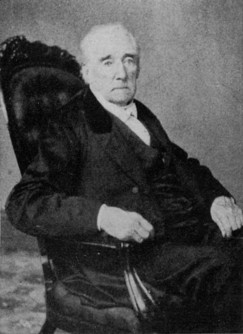
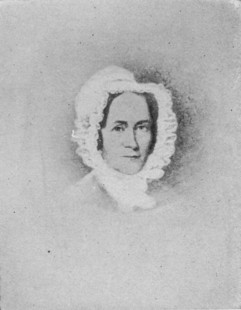
Tuesday.—I could not keep a journal for two weeks, because Grandfather and Grandmother have been very sick and we were afraid something dreadful was going to happen. We are so glad that they are well again. Grandmother was sick upstairs and Grandfather in the bedroom downstairs, and we carried messages back and forth for them. Dr. Carr and Aunt Mary came over twice every day and said they had the influenza and the inflammation of the lungs. It was lonesome for us to sit down to the table and just have Hannah wait on us. We did not have any blessing because there was no one to ask it. Anna said she could, but I was afraid she would not say it right, so I told her she needn’t. We had such lumps in our throats we could not eat much and we cried ourselves to sleep two or three nights. Aunt Ann Field took us home with her one afternoon to stay all night. We liked the idea and Mary and Louisa and Anna and I planned what we would play in the evening, but just as it was dark our hired man, Patrick McCarty, drove over after us. He said Grandfather and Grandmother could not get to sleep till they saw the children and bid them good-night. So we rode home with him. We never stayed anywhere away from home all night that we can remember. When Grandmother came downstairs the first time she was too weak to walk, so she sat on each step till she got down. When Grandfather saw her, he smiled and said to us: “When she will, she will, you may depend on’t; and when she won’t she won’t, and that’s the end on’t.” But we knew all the time that he was very glad to see her.
1853
Sunday, March 20.—It snowed so, that we could not go to church to-day and it was the longest day I ever spent. The only excitement was seeing the snowplow drawn by two horses, go up on this side of the street and down on the other. Grandfather put on his long cloak with a cape, which he wears in real cold weather, and went. We wanted to pull some long stockings over our shoes and go too but Grandmother did not think it was best. She gave us the “Dairyman’s Daughter” and “Jane the Young Cottager,” by Leigh Richmond, to read. I don’t see how they happened to be so awfully good. Anna says they died of “early piety,” but she did not say it very loud. Grandmother said she would give me 10 cents if I would learn the verses in the New England Primer that John Rogers left for his wife and nine small children and one at the breast, when he was burned at the stake, at Smithfield, England, in 1555. One verse is, “I leave you here a little book for you to look upon that you may see your father’s face when he is dead and gone.” It is a very long piece but I got it. Grandmother says “the blood of the martyrs is the seed of the church.” Anna learned
“In Adam’s fall we sinned all. My Book and heart shall never part. The Cat doth play and after slay. The Dog doth bite a thief at night.”
When she came to the end of it and said,
“Zaccheus he, did climb a tree, his Lord to see.”
she said she heard some one say, “The tree broke down and let him fall and he did not see his Lord at all.” Grandmother said it was very wicked indeed and she hoped Anna would try and forget it.
April 1.—Grandmother sent me up into the little chamber to-day to straighten things and get the room ready to be cleaned. I found a little book called “Child’s Pilgrim Progress, Illustrated,” that I had never seen before. I got as far as Giant Despair when Anna came up and said Grandmother sent her to see what I was doing, and she went back and told her that I was sitting on the floor in the midst of books and papers and was so absorbed in “Pilgrim’s Progress” that I had made none myself. It must be a good book for Grandmother did not say a word. Father sent us “Gulliver’s Travels” and there is a gilt picture on the green cover, of a giant with legs astride and little Lilliputians standing underneath, who do not come up to his knees. Grandmother did not like the picture, so she pasted a piece of pink calico over it, so we could only see the giant from his waist up. I love the story of Cinderella and the poem, “’Twas the night before Christmas,” and I am sorry that there are no fairies and no Santa Claus.
We go to school to Miss Zilpha Clark in her own house on Gibson Street. Other girls who go are Laura Chapin, Julia Phelps, Mary Paul, Bessie Seymour, Lucilla and Mary Field, Louisa Benjamin, Nannie Corson, Kittie Marshall, Abbie Clark and several other girls. I like Abbie Clark the best of all the girls in school excepting of course my sister Anna.
Before I go to school every morning I read three chapters in the Bible. I read three every day and five on Sunday and that takes me through the Bible in a year. Those I read this morning were the first, second and third chapters of Job. The first was about Eliphaz reproveth Job; second, Benefit of God’s correction; third, Job justifieth his complaint. I then learned a text to say at school. I went to school at quarter to nine and recited my text and we had prayers and then proceeded with the business of the day. Just before school was out, we recited in “Science of Things Familiar,” and in Dictionary, and then we had calisthenics.
We go through a great many figures and sing “A Life on the Ocean Wave,” “What Fairy-like Music Steals Over the Sea,” “Lightly Row, Lightly Row, O’er the Glassy Waves We Go,” and “O Come, Come Away,” and other songs. Mrs. Judge Taylor wrote one song on purpose for us.
May 1.—I arose this morning about the usual time and read my three chapters in the Bible and had time for a walk in the garden before breakfast. The polyanthuses are just beginning to blossom and they border all the walk up and down the garden. I went to school at quarter of nine, but did not get along very well because we played too much. We had two new scholars to-day, Miss Archibald and Miss Andrews, the former about seventeen and the latter about fifteen. In the afternoon old Mrs. Kinney made us a visit, but she did not stay very long. In dictionary class I got up sixth, although I had not studied my lesson very much.
July.—Hiram Goodrich, who lives at Mr. Myron H. Clark’s, and George and Wirt Wheeler ran away on Sunday to seek their fortunes. When they did not come back every one was frightened and started out to find them. They set out right after Sunday School, taking their pennies which had been given them for the contribution, and were gone several days. They were finally found at Palmyra. When asked why they had run away, one replied that he thought it was about time they saw something of the world. We heard that Mr. Clark had a few moments’ private conversation with Hiram in the barn and Mr. Wheeler the same with his boys and we do not think they will go traveling on their own hook again right off. Miss Upham lives right across the street from them and she was telling little Morris Bates that he must fight the good fight of faith and he asked her if that was the fight that Wirt Wheeler fit. She probably had to make her instructions plainer after that.
July.—Every Saturday our cousins, Lucilla and Mary and Louisa Field, take turns coming to Grandmother’s to dinner. It was Mary’s turn to-day, but she was sick and couldn’t come, so Grandmother told us that we could dress up and make some calls for her. We were very glad. She told us to go to Mrs. Gooding’s first, so we did and she was glad to see us and gave us some cake she had just made. Then we went on to Mr. Greig’s. We walked up the high steps to the front door and rang the bell and Mr. Alexander came. We asked if Mrs. Greig and Miss Chapin were at home and he said yes, and asked us into the parlor. We looked at the paintings on the wall and looked at ourselves in the long looking-glass, while we were waiting. Mrs. Irving came in first. She was very nice and said I looked like her niece, Julie Jeffrey. I hope I do, for I would like to look like her. Mrs. Greig and Miss Chapin came in and were very glad to see us, and took us out into the greenhouse and showed us all the beautiful plants. When we said we would have to go they said goodbye and sent love to Grandmother and told us to call again. I never knew Anna to act as polite as she did to-day. Then we went to see Mrs. Judge Phelps and Miss Eliza Chapin, and they were very nice and gave us some flowers from their garden. Then we went on to Miss Caroline Jackson’s, to see Mrs. Holmes. Sometimes she is my Sunday School teacher, and she says she and our mother used to be great friends at the seminary. She said she was glad we came up and she hoped we would be as good as our mother was. That is what nearly every one says. On our way back, we called on Mrs. Dana at the Academy, as she is a friend of Grandmother. She is Mrs. Noah T. Clarke’s mother. After that, we went home and told Grandmother we had a very pleasant time calling on our friends and they all asked us to come again.
Sunday, August 15.—To-day the Sacrament of the Lord’s Supper was held in our church, and Mr. Daggett baptized several little babies. They looked so cunning when he took them in his arms and not one of them cried. I told Grandmother when we got home that I remembered when Grandfather Richards baptized me in Auburn, and when he gave me back to mother he said, “Blessed little lambkin, you’ll never know your grandpa.” She said I was mistaken about remembering it, for he died before I was a year old, but I had heard it told so many times I thought I remembered it. Probably that is the way it was but I know it happened.
November 22.—I wrote a composition to-day, and the subject was, “Which of the Seasons Is the Pleasantest?” Anna asked Grandmother what she should write about, and Grandmother said she thought “A Contented Mind” would be a very good subject, but Anna said she never had one and didn’t know what it meant, so she didn’t try to write any at all.
A squaw walked right into our kitchen to-day with a blanket over her head and had beaded purses to sell.
This is my composition which I wrote: “Which of the seasons is the pleasantest? Grim winter with its cold snows and whistling winds, or pleasant spring with its green grass and budding trees, or warm summer with its ripening fruit and beautiful flowers, or delightful autumn with its golden fruit and splendid sunsets? I think that I like all the seasons very well. In winter comes the blazing fire and Christmas treat. Then we can have sleigh-rides and play in the snow and generally get pretty cold noses and toses. In spring we have a great deal of rain and very often snow and therefore we do not enjoy that season as much as we would if it was dry weather, but we should remember that April showers bring May flowers. In summer we can hear the birds warbling their sweet notes in the trees and we have a great many strawberries, currants, gooseberries and cherries, which I like very much, indeed, and I think summer is a very pleasant season. In autumn we have some of our choicest fruits, such as peaches, pears, apples, grapes and plums and plenty of flowers in the former part, but in the latter, about in November, the wind begins to blow and the leaves to fall and the flowers to wither and die. Then cold winter with its sleigh-rides comes round again.” After I had written this I went to bed. Anna tied her shoe strings in hard knots so she could sit up later.
November 23.—We read our compositions to-day and Miss Clark said mine was very good. One of the girls had a Prophecy for a composition and told what we were all going to be when we grew up. She said Anna Richards was going to be a missionary and Anna cried right out loud. I tried to comfort her and told her it might never happen, so she stopped crying.
November 24.—Three ladies visited our school to-day, Miss Phelps, Miss Daniels and Mrs. Clark. We had calisthenics and they liked them.
Sunday.—Mr. Tousley preached to-day. Mr. Lamb is Superintendent of the Sunday School. Mr. Chipman used to be. Miss Mollie Bull played the melodeon. Mr. Fairchild is my teacher when he is there. He was not there to-day and Miss Mary Howell taught our class. I wish I could be as good and pretty as she is. We go to church morning and afternoon and to Sunday School, and learn seven verses every week and recite catechism and hymns to Grandmother in the evening. Grandmother knows all the questions by heart, so she lets the book lie in her lap and she asks them with her eyes shut. She likes to hear us sing:
“’Tis religion that can give Sweetest pleasure while we live, ’Tis religion can supply Solid comfort when we die.”
December 1.—Grandfather asked me to read President Pierce’s message aloud to him this evening. I thought it was very long and dry, but he said it was interesting and that I read it very well. I am glad he liked it. Part of it was about the Missouri Compromise and I didn’t even know what it meant.
December 8.—We are taking dictation lessons at school now. Miss Clark reads to us from the “Life of Queen Elizabeth” and we write it down in a book and keep it. She corrects it for us. I always spell “until” with two l’s and she has to mark it every time. I hope I will learn how to spell it after a while.
Saturday, December 9.—We took our music lessons to-day. Miss Hattie Heard is our teacher and she says we are getting along well. Anna practiced her lesson over sixty-five times this morning before breakfast and can play “Mary to the Saviour’s Tomb” as fast as a waltz.
We chose sides and spelled down at school to-day. Julia Phelps and I stood up the last and both went down on the same word—eulogism. I don’t see the use of that “e.” Miss Clark gave us twenty words which we had to bring into some stories which we wrote. It was real fun to hear them. Every one was different.
This evening as we sat before the fire place with Grandmother, she taught us how to play “Cat’s Cradle,” with a string on our fingers.
December 25.—Uncle Edward Richards sent us a basket of lovely things from New York for Christmas. Books and dresses for Anna and me, a kaleidoscope, large cornucopias of candy, and games, one of them being battledore and shuttlecock. Grandmother says we will have to wait until spring to play it, as it takes so much room. I wish all the little girls in the world had an Uncle Edward.
1854
January 1, 1854.—About fifty little boys and girls at intervals knocked at the front door to-day, to wish us Happy New Year. We had pennies and cakes and apples ready for them. The pennies, especially, seemed to attract them and we noticed the same ones several times. Aunt Mary Carr made lovely New Year cakes with a pretty flower stamped on before they were baked.
February 4, 1854.—We heard to-day of the death of our little half-sister, Julia Dey Richards, in Penn Yan, yesterday, and I felt so sorry I couldn’t sleep last night so I made up some verses about her and this morning wrote them down and gave them to Grandfather. He liked them so well he wanted me to show them to Miss Clark and ask her to revise them. I did and she said she would hand them to her sister Mary to correct. When she handed them back they were very much nicer than they were at first and Grandfather had me copy them and he pasted them into one of his Bibles to keep.
Saturday.—Anna and I went to call on Miss Upham to-day. She is a real old lady and lives with her niece, Mrs. John Bates, on Gibson Street. Our mother used to go to school to her at the Seminary. Miss Upham said to Anna, “Your mother was a lovely woman. You are not at all like her, dear.” I told Anna she meant in looks I was sure, but Anna was afraid she didn’t.
Sunday.—Mr. Daggett’s text this morning was the 22nd chapter of Revelation, 16th verse, “I am the root and offspring of David and the bright and morning star.” Mrs. Judge Taylor taught our Sunday School class to-day and she said we ought not to read our S. S. books on Sunday. I always do. Mine to-day was entitled, “Cheap Repository Tracts by Hannah More,” and it did not seem unreligious at all.
Tuesday.—A gentleman visited our school to-day whom we had never seen. Miss Clark introduced him to us. When he came in, Miss Clark said, “Young ladies,” and we all stood up and bowed and said his name in concert. Grandfather says he would rather have us go to school to Miss Clark than any one else because she teaches us manners as well as books. We girls think that he is a very particular friend of Miss Clark. He is very nice looking, but we don’t know where he lives. Laura Chapin says he is an architect. I looked it up in the dictionary and it says one who plans or designs. I hope he does not plan to get married to Miss Clark and take her away and break up the school, but I presume he does, for that is usually the way.
Monday.—There was a minister preached in our church last night and some people say he is the greatest minister in the world. I think his name was Mr. Finney. Grandmother said I could go with our girl, Hannah White. We sat under the gallery, in Miss Antoinette Pierson’s pew. There was a great crowd and he preached good. Grandmother says that our mother was a Christian when she was ten years old and joined the church and she showed us some sermons that mother used to write down when she was seventeen years old, after she came home from church, and she has kept them all these years. I think children in old times were not as bad as they are now.
Tuesday.—Mrs. Judge Taylor sent for me to come over to see her to-day. I didn’t know what she wanted, but when I got there she said she wanted to talk and pray with me on the subject of religion. She took me into one of the wings. I never had been in there before and was frightened at first, but it was nice after I got used to it. After she prayed, she asked me to, but I couldn’t think of anything but “Now I lay me down to sleep,” and I was afraid she would not like that, so I didn’t say anything. When I got home and told Anna, she said, “Caroline, I presume probably Mrs. Taylor wants you to be a Missionary, but I shan’t let you go.” I told her she needn’t worry for I would have to stay at home and look after her. After school to-night I went out into Abbie Clark’s garden with her and she taught me how to play “mumble te peg.” It is fun, but rather dangerous. I am afraid Grandmother won’t give me a knife to play with. Abbie Clark has beautiful pansies in her garden and gave me some roots.
April 1.—This is April Fool’s Day. It is not a very pleasant day, but I am not very pleasant either. I spent half an hour this morning very pleasantly writing a letter to my Father but just as I had finished it, Grandmother told me something to write which I did not wish to and I spoke quite disrespectfully, but I am real sorry and I won’t do so any more.
Lucilla and Louisa Field were over to our house to dinner to-day. We had a very good dinner indeed. In the afternoon, Grandmother told me that I might go over to Aunt Ann’s on condition that I would not stay, but I stayed too long and got my indian rubbers real muddy and Grandmother did not like it. I then ate my supper and went to bed at ten minutes to eight o’clock.
Monday, April 3.—I got up this morning at quarter before six o’clock. I then read my three chapters in the Bible, and soon after ate my breakfast, which consisted of ham and eggs and buckwheat cakes. I then took a morning walk in the garden and rolled my hoop. I went to school at quarter before 9 o’clock. Miss Clark has us recite a verse of scripture in response to roll call and my text for the morning was the 8th verse of the 6th chapter of Matthew, “Be ye not therefore like unto them; for your Father knoweth what things ye have need of before ye ask him.” We then had prayers. I then began to write my composition and we had recess soon after. In the afternoon I recited grammar, wrote my dictation lesson and Dictionary lesson. I was up third in my Dictionary class but missed two words, and instead of being third in the class, I was fifth. After supper I read my Sunday School book, “A Shepherd’s Call to the Lambs of his Flock.” I went to bed as usual at ten minutes to 8 o’clock.
April 4.—We went into our new schoolroom to-day at Miss Clark’s school. It is a very nice room and much larger than the one we occupied before. Anna and I were sewing on our dolls’ clothes this afternoon and we talked so much that finally Grandmother said, “the one that speaks first is the worst; and the one that speaks last is the best.” We kept still for quite a while, which gave Grandmother a rest, but was very hard for us, especially Anna. Pretty soon Grandmother forgot and asked us a question, so we had the joke on her. Afterwards Anna told me she would rather “be the worst,” than to keep still so long again.
Wednesday.—Grandmother sent Anna and me up to Butcher Street after school to-day to invite Chloe to come to dinner. I never saw so many black people as there are up there. We saw old Lloyd and black Jonathan and Dick Valentine and Jerusha and Chloe and Nackie. Nackie was pounding up stones into sand, to sell, to scour with. Grandmother often buys it of her. I think Chloe was surprised, but she said she would be ready, to-morrow, at eleven o’clock, when the carriage came for her. I should hate to be as fat as Chloe. I think she weighs 300. She is going to sit in Grandfather’s big arm chair, Grandmother says.
We told her we should think she would rather invite white ladies, but she said Chloe was a poor old slave and as Grandfather had gone to Saratoga she thought it was a good time to have her. She said God made of one blood all the people on the face of the earth, so we knew she would do it and we didn’t say any more. When we talk too much, Grandfather always says N. C. (nuff ced). She sent a carriage for Chloe and she came and had a nice dinner, not in the kitchen either. Grandmother asked her if there was any one else she would like to see before she went home and she said, “Yes, Miss Rebekah Gorham,” so she told the coachman to take her down there and wait for her to make a call and then take her home and he did. Chloe said she had a very nice time, so probably Grandmother was all right as she generally is, but I could not be as good as she is, if I should try one hundred years.
June.—Our cousin, George Bates, of Honolulu, came to see us to-day. He has one brother, Dudley, but he didn’t come. George has just graduated from college and is going to Japan to be a doctor. He wrote such a nice piece in my album I must copy it, “If I were a poet I would celebrate your virtues in rhyme, if I were forty years old, I would write a homily on good behavior; being neither, I will quote two familiar lines which if taken as a rule of action will make you a good and happy woman:
“Honor and shame from no condition rise, Act well your part, there all the honor lies.”
I think he is a very smart young man and will make a good doctor to the heathen.
Saturday.—Grandfather took us down street to be measured for some new patten leather shoes at Mr. Ambler’s. They are going to be very nice ones for best. We got our new summer hats from Mrs. Freshour’s millinery and we wore them over to show to Aunt Ann and she said they were the very handsomest bonnets she had seen this year.
Tuesday.—When we were on our way to school this morning we met a lot of people and girls and boys going to a picnic up the lake. They asked us to go, too, but we said we were afraid we could not. Mr. Alex. Howell said, “Tell your Grandfather I will bring you back safe and sound unless the boat goes to the bottom with all of us.” So we went home and told Grandfather and much to our surprise he said we could go. We had never been on a boat or on the lake before. We went up to the head on the steamer “Joseph Wood” and got off at Maxwell’s Point. They had a picnic dinner and lots of good things to eat. Then we all went into the glen and climbed up through it. Mr. Alex. Howell and Mrs. Wheeler got to the top first and everybody gave three cheers. We had a lovely time riding back on the boat and told Grandmother we had the very best time we ever had in our whole lives.
May 26.—There was an eclipse of the sun to-day and we were very much excited looking at it. General Granger came over and gave us some pieces of smoked glass. Miss Clark wanted us to write compositions about it so Anna wrote, “About eleven o’clock we went out to see if it had come yet, but it hadn’t come yet, so we waited awhile and then looked again and it had come, and there was a piece of it cut out of it.” Miss Clark said it was a very good description and she knew Anna wrote it all herself.
I handed in a composition, too, about the eclipse, but I don’t think Miss Clark liked it as well as she did Anna’s, because it had something in it about “the beggarly elements of the world.” She asked me where I got it and I told her that it was in a nice story book that Grandmother gave me to read entitled “Elizabeth Thornton or the Flower and Fruit of Female Piety, and other sketches,” by Samuel Irenaeus Prime. This was one of the other sketches: It commenced by telling how the moon came between the sun and the earth, and then went on about the beggarly elements. Miss Clark asked me if I knew what they meant and I told her no, but I thought they sounded good. She just smiled and never scolded me at all. I suppose next time I must make it all up myself.
There is a Mr. Packer in town, who teaches all the children to sing. He had a concert in Bemis Hall last night and he put Anna on the top row of the pyramid of beauty and about one hundred children in rows below. She ought to have worn a white dress as the others did but Grandmother said her new pink barège would do. I curled her hair all around in about thirty curls and she looked very nice. She waved the flag in the shape of the letter S and sang “The Star Spangled Banner,” and all the others joined in the chorus. It was perfectly grand.
Monday.—When we were on our way to school this morning we saw General Granger coming, and Anna had on such a homely sunbonnet she took it off and hid it behind her till he had gone by. When we told Grandmother she said, “Pride goeth before destruction and a haughty spirit before a fall.” I never heard of any one who knew so many Bible verses as Grandmother. Anna thought she would be sorry for her and get her a new sunbonnet, but she didn’t.
Sunday.—We have Sunday School at nine o’clock in the morning now. Grandfather loves to watch us when we walk off together down the street, so he walks back and forth on the front walk till we come out, and gives us our money for the contribution. This morning we had on our new white dresses that Miss Rosewarne made and new summer hats and new patten leather shoes and our mitts. When he had looked us all over he said, with a smile, “The Bible says, let your garments be always white.” After we had gone on a little ways, Anna said: “If Grandmother had thought of that verse I wouldn’t have had to wear my pink barège dress to the concert.” I told her she need not feel bad about that now, for she sang as well as any of them and looked just as good. She always believes everything I say, although she does not always do what I tell her to. Mr. Noah T. Clarke told us in Sunday School last Sunday that if we wanted to take shares in the missionary ship, Morning Star, we could buy them at 10 cents apiece, and Grandmother gave us $1 to-day so we could have ten shares. We got the certificate with a picture of the ship on it, and we are going to keep it always. Anna says if we pay the money, we don’t have to go.
Sunday.—I almost forgot that it was Sunday this morning and talked and laughed just as I do week days. Grandmother told me to write down this verse before I went to church so I would remember it: “Keep thy foot when thou goest to the house of God, and be more ready to hear than to offer the sacrifice of fools.” I will remember it now, sure. My feet are all right any way with my new patten leather shoes on but I shall have to look out for my head. Mr. Thomas Howell read a sermon to-day as Mr. Daggett is out of town. Grandmother always comes upstairs to get the candle and tuck us in before she goes to bed herself, and some nights we are sound asleep and do not hear her, but last night we only pretended to be asleep. She kneeled down by the bed and prayed aloud for us, that we might be good children and that she might have strength given to her from on high to guide us in the straight and narrow path which leads to life eternal. Those were her very words. After she had gone downstairs we sat up in bed and talked about it and promised each other to be good, and crossed our hearts and “hoped to die” if we broke our promise. Then Anna was afraid we would die, but I told her I didn’t believe we would be as good as that, so we kissed each other and went to sleep.
Mr. Noah T. Clarke Miss Upham
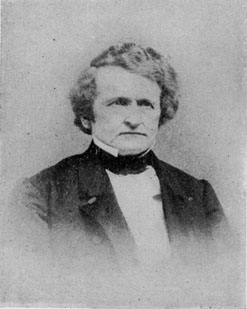
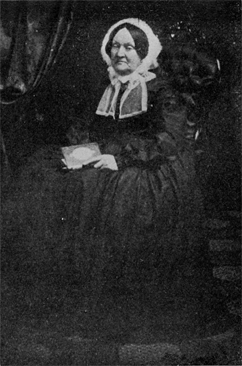
Monday.—“Old Alice” was at our house to-day and Grandmother gave her some flowers. She hid them in her apron for she said if she should meet any little children and they should ask for them she would have to let them go. Mrs. Gooding was at our house to-day and made a carpet. We went over to Aunt Mary Carr’s this evening to see the gas and the new chandeliers. They are brontz.
Tuesday.—My three chapters that I read this morning were about Josiah’s zeal and reformation; 2nd, Jerusalem taken by Nebuchadnezzar; 3rd, Jerusalem besieged and taken. The reason that we always read the Bible the first thing in the morning is because it says in the Bible, “Seek first the kingdom of God and His righteousness and all these things shall be added unto you.” Grandmother says she hopes we will treasure up all these things in our hearts and practice them in our lives. I hope so, too. This morning Anna got very mad at one of the girls and Grandmother told her she ought to return good for evil and heap coals of fire on her head. Anna said she wished she could and burn her all up, but I don’t think she meant it.
Wednesday.—I got up this morning at twenty minutes after five. I always brush my teeth every morning, but I forget to put it down here. I read my three chapters in Job and played in the garden and had time to read Grandmother a piece in the paper about some poor children in New York. Anna and I went over to Aunt Ann’s before school and she gave us each two sticks of candy apiece. Part of it came from New York and part from Williamstown, Mass., where Henry goes to college. Ann Eliza is going down street with us this afternoon to buy us some new summer bonnets. They are to be trimmed with blue and white and are to come to five dollars. We are going to Mr. Stannard’s store also, to buy us some stockings. I ought to buy me a new thimble and scissors for I carried my sewing to school to-day and they were inside of it very carelessly and dropped out and got lost. I ought to buy them with my own money, but I haven’t got any, for I gave all I had (two shillings) to Anna to buy Louisa Field a cornelian ring. Perhaps Father will send me some money soon, but I hate to ask him for fear he will rob himself. I don’t like to tell Grandfather how very careless I was, though I know he would say, “Accidents will happen.”
Thursday.—I was up early this morning because a dressmaker, Miss Willson, is coming to make me a new calico dress. It is white with pink spots in it and Grandfather bought it in New York. It is very nice indeed and I think Grandfather was very kind to get it for me. I had to stay at home from school to be fitted. I helped sew and run my dress skirt around the bottom and whipped it on the top. I went to school in the afternoon, but did not have my lessons very well. Miss Clark excused me because I was not there in the morning. Some girls got up on our fence to-day and walked clear across it, the whole length. It is iron and very high and has a stone foundation. Grandmother asked them to get down, but I think they thought it was more fun to walk up there than it was on the ground. The name of the little girl that got up first was Mary Lapham. She is Lottie Lapham’s cousin. I made the pocket for my dress after I got home from school and then Grandfather said he would take us out to ride, so he took us way up to Thaddeus Chapin’s on the hill. Julia Phelps was there, playing with Laura Chapin, for she is her cousin. Henry and Ann Eliza Field came over to call this evening. Henry has come home from Williams College on his vacation and he is a very pleasant young man, indeed. I am reading a continued story in Harper’s Magazine. It is called Little Dorritt, by Charles Dickens, and is very interesting.
Friday, May.—Miss Clark told us we could have a picnic down to Sucker Brook this afternoon and she told us to bring our rubbers and lunches by two o’clock; but Grandmother was not willing to let us go; not that she wished to deprive us of any pleasure for she said instead we could wear our new black silk basks and go with her to Preparatory lecture, so we did, but when we got there we found that Mr. Daggett was out of town so there was no meeting. Then she told us we could keep dressed up and go over to Aunt Mary Carr’s and take her some apples, and afterwards Grandfather took us to ride to see old Mrs. Sanborn and old Mr. and Mrs. Atwater. He is ninety years old and blind and deaf, so we had quite a good time after all.
Rev. Mr. Dickey, of Rochester, agent for the Seaman’s Friend Society, preached this morning about the poor little canal boy. His text was from the 107th Psalm, 23rd verse, “They that go down into the sea in ships.” He has the queerest voice and stops off between his words. When we got home Anna said she would show us how he preached and she described what he said about a sailor in time of war. She said, “A ball came—and struck him there—another ball came—and struck him there—he raised his faithful sword—and went on—to victory—or death.” I expected Grandfather would reprove her, but he just smiled a queer sort of smile and Grandmother put her handkerchief up to her face, as she always does when she is amused about anything. I never heard her laugh out loud, but I suppose she likes funny things as well as anybody. She did just the same, this morning, when Grandfather asked Anna where the sun rose, and she said “over by Gen. Granger’s house and sets behind the Methodist church.” She said she saw it herself and should never forget it when any one asked her which was east or west. I think she makes up more things than any one I know of.
Sunday.—Rev. M. L. R. P. Thompson preached to-day. He used to be the minister of our church before Mr. Daggett came. Some people call him Rev. “Alphabet” Thompson, because he has so many letters in his name. He preached a very good sermon from the text, “Dearly beloved, as much as lieth in you, live peaceably with all men.” I like to hear him preach, but not as well as I do Mr. Daggett. I suppose I am more used to him.
Thursday.—Edward Everett, of Boston, lectured in our church this evening. They had a platform built even with the tops of the pews, so he did not have to go up into the pulpit. Crowds and crowds came to hear him from all over everywhere. Grandmother let me go. They say he is the most eloquent speaker in the U. S., but I have heard Mr. Daggett when I thought he was just as good.
Sunday.—We went to church to-day and heard Rev. Mr. Stowe preach. His text was, “The poor ye have with you always and whensoever ye will ye may do them good.” I never knew any one who liked to go to church as much as Grandmother does. She says she “would rather be a doorkeeper in the house of our God, than to dwell in the tents of wickedness.” They don’t have women doorkeepers, and I know she would not dwell a minute in a tent. Mr. Coburn is the doorkeeper in our church and he rings the bell every day at nine in the morning and at twelve and at nine in the evening, so Grandfather knows when it is time to cover up the fire in the fireplace and go to bed. I think if the President should come to call he would have to go home at nine o’clock. Grandfather’s motto is:
“Early to bed and early to rise Makes a man healthy, wealthy and wise.”
Tuesday.—Mrs. Greig and Miss Chapin called to see us to-day. Grandmother says that we can return the calls as she does not visit any more. We would like to, for we always enjoy dressing up and making calls. Anna and I received two black veils in a letter to-day from Aunt Caroline Dey. Just exactly what we had wanted for a long while. Uncle Edward sent us five dollars and Grandmother said we could buy just what we wanted, so we went down street to look at black silk mantillas. We went to Moore’s store and to Richardson’s and to Collier’s, but they asked ten, fifteen or twenty dollars for them, so Anna said she resolved from now, henceforth and forever not to spend her money for black silk mantillas.
Sunday.—Rev. Mr. Tousley preached to-day to the children and told us how many steps it took to be bad. I think he said lying was first, then disobedience to parents, breaking the Sabbath, swearing, stealing, drunkenness. I don’t remember just the order they came. It was very interesting, for he told lots of stories and we sang a great many times. I should think Eddy Tousley would be an awful good boy with his father in the house with him all the while, but probably he has to be away part of the time preaching to other children.
Sunday.—Uncle David Dudley Field and his daughter, Mrs. Brewer, of Stockbridge, Mass., are visiting us. Mrs. Brewer has a son, David Josiah, who is in Yale College. After he graduates he is going to be a lawyer and study in his Uncle David Dudley Field’s office in New York. He was born in Smyrna, Asia Minor, where his father and mother were missionaries to the Greeks, in 1837. Our Uncle David preached for Mr. Daggett this afternoon. He is a very old man and left his sermon at home and I had to go back after it. His brother, Timothy, was the first minister in our church, about fifty years ago. Grandmother says she came all the way from Connecticut with him on horseback on a pillion behind him. Rather a long ride, I should say. I heard her and Uncle David talking about their childhood and how they lived in Guilford, Conn., in a house that was built upon a rock. That was some time in the last century like the house that it tells about in the Bible that was built on a rock.
Sunday, August 10, 1854.—Rev. Mr. Daggett’s text this morning was, “Remember the Sabbath day to keep it holy.” Grandmother said she thought the sermon did not do us much good for she had to tell us several times this afternoon to stop laughing. Grandmother said we ought to be good Sundays if we want to go to heaven, for there it is one eternal Sabbath. Anna said she didn’t want to be an angel just yet and I don’t think there is the least danger of it, as far as I can judge. Grandmother said there was another verse, “If we do not have any pleasure on the Sabbath, or think any thoughts, we shall ride on the high places of the earth,” and Anna said she liked that better, for she would rather ride than do anything else, so we both promised to be good. Grandfather told us they used to be more strict about Sunday than they are now. Then he told us a story, how he had to go to Geneva one Saturday morning in the stage and expected to come back in the evening, but there was an accident, so the stage did not come till Sunday morning. Church had begun and he told the stage driver to leave him right there, so he went in late and the stage drove on. The next day he heard that he was to come before the minister, Rev. Mr. Johns, and the deacons and explain why he had broken the fourth commandment. When he got into the meeting Mr. Johns asked him what he had to say, and he explained about the accident and asked them to read a verse from the 8th chapter of John, before they made up their minds what to do to him. The verse was, “Let him that is without sin among you cast the first stone.” Grandfather said they all smiled, and the minister said the meeting was out. Grandfather says that shows it is better to know plenty of Bible verses, for some time they may do you a great deal of good. We then recited the catechism and went to bed.
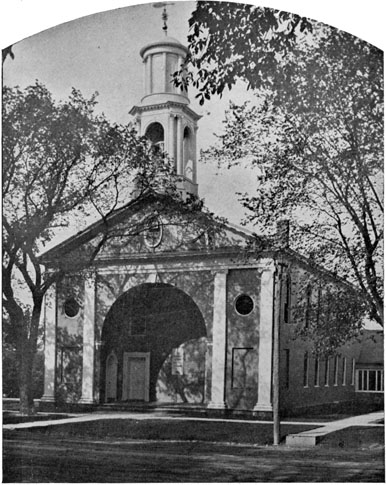
First Congregational Church
August 21.—Anna says that Alice Jewett feels very proud because she has a little baby brother. They have named him John Harvey Jewett after his father, and Alice says when he is bigger she will let Anna help her take him out to ride in his baby-carriage. I suppose they will throw away their dolls now.
Tuesday, September 1.—I am sewing a sheet over and over for Grandmother and she puts a pin in to show me my stint, before I can go out to play. I am always glad when I get to it. I am making a sampler, too, and have all the capital letters worked and now will make the small ones. It is done in cross stitch on canvas with different color silks. I am going to work my name, too. I am also knitting a tippet on some wooden needles that Henry Carr made for me. Grandmother has raveled it out several times because I dropped stitches. It is rather tedious, but she says, “If at first you don’t succeed, try, try again.” Some military soldiers went by the house to-day and played some beautiful music. Grandfather has a teter and swing for us in the back yard and we enjoy them usually, but to-night Anna slid off the teter board when she was on the ground and I was in the air and I came down sooner than I expected. There was a hand organ and monkey going by and she was in a hurry to get to the street to see it. She got there a good while before I did. The other day we were swinging and Grandmother called us in to dinner, but Anna said we could not go until we “let the old cat die.” Grandmother said it was more important that we should come when we are called.
October.—Grandmother’s name is Abigail, but she was always called “Nabby” at home. Some of the girls call me “Carrie,” but Grandmother prefers “Caroline.” She told us to-day, how when she was a little girl, down in Connecticut in 1794, she was on her way to school one morning and she saw an Indian coming and was so afraid, but did not dare run for fear he would chase her. So she thought of the word sago, which means “good morning,” and when she got up close to him she dropped a curtesy and said “Sago,” and he just went right along and never touched her at all. She says she hopes we will always be polite to every one, even to strangers.
November.—Abbie Clark’s father has been elected Governor and she is going to Albany to live, for a while. We all congratulated her when she came to school this morning, but I am sorry she is going away. We will write to each other every week. She wrote a prophecy and told the girls what they were going to be and said I should be mistress of the White House. I think it will happen, about the same time that Anna goes to be a missionary.
December.—There was a moonlight sleigh-ride of boys and girls last night, but Grandfather did not want us to go, but to-night he said he was going to take us to one himself. So after supper he told Mr. Piser to harness the horse to the cutter and bring it around to the front gate. Mr. Piser takes care of our horse and the Methodist Church. He lives in the basement. Grandfather sometimes calls him Shakespeare to us, but I don’t know why. He doesn’t look as though he wrote poetry. Grandfather said he was going to take us out to Mr. Waterman Powers’ in Farmington and he did. They were quite surprised to see us, but very glad and gave us apples and doughnuts and other good things. We saw Anne and Imogene and Morey and one little girl named Zimmie. They wanted us to stay all night, but Grandmother was expecting us. We got home safe about ten o’clock and had a very nice time. We never sat up so late before.
1855
Wednesday, January 9.—I came downstairs this morning at ten minutes after seven, almost frozen. I never spent such a cold night before in all my life. It is almost impossible to get warm even in the dining-room. The thermometer is 10° below zero. The schoolroom was so cold that I had to keep my cloak on. I spoke a piece this afternoon. It was “The Old Arm Chair,” by Eliza Cook. It begins, “I love it, I love it, and who shall dare to chide me for loving that old arm chair?” I love it because it makes me think of Grandmother. After school to-night Anna and I went downtown to buy a writing book, but we were so cold we thought we would never get back. Anna said she knew her toes were frozen. We got as far as Mr. Taylor’s gate and she said she could not get any farther; but I pulled her along, for I could not bear to have her perish in sight of home. We went to bed about eight o’clock and slept very nicely indeed, for Grandmother put a good many blankets on and we were warm.
January 23.—This evening after reading one of Dickens’ stories I knit awhile on my mittens. I have not had nice ones in a good while. Grandmother cut out the ones that I am wearing of white flannel, bound round the wrist with blue merino. They are not beautiful to be sure, but warm and will answer all purposes until I get some that are better. When I came home from school to-day Mrs. Taylor was here. She noticed how tall I was growing and said she hoped that I was as good as I was tall. A very good wish, I am sure.
Sunday, January 29.—Mr. Daggett preached this morning from the text, Deut. 8: 2: “And thou shalt remember all the way which the Lord thy God led thee.” It is ten years to-day since Mr. Daggett came to our church, and he told how many deaths there had been, and how many baptisms, and how many members had been added to the church. It was a very interesting sermon, and everybody hoped Mr. Daggett would stay here ten years more, or twenty, or thirty, or always. He is the only minister that I ever had, and I don’t ever want any other. We never could have any one with such a voice as Mr. Daggett’s, or such beautiful eyes. Then he has such good sermons, and always selects the hymns we like best, and reads them in such a way. This morning they sang: “Thus far the Lord has led me on, thus far His power prolongs my days.” After he has been away on a vacation he always has for the first hymn, and we always turn to it before he gives it out:
“Upward I lift mine eyes, From God is all my aid; The God that built the skies, And earth and nature made. “God is the tower To which I fly His grace is nigh In every hour.”
He always prays for the oil of joy for mourning and the garment of praise for the spirit of heaviness.
January, 1855.—Johnny Lyon is dead. Georgia Wilkinson cried awfully in school because she said she was engaged to him.
April.—Grandmother received a letter from Connecticut to-day telling of the death of her only sister. She was knitting before she got it and she laid it down a few moments and looked quite sad and said, “So sister Anna is dead.” Then after a little she went on with her work. Anna watched her and when we were alone she said to me, “Caroline, some day when you are about ninety you may be eating an apple or reading or doing something and you will get a letter telling of my decease and after you have read it you will go on as usual and just say, ‘So sister Anna is dead.’” I told her that I knew if I lived to be a hundred and heard that she was dead I should cry my eyes out, if I had any.
May.—Father has sent us a box of fruit from New Orleans. Prunes, figs, dates and oranges, and one or two pomegranates. We never saw any of the latter before. They are full of cells with jelly in, very nice. He also sent some seeds of sensitive plant, which we have sown in our garden.
This evening I wrote a letter to John and a little “poetry” to Father, but it did not amount to much. I am going to write some a great deal better some day. Grandfather had some letters to write this morning, and got up before three o’clock to write them! He slept about three-quarters of an hour to-night in his chair.
Sunday.—There was a stranger preached for Dr. Daggett this morning and his text was, “Man looketh upon the outward appearance but the Lord looketh on the heart.” When we got home Anna said the minister looked as though he had been sick from birth and his forehead stretched from his nose to the back of his neck, he was so bald. Grandmother told her she ought to have been more interested in his words than in his looks, and that she must have very good eyes if she could see all that from our pew, which is the furthest from the pulpit of any in church, except Mr. Gibson’s, which is just the same. Anna said she couldn’t help seeing it unless she shut her eyes, and then every one would think she had gone to sleep. We can see the Academy boys from our pew, too.
Mr. Lathrop, of the seminary, is superintendent of the Sunday School now and he had a present to-day from Miss Betsey Chapin, and several visitors came in to see it presented: Dr. Daggett, Mr. and Mrs. Alex. Howell, Mr. Tousley, Mr. Stowe, Mr. and Mrs. Gideon Granger and several others. The present was a certificate of life membership to something; I did not hear what. It was just a large piece of parchment, but they said it cost $25. Miss Lizzie Bull is my Sunday School teacher now. She asked us last Sunday to look up a place in the Bible where the trees held a consultation together, to see which one should reign over them. I did not remember any such thing, but I looked it up in the concordance and found it in Judges 9: 8. I found the meaning of it in Scott’s Commentary and wrote it down and she was very much pleased, and told us next Sunday to find out all about Absalom.
July.—Our sensitive plant is growing nicely and it is quite a curiosity. It has fern-like leaves and when we touch them, they close, but soon come out again. Anna and I keep them performing.
September 1.—Anna and I go to the seminary now. Mr. Richards and Mr. Tyler are the principals. Anna fell down and sprained her ankle to-day at the seminary, and had to be carried into Mrs. Richards’ library. She was sliding down the bannisters with little Annie Richards. I wonder what she will do next. She has good luck in the gymnasium and can beat Emma Wheeler and Jennie Ruckle swinging on the pole and climbing the rope ladder, although they and Sarah Antes are about as spry as squirrels and they are all good at ten pins. Susie Daggett and Lucilla Field have gone to Farmington, Conn., to school.
Monday.—I received a letter from my brother John in New Orleans, and his ambrotype. He has grown amazingly. He also sent me a N. O. paper and it gave an account of the public exercises in the school, and said John spoke a piece called “The Baron’s Last Banquet,” and had great applause and it said he was “a chip off the old block.” He is a very nice boy, I know that. James is sixteen years old now and is in Princeton College. He is studying German and says he thinks he will go to Germany some day and finish his education, but I guess in that respect he will be very much disappointed. Germany is a great ways off and none of our relations that I ever heard of have ever been there and it is not at all likely that any of them ever will. Grandfather says, though, it is better to aim too high than not high enough. James is a great boy to study. They had their pictures taken together once and John was holding some flowers and James a book and I guess he has held on to it ever since.
Sunday.—Polly Peck looked so funny on the front seat of the gallery. She had on one of Mrs. Greig’s bonnets and her lace collar and cape and mitts. She used to be a milliner so she knows how to get herself up in style. The ministers have appointed a day of fasting and prayer and Anna asked Grandmother if it meant to eat as fast as you can. Grandmother was very much surprised.
November 25.—I helped Grandmother get ready for Thanksgiving Day by stoning some raisins and pounding some cloves and cinnamon in the mortar pestle pounder. It is quite a job. I have been writing with a quill pen but I don’t like it because it squeaks so. Grandfather made us some to-day and also bought us some wafers to seal our letters with, and some sealing wax and a stamp with “R” on it. He always uses the seal on his watch fob with “B.” He got some sand, too. Our inkstand is double and has one bottle for ink and the other for sand to dry the writing.
December 20, 1855.—Susan B. Anthony is in town and spoke in Bemis Hall this afternoon. She made a special request that all the seminary girls should come to hear her as well as all the women and girls in town. She had a large audience and she talked very plainly about our rights and how we ought to stand up for them, and said the world would never go right until the women had just as much right to vote and rule as the men. She asked us all to come up and sign our names who would promise to do all in our power to bring about that glad day when equal rights should be the law of the land. A whole lot of us went up and signed the paper. When I told Grandmother about it she said she guessed Susan B. Anthony had forgotten that St. Paul said the women should keep silence. I told her, no, she didn’t for she spoke particularly about St. Paul and said if he had lived in these times, instead of 1800 years ago, he would have been as anxious to have the women at the head of the government as she was. I could not make Grandmother agree with her at all and she said we might better all of us stayed at home. We went to prayer meeting this evening and a woman got up and talked. Her name was Mrs. Sands. We hurried home and told Grandmother and she said she probably meant all right and she hoped we did not laugh.
Monday.—I told Grandfather if he would bring me some sheets of foolscap paper I would begin to write a book. So he put a pin on his sleeve to remind him of it and to-night he brought me a whole lot of it. I shall begin it to-morrow. This evening I helped Anna do her Arithmetic examples, and read her Sunday School book. The name of it is “Watch and Pray.” My book is the second volume of “Stories on the Shorter Catechism.”
Tuesday.—I decided to copy a lot of choice stories and have them printed and say they were “compiled by Caroline Cowles Richards,” it is so much easier than making them up. I spent three hours to-day copying one and am so tired I think I shall give it up. When I told Grandmother she looked disappointed and said my ambition was like “the morning cloud and the early dew,” for it soon vanished away. Anna said it might spring up again and bear fruit a hundredfold. Grandfather wants us to amount to something and he buys us good books whenever he has a chance. He bought me Miss Caroline Chesebro’s book, “The Children of Light,” and Alice and Phoebe Cary’s Poems. He is always reading Channing’s memoirs and sermons and Grandmother keeps “Lady Huntington and Her Friends,” next to “Jay’s Morning and Evening Exercises” and her Testament. Anna told Grandmother that she saw Mrs. George Willson looking very steadily at us in prayer meeting the other night and she thought she might be planning to “write us up.” Grandmother said she did not think Mrs. Willson was so short of material as that would imply, and she feared she had some other reason for looking at us. I think dear Grandmother has a little grain of sarcasm in her nature, but she only uses it on extra occasions. Anna said, “Oh, no; she wrote the lives of the three Mrs. Judsons and I thought she might like for a change to write the biographies of the ‘two Miss Richards.’” Anna has what might be called a vivid imagination.
1856
January 23.—This is the third morning that I have come down stairs at exactly twenty minutes to seven. I went to school all day. Mary Paul and Fannie Palmer read “The Snow Bird” to-day. There were some funny things in it. One was: “Why is a lady’s hair like the latest news? Because in the morning we always find it in the papers.” Another was: “One rod makes an acher, as the boy said when the schoolmaster flogged him.”
This is Allie Field’s birthday. He got a pair of slippers from Mary with the soles all on; a pair of mittens from Miss Eliza Chapin, and Miss Rebecca Gorham is going to give him a pair of stockings when she gets them done.
January 30.—I came home from school at eleven o’clock this morning and learned a piece to speak this afternoon, but when I got up to school I forgot it, so I thought of another one. Mr. Richards said that he must give me the praise of being the best speaker that spoke in the afternoon. Ahem!
February 6.—We were awakened very early this morning by the cry of fire and the ringing of bells and could see the sky red with flames and knew it was the stores and we thought they were all burning up. Pretty soon we heard our big brass door knocker being pounded fast and Grandfather said, “Who’s there?” “Melville Arnold for the bank keys,” we heard. Grandfather handed them out and dressed as fast as he could and went down, while Anna and I just lay there and watched the flames and shook. He was gone two or three hours and when he came back he said that Mr. Palmer’s hat store, Mr. Underhill’s book store, Mr. Shafer’s tailor shop, Mrs. Smith’s millinery, Pratt & Smith’s drug store, Mr. Mitchell’s dry goods store, two printing offices and a saloon were burned. It was a very handsome block. The bank escaped fire, but the wall of the next building fell on it and crushed it. After school to-night Grandmother let us go down to see how the fire looked. It looked very sad indeed. Judge Taylor offered Grandfather one of the wings of his house for the bank for the present but he has secured a place in Mr. Buhre’s store in the Franklin Block.
Thursday, February 7.—Dr. and Aunt Mary Carr and Uncle Field and Aunt Ann were over at our house to dinner to-day and we had a fine fish dinner, not one of Gabriel’s (the man who blows such a blast through the street, they call him Gabriel), but one that Mr. Francis Granger sent to us. It was elegant. Such a large one it covered a big platter. This evening General Granger came in and brought a gentleman with him whose name was Mr. Skinner. They asked Grandfather, as one of the trustees of the church, if he had any objection to a deaf and dumb exhibition there to-morrow night. He had no objection, so they will have it and we will go.
Friday.—We went and liked it very much. The man with them could talk and he interpreted it. There were two deaf and dumb women and three children. They performed very prettily, but the smartest boy did the most. He acted out David killing Goliath and the story of the boy stealing apples and how the old man tried to get him down by throwing grass at him, but finding that would not do, he threw stones which brought the boy down pretty quick. Then he acted a boy going fishing and a man being shaved in a barber shop and several other things. I laughed out loud in school to-day and made some pictures on my slate and showed them to Clara Willson and made her laugh, and then we both had to stay after school. Anna was at Aunt Ann’s to supper to-night to meet a little girl named Helen Bristol, of Rochester. Ritie Tyler was there, too, and they had a lovely time.
Judge Henry W. Taylor Miss Zilpha Clark
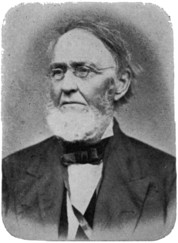
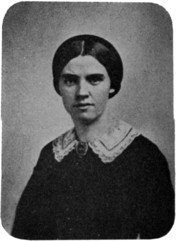
Rev. Oliver E. Daggett, D.D.
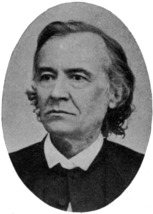
“Frankie Richardson” Horace Finley
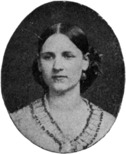
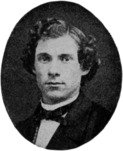
February 8.—I have not written in my journal for several days, because I never like to write things down if they don’t go right. Anna and I were invited to go on a sleigh-ride, Tuesday night, and Grandfather said he did not want us to go. We asked him if we could spend the evening with Frankie Richardson and he said yes, so we went down there and when the load stopped for her, we went too, but we did not enjoy ourselves at all and did not join in the singing. I had no idea that sleigh-rides could make any one feel so bad. It was not very cold, but I just shivered all the time. When the nine o’clock bell rang we were up by the “Northern Retreat,” and I was so glad when we got near home so we could get out. Grandfather and Grandmother asked us if we had a nice time, but we got to bed as quick as we could. The next day Grandfather went into Mr. Richardson’s store and told him he was glad he did not let Frankie go on the sleigh-ride, and Mr. Richardson said he did let her go and we went too. We knew how it was when we got home from school, because they acted so sober, and, after a while, Grandmother talked with us about it. We told her we were sorry and we did not have a bit good time and would never do it again. When she prayed with us the next morning, as she always does before we go to school, she said, “Prepare us, Lord, for what thou art preparing for us,” and it seemed as though she was discouraged, but she said she forgave us. I know one thing, we will never run away to any more sleigh-rides.
February 20.—Mr. Worden, Mrs. Henry Chesebro’s father, was buried to-day, and Aunt Ann let Allie stay with us while she went to the funeral. I am going to Fannie Gaylord’s party to-morrow night.
I went to school this afternoon and kept the rules, so to-night I had the satisfaction of saying “perfect” when called upon, and if I did not like to keep the rules, it is some pleasure to say that.
February 21.—We had a very nice time at Fannie Gaylord’s party and a splendid supper. Lucilla Field laughed herself almost to pieces when she found on going home that she had worn her leggins all the evening. We had a pleasant walk home but did not stay till it was out. Some one asked me if I danced every set and I told them no, I set every dance. I told Grandmother and she was very much pleased. Some one told us that Grandfather and Grandmother first met at a ball in the early settlement of Canandaigua. I asked her if it was so and she said she never had danced since she became a professing Christian and that was more than fifty years ago.
Grandfather heard to-day of the death of his sister, Lydia, who was Mrs. Lyman Beecher. She was Rev. Dr. Lyman Beecher’s third wife. Grandmother says that they visited her once and she was quite nervous thinking about having such a great man as Dr. Lyman Beecher for her guest, as he was considered one of the greatest men of his day, but she said she soon got over this feeling, for he was so genial and pleasant and she noticed particularly how he ran up and down stairs like a boy. I think that is very apt to be the way for “men are only boys grown tall.”
There was a Know Nothing convention in town to-day. They don’t want any one but Americans to hold office, but I guess they will find that foreigners will get in. Our hired man is an Irishman and I think he would just as soon be “Prisidint” as not.
February 22.—This is such a beautiful day, the girls wanted a holiday, but Mr. Richards would not grant it. We told him it was Washington’s birthday and we felt very patriotic, but he was inexorable. We had a musical review and literary exercises instead in the afternoon and I put on my blue merino dress and my other shoes. Anna dressed up, too, and I curled her hair. The Primary scholars sit upstairs this term and do not have to pay any more. Anna and Emma Wheeler like it very much, but they do not sit together. We are seated alphabetically, and I sit with Mary Reznor and Anna with Mittie Smith. They thought she would behave better, I suppose, if they put her with one of the older girls, but I do not know as it will have the “desired effect,” as Grandmother says. Miss Mary Howell and Miss Carrie Hart and Miss Lizzie and Miss Mollie Bull were visitors this afternoon. Gertrude Monier played and sang. Mrs. Anderson is the singing teacher. Marion Maddox and Pussie Harris and Mary Daniels played on the piano. Mr. Hardick is the teacher, and he played too. You would think he was trying to pound the piano all to pieces but he is a good player. We have two papers kept up at school, The Snow Bird and The Waif—one for the younger and the other for the older girls. Miss Jones, the composition teacher, corrects them both. Kate Buell and Anna Maria Chapin read The Waif to-day and Gusta Buell and I read The Snow Bird. She has beautiful curls and has two nice brothers also, Albert and Arthur, and the girls all like them. They have not lived in town very long.
February 25.—I guess I won’t fill up my journal any more by saying I arose this morning at the usual time, for I don’t think it is a matter of life or death whether I get up at the usual time or a few minutes later and when I am older and read over the account of the manner in which I occupied my time in my younger days I don’t think it will add particularly to the interest to know whether I used to get up at 7 or at a quarter before. I think Miss Sprague, our schoolroom teacher, would have been glad if none of us had got up at all this morning for we acted so in school. She does not want any noise during the three minute recess, but there has been a good deal all day. In singing class they disturbed Mr. Kimball by blowing through combs. We took off our round combs and put paper over them and then blew—Mary Wheeler and Lottie Lapham and Anna sat nearest me and we all tried to do it, but Lottie was the only one who could make it go. He thought we all did, so he made us come up and sit by him. I did not want to a bit. He told Miss Sprague of us and she told the whole school if there was as much noise another day she would keep every one of us an hour after half-past 4. As soon as she said this they all began to groan. She said “Silence.” I only made the least speck of a noise that no one heard.