A VISIT TO FORT BENTON.
Reading edition
It was in the early seventies I visited Fort Benton, the town at the head of navigation of the Missouri river. It was a busy place then, for it was in the summer and during the boating season, and the time the traders were bringing their collections of robes, pelts and furs, and shipping them, principally to Sioux City and St. Louis. Fort Benton, no doubt, is the oldest town in Montana. It was built in 1846 by Alexander Culbertson, who was at the head of a fur trading company. The buildings were occupied by this company for many years. It was two hundred and fifty feet square and built of adobe. At one time since then it was occupied by the military; parts of the walls still stand (1898).
In the volume for 1876 of the Historical Society of Montana there is a very interesting sketch of the fur traders and trading posts under the title of “Adventures on the Upper Missouri,” in which Fort Benton is spoken of. This sketch was written by the late James Stuart, after obtaining his information from the best authorities. I cannot think of anything more interesting or more appropriate at this time than to give the following extracts from Mr. Stuart’s writings:
“Fort Union was the first fort built on the Missouri river, which is above the mouth of the Yellowstone. In the summer of 1829 Kenneth McKenzie, a trader from the upper Mississippi, near where St. Paul, Minnesota, is now located, with a party of fifty men came across to the upper Missouri river looking for a good place to establish a trading post for the American Fur Company. (McKenzie was a member of that company.) They selected a site a short distance above the mouth of the Yellowstone river, on the north bank of the Missouri, and built a stockade two hundred feet square of logs, about twelve inches in diameter and twelve feet long, set perpendicularly, putting the lower end two feet in the ground, with two block-house bastions on diagonal corners of the stockade, twelve feet square and twenty feet high, pierced with loop holes. The dwelling house, warehouses and store were built inside, but not joining the stockade, leaving a space of about four feet between the walls of the buildings and the stockade. All the buildings were covered with earth, as a protection against fire by incendiary Indians. There was only one entrance to the stockade—a large double-leaved gate, about twelve feet from post to post, with a small gate three and a half by five feet long, in one of the leaves of the main gate, which was the one mostly used, the large gate being only opened occasionally when there were no Indians in the vicinity of the fort. The houses, warehouses and store were all built about the same height as the stockade. The above description, with the exception of the area enclosed by the stockade, will describe nearly all the forts built by traders on the Missouri river from St. Louis to the headwaters.
“The fort was built to trade with the Assinnaboines, who were a large tribe of Indians ranging from White Earth river, on the north side of the Missouri, to the mouth of Milk river, and north into the British possessions.
“In 1832 the first steamboat named the ‘Yellowstone,’ arrived at Fort Union. From that time, every spring, the goods were brought up by steamboats, but the robes, peltries, etc., were shipped from the fort every spring by Mackinaws to St. Louis. In the winter of 1830 McKenzie, desirous of establishing a trade with the Blackfeet and Gros Ventres (the Minatarees of Lewis and Clarke), sent a party of four men—Burger, Dacoteau, Morceau, and one other man in search of the Indians and to see if there was sufficient inducement to establish a trading post. The party started up the Missouri river with dog sleds to haul a few presents for the Indians. They followed the Missouri to the mouth of the Marias river, thence up the Marias to the mouth of Badger creek, without seeing an Indian, finding plenty of game of all kinds and plenty of beaver in all the streams running into the Missouri. Every night when they camped they hoisted the American flag, so that if they were seen by any Indians during the night they would know it was a white man’s camp; and it was very fortunate for them that they had a flag to use in that manner, for the night they camped at Badger creek they were discovered by a war party of Blackfeet who surrounded them during the night, and, as they were about firing on the camp, they discovered the flag and did not fire, but took the party prisoners. A part of the Indians wanted to kill the whites and take what the party had, but through the exertions and influence of a chief named ‘Good Woman,’ they were not molested in person or property, but went in safety to the Blackfoot camp on Belly river and stayed with the camp until spring. During the winter they explained their business, and prevailed upon about one hundred Blackfeet to go with them to Fort Union to see McKenzie. They arrived at Fort Union about the 1st of April, 1831, and McKenzie got their consent to build a trading post at the mouth of the Marias. The Indians stayed about one month, then started home to tell the news to their people. McKenzie then started James Kipp, with seventy-five men and an outfit of Indian goods, to build a fort at the mouth of the Marias river, and he had the fort completed before the winter of 1831. It was only a temporary arrangement in winter, in order to find out whether it would pay to establish a permanent post. Next spring Colonel Mitchell (afterwards colonel in Doniphan’s expedition to Mexico) built some cabins on Brule bottom to live in until a good fort could be built. The houses at the mouth of the Marias were burned after the company moved to Brule bottom. Alexander Culbertson was sent by McKenzie to relieve Mitchell and to build a picket stockade two hundred feet square on the north bank of the Missouri river, which he completed during the summer and fall of 1832. This fort was occupied for eleven years, until Fort Lewis was built by Culbertson on the south side of the Missouri river, near Pablois Island, in the summer of 1844. Fort Brule was then abandoned and burned. In 1846 Fort Lewis was abandoned, and Fort Benton was built by Culbertson, about seven miles below Fort Lewis, on the north bank of the Missouri river. It was 250 feet square, built of adobe laid upon the ground without any foundation of stone, and is now standing (1875) and occupied as a military post. The dwellings, warehouses, stores, etc., were all built of adobes. The Piegans, Blackfeet and Blood Indians, all talking the same language, claimed and occupied the country from the Missouri river to the Saskatchewan river. Prior to the building of the winter quarters at the mouth of the Marias, they had always traded with the Hudson Bay Company and the American Fur Company. The Hudson Bay Company often sent men to induce the confederated Blackfeet to go north and trade, and the Indians said they were offered large rewards to kill all the traders on the Missouri river and destroy the trading posts. McKenzie wrote to Governor Bird, the head man of the Hudson Bay Company in the north, in regard to the matter, and Bird wrote back to McKenzie, saying: ‘When you know the Blackfeet as well as I do, you will know that they do not need any inducements to commit depredations.’
“In 1832 McKenzie sent Tollock, with forty men, to build a fort at the mouth of the Big Horn river. Tollock built the fort named Van Buren, on the south side of the Yellowstone, about three miles below the mouth of the Big Horn river. It was 150 feet square, picket stockade, with two bastions on diagonal corners. In 1863 I saw the location. The pickets showed plainly that they had been burned to the ground, and several of the chimneys were not entirely fallen down. The fort was built to trade with the Mountain Crows, an insolent, treacherous tribe of Indians. They wanted the location of their trading post changed nearly every year, consequently they had four trading posts built from 1832 to 1850, viz.: Fort Cass, built by Pollock on the Yellowstone, below Fort Buren, in 1836; Fort Alexander, built by Lawender, still lower down on the Yellowstone river in 1848, and Fort Sarpey, built by Alexander Culbertson in 1850 at the mouth of the Rose Bud. Fort Sarpey was abandoned in 1853, and there have not been any trading forts built on the Yellowstone since up to the present time (1875). Kenneth McKenzie, after Lewis and Clarke, was the pioneer of the upper Missouri. He was a native of the Highlands of Scotland. When young he came in the service of the Hudson Bay Company, and started to explore the country from Hudson’s Bay to Red river to Lake Winnipeg; thence to the Lake Superior country; finally concluded to locate on the upper Mississippi. In 1822 he went to New York and got an outfit of Indian trade goods on credit and established an Indian trading post on the upper Mississippi and remained in that part of the country until 1829, when he came to Missouri and established Fort Union. He was in charge of all the Northwestern fur trade until 1839, when he resigned to enter the wholesale liquor trade at St. Louis, Mo. He resided at St. Louis until his death in 1856 or 1857. Alexander Culbertson assumed his position as fur trader in 1839.”
The town of Fort Benton was first surveyed by Colonel De Lacy in 1859. Choteau county was established by the legislature in an act approved Feb. 2, 1865, with the county seat at Fort Benton. The county was named in honor of Pierre Choteau, Jr., the president of the American Fur Company. Major George Steell, now of Dupuyer, Teton county, was one of its first county commissioners. Fort Benton was named in honor of Thomas H. Benton, United States Senator from Missouri.
In 1864 the American Fur Company sold their interests to the Northwestern Fur Company. After that many other traders erected posts throughout the territory. Those in the northern part had their headquarters at the town of Fort Benton. Many steamboats loaded with furs, pelts and robes left the wharf of this old town during the period from 1860 to 1880. At the time of the visit referred to there were many representatives of the large fur companies on their annual visit from the East to inspect the business of their respective companies. There were also Indian commissioners who had been sent by the government from Washington to close some deal with the Indians; of course all the Indian chiefs were there, besides many other Indians, “ox-drivers” (bull whackers) and steamboat hands. One day, when these Eastern visitors were in town, a pack train arrived from one of the trading posts. On the back of one of the mules was a small brass cannon (mountain howitzer); it was lashed on with the muzzle towards the rear end of the mule. The government representative seized the opportunity to show the Indians what a terrible weapon that was on the back of the mule. The animal, with his burden, was led to Front street, and a crowd of two or three hundred followed, half of which were Indians. It was decided to fire a few shots from the cannon while it was on the back of the mule at a high-cut bank that was half a mile away and across the river. A certain spot was shown to the Indians where the shot was supposed to hit, and, to strike the spot designated on the clay bank, which loomed up like some old castle, an extra heavy load was put in. Finally the man in charge of the mule stood in front of the quadruped with the rings of the bit in each hand. Now he has the business end of the mule where he wants it; another man was adjusting the cannon, and, taking aim, while the third one took a match from his vest pocket, scratched it on the hip of his pants and touched the fuse. The hissing sound of the burning fuse made the mule lay down his ears and began putting a hump in his back; next thing he whirled round and round, in spite of his manager trying to get him back to his first position. By this time everybody was going for dear life, and the mule was making the circle faster than ever, and the gun was liable to go off at any moment. There was a perfect stampede; many went over the bank into the river, others were crawling on their hands and knees, while many laid flat on the ground, broadcloth and buckskin alike—the man held to the bridle and the mule held the fort. Luckily, on account of the bend in the mule’s back, the shot struck the ground but a short distance from his heels. Many of the Indians never moved, thinking that the maneuvers of the mule were a part of the performance.
J. J. Healy (now Captain Healy, the manager of the North American Transportation and Trading Company) was there. Healy had fought Indians and assisted in arresting some of the worst desperadoes in the Northwest, who were terrorizing the country about that time. But the mule was too much for him, as he was seen going for dear life over the bank into the river. It was the first time anyone ever saw Healy “take water.”
The same cannon is now owned in Great Falls and was used to celebrate the Fourth of July, 1898. The mule could not be found.
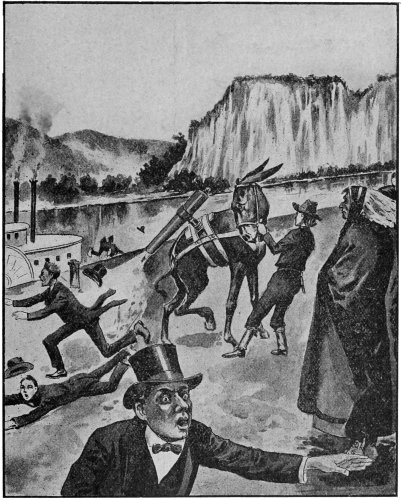
“THE MULE AND THE MOUNTAIN HOWITZER.”
It was a common occurrence then at Fort Benton to see from six to eight steamers tied at the wharf at the same time and loaded for their return trips with robes, furs and pelts. The principal articles the traders had for traffic with the Indians were blankets, blue and scarlet cloth, calico, domestic goods, ticking, tobacco, knives, fire steel, arrow points, files, brass wire of different sizes, beads, brass tacks, wide leather belts, silver ornaments for the hair, shells, axes and hatchets. Many articles were smuggled and traded to the Indians which the law prohibited. The articles brought by the Indians for trade were elk, deer, antelope, bear, wolf, beaver, otter, fox, mink, marten, wild cat, skunk and badger skins, and principally buffalo robes. At the time when the country was literally covered with buffaloes, and before the traders were in the country to supply the Indians with guns or even steel arrow points, the Indians would move from place to place with two or three hundred lodges or tepees, with from five to seven people to the lodge. The tepees were made of tanned skins and a few small poles and so constructed that they could be taken down and put up in a few minutes.
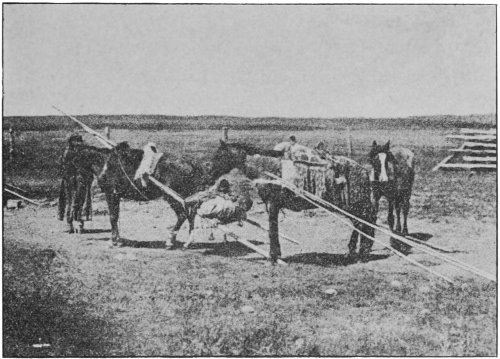
INDIANS WITH TRAVOIS.
With the poles, that were about fifteen feet long, they would make their travois by placing a number of poles on each side of a pony and tying one end of them to the girth of the saddle from which a strap reached across the breast of the animal. Then two cross-sticks, about four feet apart, were tied to each bunch of poles and close to the horse, and on these sticks a buffalo rawhide was stretched in a basket-like manner on which a stack of robes, pelts and furs was lashed. Each family had one or more of these simple conveyances, arranged as the one to the left in the illustration. In these they would carry their small trinkets, young pappooses, and the old people that were too old to ride a pony. In this way they would move from camp to camp with perfect ease and without delay, following the great herds of buffalo. When they needed meat the chief would give orders to make “a round.” Under the direction of the war chief several hundred would turn out, some on horses, others on foot, and would quietly surround a herd of the buffaloes, and, closing up the circle, the buffaloes would run round and round in a circle, and as the outside ones would go by the Indians killed them with their arrows. The buffalo, the same as sheep, would follow the leaders, and, after getting them started in one direction, they would all follow that way. I know a place near where I used to live on Sun river where the Indians a long time ago used to surround the buffalo and run them over a precipice, and at a point where there was but room for one at a time to go in safety. The Indians would get a few to start, then close up on the big herd and rush them over the cliffs pell-mell; hundreds would be killed and many crippled, and those they would kill with the bows and arrows. They called this manner of hunting “a run.”
There are now on this spot great quantities of decayed bones, and hundreds of flint arrow points have been picked up by settlers. Professor Mortson, of this city, has in his cabinet now several hundreds of these points which he found. There is another place of this kind near St. Peter’s Mission, where these runs were made.
Now the buffaloes are extinct. Where they used to roam, flocks of sheep and herds of cattle now graze. And the Indians’ mode of living, since they are on their reservation, is entirely different. “Now” they live in houses, and the old Indian tepees made of skins cannot be found.
Until but a few years ago, the “Old Town at the head of navigation” was a great Indian trading post; her stores and warehouses were filled with Indian goods and their trade was exclusively with Indians. Today Fort Benton is a modern city with brick blocks, has a fine courthouse, public schools and churches, and many attractive homes. She has a railway depot, water works and many other modern improvements.
At the entrance of one of the main avenues of the city a steel drawbridge spans the Missouri river. And now her business houses carry the same kind and as fine goods as Eastern firms; her warehouses are filled with miners’ tools, machinery, and all kinds of agricultural implements for the trade of hundreds of thrifty farmers, who are cultivating the land which was but a short time ago the red man’s hunting ground.
Robert Vaughn.
July 11, 1898.
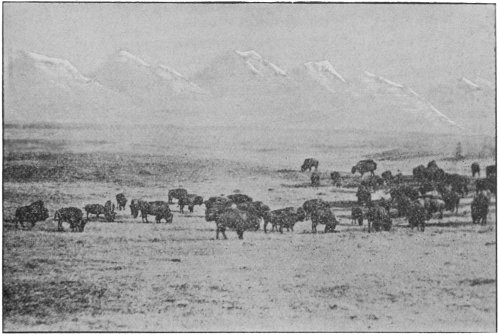
THEN.
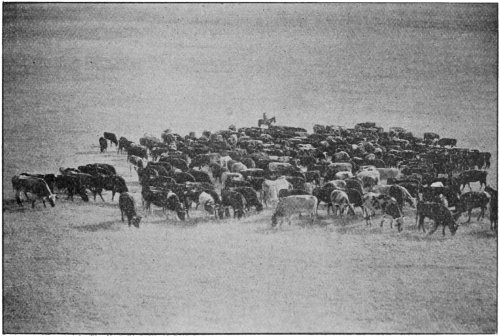
NOW.
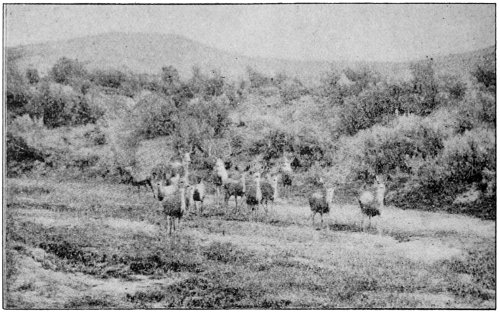
THEN.
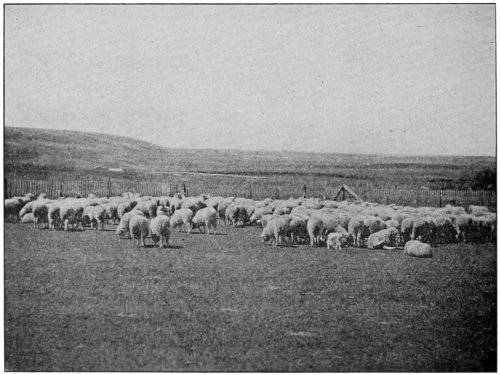
NOW.