EDITOR’S INTRODUCTION. (continued 4)
Reading edition
We three went down to The Two Betseys’ Shop with him, and when he saw it, he said, “Why, is that the same old shop? It don’t look much bigger than a hen-house!” Says he could put about a thousand like it into one big church he saw away. Said he shouldn’t dare to climb up into the apple-tree for fear he should break it down. Said he’d seen trees high as a liberty-pole. And when he saw where he used to creep through the rails he couldn’t believe he ever did go through such a little place, and tried to, but couldn’t do it. So he took a run and jumped over, and we after him, all but Bubby Short. We took down the top one for him.
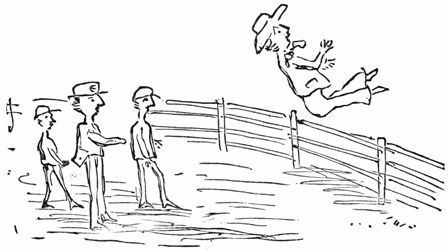
The Two Betseys didn’t know him at first, not till we told them. Dorry said, “Here’s a little boy wants to buy a stick of candy.” Then Tom said he guessed he’d take the whole bottle full. And he took out a silver half a dollar, and threw it down, but wouldn’t take any change back, and then treated us all, and a lot of little chaps that stood there staring. Lame Betsey said, “Wal, I never!” and The Other Betsey said, “Now did you ever? Now who’d believe ’t was the same boy!” And Tom said he hoped ’t wasn’t exactly, for he didn’t think much of that Tom Cush that used to be round here. Coming back he told us he was going to stay till in the evening, and have a supper at the Two Betseys’, us four together, but not let them know till we got there. He’s going to carry the things. We went to see Gapper Sky Blue, and Tom bought every bit of his molasses candy, and about all the seed-cakes. When I write another letter, then you’ll know about the party.
Your affectionate Grandson, William Henry.
P. S. Do you think my father would let me go to sea?
William Henry to his Grandmother.
My dear Grandmother,—
We had it and they didn’t know anything about it till we got there, and then they didn’t know what we came for. Guess who was there besides us four! Gapper Sky Blue and little Rosy. Tom invited them. We left the bundles inside and walked in. Not to the shop, but to the room back, where they stay. They told us, “Do sit up to the fire, for ’t is a proper cold day.” They’d got their tea a warming in a little round tea-pot, a black one, and their dishes on a little round table, pulled up close to Lame Betsey; seemed just like my sister, when she has company, playing supper. The Other Betsey, she was holding a skein of yarn for Lame Betsey to wind, and said their yarn-winders were come apart. Dorry said, “Billy, let’s you and I make some yarn-winders!” Now what do you think we made them out of? Out of ourselves! We stood back to back, with our elbows touching our sides, and our arms sticking out, and our thumbs sticking up. Then Dorry told her to put on her yarn, and we turned ourselves round, like yarn-winders.
Pretty soon Gapper Sky Blue and Rosy came. Then we brought in the bundles and let ’em know what was up, and they didn’t know what to say. All they could say was, “Wal, I never!” and “Now did you ever?”
The Other Betsey said if they were having a party they must smart themselves up some. So she got out their other caps, with white ruffles, and put on her handkerchief with a bunch of flowers in the back corner, but put a black silk cape on Lame Betsey that had a muslin ruffle round it, or lace, or I don’t know what, and a clean collar, that she worked herself, when she was a young lady, and a bow of ribbon, that she used to wear to parties, wide ribbon, striped, green and yellow, or pink, I can’t tell, and both of ’em clean aprons, figured aprons,—calico, I think like enough,—with the creases all in ’em, and strings tied in front. I tell you if the Two Betseys didn’t look tiptop! Then they unset that little round table, and we dragged out the great big one, that hadn’t been used for seventeen years. The Other Betsey’s grandfather had it, when he was first married. When ’t isn’t a table, ’t is tipped up to make into a chair, and had more legs than a spider. Little Rosy helped set the table. She never went to a party before.
O, but you ought to ’ve seen the plates! You know your pie-plates? Well, these were just like them. All white, with scalloped edges, blue scalloped edges. Only no bigger round than the top of your tin dipper. The knives and forks—two-prongers—had green handles. And the sugar-bowl and cream pitcher were dark blue. Tom brought a good deal of sugar, all in white lumps, and a can of milk. He bought pies and jumbles and turnovers and ginger-snaps and egg-crackers and cake and bread at the bake-house, and butter and cheese and Bologna sausage—I can’t bear Bologna sausage—and some oranges, that he brought home from sea. And the sweetest jelly you ever saw! Don’t know what ’t is made of, but they call it guava jelly, and comes in little boxes. I believe I could eat twenty boxes of that kind of jelly, if I could get it. Dorry says he don’t doubt they make it out of apple-parings down in Jersey.
The Other Betsey stood up in a chair and took down her best china cups and saucers, that used to be her grandmother’s, and hadn’t been took down for a good many years, and wiped the dust off. Little mites of things, with pictures on them. We boys didn’t drink tea, only Tom Cush; we had milk in mugs. Mine was a tall, slim one, not much bigger round than an inkstand, and had pine-trees on it, blue pine-trees. Dorry had a china one that was about as clear as glass, that Lame Betsey’s brother brought home when he went captain, and Bubby Short’s had “A gift of affection” on it. That was one her little niece used to drink out of that died afterwards, when she was very little.
I tell you if that supper-table didn’t look like a supper-table when ’t was all ready! They set Lame Betsey at the head of the table, because she couldn’t get up, and Dorry said the one at the head must never get up, for it wasn’t polite. We took her right up in her chair to set her there. Then there was some fun quarrelling which should sit at her right hand, because that is a seat of honor. Tom said Gapper ought to, for he was the oldest. But he said it ought to be Tom, because he was the most like company. But at last she said ’t wouldn’t make any difference, because she was left-handed. The Other Betsey brought some twisted doughnuts out.
Now I’ll tell you how we sat.
Lame Betsey at the head, and the Other Betsey at the other end; Gapper Sky Blue and Rosy and Bubby Short on the right side, and Tom and Dorry and I on the left. And if we didn’t have a bully time! The Two Betseys and Gapper used to know each other, and to go to school together, and they told such funny stories, made us die a laughing, and when I get home you’ll hear some. Then Gapper told Tom Cush that now he was a sailor he ought to spin us a yarn. When I come home I’ll tell you the yarn Tom spun. ’T was all about an alligator he saw, and about going near it in a boat, and what the Arabs did, and what he did, and what the alligator did. Wait till I come, then you’ll hear about it. Both Betseys kept putting down their knife and fork, and looking up at him, just as scared, and kept saying, “Wal, I never!” “Now did you ever!”
Tom acted it all out. First he cleared a place for a river. Then he took a twisted doughnut for the alligator and a ginger-snap for a boat. I’ll tell you about it sometime. Guess ’t wasn’t all true, for you can put anything you’ve a mind to in a yarn. He told us about the beautiful birds, and when I told him about one my sister used to have, he said he’d bring her home a Java sparrow.
Then he told us about drinking “Hopshe!” I’ll tell how, and I want all of you to try it.
Now suppose Hannah Jane was the one to try it.
First, she takes a tumbler of water in her hand, then you all say together, Hannah Jane and all, quite fast,—
“A blackbird sat on a swinging limb. He looked at me and I at him. Once so merrily,—Hopshe! Twice so merrily,—Hopshe! Thrice so merrily,—Hopshe!”
Now I shall tell where the fun comes in.
While all the rest say, “Once so merrily,” Hannah Jane must drink one swallow quick enough to say the “Hopshe!” with them. Then another swallow while they say, “Twice so merrily,” and another while they say, “Thrice so merrily,” and be ready to say the “Hopshe” with them, every time. We tried it, and I tell you if the “Hopshe’s” didn’t come in all sorts of funny ways! The Two Betseys told about some funny tricks they used to try, to see who was going to be their beau.
From your affectionate Grandson, William Henry.
P. S. I saw a dollar bill in Gapper Sky Blue’s hand after Tom Cush bade him good by. Dorry says how do I know but ’t was more than a dollar bill, and I don’t.
W. H.
There was a good deal left for the Two Betseys to eat afterwards. I had a letter from Mr. Fry.
William Henry to Aunt Phebe.
Dear Aunt,—
There is going to be a dancing-school, and Dorry’s mother wants him to go, and he says he guesses he shall, so he may know what to do when he goes to parties, and his cousin Arthur, that doesn’t go to this school, says ’t is bully when you’ve learned how. Please ask my grandmother if I may go if I want to. Dorry wants me to if he does, he says, and Bubby Short says he means to too, if we two do, if his mother’ll let him. Dorry’s mother says we shall get very good manners there, and learn how to walk into a room. I know how now to walk into a room, I told him, walk right in. But he says his mother means to enter a room, and there’s more to it than walking right in. He don’t mean an empty room, but company and all that. I guess I should be scared to go, the first of it; I guess I should be bashful, but Dorry’s cousin says you get over that when you’re used to it. Good many fellers are going. Mr. Augustus, and Old Wonder Boy, and Mr. O’Shirk. Now I suppose you can’t think who that is! Don’t you know that one I wrote about, that kicked and didn’t pay, and that wouldn’t help water the course? The great boys picked out that name for him, Mr. O’Shirk. The O stands for owe, and Shirk stands for itself. I send home a map to my grandmother, I’ve just been making, and I tried hard as I could to do it right, and I hope she will excuse mistakes, for I never made one before. ’T is the United States. Old Wonder Boy says he should thought I’d stretched out “Yankee Land” a little bigger. He calls the New England States “Yankee Land.” And he says they make a mighty poor show on the map. But Mr. Augustus told him the brains of the whole country were kept in a little place up top, same as in folks. So W. B. kept still till next time. Dorry said he’d heard of folks going out of the world into Jersey. If I go to dancing-school, I should like to have a bosom shirt, and quite a stylish bow. I think I’m big enough, don’t you, for bosom shirts? I had perfect this forenoon in all. I’ve lost that pair of spotted mittens, and I don’t know where, I’m sure. I know I put them in my pocket. My hands get just as numb now with cold! Seems as if things in my pockets got alive and jumped out. I was clapping ’em and blowing ’em this morning, and that good, tiptop Wedding Cake teacher told me to come in his house, and his wife found some old gloves of his. I never saw a better lady than she is. When she meets us she smiles and says, “How do you do, William Henry?” or Dorry, or whatever boy it is. And when W. B. was sick one day she took care of him. And she asks us to call and see her, and says she likes boys! Dorry says he’s willing to wipe his feet till he wears a hole in the mat, before he goes in her house. For she don’t keep eying your boots. Says he has seen women brush up a feller’s mud right before his face and eyes. My hair grows darker colored now. And my freckles have ’most faded out the color of my face. I’m glad of it.
From your affectionate Nephew, William Henry.
Aunt Phebe to William Henry.
My dear Billy,—
We are very much pleased indeed with your map. Dear me, how the United States have altered since they were young, same as the rest of us! That western part used to be all Territory. You couldn’t have done anything to please your grandmother better. She’s hung it up in the front room, between Napoleon and the Mourning Piece, and thinks everything of it. Everybody that comes in she says, “Should you like to see the map my little grandson made,—my little Billy?” You’ll always be her little Billy. She don’t seem to think you are growing up so fast. Then she throws a shawl over her head, and trots across the entry and opens the shutters, and then she’ll say, “Pretty good for a little boy.” And tells which is Maine, and which is New York, and points out the little arrow and the printed capital letters. Folks admire fast as they can, for that room is cold as a barn, winters. The last one she took in was the minister. Your grandmother sets a sight o’ store by you. She’s proud of you, Billy, and you must always act so as to give her reason to be, and never bring her pride to shame.
We are willing you should go. At first she was rather against it, though she says she always meant you should learn to take the steps when you got old enough, but she was afraid it might tend to making you light-headed, and to unsteady your mind. This was the other night when we were talking it over in your kitchen, sitting round the fire. Somehow we get in there about every evening. Does seem so good to see the blaze. Your father said if a boy had common sense he’d keep his balance anywhere, and if dancing-school could spoil a fellow, he wasn’t worth spoiling, worth keeping, I mean. I said I thought it might tend to keep you from toeing in, and being clumsy in your motions. Your Uncle J. said he didn’t think ’t was worth while worrying about our Billy getting spoiled going to dancing-school, or anybody’s Billy, without ’t was some dandyfied coot. “Make the head right and the heart right,” says he, “and let the feet go,—if they want to.” So you see, Billy, we expect your head’s right and your heart’s right. Are they?
The girls and I have turned to and cut and made you a couple of bosom shirts and three bows, for of course you will have to dress rather different, and think a little more about your looks. But not too much, Billy! Not too much! And don’t for gracious sake ever get the notion that you’re good-looking! Don’t stick a breastpin in that shirt-bosom and go about with a strut! I don’t know what I hadn’t as soon see as see a vain young man. I do believe if I were to look out, and you should be coming up my front yard gravel path with a strut, or any sort of dandyfied airs, I should shut the door in your face. Much as I set by you, I really believe I should. Lor! what are good looks? What are you laying out to make of yourself? That’s the question. Freckles are not so bad as vanity. Anybody’d think I was a minister’s wife, the way I talk. But, Billy, you haven’t got any mother, and I do think so much of you! ’T would break my heart to see you grow up into one of those spick-and-span fellers, that are all made up of a bow and a scrape and a genteel smile! Though I don’t think there’s much danger, for common sense runs in the family. No need to go with muddy boots, though, or linty, or have your bow upside down. You’ve always been more inclined that way. Fact is, I want you should be just right. I haven’t a minute’s more time to write. Your Uncle J. has promised to finish this.
Dear Cousin Billy,—
This is Lucy Maria writing. The blacksmith sent word he was waiting to sharpen the colt, and father had to go. He’s glad of it, because he never likes to write letters. I’m glad you are going to dancing-school. Learn all the new steps you can, so as to show us how they’re done. Hannah Jane’s beau has just been here. He lives six miles off, close by where we went once to a clam-bake, when Dorry was here. Georgiana’s great doll, Seraphine, is engaged to a young officer across the road. He was in the war, and draws a pension of a cent a week. The engagement isn’t out yet, but the family have known it several days, and he has been invited to tea. He wore his best uniform. Seraphine is invited over there, and Georgie is making her a spangled dress to wear. The wedding is to come off next month. I do wish I could think of more news. Father is the best hand to write news, if you can only get him at it. Once when I was away, he wrote me a letter and told me what they had for dinner, and what everybody was doing, and how many kittens the cat had, and how much the calf weighed, and what Tommy said, and seemed ’most as if I’d been home and seen them. Be sure and write how you get along at dancing-school, and what the girls wear.
Your affectionate Cousin, Lucy Maria.
William Henry to Aunt Phebe.
My dear Aunt,—
Thank you for the bosom shirts and the ones that helped make them. They’ve come. I like them very much and the bows too. They’re made right. I lent Bubby Short one bow. His box hadn’t come. He kept running to the expressman’s about every minute. We began to go last night. If we miss any questions to-day, we shall have to stay away next night. That’s going to be the rule. O, you ought to ’ve seen Dorry and me at it with the soap and towels, getting ready! We scrubbed our faces real bright and shining, and he said he felt like a walking jack-o’-lantern. I bought some slippers and had to put some cotton-wool in both the toes of ’em to jam my heels out where they belonged to. I don’t like to wear slippers. My bosom shirt sets bully, and I bought a linen-finish paper collar. I haven’t got any breastpin. I don’t think I’m good looking. Dorry doesn’t either. I know he don’t. That’s girls’ business. We had to buy some gloves, because his cousin said the girls wore white ones, and nice things, and ’t wouldn’t do if we didn’t. Yellowish-brownish ones we got, so as to keep clean longer. But trying on they split in good many places, our fingers were so damp, washing ’em so long. Lame Betsey is going to sew the holes up. When we got there we didn’t dare to go in, first of it, but stood peeking in the door, and by and by Old Wonder Boy gave me a shove and made me tumble in. I jumped up quick, but there was a great long row of girls, and they all went, “Tee hee hee! tee hee hee!” Then Mr. Tornero stamped and put us in the gentlemen’s row. Then both rows had to stand up and take positions, and put one heel in the hollow of t’ other foot, and then t’ other heel in that one’s hollow, and make bows and twist different ways. And right in front was a whole row of girls, all looking. But they made mistakes theirselves sometimes.
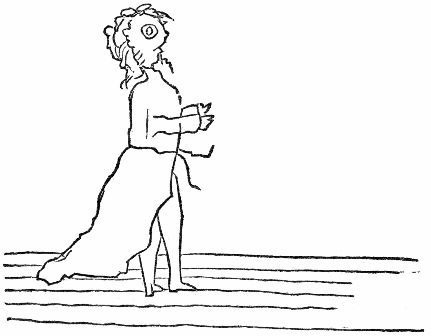
First thing we learned the graces, and that is to bend way over sideways, with one hand up in the air, and the other ’most way down to the floor, then shift about on t’ other tack, then come down on one knee, with one hand way behind, and the other one reached out ahead as if ’t was picking up something a good ways off. We have to do these graces to make us limberer, so to dance easier. I tell you ’t is mighty tittlish, keeping on one knee and the other toe, and reaching both ways, and looking up in the air. I did something funny. I’ll tell you, but don’t tell Grandmother. Of course ’t was bad, I know ’t was, made ’em all laugh, but I didn’t think of their all pitching over. You see I was at one end of the row and W. B. was next, and we were fixed all as I said, kneeling down in that tittlish way, reaching out both ways, before and behind, and looking up, and I remembered how he shoved me into the room, and just gave him a little bit of a shove, and he pitched on to the next one, and he on to the next, and that one on to the next, and so that whole row went down, just like a row of bricks! Course everybody laughed, and Mr. Tornero did too, but he soon stamped us still again. And then just as they all got still again, I kept seeing how they all went down, and I shut up my mouth, but all of a sudden that laugh shut up inside made a funny sort of squelching sound, and he looked at me cross and stamped his foot again. Now I suppose he’ll think I’m a bad one, just for that tumbling in and shoving that row down and then laughing when I was trying to keep in! He wants we should practise the graces between times, to limber us up. Dorry and I do them up in our room. Guess you’d laugh if you could see, when we do that first part, bending over sideways, one hand up and one down. I tried to draw us, but ’t is a good deal harder drawing crooked boys than ’t is straight ones, so ’t isn’t a very good picture. The boys that go keep practising in the entries and everywhere, and the other ones do it to make fun of us, so you keep seeing twisted boys everywhere. Bubby Short was kneeling down out doors across the yard, on one knee, and I thought he was taking aim at something, but he said he was doing the graces. I must study now. Bubby Short got punished a real funny way at school to-day. I’ll tell you next time. I’m in a hurry to study now.
Your affectionate Nephew, William Henry.
P. S. Dorry’s just come in. He and Bubby Short and I bought “Seraphine” some wedding presents and he’s done ’em up in cotton-wool, and they’ll come to her in a pink envelope. Dorry sent that red-stoned ring and I sent the blue-stoned. We thought they’d do for a doll’s bracelets. Bubby Short sends the artificial rosebud. He likes flowers,—he keeps a geranium. We bought the presents at the Two Betseys’ Shop. They said they’d do for bracelets. Dorry says, “Don’t mention the price, for ’t isn’t likely everybody can make such dear presents, and might hurt their feelings.” We tried to make some poetry, but couldn’t think of but two lines.
When you’re a gallant soldier’s wife, May you be happy all your life!
Dorry says that’s enough, for she couldn’t be any more than happy all her life. “Can too!” W. B. said. “Can be good!” “O, poh!” Bubby Short said; “she can’t be happy without she’s good, can she?” But I want to study my lesson now.
W. H.
Those bosom shirts are the best things I ever had.
W. H.
Although it would have been a vast sacrifice, I think I would have almost given my best pair of shoes for a chance of seeing Billy when dressed to go to the dancing-school. A boy in his first bosom shirt is such an amusing sight. You can easily pick one out in a crowd by his satisfied air, and stiff gait; by the setting back of the shoulders, and the throwing out of the chest,—as if that smooth, white, starched expanse did not set out enough of itself! Some have a way of looking up at gentlemen, as much as to say, We wear bosom shirts! But of course those of us boys and men who have passed through this experience remember all about it.
Lucy Maria to William Henry.
Dear Cousin,—
That famous wedding came off yesterday afternoon. There were fifteen invited. I do wish I had time to tell you all about it. Mother made a real wedding-cake. Georgie has hardly slept a wink for a week, I do believe, thinking about it. The young soldier wore his epaulets, having been made General the day before. The bride was dressed in pure white, of course, with a long veil, of course, too, and orange blossoms, real orange blossoms that I made myself. The presents were spread out on the baby-house table. Perhaps you don’t know that Georgie has a baby-house. It is made of a sugar-box, set up on end papered with housepaper inside, and brown outside. It has a down below, an up stairs, and garret. I do wish I had time to tell you all about the wedding, but Matilda’s a churning, and I promised to part the butter and work it over, if she would fetch it. I do wish you could hear her singing away,—
“Come, butter, come! come, butter, come! Peter stands at the gate, waiting for his buttered cake. Come, butter, come!”
Besides the baby-house table, the presents were laid on the roof of the baby-house. There were sontags, shoes, hats and feathers, and all sorts of clothes, the rosebud, your jewelry, and more besides, also spoons, dishes, gridirons, vases and everything they could possibly want, to keep house with, even to flatirons and a cooking-stove. The hands of the happy couple were fastened together, and they stood up (there was a pile of books behind them). Then the trouble was, who should be the minister? At last we saw that funny Dicky Willis, your old crony, peeping in the window, and made him come in and be the minister. He was just the right one for it. He charged the bridegroom to give his wife everything she asked for, and keep her in dry kindlings, and let her have her own way, and always wipe his feet, and not smoke in the house, and never find fault; and charged her to sew on his buttons, and have plum-pudding often, and let him smoke in the house, and never want any new clothes, and always mind her husband, and let him bring in mud on his feet, and always have a smiling face, even if the baby-house was a burning down over their heads, and then pronounced them man and wife. I could fill up half a dozen sheets of paper, if I had time, but I’m afraid of that butter. Everybody shook hands with them, and kissed them, and the wedding-cake was passed round, and then the children played
“Little Sally Waters, sitting in the sun, Crying and weeping for her lost one.”
In the midst of everything Tommy came in with Georgiana’s atlas, and said he’d found “two kick-cases.” He meant those two black hemispheres, that are pictured out in the beginning. Mother put a raisin in his mouth, and hushed him up. The happy couple have gone on a wedding tour to Susie Snow’s grandmother’s country seat. It is expected that they will live half the time with Georgie, and half at the General’s head-quarters. But their plans may be altered; this is a changing world, and a young couple can’t always tell what’s before them. I do wish you’d write how you get on at dancing-school, and what the great girls wear, about my age. O dear what an age it is! ’T is dreadful to think of! ’Most eighteen! Did you ever hear of anybody being so old? Now truly I’m ’most ashamed to own how old I am. Eighteen next month! Hush, don’t tell! Keep it private! I do wish I could grow backwards, and grow back into a baby-house if ’t were nothing but a sugar-box. I do long to cut my hair off and go in a long-sleeved tier, and I’ve a good mind to. We don’t think you made a very good beginning. Guess your Mr.—I can’t think of his name—thought there was need enough of your learning to enter a room. Mother’s going to put a note in this letter. I’ve made her promise not to scold you, but she’s got something particular to say. Father will too. I told him ’t would be just what you would like, one of his letters. Matilda says the butter has sent word it’s coming. Write soon.
From your affectionate Cousin, Lucy Maria.
I was very sorry not to be able to attend the wedding. My present was half a dozen holders. The woman with whom I board said I couldn’t give a bride anything more useful. Her little daughter made them for me, at the rate of two cents apiece. They were an inch wide, and all had loops at the corners.
A Note from Uncle Jacob.
How are you, young man?
I am very glad you go to dancing-school. Boys, as a general thing, are too fond of study, and ’t is a good plan to have some contrivance to take their minds off their books. I suppose you’d like to know what is going on here at home. Your grandmother sits by the fire knitting some mittens for you to lose, so be sure you do it. [She says, tell him to be sure when he goes to dancing-school to wear his overcoat.] Your aunt Phebe is making jelly tarts. Says I can’t have any till meal-time. [Tell him to be sure and get cooled off some before he comes away.] Your grandmother can’t help worrying about that dancing-school. Matilda is picking over raisins for the pies. She won’t sit very close to me. Now Tommy has come in, crying with cold hands. Lucy Maria is soaking them in cold water. I don’t doubt he’ll get a tart. Yes, he has. First he cries, and then he takes a bite. [Tell him not to go and come in his slippers.] Aunt Phebe says, “Now there’s William Henry growing up, you ought to give him some advice.” But I tell her that a boy almost in his teens knows himself what’s right and what’s wrong. Now Georgiana has come in crying. Says she stepped her foot through a puddle of ice. Grandmother has set her up to dry her foot. Now she’ll get a tart, I suppose! Yes she has. [Tell him to look right at the teacher’s feet.] That’s good advice if you expect to learn how. Now your aunt says I’m such a good boy to write letters she’s going to give me this one that’s burnt on the edge. [Tell him to brush his clothes and not go linty.] More good advice. I guess now I’ve got the tart I won’t write any more. Of course we expect you to do just about right. If you neglect your studies and so waste your father’s money, you’ll be an ungrateful scamp. If you get into any contemptible mean ways, we shall be ashamed to own you. Do you mean to do anything or be anything now or ever? If you do, ’t is time you were thinking about it.
Uncle Jacob.
All between the brackets are messages from your grandmother.
J. U.
A Note from Aunt Phebe.
Dear Billy,—
When you get as far as choosing partners, there’s a word I want to say to you, though, as you’re a pretty good dispositioned boy, maybe there’s no need; still you may not always think, so ’twill do no harm to say it. There are always some girls that don’t dance quite so well, or don’t look quite so well, or don’t dress quite so well, or are not liked quite so well, or are not quite so much acquainted. Now I don’t want you to all the time, but sometimes, say once in an evening, I want you to pick out one of these for your partner. I know ’t isn’t the way boys do. But you can. Suppose you don’t have a good time that one dance. You weren’t sent into the world to have a good time every minute of your life! How would you like to sit still all the evening? I’ve been spectator at such times, and I’ve seen how things go on! Why, if boys would be more thoughtful, every girl might have a good time, besides doing the boys good to think of something besides their own comfort. If I were you I wouldn’t try to make fun, but try to learn, for though your father was willing you should go, and wants to do everything he can for you, he has to work hard for his money. Lucy Maria is waiting to hear how you get on.
Your affectionate Aunt Phebe.
William Henry to Lucy Maria.
Dear Cousin,—
I was going to write to you before, how I was getting along, but have had to study very hard. We’ve been five times. The girls wear slippers and brown boots and other colors, and white dresses and blue and all kinds, and long ribbons, and a good many pretty girls go. If girls didn’t go, I should like to go better. I mean till we know how, for I’d rather make mistakes when only boys were looking. And I make a good many, because he says I don’t have time and tune. He says my feet come down sometimes right square athwart the time. So I watched the rest, and when they put their feet down, I did mine. But that was a stroke too late, he said. Said “time and tune waits for no man.” I like to promenade, because a feller can go it some then. We learn all kinds of waltzes and redowas and polkas. I can polka with one that knows how. Whirling round makes me light-headed just as Grandmother said. But I get over it some. We are going to do the German at the last of it. The worst of it is cutting across the room to get your partners. He calls out when we’re all standing up in two rows, “First gentleman take the first lady!” Now, supposing I’m first gentleman, I have to go way across to first lady with all of ’em looking, and fix my feet right way, one heel in the other hollow, and then make my bow, and then she has to make that kind of kneeling-down bow that girls do, and then we wait till all of ’em get across one by one. Then we take the step a little while, and then launch off round the hall, polking, or else get into quadrilles. And if we do we make graces to the partners and the corners. I like quadrilles best, because you can hop round some and have a good time, if you have a good partner. You can dance good deal better with a good partner. Last time I had that one the fellers call “real estate,” because you can’t move her she don’t ever get ready to start, and when ’t is time to turn stands still as a post.
Dorry and I practise going across after partners, up in our room. You ought to ’ve seen us yesterday! Dorry was the lady. If he didn’t look funny! He fixed the table-cloth off the entry table, to make it look like his mother’s opera-cape, and fastened a great sponge on for a waterfall, and fizzled out his hair, and had a little tidy on top his head, and that red bow you sent me right in front of it. Then he stood out by the window, and kept looking at his opera-cape, and smoothing it down, and poking his hair, and holding his handkerchief, the way girls do, and kept whispering, or making believe, to Bubby Short, the way girls do. Then I went across and made my bow, and he made that kneeling-down bow, and then we tried to polka redowa, but our boots tripped us up, and we couldn’t stand up, and laughed so we tumbled down, and didn’t hear anybody coming till he knocked, and ’t was the teacher, come to see what the matter was. Not Wedding Cake, but Old Brown Bread, and he said dancing mustn’t be brought into our studies, and scolded more, but I saw his eyes laughing, looking at Dorry. One of the boys tumbled down stairs, doing the graces in the entry, too near the edge, and it’s forbidden now. Some of the first-class fellers put up a notice one night in the entry, great printed letters.
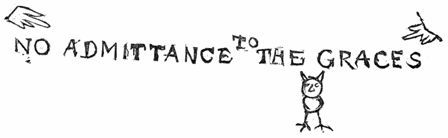
That owl stands for Minerva. I couldn’t make a very good one because I’m in such a hurry to do my examples. The goddess of wisdom used to be named Minerva. She was painted with an owl. I’ve been reading it in the Classical Dictionary. Dorry and Bubby Short and I have just been to the Two Betseys to get our gloves sewed up, and the Other Betsey said she used to dance like a top. Then she held her dress up with her thumbs and fingers, and took four different kinds of balances. Made us die a laughing, she hopped up and down so.
Your affectionate Cousin, William Henry.
P. S That to isn’t left out in the notice, it’s my own mistake.
The remaining letters were probably written during his last term at the school.
Matilda’s Letter to William Henry.
Dear Cousin,—
Lucy Maria keeps telling me that I promised to write you a letter, but I wish I hadn’t promised to write you one, because I don’t like to write letters very well, for I can’t think of anything to write. But Lucy Maria she likes to, and that would do just as well as for me to. But mother says I ought to often, so as to get me in the habit of it. I don’t have very much time to write very long letters, for the girls are getting up a Fair, and I am helping do the old woman in her shoe, and gentlemen’s pincushions, and presents for the arrow table, where the arrow swings round and points to your present, and so I don’t get very much time between schools. For we have to write compositions every week now, and all the girls think the teacher is just as mean as he can be to make us. We want he should take off some of the compositions and put more on to our other lessons; but no. He thinks ’t is the best thing we can do. He don’t care about anything else, I believe. Susie Snow says she believes he’s all made up of composition. Our next subject is “Economy” and we’ve got to put in time wasted, and health wasted, and money wasted. Susie Snow is going to put in hers that girls should never waste their time writing compositions.
I wish I could think of some news to tell. Lucy Maria could get news in a sandy desert, I believe. But she don’t have to go to school. Hannah Jane hasn’t got home from Aunt Matilda’s yet. The minister and his wife and all his children have been here to spend the day. They are very fond of jelly. Mother gave them that tall gilt tumbler full, that Cousin Joe brought home from sea, with gilt flowers on it. ’T is very pleasant weather. I wish you’d come back and hoe my flower-garden, the weeds are thick as spatters, and I don’t have much time. The dog stepped on my sensitive plant. Some of my seeds haven’t come up. Father says I better go down after them. That Root of Bliss I set out, good for the headache, that Cousin Joe brought home from the island of Sumatra, that’s in the Mediterranean Sea, or else in the Indian Ocean, the hens scratched up four times, and I’ve brought it in the house and stuck it in a cigar-box. Father told me to shake pepper over it because ’t was used to pepper at home, but I can’t tell what he means and what he don’t, he funs so. Our new cow hooks down rails and goes where she wants to.
O Billy! now I can tell you some news. But ’t is quite bad news. It happened two weeks ago. We all felt very sorry about it, and some of us cried. I couldn’t help it. You know our cow that was named Reddie, the one we raised up from a bossy-calf with milk-porridge till ’t was big enough to eat grass? Well, she got in the bog. We were just eating supper. Georgiana was eating supper at our house that night. Tommy hadn’t got home from school, and we were all wondering where he was. Father said he didn’t doubt he’d gone to find his turtle. He had a turtle that got loose and ran away. Mother was just saying he’d have to have cold dip toast for his supper, for she makes it a rule not to keep things about for him when he don’t come straight home to his meals. He’d rather play than eat. ’T is only a little school he goes to. Not very far off. Five scholars, that’s all. Little bits of ones. But I must tell about our cow.
We began to hear a great screaming, and couldn’t think what the matter was. ’T was Tommy. And next thing he came running through the yard, crying and hollering both together, “Father! Father! Cow! Reddie!” Much as he could do to speak. Father knew in a minute what ’t was, for he knew she was pastured close to the bog, and he ran and we all ran, and Mr. Snow and some other men that found it out came with us. O poor cow! She was in more than half way up, and making dreadful moaning noises, and shook her head and tried to stir, but every stir made her go deeper in. Men and boys waded in, but they couldn’t do anything.
“Rails! rails!” they all called out, and we pulled them out of the fences and they tried to prise her up with them, but the bog was so soft she sank in so they couldn’t do anything with her. Much as they could do to keep up themselves. Mr. Snow was prising with a rotten rail, and it broke, and he went down in the wet. Old Mr. Slade, that goes with two canes, came there bareheaded and sat down on the bank. He told them to go get some boards. There weren’t any, any nearer than Mr. John Slade’s new house, and that was too far off, and father said ’t was too late, for she was in, then, up to the top of her back. ’Most all the women and girls came away then, for we couldn’t bear to stay any longer to see her suffer. She kept her nose pointed up high as she could, and her eyes looked very mournful.
In the morning father told me I should never see Reddie again. They got her up, but not soon enough. She’s buried now, under the poplar-tree, in that field we bought of Mr. Snow. She was a good, gentle cow, and seemed to know us. Mother says she seemed like one of the family. Georgiana about spoiled her new boots in the bog. Our new cow isn’t the best breed, but she’s part best. The cream is considerable yellow, but not very. She gives about eight or nine quarts. Milk has risen a cent. Mother declares she will not measure her milk in that new kind of quart, that don’t hold much over a pint. Lucy Maria and all of us are trying to have mother go get her picture taken. But she says she can’t screw her courage up, and can’t take the time. Your father says he wants to see her good clever face in a picture. Too bad blue eyes take light. But she might be taken looking down, Lucy Maria says, mending Tommy’s trousers, that would be natural. He’s always making barn-doors in his trousers, he’s such a climbing fellow.
L. M. and I have most earned money enough, and father’s going to make up the rest, and we are going to hire a cheap piano, that Mr. Fry told us about, and I’m going to be a music teacher, I guess. I’m going to begin next month. I shall take of Miss Ashley. I shall have to walk a mile. O goody! goody! dum, dum, dum! Sha’ n’t I be glad! But Susie Snow says I shall sing another tune after I’ve taken a little while. Father says if I begin to take I must go through. Says I must promise to practise two hours a day. I’d just as soon promise that as not. ’T is just what I like. Only think, I shall have a piano in this very house. Seems if I couldn’t believe it! I can play for you to dance. Wish I knew how to dance. Susie Snow has come after me to go take a walk. Now, William Henry, you must answer this letter just as immediately as possible.
From your affectionate Cousin, Matilda.
P. S. Cousin Joe has sent me a smelling-bottle, a little gilt one he brought home, that’s got ninety-four different smells in it. Mother is writing you a note. She says you can’t dance on her carpet. Father says he’s sorry he didn’t learn the graces, and means to when you come again. We can dance in the barn. Tommy has just come in. He says he knows his B A C’s. He’s a funny boy. He means A B C’s. But he always gets the horse before the cart. One day we tried to make conundrums, and Georgiana made this,—see if you can answer it: Which is best, to have plum-cake for supper and only have a little mite of a piece, or cookies, and have as many as you want?
Georgiana’s kitty has just jumped over the fence. She’s after my morning-glories again. Just as fast as I fasten ’em up, she goes to playing with the strings and claws ’em down again. Lucy Maria drew a picture of her doing it.
M.
A Note from Dorry.
Dear William Henry’s Grandmother,—
William Henry wants I should tell you not to be scared when you see another boy’s handwriting on the back of this letter, and not to think he’s got cold, or got anything else, like measles, or anything of that kind, and not to feel worried about his not writing for so long, for he is all right except the first joint of his forefinger. He crooked that joint, or else uncrooked it, playing base ball. ’T was a heavy ball and he took it whole on that joint, and ’t is so stiff he can’t handle a penholder. He thinks you will all wonder why he doesn’t write, and worry about his getting sick or something, but he never felt better. Appetite very good. He has received his cousin Matilda’s letter, and will answer it when he can. He wants to know what she’d think if she had to write poetry for composition. Our teacher told us we must each write one verse about June. I put three of them in for you to see, but don’t put our names.
“O I love the verdant June, When the birds are all in tune, When the rowers go out to row, When the mowers go out to mow, O, sweetly smells the fragrant hay, As we ride on the load and stow it away.” “In June we can sail In the gentle gale, On the waters blue, And catch cod-fish That make a good dish, And mackerel too.” “In June the summer skies are clear, And soon green apples do appear. And though they’re hard and sour, we know That every day they’ll better grow. This teaches us that boys, also, Every day should better grow.”
P. S. He wants I should tell you ’t is tied up in a rag all right and don’t hinder his studying. Says he wishes his cousin Lucy Maria would write him one of her kind of letters, that she knows how to write, and tell what they are all doing and what they talk about, and when his finger is well he will answer all the letters they will write to him.
Very respectfully, Billy’s Friend, Dorry.
Aunt Phebe’s Note.
My dear Billy,—
Grandmother worries about that finger. Do ask Dorry to write again, or else take the penholder in your middle one, though we mistrust that’s damaged, or you’d have written before this. I’ve had my picture taken and send you one to keep. Look at it often, and if you’ve done anything wrong, think it shakes its head at you! Little wrong things, or big ones, all the same. For little wrongs are more dangerous, because we think they’re of no account. But they show what’s in a person, same as a little pattern of goods tells what the whole piece is. Show me half an inch of cotton and I’ll tell you what color the whole spool is.
I’d no idea of having my picture taken. I was right in the heart of baking, when your Uncle J. drove up and said he’d harnessed up on purpose. ’T was all a contrived plan between him and the girls. I saw them smiling together when Mattie brought out my black alpaca. I thought the girls seemed mighty ready to take hold and finish up the baking. But he got caught in his own trap, for Lucy Maria went with us, to make sure my collar and things looked fit to be taken, and she set her foot down we shouldn’t leave the saloon till he’d had his, for she was going to have a locket with us both inside, and I had to be done over small. What an operation it is to have your picture taken! If we could only take ether and be carried through! He put my head in a clamp, and crossed my hands, and pinned up a black rag for me to look at, and told me to look easy and natural, and smile a very little! I’m sure I tried to, but your Uncle J. says ’t is a very melancholy face, and Lucy Maria says the cheek-bones cast a shadow! Your father says the worst of it is, it does look like me! I think it’s too bad to make fun of it, after all I passed through! Your Uncle J. took things easy and joked with the man, and was laughing when the cover was taken off and didn’t dare to unlaugh, he says, so he came out all right, with a laughing face, as he always is. The girls want we should be taken large and hang up, side by side, in two oval frames, over the mantel-piece. But their father says he sha’ n’t be hung up alive, if he can help himself.
It isn’t likely I shall write to you again very soon. Cousin Joe and his accordion are coming, and he’ll bring his sisters, and the young folks about here know them, and I expect there’ll be nothing but frolicking. Then there’ll be some of your Uncle J.’s folks after that, so you see we’ll be all in a hubbub and I shall have to be the very hub of the hubbub, I suppose. Lucy Maria says, “Tell William Henry to send us a charade, or something to amuse the company with.” Write when you can.
With a great deal of love, your affectionate
Aunt Phebe.
P. S. Take good care of your finger. A finger-joint would be a great loss. I think cold water is as good as anything. Grandmother wishes you had some of her carrot salve. Let us hear from you in some way. Grandmother wants to know if the Two Betseys don’t make carrot salve.
I must add here that Lucy Maria was not the girl to give up those pictures in “two oval frames.” For by perseverance, and partly with my assistance, the thing was secretly managed, and managed so well that Uncle Jacob actually carried them out home himself, in a bundle to Lucy Maria, without knowing it! And they now hang in triumph over the fireplace in the “girls’ chamber.”
Lucy Maria to William Henry.
Dear Billy,—
’T is a pity about that forefinger. Pray get it well enough to handle a pen, ’t is so long since you’ve written. So you want home matters reported. Eatable matters of course will be most interesting. Milk and butter, plenty. Gingerbread (plain), ditto. Gingerbread (fancy), scarce. Cookies, quiet. Plum-cake, in demand. Snaps, lively. Brown-bread, firm. White-bread (sliced), dull. Biscuits (hot), brisk. Custard, unsteady. Preserves not in the market.
What do we do, and what do we talk about? Why, we talk about our cousin William Henry, and what we do can’t be told within the bounds of one letter. Think of seven cows’ milk to churn into butter, besides a cheese now and then, and besides working for the extra hands we hire this time o’ year! I should have written to you before, when we first heard of your accident, if I could have got the time. Hannah Jane is away, and we’ve let Mattie go with Susie Snow to Grandma Snow’s again for a few days. Grandma Snow likes to have Mattie come with Susie, for ’t is rather a still, dull place. So you must think we are quite lonesome here now, and we are, especially mother. Father tells her she’d better advertise for a companion. I’ve a good mind to advertise to be a companion. What do companions do? The old lady might be cross, or the old gentleman, but that wouldn’t hurt me, so long as I kept clever myself. Don’t doubt I’d get fun out of it some way. There’s fun in about everything I think.
I’ve been trying to get father and mother to go to Aunt Lucy’s and stay all night. But father thinks there wouldn’t be anybody to shut the barn-door, and mother thinks there wouldn’t be anybody to do anything, though I’ve promised to scald the pans, and do up the starched things, and keep Tommy out of the sugar-bowl. He takes a lump every chance he can get. Takes after his father. Father puts sugar on sweetened puddings, if mother isn’t looking! We’ve made some verses to plague Tommy, and when Mattie gets her piano, they’re going to be set to music.
SONG.
A Sweet Tommy.
As turns the needle to the pole, So Tommy to the sugar-bowl. Tra la la, tra la la! Sweet, sweet Tommy! Tommy always takes a toll Going by the sugar-bowl. Tra la la, tra la la! Sweet, sweet Tommy! Were Tommy blind as any mole, He’d always find the sugar-bowl. Tra la la, tra la la! Sweet, sweet Tommy!
He’s a funny talking fellow. We took him into town last night, to see the illumination. This morning we heard him and Frankie Snow telling Benny Joyce about it. Father and I were listening behind the blinds. Made father’s eyes twinkle. Don’t you know how they twinkle when he’s tickled?
“You didn’t see the rumination and we did!” we heard Tommy say.
“Rumination? What’s a rumination?” asked Benny.
“O hoo! hoo!” cried Tommy. “Denno what a rumination is!”
“Why,” said Frankie, “don’t you know the publicans? Wal, that’s it.”
“O poh!” said Benny. “Publicans and sinners! I knew they’s coming!”
“And soldiers!” said Frankie. “O my! All a marching together!”
“O poh!” said Benny. “I see ’em go by. Paint-pots on their heads, and brushes in ’em! I wasn’t goin’ to chase!”
“Guess nobody wouldn’t let ye?” said Frankie.
“Didn’t either!” cried Tommy, “didn’t have paint-pots!”
“Did!” said Benny. “Guess my great brother knows!”
“Guess we know,” said Frankie, “when we went!”
“And the town was all celebrated,” said Tommy. And the houses all gloomed up! And horses! O my!
“O poh!” said Benny. “When I grow up, I’m goin’ to have a span!”
If mother does go, she’ll take Tommy, for she wouldn’t sleep a wink away from him over night. Father pretends he’d go if he had a handsome span. Says he hasn’t got a horse in the barn good enough to take mother out riding. When Mammy Sarah was here washing, she told him how he could get a good span. You know he’s always joking about taking summer boarders. Says Mammy Sarah, “Now ’t is a wonder to me you don’t do it, for summer boarders is as good as a gold-mine. Money runs right out of their pockets, and all you have to do is to catch it.” She says we could make enough out of a couple of them, in a month’s time, to buy a handsome span, and she isn’t sure but the harness.
I think we begin to be a little in earnest about summer boarders. For we have rooms enough, in both houses together, and milk and vegetables, and mother’s a splendid cook. Mammy Sarah says, “They ain’t diffikilt, and after they’ve been in the country couple of weeks, they don’t eat so very much more than other folks.”
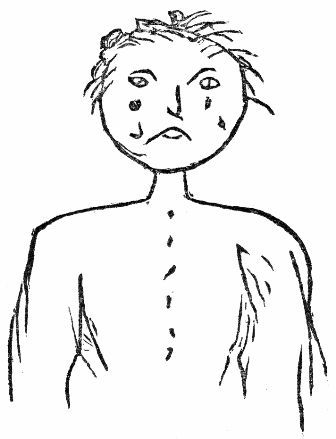
Father says he wants to take them more for the entertainment than the money. He wants rich ones, but not the sensible kind, that know money isn’t the only thing worth having. Says what he wants is that silly, stuck-up kind, that put on airs, and make fools of themselves, they’d be so amusing! Thinks the best sort for our use would be specimens that went up quite sudden from poor to rich, like balloons, all filled with gas. I believe there’d be lots of fun to be made out of them. I’ve seen one or two. Gracious! You’d think they weren’t born on the same planet with poor folks. Mother’d rather have the really well-informed, sensible kind, that we may learn something from them. A couple of each would be just the thing. How do you like mother’s picture? We don’t feel at all satisfied with it. If she could only be taken at home! Then she’d look natural. Father says the world is going ahead so fast, he believes the time will come when every family will have its own picture-machine, much as it has its own frying-pan. Then when folks have on their best expressions, why, clap it right before them. Then they’ll look homish. Says what he wants is to have mother’s face when she’s just made a batch of uncommon light biscuits, or when Tommy’s said something smart. Won’t there be funny pictures when we can hold up a machine before anybody any minute, like a frying-pan, and catch faces glad, or mad, or sad, or any way? I made believe take Tommy’s and then showed them to him on a piece of paper. Guess I’ll put them in the letter. They’ll do to amuse you. I draw an hour or so every day. First, I have to make my hour. Sometimes I have to make more. For I will read a little, if the world stops because of it. But about the faces. First one is when he was crying because he couldn’t have sugar on his potatoes. Next one is when he was spunky at Frankie Snow for bursting his little red balloon. The pleased-looking face is when father brought him home a little ship all rigged, and the laughing one is when the cow put her head in the window. We tell him we’ll have them framed and hung up so he can see just how he looks. Mother says ’t is all very well to laugh at Tommy, but she guesses some older ones’ pictures wouldn’t always look smiling and pleasant, take them the year through!
As soon as your finger is itself again do write, for we miss your letters. We expect to have gay times here this summer. Company coming, but we sha’ n’t make company of them. Except to have splendid times. What shall we do evenings? If you go anywhere where there is anything going on, do write us about it, so we can go on the same way. When are you coming? Write me a good long letter when you can.
Your affectionate Cousin, Lucy Maria.
Your father is going to write you a letter. Quite wonderful for him. O William Henry, you don’t know how much I think of your father, and what a good man he is! I guess you’d better write to your grandmother before you do me; she’s so pleased to have you write to her.
Father wants to know when that ball hit you if you bawled.
Lucy Maria’s “picture-taker” made a great deal of fun for them, and possibly did some good. She constructed a queer long-handled affair, and, at the most unexpected moments, this would be thrust before the faces of different members of the family, more especially Tommy, Matilda, or Georgiana, and their “pictures” would be sure to appear to them soon after, “glad, or mad, or sad, or any way.”
And the plan of “summer boarders” also furnished entertainment. The talk on this subject was quite amusing, particularly when it touched the subject of “advertising.” Lucy Maria suggested this ending:—
“None but the silly, or the really well-informed need apply.” But Mr. Carver thought such a notice would fail of bringing a single boarder. For silly people did not know they were silly, and the really well-informed were the very last ones to think themselves so.
William Henry to Aunt Phebe.
Dear Aunt Phebe,—
I thank you for taking your time to write to me, when you have so much work to do. My forefinger has about recovered the use of itself. The middle one did go lame a spell, but now ’t is very well, I thank you. Mrs. Wedding Cake did them up for me. I think she’s a very kind woman. Dorry says he’d put a girdle round the earth in forty minutes, or lay down his life, if she wanted him to, or anything else, for the only woman he knows that will smile on boys’ mud and on boys’ noise.
Ten of us went on an excursion with the teacher, half-price, to Boston, and had a long ride in the cars, over forty miles. We went everywhere, and saw lots of things. Went into the Natural History building. You can go in for nothing. You stand on the floor, at the bottom and look way up to the top. All round inside are galleries running round, with alcoves letting out of them, where they keep all sorts of unknown beasts and birds and bugs and snakes. Some of those great birds are regular smashers! ’Most dazzles your eyes to look at their feathers, they’re such bright red! I’d just give a guess how tall they were, but don’t believe I’d come within a foot or two. Also butterflies of every kind, besides skeletons of monkeys and children and minerals and all kinds of grasses and seeds, and nuts there such as you never cracked or thought of! They are there because they are seeds, not because they are nuts. And there’s a cast of a great ugly monster, big as several elephants, that used to walk round the earth before any men lived in it. If he wasn’t a ripper! Could leave his hind feet on the ground and put his fore paws up in the trees and eat the tops off! They call him a Megotharium! I hope he’s spelt right, though he ought not to expect it, and I don’t know as it makes much difference, seeing he lived thousands of years before the flood, and lucky he did, Dorry says, for the old ark couldn’t have floated with many of that sort aboard. He wasn’t named till long after he was dead and buried. Patient waiter is no loser, Dorry says, for he’s got more name than the ones that live now, and is taken more notice of. We saw a cannon-ball on the side of Brattle Street Church, where ’t was fired in the Revolution, and we went to the top of the State House. Made our knees ache going up so many steps, but it pays. For you can look all over the harbor, and all round the country, and see the white towns, and steeples, for miles and miles. Boston was built on three hills and the State House is on one of them. I can’t write any more, now.
W. B. has left school, because his father got a place for him in New York. His father thought he was old enough to begin. He’s a good deal older than I am.
From your affectionate Nephew, William Henry.
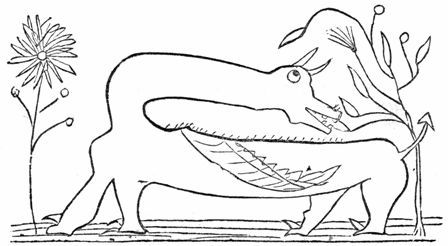
How do you like this picture of that great Mego—I won’t try to spell him again—eating off the tree-tops? The leaves on the trees then were different from the ones we have now. Dorry made the leaves, and I made the creature.
A Letter to William Henry from his Father.
My dear Son,—
Perhaps you have thought that because I am rather a silent man, and do not very often write you a letter, that I have not very much feeling and do not take interest in you. But no one knows how closely I am watching my boy as Time is bringing him up from boyhood to manhood.
Sometimes your grandmother worries about your being where there may be bad boys; but I tell her that among so many there must be both good and bad, and if you choose the bad you show very poor judgment. I think if a boy picks out bad companions it shows there is something bad in himself.
She says I ought to keep giving you good advice, now you are just starting in life, and charge you to be honest and truthful and so forth. I tell her that would be something as it would be if you were just starting on a pleasant journey, and I should say, “Now, William Henry, don’t put out your own eyes at the beginning, or cut the cords of your legs!” Do you see what I mean? A boy that is not honest and truthful puts out his own eyes and cripples himself at the very beginning.
There is a good deal said about arriving at honor and distinction. I don’t want you to think about arriving at honor. I want you to take honor to start with. And as for distinction, a man, in the long run, is never distinguished for anything but what he really is. So make up your mind just what you want to pass for, and be it. For you will pass for what you are, not what you try to appear. Go into the woods and see how easily you can tell one tree from another. You see oak leaves on one, and you know that is oak all the way through. You see pine needles on another, and you know that is pine all the way through. A pine-tree may want to look like an oak, and try to look like an oak, and think it does look like an oak, as it can’t see itself. But nobody is cheated. So a rascally fellow may want to appear fair and honest, and try to appear fair and honest, and think he does appear fair and honest, as he can’t see himself. But, in the long run, nobody is cheated. For you can read a man’s character about as easy as you can the leaves on the trees. Sometimes I sit down in a grocery store and hear the neighbors talked about, and ’t is curious to find how well everybody is known. It seems as if every man walked round, labelled, as you may say, same as preserve jars are labelled, currant, quince, &c. Only he don’t know what his label is. Just as likely as not a man may think his label is Quince Marmelade, when ’t is only Pickled String Beans!
Just so with boys. Grown folks notice boys a great deal, though when I was a boy, I never knew they did. The little affairs of play-time and school-time, and their home-ways are all talked over, and by the time a boy is twelve years old, it is pretty well known what sort of a man he will make.
Now don’t mistake my meaning. I don’t want you to be true because people will know it if you are not, but because it is right and noble to be so. I want you to be able to respect yourself. Never do anything that you like yourself any the less for doing.
A boy of your age is old enough to be looking ahead some, to see what he is aiming at. I don’t suppose you want to drift, like the sea-weed, that lodges wherever the waves toss it up! Set up your mark, and a good high one. And be sure and remember that, as a general thing, there is no such thing as luck. If a man seems to be a lucky merchant, or lawyer, or anything else, ’t is because he has the talent, the industry, the determined will, that make him so. People see the luck, but they don’t always see the “taking pains” that’s behind it. I remember you wrote us a letter once, and spoke of a nice house, with nice things inside, that you meant to have by “trying hard enough.” There’s a good deal in that. We’ve got to try hard, and try long, and try often, and try again, and keep trying. That house never’ll come down to you. You’ve got to climb up to it, step by step. I don’t know as I have anything to say about the folly of riches. On the contrary, I think ’t is a very good plan to have money enough to buy books and other things worth having. I don’t see why a man can’t be getting knowledge and growing better, at the same time he is growing richer. Some poor folks have a prejudice against rich folks. I haven’t any. Rich people have follies, but poor people copy them if they can. That is to say, we often see poor people making as big fools of themselves as they can, with the means they have. Money won’t hurt you, Billy, so long as you keep common sense and a true heart.
We are all watching you and thinking of you, here at home. If you should go wrong ’t would be a sad blow for both families. Perhaps I ought to tell you how I feel towards you, and how, ever since your mother’s death, my heart has been bound up in you and Georgie. You would then know what a crushing thing it would be to me if you were found wanting in principle. But I am not very good, either at talking or writing, so do remember, dear boy, that even when I don’t say a word, I’m thinking about you and loving you always. God bless you!
From your affectionate Father.
W. B., it seems, from his own account, set sail on the great sea of commerce with flying colors, and favorable winds,—probably the Trade-winds.
Old Wonder Boy to William Henry.
Dear Friend,—
I like my place, and think it is a very excellent one. It is “Veazey & Summ’s.” When you get a place it is my advice that you should procure one in New York, as New York is greatly superior to Boston. Boston is a one-horse place. I wouldn’t be seen riding in that slow coach. Washington Street could be put whole into Broadway, and not know it was there hardly, for you could travel both sides and all round it. Our store is a very excellent store. Some consider it greatly superior to Stewart’s. All our clerks dress in very superior style and go in very good society, and so I learn to use very good language. We keep boys to do the errands, and porters. All the stylish people do their trading here. The young ladies like to trade with me very much. The New York ladies are greatly superior to any other ladies. The firm think a great deal of me, so I expect to be promoted quite fast. I am learning to smoke. I have got a very handsome pipe. The head clerk thinks it has got a very superior finish to it. We two are quite thick. How are all the fellers? Write soon. Remember me to all inquiring friends, and excuse handwriting.
Your friend, Walter Briesden.
William Henry to Matilda.
Dear Cousin,—
Now I’m going to answer your letter, and then I sha’ n’t have to think about it any longer. I was sorry to hear about poor Reddie. But if it had been Tommy, then it would have been a great deal worse. Think of that. Dorry and I have been wishing ’most a week about something, and now I’ll tell you what ’t is about. About a party. ’T is going to be at Colonel Grey’s. He lives in a large light-colored brick house, with a piazza round it, and a fountain, and bronze dogs, and everything lovely. It is Maud Grey’s birthday party. Sixteen years old. Old and young are going to be invited, because her little sister’s birthday comes next day to hers. Now sometimes when there’s a party some of the biggest of our fellows get invited, because there are not very many young gentlemen in town, and they are glad to take some from the school. But we two never have yet. But Dorry thinks we stand a better chance now, for we’ve been to dancing-school, and will do to fill up sets with. Maud Grey didn’t go as a scholar, but she went spectator sometimes, and took my partner’s place once, when her string of beads broke. Dorry was in the same set. I never polkaed better in my life, for she took me round and made me keep time whether I wanted to or not, but I told Dorry I felt just like a little boy that had been lifted over a puddle. He’s afraid she won’t remember us, but I guess I’m afraid she will, and then won’t invite such a bad dancer. We two thought we’d walk by the house, just for fun, and make ourselves look tall. So we held up our chins, and swung two little canes we’d cut, going along, for small chaps are plenty enough, but young gentlemen go off to college, or stores, soon’s they’re of any size. The blinds were all shut up, but Dorry said there was hope if the slats were turned the right way. Blind slats here move all ways. Yesterday, in school-time, I saw a colored man coming towards the school-house, and thought ’t was Cicero, the one that works for Colonel Grey, coming with the invitations, and made a loud “hem!” for Dorry to look up, and a hiss, to mean Cicero, and pointed out doors. ’t wasn’t very loud, but that one we call Brown Bread, that has eyes in the back of his head, and ears all over him, and smells rat where there isn’t any, and wears slippers, so you can’t hear him, even if ’tis still enough to drop a pin,—I thought he was over the other side of the room, tending to his own affairs, but all of a sudden he was standing just back of me, and I had to lose a recess just for that. And ’t wasn’t Cicero after all, but the one that comes after the leavings.—(Somebody knocks.)
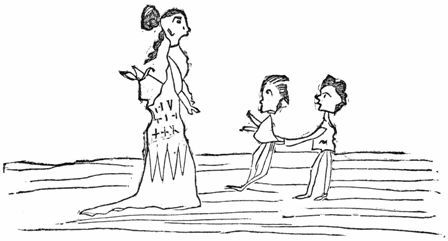
Afternoon.—Hurrah! We’re going! The one that knocked at the door was Spicey, with our invitations. When I come home I’ll bring them home to show. They came through the post-office. We expect they all came to the professor, with orders to pick out the ten tallest ones, for they are directed in his writing. I never went to such a party, and shouldn’t know how to behave, if ’t wasn’t for Dorry. First thing you do is to go up and speak to the lady of the house and the lady of the party. I mean after you’ve been up stairs, and looked in the looking-glass and smoothed down your hair. Mine always comes up again. I’ve tried water and I’ve tried oil, and I’ve tried beef-marrow, but ’t is bound to come up. Dorry says I ought to put it in a net. Don’t you remember that time I had my head shaved off close, and how it looked like an orange? I’m glad ’t isn’t so red as it was. ’T is considerable dark now. When you come down you walk up to the lady of the house and say “How do you do?” and shake hands, and when you go home you have to bid her good-night, and say you’ve had a very pleasant time, and shake hands again. Not shove out your fist, as if you were shoving a croquet-ball, but slow, with the fingers about straight, and not speak it out blunt, as if you were singing out “good-night!” to the fellers, but quite softly and smiling. Dorry’s been showing me beforehand. Bubby Short stood up in the floor, and had the bedspread tied round him with a cod-line, for a trail, and shavings for curls. He was the lady of the house and we walked up to him, and said, “How do you do, Mrs. Grey?” and so forth. Dorry drew this picture of us. He draws better than I do. I will write about the party.
From your Cousin, William Henry.
William Henry to his Grandmother.
My dear Grandmother,—
Now if you will be a good little grandmother, and promise never to worry any more, then I’ll tell you about that party. We had to wear white gloves. I’ll begin at the outside. The piazzas had colored lights hanging round them, and there were colored lights hung in the trees and the gateways. ’T was a foggy night, and those colored lights lighted up the fog all around, so when you came towards the place it looked just like a great bright spot in the midst of darkness. There was a tall lady, standing in the middle of the room, with a splendid dress on, dragging way behind her, and I went right up to her, and just got my foot the way Mr. Tornero told us, and the palm of my hand right, when Dorry jerked me back by my jacket and said she wasn’t the right one. You see we got belated, going back after our clean pocket-handkerchiefs, and hurried so that Dorry fell down and muddied his trousers’ knees, but lucky ’t was close to the Two Betseys’ shop, for we went in there and got sponged up, but we had to wait for ’em to dry. Lame Betsey said she used to take care of Maud Grey when she was a little scrap, and she wanted to make her a birthday present. So they both hunted round, to see if they had anything. In the desk they found a little thin book, a funny-looking old blue-covered book, “Advice to a Young Lady,” that was given to Lame Betsey when she was young. The title was on the blue cover. ’T was a funny-looking thing and it smelt snuffy. She asked me to give it to Maud, after she’d written her name in it. I tell you now Lame Betsey makes quite good letters! I didn’t want to take the book, but I did, for both Betseys are clever women.
All this was the reason we got belated, and Mrs. Grey had got mixed up with the other people, but we found her and did the right thing by her. And Maud too. I don’t think any of you would believe that I could behave so well! so polite I mean. Course I didn’t feel bashful any! O no!
They had four pieces, and they played as if they knew how. I didn’t dance at the first of it. Didn’t dare to. ’T was too light there. The carpets were covered with white. Then chandeliers, and lamps, and wax candles, and flowers everywhere they could be, set up in vases,—one lady called vases, varzes,—and hanging-baskets. I never was in such a beautiful place. The ladies sang at the piano, and the young gentlemen turned their leaves over. O you ought to ’ve heard ’em when the tunes went up, up, up! Enough to make you catch your breath! Seemed as if it could never get down again. I don’t like that kind. But Dorry said ’twas opera style and nobody was to blame but me, if I didn’t like it. Now John Brown’s Body, I like that, and when they all sang that, I joined right in, same as any of them. For I knew I knew that tune. But first one looked round at me, and then another looked round at me, as if something was the matter. I thought I saw ’em smiling. Then I kept still. But I didn’t know I was singing wrong. O, I do wish I knew what this singing is! Seems easy enough. Now when the tune goes up loud, I go up loud, and when that goes down low, I go down low. But Dorry says it isn’t singing. Says ’tis discord. But I can’t tell discord from any other cord, and he says the harder I try, the worse noise I make. I do wish I could roar out that Glory Hallelujah! for I feel the tune inside of me, but it never comes out right. Dorry laughs when I set out to sing. He says I chase the tune up and down all the way through, and never hit it! Now, if ’t is right inside, why can’t it come out right? I don’t see!
We went into a large room to eat refreshments, and I wish Aunt Phebe could see the things we had. And taste of them too. I saved the frosting off my cake for Tommy. ’T is wrapped up in a paper in my trunk. ’T is different from your frosting, good deal harder. I had a sort of funny time in that room. Somebody had to hit my elbow when I was passing custard to a girl, and joggled over a mess of it on to her white dress and my trousers. I whipped out my pocket-handkerchief to sop it up, and whipped out that little blue book. Somebody picked it up, and one young man, that had been cutting up all the evening, Maud Grey’s cousin, he got hold of it and read her name and called out to her to come get her present, and made a good deal of fun about it, and began to read it loud. She wanted to know who brought it, and somebody told her I was the one. I began to grow red as fire, but all of a sudden I thought, Now, Billy, what’s the use? So I said very plain, “Miss Grey, Lame Betsey sent you that book.” She didn’t laugh very much, only smiled and asked me to tell Lame Betsey she was glad that she remembered her. Guess she thought I looked bashful, for afterwards she asked me if I wouldn’t try a polka with her. I don’t think she’s very proud, for when I was looking at a painted vase, she came and told me how it was done, for all I wasn’t much acquainted with her. She talked to me as easy and sociable as if she’d been Lucy Maria.
A company of us got together in one of the rooms and ate our ice-creams there, and while we were eating them, we beheaded words. Lucy Maria must read this letter, for she’ll want to know how. When you behead a word you take off the first letter. It’s fun, when you get beheading them fast. The spelling mustn’t be changed. Dorry made some of these. I didn’t. I couldn’t think fast enough.
Behead an article of dress, and you leave a farming tool.
Shoe—hoe.
I’ll put the rest of the answers at the bottom, so as to give all of you a chance to guess what they are.
1. Behead what leads men to fight, and you leave the cause of much misery, sin, and death.
2. Behead what young ladies are said to be fond of, and you leave a young lady.
3. Behead what comes nearest the hand, and you leave what comes nearest the heart.
4. Behead something sweet, and it leaves an address to the sweet.
5. Behead part of a coach, and you leave part of yourself. Behead that, and you leave a fish.
6. Behead a rogue, and you leave a musician.
7. Behead an old-fashioned occupation, and you leave what prevents many a parting.
8. Behead a part of ladies’ apparel, and you leave what is higher than the king.
9. Behead what always comes hard, and you leave what makes things go easy.
10. Behead a weapon, and you leave a fruit. Behead that, and you leave part of the body.
1. Drum, rum. 2. Glass, lass. 3. Glove, love. 4. Molasses, O Lasses! 5. Wheel, heel, eel. 6. Sharper, harper. 7. Spin, pin. 8. Lace, ace. 9. Toil, oil. 10. Spear, pear, ear.
Sometimes they make them in rhyme.
Behead what is born in the fire, And lives but a moment or so,— For it can’t live long you know,— And you leave what all admire. Where grass so green doth grow, And trees in many a row. Behead this last, and you leave in its place What once preserved the human race.
Spark, park, ark.
Behead a musical term so sweet, And you leave what runs without any feet. Behead again, and, sad to tell, You leave what is sick and never gets well. To what is left add the letter D, And you have a lawyer of high degree.
Trill, rill, ill, “LL D.”
I’ve got something a good deal funnier to tell, but I’m going to write all about that in Lucy Maria’s letter. I guess she’ll be very glad when she gets that letter, for ’twill tell her how to do something very funny. I will send her the story of it too, so she won’t have to make up anything herself. Don’t you think I had a pretty good time? I hope my sister is well, and hope you all are. Lucy Maria must read this letter. She could make those beheadings quicker’n lightning. I am well. Don’t believe I shall ever be sick.
From your affectionate Grandson, William Henry.
P. S. I’ve been to a lecture on good health. The man said there were two parts to the air, a good part and a poison part, and every time we breathe we keep in the good part, and breathe out the poison part. So if a room were sealed up, air-tight, a man living in it would soon die, for he would use up all the good part and leave the poison part. So we ought to always let fresh air in, that hasn’t been breathed. He says in a crowded room, if there is no fresh air coming in, we have to use over what other folks have breathed, whether they are sick or well.
W. H.
What with our young friend’s frequent visits to the Two Betseys, his attendance at the dancing-school, and going to parties and to lectures, it would seem as though his time was not wholly taken up with his studies. Among William Henry’s letters to Lucy Maria I find the following one about the Dwarf, and with it, in Lucy Maria’s handwriting, I find a copy of the Narrative alluded to.
William Henry to Lucy Maria.
Dear Cousin,—
I guess you will want to know how this was done, that I’m going to write about, so I will tell you about it, then you will know how to make one out of Tommy, but I guess a bigger boy would be better. It doesn’t make much difference about the size, if he can keep a sober face while somebody tells a story about him, and do the things he’s told to. I couldn’t guess how ’t was done till Bubby Short told me. Bubby Short was the dwarf. He was invited on purpose, because he is up to all kinds of fun, and can act dialogues, be an old man, or old woman, or anything you want him to. I will tell you exactly how ’t was done, so you will know. And I will send you the Narrative to copy. But you can’t keep it very long. It was given to Bubby Short. The showman was Maud Grey’s cousin. He was dressed in a turban, with long robes, and he had black rings made round his eyes, and his face was tatooed with a lead-pencil. Course he made up the story and made the pictures to it too. But he pretended he got them in the dwarf’s country, that was named “Empskutia.” I thought maybe you’d like to read it, then if you made one you could think of something to say. ’T was only meant for the little ones, he said, but we all liked to hear it. No matter if it was nonsense, we didn’t care. Now, I’ll begin.
First, they had a table, with a long table-cloth on it that touched the floor. It must touch the floor, so as to hide the real feet of the one that’s going to be the dwarf. When Bubby Short was all ready he sat down to the table, same as if he’d been doing his examples or eating his dinner,—sat facing the company and waited for the curtain to rise. Course you have to have a curtain. The table-cloth covered the lower part of him. His own hands and arms were turned into feet and legs for the dwarf. I’ll tell you how. The arms had little trousers on them, and the hands were put into nice little button-boots, so they looked like legs and feet. He was all stuffed out above his waist, and had on a stiff shirt bosom, and breastpin, and necktie, and false whiskers, and a wig made of black curled hair, and a tasselled cap, with a gilt band round it. He crooked his arms at the elbows and laid them flat on the table, with the button-boots towards the curtain, so when the curtain went up it looked like a little dwarf sitting down, facing the company. Now I must tell you where the dwarf’s arms and hands came from. For you know that Bubby Short’s arms and hands were made into legs and feet for the dwarf. Now to make arms, he had on a little coat, with the sleeves of it stuffed out to look like arms, and then a stuffed pair of white cotton gloves was sewed on to the sleeves, to look like hands, and these gloves were pinned together by the fingers in front of his waist so as to look like clasped hands.
The showman asked him to do different things. Asked him to try to stand up. Then Bubby Short began to get up, very slow, as if ’t was tough work to do it, and let his arms straighten themselves down, and looked just as if there was a little short fellow standing on the table. I thought like enough you’d like to know how, so as to make one some time, out of Tommy or some bigger boy that knows how to whistle. The showman made his dwarf whistle a funny tune, and told us ’t was an air of his native country. Then made him step out the tune with his little button-boots, and it seemed just like a little dancing dwarf. The showman said that was the national dance of his country. I guess Uncle Jacob would like to see one. I guess his eyes would twinkle.
When the curtain went up you ought to ’ve heard the folks roar! Some of them thought ’t was real. When the company asked him if he could move his arms, he shook his head, no. Then the showman said he could make him do it, by whispering a charm in his ear. So he went close up and whispered, and took out the pin that pinned the gloves, in a secret way, and then the arms dropped apart. All the way he could move his arms was by shaking his body, and then only a little. The showman said the fearful accident that stopped his growth lost him the use of his arms, though he could dance and whistle and make a bow [here he made him make a bow], and could scratch his ear with his boot [here he scratched his ear with the button-boot-toe], but his brain was strong as anybody’s. Then afterwards he told how much he knew. But you can read about it in the Narrative. He made him crook his knees sideways. He could do this easy enough, for ’t was only the elbows bending outwards. Then he made him sit down again. I don’t believe any of you ever saw anything so funny. The showman kept a very sober face all the time, and ’most made us believe every word of his story was true, and at the end he spoke very loud and acted it out, like an orator.