Chapter I · OF A CHURCH AND ITS PARTS
J. M. (John Mason) Neale translation
Two-fold Meaning of the Word—Different Synonyms for the Term—Form of a Church—Of the Tabernacle—The Foundation, how to be laid—To Point East, and Why—The Spiritual Church, how Built up—Of Cement—What Arms the Spiritual Church Employeth—Of the Materials of the Tabernacle—Of Shittim Wood—Analogy of a Church with the Human Body—Of what the Spiritual Church consisteth—Of its Foundations—Of the Walls—Of the Choir—Of Apses—Of the Cloister Court—Of the Towers—Of the Cock—Of the Pinnacles—Of the Windows—Of the Lattice Work—Of the Doors—Of the Piers—Of the Beams—Of the Roof—Of the Stalls—Of the Pulpit—Of the Rood Loft—Of the Hours—Of the Sanctuary—Of the Sacristy—Of the Roof Tiles—Of the Lights—Of the Crosses—Of the Cloister—Of the Bishop's Throne—Why we go together to Church—Of the Separation of the Women from the Men—Of the Covering of Women's Heads—Of Speech in Church—Of Immunity for Malefactors—Why Churches may be rebuilt in other Places.
1. First of all, let us consider a church [Footnote 118] and its parts. The word church hath two meanings: the one, a material building, wherein the divine offices are celebrated: the other, a spiritual fabric, which is the collection of the faithful. The Church, that is the people forming it, is assembled by its ministers, and collected together into {13} one place by 'Him who maketh men to be of one mind in an house.' [Footnote 119]For as the material church is constructed from the joining together of various stones, so is the spiritual Church by that of various men.
2. The Greek ecclesia is in Latin translated by convocation because it calleth men to itself: the which title doth better befit the spiritual than the material church.
The material typifieth the spiritual Church: as shall be explained when we treat of its consecration. [Footnote 120] Again, the Church is called Catholic, that is universal, because it hath been set up in, or spread over, all the world, because the whole multitude of the faithful ought to be in one congregation, or because in the Church is laid up the doctrine necessary for the instruction of all.
3. It is also called in Greek synagoga, in Latin congregatio, which was the name chosen by the Jews for their places of worship: for to them the term synagogue more appropriately belongeth, though it be also applied to a church. But the Apostles never call a church by this title, perhaps for the sake of distinction.
4. The Church Militant is also called Sion: because, amidst its wanderings, it expecteth the promise of a heavenly rest: for Sion signifieth expectation. But the Church Triumphant, our future home, the land of peace, is called Jerusalem: for Jerusalem signifieth the vision of peace. [Footnote 121]
Urbs beata, vera pacis Visio, Jerusalem.]
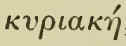
Also, the church is called the House of God: also, sometimes, , that is, the Lord's House. At others basilica (in Latin, a royal palace), for the abodes of earthly kings are thus termed: and how much more fittingly our houses of prayer, the dwelling-places of the King of Kings! Again, it is called temple, from tectum amplum, {14} where sacrifices are offered to God: and sometimes the tabernacle of God, because this present life is a journey, and a progress to a lasting country: and a tabernacle is an hostelrie: [Footnote 122] as will be explained when we speak of the dedication [Footnote 123] of a church. And why it is called the Ark of the Testimony, we shall say in the ensuing chapter, under the title Altars. Sometimes it is called Martyrium, when raised in honour of any martyr; sometimes capella [Footnote 124] (chapel), (see under the head Priest in the second part); sometimes coenobium, at others sacrificium; sometimes sacellum; sometimes the house of prayer: sometimes monastery: sometimes oratory. Generally, however, any place set apart for prayers is called an oratory. Again, the church is called the Body of Christ sometimes a virgin, as the Apostle saith, 'that I may present you as a chaste virgin to Christ': [Footnote 125] sometimes a bride, because Christ hath betrothed her to Himself, as saith the Gospel: 'he that hath the bride is the bridegroom': [Footnote 126] sometimes a mother, for daily in baptism she beareth sons to God: sometimes a daughter, according to that saying of the Prophet, 'Instead of thy fathers thou shalt have children': [Footnote 127] sometimes a widow, because 'she sitteth solitary through her afflictions, and, like Rachel, will not be comforted.' Sometimes she is set forth under the emblem of an harlot, because she is called out of many nations, and because she closeth not her bosom against any that return to her.
{15}
Sometimes she is called a city, because of the communion of her holy citizens, being defended by the munitions of the Scriptures, whereby heretics are kept off: having stones and beams of divers kinds, because the merits of the saints are of divers kinds also, as shall be said below. Whatever the Jewish Church received by the law, that doth the Christian Church receive, and with large increase by grace, from Christ whose bride she is. The setting up of an oratory, or church, is not new. For the Lord commanded Moses in Mount Sinai, that he should make a tabernacle of curiously wrought materials. This was divided by a veil into two parts: the outer, called the holy place, where the people attended the sacrifices: the inner, the holy of holies, where the priests and Levites ministered before the Lord (see the Preface to the Fourth Book and also Appendix A).
5. This tabernacle having decayed through age, the Lord commanded that a temple should be built, which Solomon accomplished with wonderful skill: this also had two parts, like the tabernacle. From both of these, namely, from the tabernacle and the temple, doth our material church take its form. In its outer portion, the laity offer their prayers, and hear the Word. In the sanctuary, the clergy pray, preach, offer praises and prayers.
6. The tabernacle, built as it was amidst the journeyings of the Israelites, is sometimes taken as a type of the world which 'passeth away, and the lust thereof' [Footnote 128] Whence it was formed with curtains of four colours, as the world is composed of four elements. 'God,' said the Prophet, 'is in His tabernacle': [Footnote 129] God is in this world, as in a temple dyed scarlet by the blood of Christ.
{16}
The tabernacle is, however, more especially symbolical of the Church Militant, which hath 'here no continuing city, but seeketh one to come.' [Footnote 130] Therefore is it called a tabernacle, for tabernacles or tents belong to soldiers: and this saying, God is in his tabernacle, meaneth, God is among the faithful collected together in His name. The outer part of the tabernacle, where the people sacrificed, is the active life, wherein men give themselves up to the love of their neighbour: the interior, wherein the Levites ministered, is the contemplative life, where a band of religious men devote themselves to the love and contemplation of God. The tabernacle gave place to the temple: because after the warfare cometh the triumph.
7. Now a church is to be built on this fashion: The foundation being prepared, according to that saying, 'It fell not, for it was founded upon a rock,' [Footnote 131] the bishop, or a priest [Footnote 132] as the bishop's deputy, must sprinkle it with holy water, to banish the foul forms of evil spirits, and lay the first stone, whereon a cross must be engraved. [Footnote 133]
8. The foundation must be so contrived, as that the head of the church may point due east (see Appendix B); that is, to that point of the heavens, wherein the sun ariseth at the equinoxes; to signify, that the Church Militant must [Footnote 134] behave herself with moderation, both in prosperity and adversity: and not towards that point where the sun ariseth at the solstices, which is the practice of some.
{17}
But if the walls of Jerusalem, 'which is built as a city that is at unity with itself,' [Footnote 135] were, by the Prophet's command, raised by the Jews, with how much greater zeal should we raise the walls of our churches! For the material church, wherein the people assemble to set forth God's holy praise, symboliseth that Holy Church which is built in heaven of living stones.
9. This is that House of the Lord, built with all strength, 'upon the foundations of the apostles and prophets, Jesus Christ Himself being the chief cornerstone. [Footnote 136] Her [Footnote 137] foundations are in the holy mountains.' The walls built upon these are the Jews and Gentiles; who come from the four parts of the world unto Christ, and who have believed, believe, or shall believe on Him.
The faithful predestinated to eternal life, are the stones in the structure of this wall which shall continually be built up unto the world's end. And one stone is added to another, when masters in the Church teach and confirm and strengthen those who are put under them: and whosoever in Holy Church undertaketh painful labours from brotherly love, he as it were beareth up the weight of stones which have been placed above him. Those stones which are of larger size, and polished, or squared, and placed on the outside and at the angles of the building, are men of holier life than others, who by their merits and prayers retain weaker brethren in Holy Church.
10. The cement, without which there can be no stability of the walls, is made of lime, sand, and water. The lime is fervent charity, which joineth to itself the sand, that is, undertakings for the temporal welfare of our brethren: {18} because true charity taketh care of the widow and the aged, and the infant, and the infirm: and they who have it study to work with their hands, that they may possess wherewith to benefit them. Now the lime and the sand are bound together in the wall by an admixture of water. But water is an emblem of the Spirit. And as without cement the stones cannot cohere, so neither can men be built up in the heavenly Jerusalem without charity, which the Holy Ghost worketh in them. All the stones are polished and squared—that is, holy and pure, and are built by the hands of the Great Workman into an abiding place in the Church: whereof some are borne, and bear nothing, as the weaker members: some are both borne and bear, as those of moderate strength: and some bear, and are borne of none save Christ, the corner-stone, as they that are perfect. All are bound together by one spirit of charity, as though fastened with cement; and those living stones are knit together in the bond of peace. Christ was our wall in His conversation: and our outer wall in His Passion.
11. When the Jews were rebuilding the walls of Jerusalem, their enemies strove hard to let the works: so that 'they built with one hand, and held their weapons of war in the other.' And round us too do enemies gather, while we are building the walls of our Church: our own sins, or ungodly men, willing to hinder our success. Whence, while we build our walls, that is, while we add virtue to virtue, we must fight with the enemy, and grasp our weapons firmly: we must 'take the helmet of salvation, the shield of faith, the breastplate of righteousness: and for our sword the word of God,' [Footnote 138] that we may defend ourselves against them: and God's priest shall be unto us in Christ's stead, to teach us by his lessons, and defend us by his prayers.
{19}
12. Furthermore, of what the tabernacle was made the Lord hath told us, saying unto Moses, 'Take the first fruits,'—that is, the most precious gifts—'of the children of Israel: but from him alone who willingly offereth gold, and silver, and brass, and precious stones, and purple and linen twice dyed'; namely cloth of the colours of blue, purple, and scarlet: and of biss, which is a kind of Egyptian linen white and soft: 'and goat's hair, and rams' skins dyed red,' which we call Parthian, because the Parthians first dyed them thus, 'and purple skins and shittim wood' (shittim is the name of a mountain, and also of a tree: its leaves are like the white thorn, and to be injured neither by fire nor by decay): 'and oil for the lights, frankincense, and ointment of a sweet savour, onyx stones, and sard-onyxes, and jewels: and let them make Me a house, that I may dwell in the midst of them: and that they may not weary themselves in returning to this mountain.' [Footnote 139]
14. The arrangement of a material church resembleth that of the human body: the chancel, or place where the altar is, representeth the head: the transepts, the hands and arms, and the remainder—towards the west—the rest of the body. The sacrifice of the altar denoteth the vows of the heart. Furthermore, according to Richard de Sancto Victore, the arrangement of a church typifieth the three states in the Church: of virgins, of the continent, of the married. {20} The sanctuary [Footnote 140] is smaller than the chancel, and this than the nave: because the virgins are fewer in number [Footnote 141] than the continent, and these than the married. And the sanctuary is more holy than the chancel: and the chancel than the nave: because the order of virgins is more worthy than that of the continent, and the continent more worthy than the married.
15. Furthermore, the church consisteth of four walls, that is, is built on the doctrine of the Four Evangelists; and hath length, breadth, and height: the height representeth courage, the length fortitude, which patiently endureth till it attaineth its heavenly home; the breadth is charity, which, with long suffering, loveth its friends in God, and its foes for God; and again, its height is the hope of future retribution, which despiseth prosperity and adversity, hoping 'to see the goodness of the Lord in the land of the living.' [Footnote 142]
16. Again, in the temple of God, the foundation is faith, which is conversant with unseen things: the roof, charity, 'which covereth a multitude of sins.' [Footnote 143] The door, obedience, of which the Lord saith, 'If thou wilt enter into life, keep the commandments.' [Footnote 144] The pavement, humility, of which the Psalmist saith, 'My soul cleaveth to the pavement.' [Footnote 145]
17. The four side-walls, the four cardinal virtues, justice, fortitude, temperance, prudence. Hence the Apocalypse saith, 'The city lieth four-square.' [Footnote 146] The windows are hospitality with cheerfulness, and tenderness with charity.
{21}
Concerning this house saith the Lord, 'We will come unto him, and make our abode with him.' [Footnote 147] But some churches are built in the shape of a cross, to signify, that we are crucified to the world, and should tread in the steps of the Crucified, according to that saying, 'If any man will come after Me, let him deny himself and take up his cross, and follow Me.' [Footnote 148] Some also are built in the form of a circle: [Footnote 149] to signify that the Church hath been extended throughout the circle of the world, as saith the Psalmist: 'And their words unto the end of the world.' [Footnote 150] Or because from the circle of this world, we reach forth to that crown of eternity which shall encircle our brows.
18. The choir is so called from the harmony of the clergy in their chanting, or from the multitude collected at the divine offices. The word chorus is derived from chorea, or from corona. For in early times they stood like a crown round the altar, and thus sung the Psalms in one body: but Flavianus and Theodorus taught the antiphonal method of chanting, having received it from S. Ignatius, who himself learnt it by inspiration. The two choirs then typify the angels, and the spirits of just men, while they cheerfully and mutually excite each other in this holy exercise. Others derive chorus from concord, which consisteth of charity; because he who hath not charity, cannot sing with the spirit. But what this choir signifieth, and why the greatest in it sit last, shall be explained in the fourth book. [Footnote 151] And observe, that when one sings, it is called in Greek a monody, in Latin tycinium. When two sing, it is called bicinium; when many, a chorus.
{22}
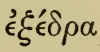
19. The exedra is an apsis, separated a little from a temple or palace; so called because it projecteth a little from the wall (in Greek ), and signifieth the lay portion of the faithful joined to Christ and the Church. The crypts, or subterranean caves, which we find in some churches, are hermits who are devoted to a solitary life.
20. The open court signifieth Christ, by Whom an entrance is administered into the heavenly Jerusalem: this is also called porch, from porta, a gate, or because it is aperta, open.
21. The towers are the preachers and prelates of the Church, which are her bulwark and defence. Whence the bridegroom in the Canticles saith to the bride, 'Thy neck is like the tower of David builded for an armoury.' [Footnote 152] The pinnacles of the towers signify the life or the mind of a prelate which aspireth heavenwards.
22. The cock at the summit of the church is a type of preachers. For the cock, ever watchful even in the depth of night, giveth notice how the hours pass, wakeneth the sleepers, predicteth the approach of day, but first exciteth himself to crow by striking his sides with his wings. There is a mystery conveyed in each of these particulars. The night is this world: the sleepers are the children of this world who are asleep in their sins. The cock is the preacher, who preacheth boldly, and exciteth the sleepers to cast away the works of darkness, exclaiming, 'Woe to them that sleep! Awake thou that sleepest! [Footnote 153] And these foretell the approach of day when they speak of the Day of Judgment, and the glory that shall be revealed: and like prudent {23} messengers, before they teach others, arouse themselves from the sleep of sin by mortifying their bodies. Whence the Apostle, 'I keep under my body.' [Footnote 154] And as the weathercock faceth the wind, they turn themselves boldly to meet the rebellious by threats and arguments: lest they should be guilty, 'when the wolf cometh, of leaving the sheep and fleeing.' [Footnote 155] The iron rod, whereon the cock sitteth, representeth the discourse of the preacher, that he speaketh not of man but of God: according to that saying, 'If any man speak, let him speak as the oracles of God.' [Footnote 156] But in that the iron rod is placed above the cross, on the summit of the church, it signifieth that Holy Scripture is now consummated and confirmed. Whence saith our Lord in His Passion, 'It is finished': and that title is written indelibly over Him.
23. The cone, that is the summit of the church, of great height, and of round shape, signifieth how perfectly and inviolably the Catholic faith must be held: which faith except a man do keep whole and undefiled, without doubt he shall perish everlastingly.
24. The glass windows in a church are Holy Scriptures, which expel the wind and the rain, that is all things hurtful, but transmit the light of the true Sun, that is, God, into the hearts of the faithful. These are wider [Footnote 157] within than without, because the mystical sense is the more ample, and precedeth the literal meaning. Also, by the windows the senses of the body are signified: which ought to be shut to the vanities of this world, and open to receive with all freedom spiritual gifts.
25. By the lattice work [Footnote 158] of the windows, we understand the prophets or other obscure teachers of the Church Militant: in which windows there are often two shafts, signifying the two precepts of charity, or because the apostles were sent out to preach two and two.
{24}
26. The door of the church is Christ: according to that saying in the Gospel, 'I am the door.' [Footnote 159] The apostles are also called doors.
27. The piers of the church are bishops and doctors: who specially sustain the Church of God by their doctrine. These, from the majesty and clearness of their divine message, are called silver, according to that in the Song of Songs, 'He made silver columns.' [Footnote 160] Whence also Moses at the entering in of the tabernacle, placed five columns, and four before the oracle, that is, the holy of holies. Although the piers are more in number than seven, yet they are called seven, according to that saying, 'Wisdom hath builded her house, she hath hewn out her seven pillars': [Footnote 161] because bishops ought to be filled with the sevenfold influences of the Holy Ghost: [Footnote 162] and SS. James and John, as the Apostle testifieth, 'seemed to be pillars.' [Footnote 163] The bases of the columns are the apostolic bishops, [Footnote 164] who support the frame of the whole church. The capitals of the piers are the opinions of the bishops and doctors. For as the members are directed and moved by the head, so are our words and works governed by their mind. The ornaments of the capitals are the words of Sacred Scripture, to the meditation and observance of which we are bound.
Thou the anointing Spirit art, Who dost Thy sevenfold gifts impart.]
28. The pavement of the church is the foundation of our faith. But in the spiritual Church, the pavement is the poor, of Christ: the poor in spirit, who humble themselves in all thing: wherefore on account of their {25} humility they are likened to the pavement. Again, the pavement, which is trodden under foot, representeth the multitude, by whose labours the Church is sustained.
29. The beams [Footnote 165] which join together the church are the princes of this world or the preachers who defend the unity of the Church, the one by deed, the other by argument.
30. The stalls in the church signify the contemplative, in whom God dwelleth without hindrance, who, from their high dignity and the glory of eternal life, are compared to gold. Whence He saith in the Canticles, 'He made a golden seat.' [Footnote 166]
31. The beams in the church are preachers, who spiritually sustain it. The vaulting also, or ceiling, representeth preachers, who adorn and strengthen it, concerning whom, seeing that they are not corruptible through vice, the bridegroom glorieth in the same Canticles, saying 'the beams of our house are cedar, and its ceiling, fir.' For God hath built His Church of living stones, and imperishable wood, according to that saying, 'Solomon made himself a litter of cedar wood;' [Footnote 167] that is, Christ, of His saints who wear the white robe of chastity.
{26}
The chancel, that is, the head of the church, being lower [Footnote 168] than its body, signifieth how great humility there should be in the clergy, or in prelates, according to that saying, 'And the more thou art exalted, humble thyself in all things.' The rail, by which the altar [Footnote 169] is divided from the choir, teacheth the separation of things celestial from things terrestrial.
32. The seats in the choir admonish us that the body must sometimes be refreshed: because that which hath not alternate rest wanteth durability.
33. The pulpit in the church is the life of the perfect: and is so called from being public, or placed in a public place. For we read, 'Solomon made a brazen scaffold, and set it in the midst of the temple, and stood upon it, and stretching forth his hands spake to the people of God.' Esdras also made a wooden scaffold for speaking: in which when he stood, he was higher than the rest of the people. [Footnote 170]
34. The analogium (rood-loft) is so called because in it the Word of God is read and delivered. Which also is called ambo, from ambire, [Footnote 171] to surround, because it surroundeth him that entereth in.
{27}
35. The horologium, by means of which the hours are read, teacheth the diligence that should be in priests to observe at the proper times the canonical hours: as he saith, 'Seven times a day do I praise thee.' [Footnote 172]
36. The tiles [Footnote 173] of the roof which keep off the rain are the soldiers, who preserve the Church from paynim, and from enemies.
37. The circular staircases, which are imitated from Solomon's temple, are passages which wind among the walls, and point out the hidden knowledge which they only have who ascend to celestial things. Concerning the steps, by which ascent is made to the altar, hereafter.
38. The sacristy, or place where the holy vessels are deposited, or where the priest putteth on his robes, is the womb of the Blessed Mary, where Christ put on his robes of humanity. The priest, having robed himself, cometh forth into the public view, because Christ, having come from the womb of the Virgin, proceeded forth into the world.
The bishop's throne in the church is higher than the rest.
39. Near to the altar, which signifieth Christ, is placed the piscina, or lavacrum, that is, the pity of Christ, in which the priest washeth his hands, thereby denoting that by baptism and penitence we are purged from the filth of sin: which is drawn from the Old Testament. For he saith in Exodus, 'And Moses made a laver of brass, with his basin, in the which Aaron the priest and his sons should wash, before they went up to the altar, that they might offer an offering. [Footnote 174]
{28}
40. The lamp in the church is Christ: as He saith, 'I am the light of the world'; [Footnote 175] and again, 'That was the true light.' [Footnote 176] 'Or the light in a church may denote the apostles and other doctors, by whose doctrine the Church is enlightened, as the sun and moon: concerning whom saith the Lord, 'Ye are the light of the world: [Footnote 177] that is, an example of good works. Wherefore He saith to them in His admonitions, 'Let your light shine before men.' [Footnote 178] But the Church is enlightened by the precepts of the Lord; wherefore it saith in the before-quoted place, 'Speak unto the sons of Aaron that they offer oil-olive most pure, that the lamp may burn continually in the tabernacle of the testimony.' [Footnote 179] Moses made also seven lights, which are the seven gifts of the Holy Ghost: for they in the darkness of this world shine forth with brightness: and they rest in candlesticks, because in Christ rested 'the spirit of wisdom and knowledge, the spirit of counsel and might, the spirit of learning and piety, the spirit of the fear of the Lord, by which He preached wisdom to the captives.' [Footnote 180] The number of lights showeth the number of graces in the faithful.
41. In many places a triumphal cross is placed in the midst of the church; to teach us, that from the midst of our hearts we must love the Redeemer: who, after Solomon's pattern, 'paved the midst of his litter (ferculum) with love for the daughters of Jerusalem:' [Footnote 181] and that all, seeing the sign of victory, might exclaim. Hail, thou Salvation of the whole world, Tree of our Redemption: and that we should never forget the love of God, who, to redeem His servants, gave His only son, that we might imitate Him crucified. But the cross is exalted on high, to signify the victory of Christ. Why a church is ornamented within and not without, shall be said hereafter.
{29}
42. The cloisters, as Richard, Bishop of Cremona, testifieth, had their rise either in the watchings of the Levites around the tabernacle, or from the chambers of the priests, or from the porch of Solomon's temple. 'For the Lord commanded Moses, that he should not number the Levites with the rest of the children of Israel; but should set them over the tabernacle of the testimony to carry it and to keep it.' [Footnote 182] On account of which divine commandment, while the Holy Mysteries are in celebration, the clergy should in the church stand apart from the laity. Whence the Council of Mayence ordained that the part which is separated with rails from the altar should be appropriated altogether to the priests choral. Furthermore, as the church signifieth the Church Triumphant, so the cloister signifieth the celestial Paradise, where there will be one and the same heart in fulfilling the commands of God and loving Him: where all things will be possessed in common, because that of which one hath less, he will rejoice to see more abounding in another, for 'God shall be all in all.' [Footnote 183] Therefore the regular clergy who live in the cloisters, and are of one mind, rising to the service of God and leaving worldly things, lead their lives in common. The various offices in the cloister signify the different mansions, and the difference of rewards in the Kingdom: for 'In My Father's House are many mansions,' [Footnote 184] saith our Lord. But in a moral sense the cloister is the contemplative state, into which the soul betaking itself, is separated from the crowd of carnal thoughts, and meditateth on celestial things only. In this cloister there are four sides: denoting, namely, contempt of self, contempt of the world, love of God, love of our neighbour. Each side hath his own row of Columns. Contempt of self hath humiliation of soul, mortification of the flesh, humility of speech, and the like. The base of all the columns is patience.
{30}
43. In this cloister the diversity of office-chambers is the diversity of virtues. The chapter-house is the secret of the heart: concerning this, however, we shall speak differently hereafter. The refectory is the love of holy meditation. The cellar, Holy Scripture. The dormitory, a clean conscience. The oratory, a spotless life. The garden of trees and herbs, the collection of virtues. The well, the dew of God's heavenly gifts; which in this world mitigateth our thirst, and hereafter will quench it.
44. The Episcopal throne, which according to the injunctions of Saint Peter has been of old consecrated in each city (as shall be said below), the piety of our forefathers dedicated, not in memory of confessors, but to the honour of apostles and martyrs, and especially of the Blessed Virgin Mary.
45. But we therefore go to church, that we may there ask for the pardon of our sins, and assist in the divine praises: as shall be said in the proeme of the fifth book, and that there we may hear God's proceedings [Footnote 185] with the good and the ill, and learn and receive the knowledge of God, and that we may there feed on the Lord's body.
46. In church, men and women sit apart: which, according to Bede, we have received from the custom of the ancients: and thence it was that Joseph and Mary lost the Child Jesus; since the one who did not behold Him in his own company, thought Him to be with the other. . . . But the men remain on the southern, the {31} women on the northern side: [Footnote 186] to signify that the saints who be most advanced in holiness should stand against the greater temptations of this world: and they who be less advanced, against the less; or that the bolder and the stronger sex should take their place in the position fittest for action: because the Apostle saith, 'God is faithful, Who will not suffer you to be tempted above that ye are able.' [Footnote 187] To this also pertaineth the vision of S. John, who 'beheld a mighty angel placing his right foot in the sea.' [Footnote 188] For the stronger members are opposed to the greater dangers. But, according to others, the men are to be in the fore part [i.e. eastward], the women behind: because 'the husband is the head of the wife,' [Footnote 189] and therefore should go before her.
47. A woman must cover her head in the church, because she is not the image of God, and because by woman sin began. And therefore in the church, out of respect for the priest, who is the vicar of Christ, in his presence, as before a judge, she hath her head covered, and not at liberty: and on account of the same reverence she hath not the power of speaking in the church before him. Of old time, men and women wearing long hair stood in church with uncovered heads glorying in their locks: which was a disgrace unto them.
48. But what should be our conversation in church the Apostle teacheth, saying, 'Speaking to yourselves in psalms and hymns and spiritual songs.' [Footnote 190] Whence we must, when we be there, abstain from superfluous words: {32} according to that saying of S. Chrysostome, When thou goest into a king's palace, set in order thy conversation and thy habit. For the angels of the Lord are there: and the House of God is full of incorporeal virtues. [Footnote 191] And the Lord saith to Moses, and so doth the angel to Joshua, 'Put off thy shoes from off thy feet: for the place where thou standest is holy ground.' [Footnote 192]
49. In the last place, a consecrated church defendeth murderers who take sanctuary in it from losing life or limb, provided that they have not offended in it, or against it. Whence it is written that 'Joab fled to the tabernacle, and laid hold on the horns of the altar.' [Footnote 193] The same privilege is possessed also by an unconsecrated church, if the divine offices be therein celebrated.
50. But the body of Christ received by such persons, doth not defend them nor those who fly to it: partly because the privilege is granted to a church as a church: and therefore not to be misbestowed on other things: partly because that food is the support of the soul, and not of the body: whence it freeth the soul and not the body.
51. Churches are moved from one place to another on three accounts. First, on account of the necessity arising from persecutors: secondly, on account of the difficulty of access or habitation, such as the unwholesomeness of air: thirdly, when they are oppressed with the society of evil men: and then with the consent of the Pope or the bishop. Wherefore he that entereth into a church fortifieth himself with the sign of the cross, shall be said in the proeme of the fifth book.' [Footnote 194]
{33}