NEIGHBORLINESS AND A COUNTRY COMMUNITY
Reading edition
SARAH LOWRIE
With the growth of large cities in our country and the desertion of the farms for the town, there has been a less observable but quite as remarkable desertion of the city in favor of the country.
One would suppose that these two migrations would so balance each other that neither the town nor the country would suffer by the exchange of citizens. It would be reasonable to hope that going to the country would bring just the right impetus needed by the stay-at-homes of each community to brace them into new life.
But the thing has not worked out that way.
However much the shops and offices of the cities may have benefited by the advent of the farmers' sons and daughters, and however much the real estate agents and provision merchants of the country may have benefited by the advent of the well-to-do towns-folk, the morale of the country town, the ideals of the country people and the amalgamation of the native men with their new neighbors into a better citizenship have not prospered. Nor have the city institutions been able to replace the men of affairs who, having ceased to use the city except as a means for carrying on their business, have transferred their family and their leisure interests into the country.
The city churches, the city philanthropies, and the civic improvement organizations all tell the same tale: the rich men, the special executive men, the professional men, once their actual business engagements are over, turn their backs on the city with a sigh of relief and depart country-wards for rest and enjoyment for the night, for the week-end, and for the summer vacation. The city loses them, and they gain the country. But it must not be supposed that the country in any vital sense gains them. A man who has professedly moved from the town to the country for rest and pleasure, and who observably needs both, feels as free as a debutante to enjoy what is set before him in the way of diversion, with no moral obligation toward his neighbors but that of paying with a wry grin the outrageous prices levied upon all outsiders by the genial natives.
Without quite meaning to, without indeed quite realizing it, the richer men and women of this country, especially in our eastern states, have so shifted the obligation of neighborliness that they have the air of being transients everywhere and neighbors nowhere. Even their country places are not theirs year in and year out for as long as a single generation. We Americans like to change our minds and there is no telling what kind of scenery or what style of architecture we may fancy next.
One hears a great deal about the unfaithfulness of the Irish cook who may "up and leave" any day that she hears of a chance of "bettering herself" elsewhere; but the mistress's unrest is nothing to the plight of the farmer when one considers the lottery of the city folks. The gamble of his crops and the weather is nothing to this other gamble. For the farmer knows that no power under heaven can keep the city man satisfied with his site, his house with five bathrooms, his fancy chicken run, and his concrete garage if the whim should take his wife that the environment was no longer a suitable one for the children. There is no romance, therefore, to the farmer about either his potato crop or his city neighbor. He knows it is not philanthropy that led the city man to buy five acres of poor farm land at the highest notch price, and that no desire for his company has urged the new comer to plant his house on the other side of the back pasture. Being a sensible farmer he makes what profit he can out of his potatoes and his city neighbor before either crop has time to depreciate in value.
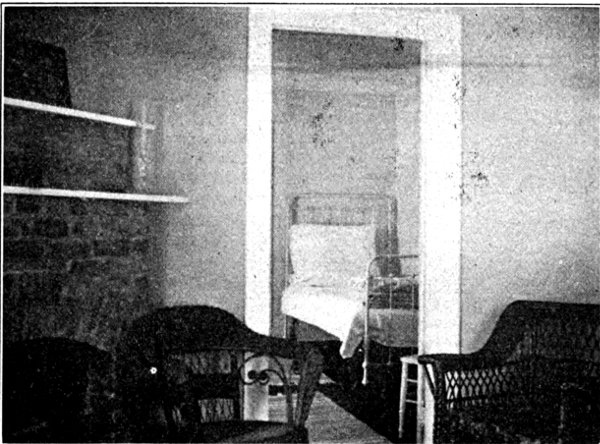
QUARTERS OF VISITING NURSE
"What are you city people for, but to be skinned?" was the frank remark of one of my nearest country neighbors one day, apropos of an outrageous bit of sharp dealing on his part as property appraiser for that district. It was not a flattering summing up of a relationship, nor did its grim humor hide any more indulgent version of our economic value as neighbors. In fact we were not, nor ever had been accepted by him and his kind as neighbors. We were a crop. A crop more lucrative than his potatoes, but from our arbitrary and unexpected demands, and the shortness of our seasons, and the variation of our types a much more "pernickery" crop to deal with. Perhaps I should have been flattered by his frankness, but I was not! For the moment indeed, I even resolved to deal no more with him or his, but on second thought I concluded that, although he would be the loser of some $200, I would be out a wash-woman, a chore boy, many dozens of fresh eggs, many quarts of milk, a care-taker for the house during the winter, and an immunity from his cows in my garden in the summer. In fact, I stood to lose double as much as he, if peace of mind and leisure to enjoy my home could be computed in hard cash. I concluded therefore that it would not pay to get mad.
But the remark rankled and in the end set this and that motive to work in my mind until my brain and heart became fallow ground for the cultivation of another sort of relationship than that of city folk and native, buyer and seller, employer and employed, or even giver and receiver. In the end we learned to be neighbors—he and I—not because his ground adjoined mine, but because we both began to feel a common civic interest in the same village and in the same country side, and because in a very particular and picturesque sense we both shared in an enterprise from which we both derived comfort and pleasure. The change in me was greater than the change in him for he had always been interested in the village life apart from his property, and apart from his comfort, and during all the year. The bond that brought us together was not the church, nor the library, nor the base-ball field—all donations in times past of the summer people to the natives, but it was the Neighborhood House, a donation from the country people and the summer people alike, not to any particular class but to all the dwellers in that mountain valley.
Of course, I realize that the particular Neighborhood House, which fits so well the need of our valley, might not do for just any valley. For instance, our valley in the Adirondacks has a scattered population of nearly a thousand people with two villages about five miles apart, and several little settlements here and there among the hills. In the larger village there are perhaps one hundred children in the school. The nearest hospital lies twenty-four miles across a mountain road, and several hours by boat across Lake Champlain at Burlington, Vt. An infirmary that could be used by the natives for long illnesses, and by the city cottagers for emergency operations was vitally needed; so our Neighborhood House has a sunny airy infirmary and a perfectly equipped little operating room.
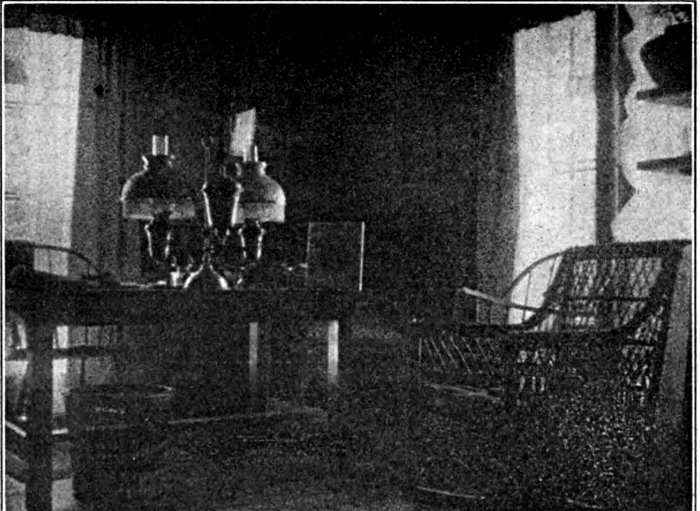
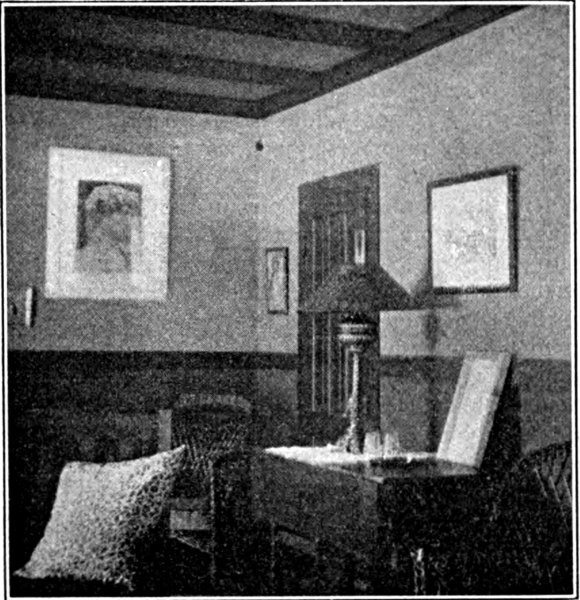
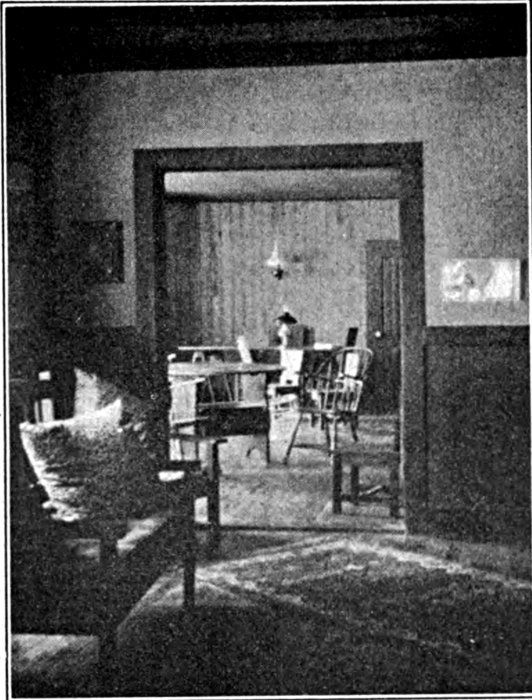
Our village and the country people and the lumber camps back in the mountains can only depend on the services of two physicians, one of them an old and feeble man. To supplement their visits and for emergency calls for the summer visitors a district nurse was needed, so a bed-room, bath-room, and pleasant sitting-room for such a nurse were planned in the Neighborhood house to connect with the infirmary. To supplement the somewhat limited primary grades in the village schools and to provide occupation for restless little city children, a summer kindergarten had been established and proved most successful, so on the lower floor of the Neighborhood House a large, many-windowed room was set apart to be used, not only for this purpose, but for adult classes in domestic science, sewing, embroidery and dancing. There was no proper room in the village for fairs, church suppers, glee clubs, rehearsals, informal village meetings, etc. There was added, therefore, to this large room a kitchen to be used in connection with it for such entertainments and for cooking classes. There had been a successful men's club in the village for years, but the women and girls had no common meeting place and indeed no real center of interest outside their homes. A woman's club room therefore was made an important part of our Neighborhood House. It has an open fireplace, a store closet and cupboards, a writing table, tea and game tables, comfortable chairs, and a pretty color scheme, with prints and water colors on the wall, oriental rugs on the hardwood floors, pleasant chintzes, books, and flower bowls.
CORNER OF WOMEN'S CLUB
Though the village women had been long accustomed to make extra pin-money by selling eggs, maple sugar, balsam pillows, bread and cake, and rag-carpet rugs, there has been no store where these things could be ordered. We set apart one room in our Neighborhood House, therefore, for a Village Exchange, which was open for three months in the summer. During the winter months this pleasant little room was used by the boys for a game room. There was no hotel or even boarding house in the village for transient guests, which remained open throughout the winter; so two guest rooms were set aside in our Neighborhood House to be used by the strangers, lecturers, clergymen, visiting surgeons, and city visitors who might pass that way during the late autumn and the winter months.
Neither the village people nor the summer cottagers were well supplied with sick room appliances, and among the poorer citizens of the valley there was even a lack of necessary articles for confinement cases, while crutches, invalid chairs, and wheel chairs were difficult to procure in an emergency by rich and poor alike. So an emergency closet, stocked with such things was set aside for general use in the Neighborhood House. The rooms in the rest of the house were the house dining-room and kitchen, the pantry, cool room, linen and store closet, the stewardess's bed-room, and an up-stairs sleeping porch for the infirmary, and a splendid attic. Outside the house were the wood shed, earth closet, tool shed and ice house, an ample vegetable and fruit garden, a lawn space for croquet and tether ball, a small flower and shrub garden, and wide verandas.
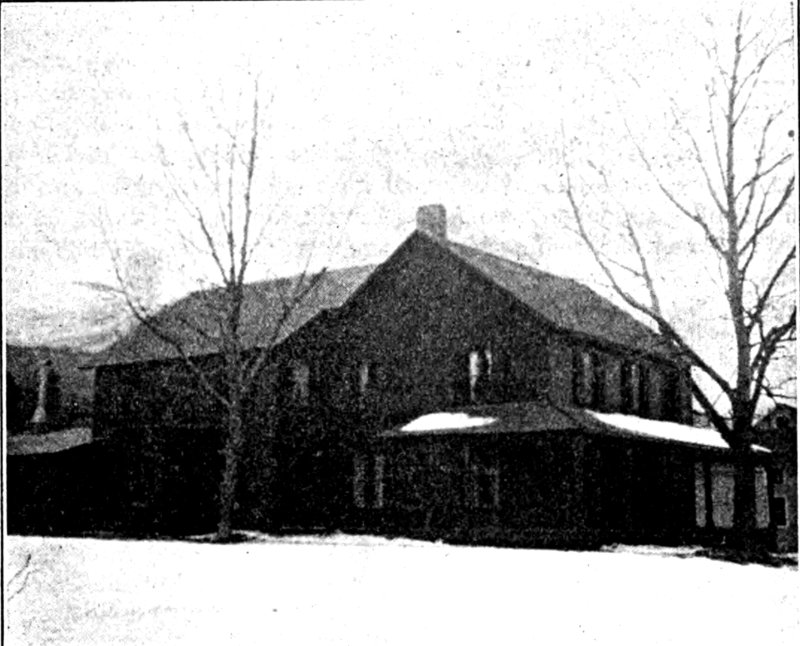
The house was originally a boarding house, and the only additions which had to be made to the original structure were the cellar, summer kitchen and the sleeping porch. The total cost of these additions and of the equipment and alterations including all gifts came to about $3,000. The original purchase price of the property was $2500. The cost of maintaining the house including the salary of the visiting nurse, the wages of the stewardess, and all household expenses, as well as the expenses of the summer school, extra service, etc., amount to about $2,500 yearly. The income derived from patients in the infirmary, transients boarding in the house, and out-patients' fees, exchange dues, etc., amount to about $700 a year.
I suppose in different localities expenses of such an enterprise as the Neighborhood House would be dealt with in a variety of ways. In our valley a number of men and women bought the property and made the fundamental improvements. An association was then formed comprising as many of the citizens of the valley as cared to join. The annual dues for each associate member were fixed at one dollar. To this association the owners of the property leased the house and grounds for a period of several years. The duties of the association were to pay the taxes and maintain the property in good condition, and their privileges were to use the property for the benefit of the members of the association and, as they saw fit, for the general good of the community.
There were three kinds of memberships in the association:
Active members$ 1
Contributing members10
Sustaining members50
Through this means the annual income of the Neighborhood House Association amounts to about $1,800, irrespective of the income derived from the fees, etc., mentioned above. Without any great strain on any one's purse, therefore, the house has been maintained by the association without a deficit.
A HOMELIKE CORNER
LOOKING INTO THE SCHOOL ROOM
Towards the equipment of the house gifts were received to the amount of $2,635.82. But besides these gifts of money, the village people themselves donated both labor and building materials and furniture and rugs. The summer kitchen, so far as labor was concerned, was the gift of the village carpenters. The infirmary was furnished principally by the women and the girls of the village who raised the money among themselves. The farmers of the neighborhood donated wood, potatoes, apples, etc., to the store closet. One man donated his weekly Sunday paper, another the vines for the porches. One New York physician, whose child had profited by the care of the visiting nurse, gave the sleeping porch, three or four of the other physicians who had summer cottages gave the surgical instruments for the operating room, the children of the village brought plants for the garden, one old lady knitted washcloths for the bath-room, the village house painter helped hang all the pictures and the bracket-lamps, and the village artist helped raise the money for the emergency closet by painting the scenery for the benefit play. There was really a chance for every one to give to that house, and with but few exceptions, every one did give, not only willingly and generously, but eagerly and joyfully.
And because each in his or her way had had a share in making that house a Neighborhood House, the valley people, natives and cottagers alike, promptly and without any self-consciousness turned heartily in and used the house. It had never occurred to most of us that the village had needed such a house, indeed the woman whose beautiful thought it was, had died a year before the Neighborhood House Association was so much as spoken of; but once it stood there, warm and glowing with its happy life that winter night of its opening, there was no question as to its usefulness all day long, summer and winter, in most of our minds.
During the past year the visiting nurse has been occupied in and out of the House over 2,600 hours and has treated fifty-four cases; the infirmary has had seven patients with 160 hospital days; from the emergency cupboard 300 loans have been made. The Women's Club has eighty-two members and has met weekly for lectures and socials. The Girls' Club with twenty-seven members has met once and sometimes twice weekly. The Glee Club has held many rehearsals and gave a concert in May. The sales from the exchange, open only in the summer, in two years have amounted to about $900.00. The Village Improvement Committee has held two farmers' institutes, has made progress in securing good side walks, has planned for improved roads and tree planting, and has arranged for a prize essay and oratorical contest by pupils of the public school. During the past year there were about 5400 visits to the house; the largest number of visits in one month was 1064 in December.
The question may well be asked, however: Who guides these clubs and classes, who arranges for these parties, who welcomes these guests, who sees to it that the house is clean and orderly, that the meals are properly served, that the patients are well looked after, that the stewardess is up to her work? Who is the hostess, and who, at the close of the house's festivities, speeds the parting guest? It would have to be a woman of tact and gentle blood, for the village people would not brook so much power lodged in any one who was less or even quite one of themselves. It would have to be a person who lived in the valley both winter and summer and who thus understood the conditions of both the summer and winter life. It would also require one who understood the care of an infirmary, as well as the care of the house, who could devise sick room diet, as well as substantial meals for transient guests. Fortunately for our Neighborhood House we found such a woman in our visiting nurse and after some experimenting on other lines, she was made the head of the house. She is a social worker when she is not required in the infirmary or for out-patients, and when these last demand all or more than all of one nurse's time, an emergency nurse is procured who works under the head of the house.
The fact that this head is a nurse has made our social worker the confidant of many families to which another outsider would find but a coolly polite welcome. The fact that she is a social worker makes her interest in her cases widen to their families and remain after her professional duties are no longer needed. Being the head of the house, she can dictate as to the time of meals and the activities of the house for the good of the infirmary patients, yet being the social worker, the interest of the clubs and classes in the house are not needlessly sacrificed to the whims of her patients. Her training as a nurse and her experience has made her more executive than the ordinary young social worker, but her authority as head of a house of so many interests and as executive for so active and powerful an association, gives her prestige, and with that prestige a power for self-development which utilizes the best qualities she possesses. Moreover, in a country district such as our valley, where sickness is the exception, a nurse who was confined to her profession would have much idle time on her hands, and a social worker who was solely a social worker might be discouraged as to the slowness of the growth of her ideals in the minds of those about her. For where people live twenty-five miles from the railroad, tomorrow is always as good as today for beginning a new work. The women are, to say the least, conservative, and the girls are shy about showing enthusiasm for a new idea. The audiences for lectures arrive with sublime dilatoriness, and the boys stay outside until they are quite sure that what is going on inside is a roaring success.
Of course, the head of the house has a comprehending executive committee behind her. Of course, too, each department of the Neighborhood House, infirmary, summer school, exchange, clubs, etc., has its own committee and chairman. Her responsibilities, also, are only those of a trusted agent and all her reports are filed for the benefit of the Association, so that while each department depends practically upon her, she in her turn depends upon each committee and upon the executive committee and above all upon the able president of that committee for her inspiration and encouragement in carrying out her share of the usefulness of the house. All these good things did not come the first night the house was open. They are fruits of a happy growth. There have been many minor difficulties and prejudices and some evils to overcome. The prejudices died easiest, one of them, the fear that Neighborhood House provided for needs that did not exist, went most quickly of all.
Last summer when an army officer from West Point lay convalescing in one room, sharing his nurse with a little blind pauper baby, there was no doubt as to the need of an infirmary for rich and poor. When the exchange, which sold impartially the rag rug made by a guide's wife, the oil painting of an artist, and the home-made candy of a school child, and turned in $500 profits to its members, there was no doubt as to the democratic practicability of the exchange. When the women came from the Adirondack Club, and from the summer cottages to debate with the women of the village on domestic science, there was no question as to the success of the Woman's Club. And when the women of the church sewing society came to count their gains from the country supper, and the village Glee Club met to rehearse for its great concert, and the boys invited the girls to their birthday suppers and the girls invited the boys to their dancing classes, and the young married people of the village invited last year's debutantes of far away cities to teach them new figures and steps, and the clergymen who supplied the village church and the lecturers sent by the government to answer the farmers' questions about agriculture, all shared the hospitality of the house, there remained no doubt in any one's mind as to its great usefulness to the entire community.
As to whether it has made neighbors of us all in the spiritual sense—as loving one another as we love ourselves—that has not become noticeable to a degree which has affected the price of eggs! And yet I noticed with a pleasant thrill at my heart last summer that when a woman, quite two miles away from my cottage, came down from her porch with a loaf of bread which she insisted upon my taking as a gift from her baking because she knew the bakery was shut and that I was in a sudden stress, she called me: "Neighbor!" "For goodness' sake!" said she. "Don't you dare to pay me. You'd do the same for me, I just guess! Aren't we neighbors?"
Yes, surely we are neighbors—we city folk and country folk! But it took the Neighborhood House to teach us as a community the beginnings of the art of neighborliness.
THE NEIGHBORHOOD HOUSE IN WINTER