THE OLD KEY MANSION.
Reading edition
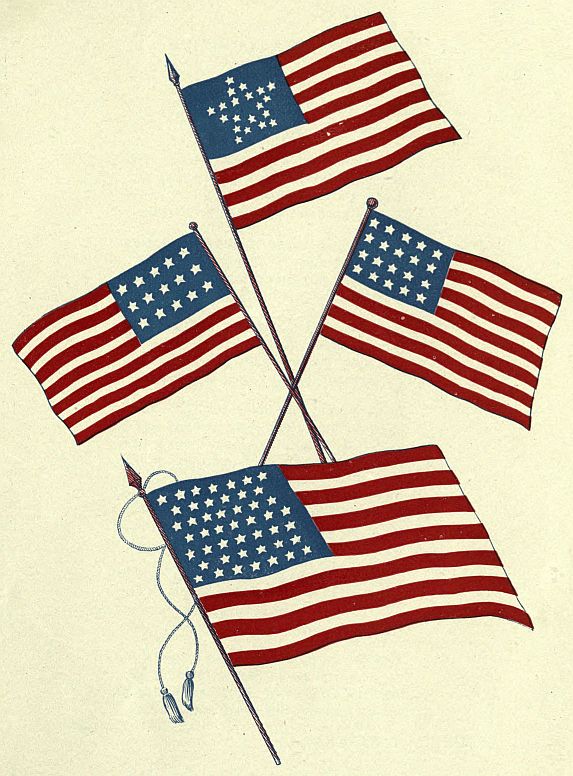
The old Key mansion is one of the historic places that still remains on the banks of the Potomac in Georgetown, to remind us that here lived Francis Scott Key, the author of the national hymn “The Star Spangled Banner.” In unveiling to him the monument which had been erected at Fredericksburg, Maryland, during the past summer (1898), the Hon. Murat Halsted paid an eloquent tribute to this poet, who crystallized the best thought of the American people in giving to them “The Star Spangled Banner.” “O’er the land of the free and the home of the brave,” this flag still waves. Freedom to-day has a broader meaning than in the days of 1814. Slavery has been abolished and freedom has spread her wings o’er all the land. The history of the writing of this beautiful song can be told in a few words. It was an inspiration. The British had captured a friend of Francis Scott Key, Dr. Beans, and when Key heard of it, he called upon President Madison, who furnished him with a vessel to go to the British Admiral Cockburn’s ship, to endeavor to secure his release. General Ross, of the British army, agreed to release him, but insisted upon Key’s remaining on the admiral’s ship until after the bombardment of Fort McHenry, which was then taking place. Key was intensely anxious and in the early morning, he looked across to the fort and saw that “the flag was still there.” It is said that he then wrote a sketch of the “Star Spangled Banner” on the back of a letter. The burning of the capitol and of the White House a few days previous by them are well known matters of history. A few days after, the British fleet sailed for Baltimore, where they were gallantly repulsed with the loss of their commander, General Ross. The fleet in passing Mount Vernon, lowered their flags out of respect to the memory of the immortal Washington, whose remains are here entombed.
Key was born in Frederick county, Maryland, August 1, 1779. He graduated at St. John’s College, Annapolis, Maryland.
THE STAR-SPANGLED BANNER.
Oh, say, can you see by the dawn’s early light What so proudly we hailed at the twilight’s last gleaming. Whose broad stripes and bright stars through the perilous fight, O’er the ramparts we watched were so gallantly streaming; And the rocket’s red glare, the bombs bursting in air, Gave proof through the night that our flag was still there! Oh, say, does that star-spangled banner yet wave O’er the land of the free and the home of the brave. On that shore, dimly seen through the mist of the deep, Where the foe’s haughty host in dread silence reposes, What is that which the breeze o’er the towering steep, As it fitfully blows, now conceals, now discloses? Now it catches the gleam of the morning’s first beam In full glory reflected now shines on the stream. ’Tis the star-spangled banner, oh, long may it wave O’er the land of the free and the home of the brave. And where is that foe which so vauntingly swore, That the havoc of war and the battle’s confusion, A home and a country should leave us no more? Their blood has washed out their foul footsteps’ pollution; No refuge could save the hireling and slave From the terror or flight or the gloom of the grave, And the star-spangled banner in triumph doth wave O’er the land of the free and the home of the brave! Oh, thus be it ever, when freemen shall stand, Between their loved homes and the war’s desolation; Blest with vict’ry and peace, may the heaven-rescued land Praise the Power that hath made and preserved us a nation. Then conquer we must when our cause it is just, And this be our motto, “In God is our trust”; And the star-spangled banner in triumph shall wave O’er the land of the free and the home of the brave. —Francis Scott Key, 1814.
COPYRIGHT 1898, BY ADDIE G. WEAVER.