TEMPERANCE NOTES AND NEWS.
Reading edition
By a Leading Temperance Advocate.
THE CARE OF THE INEBRIATE.
The present year has brought into operation a new Act of Parliament dealing with the habitual drunkard. The unfortunate men and women of the type of the notorious Jane Cakebread have been the despair of stipendiary magistrates for years past. At the time of writing the working of the new Act has not settled into shape, so it is all too early to forecast its probable results. Meanwhile we tender our congratulations to Dr. Norman Kerr, F.L.S., for it is to this humane and philanthropic physician we are indebted for anything like an intelligent treatment of the confirmed dipsomaniac. Dr. Kerr was born at Glasgow in 1834, and graduated at Glasgow University in 1861. While yet a student he took a keen interest in temperance and established a society for his fellow-students. From that time to the present, his active services to the reform have been steadily maintained. He takes a prominent part in the work of the Church of England Temperance Society, the United Kingdom Alliance, and the National Temperance League. It is, however, as an authority on dipsomania that he is best known. He is the founder and President of the Society for the Study and Cure of Inebriety, and it was at his instigation that a highly successful Colonial and International Congress on Inebriety was held in Westminster Town Hall in July, 1887. Dr. Kerr has written largely on the subject, and his learned work on "Inebriety: Its Etiology, Pathology, Treatment, and Jurisprudence," speedily passed into several editions. He is almost as well known in the United States as at home. The gist of Dr. Norman Kerr's views may be best indicated by the opening sentence of the volume referred to. He writes:—
"No disease is more common than inebriety, and yet none is so seldom recognised. No disease is more widespread. In the whole circle of even an extensive acquaintance it may happen that no member has been known to have suffered from any of the leading diseases which prevail in our islands, that no one has been laid low by phthisis or cancer. But there are very few families in the United Kingdom which have not had at least one relative who has been subject to inebriety."
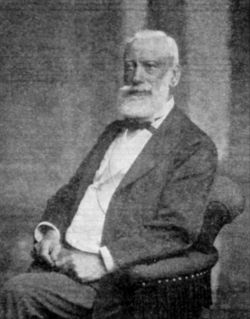
(Photo: William Whiteley, Bayswater, W.)
DR. NORMAN KERR.
ANOTHER GOOD IDEA.
The latest new effort to popularise temperance amongst women is a scheme prepared by the Durham and Northumberland County Union of the British Women's Temperance Association. It takes the form of a summer school to be opened at Barnard Castle, where ladies may study temperance in its scientific aspects, and receive various aids as to the methods of imparting this knowledge. The forenoons will be given to lectures, the afternoons to recreation, excursions, etc. Full particulars may be obtained from Mrs. Richardson, The Gables, Newcastle-on-Tyne.
BEER IN THE HAY AND HARVEST FIELDS.
This is an age of specialists, and Mr. John Abbey is certainly the specialist of the temperance propaganda in relation to agriculture. The son of a yeoman, he very early turned his attention to the importance of "soberising" our harvest fields. By his writings, his speeches, and the invention of teetotal drinks called Stokos, Hopkos, and Cokos, he has gradually produced a wonderful change in agricultural circles. It is Mr. Abbey's habit to go the round of the agricultural shows in their season, where he pitches his tent, in which he dispenses his drinks, distributes his literature, and discusses "the why and because" of his movement with all and sundry. From the many letters received by him, we are permitted to quote one from a correspondent who farms seven hundred acres:—
"I am glad to tell you that we have done harvest without a drop of beer being given to the men, and they appear to like Stokos better this year than ever. They usually had eight gallons or more a day, and worked well with it, and throughout the excessive heat we had not a man ill. Years ago the men would get beer into the field, and there was a great deal of drunkenness among them, but now I am thankful to say that Stokos has, by virtue of its excellent qualities, practically driven the beer out of the field, and work goes on delightfully."
(Photo: A. E. Coe, Norwich)
MR. JOHN ABBEY.
It may be mentioned that this agricultural work is only a detail of Mr. Abbey's life, for he is the Organising Secretary of the Church of England Temperance Society for Norwich Diocese, having previously held a similar appointment far many years in Oxford Diocese.
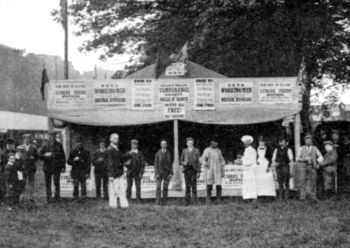
MR. ABBEY'S TENT AT THE NORFOLK AGRICULTURAL SHOW.
(Distributing Temperance Drinks.)
COMING EVENTS.
On April 13th a concert will be given at Stafford House, under the patronage of H.R.H. the Duchess of York, in aid of the Church of England Temperance Society Juvenile Union. On April 19th the annual meeting of the Guild of Hope will be held at Grosvenor House, the Duke of Westminster in the chair. On May 1st the annual meeting of the National Temperance League will be held in Exeter Hall, the Archbishop of Canterbury presiding. In July there will be two fêtes at the Crystal Palace—one on the 5th by the National Temperance Choral Society, and the other on the 29th, under the direction of the Church of England Temperance Society.
"GIVE THE BOY A CHANCE."
During the past decade the Church of England Temperance Society has developed a wonderful leaning towards practical effort. Its Police Court Mission has been of incalculable service, and has received the hearty recognition of such able magistrates as the late Mr. Montagu Williams, Sir John Bridge, Mr. A. de Rutzen, and others. The Police Court Missionaries have for some time been gravely concerned as to what to do with young boys brought up for their first offences. Last June the Church of England Temperance Society established a Boys' Shelter Home at Gunnersbury. To this institution boys are now remitted instead of to prison. Here they have a chance of learning some useful industry, situations are found for them, and they are thus given a new start in life. The Bishop of London opened the Home, which is managed under the direction of a small sub-committee of the London Diocesan Church of England Temperance Society.
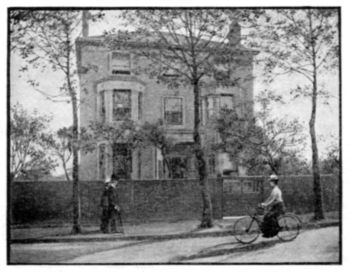
THE BOYS' SHELTER HOME.
(Established by the Church of England Temperance Society for first offenders.)
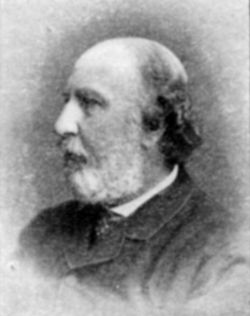
(Photo: Debenham and Gould, Bournemouth.)
MR. ROBERT SAWYER.
AMONG THE RAILWAY MEN.
One of the most interesting, and certainly one of the most useful, temperance organisations, specially catering for a distinct class of workers, is the United Kingdom Railway Temperance Union. It commenced in a very humble way in 1882, and in a sense owes its origin to Mr. S. Cutler, an earnest man employed by the Metropolitan Railway Company, who approached the Church of England Temperance Society to see if something could be done to bring together the different railway men who were in sympathy with temperance work. As the result of a conference, the Union was started, and it has remained in connection with the Church of England Temperance Society ever since. To-day it has branches on nearly every line of railway in the United Kingdom; and every grade of the service, from the influential director down to the humble bookstall lad, is represented in the membership. The railway men were fortunate in securing the interest of Mr. Robert Sawyer, Recorder of Maidenhead, at the commencement of their operations, for besides contributing very largely from his purse, Mr. Sawyer, as President of the Union, practically devotes his life to the interests of railway men. He is literally "in journeyings oft," and has a most able lieutenant in Mr. A. C. Thompson, the first and only Secretary of the Union. The railway men run a little temperance journal of their own, appropriately entitled On the Line. One has only to glance through its attractive pages to see that the Union is very much alive. For those who are employed on railways temperance is certainly an excellent thing, and there can be no doubt also that the safety of the travelling public is helped not a little by the hard work of Mr. Sawyer and his cheery comrades.