Front matter (continued 2)
Reading edition
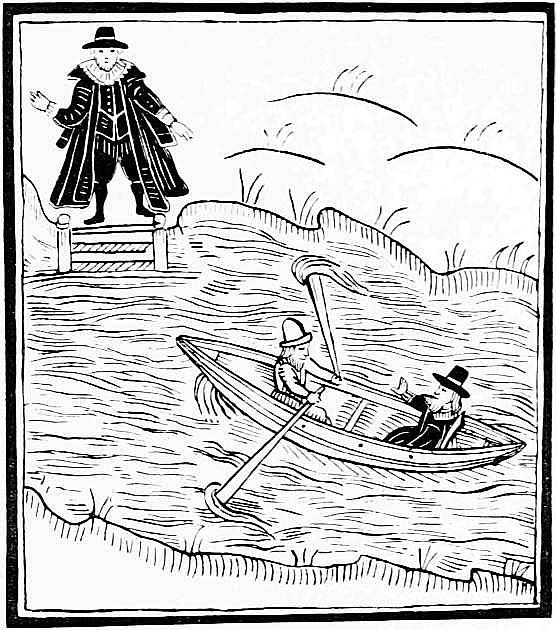
STRAFFORD CROSSING THE STYX, 1641.
‘Strafford.—I bear them all in one.
‘Charon.—How? Bear them all in one, and thou shalt pay for them all in one, by the just soul of Rhodomont; this was a fine plot indeed, sure this was some notable fellow being alive, that hath a trick to cosen the devil being dead. What is thy name?
‘(Strafford sighs.)
‘Charon.—Sigh not so deep. Take some of this Lethæan water into thine hand, and soope it up; it will make thee forget thy sorrows.
‘Strafford.—My name is Wentworth, Strafford’s late Earle.
‘Charon.—Wentworth! O ho! Thou art hee who hath been so long expected by William Noy. He hath been any time these two months on the other side of the banke, expecting thy coming daily.’
Strafford gives Charon but one halfpenny for his fare, whereat the ferryman grumbles. Then ensues a conversation between Strafford and William Noy, part of which is in blank verse. The tract is illustrated with a woodcut, representing Strafford in the ferryman’s boat with William Noy waiting his arrival on the opposite bank.
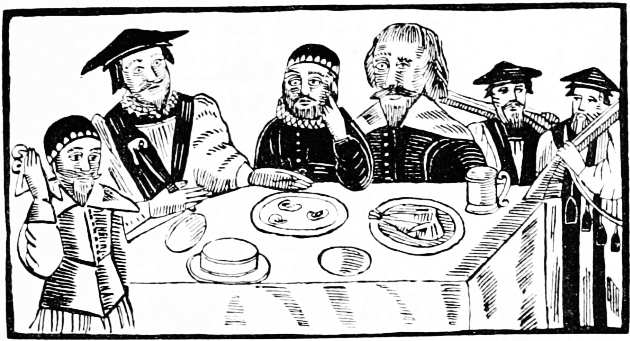
A BURLESQUE PLAY ABOUT ARCHBISHOP LAUD. ACT I. 1641.
No man of his time appears to have excited the hostile notice of the press more than Archbishop Laud. The Archbishops of Canterbury had long been considered censors of the press by right of their dignity and office; and Laud exercised this power with unusual tyranny. The ferocious cruelty with which he carried out his prosecutions in the Star Chamber and Court of High Commission made his name odious, and his apparent preference for ceremonial religion contributed to render him still more unpopular. Men were put in the pillory, had their ears cut off, their noses slit, and were branded on the cheeks with S. S. (Sower of Sedition), and S. L. (Schismatical Libeller). They were heavily fined, were whipped through the streets, were thrown into prison; and all for printing and publishing opinions and sentiments unpleasing to Archbishop Laud, under whose rule this despotic cruelty became so prevalent that it was a common thing for men to speak of So-and-so as having been ‘Star-Chambered.’ No wonder, when the tide turned, that the long-pent-up indignation found a vent through the printing-press. Amongst the numerous tracts that were published after the suppression of the Star Chamber were many which held up Laud to public execration. He was reviled for his ambition, reproached for his cruelty, and caricatured for his Romish sympathies. During the four years between his fall and his execution, portraits of him and other illustrations relating to his career may be found in many pamphlets. I propose to introduce the reader to some of these, as examples of the kind of feeling that was excited by a man whose character and actions must have contributed not a little to bring about a convulsion which shook both the Church and the throne to their foundations. It must have been with a peculiar satisfaction that Prynne, one of the chief sufferers under Laud’s rule, found himself armed with the authority of the House of Commons to despoil his old enemy. Probably a similar feeling caused many others to chuckle and rub their hands when they read, ‘A New Play called Canterburie’s Change of Diet, printed in 1641.’ This is a small tract illustrated with woodcuts, and is written in the form of a play. The persons represented are the Archbishop of Canterbury, a doctor of physic, a lawyer, a divine, a Jesuit, a carpenter and his wife. The doctor of physic is intended for either Dr. Alexander Leighton, or Dr. John Bastwick, both of whom had their ears cut off; the lawyer is Prynne; and the divine is meant for the Rev. Henry Burton, a London clergyman, who also suffered under Laud’s administration. In the first act enter the Archbishop, the doctor, the lawyer, and the divine. Being seated, a variety of dishes are brought to the table, but Laud expresses himself dissatisfied with the fare placed before him and demands a more racy diet. He then calls in certain bishops, who enter armed with muskets, bandoleers, and swords. He cuts off the ears of the doctor, the lawyer, and the divine, and tells them he makes them an example that others may be more careful to please his palate. On the previous page is a copy of the cut which illustrates the first act.
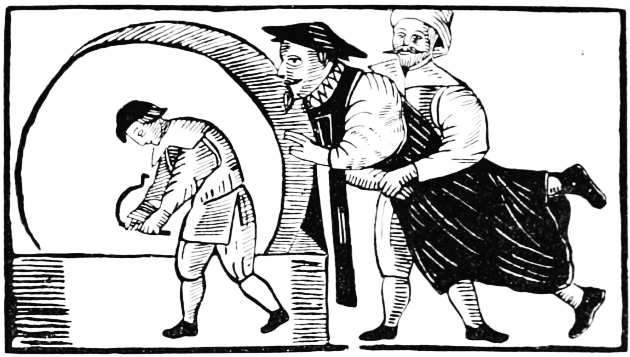
A BURLESQUE PLAY ABOUT ARCHBISHOP LAUD. ACT II.
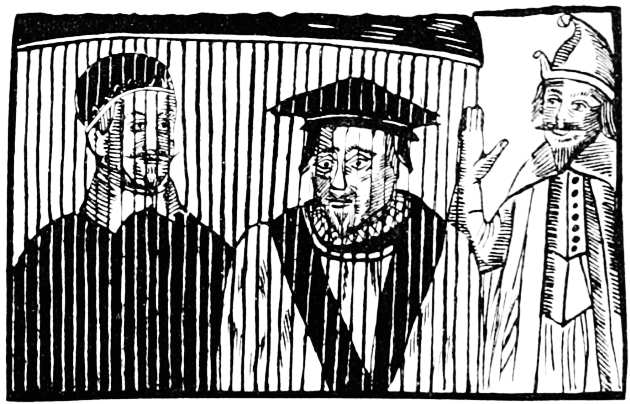
A BURLESQUE PLAY ABOUT ARCHBISHOP LAUD. ACT III.
In the second act the Archbishop of Canterbury enters a carpenter’s yard by the waterside, and seeing a grindstone he is about to sharpen his knife upon it, when he is interrupted by the carpenter who refuses to let him sharpen his knife upon his grindstone, lest he should treat him (the carpenter) as he had treated the others. The carpenter then holds the Archbishop’s nose to the grindstone, and orders his apprentice to turn with a will. The bishop cries out, ‘Hold! hold! such turning will soon deform my face. O, I bleed, I bleed, and am extremely sore.’ The carpenter, however, rejoins, ‘But who regarded “hold” before? Remember the cruelty you have used to others, whose bloud crieth out for vengeance. Were not their ears to them as pretious as your nostrils can be to you? If such dishes must be your fare, let me be your Cooke, I’ll invent you rare sippets.’ Then enters a Jesuit Confessor who washes the bishop’s wounded face and binds it up with a cloth. There is also an illustration to this act which is here copied.
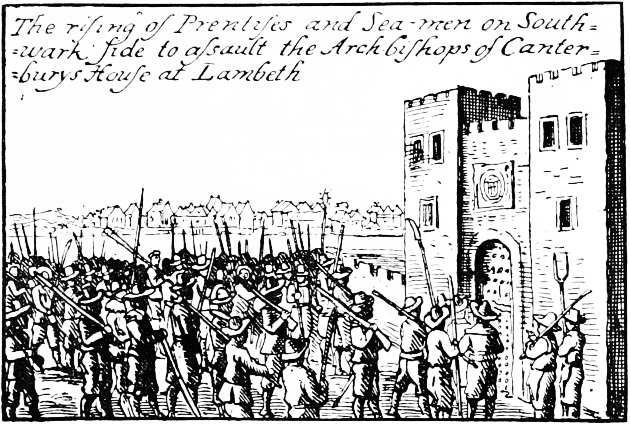
ASSAULT ON LAMBETH PALACE, 1642.
In the third act the Archbishop and the Jesuit are represented in a great Cage (the Tower) while the carpenter and his wife, conversing together, agree that the two caged birds will sing very well together. The woodcut to this act represents a fool laughing at the prisoners.
There is a fourth act in which the King and his Jester hold a conversation about the Bishop and the confessor in the cage. There is no printer’s or publisher’s name to this play, only the date, 1641.
The pamphlet previously referred to as containing a picture of Strafford’s execution, has also an engraving showing how the tide of public feeling had set against Archbishop Laud. The powerful Churchman had been impeached for high treason; he was deprived of all the profits of his high office and was imprisoned in the Tower. All his goods in Lambeth Palace, including his books, were seized, and even his Diary and private papers were taken from him by Prynne, who acted under a warrant from the House of Commons. The engraving under notice is entitled ‘The rising of Prentices and Sea-men on Southwark side to assault the Archbishops of Canterburys House at Lambeth.’
In a tract entitled ‘A Prophecie of the Life, Reigne, and Death of William Laud, Archbishop of Canterbury,’ there is a caricature of Laud seated on a throne or chair of state. A pair of horns grow out of his forehead, and in front the devil offers him a Cardinal’s Hat. This business of the Cardinal’s Hat is alluded to by Laud himself, who says, ‘At Greenwich there came one to me seriously, and that avowed ability to perform it, and offered me to be a Cardinal. I went presently to the king, and acquainted him both with the thing and the person.’ This offer was afterwards renewed: ‘But,’ says he, ‘my answer again was, that something dwelt within me which would not suffer that till Rome were other than it is.’ It would thus appear that the Archbishop did not give a very decided refusal at first or the offer would not have been repeated; and that circumstance, if it were known at the time, must have strengthened the opinion that he was favourably inclined towards the Church of Rome. At all events, the offer must have been made public, as this caricature shows.
Though Laud behaved with dignity and courage when he came to bid farewell to the world, if we are to believe the publications of the time, he was not above petitioning for mercy, while any hope of life remained. In 1643 a pamphlet was published with the following title, ‘The Copy of the Petition presented to the Honourable Houses of Parliament by the Lord Archbishop of Canterbury, wherein the said Archbishop desires that he may not be transported beyond the Seas into New England with Master Peters in regard to his extraordinary age and weaknesse.’ The petition is dated ‘From the Tower of London this 6th of May 1643,’ and in it the petitioner sets forth that out of a ‘fervent zeal to Christianity’ he endeavoured to reconcile the principles of the Protestant and Roman Catholic religions, hoping that if he could effect this he might more easily draw the Queen into an adherence to the Protestant faith. He deplores that his endeavours were not successful, and he begs the honourable Parliament to pardon his errors, and to ‘looke upon him in mercy, and not permit or suffer your Petitioner to be transported, to endure the hazard of the Seas, and the long tediousnesse of Voyage into those trans-marine parts, and cold Countries, which would soon bring your Petitioners life to a period; but rather that your Petitioner may abide in his native country, untill your Petitioner shall pay the debt which is due from him to Nature, and so your Petitioner doth submit himselfe to your Honourable and grave Wisdoms for your Petitioners request and desire therein. And your Petitioner shall humbly pray &c.’
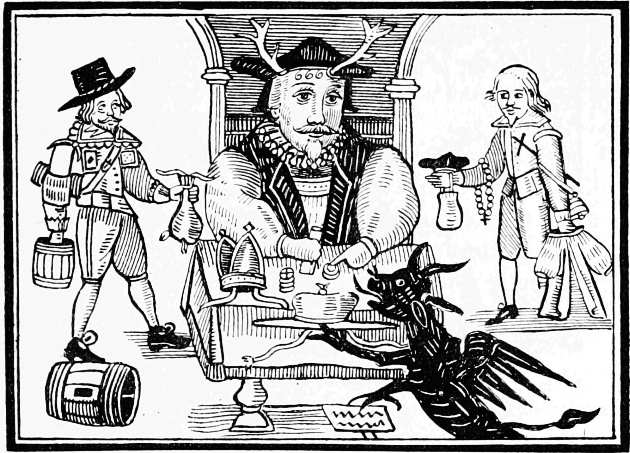
CARICATURE OF THE DEVIL OFFERING LAUD A CARDINAL’S HAT, 1644.
If Archbishop Laud was really the author of this petition he appears to have expected that his long imprisonment would end in banishment rather than death. He was beheaded on Tower Hill, January 10, 1645. There is a woodcut portrait of the Archbishop printed on the title-page of the petition.
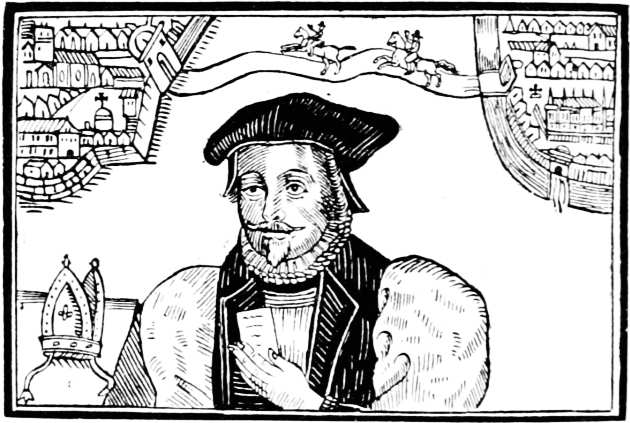
ARCHBISHOP LAUD.
1 Life of Gustavus Adolphus. Family Library.

CHAPTER III.
Ben Jonson’s Ridicule of the Early Newspapers—Fondness of the Old News-Writers for the Marvellous—The Smithfield Ghost—The Wonderful Whale—The Newbury Witch—Satirical Tracts and Caricatures at the Commencement of the Civil War—Religion Tossed in a Blanket—Caricatures of the Pope and the Bishops—Pluralists and Patentees—Taylor, the Water Poet—Mercurius Aulicus—Activity of the Pamphleteers—Welshmen Satirised—Satires on Prince Rupert—On the King and Queen—The Ladies’ Parliament—Illustrated Tracts relating to Social and Political Subjects—Sir Kenelm Digby’s Duel—The King entertained by the City of London, 1641—Executions in 1641—The Liquor Traffic and Sunday Closing in 1641—Abuses of the Ecclesiastical Courts—Ritualism and Nunneries in 1641—Truths enforced by Lieing—Stage Players and the Plague in 1641—Bartholomew Fair in 1641—Destruction of Charing Cross and Cheapside Cross—Strange Apparition—Method of Enforcing their Views adopted by the Puritan Pamphleteers—Parodies of Roundhead Sermons—Matthew Hopkins the Witch-finder—The Welsh Post of 1643—William Lilly the Astrologer—Three Suns seen in London on the King’s Birthday.
When Ben Jonson called the newspaper ‘a weekly cheat to draw money,’ and ridiculed the growing taste for news, he had some reason for satirising the journalism of the period. To satisfy the craving for news all kinds of impositions were freely circulated. Nothing was too wonderful for the credulity of the age, and people eagerly accepted what was placed before them, fully believing that whatever was in print must be true. It was not, however, till many years after Ben Jonson’s death that the so-called newspapers put forward their full powers as purveyors of the marvellous. Mercurius Democritus was the Punch of that day. While he satirised men and things he laboured to satisfy the popular taste for the wonderful, as in the following account of a ghost that was said to haunt the neighbourhood of Smithfield:—‘There is a great report of a ghoast that walks every Night amongst the Butchers at Smithfield Barrs, the Shambles, White-Chappell, and Eastcheape, in the habit of Mallet, the Lawyer, pulling the meat off the Butchers Tainters; many have adventured to strike at him with Cleavers and Chopping-knives, but cannot feel anything but Aire, every Saturday at night between 9 and 12, he walks his stations, in this very habit as you see, doing more mischiefe to the Butchers than ever Robin Goodfellow did to the Country Hindes.’
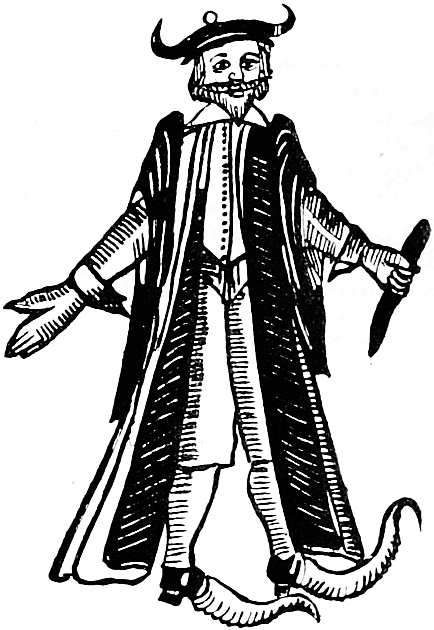
THE SMITHFIELD GHOST. FROM ‘MERCURIUS DEMOCRITUS,’ 1654.
Another example of the marvellous occurs in a tract entitled, ‘The Sea Wonder: a true and wonderful relation of a Whale pursued in the Sea, and incountered by multitudes of other Fishes as it was certified by divers Mariners of Weymouth, who, comming from France in the good ship called the Bonaventure, did shoote the said Whale, which making to Land did strike upon the Shore, within three miles of Weymouth, where being opened there was found in the belly of it a Romish Priest, with Pardon for divers Papists in England and Ireland, whose names are here inserted.’ Great pains appear to have been taken to give an air of truth to the narrative, which begins thus:—‘On the 19th of October being the Lord’s Day the good Ship called the Bonaventure of Weymouth being bound for England was bringing home her Merchandise from France which was wines, linning cloth, and abundance of Wall-nuts, the day was very fair and no wind stirring, so that the ship for above three hours space lay hulling upon the Seas, being not able to move either one way nor other for want of wind, although she was full sayled and prepared to take the advantage of every gale.’ The author gravely explains that the excitement of the fishes and their attacks on the whale were caused by their instinctively feeling the presence of the Popish Priest. Annexed is a copy of the woodcut on the title-page of this curious tract.
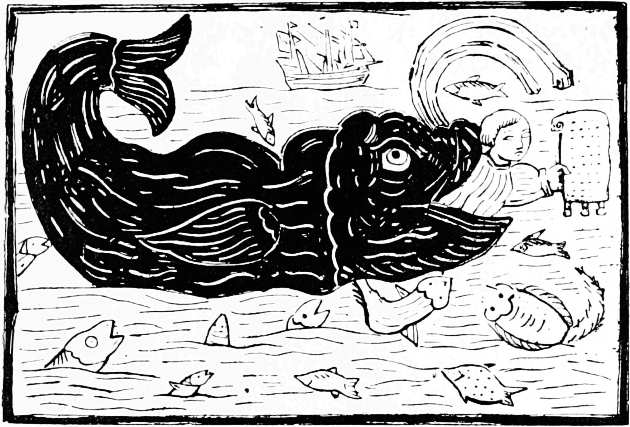
THE WONDERFUL WHALE, 1645.
‘Newes, True Newes, Laudable Newes, Citie Newes, Country Newes; The World is Mad, or it is a Mad World my Masters especially now when in the Antipodes these things are come to pass.’ Such is the lengthy title of a pamphlet containing an imaginary account of things at the Antipodes, and illustrated with a fanciful woodcut on the title-page. Then we have news from Boston in New England of a strange and prodigious birth of a child with two heads, also illustrated. Mercurius Democritus, besides such waggeries as giving an account of ‘a sight seen in the air by a blind philosopher,’ communicates ‘Many strange wonders out of the World, in the Moon, the Antipodes, Maggy Land, Tenebris, Fary-Land, Greenland, and other adjacent countries. Published for the right understanding of all the Mad-merry-people of Great Bedlam.’ Another example of the wonderful stories put forth to entertain the multitude relates to the discovery and punishment of a witch during the civil war. It occurs in a pamphlet entitled ‘A most Certain, Strange and true Discovery of a Witch, being taken by some of the Parliament Forces, as she was standing on a small planck-board and sayling on it over the River of Newbury.’ The illustration is of the rudest description, and the story is told in a breathless sort of way, without a full stop in the whole narrative:—
‘A part of the Army marching through Newbury, some of the Souldiers being scattered by the reason of their loytering by the way, in gathering Nuts, Apples, Plummes, Blackberries, and the like, one of them by chance in clambring up a tree, being pursued by his fellow or comrade in waggish merriment, jesting one with another, espied on the river being there adjacent, a tall, lean, slender woman, as he supposed, to his amazement, and great terrour, treading of the water with her feet, with as much ease and firmnesse as if one should walk or trample on the earth, wherewith he softly calls, and beckoned to his fellows to behold it, and with all possible speed that could be to obscure them from her sight, who as conveniently as they could they did observe, this could be no little amazement unto them you may think to see a woman dance upon the water, nor could all their sights be deluded, though perhaps one might, but coming nearer to the shore, they could perceive there was a planke or deale overshadowed with a little shallow water that she stood upon, the which did beare her up, anon rode by some of the commanders who were eye witnesses, as well as they, and were as much astonished as they could be, still too and fro she fleeted on the water, the boord standing firm boult upright, indeed I have both heard and read of many that in tempests and on rivers by casualty have become shipwracked, or cast overboard, where catching empty barrells, rudders, boards, or planks have made good shift by the assisting Providence of God to get on shore, but not in this womans kind to stand upon the board, turning and winding it which way she pleased, making it pastime to her, as little thinking who perceived her tricks, or that she did imagine that they were the last she ever should show, as we have heard the swan sing before her death, so did this devilish woman, as after plainly it appeared make sport before her death, at last having sufficiently been upon the water, he that deceived her alway did so then, blinding her that she could not, at her landing see the ambush that was laid for her, coming upon the shore, she gave the board a push, which they plainly perceived, and crossed the river, they searched after her but could not find her she being landed the Commanders beholding her, gave orders to lay hold on her, and bring her to them straight, the which some were fearful, but one being more venturous than other some, boldly went to her and seized on her by the arms, demanding what she was? but the woman no whit replying any words unto them, they brought her to the Commanders, to whom though mightily she was urged she did reply as little; so consulting with themselves what should be done with her, being it so apparently appeared she was a witch, being loth to let her goe & as loth to carry her with them, so they resolved with themselves, to make a shot at her, and gave order to a couple of their souldiers that were approved good marksmen, to charge and shoot her straight, which they prepared to doe; so setting her boult upright against a mud bank or wall; two of the souldiers according to their command made themselves ready, where having taken aime gave fire and shot at her, but with a deriding and loud laughter at them she caught their bullets in her hands and chew’d them, which was a stronger testimony than the water, that she was the same that their imaginations thought her for to be, so resolving with themselves if either fire or sword or halter were sufficient for to make an end of her, one set his Carbine close unto her brest; where discharging, the bullet back rebounded like a ball, and narrowly he mist it in his face that was the shooter; this so enraged the Gentleman, that one drew out his sword and manfully run at her with all the force his strength had power to make, but it prevailed no more than did the shot, the woman still though speechless, yet in a most contemptible way of scorn, still laughing at them, which did the more exhaust their furie against her life, yet one amongst the rest had heard that piercing or drawing bloud from forth the veins that crosse the temples of the head, it would prevail against the strongest sorcery, and quell the force of Witchcraft, which was allowed for triall; the woman hearing this knew then the Devill had left her and her power was gone, wherefore she began alowd to cry, and roare, tearing her haire, and making pitious moan, which in these words expressed were: And is it come to passe that I must die indeed? Why then his Excellency the Earle of Essex shall be fortunate and win the field, after which no more words could be got from her; wherewith they immediately discharged a Pistoll underneath her ear, at which she straight sunk down and died, leaving her legacy of a detested carcasse to the wormes, her soul we ought not to judge of, though the evils of her wicked life and death can scape no censure.’
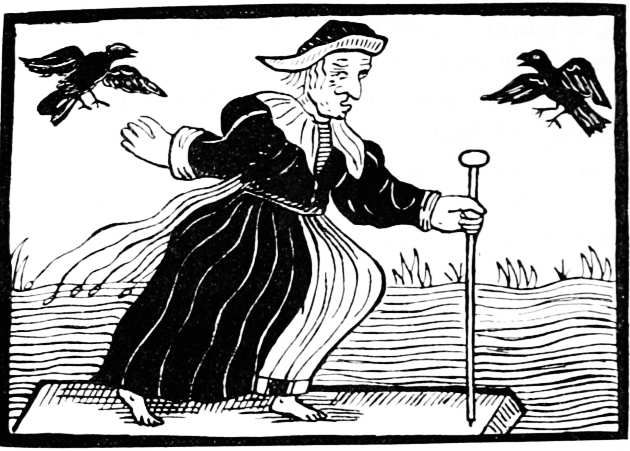
THE NEWBURY WITCH, 1643.
On the outbreak of the great Civil War an immense number of tracts and pamphlets were published relating to social and political questions, many of which were illustrated. Satire was a weapon freely used, and many hard hits were made, the point and bitterness of which cannot now be understood. Caricatures, which are generally supposed to have made their appearance in England at a much later date, are of frequent occurrence. The wonderful and supernatural were freely dealt in, and many tracts were published which were not strictly news, yet had some reference to public men and passing events. The woodcuts in the tracts and pamphlets of this period were frequently repeated, being sometimes used where they had no relation to the subject treated.
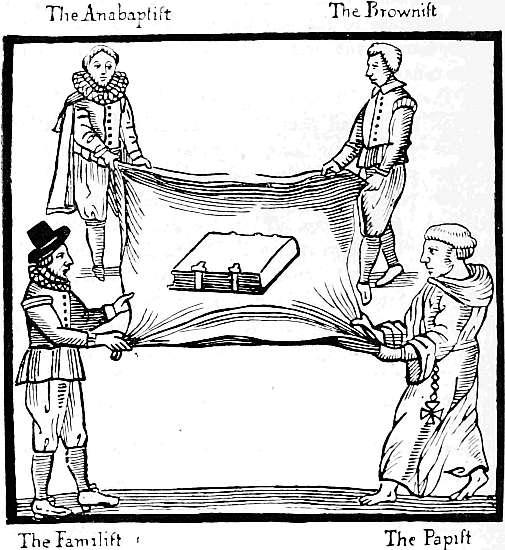
RELIGION TOSSED IN A BLANKET, 1641.
The minds of men being much exercised on questions of religion at this time, it was to be expected that the subject would not escape the notice of the satirist. Accordingly, many tracts were published relating to religious matters, some of which are illustrated with woodcut caricatures. There is one of the date of 1641 containing a woodcut of four men tossing Religion (represented by a Bible) in a blanket. The writer condemns the numberless sects which were perplexing men’s minds and tearing the Church asunder:—
‘Religion is made a Hotch potch, and as it were tossed in a Blanquet, and too many places of England too much Amsterdamnified by several opinions. Religion is now become the common discourse and Table-talke in every Taverne and Ale-house, where a man shall hardly find five together in one minde, and yet every one presumes hee is in the right. The Booke of Common prayer which was established by Act of Parliament by that good and Godly King Edward the sixth, and after reestablished by another Parliament by that unparaled and peerlesse princesse Queen Elizabeth, and continued since in the happy Raignes of two gracious kings in the church of England for the service of God these ninetie yeares; yet one would have it to be cast out now, holding it to be a false worship; another is angrie at the vestments and habits of the Ministry; one will not kneel, another will not stand, one will sit downe, one will not bowe, another will not be uncovered, one holds all good manners to be popery, another that all decencie is superstitious, another that railes are Romish (which is false for the papists have no railes in their churches, nor anything so convenient). One foolishly assumes and presumes to save himselfe and some of his Neighbours too, by his good workes; another will be saved by a bare and lazie Faith that will do no work at all, and thus religion is puft and blowne to and fro with every wind of doctrine, and as it were tost in a Blanquet; but of this more largely hereafter in another part which will suddenly be printed, till when and ever it shall be my hearty prayers that as there is but one Shepheard, that is God in his gracious goodnesse and mercie would make us all one sheepfold.’
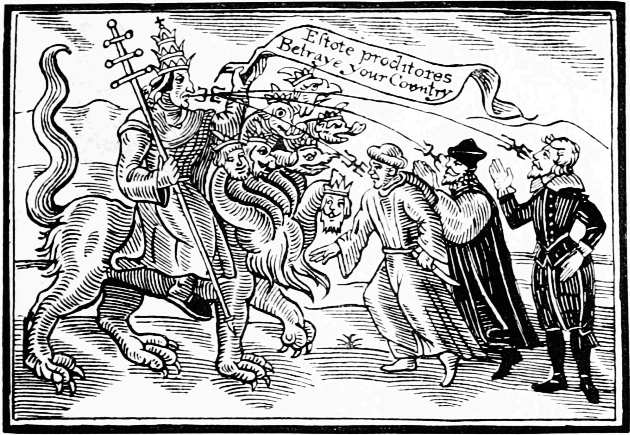
CARICATURE OF THE POPE, 1643.
The shafts of satire were frequently aimed at the Pope and the Bishops. One caricature represents the Pope seated, while a unicorn tumbles the triple crown from his head. The same woodcut illustrates a ‘Letter from the Devil to the Pope of Rome.’ Another tract has a representation of the Pope riding upon a seven-headed monster and holding in his hand a scroll on which are the words ‘Estote proditores’—‘Betraye your Country.’ This advice he is giving to a cavalier, a bishop, and a monk, and at the same time three devils are represented as leaving him and entering into them. This cut, which is repeated in other pamphlets, is curious as an early specimen of caricature, but its meaning is now lost.
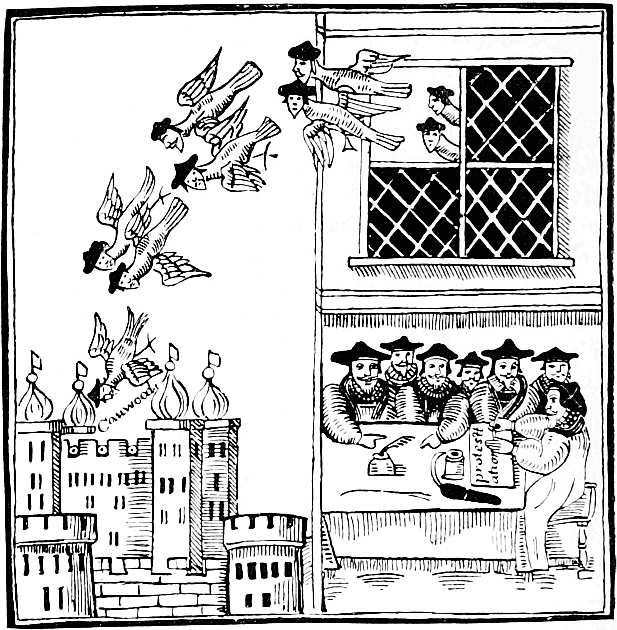
CARICATURE OF THE BISHOPS, 1642.
The Bishops were treated with as little ceremony as the Pope. In one caricature four of them are represented as falling to the earth, with the following lines underneath the woodcut:—
‘The tottering prelates, with their trumpery all, Shall moulder downe, like elder from the wall.’
In a pamphlet called The Decoy Duck, printed in 1642, there is a quaint woodcut caricature and a satirical account of how the Bishops of Durham, Lichfield, Norwich, Asaph, Bath, Hereford, Oxford, Ely, Gloucester, Peterborough, and Llandaff were decoyed and deceived by the Bishop of Lincoln (Bishop Williams). I have copied the woodcut, but no quotation from the pamphlet would be understood unless given at great length. It doubtless refers to the charge of high treason against the twelve Bishops.
The abuses of the Established Church in an age when the spirit of dissent was strong were pretty sure to attract the notice of the satirical writer and the caricaturist. Accordingly, we find representations of the pluralist holding a church in each hand and one on each shoulder; while the non-resident clergyman was compared to the locust:—‘The Locust is given to spoile and devoure greene things; it was one of the plagues of Egypt. Non-residents devoure the tithes of many parishes in this kingdome; and they are not to be numbered amongst the least of those plagues that God inflicts upon us for our sins. The Locusts caused Pharaoh and his servants to cry unto Moses that he would entreat the Lord to take them away; and our Non-Residents cause all good people to cry mightily unto God, to the King’s Majesty, and to the Honourable House of Parliament, to reform them or remove them; that there may not be any carelesse Non-Resident in all the coasts of England.... Some of our carelesse Non-Residents have a cure of soules in one place and live in another, like fugitive Captaines forsake their Ensigne and Company at Barwick, and flee to Dover; who being with Jonah commanded for Nineveh, flee to Tarshish; being placed in the Country they run to the Cathedrals, they leave their charge as the Ostrich doth her eggs in the earth and sands, forgetting that either the foot may crush them or that the wild beast may break them, or at the best they leave their Congregations, as the Cuckoo doth her eggs to be hatched of a sparrow or some other bird.’
The following woodcut is copied from a pamphlet entitled ‘A Purge for Pluralities, showing the unlawfulnesse of men to have two Livings, or the Downefall of Double Benifices.’
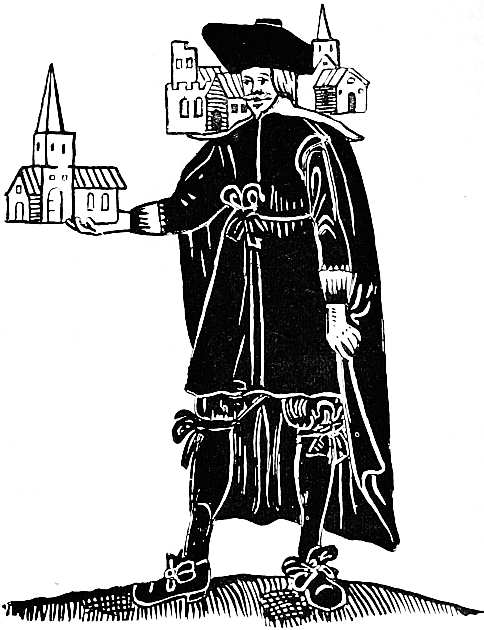
THE PLURALIST, 1642.
The abuse of the Crown’s prerogative in the granting of patents and monopolies was very frequent in the reigns of Elizabeth and James, and was not diminished under Charles the First. The practice did not fail to attract the notice of the satirical writers of the day, and caricature laid hold on the ‘Projectors and Patentees,’ and held them up to ridicule. ‘A Dialogue or accidental discourse betwixt Mr. Alderman Abell, and Richard Kilvert, the two maine Projectors for Wine, 1641, contains a woodcut showing ‘The manner and forme how Projectors and Patentees have rode a Tylting in a Parliament time.’ The wit of the illustration is a little obscure to the modern reader, but at the time of its publication it was no doubt understood, and relished accordingly. The pamphlet describes how Messrs. Abell and Kilvert laid their heads together to obtain the patent for wine; how they put the patent in force, and how, after the tide turned against them, they reviled one another.
As the excitement of the Civil War increased, political animosity rose to a red heat. Cavaliers and Roundheads belaboured each other in many a merciless pamphlet, to which they often endeavoured to give additional bitterness by woodcut caricatures. Prominent individuals, such as Prince Rupert, became marks for the satirist’s wit. Even the throne itself did not escape, and it was broadly hinted that the Protestant king was unduly influenced by the Roman Catholic queen. The curious subject of the growth of caricature might be illustrated by numerous examples from the publications of this period, but it will be sufficient to refer to two or three more woodcut satires of this date.
The distractions of the times were epitomised by John Taylor, the Water Poet, in an illustrated rhyming pamphlet, published in 1642. It is entitled, ‘Mad Fashions, Od Fashions, all out of Fashion, or the Emblems of these distracted Times.’
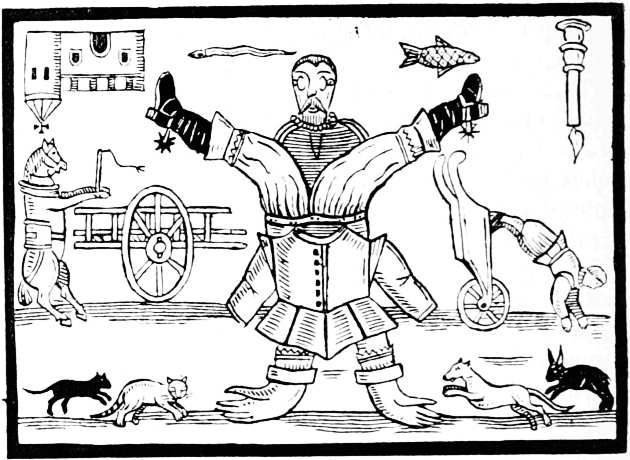
EMBLEMS OF THE DISTRACTED TIMES, 1642.
The author compares England to the engraving on his title-page, where everything is represented upside down:—
‘The Picture that is printed on the front Is like this Kingdome if you look upon ‘t; For if you well doe note it as it is, It is a Transform’d Metamorphasis. This Monstrous Picture plainly doth declare This land (quite out of order) out of square. His Breeches on his shoulders doe appeare, His doublet on his lower parts doth weare. His Boots and Spurs upon his Armes and Hands, His Gloves upon his feet (whereon he stands) The church o’erturned (a lamentable show) The Candlestick above, the light below, The Coney hunts the Dogge, the Rat the Cat, The Horse doth whip the Cart (I pray marke that) The Wheelbarrow doth drive the man (Oh Base) And Eeles and Gudgeons flie a mighty pace. And sure this is a Monster of strange fashion That doth surpasse all Ovids transformation. And this is England’s case this very day, All things are turned the clean contrary way; For now, as when a Royall Parliament, (With King, and Peers, and Commons whole consent) Have almost sate two years, with paines and Cares, And charge, to free us from our Griefes and fears, For when many a worthy Lord and Knight, And good Esquire (for King and Countrey’s Right) Have spent so much time with great Toyle and Heede All England’s vicious garden how to weed, So like a wildernesse ‘twas over run, That though much better hath been done; All is not done.’
The Water Poet sided with the Cavalier party, and verse and prose flowed plentifully from his pen in favour of the Royal cause. His effusions provoked many replies, one of which is entitled, ‘No Mercurius Aquaticus, but a Cable-Rope, double twisted for John Tayler, the Water Poet; who escaping drowning in a Paper-Wherry-Voyage, is reserved for another day, as followeth, viz.’
Then follows the subjoined woodcut, with verses underneath. The hint that the poet was born to be hanged because he had escaped from drowning refers to his having undertaken to sail from London to Queenborough in a boat made of brown paper. In this foolhardy exploit Taylor and a friend who was with him nearly lost their lives. The tract under notice affords a good specimen of the sort of language used by the partisans of each faction against their opponents: ‘I should be loathe to foule my fingers with any base Pamphlets that comes from Oxford, if the venom of their malicious spleens were darted against my particular self: But when through my sides they wound the honour of the Parliament and our Armies abroad, I cannot but set Pen to paper, and pay them back again in their own kinde. And who d’ye think I should meet abroad for a Rogue-in-Print but one of our City Water-rats, the doughty John Taylor, who according to the knavish custom, changes his name upon every new paper-designe? Sometimes he calls himself Thorney Ailo, Mercurius Aquaticus, and now he entitles himself No Mercurius Aulicus. I thought I had lately sent rope enough for all the Parrots in Oxford; But I perceive they will be prattling still; and therefore I must unmaske the Mysterious Masters of the science of railing. There are three grand paper conspirators well known by the name of Mercurius Aulicus, George Naworth, and reverend Master John Tayler the water-tankard, by whose sprinklings in this great dearth of Wit and Honesty the University is cherished and kept in credit. These three are they which pumpe and Pimpe about with their Prostitute Noddles in the behalf of Popery, Murder, and Rebellion against the state; they are Liars in all elements, Aulicus for Land-lies, Tayler for Water, and hungry George Naworth for all between Heaven and Earth, where I doubt not but to see them all meet together to take their farewell of the world, where the Parrots will find Ropes made of stronger Lines than mine, and such as will non-plus the very primest Wits in the University.’
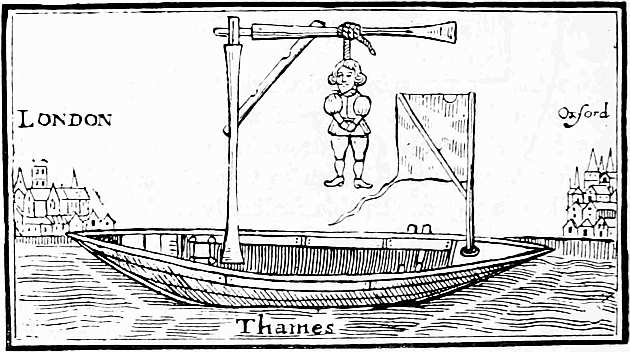
PREDICTED FATE OF JOHN TAYLOR THE WATER POET, 1644.
The pamphleteer goes on to give the Water-Poet what he doubtless considered a thorough drubbing, and at the end he leaves him ‘to the Gallows, the proper cure for such Rebels.’ The words ‘London’ and ‘Oxford’ on the woodcut have reference to another voyage which the Water-Poet performed in a sculler’s boat between those places.
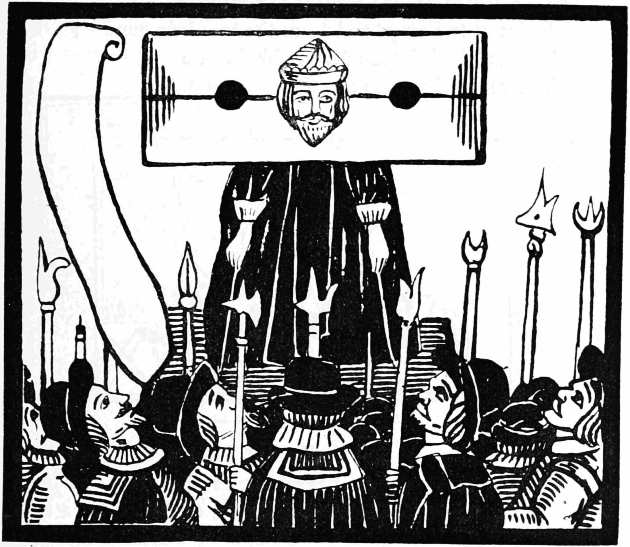
MERCURIUS AULICUS IN THE PILLORY, 1645.
Mercurius Aulicus was the organ of the Court party, and was published at Oxford. A curious satire upon this Court paper was printed in 1645, entitled, Newes from Smith the Oxford Jaylor. It consists of a dialogue between the author and the ‘Oxford Jaylor,’ and sets forth that ‘Mercurius Aulicus’ was sentenced, by a jury of women,’ to stand in the pillory three market-days in Oxford, for his lies, libels, and deceitful glozings;’ to have a written paper over his head announcing his shame; to beg forgiveness of ‘Mercurius Brittanicus;’ to be prevented from writing any more libels for one year. ‘That before two months’ expiration he be cut of the simples, and his braines be taken out, washt in white wine, and put in againe.’ ‘That for every morning during the said time he have one mess of stewd broth made of the interlinings of fower Court Parazites, and the braines of 26 Oxford Widgins boyld in the water of forgetfulnesse.’ ‘That he may never hereafter have so much as one graine of wit left him in his empty Hogshead (his brains being taken out and washed as before is ordered) to scandalize those whom if he had any grace he is bound to honour.’ There is a woodcut of Mercurius Aulicus in the pillory, which is supposed to represent Sir John Birkenhead, who acquired the title of the Loyal Poet, and suffered several imprisonments. This cut was used on several other occasions.
The troubles of the times are constantly indicated in the pamphlets of the period. In one the State is represented as a two-headed serpent, with these lines underneath the engraving:
‘This double-headed serpent is a wonder, It draws two ways and tears the womb in sunder; The wofull emblem of a troubled State Where civill warres doe threat to ruinate.’
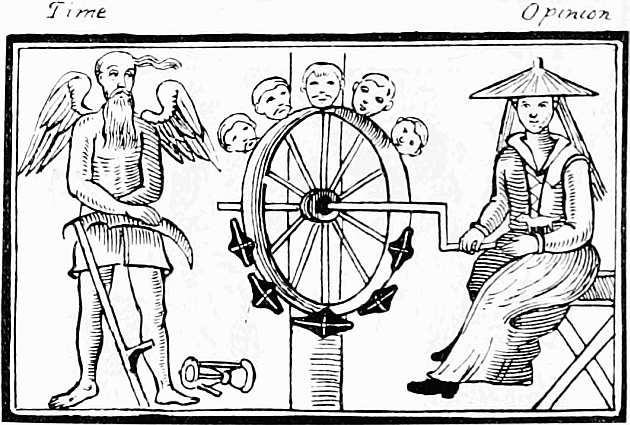
SQUARE CAPS TURNED INTO ROUND HEADS, 1642.
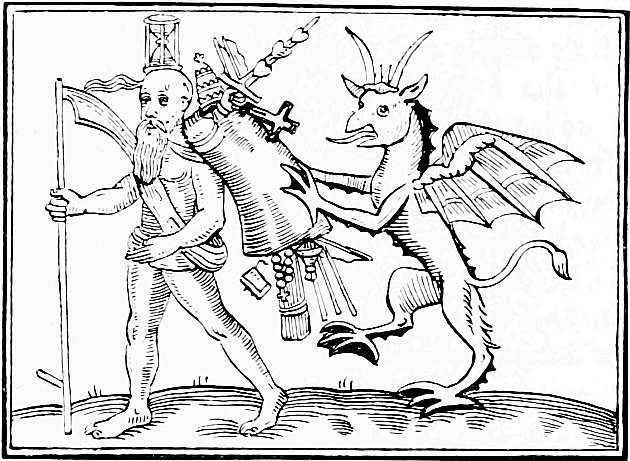
The partisans of the Parliament faction appear to have been much more active pamphleteers than the Cavaliers. ‘Square Caps turned into Round Heads, or the Bishop’s Vindication and the Brownist’s conviction, being a Dialogue between Time and Opinion; showing the folly of the one and the worthinesse of the other,’ is a tract with an illustration representing Opinion turning a wheel, on which are five square caps and five round heads, while Time, with his scythe and hourglass, holds converse with Opinion. Under the woodcut are the following lines:—
‘Time doth Opinion call unto accompt, Who turns the Bishop’s downe and Roundheads mount; Upon her lofty wheels their Noddles are, But her Camelion feedeth on his aire.’
‘Cornucopia, or Room for a Ram head, wherein is described the dignity of the Ram head above the Roundhead or Rattlehead,’ is another tract, with a woodcut caricature representing a woman attempting to saw the horns from a man’s head. The letterpress consists of a dialogue between a man and his wife, wherein the man humorously praises horns. It was a favourite joke to represent the Puritan as a ‘cuckoldy Roundhead.’
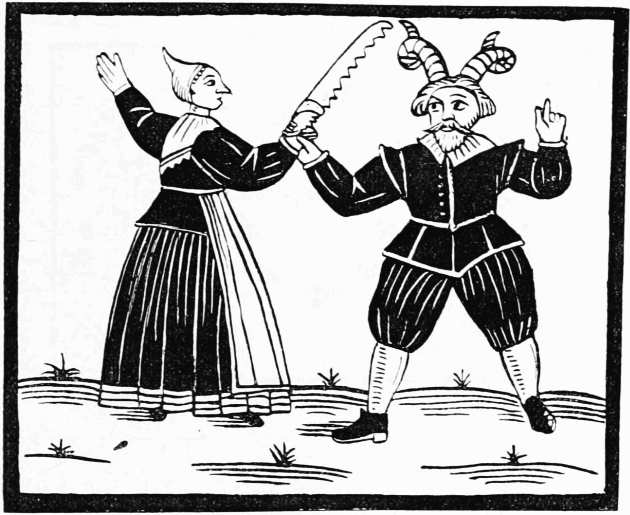
CARICATURE, 1642.
Another satirical pamphlet has a woodcut representing Cavaliers and Roundheads exciting their dogs to fight. It is entitled, ‘A Dialogue or rather a Parly between Prince Rupert’s Dogge whose name is Puddle, and Tobies Dog whose name is Pepper, &c. Whereunto is added the challenge which Prince Griffin’s Dog, called Towzer, hath sent to Prince Rupert’s Dog Puddle, in the behalfe of honest Pepper, Tobie’s Dog. Moreover, the said Prince Griffin is newly gone to Oxford to lay the wager, and to make up the Match.’ In this satire, which is very highly flavoured, both Cavaliers and Roundheads are pelted with very vigorous epithets, but in the end the Roundhead dog is converted by his opponent, and seals his recantation in a very striking manner.
There is a tirade against the Jesuits entitled, ‘A Peece of ordnance invented by a Jesuite, for Cowards that fight by Whisperings, and raise jealousies to overthrow both Church and State, which with the help of a private Ensign in the Cabbinet Councell, or Westminster Hall is able to doe more mischiefe at twentie miles distance, than a whole Regiment of stout Souldiers, at Musket-shot. Which grievance is by way of Remonstrance humbly presented to the consideration of the Parliament.’ This tract has a woodcut of a man firing a cannon formed of the figure of a man.
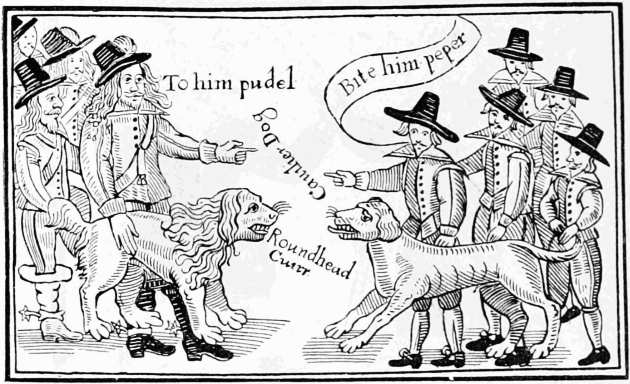
CARICATURE, 1643.
‘Hell’s Hurlie-Burlie, or a Fierce contention between the Pope and the Devill,’ is illustrated; and there is a pamphlet, with a woodcut, entitled, ‘The Devill’s White Boyes: A Mixture of Malicious Malignants, with their much evill and manifold practises against the Kingdome and Parliament, with a bottomlesse Sack-full of Knavery, Popery, Prelacy, Policy, Treachery, Malignant Trumpery, Conspiricies, and Cruelties, filled to the top by the Malignants, laid on the shoulders of Time, and now by Time emptied forth, and poured out, to show the Truth, and shame the Devill. Beneath, the woodcut are the following verses:—
‘Malignants are the Divell’s Agents still, The Sack is England, which they strive to fill With misery and mischief, and this Sack Full stufft is laid upon Times aged back; Time pours it out now in an angry mood That all their knaveries may be understood.’
On the cut itself are printed the lines:—
‘Time now at the last pours out much knavery, The Devill holds down fast to hinder the discovery.’
CARICATURE, 1644.
The Welshman came in for a share of the satirist’s wit at the commencement of the Civil War. He generally figures under the name of ‘Ap Shinkin,’ and is made to speak English much the same as the Scottish Highlander does in Scott’s novels. ‘The Welsh mans Postures, or the true manner how her doe exercise her company of Souldiers in her own Country in a warlike manners,’ is a satire of a very broad character, and is illustrated with a woodcut representing men exercising with the pike. Shinkin is also ridiculed for the share he took in the battle of Edgehill, the first important engagement in the Civil War. There is an illustrated tract with the following title: ‘The Welsh mans Complements: or the true manner how Shinkin wood his Sweetheart Maudlin after his return from Kenton Battaile. Also Fair Maudlin’s reply and answer to all Shinkin’s Welch complements, full of merry wit and pleasant mirth.’ The ‘merry wit’ is certainly not refined, and the ‘pleasant mirth’ is founded on Shinkin’s supposed hasty departure from the neighbourhood of the fight. The woodcut represents Shinkin and Maudlin in conversation.
Prince Rupert is often the mark for the satirist’s wit. In ‘Rupert’s Sumpter, and private Cabinet rifled, and a Discovery of a Pack of his Jewels, by way of Dialogue between Mercurius Brittanicus and Mercurius Aulicus,’ there is a discussion as to the Prince’s merits and demerits, and he is charged with aiming at the crown. Both the King and Queen were brought under the caricaturist’s lash. In 1644 there was an illustrated pamphlet published, representing the King, Queen, and a bishop, with the following title: ‘The Sussex Picture, or an Answer to the Sea-gull.’ The address to the reader is headed: ‘The Sceptre’s Submission, the Distaffs Triumph, and the Crosiers Combination. Reader, If thou hast view’d that stately Picture, which was lately sent up to the Parliament by Collonel Morley, and was taken in a Flemish Ship upon the Sussex Shore; Thou hast beheld therein the weaker sexe triumphing over the stronger, and by the help of a Miter, thou hast seen a Scepter doing homage to the Distaffe. If thou hast never seen the Originall, yet here is to be seen a poore, rude, counterfeit of the chief part in it; use thy judgement freely, and impartially: let both the Peece itself, and that which is said by both sides, in judgement thereupon, be put into one equal ballance. If the Dutch Author be not to undergo censure, as if he intended an English Storie, yet neither art thou to be censured for doubting his intention, or for standing amazed at his phancie. Shadows which are not fashioned by some certain, neer, interposing body present nothing to the eye, and therefore work nothing upon the understanding. The language of a picture is to be borrowed from the veritie of the matter, if that be wanting, neither the Art of the Limner nor the imagination of the spectator can supply its vocall organs.’ This caricature may have referred to the influence which the Roman Catholic Queen was supposed to exercise over the Protestant king under clerical guidance.
THE PARLIAMENT OF LADIES, 1644.
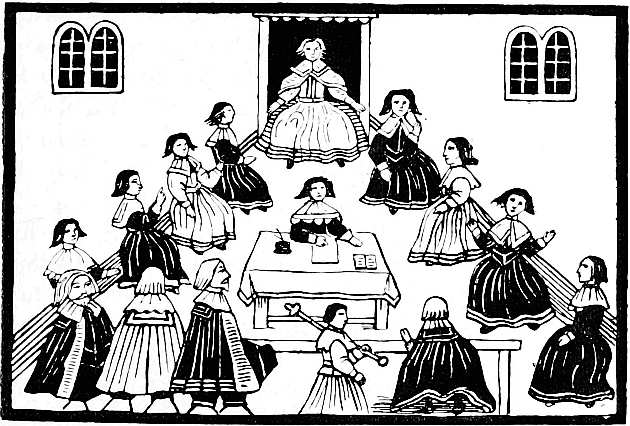
Charles I. summoned a Parliament at Oxford in 1644, consisting of such members of both Houses as were devoted to his interests. There exists a satirical tract ridiculing this Parliament, and, in fact, representing it as a Parliament of old women. The tract is entitled ‘An exact Diurnall of the Parliament of Laydes,’ and is illustrated with a woodcut. It sets forth that ‘Countesses and other Ladies (on Monday morning early in a Prosopopia) being met in Mary Maudlins Hall in Oxford, they first made choyce of their speaker; and it was agreed by all that the Lady Oboney should have the chaire, the Lady Rivers was made Chancellor, Nurse Windham High Constable, the Countess of Derby High Treasurer, and the Countess of Essex High Chamberlain. These Ladies having all taken their places, Mrs. Powell was appointed cheefe Clerk to the House, and Mrs. Peele Chaire Lady to the Close Committee, and Moll Cut-Purse was made Sergeant at Arms.’ Prince Rupert and others are tried and sentenced for various crimes, but the ladies afterwards relent, and pardon all the prisoners brought before them. I give on the preceding page a reduced copy of the rough woodcut which illustrates this curious burlesque.
CARICATURE, 1644.
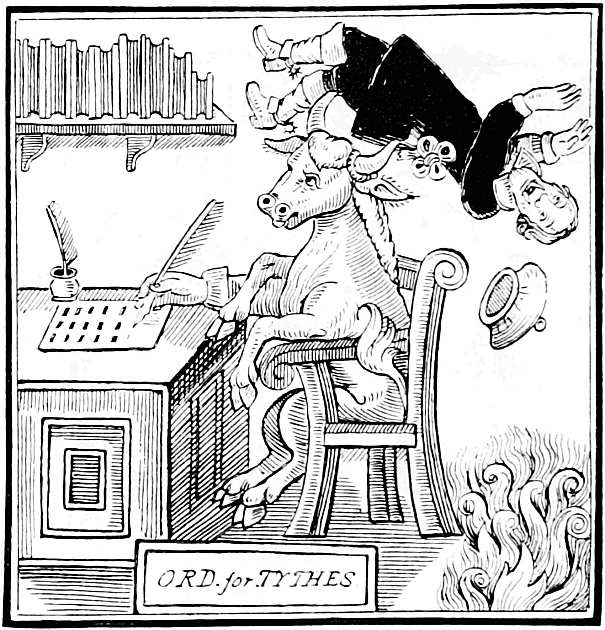
A writer of much verbosity satirised the Assembly of Divines at Westminster in another illustrated pamphlet, printed ‘by Martin Claw-Clergy for Bartholomew Bang-Priest, and sold in Toleration-street, at the sign of the Subject’s Liberty, opposite to Persecuting Court.’ The author states on the title-page that his production displays ‘many witty Synodian Conceits both pleasant and commodious,’ and adorns his work with the above curious engraving, which probably had some reference to a Papal Bull, but at this distance of time we look in vain for the point and meaning of many of these old caricatures.
Having glanced at the satirical side of illustrated journalism at the epoch of the Civil War, I will quote two or three examples relating to the social and political condition of the country before entering upon the stirring events of that time.
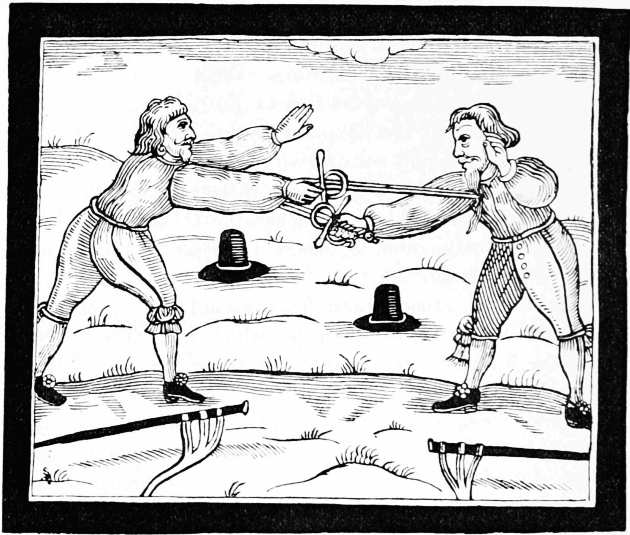
A great variety of subjects are embraced in this section. There are accounts of apparitions, signs and portents in the heavens, monstrous births, duels and murders, criminal trials and executions, besides many tracts relating to the vices and follies of the age. One of the first illustrated pamphlets we come to in this division of our subject describes a duel fought in vindication of the good name of King Charles I. The pamphlet is entitled, ‘Sir Kenelme Digby’s Honour maintained by a most couragious Combat which he fought with the Lord Mount le Ros, who by base and slanderous words reviled our King. Also the true relation how he went to the King of France, who kindly intreated and sent two hundred men to guard him so far as Flanders. And now he is returned from Banishment, and to his eternal honour lives in England.’ This is a tract written by an undoubted Royalist. It begins in praise of valour, which is divided into three kinds—that which is allied to rashness, that which is born of the fear of death, and temperate or true valour. It describes how Sir Kenelme Digby was dining with a French lord, who, having toasted most of the kings of Christendom, then proposed the health of the most arrant coward in the world; and on Sir Kenelme inquiring who that was, he was told, after he had drunk the toast, that it was meant for the King of England: ‘At which the good knight seemed very much discontent, knowing in what nature his Soveraigne was wronged; yet very wisely did he seeme to pass it by untill dinner being ended, then did he desire the same lord the next day to come and dine with him, who promised him upon his honour that he would.’
SIR KENELM DIGBY’s DUEL, 1641.
The next day the French Lord repaired to Sir Kenelme’s lodgings, where an entertainment befitting his rank was provided: ‘Neither did Sir Kenelme seeme to remember the former daies discontent, but was very frolic and merry, and in the midst of dinner time desired them all to be bare, for he would beginne a health to the bravest king in the world. The French Lord asked whom that was, Sir Kenelme made answer that when it had gone about he should know; well, about it went and then Sir Kenelme said that it was the health of the bravest king in the world, which is the King of England, my royal Master, for although my body be banished from him, yet is my heart loyally linkt; the French Lord at those words seemed to laugh repeating the same words before mentioned, then was Sir Kenelme throughly moved in the behalf of our Soveraigne King Charles whereupon he whispered the Lord in the eare, telling of him how that twice he had reviled the best King in the world in the hearing of me which am his faithful subject, wherefore for satisfaction I require a single combate of you, where either you shall pay your life for your sawcinesse, or I will sacrifice mine in the behalfe of my King. The French Lord being of a resolute spirit condescended to fight, the place was appointed, dinner being ended, they both arise from table and privately went together, being in field off they pluckt their doublets, and out they draw their weapons.
‘Mars would have bashful beene to have seene himselfe by Noble Digby there excelled, long work with the contemptible French Lord, he would not make, for fear lest any should lye in ambush and so he might hazard his own life, wherefore in four bouts he run his rapier into the French Lords brest till it came out of his throat againe, which so soon as he had done, away he fled to the Court of France, and made all knowne to the King thereof, who said the proudest Lord in France should not dare to revile his brother King.
‘A guard was presently chosen to conduct Sir Kenelme into Flanders, which they did, where he tooke shipping for England, where he now is, where in peace and quietnesse may he still remaine.
‘As for the French Lord he was paid according to his desert, and may all be so rewarded which shall dare to revile the Lords anointed, who suffers by other Nations, for the clemency he hath shown to his own Nation, sed beati sunt pacifici, but blessed is the peace maker; good king for thy patience in this world there are Crownes of immortal glory laid in store for thee in the world to come, there shall not traitors dare to show their faces, nor shall perplexity proceed from the great care of ruling of a kingdome, in the meanwhile may more such Noble Digbies increase to rebuke all cursing Achitophels and reviling Rabshakey’s.
‘Let God arise and then shall the enemies of our gracious King be sure to be scattered.
‘Now I conclude commanding fame to show Brave Digby’s worthy deed, that all may know He lov’d his king, may all so loyal prove And like this Digby to their king show love.’
Many portraits of Charles I. were published in tracts about this time. One of the best is contained in a poetical welcome to the King on his return from Scotland. ‘King Charles his Entertainment and Londons Loyaltie,’ 1641, contains a precept issued by the Lord Mayor, directing how the aldermen and citizens shall meet the King, on his return from Scotland, at Shoreditch Church, and conduct him to the Guildhall to a banquet, and afterwards to Westminster. There is also a a very spirited woodcut of a City trumpeter in this pamphlet, which is copied above. City entertainments to sovereigns and princes have always been fruitful occasions for illustrated newspapers.
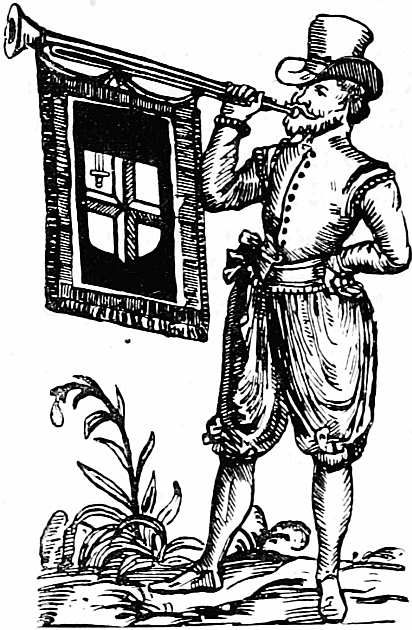
CITY TRUMPETER, 1641.
The wholesale executions that used to take place at this period would astonish the modern newspaper reader. Sometimes as many as twenty-four persons were executed in one day at Tyburn. ‘A Coppy of the Prisoners judgement condemned to dy, from Nugate on Monday the 13 of December, 1641,’ gives an account of eight Jesuits and several other prisoners who were executed. A descriptive list is given of the condemned, and amongst them are the following:—
‘Charles James, an handsome gentile young man, was convicted for Robery and Burglary.
‘John Hodskins, a fine Scholler, a pretty fellow, yet wanted grace.
‘John Davis, a lusty stout personable man.
‘Francis Middlefield, a pretty youth, and a good Scholler, convicted of felonie.’
Several highwaymen, horse-stealers, and coiners, are also included in this gloomy list, which is adorned with a woodcut of an execution.
The regulation of the licensed victuallers’ trade and the Sunday closing movement appear to have been as troublesome questions in the seventeenth century as they are now. As early as 1641 the publican was uttering the complaints which he still continues to utter. In a pamphlet of that date there is a dialogue between a tapster and a cook, which sets forth the grievances of both these worthies. The pamphlet is entitled, ‘The Lamentable Complaints of Nick Froth the Tapster and Rulerost the Cook, concerning the restraint lately set forth against drinking, potting, and piping on the Sabbath day, and against selling meate.’ The publican expresses himself thus:—‘I much wonder Master Rulerost why my trade should be put downe, it being so necessary in a commonwealth; why the noble art of drinking, it is the soul of all good fellowship, the marrow of a Poet’s Minervs, it makes a man as valiant as Hercules though he were as cowardly as a Frenchman; besides I could prove it necessary for any man sometimes to be drunk, for suppose you should kill a man when you are drunk, you shall never be hanged for it untill you are sober; therefore I think it good for a man to be always drunk; and besides it is the kindliest companion, and friendliest sin of all the seven, for most sins leave a man by some accident or other, before his death, but this will never forsake him till the breath be out of his body; and lastly a full bowle of strong beere will drown all sorrows.’
To which master Cook rejoins:—‘Master Nick, you are mistaken, your trade is not put downe as you seem to say; what is done is done to a good intent; to the end that poor men that worke hard all the weeke for a little money, should not spend it all on the Sunday while they should be at some church, and so consequently there will not be so many Beggars.’
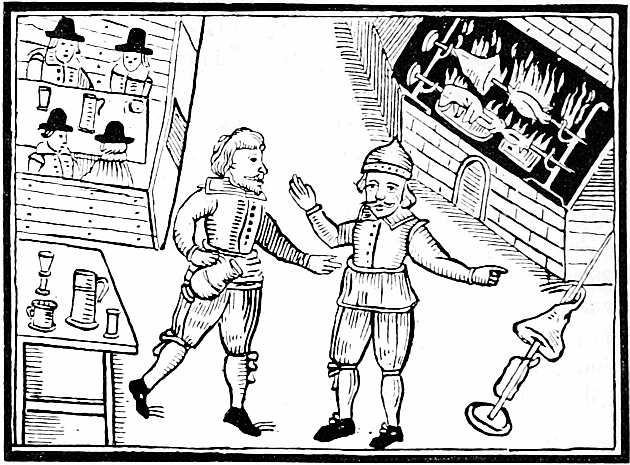
THE COMPLAINT OF THE LICENSED VICTUALLERS, 1641.
Froth—‘Alack you know all my profit doth arise onely on Sundays, let them but allow me that privilege, and abridge me all the weeke besides; S’foot, I could have so scowered my young sparks up for a penny a demy can, or a halfe pint, heapt with froth. I got more by uttering half a Barrell in time of Divine service, than I could by a whole Barrell at any other time, for my customers were glad to take anything for money, and think themselves much ingaged to me; but now the case is altered.’
Cook—‘Truly Master Froth you are a man of a light constitution, and not so much to be blamed as I that am more solid: O what will become of me! I now think of the lusty Sirloines of roast Beefe which I with much policy divided into an innumerable company of demy slices, by which, with my provident wife, I used to make eighteene pence of that which cost me but a groat (provided that I sold it in service time,) I could tell you too, how I used my halfe cans and my Bloomsbury Pots, when occasion served; and my Smoak which I sold dearer than any Apothecary doth his Physick; but those happy days are now past, and therefore no more of that.’
This pamphlet is illustrated with a woodcut showing the Cook and Tapster in confabulation, while in the background joints are roasting, and guests are seated in boxes, refreshing themselves with ‘half-cans and Bloomsbury pots.’
The abuses of the Ecclesiastical Courts did not escape the notice of the seventeenth-century pamphleteers. Doctors’ Commons and the Proctors were quizzed in an illustrated pamphlet, wherein ‘Sponge, the Proctor,’ and ‘Hunter, the Parator,’ hold a long conversation, and express their opinion that the only way to make men live in quietness is to beggar them with long suits and large fees. Other evil-doers were shown up in a similar manner. A certain Edward Finch, Vicar of Christ-church, London, gave so much offence to the parishioners by his manner of life that a petition was presented to Parliament on the subject. The petitioners said they were offended by their Vicar’s ‘frequent and unreasonable bowings’ before the altar, and by his ‘scandalous life and conversation.’ They set forth in the petition that they are ‘troubled in their church with singing, organs, and other Instruments of Musicke, not understood by them, whereby they are greatly distracted in the service of God, the same being altogether unprofitable, and no way tending to their spirituall edification.’ The Vicar is charged with drunkenness and incontinence—with exacting unreasonable fees—with being a non-resident; and the evidence in support of the petition shows that on one occasion he went to Hammersmith in a coach with certain loose companions and spent the day in a manner unfit for a clergyman. He is proved to have attempted to administer the Sacrament to a dying woman while he was in a state of drunkenness, and to have been guilty of many other disgraceful acts. The House of Commons passed a vote of censure on this graceless Ritualist; and the petition setting forth his misdeeds was printed and published, illustrated with a woodcut showing the journey to Hammersmith in a coach. Notwithstanding the condemnation of Parliament, the Rev. Edward Finch continued in his evil courses, and conducted his ‘life and conversation’ much the same as before.
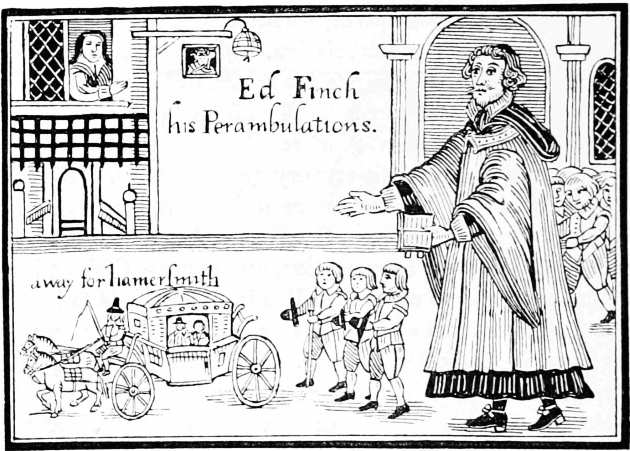
EVIL DOINGS OF THE REV. EDWARD FINCH, 1641.
From the ‘perambulations’ of a Ritualistic clergyman we come to a nunnery, in a pamphlet published in 1641, entitled, ‘The Arminian Nunnery, or a briefe description and relation of the late erected Monasticall Place, called the Arminian Nunnery at Little Gidding, in Huntingdonshire.’ The writer of this pamphlet gives a minute and by no means ‘brief’ description of the institution, which he evidently believes to be Roman Catholic, or a stepping-stone to it, though the ‘Deacon’ who attended him on his visit assured him to the contrary. He, however, sets down all the tapers and crosses, the bowings and prostrations, as so many proofs of idolatry, and marvels that, in a settled Church government, the Bishops should suffer any such institutions to exist; particularly that Archbishop Laud, professing to be such an ‘Anti-Papist and enemy to superstition and idolatry, should permit this innovation and connive at such canting betwixt the barke and the tree in matter of Religion.’ While censuring the prelates for their criminal slothfulness, the writer gave his countrymen the benefit of his own acuteness and energy, and published his description, illustrated with an engraving representing one of the nuns, with a portion of the nunnery in the background.
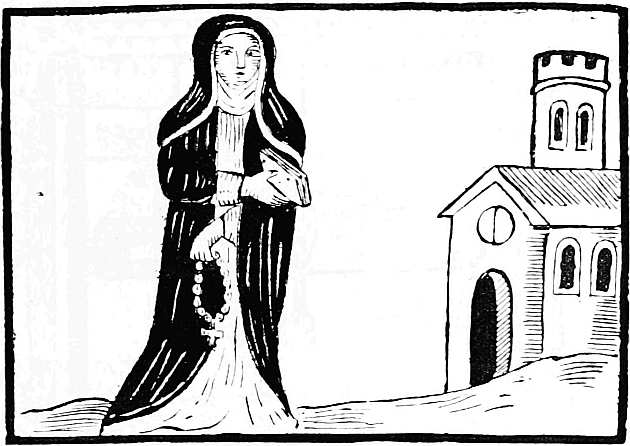
NUNNERY AT LITTLE GIDDING, HUNTINGDONSHIRE, 1641.
The next illustrated pamphlet we come to is a curious attempt on the part of its author to satirise his literary contemporaries for the falsehoods contained in their writings, and he burlesques their productions by relating many things as lies which, however, he means to be understood as truths. It is called ‘The Liar, or a contradiction to those who in the titles of their Books affirmed them to be true, when they were false; although mine are all true yet I term them lyes. Veritas Veritatis.’
‘There was an Englishman which travelled to the Swedish Army, and began to relate very strange passages which he had seen here in England, thinking that travellers might lye by authority; for said he in the County of Berke, at a place called Abingdon, when the Earle of Strafford lost his head, was such thundering and lightning, and earthquakes, that it is almost incredible. Surely I think it is incredible indeed, for I know ’tis no such matter.
‘He told too that the very same day that my Lord Archbishop of Canterbury was committed to the Tower, there was a child born in the County of Somerset with a Mitre on its head, a marke on his breast like a Crucifix, and many other strange things which were there seene.’ Having invented the travelling Englishman for a mouth-piece and selected the Swedish army for an audience, the writer goes on to relate many other strange things, which, though told as lies, are evidently intended to be taken as truths.
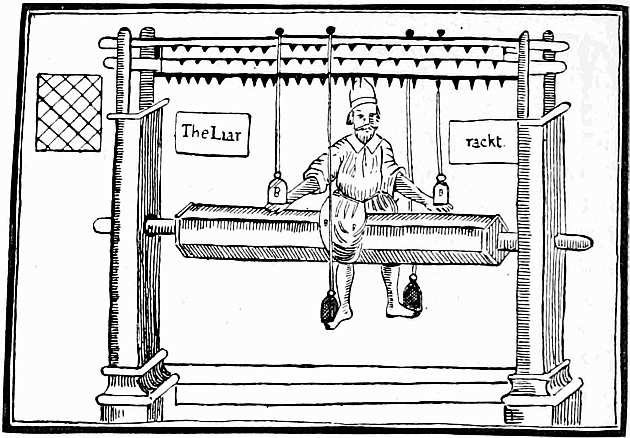
THE LIAR ON THE RACK, 1641.
‘They heard him with patience till he had made an end of his lying, and then they asked him whether yea or nay he saw these things he spake of, he presently swore all the oaths of God that he saw these things with his own natural eyes, which he had reported, and he would maintaine it, though he spent his dearest blood in the doeing of it; well, they heard his protestations, and made a full account that they would prove his constancie whether he would be a Martyr yea or nay, in the meane time they horsed him, and this was the manner of it.
‘There was a great high thing raised to the height of twelve or fourteen yards, made of Iron, whereon he was seated, with two great weights on his toes, and the like on his hands where he sate in great paine, if he should chance to ease himselfe upwards, there were sharp nailes over his head which would prick him, thus he sate and thus he suffered, till they had sufficiently made a laughing stock of him; well, when he had suffered enough they let him downe.’
There is a woodcut representing the lying traveller on his ‘horse,’ and the tract winds up thus:—
‘Gentle Reader, I have heere related under the name of lies nothing but true tales, for if a man doth now speake truth he shall be sure to smart for it now-a-daies, either here or in other places: read gentlie and buy willingly.’
When the Plague visited London in 1641 the theatres were closed and the players were thrown out of employment. This state of things is discussed in a dialogue between ‘Cane of the Fortune and Reed of the Friars,’ in a tract illustrated with a woodcut which was frequently used afterwards in broadsides. Bartholomew Fair, which was proclaimed for the last time in 1855, was in all its glory in the days of Charles I. A contemporary tract gives a graphic description of the fair, and is illustrated with a woodcut representing a man swallowing a serpent. This probably represented a picture hung outside one of the shows. The title of the tract is, ‘Bartholomew Faire, or Variety of Fancies, where you may find a faire of wares and all to please your mind; with the several enormities and misdemeanours which are there seen and acted.’ The fair is described as beginning ‘on the twenty-fourth day of August, and is then of so vast an extent that it is contained in no lesse than four several parishes, namely, Christ Church, Great and Little Saint Bartholomew’s, and Saint Sepulchre’s. Hither resort people of all sorts, High and Low, Rich and Poore, from cities, townes, and countreys; of all sects, Papists, Atheists, Anabaptists, and Brownists, and of all conditions, good and bad, virtuous and vitious.’ It is said to be ‘full of gold and silver-drawers; just as Lent is to the Fishmonger so is Bartholomew Faire to the Pickpocket; it is his high harvest, which is never bad but when his cart goes up Holborn.
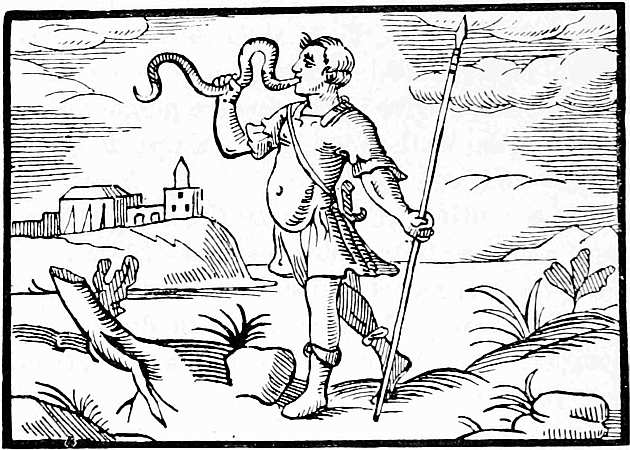
A BARTHOLOMEW FAIR WONDER, 1641.
‘It is remarkable and worth your observation to behold and hear the strange sights and confused noise in the Faire. Here a knave in a fool’s coat, with a trumpet sounding, or on a drum beating, invites you and would fain perswade you to see his puppets; there a rogue like a wild woodman, or in an Antick shape like an incubus, desires your company, to view his motion; on the other side Hocus Pocus, with three yards of tape or ribbin in’s hand, shewing his art of Legerdemain, to the admiration and astonishment of a company of cockoloaches. Amongst these you shall see a gray goose cap (as wise as the rest), with a what do ye lacke in his mouth, stand in his boothe, shaking a rattle, or scraping on a fiddle, with which children are so taken, that they presently cry out for these fopperies; and all these together make such a distracted noise that you would think Babell were not comparable to it. Here there are also your gamesters in action, some turning of a whimsey, others throwing for pewter, who can quickly dissolve a round shilling into a three-halfpenny saucer. Long Lane at this time looks very faire, and puts out her best cloaths, with the wrong side outward, so turned for their better turning off. And Cloth Faire is now in great request; well fare the ale-houses therein; yet better may a man fare (but at a dearer rate) in the pig market, alias Pasty-nooke, or Pye Corner, where pigges are all hours of the day on the stalls piping hot, and would cry (if they could speak) come eate me.’
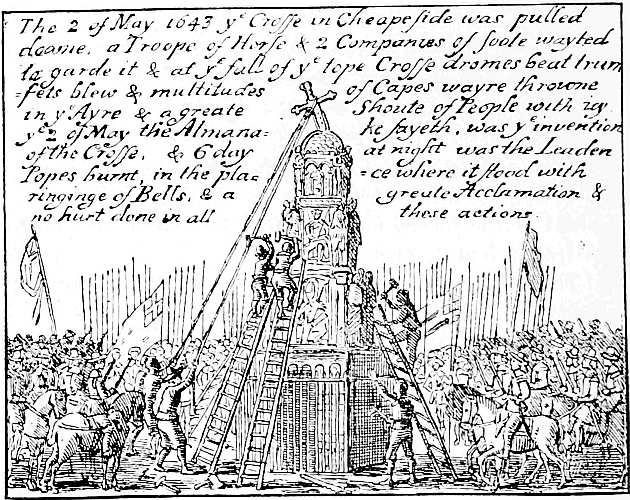
PULLING DOWN CHEAPSIDE CROSS, 1643.
In 1641 an order of Parliament directed the removal of idolatrous pictures from churches and the demolition of crosses in the streets. It must have been on the passing of this order that ‘The Doleful lamentation of Cheapside Cross,’ with a woodcut of the Cross, was published, 1641. Also, ‘A Dialogue between the Crosse in Cheap and Charing Crosse,’ 1641, which has also a woodcut representing the two crosses, while a Brownist and an Anabaptist converse about their demolition. It was not, however, till 1643 that Charing Cross and Cheapside Cross were demolished. ‘The Downfall of Dagon, or the taking down of Cheapside Crosse this second of May, 1643,’ is a mock lamentation for the destruction of the Cross on account of its being a symbol of idolatry. The Cross itself is made to describe its history and to lament its errors. Divers reasons are given for its demolition, and the tract concludes in these words: ‘And so this Tuesday it is a taking down with a great deal of judgement and discretion, and foure Companies of the Traine Bands of the City to guard and defend those that are about the worke, and to keep others from domineering, and so I leave it to be made levell with the ground this second day of May 1643.’ The tract is illustrated with a woodcut representing the demolition of the Cross; and, as the day of publication is the day after the event, the persons concerned in its production must have been unusually prompt and energetic. The destruction of Cheapside and Charing Crosses is also recorded, under the date of 1643, in ‘A Sight of the Transactions of these latter yeares Emblemized with Ingraven Plates, which men may read without Spectacles.’ This pamphlet contains a reprint of the etched plates previously mentioned, together with six others, one of which represents the pulling down of Cheapside Cross, and a summary of the transactions of the reign of Charles I., in which occurs the following passage:—‘Cheapside Crosse, Charing Crosse, and all other crosses, in and about London utterly demolished and pulled down, and that abominable and blasphemous book of tolerating sports and pastimes on the Lord’s daies, voted to be burnt, and shortly after accordingly burnt, together with many crucifixes and popish trinckets and trumperies in the very same place where Cheapside Crosse stood.’ I have copied the plate representing the demolition of Cheapside Cross.
The affairs of Turkey would seem to have had an interest for the English public in the seventeenth century, if we may judge from a pamphlet printed in 1642, with the following lengthy title:—‘Strange and Miraculous Newes from Turkie, sent to our English Ambassadour resident at Constantinople, of a woman which was seen in the Firmament with a Book in her hand at Medina Talnabi, where Mahomet’s Tomb is. Also several visions of armed men appearing in the Ayre for one and twenty dayes together. With a prophetical interpretation made by a Mahomedan Priest, who lost his life in the maintenance thereof. London, printed for Hugh Perry neere Ivy Bridge in the Strand June 13, 1642.’ There is a woodcut of the apparition, and a lengthy description, passages from which I have extracted:—
‘There came newes to Constantinople of a strange Apparition or Vision, which was seene at Medina Talnabi in Arabia, whereat Mahomet their great Prophet was buried. To visit whose Tombe the Turkes used to goe in Pilgrimage, but they must first goe to Mecha, which is some few dayes journey off, and there they take a ticket from the Grand Seigniors Beglerbeg, else they are not allowed to go to Medina.
‘This Vision continued three weeks together, which terrified the whole country, for that no man could discover the truth thereof.
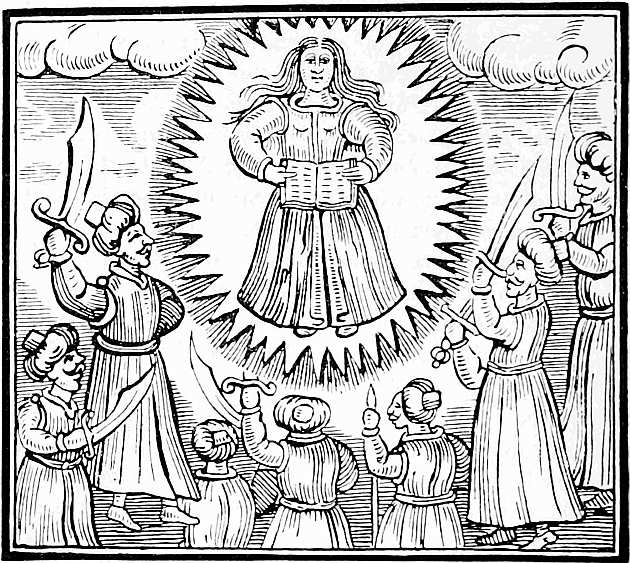
STRANGE VISION IN THE AIR, 1642.
‘About the 20 of September there fell so great a Tempest and so fearful a Thunder about midnight, as the Heavens were darkened, and those that were awake were almost distracted, but the Vapours being disperst, and the Element cleere, the people might read in Arabian characters these words in the Firmament, O Why will you believe in Lies. Betweene two and three in the morning there was seen a woman in white compassed about with the Sun, having a cheerfull countenance, holding in her hand a Booke, coming from the Northeast, opposite against her were Armies of Turkes, Persians, Arabians, and other Mahometans, ranged in order of Battaile, and ready to charge her, but she kept her standing, and onely opened the Booke, at the sight whereof the Armies fled, and presently all the lamps about Mahomet’s Tombe went out, for as soon as ever the Vision vanished (which was commonly an hour before sunne rising) a murmuring Wind was heard, whereunto they imputed the extinguishing of the lamps. The antient pilgrims of Mahomet’s Race, who after they have visited this place, never use to cut their haire, were much amazed, for that they could not conceive the meaning of this vision, only one of the Dervices, which is a strict religious order among the Turkes like unto the Cappuchins amongst the Papists, and live in contemplation, stepped up very boldly and made a speech unto the Company which incensed them much against him, so as the poore Priest for his plain dealing lost his life, as you shall hereafter heare.’
Then follows the speech of the Dervish to the Turks, who became so incensed that they put him to death, ‘the poore man crying to the last gaspe, O thou woman with the Booke save me, and so he died. At which time there was a feareful tempest.’
It seems to have been a favourite method amongst the Puritan pamphleteers of inducing belief in a particular creed or doctrine by setting forth the awful consequences arising from adherence to an opposite faith. Thus, in 1645, in the parish of Kirkham, a Popish gentlewoman was said to have become the mother of a child without a head, because she wished she might bear a child without a head rather than her offspring should become a Roundhead. Again, it was related that in Scotland a woman wished she might become the mother of a monster rather than her child should receive the rites of the Church of England. Accordingly, the child was born with two heads, long donkey-like ears, &c. In all these cases the pamphlets recording these extraordinary occurrences are illustrated. The apparitions of deceased persons were also used as a means of enforcing certain views. For example, in 1642, the ghosts of King James, the Marquis of Hamilton, George Eglisham, and the Duke of Buckingham, were made to hold a conversation, wherein Buckingham was charged with having caused the deaths of the others by poison. Buckingham confesses his guilt and promises to weep repentant tears. This pamphlet is also illustrated. The sermons of the Roundhead preachers were sometimes parodied, as in the case of a humorous pamphlet entitled, ‘A Seasonable Lecture, or a most learned Oration; disburthened from Henry Walker, a most judicious quondam ironmonger, &c.’ There is a woodcut to this pamphlet representing a person holding forth from a tub to several others who are listening to him. In ‘A Glasse for the Times, 1648,’ there is a woodcut representing the ‘Orthodox true Minister’ preaching in a church, while the ‘Seducer, or False Prophet,’ is holding forth to people in the open air; and the reader is instructed as to the difference between true ministers and false teachers.
Amongst the numerous executions that took place about the beginning of the Civil War, some of the sufferers belonged to the Roman Catholic Religion, and went to the gallows for conscience sake. In 1643 a certain Father Bell, a Romish priest, was hanged; and a few days after the execution a pamphlet was published, entitled ‘The Confession, Obstinacy, and Ignorance of Father Bell, a Romish Priest, wherein is declared the manner of his Tryall, Condemnation, and Execution on Munday December 11, 1643.’ There is a woodcut of the execution of Father Bell, and an account of his behaviour on the occasion, his speech at the gallows, and his disputatious conversation with the Sheriff.
Though many persons were put to death for witchcraft during the Long Parliament, I have met with no illustrated record of any such event. Matthew Hopkins was ‘witch-finder general’ at this time, and he had a flourishing trade. He had a regular system for finding out witches; but it appears that it must have been called in question, for the objections to his system and his answers thereto were delivered to the Judges of Assize for the County of Norfolk in 1647. A pamphlet of that date contains a full account of Hopkins’s rules for finding witches, and it is illustrated with a woodcut representing the interior of a house, with the witch-finder, two witches seated, and surrounded by their imps in the shapes of animals.
The Welsh Post of 1643 is a curious illustrated pamphlet which relates the news of the Civil War in language such as was supposed to be used by a Welshman speaking English. It begins thus:—‘Whereas there hath beene many Tiurnals and Passages, the truth whereof hath beene much suspected, so tat her doth not be certaine to heare the true report of her pretherns proceeding; her hath terefore chosen to herselfe a fery true Printer (tat do scorne to print lie) to print a weekly Tiurnall for her dear Countryman of Whales to understand te fery truth marke you me tat now, for ferily her will not lye truly, but tell her te pare naked truth.’ The news from Oxford is that ‘te kings forces are fery weake there, and that the Countrey are fery glad of it, because of teir intolerable trouble and charge.’ There is also news from Northamptonshire, Cheshire, Gloucester, Plymouth, Yorkshire, &c, all related in the same language.
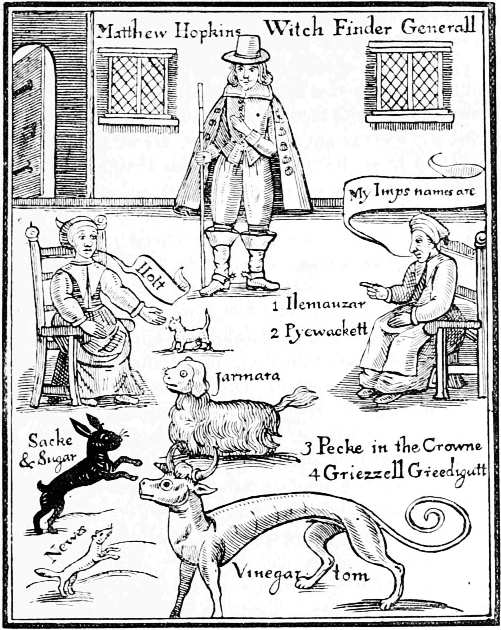
HOPKINS, THE WITCHFINDER, 1647.
The Welsh Plunderer is another pamphlet, with a woodcut of a Cavalier, which is probably intended for Prince Rupert. It contains a rambling protestation from ‘Shinkin’ of his loyalty, and states what he will do in case Prince Rupert should visit Wales.
William Lilly, the Astrologer, found a rich field for the exercise of his gifts during the progress of the Civil War. He was employed by both Royalists and Roundheads; and it is said he was even consulted by the King about signing the propositions of the Parliament. His advice was also sought respecting the King’s projected escape from Carisbrook Castle. He kept his name before the public by publishing various almanacs and tracts, in one of which, The Starry Messenger, 1645, he gives an account of a strange apparition of three suns seen in London on the King’s birthday. This is preceded by a long list of similar appearances, from the time of Christ to his own time, and the remarkable events which followed. In high-flown language, mixed with the jargon of astrology he vaguely hints at great events impending:—‘I am clearly of opinion, These Sights, as well as many others, were caused by those tutelary Angels, who, by Gods permission, and under him, have the Government of the English Commonwealth. They are sensible of those many impending Miseries now too plentifully amongst us. Their conference with man now, as in the days of old, very few attain unto, it being a blessing sought after by many, attained unto by few: And yet there are some of opinion there lives in the world some, and of those some, a small Party in England, that know more than they utter, and either by Vision, or verball Colloquie, have the knowledge of future events, yea, even from the blessed Angels:’—which is as much as to say, I, William Lilly, am one of the favoured few! Come to me and I will teach you wisdom—I will unfold to you the mysterious future! The tract is illustrated with a woodcut; and a later tract published by Lilly contains an engraving of the three suns, together with a further exposition of his views on the subject:—‘God many waves in these last times (though not by prophecy) yet discovers and signifies his intentions unto us, and especially in and at those times when his heavy judgments are imminent upon us; witnesse the many and frequent Appearances of severall Prodigies seen in this Kingdom of England within these four or five years, the like whereof for number are not recorded in any, either ancient or modern History, so that I might weary the reader, should I but mention the severall Letters which from sundry parts of this Kingdom have come to my hands, some mentioning strange sights in the ayre; others men fighting therein; others Guns shooting; others relating of three moons; others the apparition of two suns; some sending me letters, and including therein some part of that Corn which was rained down from heaven, &c. I forbear all further discourse hereof, assuring the kingdom, these Prodigies are the Premonitions, and assumed infallible Messengers of Gods wrath against the whole Kingdom, for our wicked transgressions, &c. God give us peace and grace to repent.’
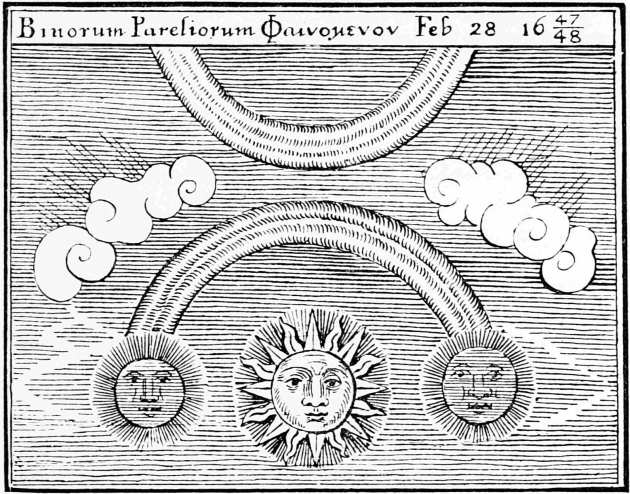
THREE SUNS SEEN IN LONDON ON THE KING’S BIRTHDAY, 1648.
CHAPTER IV.
The Civil War—Flying Sheets of News—Disturbance at Kingston-on-Thames—Plot against London—Riotous Proceedings at York, and Conspiracy in Edinburgh—The House of Commons—The Royal Standard raised at Nottingham—Battle of Edgehill—Prince Rupert—The Lord Mayor of London—Mercurius Civicus—The Scottish Dove—The Flying Post—The Kingdomes Weekly Post—Cruelties of the Cavaliers—The ‘Levellers’—The King’s Escape from Oxford—Funeral of the Earl of Essex—The Great Seal Broken—Fairfax—Cromwell—Sea Fight in the Channel—The Prince of Wales’s Squadron—Mutiny at Norwich—Siege of Colchester—Execution of Sir Charles Lucas—The King at Carisbrooke Castle—Execution of the King—Confession of Richard Brandon.
The discontent which had been growing for so many years, and which had been strengthened and inflamed by the acts of Charles I. and his advisers in violating the principles of the Constitution, had now arrived at the point of rebellion. At the commencement of the Civil War the excitement was increased and sustained by the publication of flying sheets of news. Although the practice of publishing regular periodical papers had commenced, numerous fugitive tracts and pamphlets continued to be printed relating to particular events. Some of these papers were illustrated with woodcuts evidently executed on the spur of the moment, while others appear to have been taken from other sources and adapted to the occasion. An example of this latter kind occurs in a tract of 1642, which strikingly illustrates the state of the times:—
‘A true Relation of the late Hurleyburly at Kingston upon Thames on Wednesday the 12th of January caused by Collonell Lundsford and the rest of his company, and the Towne fearing they would rise up in Rebellion, one cam speedily to declare it at London, upon which the Traine Band were raised and caused to watch all night for the safety of the City.’ On the title-page is a woodcut of an officer and a soldier, which, however, was evidently not executed for this special occasion, the officer being in the costume of the preceding reign. A facsimile of it is subjoined. The tract describes the commotion made in Kingston by the appearance of Colonel Lundsford and three hundred troopers, who, ‘about the middle of the Towne, went in to drink, and continued there part of that day, swaggering, and swearing blasphemous Oathes (which filled the Towne with feares) and some amongst the rest, to frighten the Towne, swore bitter Oathes that they should see bloody times ere long.’
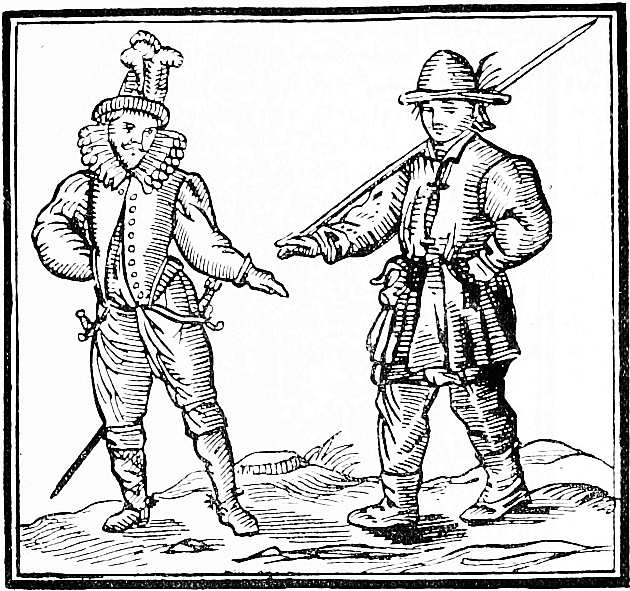
HURLEYBURLEY AT KINGSTON-ON-THAMES, 1642.
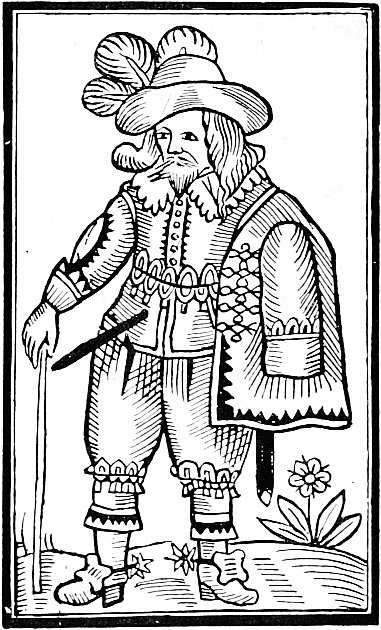
CAPTAIN VAUL, THAT CRUEL TYRANT, 1642.
A tract of the same date refers to a reported conspiracy of the same Colonel Lundsford:—‘A terrible plot against London and Westminster discovered, showing how Colonell Lunsford the Papist, that should have bin Lieutenant in the Tower, should in a Conspiracy among the Jesuits and other Papists have blowne up the City of London, placing the pieces of Ordinance against it. Also how the papists with their forces should have risen against Westminster, and burnt downe the parliament house. Likewise how by this Conspiracy the Arch-bishop of Canterbury should have been transported into France, and how Bishop Wren with many other Bishops and popish Doctors should have bin conducted with him thither, where Canterbury should have bin Sainted, and Wren made Cardinall. With an exact Relation of the chiefe Cause of the Apprentices rising in Armes to defend the City of London from their treachery, Describing most succinctly the singular mercy of God towards us in defending this Kingdome from the manifold Plots of the Papists and their Treacherous Conspiracies.’ On the last page is a woodcut of a Cavalier in a hat and feathers, entitled ‘Captaine Vaul that cruell Tyrant.’ As there is no mention of this person in the pamphlet it was perhaps a well-known nickname of Colonel Lundsford. I annex a copy of this cut. The same cut appears in a tract entitled ‘Terrible Newes from York,’ detailing certain riotous proceedings in that city, where it is given as ‘Mr. Holk, chief Agent in the uproar.’ Its first appearance, however, is in an account of a ‘Bloody Conspiracy at Edinburgh;’ and, from its frequent use, this rough woodcut must have been regarded as a good, bold representation of a truculent soldier, suitable for the times.
While the King and the House of Commons were contending for the upper hand there was published ‘A Perfect Diurnall of the Passages in Parliament,’ illustrated with a woodcut of the House of Commons, with Mr. Speaker in the chair. This is used as a heading to several numbers of the same Diurnall, and sundry varieties of it are printed as headings to other reports of Parliament. This old woodcut has been often copied, but my examples of illustrated journalism would not be complete unless I introduced it here.
The printing-presses that are said to have been carried by both armies during the Civil War must have been used solely for the printing of Proclamations, General Orders, and suchlike documents. It seems to be an ascertained fact that Cromwell’s soldiers set up a printing-press in Scotland, and printed a newspaper; but it is not so certain that the armies of Charles I. and of the Parliament issued printed ‘news’ from whatever town they chanced to occupy at the time. It does not follow that because a tract is entitled News from Hull it was actually printed at that place. On the contrary, I have found nearly all the tracts I have examined bear the imprints of London printers. The News from the North, The Last printed News from Chichester, &c., were all sent up to London, and there printed and published.
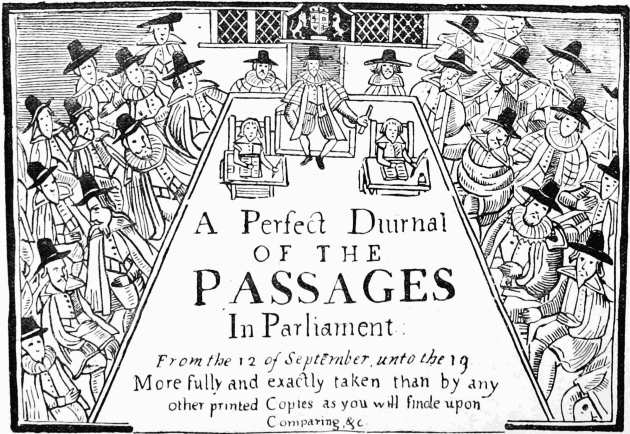
THE HOUSE OF COMMONS, 1642.
In the words of Hume, ‘The open signal of discord and civil war throughout the kingdom’ was made at Nottingham on August 22, 1642, when the King erected his Royal standard and appealed to the loyalty of his subjects to support his authority by arms. Historians differ as to the precise day when this formal declaration of hostilities took place. Clarendon and Hume both fix it on the 25th of August, while Rushworth gives the 22nd as the date. The latter view is confirmed by a contemporary pamphlet, which gives an account of the raising of the Standard, and is illustrated with a woodcut representing the event. This pamphlet was written in the interest of the Parliament and against the King’s party; but his Majesty is referred to in the most respectful language, as is generally the case in the pamphlets of the time. At the beginning of the struggle frequent hopes were expressed that the King would consent to be guided by the Parliament, while his Cavalier adherents were represented as his real enemies. The pamphlet referred to has the following title:—
‘A true and exact Relation of the manner of his Majesties setting up of His Standard at Nottingham on Munday the 22 of August, 1642.
‘First, the forme of the Standard, as it is here figured, and who were present at the advancing of it.
‘Secondly, the danger of setting up of former standards, and the damage which ensued thereon.
‘Thirdly, a relation of all the Standards that ever were set up by any King.
‘Fourthly, the names of those knights who are appointed to be the King’s Standard-bearers, with the forces that are appointed to guard it.
‘Fifthly, the manner of the Kings comming first to Coventry.
‘Sixthly, the Cavalieres resolution and dangerous threats which they have uttered, if the King concludes a peace without them, or hearkens unto his great Councill the Parliament; moreover how they have shared and divided London amongst themselves already. London, printed for T. Coles, 1642.’
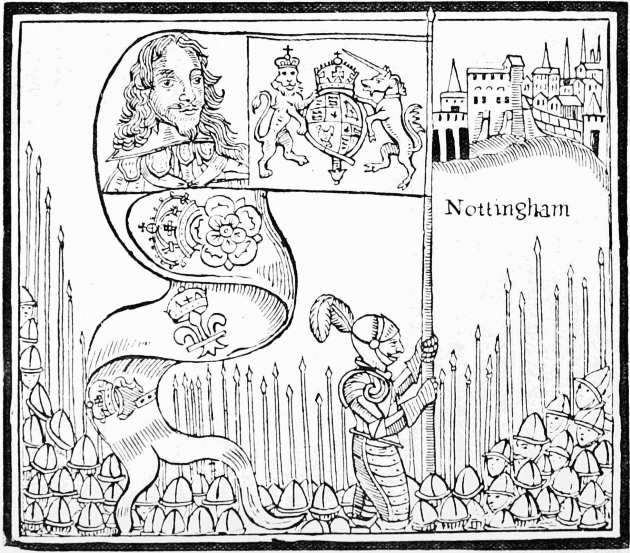
RAISING THE ROYAL STANDARD AT NOTTINGHAM, 1642.
The account of this interesting historical event is given in these words: ‘Munday being the 22 of August in the morning, his Majesty left his forces before Coventry, and with some Lords and others in company rode to Leicester, where he dined that day at the Abbey House, the Countesse of Devonshire’s house; however, so many printed intelligences doe falsely, though with much confidence aver (much like their other relations) that the king was with his Army in the field, at the time of the battell between them and the Lord Brookes forces, which was not untill the day following. Presently after dinner the King againe tooke horse, and with his company rode to Nottingham, where was great preparation for the setting up of the Standard that day as was formerly appointed. Not long after the Kings coming to towne, the Standard was taken out of the Castle, and carried into the field a little on the back side of the Castle wall. The likenesse of the Standard it is much of the fashion of the City Streamers used at the Lord Mayor’s Show, having about 20 supporters, and is to be carried after the same way; on the top of it hangs a bloody flag, the Kings Armes quartered, with a hand pointing to the Crowne which stands above with this Motto: Give Cæsar his due. The names of those Knights Baronets who were appointed to beare the Standard, viz. The chiefe was Sir Thomas Brookes, Sir Arthur Hopton, Sir Francis Wortley, and Sir Robert Darlington.
‘Likewise there was three troop of Horse appointed to waite upon the Standard, and to beare the same backwards and forwards with about sixe hundred foot Souldiers. It was conducted to the field in great state, his Majesty, the Prince, Prince Robert (whom his Majesty hath lately made a Knight of the Garter), going along with divers other Lords and Gentlemen of his Majesties traine, beside great company of Horse and Foot, in all to the number of about two thousand, who came more to see the manner of the thing than any waie to offer assistance to his Majesty, as did afterwards evidently appear, for that upon the taking downe of the Standard, there were not above thirty of the trained bands that offered to come in to his Majesty, which, because their numbers were so inconsiderable his Majesty refused to accept of.
‘So soon as the Standard was set up, and his Majesty and the other Lords placed about it, a Herauld at Armes made ready to proclaim a Proclamation declaring the Ground and Cause of his Majesties setting up his Standard namely to suppress the pretended Rebellion of the Earle of Essex in raysing forces against him, to which he required the aid and assistance of all his loving subjects. But before the Trumpeters could sound to make Proclamation his Majesty called to view the said Proclamation; which being given him he privately read the same over to himselfe, and seeming to dislike some passages therein called for Penne and Inke, and with his owne hand crossed out and altered the same in diverse places, (a thing well worthy the noting) and then gave it the Herauld, who proclaymed the same to the people, though with some difficulty after his Majesties corrections; after the reading whereof, the whole multitude threw up their hats, with other suchlike expressions, God Save the King. Not long after the reading of the said Proclamation, it being towards night, the Standard was taken downe, and again carried into the castle, with the like state as it was brought into the field. And the next day it was again set up, and his Majesty came along with it, and made proclamation as the day before, and the like also was done on Wednesday, his Majesty being also present. But since that it hath been set up with lesse ceremony, there being not a hundred persons as are yet heard of that have offered themselves to his Majesty since the first setting up of his Standard.
‘Since which time his gracious Majesty hath pleased to send some propositions to both Houses of Parliament; and hath employed the Earle of Dorset, the Earle of Southampton, and Sir John Culpeper, and Sir William Uvedall to deliver his Majesties minde to the honourable Houses of Parliament for a fair Treaty and accommodation of Peace, and that all differences and mistakes might be ended, and all hostile manner of warre to cease in our Land and that it might be sent over to Ireland upon which report the Cavaliers which are about the Country are very desperate to heare that his Majesty will hearken to an accommodation of peace, or to apply or comply with his Parliament; telling his Majesty that it is dishonourable to stoop to his Subjects, and if his Majesty doth, they will either hang themselves, or kill and murther themselves, and doth vow private revenge to this Kingdome, if they do now misse of their hopes and enterprises, for they say they are sure to overcome us whom they called Roundheads, and call our Souldiers nothing else but a company of Shrove-Tuesday boyes, and idle headed prentices, who run away from their Masters under pretence of having this opportunity to get liberty from their hard service and cruelty. It is truly reported that the Cavaliers are all desperately bent against the City of London, and the inhabitants; they have already within themselves shared and divided it; some have allotted to themselves Gracious Street, others Lumbard Street, then others have shared Cheapside, and Pauls Church-yard, others do determine to seize upon the rich Aldermens houses and Persons, others to whom they owe or are indebted to by bond, or bill, or book, doe resolve when they come into the City to seize upon those persons first, to whom they are indebted, and to cut their throats, and then to seize upon Usurer or others, and to cut his throat for that money, so say they, we shall be both at once out of debt and have money to boot; these are the resolutions of the Cavaliers who doth but looke for such an advantage, so full of cruelty and malice they are, which God in his infinite and blessed mercy protect both our King and Kingdome from; and that their own swords may returne into their own bosoms that wish and long for such a day.’
Then follows a notification from both Houses of Parliament that none shall proclaim the setting up of the King’s Standard; and whoever shall suffer loss or damage through the Cavaliers shall receive reparation.
According to Clarendon, the Royal Standard was set up under the most ill-omened and depressing circumstances: ‘There was not one regiment of foot yet brought hither, so that the train-bands which the sheriff had drawn together were all the strength the King had for his person and the guard of the Standard. There appeared no conflux of men in obedience to the proclamation; the arms and ammunition were not yet come from York, and a general sadness covered the whole town. The Standard was blown down the same night it had been set up, by a very strong and unruly wind, and could not be fixed again in a day or two, till the tempest was allayed. This was the melancholy state of the King’s affairs when the Standard was set up.’
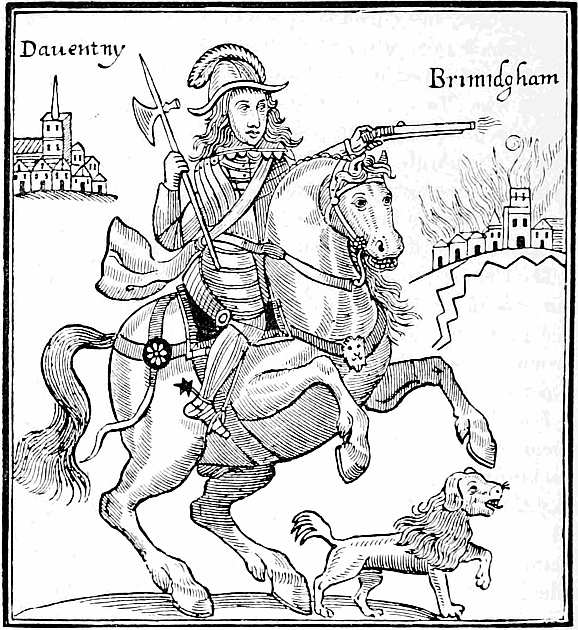
PRINCE RUPERT, GENERAL OF THE KING’S HORSE, 1643.
Soon after the King had unfurled his Standard at Nottingham the battle of Edgehill was fought, and an illustrated tract relates how the inhabitants of Kenton, a village near the battle-field, were disturbed at night by strange noises and the appearance of apparitions after the battle. The name of Prince Rupert begins to appear in the narratives of events, and his portrait frequently occurs in the illustrated sheets of this period. This dashing and impetuous Cavalier, whose rash courage excited the admiration of the Royalists, was regarded by the Roundheads as a cruel and bloodthirsty enemy, and he was often denounced by the Puritan preachers. In 1643 there was a pamphlet published called ‘The Bloody Prince; or, a Declaration of the Most Cruell Practises of Prince Rupert and the rest of the Cavaliers in fighting against God and the true Ministers of his Church.’ Facing the title is a woodcut representing Prince Rupert on his charger, with the towns of Birmingham and Daventry in the background, both of which places were the scenes of conflict during the war, the former having been taken, partially burnt, and a heavy fine inflicted on the inhabitants by Prince Rupert.
The City of London having taken the side of the Parliament, was naturally inclined to honour its chief magistrate when he was found to be an active and energetic promoter of its views. Isaac Pennington was Lord Mayor in 1643, and his portrait was published in a laudatory pamphlet, entitled ‘A True Declaration, and just Commendation of the great and incomparable care of the Right Honourable Isaac Pennington.’ His Lordship is styled the Atlas of the city, bearing the weight and management of all civil affairs on his shoulders, and he is much commended for his great care in superintending the building of the fortifications round London under the direction of the Parliament. ‘And herein,’ says the writer, ‘your honour hath shewed yourselfe an excellent Magistrate complying with the Parliament in all matters that concerne the publicke administration of the Commonweale; so that you have lookt upon the present state of this Citie and Religion with the cleare eye of justice; you have heard of the great pressures which the country hath endured by the cruelty of the Cavaliers; you have to the discouragement of malignants on the shoulders of fortitude, bore and suffered their false aspersions.... Your Honour hath in your present Magistracie walked uprightly, having clean and pure hands; nay, strong hands; for your Honour hath been the chiefest raiser and promoter of the workes and fortifications round about the Citie of London: you saw the times were dangerous, and that the King’s Cavaliers gaped after nothing more than to get London, and make it a prey to the supplying of their necessities.’ I have copied the portrait of the man who was thus distinguished by his fellow-citizens, not merely as an example of illustrated news, but as showing what a Lord Mayor of London looked like in Charles I.’s time.
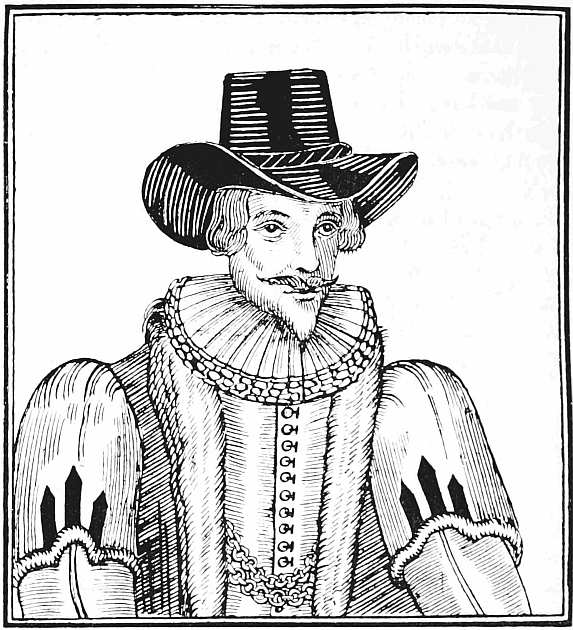
ISAAC PENNINGTON, LORD MAYOR OF LONDON, 1643.
It was in the City of London, and during the second year of the Civil War, that the first illustrated newspaper came into existence. The Weekly News had attempted on only one occasion to illustrate the news of the day, but the Mercurius Civicus frequently gave illustrations, and it is therefore entitled to be ranked as the first illustrated newspaper. It is true that most of the engravings it contains are portraits, and sometimes the same woodcut is used to represent more than one person. Besides portraits of the King and Queen, there are portraits of the chief generals and commanders engaged in the war. There are Prince Rupert, the Lord General, Sir Thomas Fairfax, the Marquis of Huntley, Sir Edward Deering, General Lesley, Lord Inchiquin, Lord Digby, Sir W. Waller, the Earl of Warwick, and others. ‘The Mercurius Civicus, London’s Intelligencer, or Truth impartially related from thence to the whole kingdom, to prevent misinformation, from Thursday July 13 to Thursday July 20, 1643,’ is the full title of No. 8; and it is curious to notice how nearly a portion of the title—London’s Intelligencer—corresponds to the London News. It was a peculiar feature of the early newspapers that they were announced as being published ‘to prevent misinformation,’ or for the ‘correction of false reports’—not so much for the diffusion of truth as for the correction of falsehood.