THE WEEK.
Reading edition
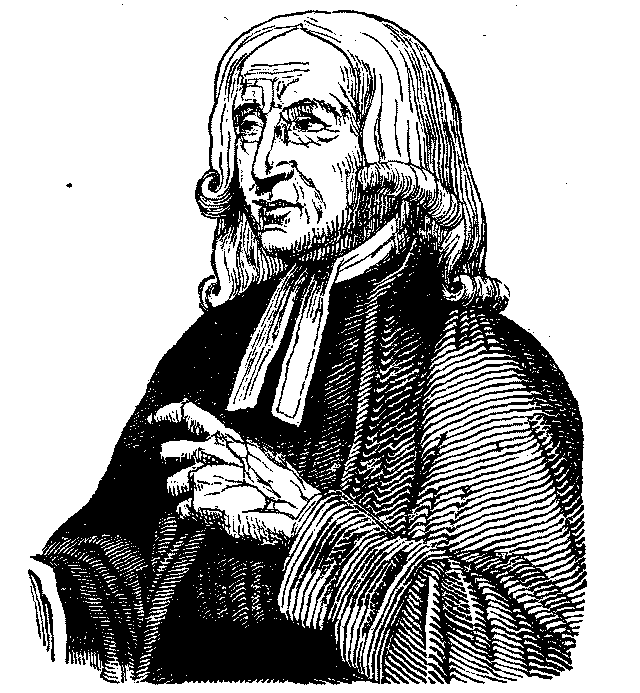
[The Rev. John Wesley.]
June 17.—The birth-day of John Wesley, the celebrated founder of the more numerous division of the English Methodists. He was the second son of the Rev. Samuel Wesley, Rector of Epworth, in Lincolnshire, where he was born in the year 1703. Although his father was a man of considerable literary attainments, being known to the public as the author of various works in verse, it was to his mother, a woman of a much more zealous and active character than her husband, that Wesley was chiefly indebted for his early education, and probably also for the seeds of many of his distinguished mental habits.
After receiving a very systematic elementary tuition from his mother, John Wesley was sent to the Charterhouse, from whence he removed at the usual time to Christ-church College, Oxford. Here he distinguished himself greatly by his diligence and success as a student, showing from the first, in the distribution of his time, the same punctual and persevering regard to method by means of which he mainly achieved all the greater objects of his life. The reading of some religious works, and especially of ‘Law’s Serious Call,’ awakened in him a strong spirit of religious fervour; and he formed that association with a number of his college acquaintances of similar views and feelings, to which, from the punctilious regularity of the members in their devotions and general demeanour, the epithet of “methodists” was given as a name of reproach by the wags of the university. As has happened in other cases, the objects of the intended satire were much too earnest in the views they had adopted to feel or to regard any point of ridicule which it might be supposed to possess, and frankly adopted the nick-name thus bestowed upon them by their opponents, as their proper designation. Among their number, besides Wesley, was the afterwards equally celebrated George Whitfield.
We cannot here attempt to pursue minutely the remainder of the course of Wesley’s busy life, or to trace the rise of that extensive fabric of ecclesiastical policy of which he was the founder. Suffice it to say, that having commenced his public labours as a religious teacher in the newly-formed colony of Georgia, in America, in the year 1735, he pursued from this time a course of almost constant journeying, preaching, and 111writing, till within a week of his death, on the 2d of March, 1791, in the eighty-eighth year of his age. During the greater part of this long period he rarely preached less than twice, and often four or five times a day; while, besides presiding with the most minute superintendence over all the public affairs of the large and rapidly growing community which acknowledged him as its head, and transacting a great deal of private business, he found time to send to the press a succession of works, which, in the collected edition, amount to between thirty and forty volumes. Mr. Southey, who has made the life of this extraordinary man one of the most interesting books in the language, has given us the following account of the manner in which he contrived to get through all this occupation. “Leisure and I,” said Wesley, “have taken leave of one another. I propose to be busy as long as I live, if my health is so long indulged to me.” This resolution was made in the prime of life, and never was resolution more punctually observed. “Lord, let me not live to be useless!” was the prayer which he uttered after seeing one whom he had long known as an active and useful magistrate, reduced by age to be “a picture of human nature in disgrace, feeble in body and mind, slow of speech and understanding.” He was favoured with a constitution vigorous beyond that of ordinary men, and with an activity of spirit which is even rarer than his singular felicity of health and strength. Ten thousand cares of various kinds, he said, were no more weight or burthen to his mind than ten thousand hairs were to his head.… His manner of life was the most favourable that could have been devised for longevity. He rose early, and lay down at night with nothing to keep him waking, or trouble him in sleep. His mind was always in a pleasurable and wholesome state of activity; he was temperate in his diet, and lived in perpetual locomotion. And frequent change of air is, perhaps, of all things, that which most conduces to joyous health and long life. The time which Mr. Wesley spent in travelling was not lost. “History, poetry, and philosophy,” said he, “I commonly read on horseback, having other employment at other times.” He used to throw the reins on his horse’s neck, and in this way he rode, in the course of his life, above a hundred thousand miles, without any accident of sufficient magnitude to make him sensible of the danger which he incurred.
June 21.—The Longest Day.—On this day there is an interval of sixteen hours and thirty-four minutes between the rising and the setting of the sun, which interval is longer than on any other day in the year. Up to this point, from the 21st December (the shortest day), the days have steadily increased in length; from this point they will steadily decrease. We may more properly, at some future time, explain in a series of papers some of the more remarkable phenomena of the changes of seasons. At present we shall call our reader’s attention to the moral reflections which the recurrence of “The Longest Day” suggests, by re-printing a few stanzas of a poem by Mr. Wordsworth on this subject:—
Summer ebbs;—each day that follows
Is a reflux from on high,
Tending to the darksome hollows
Where the frosts of winter lie.
He who governs the creation,
In his providence assign’d
Such a gradual declination
To the life of human kind.
Yet we mark it not;—fruits redden,
Fresh flowers blow, as flowers have blown,
And the heart is loth to deaden
Hopes that she so long hath known.
Be thou wiser, youthful Maiden!
And when thy decline shall come,
Let not flowers, or boughs fruit-laden,
Hide the knowledge of thy doom.
Now, even now, ere wrapp’d in slumber.
Fix thine eyes upon the sea
That absorbs time, space, and number;
Look towards eternity!
Follow thou the flowing river,
On whose breast are thither borne
All deceived, and each deceiver,
Through the gates of night and morn;
Through the year’s successive portals;
Through the bounds which many a star
Marks, not mindless of frail mortals,
When his light returns from far.
Thus when Thou with Time hast travell’d
Tow’rds the mighty gulf of things,
And the mazy stream unravell’d
With thy best imaginings;
Think, if thou on beauty leanest,
Think how pitiful that stay,
Did not virtue give the meanest
Charms superior to decay.
Duty, like a strict preceptor,
Sometimes frowns, or seems to frown;
Choose her thistle for thy sceptre,
While thy brow youth’s roses crown.