Noble and Gentle Men of England (continued 4)
Reading edition
Arms.—Argent, a fess gules between six Cornish choughs proper.
Present Representative, Arthur George Onslow, third Earl of Onslow.
SUSSEX.
Knightly.
Ashburnham of Ashburnham, Earl of Ashburnham 1730; Baron 1689.
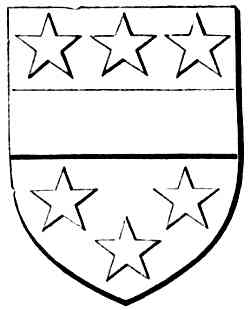
"A family of stupendous antiquity," writes Fuller. "The most ancient family in these tracts," according to Camden. "Genealogists have given them a Saxon origin," says Brydges; "but that is a fact very difficult to be proved, though very commonly asserted. They do not, I believe, appear in Domesday Book." There can be no doubt, however, that the Ashburnhams have been seated at Ashburnham from the reign of Henry II., and probably from a much earlier period, and are descended from Bertram, Constable of Dover in the reign of William the Conqueror. By the improvidence of Sir John Ashburnham, who died in 1620, this ancient patrimony was lost for a time, but recovered by Frances Holland, the wife of his eldest son John (the groom of the bed-chamber to Charles I.), who sold her whole estate, and laid out the money in redeeming Ashburnham.
Younger Branch. Ashburnham of Bromham in this county, Baronet 1661, descended from Richard, second son of Thomas Ashburnham, living in the reign of Henry VI.
See Brydges's Collins, vol. iv. p. 249; and Wotton's Baronetage, vol. iii. p. 283.
Arms.—Gules, a fess between six mullets argent. The earliest seal remaining of any of the ancestors of this family is, I believe, that of "Stephen de Esburne," great-grandson of Bertram, the Constable of Dover: the device is a slip or branch of Ash. His grandson, "Richard de Hasburnan," bore the Maltravers fret, his mother being daughter of Sir John Maltravers: the present coat was borne by Sir John de Aschebornham, in the reign of Edward II. (Seals and Roll of the reign of Edward II.)
Present Representative, Bertram Ashburnham, 4th Earl of Ashburnham.
Goring of Highden, Baronet 1627.
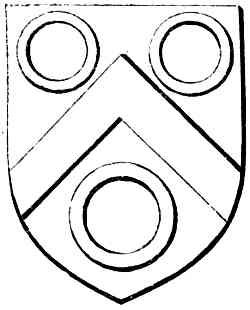
The name is derived from Goring, in the rape of Arundel, where the family can be traced to John de Goring, living in the reign of Edward II. Burton, in this county, was the seat of the principal and elder line of the family, created Baronets in 1662, extinct in 1723. Of a younger branch was the celebrated George Lord Goring 1628, Earl of Norwich 1644, (which titles were extinct on the death of his third son, but heir, the second Lord, in 1670,) sprung from the second son of Sir William Gorynge, of Burton, who died in 1553.
The present family is descended from the second son of Sir Henry Goring, of Burton, Knight, who died in 1594. Highden was purchased in 1647.
Younger Branch. Goring of Wiston, Sussex, descended from the second marriage of Sir Charles Matthew Goring, of Highden, the fourth Baronet, and the co-heiress of Fagg.
See Dallaway's Rape of Arundel, p. 281, who refers to Evidences relating to the family of Goring, MSS. Coll. Arm. Philpot, F. 119; Leland's Itin., vol. vi. fol. 17; Cartwright's Rape of Bramber, p. 132; and Wotton's Baronetage, vol. ii. p. 71.
Arms.—Argent, a chevron between three annulets gules.
Present Representative, Sir Charles Goring, 8th Baronet.
Pelham of Laughton, Earl of Chichester 1801; Baron 1672; Baronet 1611.
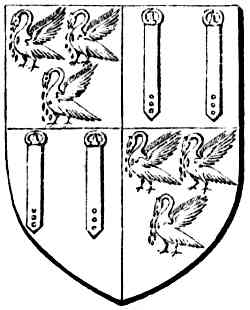
The name is local, from Pelham, in Hertfordshire, the seat of the ancestors of this family in the time of Edward I., and probably even before the Conquest. In the 28th of Edward I., Walter de Pelham had a confirmation grant of lands in Heilsham, Horsey, &c. in this county. From the reign of Edward III. the Pelhams have been a most important Sussex family; it was in that reign that Sir John Pelham assumed the Buckle as his badge, in token of his claim to the honour of taking John King of France prisoner at the battle of Poictiers. Laughton belonged to the Pelhams before 1403, but has been long deserted as the residence of the family.
See Brydges's Collins, vol. v. p. 488; Horsfield's Lewes; and Sussex Archaeological Collections, vol. iii. p. 211, for a curious paper on the arms and badges of the Pelhams.
Arms.—Quarterly, 1 and 4, Azure, three pelicans argent, vulning themselves proper; 2 and 3, Gules, two belts in pale argent with buckles and studs or.
Present Representative, Henry Thomas Pelham, 3rd Earl of Chichester.
Shelley of Maresfield, Baronet 1611.
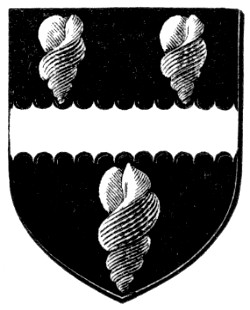
Although there is no doubt of the antiquity of the house of Shelley, the accounts of the earlier descents of the family are very scanty. Originally of the county of Huntingdon, the Shelleys are said to have removed into this county at a very early period. But the earliest mention we have in history of any of this family is of John and Thomas Shelley, who, following the fortunes of Richard II., were attainted and beheaded in the first year of Henry IV. The remaining brother, Sir William Shelley, not being connected with the followers of Richard II., retained his possessions, and was the ancestor of this family, who in the reign of Henry VI., by a match with the heiress of Michelgrove, of Michelgrove, in Clapham, was seated at that place, which continued the residence of the Shelleys until the year 1800, when it was sold, and Maresfield became the family seat.
Younger Branches. Shelley or Castle-Goring, Baronet 1806, descended from the fourth son of Sir John Shelley, of Michelgrove, who died in 1526. Shelley of Avington, in the county of Southampton, and Shelley (called Sidney Foulis) Lord de L'Isle and Dudley 1835, descended from the second marriage of Sir Bysshe Shelley, of Castle-Goring, Baronet, and the heiress of Perry, of Penshurst.,
See Wotton's Baronetage, vol. i. p. 39; Cartwright's Topography of the Rape of Bramber, p. 76; and Dallaway's Rape of Arundel, p. 40.
Arms.—Sable, a fess engrailed between three whelk-shells or.
Present Representative, Sir John Villiers Shelley, 7th Baronet.
West of Buckhurst, Earl de la Warr 1761; Baron 1427.
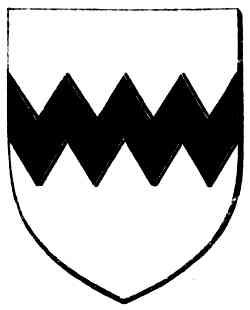
The Wests are remarkable, not so much for the antiquity of the family as for the early period at which they attained the honour of the peerage. Sir Thomas West is the first recorded ancestor; he died in the seventeenth of Edward II., having married the heiress of Cantilupe, and thus became possessed of lands in Devonshire, and at Snitterfield in Warwickshire. His grandson, Thomas, married the heiress of De la Warr, and thus became connected with Sussex. But the principal property of the Wests in this county was granted to Thomas West, afterwards Lord la Warr, in the first year of Henry VII. Few families indeed had broader lands; among which may be mentioned, Offington, in the parish of Broadwater, derived from the heiress of Peverel at the end of the fourteenth century; and Halnaker, in the parish of Boxgrove, both in Sussex; and Wherwell, in Hampshire; all now alienated. Buckhurst came to the present Lord by his marriage with the coheiress of Sackville.
Younger Branch. West of Ruthyn Castle, Denbighshire, descended from the younger son of John, second Earl De la Warr.
The Wests of Alscot, in the county of Gloucester, claim to be descended from Leonard, the younger son of Sir Thomas West, Lord De la Warr, K.G., who died in the year 1525, although there is nothing but "family tradition," as is evident by the memorial to the Earl Marshal of Mr. James West, of Alscot, dated December 12, 1768, to justify this assumption; a distinct coat, viz. Argent, a fess dancette pean, was granted to Mr. West on this occasion.
See Brydges's Collins, vol. v. p. i.; Blore's Rutlandshire, p. 100; Cartwright's Rape of Bramber, p. 38; and Dallaway's Rape of Chichester, pp. 129, 133.
Arms.—Argent, a fess dancette sable. The badge of the De-la-Warrs was a crampet or shape of a sword; assumed by Roger la-Warr, Lord la-Warr, for having assisted Sir John Pelham in making John King of France prisoner at the Battle of Poictiers. See Sussex Archaeological Collections, vol. iii. p. 211.
Present Representative, George John Sackville West, 5th Earl De la Warr.
Gage of Firle; Baron Gage 1790; Viscount Gage in Ireland 1720; Baronet 1622.
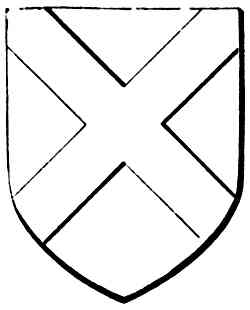
John, son of John Gage, living in the ninth of Henry IV., had issue by Joan, heiress of John Sudgrove, of Sudgrove, in Gloucestershire, Sir John Gage; an adherent of the house of York, knighted by Edward IV., and who died in 1475. He married Elianor, second daughter and coheiress of Thomas St.Clere, of Heighton St. Clere, in Sussex, and acquired by this marriage several manors in this county, as well as in Surrey, Kent, Buckinghamshire, and Northamptonshire. The present family, seated at Firle from this period, descend from his eldest son. From his second son sprung the Gages of Raunds, in Northamptonshire, sold in 1675.
Younger Branch. Gage of Hengrave, in Suffolk, Baronet 1622, descended from Edward, third son of Sir John Gage, of Firle, who died in 1633.
See Gage's Hengrave, p. 225; Gage's Hundred of Thingoe, p. 204; Bridges's History of Northamptonshire, vol. ii. p. 188; Wotton's Baronetage, vol. i. p. 503, vol. iii. p. 366; Brydges's Collins, vol. viii. p. 249; and Leland's Itinerary, vol. iv. p. 12.
Arms.—Party per saltier argent and azure, a saltier gules.
Present Representative, Henry Hall Gage, 4th Viscount Gage.
Gentle.
Barttelot of Stopham.
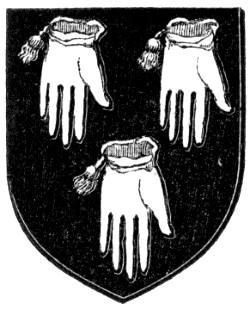
The head of this family, according to Dallaway, may be considered one of the most ancient proprietors of land residing upon his estate in this county. The first in the pedigree is Adam de Bartelott, said to be of Norman origin, father of John, who married Joan Stopham, coheiress of lands in the manor from whence the name is derived. He died in 1428, and Stopham has ever since remained the inheritance of their descendants.
See the Topographer, vol. iv. p. 346; and Cartwright's edition of Dallaway's Rape of Arundel, p. 347.
Arms.—Sable, three falconer's sinister gloves pendent argent, tasseled or.
Present Representative, George Barttelot, Esq.
Courthope of Wyleigh.
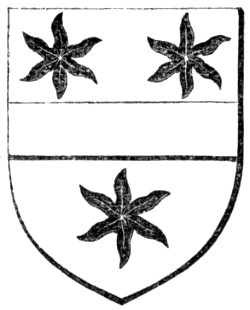
From the reign of King Edward I., this family has been settled at Wadhurst, Lamberhurst, Ticehurst, and the adjoining parishes on the borders of Sussex and Kent: at Goudhurst, in the latter county, they held the manors of Bockingfield and the Pillery from the year 1413 to 1498, and in 1513 Wyleigh, in the parish of Ticehurst, was acquired by John Courthope in marriage with his wife Elizabeth, daughter of William Saunders of Wyleigh. From this marriage sprung three sons, John, George, and Thomas; the issue male of the eldest has been long extinct; from the second, who had Wyleigh, is descended the present Representative of the family; and from the third and youngest, who succeeded to the estate of "Courthope" in Goudhurst, is descended William Courthope, Esq. Somerset Herald.
See Collectanea Topog. et Genealog., vol. ii. pp. 279, 363; and The Visitation of Sussex, C. 27, in Coll. Arm.
Arms.—Argent, a fess azure between three estoiles sable.
Present Representative, George Campion Courthope, Esq.
WARWICKSHIRE.
Knightly.
Shirley of Eatington (elder branch of Staunton-Harold, in the County of Leicester, Earl Ferrers 1711, Baron Ferrers of Chartley 1677, Baronet 1611.)
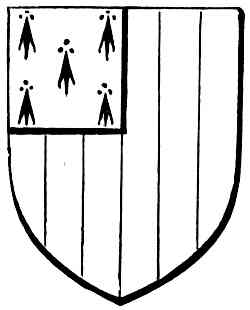
Sasuualo, or Sewallis, whose name, says Dugdale, "argues him to be of the old English stock," mentioned in Domesday as mesne Lord of Eatington, under Henry de Ferrers, is the first recorded ancestor of this, the oldest knightly family in the county of Warwick. Until the reign of Edward III., Eatington appears to have continued the principal seat of the Shirleys, whose name was assumed in the twelfth century from the manor of Shirley, in Derbyshire, and which, with Ratcliffe-on-Sore, in the county of Nottingham, and Rakedale and Staunton-Harold, in Leicestershire, derived from the heiresses of Basset and Staunton, succeeded, during the fourteenth and fifteenth centuries, as the usual residence of the chiefs of the house. In the sixteenth century, Astwell, in Northamptonshire, was brought into the family by the heiress of Lovett; and in 1615, by the marriage of Sir Henry Shirley with the coheiress of Devereux, a moiety of the possessions of the Earls of Essex, after the extinction of that title in 1646, centred in Sir Robert Shirley, father of the first Earl Ferrers; on whose death, in 1717, the family estates were divided, the Derbyshire, Leicestershire, and Staffordshire estates descending with the earldom to the issue of his first marriage, and the Warwickshire property, the original seat of the Shirleys, eventually to the great-grandfather of the present possessor, the eldest surviving son of the second marriage of the first Earl Ferrers.
Elder Branches.* Shirley of Staunton-Harold, in the county of Leicester, represented by Sewallis Edward, tenth Earl Ferrers 1711; and Shirley of Shirley, in the county of Derby, represented by the Rev. Walter Waddington Shirley, Canon of Christ Church, D.D. only son of the late Bishop of Sodor and Man, and great-grandson of Walter, younger brother of the fourth, fifth, and sixth Earls Ferrers.
Younger Branches (extinct). Shirley, of Wiston, Preston, West-Grinstead, and Ote-Hall, all in Sussex, and all descended from the second marriage of Ralph Shirley, Esq., and Elizabeth Blount; which Ralph died in 1466. All these families are presumed to be extinct on the death of Sir William Warden Shirley, Baronet, in 1815.
See Dugdale's Warwickshire, ed. 2, vol. i. p. 621; Nichols's History of Leicestershire, vol. iii. pt. ii. p. 704-727; Stemmata Shirleiana, pr. pr. 4to. 1841; and Brydges's Collins, vol. iv. p. 85.
Arms.—Paly of six, or and azure, a quarter ermine. The more ancient coat was, Paly of six, or and sable, as appears by the seal of "Sir Sewallis de Ethindon, Knight," with the legend, "Sum scutum de auro et nigro senis ductibus palatum," engraved in Dugdale's Warwickshire, and in Upton de Studio Militari. Indeed Sir Ralph Shirley bore it as late as the reign of Edward II; see Nicolas's Roll of that date, p. 73. Sir Hugh de Shirley bore the present coat (Roll of Richard II.): so did his father Sir Thomas, and his great-grandfather Sir James, as appears by their several seals engraved in Upton, &c.
Present Representative, Evelyn Philip Shirley, Esq., late M. P. for South Warwickshire.
* The Iretons of Little Ireton, in the county of Derby, extinct in 1711, were in fact the elder line of the family, sprung from Henry, eldest son of Fulcher, and elder brother of Sewallis de Shirley.
Bracebridge of Atherstone.
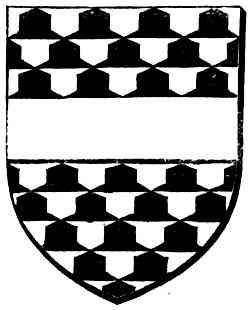
In the time of King John, the venerable family of Bracebridge, originally of Bracebridge in Lincolnshire, acquired by marriage in the person of Peter de Bracebridge with Amicia, daughter of Osbert de Arden and Maud, and granddaughter of Turchill de Warwick, the manor of Kingsbury in this county, an ancient seat of the Mercian Kings, and inherited by Turchill, called the last Saxon Earl of Warwick, with his second wife Leverunia. The descendants of which Peter and Amicia had their principal seat at Kingsbury till about the beginning of Queen Elizabeth's reign, when it was sold, and the Atherstone estate purchased. "Kinisbyri is a fair manor place," writes Leland, in his Itinerary, "and lordship of 140 li.; one Bracebridge is lord of it; it is in Warwikshir." At Bracebridge, on the river Witham, near Lincoln, the original seat of the family, so called it is supposed from the two bridges which still exist there, a grant of free warren was obtained in the 29th of Edward I., which was still retained by Thomas Bracebridge, Esq. who died in 1567.
The Bracebridges represent the Holtes of Aston, near Birmingham, and, through that ancient family, the Breretons of Cheshire.
See Dugdale's Warwickshire, vol. ii. p. 1057-1061; Nichols's Leicestershire, vol. iii. part ii. p. 1145; for Holte, see Dugdale's Warwickshire, vol. ii. p. 871, and Davidson's History of the Holtes of Aston, fol. 1854; for Brereton, see Ormerod's Cheshire, vol. iii. pt. 31.
Arms.—Vair, argent and sable, a fess gules. This coat was borne by Sir John de Brasbruge, de co. Lincoln, in the reign of Edward II. and again by Monsire de Brasbridge in those of Edward III. and Richard III. (Rolls).
Present Representative, Charles Holte Bracebridge, Esq.
Compton of Compton Wyniate, Marquess of Northampton 1812; Earl 1618; Baron 1572.
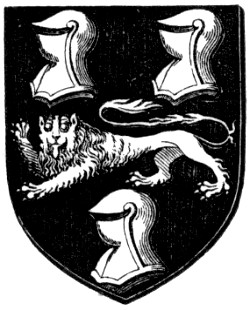
Although the early part of the pedigree of the Comptons is not entirely without doubt, we may conclude that the family was seated at Compton, called "in le Windgate," soon after the Conquest. Arnulphus de Compton and Osbertus de Compton were living in the 16th of Henry II., but Philip de Compton is the first of the name who certainly held the manor of Compton, in the fifth of John. Here the family continued resident for many ages; but its importance arose in a great degree from Sir William Compton having been brought up with Henry Duke of York, afterwards Henry VIII., and from the marriage of his great-grandson, the first Earl of Northampton, with the City Heiress of Spencer.
The Comptons were pre-eminently distinguished for loyalty during the Civil Wars of the seventeenth century.
See Dugdale's Warwickshire, vol. i. p. 549; and Brydges's Collins, vol. iii. p. 223.
Arms.—Sable, a lion of England or between three esquire's helmets argent. A former coat, borne by Thomas de Comptone, apparently about the reign of Edward III., was a chevron charged with three fleurs-de-lis. This is proved by a silver seal dug up at Compton in the year 1845; and the same arms are still to be traced on an ancient mutilated monument of a knight with collar of S.S., supposed to represent Sir Thomas de Compton, in the church of Compton Wyniate. The three helmets were afterwards adopted, and appear to have been the arms of a distinct family, the Comptons of Fenny Compton in this county; to which Henry VIII. gave the lion as an augmentation; at the same time, according to the custom of the period, was added a quartering to the family arms, viz.: Argent, a chevron azure, within a border vert bezantee.
Present Representative, Charles Douglas Compton, 3rd Marquess of Northampton.
Chetwynd of Grendon, Baronet 1795.
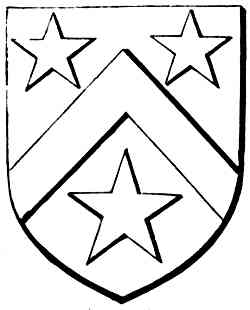
The younger, but, in England, the only remaining branch of a very ancient family, denominated from Chetwynd, in Shropshire, and of Baxterly, in this county, in the 37th of Henry III. Sir William Chetwind was the first of the name seated at Grendon, in the 39th of Edward III., his mother being daughter and coheir of Sir Ralph de Grendon; but Ingestre, in Staffordshire, which came from the heiress of Mutton, was the principal seat of the Chetwinds, which was eventually carried by an heiress into the Talbot family (now Earl of Shrewsbury).
Elder Branch. The Viscounts Chetwynd of Ireland (1717).
See Dugdale's Warwickshire, vol. ii. p. 1101; Erdeswick's Staffordshire, ed. 1844, p. 61; Eyton's Shropshire, viii. p. 81; and Archdall's Lodge, vol. v. p. 148.
Arms.—Azure, a chevron between three mullets or. In the reign of Edward II. Sir John Chetwind bore, Azure, a chevron or, without the mullets; the present coat was borne by others of the family in the reigns of Edward III. and Richard II. (Rolls.)
Present Representative, Sir George Chetwynd, third Baronet.
Feilding of Newnham Paddox, Earl of Denbigh 1622.
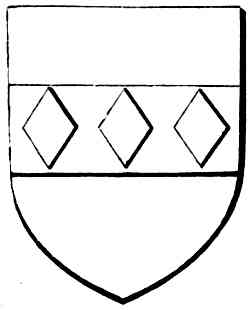
The princely extraction of this noble family from the counts of Hapsburg in Germany is well known; its ancestor, Galfridus, or Geffrey, came into England in the twelfth year of the reign of Henry III., and received large possessions from that monarch. The name is derived from Rinfelden, in Germany, where, and at Lauffenburg, were the patrimonial possessions of the house of Hapsburg. Newnham was in possession of John Fildying in the twelfth of Henry VI., inherited from his mother Joan, daughter and heir of William Prudhome.
See Dugdale's Warwickshire, vol. i. p. 86; Brydges's Collins' vol. iii. p. 265; and Nichols's Leicestershire, vol. iv. pt. i. p. 273, for the history of this illustrious family, compiled by Nathaniel Wanley about the year 1670.
Arms.—Argent, on a fess azure three fusils or. The present coat was borne in the reigns of Edward III. and Richard II., as appears by Seals of those dates.
Present Representative, Rudolph William Basil Feilding, 8th Earl of Denbigh.
Staunton of Longbridge.
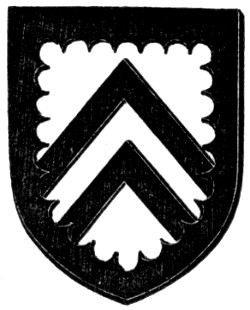
This family is stated by Thomas, in his additions to Dugdale's Warwickshire, to be a branch of the Stauntons of Staunton, in the county of Nottingham, an ancient house which is traced to the Conquest, and was lately represented by Sir George Staunton, Baronet of Ireland 1785, extinct 1859. The first of the line seated in Warwickshire was Thomas Staunton, in the 39th of Henry VI., 1461. The parent house, existing in the male line, until the year 1688, at Staunton, in Nottinghamshire, held their lands by tenure of Castle-Guard, by keeping and defending a tower in the Castle of Belvoir, to this day called Staunton Tower. There is an ancient custom also that the chief of the house of Staunton should present the key of this tower to any of the Royal Family who may honour Belvoir with their presence.
Younger Branch. Staunton of Wolverton, in this county, settled there in the eighteenth of Elizabeth; extinct in the last century.
See Dugdale's Warwickshire, vol. ii. p. 665; Thoroton's Nottinghamshire, p. 157; and for the poetical pedigree of this house, Ib. p. 159; the monuments at p. 164; see also "Memoirs of the Life and Family of the late Sir G. L. Staunton, Bart." pr. pr. 8vo. 1833.
Arms.—Argent, two chevrons within a border engrailed sable. Founded on the coat of Albany Lord of Belvoir, who bore, Or, two chevrons and a border gules. The elder line of Staunton sometimes omitted the border; see the tombs in the church of Staunton.
Present Representative, John Staunton, Esq.
Ferrers of Baddesley-Clinton.
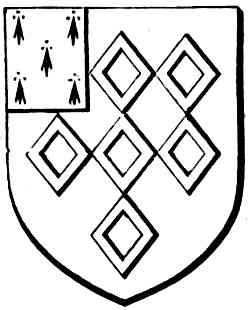
The sole remains of what was perhaps during the middle ages the most powerful Norman family in England. Illustrious both for the antiquity of race, the former political consequence, and the splendour of connection of the various branches, of which the forfeited Earls of Derby, and De Ferrariis, or Ferrers, were the chiefs. Descended from Henry de Feriers at the time of the Conquest, who held in chief 210 lordships in fourteen counties of England, besides the castle and borough of Tutbury, in Staffordshire, the principal seat of the earldom.
The Baddesley-Clinton line was founded by Sir Edward Ferrers, (son of Sir Henry, who was second son of Thomas Ferrers, of Tamworth Castle, in this county,) by his marriage with Constantia, daughter and heiress of Nicholas Brome, of Baddesley. He died in 1535.
After the forfeiture of the Earldom of Derby, in the reign of Henry III., and the vast possessions attached to it, the Castle of Chartley, in Staffordshire, inherited from Agnes, daughter and coheir of Ranulph, Earl of Chester, became the seat of the principal male line, extinct on the death of William Lord Ferrers of Chartley in the 28th of Henry VI. The representation of the family thereupon devolved on the Ferrers's of Tamworth, sprung from the house of Groby, who were founded by William, younger brother of the last Earl of Derby: and on the decease of John Ferrers, of Tamworth, Esq. in 1680, the present family of Baddesley-Clinton succeeded as chief of this illustrious house.
See Dugdale's Warwickshire, vol. ii. p. 971, for Baddesley-Clinton, where however will be found no engravings of the monuments of the Ferrers's, "because," says Dugdale, "so frugall a person is the present heir of the family, now (1656) residing here, as that he refusing to contribute anything towards the charge thereof, they are omitted." For Ferrers of Chartley, and the Earls of Derby, see Sir O. Mosley's History of Tutbury, 8vo. 1832; and Dugdale's Warwickshire, vol. ii. p. 1089; and for Ferrers of Tamworth, the same, p. 1135.
Arms.—Gules, seven mascles or, a canton ermine. This was the coat of Quinci, Earl of Winchester, from whom the Ferrers of Groby were descended, the canton being added for difference. The original coat assigned to the first Earls of Derby, was, Argent, six horseshoes sable; afterwards, Vair or and gules, within a bordure of horseshoes, was used. The Chartley line bore only, Vair, or and gules, which was latterly also borne by Ferrers of Tamworth. The Quinci coat was used by William de Ferrers at Carlaverock in 1300. (See the Roll.)
Present Representative, Marmion Edward Ferrers, Esq.
Mordaunt of Walton, Baronet 1611.
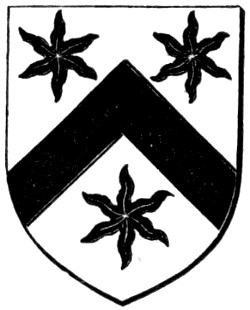
Turvey in Bedfordshire was the principal seat in England of this noble Norman family, descended from Osbert le Mordaunt, who came over from Normandy with William the Conqueror, and received a grant of the lordship of Radwell in that county. In 1529, John Mordaunt, the representative of the family, was summoned to Parliament by writ as Baron Mordaunt of Turvey. His great-great-grandson was created Earl of Peterborough in 1628; which title, together with the elder line of the family, became extinct on the decease of Charles-Henry Mordaunt, fifth Earl, in 1814.
The present family descend from Robert, son of William Mordaunt of Hemsted, in Essex, who was second son of William Mordaunt of Turvey, living in the 11th of Henry IV., which Robert married Barbara, daughter of John le Strange, of Massingham-Parva in Norfolk, and of Walton-D'Eivile, in this county, which since the 32nd year of Henry VIII., 1549-50, has remained the inheritance of their descendants.
See Dugdale's Warwickshire, vol. i. p. 577: Parkins's continuation of Blomefield's Norfolk, vol. iv. p. 643; and that very rare volume compiled by order of the second Earl of Peterborough, called "Halstead's Genealogies," fo. 1685, privately printed.
Arms.—Argent, a chevron between three estoiles sable.
Present Representative, Sir Charles Mordaunt, 10th. Baronet, M. P. for South Warwickshire.
Biddulph of Birdingbury, Baronet 1654.
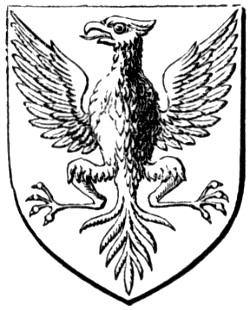
This ancient family, originally of Biddulph, in the northern parts of Staffordshire, is traced to Ormus, mentioned in the Domesday Survey. He was, it is said, of Norman descent, and is supposed to have married the Saxon heiress of Biddulph, from whence the name was afterwards assumed. The elder line terminated on the death of' John Biddulph, Esq. of Biddulph and of Burton in Sussex, in the year 1835. The Birdingbury branch, now representing this venerable house, was founded by Symon, second son of Richard Biddulph, of Biddulph, in the time of Henry VIII., whose descendant, another Symon, purchased Birdingbury in 1687. The family were eminently loyal during the Civil Wars, when the ancient seat of Biddulph was destroyed by the Cromwellians about 1643-4.
Younger Branch. Biddulph of Ledbury, in the county of Hereford, descended from Anthony, younger brother of the first Baronet.
See Dugdale's Warwickshire, vol. i. p. 324; Shaw's History of Staffordshire, vol. i. p. 352; Erdeswick's Staffordshire, ed. 1844, p. 8; Ward's History of the Borough of Stoke-upon-Trent, p. 277; and Wotton's Baronetage, vol. iii. p. 442.
Arms.—Vert, an eagle displayed argent, armed and langued gules. Argent, three soldering-irons sable, is also said to have been borne by the Biddulphs.
Present Representative, Sir Theophilus William Biddulph, 7th Baronet.
Skipwith of Harborough, Baronet 1622 (formerly of Newbold Hall).
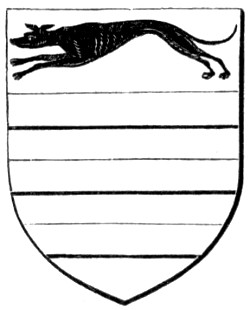
The name is derived from Skipwith, in the East Riding of Yorkshire, and was first borne by Patrick, living in the reign of Henry I., who was second son of Robert de Estotevile, Baron of Cottingham in the reign of William the Conqueror. In the reign of Henry III. the Skipwiths removed into Lincolnshire, and were seated at Beckeby and Ormesby, in that county; a younger son of Sir William Skipwith, of Ormesby, who died in 1587, was of Prestwould, in Leicestershire. He was the ancestor of the Skipwiths of Newbold Hall, created Baronet in 1670, extinct in 1790, and of the present family, who for five generations were of Virginia, in America, where the grandfather of the present Baronet was born.
See Dugdale's Warwickshire, vol. i. p. 84; Nichols's Leicestershire, vol. iii. pt. i. p. 368; and Wotton's Baronetage, vol. i. p. 536,
Arms.—Argent, three bars pules, in chief a greyhound courant sable.
Present Representative, Sir Peyton Estoteville Skipwith, 10th Baronet.
Gentle.
Shuckburgh of Shuckburgh, Baronet 1660.
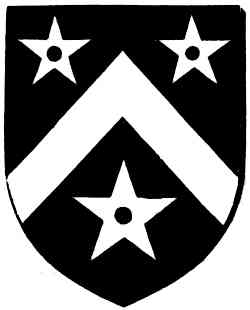
The antiquity of this family need not be doubted, although the lineal descent, as Dugdale avouches, is not very plain. William de Suckeberge is presumed to be the first who assumed the name, from Shuckborough Superior, in this county; he was living in the third of John. The pedigree is deduced by Baker, in his History of Northamptonshire, from John de Shuckburgh, living in the first of Edward III. In the seventh of Henry V. his great-grandson William is ranked amongst those knights and esquires of this county who bore ancient arms from their ancestors. It was to Richard Shuckburgh, head of the family in 1642, that the remarkable incident happened which is related by Dugdale. Charles I. having met him hunting with his hounds a day or two before the battle of Edgehill, "Who is that," said the King, "hunting so merrily, while I am about to fight for my crown and dignity?" He was knighted the next day, and proved his loyalty at the battle of Edge-hill. He died in 1656, and his son was rewarded with the Baronetcy on the Restoration.
Younger Branch. Shuckburgh of Downton, Wiltshire, descended from Charles, fourth son of the first Baronet.
See Dugdale's Warwickshire, vol. i. p. 309; Baker's Northamptonshire, vol. i. p. 371; Wotton's Baronetage, vol. iii. p. 76; and Hoare's Modern Wiltshire, vol. iv. p. 34.
Arms.—Sable, a chevron between three mullets pierced argent. This coat is evidently founded on the arms of Danvers, the Norman family under whom the Shuckburghs held: it has been fondly assumed that the mullets are allusive to the astroites found in the ploughed fields at Shuckburgh.
Present Representative, Sir Francis Shuckburgh, 8th Baronet.
Throckmorton of Coughton, Baronet 1642.
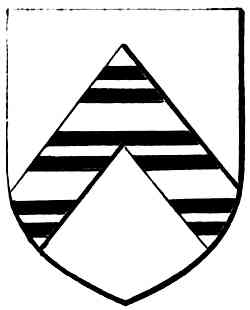
The name is derived from Throcmorton, in the parish of Fladbury, in the county of Worcester, where John de Trockemerton, the supposed ancestor of this family, was living about the year 1200. From this John descended, after many generations, another "John Throkmerton," who was, according the Leland, "the first setter up of his name to any worship in Throkmerton village, the which was at that tyme neither of his inheritance or purchase, but as a thing taken of the Sete of Wircester in farme, bycause he bore the name of the lordeship and village. This John was Under-Treasurer of England about the tyme of Henry V.;" and married Elianor, daughter and coheir of Guido de la Spine, and thus became possessed of Coughton, in the parish of Hadley, in this county, which has continued the principal seat of the family, of whom the most remarkable was Sir Nicholas Throckmorton, ambassador in France, in the reign of Queen Elizabeth, who died in 1570.
Younger Branches (now extinct), were the Throckmortons of Stoughton and Ellington, in Huntingdonshire, [for the latter see Camden's Visitation of that county in 1613, printed by the Camden Society in 1849, p. 123;] and the Carews of Bedington, in Surrey, Baronet 1714, extinct 1764; descended in the male line from Sir Nicholas, younger son of Sir Nicholas Throckmorton, and Anne, daughter of Sir Nicholas Carew, Knt.; see Wotton's Baronetage, vol. ii. pi 351, and vol. iv. p. 159; Dugdale's Warwickshire, vol. ii. pp. 749 and 819; Nash's Worcestershire, vol. i. p. 452; Leland's Itinerary, vol. iv. p. 16; and for the poetical life of Sir Nicholas Throckmorton, see Peck's Memoirs of Milton.
Arms.—Gules, on a chevron argent three bars gemelles sable.
Present Representative, Sir Nicholas William Throckmorton, 9th Baronet.
Sheldon of Brailes.
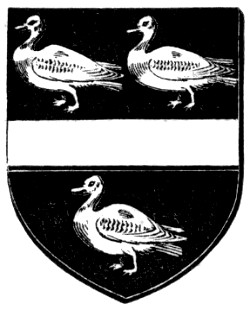
The descent of this family from the ancient house of Sheldon, of Sheldon, in this county, is a matter of doubt, but admitted by Dugdale to be not improbable. It appears to be proved that the Sheldons are descended from John Sheldon, of Abberton, in Worcestershire, in the reign of Henry IV. Nash, in his History of that county, carries the pedigree two descents higher, viz., to Richard Sheldon of Rowley, in the county of Stafford, whose grandson John was of the same place in the fourth of Edward IV. The manor of Beoly, in Worcestershire, was purchased of Richard Neville Lord Latimer by William Sheldon in the same reign, and continued till the destruction of the mansion-house by fire in the Civil Wars of the seventeenth century, the principal seat of the family, who were connected with Warwickshire by the marriage of William Sheldon, Esq. with Mary, daughter and coheir of William Willington, of Barcheston, Esq., in the reign of Henry VIII. It was this William Sheldon who purchased the manor of Weston, in the parish of Long-Compton, in this county, and here his son Ralph built "a very fair house" in the reign of Queen Elizabeth; but these estates have both, within the memory of man, passed from this ancient family, who still possess considerable properly at Brailes, purchased by William Sheldon in the first of Edward VI.
Younger branches of the Sheldons were formerly of Abberton, Childswicombe, Broadway, and Spechley, in Worcestershire. See Dugdale's Warwickshire, vol. i. p. 584; and Nash's Worcestershire, vol. i. pp. 65 and 144.
Arms.—Sable, a fess between three sheldrakes argent.
Present Representative, Henry James Sheldon, Esq.
Gregory of Styvechall.
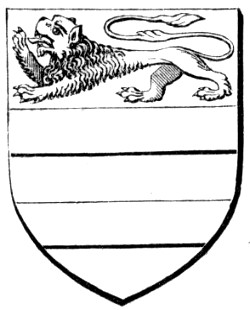
This family is traced to John Gregory, Lord of the manors of Freseley and Asfordby, in the county of Leicester, who married Maud, daughter of Sir Roger Moton, of Peckleton, knight; his son, Richard Gregory, of the same places, died in the year 1292. Arthur Gregory, Esquire, the representative of this ancient family, was seated at Styvechall, within the county of the city of Coventry, of which his father, Thomas, died seized in the sixteenth of Elizabeth.
See Nichols's Leicestershire, vol. iii. pt. i. p. 19; and Dugdale's Warwickshire, vol. i. p. 202.
Arms.—Or, two bars and in chief a lion passant azure.
Present Representative, Arthur Francis Gregory, Esq.
Greville of Warwick Castle, Earl Brooke 1746, and Earl of Warwick 1759; Baron 1620-1.
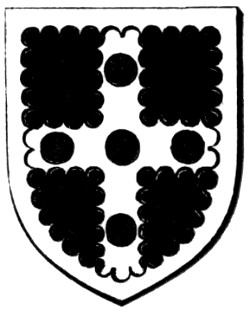
This family was founded by the wool-trade in the fourteenth century by William Grevel, "the flower of the wool merchants of the whole realm of England," who died and was buried at Campden, in Gloucestershire, in 1401. He it was who purchased Milcote, in this county, long the seat of the elder line of this family, who, after a succession of crimes, the particulars of which may be seen in Dugdale's Warwickshire, became extinct in the reign of James I. Fulke, second son of Sir Edward Greville of Milcote, who died in the 20th of Henry VIII., having married Elizabeth, one of the daughters and coheiress of Edward Willoughby, only son of Robert Willoughby, Lord Brooke, became possessed of Beauchamp's Court, in the parish of Alcester, inherited from her grandmother Elizabeth, the eldest of the daughters and coheirs of the last Lord Beauchamp of Powyke. This Fulke Greville was grandfather of the more celebrated Sir Fulke Greville, Lord Brooke, "servant to Queen Elizabeth, Counsellor to King James, and friend to Sir Philip Sidney," who died in 1628. "The fanatic Brooke," killed at Lichfield Close, was his cousin and successor, and ancestor of the present family. The Castle of Warwick was granted to Sir Fulke Greville by James I. in the second year of his reign.
Younger Branch. Greville of North Myms Place, in the county of Hertford, and of Westmeath, in Ireland, descended from Algernon, second son of Fulke 5th Lord Brooke.
See Leland's Itinerary, vol. iv. pt. i. fol. 16, vol. vi. fol. 19; Dugdale's Warwickshire, vol. ii. pp. 706, 766; Brydges's Collins, vol. iv. p. 330; and Edmondson's Account of the Greville Family, 8vo. 1766.
Arms.—Sable, on a cross engrailed or, five pellets within a border engrailed of the second. The present coat, with the addition of a mullet in the first quarter, was borne by William Grevil, of Campden, as appears by his brass, still in good preservation; his son John differenced his arms with ten annulets, in lieu of the five pellets; both were omitted by the Grevilles of Milcote.
Present Representative, George Guy Greville, 4th Earl of Warwick.
WESTMORLAND.
Knightly.
Lowther of Lowther-Castle, Earl of Lonsdale 1807; Baron 1797; Baronet 1764.
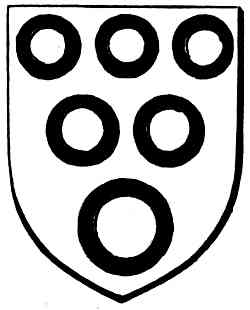
Eminently a knightly family, traced by Brydges to Sir Gervase de Lowther, living in the reign of Henry III. Other authorities make Sir Hugh de Lowther, knight of the shire for this county, in the 28th of Edward I., the first recorded ancestor; his great-grandson was at Agincourt in 1415. There have been three principal branches of this family, the first descended from Sir John Lowther, created a Baronet of Nova Scotia in 1640, who was grandfather of the first Viscount Lonsdale (1696), extinct on the death of the third Viscount in 1750. The second family sprung from Richard, third son of Sir John Lowther; and the third and present family descended from William, third son of a former Sir John Lowther, of Lowther, who died in 1637.
Younger Branch. Lowther of Swillington, in the county of York, Baronet 1824, descended from John, second son of Sir William Lowther, who died in 1788.
See Brydges's Collins, vol. v. p. 695; Burn's Westmorland, vol. i. p. 428; Whitaker's Leeds, vol. i. p. 281; and Wotton's Baronetage, vol. ii. p. 302.
Arms.—Or, six annulets sable, and borne by Monsire Louther, in the reign of Edward III. (Roll )
Present Representative, William Lowther, 2nd Earl of Lonsdale.
Strickland of Sizergh.
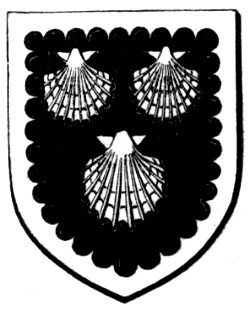
Descended from Walter de Stirkland, Knight, so called from the pasture-ground of the young cattle, called stirks or steers, in the parish of Morland, in this county; who was living in the reign of Henry III. A good account of this family, derived from original evidences, is given by Burn.
Sizergh, in the parish of Helsington, appears to have belonged to the Stricklands in the reign of Edward I. Sir Walter de Strickland had licence to empark there in the ninth of Edward III. During the civil wars of the seventeenth century the head of this house was loyal, while Walter, son of Sir William Strickland, of Boynton, Baronet 1641, was one of Cromwell's pretended House of Peers. The Stricklands of Boynton are supposed to be a younger branch of the house of Sizergh. The Stricklands called Standish, of Standish, in the county of Lancaster, represent the elder line, the present Mr. Standish being the eldest son of the late Thomas Strickland, of Sizergh, Esq.
See Burn's Westmorland, vol. i. p. 87; and Whitaker's Richmondshire, vol. ii. p. 333.
Arms.—Sable, three escallops within a border engrailed argent. The present coat, but without the border, was borne by Walter de Strykelande, in the reign of Richard II. Another coat, used in the reign of Edward II. was Argent, two bars and a quarter gules. (Rolls.) The Stricklands of Boynton bear, Gules, a chevron or between three crosses patée argent, on a canton ermine a stag's head erased sable.
Present Representative, Walter Strickland, Esq.
Fleming of Rydal; Baronet 1705.
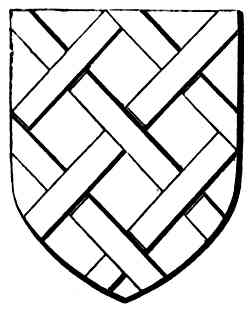
Michael le Fleming, living in the reign of William the Conqueror, is the ancestor of this ancient family, originally seated in Cumberland and at Gleston, in Furness, in Lancashire. Isabel, daughter of Sir John de Lancastre, living in the sixth of Henry VI., having married Sir Thomas le Fleming, of Coniston, Knight, seated the Flemings at Rydal, ever since the residence of the family.
See Burn's Westmorland, vol. i. p. 150; and Wotton's Baronetage, vol. iv. p. 105.
Arms.—Gules, fretty argent. The present coat, called "The arms of Hoddleston," with a label vert, was borne by John Fleming de Westmerland in the reign of Edward III. (Roll.) A more ancient coat, according to Wotton, was a Fleur-de-lis, within a roundell.
Present Representative, Sir Michael le Fleming, 7th Baronet.
Gentle.
Wybergh of Clifton.
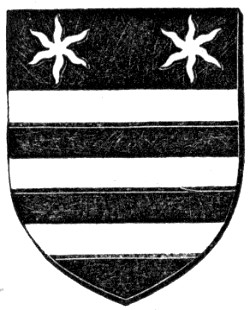
In the thirty-eighth year of the reign of Edward III., William de Wybergh, of Saint Bee's, in Cumberland, became possessed of the manor of Clifton, in marriage with Elianor, only daughter of Gilbert D'Engayne, whose family had held it from the time of Henry II. It has ever since continued the seat and residence of their descendants. In Cromwell's days the Wyberghs had the honour to be considered delinquents; and in the succeeding century, in 1715, the head of the house was taken prisoner in consequence of his allegiance to the house of Hanover.
Younger Branch. Lawson of Brayton, Baronet 1831.
See Burn's Westmorland, vol. i. p. 417.
Arms.—Sable, three bars or, in chief two estoiles of the last. Sometimes I find two mullets in chief, and one in base, used in place of the estoiles.
Present Representative, William Wybergh, Esq.
WILTSHIRE.
Knightly.
Seymour of Maiden-Bradley; Duke of Somerset 1546-7, Baronet 1611.
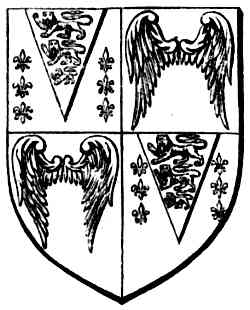
This great historical family is of Norman origin, descended from Roger de Seimor, or Seymour, who lived in the reign of Henry I. Woundy, Penhow, and Seymour Castle, all in the county of Monmouth, (the last sold in the reign of Henry VIII.,) were ancient seats of the family, who we find in the fourteenth century resident in Somersetshire, after the marriage of Sir Roger Seymour with the coheiress of Beauchamp of Hache; his grandson married the heiress of Esturmi or Sturmey of Chadham, in this county, and thus first became connected with Wiltshire. Maiden-Bradley belonged to Sir Edward Seymour, the elder, the eldest surviving son of the Protector Somerset by his first wife, and the ancestor of the present family, who in 1750, on the death of the seventh Duke of Somerset, succeeded to the Dukedom, which by special entail went first to the descendants of the Protector by his second wife, until the extinction of her male line in that year.
Younger Branches. Seymour, of Knoyle, in this county, descended from Francis, next brother of Edward eighth Duke of Somerset, and second son of Sir Edward Seymour, Baronet, of Maiden-Bradley, who died in 1741. Seymour Marquess of Hertford, (1793,) descended from Francis, son of Sir Edward Seymour, Bart., who died in 1708, and his second wife, Letitia, daughter of Francis Popham.
See Brydges's Collins, vol. i. p. 144, vol. ii. p. 560; Westcote's Devonshire Pedigrees, p. 479; and Wotton's Baronetage, vol. i. p. 86.
Arms.—Quarterly, 1 and 4, Or, on a pile gules between six fleurs-de-lis azure three lions of England; 2 and 3, Gules, two wings conjoined in lure of the first, the points downwards. The wings, the original coat, was borne by Sir Roger de Seimor in the 23rd Henry III., as appears by his seal, with the legend "Sigill' Rogeri de Seimor." (Collins.) The first quarter was granted by Henry VIII. as an augmentation in consequence of his marrying Jane, daughter of Sir John Seymour.
Present Representative, Edward Adolphus Seymour, K.G. 13th Duke of Somerset.
Arundell of Wardour, Baron Arundell of Wardour 1605.
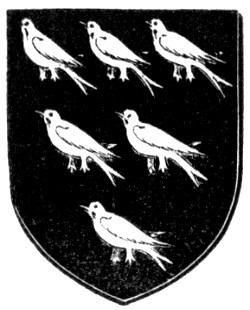
A Norman family, which for centuries has flourished in the West of England, traced by Dugdale to "Rogerius Arundel," mentioned in Domesday. "The most diligent inspection, however," writes Hoare in his Wiltshire, "of an immense collection of ancient charters, deeds, and instruments of all kinds, and from the earliest periods of documentary evidence, among the archives of Wardour Castle, have not enabled us to trace the filiation of this House from the said Rogerius." Reinfred de Arundell, who lived at the end of the reign of Henry III. stands therefore at the head of the pedigree as given by Hoare. Gilbert in his "Survey of Cornwall," is inclined to believe the name to be derived from Arundel in Sussex, and refers to "Yorke's Union of Honour." He says the family came into Cornwall by a match with the heiress of Trembleth about the middle of the twelfth century. Lanherne, in that county, was in the fourteenth century their principal seat. The Castle of Wardour was purchased by Sir Thomas Arundell from Sir Fulke Greville in 1547.
Camden, Carew, and Leland unite in recording the hospitality and honourable demeanour of this family, in all relations of social life, and state that from the pre-eminence of their ample possessions they were popularly designated "The Great Arundells."
See Coll. Topog. et Genealog., vol. iii. p. 389; Leland's Itin., vol. iii. fol. 2; Gilbert's Cornwall, vol. i. p. 470; Brydges's Collins, vol. vii. p. 40; and Hoare's Wiltshire, vol. iii. pt. i. p. 175, &c.
Arms.—Sable, six martlets argent. The martlets, or hirondelles, may be considered an early instance of Canting Heraldry.
Present Representative, John Francis Arundell, 12th Baron Arundell of Wardour.
Wyndham of Dinton.
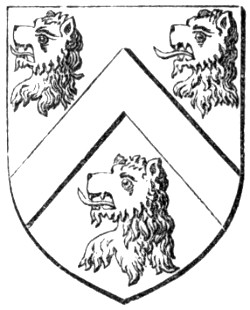
The sole remaining branch in the male line of this ancient family, said to be of Saxon origin, and descended from "Ailwardus" of Wymondham, or Wyndham, in Norfolk, living soon after the Norman Conquest. Felbrigge, in the same county, was for many ages the seat of the Wyndhams, and afterwards Orchard, in Somersetshire, which came from the co-heiress of Sydenham. The present family, who succeeded to the representation on the death of the fourth and last Earl of Egremont, in 1845, descend from Sir Wadham, ninth son of Sir John Wyndham, of Orchard and Felbrigge. They were seated at Norrington, in this county, about 1660. Dinton was purchased in 1689.
See Parkins's Continuation of Blomefield's Norfolk, vol. iv. p. 309; Hoare's Wiltshire, vol. iii. pt. i. 108, and vol. iv. p. 93; Hutchins's History of Dorset, vol. iii. p. 330; Wotton's Baronetage, vol. iii. p. 346; and Brydges's Collins, vol. iv. p. 401.
Arms.—Azure, a chevron between three lion's heads erased or.
Present Representative, William Wyndham, Esq.
Malet of Wilbury, Baronet 1791.
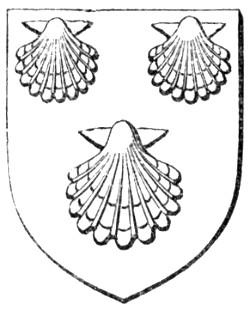
A noble Norman family of great antiquity, who were of Baronial rank immediately after the Conquest, descended from William Baron Malet, whose grandson, another William Baron Malet, was expelled by Henry I. The elder branch of the family were long seated at Enmore, in the county of Somerset; but the ancestors of the present family, whose baronetcy was conferred for services in the East Indies, at Corypole and Wolleigh, in the county of Devon, and at Pointington and St. Audries, in Somersetshire. Wilbury was purchased in 1803.
See Hoare's Modern Wiltshire, vol. i. pt. ii. p. 106; Collinson's History of Somersetshire, vol. i. p. 90; and the Gentleman's Magazine for 1799, p. 117.
Arms.—Azure, three escallops or. Robert Malet bore Argent, three fermaux sable, in the reign of Edward I. as appears by Sir R. St. George's Roll, Harl. MS. 6137.
Present Representative, Sir Alexander Charles Malet, 2nd Baronet.
Gentle.
Codrington of Wroughton.
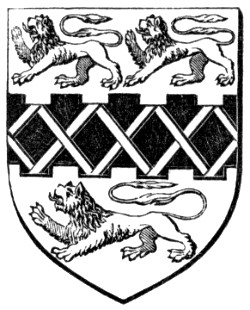
The name is local, from Codrington, in the parish of' Wapley, in the county of Gloucester, where this family was seated as early as the reign of Henry IV. John Codrington, Esquire, Standard-bearer to Henry V. in his wars in France, was the direct ancestor; he died in 1475, at the age, it is said, of 112; his monument remains at Wapley.
Codrington remained in the family till 1753, when it passed with an heiress to the Bamfyldes of Poltimore, and has since been re-purchased by the present owner of Dodington. Didmarton, also in Gloucestershire, which came by marriage in 1570, and was afterwards sold, and latterly Wroughton, in this county, became the family seats.
Two younger branches have been seated at Dodington; the first, descended from Thomas Codrington, brother of John the Standard-bearer, long settled at Frampton-on-Severn in Gloucestershire, bought Dodington in the time of Queen Elizabeth and sold it at the beginning of the eighteenth century to the ancestor of the present family, Codrington of Dodington, in the county of Gloucester, Baronet 1721, descended from Christopher, second son of Robert Codrington, who died in 1618.
See Atkyns's Gloucestershire, pp. 204 and 391; Rudder's Gloucestershire, p. 787; and Wotton's Baronetage, vol. iv. p. 201. Corrected by the information of Mr. R. H. Codrington.
Arms.—Argent, a fess embattled counter-embattled sable, fretty gules, between three lioncels passant of the third. The fretty is sometimes omitted by the present Dodington branch. The ancient coat was simply, Argent, a fess between three lioncels passant gules, still used by the former family of Dodington, now settled in Somersetshire. The embattlement and fret was an augmentation granted to the Standard-bearer in the 19th of Henry VI.; and again two years before he died he received a further acknowledgement of his support of the Red Rose in a coat to be borne quarterly, Vert, on a bend argent three roses gules, in the sinister quarter a dexter hand couped of the second.
Present Representative, William Wyndham Codrington, Esq.
Thynne of Longleate, Marquess of Bath 1789; Viscount Weymouth 1682; Baronet 1641.
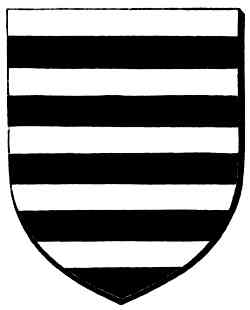
The name is derived from the mansion or inn at Stretton, in the county of Salop, to which the freehold lands of the family, with various detached copyholds, were attached. The original name was Botfield, so called from Botfield in Stretton; the first on record being William de Bottefeld, sub-forester of Shirlet, in Shropshire, in 1255. About the time of Edward IV. the elder line of the family assumed the name of Thynne, otherwise Botfeld, which was borne for three generations before the time of Sir John Thynne, the purchaser of Longleate, who died in 1580, the ancestor of the present family.
Younger Branch represented by the late Beriah Botfield of Norton Hall, in the county of Northampton, and Decker Hill, co. Salop, descended from John, second son of Thomas Bottefeld, of Bottefeld, living in 1439.
See the Topographer and Genealogist, vol. iii. p. 468; and the Stemmata Botevilliana, (privately printed,) second edition, 1858, 4to.
Arms.—Barry of ten or and sable. The younger branch, who retained the name of Botfield, bore Barry of twelve or and sable.
Present Representative, John Alexander Thynne, 4th Marquess of Bath.
WORCESTERSHIRE.
Knightly.
Acton of Wolverton.
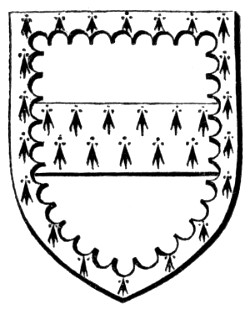
A junior branch of a very ancient family, said indeed by Habington, the Worcestershire antiquary, to be of Saxon origin, and formerly seated at Acton, properly Oakton, in the parish of Ombersley. Elias de Acton, of Ombersley, occurs in the third of Henry III. He was the ancestor of various branches of the Actons resident in different parts of this county, at Sutton, Ribbesford, Elmley-Lovet, Bokelton, and Burton, all of whom now appear to be extinct, the male line being preserved by the present family, founded by a younger son of Sir Roger Acton, of Sutton, and the heiress of Cokesey, about the middle of the seventeenth century.
See Nash's History of Worcestershire, vol. ii. p. 217; and Blakeway's Sheriffs of Salop, p. 60.
Arms.—Gules, a fess within a border engrailed ermine.
Present Representative, William Joseph Acton, Esq.
Lyttleton of Frankley, Baron Lyttleton 1794; Irish Baron 1776; Baronet 1618.
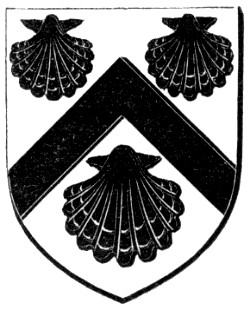
The name is derived from a place in the Vale of Evesham, where the ancestors of this family in the female line were seated before the reign of Richard I. Frankley came from an heiress of that name in the reign of Henry III. In that of Henry V. Elizabeth, heiress of Sir Thomas Lyttleton, of Frankley, married Thomas Westcote of Westcote, in the county of Devon, Esquire, "but the old knight, her father, desirous to perpetuate his name, (and his purpose failed not,) would not yield consent to the marriage but upon his son's-in-law assured promise that his son, enjoying his mother's inheritance, should also take her name, and continue it, which was justly performed." (Westcote's Devonshire, p. 306.)
Hagley, the principal seat, was purchased in 1564. Mr. John Lyttleton, the head of this family, was implicated in Lord Essex's rising in 1600; but his son, Sir Thomas, was right loyal to the Crown in 1642.
See Leland's Itinerary in Coll. Topog. et Genealog., vol. iii. p. 339; Nash's Worcestershire, vol. i. p. 493; Prince's Worthies of Devon, ed. 1701, p. 583; Wotton's Baronetage, vol. i. p. 306; and Brydges's Collins, vol. viii. p. 316. See also in the Library of the Society of Antiquaries a genealogical account of this family, in the handwriting of Dr. Charles Lyttleton, Bishop of Carlisle, No. 151, 4to.
Arms.—Argent, a chevron between three escallops sable, borne by Thomas Lyttelton in the reign of Henry IV. as appears by his seal.
Present Representative, George William Lyttleton, 4th Lord Lyttleton.
Talbot of Grafton, Earl of Shrewsbury 1442; Earl Talbot 1784; Baron 1733; Earl of Waterford in Ireland 1661.
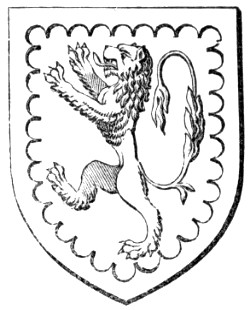
This great historical family is traced to the Conquest, Richard Talbot, living at that period, being the first recorded ancestor. No family in England is more connected with the history of our country than this noble race; few are more highly allied. The Marches of Wales appear to be the original seat; afterwards we find the Talbots in Shropshire, in Staffordshire, (where their estates were inherited from the Verdons in the time of the Edwards,) and lastly in Yorkshire, at Sheffield, derived from the great heiress of Neville Lord Furnival. This was the seat of the first seven Earls of Shrewsbury, of whom an excellent biographical account will be found in Hunter's Hallamshire (p. 43). The manor of Grafton, formerly the estate of the Staffords, was granted by Henry VII. to Sir Gilbert Talbot in 1486; it afterwards became the seat of a younger branch, who eventually, on the death of the eighth Earl, became Earls of Shrewsbury, from whom all the succeeding Earls, to the decease of Bertram Arthur, 17th Earl of Shrewsbury, in 1856, were descended. The present and 18th Earl, who is also the 3rd Earl Talbot, springs from the second marriage of Sir John Talbot of Albrighton in Shropshire, and of Grafton, in this county, who died in 1550, and who was grandfather of the 9th and ancestor of the succeeding Earls.
Younger Branch. Talbot, Baron Talbot of Malahide in Ireland, (1831,) descended from Richard, second son of Richard Talbot and Maud Montgomery, the third ancestor of the House of Shrewsbury, who was living in 1153.
See Nash's Worcestershire, vol. i. p. 158; Brydges's Collins, vol. iii. p. i.; and the Shrewsbury Peerage Claim before the House of Lords, 1857.
Arms.—Gules, a lion rampant within a border engrailed or. Borne by Sir Gilbert Talbot in the reign of Edward II. (Rolls), and said to be the coat of Rhese ap Griffith, Prince of South Wales. The ancient arms of Talbot being Bendy of ten argent and gules. The Talbots of Malahide bear the border erminoise instead of or.
Present Representative, Henry John Chetwynd Talbot, 18th Earl of Shrewsbury, and third Earl Talbot.
Winnington of Stanford; Baronet 1755.
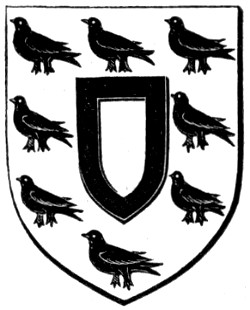
Descended from Paul Winnington, living in 1615, great-grandson of Robert, who was son of Thomas Winnington of the Birches, in the county of Chester, living in the reign of Henry VII. This Thomas represented a younger branch of the Winningtons, of Winnington, in the same county, descended from Robert, son of Lidulfus de Croxton, who took the name of Winnington in the reign of Edward I., on his marriage with Margery, daughter and heiress of Robert de Winnington, living in the fifty-sixth of Henry III. Stanford, formerly the seat of the Salways, came to the Winningtons in the early part of the reign of Charles II., on the marriage of Sir Francis Wilmington and Elizabeth Salway.
See Ormerod's Cheshire, vol. ii. p. 112, vol. iii. pp. 74 and 93; Pedigree privately printed by Sir Thomas Phillipps, from an original MS. penes Sir Thomas Winnington, Bart.; and Nash's Worcestershire, vol. ii. p. 368.
Arms.—Argent, an inescucheon voided, within an orle of martlets sable.
Present Representative, Sir Thomas Edward Winnington, M.P. for Bewdley, 4th Baronet.
Noel of Bell-Hall.
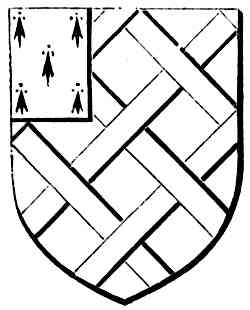
This is the only remaining branch in the male line of the very ancient family of Noel; of which the Earls of Gainsborough, created 1681, extinct 1798, represented a junior line. William, the ancestor of all the Noels, was living in the reign of Henry I., and was at that period Lord of Ellenhall, in the county of Stafford. In the time of Henry II., either he or his son founded the Priory of Raunton, in the same county.
From the Noels of Ellenhall descended a branch of the family seated at Hilcote, in Staffordshire; an estate which remained with them until recent times; the father of the present representative, who was son of Walter Noel, of Hilcote, Esq., having removed to Bell-Hall, in the parish of Bell-Broughton, in this county.
The Noels of Rutlandshire and Leicestershire were also descended from the house of Ellenhall.
See Harwood's edition of Erdeswick's Staffordshire, 1844, p. 132 and Blore's Rutlandshire.
Arms.—Or, fretty gules, a canton ermine.
Present Representative, Charles Noel, Esq.
Gentle.
Lechmere of Hanley; Baronet 1818.
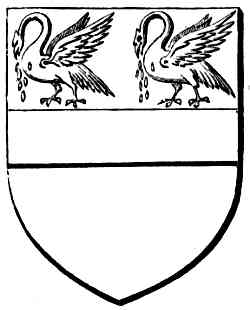
A family of great antiquity, said to have migrated from the Low Countries, and to have received a grant of land called "Lechmere's Field," in Hanley, from William the Conqueror. The first in the pedigree is Reginald de Lechm'e de Hanlee, mentioned in a deed without date. He was father of Adam de Lechmere, who married Isabella, and was the ancestor of this venerable house, whose ancient seat at Severn-End, in Hanley, with the exception of a period of thirty years, has ever since remained in the family. During the civil wars the Lechmeres were on the side of the Parliament. A second son, who died without issue in 1727, was raised to the Peerage in 1721.
Younger Branches. Lechmere of Steeple-Aston, in the county of Oxford, and Lechmere of Fanhope, in the county of Hereford; also the Lechmeres (called Patteshalls) of Allensmore, in the same county; the two last being descended from Sandys, second son of Sir Nicholas Lechmere, the Judge, who died in 1701.
See Nash's Worcestershire, vol. i. p. 563.
Arms.—Gules, a fess and in chief two pelicans or, vulning themselves proper.
Present Representative, Sir Edmund Anthony Harley Lechmere, 3rd Baronet.
Sebright of Besford; Baronet 1626.
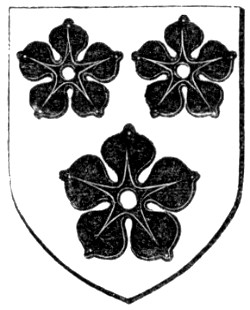
William Sebright, of Sebright, in Much Beddow, in Essex, living in the reign of Henry II. is the ancestor of this ancient family, who removed into this county at a very early period, apparently after the marriage of Mabel Sebright with Katharine, daughter and heir of Ralph Cowper, of Blakeshall, in the parish of Wolverly, in which parish the Sebrights possessed lands in the sixth year of Edward I. Besford was purchased about the reign of Elizabeth.
See Wotton's Baronetage, vol. ii. p. 8; and Nash's Worcestershire, vol. i. p. 78.
Arms.—Argent, three cinquefoils pierced sable.
Present Representative, Sir John Gage Saunders Sebright, 9th Baronet.
Boughton of Rouse-Lench; Baronet 1641.
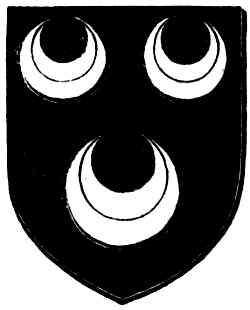
This is a Warwickshire family of good antiquity, traced to Robert de Boreton, grandfather of William, who lived in the reign of Edward III. In that of Henry VI. by the heiress of Allesley, the family became possessed of the manor of Lawford, which remained their residence till the murder of Sir Theodosius Boughton, Baronet, by his brother-in-law Mr. Donnellan, in 1781. After that event, a younger branch succeeding to the estate and title, Lawford Hall was pulled down, and the ninth Baronet, on inheriting the property of the Rouses of Rouse-Lench, in this county, assumed that name, and made it his seat and residence.
See Dugdale's Warwickshire, second ed., vol. i. p. 98; Nichols's Leicestershire, vol. iv. pt. i. p. 202; and Wotton's Baronetage, vol. ii. p. 220.
Arms.—Sable, three crescents or.
Present Representative, Sir Charles Henry Rouse Boughton, 11th Baronet.
YORKSHIRE.
Knightly.
Fitzwilliam of Wentworth House; Earl Fitzwilliam 1746; Baron of Ireland 1620.
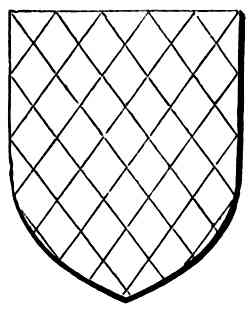
William FitzGodric, who married Albreda de Lizours, Lady of Sprotsborough, in this county, and who died before 1195, is the remote ancestor of this ancient house. Their son, William FitzWilliam, was seated at Sprotsborough in the reign of Henry II., and here the family continued till the extinction of the elder line, which ended in coheiresses in the reign of Henry VIII.
The rise of this branch of the family must be ascribed to Sir William Fitzwilliam, Lord Justice, and afterwards Lord Deputy of Ireland, in the reign of Elizabeth, whose grandson was created Baron Fitzwilliam in 1620. In the year 1565, Hugh Fitzwilliam collected whatever evidences could be found touching the descent of the family. This account, which is in the possession of Earl Fitzwilliam, is the foundation of most of the histories of this great family, whose present Yorkshire property came from the Wentworths through the coheiress of the Marquis of Rockingham in 1744. From this match resulted the Earldom in 1746.
See Hunter's South Yorkshire, vol. i. p. 331, vol. ii. p. 93; and Brydges's Collins, vol. iv. p. 374.
Arms.—Lozengy argent and gules. The present coat, except that ermine takes the place of argent, was borne by Thomas Fitzwilliam in the reign of Henry III. In that of Richard II. William Fitzwilliam bore the arms as at present used.
Present Representative, William Thomas Spencer Wentworth-Fitzwilliam, K.G. 6th Earl Fitzwilliam.
Scrope of Danby.
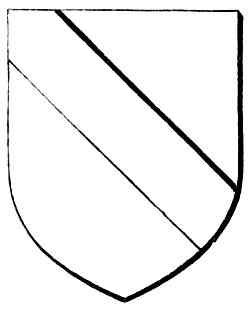
Few families were more important in the fourteenth and fifteenth centuries than the noble house of Scrope; their descent is unbroken from the Conquest. Few houses also have been more distinguished by the number of great offices of honour held both in Church and State. The Scropes were very early settled in Yorkshire, Bolton being, from the period of the reign of Edward I., their principal seat and Barony. The present family is sprung from a younger son of Henry, 6th Lord Scrope of Bolton; it was established at Danby about the middle of the seventeenth century, by marriage with the heiress of Conyers.
See Whitaker's Richmondshire, vol. i. p. 368; the Scrope and Grosvenor Roll by Sir Harris Nicolas, 1832, vol. ii. p. 1, and Poulett-Scrope's History of Castle-Combe; see also Blore's Rutlandshire, (fol. 1811,) p. 5-8, for full pedigrees of the Scropes of Bolton and Masham, (Yorkshire,) Cockerington, (Lincolnshire,) Wormsleigh or Wormsley, (Oxfordshire,) and Castle-Combe, (Wiltshire,) all now extinct; also the Topographer, vol. iii. p. 181, for Church Notes from Cockerington by Gervase Hollis. Adrian Scrope the Regicide was of the Wormsley branch.
Arms.—Azure, a bend or. These arms were confirmed by the Court of Chivalry in 1390, on the celebrated dispute between the houses of Scrope and Grosvenor, as to the right of bearing them. In the reign of Edward III. M. William le Scroope bore the present coat, "en le point de la bend une lyon rampant de purpure." In that of Richard II., M. Henry le Skrop differenced his arms with a label of three points argent, M. Thomas le Scrop at the same period charged his label with an annulet sable, while other members of the family bore the label ermine charged with bars gules, and lozenges and mullets ermine. (Rolls of the dates.)
Present Representative, Simon Thomas Scrope, Esq.
Grimston of Grimston-Garth.
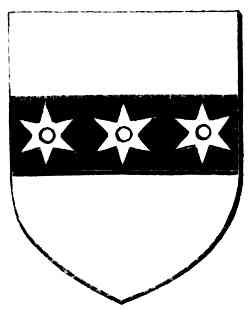
Sylvester de Grimston, "Standard-bearer and Chamberlain to William I.," of Grimston, in the parish of Garton, is claimed as the ancestor of this venerable Norman family, who have ever since the period of the Conquest resided at the place from whence the name is derived.
Younger branches of the Grimstons were seated in Norfolk and Essex, besides the Grimstons of Gorhambury, Earls of Verulam, all now extinct in the male line.
See Poulson's Holderness, vol. ii. p. 60; Clutterbuck's Hertfordshire, vol. i. p. 95; Brydges's Collins, vol. viii. p. 209; and the Scrope and Grosvenor Roll, vol. ii. p. 292. See also Boutell's Brasses, p. 129, for inscriptions to Sir Edward Grimston and his son in Rishangles Church, near Eye, in Suffolk.
Arms.—Argent, on a fess sable three mullets of six points or, pierced gules. This coat was borne by Monsieur Gerrard de Grymston in the reign of Richard II. (Roll.)
Present Representative, Marmaduke Gerard Grimston, Esq.
Wyvill of Constable-Burton.
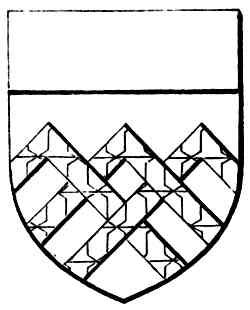
This ancient Norman family is said to be descended from Sir Humphry de Wyvill, who lived at the time of the Conquest, and whose descendants were seated at Slingsby in this county; the more modern part of the pedigree begins with Robert Wyvill of Ripon, whose son was of Little Burton, in the reign of Henry VIII.; from thence the family migrated to Constable-Burton, about the end of the reign of James I. During the Civil Wars of the seventeenth century, the Wyvills were distinguished by their loyalty and consequent sufferings in the royal cause. An elder line of this family, on whom the Baronetcy, created in 1611, has descended, is said to be resident in Maryland, in the United States of America.
See Leland's Itinerary, vol. iv. pl. i.; Whitaker's Richmondshire, vol. i. p. 322; and Wotton's Baronetage, vol. i. p. 232.
Arms.—Gules, three chevronels interlaced vaire, and a chief or. The arms are founded upon the coat of Fitz Hugh, and may be taken as a proof of high antiquity.
Present Representative, Marmaduke Wyvill, Esq.
Tempest of Broughton.
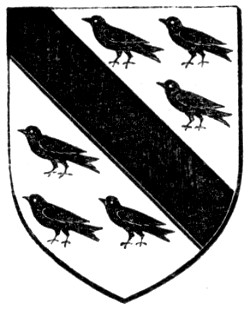
The pedigree of this ancient family is traced to Roger, whom Dr. Whitaker calls "Progenitor of this the oldest and most distinguished of the Craven families now surviving. That this man was a Norman the name will not permit us to doubt; that he was a dependant of Roger of Poitou is extremely probable; that he was at all events possessed of Bracewell (in Craven) early in the reign of Henry I., is absolutely certain." Dr. Whitaker proceeds to remark on the name of Tempest, which he says, "whatever was its origin, seems to have been venerated by the family, as in the two next centuries, when local appellation became almost universal, they never chose to part with it." The elder line of the Tempests continued at Bracewell till the time of Charles I., when Richard Tempest, the last representative, pulled down the family house, and devised the estate to a distant relation. The house of Broughton descends directly from Roger, second son of Sir Peirs Tempest, which Roger married in the seventh of Henry IV. Katharine daughter and heir of Peter Gilliott of Broughton, which has been ever since the seat of the Tempests— "a name never stained with dishonour, but often illustrated with deeds of arms."
A younger branch was of Tong in this county, descended from Henry, youngest son of Sir Richard Tempest of Bracewell, Sheriff of Yorkshire in the 8th of Henry VIII. created Baronet in 1664, extinct 1819.
See Whitaker's Craven, pp. 80, 87.
Arms.—Argent, a bend between six storm finches sable.
Present Representative, Charles Henry Tempest, Esq.
Hamerton of Hellifield Peel.
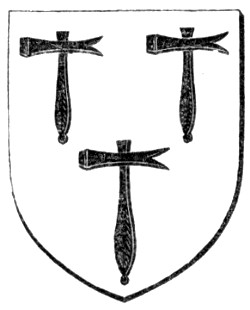
One of the most ancient families in the North of England, according to Dr. Whitaker, descended from Richard de Hamerton, who lived in the twenty-sixth of Henry II., anno 1170. From Hamerton, the original seat, the family removed to Hellifield, acquired by marriage with the heiress of Knolle, in the reign of Edward III. The Castle, or Peel, was built in the reign of Henry VII. The Hamertons were engaged in the Northern Rebellion in 1537, and thereby Sir Stephen Hamerton lost his head, and his family the estate; which was restored to the male representative of the family, in the third year of Elizabeth, by a munificent settlement made by John Redman, who had become possessed of the property, and was related by marriage to the Hamertons. A younger branch was of Preston-Jacklyn in this county.
See Whitaker's Craven, ed. 1812, p. 124; and Dugdale's Visitation of Yorkshire, 1665-6, printed by the Surtees Society in 1859, p. 354.
Arms.—Argent, three hammers sable. The Preston-Jacklyn line bore Argent, on a chevron between three hammers sable a trefoil slipped or.
Present Representative, James Hamerton, Esq.
Hotham of South Dalton; Baron of Ireland 1797; Baronet 1621.
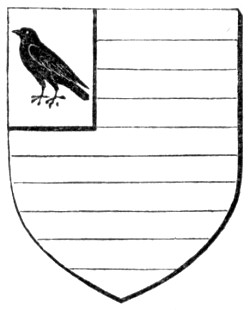
Peter de Trehouse, who assumed the local name of Hotham, and was living in the year 1188, is the ancestor of this family, who were of Scarborough in this county in the reign of Edward I., a seat which continued the principal residence of the Hothams for several centuries until it went to decay after the Civil Wars in the seventeenth century. The siege of Hull in 1643, when Sir John Hotham was Governor for the Parliament, and with his son was discovered holding correspondence with the Royalists, for which they both suffered death, will ever render this family historical.
See Wotton's Baronetage, vol. i. p. 473; the Scrope and Grosvenor Roll, vol. ii. p. 306; and Oliver's Beverley, p. 509.
Arms.—Barry of ten argent and azure, on a canton or a raven proper. M. John de Hotham is stated in the Roll of arms of the period of Edward III. to have borne, Or, a bend sable charged with three mullets argent voided gules.
Present Representative, Beaumont Hotham, 3rd Baron Hotham.
Boynton of Barmston, Baronet 1618.
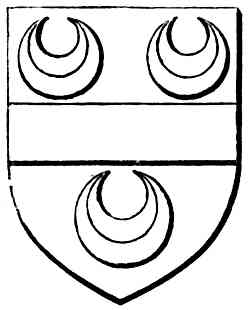
Bartholomew de Bovington, living at the beginning of the twelfth century, stands at the head of the pedigree; other authorities mention Sir Ingram de Boynton of Aclam, (in Cleveland,) who lived in the reign of Henry III., as the first recorded ancestor. Barmston came from the daughter and coheir of Sir Martyn del See, about the end of the fifteenth century.
During the Civil Wars, Sir Matthew Boynton, the head of this family, was one of the gentlemen chiefly trusted in Yorkshire by the Parliament.
See Poulson's History of Holderness, vol. i. p. 196; the Scrope and Grosvenor Roll, vol. ii. p. 309; and Wotton's Baronetage, vol. i. p. 301.
Arms.—Or, a fess between three crescents gules. This coat was borne by Monsieur Thomas de Boynton in the reign of Richard II. (Roll.)
Present Representative, Sir Henry Boynton, 10th Baronet.
Waterton of Walton.
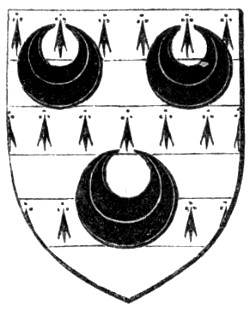
Waterton in the county of Lincoln was the original seat, and from hence the name was derived at an early period. Sir Robert Waterton, Master of the Horse to Henry IV., and John Waterton, who served King Henry V. at Agincourt in the same office, were of this place; the last was succeeded by his brother Sir Robert, who was of Methley in this county, which he inherited with his wife Cicely, the daughter and heir of Robert Fleming, of Woodhall in that parish, and where his tomb is still preserved. This Sir Robert was Govenor of Pontefract Castle during the time that Richard II. was confined there. The present family descend from John Waterton, a younger son of this house, (the male line of the elder branch being extinct,) who married Catherine de Burgh, heiress of Walton, in the year 1435, which has since continued the residence of this ancient knightly lineage.
See Whitaker's Leeds, vol. i. p. 269; and the Scrope and Grosvenor Roll, vol. ii. p. 190, for a memoir of Hugh Waterton, Esq.; and the History of the Isle of Axholme by Archdeacon Stonehouse.
Arms.—Barry of six ermine and gules, over all three crescents sable.
Present Representative, Edmund Waterton, Esq.
Fairfax of Steeton.
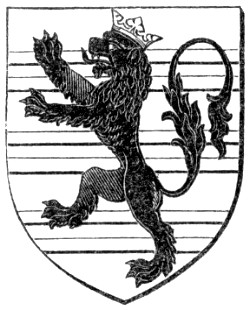
"The truly ancient family of Fairfax," as Camden styles it, is supposed to be of Saxon origin, and to have been seated at Torcester in Northumberland at the period of the Conquest. In 1205 (sixth of John,) Richard Fairfax, the first of the family proved by evidence, was possessed of the lands of Ascham, not far from the City of York. His grandson William purchased the Manor of Walton in the West Riding, which continued for near six hundred years, till the extinction of the elder male line of the family in the person of Charles Gregory Fairfax, tenth Viscount Fairfax of Ireland, in 1772, the inheritance of his descendants. From a younger son of Richard Fairfax, of Walton, Chief Justice of England in the reign of Henry VI. the present family is descended, as well as Fairfax of Denton, Baron Fairfax of Cameron in Scotland (1627,) who represents an elder line,* and who resides in the United States of America.
Steeton was the gift of the Chief Justice to Sir Guy Fairfax, his third son, the founder of this branch of the family, and here he erected a castle in 1477.
See Lodge's Peerage of Ireland, ed. 1754, vol. ii. p. 397.
Arms.—Argent, three bars gemelles gules, surmounted by a lion rampant sable, crowned or.
Present Representative, Thomas Fairfax, Esq.
* He is descended from the eldest son of Sir William Fairfax of Steeton, who died in 1557.
Norton of Grantley, Baron Grantley 1782.
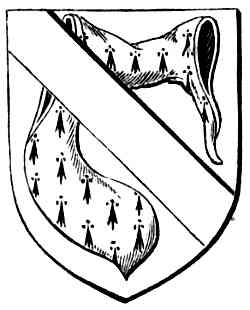
The pedigree begins with Egbert Coigniers, whose son Roger was living in the ninth year of Edward II., and was father of another Roger, who marrying the heiress of Norton of Norton, their son took that name; sixth in descent was Richard Norton, who joined with the Earls of Northumberland and Westmerland in the Rebellion of the North in 1569, and thereby caused the destruction of almost every branch of his family. He was attainted in the twelfth of Elizabeth, and died in exile in Spain. The present family descend from Sir Fletcher Norton, Speaker of the House of Commons, descended from Edmund Norton of Clowcroft, third son of old Richard Norton, which Edmund had taken no part in the Northern Rebellion.
An elder branch, also descended from the third son of Sir Richard, and believed to be now extinct, was of Sawley near Ripon, from the period of Charles I.
See Brydges's Collins, vol. vii. p. 546; Whitaker's Richmondshire, vol. ii. p. 182; and "Memorials of the Rebellion of 1569."
Arms.—Azure, a maunch ermine, over all a bend gules. In the reign of Edward II., Sir John de Conyers bore, Azure, a maunch or, and a hand proper. Sir Robert de Conyers at the same period reversed the colours, bearing, Or, a maunch azure, and a hand proper. Monsieur Robert Conyers in the reign of Richard II. bore, Azure, a maunch or charged with an annulet sable. (Rolls of the dates.)
Present Representative, Fletcher Norton, 3rd Baron Grantley.
Savile of Methley, Earl of mexborough in Ireland 1765; and Baron Pollington 1753.
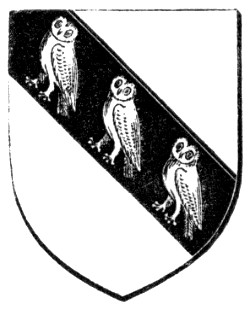
The family of Savile was one of the most illustrious in the West Riding of the county of York. Some writers have fancifully ascribed to it an Italian origin, but it probably had its rise at Silkston, in this county. It certainly flourished in those parts in the thirteenth century; and in the middle of the fourteenth century we find (1358) Margaret Savile Prioress of Kirklees.
In the reign of Edward III. the family divided itself into two main branches, in the person of two brothers, John of Tankersley and Henry of Bradley. The senior branch acquired its greatest renown in the person of George first Marquess of Halifax, a title which became extinct in 1700. The junior branch was of Copley and Methley, and, having produced one of the most learned men of our country, Sir Henry Savile, the Provost of Eton, is now represented by the Earl of Mexborough.
See Dugdale's Baronage, ii. p. 462; Whitaker's Leeds, vol. i. pp. 272, 310; Archdall's ed. of Lodge's Peerage of Ireland, vol. iii. p. 156; Hunter's Antiquarian Notices of Lupset, 1851; and the Savile Correspondence, edited for the Camden Society by W. D. Cooper, F.S.A., 1858.
Arms.—Argent, on a bend sable three owls of the field. This coat was borne by Monsieur John Sayvill, in the reign of Richard II. His son John differenced it by a label of three points gules.
Present Representative, John Charles George Savile, 4th Earl of Mexborough.
Gower of Stittenham, Duke of Sutherland 1833; Marquess of Stafford 1786; Earl Gower 1746; Baron 1703.
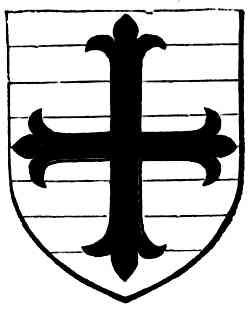
Descended from Sir Nicholas Gower, knight of the shire for this county in the reign of Edward III., and seated at Stittenham from about the same period. Of this family, it has been said, was Gower the Poet, but Sir Harris Nicolas in his memoir of Gower could not trace the connection. Leland remarks, "The House of Gower the Poet yet remayneth at Switenham (Stittenham) in Yorkshire, and divers of them syns have beene knightes." In the end of the seventeenth century the wealth of this family was greatly increased by marriage with the heiress of Leveson, of Trentham, in Staffordshire, and also in the year 1785 by the marriage of the Marquess of Stafford with Elizabeth, daughter and heir of William eighteenth Earl of Sutherland, mother of the present Duke.
Younger Branches. The Earl of Ellesmere 1846, and Gower of Bill-Hill, co. Berks, descended from John son of John first Earl Gower, by his third wife.
See Brydges's Collins, vol. ii. p. 441; Historical and Antiquarian Mag., 1828, vol. ii. p. 103; and Leland's Itin., vol. vi. fol. 15.
Arms.—Barry of eight argent and gules, a cross patonce sable.
Present Representative, George Granville William Sutherland Leveson Gower, 3rd Duke of Sutherland, K. G.
Dawnay of Cowick and Danby, Viscount Downe in Ireland 1680.
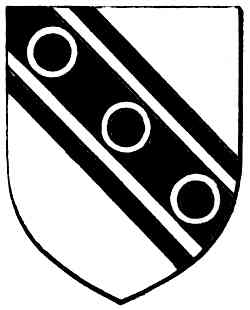
A Norman family by reputation, and said to be traced to the Conquest, descended from Sir William Downay, who was in the wars in the Holy Land with Richard I. in 1192, at which time that King gave him, in memory of his acts of valour, a ring from his finger, which is still in possession of the family.
At an early period the Dawnays were in possession of lands in Cornwall; fifteen manors in that county descended by an heiress to the house of Courtenay Earl of Devon, about the reign of Edward II. In Richard the Second's time the family removed into this county by a match with the heiress of Newton of Snaith. Cowick was the seat and residence of Sir Guy Dawnay, in the reigns of Henry VII. and Henry VIII.
See Brydges's Collins, vol. viii. p. 453; and Gilbert's Cornwall, vol. i. p. 457.
Arms.—Argent, on a bend cotised sable three annulets of the field.
Present Representative, Hugh Richard Dawnay, 8th Viscount Downe.
Pilkington of Nether-Bradley and Chevet-Hall, Baronet of Nova-Scotia 1635.
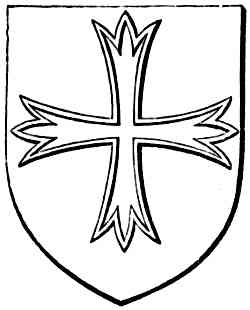
"A right ancient family, gentlemen of repute in the county (of Lancaster) before the Conquest," according to Fuller in his "Worthies," and also mentioned by Gwillim as a "knightly family of great antiquity, taking name from Pilkington in Lancashire." That estate appears to have remained in the family until the ruin of the elder branch in consequence of Sir Thomas Pilkington having taken part against Henry VII. and with Richard III. at the battle of Bosworth. The present house descended from Sir John Pilkington, second son of Robert Pilkington, and brother of the unfortunate Sir Thomas. His son Robert is stated to have been of Bradley, in this county. He died in 1429, and was the ancestor of Sir Arthur the first Baronet.
Younger Branches. Pilkington of Park-Lane Hall, in this county, descended from the second son of Robert Pilkington, of Bradley, who was living in 1540; and Pilkington of Tore, in the county of Westmeath, descended from Sir Robert, younger brother of Sir John Pilkington, ancestor of the house of Bradley.
See Wotton's Baronetage, vol. iv. p. 338; Hunter's South Yorkshire, vol. ii. p. 394; Burke's Landed Gentry; and "The Grand Juries of the County of Westmeath," vol. ii. p. 254.
Arms.—A cross patonce voided gules. The crest, "a mower of parti-colours argent and gules," is said by Fuller in his "Worthies of England" to have been assumed in memory of the ancestor of the family having so disguised himself in order to escape after the Battle of Hastings. The Battle of Bosworth is the more probable scene of this event, where four knights of the family were in arms on the part of Richard III.
Present Representative, Sir Lionel Milborne Swinnerton Pilkington, 11th Baronet.
Stourton of Allerton, Baron Stourton 1447.
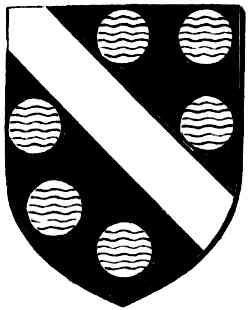
A well-known Wiltshire family, seated at Stourton, in that county, soon after the Norman Conquest. "The name of the Stourtons be very aunciente yn those parties," writes Leland in his Itinerary. "The Ryver of Stoure risith ther of six fountaines or springer, wherof three be on the northe side of the Parke harde withyn the pale: the other three be north also, but without the Parke; the Lord Stourton gyveth these six Fountaynes yn his armes."
The Yorkshire property, and consequent settlement in this county, came from the match with the heiress of Langdale Lord Langdale in 1775.
Younger Branch. Stourton, (called Vavasour,) of Hazlewood. Baronet 1828, first cousin of the present peer.
See Brydges's Collins, vol. vi. p. 633; and Leland's Itin., vii. fol. 78 b.
Arms.—Sable, a bend or between six fountains proper.
Present Representative, Charles Stourton, 18th Baron Stourton.
Markham of Becca-Hall.
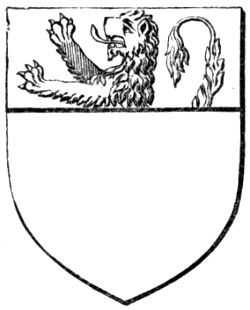
A remote branch of an ancient Nottinghamshire family, which can be traced to the time of Henry II. The name is derived from Markham, near Tuxford, in that county, but Coatham was afterwards the family seat, until it was sold by Markham, "a fatal unthrift," who was the brother of the antiquary Francis Markham; this was about the end of the reign of Elizabeth. William Markham, Archbishop of York, who died in 1807, was the ancestor and restorer of this worthy family; he was descended from Daniel, a younger son of the House of Coatham. Becca-Hall has been in possession of the Markhams since the end of the last century.
See Markham's History of the Markhams, privately printed, 8vo. 1854; the Proceedings of the Society of Antiquaries, 1859; and the Topographer, vol. ii. p. 296, for Markham of Sedgebrook, co. Lincoln, extinct 1779.
Arms.—Azure, on a chief or a demi-lion rampant issuing gules. The Markhams of Sedgebrook bore their arms differenced by a border argent.
Present Representative, William Thomas Markham, Esq.
Burton (called Denison), of Grimstone, Baron Londesborough 1850.
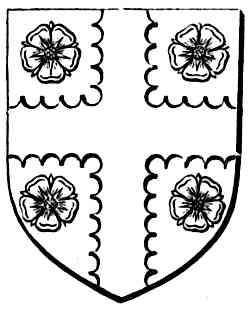
The name is derived from Boreton, in the parish of Condover, in Shropshire, an estate which remained in the family until the reign of James I., although the Burtons became resident at Longner, in the same county, prior to the reign of Edward IV. "Goiffrid de Bortona," (Burton,) one of the foresters of Shropshire, in the reign of Henry I., is the first recorded ancestor. The senior line of this house terminated with Thomas Burton, who died unmarried in 1730, and whose sister carried the Longner estate to the Lingen family, who have assumed the name of Burton (see p. 198.) Thomas, fifth son of Thomas Burton, of Longner, is the ancestor of the present family, and of the Marquess of Conyngham (elder brother of the late Lord Londesborough). He went to Ireland in the reign of James I., and died there in 1665. His great-grandson married the heiress of Conyngham. The late Lord assumed the name of Denison on succeeding to the estates of his uncle W. J. Denison, Esq.
See Archdall's edition of Lodge's Peerage of Ireland, vol. vii. p. 173; and Morris MSS.
Arms.—Per pale azure and purpure, a cross engrailed or between four roses argent, granted in 1478, and commemorative of the devotion of this house to the White Rose of York.
Present Representative, William Henry Forester Denison, 2nd Baron Londesborough.
Gentle.
Rawdon of Rawdon-Hall, Marquess of Hastings 1816 Earl of Moira in Ireland 1761; Baronet 1665.
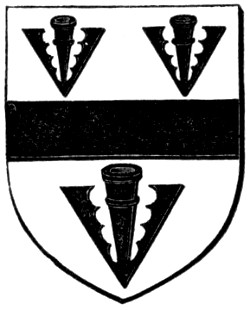
Rawdon, in the parish of Guiseley in this county, is the original seat of this ancient family, which is traced to Thor de Rawdon, whose son Serlo lived in the reign of Stephen. Rawdon remained the family residence till early in the seventeenth century, when Sir George Rawdon, the then head of the house, removed into the North of Ireland, and was seated at Moira, in the county of Down, where the family principally lived till the match with the heiress of Hastings in 1752.
See Whitaker's Leeds, vol. i. p. 171; Brydges's Collins, vol. iv. p. 606; Wotton's Baronetage, vol. iii. p. 467; and Archdall's Lodge, vol. iii. p. 95.
Arms.—Argent, a fess between three pheons sable.
Present Representative, Henry Weysford Charles Plantagenet Rawdon Hastings, 4th Marquess of Hastings.
Tancred of Borough-Bridge, Baronet 1662.
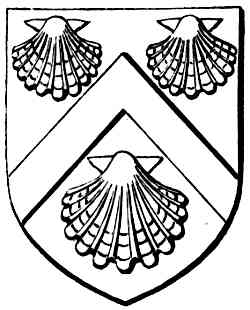
At a very early date, and probably not long after the Conquest, the ancestors of this family were seated at Borough-Bridge, which appears to have been ever since one of the residences of the house of Tancred.
See Wotton's Baronetage, vol. iii. p. 387.
Arms.—Argent, a chevron between three escallops gules.
Present Representative, Sir Thomas Tancred, 7th Baronet.
Meynell of North Kilvington.
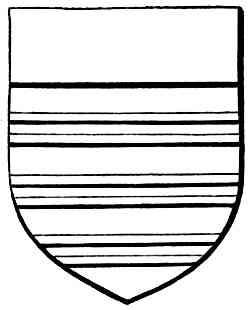
Hilton in Cleveland appears to have been the original seat of this ancient family; here it was resident in the twelfth century, and here it remained till the middle of the sixteenth, when Anthony Meynell, the immediate ancestor of the present family, removed by purchase to North Kilvington, which has since continued the residence of his descendants.
See Graves's History of Cleveland; and Burke's Landed Gentry.
Arms.—Azure, three bars gemelles and a chief or. This is the ancient coat of Meysnill or Meynell of Dalby-on-the-Woulds in Leicestershire, and was borne by Trevor de Menyll in the reign of Henry III., and also by Sir Nicholas de Meynell in that of Edward II., with the exception of two instead of three bars gemelles. (Rolls of the dates.)
Present Representative, Thomas Meynell, Esq.
Anne of Burgh-Wallis.
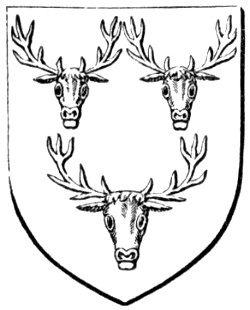
Of this family Mr. Hunter has remarked, that "it is a single instance of the male line being maintained in its ancient port and rank out of all the gentry of the Deanery of Doncaster, summoned to appear before the Heralds in 1584." The pedigree begins with Sir William de Anne, Constable of the Castle of Tickhill in the time of Edward II. He married the coheiress of Haringel, from whom came the manor of Frickley, sold in the latter part of the eighteenth century. Burgh-Wallis came from the heiress of Fenton in the reign of Elizabeth. Mr. Hunter observes, "The Annes, like too many other families, have not been careful of preserving their ancient evidences, and theirs was not one of the muniment rooms to which our diligent antiquary Dodsworth had access."
See Hunter's South Yorkshire, vol. ii. pp. 148, 485.
Arms.—Gules, three stag's heads cabossed argent attired or.
Present Representative, George Anne, Esq.
Lister of Gisburn, Baron Ribblesdale 1797.
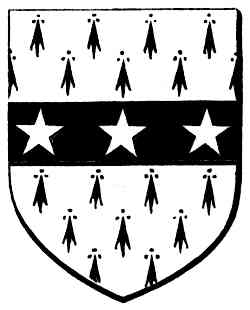
The pedigree is traced to the sixth of Edward II., when John de Lister was resident at Derby. He married the daughter and heiress of John de Bolton, Bowbearer of Bollond, and thus became connected with this county. The elder line was of Mydhope, or Middop, and afterwards, in the reign of Philip and Mary, of Thornton in Craven, and became extinct in 1667. The present family is sprung from Thomas, second son of Christopher Lister, who lived in the time of Edward IV. The Listers were of Gisburn early in the sixteenth century, the ancient seat of Arnoldsbiggin in that manor being their seat for many generations. Lyster, of Rowton, in Shropshire, is supposed to be a branch of this family, though there is no evidence of the fact; Rowton has been in possession of the Lysters since 1482.
See Whitaker's Craven, ed. 1812, pp. 38, 103; and Brydges's Collins, vol. viii. p. 584; and for Rowton, Blakeway's Sheriffs of Salop, p. 144.
Arms.—Ermine, on a fess sable three mullets or. Lyster of Rowton bears the mullets argent.
Present Representative, Thomas Lister, 3rd Baron Ribblesdale.
Lascelles of Harewood; Earl of Harewood 1812 Baron 1796.
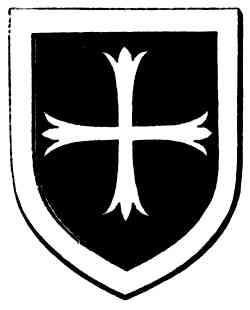
A family of ancient standing in this county, descended from John de Lascelles, of Hinderskelfe, now called Castle Howard, in the wapentake of Bulmer, in the North riding, living in the ninth year of Edward II. For seven generations immediately following they were called "Lascelles alias Jackson." About the reign of Henry VI. they removed to Gawthorpe, also in the North riding, and afterwards to Stank and Northallerton; Harewood was purchased about 1721.
See Whitaker's Leeds, vol. i. p. 169; and Brydges's Collins, vol. viii. p. 508.
Arms.—Sable, a cross flory within a border or. This coat, without the border, was borne by Monsieur Lascelles de Worthorpe, as appears by the Roll of the reign of Edward III. Monsieur Rafe de Lascelles bore at the same period, Argent, three chaplets of roses vermaux, with a border engrailed sable.
Present Representative, Henry Thynne Lascelles, fourth Earl of Harewood.
Wombwell of Wombwell, Baronet 1778.
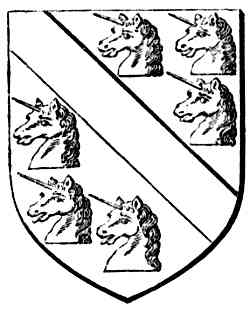
There was a family who took the local name of Wombwell from that manor in the thirteenth century, but this cannot with certainty be connected with it. The pedigree therefore commences with Hugh Wombwell of Wombwell, son of Henry Lowell de Wombwell, living in the reign of Edward III. The elder branch of this family became extinct in the male line on the death of William Wombwell of Wombwell, Esq. in 1733. Part of the estate from whence the name is derived belongs to the present family, who represent a junior line, descended from George Wombwell, of Leeds, who died in 1682, by purchase of the coheirs.
See Hunter's South Yorkshire, vol. ii. p. 124.
Arms.—Gules, a bend between six unicorn's heads cooped argent; and so borne in the sixth of Henry IV.
Present Representative, Sir George Orby Wombwell, 4th Baronet.
Palmes of Naburn.
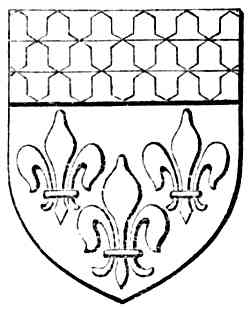
There appears no reason to doubt the antiquity of this family, said to be descended from Manfred Palmes, living in the reign of Stephen, and seated at Naburn since the year 1226, by a match with the heiress of Watterville.
See Burke's Landed Gentry.
Arms.—Gules, three fleurs-de-lis argent, a chief vaire.
Present Representative, the Rev, William Lindsay Palmes.
Roundell of Screven.
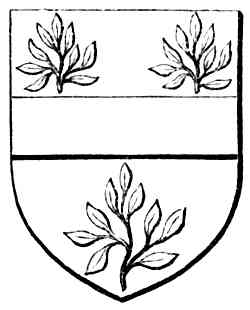
On the authority of Whitaker we learn that Screven has been in this family since the early part of the fifteenth century; the first recorded ancestor being John Roundell, of Screven, living in the third of Henry VI.
See Whitaker's Craven, ed. 1812, p. 76.
Arms.—Or, a fess gules between three olive-branches vert.
Present Representative, the Rev. Danson Richardson Roundell.
"There is no subject more difficult to be dwelt on than that of honourable descent; none on which the world are greater sceptics, none more offensive to them; and yet there is no quality to which every one in his heart pays so great a respect."—SIR EGERTON BRYDGES'S Autobiography, p. 153.