Noble and Gentle Men of England (continued 3)
Reading edition
Arms.—Per fess gules and argent, three cinquefoils counterchanged, borne by Monsieur William Swynburne in the reign of Richard II. (Roll of the date.)
Present Representative, Sir John Swinburne, 7th Baronet.
Middleton (called Monck) of Belsey Castle, Baronet 1662.
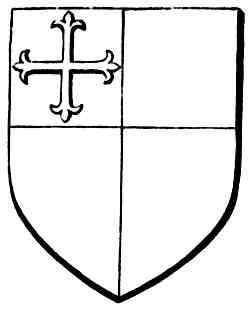
John de Middleton, father of Sir Richard Middleton, sometime secretary and chancellor to King Henry III., is the first on record of the ancestors of this family. The castle of Belsey appears to have come from the heiress of Stryvelin in the reign of Edward III. The name was exchanged for Monck in 1799. A younger branch, now extinct, was of Silksworth, co. Durham.
See Hodgson's History of Northumberland, vol. i. pt. ii. p. 353; "The Record of the House of Gourney," 4to, pr. pr. 1848, p. 560; and Wotton's Baronetage, iii. 382.
Arms.—Quarterly gules and or, in the first quarter a cross flory argent.
Present Representative, Sir Charles Miles Lambert Monck, sixth Baronet.
Selby of Biddleston.
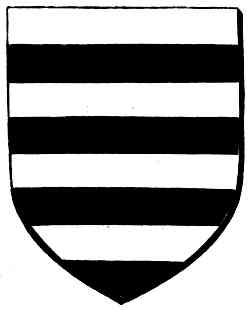
In 1272, King Edward I. granted in the first year of his reign the lands of Biddleston to Sir Walter de Selby: it has ever since remained in the possession of his descendants, and has been usually the chief seat of the Selbys. Their early history unfortunately is defective, occasioned by an accidental fire which took place at Allenton in 1721, at that time the residence of the family, whose evidences were thereby mostly destroyed.
For the grant above mentioned, and for the pedigree, see Mackenzie's View of Northumberland, ii. 39.
Arms.—Barry of eight or and sable.
Present Representative, Walter Selby, Esq.
Grey of Howick, Earl Grey 1806, Baronet 1746.
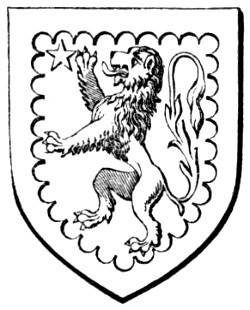
An eminent border family, of which there have been many branches, descended from Thomas Grey of Heton, living in the second of Edward I. (1273), and from Sir John Grey of Berwick, living in 1372, who was ancestor of the baronial house of Grey of Wark and Chillingham, and of the Howick family, founded by Sir Edward Grey of Howick, who died in 1532, and was the fourth son of. Sir Ralph Grey of Chillingham.
"No family perhaps in the whole of England," writes Raine in his admirable History of North Durham, "has in the course of the centuries through which the line of Grey can be traced, afforded so great a variety of character."
Younger Branches. Sir George Grey, Baronet 1814, and Grey of Morwick, co. Northumberland.
See the curious and valuable "Illustrations of the Pedigree of Grey," in Raine's North Durham, p. 327, &c.; Surtees's Durham, ii. 19; and Brydges's Collins, v. 676.
Arms.—Gules, a lion rampant within a border engrailed argent, a mullet for difference. The present coat was borne by Monsieur Thomas Grey, as appears by the Roll of the reign of Richard II.
Present Representative, Henry George Grey, 3rd Earl Grey, K. G.
Gentle.
Loraine of Kirk-Harle, Baronet 1664.
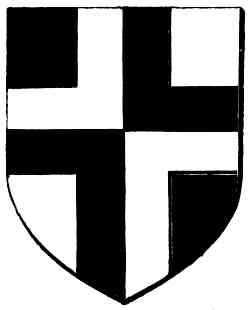
This is said to be a Norman family, and to have been originally settled in the county of Durham. Kirk-Harle was inherited from Johanna, daughter of William, son of Alan del Strother, in the time of Henry IV.
See Hodgson's History of Northumberland, vol. i. pt. ii. p. 246; and Wotton's Baronetage, iii. 433.
Arms.—Quarterly sable and argent, a plain cross counter quartered of the field. Another coat, viz. Argent, five lozenges conjoined in pale azure, in the dexter chief an escucheon of the second, is given in Courthope's Debrett's Baronetage.
Present Representative, Sir Lambton Loraine, 11th Baronet.
Haggerston of Ellingham, Baronet 1643.
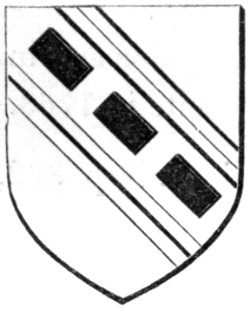
The pedigree is not regularly traced beyond Robert de Hagreston, Lord of Hagreston in 1399, although a Robert de Hagardeston occurs in 1312. It has been supposed that this family is of Scotch extraction; but a fire which took place at Haggerston Castle, the ancestral seat of this house, in the year 1618, and another which happened in 1687, having destroyed the ancient evidences, the early history is somewhat imperfect.
See Mackenzie's Northumberland, i. p. 328, note; Raine's North Durham, p. 224; and Wotton's Baronetage, ii. 388.
Arms.—Azure, on a bend cotised argent three billets sable. The ancient arms of this venerable family, of which Raine writes, "few families can boast of such a pedigree or of such a shield of arms," was a scaling ladder between two leaves, alluding to the coat of Hazlerigg, an heiress of that house having married into the Haggerston family. The arms were so borne in 1577, as appears by a seal of that date: the scaling ladder was afterwards corrupted into the bendlets and billets.
Present Representative, Sir John Haggerston, 9th Baronet.
Ridley of Blagdon, Baronet 1756.
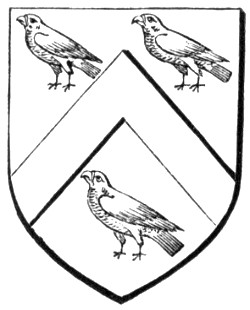
The pedigree is proved for three descents before the reign of Henry VIII., the original seat of the family being at Willimoteswick in this county, of which place Nicholas de Rydle is designated Esquire in 1481; here also was born the Martyr Bishop of London, Nicholas Ridley, early in the sixteenth century.
The present family is a younger branch, seated at Blagdon and inheriting the baronetcy on the death of Sir Mathew White in 1763.
See Hodgson's History of Northumberland, vol. ii. pt. ii. p. 322, and vol. iii. pt. ii. p. 340.
Arms.—Gules, a chevron between three goshawks argent. The more ancient coat was, Argent, an ox passant gules through reeds proper.
Present Representative, Sir Mathew White Ridley, 4th Baronet.
NOTTINGHAMSHIRE.
Knightly.
Clifton of Clifton, Baronet 1611.
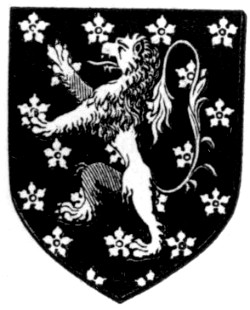
Gervase de Clifton, living in the fifth of John, is the patriarch of this honourable family, who took their name from the manor of Clifton, which was the inheritance of Sir Gervase Clifton, in the ninth of Edward II. One of the most remarkable members was the first Baronet, Sir Gervase Clifton, who died in 1666, "very prosperous and beloved of all, after having been the husband of seven wives."
See an interesting account of him and of the family and their curious monuments in Thoroton's Antiquities of Nottinghamshire, p. 53, &c.; see also Wotton's Baronetage, i. 34.
Arms.—Sable, semee of cinquefoils, and a lion rampant argent, armed and langued gules. This coat reversed was borne by Monsieur John de Clyfton, in the reign of Richard II. (Roll of the date.)
Present Representative, Sir Robert Juckes Clifton, 9th Baronet.
Sutton of Norwood, Baronet 1772.
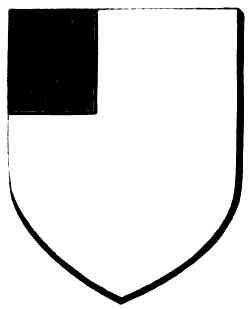
Sutton-upon-Trent gave name to this ancient family, the first upon record being Roland, son of Hervey, who lived in the reign of Henry III., and married Alice, daughter and coheiress of Richard de Lexington. From this match came the manor of Averham or Egram in this county, which long continued the seat and residence of the Suttons, who were represented in the days of Queen Elizabeth by Sir William Sutton, whom her Majesty coupled, not in the most complimentary manner, with three other eminent Nottinghamshire knights in the following distich:—
"Gervase the gentle,* Stanhope the stout, Markham the lion, and Sutton the lout."
In 1646, Robert Sutton, the head of this family, was raised to the Peerage as Baron Lexington, extinct 1723, who is represented in the female line by Viscount Canterbury. The present family descend from Henry, younger brother of the first Lord Lexington.
See Thoroton's Nottinghamshire, pp. 327, 359; and Courthope's Debrett's Baronetage, p. 195.
Arms.—Argent, a canton sable.
Present Representative, Sir John Sutton, 3rd Baronet.
* i.e. Sir Gervase Clifton.
Stanhope of Shelford, Earl of Chesterfield 1628.
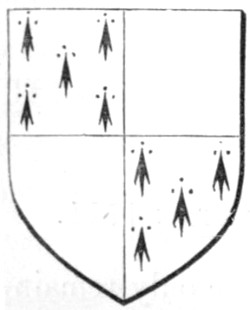
Stanhope, in the wapentake of Darlington in the bishoprick of Durham, gave name to this knightly family, of whom the first recorded ancestor is Walter de Stanhope, whose son Richard died at Stanhope, in 1338 or 1339. In the reign of Edward III. we find Sir Richard Stanhope, grandson of Walter, Mayor of Newcastle-on-Tyne. Hampton and other manors in this county came by marriage with the heiress of Maulovel about 1370; but on the death of Richard Stanhope in 1529, these estates went to his only daughter and heiress, who became the wife of John Babington. The monastery of Shelford was soon after this period granted to Sir Michael Stanhope (in the 31st of Henry VIII).
Younger Branches. 1. Stanhope of Holme-Lacy, Baronet 1807, descended from the youngest brother of the great-grandfather of the present Earl. 2. Stanhope Earl Stanhope 1718, descended from the eldest son of the second marriage of the first Earl of Chesterfield. 3. Stanhope Earl of Harrington 1742, descended from Sir John Stanhope, younger brother by the half-blood of the first Earl of Chesterfield.
See Lord Mahon's (now Earl Stanhope) Notices of the Stanhopes. 8vo., 1855; Thoroton's Nottinghamshire, 147; Surtees's Durham, ii. 46; and Brydges's Collins, iii. 407, iv. 171, and 284.
Arms.—Quarterly ermine and gules. And so borne in the reign of Edward III., but after the match with Maulovel, who brought into the family the estate and seat of Rampton from the heiress of Longvillers, the arms of that family, viz. Sable, a bend between six cross-crosslets argent, were assumed; on losing that great estate, Sir Michael Stanhope resumed the more ancient coat in the reign of Henry VIII.
Present Representative, George Stanhope, 6th Earl of Chesterfield.
Willoughby of Wollaton, Baron Middleton 1711.
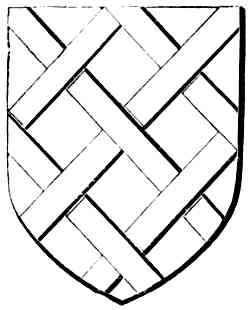
This is a younger and now the only remaining male branch of the great Lincolnshire family of Willoughby, descended from Sir Thomas Willoughby, Lord Chief Justice of the Common Pleas in the reign of Henry VIII., youngest son of Sir Christopher Willoughby of Eresby, who was sprung from Sir William Willoughby of Willoughby in Lincolnshire, and lord of that manor in the reign of Edward I. Wollaton was inherited from the heiress of Willoughby (of another family) in the thirty-eighth year of Queen Elizabeth.
See Brydges's Collins, vi. 591, vii. 215; and for the Nottinghamshire family, see Thoroton, p. 221; and for the tombs of this ancient house, pp. 36, 223, 227; see also Dugdale's Warwickshire, 2nd ed. vol. ii. p. 1052.
Arms.—Or, fretty azure. And so borne by Robert de Willoughby in 1300, as appears by the Roll of Carlaverock; but after the death of Bishop Bek, his maternal uncle, in the 4th of Edward II. he adopted the coat of Bek, Gules, a mill-rind argent. See Nicolas's Roll of Carlaverock, p, 328.
Willoughby of Wollaton and of Middleton in the county of Warwick bore, Or, two bars gules, the upper charged with two waterbougets, the lower with one waterbouget, argent.
Present Representative, Henry Willoughby, 8th Baron Middleton.
Clinton of Clumber, Duke of Newcastle 1756.
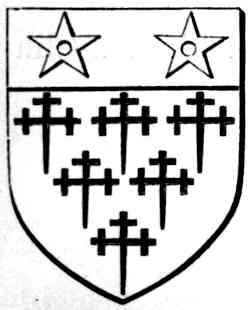
The Clintons are traced to the reign of Henry I., when, by favour of that king, Geffery de Clinton "was raised from the dust," as a contemporary writer affirms, and made Justice of England. He was enriched by large grants of land from the crown, and built the castle of Kenilworth. The present family descend from the brother of this Geffery, whose issue were of Coleshill and Maxtoke in Warwickshire, of which latter place John de Clinton was created Baron in 1298. His descendant, Edward Lord Clinton, was advanced to the Earldom of Lincoln in 1572. No family was more nobly allied, few had broader possessions—all have been long dissipated; but a fortunate match with the eventual heiress of Pelham in 1717 revived the drooping fortunes of the Clintons; hence the estate of Clumber, the former seat of the Holles family, and the Dukedom of Newcastle.
See Dugdale's Warwickshire, 2nd ed. vol. ii. pp. 992, 1007; and Brydges's Collins, ii. 181.
Arms.—Argent, three cross crosslets fitchée sable, on a chief azure two mullets pierced of the first. The original arms, as borne by Thomas de Clinton in the reign of Henry III., appears to have been a plain chief. See his seal engraved in Upton, de Studio Militari, p. 82. In the reign of Edward II. Sir John Clinton of Maxtoke bore, Argent, on a chief azure two mullets or. At the same period another Sir John Clinton bore, Or, three piles azure, a canton ermine. His son in the fifth of Edward III. bore, Argent, on a chief azure two fleurs-de-lis or. William Clinton, Earl of Huntingdon, at the same period bore the present coat with the exception of three mullets or in place of the two mullets argent, and John Clinton omitted the crosslets. William Clinton, Lord of Allesley, who lived at the same period, bore the present coat. John de Clinton in the succeeding reign, bore two mullets of six points or pierced gules, and Thomas de Clynton the same with a label of three points ermine.
See Willement's and Nicolas's Rolls, and Montagu's Guide to the Study of Heraldry, p. 51.
Present Representative, Henry Pelham Alexander Pelham-Clinton, 6th Duke of Newcastle.
Gentle.
Eyre of Hampton.
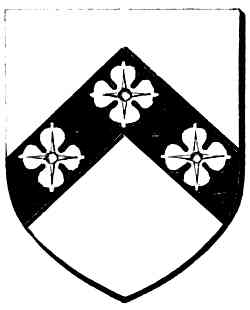
The Eyres appear as witnesses to charters in the Peak of Derbyshire in the remotest period to which private charters ascend. The first of the name known is William le Eyre, of Hope, in the reign of Henry III. In the reign of Henry V. the family divided into three great branches: the present house descends from Eyre of Laughton in South Yorkshire, who spring from Eyre of Home Hall near Chesterfield. One moiety of Rampton was purchased by Anthony Eyre in the reign of Elizabeth; the other came from the coheiress of Babington, in 1624.
See Hunter's South Yorkshire, i. 288; see also Lysons's Derbyshire, lxxxiii., for a note on the various branches of Eyre, and Gent. Mag. 1795, pp. 121, 212.
Extinct Branches. 1. Eyre of Highlow, who adopted the names of Archer, Newton, and Gell. 2. Eyre of Normanton-upon-Soar. 3. Eyre Earl of Newburgh.
Arms.—Argent, on a chevron sable three quatrefoils or.
Present Representative, the Rev. Charles Wasteneys Eyre.
OXFORDSHIRE.
Knightly.
Stonor of Stonor, Baron Camoys 1383, restored 1839.
"Stonor is a 3 miles out of Henley. Ther is a fayre parke and a warren of connies and fayre woods. The mansion place standithe clyminge on a hille, and hathe 2 courtes buyldyd withe tymbar, brike, and flynte; Sir Walter Stonor, now possessor of it, hathe augmentyd and strengthed the howse. The Stonors hathe longe had it in possessyon syns one Fortescue invadyd it by mariage of an heire generall of the Stonors, but after dispocessed." Thus wrote Leland in his Itinerary, (vii. fo. 62a.): to which it may be added that the family has the reputation of being very ancient, and may certainly be traced to the twelfth century as resident at Stonor. In the reigns of Edward II. and III., Sir John Stonor, Chief Justice of the Common Pleas, (whose tomb is preserved in the chancel of Dorchester church in this county,) was the representative and great advancer of the family.
See Magna Britannia, iv. 425; and the first edition of Burke's Commoners, ii. 440; see also Excerpta Historica, p. 353, for some curious letters of the Stonors of the time of Edward IV.
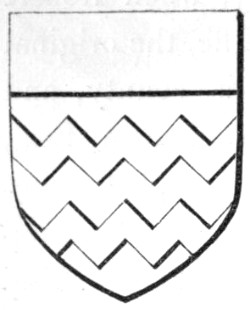
Arms.—Azure, two bars dancetté or, a chief argent. Monsieur John de Stonor bore, Azure, a fess dancetté and chief or, in the reign of Edward III. (Roll.)
Present Representative, Thomas Stonor, 3rd Baron Camoys.
Wykeham of Tythrop.
This ancient family is traced to the commencement of the fourteenth century, when Robert Wykeham was Lord of Swalcliffe, the original seat of the Wykehams in this county, and possessed by the late W. H. Wykeham, Esq., who died in 1800, and still, I believe, belonging to his daughter the Baroness Wenman. Tythrop came from the Herberts by will to the late P. P. Wykeham, Esq. uncle of Lady Wenman.
The relationship of the great William of Wykeham, Bishop of Winchester, with this family is a disputed point, for which see Collectanea Topographica et Genealogica, ii. 225, 368, iii. 178, 245; see also the Topographer and Genealogist, iii. 49, for a very interesting paper on this subject by C. Wykeham Martin, Esq., M.P.
Younger Branch. Wykeham Martin, of Leeds Castle, Kent.
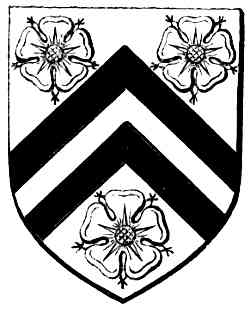
Arms.—Allowed by Robert Cooke, Clarencieux, in 1571.—Argent, two chevronels sable between three roses gules, barbed and seeded proper. This coat was borne by the great Bishop, though when he was Archdeacon of Lincoln he bore but one chevron between the roses. But the herald Glover attributed a variation of the arms of Chamberlaine, derived from the Counts of Tankerville, to Wykeham of Swalcliffe, viz: Ermine, on a bordure gules six mullets or.
Present Representative, Philip Thomas Herbert Wykeham, Esq.
Croke of Studley, anciently Blount.
This is the eldest branch of the great family of Blount or le Blond, whose origin has been traced by the late Sir Alexander Croke to the Counts of Guisnes before the Norman Conquest. Robert le Blount, whose name is found recorded in Domesday, was a considerable landholder in Suffolk, Ixworth in that county being the seat of his Barony. Belton in Rutlandshire was afterwards inherited by his descendants from the Odinsels, and Hampton-Lovet, in the county of Worcester, from the Lovet family. In 1404, Nicholas le Blount, who had been deeply engaged in the conspiracy to restore Richard II. to his throne, changed his name to Croke, on his return to England, in order to avoid the revenge of Henry IV. The Crokes afterwards became a legal family, and seated themselves at Chilton in Buckinghamshire. The priory of Studley was purchased from Henry VIII. by John Croke, in 1539.
Younger Branches. Blount of Sodington, in the county of Worcester, and of Mawley Hall in Shropshire, descended from William, second son of Sir Robert le Blount, who died in 1288, and the heiress of Odinsels. The Blounts of Maple-Durham in this county, and the extinct Lords Mountjoy, are of a still junior line to the house of Sodington. The other extinct branches are too numerous to mention.
See Croke's Genealogy of the Croke Family, 4to. 1823, and "The Scrope and Grosvenor Roll," vol. ii. p. 192, for a memoir of Sir Walter Blount, who fell at the battle of Shrewsbury together with Sir Hugh Shirley and two other knights in the royal coat-armour of Henry the Fourth—
"semblably furnished like the King himself."
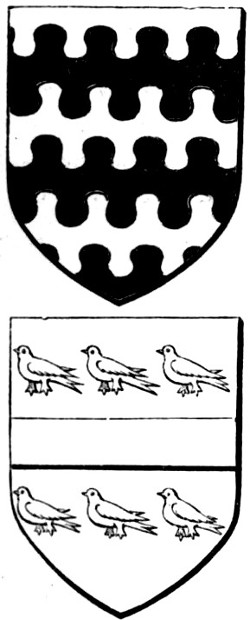
Arms.—For Blount. Barry nebulée of six or and sable. For Croke, Gules, a fess between six martlets argent. The more ancient coat was, Lozengy or and sable, which was borne by William le Blount in the reign of Henry III. Sir William le Blount of Warwickshire, (so called because he held under the Earl of Warwick,) bore the present nebulée coat in the reign of Edward II. Sir Thomas le Blount at the same period the fess between three martlets, now called the coat of Croke. (Rolls of the dates.)
Present Representative, George Croke, Esq.
Ashurst of Waterstock.
A Lancashire family of good antiquity, and until the middle of the last century lords of Ashurst in that county, where they appear to have been seated not long after the Conquest. In the reign of James II. the eldest son of a younger brother was created a Baronet, of Waterstock in this county. His daughter and eventual heiress married Sir Richard Allin, Baronet, whose daughter, marrying Mr. Ashurst of Ashurst, great-grandfather of the present representative of the family, brought the estate of Waterstock into the elder line of the Ashursts.
See Burke's Extinct and Dormant Baronetage, and his Landed Gentry.
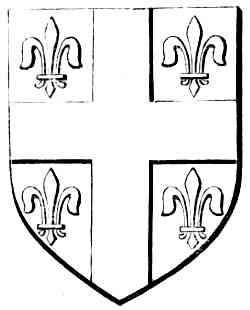
Arms.—Gules, a cross between four fleurs-de-lis argent. The Baronet family bore the cross engrailed or, and but one fleur-de-lis of the same.
Present Representative, John Henry Ashurst, Esq.
Annesley of Bletchingdon, Viscount Valentia in Ireland 1621.
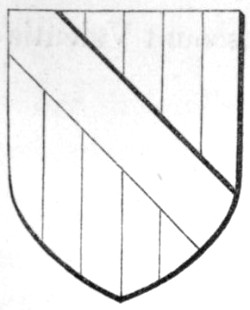
Ralph, surnamed Brito de Annesley, living in the second year of Henry II. (1156,) is assumed to have been son of Richard, of Annesley, in the county of Nottingham, mentioned in the Domesday Survey. That estate continued in the Annesleys till the death of John de Annesley, Esq., in 1437, when it went by an heiress to the Chaworths. The family then removed to Rodington in the same county, and afterwards to Newport-Pagnell in Buckinghamshire; but Ireland was the scene of the prosperity of the family, early in the seventeenth century, which may be said to have been re-founded by Sir Francis Annesley, Secretary of State in 1616. Hence the Viscountcy of Valentia, which afterwards merged in the Earldom of Anglesey in England, adjudged by the English House of Lords to be extinct in 1761; but by the same evidence the Viscountcy of Valentia was allowed to the grandson of the last Earl of Anglesey, whom the English House of Lords found to be illegitimate. He was created Earl of Mountnorris in Ireland in 1793, and on the decease of the last Earl in 1844, the Irish Viscountcy and the representation of the family descended to Arthur Annesley of Bletchingdon, Esq., descended from the second marriage of the first Viscount Valentia.
Younger Branches. 1. Annesley of Clifford Chambers, co. Gloucester. 2. The Earl of Annesley in Ireland, 1789.
See Baker's Northamptonshire, i. 502; Thoroton's Nottinghamshire, p. 251; Archdall's Lodge, iv. 99; and the Tyndale Genealogy, privately printed, folio, 1843.
Arms.—Paly of six argent and azure, a bend gules. Monsieur de Annesley bore, Paly of six argent and gules, a bend vairy argent and sable, in the reign of Edward III. The present coat was borne by John de Annesley in the reign of Richard II. (Rolls.)
Present Representative, Arthur Annesley, 11th Viscount Valentia.
Villiers of Middleton-Stoney, Earl of Jersey 1697.
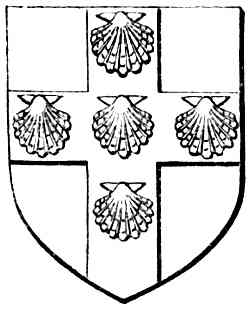
The family of Villers or Villiers is ancient in Leicestershire, Alexander de Villiers being lord of Brokesby in that county early in the thirteenth century. The present coat of arms is said to have been assumed in the reign of Edward I., as a badge of Sir Richard de Villers' services in the crusades. "Villiers of Brokesby" occurs among the gentlemen of Leicestershire, "that be there most of reputation," in the Itinerary of Leland the antiquary in the reign of Henry VIII. But the great rise of the family was in the reign of James I., when the favourite Sir George Villiers became Duke of Buckingham in 1623, extinct 1687. The Earls of Jersey are sprung from the second but elder brother of the first duke. Their connection with Oxfordshire appears not to have been before the middle of the last century. Brokesby was sold by Sir William Villiers, who died s. p. 1711.
Younger Branch. The Earl of Clarendon (1776), descended from the second son of the second Earl of Jersey.
Extinct branch. The Earl of Grandison in Ireland, 1721; extinct 1766; descended from the elder brother of Sir Edward Villiers, who died 1689, ancestor of the Earl of Jersey.
See Leland's Itinerary, i. fol. 23, and vi. fol. 65; Nichols's Leicestershire, iii. pt. i. p. 197; and Brydges's Collins, iii. 762.
Arms.—Argent, on a cross gules five escallops or. The ancient arms founded on those of the Bellemonts Earls of Leicester were Sable, three cinquefoils argent.
Present Representative, Victor Albert George Villiers, 7th Earl of Jersey.
Gentle.
Coker of Bicester.
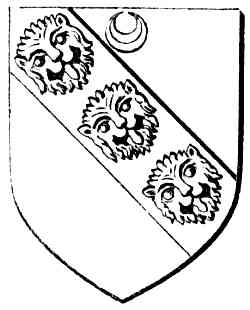
The younger, but I believe now the only remaining, line of a family formerly seated at Coker in the county of Somerset, where it can be traced to the time of Edward I. Mapouder in Dorsetshire, derived from the heiress of Veale in the reign of Henry V., became afterwards the family seat. In 1554, John Coker, who appears to have been second son of Thomas Coker, of Mapouder, purchased the Manor of "Nuns' Place or King's End in Biscester," which has since remained the residence of this ancient family.
See Coker's Survey of Dorsetshire, p. 98; Hutchins's History of Dorsetshire, vol. iii. p. 273; Kennett's Parochial Antiquities, 1st. ed. p. 109; and Burke's Commoners, 2nd ed. vol. iii. p. 347.
Arms.—Argent, on a bend gules three leopard's heads or. The Mapouder line bore the arms within a border engrailed sable; but the elder branch of the family, who are represented by the Seymours Dukes of Somerset, omitted the border.
Present Representative, Lewis Coker, Esq.
Parker of Shirburn Castle, Earl of Macclesfield 1721, Baron Parker 1716.
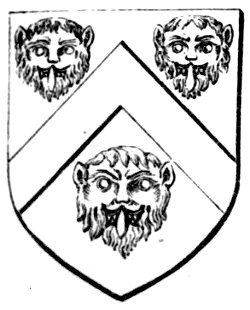
By the decease of the late Thomas Hawe Parker, Esq., of Park Hall, in the county of Stafford, the representation of the family has devolved upon the Earl of Macclesfield, who represents the junior line. The Parkers were established at Park Hall, in the parish of Caverswall, in the seventeenth century, having been previously seated at Parwich, and before that at Norton-Lees, in the county of Derby. The first recorded ancestor, Thomas Parker, was of Bulwell, in Nottinghamshire, in the reign of Richard II. He married the heiress of Gotham, and from hence, says Lysons, the seat of Norton-Lees.
See Lysons's Derbyshire, p. cxxxviii.; Brydges's Collins, iv, 190; and Ward's Stoke-upon-Trent, p. 561.
Arms.—Gules, a chevron between three leopard's heads or.
Present Representative, Thomas Augustus Wolstenholme Parker, 6th Earl of Macclesfield.
RUTLANDSHIRE.
Knightly.
Wingfield of Tickencote.
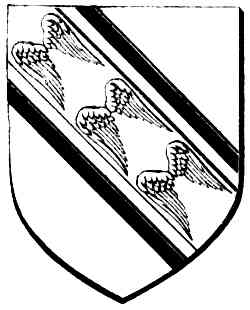
The Wingfields of Wingfield and Letheringham, both in Suffolk, a distinguished family of the fourteenth and fifteenth centuries, are traced nearly to the Conquest, though they do not appear to have been lords of the manor or castle of Wingfield before the reign of Edward II. The elder branch of this family is represented by the Viscount Powerscourt in Ireland, descended from Lewis the ninth son of Sir John Wingfield of Letheringham. The present family is sprung from Henry, a younger brother of this Sir John, who died in 1481. Tickencote was acquired by marriage in the reign of Elizabeth with the heiress of Gresham.
Younger Branch. Wingfield of Onslow in Shropshire, according to the Visitation of that county, descended from Anthony Wingfield of Glossop, co. Derby, younger son of Sir Robert Wingfield of Letheringham, who died in 1431.
See the elaborate dissertation on the House of Wingfield in the second volume of Anstis's Register of the Order of the Garter; see also Blakeway's Sheriffs of Shropshire, pp. 147, 150; Camden's Visitation of the county of Huntingdon, 1613, (printed by the Camden Society,) p. 125, &c.; and Blore's Rutlandshire, (fo. 1811,) for full pedigrees of the different branches formerly seated at Crowfield and Dunham-Magna, co. Norfolk; Kimbolton Castle, co. Huntingdon; Letheringham and Brantham, co. Suffolk; and Upton, co. Northampton, p. 65-70. For Viscount Powerscourt, see Archdall's Lodge, v. 255.
Arms.—Argent, on a bend gules cotised sable three pair of wings conjoined of the field. In the reign of Richard II. Monsieur William Wyngefeld bore, Gules, two wings conjoined in lure argent. (Roll.)
Present Representative, John Muxloe Wingfield, Esq.
SHROPSHIRE.
Knightly.
Corbet of Moreton-Corbet, Baronet 1808.
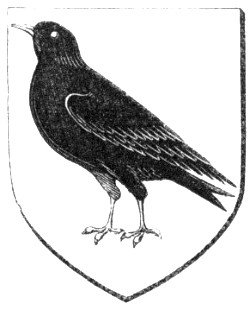
Pre-eminent among the ancient aristocracy of Shropshire is the House of Corbet, descended from "Roger, son of Corbet," so called in the Domesday Survey. In the twelfth century the Corbets divided into two branches; the elder was seated at Wattlesborough, the younger at Caus-Castle. In the time of Henry III. the former became of Moreton-Corbet, derived from the heiress of the Anglo-Saxon family of Toret; but the Caus-Castle line was by far the most eminent, and became barons of the realm. In the reign of Richard II. several of the most ancient of the Corbet estates were lost by an heiress; and this happened again in 1583, when the lands brought into the family by the heiress of Hopton went by marriage to the Wallops and Careys. Moreton-Corbet remained till 1688, when it also descended to the sister of Sir Vincent Corbet; but the male line was still preserved by the Corbets of Shrewsbury, and the ancient estate of Moreton-Corbet re-purchased about 1743.
Younger Branch. Corbett of Elsham (co. Lincoln) and of Darnhall (co. Chester,) descended from Robert second son of Sir Vincent Corbet, of Moreton-Corbet, who died in 1622.
Extinct Branches. 1. Corbet of Stoke and Adderley in this county, Baronet 1627, sprung from Reginald third son of Sir Robert Corbet of Moreton-Corbet; extinct 1780. 2. Corbet of Hadley in this county, descended from the second marriage of Sir Roger Corbet of Wattlesborough, who died temp. King John. The heiress married John Greville, in the 7th Henry V. 3. Corbet of Longnor in this county, and of Leighton, co. Montgomery, Baronet 1642, descended also from John third son of Peter Corbet, Baron of Caus, and Alice Orreby; extinct 1814. 4. Corbet of Sundorne, formerley of Leigh in this county, descended from John third son of Peter Corbet, Baron of Caus, and of Alice his wife, daughter of Sir Fulke de Orreby; extinct 1859.
See Blakeway's Sheriffs of Shropshire, fol. Shrewsbury, 1831, pp. 37, 63, 65, 230, &c., corrected by the MSS. of the late Mr. Joseph Morris of Shrewsbury;* see also Eyton's Antiquities of Shropshire, vol. vii. p. 5; and Gent. Mag. for 1809, pp. 599, 903.
Arms.—Or, a raven proper. The present coat, "Or, un corbyn de sable," was borne by Sir Peter Corbet in the reign of Edward II.; but Thomas Corbet, in that of Henry III., bore "Or, 2 corbeaux sable," which, with the addition of a bordure engrailed sable, is the coat of the Corbets of Sundorne. Or, three ravens in pale proper, was borne by Corbet of Hadley, and was so borne by Sir Thomas Corbet in the reign of Edward II. (Rolls.)
Present Representative, Sir Vincent Rowland Corbet, 3rd Baronet.
* In future quoted as "Morris MSS."
Leighton of Loton, Baronet 1692-3.
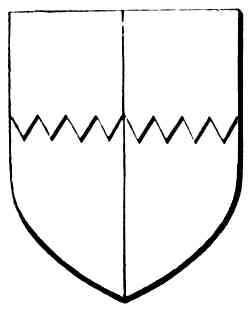
The Leightons are stated to have been seated at Leighton in this county prior to the Conquest: Domesday has "Rainald (vicecom') ten' Lestone; Leuui tenuit temp. Reg. Edw." Hence there can be no doubt the name Lestone, i.e. Lewi's-town, now Leighton, was derived. Certain it is that the direct ancestors of the family of Leighton were resident there at the very commencement of the twelfth century. From Rainald the sheriff, who was the superior lord of Leighton when Domesday was compiled, that and all his other manors passed in marriage with his daughter to Alan, the ancestor of the Fitz-Alan family; and in the Liber Niger, under the year 1167, Richard son of Tiel (Tihel) is stated to hold Leighton under William Fitz-Alan by the service of one knight. This Richard was the undoubted ancestor of this ancient family. Leighton is now severed from the inheritance of the male line of the Leightons, belonging to Robert Gardner, Esq., whose wife was the heiress of the Kinnersleys, descended in the female line from the second marriage of Sir Thomas Leighton, knighted in 1513. Church Stretton, acquired by the heiress of Cambray in the fifteenth century, was for four generations the family seat. Loton (an ancient Corbet estate) was acquired by marriage with a coheiress of Burgh, by John Leighton, Sheriff of Shropshire in 1468.
See Eyton's Shropshire, vii. p. 325; Wotton's Baronetage, iv. 38; Blakeway, pp. 74, 75, 80, 91; Stemmata Botvilliana, 1858; and Morris MSS.
Arms.—Quarterly per fess indented or and gules. In 1315, Sir Richard de Leighton bore the present coat differenced by a bendlet, as appears by his seal attached to a deed still preserved at Loton: the same arms are on his monument, formerly in Buildwas Abbey, and now in Leighton church.
Present Representative, Sir Baldwin Leighton, 7th Baronet, late M.P. for South Salop.
Sandford of Sandford.
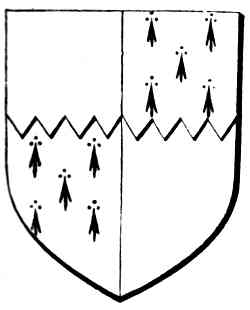
A family of acknowledged antiquity, whose ancestor Richard de Sanford was certainly seated at Sandford soon after the Conquest, and which has ever since remained their principal seat; it is in the parish of Prees, and is mentioned by Leland in his Itinerary. The Herald of the eighteenth century, and the late excellent Bishop of Edinburgh, were both of this family.
Younger Branch. Sandford of the Isle House near Shrewsbury, parted from the parent stem in the fifteenth century, and who also by marriage represent the ancient Shropshire families of Sprenghose and Winsbury.
See Eyton's Shropshire, ix. p. 221; and Blakeway, pp. 54, 190, 222.
Arms.—Quarterly per fess indented azure and ermine. The Sandfords of the Isle bear, Party per chevron sable and ermine, in chief two boar's heads couped close or.
Present Representative, Thomas Hugh Sandford, Esq.
Kynaston of Hardwicke, Baronet 1818.
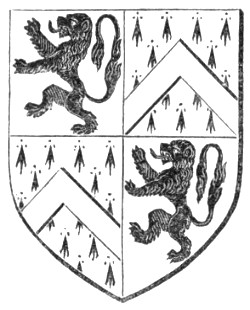
The Kynastons are lineal descendants of the ancient British Princes of Powys, sprung from Griffith, son of Iorwerth Goch, who took refuge in this county; where, as it is stated in the Testa de Nevill, King Henry II. gave him the manors of Rowton and Ellardine, in the parish of High Ercall, and Sutton and Brocton in the parish of Sutton, to be held in capite by the service of being latimer (i.e. interpreter) between the English and Welsh. He married Matilda, younger sister and coheir of Ralph le Strange, and in her right became possessed of the manor of Kinnerley and other estates in Shropshire. Madoc, the eldest son of Griffith, seated himself at Sutton, from him called to this day "Sutton Madoc;" Griffith Vychan, the younger son, had Kinnerley, a portion of his mother's inheritance, and in that manor he resided at Tre-gynvarth, Anglicè Kynvarth's Town, usually written and spoken as Kynaston; and hence the name of the family. Griffith or Griffin de Kyneveston, son of Griffith Vychan, was witness to a grant of land to the abbey of Haghmond in 1313. His lineal descendant Roger Kynaston fought at Blore Heathe in 1459, and Lord Audley the Lancastrian General is supposed to have fallen by his hand; hence the second quarter in the arms, and for this and other services he received the honour of knighthood. The Kynastons, from the place so called, went to Hordley, and latterly in the seventeenth century removed to Hardwicke.
The Kynastons of Oteley, extinct early in the eighteenth century, were an elder branch; they acquired Oteley by the marriage of an heiress of that ancient house in the reign of Henry VII., and were descended from John, elder brother of Sir Roger Kynaston before mentioned.
See Blakeway, p. 73; and Morris MSS.
Arms.—Quarterly, 1 and 4, Argent, a lion rampant sable; 2 and 3, Ermine, a chevron gules. Sir John de Kynastone in the reign of Edward II. bore, Sable, a lion rampant queve forchée or. (Roll.)
Present Representative, Sir John Roger Kynaston, 3rd Baronet.
Cornewall of Delbury.
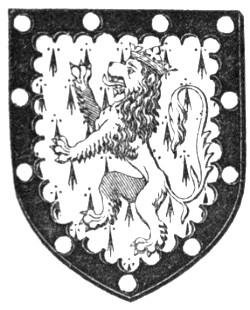
This is the only remaining branch of the once powerful family of Cornewall, for so many ages Barons of Burford, (though without a summons to parliament,) descended from Richard, natural son of Richard Earl of Cornwall, King of the Romans, and second son of John King of England: (an illegitimacy however which was denied at the Heralds' Visitation of this county in 1623, by Sir Thomas Cornewall, of Burford, who stated that the said Richard was the legitimate son of Richard Plantagenet, Earl of Cornwall, by Sanchia of Provence, his second wife). The Barony of Burford came into the Cornewall family before he ninth of Edward II. with the coheiress of Mortimer, and continued with the descendants till the death of Francis, Baron of Burford, in 1726. The present family is sprung from a younger line, seated at Berrington in the county of Hereford, in the fifteenth century, and which estate was sold in the eighteenth. Delbury was purchased by and became the seat of Frederick Cornewall, Esq. who died in 1788, and was father of the late Bishop of Worcester.
See Blakeway, pp. 72, 83, 92; and Morris MSS.
Arms.—Ermine, a lion rampant gules crowned or within a bordure engrailed sable bezantee. "Jeffery de Cornewall" and "Symon de Cornewall" bore, Argent, a lion rampant gules crowned or, with a baston sable, the first charged with three mullets or, the second with three bezants. (Roll of the reign of Edward III.) The present coat was borne by Monsieur Bryan Cornewall, in the reign of Richard II. (Roll.)
Present Representative, Herbert Cornewall, Esq.
Lingen (called Burton) of Longnor.
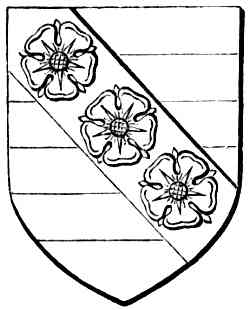
The first recorded ancestor of this loyal family is Ralph de Wigmore, lord of Lingen, in the county of Hereford, founder of the Priory of Lyngbroke. His son and grandson John took the name of Lingen: the latter is recorded in the Testa de Nevill as holding various estates in Herefordshire, "of the old feoffment," that is, by descent from the time of King Henry I. His lineal descendant, Sir John Lingen, of Lingen and Sutton, in the county of Hereford, having married in the reign of Edward IV. the daughter and coheiress of Sir John Burgh, succeeded to considerable estates in Shropshire, and to the manor of Radbrook, in the county of Gloucester, until recently the inheritance of his descendants. Longnor, the ancient seat of the Burtons, came into the family in 1722, by the marriage of Thomas Lingen, Esq. of Radbrook, with Anne, only daughter of Robert Burton, Esq. and sister and heir of Thomas Burton, of Longnor, Esq. Their son assumed the name of Burton by Act of Parliament in 1748.
From Morris MSS.
Arms.—Barry of six or and azure, on a bend gules three roses argent.
Present Representative, Robert Burton, Esq.
Harley of Down-Rossal.
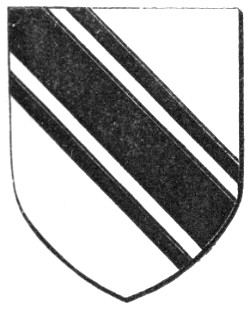
The origin of this knightly family has been recently explored by Mr. Eyton in his Antiquities of Shropshire, and from that valuable authority it appears that Edward and Hernulf, living in the first half of the twelfth century, were lords of Harley, and the ancestors of the race who were afterwards denominated therefrom. Sixth in descent from William de Harley living in 1231 was Sir Robert de Harley, who having married the coheiress of Brampton Bryan, in the county of Hereford, that place became the residence of his descendants, sprung from Sir Bryan his second son. The Shropshire estates went to the elder son, and passed through heiresses first to the Peshalls, and thence to the Lacons. Fifth in descent from Sir Bryan de Harley was John Harley, Esq. who signalised himself at Flodden Field in 1513. His eldest son was ancestor of the Earls of Oxford (1711,) extinct 1853. The present family, who now represent this ancient lineage, are descended from William third son of the above mentioned John. He died in 1600, having seated himself at Beckjay, in this county. The family afterwards became citizens of Shrewsbury, and acquired Down-Rossal, the present seat, in 1852.
See Eyton's Antiquities of Shropshire, vol. vi. p. 230; Collins's Noble Families, p. 184; Brydges's Collins, vol. iv. p. 37; and Morris MSS.
Arms.—Or, a bend cotised sable, and which was borne by Sir Richard de Harlee in the reign of Edward II. (Roll.)
Present Representative, John Harley, Esq.
Tyrwhitt, of Stanley-Hall, Baronet 1808.
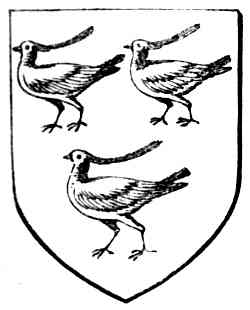
This is a younger branch of an ancient Lincolnshire family, according to Wotton, to be traced to Sir Hercules Tyrwhitt, living in the tenth of Henry I., and raised to eminence by Sir Robert Tyrwhitt, Justice of the Common Pleas and King's Bench in the reign of Henry IV. He was seated at Kettleby, in that county, which remained the residence of the elder branch, created Baronets in 1611, until its extinction in 1673. A younger son was of Scotter, in the same county, the ancestor of the present family, of whom John, fifth son of the Rev. Robert Tyrwhitt, married a descendant of the Jones's of Shrewsbury, and by her acquired the Stanley-Hall estate, and took the name of Jones, but the present Baronet has since resumed the ancient name of Tyrwhitt.
See Blakeway, p. 240; Wotton's Baronetage, i. 178; Camden's Remains, p. 151; Baker's Northamptonshire, i. 115 and "Notices and Remains of the Family of Tyrwhitt," &c. "printed not published." 8vo. n.d. [By R. P. Tyrwhitt, Esq. of the Middle Temple, eldest son of Richard Tyrwhitt, late of Nantyr Hall in Denbighshire, Esq. younger brother of the first Baronet.]
Arms.—Gules, three tyrwhitts or.
Present Representative, Sir Henry Thomas Tyrwhitt, third Baronet.
Gentle.
Gatacre of Gatacre.
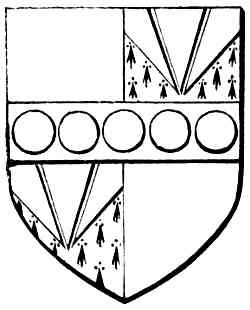
A family of great antiquity, and which is said to have been established at Gatacre by a grant from Edward the Confessor. The pedigree, however, is not traced beyond the reign of Henry III.
Although very ancient, this family does not appear to have been distinguished except by "The fair maid of Gatacre," (see Blakeway, p. 169,) and by the eminent divine of this house noticed in "Fuller's Worthies," and who was the ancestor of the Gatacres of Mildenhall, in Suffolk.
See Leland's Itinerary, v. p. 31; Eyton's Antiquities of Shropshire, vol. iii. p. 86; and Morris MSS.
Arms.—Quarterly gules and ermine, on the second and third quarters three piles of the first, on a fess azure five bezants. This coat, a remarkable exception to the simple heraldry of the period, is supposed to have been granted to Humphry Gatacre, Esquire of the Body to King Henry VI. The following coat, ascribed to this family, was about the end of the seventeenth century in the church of Claverley in this county: Quarterly, first and fourth ermine, a chief indented gules; second and third gules, over all on a fess azure three bezants. (Eyton's Shropshire, iii. p. 103.)
Present Representative, Edward Lloyd Gatacre, Esq.
Eyton of Eyton.
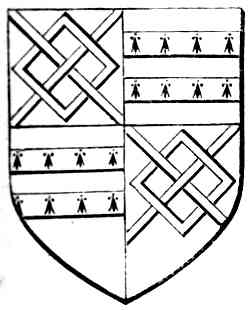
This family can also lay claim to great antiquity, being certainly resident at Eyton on the Wealdmoors as early as the reigns of Henry I. and II. They were in some way connected with the Pantulfs, Barons of Wem, who were Lords of Eyton at the period of the Domesday Survey, and, in consequence of this connection, not only quarter their arms, but were among the very few Shropshire gentry who were not dispossessed after the Rebellion of the third Norman Earl of Shrewsbury, in the time of Henry I.
Robert de Eyton stands at the head of the pedigree.
See Blakeway, pp. 56, 70, 71; Eyton's Shropshire, viii. p. 26; and Morris MSS.
Arms.—Quarterly, first and fourth, or, a fret azure; second and third, gules two bars ermine.
Present Representative, Thomas Campbell Eyton, Esq.
Plowden of Plowden.
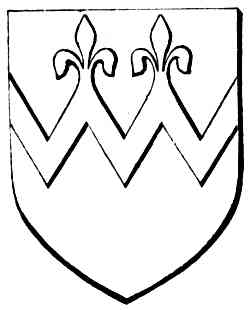
When the ancestors of this family were first seated at Plowden is a matter of doubt, but it was at a very early period. In 1194 Roger de Plowden is said to have been at the siege of Acre with Richard I., and there to have acquired the fleurs-de-lis in the arms. The name occurs upon all the county records from the reign of Henry III. Edmund Plowden the lawyer, in the sixteenth century, was the great luminary of this family.
See Baker's Northamptonshire, i. 470; Blakeway, pp. 132, 222, and Morris MSS.
Arms.—Azure, a fess dancettée, the two upper points terminating in fleurs-de-lis or.
Present Representative, William Henry Francis Plowden, Esq.
Acton of Aldenham, Baronet 1643-4.
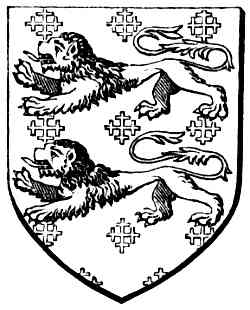
Engelard de Acton, of Acton-Pigot and Acton-Burnell, was admitted on the Roll of Guild Merchants of Shrewsbury in 1209. His descendant Edward de Acton, of Aldenham, married the coheiress of Le'Strange, living in 1387, and with her acquired an estate in Longnor, in this county. The baronetcy was the reward of loyalty in the beginning of the great rebellion.
General Acton, Prime Minister to the King of Naples for twenty-nine years, commencing in 1778, was a distinguished member of this family.
See Wotton's Baronetage, ii. 398; Blakeway, pp. 54, 174.
Arms.—Gules, crusilly or, two lions passant in pale argent. This coat is evidently founded on that of Le'Strange.
Present Representative, Sir John Emerick Edward Dalberg Acton, 8th Baronet.
Whitmore of Apley.
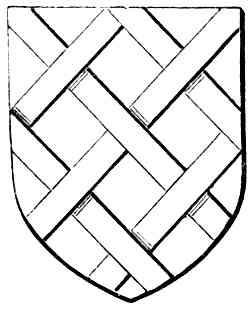
This is a younger branch of an ancient family formerly seated at Whittimere or Whitmore, in the parish of Claverley, where it is traced to the reign of Henry III. The Apley branch made a large fortune by mercantile transactions in London in the reign of Elizabeth, and purchased that estate in 1572, from Sir Thomas Lucy, Knight. The Whitmores have represented Bridgnorth in Parliament constantly since the reign of Charles II. Blakeway observes that this family does not appear to have had any connection with the Whitmores of Cheshire, though the Heralds have given them similar arms, with a crest allusive to the springing of a young shoot out of an old stock.
Younger Branches. Whitmore of Dudmaston, in this county, and Whitmore-Jones, of Chastleton, in the county of Oxford.
See Blakeway, p. 106, and Notes on the Whitmore Family, in Notes and Queries, 3rd series, v. p. 159.
Arms.—Vert, fretty or.
Present Representative, Thomas Charlton Whitmore, Esq.
Walcot of Bitterley.
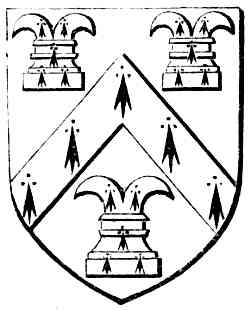
The name is derived from Walcot in the parish of Lydbury, which was held under the Bishop of Hereford by Roger de Walcot in 1255. He was the ancestor of the present family. Sixth in descent from Roger de Walcot was John Walcot, of whom the pedigree relates, "that playing at Chess with King Henry V. he gave him the check-mate with the rooke, whereupon the King changed his coat of arms, which was the cross with fleurs-de-lis, and gave him the rooke for a remembrance." Walcot was sold in the year 1764, and Bitterley, which had belonged to the family in 1660, became the seat of the Walcots, descended from Humphry Walcot, who died in 1616, and who was the eldest son of John Walcot of Walcot. He had livery of the manor of Walcot in 1611, "on the extinction (says Blakeway,) I suppose of the elder line."
See Blakeway, p. 112; and Morris MSS.
Arms.—Argent, a chevron between three chess-rooks ermine. The former coat, Argent, on a cross patonce azure five fleurs-de-lis or, was ascribed to John de Walcote in the Roll of the reign of Richard II.
Present Representative, the Rev. Charles Walcot.
Baldwin (called Childe) of Kinlet.
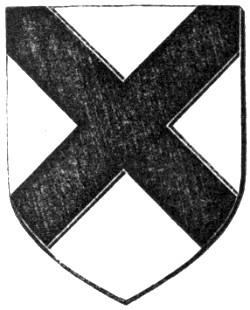
This ancient family, which has been supposed to be of Norman origin, was early seated at Diddlebury, (or Delbury,) in Corvedale, which appears to have come from the heiress of Wigley. Roger Baldwin of Diddlebury died anno 1398, and was the ancestor of the family. Diddlebury was sold to the Cornewalls of Berrington in the last century, when the Baldwins removed to Aqualate in Staffordshire. Kinlet was the inheritance of the Childes, whose coheiress married Charles Baldwin, Esq. The Childes derived it from the Lacons, and the Lacons by inheritance from the Blounts of Kinlet.
See Blakeway, p. 212.
Arms.—Argent, a saltire sable.
Present Representative, Walter Lacon Childe, Esq.
Dod of Cloverly.
A branch of the Dods of Edge in Cheshire, now extinct in the male line, and one of the oldest families in England, which can be traced in a direct line, undoubtedly of Saxon, if not of British descent, which, says Blakeway, "is in the highest degree probable." The following is Ormerod's account of the origin of this family. "About the time of Henry II., Hova, son of Cadwgan Dot, married the daughter and heiress of the Lord of Edge, with whom he had the fourth of that manor. It is probable that the Lord of Edge was son of Edwin, who before the Conquest was sole proprietor of eight manors; we may call him a Saxon thane. It appears by Domesday that Dot was the Saxon lord of sixteen manors, from all of which he was ejected; we may presume he was identical with Cadwgan Dot." "A descent in the male line (adds Ormerod) from a Saxon noticed in Domesday would be unique in this county" (Cheshire). The Dods of Cloverley descend from Hugo, living in the fourteenth of Henry IV., who married the coheiress of Roger de Cloverley. He was the son of John Dod of Farndon, who was son of Roger Dod of Edge, living in the reign of Edward III., which John Dod had also acquired property in Shropshire, by marriage with the coheiress of Warden of Ightfield.
See Ormerod's Cheshire, ii. 374; and Blakeway, p. 206.
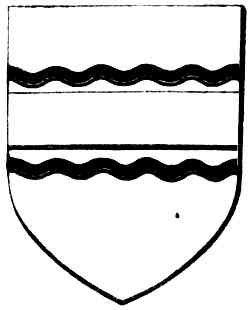
Arms.—Argent, a fess gules between two cotises wavy sable. The Dods of Edge bore three crescents or, on the fess, by which one would imagine they were the younger rather than the elder line of the family, and the present owner of Cloverly possesses deeds which appear to prove that this was the fact.
Present Representative, John Whitehall Dod, Esq. late M.P. for North Shropshire.
Oakeley of Oakeley.
An ancient family, descended from Philip, who in the reign of Henry III. was lord of Oakeley in the parish of Bishop's Castle, from whence he assumed his name, and which has ever since been the inheritance of his descendants.
Younger Branch. Sir Charles Oakeley, Baronet 1790.
See Blakeway, pp. 132, 173; and Morris MSS.
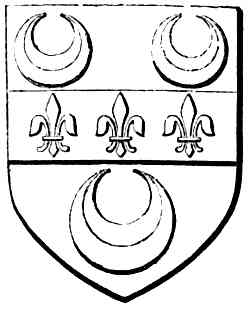
Arms.—Argent, on a fess between three crescents gules as many fleurs-de-lis or. These arms are, with those of the Plowdens and other families of the vicinity, allusive to the services of ancestors who fought under the banners of the great suzeraines of their district, the Fitz-Alans, in the Crusades and the battlefields of France.
Present Representative, the Rev. Arthur Oakeley.
Hill of Hawkstone, Viscount Hill 1842, Baronet 1726-7.
The first in the pedigree is Hugh de la Hulle, who held the estate of Hulle, that is, Court of Hill, in the parish of Burford, in this county, as the eleventh part of a knight's fee, of the Barony of Stuteville, in the reigns of Richard I. and John, as appears by the Testa de Neville. The family afterwards removed into the north of the county, by marriages with the coheiresses of Wlenkeslow, Buntingsdale, Styche, and Warren. The castle still borne in the coat of Hill is found on the seal of William Hill in the reign of Richard II. Court of Hill, the original seat of the Hills, was bequeathed in the reign of Queen Elizabeth to the second son of the eldest branch of the family, in whose line it continued till carried by an heiress to the family of the present proprietor. Hawkstone, the present seat, was settled upon Humphry Hill in 1560. The great ornament of this family, and indeed he may be called the founder of its modern consequence, was Richard Hill, Envoy Extraordinary to the Italian States in the very beginning of the eighteenth century.
See Blakeway, pp. 142, 179; and Morris MSS.
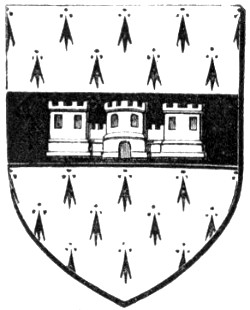
Arms.—Ermine, on a fess sable a castle argent.
Present Representative, Rowland Hill, second Viscount Hill.
Forester of Willey, Baron Forester 1821.
This family is clearly descended from "Robert de Wolint," (Wellington,) alias Forester, who is named in the Testa de Neville as holding his estate by the serjeantry of keeping the royal hay of Wellington in the forest of the Wrekin; and there is every probability that he was the descendant of Ulger the Forester, chief forester of all the king's forests in Shropshire in the time of Stephen.
See Blakeway, p. 126; and Morris MSS.
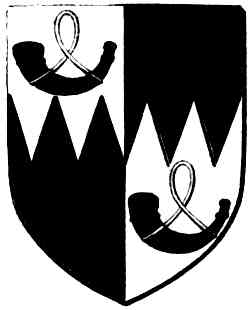
Arms.—Quarterly per fess dancettée argent and sable, on the first and fourth quarters a bugle horn of the last, garnished or.
Present Representative, John George Weld Forester, 2nd Baron Forester.
Edwardes, of Harnage Grange and Shrewsbury, Baronet 1645.
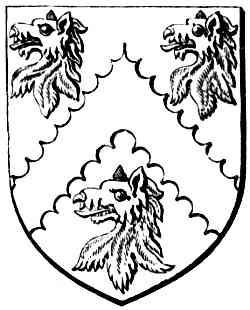
Iddon, son of Rys Sais, a powerful British chieftain in the Shropshire Marches at the period of the Norman Conquest, is the ancestor of the family of Edwardes. His descendants were seated at Kilhendre, in the parish of Ellesmere, in the reign of Henry I., an estate which continued in the family in the time of Queen Elizabeth. The eminent services of Sir Thomas Edwardes of Shrewsbury to King Charles I. were rewarded by the grant of a Baronetcy in 1645. The patent, however, was not taken out till the year 1678, with a right of precedency before all baronets created after 1644. The distinguished Major Herbert Edwardes, C.B., one of Her Majesty's Commissioners for settling the affairs of the Punjaub, is of this family.
See Blakeway, pp. 107, 121; Blakeway and Owen's Shrewsbury, ii. 259; and Wotton's Baronetage, ii. 415; and Morris MSS.
Arms.—Gules, a chevron engrailed between three heraldic tiger's heads erased argent.
Present Representative, Sir Henry Hope Edwardes, 10th Baronet.
Betton (called Bright) of Totterton Hall.
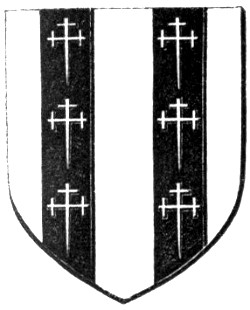
Walter De Betton had a freehold estate at Betton-Strange, near Shrewsbury, in the reign of Edward I. William Betton, fourth in descent from Walter, was seated at Great Berwick prior to the reign of Henry IV., and at his house the renowned Hotspur lay during the night preceding the Battle of Shrewsbury.
The estate and mansion of Great Berwick continued with their lineal descendants until sold in 1831, by Richard Betton, Esq. whose uncle having succeeded to the estates of John Bright, Esq. assumed that name, and was father of the present proprietor of Totterton Hall.
From the Morris MSS.
Arms.—Argent, two pales sable, each charged with three cross-crosslets fitchée or.
Present Representative, the Rev. John Bright.
Clive (called Herbert) of Styche, Earl of Powis 1804; Baron Clive in the peerage of Ireland 1762.
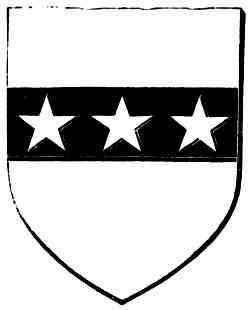
Although this family owe their elevation to the military genius of the great Lord Clive, to whom the English nation is so much indebted for its glory and power in the East, yet the Clives have undoubted claims to antiquity both in Shropshire and Cheshire, in which latter county, in the hundred of Northwich, is Clive, from whence their ancestor Warin assumed his name in the time of Henry III. About the reign of Edward II. the family removed to Huxley, also in Cheshire, Henry de Clive having married the coheiress; and again in the reign of Henry VI. on the marriage of James Clive with the heiress of Styche, of Styche, they settled in Shropshire at that place, which is in the parish of Moreton-Say, and has remained uninterruptedly in the Clive family. The Earldom of Powis is the result of the match with the heiress of Herbert, of Powis Castle, in 1784.
See Ormerod's Cheshire, ii. 435, iii. 115; Blakeway, p. 140; Brydges's Collins, v. 543; and Morris MSS.
Arms.—Argent, on a fess sable three mullets or. In the fourth year of Edward VI., three wolf's heads erased sable were added to the field of the original coat. See Archdall's Lodge, vii. 80.
Present Representative, Edward James Herbert, 3rd Earl of Powis.
Lawley of Spoonbill, Baron Wenlock 1839; Baronet 1641.
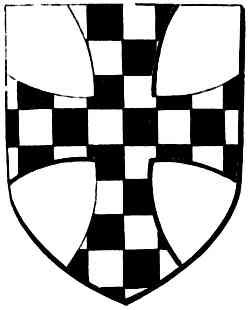
This family is descended from Thomas Lawley, cousin and next heir to John Lord Wenlock, K.G. in the reign of Edward IV., who was slain at the battle of Tewkesbury. The Lawleys were described as "of Wenlock" in the reign of' Henry VI., and until that of Henry VIII., when Richard Lawley, Esq. ancestor of Lord Wenlock, was written "of Spoonhill."
See Blakeway, p. 92; Wotton's Baronetage, ii. 261; and Morris MSS.
Arms.—Argent, a cross formée, checky or and sable.
Present Representative, Beilby Richard Lawley-Thompson, 2nd Baron Wenlock.
Pigott of Edgmond.
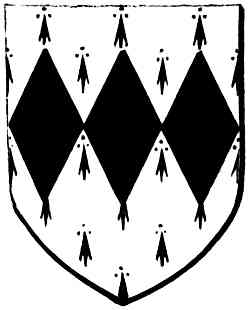
The Pigotts were formerly seated at Chetwynd in this county, which they inherited from the coheiress of Peshall in the fourteenth century.
The family came originally from Cheshire; William Pigott of Butley in the parish of Prestbury in that county, who died in 1376, was grandfather of Richard Pigott of Butley who married the heiress of Peshall. Chetwynd was sold about 1776, and the rectory of Edgmond purchased by Thomas Pigott, Esq., in the reign of James I.
See Blakeway, p. 84; and Morris MSS.
Arms.—Ermine, three fusils in fess sable. The coat formerly borne by this family, founded on the arms of Chetwynd, was, Azure, a chevron between three mullets or, on a chief ermine three fusils sable.
Present Representative, the Rev. John Dryden Pigott.
Thornes of Llwyntidman Hall.
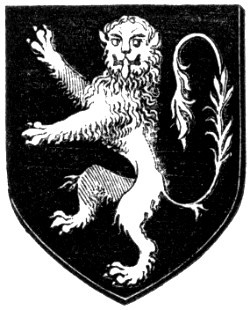
The name is local, from Thornes in the parish of Shenstone, in the county of Stafford, where Robert, son of Roger de la Thornes, was resident early in the fourteenth century. He was elected burgess for Shrewsbury in 1357, a position subsequently filled by several of his descendants. The family also became seated at Shelvock in this county at an early period. Thomas Thornes of that place erected a mansion on the old family estate at Thornes in the reign of Edward IV., which estate was sold by his descendant Roger Thornes in 1507. Shelvock continued in the family until the extinction of the eldest branch of it in 1678. The present family descend from Nicholas Thornes of Melverley, great-uncle of Richard Thornes who was sheriff of this county in 1610.
See Sanders's History of Shenstone, p. 215; Blakeway, p. 101; and Morris MSS.
Arms.—Sable, a lion rampant guardant argent.
Present Representative, Thomas William Thornes, Esq.
Harries of Cruckton.
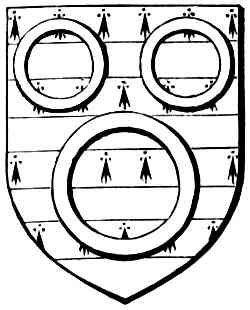
The ancestor of this family was of Cruckton in the parish of Pontesbury in 1463. It has been supposed that the Harries's are of the old race of "Fitz-Henry," mentioned in ancient deeds of this county, and who were seated at Little Sutton prior to the reign of Edward III.
See Blakeway, p. 178; and Morris MSS.
Arms.—Ermine, three bars azure, over all three annulets or.
Present Representative, Francis Harries, Esq.
Salwey of Moor Park.
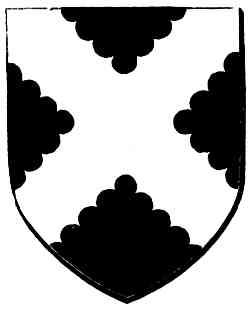
About the reign of Henry III. William Salwey was Lord of Leacroft, a hamlet in the parish of Cannock in Staffordshire; hence the family removed to Stanford in Worcestershire; of' which John Salwey was owner in the third of Henry IV. But this estate was carried by an heiress to Sir Francis Winnington in the reign of Charles II. Richard Salwey, younger brother of Edward Salwey of Stanford, was seated at Richard's Castle in the county of Hereford at the time of the Protectorate. His grandson Richard was of the Moor Park, where he died in 1759, and was succeeded by his great-nephew, whose grandson is the present representative of this ancient family. See Erdeswick's Staffordshire, ed. 1844, p. 200; Nash's Worcestershire, ii. 369; and Morris MSS.
Arms.—Sable, a saltier engrailed or.
Present Representative, John Salwey, Esq.
Borough of Chetwynd.
Lineally descended from Robert "Borowe," noticed by Leland in his Itinerary, which Robert died in 1418, and was father of Robert surnamed de Stokeden, Lord of Erdborough in the county of Leicester.
Chetwynd was purchased by Thomas Borough, Esq., in 1803, the family having been previously for many years resident at Derby.
See Glover's History of the County of Derby, 8vo. 1833, vol. ii. p. 558, who refers to the genealogy of the family in the College of Arms, 4 Norfolk, p. 189; Nichols's Leicestershire, ii. 528; and Morris MSS.
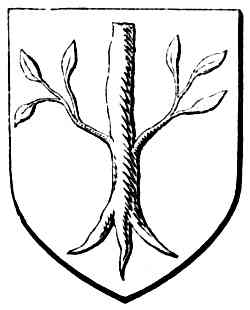
Arms.—Gules, the stem and trunk of a tree eradicated, as also couped, sprouting out two branches argent. In 1702 a frightful modern coat founded on the preceding, with the shield of Pallas dependent from an oak-tree or, was granted by the College of Arms.
Present Representative, John Charles Burton Borough, Esq.
SOMERSETSHIRE.
Knightly.
Poulett of Hinton St. George, Earl Poulett 1706; Baron 1627.
Paulet, in the hundred of North Petherton in this county, gave name to this historical family, the first on record being Sir William de Paulet, who died in 1242. He was of Leigh in Devonshire, which, with Rode in Somersetshire, successively became the family seat. Hinton St. George, which came from the heiress of Denebaud in the reign of Henry VI., is noticed by Leland as "a right goodly manor place of fre stone, with two goodly high tourres embattled in the ynner court," and has ever since remained the seat of this the elder branch of the family. The Marquesses of Winchester (1551) and the extinct Dukes of Bolton descend from William second son of Sir John Paulet of Paulet, who died in 1378. They were of Basing in Hampshire, derived through the heiress of Poynings from the great house of St.John, in the reign of Henry VI.
See Leland's Itinerary, ii. fol. 55, vi. fol. 11; Brydges's Collins, ii. 367, iv. 1; Collinson's History of Somersetshire, ii. p. 165. For an account of Hinton St. George, the Topographer, vol. i. p. 171, vol. ii. p.354. For Basing, Gent. Mag. 1787, p. 680.
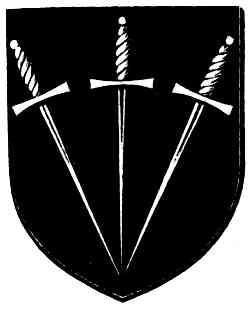
Arms.—Sable, three swords in pile, their points towards the base, argent, the pomels and hilts or. Gules, a pair of wings conjoined in lure argent, being the coat of his mother the heiress of Reyney, was borne by Sir John Paulet in the 15th of Richard II.
Present Representative, William Poulett, 6th Earl Poulett.
Speke of Jordans.
This is a younger branch of an ancient family descended from Richard le Espek, who lived in the reign of Henry II. Wemworthy and Brampton, in the county of Devon, were the original seats; but in the time of Henry VI. Sir John Speke, having married an heiress of Beauchamp, became possessed of the manor of Whitelackington in this county, which for eleven generations continued the inheritance of his descendants in the male line, when an heiress carried it to the Norths, Earls of Guildford. Jordans, a hamlet in the manor of Ashill, also inherited from the Beauchamps, appears to be the only remnant of the former possessions of this venerable house.
See Leland's Itinerary, ii. ff. 51, 55; Topographer, i. 507; and Collinson's History of Somersetshire, i. pp. 12, 66.
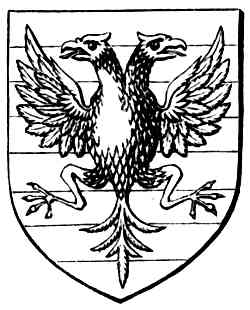
Arms.—Barry of eight argent and azure, an eagle with two heads displayed gules.
Present Representative, William Speke, Esq.
Gentle.
Trevelyan of Nettlecomb, Baronet 1661-2.
The name sufficiently implies that this is a Cornish family, traced to Nicholas de Trevelyan living in the reign of Edward I., whose ancestors were of Trevelyan, in the parish of St. Vehap, near Fowey, at a still earlier period. Nettlecomb was inherited from the heiress of Whalesborough towards the end of the fifteenth century. The Trevelyans suffered for their loyalty during the Usurpation, and were rewarded by the baronetcy on the Restoration. The estate of Wallington, in the county of Northumberland, came from the heiress of Calverley of Calverley in the last century.
Younger Branch, Trevelyan of Nether-Witton in the county of Northumberland.
See Westcote's Devonshire Pedigrees, p. 558; Collinson's Somersetshire, iii. p. 539; Gilbert's Cornwall, i. 564; Hodgson's History of Northumberland, vol. i. pt. 2. p. 262; and Wotton's Baronetage, iii. p. 353.
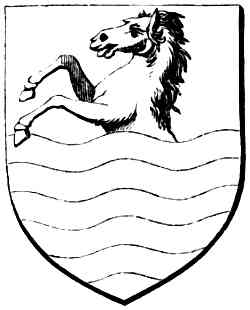
Arms.—Gules, a land-horse argent, armed or, coming out of the sea party per fess wavy azure and of the second. This coat is traditionally derived from one of the family swimming on horseback from the rocks called Seven Stones to the Land's End, at the time of an inundation. The more ancient arms are said to have been a lion rampant holding a baton.
Present Representative, Sir Walter Calverley Trevelyan, 6th Baronet.
Upton (called Smyth) of Ashton-Court, Baronet 1859.
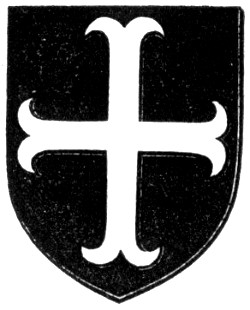
An ancient Cornish family, said to have been originally of Upton, in that county, or, according to Prince in his Worthies of Devon, named from Upton in the parish of Collumpton in Devonshire, and fixed at Portlinch in the parish of Newton Ferrers, by a match with the heiress of Mohun, about the end of the fifteenth century. Here the elder branch was long seated, and became extinct in 1709. The present family descend from a younger brother, who settled at Lupton in Devonshire: his descendant was of Ingmire Hall in Westmerland, derived from the heiress of Otway about the beginning of the eighteenth century. The present representative, succeeding to the estates of the Smyths of Ashton, assumed that name, and was created a Baronet in 1859.
Younger Branches. Upton of Glyde-Court in the county of Louth, descended from the third son of John Upton of Lupton, living in 1620; and Upton, Baron Templetown, descended from Henry second son of Arthur Upton of Lupton. This Henry came into Ireland in 1598, a captain in the army under the Earl of Essex, and established himself in the county of Antrim.
See Prince's Worthies of Devon, ed. 1701, p. 572; Westcote's Devonshire, p. 519; and Archdall's Lodge's Peerage of Ireland, vii. p. 152.
Arms.—Sable, a cross moline argent.
Present Representative, Sir John Henry Greville Upton Smythe, Baronet.
SOUTHAMPTONSHIRE.
Knightly.
Tichborne of Tichborne, Baronet 1620.
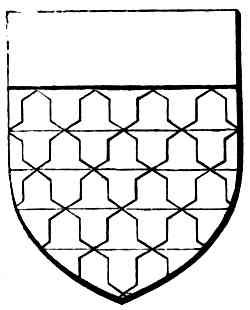
Of the great antiquity of this family there is no doubt, they having been seated at their manor of Tichborne from the reign of Henry II., at which period Sir Roger de Tichborne, their first recorded ancestor, was lord of that manor. The immediate ancestors of the present family were of Aldershot, in this county, being descended from the second son of the first Baronet. Henry Tichborne, grandson of the celebrated Sir Henry Tichborne, so distinguished during the Great Rebellion in Ireland, and who was fourth son of the first Baronet, was raised to the peerage in Ireland as Baron Ferrard in 1715; he died, and the peerage became extinct, in 1728.
See Wotton's Baronetage, i. 425; Collectanea Topographica et Genealogica, vii. p. 213; and for a notice of Chidiock Tichborne, engaged in the Babington Conspiracy in 1586, see Disraeli's Curiosities of Literature, 1st series, vol. iii. p. 95.
Arms.—Vair, a chief or, borne by Sir John Tichborne in the sixth of Henry IV.
Present Representative, Sir Alfred Joseph, Doughty Tichborne, 11th Baronet.
Oglander of Nunwell, Baronet 1665.
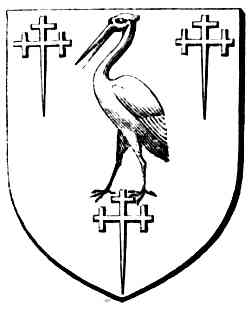
Richard de Okelandre, the patriarch of his family, is supposed to have been of Norman origin, and was Lord of Nunwell, in the Isle of Wight, the present seat, from the time of King John. Seventeenth in direct male descent from Richard, was Sir John Oglander, Knt., a great sufferer, both in person and fortune, for his zealous attachment to his sovereign King Charles I. He died before the Restoration, but his loyalty was recognised by the baronetcy conferred upon his son, a worthy successor to his father, by Charles II. in 1665.
See Hutchins's History of Dorset, i, p. 450, for an account of the family under "Parnham," which came from the heiress of Strode; see also Wotton's Baronetage, iii. 492.
Arms.—Azure, a stork between three cross-crosslets fitchée or.
Present Representative, Sir Henry Oglander, 7th Baronet.
Wallop of Wallop, Earl of Portsmouth 1743.
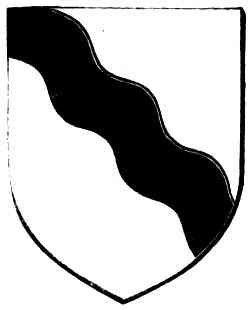
The true and original name of this family is Barton, Peter de Barton, lord of West Barton, in this county, having married Alice, only daughter and heiress of Sir Robert de Wallop, who died in the eleventh year of Edward I. His great-grandson Richard assumed the name of Wallop, and was returned as one of the knights of the shire for the county of Southampton in the second of Edward III. Over and Nether Wallop, so called, says Camden, "from Well-hop, that is, a pretty well in the side of a hill," continued till the reign of Henry V. the principal seat, when Margaret de Valoynes brought into the family the manor of Farley, afterwards called Farley-Wallop, which has since been the usual residence of the Wallops; of whom Sir John was greatly distinguished in the reign of Henry VII., and Sir Henry in Ireland in that of Elizabeth. Robert Wallop, grandson of Sir Henry, unfortunately taking part against his sovereign Charles I., and sitting as one of his judges, though he did not sign the fatal warrant, fell into universal contempt after the Restoration, and died in the Tower of London in 1667. He was great-grandfaher of the first peer.
See Brydges's Collins, iv. p. 291.
Arms.—Argent, a bend wavy sable. This coat was borne by Monsieur John de Barton in the reign of Richard II. (Roll.)
Present Representative, Isaac Newton Wallop, 5th Earl of Portsmouth.
Cope of Bramshill, Baronet 1611.
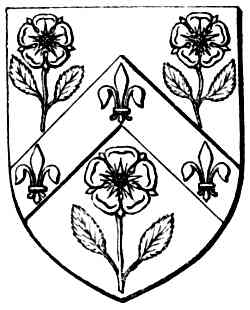
The Copes appear in the character of civil servants of the crown in the reign of Richard II. and Henry IV., and were rewarded with large grants of land in the counties of Northampton and Buckingham. Hardwick and Hanwell, both in the neighbourhood of Banbury, were subsequently the family seats, and are noticed by Leland, who calls the latter "a very pleasant and gallant house." Towards the end of the seventeenth century the family appear to have been established at Bramshill, traditionally said to have been built for Henry Prince of Wales, eldest son of King James I.
See Wotton's Baronetage i. p. 112; and Beesley's History of Banbury, p. 190.
Arms.—Argent, on a chevron azure between three roses gules, slipped and leaved vert, as many fleurs-de-lis or. The original coat was, Argent, a boar passant sable, which William Cope, Cofferer to Henry VII., abandoned for Argent, three coffers sable, allusive to his office; but he afterwards had assigned to him the present arms alluding to the royal badges of the crown.
Present Representative, the Rev. Sir William Henry Cope, 12th Baronet.
STAFFORDSHIRE.
Knightly.
Okeover of Okeover.
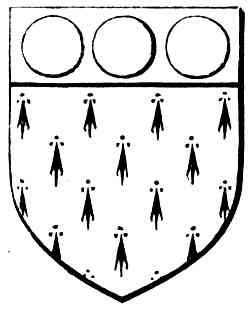
Ormus, at the period of the Norman Conquest was Lord of Okeover by grant of Nigel, Abbot of Burton. He is the direct ancestor of this venerable house, which has been ever since in possession of the ancient seat which gives name to the family, and which lies on the very edge of the county, near Ashbourne in Derbyshire.
See Wood's MSS. 8594, vol. 6, for a very curious and valuable cartulary of the Okeovers, and Dodsworth's MSS. 5037, vol. 96, fol. 17 (both in the Bodleian Library); see also Erdeswick's Staffordshire, Harwood's ed. 1844, p. 487; Shaw's Staffordshire, vol. i. p. 26; and the Topographer, ii. p. 313.
Arms.—Ermine, on a chief gules three bezants. This coat was borne by Monsieur Philip de Oker, in the reign of Richard II. (Roll).
Present Representative, Haughton Charles Okeover, Esq.
Bagot of Bagot's Bromley; Baron Bagot 1780; Baronet 1627.
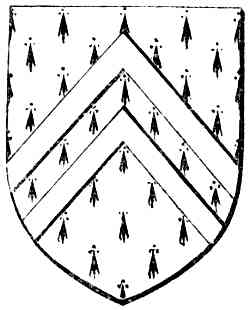
A most ancient family, also coeval with the Conquest, descended from Bagod, who at the time of the compilation of Domesday Book held Bromley of Robert de Stadford or Stafford. In the reign of Richard I. the male line of the Staffords failing, Milicent Stafford married Henry Bagot of this family, and their issue, assuming their mother's name, were progenitors of the illustrious house of Stafford, Dukes of Buckingham. Blythfield in this county, which came from an heiress of that name, has been the seat of the Bagots from the thirteenth century.
Younger Branches. Chester of Chicheley Hall, co. Bucks, and Bagot of Pype Hayes, co. Warwick, descended from the second and third sons of Sir Walter W. Bagot, father of the first Lord Bagot.
See Bagot Memorials, privately printed, 4to. 1824; Wotton's Baronetage, ii. 47; and Erdeswick, p. 262.
Arms.—Ermine, two chevrons azure. A former coat was, Argent, a chevron gules between three martlets sable, which was used from the reign of Edward III. to that of Henry VIII. (Rolls.) The present coat is of still greater antiquity.
Present Representative, William Bagot, 3rd Baron Bagot.
Gifford of Chillington.
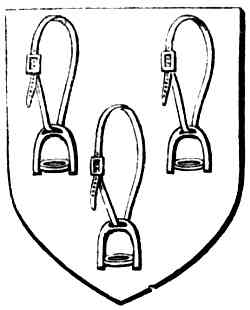
A noble Norman family, which is traced to the Conquest, and of which there were in Leland's time four "notable houses" remaining in England, in the counties of Devon, Southampton, Stafford, and Buckingham. All with the exception of the third have been long extinct. The Giffords have been seated in Staffordshire since the reign of Henry II., when Peter Gifford, by the gift of Peter Corbesone, became Lord of the Manor of Chillington, ever since their principal residence. He is called in the Deed of Gift, "Nepos uxoris meae." This family had the honour to be concerned in the preservation of King Charles II. after the Battle of Worcester.
See Erdeswick, p. 158, corrected from Huntbach's MSS. penes Lord Wrottesley.
Arms.—Azure, three stirrups with leathers or. The more ancient coat, which was used by the elder line of the Giffords, who were Earls of Buckingham, was, Gules, three lions passant argent.
Present Representative, Thomas William Gifford, Esq.
Wrottesley of Wrottesley: Baron Wrottesley 1838; Baronet 1542.
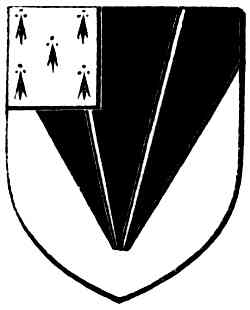
"Sumetime," writes Leland, "the Wrotesleys were men of more land than they bee now, and greate with the Earles of Warwick; yet he hath 200 markes of londe; at Wrotesley is a fayre house and a parker" and here, it may be added, the family are supposed to have been seated from the period of the Conquest. The pedigree however is not proved beyond William de Wrottesley, lord of that manor before the reign of Henry III., father of Sir Hugh, who, joining the insurgent Barons in the reign of Henry III., forfeited his estate, redeemed under the dictum de Kenelworth for 60 marcs. His great-grandson Sir Hugh Wrottesley, one of the "Founders" of the Order of the Garter, who died in 1380-1, is the direct ancestor of the present lord.
See Leland's Itinerary in Coll. Topog. et Genealogica, iii. 340; Erdeswick, p. 359; Wotton's Baronetage, ii. 345; and Shaw's Staffordshire, ii. 205, kindly corrected by the Hon. Charles Wrottesley.
Arms.—Or, three piles sable and a quarter ermine. The more ancient coat, as appears by seals to original deeds of the years 1298 and 1333-37, preserved at Wrottesley, was fretty. Sir Hugh de Wrottesleye bore the present arms in 1349 and 1381. But he is also stated, on the authority of the Roll of the reign of Richard II., to have used, Or, a bend engrailed gules. Sir William Wrottesley, father of Sir Hugh, K.G., married Joan, daughter of Roger Basset, which will account for the present arms, which belonged to the Bassets of Warwickshire.
Present Representative, John Wrottesley, 2nd Baron Wrottesley.
Broughton of Broughton, Baronet 1660.
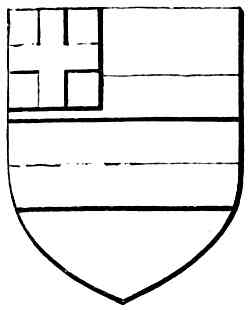
"The Broughtons descend in the male line from one of the most ancient families of the county of Chester, the Vernons of Shipbrook. Richard de Vernon, a younger brother of this house, was father of Adam de Napton, in the county of Warwick, whose issue assumed their local name from Broughton in Staffordshire. The pedigrees vary as to the exact point of connection, and, confused and contradictory as the Shipbrooke pedigree is at this period, there can be little hope of its being positively identified; but the general fact of descent is allowed by all authorities."
See Ormerod's Cheshire, iii. 269; Wotton's Baronetage, iii. 259; and Erdeswick, p. 111.
Arms.—Argent, two bars gules, on a canton of the last a cross of the first. In the reign of Richard II. Monsieur Thomas de Broughton bore, Azure, a cross engrailed argent. (Roll.)
Present Representative, Sir Henry Delves Broughton, ninth Baronet.
Mainwaring of Whitmore.
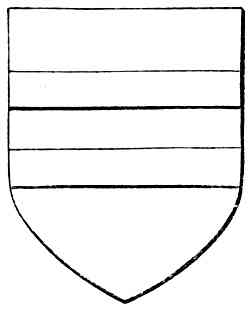
The first recorded ancestor of this great and widely-spreading family is Ranulphus, a Norman, Lord of Warmincham, in Cheshire, at the period of the Domesday Survey; where his descendants remained seated for two centuries. In the reign of Henry III. they were of Over-Peover in the same county, and remained there until the principal male line became extinct in the person of Sir Henry Mainwaring of Peover, Baronet, who died unmarried in 1797. Whitmore was inherited by Edward ninth son of Sir John Mainwaring of Peover, on his marriage with the heiress of Humphry de Boghey or Bohun of Whitmore. This was in the year 1519. The senior line of the Mainwarings were on the loyal side during the great Rebellion, and in 1745 opposed to the pretensions of the house of Stuart. But the Whitmore branch favoured the Parliamentary interest.
Younger Branch. Mainwaring of Oteley Park, in the parish of Ellesmere in Shropshire, sprung from Randle, third son of Edward Mainwaring of Whitmore.
Extinct Branches. Maynwaring of Ightfield, co. Salop; extinct 1712. (See Blakeway, Sheriffs of Shropshire, pp. 83, 133.) Mainwaring of Kermincham, co. Chester, extinct 1783. (See Ormerod's Cheshire, vol. iii. p. 46.) And Mainwaring of Bromborough, in the same county, extinct 1827.
See Erdeswick's Staffordshire, p. 78; and Ormerod, vol. i. p. 368; vol. ii. p. 239; vol. iii. p. 447.
Arms.—Argent, two bars gules.
Present Representative, Rowland Mainwaring, Esq.
Arden of Longcroft.
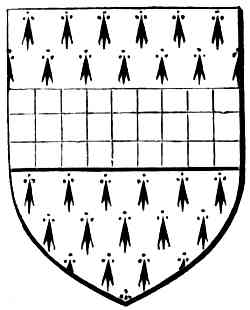
No family in England can claim a more noble origin than the house of Arden, descended in the male line from the Saxon Earls of Warwick before the Conquest. The name of Arden was assumed from the Woodlands of Arden, in the North of Warwickshire, by Siward de Arden, in the reign of Henry I.; which Siward was grandson of Alwin the Sheriff in the reign of Edward the Confessor. The elder line of the family was long seated at Park-Hall in Warwickshire, and became extinct in 1643. A younger branch descended from Simon second son of Thomas Arden, of Park-Hall, Esq. settled at Longcroft, in the parish of Yoxall, in the reign of Elizabeth, and now represents this most ancient and noble family.
See Dugdale's Warwickshire, 2nd edit. vol. ii. p. 295; Shaw's Staffordshire, vol. i. p. 102; and Erdeswick, p. 279; also a paper by George Ormerod, Esq. LL.D., the historian of Cheshire, "On the connection of Arden, or Arderne, of Cheshire, with the Ardens of Warwickshire," in "The Topographer and Genealogist," vol. i. 1846.
Arms.—Ermine, a fess checky or and azure, and so borne by Sir——de Arderne in the reign of Edward II. (Roll.)
Present Representative, George Pincard Arden, Esq.
Meynell of Hore-Cross.
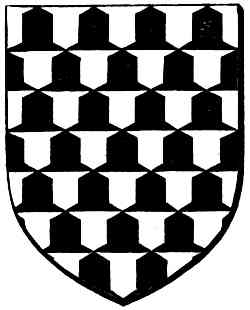
An ancient Derbyshire family, which can be traced to the reign of Henry II. One of their most ancient possessions was Langley-Meynell, in that county, an estate which remained in the family till the end of the fourteenth century. A younger son at this period was seated at Yeaveley, his grandson at Willington, both in Derbyshire. Bradley, in the same county, became in the seventeenh century, by purchase, the residence of a still younger branch, descended from Francis, fourth son of Godfrey Meynell of Willington: from him descends the present family, who were of Hore-Cross the latter part of the last century. Temple-Newsom, in Yorkshire, was inherited from the Ingrams by the present Mr. Meynell on the death of the Marchioness of Hertford in 1835.
Younger Branch. Meynell of Langley-Meynell, Derbyshire, descended from Francis, second son of Francis Meynell, of Willington, who died in 1616.
See Leland's Itinerary, iv. fo. 17; and Topographer and Genealogist, i. 439, and 494.
Arms.—Vaire argent and sable. This was the coat of De-la-Ward, of which house Hugh de Meynell married the heiress in the reign of Edward III. The proper coat of Meynell was, Paly of six argent and gules, on a bend azure three horseshoes or.
Present Representative, Hugo Charles Meynell-Ingram, Esq.
Gentle.
Wolseley of Wolseley, Baronet 1628.
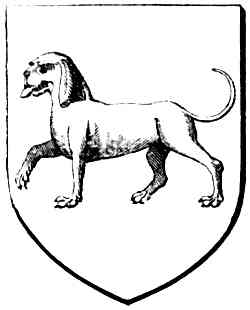
"The most ancient among all the very ancient families in this county," writes Mr. Harwood in his notes to Erdeswick's Staffordshire. Siward, mentioned as Lord of Wlselei in a deed without date, is the first in the pedigree of this venerable house, who are said to have been resident at Wolseley even before the Norman Conquest, and it has ever since remained their seat and residence.
Younger Branch. Wolseley of Mount Wolseley, in the county of Carlow, Baronet of Ireland (1744), descended from the third son of the second Baronet.
See Erdeswick, p. 203; Wotton's Baronetage, ii. 133.
Arms.—Argent, a talbot passant gules.
Present Representative, Sir Charles Michael Wolseley, ninth Baronet.
Cotes of Cotes.
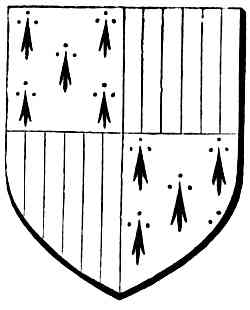
Descended from Richard de Cotes, who was probably son of Thomas de Cotes, living in 1157, when the Black Book of the Exchequer was compiled. About the reign of Henry VI. the family removed to Woodcote, in Shropshire, which has since continued the principal seat, though the more ancient manor of Cotes or "Kothes," on the banks of the Sow, has ever remained the property of this ancient house.
See Blakeway's Sheriffs of Shropshire, p. 103; and Erdeswick, p. 122.
Arms.—Quarterly ermine and paly of six or and gules. According to the Visitation of Shropshire in 1623, the ermine was borne in the third and fourth quarter. Erdeswick observes, "It would seem that the Cotes's should derive themselves from the Knightleys, or else they do the Knightleys wrong by usurping their armoury." It may be remarked that Robert, third in descent from the first Robert de Cotes, married a daughter of Richard de Knightley, and from hence perhaps the arms.
Present Representative, John Cotes, Esq.
Congreve of Congreve.
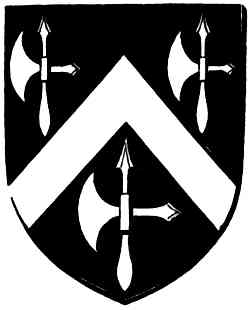
The name, like those of most ancient families, is local, derived from Congreve, in this county, where the ancestors of this house were seated soon after the Conquest.
In the reign of Edward II. William Congreve removed to the adjoining village of Stretton, having married the heiress of Campion of that place. Stretton was sold towards the end of the eighteenth century, but Congreve still continues the inheritance of its ancient lords.
Younger Branch. Congreve of Walton, Baronet 1812.
See Erdeswick, p. 167.
Arms.—Sable, a chevron between three battleaxes argent. This is, says Erdeswick, the coat of Campion.
Present Representative, William Walter Congreve, Esq.
Sneyd of Keel.
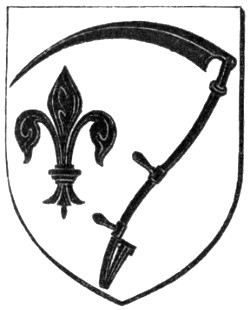
"The noble race of Sneyds, of great worship and account,"* appear to be denominated from Snead, a hamlet in the parish of Tunstall, in this county, where they were seated as early as the reign of Henry III. By marriage with the heiress of Tunstall they had other lands in that parish, and for two descents were called Snead alias Tunstall. Bradwell, the former seat of this family, was purchased in the reign of Henry IV. The fine old house at Keel, lately taken down and now rebuilt, was erected by Ralph Sneyd, Esq. in 1581. During the Usurpation, the Sneyds being on the loyal side, Keel house narrowly escaped destruction, and many of the ancient evidences were plundered and lost at that time.
Younger Branches. Sneyd of Ashcombe, and of Loxley in this county, descended from the second son of William Sneyd, of Keel, who died in 1694: and the Sneyds of Ireland, descended from Wettenhall, Archdeacon of Kilmore, younger brother of the ancestor of the preceding branches.
See Erdeswick, pp. 20, 25; Leland's Itinerary in Coll. Topog. et Genealog. iii. 342; Gent. Mag. vol. lxxi. p. 28; and Ward's History of the Borough of Stoke-upon-Trent.
Arms.—Argent, a scythe, the blade in chief, the sned and handle in bend sinister sable, on the fess point a fleur-de-lis of the second. This fleur-de-lis is said to have been assumed by Richard de Tunstall, alias Sneyd, after the battle of Poictiers.
Present Representative, Ralph Sneyd, Esq.
* King's Vale Royal, b. ii. p. 77, who would derive them from Cheshire.
Whitgreave of Moseley.
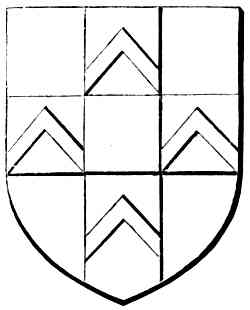
In the reign of Henry III., Robert Whitgreave, the ancestor of this family, was seated at Burton near Stafford. Bridgeford, in the vicinity of Whitgreave, from whence the name is derived, and early in the seventeenth century Moseley, successively became the residence of the Whitgreaves, and at the latter place Thomas Whitgreave, Esq. had the honour to shelter his sovereign Charles II. after the battle of Worcester.
See Erdeswick, pp. 137, 185, 348.
Arms.—Azure, on a cross quarterly pierced or four chevrons gules. This coat, founded on the arms of Stafford, was granted by Humphry Earl of Stafford to Robert Whitgrave in the 20th of Henry VI. See the grant in Camden's Remains, ed. 1657, p. 221. An augmentation has been lately added, On a chief argent, a rose gules within a wreath of oak proper.
Present Representative, George Thomas Whitgreave, Esq.
Lane of King's Bromley.
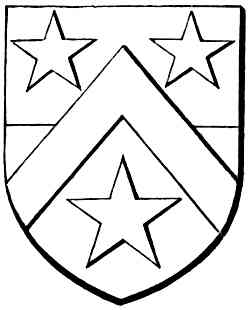
The ancient seat of this family was at Bentley in this county, of which Richard Lane was possessed in the sixth of Henry VI. The Lanes can be traced to Adam de Lone de Hampton, grandfather of Richard de le Lone de Hampton, in the ninth of Edward II. (1315). The three last Lanes of Bentley each lessened the estate, mainly from their devotion to the ill-fated house of Stuart; and the fourth, John Lane, sold Bentley in 1748. This family, even more than the Giffords and Whitgreaves, can lay claim to be remembered for its loyalty to Charles II. after his flight from Worcester. The celebrated Jane Lane was the daughter of the then head of the house, and rode behind the King from Bentley to Bristol. King's Bromley was inherited from the Newtons about the end of the last century.
See Erdeswick, pp. 235, 410; Shaw's Staffordshire, vol. ii. p. 97; Gent. Mag. for 1822, vol. i. pp. 194, 415, 482.
Arms.—Per fesse or and azure, a chevron gules between three mullets counter-changed, on a canton of the third the Royal lions of England, being an augmentation granted by Charles II.
Present Representative, John Newton Lane, Esq.
SUFFOLK.
Knightly.
Barnardiston of the Ryes.
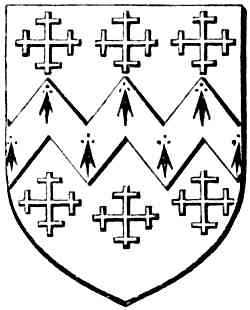
A very remote but the only remaining branch of what was in former ages the most important family in Suffolk, descended from Geoffry de Barnardiston, of Barnardiston in this county, who was living in the reign of Edward I., and who by his marriage with the daughter and coheir of Newmarch became possessed of the adjoining manor of Kedington or Ketton, which continued the seat and residence of the Barnardistons, created Baronet in 1663, until the death of Sir John the sixth Baronet of Ketton, in 1745. The present family descended from Thomas Barnardiston, a merchant in London, who died in 1681, fifth son of Sir Thomas of Ketton, Knight, and Mary, daughter of Sir Richard Knightley. Besides the elder and principal line of Ketton, other branches were of Brightwell in this county, (created Baronets in 1663, extinct in 1721,) and of Northill, co. Bedford, extinct in 1778.
See Wotton's Baronetage, iii. 396; and Davy's Suffolk Collections in the British Museum, Add. MSS. 19,116, p. 537, for long and interesting accounts of this remarkable family.
Arms.—Azure, a fess dancettée ermine between six cross-crosslets argent.
Present Representative, Nathaniel Clarke Barnardiston. Esq.
Jenney of Bredfield.
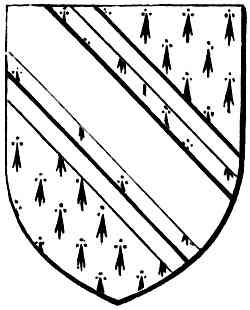
This ancient family is supposed to be of French extraction, and the name to be derived from Guisnes near Calais. The first in the pedigree is Edmund Jenny, of Knoddishall, in this county; grandfather of John Jenney, of the same place, who died in 1460; who was father of Sir William, one of the Judges of the King's Bench in 1477. Edmund, second son of Sir Robert Jenney, of Knoddishall, who died in 1660, married Dorothy, daughter and coheiress of Robert Marryatt, of Bredfield, from whom the present family descend.
See Davy's Suffolk Collections, Add. MSS. 19,137, p. 181.
Arms.—Ermine, a bend gules cotised or.
Present Representative, William Jenney, Esq.
Brooke of Ufford.
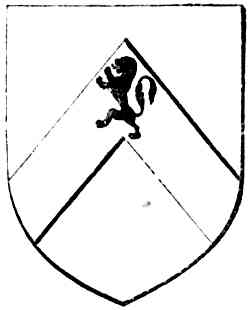
Sir Thomas Brooke, Knight, Lord Cobham in right of his wife, Joan, daughter and heir of Sir Reginald Braybrooke, Knight, was sixth in descent from William de la Brooke, owner of the manor of Brooke, in the county of Somerset, who died in the fifteenth of Henry III. (1231). Sir Thomas Brooke died in the seventeenth of Henry VI. From his eldest son descended the Barons Cobham; from Reginald the second son sprung the present family. He was seated at Aspel, in Suffolk, and here his descendants continued for nine generations. Ufford came from the heiress of Thomson in 1761.
See Davy's Suffolk Collections, Add. MSS. 19,120, vol. xliv.; and Gent. Mag. for March 1841, p. 306, for an account of the restoration of the Brooke monuments at Cobham.
Arms.—Gules, on a chervon argent a lion rampant sable.
Present Representative, Francis Capper Brooke, Esq.
Hervey of Ickworth, Marquess of Bristol 1826; Earl 1714; Baron 1703.
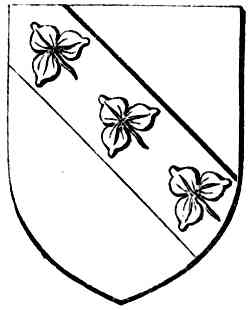
Descended from Thomas Hervey, who died before 1470, having married Jane, daughter and sole heir of Henry Drury, of Ickworth. There is some uncertainty as to who this Thomas Hervey was; the peerages indeed assume that he was younger brother of Sir George Hervey, of Thurleigh, in Bedfordshire; Mr. Gages however has proved that this could not have been the case, but the Rev. Lord Arthur Hervey in his interesting Memoir on Ickworth and the Hervey family, has adduced several reasons by which it would seem that Thomas Hervey was a younger son of John Hervey, senior, of Thurleigh, and the coheiress of Niernuyt, and uncle of Sir George, the last of the legitimate elder line of that knightly family.
Younger Branch. Bathurst Hervey, of Clarendon, Wiltshire, Baronet 1818, descended from the eighth son of the first Earl of Bristol.
See Gage's Thingoe, p. 286; Brydges's Collins, iv. p. 139; Davy's Suffolk Collections, Add. MSS. 19,135, vol. lix. p. 160; the Rev. Lord Arthur Hervey's papers on Ickworth and the Family of Hervey, 4to. Lowestoft, 1858; and Proceedings of the Suffolk Archaeological Society, vol. ii. No. 7.
Arms.—Gules, on a bend argent three trefoils slipped vert, and so borne by John Hervey, Esq., as appears by "The Proceedings in the Grey and Hastings Controversy" in the Court of Chivalry in the year 1407. See the Proceedings, privately printed by Lord Hastings in 1841, p. 27. The arms of Hervey appear to have been founded on the coat of Foliot, Gules, a bend argent.
Present Representative, Frederick William John Hervey, 3rd Marquess of Bristol.
Gentle.
Rous of Dennington and Henham, Earl of Stradbroke 1821; Baron 1796; Baronet 1660.
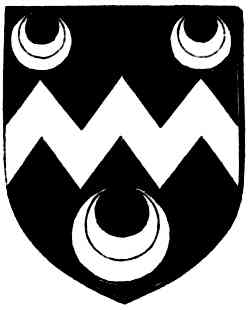
"All the Roucis that be in Southfolk cum oute of the house of Rouse of Dennington," writes Leland in his Itinerary, vol. vi. fol. 13. That estate appears to have come into the family by the marriage of Peter Rouse with an heiress of Hobart in the reign of Edward III., and to have been increased afterwards by matches with the heiress of le-Watre and Phillips, the last representing one of the co-heiresses of Erpingham. Henham, the present residence, was purchased in 1545 by Sir Anthony Rous, son of Sir William Rous of Dennington.
See Wotton's Baronetage, iii. p. 159; Brydges's Collins, viii. p. 476; Suckling's History and Antiquities of Suffolk, vol. ii. p. 365; and Davy's Suffolk Collections, Add. MSS. 19,147, vol. lxxi. p. 192.
Arms.—Sable, a fess dancettée or between three crescents argent.
Present Representative, John Edward Cornwallis Rous, 2nd Earl of Stradbroke.
Heigham of Hunston.
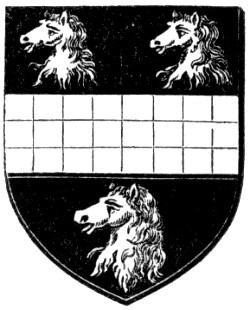
A younger branch of an old Suffolk family, who derived their name from a hamlet in the parish of Gaseley in this county. The pedigree is traced to Richard Heigham, who died in 1340; his grandson Thomas was of Heigham, and died in 1409. The elder line ended in co-heiresses in 1558. A younger branch was seated at Barrow, and continued there till 1714, founded by Clement, fourth son of Thomas Heigham, of Heigham, Esq., who died in 1492. From Sir Clement, third in descent from the first Clement, the present family is descended. Hunston was inherited from the heiress of Lurkin in 1701.
See Gage's History of the Hundred of Thingoe, p. 8; and Davy's Suffolk Collections, Add. MSS. 19,135, vol. lix. p. 50.
Arms.—Sable, a fess cheeky, or and azure, between three horse's heads erased argent.
Present Representative, John Henry Heigham, Esq.
Blois of Cockfield Hall, Baronet 1686.
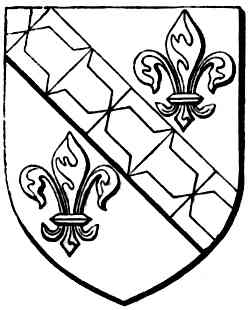
This family is supposed to derive its name from Blois in France, and is thought to be of great antiquity in this county; it is not regularly deduced, however, beyond Thomas Blois, who was living at Norton in Suffolk in 1470. Third in descent was Richard Blois of Grundisburgh, which he purchased, and which became for many years the principal seat of the family. He died in 1557.
See Wotton's Baronetage, iv. p. 9; and Davy's Suffolk Collections, Add. MSS. 91,118, vol. xlii. p. 386.
Arms.—Gules, a bend vair between two fleurs-de-lis argent. Gwillim makes the field sable, and the fleurs-de-lis or.
Present Representative, Sir John Ralph Blois, 8th Baronet.
SURREY.
Knightly.
Bray of Shere.
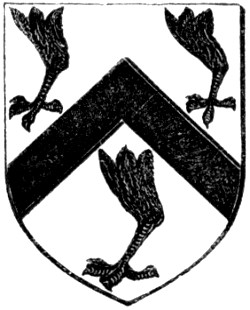
The first in the pedigree is Sir Robert Bray, of Northamptonshire, father of Sir James, who lived about the period of Richard I. His great-grandson, Thomas, was lord of Thurnby, in the same county, in the ninth of Edward II. (1316); from him descended Sir Edward Bray, who died in 1558. Harleston, also in the county of Northampton, was an ancient seat of the Bray family, which rose into opulence with the success of Henry VII. after the Battle of Bosworth, where Sir Reginald Bray, the devoted adherent of the King, was said to have discovered the crown in a thorn-bush, in memory of which he afterwards bore for his badge, "a thorn with a crown in the middle of it." Shere was granted, with many other manors, to Sir Reginald as a reward for his services. The present family spring from Reginald, eldest son by the first wife of Sir Edward Bray, son of John, and nephew of the celebrated Sir Reginald. Edmund Lord Bray was elder brother of Sir Edward; he had an only son, John Lord Bray, who died s. p. in 1557.
Of this family was William Bray, Esq., Treasurer of the Society of Antiquaries, and joint Historian of Surrey.
See Leland's Itinerary, viii. 113, a; and Manning and Bray's Surrey, vol. i. p. 514-523.
Arms.—Argent, a chevron between three eagle's legs sable erased a la cuisse, their talons gules. Another coat usually quartered with the above is, Vair, three bends gules.
Present Representative, Edward Bray, Esq.
Perceval of Nork House, Earl of Egmont in Ireland 1733; Baron Lovell and Holland 1762; Baron Arden 1802.
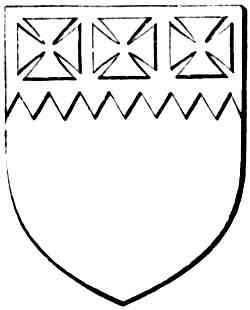
"The House of Yvery," a work privately printed by the second Earl of Egmont in 1742, professes to give the history of this family, but the earlier descents cannot with certainty be relied on, and even the extraction of Richard Perceval, the modern founder of the present family in the time of James I., from the Somersetshire Percevals, is according to Brydges, in his Biographical Peerage, not without some doubts. It appears, however, certain that he was the son of George Perceval, of Tykenham, in the county of Somerset, by Elizabeth Bampfylde, and fifth in descent from Richard Perceval, of Weston-Gordein, in the same county, who died between 1433 and 1439, the representative of a family who had been seated there from the reign of Richard I., and who claim to be descended from the House of Yvery in Normandy. The elder branch of the Percevals continued at their manor of Weston until the extinction of the male line in the person of Thomas Perceval, Esq. in 1691. The younger branch, the ancestors of the present family, were seated in the county of Cork in Ireland, and in the eighteenth century at Enmore in Somersetshire, sold after the death of the fifth Earl of Egmont. Nork House was the seat of Lord Arden, father of the present Earl, and brother of the third Earl of Egmont.
See "A Genealogical History of the House of Yvery, &c." 8vo. 1742; and Collinson's History of Somersetshire, vol. iii. p. 171.
Arms.—Argent, on a chief indented gules three crosses patée of the first. This coat appears to have been borne by Sir Roger Perceval in the reign of Edward I. See his seal engraved in "The House of Yvery," vol. i. p. 41.
Present Representative, George James Perceval, sixth Earl of Egmont.
Gentle.
Weston of West-Horsley.
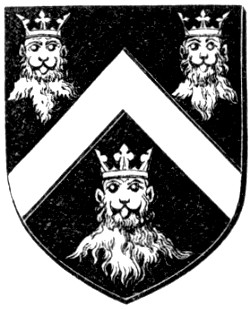
Adam de Weston, living in 1205, was the ancestor of this family, which has been from a very early period connected with Surrey. In the reign of Edward II., the Westons were of West-Clandon, and also of Weston in Albury, and of Send and Ockham, in this county. The last was sold in the latter part of the seventeenth century, and West-Horsley inherited by the will of William Nicholas, Esq. in 1749.
See Manning and Bray's Surrey, vol. iii. p. 41; and Gent. Mag. for 1789, p. 223; for a notice of this family, as well as of the extinct family of the same name, of Sutton, in this county, see also Gent. Mag. for 1800, p. 606.
Arms.—Sable, a chevron or between three leopard's heads erased argent, crowned or.
Present Representative, Henry Weston, Esq.
Onslow of West-Clandon, Earl of Onslow 1801; Baron 1716; Baronet 1660.
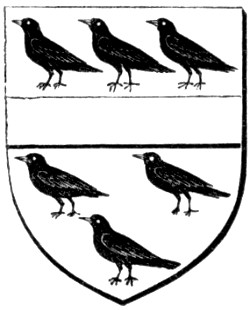
Although the foundation of the consequence of this family was laid by Richard Onslow, a celebrated lawyer of the reign of Elizabeth, yet he was sprung from an old gentle family seated at Onslow in Shropshire, as far back as the time of Richard I., and probably much earlier. The first recorded ancestor is John de Ondeslowe, whose grandson, Warin, was father of "Roger de Ondeslow juxta Shrewsbury," whose son Thomas was living in the twelfth of Edward II. 1318. Richard Onslow became Speaker of the House of Commons, and died in 1571. He was the first of his family connected with Surrey, by his marriage with Catherine, daughter and heir of Richard Harding, of Knoll, in this county, in the year 1554. West-Clandon was purchased in 1641 by Sir Richard Onslow, created a Baronet in 1660; the ancient family estate of Onslow having been sold by Edward Onslow in 1617.
Younger Branches. Onslow of Altham in the county of Lancaster, Baronet 1797, descended from the next brother of the Right Hon. Arthur Onslow, Speaker of the House of Commons from 1726 to 1761. Onslow of Staughton, in the county of Huntingdon, descended from the second son of Sir Richard Onslow, the first Baronet.
See Brydges's Collins, vol. v. p. 461; Manning and Bray's Surrey, vol. ii. p. 723; and Blakeway's Sheriffs of Shropshire, p. 90, corrected by the MSS. of Mr. Joseph Morris.