Noble and Gentle Men of England (continued 2)
Reading edition
Arms.—Argent, on a fess cotised sable, between three Cornish choughs proper three plates.
Present Representative, John Tregonwell, Esq.
Weld of Lulworth Castle.
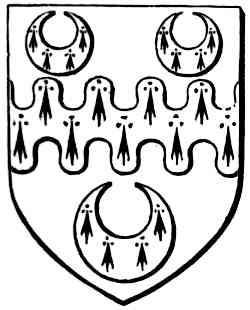
Founded by William Weld, Sheriff of London in 1352, who married Anne Wettenhall; his posterity were seated at Eaton in Cheshire, till the reign of Charles II. The present family are descended from Sir Humphry, Lord Mayor of London in 1609, who was fourth son of John Weld of Eaton and Joan Fitzhugh. Lulworth was purchased in 1641.
Younger branch, Weld-Blundell of Ince-Blundell, Lancashire.
See Ormerod's Cheshire, ii. 131; Hutchins's Dorset, i. 226; and the new edition, i. p. 372; Blakeway's Sheriffs of Salop, p. 120,
Arms.—Azure, a fess nebulée between three crescents ermine. Confirmed by Camden in 1606. See Morgan's Sphere of Gentry, book 2, p. 112.
Present Representative, Edward Weld, Esq.
Floyer of West-Stafford.
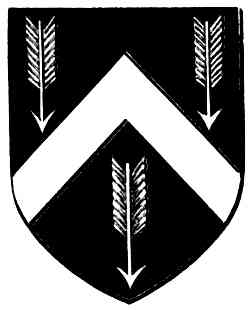
This is a Devonshire family of good antiquity seated at Floyers-Hayes, in the parish of St. Thomas in that county, soon after the Norman Conquest. That estate appears to have remained in the family till the latter part of the seventeenth century. The Floyers afterwards removed into Dorsetshire, of which county Anthony Floyer, Esq. was a justice of the peace in 1701.
See Prince's Worthies of Devonshire, ed. 1701, p. 308; Westcote's Devonshire Pedigrees, p. 556.
Arms.—Sable, a chevron between three broad arrows argent.
Present Representative, John Floyer, Esq. M. P. for Dorset.
DURHAM.
Knightly.
Lumley of Lumley Castle, Earl of Scarborough 1690, Viscount Lumley of Ireland 1628.
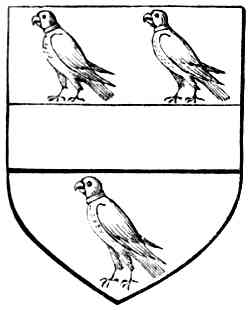
This very distinguished family is of Anglo-Saxon descent, and has been seated in this county from the time of the Conquest; Liulph, who lived before the year 1080, is the first recorded ancestor. In the female line the Lumleys represent the Barons Thweng of Kilton, and from hence the arms borne by this ancient house, who were themselves summoned as Barons from the 8th of Richard II. to the 1st of Henry IV. The elder line of the family became extinct on the death of John Lord Lumley in 1609. It was during the time of this Lord that the following anecdote is told. "Oh, mon, gang na farther; let me digest the knowledge I ha' gained, for I did na ken Adam's name was Lumley,"—exclaimed King James I. when wearied with Bishop James's prolix account of the Lumley Pedigree, on his Majesty's first visit to Lumley Castle in 1603. For the curious story of the lucky leap of Richard Lumley, the immediate ancestor of the present family, see Nichols's Leicestershire, iii. pt. i. 363; and Surtees's Durham, ii. 162.
See also Leland's Itin., vi. fol. 62; Brydges's Collins, iii. 693; the Roll of Carlaverock by Sir H. Nicolas, p.313; and the Surrey Archaeological collections, vol. iii. pp. 324-348, for a valuable account of the Lumley monuments in Cheam church, and notes on the pedigree and arms.
Arms.—Argent, a fess gules between three popinjays proper, collared of the second. This coat was borne by Marmaduke de Twenge in the reign of Henry III. and by M. de Thwenge and Monsieur Rauf Lumleye in the reign of Edward III. and Richard II. (Rolls.) John le Fitz Marmaduke bore, Gules, a fess and three popinjays argent. (Roll of Carlaverock, 1300.) Sir Robert de Lumley the same, but on the fess three mullets sable. (Roll of the reign of Edward II) See the seal of John Lord Lumley, who died in 1421, in Bysshe's Notes on Upton, p. 58.
Present Representative, Richard George Lumley, 9th Earl of Scarborough.
Salvin of Croxdale.
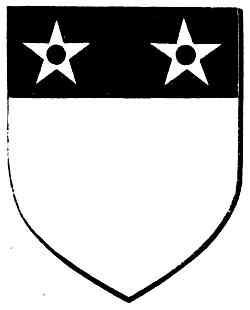
Sir Osbert Silvayne, Knight, of Norton Woodhouse, in the Forest of Sherwood, living in the 29th of Henry III., is the first proved ancestor of this family: he is said to have been son of Ralph Silvayne. Some of the name, which we may supposed to be derived from this wood or forest, were seated at Norton before the year 1140. Croxdale was inherited from the heiress of Whalton in 1402.
Younger branch, Salvin of Sunderland Bridge, in this county.
See Surtees's Durham iv. 117, and the Scrope and Grosvenor Roll, ii. p. 340. For the extinct family of Salvin of Newbiggen, see Graves's Cleveland.
Arms.—Argent, on a chief sable two mullets pierced or. This coat was borne by Sir Gerard Salveyn in the reign of Edward II., and also I suppose by the same Sir Gerard in that of Edward III., but here the mullets are voided vert. Again, in the reign of Richard II, Monsieur Gerard Salvayn bore his mullets of six points or, pierced gules.
Present Representative, Gerard Salvin, Esq.
Gentle.
Lambton of Lambton Castle, Earl of Durham 1833, Baron 1828.
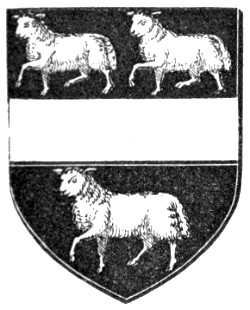
According to Surtees, traced to Robert de Lambton, Lord of Lambton in 1314. 'There was, it is true, a John de Lambton, living between 1180 and 1200, but the pedigree cannot be proved beyond this Robert. The Lambtons were among the first families of the North who embraced the Reformed Religion, and were loyal during the Civil Wars of the seventeenth century.
See Surtees's Durham, ii. 174.
Arms.—Sable, a fess between three lambs trippant argent.
Present Representative, George Frederick D'Arcy Lambton, 2nd Earl of Durham.
ESSEX.
Knightly.
Tyrell of Boreham, Baronet 1809.
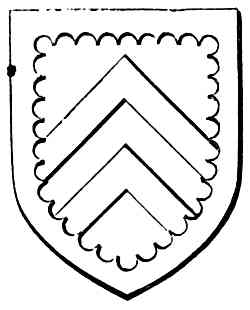
"This is," says Morant, "one of the most ancient knightly families which has subsisted to our own days;" descended from Walter Tyrell, who held the manor of Langham, in this county, at the time of Domesday; it is doubtful whether he was the person who shot William Rufus. Indeed, although the ancient descent of the Terells or Tyrells is generally admitted, the pedigree appears to require the attention of an experienced genealogist. There have been many branches of the Tyrells in this and other counties; the present is a junior one of the original stock, and Boreham a very recent possession.
Elder branches now extinct:—
Tyrell of Thornton, co. Buckingham, Baronet 1627 to 1749. Tyrell of Springfield, Essex, Baronet 1666 to 1766.
See Morant's History of Essex, i. 208; Wotton's Baronetage, ii. 85, iii. 610.
Arms.—Argent, two chevrons azure within a border engrailed gules
Present Representative, Sir John Tyssen Tyrell, 2nd Baronet, late M.P. for Essex.
Waldegrave of Naverstoke, Earl Waldegrave 1729; Baronet 1685, Baronet 1643.
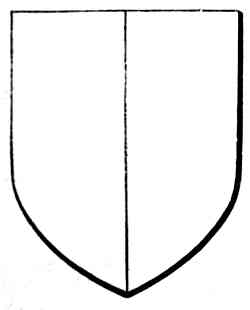
An ancient family, which has been seated in many counties, originally of Waldegrave, in Northamptonshire; afterwards settled in Suffolk; about the latter end of the fifteenth century, seised of lands in this county; and again we find them in Norfolk and Somersetshire. Naverstock was granted by Queen Mary in 1553, the Waldegraves having suffered for their attachment to the old faith at the time of the Reformation. Leland thus mentions the family; "As far as I could gather of young Walgreve, of the Courte, the eldest house of the Walgreves cummith owt of the Town of Northampton or ther about, and there yet remaineth in Northamptonshire a man of landes of that name."
See Leland's Itinerary, iv. fol. 19; Morant's Essex, i. 181; Brydges's Collins, iv. 232; and the Scrope and Grosvenor Roll, ii. p. 374, for an interesting memoir of Sir Richard Waldegrave, who died in 1401, having been chosen Speaker of the House of Commons in 1381.
Younger branch, Baron Radstock, of Ireland, 1800, descended from the younger brother of the fourth Earl Waldegrave.
Arms.—Per pale argent and gules. This coat was borne by M. Richard Waldeg've, as appears by the Roll of the reign of Richard II.
Present Representative, William Frederick Waldegrave, 9th Earl Waldegrave.
Disney of the Hyde, in the parish of Ingatstone.
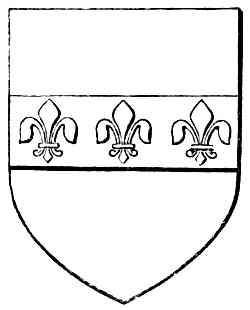
A younger branch of an ancient Knightly Norman house, settled for many years at Norton D'Isney in Lincolnshire, where the principal line became extinct in 1722. The present family descend from the eldest son by the second marriage of Sir Henry Disney of Norton Disney, who died in 1641. See very elaborate pedigrees of this family in the College of Arms, Norfolk 1, p. 38, and Norfolk 7, p. 76; also Hutchins's Dorset, iv. p. 389, for Disney of Swinderby, co. Lincoln, and of Corscomb, co. Dorset, and for the present family.
See also the Topographer and Genealogist, iii. 393; and Leland's Itinerary, i. p. 28, "Disney, alias De Iseney. He dwelleth at Diseney, and of his name and line be Gentilmen yn Fraunce."
Arms.—Argent, on a fess gules three fleurs-de-lis or. In the reign of Richard II. Monsieur William Dysney bore, Argent, three lions passant in pale gules. (Roll.)
Present Representative, Edgar Disney, Esq.
Gentle.
Gent of Moyns.
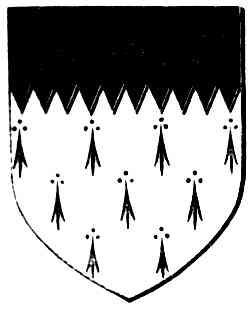
The family of Gent was seated at Wymbish in this county in 1328. William Gent, living in 1468, married Joan, daughter and heir of William Moyne of Moyne or Moyns. His widow purchased that manor in 1494, and it has since continued the seat of this family, who were greatly advanced by Sir Thomas Gent, the Judge, in the reign of Queen Elizabeth.
See Morant's History of Essex, ii. 353.
Arms.—Ermine, a chief indented sable. Sometimes a chevron sable is borne on the field. The Judge bore two spread eagles on the chief, as appears by his seal.
Present Representative, George Gent, Esq.
Vincent of Debden Hall, Baronet 1620.
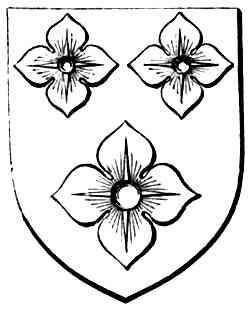
The family of Vincent descend from Miles Vincent, owner of lands at Swinford in the county of Leicester, in the tenth of Edward II. Early in the fifteenth century the family removed to Bernack, in the county of Northampton, on marriage with the heiress of Sir John Bernack, of that place. Here they continued to reside, until David Vincent, Esq. seventh in descent from that marriage, settled at Long-Ditton, in Surrey, in the reign of Henry VIII. His son, Sir Thomas Vincent, by marriage with the heiress of Lyfield, removed to Stoke d'Abernon, in the reign of Queen Elizabeth, which was sold shortly after 1809, when the family removed to the present seat in this county.
See Wotton's Baronetage, vol. i. p. 418; and Manning and Bray's Surrey, vol. ii. p. 723.
Arms.—Azure, three quatrefoils urgent.
Present Representative, Sir Francis Vincent, 10th Baronet.
GLOUCESTERSHIRE.
Knightly.
Berkeley of Berkeley Castle, Earl of Berkeley 1679; Baron Berkeley 1416.
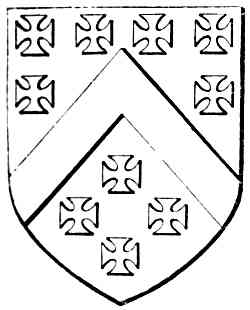
Pre-eminent among the Norman aristocracy is the house of Berkeley, and more especially remarkable from being the only family in England in the male line retaining as their residence their ancient Feudal Castle. This great family are descended from Hardinge, who fought with William at the battle of Hastings; and whose son, Robert Fitzhardinge, received the lordship and castle of Berkeley from Henry II., in reward for his fidelity to the Empress Maude and her son. His son and successor Maurice married Alice, daughter of Roger de Berkeley, the former and dispossessed owner of Berkeley.
Younger branches. The Berkeleys of Cotheridge and Spetchley, both in Worcestershire, and both descended from Thomas, fourth son of James fifth Lord Berkeley, and Isabel, daughter of Thomas Mowbray, Duke of Norfolk. (Nash's Worcestershire, i. 258.)
For Berkeley of Stoke-Gifford in this county, and of Bruton, co. Somerset, (Lords Berkeley of Stratton,) both extinct, see Blore's Rutlandshire, p, 210; for Berkeley of Wymondham, also extinct, see Nichols's Leicestershire, ii. pt. 1. p. 413; for Berkeley-Portman of Bryanston, co. Dorset, see Hutchins's Dorset, i. 154.
For Berkeley Genealogy, see Leland's Itinerary, vi. fo. 49, &c.; for Charters of the Berkeleys, with their seals copied from the originals at Berkeley Castle, see MSS. Reg. Coll. Oxon. cxlix., and, above all, Fosbroke's "Abstracts and Extracts of Smyth's Lives of the Berkeleys," admirably illustrative of the ancient manners of our old landed families.
Arms.—Gules, a chevron between ten crosses patée argent. The original arms were, Gules, a chevron argent, and were so borne by Moris de Barkele, in the reign of Henry III. The present coat was used by Sir Moris in the reigns of Edward II. and III. and Richard II. His son, during his father's life, differenced his arms by a label azure; Sir Thomas de Berkeley used "rosettes" instead of crosses; Sir John de Berkeley, Gules, a chevron argent between three crosses patée or. (Roll of Edw. II. &c.)
See for the differences in the Berkeley coat, Camden's Remains, ed. 1657, p. 226.
Present Representative, Thomas Morton Fitz-Hardinge Berkeley, 6th Earl of Berkeley.
Gentle.
Kingscote of Kingscote.
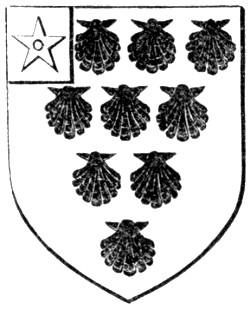
Ansgerus, or Arthur, owner of lands in Combe, in the parish of Wotton under Edge, in this county, the gift of the Empress Maude, is the patriarch of this venerable family. The manor of Kingscote, which had been given by William I. to Roger de Berkeley, was inherited from Aldeva, the daughter of Robert Fitz-Hardinge and the wife of Nigel de Kingscote, soon after the reign of Henry II.
The Kingscotes shared in the glories of both Poictiers and Agincourt, and, although a family of such long standing in this county, appear never to have exceeded the moderate limits of their present ancestral property.
See Atkyns's Gloucestershire, 2nd edit. 1768, p. 258; Rudder's Gloucestershire, p. 512; and Fosbroke's Smyth's Lives of the Berkeleys, p. 218.
Arms.—Argent, nine escallops sable, on a canton gules a mullet pierced or.
Present Representative, Thomas Henry Kingscote, Esq.
Trye of Leckhampton-Court.
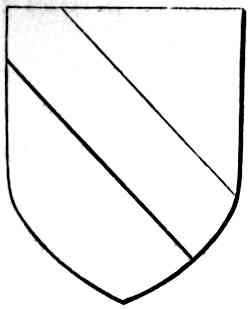
This family is traced to Rawlin Try, in the reign of Richard II. He married an heiress of Berkeley, by whom he had the manor of Alkington in Berkeley. His great-grandson was High Sheriff of Gloucestershire in 1447, and married an heiress of Boteler, from whence came the manor of Hardwicke, sold to the Yorkes in the last century. Leckhampton came from the Norwood family in recent times.
See Atkyns's Gloucestershire, p. 238; and Rudder, p. 471, &c.
Arms.—Or, a bend azure. In the Roll of Arms of the Thirteenth Century, printed by the Society of Antiquaries in 1864 [numbers 69 and 70], occur the following coats:
"Signeur de Bilebatia de Try, d'or un bend gobony d'argent et d'azure.
"Regnald de Try, d'or un bend d'azure un labell gulez."
Present Representative, Rev. Charles Brandon Trye.
Estcourt of Estcourt, in Shipton-Moyne.
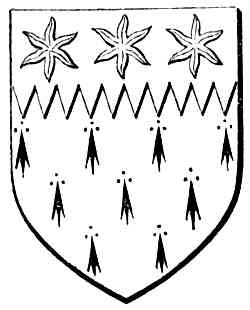
The printed accounts of this ancient family are somewhat meagre, but original evidences in the possession of the present Mr. Estcourt prove the long continuance of his ancestors as lords of the manor of the place from whence the name is derived, and of which John Estcourt died seised in the fourteenth year of Edward IV. The estate has remained the inheritance of his descendants from that period.
Walter de la Estcourt is the first recorded ancestor. He held lands in Shipton in 1317, and died about 1325. See Atkyns's Gloucestershire, 2nd ed. p. 340; Rudder, p. 654 and Lee's History of the Parish of Tetbury, p. 196.
Arms.—Ermine, on a chief indented gules three estoiles or, and so borne by William Estcourt, Warden of New College, Oxford, in 1426, as appears by his silver seal in the possession of Mr. Estcourt.
Present Representative, The Right Hon. Thomas H. S. Sotheron-Estcourt, late M.P. for North Wilts.
Leigh of Adlestrop, Baron Leigh of Stoneleigh 1839.
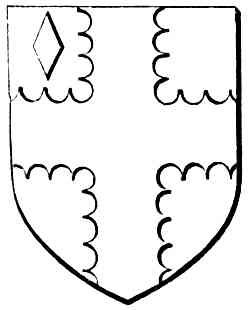
Descended from Agnes, daughter and heir of Richard de Legh, and her second husband William Venables, the common ancestress of the Leighs of West-Hall in High-Leigh. (See p. 22.) They had a son who took the name of Legh, and settled at Booths in Cheshire: from hence came the Leighs of Adlington, and from them the Leighs of Lyme, both in Cheshire, and both now extinct. John Leigh, Escheator of Cheshire in the 12th of Henry VI., was a younger son of Sir Peter Leigh, of Lyme, and the ancestor of the Leighs of Ridge, in the same county. Ridge was sold in the fourth of George II., and the family (still I believe existing) removed into Kent.
The present family are descended from Sir Thomas Leigh, Knight, Lord Mayor of London in 1558, who was also the ancestor of the extinct house of Stoneleigh. Sir Thomas was great-grandson of Sir Peter Leigh, Knight Banneret, who fell at Agincourt.
Younger Branches. Leigh of Middleton in Yorkshire, and Egginton in Derbyshire. See also Townley of Townley.
Extinct Branches. Leigh of Rushall, in Staffordshire; see Shaw's Staffordshire, ii. 69; of Brownsover, co. Warwick, Baronet; of Baguly, co. Chester; of Annesley, co. Notts; of Birch, co. Lancaster; of Stockwell, co. Surrey; and of Isall, co. Cumberland, &c.
So various indeed are the ramifications of the different branches of this wide-spreading family, that "as many Leighs as fleas" has grown into a proverb in Cheshire.
See Ormerod's Cheshire, i. 350; iii. 333, 338, 374.
Arms.—Gules, a cross engrailed, and in the dexter point a fusil argent.
Present Representative, William Henry Leigh, 2nd Baron Leigh.
HEREFORDSHIRE.
Knightly.
Bodenham of Rotherwas.
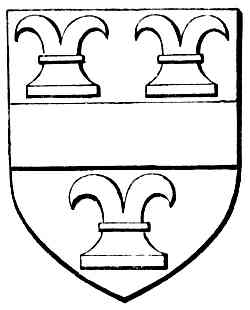
Hugh de Bodenham, Lord of Bodenham, in this county, grandfather of Roger who lived in the reign of Henry III., is the ancestor of this family; who were afterwards of Monington and of Rotherwas, about the middle of the fifteenth century.
See Blore's Rutlandshire for Bodenham of Ryhall, in that county, now extinct, (p. 49,) and Duncomb's Herefordshire, i. 91, 104.
Arms.—Azure, a fess between three chess-rooks or.
Present Representative, Charles De la Barre Bodenham, Esq.
Scudamore of Kentchurch.
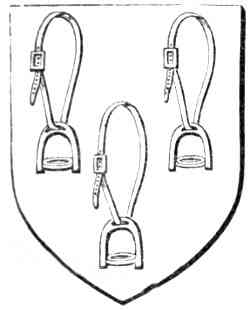
This is the only remaining branch of an ancient Norman family formerly seated at Upton and Norton near Warminster, in Wiltshire; Walter de Scudamore being lord of the former manor in the reign of Stephen. In that of Edward III. Thomas, younger son of Sir Peter Scudamore, of Upton-Scudamore, having married the heiress of Ewias, removed into Herefordshire, and was the ancestor of the family long seated at Holme-Lacy, created Viscounts Scudamore in 1628, and extinct in 1716. From him also descended the house of Kentchurch, who are said to have been seated there in the reign of Edward IV.
See Gibson's Views of the Churches of Door, Holme-Lacy, and Hemsted, &c. 4to. 1727; and Guillim's Heraldry, ed. 1724, p. 549.
Arms.—Gules, three stirrups, leathered and buckled, or. Ancient coat, Or, a cross patée fitchée gules.
Present Representative, John Lucy Scudamore, Esq.
Gentle.
Luttley of Brockhampton (called Barneby).
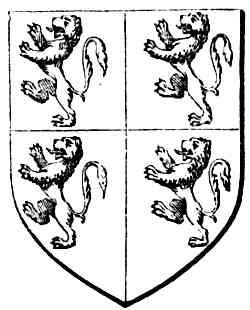
Luttley is in the parish of Enfield, in the county of Stafford, and Philip de Luttley was lord thereof in the 20th of Edward I. He was the ancestor of a family the direct line of which terminated in an heiress in the reign of Henry VI. But Adam de Luttley, younger brother of Philip above-named, was grandfather of Sir William Luttley, Knight, of Munslow Hall, co. Salop, whose lineal descendant, John Luttley, Esq. was of Bromcroft Castle, in the same county, 1623. Philip Luttley, Esq. of Lawton Hall, co. Salop, great-grandson of John last-named, married Penelope, only daughter of Richard Barneby, Esq. of Brockhampton; and their son, Bartholomew, succeeding to the Barneby estates, assumed that name; and was grandfather of the late John Barneby, Esq. M. P. for the county of Worcester.
From the MSS. of Mr. Joseph Morris of Shrewsbury.
Arms.—Quarterly or and azure, four lions rampant counterchanged.
Present Representative, John Habington Barneby, Esq.
Berington of Winsley.
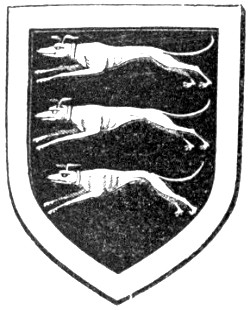
The name is derived from Berington, in the hundred of Condover, and county of Salop, where Thomas and Roger de Berington were living in the reigns of Edward I. and II. Another Thomas, living in the time of Edward III., married Alice, daughter of Sir John Draycot, Knight, and was ancestor of John Berington, of Stoke-Lacy, in this county, who, about the reign of Henry VII. married Eleanor, daughter and heir of Rowland Winsley, of Winsley, Esq. From this marriage the present Mr. Berington is tenth in descent.
From Roger de Berington, brother of Thomas first-named, the Beringtons of Shrewsbury and of Moat Hall, co. Salop, traced their descent. Thomas Berington, of Moat Hall, Esq. who died in 1719, married Anne, daughter of John Berington, of Winsley, Esq.; and the last heir male of their descendants, Philip Berington, Esq. dying s.p. in 1803, devised his Shropshire estates to his kinsman, Mr. Berington, of Winsley.
From the MSS. of Mr. Joseph Morris, of Shrewsbury, and Eyton's Shropshire, vi. p. 42.
Arms.—Sable, three greyhounds courant in pale argent, collared gules, within a border of the last.
Present Representative, John Berington, Esq.
HERTFORDSHIRE.
Knightly.
Jocelyn, of Hyde Hall, in the parish of Sabridgeworth, Earl of Roden in Ireland 1771; Irish Baron 1743; Baronet 1665.
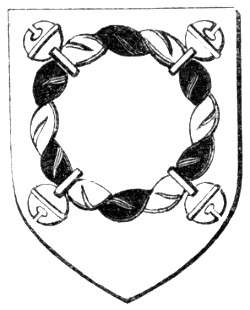
A family of Norman origin, said to have come into England with William the Conqueror, and to have been seated at Sempringham, in the county of Lincoln, by the grant of that monarch. In 1249 Thomas Jocelyn, son of John, having married Maud, daughter and coheir of Sir John Hyde, of Hyde, brought that manor and lordship into this family, in which it has ever since continued. The peerage was originally conferred on Robert Jocelyn, Lord Chancellor of Ireland in 1739, created Baron Newport 1743, whose son, the first Earl, married the heiress of the Hamiltons, Earls of Clanbrassil, in 1752.
See "Historical Anecdotes of the Families of the Boleyns, Careys, Mordaunts, Hamiltons, and Jocelyns, arranged as an Elucidation of the Genealogical Chart at Tollymore Park," Newry, 1839, privately printed. See also Archdall's Lodge's Peerage of Ireland, iii. 258, and Chauncy's Hertfordshire, 1st ed. p. 182.
Arms.—Azure, a circular wreath argent and sable, with four hawk's bells joined thereto in quadrature or.
Present Representative, Robert Jocelyn, third Earl of Roden, K.P.
Wolryche of Croxley.
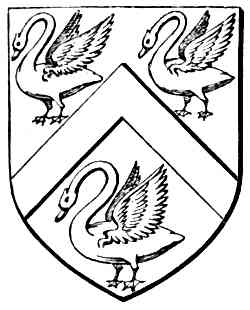
This is a very ancient Shropshire family, descended from Sir Adam Wolryche, Knight, of Wenlock, living in the reign of Henry III., and who, previous to being knighted, was admitted of the Roll of Guild Merchants of the town of Shrewsbury in 1231, by the old Saxon name of "Adam Wulfric." His descendant Andrew Wolryche was M. P. for Bridgnorth in 1435, being then of Dudmaston, where the elder branch of this family was seated for a considerable period, created Baronets in 1641, extinct in 1723. The present family descend from Edward, third son of Humphry Wolryche, Esq. grandson of Andrew Wolryche, which Humphry is recorded as one of the "Gentlemen" of Shropshire, in the seventeenth of Henry VII., 1501. There were branches of the family, now extinct, at Cowling and Wickhambroke, Suffolk, and Alconbury, Huntingdonshire.
From the MSS. of Mr. Joseph Morris, of Shrewsbury.
Arms.—Azure, a chevron between three swans argent.
Present Representative, Humphry William Wolryche, Esq.
HUNTINGDONSHIRE.
Knightly.
Sherard of Glatton, Baron Sherard in Ireland 1627.
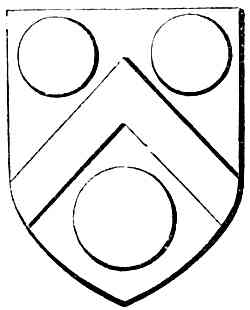
The pedigree of this family does not appear to be proved beyond William Sherard, who died in 1304. His ancestors, however, are said to have been of Thornton, in Cheshire, in the thirteenth century. In 1402 the family were established at Stapleford in Leicestershire by marriage with the heiress of Hawberk.
On the decease of Robert Sherard, sixth Earl of Harborough, in 1859, the representation of the family devolved upon the present lord, descended from George, third son of the first Baron.
See Nichols's Leicestershire, vol. ii. pt. i. 343; and Brydges's Collins, iv. 180,
An extinct younger branch was of Lopthorne, in the county of Leicester.
Arms.—Argent, a chevron gules between three torteauxes.
Present Representative, Philip Castell Sherard, 9th Baron Sherard.
KENT
Knightly.
Dering of Surenden-Dering, Baronet 1626.
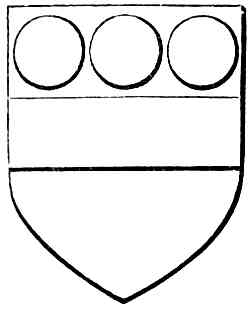
The family of Dering descend from Norman de Morinis, whose ancestor, Vitalis FitzOsbert, lived in the reign of Henry II. Norman de Morinis married the daughter of Deringus, descended from Norman Fitz-Dering, Sheriff of this county in King Stephen's reign. Richard Dering died seised of Surenden, which came from the heiress of Haute, in 1480. The loyalty of Sir Edward Dering in the Civil Wars, in Charles I.'s time, deserves to be remembered: see his character in Peck's Desiderata Curiosa, II. B. 14, 19, 20, and the interesting memoir of him by John Bruce, Esq. F.S.A. in "Proceedings in the County of Kent," printed for the Camden Society 1861.
For a notice of the old seats of this family, in the parish of Lidd, called Dengemarsh Place and Westbrooke, see Hasted's History of Kent, iii. 515, and for the family, iii. 228; and Wotton's Baronetage, ii. 13,
Arms.—Argent, a fess azure, in chief three torteauxes, borne by "Richard fil' Deringi de Haut," in 19 Hen. IV. as appears by his seal. The same coat is on the roof of the cloisters of Canterbury Cathedral. The son of this Sir Richard Dering bore, Or, a saltier sable, the ancient arms of De Morinis, and now generally quartered with Dering. See Willement's Heraldic Notices of Canterbury Cathedral, pp. 90, 106.
Present Representative, Sir Edward C. Dering, 8th Baronet, M.P. for East Kent.
Neville of Birling, Earl of Abergavenny 1784; Baron 1392.
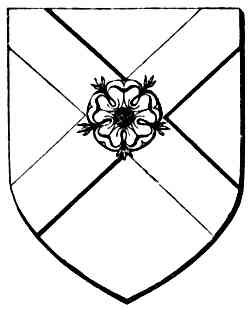
"In point of antiquity, and former feudal power, probably the most illustrious house in the peerage," says Brydges. Descended from Gospatric, the Saxon Earl of Northumberland, whose great-grandson, marrying the heiress of Neville, gave that name to his posterity, for many ages the Nevilles were Barons of Raby and Earls of Westmerland. The last Earl was attainted in the 13th of Elizabeth. A younger branch of the Nevilles, in the person of Sir Edward Neville, obtained the castle and barony of Abergavenny, and the estate of Birling, with the heiress of Beauchamp, in the reign of Henry VI.; and the present family is descended from this match, having been Barons of Abergavenny previously to the creation of the Earldom. Birling was long deserted by the family, whose principal seat was afterwards at Sheffield, and Eridge, in Sussex; but it is now the residence of Lord Abergavenny.
See Hasted, ii. 200; Brydges's Collins, v. 151; and Surtees's Durham, iv. 158, for pedigrees of the Nevilles, Earls of Westmerland, and the Nevilles of Weardale and Thornton-Bridge. See also Rowland's "Account of the Noble Family of Neville," privately printed 1830, folio; Surtees's "Sketch of the Stock of Nevill," 8vo. 1843.
Arms.—Gules, a saltier argent, thereon a rose of the first, seeded proper.
This coat, without the rose, was borne by Robert de Neville in the reign of Henry III. In the reign of Edward III. M. de Neville de Hornby bore the coat reversed, Argent, a saltier gules. M. Alexander de Neville, at the same period, differenced it by a martlet sable. M. William Neville and N. Thomas Neville bore for difference respectively, a fleur-de-lis azure and a martlet gules, in the reign of Richard II. (Rolls.) The Rose is allusive to the House of Lancaster, Ralph Neville, 1st Earl of Westmerland, having married to his second wife Joan, daughter of John of Gaunt, Duke of Lancaster. The older coat was, Or, fretty gules, on a canton sable an ancient ship.
Present Representative, the Rev. William Neville, 4th Earl of Abergavenny.
Gentle.
Honywood of Evington, in Elmsted, Baronet 1660.
The name is derived from Henewood, near Postling, in this county, where the ancestors of this family resided as early as the reign of Henry III. In the fourteenth and fifteenth centuries the Honywoods removed to Hythe, which they often represented in Parliament, and afterwards to Sene, in Newington, near Hythe. Caseborne, in Cheriton, came from an heiress of that name before the time of Henry VI.; Evington, by purchase, in the reign of Henry VII.
Younger branches were of Marks Hall, in Essex, and of Petts, in Charing, in this county. Of the former family was Robert Honywood, whose wife Mary, daughter of Robert Atwaters, or Waters, lived to see 367 descendants: she died in 1620, aged 93.
See Topographer and Genealogist, i. 397, 568; ii. 169, 189, 256, 312, 433; Hasted's Kent, ii. 442, 449; iii. 308; Wotton's Baronetage, iii. 105.
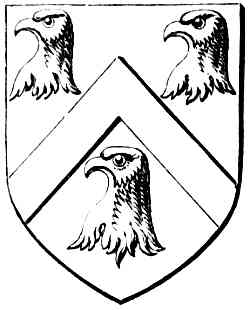
Arms.—Argent, a chevron between three hawk's heads erased azure. These arms, of the time of Richard II. are carved on the cloisters of Canterbury Cathedral. See Willement, p. 101.
Present Representative, Sir Courtenay John Honywood, 7th Baronet.
Twysden of Roydon-Hall, in East Peckham, Baronet 1611.
Twysden, in the parish of Goudhurst, appears to have given name to this family: it was possessed by Adam de Twysden in the reign of Edward I.; and in that of Henry IV. Roger Twysden, his descendant, married the daughter and heir of Thomas Chelmington of Chelmington, in Great Chart, Esq. where his son Roger removed. Twysden was sold in the reign of Henry VI. In the reign of Elizabeth, William Twysden, of Chelmington, married Elizabeth, daughter of Thomas Roydon, of Roydon-Hall, which has since been the residence of his descendants. There is another Twysden, in the parish of Sandhurst, in this county, where the family are also said to have lived in the time of Edward I.
A younger branch of Bradbourne, in this county, also Baronets, were extinct in 1841.
See Hasted's Kent, ii. 213, 275; iii. 37, 244; Philpot's Kent, p. 300; Wotton's Baronetage, i. 211.
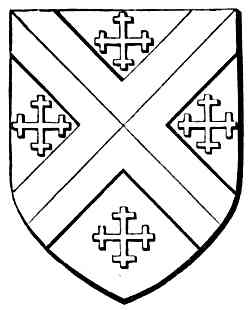
Arms.—Gyronny of four, argent and gules, a saltier between four crosses crosslet, all counterchanged.
Present Representative, Sir William Twysden, 8th Baronet.
Toke, of Godington.
This family claim descent from Robert de Toke, who was present with Henry III. at the Battle of Northampton. In the fourteenth and fifteenth centuries the Tokes were seated at Bere, in the parish of Westcliffe, in this county: this line became extinct at the latter end of the seventeenth century.
The Tokes of Godington are a junior branch, descended from the heiress of Goldwell, of Godington, about the reign of Henry VI.
See Hasted's Kent, iii. 247; Visitations of Kent, 1574 and 1619; and Harleian MSS. 1195. 55, 1196. 108.
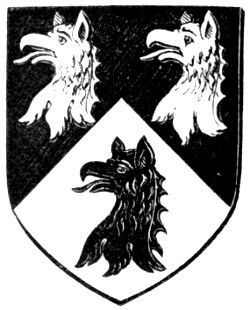
Arms.—Party per chevron sable and argent, three gryphon's heads erased and counterchanged. John Toke, of Godington, had an additional coat, an augmentation granted to him by Henry VII., as a reward for his expedition in a message on which he was employed to the French King: viz. Argent, on a chevron between three greyhound's heads erased sable, collared or, three plates.
Present Representative, the Rev. Nicholas Toke.
Roper of Linstead, Baron Teynham 1616.
William Roper, or Rosper, who lived in the reign of Henry III, is the first recorded ancestor; his descendants were of St. Dunstan's, near Canterbury, in the reigns of Edward III. and Richard II. Edmund Roper was one of the Justices of the Peace for this county in the time of Henry IV. and V.
The elder line of this family were seated at West-Hall, in Eltham, and also at St. Dunstan's, and became extinct in 1725. The younger and present branch at Linstead, which came from the heiress of Fineux, in the reign of Henry VIII. King James I. conferred the peerage on Sir John Roper in 1616.
For the origin of the family, see Dugdale's Warwickshire, 2nd ed. p. 316; Hasted's Kent, i. 55; ii. 687; iii. 589; and Brydges's Collins, vii. 77.
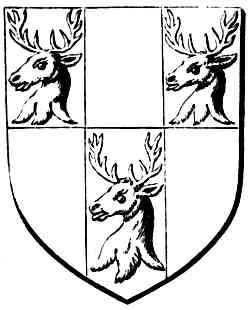
Arms.—Per fess azure and or, a pale counterchanged, three buck's heads erased of the second.
Present Representative, George Henry Roper Curzon, 16th Baron Teynham.
Knatchbull of Mersham-Hatch, Baronet 1641.
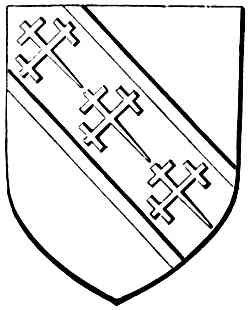
Hasted gives no detailed pedigree of this family before the purchase of the manor and estate of Hatch, by Richard Knatchbull, in the reign of Henry VII. It appears however that the first recorded ancestor, John Knatchbull, held lands in the parish of Limne, in this county, in the reign of Edward III., where some of the name remained in that of Charles I. There are pedigrees in the Visitations of Kent of 1574 and 1619.
See Philpot's Kent, p.199; Hasted's Kent, iii. 286; and Wotton's Baronetage, ii. 228.
Arms.—Azure, three cross-crosslets fitchée in bend or, cotised of the same.
Present Representative, Sir Norton Joseph Knatchbull, 10th Baronet.
Filmer of East-Sutton, Baronet 1674.
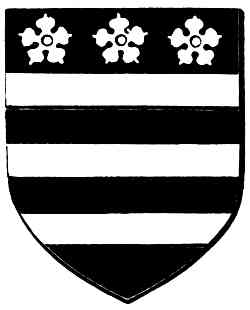
The Filmers were anciently seated at the manor of Herst, in the parish of Otterden, in this county, in the reign of Edward II., and there remained till the time of Elizabeth, when Robert Filmer, son of James, removed to Little-Charleton, in East-Sutton: the manor was purchased by his elder son. There are pedigrees of Filmer in the Kentish Visitations of 1574 and 1619. The Baronetcy was conferred by Charles II., as a reward for the loyal exertions of Sir Robert Filmer during the Usurpation.
See Hasted's Kent, ii. 410; Wotton's Baronetage, iii. 581. Arms.—Sable three bars, and in chief three cinquefoils or.
Present Representative, Sir Edmund Filmer, 9th Baronet, late M.P. for West Kent.
Oxenden of Dene, Baronet 1678.
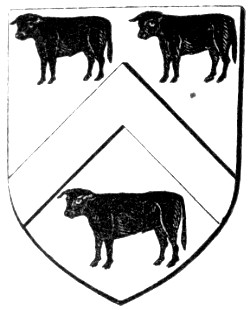
Solomon Oxenden, who lived in the reign of Edward III., is the first known ancestor. Dene, in the parish of Wingham, was purchased at the latter part of the reign of Henry VI. The family had previously been stated at Brook, in the same parish. Thomas Oxenden died seised of Dene in 1492. There is a pedigree in the Visitation of Kent in 1619.
See Hasted's Kent, iii. 696; Wotton's Baronetage, iii. 638.
Arms.—Argent, a chevron gules between three oxen sable. Confirmed in the 24th of Henry VI.
Present Representative, Sir Henry Chudleigh Oxenden, 8th Baronet.
Finch of Eastwell, Earl of Winchilsea and Nottingham 1628-1681.
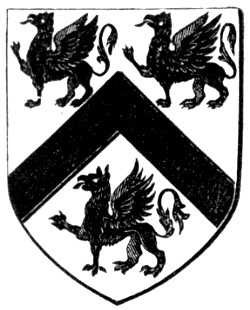
"The name of the Finches," writes Leland, "hath bene of ancient tyme in estimation in Southsex about Winchelesey, and by all likelyhod rose by sum notable merchaunte of Winchelesey." The name is said to be derived from the manor of Finches in the parish of Kidd.
Vincent Herbert, alias Finch, married Joan, daughter and heir of Robert de Pitlesden, of Tenderden. His son was of Netherfield, in Sussex, in the reign of Richard II. and Henry IV.; and was the ancestor of this family, who were of the Moat, near Canterbury, by marriage with the heiress of Belknap before 1493. Eastwell came by the coheiress of Moyle about the reign of Elizabeth.
The heiress of Heneage, who married Sir Moyle Finch, was created Countess of Winchilsea in 1628. The Earldom of Nottingham is due to the law, being granted in 1681 to Heneage, grandson of the first Countess.
Younger Branch. Earl of Aylesford 1714.
From John, second son of the second Vincent Finch, of Netherfield, were descended the Finches of Sewards, Norton, Kingsdown, Feversham, Wye, and other places in this county.
See Leland's Itinerary, vi. fol. 59; Basted's Kent. iii. 198; and Brydges's Collins, iii. 371.
Arms.—Argent, a chevron between three gryphons sable.
Present Representative, George James Finch Hatton, 10th Earl of Winchilsea, and 7th Earl of Nottingham.
LANCASHIRE.
Knightly.
Pennington of Pennington, Baron Muncaster in Ireland 1676.
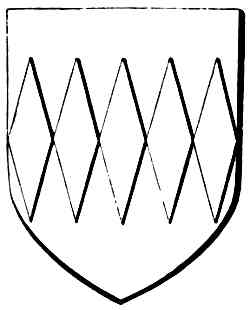
Gamel de Pennington, ancestor of this ancient family, was seated at Pennington at the period of the Conquest. But, as early as the reign of Henry II., Muncaster, in Cumberland, belonged to the Penningtons, and afterwards became their residence; and here King Henry VI. was concealed by Sir John Pennington in his flight from his enemies. There is a tradition that, on quitting Muncaster, the king presented his host with a small glass vessel, still possessed by the family, and called "The Luck of Muncaster:" to the preservation of which a considerable degree of superstition was attached.
See Baines's History of the County of Lancaster, iv. 669; Lysons's Cumberland, 139; Wotton's Baronetage, iii. 602.
Arms.—Or, five fusils in fess azure.
Present Representative, Josslyn Francis Pennington, 5th Baron Muncaster.
Molyneux of Sefton, Earl of Sefton in Ireland 1771 Viscount Molyneux in Ireland 1628; Baron Sefton 1831; Baronet 1611.
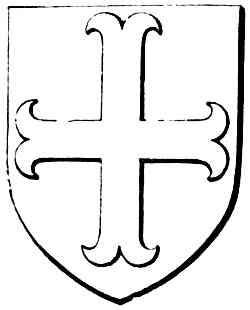
An ancient Norman family, who have been possessed of the manor of Sefton, in this county, from the period of the Conquest, or very soon afterwards: it was held as a knight's fee, as of the Castle of Lancaster.
William de Molines is the first recorded ancestor, and from him the pedigree is very regularly deduced to the present day. This truly noble family have been greatly distinguished in the field, witness Agincourt and Flodden. Thrice has the honour of the banner been conferred on a Molyneux. The second occasion was in Spain in 1367, from the hands of the Black Prince himself. In the seventeenth century, the family proved themselves right loyal to the crown, and suffered accordingly.
Sir Archdall's Lodge's Peerage of Ireland, iii. 239; Brydges's Biographical Peerage, iv. 93; and Baines's Lancashire, iv. 276.
Younger Branch. Molyneux, of Castle Dillon, co. Armagh, Baronet 1730, descended from Thomas Molyneux, born at Calais in 1531, for whom see "An Account of the Family and Descendants of Sir Thomas Molyneux, Knight, Chancellor of the Exchequer in Ireland to Queen Elizabeth." Evesham, sm. 4to. 1820.
For Molyneux of Teversal, co. Notts, Baronet 1611, extinct 1812, descended from the second son of Sir Richard Molyneux, the hero of Agincourt, see Thoroton's Nottinghamshire, p. 269; and Wotton's Baronetage, i. 141.
Arms.—Azure, a cross moline or. The Irish branch bears a fleur-de-lis or in the dexter quarter.
Present Representative, William Philip Molyneux, 4th Earl of Sefton.
Hoghton of Hoghton-Tower, Baronet 1611.
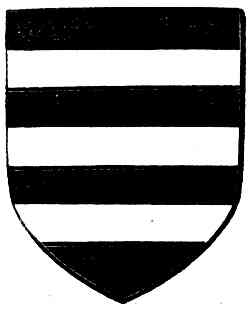
Hocton, or Hoghton, appears to have been granted in marriage by Warin Bussel to one Hamon, called "Pincerna," whose grandson was the first "Adam de Hocton," who held one carucate of land in Hocton in the reign of Henry II. His grandson, Sir Adam de Hoghton, lived in the 50th of Henry III., and was the ancestor of this family.
See Baines's Lancashire, iii. 348 and 459, for an interesting account of Hoghton-Tower, long deserted by the family; and Wotton's Baronetage, i. 15.
Arms.—Sable, three bars argent: borne in the reign of Richard II. by Mons. Ric. de Hoghton. His son (?) Richard, the same, with a label of three points gules. (Rolls.)
Present Representative, Sir Henry Hoghton, 9th Baronet.
Clifton of Clifton.
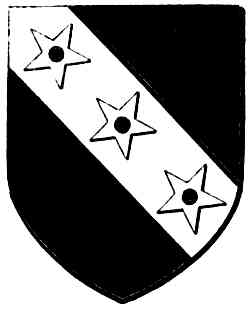
Clifton is in the parish of Kirkham, and here William de Clifton held ten carucates of land in the 42nd year of Henry III., and was Collector of Aids for this county. His son Gilbert, Lord of Clifton, died in the seventeenth of Edward II. On the death of Cuthbert Clifton, in 1512, the manor was temporarily alienated from the male line by an heiress; but by a match with the coheiress of Halsall, before 1657, it again became the property of the then principal branch of this ancient family, who were originally a junior line descended from the Cliftons of Westby.
See Baines's Lancashire, iv. 404.
Arms.—Sable, on a bend argent three mullets pierced gules: borne in the reigns of Edward III. and Richard II. by Mons. Robert de Clyfton. (Rolls.)
Present Representative, John Talbot Clifton, Esq.
Trafford of Trafford, Baronet 1841.
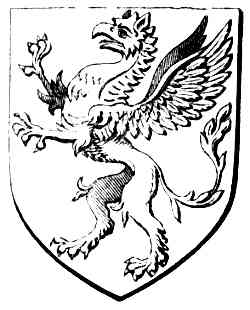
Trafford is in the parish of Eccles, and here the ancestors of this family are said to have been established even before the Norman Conquest. The pedigree given in Baines's Lancashire professes to be founded on documents in possession of the family, but some of it is certainly inaccurate, and cannot be depended on: Ralph de Trafford, who is said to have died about 1050, is the first recorded ancestor, but this is before the general assumption of surnames, which, as Camden observes, are first found in the Domesday Survey. On the whole, it may be assumed that the antiquity of the family is exaggerated, though the name no doubt is derived from this locality at an early period.
See Baines's Lancashire, iii. 110.
Arms.—Argent, a gryphon segreant gules. See in "Hearne's Curious Discourses," i. 262. edit. 1771, for the supposed origin of the Trafford Crest, "a man thrashing," which was however only granted about the middle of the 16th century.
Present Representative, Sir Humphry Trafford, 2nd Baronet.
Hesketh of Rufford, Baronet 1761
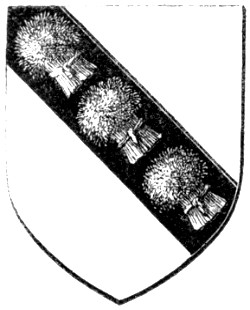
In the year 1275, the 4th of Edward I., Sir William Heskayte, Knight, married the coheiress of Fytton, and thus became possessed of Rufford, which has since remained the inheritance of this ancient family.
Younger branch. Hesketh of Gwyrch Castle, Denbighshire, descended from the Heskeths of Rossel, Lancashire, who were a younger branch of the house of Rufford.
See Baines's Lancashire, iii. 426.
Arms.—Argent, on a bend sable three garbs or, the ancient coat of Fytton. Hesketh of Gwyrch Castle bears, Or, on a bend sable between two torteauxes three garbs of the field.
Present Representative, Sir Thomas George Hesketh, 5th Baronet.
Townley of Townley.
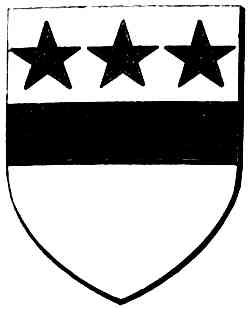
"This is not one of those long lines which are memorable only for their antiquity," says Whitaker, in his account of several remarkable members of this eminent family; who are descended from John del Legh, who died about the 4th of Edward III., and the great heiress Cecilia, daughter of Richard de Townley, whose family was of Saxon origin, and traced to the reign of Alfred. There is preserved at Townley, of which beautiful place Whitaker gives a charming account, an unbroken series of portraits from John Townley, Esq. in the reign of Elizabeth to the present time.
See Leland's Itinerary, i. 96 and v. 102; Whitaker's Whalley, 271, 341, 484; and for the extinct branches of Hurstwood Hall, [1562-1794,] p. 384; and of Barnside [Edw. IV.—1739,] p. 395.
For the origin of the Legh (properly Venables) family of Cheshire, see Leigh of Adlestrop, p. 92.
Arms.—Argent, a fess and in chief three mullets sable.
Present Representative, Charles Townley, Esq.
Gerard of Bryan, Baronet 1611.
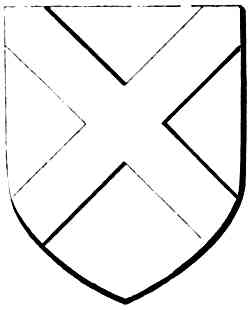
This family claims the same ancestor as the now extinct house of the Windsors Earls of Plymouth; the Carews also, both of England and Ireland, are descended, according to Camden, from the same progenitors: the pedigree therefore is extended to the Conquest, Otherus or Otho being the first recorded ancestor. The Lancashire branch were not settled there till the reign of Edward III., when they became possessed of Bryn, by marriage with the heiress of that name and place, From the Gerards of Ince descended the extinct Lords Gerard, of Gerard's-Bromley, and Sir William Gerard, Lord Chancellor of Ireland, who died in 1581.
See Baines's Lancashire, iii. 641; and Wotton's Baronetage, i. 51.
Arms.—Argent, a saltire gules.
Present Representative, Sir Robert Tolver Gerard, 13th Baronet.
Stanley of Knowesley, Earl of Derby 1485; Baronet 1627.
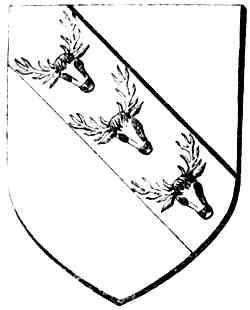
Although Sir Rowland Stanley Errington, brother of Sir William Massey Stanley, late of Hooton, in the county of Chester, Baronet, is in fact the head of this illustrious house, yet, as that estate has been sold, and his family have now no connection with Cheshire, the Earl of Derby must be considered the chief, as he is in truth the principal, branch of the house of Stanley.
As few families have acted a more prominent part in History, so few can trace a more satisfactory pedigree. Descended from a younger branch of the Barons Audeley, of Audeley in Staffordshire, the name of Stanley, from the manor of that name in this county, in the reign of John, was assumed by William de Audleigh. Sir John Stanley, K.G., Lord Deputy of Ireland, in 1381 married the heiress of Lathom, and thus became possessed of Knowesley; it was this Sir John also who obtained a grant of the Isle of Man, which afterwards descended to the Murrays Dukes of Athol till 1765. The principal branch of this family became extinct on the death of James, tenth Earl, in 1736; when the earldom descended on Sir Edward Stanley of Bickerstaff, Baronet, descended from Sir James Stanley, brother of Thomas second Earl of Derby.
For Stanley of Hooton, see Ormerod's Cheshire, ii. 230. The famous, or rather infamous, Sir William Stanley was of this line.
Younger Branches. Stanley of Cross-Hall, descended from Peter second son of Sir Thomas Stanley, 2nd Baronet, who died in 1653; and the family of the late Rev. James Stanley of Ormskirk, descended from Henry 2nd son of Sir Edward Stanley 1st. Bart. who died in 1640.
Stanley of Alderley, Cheshire, Baron Stanley of Alderley 1839, descended from Sir John Stanley and the heiress of Wever of Alderley. See Ormerod, iii. 306.
Stanley of Dalegarth, Cumberland, descended from John, second son of John Stanley, Esq., younger brother of Sir William Stanley, and the heiress of Bamville.
See Brydges's Collins, iii. 50; Seacome's House of Stanley, 4to. 1741; for Stanley Legend, &c. Coll. Topog. et Genealog. vii. 1.
Arms.—Argent, on a bend azure three buck's heads cabossed and attired or, assumed on the match with the heiress of Bamville, instead of the coat of Audeley.*
Present Representative, Edward Geoffery Smith Stanley, 14th Earl of Derby, K.G.
* The Dalegarth family bear the bend cotised vert.
Assheton of Downham.
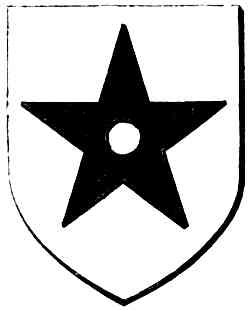
This is the only remaining branch of the old Lancashire family of Assheton, originally seated at Assheton-under-Lyne, and of whom the Asshetons of Middleton and of Great Lever, both Baronets, represented the elder lines. The present family descend from Radcliffe Assheton, second son of Ralph Assheton, of Great Lever, born in 1582.
Downham appears to have come into the family in the seventeenth century.
See Whitaker's Whalley, p. 299 and p. 300, for the curious journal of Nicholas Assheton, of Downham, Esq. 1617-18, since published entire as vol. xiv. of the series of the Chetham Society, 1848. For Assheton of Ashton-under-Lyne, Baines's Lancashire, ii. 532, and Collectanea Topog. et Genealog. vii. 12; for Ashton of Lever and Whalley, Baines, iii. 190.
Arms.—Argent, a mullet pierced sable.
Present Representative, Ralph Assheton, Esq.
Radclyffe of Foxdenton.
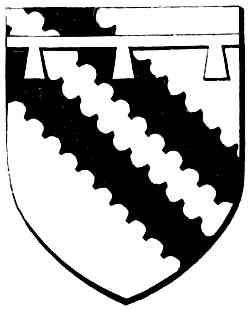
This is a younger branch of the well-known Lancashire family of this name, who trace their descent from Richard of Radclyffe Tower, near Bury, in the reign of Edward I. Ordshall, also in this county, was for many ages the seat of the ancestors of the present family, who are descended from Robert, sixth and youngest son of Sir Alexander Radclyffe, of Ordshall, who was born in 1650. Foxdenton, which as early as the fifteenth century belonged to one branch of the Radclyffes, was bequeathed to the present family early in the last century. The extinct house of the Radclyffes, Barons Fitzwalter and Earls of Sussex 1529, were sprung from William, elder brother of the first Sir John Radclyffe, of Ordshall. The Radclyffes of Dilston, Baronets 1619, and Earls of Derwentwater 1687, were perhaps also of the same origin, but this has not been ascertained.
See Burke's Landed Gentry, 2nd. ed. vol. ii. p. 1091, and Ellis's Family of Radclyffe, for the House of Dilston (1850).
Arms.—Argent, two bends engrailed sable, a label of three points gules. The more simple coat of Argent, a bend engrailed sable, was borne by the Earls of Sussex, and also by the Earls of Derwentwater.
Present Representative, Robert. Radclyffe, Esq.
Gentle.
Hulton of Hulton.
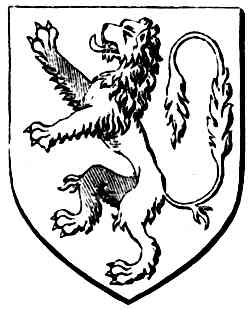
Hulton is in the parish of Dean, and gave name to Bleythen, called de Hulton, in the reign of Henry II., and from him this ancient family, still seated at their ancestral and original manor, is regularly descended.
See Baines's Lancashire, iii. p. 40.
Arms.—Argent, a lion rampant gules.
Present Representative, William Hulton, Esq.
Eccleston of Scarisbrick (called Scarisbrick).
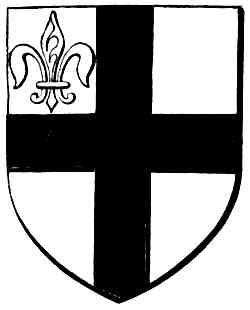
Descended from Robert Eccleston of Eccleston, living in the reign of Henry III., an estate which continued in the family until the last generation, when it was sold, and that of Scarisbrick, with the name, acquired by marriage about the same period.
See Baines, iii. 480; and for Scarisbrick, iv. 258.
In Flower's Visitation of this county, in 1567, is a pedigree of Eccleston.
Arms.—Argent, a cross sable, in the first quarter a fleur-de-lis gules.
Present Representative, Charles Scarisbrick, Esq.
Ormerod of Tyldesley.
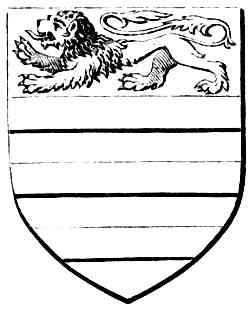
There is a good pedigree of this, his own family, in Ormerod's History of Cheshire, (ii. p. 204,) under Chorlton, a seat of the family purchased in 1811. The first recorded ancestor is Matthew de Hormerodes, living about 1270. The elder line of his descendants, whose name was derived from Ormerod in Whalley, became extinct in 1793. The present family trace their lineage from George Ormerod, fourth son of Peter Ormerod, of Ormerod, who died in 1653.
See also Whitaker's Whalley, p. 364.
Arms.—Or, three bars, and in chief a lion passant gules.
Present Representative, George Ormerod, Esq.
Starkie of Huntroyd.
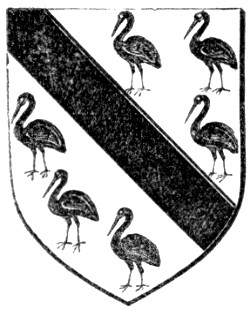
The pedigree begins with Geoffry Starky, of Barthington (Barnton) in Cheshire, supposed to be the same with Geoffry, son of Richard Starkie, of Stretton, in the same county, an ancient family which can be traced almost to the Conquest. William Starkie was of Barnton in the seventh of Edward IV. Huntroyd was acquired by marriage, in 1464, with the heiress of Symondstone.
See Whitaker's Whalley, 266, 529; also Ormerod's Cheshire, i. 474; and Baines, iii. 309.
Younger branches. Starkie of Twiston, and Starkie of Thornton, Yorkshire.
Arms.—Argent, a bend between six storks sable.
Present Representative, Le Gendre Starkie, Esq.
Chadwick of Healey.
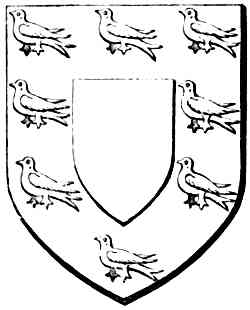
A younger branch of Chadwick of Chadwick, now extinct, a family which can be traced to the reign of Edward III.
Healey came from the coheiress of Okeden in 1483. Mavesyn Ridware, in Staffordshire, is also the property of this family, derived by an heiress from the Cawardens, and ultimately from the Malvesyns, who came in with the Conqueror.
Younger branch. Chadwick of Swinton, in this county, derived from the heiress of Strettell: they bear their arms differenced by a border engrailed or, charged with cross crosslets.
See Shaw's Staffordshire, i. p. 166, for a curious account of the Malvesyns, Cawardens, and Chadwicks of Mavesyn Ridware: see also Whitaker's Whalley, p. 459.
Arms.—Gules, an inescutcheon within an orle of martlets argent.
Present Representative, John de Heley Mavesyn Chadwick, Esq.
Patten of Bank-Hall.
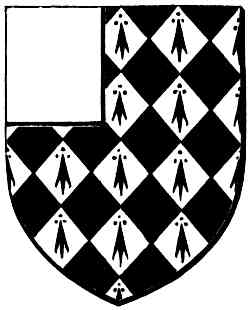
Richard Patten, who appears to have flourished before the reign of Henry III. by his marriage with a coheiress of Dagenham became possessed of the Court of that name in the county of Essex, and was the remote ancestor of this family. John Patten of Dagenham Court, living in 1376, removed to Waynflete in Lincolnshire; he was the great-grandfather of the celebrated William Patten alias Waynflete Bishop of Winchester; from whose brother, Richard Patten, of Boslow, in the county of Derby, the present family descend. His son was of Warrington in this county in 1536.
See the pedigree by Bigland and Heard drawn up in 1770, and printed in Bloxam's Memorial of Bishop Waynflete for the Caxton Society in 1851.
Arms.—Lozengy ermine and sable, a canton gules.
Present Representative, John Wilson Patten, Esq. M.P. for North Lancashire.
LEICESTERSHIRE.
Knightly.
Turvile of Husband's Bosworth.
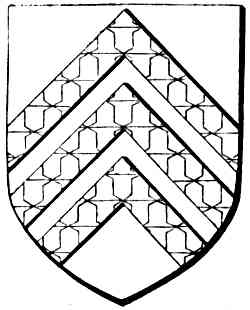
"One of the ancientest families in the whole shire," wrote Burton in 1622; descended from Ralph Turvile, a benefactor to the abbey of Leicester in 1297. The principal seat was at Normanton Turvile, in this county, where the elder line of the family became extinct in 1776. Aston Flamvile, also in Leicestershire, was the residence of the immediate ancestors of this younger branch. It was sold early in the eighteenth century, and Husband's Bosworth inherited, by the will of Maria-Alathea Fortescue, in 1763.
See Nichols's Leicestershire, under Normanton Turvile, iv. pt. 2. 1004; under Aston Flamvile, ii. pt. 2. 465; under Husband's Bosworth, iv. pt. 2. 451
Arms.—Gules, three chevronels vair. This coat was borne by Sir Richard Turvile, de co. Warw. in the reign of Edward II., and Sir Nicholas Turvil, at the same period, bore the same coat reduced to two chevrons. (Rolls of the date.)
Present Representative, Francis Charles Turvile, Esq.
Farnham of Quorndon.
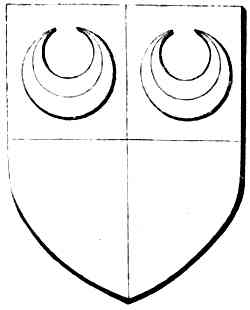
This ancient family was certainly seated at Quorndon two descents before the reign of Edward I. In that of Henry VI. Thomas, second son of John Farnham and Margaret Billington, living in 1393, founded a junior branch denominated of "The Nether-Hall." He was the ancestor of the present family, who also descend in the female line from the elder branch, denominated "of Quorndon," by the marriage of the coheiress in 1703 with Benjamin Farnham, of the Nether-Hall.
See Nichols's History of Leicestershire, vol. iii. pt. i. p. 103.
Arms.—Quarterly or and azure, in the first and second quarter a crescent interchanged.
Sir Robert de Farnham, of the county of Stafford, bore in the reign of Edward II. Quarterly argent and azure, four crescents counterchanged. (Roll.)
Present Representative, Edward Basil Farnham, Esq. late M.P. for North Leicestershire.
Beaumont of Coleorton, Baronet 1660.
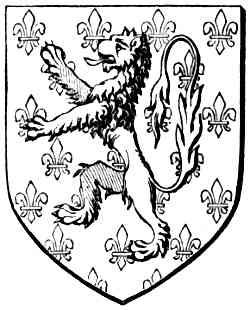
Lewis de Brienne, who died in 1283, married Agnes, Viscountess de Beaumont, who died in 1300: their children took the name of Beaumont, and from hence this noble family is supposed to be descended. Coleorton came from the heiress of Maureward in the fifteenth century, but Grace-dieu, also in this county, was the older seat. The representative of the elder line of the family was created Viscount Beaumont in Ireland in 1622, extinct 1702, when Coleorton went to the ancestors of the present Baronet, descended from the third son of Nicholas Beaumont, of Coleorton, who died in 1585.
See Nicholas Leicestershire, iii. pt. 2. 743; Wotton's Baronetage, iii. 230; Erdeswick's Staffordshire, ed. 1844, 396; and Hornby's Tract on Dugdale's Baronage.
Arms.—Azure, semée of fleurs-de-lis and a lion rampant or. Sir Henry de Beaumont bore this coat with a baton gabonny argent and gules, in the reign of Edward II.; in that of Richard II. Mons. de Beaumont omitted the baton (Rolls of the dates.)
Present Representative, Sir George Howland Beaumont, ninth Baronet.
Grey of Groby and Bradgate, Earl of Stamford 1628; Baron 1603.
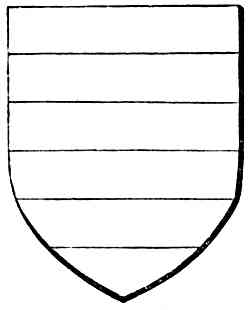
Dugdale begins the pedigree of this great historical family with Henry de Grey, unto whom King Richard the First in the sixth year of his reign gave the manor of Turroc or Thurrock in Essex. His son Richard was of Codnoure or Codnor in Derbyshire, inherited from his mother, a coheiress of Bardolf. Groby and Bradgate came from the heiress of Ferrers in the reign of Henry VI. Of the latter Leland writes, "This parke was parte of the old Erles of Leicester's landes, and since by heires generales it came to the Lord Ferrers of Groby, and so to the Greyes."
Extinct Branches of this illustrious family were, the Greys of Codnor, of Wilton, of Rotherfield, of Ruthyn, and the Dukes of Kent and Suffolk.
See Dugdale's Baronage, i. 709; Nichols's Leicestershire, iii. pt. 2. 682; Brydges's Collins, iii. 340.
Arms.—Barry of six, argent and azure. Richard de Grey bore this coat in the reign of Henry III. John de Grey differenced it with a label gules. In the reign of Edward II. the same arms were borne by different members of the family, with the additions of a bend gules, a label gules, a label gules bezantée, a baton gules, and three torteauxes in chief, which last was used by the Dukes of Suffolk.
Present Representative, George Harry Grey, seventh Earl of Stamford and Warrington.
Babington, of Rothley-Temple.
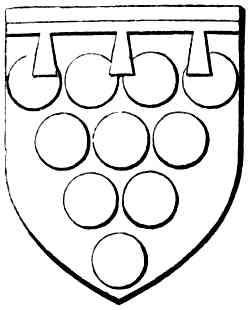
The Babingtons were of Babington in Northumberland in the reign of King John: they afterwards removed into Nottinghamshire, and became very distinguished. The elder line was seated at Dethick in Ashover, in the county of Derby, by marriage with the coheiress of the ancient family of that name, before the year 1431. The Rothley branch, descended from a second son of the house of Dethick, was seated there at the very beginning of the sixteenth century, and is now the chief line of the family on the extinction of Babington of Dethick about 1650.
See Nichols's Leicestershire, iii. pt. 2. 955; and Collectanea Topographica et Genealogica, ii. 94, and viii. 313, for a most valuable article on the elder line of this family. See also Topographer and Genealogist, i. 133, 259, 333, for the various branches of this ancient family.
Arms.—Argent, ten torteauxes and a label of three points azure. This coat reversed and without the label was borne by Sir John de Babington in the reign of Edward II. (Roll of the date.)
Present Representative, Thomas Gisborne Babington, Esq.
Gentle.
Hazlerigg of Noseley, Baronet 1622.
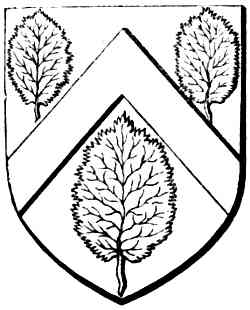
Originally of Northumberland, where Simon de Hasilrig was seated in the time of Edward I. Early in the fifteenth century Thomas Hasilrig of Fawdon, in that county, having married Isabel Heron, heiress of Noseley, the family removed into Leicestershire. Leland makes the following mention of the head of the house in his time, "Hasilrig of Northamptonshire [a mistake for Leicestershire] hath about 50li lande in Northumbreland, at Esselington, where is a pratie pile of Hasilriggs; and one of the Coilingwooddes dwellith now in it, and hath the over-site of his landes."
See Leland's Itin., i. fol. 15. v. fol. 101; Wotton's Baronetage, i. 520; Nichols's Leicestershire, ii. pt. 2. 756; and the Scrope and Grosvenor Roll, vol. ii. p. 325.
Arms.—Argent, a chevron between three hazel-leaves slipped vert.
Present Representative, Sir Arthur Grey Hazlerigg, 12th Baronet.
Wollaston of Shenton.
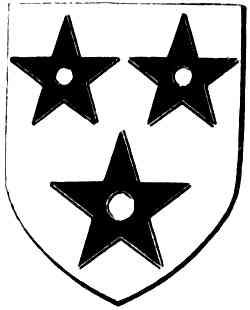
The Wollastons were lords of the manor of Wollaston in the parish of Old Swinford and county of Stafford, (which they sold to the Aston family in the time of Richard II.) at a very early period: they afterwards settled at Trescot and Perton, in the parish of Tettenhall, in the same shire. The pedigree in Nichols's Leicestershire begins with Thomas Wollaston of Perton, "a person of figure in the reigns of Henry VII. and VIII." In 1709, William Wollaston, Esq., the celebrated author of "The Religion of Nature," compiled an account of this family, which is printed in the History of Leicestershire. He was the direct ancestor of the present family, who have been also seated at Oncott, in Staffordshire, and Finborough Hall, in Suffolk. Shenton was acquired early in the reign of James I.
See Nichols's Leicestershire, iv. pt. 2. 541.
Arms.—Argent, three mullets pierced sable.
Present Representative, Frederick William Wollaston, Esq.
LINCOLNSHIRE.
Knightly.
Welby of Denton, Baronet 1801.
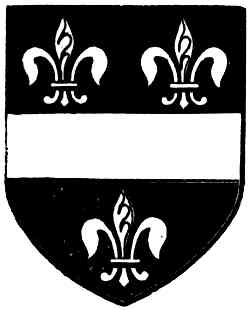
Welby, near Grantham, in this county, is supposed to have given name to this "ancient howse, Bering armes,"* and here Sir William Welby, who heads their well-authenticated pedigree, undoubtedly possessed property between 1307 and 1327. The manor of Frieston, with Poynton Hall, also in Lincolnshire, was held by Sir Thomas Welby, (who it cannot be doubted was a still earlier ancestor,) of King Henry III. in chief, in 1216. The first-mentioned Sir William having married the heiress of Multon of Multon in this county, that place continued, till the end of the sixteenth century, the principal seat of his descendants. Denton was purchased by John Welby, the ancestor of the present family, in 1539.
See "Notices of the Family of Welby," 8vo., Grantham, 1842; and Allen's History of Lincolnshire, ii. 314; for Welby of Multon, see Blore's Rutlandshire, 192.
Arms.—Sable, a fess between three fleurs-de-lis argent.
Present Representative, Sir Glynne Earle Welby, 3rd Baronet.
* So styled in the Heralds' grant of crest in 1562.
Dymoke of Scrivelsby, Champion of England.
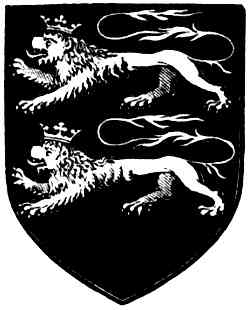
The name is supposed to be derived from Dimmok, in the county of Gloucester, but the pedigree is not proved beyond Henry Dymmok in the second year of Edward III. His grandson John married Margaret, sole grand-daughter and heir of Sir Thomas de Ludlowe, by Joan youngest daughter and coheir of Philip last Lord Marmyon, Baron of Scrivelsby, and by the tenure of that manor hereditary Champion of England, which office, since the Coronation of Richard II. has been held by the Dymoke family.
See Banks's Family of Marmyon, p. 117; and Allen's Lincolnshire, ii. 83.
Arms.—Sable, two lions passant argent crowned or. Borne by Monsr. John Dymoke in the reign of Richard II. (Roll of the date.)
Present Representative, The Honourable and Rev. John Dymoke.
Heneage of Hainton.
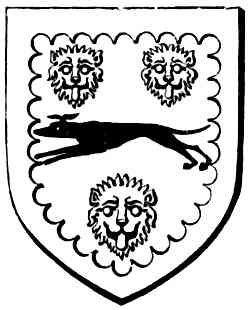
John Heneage stands at the head of the pedigree; he was living in the 38th Henry III. From him descended another John, who in the 10th of Edward III. was Lord of the Manor of Hainton; according to Leland however, "the olde Henege lands passid not a fyfetie poundes by the yere." The family evidently rose on the ruins of the monastic houses: "Syr Thomas Hennage hath doone much cost at Haynton, where he is Lorde and Patrone, yn translating and new building with brike and abbay stone."
See Leland's Itinerary, vii. fol. 52; and Allen's History of Lincolnshire, ii. 67.
Arms.—Or, a greyhound courant sable between three leopard's heads azure, a border engrailed gules.
Present Representative, Edward Heneage, Esq., M.P. for Lincoln.
Manners of Belvoir Castle, Duke of Rutland 1703, Earl 1525.
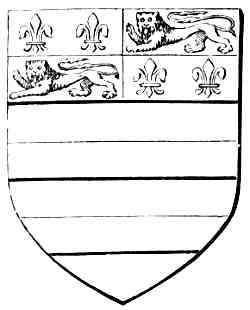
Originally of Northumberland, where the family were seated at an early period. The first recorded ancestor is Sir Robert de Maners, who obtained a grant of land in Berrington in 1327, and was M.P. for Northumberland in 1340. His son William Maners, of Etal, died before 1324, which estate appears to have been inherited from an heiress of Muschamp. At the end of the fifteenth century, by marriage with the heiress of the baronial family of Roos, the house of Manners came into possession of the Castle of Belvoir. In the succeeding century, a fortunate match with the heiress of Vernon of Haddon still further increased the wealth and importance of this noble family.
The royal title of Rutland, which had belonged to the house of York, was conferred upon Thomas Lord Roos in 1525 as the grandson of the lady Anne of York, sister to King Edward the Fourth.
An extinct branch was from the time of Henry VIII. for a long period of Newmanor House, in the parish of Framlington, in Durham. Another branch of the Etal family was of Cheswick, in the same county, extinct after 1633.
See Raine's North Durham, 211, 230; Nichols's Leicestershire, ii. pt. i. 67; and Brydges's Collins, i. 454.
Arms.—Or, two bars azure; a chief quarterly azure and gules, on the 1st and 4th two fleurs-de-lis, on the 2nd and 3rd a leopard of England of the first; the chief being an augmentation granted by Henry VIII. The ancient arms, no doubt founded on those of the Muschamp family, were, Or, two bars azure, a chief gules. See the Rolls of the reign of Edward II. and Richard III.
Present Representative, Charles Cecil John Manners, sixth Duke of Rutland.
Alington of Sswinhope.
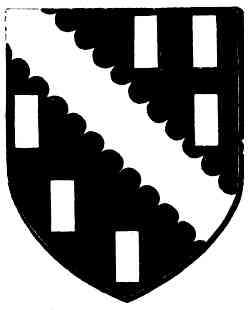
This is a branch of the extinct family of the Lords Alington, of Horseheath, in Cambridgeshire, who were originally of Alington, in the same county, soon after the Conquest. The family descend from a younger son of Sir Giles Alington, and were seated at Swinhope in the reign of Queen Elizabeth.
See Clutterbuck's History of Hertfordshire, ii. 542; and Collectanea Topog. et Genealog. iv. 33-53, and note 2, p. 39. For Horseheath, see Topographer, ii. 374.
Arms.—Sable, a bend engrailed between six billets argent.
Present Representative, George Marmaduke Alington, Esq.
Gentle.
Thorold of Marston, Baronet 1642.
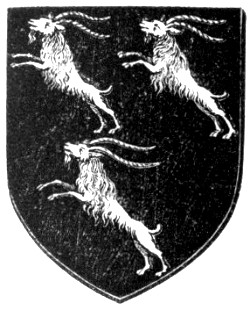
It has been supposed, but without any evidence or authority, that this family is descended from Thorold, Sheriff of Lincolnshire in 1052, and that consequently it may claim Saxon origin. There is however no doubt that this is a family of very great antiquity, and seated at Marston as early as the reign of Henry I.
See Wotton's Baronetage, ii. 338, and iv. 250.
Arms.—Sable, three goats salient argent.
Present Representative, Sir John Charles Thorold, 11th Baronet.
Langton of Langton.
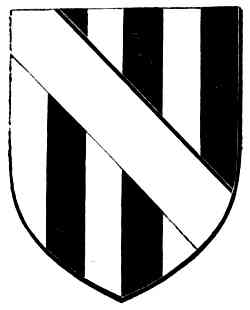
"Langton, Sir," exclaimed Dr. Johnson, alluding to his friend Bennet Langton of Langton, at that time the accomplished head of this very ancient family, "has a grant of free warren from Henry the Second, and Cardinal Stephen Langton in King John's reign was of this family." The name is derived from Langton-by-Spilsby in Lincolnshire, a manor which has remained to the present day the inheritance of this house, who are descended in the female line from the Massingberds of Sutterton in this county.
Younger branch. The Langton-Massingberds of Gunby.
See Allen's History of the County of Lincoln, ii. 175; and Boswell's Life of Johnson, ed. 1836, i. 294.
Arms.—Paly of six argent and sable, a bend or.
Present Representative, Bennet Rothes Langton, Esq.
Massingberd of Wrangle.
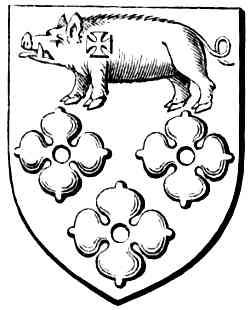
This very ancient family is descended from Lambert Massyngberd of Soterton, now Sutterton, in this county, who lived in the reign of Edward I. and has ever since remained in Lincolnshire. In the latter part of the fifteenth century, by the marriage of Sir Thomas Massyngberd with the heiress of Braytoft of Braytoft Hall in Gunby, the Massingberds removed to that place, which became the principal seat of their descendants. Ormsby, purchased from the Skipwiths in 1636, and afterwards Gunby Hall, built by Sir William Massingberd, the 2nd Baronet of this family, in 1699, was their principal residence, till it went by an heiress to a younger branch of the Langtons, who have assumed the name. Wrangle is a recent purchase in this county by the present representative of the male line of the family. The Massingberds early embraced the Reformed faith. Thomas Massingberd, the last representative for Calais in 1552, "fled abroad for his religion" under Mary. Nevertheless his descendant, William Burrell Massingberd of Ormsby, joined Prince Charles Edward at Derby: a miniature given to him by the Prince is still in the family. Ormsby belongs at present to a younger branch of the Mundys of Markeaton in Derbyshire, who have assumed the name of Massingberd.
See the Genealogy of this House, a MS. by Robert Dale, Suffolk Herald, compiled about the year 1718, and still at Ormsby; and Allen's History of the County, under Ormsby and Gunby.
Arms.—Azure, three quatrefoils (two and one,) and in chief a boar passant or, charged on the shoulder with a cross patée gules, with which the following coat is generally quartered, said to be the arms assumed by Sir Thomas Massingberd, Knight of St. John, in the reign of Henry VIII. Quarterly or and argent, on a cross humetté gules, between four lions rampant sable, two escallops of the first.
Present Representative, The Rev. Francis Charles Massingberd.
Monson of Burton, Baron Monson 1728, Baronet 1611.
"In the Isle" of Axholme "be now there 4 gentilmen of name, Sheffild, Candisch, Evers, and Mounsun. The lands of one Bellewodde became by marriage to this Mounson, a younger son to old Mounson of Lincolnshire. This old Mounson is in a maner the first avauncer of his family." Thus wrote Leland in his Itinerary. The Monsons however are clearly traced to the year 1378, as resident at East-Reson, in this county. They were afterwards seated at South Carlton, a village adjacent to Burton.
See Leland's Itin., i. fol. 42; Allen's Lincolnshire, ii. 57; and Brydges's Collins, vii. 228.
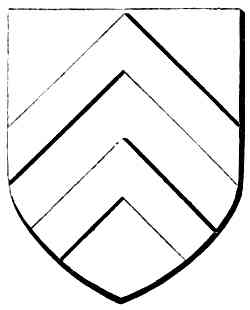
Arms.—Or, two chevronels gules.
Present Representative, William John Monson, 7th Baron Monson.
Whichcote of Aswarby, Baronet 1660.
This is an ancient Shropshire house descended from William de Whichcote, of Whichcote, in that county, in 1255. In the reign of Edward IV., by marriage with the heiress of Tyrwhitt, the family became possessed of Harpswell in this county, which for a long time continued the residence of the Whichcotes.
See Wotton's Baronetage, iii. 13; and Allen's History of Lincolnshire, i. 38.
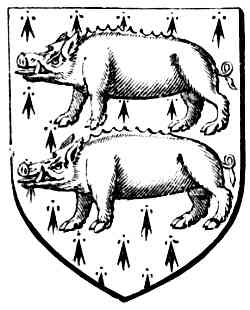
Arms.—Ermine, two boars passant in pale gules.
Present Representative, Sir Thomas Whichcote, 7th Baronet.
Anderson of Brocklesby, Earl of Yarborough 1837, Baron Yarborough 1794.
Roger Anderson of Wrawby, in this county, Esquire, living in the latter part of the fourteenth century, and who came from Northumberland, stands at the head of the pedigree. His great-grandson Henry, also of Wrawby, was grandfather of Sir Edmund Anderson of Flixborough, Knight, Lord Chief Justice of the Common Pleas, who died in 1605. He was the ancestor of the present family, and of Sir Charles Anderson of Broughton in Lincolnshire, Baronet 1660, and of the Andersons of Eyworth in Bedfordshire, Baronets 1664, extinct in 1773. Brocklesby came from an heiress of Pelham, a younger branch of the Pelhams Earls of Chichester.
See Wotton's English Baronetage, vol. iii. p. 191, vol. iv. p. 427, and "The History of Lea," printed in 1841.
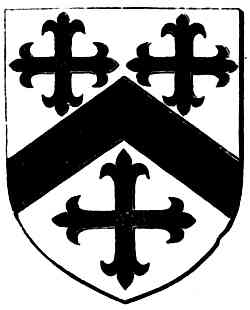
Arms.—Argent, a chevron between three crosses flory sable.
Present Representative, Charles Anderson Pelham, 3rd Earl of Yarborough.
Bertie of Uffington, Earl of Lindsey 1626.
The ancient extraction of the Berties from Berstead in the county of Kent is proved by the Thurnham charters in the possession of Sir Edward Dering, and by various public records of undoubted authority; and, although the exact line of pedigree is by no means clear, there appears no reason to doubt the descent of this "undefamed house" from John or Bartholomew de Bereteghe, who were living in the 35th of Edward I. The marriage of Richard Bertie son of Robert, who died in 1500, with Katherine daughter of William Willoughby, last Lord Willoughby of Eresby, and widow of Charles Brandon, Duke of Suffolk, was, as is well known, the origin of the consequence of this right loyal family, five generations of whose history have been so agreeably illustrated by Lady Georgiana Bertie. Grimsthorpe, inherited from the Duchess of Suffolk from her paternal Willoughby ancestors, became the principal seat of the Berties, Barons Willoughby of Eresby and Lords Great Chamberlains of England, advanced in the person of Robert second Lord Willoughby to the Earldom of Lindsey by King Charles I. His great-grandson was created Duke of Ancaster and Kesteven in 1715, which titles became extinct on the decease of the fifth Duke in 1809. The Earldom of Lindsey and representation of the family thereupon devolved on the father of the present Earl, descended from the fifth son of the second Earl of Lindsey by his first wife.
Younger branch, the Earl of Abingdon 1682, Baron Norreys of Rycote 1572, descended from the second marriage of the second Earl of Lindsey and the heiress of Wray, whose mother was the sole heir of Francis Norreys, Earl of Berkshire, and Lord Norreys of Rycote.
See Lady G. Bertie's "Five Generations of a Loyal House," 4to. 1845, and Brydges's Collins, vol. ii. p. 1, vol. iii. 628.
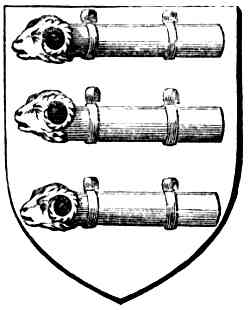
Arms.—Argent, three battering rams barways in pale azure, armed and garnished or. The "docquet or grant" in the fourth of Edward VI. gives the arms, Quarterly, 1 and 4, Argent, a battering ram azure, garnished or; 2 and 3, Sable a tower argent.
Present Representative, George Augustus Frederick Albemarle Bertie, 10th Earl of Lindsey.
NORFOLK.
Knightly.
Wodehouse of Kimberley, Baron Wodehouse 1797, Baronet 1611.
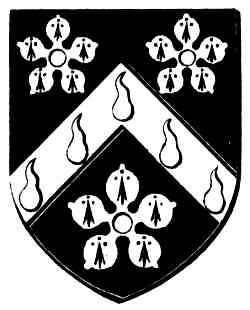
"This family is very ancient, for they were gentlemen of good ranke in the time of King John, as it appeareth by many ancient grants and evidences of theirs which I have seen," wrote Peacham in his "Compleate Gentleman," in 1634. (p. 191.) The name is local, being derived from Wodehouse in Silfield, in this county; but as early as the reign of Henry III. the family had property in Kimberley, and in that of Henry IV. the manor was also inherited from the heiress of Fastolff.
See Blomefield's Norfolk, ed. 1739, vol. i. p. 751, for long extracts from the curious old pedigree in verse; Wotton's Baronetage, i. 164; and Brydges's Collins's Peerage, viii. 562.
Arms.—Sable, a chevron or, guttée de sang, between three cinquefoils ermine. This coat is said to have been augmented as now borne, by Henry V. in honour of John Wodehouse's valour at the Battle of Agincourt, the guttée de sang, not at present considered very good heraldry, being then added. The supporters, two wode or wild men, were also, it has been said, then first used.
Present Representative, John Wodehouse, 3rd Baron Wodehouse, Lord Lieutenant of Ireland.
Walpole of Wolterton, Earl of Orford 1806, Baron 1723.
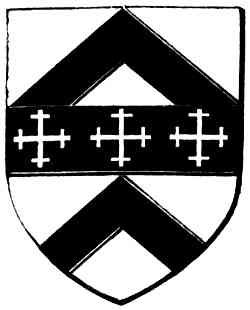
Walpole, in Mershland, in this county, gave name to this historical family, and here Joceline de Walpole was living in the reign of Stephen. Reginald de Walpole, in the time of Henry I. seems to have been lineal ancestor of the house. He was father of Richard, who married Emma, daughter of Walter de Hawton, or Houghton, which at a very early period became the family seat, and which, after the death of the third Earl of the first creation, passed to the issue of his aunt Mary, Viscountess Malpas, daughter of Sir Robert Walpole; whose descendant, the Marquess of Cholmondeley, is the present possessor.
See Blomefield, iii. 796, and iv. 708; also Brydges's Collins, v. 631.
Arms.—Or, on a fess between two chevrons sable three cross-crosslets of the first.
Present Representative, Horatio William Walpole, 4th Earl of Orford.
Berney of Kirby Beedon, Baronet 1620.
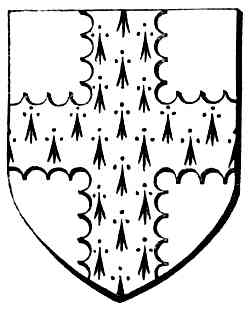
Berney, in the hundred of North Greenhow in this county, doubtless gave name to this ancient family, who are traced pretty nearly to the Conquest. Park Hall, the former seat, is in the parish of Reedham, and was acquired by the marriage of Sir Thomas de Berney with Margaret daughter and heir of Sir William de Reedham in the reign of Edward III.
Younger branch, Berney of Morton Hall in this county, descended from a younger brother of the first Baronet.
See Parkins's continuation of Blomefield's Norfolk, v. 1482; and Wotton's Baronetage, i. 378.
Arms.—Party per pale gules and azure, a cross engrailed ermine.
Present Representative, Sir Henry Hanson Berney, 9th Baronet.
Astley, of Melton-Constable, Baron Hastings 1841, Baronet 1660.
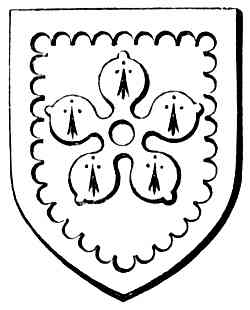
Descended from the noble house of Astley Castle in Warwickshire, and traced to Philip de Estlega in the 12th of Henry II., and in the female line from the Constables of Melton-Constable, which estate came into the family by the second marriage of Thomas Lord Astley with Edith, third sister and coheir of Geffrey de Constable, in the time of Henry III. Astley Castle, the original seat, descended by an heiress to the Greys of Ruthin, afterwards Marquesses of Dorset, and Dukes of Suffolk. Hill-Morton in Warwickshire was also the seat of this family from the reign of Henry III.
The Astleys formerly of Patishull in Staffordshire were the elder branch, sprung from the first marriage of Thomas Lord Astley, who was killed in the Barons' Wars at Evesham, (the 49th of Henry III.,) extinct 1771. The Astleys, now of Everley, in Wiltshire, Baronets 1821, descend from the second son of Walter Astley of Patishull, the father of the first Baronet of that line (1662).
See Parkins's Blomefield's Norfolk, v. 940; Thomas's Dugdale's Warwickshire, i. 19, 107; and Wotton's Baronetage, iii. 63; for Astleys of Patishull, Shaw's Staffordshire, ii. 287; and Wotton's Baronetage, iii. 368.
Arms.—Azure, a cinquefoil ermine within a border engrailed or. The Patishull and Everley family omit the border, and it was thus borne by the head of the house in the reign of Richard II. Thomas de Astley, at the same period, differenced his coat by a label of three points or, charged with two bars gules. (Rolls.)
Present Representative, Jacob Henry Delaval Astley, 3rd Baron Hastings.
Bedingfeld of Oxborough, Baronet 1660.
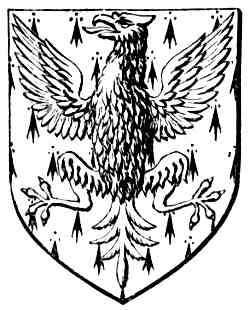
Traditionally a Norman family seated at Bedingfeld, in Suffolk, soon after the Conquest. Oxburgh, or Oxborough, has been the residence of this eminently knightly house from the reign of Edward IV., when it came by the marriage of Edmund Bedingfeld with Margaret, daughter of Robert Tudenham, and to whom licence was granted to build the walls and towers of Oxburgh in the year 1482. The baronetcy was conferred by Charles II. as a mark of his favour and in consideration of the eminent loyalty and consequent sufferings of the family during the usurpation. The Bedingfelds of Ditchingham, in this county, are a younger branch parted from the parent stem as early as the middle of the fourteenth century.
See Blomefield, iii. 482; Wotton's Baronetage, iii. 212; and the Rev. G. H. M'Gill's account of Oxburgh Hall in the Proceedings of the Norfolk Archeological Society.
Arms.—Ermine, an eagle displayed gules, armed or.
Present Representative, Sir Henry George Paston Bedingfeld, 7th Baronet.
Howard of East-Winch, Duke of Norfolk 1483.
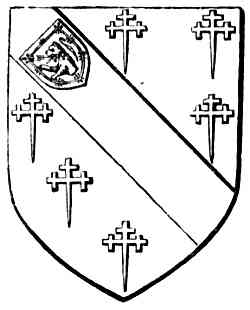
The great historical house of Howard in point of antiquity must yield precedence to many other English families: it can only be traced with certainty to Sir William Howard, Judge of the Common Pleas in 1297. Norfolk appears to be the county where this great family should be noticed, the Duke of Norfolk still possessing property in the county of his dukedom derived from his ancestors of the house of Bigod. In the fourteenth century, by the match with the heiress of Mowbray, the foundation of the honors and consequence of the Howards was laid, the first Duke being the son of Margaret, daughter and coheir of Thomas de Mowbray, Duke of Norfolk. The Sussex estates came from the heiress of Fitzalan, Earl of Arundel, in the reign of Edward VI.; Worksop from the Talbots; Greystoke and Morpeth from the Dacres.
All the English Peers of the house of Howard are traced to a common ancestor in Thomas, the second Duke of Norfolk, who died in 1524. The Duke of Norfolk, the Earls of Suffolk and Carlisle, descend from his first wife, and the Earl of Effingham from the second. The Howards of Greystoke, in Cumberland, are a younger branch of the present ducal house. The Howards of Corby Castle, in the same county, descend from the second son of "Belted Will," the ancestor of the house of Carlisle.
Extinct branches. The Viscount Bindon; the Earls of Northampton, Nottingham, and Stafford; and Lord Howard of Escrick.
See Brydges's Collins, i. 50, for the Duke of Norfolk; iii. 147, for the Earl of Suffolk; iii. 501, for the Earl of Carlisle; and iv. 264, for the Earl of Effingham. See also Cartwright's Rape of Bramber, p. 185; and Dallaway's Rape of Arundel; Hunter's South Yorkshire, ii. 10. For the Howard Monuments at East-Winch, see Weever's Funeral Monuments, p. 842-9; for their state in the 18th century Parkins's Blomefield's Norfolk, iv. 746; and Topographer and Genealogist, ii. 90. For the Earl of Carlisle, see Hodgson's History of Northumberland, ii. pt. 2, p. 381; for Howard of Corby, the same vol. p. 477. See also "Historical Anecdotes of some of the Howard Family," 12mo. 1769; Tierney's Castle and Town of Arundel, 8vo. 1834; and Mr. Howard's "Indication of Memorials, &c. of the Howard Family," fol. 1834.
Arms.—Gules, a bend between six cross-crosslets fitcheé argent, on an escucheon a demi-lion pierced through the mouth with an arrow, within a double tressure flory counter-flory gules, granted by patent 5 Henry VIII. to Thomas Howard, Duke of Norfolk, in remembrance of the victory gained over the Scots at Flodden. The present coat was borne by Sir John Howard in the reign of Edward II., and by Mr. Howard in those of Edward II. and Richard III.: it has been conjectured, from the similarity of this coat with that of the Botilers, Barons of Wem, (Gules, a fess cheeky argent and sable between six crosses pateé fitchée argent,) that Sir William Howard the Judge was descended from the Hords, stewards to these Barons: it is observable that none of the Howards ever prefixed the de to their name, a fact which opposes their derivation from Hawarden in Flintshire. (Blakeway's Sheriffs of Shropshire, pp. 53 note.)
Present Representative, Henry Fitzalan Howard, 15th Duke of Norfolk.
Gurney of Keswick.
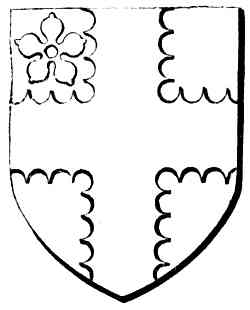
This is a younger branch of the Gurneys of West Barsham in this county, whose principal male line became extinct in 1661, West Barsham came from the heiress of Waunci about the reign of Edward III. Previous to that time the Gurneys appear to have been seated at Harpley, also in Norfolk, as early as 1206, and are traced for two descents beyond that period, being (as there appears no reason to doubt) descended from the great Norman baronial house of the name. The present family may be said to have been refounded by John Gurney, an eminent silk-merchant at Norwich, about 1670. Keswick was purchased in 1747. The Gournays of Somersetshire, represented by the Earls of Egmont, may have been a distinct family; their arms were, Paly of six or and azure. Dugdale, however, gives them a common ancestor with the former house. (Baronage, i. 429.)
See the "Records of the House of Gournay," privately printed, 4to., 1848, and particularly, for the Norman origin of the family page 293 of that work. For the Gournays of Somersetshire, see the History of the House of Ivery. London, 1742, vol. ii. p. 473,
Arms.—Argent, a cross engrailed gules, in the first quarter a cinquefoil azure.
Present Representative, Hudson Gurney, Esq.
De Grey of Merton, Baron Walsingham 1780.
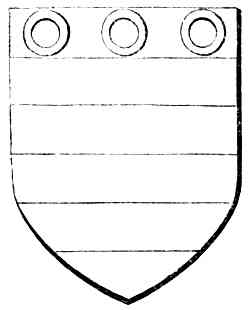
This ancient family is supposed to have the same origin as the noble Norman house of Grey, now represented by the Earl of Stamford; it is traced to William de Grey, of Cavendish, in Suffolk; whose grandson Sir Thomas was seated about 1306 at Cornerth in that county, by his marriage with the heiress of the same name; their son and heir married the coheiress of Baynard, and thus became possessed of Merton, the long-continued seat of this family.
See Blomefield, i. 576; and Brydges's Collins, vii. 510.
Arms.—Barry of six argent and azure, in chief three annulets gules. The ancient coat of Cornerth, Azure, a fess between two chevronels or, (which was doubtless derived from their superior lords the Baynards,) was borne for many generations by the ancestors of this family.
Present Representative, Thomas de Grey, 5th Baron Walsingham.
Bacon of Raveningham, Premier Baronet of England, of Redgrave, Suffolk, 1611.
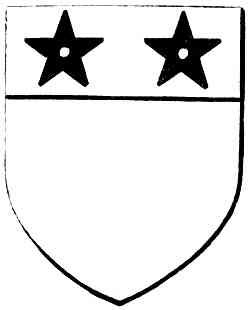
This family is said to have been established at a period shortly subsequent to the Conquest at Letheringsett, in Norfolk, but is better known as a Suffolk family, having been seated at Monks' Bradfield, in that county, in the reign of Richard I. Redgrave was granted by Henry VIII. in the 36th year of his reign, to the great Sir Nicholas Bacon, who with Francis his son, Viscount St. Alban's, were the principal ornaments of this family. Raveningham descended to the Bacons from the heiress of the ancient family of Castell, or de Castello, about the middle of the 18th century.
See Parkins's Continuation of Blomefield's Norfolk, iv. 262 Wotton's Baronetage, i. 1, and ii. 72.
Arms.—Gules, on a chief argent two mullets pierced sable. This coat was borne by Sir Edmund Bacon, in the reign of Edward II., and by M. Bacon in that of Edward III. (Rolls.) A brass circa A.D. 1320, at Gorleston church, Suffolk, supposed to represent one of this family, bears five lozenges in bend on the field, besides the mullets in chief: see Boutell's Brasses, p. 36.
Present Representative, Sir Henry Hickman Bacon, 11th Baronet.
Jerningham of Cossey, Baron Stafford, restored 1824, Baronet 1621.
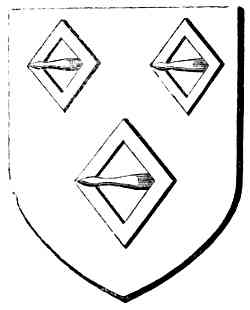
The ancestors of this ancient house were seated at Horham in Suffolk in the 13th century, "knights of high esteem in those parts," saith Camden, and traced to Sir Hubert Jernegan of that place. Somerleyton, in the same county, derived from the heiress of Fitzosbert, afterwards became the family seat, and so continued until the extinction of the elder line. Cossey was granted to Sir Henry Jerningham, (son of Sir Edward Jerningham, by his second wife,) in 1547, by Queen Mary, "being the first that appeared openly for her after the death of Edward VI." He was the ancestor of Lord Stafford.
See Weever's Ancient Funerall Monuments, p. 769; Blomefield's Norfolk, i. p. 660; Wotton's Baronetage, i. 450; and Suckling's History of Suffolk, ii. p. 46.
Arms.—Argent, three buckles gules.
Present Representative, Henry Valentine Stafford Jerningham, 9th Baron Stafford.
Townshend of Rainham, Marquess Townshend 1787; Baron 1661; Viscount 1682.
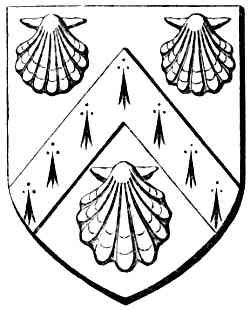
In 1377, the ancestor of this family was of Snoring Magna in this county. In 1398, John Townshend settled at Rainham, which according to some accounts accrued to them by the heiress of Havile, but the pedigree as given by Collins cannot be relied on, neither can the defamatory account of Leland, who says—"the grandfather of Townsende now living was a meane man of substance." The truth seems to be that the family is old, but not of great account before the time of Sir Walter de Townsend, who married Maud Scogan, and flourished about the year 1400.
See Blomefield, iii. 815; Brydges's Collins, ii. 454; and Leland's Itinerary, iv. p. 13.
Arms.—Azure, a chevron ermine between three escallops argent.
Present Representative, John Villiers Stuart Townshend, 5th Marquess Townshend.
NORTHAMPTONSHIRE.
Knightly.
Wake of Courteenhall, Baronet 1621.
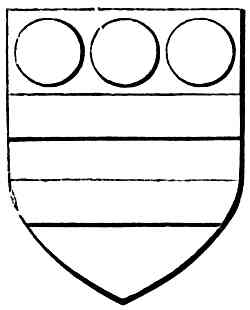
This is a younger branch of the very ancient baronial house of Wake, who were Lincolnshire Barons in the reign of Henry I. Sir Hugh Wake was lord of Deeping in the county of Lincoln, and of Blisworth in this county, by gift of his father, Baldwin fourth Lord Wake. He died in 1315, and was the direct ancestor of the present Baronet. See memoir of the family of Wake privately printed in 1833, but written by Archbishop Wake; and Wotton's Baronetage, i. 465.
Arms.—Or, two bars gules, in chief three torteauxes. This coat was borne by Hugh Wake in the reign of Henry III., and again by Sir John Wake in that of Edward II. Sir Hugh Wake at the latter period differenced his arms by a canton azure. His uncle reversed the colours gules and argent, the field being gules. M. Thomas Wake de Blisworth in the reign of Edward III. bore the same arms, with a border engrailed sable. (Rolls of the dates.)
Present Representative, Sir William Wake, 11th Baronet.
Brudenell of Dene, Earl of Cardigan 1661; Baron 1627; Baronet 1611.
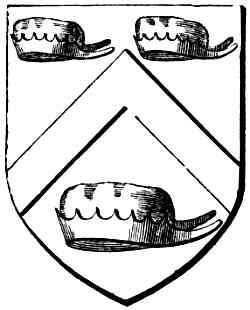
William de Bredenhill, seated at Dodington in Oxfordshire, in the reign of Edward I., and the owner of lands at Aynho in this county at the same period, is the first ascertained ancestor of the Brudenells, whose principal consequence however must be traced to Sir Robert Brudenell, Chief Justice of the King's Bench in the reign of Henry VII., who married a coheiress of Entwisell, and thus became possessed of Dene and of Stanton Wyvill in the county of Leicester.
See the pedigree of this family in Nichols's History of Leicestershire, vol. ii. pt. ii. p. 807; see also Brydges's Collins, iii. 487.
Younger branch. The Marquess of Ailesbury (1821), descended from Thomas, fourth son of George fourth Earl of Cardigan, and the Lady Elizabeth Bruce, eldest daughter of Thomas second Earl of Ailesbury.
Arms.—Argent, a chevron gules between three morions azure.
Present Representative, James Thomas Brudenell, 7th Earl of Cardigan, K.C.B.
Knightley of Fawsley, Baronet 1798.
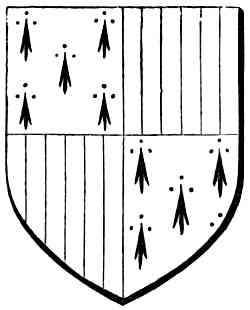
The first recorded ancestor of this ancient family is Rainald, mesne lord of Knightley, in the county of Stafford, under Earl Roger, in the time of William the Conqueror, as appears by Domesday Book. That estate went out of the family by an heiress who married Robert de Peshall, about the reign of Edward III., and the Knightleys removed to Gnowsall, in the same county, in the 17th of Richard II. (1394). Fawsley was purchased in the 3rd of Henry V. (1415-16). It is thus mentioned by Leland: "Mr. Knightley, a man of great lands, hath his principal house at Foullesle, but it is no very sumptuous thing." (Itin. i. fol. 11.)
See Baker's Northamptonshire, i. 381. Blakeway (Sheriffs of Salop, p. 103) asserts that "the Knightleys appear to have been a branch of the Shirleys," an assumption without any foundation except the similarity of their arms.
Arms.—Quarterly ermine, and paly of six or and gules. This coat was borne as early as 1301-2 (30th Ed. I.) by Sir Robert de Knyteley: it is also borne by Cotes of Cotes, co. Stafford, probably from family connection.
Present Representative, Sir Rainald Knightley, 3rd Baronet, M. P. for South Northamptonshire.
Spencer of Althorpe, Earl Spencer 1765.
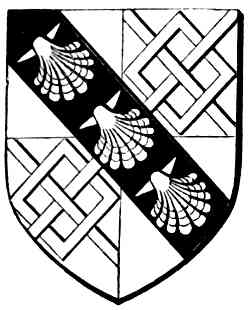
The Spencers claim a collateral descent from the ancient baronial house of Le Despenser, a claim which, without being irreconcileable perhaps with the early pedigrees of that family, admits of very grave doubts and considerable difficulties. It seems to be admitted that they descend from Henry Spencer, who, having been educated in the Abbey of Evesham, obtained from the abbot in the reign of Henry VI. a lease of the domains and tithes of Badby in this county, and was induced to settle there. His son removed to Hodnell in Warwickshire, his grandson to Rodburn in the same county, his great-grandson Sir John purchased Althorpe in 1508. The Spencers of Claverdon, co. Warwick (extinct 1685), were a younger branch. The Dukes of Marlborough (1702) represent the elder line of this family.
See Baker's Northamptonshire, i. 106; and Brydges's Collins, i. 378.
The poet Spenser boasted that he belonged to this house; though, says Baker, "the precise link of genealogical connexion cannot now perhaps be ascertained."
Arms.—Quarterly, first and fourth argent, second and third gules, a fret or, over all a bend sable charged with three escallops of the first. This coat, which is differenced from the ancient baronial arms by the three escallop shells, was used by Henry Spencer of Badby, who sealed his will with it. In 1504 another coat was granted, viz. Azure, a fess ermine between six sea-mew's heads erased argent, but the more ancient arms have been generally borne by the Spencers.
Present Representative, John Poyntz Spencer, 5th Earl Spencer.
Rokeby of Arthingworth.
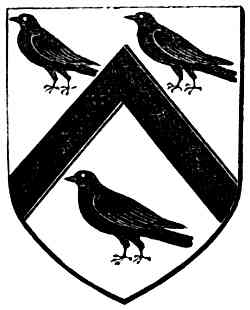
This is a junior branch of the Rokebys of Rokeby in Yorkshire, a knightly race immortalized by Scott. The principal line has been long extinct. Sir Thomas Rokeby was Sheriff of Yorkshire in the eighth of Henry IV. The family was seated in the parish of Ecclesfield, and also at Sandal-Parva, in South Yorkshire, where William Rokeby was Rector in the reign of Henry VII. In 1512 he became Archbishop of Dublin. His brother Ralph wrote the history of the family, now in possession of Mr. Rokeby of Arthingworth, and which is printed in Whitaker's Richmondshire, vol. i. p. 158. The present family acquired Arthingworth from the Langhams by marriage in the end of the seventeenth century.
See Hunter's South Yorkshire, i. p. 199.
Arms.—Argent, a chevron between three rooks sable, borne by Mons. Thomas de Rokeby in the reigns of Edward III. and Richard II. (Rolls of the dates.)
Present Representative, the Rev. Henry Ralph Rokeby.
Maunsell of Thorpe-Malsor.
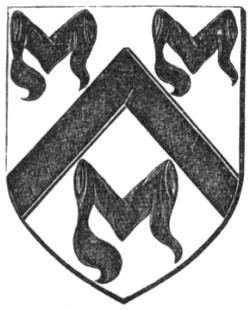
The curious poetical history of this family, preserved in "Collectanea Topographica et Genealogica," claims one "Saher," there written "Sier, the syer of us all," as their ancestor: he is stated to have been the son of Ralph Maunsel, who was living in Buckinghamshire in the 14th of Henry II. (1167). Thickthornes in Chicheley in that county appears to have been the residence of the Maunsells, and also Turvey in Bedfordshire. These lands were sold by William the son of Sampson le Maunsel of Turvey to William Mordaunt in 1287. The Maunsells afterwards settled at Bury-End in Chicheley, and in 1622 at Thorpe-Malsor.
Elder Branches. 1. Maunsell of Muddlescombe, co. Carmarthen, Baronet 1621-2. 2. The extinct Barons Maunsell, created 1711, extinct 1744.
Younger Branch. Maunsell of Cosgrave in this county, which came from the coheiress of Furtho.
See Coll. Topog. et Genealog. i. p. 389; Baker's Northamptonshire, ii. p. 132; and Memoirs of the family, an unfinished work privately printed in 1850 by William W. Maunsell, esq.
Arms.—Argent, a chevron between three maunches sable.
Present Representative, Thomas Philip Maunsell, Esq. late M. P. for North Northamptonshire.
Gentle.
Isham of Lamport, Baronet 1627.
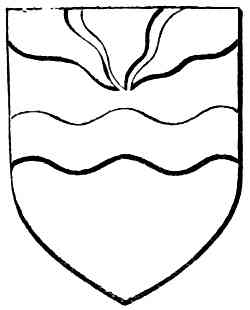
The name is local, from Isham in the hundred of Orlingbury in this county, where an elder branch of the family was seated soon after the Conquest. Robert Isham, who died in 1424, is however the first ancestor from whom the pedigree can with certainty be deduced. He was Escheator of the county of Northampton, and was of Picheley (a lordship contiguous to Isham) in the first of Henry V. Lamport was purchased by John Isham, the immediate ancestor of the present family, fourth son of Sir Euseby Isham, of Picheley, Knight, in the year 1559. He was an eminent merchant of London.
See Wotton's Baronetage, ii. 28.
Arms.—Gules, a fess and in chief three piles wavy argent. This coat was borne by Robert de Isham in the 2nd of Richard II.
Present Representative, Sir Charles Edmund Isham, 10th Baronet.
Palmer of Carlton, Baronet 1660.
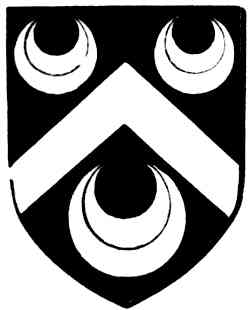
This family appears to have been founded by the law early in the fifteenth century, and descends from William Palmer, who was established at the present seat of Carlton in the ninth of Henry IV. The celebrated Sir Geoffry Palmer, Attorney-General to Charles II. was the first Baronet.
See Wotton's Baronetage, iii. 19; and Nichols's Leicestershire, vol. ii. pt. ii. p. 543.
Arms.—Sable, a chevron or between three crescents argent.
Present Representative, Sir Geoffrey Palmer, 8th Baronet.
Fane of Apthorp, Earl of Westmoreland 1642.
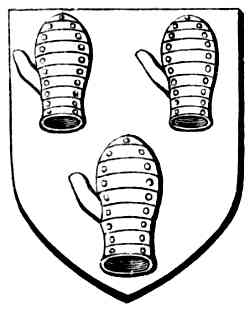
The Fanes or Vanes are said to have originated from Wales; in the reign of Henry VI. they were seated at Hilden in Tunbridge, in Kent, by a marriage with the Peshalls. In 1574 Sir Thomas Fane married Mary daughter and heir of Henry Neville, Lord Abergavenny; hence the importance of the family, and the Earldom of Westmoreland, the ancient honour of the house of Neville. Apthorp came from the heiress of Mildmay, about the end of the reign of Queen Elizabeth.
Younger Branches. Fane of Wormesley, Oxfordshire, descended from Henry Fane, Esq., younger brother of Thomas eighth Earl of Westmoreland. The Duke of Cleveland (1833) and Sir Henry Vane, of Hutton Hall in Cumberland, Baronet (1786), descend from John younger brother of Richard Fane, ancestor of the Earl of Westmoreland.
See Brydges's Collins, iii. 283, and iv. 499; Hasted's Kent, ii. 265; and Blore's Rutlandshire, p. 103.
Arms.—Azure, three right-hand gauntlets or.
Present Representative, Francis William Henry Fane, 12th Earl of Westmoreland.
NORTHUMBERLAND.
Knightly.
Clavering of Callaly Castle.
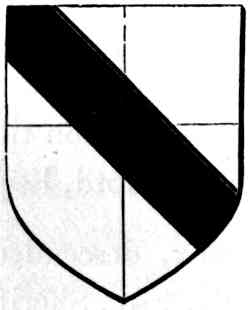
Robert Fitz-Roger, Baron of Warkworth, the ancestor of this great Norman family, was father of John, who assumed the name of "Clavering," from a lordship in Essex, as it is said, by the appointment of King Edward I. From Sir Alan, younger brother of John, the present family is descended. Callaly was granted to Robert Fitz-Roger by Gilbert de Callaly in the reign of Henry III., and has ever since continued in the possession of the house of Clavering.
Younger Branches. Clavering of Axwell, co. Durham, Baronet 1661, descended from James, third son of Robert Clavering of Callaly. Clavering of Berrington in North Durham, descended from William, third son of Sir John Clavering, who died a prisoner in London for his loyalty to King Charles I. Extinct about 1812.
See Nicolas's Siege of Carlaverock, pp. 115, 117; Mackenzie's View of Northumberland, vol. ii. p. 27; Surtees's Durham, ii. 248; Wotton's Baronetage, iii. 295; and Raine's North Durham, p. 213.
Arms.—Quarterly or and gules, a bend sable, and so borne by Robert Fitz-Roger, as appears by the Roll of Carlaverock, and by his son John de Clavering, who differenced his coat by a label vert. Sir Alexander de Clavering, in the reign of Edward II., charged the bend with three mullets argent. John Clavering, in the reign of Richard II., the same arms, with a label of three points argent. (Rolls of the dates.)
Present Representative, Edward John Clavering, Esq.
Mitford of Mitford Castle.
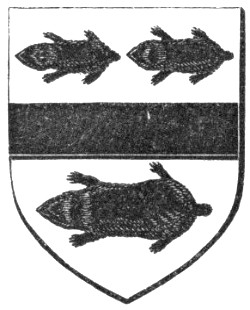
Descended from Mathew, brother of John, who is said to have held the Castle of Mitford soon after the Conquest, and by whose only daughter and heiress it went to the Bertrams. The ancestors of the present family appear to have been for many ages resident at Mitford, though the castle was not in their possession till it was granted with the manor by Charles II. to Robert Mitford, Esq.
Younger Branches. Mitford of Pitshill, co. Sussex, descended from the fourth son of Robert Mitford of Mitford Castle, Esq., Sheriff of Yorkshire in 1702. Mitford of Exbury, co. Southampton, sprung from the third son of Robert Mitford, of Mitford Castle, Esq., who died in 1674. From this latter branch Mitford Baron Redesdale (1803) of Batsford, co. Gloucester, is derived.
See Hodgson's History of Northumberland, vol. ii. pt. ii. p. 44 and for Mitford of Exbury the same work, vol. i. pt. ii. p. 152; see also Brydges's Collins, ix. 182.
Arms.—Argent, a fess sable between three moles proper.
Present Representative, Robert Mitford, Esq.
Swinburne of Capheaton, Baronet 1660.
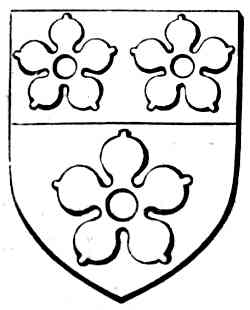
Swinburne in this county gave name to this ancient family, the first recorded ancestor being John, father of Sir William de Swinburne, living in 1278, and Alan Swinburne, Rector of Whitfield, who purchased Capheaton from Sir Thomas Fenwick, Knt., in 1274.
Chollerton in Northumberland was also an ancient seat of the Swinburnes; it was held under the great Umfrevile family by this same Sir William de Swinburne, the arms being evidently founded upon the coat of the Umfreviles. The date of the baronetcy points to the loyalty of the family during the civil wars of the seventeenth century.
See the early part of the pedigree in Surtees's Durham, ii. 872; Hodgson's History of Northumberland, vol. i. pt. ii. p. 231; and Wotton's Baronetage, iii. 167.