Volume 2 / Part 5 — LIST OF ILLUSTRATIONS. (continued 2)
Reading edition
Years after, the fate of the daring cruiser was again brought into remembrance by fresh news curiously found. When the officers and crew of the "Essex," after that vessel's gallant battle with the "Phœbe" and "Cherub," were sent to the United States under parole, two officers remained at Valparaiso, to give testimony before the prize-court. These gentlemen were Lieut. McKnight, and Mr. Lyman a master's mate. After going to Brazil in the "Phœbe," the two officers took passage in a Swedish brig bound for England. Months passed; and, nothing being heard from them, their friends became alarmed for their safety. In that time, before the day of the telegraph and steam transportation, many things might have easily detained the two officers for a year or more, and nothing be heard of them. But, when two years had passed, inquiries began to be made as to their fate, both by their friends and the naval authorities. The first step was to find the vessel upon which they had left Brazil. This was a work of time; so that it was many years after the disappearance of the officers when the brig was found lying at a London dock. She was the brig "Adonis," and the master proved to be the same who had commanded her when the two officers had taken passage. He readily recalled the circumstance, but claimed that the two passengers had left him in mid-ocean to go aboard an American man-of-war; and in proof of this he brought out the log-book, and, turning back to the year 1814, pointed out the following entries:—
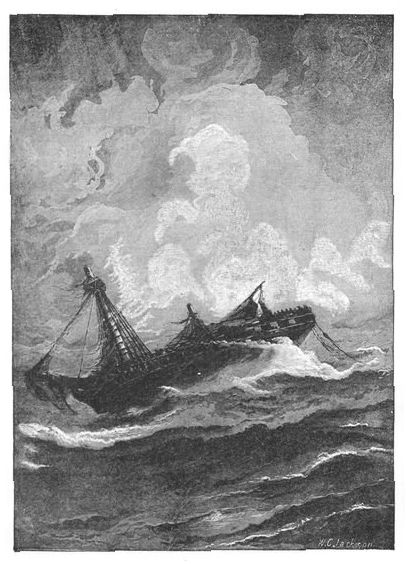
The End of the "Wasp."
"Aug. 23.—Left Rio de Janeiro; Stephen Decatur McKnight and James Lyman, passengers for England.
"Oct. 9.—At eight o'clock in the morning discovered a strange sail giving chase to us, and fired several guns; she gaining very fast. At half-past ten o'clock hove to, and was boarded by an officer dressed in an English doctor's uniform; the vessel also hoisted an English ensign. The officer proceeded to examine my ship's papers, etc., likewise the letter-bags, and took from one of them a letter to the victualling office, London. Finding I had two American officers as passengers, he immediately left the ship, and went on board the sloop-of-war. He shortly after returned, took the American gentlemen with him, and went a second time on board the ship. In about half an hour he returned, with Messrs. McKnight and Lyman; and they informed me that the vessel was the United States sloop-of-war 'Wasp,' commanded by Capt. Blakely, or Blake, last from France, where she had refitted; had lately sunk the 'Reindeer,' English sloop-of-war, and another vessel, which sunk without their being able to save a single person, or learn the vessel's name; that Messrs. McKnight and Lyman had now determined to leave me and go on board the 'Wasp;' paid me their passage in dollars, at 5s. 9d.; and, having taken their luggage on board, the 'Wasp' made sail to the southward. Shortly after they had left, I discovered that Lieut. McKnight had left his writing-desk behind; and I immediately made signal for the 'Wasp' to return, and stood towards her. They, observing my signal, stood back, came alongside, and sent their boat on board for the writing-desk; after which they sent me a log-line and some other presents, and made all sail in a direction for the line, and, I have reason to suppose, for the convoy that passed on Thursday previous."
And so the "Wasp," with her ill-fated crew thus re-enforced, passed forever from the sight of man. What was her course after leaving the "Adonis," none may ever know. Whether some chance spark, touching the deadly stores of her magazine, sent vessel and crew to a sudden but merciful death; or whether, after gallantly battling with some fierce tropical hurricane, she drifted about the trackless ocean a helpless hulk, with a slowly dying crew, carried hither and yon before the winds and the currents, until her timbers, rotting asunder, gave a watery sepulchre to her crew of lifeless bodies, must remain a mystery until the day when the sea shall give up its dead. But, until that day comes, the gallant deeds done by vessel and crew for the flag under which they served should keep the names of the "Wasp" and her men ever memorable in the annals of the great nation whose infancy they so gallantly protected.[Back to Contents]
CHAPTER XV.
OPERATIONS ON THE NEW ENGLAND COAST. — THE BOMBARDMENT OF STONINGTON. — DESTRUCTION OF THE UNITED STATES CORVETTE "ADAMS." — OPERATIONS ON CHESAPEAKE BAY. — WORK OF BARNEY'S BARGE FLOTILLA. — ADVANCE OF THE BRITISH UPON WASHINGTON. — DESTRUCTION OF THE CAPITOL. — OPERATIONS AGAINST BALTIMORE. — BOMBARDMENT OF FORT McHENRY.
he remaining work of the British blockading squadrons along the Atlantic Coast demands some attention, and some account must be given of certain land actions which were inseparably connected with the course of naval events. This narrative can well be divided into two parts, each dealing with the operations of one section of the blockading fleet; thus tracing the course of events up to the close of the war on the New England coast, before taking up the proceedings on the Chesapeake station.

It will be remembered that Decatur had been checked in his attempt to break the blockade at the eastern end of Long Island Sound, and was forced to take the frigates "United States" and "Macedonian," and the sloop-of-war "Hornet," into New London Harbor. Early in December, 1813, he determined to try to slip out; and choosing a dark night, when wind and tide were in his favor, he dropped down the bay, and was about to put to sea, when bright blue lights blazed up on either side of the harbor's mouth, and the plan was exposed by the treachery of some party never detected. After this failure, the two frigates returned up the river, where they remained until the end of the war. The "Hornet" managed to get to sea, and did good service before peace was declared.
In April, 1814, the British blockaders on the New England coast began active operations by sending an expedition up the Connecticut River to Pautopaug Point, where the invaders landed, spiked the guns of a small battery, and destroyed twenty-two vessels. Thence they proceeded down the river, burning a few more craft on the way, and escaped safely to their ships; although a party of militia, and sailors and marines from Decatur's vessels, attempted to cut them off. Shortly after this occurrence, a fleet of American gunboats attacked the blockading squadron off New London, and succeeded in inflicting serious damages upon the enemy.
In June, the enemy's depredations extended to the Massachusetts coast. The little village of Wareham was the first sufferer. A sudden descent made by boats' crews from the frigates "Superb" and "Nimrod" so completely surprised the inhabitants, that the enemy burned the shipping at the wharves, set fire to a factory, and retreated before the villagers fully comprehended the blow that had fallen upon them. Like occurrences took place at other coastwise towns; and, in every case, the militia proved powerless to check the enemy. All up and down the New England coast, from Maine to the mouth of the Connecticut River, the people were panic-stricken; and hardly a night passed without witnessing the flames of some bonfire kindled by the British out of American property.
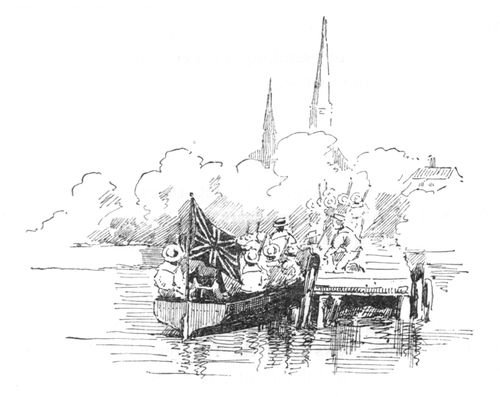
The Descent on Wareham.
In August, 1814, Commodore Hardy appeared off Stonington with a fleet of several vessels, headed by the seventy-four "Ramillies." Casting anchor near shore, he sent to the mayor and selectmen the following curt note: "Not wishing to destroy the unoffending inhabitants residing in the town of Stonington, one hour is granted them, from the receipt of this, to remove out of town." This message naturally caused great consternation; and, while messengers were sent in all directions to call together the militia, the answer was returned to the fleet: "We shall defend the place to the last extremity. Should it be destroyed, we will perish in its ruins." And, having thus defied the enemy, the farmers and fishermen who inhabited the town set about preparing for its defence. The one battery available for service consisted of two eighteen-pounders and a four-pounder, mounted behind earth breastworks. The gunners were put under the command of an old sailor, who had been impressed into the British navy, where he served four years. The skill he thus acquired in gunnery, he now gladly used against his former oppressors. It was near nightfall when the British opened fire; and they kept up a constant cannonade with round shot, bombs, Congreve rockets, and carcasses until near midnight, without doing the slightest damage. The bursting shells, the fiery rockets, and the carcasses filled with flaming chemicals, fairly filled the little wooden village with fire; but the exertions of the people prevented the spread of the flames. The fleet ceased firing at midnight, but there was no peace for the villagers. Militia-men were pouring in from the country round about, laborers were at work throwing up breastwork, carriers were dashing about in search of ammunition, and all was activity, until, with the first gleam of daylight, the fire of the ships was re-opened. The Americans promptly responded, and soon two eighteen-pound shot hulled the brig "Despatch." For an hour or two a rapid fire was kept up; then, the powder giving out, the Americans spiked their largest gun, and, nailing a flag to the battery flagstaff, went in search of more ammunition. The British did not land; and the Americans, finding six kegs of powder, took the gun to a blacksmith, who drilled out the spike, and the action continued. So vigorous and well directed was the fire of the Americans, that the "Despatch" was forced to slip her cables and make off to a place of safety. That afternoon a truce was declared, which continued until eight the next morning. By that time, the Americans had assembled in sufficient force to defeat any landing party the enemy could send ashore. The bombardment of the town continued; but the aim of the British was so inconceivably poor, that, during the three days' firing, no damage was done by their shot. A more ludicrous fiasco could hardly be imagined, and the Americans were quick to see the comical side of the affair. Before departing, the British fired over fifteen tons of lead and iron into the town. A quantity of this was picked up by the Americans, and offered for sale. In a New York paper appeared the advertisement,—
"Just received, and offered for sale, about three tons of round shot, consisting of six, nine, twelve, eighteen, twenty-four, and thirty-two pounds; very handsome, being a small proportion of those which were fired from His Britannic Majesty's ships on the unoffending inhabitants of Stonington, in the recent brilliant attack on that place. Likewise a few carcasses, in good order, weighing about two hundred pounds each. Apply," etc.
A popular bard of the time set forth in rollicking verse the exploits of the British gunners:—
"They killed a goose, they killed a hen, Three hogs they wounded in a pen; They dashed away,—and pray what then? That was not taking Stonington.
"The shells were thrown, the rockets flew; But not a shell of all they threw— Though every house was full in view— Could burn a house in Stonington."
With this affair, in which the British expended ammunition to the amount of fifty thousand dollars, and lost twenty men killed and fifty wounded, active offensive operations along the Connecticut coast ended. Farther north, however, the British still raided towns and villages, showing more spirit in their attacks than did Hardy at Stonington. Eastport, Me., was captured in July, and converted into a veritable British colony. The inhabitants who remained in the town were forced to take an oath of allegiance to Great Britain; fortifications were thrown up, and an arsenal established; King George's officials were placed in the custom-house, and thenceforward until the end of the war the town was virtually British. Encouraged by this success, the enemy undertook a more difficult task. A formidable fleet of men-of-war and transports, bearing almost ten thousand troops, was fitted out at Halifax for the purpose of reducing to British rule all that part of Maine lying between Passamaquoddy Bay and the Penobscot River. This expedition set sail from Halifax on the 26th of August, bound for Machias; but on the voyage down the coast of Maine the brig "Rifleman" was encountered, and from her the presence of the United States corvette "Adams" in the Penobscot River was learned. It will be remembered that the "Adams," before entering the river, had chased the British brig. Upon learning this, the British naval commander, Admiral Griffiths, pressed forward to the mouth of the Penobscot, and, anchoring there, despatched a land and naval expedition up the river for the capture of the corvette.
When the news of this advancing force reached Capt. Morris, the "Adams" was partially out of water, dismantled, and in the hands of the ship carpenters, who were repairing the injuries she had received on the rocks off Mount Desert. The ship herself was utterly defenceless, but Morris made strenuous attempts to collect a land force to defend her. He managed to rally a few hundred militia-men, who, with the sailors and marines, were routed by the enemy on the night of the 3d of September. Finding that the enemy's forces were not to be driven back by so small a body of men, Morris retreated, first setting fire to the corvette, which was totally destroyed before the British came up.
The retreating sailors were then forced to march over rugged roads to Portsmouth, N.H.; and, as walking was an exercise they were little accustomed to, many suffered severely from the unusual exertion. The difficulty of getting provisions along the road led the men to separate into several parties; but, notwithstanding the opportunities thus afforded for desertion, all who were not broken down by the long march ultimately reported for duty at the Portsmouth navy-yard.
Along the Southern seaboard the course of the war was even more disastrous to the Americans. Intelligence which reached the national authorities in the spring of 1814 led them to believe that the British were planning an expedition for the capture of Washington. Grave as was the danger, the authorities were slow to move; and though in July the Government called for fifteen thousand troops, and gave their command to Gen. Winder, yet the actual defensive force about the national capital consisted of but a few hundred militia. The naval defence was intrusted to the veteran Commodore Barney, who had served with distinction in the Revolution, and during the early years of the second war with Great Britain had commanded the Baltimore privateer "Rossie." The force put under Barney's command consisted of twenty-six gunboats and barges, manned by nine hundred men. Chiefly by his own energetic exertions, this force was ready for service in April; and by June the crews were drilled and disciplined, and the commanders schooled in the tactics of squadron evolutions. On the 1st of that month occurred the first brush with the enemy. The American flotilla was then lying in Chesapeake Bay, a little below the mouth of the Patuxent; and, a portion of the enemy's squadron coming within range, Barney ordered out his forces in chase. The British, outnumbered, fled down the bay; but, though Barney was rapidly overhauling them, he saw his hopes of victory shattered by the sudden appearance of His Britannic Majesty's seventy-four gun ship "Dragon." Thus re-enforced, it became the turn of the British to pursue; and the Americans retreated, firing constantly as they fled. The British continuing their advance, Barney was forced to take shelter in the Patuxent River; and he was gradually forced up that stream as far as the mouth of St. Leonard's Creek. The enemy then, feeling certain that the Americans were fairly entrapped, anchored at the mouth of the river, and awaited re-enforcements. These soon arrived; and on the 8th of the month the enemy's forces, consisting of a frigate, brig, and two schooners, moved up the river to the mouth of the creek. Farther they could not go, owing to shoal-water; but they fitted out a small flotilla of barges, and sent them on up the creek. With this enemy Commodore Barney was ready to come to close quarters; and he moved down upon the British, who quickly retreated to the shelter of their ships. Two or three such sham attacks were made by the enemy, but not until the 10th of the month did they actually give battle to the Americans.
On the morning of that day the British advanced in force to the attack; and the peaceful little creek was ablaze with flags and bright uniforms, and the wooded shores echoed back the strains of martial music. Twenty-one barges, one rocket-boat, and two schooners formed the British column of attack, which moved grandly up the creek, with the bands playing patriotic airs, and the sailors, confident of victory, cheering lustily. Eight hundred men followed the British colors. Against this force Barney advanced with but five hundred sailors. His sloop and gun-vessels he left at anchor, as being too unwieldy for the narrow shoal-waters of St. Leonard's Creek; and he met the enemy's flotilla with but thirteen barges. The enemy opened the action at long range with rockets and howitzers. The former were terrible missiles in an action of this character, corresponding to the shells of modern naval warfare. Some idea of their destructiveness may be derived from the fact, that one of them, fired at long range, exploded and set fire to a boat, after having first passed through the body of one of her crew. Barney had no rockets; and, as the combat at long range was telling upon his men, he at once dashed forward into the midst of the enemy. Soon the barges were engaged in desperate hand-to-hand conflicts. The sailors, grappling with their adversary's craft, fought with pistol and cutlass across the gunwales. Barney, in a small barge with twenty men, dashed about, now striking a blow in aid of some overmatched American boat, then cheering on some laggard, or applauding some deed of gallantry that occurred in his sight. Major William Barney, son of the commodore, saw an American barge on fire, and deserted by her crew who feared the explosion of her magazine. Running his boat alongside, he jumped into the flaming craft; and by dint of bailing in water, and rocking her from side to side, he succeeded in saving the barge. For more than an hour the action raged, both sides fighting with great vigor and gallantry; but the Americans having pierced the British line, the enemy, falling into confusion, turned, and strained every muscle to gain the protection of their ship's guns. The Americans followed in hot pursuit; but their course was abruptly checked at the mouth of the creek by a British schooner, whose eighteen guns commanded respect. For a moment the pursuing barges fell back; then, choosing advantageous positions, they opened fire upon the schooner with such effect that she soon turned to escape. She succeeded in getting under the protecting guns of the frigate and sloop-of-war, but was so cut to pieces in the short action that she was run aground and abandoned. The larger vessels now opened fire upon Barney's forces; and the flotilla, after a few shots of defiance, returned to its quarters up the creek.
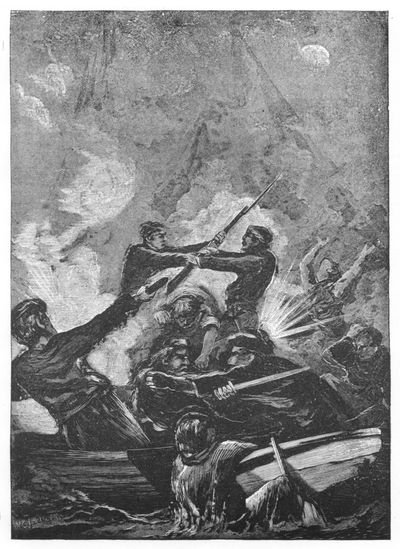
The Battle of the Barges.
For the next two weeks all was quiet along the shores of the Patuxent and St. Leonard's Creek. The enemy had learned wisdom from their late defeat, and contented themselves with blockading the mouth of the creek, and leaving Barney undisturbed in his retreat. But the doughty commodore had no idea of being thus confined, and during the time of quiet made preparations for an attempt to break the blockade. Land forces from Washington were sent down to aid in this attempt; and two pieces of artillery were to be mounted on a hill at the mouth of the creek, and thence throw red-hot shot into the enemy's ships. The land forces, however, rendered not the slightest assistance; and a too cautious colonel posted the battery at such a point that no shot could reach the enemy without first passing through a hill. Accordingly, when Barney led his flotilla gallantly down to the attack, he found that the issue of the conflict rested upon the sailors alone. From the battery, which was expected to draw the enemy's fire, not a single effective shot was fired. The sailors fought nobly, using their heavy long twelves and eighteens with great effect. But they were sadly hampered by their position; for the mouth of the creek was so narrow that but eight barges could lie abreast, and the others coming down from above soon packed the little stream from shore to shore, giving the enemy a mark that the poorest gunner could hardly miss. Against the storm of grape and canister that the British poured upon them, the sailors had absolutely no protection. The barges were without bulwarks, and the blue-jackets at the guns and at the oars were exposed to the full force of the British fire. Yet in this exposed situation the gallant fellows kept up the fight for nearly an hour, only withdrawing when the last ray of hope for help from the shore battery had vanished. Shortly after the Americans abandoned the attack, the blockading squadron got under way and stood down the bay. From the way in which one of the frigates was working her pumps, the Americans saw that their fire had not been entirely without effect.
Barney's flotilla had now given the British so much trouble that they determined to destroy it without delay; and an expedition of more than five thousand men—composed of regulars, marines, and a few negroes—was carried up the Patuxent, and landed at Benedict, where an armed brig had been stationed to cover the disembarkation. It was early dawn when the signal to land was given, and the river was covered in an instant with a well-manned and warlike flotilla. It was hard work for the British sailors, for a strong current was running; but by three o'clock in the afternoon the whole army was landed, and encamped in a strong position on a hill overlooking the village. Though no American troops were anywhere in the vicinity, the landing was conducted with the utmost caution. As the prow of each boat grated on the sand, the soldiers leaped on the beach, and instantly drew up in line, ready to repel any attack. After the infantry was landed, about a hundred artillerymen followed, and the same number of sailors dragging howitzers.
It is easily understood that this powerful force was not organized solely to destroy Barney's pitiful little flotilla. The real purpose of the British commander was to press on into the interior, and capture Washington, which the Americans had foolishly left without any defences whatever. It came to Barney's ears that Admiral Cockburn had boasted that he would destroy the American flotilla, and dine in Washington the following Sunday. This news the American commodore sent off to the authorities at the capital, and they then began to make futile preparations to repel the invader. In the mean time the British commenced their march up the shores of the Patuxent, meeting with no opposition. Barney, knowing that the defence of the national capital was of far greater importance than the fate of his flotilla, landed with four hundred men, and hastened to the American lines before Washington. He left the barges under the command of the second lieutenant, Mr. Frazier, with instructions to set fire to every boat on the appearance of the enemy, and then join the commodore with all the men left under his charge. Accordingly, when the invading column reached Nottingham, Mr. Frazier took the flotilla still higher up the creek,—a move that vastly disconcerted the British, who saw their prey eluding them. "But in the main object of our pursuit we were disappointed," wrote a British officer. "The flotilla which had been stationed opposite to Nottingham retired, on our approach, higher up the stream; and we were consequently in the situation of a huntsman who sees his hounds at fault, and has every reason to apprehend that his game will escape." But the game never fell into the hands of the ardent hunters; for the next day Mr. Frazier fulfilled his orders by setting fire to every barge, and, after seeing several of the larger boats blow up, mustered his men, and cut across the country, to join his superior officer. The British naval forces soon after reached Pig Point, the scene of this destruction, and there remained; while the land forces immediately turned away from the river, and marched upon Washington.
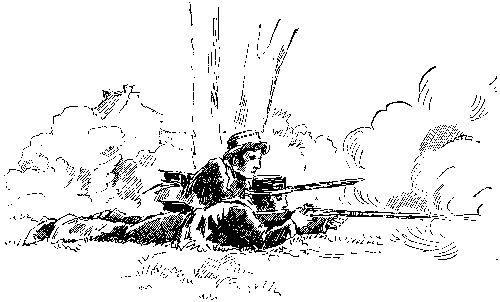
Sharp-Shooters.
It is not necessary to give in detail the incidents of the series of skirmishes by which the British fought their way to the American capital. They were opposed by raw militia, and the few sailors and marines under Barney. The former fled with promptitude at the very first fire, but the sailors and marines fought gallantly. The fighting was sharpest at Bladensburg; and here Barney's blue-jackets won praise from everybody, even from the enemy whose advance they disputed. Barney himself led the Americans, and sighted a favorite gun of the sailors' battery, until he fell desperately wounded. This battery commanded the road by which the main column of British advanced; and by its hail of grape and canister it beat back the advancing regiments, and for some time checked their further progress. The British thereupon opened with rockets, and sent out sharp-shooters to pick off the Yankee gunners. One of these riflemen was observed by the Americans to deliberately build for himself a small redoubt of stones from an old wall; and, lying down behind it, he began a deliberate fire upon the Americans. His first bullet went through the cap of one of the sailors, and the second sent a poor fellow to his long account. The marines answered with their muskets; but the fellow's stone rampart saved him, and he continued his fire. Barney vowed to put an end to that affair, and, carefully sighting one of his cannon, pulled the lanyard. The heavy round shot was seen to strike the sharp-shooter's defence, and stones and man disappeared in a cloud of dust. Meantime, the enemy had thrown out flanking parties under cover of the woods, and had nearly surrounded the little band of sailors. A musket-ball struck Barney in the thigh, and he began to grow faint with loss of blood; and, finding that the militia had fled, and the sailors were becoming exhausted, the commodore ordered a retreat. The blue-jackets left the field in good order; but their gallant commander had gone but a few steps, when the pain of his wound forced him to lie down under a tree, and await the coming of the enemy. The British soon came up, led by Gen. Ross and Capt. Wainwright of the navy. After learning Barney's rank, and courteously offering to secure surgical aid, the general turned to his companion, and, speaking of the stubborn resistance made by the battery, said, "I told you it was the flotilla men."—"Yes. You were right, though I could not believe you," was the response. "They have given us the only fighting we have had."
Meanwhile, the British, having routed the Americans at every point, pressed on to Washington. The inhabitants fled before them, and the town was almost deserted when the British marched in with banners flying and bands playing. The enemy held the city for only a day; but in that time they did such deeds of vandalism, that even the people and the press of London cried out in indignation. The President's house, the Capitol, all the public buildings except the Patent Office, were burned to the ground. The navy-yard, with the uncompleted ships on the stocks, was likewise burned; but in this the enemy only acted in accordance with the rules of war. It was their destruction of the public buildings, the national archives, and the Congressional library, that aroused the wrathful indignation of all fair-minded people, whether Americans or Europeans. "Willingly," said one London newspaper, "would we throw a veil of oblivion over our transactions at Washington. The Cossacks spared Paris, but we spared not the capital of America." A second English journal fitly denounced the proceedings as "a return to the times of barbarism."
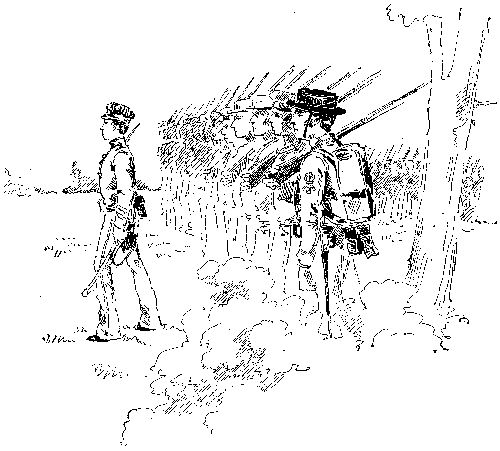
The March on Washington.
But, if the invaders are rightly to be blamed for the useless vandalism they encouraged, the American authorities are still more culpable for their neglect of the most ordinary precautions of war. That a national capital, close to the sea, should be left virtually unprotected while the enemy was massing his forces only a few miles away, seems almost unbelievable. But so it was with Washington; for five hundred flotilla men were forced to bear the brunt of the attack of five thousand British. True it is that the military authorities had massed seven thousand militia-men for the defence of the city; but such was the trepidation of these untrained soldiers, that they fled before the main body of the British had come into the fight. That the sailors and marines fought bravely, we have the testimony of the British themselves. Mr. Gleig, a subaltern in the attacking army, writes, "Of the sailors, however, it would be injustice not to speak in the terms which their conduct merits. They were employed as gunners; and not only did they serve their guns with a quickness and precision which astonished their assailants, but they stood till some of them were actually bayonneted with fuses in their hands; nor was it till their leader was wounded and taken, and they saw themselves deserted on all sides by the soldiers, that they quitted the field." Therefore, in the battle of Bladensburg, the blue-jackets won nothing but honor, though the results of the battle were so mortifying to the national pride of the people of the United States.
On the 25th of August the British left the smoking ruins of Washington behind them, and made for their fleet lying in the Patuxent. They feared that the outraged nation would rise upon them, and turn their march into a bloody retreat, like that of the British soldiery from the historic field of Lexington. Accordingly their departure was by night, immediately after a furious storm of rain and wind. Strict orders were issued to all the Americans in Washington, warning them, under penalty of death, not to leave their houses until the sun rose the next morning. Then the British stealthily marched out of the town. "No man spoke above his breath," says subaltern Gleig. "Our very steps were planted lightly, and we cleared the town without exciting observation." A two days' march brought them to Benedict, where the fleet lay in waiting for their reception.
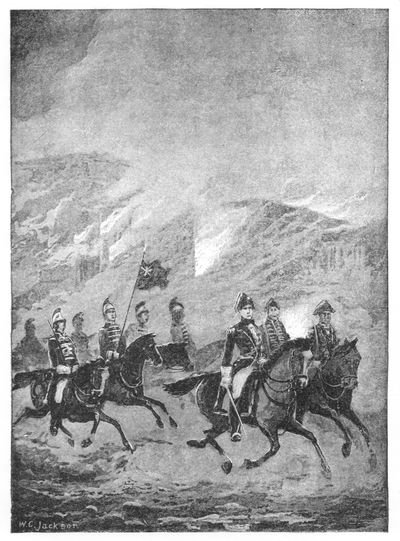
The Burning of Washington.
In the mean time, a portion of the British fleet had ascended the Potomac as far as Alexandria, and, finding that town defenceless, proceeded to dictate to the inhabitants the terms upon which they could save their village from desolation. The British demanded that all naval stores and ordnance, all the shipping and its furniture, all merchandise, and all provisions in the town should be surrendered. Several vessels had been scuttled, to prevent their falling into the hands of the enemy; these, the British demanded, should be raised, repaired, and delivered to them Time, however, did not permit the fulfilment of this condition; but to the others, harsh and humiliating though they were, the inhabitants were forced to accede. Heavy laden with the spoils of the village, the pillagers weighed anchor and started down the Potomac. But they were not destined to carry away their booty unmolested. News of the expedition reached Baltimore, and a large party of the sailors at the navy-yard were sent to the banks of the Potomac to cut off the enemy's retreat. They were officered by four men famous in American naval annals,—Perry, Rodgers, Porter, and Creighton. At Indian Head, just below Mount Vernon, the Potomac River narrows and flows swiftly between densely wooded bluffs. At this point the Americans threw up redoubts, and, mounting all the cannon that could be gathered on such short notice, prepared to dispute the enemy's passage. When the British fleet hove in sight, they were greeted with a storm of shot from the unsuspected batteries; and they recoiled in confusion. Practised American hunters lined the woody shores, and picked off the British sailors with musket-balls. For some time the fleet was thus checked in its progress. Finally the admiral determined that only by a bold dash could he escape; and accordingly, massing his vessels and concentrating his fire on the chief battery, he dashed past, and rejoined his superior officer, Cockburn, not without paying dearly for his exploit at Alexandria.
While the British were thus devastating the shores of Chesapeake Bay, they cast more than one longing look toward the thriving city of Baltimore, which, by its violent patriotism, had done much to urge on the war. From the shipyards of Baltimore came more than one stout naval vessel that had forced the enemy to haul down his colors. But that which more than any thing else aroused the hatred of the British was the share Baltimore took in fitting out and manning those swift privateers, concerning whose depredations upon British commerce we shall have something to say in a later chapter. "It is a doomed town," said Vice-admiral Warren. "The truculent inhabitants of Baltimore must be tamed with the weapons which shook the wooden turrets of Copenhagen," cried the editor of a great London paper. But, nevertheless, Baltimore did not fall before the invader, although for some time the army and navy of the enemy were united in the attempt to bring desolation upon the obnoxious city.
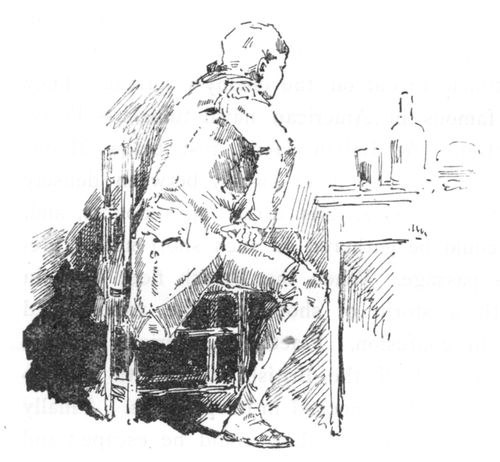
Planning the Attack.
After the fall of Washington, the depredations of the British along the shores of Chesapeake Bay redoubled, and the marauding expeditions thus employed were really feelers thrown out to test the strength of the defenses of Baltimore. That the marauders found some opposition, is evident from a passage in the journal of a British officer. "But these hasty excursions, though generally successful, were not always performed without loss to the invaders." On one of these expeditions, Sir Peter Parker, captain of the frigate "Menelaus," lost his life. He had been ordered down to the mouth of the bay just after the fall of Washington. "I must first have a frolic with the Yankees," said he. And accordingly, after a jovial dinner aboard his frigate, he led a night expedition of sailors and marines ashore, expecting to surprise a small body of Maryland militia stationed at Moorfields. Sir Peter's frolic turned out disastrously; for the Marylanders were on the watch, and received the invaders with a fierce volley. Sir Peter was gallantly cheering on his men, when a musket-ball cut the main artery in his thigh. "They have hit me, Pearce," he said faintly to his lieutenant; "but it's nothing. Push on, my brave boys, and follow me." But even thus cheering, he fell back, the words died away in his throat, and he bled to death before a surgeon could be found. It is but right to say, that, though he sailed in Cockburn's command, he had none of the cruel brutality which his admiral too often showed.
On the 12th of September a more serious assault was made upon Baltimore. The British naval and military forces united in the attack, which was made by land and sea. A force of nine thousand men, including two thousand marines and two thousand sailors, was landed fifteen miles from Baltimore, and under the command of Gen. Ross and Admiral Cockburn marched gayly inland, never doubting that they would find the Americans unprepared, and repeat their exploits at Washington. In this expectation they were sadly disappointed; for the Maryland militia, aided by a few regulars and seamen, outfought the British at every point, and checked their farther advance. Among the slain was Gen. Ross, who was shot down as he was leading the advance of the British skirmishers. In the mean time, the British fleet had been taking its share in the engagement by attempting to reduce Fort McHenry. A large flotilla of frigates, schooners, sloops, and bomb-ketches entered the Patapsco River on the morning of the 12th, and, casting anchor out of the reach of the fort's guns, opened a furious fire. The fort was manned by militia-men and a large detachment of the gallant sailors from Barney's flotilla. When the continual falling of shells within the fort told that the enemy had come within range, the guns of Fort McHenry opened in response. But, to the intense chagrin of the Americans, it was found that their works mounted not a single gun that would carry to the enemy's fleet. There then remained to the garrison only the trying duty of holding their post, and enduring without response a galling fire from the enemy. All the garrison stood to the guns without flinching; while the shrieking shells fell on all sides, and, exploding, scattered deadly missiles in all directions. One shell struck and dismounted one of the twenty-four-pounders, killing and wounding several of its men. Admiral Cochrane, who commanded the attacking fleet, saw this incident, and ordered three of his bomb-vessels to move up nearer to the fort. This gave the Americans the opportunity for which they had been longing, and instantly every gun in the fort opened upon the three luckless ketches. Half an hour of this fire sufficed to drive the three vessels back to their original station.
Night fell, but brought no cessation of the bombardment. But the enemy, while never slackening his fire, had determined to take advantage of the darkness to send out a landing party to take two small batteries on the banks of the Patapsco, and then assault Fort McHenry from the rear. Twelve hundred and fifty men, with scaling-ladders and fascines, left the fleet in barges, and moved up the Patapsco towards Fort Covington and the City Battery. But their plan, though well laid, was defeated by the vigilance and courage of the garrisons of the two threatened positions,—sailors all, and many of them men from Barney's flotilla, a training-school which seems to have given to the region about Chesapeake Bay its most gallant defenders. Just as the storming party turned the prows of the barges towards the shore, they were discovered; and from McHenry, Covington, and the City Battery burst a thunderous artillery-fire, that shook the houses in Baltimore, and illumined the dark shores of the river with a lurid glare. Bold as the British sailors were, they could advance no farther under so terrible a fire. Two of the barges were shot to pieces, leaving their crews struggling in the water. A ceaseless hail of grape and canister spread death and wounds broadcast among the enemy; and, after wavering a moment, they turned and fled to their ships. Cochrane, seeing his plan for taking the American positions by assault thus frustrated, redoubled the fury of his fire; hoping that, when daybreak made visible the distant shore, nothing but a heap of ruins should mark the spot where Fort McHenry stood the night before.
A night bombardment is at once a beautiful and a terrible spectacle. The ceaseless flashing of the great guns, lighting up with a lurid glare the dense clouds of smoke that hang over the scene of battle; the roar of the artillery; the shriek of the shell as it leaves the cannon's mouth, slowly dying into a murmur and a dull explosion, as, with a flash of fire, the missile explodes far away,—combine to form a picture, that, despite the horrors of wounds and death, rouses the enthusiasm and admiration of the beholder. When viewed from the deck of one of an attacking fleet, the scene is even more impressive. At each discharge of the great guns, the vessel reels and trembles like a huge animal in agony. The surging waters alongside reflect in their black depths the flash of the cannon and the fiery trail of the flying shell. Far in the distance can be seen the flashes of the enemy's guns, each of which may mean the despatch of a missile bringing death and pain in its track. One who has witnessed such a spectacle can readily understand the fascination which men find in the great game of war.
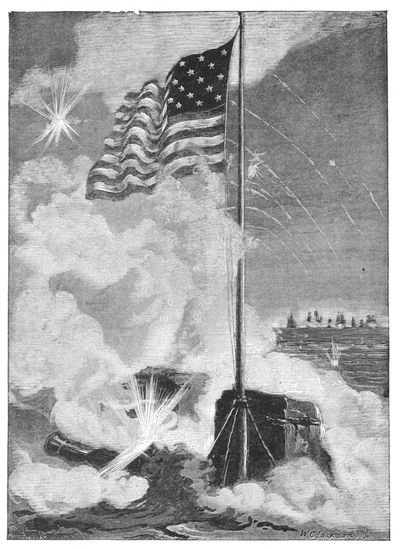
The Star Spangled Banner.
Pacing the deck of the one of the British vessels was a young American, whose temperament was such that he could fully appreciate all the beauties of the scene, even though harassed by anxious fears lest the British should be successful. This man was Francis S. Key, who had visited the fleet with a flag of truce, but was unable to get away before the bombardment began. When the sun set on the evening of the 13th, Key saw his country's flag waving proudly over the ramparts at which the British guns had been so furiously pounding. Would that flag still be there when the sun should rise again? That was the question which Key asked himself as he anxiously walked the deck throughout the night, striving to pierce the darkness, and make out, by the lurid lightnings of the cannon, whether the flag was still there. As the night wore on, Key took an old letter from his pocket, and on the blank sheet jotted down the lines of the immortal national song, "The Star Spangled Banner." Its words merely voice the writer's thoughts; for often during that night he looked anxiously shorewards, to see if
"the rockets' red glare, the bombs bursting in air, Gave proof, through the night, that our flag was still there."
When the anxiously awaited daylight came, Fort McHenry still stood; and over it waved defiantly the starry folds of the United States flag. The British saw that, by land and sea, their attack had failed; and early in the morning the fleet, after taking on board the remnant of the land forces, sailed suddenly away, and left Baltimore safe. They had bombarded Fort McHenry for twenty-five hours, throwing nearly two thousand shells. Yet, wonderful as it may appear, only four of the Americans were killed, and twenty-four wounded. With this failure the British ended their chief offensive operations along the shores of the Chesapeake. The greater part of the fleet and the soldiery then moved southward, to take part in the operations along the Gulf coast, that culminated in the disastrous defeat of the invaders at New Orleans.[Back to Contents]
CHAPTER XVI.
DESULTORY HOSTILITIES ON THE OCEAN. — ATTACK UPON FORT BOWYER. — LAFITTE THE PIRATE. — BRITISH EXPEDITION AGAINST NEW ORLEANS. — BATTLE AT THE RIGOLETS. — ATTACK ON NEW ORLEANS, AND DEFEAT OF THE BRITISH. — WORK OF THE BLUE-JACKETS. — CAPTURE OF THE FRIGATE "PRESIDENT." — THE "CONSTITUTION" TAKES THE "CYANE" AND "LEVANT." — THE "HORNET" TAKES THE "PENGUIN." — END OF THE WAR.
he naval incidents of the latter part of 1814 conferred little honor upon either of the belligerents. Seldom did the meetings between hostile ships rise to the dignity of battles. One or two small American brigs fell a prey to British frigates; but in every instance the disparity of force was so great that the weaker surrendered without striking a blow. Such was the case with the sixteen-gun brig "Rattlesnake," which escaped from one British frigate by throwing overboard all her guns, only to immediately fall a prey to the "Leander." In July of the same year, the United States brig "Siren" was captured by the British frigate "Medway," off the coast of Africa, after a long chase, during which the American hove overboard every thing movable on the brig. Not all these petty encounters ended so favorably for the enemy. Off New York a cutting-out party of volunteers surprised and captured the British tender "Eagle," a small craft carrying one thirty-two-pound howitzer, and fourteen men. Ten days later, the frigate "Tenedos," which had done such good service on the blockade, suffered the loss of her tender, which was gallantly carried away by the crew of a Yankee gunboat. Some very desperate combats between American privateers and British naval vessels were fought about this time, and will be duly noted in detail in the chapter treating of the exploits of the private armed navy.
As the autumn came on, the British naval forces began to rendezvous in the Gulf of Mexico, preparatory to the campaign before New Orleans. On Sept. 14, a squadron of four British sloops-of-war appeared off Mobile, and opened fire upon Fort Bowyer, which guarded the entrance to Mobile Bay. The attack was vigorous, and the defence determined. A British land expedition moved upon the fort from the landward side; and the little garrison found itself surrounded by enemies, many of whom were Indians, whose savage assistance the British had accepted from the very opening of the war. A small force, only, defended the fort. Percy, the British admiral, knew the weakness of the garrison; and, thinking of the ninety-two guns he could bring to bear against the twenty worked by the Americans, announced proudly, that he would give the garrison just twenty minutes to surrender. The twenty minutes passed quickly, and still the fort responded savagely to the fire of its assailants. The flag of the British ship "Hermes" was shot away; and soon after, a round shot cut her cable, and she drifted upon a sand-bank, and lay helpless, and exposed to a raking fire. Her captain, having set her afire, abandoned her; and she soon blew up. The other vessels kept up the attack gallantly for a time. The flagstaff of the fort was shot away; but the flag soon re-appeared, waving from a sponge-staff. The Americans then redoubled their fire, which soon told so severely upon the British ships that they were forced to withdraw. In the mean time, the assault of the Indians and troops had been checked, and the forces driven back in disorder, thus leaving the victory to the Americans.
It is not within the province of this work to treat of the military operations that led up to the battle of New Orleans. But the last months of 1814 witnessed a series of naval incidents trivial in themselves, but deriving importance from their connection with Gen. Jackson's great victory. Over certain incidents in the preparations of the Americans for repelling the invasion hangs a shade of romance.
To the southward of the quaint, rambling, rose-covered city of New Orleans, the tawny flood of the Mississippi winds towards the gulf in huge serpentine curves. The shores between which it flows rise scarce higher than the surface of the river itself; and a slight increase in the volume of water, or a strong wind, will serve to turn the whole region into a great, watery marsh. From the mouth of the great river, the whole coast of Louisiana, extending north and west, is a grassy sea, a vast expanse of marsh-grass, broken here and there by inlets of the Mexican Gulf, and sluggish, winding bayous that lead up into the higher lands of the State,—waterways that lead even to the back door of the Crescent City herself, but known only to oyster-gatherers, or in 1814 to the adventurous men who followed the banner of Lafitte the Baratarian pirate.
Pirate he was called then; but it is doubtful whether his misdeeds ever exceeded smuggling, or, at worst, privateering under the protecting flag of some belligerent nation. When all nations were warring, what was easier than for a few gallant fellows, with swift-sailing feluccas, to lurk about the shores of the gulf, and now under the Spanish flag, now under the French, or any colors which suited the case, sally out and capture the richly laden Indiamen that frequented those summer seas? And when a power known as the United States Government, that had its quarters more than a thousand miles from the country of the Creoles, passed an outrageous law known as the embargo, what was more natural than that the Baratarians, knowing the mysterious waterways that led up to the Crescent City, should utilize their knowledge to take ships and cargoes in and out without the formality of a custom-house examination? Such were the times that led to the formation and growth of the "piratical" colony of Barataria. Its leaders and rulers were John and Pierre Lafitte; one of whom lived in New Orleans in the character of a prosperous merchant, while the other led the expeditions which brought in merchandise to stock the former's stores. Under the influence of the warlike state of Europe, the trade of these worthies throve, and their settlement at Grande Isle took on the appearance of a prosperous colony and naval station. Storehouses and dwellings stood close to the sea. The fertile face of the island was cut up into fruitful plantations and orange-groves. Breastworks, well dotted with the muzzles of cannon, commanded the approach by sea. More than once, from behind those ramparts, the Baratarians had proved that they could fight, and that they acknowledged the authority of no flag. The Creoles of New Orleans looked indulgently upon the conduct of the outlaws; but the few Americans in the city were highly incensed to see the authority of the United States thus set aside, and vowed that when the war was over the audacious adventurers should be crushed. However, the end came even sooner.
On the 3d of September, a British armed brig anchored near the buccaneers' retreat, and sent a flag of truce ashore. Lafitte, with great dignity, received the envoys in his tent, and assured them of his protection, though the whole village was up in arms clamoring for the death of the intruders. The British officer then announced that he had come to secure the aid of Lafitte and his followers in the campaign against New Orleans. He offered the pirate captain forgiveness for all piracies committed against the British flag,—whereat the chief smiled sardonically,—also thirty thousand dollars in cash, a captain's commission in the British navy, and lands for himself and his followers. It was a tempting bribe; for at that moment Lafitte's brother lay in the calaboza at New Orleans awaiting trial for piracy, and the Americans were preparing rapidly for a descent upon the Baratarian stronghold. But, little as he liked the American flag, Lafitte liked the British still less: so, asking the Englishman to wait a few days for his answer, he sent a report of the occurrence to the New Orleans authorities, and offered to co-operate with the Americans, if he could be assured of pardon for all offences committed against the government. This document caused some hesitation at New Orleans; but the military authorities determined to refuse the offer, and break up the outlaws' nest. Accordingly, a few days later, the war schooner "Carolina," six gunboats, a tender, and a launch, dropped down the Mississippi, and, rounding into the deep blue waters of the gulf, headed for Barataria. Lafitte had too many friends in New Orleans not to know of the force thus sent against him; and, when the Americans reached Grande Terre, they found the pirates at their batteries, and the Baratarian flotilla drawn up in order of battle. The contest was sharp, but ended in the rout of the Baratarians. Their village was burned, their fortifications razed; and, when the triumphant Americans returned to New Orleans, they brought in their train ten armed prizes and a number of prisoners, although Lafitte was not to be found among the latter. Thereafter, the Baratarians, as an organization, vanished from history. Lafitte was afterwards occasionally heard of as a desperado on the more western shores of the Mexican Gulf; and it is further noticeable, that two guns were served by Baratarians under their old lieutenant, Dominique Yon, on that bloody day when Packenham's forces were beaten back on the field of Chalmette.
Early in December the movement of the British upon New Orleans took definite shape. On the 8th of that month, the calm waters of the Gulf of Mexico, off the Chandeleur Islands, were the scene of a grand rendezvous of British naval and military forces. All the vessels of Cockburn's Chesapeake fleet were there, with other men-of-war, transports, and schooners, to the number of fifty vessels. At the head was the towering two-decker "Tonnant," carrying the Admiral's flag. Frigates, corvettes, and sloops-of-war came trooping in the rear; and the transports bore seven thousand men for the capture of the Southern city. The British were in high good-humor as the anchors were let fall and the ships swung round with their heads to the tide. The voyage across the gulf from the rendezvous at Jamaica had been like a holiday trip. The weather had been fine, and the sea smooth; and the soft air of that semi-tropical region was a never-ending source of delight to sailors who had been suffering the hardships of a Northern station.
The point at which the British fleet had come to anchor lay about fifty miles due east of New Orleans. In that day of sailing-vessels, no enemy could breast the waters of the rolling Mississippi and crush the resistance of the city's defenders, as did Farragut in 1862. Knowing that they could not hope to take their ships up to the levee of the city, the enemy determined to cast anchor near the entrance of Lake Borgne, and send through a chain of lakes and bayous a mammoth expedition in barges, to a point within ten miles of the city. But this well-laid plan had been betrayed to the Americans by Lafitte; and a little band of American sailors, under the command of Lieut. Catesby Jones, had taken up a position at the Rigolets, and were prepared to dispute the farther progress of the invading forces. Five gunboats, and one hundred and eighty-five men, constituted the American force, which for a time held the British in check. Finally, the enemy, finding that the swift American cutters could easily evade the lumbering war-vessels, fitted out a fleet of forty-five barges, manned by a thousand veteran British sea-dogs, who had seen service in half a dozen naval wars. The Americans had news of the contemplated attack, and made skilful preparations to meet it. The gunboats were moored in a fore and aft line, at a point near the Rigolets. Their broadsides bore upon the enemy, and the shallowness of the water was such that by no means could they be surrounded. The sailors were prepared for a desperate conflict, and spent the night before the battle in tricing up the boarding-nettings, sharpening cutlasses, and getting small-arms in good trim. In the morning the British came on to the attack. It was a long pull from the fleet to the place of battle: so their commander brought his flotilla to anchor just out of range of the American guns; and there the grim old veterans devoured their dinners, and took their rations of grog, with appetites undisturbed by the thought of the coming conflict. Dinner over, the enemy weighed anchor, and dashed forward, with long, swift strokes, into the very flashes of the Americans' cannon. The Americans knew that their one chance of victory was to keep the overwhelming forces of their foe out of boarding distance, and they worked their guns with a rapidity born of desperation. Musket-bullets, grape-shot, and canister poured in a murderous fire upon the advancing boats. But the sturdy old British veterans knew that the best way to stop that fire was to get at the base of it; and they pressed on undauntedly, responding vigorously, meanwhile, with their bow guns. Soon they were up to the gunwales of the American flotilla, and the grappling-irons were fixed; then, with sharp blows of cutlasses, deadly play of the pikes, and a ceaseless rattle of small-arms, they poured upon the decks of the Americans. The boarding-nettings could not long check so furious a foe, and fell before the fierce slash of the cutlasses. The decks once gained, the overpowering numbers of the Englishmen crushed all further resistance; and the flotilla was finally taken, after about one hundred of the enemy and fifty Americans had fallen.
The American flotilla being thus shattered, there remained no further obstacle to prevent the landing of the invading army. Of the advance of that brilliant body of veteran troops over sands and marshes, and through sluggish bayous and canals half-full of stagnant water, until they emerged on the bank of the river, nine miles below New Orleans, it is not my purpose to speak further. Nor does an account of Gen. Jackson's vigorous measures of defence and glorious victory come within the province of this narrative. The interesting story of Jackson's creation of an army from leather-shirted Kentucky riflemen, gay Creoles from the Creole Quarter of the Crescent City, swarthy Spaniards and mulattoes, nondescript desperadoes from the old band of Lafitte, and militia and regulars from all the Southern States, forms no part of the naval annals of the war. It is enough to say that the flower of the British army, led by a veteran of the Peninsula, recoiled before that motley crew of untrained soldiers, and were beaten back, leaving their gallant leader and thousands of their brave men dead upon the field. The navy was not without some share in this glorious triumph. On the 23d of December the schooner "Carolina" dropped down from New Orleans, and opened fire upon the enemy. "Now, then, for the honor of America, give it to them!" sung out her commander, as the first broadside was fired. The attack, unexpected as it was, created a panic in the British camp. A feeble reply was made with rockets and musketry; but even this was soon discontinued, and the enemy took refuge under the steep bank of the levee, whither the plunging shot could not follow them. All night the "Carolina" kept up her fire; and, when at daybreak she moved away, she left the camp of the enemy in confusion. During the day she renewed the attack, and persisted in her fire until the British threw up a heavy battery on the river's bank, and replied. The lads of the "Carolina" promptly accepted the challenge thus offered, and for a time a spirited combat was maintained. But the battery threw red-hot shot, and the schooner was soon set on fire and destroyed. Meanwhile the corvette "Louisiana" had come down to the scene of action, and in the subsequent engagements did some effective work. When the final onslaught of the British was made, on Jan. 7, 1815, the guns of the "Louisiana" were mounted on the opposite bank of the river, and the practised sailors worked them with deadly effect, until the flight of the American militia on that side exposed the battery to certain capture. The sailors then spiked their guns, and marched off unmolested. The sailors of the "Carolina," on that day of desperate fighting, were in the centre of Jackson's line, between the Creoles and the swarthy Baratarians under Dominique Yon. Here they worked their howitzers, and watched the scarlet lines of the enemy advance and melt away before that deadly blaze; advance and fall back again in hopeless rout. And among the many classes of fighting men whom Jackson had rallied before that British line, none did battle more valiantly for the honor of the nation and the safety of the flowery city of New Orleans than did those blue-jackets ashore.
It is a fitting commentary upon the folly of war, that the battle of New Orleans was fought after the two warring nations had signed a treaty of peace. The lives of some hundreds of brave Englishmen and Americans were needlessly sacrificed in a cause already decided. Far across the Atlantic Ocean, in the quaint old Dutch city of Ghent, representatives of England and the United States met, and, after some debate, signed the treaty on the 24th of December, 1814. But there was then no Atlantic cable, no "ocean greyhounds" to annihilate space and time; and it was months before the news of the treaty reached the scene of war. In the mean time, the hostilities were continued by land and sea.
The year 1815 found the American navy largely increased by new vessels, though the vigilance of the British blockaders kept most of these close in port. The "Constitution" was at sea, having run the blockade at Boston. In New York Harbor were the "President," "Peacock," "Hornet," and "Tom Bowline," awaiting a chance to slip out for a cruise to the East Indies. It was decided that the vessels should run out singly, and the "President" was selected to make the first attempt. The night of the 14th of January was dark and foggy, and the blockading fleet was nowhere to be seen. Then, if ever, was the time for escape; and the Yankee tars weighed anchor and started out through the Narrows. In the impenetrable darkness of the night, baffled by head-winds and perplexing currents, the pilots lost their reckoning, and the orders to the man at the wheel were quick and nervous, until an ominous grating of the ship's keel, followed by the loss of headway, told that the frigate was aground. For a time the ship lay helpless, straining all her timbers as each wave lifted her slightly, and then let the heavy hull fall back upon the shoal. By ten o'clock the rising tide floated her off; but, on examination, Capt. Decatur found that she was seriously injured. To return to port was impossible with the wind then blowing: so all sail was crowded on, in the hopes of getting safely away before the blockading squadron should catch sight of the ship. As luck would have it, the blockaders had been forced from their posts by the gale of the day before, and the "President" had laid her course so as to infallibly fall into their clutches. Before daylight the lookout reported two sail in sight, and at daybreak the ship was fairly surrounded by the enemy's vessels. All at once gave chase to the luckless American; and a few hours were enough to show that her sailing qualities were so seriously injured by her pounding on the bar, that the enemy was rapidly overhauling her. Decatur adopted every known expedient to increase his ship's speed, but to no avail. After she had been lightened by starting the water, cutting away boats and anchors, chopping up and heaving overboard the ponderous cables, together with spars and provisions, the enemy still gained; and the foremost pursuer, a razee, opened fire. The "President" responded with her stern-chasers, but her shot had no effect. "It is said that on this occasion," writes Cooper, "the shot of the American ship were observed to be thrown with a momentum so unusually small, as to have since excited much distrust of the quality of her gunpowder. It is even added, that many of these shot were distinctly seen, when clear of the smoke, until they struck." At six o'clock in the evening, the frigate "Endymion" led the British squadron in chase, and had gained a position so close upon the American's beam that her broadsides were rapidly crippling the fugitive. Thereupon Decatur determined upon a desperate expedient, that sounds like some of his reckless exploits in the war with Tripoli. His plan was to bring the "President" about, and run boldly alongside the enemy. Every thing was to be sacrificed to the end of getting to close quarters. When once the two ships had grappled, the Americans were to board, carry the British ship in a hand-to-hand battle, and then, abandoning the crippled "President," escape in the captured frigate. So desperate a plan needed the cordial co-operation of every man: so it was first presented to the commissioned officers, who gladly embraced the desperate project. The sailors were then sent aft, and Decatur addressed them from the quarter-deck.
"My lads," said he, "that ship is coming up with us. As our ship won't sail, we'll go on board of theirs, every man and boy of us, and carry her into New York. All I ask of you is to follow me. This is a favorite ship of the country. If we allow her to be taken, we shall be deserted by our wives and sweethearts. What, let such a ship as this go for nothing! 'Twould break the heart of every pretty girl in New York."
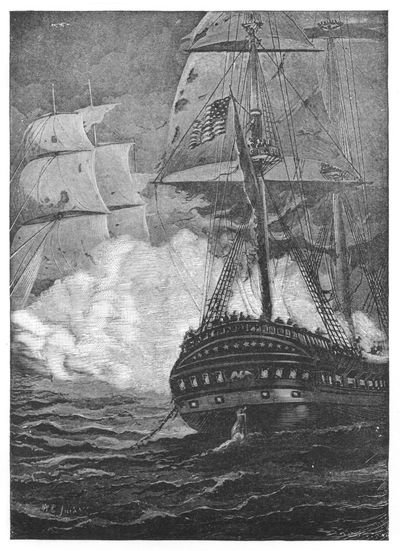
"President" and "Endymion."
With hearty cheers, the jackies returned to their guns. All were ready for the coming struggle. Over the main hatch was mounted a howitzer, with its black muzzle peering down into the hold, ready to scuttle the ship when the boarders should spring upon the enemy's deck. The sun, by this time, had sunk below the horizon, and the darkness of night was gathering over the ocean. The two ships surged toward each other,—great black masses, lighted up on either side by rows of open ports, through which gleamed the uncertain light of the battle-lanterns. On the gun-deck the men stood stern and silent; their thoughts fixed upon the coming battle, or perhaps wandering back to the green fields and pleasant homes they had so recently left, perhaps forever. The gray old yeoman of the frigate, with his mates, walked from gun to gun, silently placing a well-sharpened cutlass, a dirk, and a heavy leather boarding-cap at each man's side. The marines were drawn up in a line amidships; their erect, soldierly air and rigid alignment contrasting with the careless slouchiness of the sailors. Butts for the sailors' ridicule as they were during a cruise, the marines knew that, in hand-to-hand conflicts, their part was as dashing as that of their tormentors of the forecastle.
When the "President" had come within a quarter of a mile of her adversary, Decatur perceived that his enemy was determined to decide the contest at long range. As the "President" hauled down nearer, the "Endymion" sheered off, keeping up meanwhile a vigorous cannonade. To this the Americans responded in kind; and so much superior was the gunnery of the Yankee tars, that the rigging of the enemy was seen to be fast going to pieces, while her guns were being silenced one by one. But her fire did sad havoc among the men of the "President," and particularly among the officers. The first broadside carried away Decatur's first lieutenant, Mr. Babbitt, who was struck by a thirty-two-pound shot, which cut off his right leg below the knee, and hurled him through the wardroom hatch to the deck below, fracturing his wounded leg in two places. Shortly after, Decatur was knocked to the deck by a heavy splinter. For some time he lay unconscious; then opening his eyes, and seeing a throng of anxious seamen about him, he ordered them to their stations, and resumed his duties. The fire of the "Endymion" then slackened; and she lay upon the water, with her sails cut from the yards. At that moment Lieut. Howell turned to a midshipman standing at his side, and said gayly, "Well, we have whipped that ship, at any rate." A flash from the bow of the Englishman followed; and he added, "No: there she is again." The midshipman turned to reply, and saw Howell stretched dead at his feet, killed by the last shot of the battle.
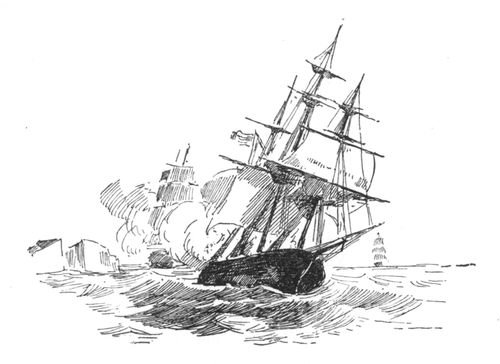
The "President" tries to Escape.
The enemy was now helpless, and it would have been easy enough for the "President" to choose her position and compel her adversary to strike; but the presence of two more Englishmen, rapidly coming up astern, forced the Americans to abandon their prey and continue their flight. It was then late in the evening, and the night was dark and starless. Every light was extinguished on the American frigate, in the hope that by so doing she might slip away under cover of the night. But the British lookouts were sharp-eyed; and by eleven o'clock two frigates had closed in on the crippled ship, and a third was rapidly coming up astern. All were pouring in rapid broadsides, and the dark waters were lighted up like a fiery sea by the ceaseless flashing of the guns. Thus surrounded and overpowered, there remained open to the Americans no course but to surrender; and at eleven o'clock at night the "President" made signal that she had struck. Her fate, like that of the "Chesapeake," had accorded with the superstitious sailors' notion that she was an unlucky ship. In the long running fight, neither the Americans nor the British had escaped without severe loss. On the "President" were twenty-four killed and fifty-six wounded; the first, second, and third lieutenants being among the slain. The "Endymion" had eleven men killed and fourteen wounded. The two frigates were ordered to proceed to Bermuda; but the "President's" bad luck seemed to follow her, for on the way she encountered a terrific gale, by which her masts were carried away, and her timbers so strained that all the upper-deck guns had to be thrown overboard to save the ship.
The loss of the "President," at the very mouth of the New York Harbor, was certainly a most inauspicious opening for the naval operations of 1815. The people of New York and Philadelphia, to whom had come neither the news of peace nor of the glorious success of the American arms at New Orleans, were plunged into despondency. "Now that Great Britain is at peace with Europe," thought they, "she can exert all her power in the task of subjugating America;" and mournful visions of a return to British rule darkened their horizon. But, even while they were thus saddened by Decatur's defeat, a gallant vessel—the monarch of the American navy—was fighting a good fight for the honor of the nation; and out of that fight she came with colors flying and two captive men-of-war following in her wake.
It will be remembered that the "Constitution" left Boston in December, 1814, for an extended cruise. The gallant frigate, always a favorite among man-o'-war's men, carried with her on this cruise a full crew of native Americans,—thorough seamen, and as plucky fighters as ever pulled a lanyard or carried a cutlass. Her course lay due east; and in January, 1815, she was in the Bay of Biscay, where she fell in with, and captured, two prizes. After this she cruised about for a month, without encountering an enemy. American privateers and cruisers had fairly driven British merchantmen from the seas, and the tars of the "Constitution" found their time hanging heavily on their hands. The captain was an able and considerate officer, and much freedom was allowed the jackies in their amusements. With boxing, broadsword, and single-stick play, drill and skylarking, the hours of daylight were whiled away; and by night the men off duty would gather about the forecastle lantern to play with greasy, well-thumbed cards, or warble tender ditties to black-eyed Susans far across the Atlantic. Patriotic melodies formed no small part of Jack's musical repertoire. Of these, this one, written by a landsman, was for a long time popular among the tuneful souls of the forecastle, and was not altogether unknown in the wardroom.
"Now coil up y'r nonsense 'bout England's great navy, And take in y'r slack about oak-hearted tars; For frigates as stout, and as gallant crews have we, Or how came their "Macedon" decked with our stars? Yes, how came her "Guerriere," her "Peacock," and "Java," All sent broken-ribbed to old Davy of late? How came it? Why, split me, than Britons we're braver; And that they shall feel, too, whenever we meet. Then charge the can cheerily, Send it round merrily: Here's to our country, and captains commanding; To all who inherit Of Lawrence the spirit Disdaining to strike while a stick is left standing."
Many were the verses of this notable production; for, to be popular in the forecastle, a song must play a lengthy part in "teasing time." One verse, however, is enough to show the manly, if perhaps unreasoning, pride the blue-jackets took in the triumphs of the navy.
But the time of the sailors on this closing cruise of the war was not destined to be spent in sport and singing alone. The noble frigate was not to return to the stagnation of a season of peace in port, without adding yet another honor to her already honorable record. On the morning of the 20th of February, as the ship was running aimlessly before a light wind, some inexplicable impulse led Capt. Stewart to suddenly alter his course and run off some sixty miles to the south-west. Again the "Constitution's" good luck seemed to justify the sailors' belief, for at noon she ran into a group of vessels. The first vessel was sighted on the larboard bow, and, as the frigate overhauled her, proved to be a full-rigged ship. Soon after a second sail, also a ship, was sighted; and a few minutes more sufficed to show that both were men-of-war. The one first sighted was the frigate-built corvette "Cyane," of thirty-four guns; and the second was the sloop-of-war "Levant," of twenty-one guns. For either of these vessels singly, the "Constitution," with her fifty-two guns and crew of four hundred and fifty men, was more than a match. Yet to attack the two was a bold movement, and this Stewart determined to undertake. Hardly had the character of the strangers been made out, when the corvette was seen making signals to the sloop; and the two vessels, then about ten miles apart, made all sail to get together before the enemy should overhaul them. This juncture was precisely what Stewart wished to prevent; and in a trice the shrill notes of the boatswain's whistle sent the sailors in swarms into the rigging, and the frigate was as if by magic clothed with a broad expanse of canvas. Quickly she felt the effect, and bounded through the water after the distant ships like a dolphin chasing a school of flying-fish. The old tars on the forecastle looked knowingly over the side at the foamy water rushing past, and then cast approving glances aloft where every sail was drawing. But their complacency was shattered by a loud crash aloft, which proved to be the main royal-mast which had given way under the strain. Another spar was rigged speedily, and shipped by the active tars, and soon the snowy clouds aloft showed no signs of the wreck. At sundown the three vessels were so near each other that their colors could be seen. Stewart ran up the stars and stripes, to which the strangers responded by setting the British flag at their mastheads.
The purpose of the enemy was to delay the opening of the action until night should give him opportunity to manœuvre unobserved; but the "Constitution," suspecting this, pressed forward hotly, and opened fire a few minutes after six o'clock. By skilful seamanship Stewart kept the windward gage of both enemies; and the fight opened with the "Cyane" on the port-quarter, and the "Levant" on the port-bow of the American frigate. Fifteen minutes of fierce cannonading followed, the combatants being within musket-shot most of the time. Every gun was engaged; and the heavy broadsides shook the ships, and thundered far over the placid surface of the ocean, which was now faintly illumined by the rising moon. The triangular space between the ships was filled with the dense sulphurous smoke of the burning powder; so that the gunners could see nothing of the enemy at whom they were hurling their ponderous iron bolts. The men in the tops could now and again catch a glimpse of the top hamper of the enemy's ships, but those on the gun-deck were working almost at random. After a few minutes of rapid firing, the fire of the enemy slackened; and Stewart directed his gunners to cease until the smoke should have cleared away. At this command a silence, almost oppressive after the heavy cannonading, ensued, broken only by the occasional report of a gun from the unseen enemy, sounding like minute-guns of distress. Anxiously Stewart waited for the smoke to blow away. When it did so, the "Cyane" was seen luffing up, to come under the frigate's stern, and get in a raking broadside. The movement was discovered just in time to be checked. Stewart gave a heavy broadside to the "Levant;" then, bracing back his topsails, backed his ship down abreast of the "Cyane," pouring in rapid broadsides, before which the fire of the corvette died away. Two raking broadsides that crashed into the stern of the "Levant" sent that craft out of the action, to refit. The frigate then pressed down upon the "Cyane," and with a few heavy broadsides forced her to strike.
Capt. Douglass of the "Levant" then proved his bravery by standing by his captured consort; although he could have escaped easily, while the "Constitution" was taking possession of her prize. No thought of flight seems to have occurred to the gallant Briton, though he must have known that there was but little hope of his coming out of the combat victorious. Still he gallantly came back into the fight, meeting the "Constitution" ploughing along on the opposite tack. Broadsides were exchanged at such close range that the Yankee gunners could hear the ripping of the planks on the enemy's decks as the solid shot crashed through beam and stanchion. Having passed each other, the ships wore, and returned to the attack; but the weight of the American's metal told so severely upon the "Levant" that her flag was hauled down, and, firing a gun to leeward, she gave up the fight.
As an exhibition of seamanship, this action is unrivalled in naval annals. For Stewart to have taken his ship into action with two hostile vessels, and so handle her as not only to escape being raked, but actually rake his enemies, was a triumph of nautical skill. The action was hard fought by both parties. The loss upon the British vessels has never been exactly determined; but it was undoubtedly large, for the hulls were badly cut up by the American's fire. The "Constitution" had but three men killed, and twelve wounded. The officers all escaped unhurt.
After a few hours' pause to repair damages, Stewart took his prizes into Porto Praya in the Cape Verde Islands, where they arrived on the 10th of March. The day after the ships reached port, a heavy fog settled over the water, cutting off vision in all directions. As the first lieutenant of the "Constitution" was walking the quarter-deck, he heard a young midshipman among the prisoners suddenly exclaim, "There's a large ship in the offing." The lieutenant peered about on every side, but could see nothing, until, looking upward, he saw the top-gallant sails of a large ship moving along above the fog-bank. Capt. Stewart was quickly notified; and, coolly remarking that the stranger was probably a British frigate, he ordered that the men be sent to quarters, and the ship prepared for action. The lieutenant hastened on deck to execute the orders, but had hardly reached his station when he saw the sails of two more ships gliding along above the fog-bank. Hastily he returned to the captain's cabin with the report. Stewart showed no emotion or alarm, although he knew well that the fact that he was in a neutral port would be no protection against the British, should they once discover his presence. The affair of the "Essex" was still fresh in his mind. Calmly he ordered the lieutenant to make sail and take the ship to sea, signalling to the two prizes to follow. The orders were given quietly on deck; and in fifteen minutes the "Constitution," under full press of sail, was making her way out of Porto Praya roads. On the shore were more than a hundred prisoners whom Stewart had landed under parole. Regardless of the dictates of honor, these men rushed to a Portuguese battery, and opened fire on the ships as they passed out. Hearing the cannonade, the lookouts on the enemy's vessels looked eagerly for its cause, and caught sight, above the fog, of the rapidly receding topsails of the fugitives. At this sight the British set out in pursuit; and the fog soon clearing away revealed to the Americans two ships-of-the-line and a frigate following fast in their wake. The "Constitution" and the "Cyane" easily kept out of reach of their pursuers; but the "Levant" dropped behind, and finally, at a signal from Stewart, tacked, and stood back for Porto Praya. The enemy then abandoned the pursuit of the two foremost vessels, and followed the "Levant," but failed to overhaul her before she entered the harbor. This, however, checked the British not a whit. For the laws of nations and the authority of the Portuguese flag that floated over the little town, they cared nothing. On they came, and opened fire on the "Levant," which had dropped anchor under what was supposed to be a neutral battery. The Americans soon discovered their error. Not only did the British disregard the neutrality of the port, but the paroled prisoners on shore took possession of the battery, and opened fire upon the beleaguered craft. Thus caught between two fires, no hope remained to the Americans; and, after a few minutes' gallant but useless defence, the flag of the "Levant" was hauled down, and she passed again into the hands of the British.
It was late in May before the "Constitution" reached New York. Peace had then been declared; but none the less were Stewart and his men feasted and honored. The old frigate had won for herself a name ever to be remembered by the people of the nation, in whose service she had received and dealt so many hard knocks. "Old Ironsides," they called her; and even to-day, when a later war has given to the navy vessels whose sides are literally iron, the "Constitution" still holds her place in the hearts of the American people, who think of her lovingly by the well-won title of "Old Ironsides."
While we have been following thus Stewart and his gallant frigate in their final cruise, some smaller vessels were doing good work for the credit of the American flag. It will be remembered, that, when the "President" left New York Bay on her short and disastrous cruise of January, 1815, she left behind her, at anchor, the "Peacock," the "Hornet," and the "Tom Bowline." These vessels, knowing nothing of the fate of their former consort, awaited only the coming of a gale sufficient to drive away the blockading squadron. On the 22d of January it came up to blow; and the three craft, under storm canvas, scudded over the bar, and made for the rendezvous at Tristan d'Acunha. On the way thither they separated, the "Hornet" cruising alone. On the 23d she sighted a strange sail on the horizon, and, clapping on all sail, bore down upon her. At the same time the stranger sighted the "Hornet," and made for her, evidently with hostile intent. The two vessels approached each other until within musket-shot, when the stranger hoisted English colors, and fired a gun. Capt. Biddle of the American ship was ready for the fray, and opened fire with a broadside. The response of the enemy was vigorous and effective. For fifteen minutes the firing was constant; but the enemy, seeing that the Americans were getting the better of the fight, then strove to close and board. This Biddle determined to avoid, but called up the boarders to beat back the enemy, should they succeed in closing. "At the instant," he writes, in his official report, "every officer and man repaired to the quarter-deck, when the two vessels were coming in contact, and eagerly pressed me to permit them to board the enemy; but this I would not permit, as it was evident, from the commencement of the action, that our fire was greatly superior, both in quickness and effect. The enemy's bowsprit came between our main and mizzen rigging, on our starboard side, affording him an opportunity to board us, if such was his design; but no attempt was made. There was a considerable swell on; and, as the sea lifted us ahead, the enemy's bowsprit carried away our mizzen-shrouds, stern davits, and spanker-boom, and he hung upon our larboard quarter. At this moment an officer called out that they had surrendered. I directed the marines and musketry men to cease firing; and while on the taffrail, asking if they had surrendered, I received a wound in the neck."
This wound, to which the captain so casually alludes, merits more than a passing reference. The fire of both ships had ceased when Biddle stepped upon the taffrail; but he had stood there only a moment, when two or three of the officers on the quarter-deck cried out that a man on the Englishman was aiming at him. Biddle did not hear the caution; but two American marines saw the enemy's movement, and, quickly bringing up their muskets, sent two balls crashing into the brain of the English marksman. He fell back dead, but had fired his piece before falling. The bullet struck Biddle in the neck, inflicting a painful, but not serious, wound. The blood flowed freely, however; and two sailors, rushing up, were about to carry their commander to the cock-pit, when he stopped them. Determined to do something to stanch the flowing blood, a sailor tore his shirt into bandages, with which he bound up his captain's wound. But let us return to Biddle's narrative.
"The enemy just then got clear of us; and his foremast and bowsprit being both gone, and perceiving us wearing to give him a fresh broadside, he again called out that he had surrendered. It was with difficulty that I could restrain my crew from firing into him again, as he had certainly fired into us after having surrendered. From the firing of the first gun, to the last time the enemy cried out that he had surrendered, was exactly twenty-two minutes by the watch. She proved to be His Britannic Majesty's brig "Penguin," mounting sixteen thirty-two-pound carronades, two long twelves, a twelve-pound carronade on the top-gallant forecastle, with a swivel on the capstan in the tops."
On boarding the prize, Biddle found that she had suffered too severely from the American fire to ever be of service again. He accordingly removed the prisoners and wounded to his own ship, and scuttled the "Penguin." Hardly was this operation accomplished, when two sail were sighted, bearing rapidly down upon the scene of action. Nothing daunted, the lads of the "Hornet" went to their guns, but were heartily glad to find that the two vessels approaching were the "Peacock" and "Tom Bowline." On their arrival, the latter vessel was converted into a cartel, and sent into Rio de Janeiro with prisoners; while the "Hornet" and "Peacock" cruised on toward the Indian Seas. On April 28 a heavy line-of-battle ship was sighted, and gave chase. In the flight the two sloops parted; the "Peacock" going off unmolested, while the "Hornet" fled, hotly pursued by the enemy. For a time it seemed as if the little craft must fall a prey to her huge pursuer, which had come up within a mile, and was firing great shot at the scudding sloop-of-war. Overboard went cables, guns, spars, shot, every thing that would lighten the "Hornet." The sails were wet down, and every thing that would draw was set. By consummate skill Biddle at last succeeded in evading his pursuer; and on the 9th of June the "Hornet" entered New York Bay, without a boat or anchor, and with but one gun left. But she brought the report that the last naval battle of the war had ended in victory for the Americans.
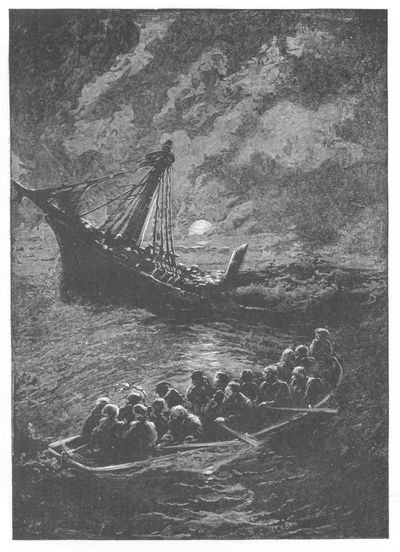
Foundered at Sea.
Meanwhile the "Peacock" was returning from a cruise not altogether void of interest. On parting with the "Hornet," she had struck off to the southward, and in the Straits of Sundra, between Borneo and Sumatra, had fallen in with the East India Company's cruiser "Nautilus," of fourteen guns. Between these two vessels an unfortunate and silly rencounter followed. The captain of the "Nautilus" knew of the declaration of peace; and, as the "Peacock" bore down upon his vessel, he shouted through a speaking-trumpet that peace had been declared. To this Capt. Warrington of the "Peacock" paid no attention, considering it a mere ruse on the part of the enemy, and responded by simply ordering the British to haul down their flag. This the Englishman very properly refused to do, and gallantly prepared for the unequal combat. Two broadsides were then interchanged, by which the "Nautilus" was severely cut up, and eight of her crew killed. She then struck her colors. Capt. Warrington, on sending a boat aboard his adversary, found that the declaration of peace was no ruse, but a truthful statement of facts. His conduct had been almost criminally headstrong; and, though he was profuse in formal apologies, the wrong done could never be righted. The "Peacock" then continued her homeward voyage.
When this vessel reached port, the last of the cruisers had returned; and the war was over in fact, as it had long been over technically. It has become the fashion to say that it was a useless war, that served no purpose, because the treaty by which it was ended contained no reference to the hateful doctrine of the right of search, which, more than any thing else, had brought on the conflict. Yet, though the conduct of the war had not led the British to formally renounce their claims in this respect, the exploits of the American navy had shown that the Yankee blue-jackets were prepared to, and would, forcibly resent any attempt on the part of the British to put those claims into practice. The British had entered upon the war gaily, never dreaming that the puny American navy would offer any serious resistance to Great Britain's domination upon the ocean. Yet now, looking back over the three years of the war, they saw an array of naval battles, in the majority of which the Americans had been victorious; and in all of which the brilliancy of American naval tactics, the skill of the officers, and the courage and discipline of the crews, put the younger combatants on a plane with the older and more famous naval service. Fenimore Cooper, in his "History of the Navy of the United States," thus sums up the results of this naval war: "The navy came out of this struggle with a vast increase of reputation. The brilliant style in which the ships had been carried into action, the steadiness and accuracy with which they had been handled, and the fatal accuracy of their fire on nearly every occasion had produced a new era in naval warfare. Most of the frigate actions had been as soon decided as circumstances would at all allow; and in no instance was it found necessary to keep up the fire of a sloop-of-war an hour, when singly engaged. Most of the combats of the latter, indeed, were decided in about half that time. The execution done in these short conflicts was often equal to that made by the largest vessels of Europe in general actions; and, in some of them, the slain and wounded comprised a very large proportion of their crews.... The ablest and bravest captains of the English fleet were ready to admit that a new power was about to appear upon the ocean, and that it was not improbable the battle for the mastery of the seas would have to be fought over again."[Back to Contents]

CHAPTER XVII.
PRIVATEERS AND PRISONS OF THE WAR. — THE "ROSSIE." — SALEM PRIVATEERS. — THE "GEN. ARMSTRONG" GIVES BATTLE TO A BRITISH SQUADRON, AND SAVES NEW ORLEANS. — NARRATIVE OF A BRITISH OFFICER. — THE "PRINCE DE NEUFCHATEL." — EXPERIENCES OF AMERICAN PRISONERS OF WAR. — THE END.
o narrative of the naval exploits of the Americans in the second war with Great Britain can be complete without some account of the achievements of the fleets of privateers which for three years swept the seas, destroying a vast amount of the enemy's property; and, while accomplishing their end by enriching their owners, did, nevertheless, much incidental good to the American cause. Seldom has the business of privateering been so extensively carried on as in the War of 1812. For this the reason lay in the rich bait offered by the world-wide commerce of Great Britain, whose fleets whitened every known sea. Privateering must ever be a weapon wielded by the weaker nation against the stronger. And Congress, in the very Act by which it declared war, authorized the President to issue letters of marque and reprisal to private armed vessels.

The declaration of war had hardly been made public, when the hundreds of shipyards from Maine to Savannah resounded with the blows of hammers and the grating of saws, as the shipwrights worked, busily refitting old vessels, or building new ones, destined to cruise against the commerce of John Bull. All sorts of vessels were employed in this service. The Atlantic and Gulf Coasts fairly swarmed with small pilot-boats, mounting one long gun amidships, and carrying crews of twenty to forty men. These little craft made rapid sallies into the waters of the Gulf Stream, in search of British West Indiamen homeward bound. Other privateers were huge three-masters, carrying heavy batteries, and able to outsail any of the enemy's ships. On leaving port for a long cruise, these vessels would carry enormous crews, so that captured vessels might be manned and sent home. After a successful cruise, such a privateer returned to port seldom bringing more than one-fifth of the crew with which she had set out. But the favorite rig for a privateer was that of the top-sail schooner,—such a rig as the "Enterprise" carried during the war with France. The famous shipyards of Baltimore turned out scores of clean-cut, clipper-built schooners, with long, low hulls and raking masts, which straightway took to the ocean on privateering cruises. The armament of these vessels generally consisted of six to ten carronades and one long pivot-gun, going by the pet name of "Long Tom," mounted amidships. The crew was usually a choice assortment of cut-throats and seafaring vagabonds of all classes,—ready enough to fight if plunder was to be gained, but equally ready to surrender if only honor was to be gained by fighting. Yet history records a few actions in which the privateersmen showed a steadiness and courage worthy of seamen of the regular service.
The limitations of this work do not permit a complete account of the work of the privateers during the war. Although an interesting subject, and one of historical importance, but a few pages can be devoted to it here. Properly treated, it would fill a volume; and, indeed, one of the most noted privateersmen has left a narrative of the exploits of the principal privateers, which forms a very considerable tome. The fact that two hundred and fifty private armed cruisers under the American flag captured or destroyed over sixteen hundred British vessels will indicate the importance and extent of the subject. For us a mere sketch of the exploits of some of the principal privateers must suffice.