Success of Reformed Criminals
Reading edition
After Blotting Out the Past
"Once a Thief, Always a Thief," has been disproved in thousands of cases according to Mr. William A. Pinkerton.
"Do criminals ever reform, really turn over a new leaf and become good citizens?"
I fired the question at random, little dreaming what a wealth of interesting and convincing anecdote it would evoke. I expected the time honored cynical reply, something to the effect of "Once a thief, always a thief," But I was disappointed—agreeably disappointed. For my answer was a quick, emphatic, earnest "Yes."
And the man who said "Yes" was William A. Pinkerton, and he knows.
Probably no living man knows more intimate details about the individual members of the underworld, those who are active criminals to-day, as well as the notorious crooks of the past, than the head of the Pinkerton Detective Agency. And every crook will tell you, what every honest man who knows Mr. Pinkerton will tell you, that when he says "Yes" there is no possibility that the correct answer should be "No."
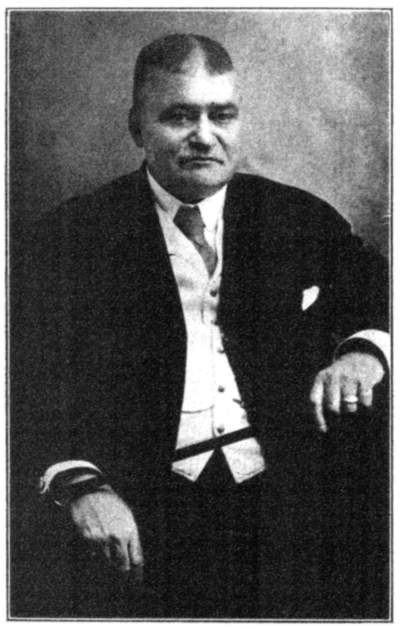
WILLIAM A. PINKERTON Head of the Pinkerton Detective Agency New York
"I know what the average man thinks—that a real crook never turns straight. But it isn't so. Thousands of crooks—and I don't mean one-time offenders, but men in the class we call hardened criminals—have become honest men to my knowledge. It is not true, as some recent writer said, that as many crooks turn honest as there are honest men turn crooked, but I believe that one of the reasons is that so few men are willing to lend a helping hand. I don't mean that every crook is ready to reform if he is encouraged, but I do mean that society makes it hard for any man who has once been a criminal to lead an honest life.
"And I'll tell you another thing," continued Mr. Pinkerton: "I'm prouder of the fact that I have helped a few criminals to become honest men than of all the work I have done in putting criminals behind the bars. I'm proud of the fact that every crook knows that Pinkerton will deal squarely with him if he will deal squarely with Pinkerton—that I believe it is as important to keep faith with a bank thief as with a bank president.
"I know a score of business men in Chicago—not saloonkeepers, but reputable merchants—who have criminal records. These men have done time and have paid their debt to society for their crimes. I cannot tell you their names, for it would be unfair to them and to their wives and families, many of whom have no suspicion that there is anything wrong in the pasts of their husbands and fathers. Besides, when society discovers that a man is a former criminal it is not content to cancel the debt no matter how much imprisonment at hard labor the former crook may have given in expiation of his sin.
"I know men in trusted positions in New York who were convicts. In many cases only the man himself and his employer know the secret and sometimes the employer does not know it. I know men scattered all over the West—business men, professional men, many of them wealthy and prominent citizens—who have seen the inside of Joliet, Moyomensing, Sing Sing or Leavenworth. They have sons and daughters who never have suspected and never will suspect the truth.
"These are good men—as good men as any living. They have turned away from their old ways, in many cases have changed their names, and who shall say they are not as much to be respected as the honest man who never was tempted, never was forced into crime? I'll tell you about some of them.
"When I was a boy in Chicago there were two brothers, neighbors, about the age of myself and my younger brother, and we were friends. When the civil war broke out I went into the army secret service at the age of fifteen, and the older of these two boys, John, enlisted in an Illinois regiment. Jerry, the younger, was not old enough, but a little later, when the government began offering a bounty for soldiers, he became a bounty jumper. He would enlist, get the bounty money, then desert and enlist over again under another name. He was with a band of young fellows who were engaged in that way of getting easy money, and who found it so easy that they turned to other kinds of crime.
"When the war was over John came back to Chicago and settled down as a rather plodding sort of a mechanic. He tried to get Jerry to straighten out, but the younger brother was too far along the road to prison.
"In those days the Northwestern Railroad used wood for fuel, and the wood agent of the road was Amos Snell—the same Snell who was later murdered by 'Willie Tascott.' He lived in a suburb of Chicago, and one night Jerry and his crowd went out there and 'stuck' up the whole family—robbed them of everything they had. John was along with them, lying in the bottom of the hack. The police got a clew through the hack-driver and rounded up the whole band. All of them, including John, were sentenced to five years each except Jerry. When he came into the hands of the police a citizen who had been held up on the street some time before identified him as the hold-up man, and on the strength of that the Judge gave him fifteen years. It was an unjust sentence, for Jerry had not committed the hold-up—that was found out later.
"Well, John's old Colonel and some other army men and my father got together and got a pardon for John, who had merely gone along with the crowd and had taken no part in the robbery. He went back to work at his trade of brass finisher, but Jerry stayed in Joliet, rebelling against those long unjust years of his sentence.
Jerry was put to work in the engine room of the prison and soon displayed great aptitude for machinery. He served out his term with time off for good behavior and finally got out. I met him in Chicago. He was despondent. He felt that he had no chance to be anything but a crook, but he knew the terrible chances a once convicted man runs if he returns to crime. I told him the best thing for him to do was to go to New York, and I sent him on to my brother Robert, who had also known him as a boy.
Reform of Jerry.
"Now, here's a part of this story that will interest you. Robert had a friend who was chief engineer of a building in Ann street. He told this friend about Jerry, and the engineer said he'd take a chance on him. He put Jerry to work stoking the boiler at a dollar and a half a day. After a year or so there was a vacancy and Jerry became assistant engineer. A little while later the chief engineer resigned and Jerry after awhile, the ex-crook, became chief engineer. He left there after awhile to take charge of a big plant on Long Island, and he sent for his brother John and gave him a job.
"A few years later the two brothers called on me in Chicago. They had saved about $6,000 between them and were on their way to a new town in the West to start a manufacturing business of their own. Each had married a girl who knew nothing of their prison record and had children. They prospered exceedingly. John died several years ago, but only a few months ago, when my brother Robert died, an old man, whom nobody but myself recognized, came from the West for the funeral and shed tears at the grave. It was Jerry. He is still living, and is the leading citizen of his town and worth at least half a million dollars.
"Criminals who reform? There are thousands of them. I remember a little Liverpool Irishman who was a pickpocket around New York. He was known as 'Jimmy the Nibbler'. The police picked him up in Tennessee, where he lifted somebody's pocketbook, and he was sent to Nashville for seven years. In the prison they put him to work in the hospital. Then the cholera epidemic broke out. "Jim" helped the doctors and nurses, and when the doctors got sick he nursed them and the warden and his family and helped save a good many lives. After the epidemic was over the warden and the Prison Board were so grateful they got "Jim" a pardon and made up a purse of $350 for him. With the money in his pocket he came right to Chicago to see me. I began to lecture him on the futility of going back to the life he had led before.
"'I've cut that all out,' he said. 'I'm not going to be a gun any more. I've been studying medicine down there in Nashville. The doctors have been telling me things and giving me medical books to read and now I want to get into one of these colleges where I can get a diploma quick.'
"There were a number of diploma factories, as the lower class of medical colleges were called, running in Chicago then, and Jim found he had money enough to go through one of them—in the front door and out the back. But he got his diploma and license to practise and started for one of the new towns in the West. I looked him up a while ago. He comes pretty near being the most prominent citizen in the town. He is a director in a national bank and the leading physician, and has officiated at the births of half the present population. Moreover, he is an enthusiastic church member. But how long do you think it would take for the whole town to turn against him if they should ever learn out there that he is 'Jimmy the Nibbler'?
"Crooks that turn straight? Your next door neighbor, your family physician, even your clergyman, may be one of them. The world is full of them. There was one man, a professional thief, a fellow who had done time in half a dozen State prisons and penitentiaries, whom I used to labor with earnestly every time he got out, but he apparently never tried to reform. He was always doing time, it seemed.
"I lost track of him for several years. Then two years ago, when the National Association of Chiefs of Police was in session in Buffalo, I found a note in my box in my hotel signed by this man's name. He said he was going to call at seven o'clock. There was a banquet on for that evening, and hundreds of police officials from every part of the United States were there. I wondered if he knew what sort of a lion's den he was walking into. Sure enough he came into the hotel and spoke to me.
"'Don't you know that you are surrounded by policemen, some of whom are sure to spot you?' I asked him.
"'You're the only man in the world who knows me,' he said, 'My name now is So and So'—giving me another name—'and I'm a respected and prosperous man. I just wanted to let you know before you found it out for yourself, for I knew you'd be on the square with me.' And I was. So far as I knew he was not wanted for anything, and what good would have come of exposing him?
"Thieves who resist the temptation to steal? Hundreds of them. There's one right here, only a few blocks from where we are talking. He's the watchman in a big silk warehouse—and if there's anything your professional thief likes to steal, short of money or diamonds, it's silk, for you can get so much value into so small a package. This man was a professional safe blower, and did several big jobs. When he got out of prison I helped him to get the job he has now. His employer knows his record. I told it to him on the man's own request. When work stops for the day this man is left alone in charge of hundreds of thousands of dollars worth of valuable silks. He isn't bonded, for he couldn't get a bondsman if he wanted to. He has held the job seven years now, and not a cent's worth has been taken from the warehouse in that time.
"You may say that he does not dare to steal—that he knows a single false move on his part will bring instant punishment. But I say he has no desire to steal—that he has reformed. And thousands of other criminals would reform if society would give them half a chance.
Baffling Hotel Robberies.
"Several years ago there was a series of hotel robberies in New York that baffled the police. The thief always worked with keys, opening doors and then unlocking baggage left in rooms, and he always got away with the goods. At last one night the word came to headquarters that a man had been caught in one of the big hotels who was suspected of being the author of all the robberies. I was visiting Chief Devery at the time and he asked me to go with him to the West Thirtieth street station to look the man over.
"The man arrested was a well dressed, respectable looking little man, with a white beard—the last man who would be taken for a thief if seen in a hotel corridor. His face was vaguely familiar to me, but I had some difficulty in placing him. Finally it struck me. I had seen him nearly thirty years before on the occasion of a big prize fight in New Orleans, when he had been arrested for the same trick. It came over me like a flash and I told him I knew him.
"'What's the use of making trouble?' he asked. 'These fools don't know anything about me unless you put them wise.'
"I told Chief Devery what I remembered about the man, who protested violently that he had never been in New Orleans in his life. Then another thought struck me.
"'You've been in New Orleans more than once,' I said. 'The last time was about six months ago, when you got Denman Thompson's diamonds in the St. Charles Hotel.' I remembered the report of that case, but it was a chance shot on my part, for no one had seen the thief. The old fellow denied this vigorously.
"He was wearing a new derby hat. I don't know what impulse prompted me, but I took the hat off his head and looked inside. It bore the mark of a New Orleans hatter.
"The Chief and I left the station and had just turned into Sixth avenue when I remembered the old fellow's name. We went back to the station house and I confronted him again. I told him his name. He denied that it was his.
"'What's the use of making trouble, Mr. Pinkerton?' he pleaded. His inadvertent use of my name, which had not been mentioned there, gave him away.
"'I don't know what kind of a case the police here have on you,' I told him, 'but we are retained by the Jewelers' Protective Association, and if you get after any jewelry drummers I'll make it hot for you.' And as a precaution I got his photograph from the New York police. They didn't have much of a case on him and he got off.
"Not long after a jewelry drummer was robbed in a Chicago hotel of about three thousand dollars' worth of diamonds which he had carelessly left in his grip instead of putting them in the safe. The same day a friend of mine who was stopping in another hotel lost his new overcoat and told me about it. I thought of the old man in the first job, and found a chambermaid and bellboy who had seen him on the floor, but didn't connect him with the second because he had never stolen anything but very valuable articles, so far as I knew. My friend had to leave for New York that night, and some time in the evening I got a telegram from him which had been filed in Fort Wayne.
"'Positive man who got my coat is in same sleeper, ticketed to New York,' it read. I wired my friend at a point further along the line to get off at Pittsburg and hold a white handkerchief in his hand so he could be identified and be prepared to point out the thief. Then I got in touch with Pittsburg by wire, and sure enough back came a wire after a while to the effect that they had got the man, whom my friend identified, and found on him besides the overcoat about $3,000 worth of diamonds. I asked for a description and the one they wired fitted that of the man I had seen in New York. I referred Pittsburg to the man's photograph, which had been published that week in a police periodical, and they were sure they had the same man. And so it proved. He was brought back to Chicago and convicted of the jewelry theft. He served a short sentence, and when he got out he came to me.
"Mind you, this was an old man, who had been a thief all his life—I had known him as a thief more than thirty years before. It is criminals of that kind that are commonly regarded as the most difficult to reform, but even hardened and lifelong offenders like this man will go straight if they get the right kind of encouragement. I found this old man apparently anxious to be honest, but he had never had a chance after his first slip as a young man. I determined to do what I could for him and I got him a job in New York. He is more than seventy years old now, but he is still holding that job, and he hasn't made a false step since he got out of prison the last time.
"Do criminals ever reform? I think I have told you enough to prove that they do—and I could tell you of hundreds of other instances if you needed any further proof."
A LETTER FROM EDITOR-IN-CHIEF OF THE "STAR OF HOPE" PAPER PUBLISHED IN SING SING PRISON.
Ossining, N. Y., April 9, 1906.
Dear Brother Herr:
Your book, "Light in Dark Places," received. I do so much appreciate your kindness in remembering poor me in durance. I not only voice the sentiments expressed in this precious book, but add thereto my message of Christ's power to cleanse the wicked one and bring back into God's path the weak and unfortunate. May God spare you and yours many years, and give you manifold blessings in your great work.
Sincerely yours,
54179,
Editor in Chief.