CHAPTER FIRST
Reading edition
LIFE OF GEORGE L. HERR
By EDWARD De ALMA
A BRAND PLUCKED FROM THE BURNING.
"As we sow so shall we reap."
Born in the city of Louisville, of an old Kentucky family, whose escutcheon had never been shadowed by smirch or breath of shame or ignominy, it might truthfully be said of George L. Herr that he had been ushered into this world with the proverbial "gold spoon in his mouth," his father, the late Richard S. Herr, being a prominent and highly esteemed and wealthy citizen of the grand old state of Kentucky. Though surrounded by the luxuries of life, by environments unusually favorable for the development of a strong, healthy, vigorous and clean life, yet Brother Herr's life from his youth up to the period of this writing, presents an aspect checkered with the lights and shadows of temptation, sin, remorse, repentance, redemption and restful peace of heart in salvation through Jesus.
Give us help from trouble; for vain is the help of man.—Ps. 108:12.
God is our refuge and strength, a very present help in trouble.—Ps. 46:1.
At the age of three months, the death of his precious mother caused him to be given into the keeping of his aunt, a noble Christian woman, and it was due to her teachings that the seeds of reverence for God, belief in his dearly beloved Son and faith in the promise of a life of everlasting happiness were planted deep in the recesses of George Herr's heart, while his father, a Christian gentleman, spared no efforts in his endeavor to bring up his son in the way he should go.
At the age of eighteen years, through the death of his father, he came into the possession of a large estate, but lacking the experience which usually comes with maturity, he developed a spirit of independence which soon brought in its train of attendant evils.
Have mercy upon me, O Lord; for I am weak; O Lord, heal me.—Ps. 6:2.
My grace is sufficient for thee; for my strength is made perfect in weakness.—2 Cor. 12:9.
The story of George Herr's experience is the recital of a man's gradual surrender to the power of drink, until the enormity of his fall can but be depicted by contrasting his condition with that as it was a few years before. Then he was a well known young man of Louisville's elite society, wealthy, respected, esteemed and sought after. Friends without number, well wishers innumerable, the door of any refined home in the city would have swung wide open in welcome at his knock. Now the other picture: A drunken outcast, a prey to the buffetings of every chance wind of fate, deprived of friends, stripped of wealth, position and reputation; exposed to every form of evil, subject to the cruelty of every character of temptation that assails human nature. Ostracized from society, barred from contact with any self-respecting acquaintance of former days, can you imagine a more potent example of the victory of Satan through the agency of his chief field marshal, Drink? God grant that this may come as a warning to some one of the thousands of young men who, with prospects as bright or even more flattering than were those of George Herr at the age of eighteen, are at this moment entering upon the path which will lead them, as it has countless thousands, into the abyss of eternal destruction! God grant that the moral to be drawn from this picture will burn itself in indelible letters of fire upon the very soul of each young man who reads this.
I am poor and needy; make haste unto me, O God.—Ps. 70:5.
My God shall supply all your need, according to his riches in glory by Christ Jesus.—Phil. 4:19.
These were indeed dark days, the past a record of sin, the present a nightmare of misery and shame, the future black with the darkness of despair, with not the faintest gleam of hope to pierce the gloom. "Poor fellow," you say, "only one of a multitude." Yes, only the prototype of one of the thousands who are traveling the same broad thoroughfare at this moment.
It was at this critical juncture, when reputation was blasted, hope departed and the future barren of promises, that a remnant of respect for his home and the associates of better days awakened the residuum of pride remaining and brought the determination to remove his unwelcome presence from the scenes of former pleasures. He went West, but his hopes were blasted, and penniless, homeless, wretched, obliged to accept any kind of menial work in order to eke out a bare living, he wandered about until an overwhelming homesickness brought him back to Kentucky. There was, perhaps, a flickering intention to do better, to cut loose from the bands that bound him, but good resolutions were made only to be broken, and the cords of sin drawn tighter than ever.
Lord, what wilt thou have me to do?—Acts 9:6.
Follow thou me.—John 21:22.
None but God can realize the extreme bitterness of that bondage, the depths of that dark and unrelieved despair. Without light, without hope, without rest, and worst of all, without Christ? With not one friendly hand held out to greet him, with not one word of encouragement, but rather the cold glance of scorn, the bitter sneer of contempt, it is not strange that there stretched out before him apparently nothing but a drunkard's life, a drunkard's death and an endless eternity in a drunkard's hell.
Then the fearful temptation of suicide met him; but God, in his infinite mercy, destined him to pass through even this fearful ordeal unharmed and spared him that he might carry the gospel of a Savior's love to a lost and ruined world. Then a helping hand was extended. A lifelong friend, meeting him one day, and overcome with pity, gave him one more chance to make a man of himself, fitted him out with clothes, gave him a railroad ticket and money, advising him to leave Louisville and start life afresh elsewhere. But the fetters of sin were riveted so strongly that the well-meant advice of his boyhood friend was unheeded, and a few hours found him in as fearful a plight as ever. Then there came into this, the darkest hour in all his life, the experience of the prodigal son. A determination came into his life to sever forever all ties binding him to the life of degradation he was then living and to take the first step back into the narrow path of righteousness.
Show me thy ways, O Lord.—Ps. 25:4.
It was then that the Rev. Steve P. Holcombe of Louisville, Ky., took him to the Union Gospel Mission.
At this critical period there came within the radius of his sphere of existence a noble, devout woman, who proved to be the one thing needful to round out the life now worth living. In spite of all remonstrances on the part of her friends, she was greatly interested in the welfare of this man and prayed earnestly that God would make him a strong Christian man.
Her tireless energies, endless prayers and earnest teachings were ever present to hold him up and help him onward in the new life. God placed her in the sphere of George Herr's experience at a critical stage, using her as a medium for cementing his faith and determining his purpose to devote his remaining years to the work of redeeming unfortunates sunk in the darkness of sin. Their destinies were welded together by mutual interest in the work of saving lost men and the affinity of feeling between them developed into a bond of love, each seeing within the other those qualities necessary to happiness in wedded life, and on the 14th of April, 1898, George L. Herr and Miss Lillie M. Joyce, the woman who was such an essential portion of his existence, were joined in the holy bonds of matrimony by the Rev. Carter Helm Jones, D.D., pastor of the Broadway Baptist Church, Louisville, Ky.
The meek will he teach his way.—Ps. 25:9.
Cast me not away from thy presence; and take not thy Holy Spirit from me.—Ps. 51:11.
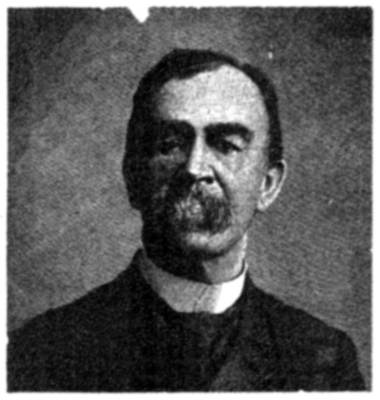
Rev. STEVE P. HOLCOMBE The founder of the Holcombe Mission of Louisville, Ky.
George Herr says that the old life, with its bondage in sin and its darkness of evil, is a thing of the eliminated past. Finding happiness in his new life, he has consecrated his time, energy, ability and talents to continuous devotion to the task of spreading the gospel among the fallen. Into the gloomiest recesses of penitentiaries, workhouses and jails, beyond portals where visitors are excluded, he has carried the message of Christ's saving grace into the darkness of despairing men's and women's lives.
God has blessed George L. Herr in many ways, giving him daily recompense for the days of misery, shame and degradation, giving him a happy home, glorified by the presence of a loving, devoted wife and the precious daughter, and this story is sent forth with the earnest prayer that God may use it, with its message of hope and cheer, for the salvation of many despairing, discouraged ones who are bound by the awful fetters of sin as he once was.
All that the Father giveth me shall come to me; and him that cometh to me I will in no wise cast out.—John 6:37.
One of the greatest privileges accorded man is to be a messenger for Christ. George Herr has tasted the sweets of liberty in Christ and he loves to tell those in the terrible bondage of sin that there is an avenue of escape. In his rescue work he has been able to take a great number of homeless, friendless and hopeless men and women by the hand.
Does it pay? The results of George Herr's labors among the unfortunates are a satisfactory answer to this question. It pays a hundredfold in the feeling of duty well done, in the knowledge of many useful lives saved. It pays in words of gratitude feelingly uttered by noble men and women, who, formerly sunk in the quicksands of despair, are now restored to a world of happiness and peace.
Jesus own words are: "They that be whole need not a physician, but they that are sick, for I am not come to call the righteous, but sinners to repentance."—Matt. 9:12, 13.
It is our earnest prayer to the Father of all good, that this story of George Herr's redemption from the clutches of sin may, through his unfailing love for all suffering ones, carry its message of hope, its promise of salvation from eternal despair, into the hearts of many who are despondent, discouraged, despairing. May it instill into the hearts of the unfortunate a desire to come back into the fold of the Father's unending love, bringing with it the sweet conviction that no matter how far we have wandered from within the radius of his love, we are still his children, the erring ones for whose redemption he gave his Son to be offered upon the altar of human sacrifice that we, through the atonement of his innocent blood, should inherit the kingdom of heaven.
Hold up my goings in thy path, that my footsteps slip not.—Ps. 17:6.
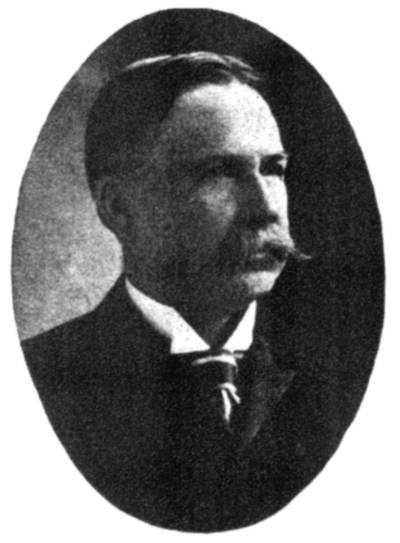
The Late Mr. GEORGE GAULBERT One of my best friends. Many heart-to-heart talks I have had with this grand and wealthy merchant