Extermination of Habitual Criminals
Reading edition
The extermination of the habitual criminal—his removal like a weed from a garden—was advocated today in a startling address made in Minneapolis to the Interstate Sheriffs' Association by Charles W. Peters, chief deputy sheriff of Cook County.
The unexpected suggestion that the man who will not reform ought to be slain by legal means aroused much discussion in Chicago among ministers, lawyers and laymen.
Leniency for first offenders, parole for the worthy, an adult probation law, were advocated by Mr. Peters, who then insisted that in cases where life has proved a failure, where efforts of reformation have been ineffectual and the criminal is a body sore on the social system, that extermination should be resorted to.
Only One True Reform.
Furthermore, he created intense surprise by his assertion that in twenty years' experience in handling criminals he could recall only one case of true reformation on the part of an "habitual."

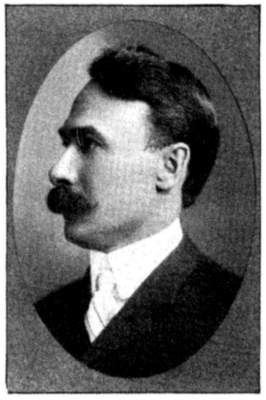
The Hon. and Mrs. JOHN L. WHITMAN, Chicago, Ill. Mr. Whitman is Superintendent of the Bridewell. They have been friends to thousands in need of friends.
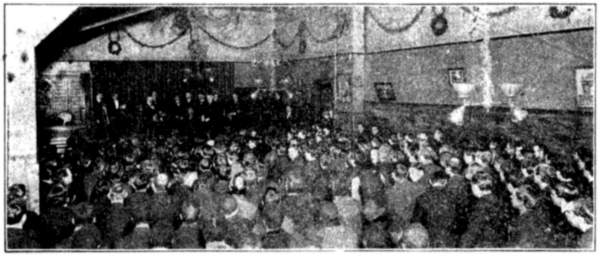
Gospel Service at the County Jail, Chicago, Ill.
In his address to the Association, Mr. Peters recommended various ways of dealing with crime and its perpetrators, and then for the irredeemably incorrigible made this recommendation:
"And then if they fail to embrace the many opportunities offered them, and after everything has been done that is possible for mankind to do, they repeatedly persist in returning to their old ways, I think in such a case life has proven a failure, and they become a menace and a burden to our social welfare and should be exterminated.
Like Weeds in a Garden.
"They are like weeds in a garden and unless removed will supersede the useful plants.
"Many students of criminology have suggested life imprisonment, but in my opinion that has proven a failure. By that method the menace is removed, but the burden remains.
"I am sorry to acknowledge that in the twenty odd years of my experience in the handling of criminals I can recall only one case of true reformation on the part of habitual criminals, and that man is employed in a bridge works, where it would be impossible for him to carry anything off."
"Judge Not," Says Pastor.
Among the ministers who commented on the startling theory of extermination were:
Rev. P. J. O'Callaghan, pastor of St. Mary's Church and the priest who saved Herman Billik from the gallows—What is man that he should put himself in judgment on a fellow and say that the culprit is beyond reformation and redemption and slay him? Man is too fallible to condemn another as an habitual criminal and exterminate him. No one knows when a man has passed beyond the pale of reform. As a matter of fact, many and many a criminal branded as 'habitual' has been saved to a useful life. I most heartily disagree with any suggestion to execute any man on the theory that he is irredeemable.
Hope While There Is Life.
Rabbi Tobias Scharfarber—In the first place I am opposed to capital punishment, but, in any event, I should not agree with this suggestion of Mr. Peters. It is much like Osler's plan to kill off men of sixty or more years of age, or Ingersoll's suggestion that when a man believed himself to be a failure and useless to the world he should go and shoot his brains out. While a man lives there is hope for him, and no one has either power or right to say that he will always be a menace to society.
"Christ in His charity taught those who came to Him, Ill deeds should pardoned be seventy times seven; Succor the least here and you do the same to Him; These are his precepts on earth and in heaven. Oh, then, when laboring hard for humanity, Never believe that your labor is vain. Kindness will conquer the criminal insanity; Speak to him gently and try him again."