Volume 3 — Notes on Donne1
Reading edition
Notes on Donne1
There have been many, and those illustrious, divines in our Church from Elizabeth to the present day, who, overvaluing the accident of antiquity, and arbitrarily determining the appropriation of the words 'ancient,' 'primitive,' and the like to a certain date, as for example, to all before the fourth, fifth, or sixth century, were resolute protesters against the corruptions and tyranny of the Romish hierarch, and yet lagged behind Luther and the Reformers of the first generation. Hence I have long seen the necessity or expedience of a threefold division of divines. There are many, whom God forbid that I should call Papistic, or, like Laud, Montague, Heylyn, and others, longing for a Pope at Lambeth, whom yet I dare not name Apostolic. Therefore I divide our theologians into,
Apostolic or Pauline:
Patristic:
Papal.
Even in Donne, and still more in Bishops Andrews and Hackett, there is a strong Patristic leaven. In Jeremy Taylor this taste for the Fathers and all the Saints and Schoolmen before the Reformation amounted to a dislike of the divines of the continental Protestant Churches, Lutheran or Calvinistic. But this must, in part at least, be attributed to Taylor's keen feelings as a Carlist, and a sufferer by the Puritan anti-prelatic party.
I would thus class the pentad of operative Christianity: —
Prothesis Christ the Word
Thesis The Scriptures Mesothesis The Holy Spirit Antithesis The Church
Synthesis The Preacher
The Papacy elevated the Church to the virtual exclusion or suppression of the Scriptures: the modern Church of England, since Chillingworth, has so raised up the Scriptures as to annul the Church; both alike have quenched the Holy Spirit, as the
mesothesis
of the two, and substituted an alien compound for the genuine Preacher, who should be the
synthesis
of the Scriptures and the Church, and the sensible voice of the Holy Spirit.
Serm. I. Coloss. i. 19, 20. p. 1.
Ib.
E.
What could God pay for me? What could God suffer? God himself could not; and therefore God hath taken a body that could.
God forgive me, — or those who first set abroad this strange

this debtor and creditor scheme of expounding the mystery of Redemption, or both! But I never can read the words, 'God himself could not; and therefore took a body that could' — without being reminded of the monkey that took the cat's paw to take the chestnuts out of the fire, and claimed the merit of puss's sufferings. I am sure, however, that the ludicrous images, under which this gloss of the Calvinists embodies itself to my fancy, never disturb my recollections of the adorable mystery itself. It is clear that a body, remaining a body, can only suffer as a body: for no faith can enable us to believe that the same thing can be at once A. and not A. Now that the body of our Lord was not transelemented or transnatured by the
pleroma
indwelling, we are positively assured by Scripture. Therefore it would follow from this most unscriptural doctrine, that the divine justice had satisfaction made to it by the suffering of a body which had been brought into existence for this special purpose, in lieu of the debt of eternal misery due from, and leviable on, the bodies and souls of all mankind! It is to this gross perversion of the sublime idea of the Redemption by the cross, that we must attribute the rejection of the doctrine of redemption by the Unitarian, and of the Gospel
in toto
by the more consequent Deist.
Ib.
p. 2. C.
And yet, even this dwelling fullness, even in this person Christ Jesus, by no title of merit in himself, but only quia complacuit, because it pleased the Father it should be so.
This, in the intention of the preacher, may have been sound, but was it safe, divinity? In order to the latter, methinks, a less equivocal word than 'person' ought to have been adopted; as 'the body and soul of the man Jesus, considered abstractedly from the divine Logos, who in it took up humanity into deity, and was Christ Jesus.' Dare we say that there was no self-subsistent, though we admit no self-originated, merit in the Christ? It seems plain to me, that in this and sundry other passages of St. Paul,
the Father
means the total triune Godhead.
It appears to me, that dividing the Church of England into two æras — the first from Ridley to Field, or from Edward VI to the commencement of the latter third of the reign of James I, and the second ending with Bull and Stillingfleet, we might characterize their comparative excellences thus: That the divines of the first æra had a deeper, more genial, and a more practical insight into the mystery of Redemption, in the relation of man toward both the act and the author, namely, in all the inchoative states, the regeneration and the operations of saving grace generally; — while those of the second æra possessed clearer and distincter views concerning the nature and necessity of Redemption, in the relation of God toward man, and concerning the connection of Redemption with the article of Tri-unity; and above all, that they surpassed their predecessors in a more safe and determinate scheme of the divine economy of the three persons in the one undivided Godhead.
This
indeed, was mainly owing to Bishop Bull's masterly work
De Fide Nicæna
,
2
which in the next generation Waterland so admirably maintained, on the one hand, against the philosophy of the Arians, — the combat ending in the death and burial of Arianism, and its descent and
metempsychosis
into Socinianism, and thence again into modern Unitarianism, — and on the other extreme, against the oscillatory creed of Sherlock, now swinging to Tritheism in the recoil from Sabellianism, and again to Sabellianism in the recoil from Tritheism.
Ib.
First, we are to consider this fullness to have been in Christ, and then, from this fullness arose his merits; we can consider no merit in Christ himself before, whereby he should merit this fullness; for this fullness was in him before he merited any thing; and but for this fullness he had not so merited. Ille homo, ut in unitatem filii Dei assumeretur, unde meruit? How did that man (says St. Augustine, speaking of Christ, as of the son of man), how did that man merit to be united in one person with the eternal Son of God? Quid egit ante? Quid credidit? What had he done? Nay, what had he believed? Had he either faith or works before that union of both natures?
Dr. Donne and St. Augustine said this without offence; but I much question whether the same would be endured now. That it is, however, in the spirit of Paul and of the Gospel, I doubt not to affirm, and that this great truth is obscured by what in my judgment is the post-Apostolic
Christopœdia
, I am inclined to think.
Ib.
What canst thou imagine he could foresee in thee? a propensness, a disposition to goodness, when his grace should come? Either there is no such propensness, no such disposition in thee, or, if there be, even that propensness and disposition to the good use of grace, is grace; it is an effect of former grace, and his grace wrought before he saw any such propensness, any such disposition; grace was first, and his grace is his, it is none of thine.
One of many instances in dogmatic theology, in which the half of a divine truth has passed into a fearful error by being mistaken for the whole truth.
Ib.
p. 6. D.
God's justice required blood, but that blood is not spilt, but poured from that head to our hearts, into the veins and wounds of our own souls: there was blood shed, but no blood lost.
It is affecting to observe how this great man's mind sways and oscillates between his reason, which demands in the word 'blood' a symbolic meaning, a spiritual interpretation, and the habitual awe for the letter; so that he himself seems uncertain whether he means the physical lymph,
serum,
and globules that trickled from the wounds of the nails and thorns down the sides and face of Jesus, or the blood of the Son of Man, which he who drinketh not cannot live. Yea, it is most affecting to see the struggles of so great a mind to preserve its inborn fealty to the reason under the servitude to an accepted article of belief, which was, alas! confounded with the high obligations of faith; — faith the co-adunation of the finite individual will with the universal reason, by the submission of the former to the latter. To reconcile redemption by the material blood of Jesus with the mind of the spirit, he seeks to spiritualize the material blood itself in all men! And a deep truth lies hidden even in this.
Indeed
the whole is a profound subject, the true solution of which may best, God's grace assisting, be sought for in the collation of Paul with John, and specially in St. Paul's assertion that we are baptized into the death of Christ, that we may be partakers of his resurrection and life
3
. It was not on the visible cross, it was not directing attention to the blood-drops on his temples and sides, that our blessed Redeemer said,
This is my body
, and
this is my blood
!
Ib.
p. 9. A.
But if we consider those who are in heaven, and have been so from the first minute of their creation, angels, why have they, or how have they any reconciliation? &c.
The history and successive meanings of the term 'angels' in the Old and New Testaments, and the idea that shall reconcile all as so many several forms, and as it were perspectives, of one and the same truth — this is still a
desideratum
in Christian theology.
Ib.
C.
For, at the general resurrection, (which is rooted in the resurrection of Christ, and so hath relation to him) the creature shall be delivered from the bondage of corruption into the glorious liberty of the children of God; for which the whole creation groans, and travails in pain yet. (Rom. viii. 21.) This deliverance then from this bondage the whole creature hath by Christ, and that is their reconciliation. And then are we reconciled by the blood of his cross, when having crucified ourselves by a true repentance, we receive the real reconciliation in his blood in the sacrament. But the most proper and most literal sense of these words, is, that all things in heaven and earth be reconciled to God (that is, to his glory, to a fitter disposition to glorify him) by being reconciled to another in Christ; that in him, as head of the church, they in heaven, and we upon earth, be united together as one body in the communion of saints.
A very meagre and inadequate interpretation of this sublime text. The philosophy of life, which will be the
corona et finis coronans
of the sciences of comparative anatomy and zoology, will hereafter supply a fuller and nobler comment.
Ib.
p. 9. A. and B.
The blood of the sacrifices was brought by the high priest in sanctum sanctorum, into the place of greatest holiness; but it was brought but once, in festo expiationis, in the feast of expiation; but in the other parts of the temple it was sprinkled every day. The blood of the cross of Christ Jesus hath had this effect in sancto sanctorum, &c. ... (to) Christ Jesus.
A truly excellent and beautiful paragraph.
Ib.
C.
If you will mingle a true religion, and a false religion, there is no reconciling of God and Belial in this text. For the adhering of persons born within the Church of Rome to the Church of Rome, our law says nothing to them if they come; but for reconciling to the Church of Rome, for persons born within the allegiance of the king, or for persuading of men to be so reconciled, our law hath called by an infamous and capital name of treason, and yet every tavern and ordinary is full of such traitors, &c.
A strange transition from the Gospel to the English statute-book! But I may observe, that if this statement could be truly made under James I, there was abundantly ampler ground for it in the following reign. And yet with what bitter spleen does Heylyn, Laud's creature, arraign the Parliamentarians for making the same complaint!
Serm. II. Isaiah vii. 14. p. 11.
The fear of giving offence, especially to good men, of whose faith in all essential points we are partakers, may reasonably induce us to be slow and cautious in making up our minds finally on a religious question, and may, and ought to, influence us to submit our conviction to repeated revisals and rehearings. But there may arrive a time of such perfect clearness of view respecting the particular point, as to supersede all fear of man by the higher duty of declaring the whole truth in Jesus. Therefore, having now overpassed six-sevenths of the ordinary period allotted to human life, — resting my whole and sole hope of salvation and immortality on the divinity of Christ, and the redemption by his cross and passion, and holding the doctrine of the Triune God as the very ground and foundation of the Gospel faith, — I feel myself enforced by conscience to declare and avow, that, in my deliberate judgment, the
Christopædia
prefixed to the third Gospel and concorporated with the first, but, according to my belief, in its present form the latest of the four, was unknown to, or not recognized by, the Apostles Paul and John; and that, instead of supporting the doctrine of the Trinity, and the Filial Godhead of the Incarnate Word, as set forth by John i 1, and by Paul, it, if not altogether irreconcilable with this faith, doth yet greatly weaken and bedim its evidence; and that, by the too palpable contradictions between the narrative in the first Gospel and that in the third, it has been a fruitful magazine of doubts respecting the historic character of the Gospels themselves. I have read most of the criticisms on this text, and my impression is, that no learned Jew can be expected to receive the common interpretation as the true primary sense of the words. The severely literal Aquila renders the Hebrew word

. But were it asked of me: Do you then believe our Lord to have been the Son of Mary by Joseph? I reply: It is a point of religion with me to have no belief one way or the other.
I
am in this way like St. Paul, more than content not to know Christ himself
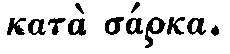
. It is enough for me to know that the Son of God
became flesh
,

4
and more than this, it appears to me, was unknown to the Apostles, or, if known, not taught by them as appertaining to a saving faith in Christ.
October 1831.
Note the affinity in sound of
son
and
sun
,
Sohn
and
Sonne
, which is not confined to the Saxon and German, or the Gothic dialects generally. And observe
conciliare versöhnen=confiliare, facere esse cum filio
, one with the Son.
Ib.
p. 17. B.
It is a singular testimony, how acceptable to God that state of virginity is. He does not dishonor physic that magnifies health; nor does he dishonor marriage, that praises virginity; let them embrace that state that can, &c.
One of the sad relics of Patristic super-moralization, aggravated by Papal ambition, which clung to too many divines, especially to those of the second or third generation after Luther. Luther himself was too spiritual, of too heroic faith, to be thus blinded by the declamations of the Fathers, whom, with the exception of Augustine, he held in very low esteem.
Ib.
D.
And Helvidius said, she had children after.
Annon Scriptura ipsa
? And a 'heresy,' too! I think I might safely put the question to any serious, spiritual-minded, Christian: What one inference tending to edification, in the discipline of will, mind, or affections, he can draw from the speculations of the last two or three pages of this Sermon respecting Mary's pregnancy and parturition?
Can
— I write it emphatically —
can
such points appertain to our faith as Christians, which every parent would decline speaking of before a family, and which, if the questions were propounded by another in the presence of my daughter, aye, or even of my, no less, in mind and imagination, innocent wife, I should resent as an indecency?
Serm. III. Gal. iv. 4, 5. p. 20.
God sent forth his Son made of a woman.
I never can admit that
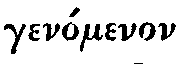
and
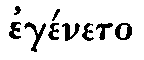
in St. Paul and St. John are adequately, or even rightly, rendered by the English 'made.'
Ib.
p. 21, A.
What miserable revolutions and changes, what downfalls, what break-necks and precipitations may we justly think ourselves ordained to, if we consider, that in our coming into this world out of our mothers' womb, we do not make account that a child comes right, except it come with the head forward, and thereby prefigure that headlong falling into calamities which it must suffer after?
The taste for these forced and fantastic analogies, Donne, with the greater number of the learned prelatic divines from James I. to the Restoration, acquired from that too great partiality for the Fathers, from Irenæus to Bernard, by which they sought to distinguish themselves from the Puritans.
Ib.
C.
That now they (the Jews,) express a kind of conditional acknowledgment of it, by this barbarous and inhuman custom of theirs, that they always keep in readiness the blood of some Christian, with which they anoint the body of any that dies amongst them, with these words; "If Jesus Christ were the Messias, then may the blood of this Christian avail thee to salvation!"
Is it possible that Donne could have given credit to this absurd legend! It was, I am aware, not an age of critical
acumen
; grit, bran, and flour, were swallowed in the unsifted mass of their erudition. Still that a man like Donne should have imposed on himself such a set of idle tales, as he has collected in the next paragraph for facts of history, is scarcely credible; that he should have attempted to impose them on others, is most melancholy.
Ib.
p. 22. D. E.
He takes the name of the son of a woman, and wanes the miraculous name of the son of a virgin. — Christ waned the glorious name of Son of God, and the miraculous name of Son of a virgin too; which is not omitted to draw into doubt the perpetual virginity of the blessed virgin, the mother of Christ, &c.
Very ingenious; but likewise very presumptuous, this arbitrary attribution of St. Paul's silence, and presumable ignorance of the virginity of Mary, to Christ's own determination to have the fact passed over.
N. B. Is 'wane' a misprint for 'wave' or 'waive?' It occurs so often, as to render its being an
erratum
improbable; yet I do not remember to have met elsewhere 'wane' used for 'decline' as a verb active.
Ib.
p. 23. A.
If there were reason for it, it were no miracle.
The announcement of the first comet, that had ever been observed, might excite doubt in the mind of an astronomer, to whom, from the place where he lived, it had not been visible. But his reason could have been no objection to it. Had God pleased, all women might have conceived,

as many of the
polypi
and
planariæ
do. Not on any such ground do I suspend myself on this as an article of faith; but because I doubt the evidence.
Ib.
p. 25. A — E.
Though we may think thus in the law of reason, yet, &c.
It is, and has been, a misfortune, a grievous and manifold loss and hindrance for the interests of moral and spiritual truth, that even our best and most vigorous theologians and philosophers of the age from Edward VI to James II so generally confound the terms, and so too often confound the subjects themselves, reason and understanding; yet the diversity, the difference in kind, was known to, and clearly admitted by, many of them, — by Hooker for instance, and it is implied in the whole of Bacon's
Novum Organum
. Instead of the 'law of reason,' Donne meant, and ought to have said, 'judging according to the ordinary presumptions of the understanding,' that is, the faculty which, generalizing particular experiences, judges of the future by analogy to the past.
Taking the words, however, in their vulgar sense, I most deliberately protest against all the paragraphs in this page, from A to E, and should cite them, with a host of others, as sad effects of the confusion of the reason and the understanding, and of the consequent abdication of the former, instead of the bounden submission of the latter to a higher light. Faith itself is but an act of the will, assenting to the reason on its own evidence without, and even against, the understanding.
This
indeed is, I fully agree, to be brought into captivity to the faith.
5
Ib.
p. 26. A. B.
And therefore to be under the Law, signifies here thus much; to be a debtor to the law of nature, to have a testimony in our hearts and consciences, that there lies a law upon us, which we have no power in ourselves to perform, &c.
This exposition of the term
law
in the epistles of St. Paul is most just and important. The whole should be adopted among the notes to the epistle to the Romans, in every Bible printed with notes.
I
b.
p. 27. A.
And this was his first work, to redeem, to vindicate them from the usurper, to deliver them from the intruder, to emancipate them from the tyrant, to cancel the covenant between hell and them, and restore them so far to their liberty, as that they might come to their first master, if they would; this was redeeming.
There is an absurdity in the notion of a finite divided from, and superaddible to, the infinite, — of a particular
quantum
of power separated from, not included in, omnipotence, or all-power. But, alas! we too generally use the terms that are meant to express the absolute, as mere comparatives taken superlatively. In one thing only are we permitted and bound to assert a diversity, namely, in God and
Hades
, the good and the evil will. This awful mystery, this truth, at once certain and incomprehensible, is at the bottom of all religion; and to exhibit this truth free from the dark phantom of the Manicheans, or the two co-eternal and co-ordinate principles of good and evil, is the glory of the Christian religion.
But this mysterious dividuity of the good and the evil will, the will of the spirit and the will of the flesh, must not be carried beyond the terms 'good' and 'evil.' There can be but one good will — the spirit in all; — and even so, all evil wills are one evil will, the devil or evil spirit. But then the One exists for us as finite intelligences, necessarily in a two-fold relation, universal and particular. The same Spirit within us pleads to the Spirit as without us; and in like manner is every evil mind in communion with the evil spirit. But, O comfort! the good alone is the actual, the evil essentially potential. Hence the devil is most appropriately named the 'tempter,' and the evil hath its essence in the will: it cannot pass out of it. Deeds are called evil in reference to the individual will expressed in them; but in the great scheme of Providence they are, only as far as they are good, coerced under the conditions of all true being; and the devil is the drudge of the All-good.
Serm. IV Luke ii. 29, 30. p. 29.
Ib.
p. 30. B.
We shall consider that that preparation, and disposition, and acquiescence, which Simeon had in his epiphany, in his visible seeing of Christ then, is offered to us in this epiphany, in this manifestation and application of Christ in the sacrament; and that therefore every penitent, and devout, and reverent, and worthy receiver hath had in that holy action his now; there are all things accomplished to him; and his for, for his eyes have seen his salvation; and so may be content, nay glad, to depart in peace.
O! would that Donne, or rather that Luther before him, had carried out this just conception to its legitimate consequences; — that as the sacrament of the Eucharist is the epiphany for as many as receive it in faith, so the crucifixion, resurrection, and ascension of Christ himself in the flesh, were the epiphanies, the sacramental acts and
phænomena
of the
Deus patiens
, the visible words of the invisible Word that was in the beginning, symbols in time and historic fact of the redemptive functions, passions, and procedures of the Lamb crucified from the foundation of the world; — the incarnation, cross, and passion, — in short, the whole life of Christ in the flesh, dwelling a man among men, being essential and substantive parts of the process, the total of which they represented; and on this account proper symbols of the acts and passions of the Christ dwelling in man, as the Spirit of truth, and for as many as in faith have received him, in Seth and Abraham no less effectually than in John and Paul! For this is the true definition of a symbol, as distinguished from the thing, on the one hand, and from a mere metaphor, or conventional exponent of a thing, on the other. Had Luther mastered this great idea, this master-truth, he would never have entangled himself in that most mischievous Sacramentary controversy, or had to seek a murky hiding-hole in the figment of Consubstantiation.
Ib.
B. C.
In the first part, then ... More he asks not, less he takes not for any man, upon any pretence of any unconditional decree.
A beautiful paragraph, well worth extracting, aye, and re-preaching.
Ib.
p. 34. E.
When thou comest to this seal of thy peace, the sacrament, pray that God will give thee that light that may direct and establish thee in necessary and fundamental things; that is, the light of faith to see that the Body and Blood of Christ is applied to thee in that action; but for the manner, how the Body and Blood of Christ is there, wait his leisure, if he have not yet manifested that to thee: grieve not at that, wonder not at that, press not for that; for he hath not manifested that, not the way, not the manner of his presence in the Sacrament to the Church.
O! I have ever felt, and for many years thought that this
rem credimus, modum nescimus,
is but a poor evasion. It seems to me an attempt so to admit an irrational proposition as to have the credit of denying it, or to separate an irrational proposition from its irrationality. I admit 2 + 2 = 5; how I do not pretend to know, but in some way not in contradiction to the multiplication table. To spiritual operations the very term 'mode' is perhaps inapplicable, for these are immediate. To the linking of this with that, of A. with Z. by
intermedia,
the term 'mode,' — the question 'how?' is properly applied. The assimilation of the spirit of a man to the Son of God, to God as the Divine Humanity, — this spiritual transubstantiation, like every other process of operative grace, is necessarily modeless. The whole question is concerning the transmutation of the sensible elements. Deny this, and to what does the
modum nescimus
refer? We cannot ask how that is done, which we declare not done at all. Admit this transmutation, and you necessarily admit by implication the Romish dogma, of the separation of a sensible thing from the sensible accidents which constitute all we ever meant by the thing. To rationalize this figment of his church, Bossuet has recourse to Spinosism, and dares make God the substance and sole
ens reale
of all body, and by this very
hypothesis
baffles his own end, and does away all miracle in the particular instance.
Ib.
p. 35. B.
When I pray in my chamber, I build a temple there that hour; and that minute, when I cast out a prayer in the street, I build a temple there; and when my soul prays without any voice, my very body is then a temple.
Good; but it would be better to regard solitary, family, and templar devotion as distinctions in sort, rather than differences in degree. All three are necessary.
Ib.
E.
And that more fearful occasion of coming, when they came only to elude the law, and proceeding in their treacherous and traitorous religion in their heart, and yet communicating with us, draw God himself into their conspiracies; and to mock us, make a mock of God, and his religion too.
What, then, was their guilt, who by terror and legal penalties tempted their fellow Christians to this treacherous mockery? Donne should have asked himself that question.
Serm. V. Exod. iv. 13. p. 39.
Ib.
p. 39. C. D.
It hath been doubted, and disputed, and denied too, that this text, O my Lord, send I pray thee by the hand of him whom thou wilt send, hath any relation to the sending of the Messiah, to the coming of Christ, to Christmas day; yet we forbear not to wait upon the ancient Fathers, and as they said, to say, that Moses at last determines all in this, O my Lord, &c. It is a work, next to the great work of the redemption of the whole world, to redeem Israel out of Egypt; and therefore do both works at once, put both into one hand, and mitte quem missurus es, Send him whom I know thou wilt send; him, whom, pursuing thine own decree, thou shouldest send; send Christ, send him now, to redeem Israel from Egypt.
This is one of the happier accommodations of the
gnosis
, that is, the science of detecting the mysteries of faith in the simplest texts of the Old Testament history, to the contempt or neglect of the literal and contextual sense. It was, I conceive, in part at least, this
gnosis
, and not knowledge, as our translation has it, that St. Paul warns against, and most wisely, as puffing up, inflating the heart with self-conceit, and the head with idle fancies.
Ib.
E.
But as a thoughtful man, a pensive, a considerative man, that stands still for a while with his eyes fixed upon the ground before his feet, when he casts up his head, hath presently, instantly the sun or the heavens for his object; he sees not a tree, nor a house, nor a steeple by the way, but as soon as his eye is departed from the earth where it was long fixed, the next thing he sees is the sun or the heavens; — so when Moses had fixed himself long upon the consideration of his own insufficiency for this service, when he took his eye from that low piece of ground, himself, considered as he was then, he fell upon no tree, no house, no steeple, no such consideration as this — God may endow me, improve me, exalt me, enable me, qualify me with faculties fit for this service, but his first object was that which presented an infallibility with it, Christ Jesus himself, the Messias himself, &c.
Beautifully imagined, and happily applied.
Ib.
p. 40. B.
That germen Jehovæ, as the prophet Esay calls Christ, that offspring of Jehova, that bud, that blossom, that fruit of God himself, the Son of God, the Messiah, the Redeemer, Christ Jesus, grows upon every tree in this paradise, the Scripture; for Christ was the occasion before, and is the consummation after, of all Scripture.
If this were meant to the exclusion or neglect of the primary sense, — if we are required to believe that the sacred writers themselves had such thoughts present to their minds, — it would, doubtless, throw the doors wide open to every variety of folly and fanaticism. But it may admit of a safe, sound, and profitable use, if we consider the Bible as one work, intended by the Holy Spirit for the edification of the Church in all ages, and having, as such, all its parts synoptically interpreted, the eldest by the latest, the last by the first, and the middle by both. Moses, or David, or Jeremiah (we might in this view affirm) meant so and so, according to the context, and the light under which, and the immediate or proximate purposes for which, he wrote: but we, who command the whole scheme of the great dispensation, may see a higher and deeper sense, of which the literal meaning was a symbol or type; and this we may justifiably call the sense of the spirit.
Ib.
p. 41. B.
So in our liturgy we stand up at the profession of the creed thereby to declare to God and his Church our readiness to stand to, and our readiness to proceed in, that profession.
Another Church might sit down, thereby denoting a resolve to abide in this profession. These things are indifferent; but charity, love of peace, and on indifferent points to prefer another's liking to our own, and to observe an order once established for order's sake, — these are not indifferent.
Ib.
p. 42. C.
This paragraph is excellent. Alas! how painfully applicable it is to some of our day!
Ib.
p. 46. C.
Howsoever all intend that this is a name that denotes essence, being: Being is the name of God, and of God only.
Rather, I should say, 'the eternal antecedent of being;'
I that shall be in that I will to be
; the absolute will; the ground of being; the self-affirming
actus purissimus
.
Serm. VI Isaiah liii. 1. p. 52.
A noble sermon in thought and diction.
Ib.
p. 59. E.
Therefore we have a clearer light than this; firmiorem propheticum sermonem, says St. Peter; we have a more sure word of the prophets; that is, as St. Augustine reads that place, clariorem, a more manifest, a more evident, declaration in the prophets, than in nature, of the will of God towards man, &c.
The sense of this text, as explained by the context, seems to me this; — that, in consequence of the fulfilment of so large a proportion of the oracles, the Christian Church has not only the additional light given by the teaching and miracles of Christ, but even the light vouchsafed to the old Church (the prophetic) stronger and clearer.
Ib.
p. 60. A.
He spake personally, and he spake aloud, in the declaration of miracles; but quis credidit auditui Filii? Who believed even his report? Did they not call his preaching sedition, and call his miracles conjuring? Therefore, we have a clearer, that is, a nearer light than the written Gospel, that is, the Church.
True; yet he who should now venture to assert this truth, or even contend for a co-ordinateness of the Church and the Written Word, must bear to be thought a semi-Papist, an
ultra
high-Churchman. Still the truth is the truth.
Serm. VII. John x. 10. p. 62.
Since the Revolution in 1688 our Church has been chilled and starved too generally by preachers and reasoners Stoic or Epicurean; — first, a sort of pagan morality was substituted for the righteousness by faith, and latterly, prudence or Paleyanism has been substituted even for morality. A Christian preacher ought to preach Christ alone, and all things in him and by him. If he find a dearth in this, if it seem to him a circumscription, he does not know Christ, as the
pleroma
, the fullness. It is not possible that there should be aught true, or seemly, or beautiful, in thought, will, or deed, speculative or practical, which may not, and which ought not to, be evolved out of Christ and the faith in Christ; — no folly, no error, no evil to be exposed, or warred against, which may not, and should not, be convicted and denounced from its contrariancy and enmity to Christ. To the Christian preacher Christ should be in all things, and all things in Christ: he should abjure every argument that is not a link in the chain, of which Christ is the staple and staple ring.
Ib.
p. 64.
In this page Donne passes into rhetorical extravagance, after the manner of too many of the Fathers from Tertullian to Bernard.
Ib.
p. 66. A.
Some of the later authors in the Roman Church ... have noted (in several of the Fathers) some inclinations towards that opinion, that the devil retaining still his faculty of free-will, is therefore capable of repentance, and so of benefit by this coming of Christ.
If this be assumed, — namely, the free-will of the devil, — as a consequence would indeed follow his capability of repenting, and the possibility that he may repent. But then he is no longer what we mean by the devil; he is no longer the evil spirit, but simply a wicked soul.
Ib.
p. 68. C.
As though God had said Qui sum, my name is I am; yet in truth it is Qui ero, my name is I shall be.
Nay,
I will or shall be in that I will to be
. I am that only one who is self-originant,
causa sui
, whose will must be contemplated as antecedent in idea to or deeper than his own co-eternal being. But 'antecedent,' 'deeper,' &c. are mere
vocabula impropria
, words of accommodation, that may suggest the idea to a mind purified from the intrusive phantoms of space and time, but falsify and extinguish the truth, if taken as adequate exponents.
Ib.
p. 69. C.
We affirm that it is not only as impious and irreligious a thing, but as senseless and as absurd a thing, to deny that the Son of God hath redeemed the world, as to deny that God hath created the world.
A bold but a true saying. The man who, cannot see the redemptive agency in the creation has but a dim apprehension of the creative power.
Ib.
D. E. p. 70. A.
These paragraphs exhibit a noble instance of giving importance to the single words of a text, each word by itself a pregnant text. Here, too, lies the excellence, the imitable, but alas! unimitated, excellence of our divines from Elizabeth to William III.
Ib.
D.
O
, that our clergy did but know and see that their tithes and glebes belong to them as officers and functionaries of the nationalty, — as clerks, and not exclusively as theologians, and not at all as ministers of the Gospel; — but that they are likewise ministers of the Church of Christ, and that their claims and the powers of that Church are no more alienated or affected by their being at the same time the established clergy, than they are by the common coincidence of being justices of the peace, or heirs to an estate, or stockholders!
6
The Romish divines placed the Church above the Scriptures; our present divines give it no place at all.
But Donne and his great contemporaries had not yet learnt to be afraid of announcing and enforcing the claims of the Church, distinct from, and coordinate with, the Scriptures. This is one evil consequence, though most un-necessarily so, of the union of the Church of Christ with the national Church, and of the claims of the Christian pastor and preacher with the legal and constitutional rights and revenues of the officers of the national clerisy. Our clergymen in thinking of their legal rights, forget those rights of theirs which depend on no human law at all.
Ib.
p. 71. A.
This is the difference between God's mercy and his judgments, that sometimes his judgments may he plural, complicated, enwrapped in one another; but his mercies are always so, and cannot be otherwise.
A just sentiment beautifully expressed.
Ib.
C.
Whereas the Christian religion is, as Gregory Nazianzen says, simplex et nuda, nisi prave in artem difficillimam converteretur: it is a plain, an easy, a perspicuous truth.
A religion of ideas, spiritual truths, or truth-powers, — not of notions and conceptions, the manufacture of the understanding, — is therefore
simplex et nuda
, that is, immediate; like the clear blue heaven of Italy, deep and transparent, an ocean unfathomable in its depth, and yet ground all the way. Still as meditation soars upwards, it meets the arched firmament with all its suspended lamps of light. O, let not the
simplex et nuda
of Gregory be perverted to the Socinian, 'plain and easy for the meanest understandings!' The truth in Christ, like the peace of Christ, passeth all understanding. If ever there was a mischievous misuse of words, the confusion of the terms, 'reason' and 'understanding,' 'ideas' and 'notions,' or 'conceptions,' is most mischievous; a Surinam toad with a swarm of toadlings sprouting out of its back and sides.
Serm. VIII. Mat. v. 16. p. 77.
Ib.
C.
Either of the names of this day were text enough for a sermon, Purification or Candlemas. Join we them together, and raise we only this one note from both, that all true purification is in the light, &c.
The illustration of the name of the day contained in the first two or three paragraphs of this sermon would be censured as quaint by our modern critics. Would to heaven we had but even a few preachers capable of such quaintnesses!
Ib.
D.
Every good work hath faith for the root; but every faith hath not good works for the fruit thereof.
Faith, that is, fidelity — the fealty of the finite will and understanding to the reason,
the light that lighteth every man that cometh into the world
, as one with, and representative of, the absolute will, and to the ideas or truths of the pure reason, the supersensuous truths, which in relation to the finite will, and as meant to determine the will, are moral laws, the voice and dictates of the conscience; — this faith is properly a state and disposition of the will, or rather of the whole man, the I, or finite will, self-affirmed. It is therefore the ground, the root, of which the actions, the works, the believings, as acts of the will in the understanding, are the trunk and the branches. But these must be in the light. The disposition to see must have organs, objects, direction, and an outward light. The three latter of these our Lord gives to his disciples in this blessed sermon on the Mount, preparatorily, and, as Donne rightly goes on to observe, presupposing faith as the ground and root. Indeed the whole of this and the next page affords a noble specimen, how a minister of the Church of England should preach the doctrine of good works, purified from the poison of the practical Romish doctrine of works, as the mandioc is evenomated by fire, and rendered safe, nutritious, a bread of life. To Donne's exposition the heroic Solifidian, Martin Luther himself, would have subscribed, hand and heart.
Ib.
p. 78. C.
And therefore our latter men of the Reformation are not to be blamed, who for the most, pursuing St. Cyril's interpretation, interpret this universal light that lighteneth every man to be the light of nature.
The error here, and it is a grievous error, consists in the word 'nature.' There is, there can be, no light of nature: there may be a light in or upon nature; but this is the light that shineth down into the darkness, that is, the nature, and the darkness comprehendeth it not. All ideas, or spiritual truths, are supernatural.
Ib.
p. 79.
Throughout this page, Donne rather too much plays the rhetorician. If the faith worketh the works, what is true of the former must be equally affirmed of the latter; —
causa causæ causa causati
. Besides, he falls into something like a confusion of faith with belief, taken as a conviction or assent of the judgment. The faith and the righteousness of a Christian are both alike his, and not his — the faith of Christ in him, the righteousness in and for him.
I am crucified with Christ: nevertheless I live; yet, not I, but Christ liveth in me: and the life which I now live in the flesh I live by the faith of the Son of God, who loved me, and gave himself for me
.
7
Donne was a truly great man; but, after all, he did not possess that full, steady, deep, and yet comprehensive, insight into the nature of faith and works which was vouchsafed to Martin Luther. Donne had not attained to the reconciling of distinctity with unity, — ours, yet God's; God's, yet ours.
Ib.
D.
Velle et nolle nostrum est, to assent, or to dis-assent, is our own.
Is not this, even with the saving afterwards, too nakedly expressed?
Ib.
And certainly our works are more ours than our faith is; and man concurs otherwise in the acting and perpetration of a good work, than he doth in the reception and admission of faith.
Why? Because Donne confounds the act of faith with the assent of the fancy and understanding to certain words and conceptions. Indeed, with all my reverence for Dr. Donne, I must warn against the contents of this page, as scarcely tenable in logic, unsound in metaphysics, and unsafe, slippery divinity; and principally in that he confounds faith — essentially an act, the fundamental work of the Spirit — with belief, which is then only good when it is the effect and accompaniment of faith.
Ib.
p. 80. D.
Because things good in their institution may he depraved in their practice — ergone nihil ceremoniarum rudioribus dabitur, ad juvandam eorum imperitiam?
Some ceremonies may be for the conservation of order and civility, or to prevent confusion and unseemliness; others are the natural or conventional language of our feelings, as bending the knees, or bowing the head; and to neither of these two sorts do I object. But as to the
adjuvandam rudiorum imperitiam
, I protest against all such ceremonies, and the pretexts for them,
in toto
. What? Can any ceremony be more instructive than the words required to explain the ceremony? I make but two exceptions, and those where the truths signified are so vital, so momentous, that the very occasion and necessity of explaining the sign are of the highest spiritual value. Yet, alas! to what gross and calamitous superstitions have not even the visible signs in Baptism and the Eucharist given occasion!
Ib.
p. 81. E.
Blessed St. Augustine reports, (if that epistle be St. Augustine's) that when himself was writing to St. Hierome, to know his opinion of the measure and quality of the joy and glory of heaven, suddenly in his chamber there appeared ineffabile lumen, says he, an unspeakable, an unexpressible light, ... and out of that light issued this voice, Hieronymi anima sum, &c.
The grave recital of this ridiculous legend is one instance of what I have called the Patristic leaven in Donne, who assuredly had no belief himself in the authenticity of this letter. But yet it served a purpose. As to Master Conradus, just above, who could read at night by the light at his fingers' ends, he must of course have very recently been shaking hands with Lucifer.
Ib.
p. 83. D.
Eve's recognition upon the birth of her first son, Cain I have gotten, I possess a man from the Lord.
I have gotten the Jehovah-man
, is, I believe, the true rendering and sense of the Hebrew words. Eve, full of the promise, supposed her first-born, the first-born on earth, to be the promised deliverer.
Ib. p. 84. D. E.
Serm. IX. Rom. xiii. 7. p. 86,
Admirable passages. (side-note) Ib. p. 90. A. That soul that is accustomed, &c.
Ib. p. 94. A. B.
Serm. XII. Mat. v. 2. p. 112.
Ib.
B. C. D.
The disposition of our Church divines, under James I, to bring back the stream of the Reformation to the channel and within the banks formed in the first six centuries of the Church, and their alienation from the great patriarchs of Protestantism, Luther, Calvin, Zuinglius, and others, who held the Fathers of the
ante
-Papal Church, with exception of Augustine, in light esteem, this disposition betrays itself here and in many other parts of Donne. For here Donne plays the Jesuit, disguising the truth, that even as early as the third century the Church had begun to Paganize Christianity, under the pretext, and no doubt in the hope, of Christianizing Paganism. The mountain would not go to Mahomet, and therefore Mahomet went to the mountain.
Ib.
p. 115. A.
An excellent passage.
Ib.
p. 117. E.
And therefore when the prophet says, Quis sapiens, et intelliget hæc? Who is so wise as to find out this way? he places this cleanness which we inquire after in wisdom. What is wisdom?
The primitive Church appropriated the name to the third
hypostasis
of the Trinity; hence
Sancta Sophia
became the distinctive name of the Holy Ghost; and the temple at Constantinople, dedicated by Justinian to the Holy Ghost, is called the Church — alas! now the mosque — of Santa Sophia. Now this suggests, or rather implies, a far better and more precise definition of wisdom than Donne's. The distinctive title of the Father, as the Supreme Will, is the Good; that of the only-begotten Word, as the Supreme Reason, (
Ens Realissimum
,
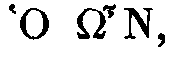
the Being) is the True; and the Spirit proceeding from the Good through the True is the Wisdom. Goodness in the form of truth is wisdom. Wisdom is the pure will, realizing itself intelligently, or the good manifesting itself as the truth, and realized in the act. Wisdom, life, love, beauty, the beauty of holiness, are all
synonyma
of the Holy Spirit.
6, December, 1831.
Ib.
p. 121. A.
The Arians' opinion, that God the Father only was invisible, but the Son and the Holy Ghost might be seen.
Here we have an instance, one of many, of the inconveniences and contradictions that arise out of the assumed contrary essences of body and soul; both substances, and independent of each other, yet so absolutely diverse as that the one is to be defined by the negation of the other.
Serm. XIII. Job xvi. 17, 18, 19. p. 127.
Ib.
p. 129. A. B. C.
Ib.
pp. 134. 135.
Truly excellent.
Serm. XV. 1 Cor. xv. 26. p. 144.
Ib.
D.
Who, then, is this enemy? an enemy that may thus far think himself equal to God, that as no man ever saw God, and lived; so no man ever saw this enemy, and lived; for it is death.
This borders rather too closely on the Irish Franciscan's conclusion to his sermon of thanksgiving: "Above all, brethren, let us thankfully laud and extol God's transcendant mercy in putting death at the end of life, and thereby giving us all time for repentance!"
Dr. Donne was an eminently witty man in a very witty age; but to the honour of his judgment let it be said, that though his great wit is evinced in numberless passages, in a few only is it shown off. This paragraph is one of those rare exceptions.
N. B. Nothing in Scripture, nothing in reason, commands or authorizes us to assume or suppose any bodiless creature. It is the incommunicable attribute of God. But all bodies are not flesh, nor need we suppose that all bodies are corruptible.
There are bodies celestial
. In the three following paragraphs of this sermon, we trace wild fantastic positions grounded on the arbitrary notion of man as a mixture of heterogeneous components, which Des Cartes shortly afterwards carried into its extremes. On this doctrine the man is a mere phenomenal result, a sort of brandy-sop or toddy-punch. It is a doctrine unsanctioned by, and indeed inconsistent with, the Scriptures. It is not true that body
plus
soul makes man. Man is not the
syntheton
or composition of body and soul, as the two component units. No; man is the unit, the
prothesis
, and body and soul are the two poles, the positive and negative, the
thesis
and
antithesis
of the man; even as attraction and repulsion are the two poles in and by which one and the same magnet manifests itself.
Ib.
p. 146. B.
For it is not so great a depopulation to translate a city from merchants to husbandmen, from shops to ploughs, as it is from many husbandmen to one shepherd; and yet that hath been often done.
For example, in the Highlands of Scotland in our own day.
Ib.
p. 148. A.
The ashes of an oak in the chimney are no epitaph of that oak, to tell me how high or how large that was. It tells me not what flocks it sheltered while it stood, nor what men it hurt when it fell. The dust of great persons' graves is speechless too, it says nothing, it distinguishes nothing. As soon the dust of a wretch whom thou wouldst not, as of a prince whom thou couldst not, look upon, will trouble thine eyes, if the wind blow it thither; and when a whirlwind hath blown the dust of the churchyard unto the church, and the man sweeps out the dust of the church into the church-yard, who will undertake to sift those dusts again, and to pronounce; — this is the patrician, this is the noble, flour, and this the yeomanly, this the plebeian, bran.8
Very beautiful indeed.
Ib.
p. 149. C.
But when I lie under the hands of that enemy, that hath reserved himself to the last, to my last bed; then when I shall be able to stir no limb in any other measure than a fever or a palsy shall shake them; when everlasting darkness shall have an inchoation in the present dimness of mine eyes, and the everlasting gnashing in the present chattering of my teeth, and the everlasting worm in the present gnawing of the agonies of my body and anguishes of my mind; when the last enemy shall watch my remediless body, and my disconsolate soul there, — there, where not the physician in his way, perchance not the priest in his, shall be able to give any assistance; and when he hath sported himself with my misery, &c.
This
is powerful; but is too much in the style of the monkish preachers:
Papam redolet
. Contrast with this Job's description of death,
9
and St. Paul's
sleep in the Lord
.
Ib.
p. 150. A.
Neither doth Calvin carry those emphatical words which are so often cited for a proof of the last resurrection, — that he knows his Redeemer lives, that he knows he shall stand the last man upon earth, that though his body be destroyed, yet in his flesh and with his eyes shall he see God — to any higher sense than so, that how low soever he be brought, to what desperate state soever he be reduced in the eyes of the world, yet he assures himself of a resurrection, a reparation, a restitution to his former bodily health, and worldly fortune which he had before. And such a resurrection we all know Job had.
I incline to Calvin's opinion, but am not decided.
After my skin
, must be rendered 'according to, or as far as my skin is concerned.'
Though the flies and maggots in my ulcers have destroyed my skin, yet still, and in my flesh, I shall see God as my Redeemer
. Now St. Paul says, that flesh and blood cannot

) inherit the kingdom of heaven, that is, the spiritual world.
Besides
how is the passage, as commonly interpreted, consistent with the numerous expressions of doubt and even of despondency in Job's speeches?
10
Ib.
B. C. (Ezekiel's vision xxxvii.)
I cannot but think that Dr. Donne, by thus antedating the distinct belief of the Jews in the resurrection, "which you all know already," destroys in great measure the force and sublimity of this vision. Besides, it does not seem, in the common people at least, to have been much more than a mongrel Egyptian-catacomb sort of faith, or rather superstition.
In fine
. This is one of Donne's least estimable discourses; the worst sermon on the best text. Yet what a Donne-like passage is this that follows!
P. 146. A.
Let the whole world be in thy consideration as one house; and then consider in that, in the peaceful harmony of creatures, in the peaceful succession, and connexion of causes and effects, the peace of nature. Let this kingdom, where God hath blessed thee with a being, be the gallery, the best room of that house, and consider in the two walls of that gallery, the Church and the state, the peace of a royal and religious wisdom. Let thine own family be a cabinet in this gallery, and find in all the boxes thereof, in the several duties of wife and children, and servants, the peace of virtue, and of the father and mother of all virtues, active discretion, passive obedience; and then lastly, let thine own bosom be the secret box and reserve in this cabinet, and then the gallery of the best home that can be had, peace with the creature, peace in the Church, peace in the state, peace in thy house, peace in thy heart, is a fair model, and a lovely design even of the heavenly Jerusalem, which is visio pacis, where there is no object but peace.
Serm. XVI. John xi. 35. p. 153.
Ib.
C.
The Masorites (the Masorites are the critics upon the Hebrew Bible, the Old Testament) cannot tell us, who divided the chapters of the Old Testament into verses: neither can any other tell, who did it in the New Testament.11
How should the Masorites, when the Hebrew Scriptures were not as far as we know divided into verses at all in their time? The Jews seem to have adopted the invention from the Christians, who were led to it in the construction of Concordances.
Ib.
p. 154. E.
If they killed Lazarus, had not Christ done enough to let them see that he could raise him again?
Malice, above all party-malice, is indeed a blind passion, but one can scarcely conceive the chief priests such dolts as to think that Christ could raise Lazarus again. Their malice blinded them as to the nature of the incident, made them suppose a conspiracy between Jesus and the family of Lazarus, a mock burial, in short; and this may be one, though it is not, I think, the principal, reason for this greatest miracle being omitted in the other Gospels.
Ib.
p. 155. B.
Christ might ungirt himself, and give more scope and liberty to his passions than any other man; both because he had no original sin within to drive him, &c.
How then is he said to have _condemned sin in the flesh?_ Without guilt, without actual sin, assuredly he was; but
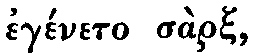
, and what can we mean by original sin relatively to the flesh, but that man is born with an animal life and a material organism that render him temptible to evil, and which tends to dispose the life of the will to contradict the light of the reason?
Did
St. Paul by
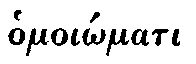

mean a deceptive resemblance?
12
Ib.
D.
I can see no possible edification that can arise from these ultra-Scriptural speculations respecting our Lord.
Ib.
p. 157. A.
Though the Godhead never departed from the carcase ... yet because the human soul was departed from it, he was no man.
Donne was a poor metaphysician; that is, he never closely questioned himself as to the absolute meaning of his words.
What
did he mean by the 'soul?' what by the ' body?'
13
Ib.
D.
And I know that there are authors of a middle nature, above the philosophers, and below the Scriptures, the Apocryphal books.
A whimsical instance of the disposition in the mind for every pair of opposites to find an intermediate, — a
mesothesis
for every
thesis
and
antithesis
. Thus Scripture may be opposed to philosophy; and then the Apocryphal books will be philosophy relatively to Scripture, and Scripture relatively to philosophy.
Ib.
p. 159. B.
And therefore the same author (Epiphanius) says, that because they thought it an uncomely thing for Christ to weep for any temporal thing, some men have expunged and removed that verse out of St. Luke's Gospel, that Jesus, when he saw that city, wept.14
This, by the by, rather indiscreetly lets out the liberties, which the early Christians took with their sacred writings. Origen, who, in answer to Celsus's reproach on this ground, confines the practice to the heretics, furnishes proofs of the contrary himself in his own comments.
Ib.
p. 161. D.
That world, which finds itself in an authumn in itself, finds itself in a spring in our imaginations.
Worthy almost of Shakspeare!
Serm. XVII. Matt. xix. 17. p. 163.
Ib.
E.
The words are part of a dialogue, of a conference, between Christ and a man who proposed a question to him; to whom Christ makes an answer by way of another question, Why callest thou me good? &c. In the words, and by occasion of them, we consider the text, the context, and the pretext; not as three equal parts of the building; but the context, as the situation and prospect of the house, the pretext, as the access and entrance into the house, and then the text itself, as the house itself, as the body of the building: in a word, in the text the words; in the context the occasion of the words; in the pretext the purpose, the disposition of him who gave the occasion.
What a happy example of elegant division of a subject! And so also the
compendium
of Christianity in the preceding paragraph (D). Our great divines were not ashamed of the learned discipline to which they had submitted their minds under Aristotle and Tully, but brought the purified products as sacrificial gifts to Christ. They baptized the logic and manly rhetoric of ancient Greece.
Ib.
p. 164. A. B.
Excellent illustration of fragmentary morality, in which each man takes his choice of his virtues and vices.
Ib.
D.
Men perish with whispering sins, nay, with silent sins, sins that never tell the conscience they are sins, as often as with crying sins.
Yea, I almost doubt whether the truth here so boldly asserted is not of more general necessity for ordinary congregations, than the denunciation of the large sins that cannot remain
in incognito
.
Ib.
p. 165. A.
Venit procurrens, he came running. Nicodemus came not so, Nicodemus durst not avow his coming, and therefore he came creeping, and he came softly, and he came seldom, and he came by night.
Ah! but we trust in God that he did in fact come. The adhesion, the thankfulness, the love which arise and live after the having come, whether from spontaneous liking, or from a beckoning hope, or from a compelling good, are the truest
criteria
of the man's Christianity.
Ib.
B.
When I have just reason to think my superiors would have it thus, this is music to my soul; when I hear them say they would have it thus, this is rhetoric to my soul; when I see their laws enjoin it to be thus, this is logic to my soul; but when I see them actually, really, clearly, constantly do thus, this is a demonstration to my soul, and demonstration is the powerfullest proof. The eloquence of inferiors is in words, the eloquence of superiors is in action.
A just representation, I doubt not, of the general feeling and principle at the time Donne wrote. Men regarded the gradations of society as God's ordinances, and had the elevation of a self-approving conscience in every feeling and exhibition of respect for those of ranks superior to their own. What a contrast with the present times! Is not the last sentence beautiful? "The eloquence of inferiors is in words, the eloquence of superiors is in action."
Ib.
B. and C.
He came to Christ, he ran to him; and when he was come, as St. Mark relates it, he fell upon his knees to Christ. He stood not then Pharisaically upon his own legs, his own merits, though he had been a diligent observer of the commandments before, &c.
All this paragraph is an independent truth; but I doubt whether in his desire to make every particle exemplary, to draw some Christian moral from it, Donne has not injudiciously attributed,
quasi per prolepsin
, merits inconsistent with the finale of a wealthy would-be proselyte. At all events, a more natural and, perhaps, not less instructive interpretation might be made of the sundry movements of this religiously earnest and zealous admirer of Christ, and worshipper of Mammon. O, I have myself known such!
Ib.
D.
He was no ignorant man, and yet he acknowledged that he had somewhat more to learn of Christ than he knew yet. Blessed are they that inanimate all their knowledge, consummate all in Christ Jesus, &c.
The whole paragraph is pure gold.
Without
being aware of this passage in Donne, I expressed the same conviction, or rather declared the same experience, in the appendix
15
to the Statesman's Manual. O! if only one day in a week, Christians would consent to have the Bible as the only book, and their minister's labour to make them find all substantial good of all other books in their Bibles!
Ib.
E.
I remember one of the Panegyrics celebrates and magnifies one of the Roman emperors for this, that he would marry when he was young; that he would so soon confine and limit his pleasures, so soon determine his affections in one person.
It is surely some proof of the moral effect which Christianity has produced, that in all Protestant countries, at least, a writer would be ashamed to assign this as a ground of panegyric; as if promiscuous intercourse with those of the other sex had been a natural good, a privilege, which there was a great merit in foregoing! O! what do not women owe to Christianity! As Christians only it is that they do, or ordinarily can, cease to be things for men, instead of co-persons in one spiritual union.
Ib.
p. 166. A.
But such is often the corrupt inordinateness of greatness, that it only carries them so much beyond other men, but not so much nearer to God.
Like a balloon, away from earth, but not a whit nearer the arch of heaven. There is a praiseworthy relativeness and life in the morality of our best old divines. It is not a cold law in brass or stone; but "this I may and should think of my neighbour, this of a great man," &c.
Ib.
p. 167. A.
Christ was pleased to redeem this man from this error, and bring him to know truly what he was, that he was God. Christ therefore doth not rebuke this man, by any denying that he himself was good; for Christ doth assume that addition to himself, I am the good shepherd. Neither doth God forbid that those good parts which are in men should be celebrated with condign praise. We see that God, as soon as he saw that any thing was good, he said so, he uttered it, he declared it, first of the light, and then of other creatures. God would be no author, no example of smothering the due praise of good actions. For surely that man hath no zeal to goodness in himself, that affords no praise to goodness in other men.
Very fine. But I think another — not, however, a different — view might be taken respecting our Lord's intention in these words. The young noble, who came to him, had many praiseworthy traits of character; but he failed in the ultimate end and aim. What ought only to have been valued by him as means, was loved, and had a worth given to it, as an end in itself. Our Lord, who knew the hearts of men, instantly in the first words applies himself to this, and takes the occasion of an ordinary phrase of courtesy addressed to himself, to make the young man aware of the difference between a mere relative good and that which is absolutely good; that which may be called good, when regarded as a mean to good, but which must not be mistaken for, or confounded with, that which is good, and itself the end.
Ib.
B. C. D.
All excellent, and D. most so. Thus, thus our old divines showed the depth of their love and appreciation of the Scriptures, and thus led their congregations to feel and see the same. Here is Donne's authority (
Deus non est ens
, &c.) for what I have so earnestly endeavored to show, that
Deus est ens super ens
, the ground of all being, but therein likewise absolute Being, in that he is the eternal self-affirmant, the I Am in that I Am; and that the key of this mystery is given to us in the pure idea of the will, as the alone
Causa Sui
.
O! compare this manhood of our Church divinity with the feeble dotage of the Paleyan school, the 'natural' theology, or watchmaking scheme, that knows nothing of the maker but what can be proved out of the watch, the unknown nominative case of the verb impersonal
fit — et natura est
; the 'it,' in short, in 'it rains,' 'it snows,' 'it is cold,' and the like. When, after reading the biographies of Walton and his contemporaries, I reflect on the crowded congregations, on the thousands, who with intense interest came to their hour and two hour long sermons, I cannot but doubt the fact of any true progression, moral or intellectual, in the mind of the many. The tone, the matter, the anticipated sympathies in the sermons of an age form the best moral criterion of the character of that age.
Ib.
E.
His name of Jehova we admire with a reverence.
Say, rather, Jehova, his name. It is not so properly a name of God, as God the Name, — God's name and God.
Ib.
p. 169. A.
Land, and money, and honour must be called goods, though but of fortune, &c.
We should distinguish between the conditions of our possessing goods and the goods themselves. Health, for instance, is ordinarily a condition of that working and rejoicing for and in God, which are goods in the end, and of themselves. Health, competent fortune, and the like are good as the negations of the preventives of good; as clear glass is good in relation to the light, which it does not exclude. Health and ease without the love of God are plate glass in the darkness.
Ib.
p. 170.
Much of this page consists of play on words; as, that which is useful as rain, and that which is of use as rain on a garden after drouth. There is also much sophistry in it. Pain is not necessarily an ultimate evil. As the mean of ultimate good, it may be a relative good; but surely that which makes pain, anguish, heaviness necessary in order to good, must be evil. And so the Scripture determines. They are the
wages of sin
; but God's infinite mercy raises them into sacraments, means of grace. Sin is the only absolute evil; God the only absolute good. But as myriads of things are good relatively through participation of God, so are many things evil as the fruits of evil. What is the apostasy, or fall of spirits? That that which from the essential perfection of the Absolute Good could not but be possible, that is, have a potential being, but never ought to have been actual, did nevertheless strive to be actual? — But this involved an impossibility; and it actualized only its own potentiality.
What is the consequence of the apostasy? That no philosophy is possible of man and nature but by assuming at once a zenith and a nadir, God and
Hades
; and an ascension from the one through and with a condescension from the other; that is, redemption by prevenient and then auxiliary grace.
Ib.
p. 171. B.
So says St. Augustine, Audeo dicere, though it be boldly said, yet I must say it, utile esse cadere in aliquod manifestum peccatum, &c.
No doubt, a sound sense may be forced into these words: but why use words, into which a sound sense must be forced? Besides, the subject is too deep and too subtle for a sermon. In the two following paragraphs, especially, Dr. Donne is too deep, and not deep enough. He treads waters, and dangerous waters. N.B. The Familists.
Serm. XVIII. Acts, ii. 36. p. 175.
Ib.
B.
I would paraphrase, or rather lead the way to this text, something as follows:
Truth is a common interest; it is every man's duty to convey it to his brother, if only it be a truth that concerns or may profit him, and he be competent to receive it. For we are not bound to say the truth, where we know that we cannot convey it, but very probably may impart a falsehood instead; no falsehoods being more dangerous than truths misunderstood, nay, the most mischievous errors on record having been half-truths taken as the whole.
But let it be supposed that the matter to be communicated is a fact of general concernment, a truth of deep and universal interest, a momentous truth involved in a most awe-striking fact, which all responsible creatures are competent to understand, and of which no man can safely remain in ignorance. Now this is the case with the matter, on which I am about to speak;
therefore let all the house of Israel know assuredly, that God hath made that same Jesus, whom ye have crucified, both Lord and Christ!
Ib.
p. 176. A. B. C.
True Christian love not only permits, but enjoins, courtesy. God himself, says Donne, gave us the example.
Ib.
p. 177. A. C. E.
All excellent, and E. of deeper worth. All that is wanting here is to determine the true sense of 'knowing God,' — that sense in which it is revealed that to know God is life ever-lasting.
Ib p. 178. A.
Now the universality of this mercy hath God enlarged and extended very far, in that he proposes it even to our knowledge; sciant, let all know it. It is not only credant, let all believe it; for the infusing of faith is not in our power; but God hath put it in our power to satisfy their reason, &c.
A question is here affirmatively started of highest importance and of deepest interest, that is, faith so distinguished from reason,
credat
from
sciat
, that the former is an infused grace 'not in our power;' the latter an inherent quality or faculty, on which we are able to calculate as man with man. I know not what to say to this. Faith seems to me the coadunation of the individual will with the reason, enforcing adherence alike of thought, act, and affection to the Universal Will, whether revealed in the conscience, or by the light of reason, however the same may contravene, or apparently contradict, the will and mind of the flesh, the presumed experience of the senses and of the understanding, as the faculty, or intelligential yet animal instinct, by which we generalize the notices of the senses, and substantiate their
spectra
or
phænomena
. In this sense, therefore, and in this only, I agree with Donne.
No man cometh to Christ unless the
Father lead him
. The corrupt will cannot, without prevenient as well as auxiliary grace, be unitively subordinated to the reason, and again, without this union of the moral will, the reason itself is latent. Nevertheless, I see no advantage in not saying the 'will,' or in substituting the term 'faith' for it. But the sad non-distinction of the reason and the understanding throughout Donne, and the confusion of ideas and conceptions under the same term, painfully inturbidates his theology. Till this distinction of the

and the

be seen, nothing can be seen aright. Till this great truth be mastered, and with the sight that is insight, other truths may casually take possession of the mind, but the mind cannot possess them. If you know not this, you know nothing; for if you know not the diversity of reason from the understanding, you know not reason; and reason alone is knowledge.
All that follows in B. is admirable, worthy of a divine of the Church of England, the National and the Christian, and indeed proves that Donne was at least possessed by the truth which I have always labored to enforce, namely, that faith is the
apotheosis
of the reason in man, the complement of reason, the will in the form of the reason. As the basin-water to the fountain shaft, such is will to reason in faith. The whole will shapes itself in the image of God wherein it had been created, and shoots on high toward, and in the glories of, Heaven!
Ib.
D.
If we could have been in Paradise, and seen God take a clod of red earth, and make that wretched clod of contemptible earth such a body as should be fit to receive his breath, &c.
A sort of pun on the Hebrew word
Adam
or red earth, common in Donne's age, but unworthy of Donne, who was worthy to have seen deeper into the Scriptural sense of the 'ground,' the Hades, the multeity, the many
absque numero el infra numerum
, that which is below, as God is that which transcends, intellect.
Ib.
p. 179. B.
We place in the School, for the most part, the infinite merit of Christ Jesus ... rather in pacto than in persona, rather that this contract was thus made between the Father and the Son, than that whatsoever that person, thus consisting of God and Man, should do, should, only in respect of the person, be of an infinite value and extension to that purpose, &c.
O, this is sad misty divinity! far too scholastical for the pulpit, far too vague and unphilosophic for the study.
Ib.
p. 180. A.
Quis nisi infidelis negaverit apud inferos fuisse Christum? says St. Augustine.
Where?
16
Pearson expressly asserts and
proves
that the clause was in none of the ancient creeds or confessions. And even now the sense of these words,
He descended into hell
, is in no Reformed Church determined as an article of faith.
Ib.p.182. D.
Audacter dicam, says St. Hierome, cum omnia posset Deus, suscitare virginem post ruinam non potest.
One instance among hundreds of the wantonness of phrase and fancy in the Fathers. What did Jerome mean?
quod Deus membranam hymenis luniformem reproducere nequit?
No; that were too absurd. What then? — that God cannot make what has been not to have been? Well then, why not say that, since that is all you can mean?
Serm. XIX. Rev. xx.6.p.183.
The exposition of the text in this sermon is a lively instance how much excellent good sense a wise man, like Donne, can bring forth on a passage which he does not understand. For to say that it may mean either X, or Y, or Z, is to confess he knows not what it means; but that if it be X. then, &c.; if Y. then, &c.; and lastly if it be Z. then, &c.; that is to say, that he understands X, Y, and Z; but does not understand the text itself.
Ib.
p. 185. B.
Seas of blood and yet but brooks, tuns of blood and yet but basons, compared with the sacrifices, the sacrifices of the blood of men, in the persecutions of the primitive Church. For every ox of the Jew, the Christian spent a man; and for every sheep and lamb, a mother and her child, &c.
Whoo! Had the other nine so called persecutions been equal to the tenth, that of Diocletian, Donne's assertion here would be extravagant.
Serra. XXXIV. Rom. viii.16.p.332.
Ib.
p. 335. A.
But by what manner comes He from them? By proceeding.
If this mystery be considered as words, or rather sounds vibrating on some certain ears, to which the belief of the hearers assigned a supernatural cause, well and good! What else can be said? Such were the sounds: what their meaning is, we know not; but such sounds not being in the ordinary course of nature, we of course attribute them to something extra-natural. But if God made man in his own image, therein as in a mirror, misty no doubt at best, and now cracked by peculiar and in-herited defects — yet still our only mirror — to contemplate all we can of God, this word 'proceeding' may admit of an easy sense.
For if a man first used it to express as well as he could a notion found in himself as man
in genere
, we have to look into ourselves, and there we shall find that two facts of vital intelligence may be conceived; the first, a necessary and eternal outgoing of intelligence (
) from being
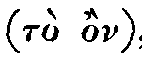
, with the will as an accompaniment, but not from it as a cause, — in order, though not necessarily in time, precedent. This is true filiation. The second is an act of the will and the reason, in their purity strict identities, and therefore not begotten or filiated, but proceeding from intelligent essence and essential intelligence combining in the act, necessarily and coeternally.
For the coexistence of absolute spontaneity with absolute necessity is involved in the very idea of God, one of whose intellectual definitions is, the
synthesis, generative ad extra, et annihilative, etsi inclusive, quoad se,
of all conceivable
antitheses;
even as the best moral definition — (and, O! how much more godlike to us in this state of antithetic intellect is the moral beyond the intellectual!) — is, God is love. This is to us the high prerogative of the moral, that all its dictates immediately reveal the truths of intelligence, whereas the strictly intellectual only by more distant and cold deductions carries us towards the moral. For what is love? Union with the desire of union. God therefore is the cohesion and the oneness of all things; and dark and dim is that system of ethics, which does not take oneness as the root of all virtue. Being, Mind, Love in action, are ideas distinguishable though not divisible; but Will is incapable of distinction or division: it is equally implied in vital action, in essential intelligence, and in effluent love or holy action.
Now will is the true principle of identity, of selfness, even in our common language. The will, therefore, being indistinguishably one, but the possessive powers triply distinguishable, do perforce involve the notion expressed by a Trinity of three Persons and one God. There are three Persons eternally coexisting, in whom the one Will is totally all in each; the truth of which mystery we may know in our own minds, but can understand by no analogy. For "the wind ministrant to divers at the same moment" — thence, to aid the fancy — borrows or rather steals from the mind the idea of 'total
in omni parte
,' which alone furnishes the analogy; but that both it and by it a myriad of other material images do enwrap themselves
in hac veste non sua,
and would be even no objects of conception if they did not; yea, that even the very words, 'conception,' 'comprehension,' and all in all languages that answer to them, suppose this trans-impression from the mind, is an argument better than all analogy.
Serm. XXXV. Mat. xii. 31. p. 341.
Ib.
p. 342. B.
First then, for the first term, sin, we use to ask in the school, whether any action of man's can have rationem demeriti; whether it can be said to offend God, or to deserve ill of God? for whatsoever does so, must have some proportion with God.
This appears to me to furnish an interesting example of the bad consequences in reasoning, as well as in morals, of the
cui bono? cui malo?
system of ethics, — that system which places the good and evil of actions in their painful or pleasurable effects on the sensuous or passive nature of sentient beings, not in the will, the pure act itself. For, according to this system, God must be either a passible and dependent being, — that is, not God, — or else he must have no interest, arid therefore no motive or impulse, to reward virtue or punish vice. The veil which the Epicureans threw over their atheism was itself an implicit atheism. Nay, the world itself could not have existed; and as it does exist, the origin of evil (for if evil means no more than pain
in genere
, evil has a true being in the order of things) is not only a difficulty of impossible solution, but is a fact necessarily implying the non-existence of an omnipotent and infinite goodness, — that is, of God. For to say that I believe in a God, but not that he is omnipotent, omniscient, and all-good, is as mere a contradiction in terms as to say, I believe in a circle, but not that all the rays from its centre to its circumference are equal.
I cannot read the profound truth so clearly expressed by Donne in the next paragraph — "it does not only want that rectitude, but it should have that rectitude, and therefore hath a sinful want" — without an uneasy wonder at its incongruity with the preceding dogmas.
Serm. LXXI. Mat. iv. 18, 19, 20. p. 717.
Ib.
p.725. A.
But still consider, that they did but leave their nets, they did not burn them. And consider, too, that they left but nets, those things which might entangle them, and retard them in their following of Christ, &c.
An excellent paragraph grounded on a mere pun. Such was the taste of the age; and it is an awful joy to observe, that not great learning, great wit, great talent, not even (as far as without great virtue that can be) great genius, were effectual to preserve the man from the contagion, but only the deep and wise enthusiasm of moral feeling. Compare in this light Donne's theological prose even with that of the honest Knox; and, above all, compare Cowley with Milton.
Serm. LXXII. Mat. iv. 18, 19, 20. p. 726.
Ib.
p.727. A.-E.
It is amusing to see the use which the Christian divines make of the very facts in favour of their own religion, with which they triumphantly battered that of the heathens; namely, the gross and sinful anthropomorphitism of their representations of the Deity; and yet the heathen philosophers and priests — Plutarch for instance — tell us as plainly as Donne or Aquinas can do, that these are only accommodations to human modes of conception, — the divine nature being in itself impassible; — how otherwise could it be the prime agent?
Paganism needs a true philosophical judge. Condemned it will be, perhaps, more heavily than by the present judges, but not from the same statutes, nor on the same evidence.
In fine.
If our old divines, in their homiletic expositions of Scripture, wire-drew their text, in the anxiety to evolve out of the words the fulness of the meaning expressed, implied, or suggested, our modern preachers have erred more dangerously in the opposite extreme, by making their text a mere theme, or
motto,
for their discourse. Both err in degree; the old divines, especially the Puritans, by excess, the modern by defect. But there is this difference to the disfavor of the latter, that the defect in degree alters the kind. It was on God's holy word that our Hookers, Donnes, Andrewses preached; it was Scripture bread that they divided, according to the needs and seasons. The preacher of our days expounds, or appears to expound, his own sentiments and conclusions, and thinks himself evangelic enough if he can make the Scripture seem in conformity with them.
Above all, there is something to my mind at once elevating and soothing in the idea of an order of learned men reading the many works of the wise and great, in many languages, for the purpose of making one book contain the life and virtue of all others, for their brethren's use who have but that one to read. What, then, if that one book be such, that the increase of learning is shown by more and more enabling the mind to find them all in it! But such, according to my experience — hard as I am on threescore — the Bible is, as far as all moral, spiritual, and prudential, — all private, domestic, yea, even political, truths arid interests are concerned. The astronomer, chemist, mineralogist, must go elsewhere; but the Bible is the book for the man.
Footnote 1:
The LXXX Sermons, fol. 1640. — Ed.
return to footnote mark
Footnote 2:
"Mr. Coleridge's admiration of Bull and Waterland as high theologians was very great. Bull he used to read in the Latin Defensio Fidei Nicoenoe, using the Jesuit Zola's edition of 1784, which, I think, he bought at Rome. He told me once, that when he was reading a Protestant English Bishop's work on the Trinity, in a copy edited by an Italian Jesuit in Italy, he felt proud of the Church of England, and in good humour with the Church of Rome."
Table Talk,
2d edit. p. 41. — Ed.
return
Footnote 3:
Rom.
vi.3, 4, 5. — Ed.
return
Footnote 4:
John
i 14.
Gal
. iv 4. Ed.
return
Footnote 5:
See the whole argument on the difference of the reason and the understanding, in the
Aids to Reflection
, 3d edit. pp. 206-227. Ed.
return
Footnote 6:
See the author's entire argument upon this subject in the
Church and State
. — Ed.
return
Footnote 7:
Galat
. ii 20. — Ed.
return
Footnote 8:
Compare
Hamlet
, Act V. sc. 1. This sermon was preached, March 8, 1628-9. — Ed.
return
Footnote 9:
C. iii. 13, &c. — Ed.
return
Footnote 10:
See, however, the author's expressions at, I believe, a rather later period.
"I now think, after many doubts, that the passage; I know that my Redeemer liveth, &c. may fairly be taken as a burst of determination, a quasi prophecy. I know not how this can be; but in spite of all my difficulties, this I do know, that I shall be recompensed!"
Table Talk
, 2d edit. p. 80. — Ed.
return
Footnote 11:
How so? Is it not admitted that Robert Stephens first divided the New Testament into verses in 1551? See the testimony to that effect of Henry Stephens, his son, in the Preface to his
Concordance
. — Ed.
return
Footnote 12:
Rom
. viii. 3. Mr. C. afterwards expressed himself to the same effect:
"Christ's body, as mere body, or rather carcase (for body is an associated word), was no more capable of sin or righteousness than mine or yours; that his humanity had a capacity of sin, follows from its own essence. He was of like passions as we, and was tempted. How could he be tempted, if he had no formal capacity of being seduced?"
Table Talk
, 2d edit. p. 261. — Ed.
return
Footnote 13:
See Hooker's admirable declaration of the doctrine: —
"These natures from the moment of their first combination have been and are for ever inseparable. For even when his soul forsook the tabernacle of his body, his Deity forsook neither body nor soul. If it had, then could we not truly hold either that the person of Christ was buried, or that the person of Christ did raise up itself from the dead. For the body separated from the Word can in no true sense be termed the person of Christ; nor is it true to say that the Son of God in raising up that body did raise up himself, if the body were not both with him and of him even during the time it lay in the sepulchre. The like is also to be said of the soul, otherwise we are plainly and inevitably Nestorians. The very person of Christ therefore for ever one and the self-same, was only touching bodily substance concluded within the grave, his soul only from thence severed, but by personal union his Deity still unseparably joined with both."
E. P. V. 52. 4. —
Keble's edit
. Ed.
return
Footnote 14:
xix. 41. — Ed.
return
Footnote 15:
(C.) which should be (B.)
"The object of the preceding discourse was to recommend the Bible as the end and centre of our reading and meditation. I can truly affirm of myself, that my studies have been profitable and availing to me only so far, as I have endeavored to use all my other knowledge as a glass enabling me to receive more light in a wider field of vision from the Word of God."
Ed.
return
Footnote 16:
Ep
. 99. See Pearson,
Art
. v. — Ed.
return