Volume 3 — Heinrichs Commentary on the Apocalypse1
Reading edition
Heinrichs Commentary on the Apocalypse1
P. 245.
It seems clear that Irenæus invented the unmeaning
Teitan
, in order to save himself from the charge of treason, to which the
Lateinos
might have exposed him. See Rabelais
passim
.
P.246.
Nec magis blandiri poterit alterum illud nomen, Teitan, quod studiose commendavit Irenœus.
No!
non studiose, sed ironice commendavit Irenæus
. Indeed it is ridiculous to suppose that Irenæus was in earnest with
Teitan
. His meaning evidently is: — if not
Lateinos
, which has a meaning, it is some one of the many names having the same numeral power, to which a meaning is to be found by the fulfillment of the prophecy. My own conviction is, that the whole is an ill-concerted conundrum, the secret of which died with the author. The general purpose only can be ascertained, namely, some test, partaking of religious obligation, of allegiance to the sovereignty of the Roman Emperor.
If I granted for a moment the truth of Heinrichs's supposition, namely, that, according to the belief of the Apocalypt, the line of the Emperors would cease in Titus the seventh or complete number (Galba, Otho, and Vitellius, being omitted) by the advent of the Messiah; — if I found my judgment more coerced by his arguments than it is, — then I should use this book as evidence of the great and early discrepance between the Jewish-Christian Church and the Pauline; and my present very serious doubts respecting the identity of John the Theologian and John the Evangelist would become fixed convictions of the contrary.
P. 91. Rev. xvii. 11.
Among other grounds for doubting this interpretation (that
the eighth
in v.11. is Satan), I object,
that it almost necessitates the substitution of the Coptic for against all the MSS., and without any Patristic hint. For it seems a play with words unworthy the writer, to make Satan, who possessed all the seven, himself an eighth, and still worse if the eighth:
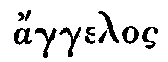
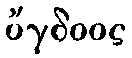
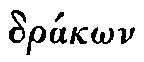
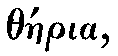
that it is not only a great and causeless inconcinnity in style, but a wanton adding of obscurity to the obscure to have, first, so carefully distinguished (c. xiii. 1-11.) the from the two and the one from the other, and then to make the appellative of the : as if having in one place told of Nicholas senior, Dick and another Dick his cousin, I should soon after talk of Dick, meaning old Nicholas by that name; that is, having discriminated Nicholas from Dick, then to say Dick, meaning Nicholas!
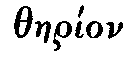
Rev
. xix. 9.
These words might well bear a more recondite interpretation; that is,
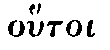
(these blessed ones) are the true
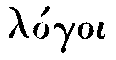
or
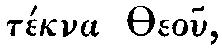
as the Logos is the
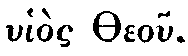
.
Ib.
10.
According to the law of symbolic poetry this sociable angel (the Beatrice of the Hebrew Dante) ought to be, and I doubt not is,
sensu symbolico
, an angel; that is, the angel of the Church of Ephesus, John the Evangelist, according to the opinion of Eusebius.
P. 294. Rev. xx.
Millennium
.
Die vorzüglichsten Bekenner Jesu sollen auferstehen, die übrigen Menschen sollen es nicht. Hiesse jenes, sie sollen noch nach ihrem Tode fortwürken, so wäre das letztere falsch: denn auch die übrigen würken nach ihrem Tode durch ihre schriften, ihre Andenken, ihre Beispiel.
Euge! Heinrichi
. O, the sublime bathos of thy prosaism — the muddy eddy of thy logic! Thou art the only man to understand a poet!
I have too clearly before me the idea of a poet's genius to deem myself other than a very humble poet; but in the very possession of the idea, I know myself so far a poet as to feel assured that I can understand and interpret a poem in the spirit of poetry, and with the poet's spirit. Like the ostrich, I cannot fly, yet have I wings that give me the feeling of flight; and as I sweep along the plain, can look up toward the bird of Jove, and can follow him and say:
"Sovereign of the air, — who descendest on thy nest in the cleft of the inaccessible rock, who makest the mountain pinnacle thy perch and halting-place, and, scanning with steady eye the orb of glory right above thee, imprintest thy lordly talons in the stainless snows, that shoot back and scatter round his glittering shafts, — I pay thee homage. Thou art my king. I give honor due to the vulture, the falcon, and all thy noble baronage; and no less to the lowly bird, the sky-lark, whom thou permittest to visit thy court, and chant her matin song within its cloudy curtains; yea the linnet, the thrush, the swallow, are my brethren: — but still I am a bird, though but a bird of the earth. "Monarch of our kind, I am a bird, even as thou; and I have shed plumes, which have added beauty to the beautiful, and grace to terror, waving over the maiden's brow and on the helmed head of the war-chief; and majesty to grief, drooping o'er the car of death!"
Footnote 1:
Göttingen, 1821. The few following notes are, something out of order, inserted here in consequence of their connection with the immediately preceding remarks in the text. — Ed.
return to footnote mark