Notes on Chapman's Homer.
Reading edition
extract of a letter sent with the volume 1 1807 Chapman I have sent in order that you might read the Odyssey; the Iliad is fine, but less equal in the translation, as well as less interesting in itself. What is stupidly said of Shakspeare, is really true and appropriate of Chapman; mighty faults counterpoised by mighty beauties. Excepting his quaint epithets which he affects to render literally from the Greek, a language above all others blest in the happy marriage of sweet words, and which in our language are mere printer's compound epithets such as quaffed divine joy-in-the-heart-of-man-infusing wine, (the undermarked is to be one word, because one sweet mellifluous word expresses it in Homer); excepting this, it has no look, no air, of a translation. It is as truly an original poem as the Faery Queene; it will give you small idea of Homer, though a far truer one than Pope's epigrams, or Cowper's cumbersome most anti-Homeric Miltonism. For Chapman writes and feels as a poet, as Homer might have written had he lived in England in the reign of Queen Elizabeth. In short, it is an exquisite poem, in spite of its frequent and perverse quaintnesses and harshnesses, which are, however, amply repaid by almost unexampled sweetness and beauty of language, all over spirit and feeling. In the main it is an English heroic poem, the tale of which is borrowed from the Greek. The dedication to the Iliad is a noble copy of verses, especially those sublime lines beginning,
O!'tis wondrous much (Though nothing prisde) that the right vertuous touch Of a well written soule, to vertue moves. Nor haue we soules to purpose, if their loves Of fitting objects be not so inflam'd. How much then, were this kingdome's maine soule maim'd, To want this great inflamer of all powers That move in humane soules! All realmes but yours, Are honor'd with him; and hold blest that state That have his workes to reade and contemplate. In which, humanitie to her height is raisde; Which all the world (yet, none enough) hath praisde. Seas, earth, and heaven, he did in verse comprize; Out sung the Muses, and did equalise Their king Apollo; being so farre from cause Of princes light thoughts, that their gravest lawes May finde stuffe to be fashiond by his lines. Through all the pompe of kingdomes still he shines And graceth all his gracers. Then let lie Your lutes, and viols, and more loftily Make the heroiques of your Homer sung, To drums and trumpets set his Angels tongue: And with the princely sports of haukes you use, Behold the kingly flight of his high Muse: And see how like the Phöenix she renues Her age, and starrie feathers in your sunne; Thousands of yeares attending; everie one Blowing the holy fire, and throwing in Their seasons, kingdomes, nations that have bin Subverted in them; lawes, religions, all Offerd to change, and greedie funerall; Yet still your Homer lasting, living, raigning.
and likewise the 1st, the 11th, and last but one, of the prefatory sonnets to the
Odyssey
. Could I have foreseen any other speedy opportunity, I should have begged your acceptance of the volume in a somewhat handsomer coat; but as it is, it will better represent the sender, to quote from myself
A man disherited, in form and face, By nature and mishap, of outward grace. 2
Chapman in his moral heroic verse, as in this dedication and the prefatory sonnets to his
Odyssey
, stands above Ben Jonson; there is more dignity, more lustre, and equal strength; but not midway quite between him and the sonnets of Milton. I do not know whether I give him the higher praise, in that he reminds me of Ben Jonson with a sense of his superior excellence, or that he brings Milton to memory notwithstanding his inferiority. His moral poems are not quite out of books like Jonson's, nor yet do the sentiments so wholly grow up out of his own natural habit and grandeur of thought, as in Milton. The sentiments have been attracted to him by a natural affinity of his intellect, and so combined;-but Jonson has taken them by individual and successive acts of choice.
3
All this and the preceding is well felt and vigorously, though harshly, expressed, respecting sublime poetry
in genere
; but in reading Homer I look about me, and ask how does all this apply here. For surely never was there plainer writing; there are a thousand charms of sun and moonbeam, ripple, and wave, and stormy billow, but all on the surface. Had Chapman read Proclus and Porphyry? and did he really believe them, or even that they believed themselves? They felt the immense power of a
Bible
, a
Shaster
, a
Koran
. There was none in Greece or Rome, and they tried therefore by subtle allegorical accommodations to conjure the poem of Homer into the
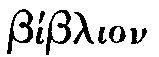
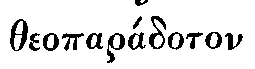
of Greek faith.
4
Chapman's identification of his fate with Homer's, and his complete forgetfulness of the distinction between Christianity and idolatry, under the general feeling of some religion, is very interesting. It is amusing to observe, how familiar Chapman's fancy has become with Homer, his life and its circumstances, though the very existence of any such individual, at l east with regard to the
Iliad
and the
Hymns
, is more than problematic. N. B. The rude engraving in the page was designed by no vulgar hand. It is full of spirit and passion.
5
I am so dull, that neither in the original nor in any translation could I ever find any wit or wise purpose in this poem. The whole humour seems to lie in the names. The frogs and mice are not frogs or mice, but men, and yet they do nothing that conveys any satire. In the Greek there is much beauty of language, but the joke is very flat. This is always the case in rude ages; their serious vein is inimitable, their comic low and low indeed. The psychological cause is easily stated, and copiously exemplifiable.
Footnote 1
: Communicated through Mr. Wordsworth.
Ed.
return to footnote mark
Footnote 2
: Dedication to Prince Henry.
return to footnote mark
Footnote 3
: Footnote 3:
Epistle Dedicatorie to the Odyssey.
return to footnote mark
Footnote 4
:
Epistle Dedicatorie to the Batrachomyomachia
.
return to footnote mark
Footnote 5
: End of the
Batrachomyomachia
return to footnote mark
Contents Contents, p.2