A Course of Lectures (continued 2)
Reading edition
Rabelais laughing in his easy chair
of Mr. Pope. The caricature of his filth and zanyism proves how fully he both knew and felt the danger in which he stood. I could write a treatise in proof and praise of the morality and moral elevation of Rabelais' work which would make the church stare and the conventicle groan, and yet should be the truth and nothing but the truth. I class Rabelais with the creative minds of the world, Shakspeare, Dante, Cervantes, &c.
All Rabelais' personages are phantasmagoric allegories, but Panurge above all. He is throughout the
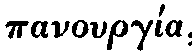
the wisdom, that is, the cunning of the human animal, the understanding, as the faculty of means to purposes without ultimate ends, in the most comprehensive sense, and including art, sensuous fancy, and all the passions of the understanding. It is impossible to read Rabelais without an admiration mixed with wonder at the depth and extent of his learning, his multifarious knowledge, and original observation beyond what books could in that age have supplied him with.
(B. III. c. 9.) How Panurge asketh counsel of Pantagruel, whether he should marry, yea or no.
Note this incomparable chapter. Pantagruel stands for the reason as contradistinguished from the understanding and choice, that is, from Panurge; and the humour consists in the latter asking advice of the former on a subject in which the reason can only give the inevitable conclusion, the syllogistic
ergo
, from the premisses provided by the understanding itself, which puts each case so as of necessity to predetermine the verdict thereon. This chapter, independently of the allegory, is an exquisite satire on the spirit in which people commonly ask advice.
Footnote 1
: No note remains of that part of this Lecture which treated of Rabelais. This seems, therefore, a convenient place for the reception of some remarks written by Mr. C. in Mr. Gillman's copy of Rabelais, about the year 1825. See
Table Talk
, vol. i. p. 177.
Ed.
return to footnote mark
Swift 1
Born in Dublin, 1667. Died 1745.
In Swift's writings there is a false misanthropy grounded upon an exclusive contemplation of the vices and follies of mankind, and this misanthropic tone is also disfigured or brutalized by his obtrusion of physical dirt and coarseness. I think
Gulliver's Travels
the great work of Swift. In the voyages to Lilliput and Brobdingnag he displays the littleness and moral contemptibility of human nature; in that to the Houyhnhnms he represents the disgusting spectacle of man with the understanding only, without the reason or the moral feeling, and in his horse he gives the misanthropic ideal of man that is, a being virtuous from rule and duty, but untouched by the principle of love.
Footnote 1
: From Mr. Green's note.
Ed.
Sterne
Born at Clonmel, 1713. Died 1768.
With regard to Sterne, and the charge of licentiousness which presses so seriously upon his character as a writer, I would remark that there is a sort of knowingness, the wit of which depends 1st, on the modesty it gives pain to; or, 2dly, on the innocence and innocent ignorance over which it triumphs; or, 3dly, on a certain oscillation in the individual's own mind between the remaining good and the encroaching evil of his nature a sort of dallying with the devil a fluxionary act of combining courage and cowardice, as when a man snuffs a candle with his fingers for the first time, or better still, perhaps, like that trembling daring with which a child touches a hot tea urn, because it has been forbidden; so that the mind has in its own white and black angel the same or similar amusement, as may be supposed to take place between an old debauchee and a prude, she feeling resentment, on the one hand, from a prudential anxiety to preserve appearances and have a character, and, on the other, an inward sympathy with the enemy. We have only to suppose society innocent, and then nine-tenths of this sort of wit would be like a stone that falls in snow, making no sound because exciting no resistance; the remainder rests on its being an offence against the good manners of human nature itself.
This source, unworthy as it is, may doubtless be combined with wit, drollery, fancy, and even humour, and we have only to regret the misalliance; but that the latter are quite distinct from the former, may be made evident by abstracting in our imagination the morality of the characters of Mr. Shandy, my Uncle Toby, and Trim, which are all antagonists to this spurious sort of wit, from the rest of Tristram Shandy, and by supposing, instead of them, the presence of two or three callous debauchees. The result will be pure disgust. Sterne cannot be too severely censured for thus using the best dispositions of our nature as the panders and condiments for the basest.
The excellencies of Sterne consist
1.
In bringing forward into distinct consciousness those minutiae of thought and feeling which appear trifles, yet have an importance for the moment, and which almost every man feels in one way or other. Thus is produced the novelty of an individual peculiarity, together with the interest of a something that belongs to our common nature. In short, Sterne seizes happily on those points, in which every man is more or less a humourist. And, indeed, to be a little more subtle, the propensity to notice these things does itself constitute the humourist, and the superadded power of so presenting them to men in general gives us the man of humour. Hence the difference of the man of humour, the effect of whose portraits does not depend on the felt presence of himself, as a humourist, as in the instances of Cervantes and Shakspeare nay, of Rabelais too; and of the humourist, the effect of whose works does very much depend on the sense of his own oddity, as in Sterne's case, and perhaps Swift's; though Swift again would require a separate classification.
2.
In the traits of human nature, which so easily assume a particular cast and colour from individual character. Hence this excellence and the pathos connected with it quickly pass into humour, and form the ground of it. See particularly the beautiful passage, so well known, of Uncle Toby's catching and liberating the fly:
"Go," says he, one day at dinner, to an overgrown one which had buzzed about his nose, and tormented him cruelly all dinner-time, and which, after infinite attempts, he had caught at last, as it flew by him; "I'll not hurt thee," says my Uncle Toby, rising from his chair, and going across the room, with the fly in his hand, "I'll not hurt a hair of thy head: Go," says he, lifting up the sash, and opening his hand as he spoke, to let it escape; "go, poor devil, get thee gone, why should I hurt thee? This world is surely wide enough to hold both thee and me." (Vol. ii. ch. 12.)
Observe in this incident how individual character may be given by the mere delicacy of presentation and elevation in degree of a common good quality, humanity, which in itself would not be characteristic at all.
3.
In Mr. Shandy's character, the essence of which is a craving for sympathy in exact proportion to the oddity and unsympathizability of what he proposes; this coupled with an instinctive desire to be at least disputed with, or rather both in one, to dispute and yet to agree and holding as worst of all to acquiesce without either resistance or sympathy. This is charmingly, indeed, profoundly conceived, and is psychologically and ethically true of all Mr. Shandies. Note, too, how the contrasts of character, which are always either balanced or remedied, increase the love between the brothers.
4.
No writer is so happy as Sterne in the unexaggerated and truly natural representation of that species of slander, which consists in gossiping about our neighbours, as whetstones of our moral discrimination; as if they were conscience-blocks which we used in our apprenticeship, in order not to waste such precious materials as our own consciences in the trimming and shaping of ourselves by self-examination:
Alas o'day! had Mrs. Shandy (poor gentlewoman!) had but her wish in going up to town just to lie in and come down again; which, they say, she begged and prayed for upon her bare knees, and which, in my opinion, considering the fortune which Mr. Shandy got with her, was no such mighty matter to have complied with, the lady and her babe might both of them have been alive at this hour. (Vol. i. c. 18.)
5.
When you have secured a man's likings and prejudices in your favour, you may then safely appeal to his impartial judgment. In the following passage not only is acute sense shrouded in wit, but a life and a character are added which exalt the whole into the dramatic:
"I see plainly, Sir, by your looks" (or as the case happened) my father would say "that you do not heartily subscribe to this opinion of mine which, to those," he would add, "who have not carefully sifted it to the bottom, I own has an air more of fancy than of solid reasoning in it; and yet, my dear Sir, if I may presume to know your character, I am morally assured, I should hazard little in stating a case to you, not as a party in the dispute, but as a judge, and trusting my appeal upon it to your good sense and candid disquisition in this matter; you are a person free from as many narrow prejudices of education as most men; and, if I may presume to penetrate farther into you, of a liberality of genius above bearing down an opinion, merely because it wants friends. Your son, your dear son, from whose sweet and open temper you have so much to expect, your Billy, Sir! would you, for the world, have called him JUDAS? Would you, my dear Sir," he would say, laying his hand upon your breast, with the genteelest address, and in that soft and irresistible piano of voice which the nature of the argumentum ad hominem absolutely requires, "Would you, Sir, if a Jew of a godfather had proposed the name for your child, and offered you his purse along with it, would you have consented to such a desecration of him? O my God!" he would say, looking up, "if I know your temper rightly, Sir, you are incapable of it; you would have trampled upon the offer; you would have thrown the temptation at the tempter's head with abhorrence. Your greatness of mind in this action, which I admire, with that generous contempt of money, which you show me in the whole transaction, is really noble; and what renders it more so, is the principle of it; the workings of a parent's love upon the truth and conviction of this very hypothesis, namely, that were your son called Judas, the sordid and treacherous idea, so inseparable from the name, would have accompanied him through life like his shadow, and in the end made a miser and a rascal of him, in spite, Sir, of your example." (Vol. i. c. 19.)
6.
There is great physiognomic tact in Sterne. See it particularly displayed in his description of Dr. Slop, accompanied with all that happiest use of drapery and attitude, which at once give reality by individualizing and vividness by unusual, yet probable, combinations:
Imagine to yourself a little squat, uncourtly figure of a Doctor Slop, of about four feet and a half perpendicular height, with a breadth of back, and a sesquipedality of belly, which might have done honour to a serjeant in the horseguards. ... Imagine such a one; for such I say, were the outlines of Dr. Slop's figure, coming slowly along, foot by foot, waddling through the dirt upon the vertebræ of a little diminutive pony, of a pretty colour but of strength, alack! scarce able to have made an amble of it, under such a fardel, had the roads been in an ambling condition; they were not. Imagine to yourself Obadiah mounted upon a strong monster of a coach-horse, pricked into a full gallop, and making all practicable speed the adverse way. (Vol. ii. c. 9.)
7.
I think there is more humour in the single remark, which I have quoted before "Learned men, brother Toby, don't write dialogues upon long noses for nothing!" than in the whole Slawkenburghian tale that follows, which is mere oddity interspersed with drollery.
8.
Note Sterne's assertion of, and faith in, a moral good in the characters of Trim, Toby, &c. as contrasted with the cold scepticism of motives which is the stamp of the Jacobin spirit. (Vol. v. c. 9.)
9.
You must bear in mind, in order to do justice to Rabelais and Sterne, that by right of humoristic universality each part is essentially a whole in itself. Hence the digressive spirit is not mere wantonness, but in fact the very form and vehicle of their genius. The connection, such as was needed, is given by the continuity of the characters.
Instances of different forms of wit, taken largely:
1.
Why are you reading romances at your age?" "Why, I used to be fond of history, but I have given it up, it was so grossly improbable."
2.
"Pray, sir, do it! although you have promised me."
3.
The Spartan mother's
"Return with, or on, thy shield." "My sword is too short!" "Take a step forwarder."
4.
The Gasconade:
"I believe you, Sir! but you will excuse my repeating it on account of my provincial accent."
5.
Pasquil on Pope Urban, who had employed a committee to rip up the old errors of his predecessors.
Some one placed a pair of spurs on the heels of the statue of St. Peter, and a label from the opposite statue of St. Paul, on the same bridge;
St. Paul. "Whither then are you bound?" St. Peter. "I apprehend danger here;- they'll soon call me in question for denying my Master." St. Paul. "Nay, then, I had better be off too; for they'll question me for having persecuted the Christians, before my conversion."
6.
Speaking of the small German potentates, I dictated the phrase,
officious for equivalents.
This my amanuensis wrote,
fishing for elephants;
which, as I observed at the time, was a sort of Noah's angling, that could hardly have occurred, except at the commencement of the Deluge.
Contents Contents, p.2
Lecture X. Donne Dante Mlton Paradise Lost
Donne 1
Born in London, 1573. Died, 1631 4th July, 1796.
I. 2 With Donne, whose muse on dromedary trots, Wreathe iron pokers into true-love knots; Rhyme's sturdy cripple, fancy's maze and clue, Wit's forge and fire-blast, meaning's press and screw. II See lewdness and theology combin'd, A cynic and a sycophantic mind; A fancy shar'd party per pale between Death's heads and skeletons and Aretine! Not his peculiar defect or crime, But the true current mintage of the time. Such were the establish'd signs and tokens given To mark a loyal churchman, sound and even, Free from papistic and fanatic leaven.
The wit of Donne, the wit of Butler, the wit of Pope, the wit of Congreve, the wit of Sheridan how many disparate things are here expressed by one and the same word, Wit! Wonder-exciting vigour, intenseness and peculiarity of thought, using at will the almost boundless stores of a capacious memory, and exercised on subjects, where we have no right to expect it this is the wit of Donne! The four others I am just in the mood to describe and inter-distinguish; what a pity that the marginal space will not let me!
My face in thine eye, thine in mine appears, And true plain hearts do in the faces rest; Where can we find two fitter hemispheres Without sharp north, without declining west? Good-Morrow, v. 15, &c.
The sense is; Our mutual loves may in many respects be fitly compared to corresponding hemispheres; but as no simile squares (
nihil simile est idem
), so here the simile fails, for there is nothing in our loves that corresponds to the cold north, or the declining west, which in two hemispheres must necessarily be supposed. But an ellipse of such length will scarcely rescue the line from the charge of nonsense or a bull.
January,
1829.
Woman's constancy.
A misnomer. The title ought to be
Mutual Inconstancy. Whether both th' Indias of spice and mine, &c. Sun Rising, v. 17. And see at night thy western land of mine, &c. Progress of the Soul, 1 Song, 2. st.
This use of the word
mine
specifically for mines of gold, silver, or precious stones, is, I believe, peculiar to Donne.
Footnote 1
: Nothing remains of what was said on Donne in this Lecture. Here, therefore, as in previous like instances, the gap is filled up with some notes written by Mr. Coleridge in a volume of Chalmers's
Poets
, belonging to Mr. Gillman.
Ed.
return to footnote mark
Footnote 2
: The verses were added in pencil to the collection of commendatory lines; No. I. is Mr. C.'s; the publication of No. II. I trust the all-accomplished author will, under the circumstances, pardon. Numerous and elaborate notes by Mr. Coleridge on Donne's
Sermons
are in existence, and will be published hereafter.
Ed.
return to footnote mark
Dante
Born at Florence, 1265. Died, 1321.
As I remarked in a former Lecture on a different subject (for subjects the most diverse in literature have still their tangents), the Gothic character, and its good and evil fruits, appeared less in Italy than in any other part of European Christendom. There was accordingly much less romance, as that word is commonly understood; or, perhaps, more truly stated, there was romance instead of chivalry. In Italy, an earlier imitation of, and a more evident and intentional blending with, the Latin literature took place than elsewhere. The operation of the feudal system, too, was incalculably weaker, of that singular chain of independent interdependents, the principle of which was a confederacy for the preservation of individual, consistently with general, freedom. In short, Italy, in the time of Dante, was an afterbirth of eldest Greece, a renewal or a reflex of the old Italy under its kings and first Roman consuls, a net-work of free little republics, with the same domestic feuds, civil wars, and party spirit, the same vices and virtues produced on a similarly narrow theatre, the existing state of things being, as in all small democracies, under the working and direction of certain individuals, to whose will even the laws were swayed; whilst at the same time the singular spectacle was exhibited amidst all this confusion of the flourishing of commerce, and the protection and encouragement of letters and arts. Never was the commercial spirit so well reconciled to the nobler principles of social polity as in Florence. It tended there to union and permanence and elevation, not as the overbalance of it in England is now doing, to dislocation, change and moral degradation. The intensest patriotism reigned in these communities, but confined and attached exclusively to the small locality of the patriot's birth and residence; whereas in the true Gothic feudalism, country was nothing but the preservation of personal independence. But then, on the other hand, as a counterbalance to these disuniting elements, there was in Dante's Italy, as in Greece, a much greater uniformity of religion common to all than amongst the northern nations.
Upon these hints the history of the republican aeras of ancient Greece and modern Italy ought to be written. There are three kinds or stages of historic narrative:
1.
that of the annalist or chronicler, who deals merely in facts and events arranged in order of time, having no principle of selection, no plan of arrangement, and whose work properly constitutes a supplement to the poetical writings of romance or heroic legends:
2.
that of the writer who takes his stand on some moral point, and selects a series of events for the express purpose of illustrating it, and in whose hands the narrative of the selected events is modified by the principle of selection; as Thucydides, whose object was to describe the evils of democratic and aristocratic partizanships; or Polybius, whose design was to show the social benefits resulting from the triumph and grandeur of Rome, in public institutions and military discipline; or Tacitus, whose secret aim was to exhibit the pressure and corruptions of despotism; in all which writers and others like them, the ground-object of the historian colours with artificial lights the facts which he relates:
3.
and which in idea is the grandest-the most truly, founded in philosophy there is the Herodotean history, which is not composed with reference to any particular causes, but attempts to describe human nature itself on a great scale as a portion of the drama of providence, the free will of man resisting the destiny of events, for the individuals often succeeding against it, but for the race always yielding to it, and in the resistance itself invariably affording means towards the completion of the ultimate result. Mitford's history is a good and useful work; but in his zeal against democratic government, Mitford forgot, or never saw, that ancient Greece was not, nor ought ever to be considered, a permanent thing, but that it existed, in the disposition of providence, as a proclaimer of ideal truths, and that everlasting proclamation being made, that its functions were naturally at an end.
However, in the height of such a state of society in Italy, Dante was born and flourished; and was himself eminently a picture of the age in which he lived. But of more importance even than this, to a right understanding of Dante, is the consideration that the scholastic philosophy was then at its acme even in itself; but more especially in Italy, where it never prevailed so exclusively as northward of the Alps. It is impossible to understand the genius of Dante, and difficult to understand his poem, without some knowledge of the characters, studies, and writings of the schoolmen of the twelfth, thirteenth, and fourteenth centuries. For Dante was the living link between religion and philosophy; he philosophized the religion and christianized the philosophy of Italy; and, in this poetic union of religion and philosophy, he became the ground of transition into the mixed Platonism and Aristotelianism of the Schools, under which, by numerous minute articles of faith and ceremony, Christianity became a craft of hair-splitting, and was ultimately degraded into a complete
fetisch
worship, divorced from philosophy, and made up of a faith without thought, and a credulity directed by passion. Afterwards, indeed, philosophy revived under condition of defending this very superstition; and, in so doing, it necessarily led the way to its subversion, and that in exact proportion to the influence of the philosophic schools. Hence it did its work most completely in Germany, then in England, next in France, then in Spain, least of all in Italy. We must, therefore, take the poetry of Dante as christianized, but without the further Gothic accession of proper chivalry. It was at a somewhat later period, that the importations from the East, through the Venetian commerce and the crusading armaments, exercised a peculiarly strong influence on Italy.
In studying Dante, therefore, we must consider carefully the differences produced, first, by allegory being substituted for polytheism; and secondly and mainly, by the opposition of Christianity to the spirit of pagan Greece, which receiving the very names of its gods from Egypt, soon deprived them of all that was universal. The Greeks changed the ideas into finites, and these finites into
anthropomorphi,
or forms of men. Hence their religion, their poetry, nay, their very pictures, became statuesque. With them the form was the end. The reverse of this was the natural effect of Christianity; in which finites, even the human form, must, in order to satisfy the mind, be brought into connexion with, and be in fact symbolical of, the infinite; and must be considered in some enduring, however shadowy and indistinct, point of view, as the vehicle or representative of moral truth.
Hence resulted two great effects; a combination of poetry with doctrine, and, by turning the mind inward on its own essence instead of letting it act only on its outward circumstances and communities, a combination of poetry with sentiment. And it is this inwardness or subjectivity, which principally and most fundamentally distinguishes all the classic from all the modern poetry. Compare the passage in the
Iliad
(Z. vi. 119-236.) in which Diomed and Glaucus change arms,
They took each other by the hand, and pledged friendship

with the scene in
Ariosto
(Orlando Furioso, c. i. st. 20-22.), where Rinaldo and Ferrauto fight and afterwards make it up:
Al Pagan la proposta non dispiacque: Così fu differita la tenzone; E tal tregua tra lor subito nacque, Sì l' odio e l' ira va in oblivïone, Che 'l Pagano al partir dalle fresche acque Non lasciò a piede il buon figliuol d' Amone: Con preghi invita, e al fin lo toglie in groppa, E per l' orme d' Angelica galoppa.
Here Homer would have left it. But the Christian poet has his own feelings to express, and goes on:
Oh gran bontà de' cavalieri antiqui! Eran rivali, eran di fè diversi, E si sentían degli aspri colpi iniqui Per tutta la persona anco dolersi; E pur per selve oscure e calli obbliqui Insieme van senza sospetto aversi!
And here you will observe, that the reaction of Ariosto's own feelings on the image or act is more fore-grounded (to use a painter's phrase) than the image or act itself.
The two different modes in which the imagination is acted on by the ancient and modern poetry, may be illustrated by the parallel effects caused by the contemplation of the Greek or Roman-Greek architecture, compared with the Gothic. In the Pantheon, the whole is perceived in a perceived harmony with the parts which compose it; and generally you will remember that where the parts preserve any distinct individuality, there simple beauty, or beauty simply, arises; but where the parts melt undistinguished into the whole, there majestic beauty, or majesty, is the result. In York Minster, the parts, the grotesques, are in themselves very sharply distinct and separate, and this distinction and separation of the parts is counterbalanced only by the multitude and variety of those parts, by which the attention is bewildered; whilst the whole, or that there is a whole produced, is altogether a feeling in which the several thousand distinct impressions lose themselves as in a universal solvent. Hence in a Gothic cathedral, as in a prospect from a mountain's top, there is, indeed, a unity, an awful oneness; but it is, because all distinction evades the eye. And just such is the distinction between the
Antigone
of Sophocles and the
Hamlet
of Shakespeare.
The
Divina Commedia
is a system of moral, political, and theological truths, with arbitrary personal exemplifications, which are not, in my opinion, allegorical. I do not even feel convinced that the punishments in the Inferno are strictly allegorical. I rather take them to have been in Dante's mind
quasi
-allegorical, or conceived in analogy to pure allegory.
I have said, that a combination of poetry with doctrines, is one of the characteristics of the Christian muse; but I think Dante has not succeeded in effecting this combination nearly so well as Milton.
This comparative failure of Dante, as also some other peculiarities of his mind, in
malam partem,
must be immediately attributed to the state of North Italy in his time, which is vividly represented in Dante's life; a state of intense democratical partizanship, in which an exaggerated importance was attached to individuals, and which whilst it afforded a vast field for the intellect, opened also a boundless arena for the passions, and in which envy, jealousy, hatred, and other malignant feelings, could and did assume the form of patriotism, even to the individual's own conscience.
All this common, and, as it were, natural partizanship, was aggravated arid coloured by the Guelf and Ghibelline factions; and, in part explanation of Dante's adherence to the latter, you must particularly remark, that the Pope had recently territorialized his authority to a great extent, and that this increase of territorial power in the church, was by no means the same beneficial movement for the citizens of free republics, as the parallel advance in other countries was for those who groaned as vassals under the oppression of the circumjacent baronial castles.
1
By way of preparation to a satisfactory perusal of the
Divina Commedia
, I will now proceed to state what I consider to be Dante's chief excellences as a poet. And I begin with:
I.
Style the vividness, logical connexion, strength and energy of which cannot be surpassed. In this I think Dante superior to Milton; and his style is accordingly more imitable than Milton's, and does to this day exercise a greater influence on the literature of his country. You cannot read Dante without feeling a gush of manliness of thought within you. Dante was very sensible of his own excellence in this particular, and speaks of poets as guardians of the vast armory of language, which is the intermediate something between matter and spirit:
Or se' tu quel Virgilio, e quella fonte, Che spande di parlar sì largo fiume? Risposi lui con vergognosa fronte. O degli altri poeti onore e lume, Vagliami 'l lungo studio e 'l grande amore, Che m' han fatto cercar lo tuo volume. Tu se' lo mio maestro, e 'l mio autore: Tu se' solo colui, da cu' io tolsi Lo bello stile, che m' ha fatto onore. (Inf. c. 1. v. 79.) "And art thou then that Virgil, that well-spring, From which such copious floods of eloquence Have issued?" I, with front abash'd, replied: "Glory and light of all the tuneful train! May it avail me, that I long with zeal Have sought thy volume, and with love immense Have conn'd it o'er. My master, thou, and guide! Thou he from whom I have alone deriv'd That style, which for its beauty into fame Exalts me." (Cary. [his translation. html Ed.])
Indeed there was a passion and a miracle of words in the twelfth and thirteenth centuries, after the long slumber of language in barbarism, which gave an almost romantic character, a virtuous quality and power, to what was read in a book, independently of the thoughts or images contained in it. This feeling is very often perceptible in Dante.
II.
The Images in Dante are not only taken from obvious nature, and are all intelligible to all, but are ever conjoined with the universal feeling received from nature, and therefore affect the general feelings of all men. And in this respect, Dante's excellence is very great, and may be contrasted with the idiosyncracies of some meritorious modern poets, who attempt an eruditeness, the result of particular feelings. Consider the simplicity, I may say plainness, of the following simile, and how differently we should in all probability deal with it at the present day:
Quale i fioretti dal notturno gelo Chinati e chiusi, poi che 'l sol gl' imbianca, Si drizzan tutti aperti in loro stelo, Fal mi fec' io di mia virtute stanca; (Inf. c. 2. v. 127.) As florets, by the frosty air of night Bent down and clos'd, when day has blanch'd their leaves, Rise all unfolded on their spiry stems, So was my fainting vigour new restor'd. (Cary. 2)
III.
Consider the wonderful profoundness of the whole third canto of the
Inferno
; and especially of the inscription over Hell gate:
Per me si va, &c.
which can only be explained by a meditation on the true nature of religion; that is, reason
plus
the understanding. I say profoundness rather than sublimity; for Dante does not so much elevate your thoughts as send them down deeper. In this canto all the images are distinct, and even vividly distinct; but there is a total impression of infinity; the wholeness is not in vision or conception, but in an inner feeling of totality, and absolute being.
IV.
In picturesqueness, Dante is beyond all other poets, modern or ancient, and more in the stern style of Pindar, than of any other. Michel Angelo is said to have made a design for every page of the
Divina Commedia
. As superexcellent in this respect, I would note the conclusion of the third canto of the
Inferno
:
Ed ecco verso noi venir per nave Un vecchio bianco per antico pelo Gridando: guai a voi anime prave: &c. ... (Ver. 82. &c.) And lo! toward us in a bark Comes on an old man, hoary white with eld, Crying, "Woe to you wicked spirits!" ... (Cary.) Caron dimonio con occhi di bragia Loro accennando, tutte le raccoglie: Batte col remo qualunque s' adagia. Come d' autunno si levan le foglie L' una appresso dell altra, infin che 'l ramo Rende alia terra tutte le sue spoglie; Similemente il mal seme d' Adamo, Gittansi di quel lito ad una ad una Per cenni, com' augel per suo richiamo. (Ver. 100, &c.) Charon, demoniac form, With eyes of burning coal, collects them all, Beck'ning, and each that lingers, with his oar Strikes. As fall off the light autumnal leaves, One still another following, till the bough Strews all its honours on the earth beneath; E'en in like manner Adam's evil brood Cast themselves one by one down from the shore Each at a beck, as falcon at his call. (Cary.)
And this passage, which I think admirably picturesque:
Ma poco valse, che l' ale al sospetto Non potero avanzar: quegli andò sotto, E quei drizzò, volando, suso il petto. Non altrimenti l' anitra di botto, Quando 'l falcon s' appressa, giù s' attuffa, Ed ei ritorna su crucciato e rotto. Irato Calcabrina della buffa, Volando dietro gli tenne, invaghito, Che quei campasse, per aver la zuffa: E come 'l barattier fu disparito, Cosi volse gli artigli al suo compagno, E fu con lui sovra 'l fosso ghermito. Ma l' altro fu bene sparvier grifagno Ad artigliar ben lui, e amedue Cadder nel mezzo del bollente stagno. Lo caldo sghermidor subito fue: Ma però di levarsi era niente, Si aveano inviscate l' ale sue. (Infer. c. xxii. ver. 127, &c.) But little it avail'd: terror outstripp'd His following flight: the other plung'd beneath, And he with upward pinion rais'd his breast: E'en thus the water-fowl, when she perceives The falcon near, dives instant down, while he Enrag'd and spent retires. That mockery In Calcabrina fury stirr'd, who flew After him, with desire of strife inflam'd; And, for the barterer had 'scap'd, so turn'd His talons on his comrade. O'er the dyke In grapple close they join'd; but th' other prov'd A goshawk, able to rend well his foe; And in the boiling lake both fell. The heat Was umpire soon between them, but in vain To lift themselves they strove, so fast were glued Their pennons. (Cary.)
V.
Very closely connected with this picturesqueness, is the topographic reality of Dante's journey through Hell. You should note and dwell on this as one of his great charms, and which gives a striking peculiarity to his poetic power. He thus takes the thousand delusive forms of a nature worse than chaos, having no reality but from the passions which they excite, and compels them into the service of the permanent. Observe the exceeding truth of these lines:
Noi ricidemmo 'l cerchio all' altra riva, Sovr' una fonte che bolle, e riversa, Per un fossato che da lei diriva. L' acqua era buja molto più che persa: E noi in compagnia dell' onde bige Entrammo giù per una via diversa. Una palude fa, ch' ha nome Stige, Questo tristo ruscel, quando è disceso Al piè delle maligne piagge grige. Ed io che di mirar mi stava inteso, Vidi genti fangose in quel pantano Ignude tutte, e con sembiante offeso. Questi si percotean non pur con mano, Ma con la testa, e col petto, e co' piedi, Troncandosi co' denti a brano a brano. ... Così girammo della lorda pozza Grand' arco tra la ripa secca e 'l mezzo, Con gli occhi volti a chi del fango ingozza: Venimmo appiù d' una torre al dassezzo. (C. vii. ver. 100 and 127.) We the circle cross'd To the next steep, arriving at a well, That boiling pours itself down to a foss Sluic'd from its source. Far murkier was the wave Than sablest grain: and we in company Of th' inky waters, journeying by their side, Enter'd, though by a different track, beneath. Into a lake, the Stygian nam'd, expands The dismal stream, when it hath reach'd the foot Of the grey wither'd cliffs. Intent I stood To gaze, and in the marish sunk, descried A miry tribe, all naked, and with looks Betok'ning rage. They with their hands alone Struck not, but with the head, the breast, the feet, Cutting each other piecemeal with their fangs. ... Our route Thus compass'd, we a segment widely stretch'd Between the dry embankment and the cove Of the loath'd pool, turning meanwhile our eyes Downward on those who gulp'd its muddy lees; Nor stopp'd, till to a tower's low base we came. (Cary.)
VI.
For Dante's power, his absolute mastery over, although rare exhibition of, the pathetic, I can do no more than refer to the passages on Francesca di Rimini (
Infer
. C. v. ver. 73 to the end.) and on Ugolino, (
Infer
. C. xxxiii. ver. 1. to 75.) They are so well known, and rightly so admired, that it would be pedantry to analyze their composition; but you will note that the first is the pathos of passion, the second that of affection; and yet even in the first, you seem to perceive that the lovers have sacrificed their passion to the cherishing of a deep and rememberable impression.
VII.
As to going into the endless subtle beauties of Dante, that is impossible; but I cannot help citing the first triplet of the 29th canto of the
Inferno
:
La molta gente e le diverse piaghe Avean le luci mie sì inebriate, Che dello stare a piangere eran vaghe. So were mine eyes inebriate with the view Of the vast multitude, whom various wounds Disfigur'd, that they long'd to stay and weep. (Cary.)
Nor have I now room for any specific comparison of Dante with Milton. But if I had, I would institute it upon the ground of the last canto of the
Inferno
from the 1st to the 69th line, and from the 106th to the end. And in this comparison I should notice Dante's occasional fault of becoming grotesque from being too graphic without imagination; as in his Lucifer compared with Milton's Satan. Indeed he is sometimes horrible rather than terrible, falling into the
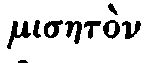
instead of the
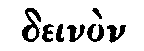
of Longinus ; in
3
other words, many of his images excite bodily disgust, and not moral fear. But here, as in other cases, you may perceive that the faults of great authors are generally excellencies carried to an excess.
Footnote 1
: Mr. Coleridge here notes: "I will, if I can, here make an historical movement, and pay a proper compliment to Mr. Hallam." Ed.
return to footnote mark
Footnote 2
: Mr. Coleridge here notes: "Here to speak of Mr. Cary's translation."
Ed.
return to footnote mark
Footnote 3
:
De Subl
. 1. ix.
Milton
Born in London, 1608. Died, 1674
If we divide the period from the accession of Elizabeth to the Protectorate of Cromwell into two unequal portions, the first ending with the death of James I. the other comprehending the reign of Charles and the brief glories of the Republic, we are forcibly struck with a difference in the character of the illustrious actors, by whom each period is rendered severally memorable. Or rather, the difference in the characters of the great men in each period, leads us to make this division.
Eminent as the intellectual powers were that were displayed in both; yet in the number of great men, in the various sorts of excellence, and not merely in the variety but almost diversity of talents united in the same individual, the age of Charles falls short of its predecessor; and the stars of the Parliament, keen as their radiance was, in fulness and richness of lustre, yield to the constellation at the court of Elizabeth; which can only be paralleled by Greece in her brightest moment, when the titles of the poet, the philosopher, the historian, the statesman and the general not seldom formed a garland round the same head, as in the instances of our Sidneys and Raleighs. But then, on the other hand, there was a vehemence of will, an enthusiasm of principle, a depth and an earnestness of spirit, which the charms of individual fame and personal aggrandisement could not pacify, an aspiration after reality, permanence, and general good, in short, a moral grandeur in the latter period, with which the low intrigues, Machiavellic maxims, and selfish and servile ambition of the former, stand in painful contrast.
The causes of this it belongs not to the present occasion to detail at length; but a mere allusion to the quick succession of revolutions in religion, breeding a political indifference in the mass of men to religion itself, the enormous increase of the royal power in consequence of the humiliation of the nobility and the clergy the transference of the papal authority to the crown, the unfixed state of Elizabeth's own opinions, whose inclinations were as popish as her interests were protestant the controversial extravagance and practical imbecility of her successor will help to explain the former period; and the persecutions that had given a life and soul-interest to the disputes so imprudently fostered by James, the ardour of a conscious increase of power in the commons, and the greater austerity of manners and maxims, the natural product and most formidable weapon of religious disputation, not merely in conjunction, but in closest combination, with newly awakened political and republican zeal, these perhaps account for the character of the latter aera.
In the close of the former period, and during the bloom of the latter, the poet Milton was educated and formed; and he survived the latter, and all the fond hopes and aspirations which had been its life; and so in evil days, standing as the representative of the combined excellence of both periods, he produced the
Paradise Lost
as by an after-throe of nature. "There are some persons (observes a divine, a contemporary of Milton's) of whom the grace of God takes early hold, and the good spirit inhabiting them, carries them on in an even constancy through innocence into virtue, their Christianity bearing equal date with their manhood, and reason and religion, like warp and woof, running together, make up one web of a wise and exemplary life. This (he adds) is a most happy case, wherever it happens; for, besides that there is no sweeter or more lovely thing on earth than the early buds of piety, which drew from our Saviour signal affection to the beloved disciple, it is better to have no wound than to experience the most sovereign balsam, which, if it work a cure, yet usually leaves a scar behind." Although it was and is my intention to defer the consideration of Milton's own character to the conclusion of this Lecture, yet I could not prevail on myself to approach the
Paradise Lost
without impressing on your minds the conditions under which such a work was in fact producible at all, the original genius having been assumed as the immediate agent and efficient cause; and these conditions I find in the character of the times and in his own character. The age in which the foundations of his mind were laid, was congenial to it as one golden era of profound erudition and individual genius; that in which the superstructure was carried up, was no less favourable to it by a sternness of discipline and a show of self-control, highly flattering to the imaginative dignity of an heir of fame, and which won Milton over from the dear-loved delights of academic groves and cathedral aisles to the anti-prelatic party. It acted on him, too, no doubt, and modified his studies by a characteristic controversial spirit, (his presentation of God is tinted with it) a spirit not less busy indeed in political than in theological and ecclesiastical dispute, but carrying on the former almost always, more or less, in the guise of the latter.
And so far as Pope's censure
1
of our poet, that he makes God the Father a school divine is just, we must attribute it to the character of his age, from which the men of genius, who escaped, escaped by a worse disease, the licentious indifference of a Frenchified court.
Such was the
nidus
or soil, which constituted, in the strict sense of the word, the circumstances of Milton's mind. In his mind itself there were purity and piety absolute; an imagination to which neither the past nor the present were interesting, except as far as they called forth and enlivened the great ideal, in which and for which he lived; a keen love of truth, which, after many weary pursuits, found a harbour in a sublime listening to the still voice in his own spirit, and as keen a love of his country, which, after a disappointment still more depressive, expanded and soared into a love of man as a probationer of immortality. These were, these alone could be, the conditions under which such a work as the
Paradise Lost
could be conceived and accomplished.
By a life-long study Milton had known
What was of use to know, What best to say could say, to do had done. His actions to his words agreed, his words To his large heart gave utterance due, his heart Contain'd of good, wise, fair, the perfect shape;
and he left the imperishable total, as a bequest to the ages coming, in the
Paradise Lost
.
2
Difficult as I shall find it to turn over these leaves without catching some passage, which would tempt me to stop, I propose to consider,
1st
, the general plan and arrangement of the work;
2ndly
, the subject with its difficulties and advantages;
3rdly
, the poet's object, the spirit in the letter, the

, the true school-divinity;
and
lastly
, the characteristic excellencies of the poem, in what they consist, and by what means they were produced.
1.
As to the plan and ordonnance of the Poem.
Compare it with the
Iliad
, many of the books of which might change places without any injury to the thread of the story. Indeed, I doubt the original existence of the
Iliad
as one poem; it seems more probable that it was put together about the time of the Pisistratidae. The
Iliad
and, more or less, all epic poems, the subjects of which are taken from history have no rounded conclusion; they remain, after all, but single chapters from the volume of history, although they are ornamental chapters. Consider the exquisite simplicity of the
Paradise Lost
. It and it alone really possesses a beginning, a middle, and an end; it has the totality of the poem as distinguished from the
ab ovo
birth and parentage, or straight line, of history.
2.
As to the subject.
In Homer, the supposed importance of the subject, as the first effort of confederated Greece, is an after-thought of the critics; and the interest, such as it is, derived from the events themselves, as distinguished from the manner of representing them, is very languid to all but Greeks. It is a Greek poem. The superiority of the
Paradise Lost
is obvious in this respect, that the interest transcends the limits of a nation. But we do not generally dwell on this excellence of the
Paradise Lost
, because it seems attributable to Christianity itself; yet in fact the interest is wider than Christendom, and comprehends the Jewish and Mohammedan worlds; nay, still further, inasmuch as it represents the origin of evil, and the combat of evil and good, it contains matter of deep interest to all mankind, as forming the basis of all religion, and the true occasion of all philosophy whatsoever.
The FALL of Man is the subject; Satan is the cause; man's blissful state the immediate object of his enmity and attack; man is warned by an angel who gives him an account of all that was requisite to be known, to make the warning at once intelligible and awful; then the temptation ensues, and the Fall; then the immediate sensible consequence; then the consolation, wherein an angel presents a vision of the history of men with the ultimate triumph of the Redeemer. Nothing is touched in this vision but what is of general interest in religion; any thing else would have been improper.
The inferiority of Klopstock's
Messiah
is inexpressible. I admit the prerogative of poetic feeling, and poetic faith; but I cannot suspend the judgment even for a moment. A poem may in one sense be a dream, but it must be a waking dream. In Milton you have a religious faith combined with the moral nature; it is an efflux; you go along with it. In Klopstock there is a wilfulness; he makes things so and so. The feigned speeches and events in the
Messiah
shock us like falsehoods; but nothing of that sort is felt in the
Paradise Lost
, in which no particulars, at least very few indeed, are touched which can come into collision or juxta-position with recorded matter.
But notwithstanding the advantages in Milton's subject, there were concomitant insuperable difficulties, and Milton has exhibited marvellous skill in keeping most of them out of sight. High poetry is the translation of reality into the ideal under the predicament of succession of time only. The poet is an historian, upon condition of moral power being the only force in the universe. The very grandeur of his subject ministered a difficulty to Milton. The statement of a being of high intellect, warring against the supreme Being, seems to contradict the idea of a supreme Being. Milton precludes our feeling this, as much as possible, by keeping the peculiar attributes of divinity less in sight, making them to a certain extent allegorical only. Again, poetry implies the language of excitement; yet how to reconcile such language with God? Hence Milton confines the poetic passion in God's speeches to the language of scripture; and once only allows the
passio vera,
or
quasi-humana
to appear, in the passage, where the Father contemplates his own likeness in the Son before the battle:
Go then, thou Mightiest, in thy Father's might, Ascend my chariot, guide the rapid wheels That shake Heaven's basis, bring forth all my war, My bow and thunder; my almighty arms Gird on, and sword upon thy puissant thigh; Pursue these sons of darkness, drive them out From all Heaven's bounds into the utter deep: There let them learn, as likes them, to despise God and Messiah his anointed king. (B. VI. v. 710.)
3.
As to Milton's object:
It was to justify the ways of God to man! The controversial spirit observable in many parts of the poem, especially in God's speeches, is immediately attributable to the great controversy of that age, the origination of evil. The Arminians considered it a mere calamity. The Calvinists took away all human will. Milton asserted the will, but declared for the enslavement of the will out of an act of the will itself. There are three powers in us, which distinguish us from the beasts that perish;
1,
reason;
2,
the power of viewing universal truth;
and
3,
the power of contracting universal truth into particulars. Religion is the will in the reason, and love in the will.
The character of Satan is pride and sensual indulgence, finding in self the sole motive of action. It is the character so often seen
in little
on the political stage. It exhibits all the restlessness, temerity, and cunning which have marked the mighty hunters of mankind from Nimrod to Napoleon. The common fascination of men is, that these great men, as they are called, must act from some great motive. Milton has carefully marked in his Satan the intense selfishness, the alcohol of egotism, which would rather reign in hell than serve in heaven. To place this lust of self in opposition to denial of self or duty, and to show what exertions it would make, and what pains endure to accomplish its end, is Milton's particular object in the character of Satan. But around this character he has thrown a singularity of daring, a grandeur of sufferance, and a ruined splendour, which constitute the very height of poetic sublimity.
Lastly
, as to the execution:
The language and versification of the
Paradise Lost
are peculiar in being so much more necessarily correspondent to each than those in any other poem or poet. The connexion of the sentences and the position of the words are exquisitely artificial; but the position is rather according to the logic of passion or universal logic, than to the logic of grammar. Milton attempted to make the English language obey the logic of passion as perfectly as the Greek and Latin. Hence the occasional harshness in the construction.
Sublimity is the pre-eminent characteristic of the
Paradise Lost
. It is not an arithmetical sublime like Klopstock's, whose rule always is to treat what we might think large as contemptibly small. Klopstock mistakes bigness for greatness. There is a greatness arising from images of effort and daring, and also from those of moral endurance; in Milton both are united. The fallen angels are human passions, invested with a dramatic reality.
The apostrophe to light at the commencement of the third book is particularly beautiful as an intermediate link between Hell and Heaven; and observe, how the second and third book support the subjective character of the poem. In all modern poetry in Christendom there is an under consciousness of a sinful nature, a fleeting away of external things, the mind or subject greater than the object, the reflective character predominant. In the
Paradise Lost
the sublimest parts are the revelations of Milton's own mind, producing itself and evolving its own greatness; and this is so truly so, that when that which is merely entertaining for its objective beauty is introduced, it at first seems a discord.
In the description of Paradise itself you have Milton's sunny side as a man; here his descriptive powers are exercised to the utmost, and he draws deep upon his Italian resources. In the description of Eve, and throughout this part of the poem, the poet is predominant over the theologian. Dress is the symbol of the Fall, but the mark of intellect; and the metaphysics of dress are, the hiding what is not symbolic and displaying by discrimination what is. The love of Adam and Eve in Paradise is of the highest merit not phantomatic, and yet removed from every thing degrading. It is the sentiment of one rational being towards another made tender by a specific difference in that which is essentially the same in both; it is a union of opposites, a giving and receiving mutually of the permanent in either, a completion of each in the other.
Milton is not a picturesque, but a musical, poet; although he has this merit that the object chosen by him for any particular foreground always remains prominent to the end, enriched, but not incumbered, by the opulence of descriptive details furnished by an exhaustless imagination. I wish the
Paradise Lost
were more carefully read and studied than I can see any ground for believing it is, especially those parts which, from the habit of always looking for a story in poetry, are scarcely read at all, as for example, Adam's vision of future events in the llth and l2th books. No one can rise from the perusal of this immortal poem without a deep sense of the grandeur and the purity of Milton's soul, or without feeling how susceptible of domestic enjoyments he really was, notwithstanding the discomforts which actually resulted from an apparently unhappy choice in marriage. He was, as every truly great poet has ever been, a good man; but finding it impossible to realize his own aspirations, either in religion, or politics, or society, he gave up his heart to the living spirit and light within him, and avenged himself on the world by enriching it with this record of his own transcendant ideal.
Footnote 1
:
Table Talk
, vol. ii. p. 264.
return to footnote mark
Footnote 2
: Here Mr. C. notes: "Not perhaps here, but towards, or as, the conclusion, to chastise the fashionable notion that poetry is a relaxation or amusement, one of the superfluous toys and luxuries of the intellect! To contrast the permanence of poems with the transiency and fleeting moral effects of empires, and what are called, great events." Ed.
return to footnote mark
Notes on Milton 1
(Hayley quotes the following passage: )
"Time serves not now, and, perhaps, I might seem too profuse to give any certain account of what the mind at home, in the spacious circuits of her musing, hath liberty to propose to herself, though of highest hope and hardest attempting; whether that epic form, whereof the two poems of Homer, and those other two of Virgil and Tasso, are a diffuse, and the Book of Job a brief, model," p. 69.
These latter words deserve particular notice. I do not doubt that Milton intended his
Paradise Lost
as an epic of the first class, and that the poetic dialogue of the
Book of Job
was his model for the general scheme of his
Paradise Regained
. Readers would not be disappointed in this latter poem, if they proceeded to a perusal of it with a proper preconception of the kind of interest intended to be excited in that admirable work. In its kind it is the most perfect poem extant, though its kind may be inferior in interest being in its essence didactic to that other sort, in which instruction is conveyed more effectively, because less directly, in connection with stronger and more pleasurable emotions, and thereby in a closer affinity with action. But might we not as rationally object to an accomplished woman's conversing, however agreeably, because it has happened that we have received a keener pleasure from her singing to the harp?
Si genus sit probo et sapienti viro hand indignum, et si poema sit in suo genere perfectum, satis est. Quod si hoc auctor idem altioribus numeris et carmini diviniori ipsum per se divinum superaddiderit, mehercule satis est, et plusquam satis.
2
I cannot, however, but wish that the answer of Jesus to Satan in the 4th book, (v. 285.)
Think not but that I know these things; Or think I know them not, Not therefore am I short Of knowing what I ought, &c.
had breathed the spirit of Hayley's noble quotation rather than the narrow bigotry of Gregory the Great. The passage is, indeed, excellent, and is partially true; but partial truth is the worst mode of conveying falsehood.
(Hayley, p. 75.) "The sincerest friends of Milton may here agree with Johnson, who speaks of his controversial merriment as disgusting."
The man who reads a work meant for immediate effect on one age with the notions and feelings of another, may be a refined gentleman, but must be a sorry critic. He who possesses imagination enough to live with his forefathers, and, leaving comparative reflection for an after moment, to give himself up during the first perusal to the feelings of a contemporary, if not a partizan, will, I dare aver, rarely find any part of Milton's prose works disgusting.
(Hayley, p. 104. Hayley is speaking of the passage in Milton's
Answer to Icon Basilice
, in which he accuses Charles of taking his Prayer in captivity from Pamela's prayer in the 3rd book of Sidney's
Arcadia
. The passage begins,
"But this king, not content with that which, although in a thing holy, is no holy theft, to attribute to his own making other men's whole prayers, &c. (Symmons' Ed. 1806, p. 407.))
Assuredly, I regret that Milton should have written this passage; and yet the adoption of a prayer from a romance on such an occasion does not evince a delicate or deeply sincere mind. We are the creatures of association. There are some excellent moral and even serious lines in
Hudibras
; but what if a clergyman should adorn his sermon with a quotation from that poem! Would the abstract propriety of the verses leave him "honourably acquitted?" The Christian baptism of a line in Virgil is so far from being a parallel, that it is ridiculously inappropriate, an absurdity as glaring as that of the bigotted Puritans, who objected to some of the noblest and most scriptural prayers ever dictated by wisdom and piety, simply because the Roman Catholics had used them.
(Hayley, p. 107.) "The ambition of Milton," &c.
I do not approve the so frequent use of this word relatively to Milton. Indeed the fondness for ingrafting a good sense on the word "ambition," is not a Christian impulse in general.
Hayley, p. 110. "Milton himself seems to have thought it allowable in literary contention to vilify, &c. the character of an opponent; but surely this doctrine is unworthy," &c.
If ever it were allowable, in this ease it was especially so. But these general observations, without meditation on the particular times and the genius of the times, are most often as unjust as they are always superficial.
(Hayley, p. 133. Hayley is speaking of Milton's panegyric on Cromwell's government:-)
Besides, however Milton might and did regret the immediate necessity, yet what alternative was there? Was it not better that Cromwell should usurp power, to protect religious freedom at least, than that the Presbyterians should usurp it to introduce a religious persecution, extending the notion of spiritual concerns so far as to leave no freedom even to a man's bedchamber?
(Hayley, p. 250. Hayley's conjectures on the origin of the
Paradise Lost
: )
If Milton borrowed a hint from any writer, it was more probably from Strada's Prolusions, in which the Fall of the Angels is pointed out as the noblest subject for a Christian poet.[1] The more dissimilar the detailed images are, the more likely it is that a great genius should catch the general idea.
(Hayl. p. 294. Extracts from the
Adamo
of Andreini:)
"Lucifero. Che dal mio centre oscuro Mi chiama a rimirar cotanta luce? Who from my dark abyss Calls me to gaze on this excess of light?"
The words in italics are an unfair translation. They may suggest that Milton really had read and did imitate this drama. The original is 'in so great light.' Indeed the whole version is affectedly and inaccurately Miltonic.
(p Ib. v. 11.) Che di fango opre festi Forming thy works of dust (no, dirt. ) (Ib. v. 17.) Tessa pur stella a stella V'aggiungo e luna, e sole. Let him unite above Star upon star, moon, sun. Let him weave star to star, Then join both moon and sun! (Ib. v. 21.) Ch'al fin con biasmo e scorno Vana l'opra sara, vano il sudore! Since in the end division Shall prove his works and all his efforts vain. Since finally with censure and disdain Vain shall the work be, and his toil be vain! 1796 3
The reader of Milton must be always on his duty: he is surrounded with sense; it rises in every line; every word is to the purpose. There are no lazy intervals; all has been considered, and demands and merits observation. If this be called obscurity, let it be remembered that it is such an obscurity as is a compliment to the reader; not that vicious obscurity, which proceeds from a muddled head.
Footnote 1
: These notes were written by Mr. Coleridge in a copy of Hayley's
Life of Milton
, (4to. 1796), belonging to Mr. Poole. By him they were communicated, and this seems the fittest place for their publication.
Ed.
return to footnote mark
Footnote 2
: The reference seems generally to be to the 5th Prolusion of the 1st Book.
Hic arcus ac tela, quibus olim in magno illo Superum tumultu princeps armorum Michael confixit auctorem proditionis; hic fulmina humanæ mentis terror. In nubibus armatas bello legiones instruam, atque inde pro re nata auxiliares ad terram copias evocabo. Hic mihi Cælites, quos esse ferunt elementorum tutelares, prima ilia corpora miscebunt. (sect. 4.) Ed. ]
return to footnote mark
Footnote 3
: From a common-place book of Mr. C.'s, communicated by Mr. J. M. Gutch.
Ed.
Contents Contents, p.2
Lecture XI Asiatic and Greek Mythologies Robinson Crusoe Use of Works of Imagination in Education 1
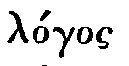
A confounding of God with Nature, and an incapacity of finding unity in the manifold and infinity in the individual, these are the origin of polytheism. The most perfect instance of this kind of theism is that of early Greece; other nations seem to have either transcended, or come short of, the old Hellenic standard, a mythology in itself fundamentally allegorical, and typical of the powers and functions of nature, but subsequently mixed up with a deification of great men and hero-worship, so that finally the original idea became inextricably combined with the form and attributes of some legendary individual. In Asia, probably from the greater unity of the government and the still surviving influence of patriarchal tradition, the idea of the unity of God, in a distorted reflection of the Mosaic scheme, was much more generally preserved; and accordingly all other super or ultra-human beings could only be represented as ministers of, or rebels against, his will. The Asiatic genii and fairies are, therefore, always endowed with moral qualities, and distinguishable as malignant or benevolent to man. It is this uniform attribution of fixed moral qualities to the supernatural agents of eastern mythology that particularly separates them from the divinities of old Greece. Yet it is not altogether improbable that in the Samothracian or Cabeiric mysteries the link between the Asiatic and Greek popular schemes of mythology lay concealed. Of these mysteries there are conflicting accounts, and, perhaps, there were variations of doctrine in the lapse of ages and intercourse with other systems. But, upon a review of all that is left to us on this subject in the writings of the ancients, we may, I think, make out thus much of an interesting fact, that Cabiri, impliedly at least, meant socii, complices, having a hypostatic or fundamental union with, or relation to, each other; that these mysterious divinities were, ultimately at least, divided into a higher and lower triad; that the lower triad, primi quia infimi, consisted of the old Titanic deities or powers of nature, under the obscure names of Axieros, Axiokersos, and Axiokersa, representing symbolically different modifications of animal desire or material action, such as hunger, thirst, and fire, without consciousness; that the higher triad, ultimi quia superiores, consisted of Jupiter, (Pallas, or Apollo, or Bacchus, or Mercury, mystically called Cadmilos) and Venus, representing, as before, the or reason, the or word or communicative power, and the or love;-that the Cadmilos or Mercury, the manifested, communicated, or sent, appeared not only in his proper person as second of the higher triad, but also as a mediator between the higher and lower triad, and so there were seven divinities; and, indeed, according to some authorities, it might seem that the Cadmilos acted once as a mediator of the higher, and once of the lower, triad, and that so there were eight Cabeiric divinities. The lower or Titanic powers being subdued, chaos ceased, and creation began in the reign of the divinities of mind and love; but the chaotic gods still existed in the abyss, and the notion of evoking them was the origin, the idea, of the Greek necromancy. These mysteries, like all the others, were certainly in connection with either the Phoenician or Egyptian systems, perhaps with both. Hence the old Cabeiric powers were soon made to answer to the corresponding popular divinities; and the lower triad was called by the uninitiated, Ceres, Vulcan or Pluto, and Proserpine, and the Cadmilos became Mercury. It is not without ground that I direct your attention, under these circumstances, to the probable derivation of some portion of this most remarkable system from patriarchal tradition, and to the connection of the Cabeiri with the Kabbala. The Samothracian mysteries continued in celebrity till some time after the commencement of the Christian era. 2 But they gradually sank with the rest of the ancient system of mythology, to which, in fact, they did not properly belong. The peculiar doctrines, however, were preserved in the memories of the initiated, and handed down by individuals. No doubt they were propagated in Europe, and it is not improbable that Paracelsus received many of his opinions from such persons, and I think a connection may be traced between him and Jacob Behmen. The Asiatic supernatural beings are all produced by imagining an excessive magnitude, or an excessive smallness combined with great power; and the broken associations, which must have given rise to such conceptions, are the sources of the interest which they inspire, as exhibiting, through the working of the imagination, the idea of power in the will. This is delightfully exemplified in the Arabian Nights' Entertainments, and indeed, more or less, in other works of the same kind. In all these there is the same activity of mind as in dreaming, that is an exertion of the fancy in the combination and recombination of familiar objects so as to produce novel and wonderful imagery. To this must be added that these tales cause no deep feeling of a moral kind whether of religion or love; but an impulse of motion is communicated to the mind without excitement, and this is the reason of their being so generally read and admired. I think it not unlikely that the Milesian Tales contained the germs of many of those now in the Arabian Nights; indeed it is scarcely possible to doubt that the Greek empire must have left deep impression on the Persian intellect. So also many of the Roman Catholic legends are taken from Apuleius. In that exquisite story of Cupid and Psyche, the allegory is of no injury to the dramatic vividness of the tale. It is evidently a philosophic attempt to parry Christianity with a quasi-Platonic account of the fall and redemption of the soul. The charm of De Foe's works, especially of Robinson Crusoe, is founded on the same principle. It always interests, never agitates. Crusoe himself is merely a representative of humanity in general; neither his intellectual nor his moral qualities set him above the middle degree of mankind; his only prominent characteristic is the spirit of enterprise and wandering, which is, nevertheless, a very common disposition. You will observe that all that is wonderful in this tale is the result of external circumstances of things which fortune brings to Crusoe's hand. Footnote 1: Partly from Mr. Green's note. Ed. return to footnote mark Footnote 2: In the reign of Tiberius, A. D. 18, Germanicus attempted to visit Samothrace; illum in regressu sacra Samothracum visere nitentem obvii aquilones depulere. Tacit. Ann. II. e. 54. Ed. return to footnote mark

Notes on Robinson Crusoe 1
(Vol. i. p. 17.) But my ill fate pushed me on now with an obstinacy that nothing could resist; and though I had several times loud calls from my reason, and my more composed judgment to go home, yet I had no power to do it. I know not what to call this, nor will I urge that it is a secret overruling decree that hurries us on to be the instruments of our own destruction, even though it be before us, and that we rush upon it with our eyes open.
The wise only possess ideas; the greater part of mankind are possessed by them. Robinson Crusoe was not conscious of the master impulse, even because it was his master, and had taken, as he says, full possession of him. When once the mind, in despite of the remonstrating conscience, has abandoned its free power to a haunting impulse or idea, then whatever tends to give depth and vividness to this idea or indefinite imagination, increases its despotism, and in the same proportion renders the reason and free will ineffectual. Now, fearful calamities, sufferings, horrors, and hair-breadth escapes will have this effect, far more than even sensual pleasure and prosperous incidents. Hence the evil consequences of sin in such cases, instead of retracting or deterring the sinner, goad him on to his destruction. This is the moral of Shakspeare's
Macbeth
, and the true solution of this paragraph, not any overruling decree of divine wrath, but the tyranny of the sinner's own evil imagination, which he has voluntarily chosen as his master.
Compare the contemptuous Swift with the contemned De Foe, and how superior will the latter be found! But by what test? Even by this; that the writer who makes me sympathize with his presentations with the whole of my being, is more estimable than he who calls forth, and appeals but to, a part of my being my sense of the ludicrous, for instance. De Foe's excellence it is, to make me forget my specific class, character, and circumstances, and to raise me while I read him, into the universal man.
I smiled to myself at the sight of this money: "O drug!" said I aloud, &c. However, upon second thoughts, I took it away; and wrapping all this in a piece of canvass, &c.
Worthy of Shakspeare! and yet the simple semicolon after it, the instant passing on without the least pause of reflex consciousness, is more exquisite and masterlike than the touch itself. A meaner writer, a Marmontel, would have put an (!) after
'away,'
and have commenced a fresh paragraph. (30th July, 1830.)
(P. 111) And I must confess, my religious thankfulness to God's providence began to abate too, upon the discovering that all this was nothing but what was common; though I ought to have been as thankful for so strange and unforeseen a providence, as if it had been miraculous.
To make men feel the truth of this is one characteristic object of the miracles worked by Moses;-in them the providence is miraculous, the miracles providential.
(P. 126.) The growing up of the corn, as is hinted in my Journal, had, at first, some little influence upon me, and began to affect me with seriousness, as long as I thought it had something miraculous in it, &c.
By far the ablest vindication of miracles which I have met with. It is indeed the true ground, the proper purpose and intention of a miracle.
(P. 141.) To think that this was all my own, that I was king and lord of all this country indefeasibly, &c.
By the by, what is the law of England respecting this? Suppose I had discovered, or been wrecked on an uninhabited island, would it be mine or the king's?
(P. 223.) I considered that as I could not foresee what the ends of divine wisdom might be in all this, so I was not to dispute his sovereignty, who, as I was his creature, had an undoubted right, by creation, to govern and dispose of me absolutely as he thought fit, &c.
I could never understand this reasoning, grounded on a complete misapprehension of St. Paul's image of the potter, Rom. ix., or rather I do fully understand the absurdity of it. The susceptibility of pain and pleasure, of good and evil, constitutes a right in every creature endowed therewith in relation to every rational and moral being, a
fortiori
, therefore, to the Supreme Reason, to the absolutely good Being. Remember Davenant's verses;
Doth it our reason's mutinies appease To say, the potter may his own clay mould To every use, or in what shape he please, At first not counsell'd, nor at last controll'd? Power's hand can neither easy be, nor strict To lifeless clay, which ease nor torment knows, And where it cannot favour or afflict, It neither justice or injustice shows. But souls have life, and life eternal too: Therefore, if doom'd before they can offend, It seems to show what heavenly power can do, But does not in that deed that power commend. (Death of Astragon. st. 88, &c. P. 232-3.) And this I must observe with grief too, that the discomposure of my mind had too great impressions also upon the religious parts of my thoughts, praying to God being properly an act of the mind, not of the body.
As justly conceived as it is beautifully expressed. And a mighty motive for habitual prayer; for this cannot but greatly facilitate the performance of rational prayer even in moments of urgent distress.
(P. 244.) That this would justify the conduct of the Spaniards in all their barbarities practised in America.
De Foe was a true philanthropist, who had risen above the antipathies of nationality; but he was evidently partial to the Spanish character, which, however, it is not, I fear, possible to acquit of cruelty. Witness the Netherlands, the Inquisition, the late Guerilla warfare, &c.
(P. 249.) That I shall not discuss, and perhaps cannot account for; but certainly they are a proof of the converse of spirits, &c.
This reminds me of a conversation I once over heard. "How a statement so injurious to Mr. A. and so contrary to the truth, should have been made to you by Mr. B. I do not pretend to account for; only I know of my own knowledge that B. is an inveterate liar, and has long borne malice against Mr. A.; and I can prove that he has repeatedly declared that in some way or other he would do Mr. A. a mischief."
(P. 254.) The place I was in was a most delightful cavity or grotto of its kind, as could be expected, though perfectly dark; the floor was dry and level, and had a sort of small loose gravel on it, &c.
How accurate an observer of nature De Foe was! The reader will at once recognize Professor Buckland's caves and the diluvial gravel.
(P. 308.) I entered into a long discourse with him about the devil, the original of him, his rebellion against God, his enmity to man, the reason of it, his setting himself up in the dark parts of the world to be worshipped instead of God, &c.
I presume that Milton's
Paradise Lost
must have been bound up with one of Crusoe's
Bibles
; otherwise I should be puzzled to know where he found all this history of the Old Gentleman. Not a word of it in the
Bible
itself, I am quite sure. But to be serious. De Foe did not reflect that all these difficulties are attached to a mere fiction, or, at the best, an allegory, supported by a few popular phrases and figures of speech used incidentally or dramatically by the Evangelists, and that the existence of a personal, intelligent, evil being, the counterpart and antagonist of God, is in direct contradiction to the most express declarations of Holy Writ.
"Shall there be evil in a city, and the Lord hath not done it?"
Amos, iii. 6.
"I make peace and create evil."
Isa. xlv. 7. This is the deep mystery of the abyss of God.
(Vol. ii. p. 3.) I have often heard persons of good judgment say, ... that there is no such thing as a spirit appearing, a ghost walking, and the like, &c.
I cannot conceive a better definition of Body than "spirit appearing," or of a flesh-and-blood man than a rational spirit apparent. But a spirit
per se
appearing is tantamount to a spirit appearing without its appearances. And as for ghosts, it is enough for a man of common sense to observe, that a ghost and a shadow are concluded in the same definition, that is, visibility without tangibility.
(P. 9.) She was, in a few words the stay of all my affairs, the centre of all my enterprises, &c.
The stay of his affairs, the centre of his interests, the regulator of his schemes and movements, whom it soothed his pride to submit to, and in complying with whose wishes the conscious sensation of his acting will increased the impulse, while it disguised the coercion, of duty! the clinging dependent, yet the strong supporter the comforter, the comfort, and the soul's living home! This is De Foe's comprehensive character of the wife, as she should be; and, to the honour of womanhood be it spoken, there are few neighbourhoods in which one name at least might not be found for the portrait.
The exquisite paragraphs in this and the next page, in addition to others scattered, though with a sparing hand, through his novels, afford sufficient proof that De Foe was a first-rate master of periodic style; but with sound judgment, and the fine tact of genius, he has avoided it as adverse to, nay, incompatible with, the every-day matter of fact realness, which forms the charm and the character of all his romances. The
Robinson Crusoe
is like the vision of a happy night-mair, such as a denizen of Elysium might be supposed to have from a little excess in his nectar and ambrosia supper. Our imagination is kept in full play, excited to the highest; yet all the while we are touching, or touched by, common flesh and blood.
(P. 67.) The ungrateful creatures began to be as insolent and troublesome as before, &c.
How should it be otherwise? They were idle; and when we will not sow corn, the devil will be sure to sow weeds, night-shade, henbane, and devil's-bit.
(P. 82.) That hardened villain was so far from denying it, that he said it was true, and him they would do it still before they had done with them.
Observe when a man has once abandoned himself to wickedness, he cannot stop, and does not join the devils till he has become a devil himself. Rebelling against his conscience he becomes the slave of his own furious will.
One excellence of De Foe, amongst many, is his sacrifice of lesser interest to the greater because more universal. Had he (as without any improbability he might have done) given his Robinson Crusoe any of the turn for natural history, which forms so striking and delightful a feature in the equally uneducated Dampier; had he made him find out qualities and uses in the before (to him) unknown plants of the island, discover, for instance, a substitute for hops, or describe birds, &c. many delightful pages and incidents might have enriched the book; but then Crusoe would have ceased to be the universal representative, the person, for whom every reader could substitute himself. But now nothing is done, thought, suffered, or desired, but what every man can imagine himself doing, thinking, feeling, or wishing for. Even so very easy a problem as that of finding a substitute for ink, is with exquisite judgment made to baffle Crusoe's inventive faculties. And in what he does, he arrives at no excellence; he does not make basket work like Will Atkins; the carpentering, tailoring, pottery, &c. are all just what will answer his purposes, and those are confined to needs that all men have, and comforts that all men desire. Crusoe rises only to the point to which all men may be made to feel that they might, and that they ought to, rise in religion, to resignation, dependence on, and thankful acknowledgement of, the divine mercy and goodness.
In the education of children, love is first to be instilled, and out of love obedience is to be educed. Then impulse and power should be given to the intellect, and the ends of a moral being be exhibited. For this object thus much is effected by works of imagination; that they carry the mind out of self, and show the possible of the good and the great in the human character. The height, whatever it may be, of the imaginative standard will do no harm; we are commanded to imitate one who is inimitable. We should address ourselves to those faculties in a child's mind, which are first awakened by nature, and consequently first admit of cultivation, that is to say, the memory and the imagination. The comparing power, the judgment, is not at that age active, and ought not to be forcibly excited, as is too frequently and mistakenly done in the modern systems of education, which can only lead to selfish views, debtor and creditor principles of virtue, and an inflated sense of merit. In the imagination of man exist the seeds of all moral and scientific improvement; chemistry was first alchemy, and out of astrology sprang astronomy. In the childhood of those sciences the imagination opened a way, and furnished materials, on which the ratiocinative powers in a maturer state operated with success. The imagination is the distinguishing characteristic of man as a progressive being; and I repeat that it ought to be carefully guided and strengthened as the indispensable means and instrument of continued amelioration and refinement. Men of genius and goodness are generally restless in their minds in the present, and this, because they are by a law of their nature unremittingly regarding themselves in the future, and contemplating the possible of moral and intellectual advance towards perfection. Thus we live by hope and faith; thus we are for the most part able to realize what we will, and thus we accomplish the end of our being. The contemplation of futurity inspires humility of soul in our judgment of the present.
I think the memory of children cannot, in reason, be too much stored with the objects and facts of natural history. God opens the images of nature, like the leaves of a book, before the eyes of his creature, Man and teaches him all that is grand and beautiful in the foaming cataract, the glassy lake, and the floating mist.
The common modern novel, in which there is no imagination, but a miserable struggle to excite and gratify mere curiosity, ought, in my judgment, to be wholly forbidden to children. Novel-reading of this sort is especially injurious to the growth of the imagination, the judgment, and the morals, especially to the latter, because it excites mere feelings without at the same time ministering an impulse to action. Women are good novelists, but indifferent poets; and this because they rarely or never thoroughly distinguish between fact and fiction. In the jumble of the two lies the secret of the modern novel, which is the
medium aliquid
between them, having just so much of fiction as to obscure the fact, and so much of fact as to render the fiction insipid. The perusal of a fashionable lady's novel is to me very much like looking at the scenery and decorations of a theatre by broad daylight. The source of the common fondness for novels of this sort rests in that dislike of vacancy and that love of sloth, which are inherent in the human mind; they afford excitement without producing reaction. By reaction I mean an activity of the intellectual faculties, which shows itself in consequent reasoning and observation, and originates action and conduct according to a principle. Thus, the act of thinking presents two sides for contemplation, that of external causality, in which the train of thought may be considered as the result of outward impressions, of accidental combinations, of fancy, or the associations of the memory, and on the other hand, that of internal causality, or of the energy of the will on the mind itself. Thought, therefore, might thus be regarded as passive or active; and the same faculties may in a popular sense be expressed as perception or observation, fancy or imagination, memory or recollection.
Footnote 1
: These notes were written by Mr. C. in Mr. Gillman's copy of
Robinson Crusoe
, in the summer of 1830. The references in the text are to Major's edition, 1831.
Ed.
return to footnote mark
Contents Contents, p.2
Lecture XII Dreams Apparitions Alchemists Personality of the Evil Being Bodily Identity
It is a general, but, as it appears to me, a mistaken opinion, that in our ordinary dreams we judge the objects to be real. I say our ordinary dreams; because as to the night-mair the opinion is to a considerable extent just. But the night-mair is not a mere dream, but takes place when the waking state of the brain is recommencing, and most often during a rapid alternation, a twinkling, as it were, of sleeping and waking; while either from pressure on, or from some derangement in, the stomach or other digestive organs acting on the external skin (which is still in sympathy with the stomach and bowels,) and benumbing it, the sensations sent up to the brain by double touch (that is, when my own hand touches my side or breast,) are so faint as to be merely equivalent to the sensation given by single touch, as when another person's hand touches me. The mind, therefore, which at all times, with and without our distinct consciousness, seeks for, and assumes, some outward cause for every impression from without, and which in sleep, by aid of the imaginative faculty, converts its judgments respecting the cause into a personal image as being the cause, the mind, I say, in this case, deceived by past experience, attributes the painful sensation received to a correspondent agent, an assassin, for instance, stabbing at the side, or a goblin sitting on the breast. Add too that the impressions of the bed, curtains, room, &c. received by the eyes in the half-moments of their opening, blend with, and give vividness and appropriate distance to, the dream image which returns when they close again; and thus we unite the actual perceptions, or their immediate reliques, with the phantoms of the inward sense; and in this manner so confound the half-waking, half-sleeping, reasoning power, that we actually do pass a positive judgment on the reality of what we see and hear, though often accompanied by doubt and self-questioning, which, as I have myself experienced, will at times become strong enough, even before we awake, to convince us that it is what it is namely, the night-mair. In ordinary dreams we do not judge the objects to be real; we simply do not determine that they are unreal. The sensations which they seem to produce, are in truth the causes and occasions of the images; of which there are two obvious proofs: first, that in dreams the strangest and most sudden metamorphoses do not create any sensation of surprise: and the second, that as to the most dreadful images, which during the dream were accompanied with agonies of terror, we merely awake, or turn round on the other side, and off fly both image and agony, which would be impossible if the sensations were produced by the images. This has always appeared to me an absolute demonstration of the true nature of ghosts and apparitions such I mean of the tribe as were not pure inventions. Fifty years ago, (and to this day in the ruder parts of Great Britain and Ireland, in almost every kitchen and in too many parlours it is nearly the same,) you might meet persons who would assure you in the most solemn manner, so that you could not doubt their veracity at least, that they had seen an apparition of such and such a person, in many cases, that the apparition had spoken to them; and they would describe themselves as having been in an agony of terror. They would tell you the story in perfect health. Now take the other class of facts, in which real ghosts have appeared; I mean, where figures have been dressed up for the purpose of passing for apparitions: in every instance I have known or heard of (and I have collected very many) the consequence has been either sudden death, or fits, or idiocy, or mania, or a brain fever. Whence comes the difference? evidently from this, that in the one case the whole of the nervous system has been by slight internal causes gradually and all together brought into a certain state, the sensation of which is extravagantly exaggerated during sleep, and of which the images are the mere effects and exponents, as the motions of the weathercock are of the wind; while in the other case, the image rushing through the senses upon a nervous system, wholly unprepared, actually causes the sensation, which is sometimes powerful enough to produce a total check, and almost always a lesion or inflammation. Who has not witnessed the difference in shock when we have leaped down half-a-dozen steps intentionally, and that of having missed a single stair. How comparatively severe the latter is! The fact really is, as to apparitions, that the terror produces the image instead of the contrary; for in omnem actum perceptionis influit imaginatio, as says Wolfe. O, strange is the self-power of the imagination when painful sensations have made it their interpreter, or returning gladsomeness or convalescence has made its chilled and evanished figures and landscape bud, blossom, and live in scarlet, green, and snowy white (like the fire-screen inscribed with the nitrate and muriate of cobalt,) strange is the power to represent the events and circumstances, even to the anguish or the triumph of the quasi-credent soul, while the necessary conditions, the only possible causes of such contingencies, are known to be in fact quite hopeless; yea, when the pure mind would recoil from the eve-lengthened shadow of an approaching hope, as from a crime;-and yet the effect shall have place, and substance, and living energy, and, on a blue islet of ether, in a whole sky of blackest cloudage, shine like a firstling of creation! To return, however to apparitions, and by way of an amusing illustration of the nature and value of even contemporary testimony upon such subjects, I will present you with a passage, literally translated by my friend, Mr. Southey, from the well known work of Bernal Dias, one of the companions of Cortes, in the conquest of Mexico: