Volume 3 — CHAPTER XXI
Reading edition
1852
Queen Victoria to the King of Denmark.
ENGLAND AND DENMARK
Windsor Castle, 4th January 1852.
Sir, my Brother,—I received the letter which your Majesty addressed to me on the 24th of August last, and in which, after referring to the necessity for establishing some definite arrangement with regard to the eventual succession to the Crown of Denmark, your Majesty is pleased to acquaint me that, in your opinion, such an arrangement might advantageously be made in favour of your Majesty's cousin, His Highness the Prince Christian of Glücksburg,1 and the issue of his marriage with the Princess Louisa of Hesse, in favour of whom the nearer claimants have renounced their rights and titles.
I trust I need not assure your Majesty of the sincere friendship which I entertain for you, and of the deep interest which I feel in the welfare of the Danish Monarchy. It was in accordance with those sentiments that I accepted the office of mediator between your Majesty and the States of the German Confederation, and it afforded me the sincerest pleasure to have been thus instrumental in re-establishing the relations of peace between your Majesty and those States.
With regard to the question of the eventual succession to both the Danish and Ducal Crowns, I have to state to your Majesty that although I declined to take any part in the settlement of that combination, it will be a source of great satisfaction to me to learn that an arrangement has been definitely determined upon equally satisfactory to your Majesty and to the Germanic Confederation; and whenever it shall have been notified to me that such an arrangement has been arrived at, I shall then be ready, in accordance with what was stated in the Protocol of the 2nd of August 1850, to consider, in concert with my Allies, the expediency of giving the sanction of an European acknowledgment to the arrangement which may thus have been made.
I avail myself with great pleasure of this opportunity to renew to your Majesty the expression of the invariable attachment and high esteem with which I am, Sir, my Brother, your Majesty's good Sister,
Victoria R.
Footnote 1: Prince Christian of Schleswig-Holstein-Sonderburg-Glücksburg was named successor to Frederick VII., King of Denmark by a Treaty signed in London on the 8th of May 1852; and by the Danish law of succession (of the 31st of July 1853), he ascended the throne under the style of Christian IX., on the 15th of November, 1863. He was the father of His Majesty Frederick VIII., the present King of Denmark, and of Her Majesty Queen Alexandra of England; King Christian died in 1906, Queen Louise having predeceased him in 1898.
Queen Victoria to Lord John Russell.
Windsor Castle, 15th January 1852.
The Queen has received Lord John Russell's letter last night, and wishes now shortly to repeat what she desired through the Prince, Sir Charles Wood to explain to Lord John.2
The Queen hopes that the Cabinet will fully consider what their object is before the proposed negotiation with Sir James Graham be opened.
Is it to strengthen their case in Parliament by proving that no means have been left untried to strengthen the Government? or really to effect a junction with the Peelites?
If the first is aimed at, the Cabinet will hardly reap any of the desired advantages from the negotiation, for, shrewd as Sir James Graham is, he will immediately see that the negotiation has been begun without a desire that it should succeed, and this will soon become generally known.
If the latter, the Queen must observe that there are two kinds of junctions—one, a fusion of Parties; the other, the absorption of one Party by the other. For a fusion, the Queen thinks the Peelites to be quite ready; then, however, they must be treated as a political Party, and no exclusion should be pronounced against particular members of it, nor should it be insisted upon that the new Government and Party is still emphatically the Whig party.
An absorption of the most liberal talents amongst the Peelites into the Whig Government, the Queen considers unlikely to succeed, and she can fully understand that reasons of honour and public and private engagement must make it difficult to members of a political Party to go over to another in order to receive office.
Having stated thus much, the Queen gives Lord John full permission to negotiate with Sir James Graham.
Footnote 2: Lord John Russell having vainly attempted to secure the co-operation of the Duke of Newcastle, announced the wish of the Cabinet to make overtures to Sir J. Graham.
Queen Victoria to the King of the Belgians.
LOUIS NAPOLEON
Windsor Castle, 20th January 1852.
My dearest Uncle,—Your kind letter of the 16th I received on the 17th, with the newspaper, for which I return my best thanks. The papers which Stockmar communicated to us are most interesting, and do the writer the greatest credit. Watchful we certainly shall and must be. We shall try and keep on the best of terms with the President, who is extremely sensitive and susceptible, but for whom, I must say, I have never had any personal hostility; on the contrary, I thought that during 1849 and 1850 we owed him all a good deal, as he certainly raised the French Government de la boue. But I grieve over the tyranny and oppression practised since the coup d'état, and it makes everything very uncertain, for though I believe it in every way his wish and his policy not to go to war, still, il peut y être entraîné.
Your position is a peculiarly delicate one, but still, as I again repeat, I think there is no reason to be alarmed; particularly, I would never show it.
The poor Nemours were here from Saturday till yesterday evening with their dear nice boys, and I think it always does them good. They feel again as if they were in their own position, and they are diverted from the melancholy reality and the great sameness of their existence at Claremont. I found him very quiet and really not bitter, and disposed to be very prudent,—but seriously alarmed at the possibility of losing their property, which would be too dreadful and monstrous. I fear that the candidature and poor Hélène's imprudence in talking are the cause of this cruel persecution. The poor Orleans have really (and you should write them that) no truer and more faithful friends than we are—and it is for this reason that I urge and entreat them to be entirely passive; for their day will come, I feel convinced!
Now good-bye, my dearest, kindest Uncle. Ever your truly devoted Niece,
Victoria R.
Queen Victoria to Lord John Russell.
Windsor Castle, 27th January 1852.
The Queen has received Lord John Russell's letter of yesterday with the draft of Bills, and likewise that of to-day enclosing a Memorandum on the probable effects of the proposed Measure.3 She has perused these papers with great attention, but feels that any opinion upon the future results of the Measure must rest on surmises; she has that confidence, however, in Lord John's experience and judgment in these matters, and so strong a conviction that he will have spared no pains in forming as correct an opinion as may be formed on so problematical a matter, that she is prepared to come to the decision of approving the Measure on the strength of Lord John's opinion. She only hopes that the future may bear it out, and that the character of the House of Commons may not be impaired. Should this prove the case, the extension of the privilege of voting for Members will strengthen our Institutions. The Queen is glad that the clause abolishing the necessity for every Member of the Government to vacate his seat upon his appointment4 should have been maintained. She hopes that the schedules showing which towns are to be added to existing boroughs will be drawn up with the greatest care and impartiality, and will soon be submitted to her. The Queen would be glad if the plan once proposed of giving to the Queen's University in Ireland the vacant seat for Sudbury were still carried out, as she feels sure that not only would it be a great thing for the University and the Colleges, but a most useful and influential Irish Member would be gained for the House.
The Queen takes it for granted that the Bill as approved by her will be stood by in Parliament, and that Lord John will not allow himself to be drawn on to further concessions to Democracy in the course of the debate, and that the introduction of the ballot will be vigorously opposed by the Government.
Footnote 3: The Ministerial Reform Bill.
Footnote 4: The Act of Settlement excluded (as from the accession of the House of Hanover) the Ministers of State from the House of Commons; but the 6 Anne, c. 7, modified this, and made them re-eligible on appointment.
Queen Victoria to Lord John Russell.
DRAFT OF THE SPEECH
Windsor Castle, 1st February 1852.
The Queen has received the draft of the Speech. The passage referring to the proposed Reform Measure varies so materially from the one which was first submitted to her that she feels that she ought not to sanction it without having received some explanation of the grounds which have led the Cabinet to recommend it in its altered shape. The Queen will not object to the mode of filling the Offices still vacant which Lord John Russell proposes.
Queen Victoria to the King of the Belgians.
WOMEN AND POLITICS
Buckingham Palace, 3rd February 1852.
My dearest Uncle,—My warmest thanks for your kind little letter of the 30th. Matters are very critical and all Van de Weyer has told us n'est pas rassurant. With such an extraordinary man as Louis Napoleon, one can never be for one instant safe. It makes me very melancholy; I love peace and quiet—in fact, I hate politics and turmoil, and I grieve to think that a spark may plunge us into the midst of war. Still I think that may be avoided. Any attempt on Belgium would be casus belli for us; that you may rely upon. Invasion I am not afraid of, but the spirit of the people here is very great—they are full of defending themselves—and the spirit of the olden times is in no way quenched.
In two hours' time Parliament will be opened, and to-night the explanations between Lord John and Lord Palmerston will take place. I am very curious how they will go off. The curiosity and anxiety to hear it is very great.
I never saw Stockmar better, or more active and more sagacious, or more kind. To me he is really like a father—only too partial, I always think.
Albert grows daily fonder and fonder of politics and business, and is so wonderfully fit for both—such perspicacity and such courage—and I grow daily to dislike them both more and more. We women are not made for governing—and if we are good women, we must dislike these masculine occupations; but there are times which force one to take interest in them mal gré bon gré, and I do, of course, intensely.
I must now conclude, to dress for the opening of Parliament.... Ever your devoted Niece,
Victoria R.
Lord John Russell to Queen Victoria.
Chesham Place, 4th February 1852.
Lord John Russell presents his humble duty to your Majesty, and has the honour to report that the Address was agreed to last night without a division.
The explanations between Lord Palmerston and himself were made. Lord Palmerston made no case, and was not supported by any considerable party in the House. His approbation of the President's conduct seemed to confound the Liberal Party, and he did not attempt to excuse his delay in answering Lord John Russell's letter of the 14th.5
The rest of the debate was desultory and heavy. Mr Disraeli made a long speech for the sake of making a speech. Mr Roebuck was bitter without much effect.
Generally speaking, the appearance of the House was favourable. Sir James Graham says the next fortnight will clear up matters very much.
The tone of the House was decidedly pacific.
Footnote 5: See ante, p. 341.
Queen Victoria to Lord John Russell.
THE NEW HOUSES OF PARLIAMENT
Windsor Castle, 4th February 1852.
We have learned with much satisfaction that everything went off so well in the House of Commons last night. Lord John Russell's speech is a most useful one, and he has given a most lucid definition of the constitutional position of the Prime Minister and Foreign Secretary opposite to the Crown. Lord Palmerston's speech is a very weak one, and he in no way makes out a case for himself. This seems to [be] the general impression.
The Houses of Lords and Commons being now almost completed, and the Queen having entered the House of Lords by the Grand Entrance (which is magnificent), the Queen thinks this will be the right moment for bestowing on Mr Barry the knighthood, as a mark of the Queen's approbation of his great work.
The Marquis of Normanby to Colonel Phipps.6
PALMERSTON'S DISCOMFITURE
St George's Hotel, 5th February 1852.
Aberdeen, whom I saw at Granville's last night, told me that Cardwell had said to him, that often as he had felt indignant at the arrogance of "that man," he really pitied him, so complete was his overthrow. Disraeli said that he had watched him during Johnny's speech, and doubted whether the hanging of the head, etc., was merely acting; but before he had spoken two sentences he saw he was a beaten fox. Many said that the extreme flippancy and insolence of his manner was more remarkable than ever, from their being evidently assumed with difficulty. I have always thought Palmerston very much overrated as a speaker; his great power arose from his not only knowing his subject better than any one else, but being the only man who knew anything about it, and using that exclusive knowledge unscrupulously for the purposes of misrepresentation.
Thiers was at Lady Granville's last night, and was enchanted with the spectacle of the Opening. He said that he had been endeavouring for thirty years to support the cause of Constitutional Monarchy, as the best Government in the world, and there he saw it in perfection, not only in its intrinsic attributes, but in the universal respect and adhesion with which it was received. He said, though he did not understand a word of English, he could have cried at the Queen's voice in reading the Speech. He is very "impressionable," and I am convinced at the time he was quite sincere in his appreciation.
I am vexed at not having been able to say anything publicly about all this, as I believe I could have dispelled many misrepresentations; but it cannot be helped. I have endeavoured throughout not to be selfish, and I may as well keep up that feeling to the last. Ever, etc.
Normanby.
I told John Russell last night I regretted that he had vouched for the intentions of Louis Napoleon. He said he had not done that, but owned that he had said more than he ought. "The fact is, I did not know what to say next. I stopped as one sometimes does, so I said that; I had better have said something else!" Candid and characteristic!
Queen Victoria to Earl Granville.
Windsor Castle, 10th February 1852.
The Queen returns the enclosed papers. She will not object to the proposed step10 should Lord Granville and Lord John Russell have reason to expect that the Pope will receive Sir H. Bulwer; should he refuse, it will be doubly awkward. The Queen finds it difficult to give a decided opinion on the subject, as, first, she does not know how far the reception of Sir Henry at Rome will overcome the objections raised to his reception as Resident at Florence. Secondly, as she has never been able to understand what is to be obtained by a mission to Rome, a step liable to much misrepresentation here....
Footnote 10: The Tuscan Government declined to receive Sir H. Bulwer, and it was then proposed to send him to Rome instead.
Lord John Russell to the Prince Albert.
THE PRINCE AND THE ARMY
Chesham Place, 16th February 1852.
Sir,—I have seen the Duke of Wellington this morning, and have given him the Depôt plan.
It may be useful if your Royal Highness will see him from time to time in relation to the Army. On the one hand, your Royal Highness's authority may overcome the indisposition to change which he naturally entertains; and on the other, his vast experience may be of great use to your Royal Highness in regard to the future. I have the honour to be, Sir, your Royal Highness's most dutiful Servant,
John Russell.
Sir Francis Baring to Queen Victoria.
THE SLAVE TRADE
Admiralty, 15th February 1852.
Sir Francis Baring presents his humble duty to your Majesty, and begs to state to your Majesty that despatches have this evening arrived from Commander Bruce in command of the African Squadron. Commander Bruce gives an account of an attack on Lagos11 which was completely successful. The town of Lagos was captured and in great part burnt. The resistance appears to have been obstinate and directed with much skill. Your Majesty's naval Service behaved with their accustomed gallantry and coolness, but the loss amounted to fourteen killed and sixty-four wounded. Sir Francis Baring will forward to your Majesty copies of the despatches to-morrow, with his humble duty.
F. Baring.
Footnote 11: Notorious as a centre of the Slave Trade. The native king was deposed.
Queen Victoria to Sir Francis Baring.
Buckingham Palace, 16th February 1852.
The Queen has received both Sir Francis Baring's letters of the 15th. The news of the capture and destruction of the town of Lagos has given us the greatest satisfaction, as it will give a most serious blow to the iniquitous traffic in slaves. The Rev. Mr Crowther, whom the Queen saw about two months ago (and whom she believes Sir Francis Baring has also seen), told us that the slave trade on that part of the African coast would be at an end if Lagos, the stronghold of its greatest supporters, was destroyed. The Queen must express to Sir Francis Baring her sense of the services rendered by Commodore Bruce and the Officers under him.
Queen Victoria to the King of the Belgians.
Buckingham Palace, 17th February 1852.
My dearest Uncle,—Your dear letter of the 13th reached me on Saturday here, where we are since Friday afternoon. I am glad that you are satisfied with Lord Granville's answer. The question shall certainly be borne in mind, and you may rely on our doing whatever can be effected to bring about the desired end. I think Louis Napoleon will find his decrees very difficult to carry out. I am very glad to hear that you quietly are preparing to strengthen yourself against the possibility of any attack from France. This will, I think, put Louis Napoleon on his good behaviour....
The extension of the Suffrage12 was almost unavoidable, and it was better to do it quietly, and not to wait till there was a cry for it—to which one would have to yield. The deal there is to do, and the importance of everything going on at home and abroad, is unexampled in my recollection and very trying; Albert becomes really a terrible man of business; I think it takes a little off from the gentleness of his character, and makes him so preoccupied. I grieve over all this, as I cannot enjoy these things, much as I interest myself in general European politics; but I am every day more convinced that we women, if we are to be good women, feminine and amiable and domestic, are not fitted to reign; at least it is contre gré that they drive themselves to the work which it entails.
However, this cannot now be helped, and it is the duty of every one to fulfil all that they are called upon to do, in whatever situation they may be!
Mme. van de Weyer thinks your children so grown and improved, and Charlotte as lovely as ever. With Albert's love, ever your devoted Niece,
Victoria R.
Footnote 12: See ante, pp. 294, 324.
Lord John Russell to Queen Victoria.
THE MILITIA BILL
Chesham Place, 20th February 1852.
(9.15 p.m.)
Lord John Russell presents his humble duty to your Majesty, and has the honour to report that Lord Palmerston has just carried his Motion for leaving out the word "Local" in the title of the Bill for the Militia.13
Lord John Russell then declared that he could no longer take charge of the Bill. Lord Palmerston said he was astonished at the Government for giving up the Bill for so slight a cause.
Lord John Russell then said that he considered the vote as tantamount to a resolution of want of confidence, which remark was loudly cheered on the other side.
Sir Benjamin Hall said he wondered the Government did not resign, on which Lord John again explained that when confidence was withdrawn, the consequence was obvious.
Footnote 13: Events in France had revived anxiety as to the national defences, and the Government brought in a Bill for raising a local Militia. To this scheme the Duke of Wellington had been unfavourable, and Lord Palmerston, by a majority of eleven, carried an Amendment in favour of re-organising the "regular" instead of raising a "local" Militia.
Memorandum by the Prince Albert.
THE MINISTRY DEFEATED
Buckingham Palace, 21st February 1852.
Lord John Russell came this morning at twelve o'clock to explain that after the vote of yesterday14 it was impossible for him to go on any longer with the Government. He considered it a vote of censure, and an entirely unprecedented case not to allow a Minister of the Crown even to lay his measure on the Table of the House; that he had expected to the last that the respectable part of the House would see all this, but there seemed to have been a pre-arranged determination between Lord Palmerston and the Protectionists to defeat the Government; that the Peelites also had agreed to vote against them. Sir James Graham and Mr Cardwell had stayed away, but Mr Gladstone and Mr S. Herbert had voted against them, the latter even misrepresenting what Lord John had said. No Government could stand against incessant motions of censure upon every imaginable department of the Executive Government. The Prime Minister would either have to take the management of all the departments into his own hands, and to be prepared to defend every item, for which he (Lord John) did not feel the moral and physical power, or he must succumb on those different points which the Opposition with divided labour could single out. Lord Palmerston's conduct was the more reprehensible as he had asked him the day before about his objections to the Bill, and had (he thought) satisfied him that the four points upon which he had insisted were provided for in the Bill.
Footnote 14: On the Militia Bill.
He thought he could not (in answer to the Queen's enquiry) dissolve Parliament, and that Lord Palmerston had no Party. But he supposed Lord Derby was prepared to form a Protection Government. This Government would pass the estimates and the Mutiny Bill, and would then have to proceed to a Dissolution. Lord John had merely seen Lord Lansdowne, who had approved of the course he meant to pursue, though afraid of the imputation that the Government had run away from the Caffre debate. He had summoned the Cabinet, and would report their resolution. Speaking of Lord Palmerston, Lord John said he had heard that Lord Palmerston had said that there was one thing between them which he could not forgive, and that was his reading the Queen's Minute to the House of Commons.
RESIGNATION OF THE MINISTRY
At a quarter past four Lord John came back from the Cabinet, and formally tendered the resignations of himself and colleagues. The Cabinet had been unanimous that there was no other course to pursue, and that it would not be advisable to make use of the Queen's permission to advise a Dissolution. Lord Granville had ascertained through Dr Quin from Lord Lyndhurst that Lord Derby was prepared with an Administration, having obtained Mr Thomas Baring's consent to act as Leader of the House of Commons.
Sir Stratford Canning at Constantinople was supposed to be intended for the Foreign Office. Lord Lyndhurst said, though the materials were there, they were very bad ones, and it was a question whether they would stand long. He himself would keep out of place.
We advised Lord John to keep his Party well under discipline in Opposition, so that whilst there it did not commit errors which would become new difficulties for the future Government. He seemed disinclined for great exertions after the fatigues he had undergone these last years. He said he thought he would not go on with the Reform Bill out of office, as that was a measure which ought to be carried by a Government. If he had again to propose it, he would very likely alter it a little, reverting to his original plan of taking away one Member of the two returned by small boroughs, and giving their seats to some large towns, counties, and corporations like the Universities, etc.
Lord John defers taking his formal leave till a new Administration is formed.
Albert.
Queen Victoria to the Earl of Derby.
LORD DERBY SUMMONED
Buckingham Palace, 21st February 1852.
The Queen would wish to see Lord Derby at half-past two to-morrow should he be in Town; if not, on Monday at twelve o'clock.
Memorandum by the Prince Albert.
Buckingham Palace, 22nd February 1852.
... Lord Derby said that he could not command a majority in the House of Lords, that he was in a decided minority in the House of Commons, and thought that in the critical circumstances in which the country was placed both at home and abroad, he ought not to ask for a Dissolution. He must then try to strengthen himself particularly in the House of Commons by any means he could. There was one person whom he could not venture to propose for the Foreign Office on account of what had lately passed, and what he might be allowed to call the "well-known personal feelings of the Queen"; but Lord Palmerston was one of the ablest debaters, and might well be offered the post of Chancellor of the Exchequer.
The Queen ... would not, by refusing her consent, throw additional difficulties in Lord Derby's way; she warned him, however, of the dangerous qualities of [Lord Palmerston].
Lord Derby rejoined that he knew them, and thought them pernicious for the conduct of the Foreign Affairs, but at the Exchequer they would have less play; he himself would undertake to control him. His greatest indiscretion—that in the Kossuth affair—must have been with a view to form a Party; that if left excluded from office, he would become more dangerous, and might in fact force himself back at the head of a Party with a claim to the Foreign Office, whilst if he had ever accepted another Office, his pretensions might be considered as waived; he (Lord Derby) did not know in the least whether Lord Palmerston would accept, but in case he did not, the offer would propitiate him, and render the Government in the House of Commons more possible, as it would have anyhow all the talent of the late Government, Peelites and Radicals, to withstand.
To my question whether Lord Derby fancied he would remain Prime Minister any length of time, when once Lord Palmerston had got the lead of the House of Commons, he replied he was not afraid of him; he felt sure he could control him, although he would not have been able to admit him to the Foreign Office on account of the very strong strictures he had passed upon his Foreign Policy at different times—even if the Queen had allowed it.
The Earl of Derby to Queen Victoria.
St James's Square, 22nd February 1852.
(Half-past eight.)
Lord Derby, with his humble duty, deems it incumbent upon him to submit to your Majesty without delay that having had an interview this evening with Lord Palmerston, the latter has, although in the most friendly terms, declined accepting the Office, upon the ground of difference of opinion, not on the principle, but on the expediency of the imposition of any duty, under any circumstances, upon foreign corn. This was a point which Lord Derby was willing to have left undecided until the result of a General Election should be known.
Although this refusal may add materially to Lord Derby's difficulties, he cannot regret that the offer has been made, as the proposal must have tended to diminish any feelings of hostility which might have been productive of future embarrassment to your Majesty's service, to whatever hands it may be entrusted....
The above is humbly submitted by your Majesty's most dutiful Servant and Subject,
Derby.
Memorandum by the Prince Albert.
LORD DERBY'S CABINET
Buckingham Palace, 23rd February 1852.
Lord Derby reported progress at half-past two, and submitted a list of the principal Officers of the Government which follows, and which the Queen approved.
The Queen allowed Lord Lyndhurst (who has declined office—has been Lord Chancellor three times, and now entered upon his eightieth year) to be offered an Earldom—which he very much desired for the position of his daughters, having no son.
After he had kissed hands upon his entering upon his office, Lord Derby had a further conversation with me on Household appointments. I told him he must now, as Prime Minister, consider himself to a certain degree in the position of the Confessor; that formerly the Lord Chancellor was Keeper of the King's Conscience, the office might be considered to have descended on the Prime Minister. The Queen must then be able to confer with him on personal matters, or I, on her behalf, with the most entire confidence, and that she must be sure that nothing was divulged which passed between them on these matters, and he might repose the same confidence in us. As to the formation of the Household, the Queen made two conditions, viz. that the persons to compose her Court should not be on the verge of bankruptcy, and that their moral character should bear investigation. On the Queen's accession Lord Melbourne had been very careless in his appointments, and great harm had resulted to the Court therefrom. Since her marriage I had insisted upon a closer line being drawn, and though Lord Melbourne had declared "that that damned morality would undo us all," we had found great advantage in it and were determined to adhere to it....
Albert.
Queen Victoria to the Duchess of Sutherland.
Buckingham Palace, 23rd February 1852.
My dearest Duchess,—I cannot say how deeply grieved I am to think that the event which has just occurred, and which Lord Derby's acceptance of office has to-day confirmed, will entail your leaving, for a time, my service. It has been ever a real pleasure to me to have you with me; my affection and esteem for you, my dearest Duchess, are great, and we both know what a kind and true friend we have in you.
I think that I may rely on your returning to me on a future occasion whenever that may be, and that I shall frequently have the pleasure of seeing you, even when you are no longer attached to my person.
I shall hope to see you soon. The Levée remains fixed for Thursday, and the transfer of the Officers of the new Government does not take place till Friday.
With the Prince's kindest remembrance, and ours to the Duke and Constance. Believe me always, yours affectionately,
Victoria R.
Queen Victoria to the King of the Belgians.
Buckingham Palace, 24th February 1852.
Dearest Uncle,—Great and not very pleasant events have happened since I wrote last to you. I know that Van de Weyer has informed you of everything, of the really (till the last day) unexpected defeat, and of Lord Derby's assumption of office, with a very sorry Cabinet. I believe, however, that it is quite necessary they should have a trial, and then have done with it. Provided the country remains quiet, and they are prudent in their Foreign Policy, I shall take the trial as patiently as I can....
Alas! your confidence in our excellent Lord Granville is no longer of any avail, though I hope ere long he will be at the Foreign Office again,15 and I cannot say that his successor,16 who has never been in office (as indeed is the case with almost all the new Ministers), inspires me with confidence. I see that Louis Napoleon has again seized one of the adherents, or rathermore one of the men of business, of the poor Orleans....
There are some terrible stories from Madrid of people having told the poor Queen that the King had arranged this attack on her person, and that she was anxious to abdicate.17 If you should hear anything of this kind, be kind enough to tell me of it. With Albert's love (he is well fagged with business), ever your devoted Niece,
Victoria R.
Footnote 15: Lord Granville held the Foreign Secretaryship in 1870-1874, and again in 1880-1885.
Footnote 16: Lord Malmesbury.
Footnote 17: The Queen was stabbed by a priest when returning from church.
Queen Victoria to the Earl of Derby.
LORD MALMESBURY
Buckingham Palace, 24th February 1852.
The Queen thinks that it would be of the highest importance that not only Lord Malmesbury (as is always usual) should receive the necessary information from Lord Granville, but that Lord Derby should see him and hear from him the state of all the critical questions now pending on Foreign Affairs. Lord Granville has made himself master in a very short time of all the very intricate subjects with which his Office has to deal, and she must here bear testimony to the extreme discretion, good sense, and calmness with which he has conducted the very responsible and difficult post of Foreign Secretary.
The Earl of Derby to the Prince Albert.
NEW APPOINTMENTS
St James's Square, 25th February 1852. (5 p.m.)
Sir,—I have delayed longer than I could have wished acknowledging the letter which I had the honour to receive from your Royal Highness last night, in hopes that by this time I should have been enabled to solve the difficulties connected with the Household Appointments; but I regret to say they are rather increased than otherwise. I will not trouble your Royal Highness now with any details; but if I might be honoured with an audience at any hour after the Levée to-morrow, I shall perhaps be able to make a more satisfactory report, and at all events to explain the state of affairs more fully.
In the meantime, it may save Her Majesty some trouble if I request that your Royal Highness will have the goodness to lay before Her Majesty the enclosed list of Appointments which, subject to Her Majesty's approval, I have arranged in the course of this day. The Admiralty List found its way most improperly into some of the morning papers before I was even aware that the Duke of Northumberland had finally obtained the assent of the Officers whom he had selected.
As it is possible that the Queen may not be acquainted with the name of Colonel Dunne, I have the honour of enclosing a letter respecting him which I have received from Lord Fitzroy Somerset, since I had intimated to him my intention of submitting his name to Her Majesty, and which is highly satisfactory.
I must beg your Royal Highness to offer to the Queen my most humble and grateful acknowledgment of the kindness which Her Majesty has evinced in endeavouring to facilitate the progress of the Household arrangements.
I have the honour to be, Sir, Your Royal Highness's most obedient Servant,
Derby.
Memorandum by Queen Victoria.18
LOUIS NAPOLEON
Thursday, 26th February 1852.
Lord Derby came to Albert at half-past three, and Albert called me in at a little after four....
Lord Derby told us he meant to proceed as speedily as possible with the defences of the country, and that his plan for the Militia entirely coincided with Albert's plan (viz. he (Albert) wrote on the subject to the Duke of Wellington, who did not like it),19 and meant to try and avoid all the objections. On his observing that no one had entirely understood the Government Bill, I said that the Government had not even been allowed to bring it in, which was a most unfair proceeding; upon which Lord Derby reiterated his professions of this being no preconcerted plan of his Party's, but that it was "symptomatic"; he, however, was obliged to own that it was rather hard and not quite fair on the late Government.
I then explained to him the arrangement respecting the drafts from the Foreign Office going first to him before they came to me, and wished this should be continued, which he promised should be done, as well as that all important Colonial despatches should be sent to me. Touched upon the various critical questions on the Continent.... Lord Derby said that all Louis Napoleon's views were contained in his book Idées Napoléoniennes written in '39, for that he was more a man of "Idées fixes" than any one; and in this book he spoke of gaining territory by diplomacy and not by war. Lord Derby gave us a note from Louis Napoleon to Lord Malmesbury, congratulating him on his appointment, professing the most friendly and pacific intentions, and hoping the Cowleys would (as they do) remain at Paris.
Victoria R.
Footnote 18: Extract from Her Majesty's Journal.
Footnote 19: This Memorandum is given in chap. xlv. of the Life of the Prince Consort.
Memorandum by the Prince Albert.
FAREWELL AUDIENCES
Buckingham Palace, 27th February 1852.
To-day the formal change of Government took place. The old Ministers who had Seals to give up assembled at half-past eleven, and had their Audiences in the following order:
Sir George Grey was very much overcome; promised at our request to do what he could to keep his friends moderate and united. Spoke well of his successor, Mr Walpole, and assured the Queen that he left the country in a most quiet and contented state.
Lord Grey was sorry that the resignation had taken place before the Caffre Debate, in which he had hoped to make a triumphant defence; he was sure it must have come to this from the way in which Lord John had managed matters. He had never had his measures thoroughly considered when he brought them forward. He (Lord Grey) had had to remonstrate very strongly about this Militia Bill, which had not even been laid, printed, before the Cabinet, and had not been discussed at all; he himself had objected to the greater part of it, and had always expected to have an opportunity of making his opinion heard; instead of spending Christmas at Woburn he ought to have digested his measures; this was not fair to his colleagues, and he could never have the same confidence in Lord John as before. We urged him to forget what had passed and to do the best for the future; that it was important the Party should be kept together and should unite if possible with the Peelites, so that the Queen might hope to get a strong Government. Lord Grey thought there was little chance of this. The next Government could never be as moderate again as this had been; this he had always dreaded, and was the reason why he lamented that Lord John had failed in his negotiation with the Peelites this winter, upon Lord Palmerston's dismissal; but the fact was Lord John had never wished it to succeed, and it had been unfair that he had not stated to them (the Peelites) that all his colleagues were ready to give up their places.
Lord Granville had seen Lord Malmesbury several times, who appeared to him to take pains about informing himself on the state of Foreign Affairs, but seemed inclined to be ambitious of acquiring the merit of being exclusively English in his policy; this was quite right, but might be carried too far; however, Lord Malmesbury was cautious and moderate.
The Chancellor of the Exchequer (Sir Charles Wood) was not surprised at the fate of the Government, although they had not expected to be defeated on the Militia Bill; in fact, a division had hardly been looked for, as Lord John had talked the day before with Lord Palmerston, and satisfied him that all his objections should be provided against in the Bill. He thought it was better, however, that the Caffre Debate had not been waited for, which must have been a personal and very acrimonious one. He thought Lord Grey had not been very discreet in his language to the Queen on Lord John. Sir J. Graham had been in a difficulty with his own Party, and therefore had not wished to encourage Lord John's negotiation with the Peelites. He promised that, for his part, he would do all he could to keep his Party from doing anything violent, but that he was afraid many others would be so, and that he and Lord Grey had in vain tried to persuade Mr Cobden to remain quiet.
Lord Derby had then an Audience to explain what should be done at the Council. He regretted the Duchess of Northumberland's declining to be Mistress of the Robes, on account of ill-health, which had been communicated to the Queen by her father, Lord Westminster. He proposed the Duchess of Argyll, whom the Queen allowed to be sounded (though feeling certain, that, considering the Liberal views of her husband, she will not accept it), and sanctioned his sounding also the Duchess of Athole, whom the Queen wished to make the offer to, in case the Duchess of Argyll declined. Lord Derby stated the difficulty he was in with Sir A. B., whose wife had never been received at Court or in society, although she had run away with him when he was still at school, and was nearly seventy years old. The Queen said it would not do to receive her now at Court, although society might do in that respect what it pleased; it was a principle at Court not to receive ladies whose characters are under a stigma.
We now proceeded to the Council, which was attended only by three Councillors, the other seventeen having all had to be sworn in as Privy Councillors first.20
Footnote 20: See Disraeli's Endymion (chap. c.) for a graphic description of this remarkable scene.
After the Council Lord Hardinge was called to the Queen, and explained that he accepted the Ordnance only on the condition that he was not to be expected to give a vote which would reverse the policy of Sir R. Peel, to which he had hitherto adhered. He had thought it his duty, however, not to refuse his services to the Crown after the many marks of favour he had received from the Queen.
LORD DERBY'S PROGRAMME
Lord Derby then had an Audience to explain what he intended to state in Parliament this evening as the programme of his Ministerial Policy. It was very fluent and very able, but so completely the same as the Speech which he has since delivered, that I must refer to its account in the reports. When he came to the passage regarding the Church, the Queen expressed to him her sense of the importance not to have Puseyites or Romanisers recommended for appointments in the Church as bishops or clergymen. Lord Derby declared himselfLORD DERBY AND THE CHURCH as decidedly hostile to the Puseyite tendency, and ready to watch over the Protestant character of the Church. He said he did not pretend to give a decided opinion on so difficult and delicate a point, but it had struck him that although nobody could think in earnest of reviving the old Convocation, yet the disputes in the Church perhaps could be most readily settled by some Assembly representing the laity as well as the clergy. I expressed it as my opinion that some such plan would succeed, provided the Church Constitution was built up from the bottom, giving the Vestries a legislative character in the parishes leading up to Diocesan Assemblies, and finally to a general one.
On Education he spoke very liberally, but seemed inclined to support the views of the bishops against the so-called "management clauses" of the Privy Council, viz. not to allow grants to schools even if the parish should prefer the bishops' inspection to the Privy Council inspection.
Albert.
The Earl of Derby to Queen Victoria.
St James's Square, 27th February 1852.
(Half-past seven p.m.)
Lord Derby, with his humble duty, hastens to acquaint your Majesty, having just returned from the House of Lords, that his statement, going over the topics the substance of which he had the honour of submitting to your Majesty was, as far as he could judge, favourably received. Earl Grey attempted to provoke a Corn Law discussion, but the feeling of the House was against the premature introduction of so complicated and exciting a topic. Lord Aberdeen, dissenting from any alteration of commercial policy, entirely concurred in Lord Derby's views of Foreign Affairs, and of the course to be adopted in dealing with Foreign Nations. Lord Derby did not omit to lay stress upon "the strict adherence, in letter and in spirit, to the obligations of Treaties," which was well received.
The King of the Belgians to Queen Victoria.
Laeken, 5th March 1852.
My dearest Victoria,—I have to offer my affectionate thanks for a most gracious and long letter of the 2nd.
Within these days we have not had anything very important, but, generally speaking, there has been, at least in appearance, a quieter disposition in the ruling power at Paris. We are here in the awkward position of persons in hot climates, who find themselves in company, for instance in their beds, with a snake; they must not move, because that irritates the creature, but they can hardly remain as they are, without a fair chance of being bitten.... Your devoted Uncle,
Leopold R.
Queen Victoria to the King of the Belgians.
FOREIGN AFFAIRS
Osborne, 9th March 1852.
My dearest Uncle,—Your dear letter of the 5th reached me just after we arrived here, at our sweet, peaceful little abode.
It seems that Louis Napoleon's mind is chiefly engrossed with measures for the interior of France, and that the serious question of Switzerland is becoming less menacing. On the other hand, Austria behaves with a hostility, and I must say folly, which prevents all attempts at reconciliation. All the admirers of Austria consider Prince Schwartzenberg21 a madman, and the Emperor Nicholas said that he was "Lord Palmerston in a white uniform." What a calamity this is at the present moment!
We have a most talented, capable, and courageous Prime Minister, but all his people have no experience—have never been in any sort of office before!
On Friday the House of Commons meets again, and I doubt not great violence will be displayed.
With every kind love to my dear Cousins, ever your very devoted Niece,
Victoria R.
Footnote 21: Prime Minister of Austria. He died in the April following.
Colonel Phipps to Queen Victoria.
Buckingham Palace, 10th March 1852.
Colonel Phipps' humble duty to your Majesty.
He has this day visited the Marionette Theatre, and feels quite certain not only that it would not be a suitable theatre for your Majesty to visit, but that your Majesty would derive no amusement from it.
The mechanism of the puppets is only passable, and the matter of the entertainment stupid and tiresome, consisting in a great part of worn-out old English songs, such as "The death of Nelson"! Colonel Phipps considers "Punch" a much more amusing performance. Lady Mount Edgecumbe, who was in a box there, would probably give your Majesty an account of it....
The report in London is, that Lord John Russell is to recommend moderation at the meeting at his house to-morrow. He has, very foolishly, subjected himself to another rebuff from Lord Palmerston by inviting him to attend that meeting, which Lord Palmerston has peremptorily refused. Since that, however, Lady Palmerston has called upon Lady John with a view to a personal—not political—reconciliation. Lady Palmerston, as Colonel Phipps hears, still persists in the unfounded accusation against Lord John of having quoted your Majesty's Minute in the House of Commons without giving Lord Palmerston notice of his intention.22
Footnote 22: Palmerston, however, admitted the contrary (Life of the Prince Consort, vol. ii. chap. xliv.).
The King of the Belgians to Queen Victoria.
DEMOCRACY
Laeken, 12th March 1852.
My dearest Victoria,—I have to thank you for a most kind letter from peaceful Osborne, which must doubly appear so to you now, after all the troubles of the recent Ministerial arrangements. I am glad that you are struck with the good qualities of your new Premier. I am sure his great wish will be to make the best possible Minister of the Crown. His task will be very difficult. "Bread, cheap bread," "the poor oppressed by the aristocratie," etc.—a whole vocabulary of exciting words of that kind will be put forward to inflame the popular mind; and of all the Sovereigns, the Sovereign "People" is certainly one of the most fanciful and fickle. Our neighbour in France shows this more than any other on the whole globe; the Nation there is still the Sovereign, and this renders the President absolute, because he is the representative of the supreme will of the supreme Nation, sending us constantly some new exiles here, which is very unpleasant. We are going on very gently, merely putting those means of defence a little in order, which ought by rights always to be so, if it was not for the ultra-unwise economy of Parliaments and Chambers. Without, at least, comparative security by means of well-regulated measures of defence, no country, be it great or small, can be considered as possessing National Independence. I must say that in Austria, at least Schwartzenberg, they are very much intoxicated. I hope they will grow sober again soon. It was very kind of you to have visited the poor Orleans Family. Rarely one has seen a family so struck in their affections, fortunes, happiness; and it is a sad case. Those unfortunate Spanish marriages have much contributed to it; even angelic Louise had been caught by l'honneur de la maison de Bourbon.... Your devoted Uncle,
Leopold R.
Queen Victoria to the Earl of Derby.
THE NEW MILITIA BILL
Osborne, 12th March 1852.
The Queen must now answer Lord Derby on the questions which form the subjects of his three last communications.
With regard to the Militia Bill, she must admit that her suggestions are liable to the objections pointed out by Lord Derby, although they would offer advantages in other respects. The Queen will therefore sanction the measure as proposed, and now further explained by Lord Derby.
The despatches transmitted from the Foreign Office referring to the Swiss question23 could not fail to give the Queen as much satisfaction as they did to Lord Derby, as they show indications of a more conciliatory intention, for the present at least. As Switzerland has yielded, France and Austria ought to be satisfied, and the Queen only hopes we may not see them pushing their demands further after a short interval!
The probability of a war with the Burmese is a sad prospect. The Queen thinks, however, that the view taken by Lord Dalhousie of the proceedings at Rangoon, and of the steps now to be taken to preserve peace, is very judicious, and fully concurs with the letter sent out by the Secret Committee. She now returns it, together with the despatch.
The despatches from Prince Schwartzenberg to Count Buol are satisfactory in one sense, as showing a readiness to return to the English Alliance, but unfortunately only under the supposition that we would make war upon liberty together; they exhibit a profound ignorance of this country.24 The Queen is quite sure that Lord Derby will know how to accept all that is favourable in the Austrian overtures without letting it be supposed that we could for a moment think of joining in the policy pursued at this moment by the great Continental Powers. As Lord Derby's speech has been referred to by Prince Schwartzenberg, it would furnish the best text for the answer. The President seems really to have been seriously ill.
Footnote 23: The French had been pressing the Swiss Government to expel refugees, and Austria supported the French President.
Footnote 24: Lord Derby had urged that a more conciliatory message should accompany Lord Granville's last despatch, which, because of its unfriendly tone, Count Buol had delayed sending on to Vienna. The precise language (he said) must depend on what information Count Buol could supply.
Queen Victoria to the Earl of Derby.
Osborne, 14th March 1852.
The Queen has received this morning Lord Derby's letter respecting the St Albans' Disfranchisement Bill, and is glad to hear that Lord Derby means to take up this Bill as dropped by the late Government. Whether the mode of transferring these seats proposed by Lord Derby will meet with as little opposition in Parliament as he anticipates, the Queen is not able to form a correct judgment of. It may be liable to the imputation of being intended to add to the power of the landed interest. This might not be at all objectionable in itself, but it may be doubtful how far the House of Commons may be disposed to concur in it at the present moment. This will be for Lord Derby to consider, but the Queen will not withhold her sanction from the measure.
She knows that Lord John Russell meant to give the vacant seats to Birkenhead. Are not there two seats still vacant from the Disfranchisement of Sudbury? and would it not be better (if so) to dispose of all four at the same time? There is an impression also gaining ground that, with a view to prevent the Franchise being given exclusively to Numbers, to the detriment of Interests, it might be desirable to give new seats to certain corporate bodies, such as the Scotch Universities, the Temple and Lincoln's Inn, the East India Company, etc., etc.25
Footnote 25: The Government eventually proposed that the four seats taken from St Albans and Sudbury should be assigned to South Lancashire and the West Riding; but, on the ground that a Ministry on sufferance should confine itself to necessary legislation, Mr Gladstone induced the House by a great majority to shelve the proposal.
Mr Disraeli to Queen Victoria.
MR DISRAELI
House of Commons, 15th March 1852.
(Monday night.)
The Chancellor of the Exchequer, with his humble duty to your Majesty, informs your Majesty of what occurred in the House of Commons this evening.
Mr Villiers opened the proceedings, terse and elaborate, but not in his happiest style. He called upon the House to contrast the state of the country at the beginning of the year and at the present moment. But he could not induce the House to believe that "all now was distrust and alarm."
The Chancellor of the Exchequer, in reply, declined to bring forward in the present Parliament any proposition to change our commercial system, and would not pledge himself to propose in a future Parliament any duty on corn. He said a duty on corn was a measure, not a principle, and that if preferable measures for the redress of agricultural grievances than a five-shilling duty on corn (mentioned by Mr Villiers) could be devised, he should adopt them—a declaration received with universal favour on the Government side.
Lord John Russell replied to the Chancellor of the Exchequer in consequence of some notice by the former of the strange construction of a new Opposition to force a Dissolution of Parliament by a Minister who, three weeks ago, had declared such Dissolution inexpedient. It was not a successful speech.
THE OPPOSITION
The great speech on the Opposition side was that of Sir James Graham: elaborate, malignant, mischievous. His position was this: that Lord Derby, as a man of honour, was bound to propose taxes on food, and that if he did so, revolution was inevitable.
Mr Gladstone and Lord Palmerston both spoke in the same vein, the necessity of immediate Dissolution after the passing of the "necessary" measures; but the question soon arose, What is "necessary"?
Lord Palmerston thought the Militia Bill "necessary," upon which the League26 immediately rose and denied that conclusion.
There seemed in the House a great reluctance to avoid a violent course, but a very general wish, on the Opposition side, for as speedy a Dissolution as public necessity would permit.
The evening, however, was not disadvantageous to the Government. All which is most humbly submitted to your Majesty, by your Majesty's most dutiful Subject and Servant,
B. Disraeli.
Footnote 26: The members belonging to the Manchester School of Politics.
Queen Victoria to the King of the Belgians.
THE QUESTION OF DISSOLUTION
Osborne, 17th March 1852.
My dearest Uncle,—I delayed writing till to-day as I wished to see the papers first, and be able to give you an account of the first Debate in the two Houses. They are not satisfactory, because both Lord Derby and Mr Disraeli refuse to give a straightforward answer as to their policy, the uncertainty as to which will do serious harm.27 The Opposition are very determined, and with right, to insist on this being given, and on as early a Dissolution as possible. The Government will be forced to do this, but it is very unwise, after all this agitation for the last five years and a half, not [to] come forward manfully and to state what they intend to do. We tried to impress Lord Derby with the necessity of this course, and I hoped we had succeeded, but his speech has not been what it ought to have been in this respect.
The President seems more occupied at home than abroad, which I trust he may remain.
Stockmar is well.... One thing is pretty certain—that out of the present state of confusion and discordance, a sound state of Parties will be obtained, and two Parties, as of old, will again exist, without which it is impossible to have a strong Government. How these Parties will be formed it is impossible to say at present. Now, with Albert's love, ever your devoted Niece,
Victoria R.
Footnote 27: This uncertainty led to the Anti-Corn-Law League, which had been dissolved in 1846, being revived.
Mr Disraeli to Queen Victoria.
House of Commons, 19th March 1852. (Friday night, twelve o'clock.)
The Chancellor of the Exchequer, with his humble duty to your Majesty, lays before your Majesty what has taken place in the House of Commons to-night.
At the commencement of public business, Lord John Russell, in a very full House, after some hostile comments, enquired of Her Majesty's Ministers whether they were prepared to declare that Her Majesty will be advised to dissolve the present Parliament, and call a new one, with the least possible delay consistent with a due regard to the public interest, in reference to measures of urgent and immediate necessity.
The question was recommended by Lord John Russell as one similar to that put to him in 1841 by Sir Robert Peel.
The Chancellor of the Exchequer in reply observed that there was a distinction between the position of the present Ministry and that of Lord John Russell in 1841, as in that and in the other precedents quoted in 1841 by Sir Robert Peel, the Ministry had been condemned by a vote of the House of Commons.
He said it was not constitutional and most impolitic for any Ministers to pledge themselves to recommend their Sovereign to dissolve Parliament at any stated and specific time, as circumstances might occur which would render the fulfilment of the pledge injurious or impracticable; that it was the intention of the Ministers to recommend your Majesty to dissolve the present Parliament the moment that such measures were carried which were necessary for your Majesty's service, and for the security and good government of your Majesty's realm; and that it was their wish and intention that the new Parliament should meet to decide upon the question of confidence in the Administration, and on the measures, which they could then bring forward in the course of the present year.
This announcement was very favourably received.
The discomfiture of the Opposition is complete, and no further mention of stopping or limiting supplies will be heard of.
All which is most humbly submitted to your Majesty by your Majesty's most dutiful Subject and Servant,
B. Disraeli.
Memorandum by the Prince Albert.
INTERVIEW WITH LORD DERBY
Buckingham Palace, 22nd March 1852.
We came to Town from Osborne the day before yesterday, and saw Lord Derby yesterday afternoon, who is in very good spirits about the prospect of affairs. He told the Queen that he thought he might state that the Government had gained a good deal of ground during the last week, and that there was now a general disposition to let the necessary measures pass Parliament, and to have the dissolution the end of June or beginning of July. He hoped the Queen did not think he had gone too far in pledging the Crown to a Dissolution about that time; but it was impossible to avoid saying as much as that a new Parliament would meet in the autumn again, and have settled the commercial policy before Christmas.
To the Queen's questions, whether there would not be great excitement in the country produced by the General Election, and whether Parliament ought not to meet immediately after it, he replied that he was not the least afraid of much excitement, and that there was great advantage in not meeting Parliament immediately again, as the Government would require a few months to prepare its measures, and to take a sound view of the new position of affairs. He anticipated that there would be returned a large proportion of Conservatives, some Free Traders, some Protectionists; but not a majority for the re-imposition of a duty on corn, certainly not a majority large enough to justify him in proposing such a Measure. Now he was sure he could not with honour or credit abandon that Measure unless the country had given its decision against it; but then he would have most carefully to consider how to revise the general state of taxation, so as to give that relief to the agricultural interest which it had a right to demand.
PROTECTION
He had received the most encouraging and flattering letters from the agriculturists of different parts of the country, all reposing the most explicit confidence in him, and asking him not to sacrifice the Government for the sake of an immediate return to Protection. They felt what Lord Derby must say he felt himself, that, after the fall of this Government, there would necessarily come one of a more democratic tendency than any the country had yet had to submit to. He thought most politicians saw this, and would rally round a Conservative standard; he knew that even many of the leading Whigs were very much dissatisfied with the company they find themselves thrown into and alarmed at the progress of Democracy.
Albert.
Queen Victoria to the King of the Belgians.
Buckingham Palace, 23rd March 1852.
... Here matters have improved rather for the Government, and it seems now that they will be able to get through the Session, to dissolve Parliament at the end of June or beginning of July, and to meet again in November. And then Protection will be done away with. If only they had not done so much harm, and played with it for six long years! What you say of the advantage of having had Governments from all parties we have often felt and do feel; it renders changes much less disagreeable. In the present case our acquaintance is confined almost entirely to Lord Derby, but then he is the Government. They do nothing without him. He has all the Departments to look after, and on being asked by somebody if he was not much tired, he said: "I am quite well with my babies!..."
Victoria R.
Mr Disraeli to Queen Victoria.
House of Commons, 29th March 1852.
(Monday night.)
The Chancellor of the Exchequer, with his humble duty to your Majesty, informs your Majesty of what has occurred in the House of Commons to-night.
Mr Secretary Walpole introduced the Militia Bill in a statement equally perspicuous and persuasive.
Opposed by Mr Hume and Mr Gibson, the Government Measure was cordially supported by Lord Palmerston.
Lord John Russell, while he expressed an opinion favourable to increased defence, intimated a preference for regular troops.
Mr Cobden made one of his cleverest speeches, of the cosmopolitan school, and was supported with vigour by Mr Bright. A division is threatened by the ultra-Movement party, but the Chancellor of the Exchequer hopes to ward it off, and is somewhat sanguine of ultimate success in carrying the Measure.
Queen Victoria to the King of the Belgians.
Buckingham Palace, 30th March 1852.
My dearest Uncle,—Many thanks for your dear letter of the 26th, which I received on Saturday. Here we shall have some trouble with our Militia Bill, which all of a sudden seems to have caused dissatisfaction and alarm. Lord Derby is quite prepared to drop Protection, as he knows that the Elections will bring a Free Trade, though a Conservative majority. Mr Disraeli (alias Dizzy) writes very curious reports to me of the House of Commons proceedings—much in the style of his books....
Queen Victoria to the Earl of Derby.
ENGLAND AND ITALY
Windsor Castle, 10th April 1852.
The Queen hopes that both Lord Derby and Lord Malmesbury will give their earnest attention to the change in the politics of Italy, which is evidently on the point of taking place, according to the enclosed despatch from Mr Hudson.28 What Count Azeglio29 says in his Memorandum with respect to Austria is perfectly just. But France, as the champion of Italian liberty and independence, would become most formidable to the rest of Europe, and Louis Napoleon, in assuming for her this position, would be only following the example of his uncle, which we know to be his constant aim.30
Footnote 28: British Envoy at Turin.
Footnote 29: Premier of Sardinia.
Footnote 30: Lord Derby in reply, after reviewing the whole matter, counselled non-interference, the keeping of a vigilant watch on French and Austrian actions, encouragement of Sardinia in her constitutional action, and the making use of any opportunity to secure both the independence of Piedmont and the reform of the Papal Administration.
Queen Victoria to the Earl of Derby.
FRANCE AND ITALY
Windsor Castle, 13th April 1852.
The Queen has received Lord Derby's letter of the 11th inst., in which he states very clearly the difficulties which stand in the way of an active interference of this country in the affairs of Italy. The Queen did not mean to recommend in her letter of the 10th on this subject any active interference, as she is of opinion that our present want of due influence in Italy is chiefly owing to our former ill-judged over-activity. The Queen agrees therefore entirely with Lord Derby in thinking that "all that can be done now is carefully to watch the proceedings of France and Austria in this matter, so as to profit by every good opportunity to protect the independence of Piedmont, and, if possible, produce some improvement in the internal Government of Rome," and she would accordingly like to see her respective Foreign Ministers instructed in this sense.
The Queen continues, however, to look with apprehension to the possible turn which the affairs of Italy may take, proceeding from the political views of the President. It is not improbable that he may act now that he is omnipotent upon the views contained in his celebrated letter to Edgar Ney in 1849, which were at the time disapproved by the Assembly.31 He will feel the necessity of doing something to compensate the French for what they have lost by him at home, to turn their attention from home affairs to those abroad, and to the acquisition of power and influence in Europe; and certainly, were he to head Italian liberty and independence, his power of doing mischief would be immense. After all, such an attempt would not be more inconsistent for him than it was for General Cavaignac, as President of the République Démocratique, to get rid of the Roman Republic, and to reinstate the Pope by force of arms.
The Queen wishes Lord Derby to communicate this letter to Lord Malmesbury, from whom she has also just heard upon this subject.
Footnote 31: In this letter the President of the Republic had expressed his admiration at the conduct of the French troops in the Roman expedition under General Oudinot, and his warm approval of the policy that led to the campaign.
Mr Disraeli to Queen Victoria.
House of Commons, 19th April 1852. (Monday night, half-past twelve.)
The Chancellor of the Exchequer, with his humble duty to your Majesty, reports to your Majesty that, after a dull debate, significant only by two of the subordinate Members of the late Administration declaring their hostility to the Militia Bill, Lord John Russell rose at eleven o'clock and announced his determination to oppose the second reading of it.32 His speech was one of his ablest—statesmanlike, argumentative, terse, and playful; and the effect he produced was considerable.
Your Majesty's Government, about to attempt to reply to it, gave way to Lord Palmerston, who changed the feeling of the House, and indeed entirely carried it away in a speech of extraordinary vigour and high-spirited tone.
The Ministers were willing to have taken the division on his Lordship sitting down, but as the late Government wished to reply, the Chancellor of the Exchequer would not oppose the adjournment of the debate.
The elements of calculation as to the division are very complicated, but the Chancellor of the Exchequer is still inclined to believe that the second reading of the Bill will be carried.
Footnote 32: This tactical blunder, much condemned at the time, estranged many of the Whigs from Lord John.
Queen Victoria to the Earl of Derby.
THE BUDGET
Buckingham Palace, 25th April 1852.
The Queen wishes to remind Lord Derby that the time for the presentation of the Budget to the House of Commons being very close at hand, none of the Measures referring to the finances of the country which the Government may have to propose have as yet been laid before her.
Queen Victoria to the Earl of Derby.
Buckingham Palace, 26th April 1852.
The Queen has received Lord Derby's explanation of his views with regard to the Budget,33 and will be glad to see him on Wednesday at three o'clock. She had been alarmed by vague rumours that it was the intention of the Government to propose great changes in the present financial system, which, with an adverse majority in the House of Commons and at the eve of a Dissolution, must have led to much confusion. She thinks the course suggested by Lord Derby to consider the Budget merely as a provisional one for the current year, by far the wisest, the more so as it will leave us a surplus of £2,000,000, which is of the utmost importance in case of unforeseen difficulties with Foreign Powers.34
Footnote 33: Its chief feature was a renewal of the expiring Income Tax.
Footnote 34: Accordingly, no financial changes were proposed until after the General Election. See post, p. 406.
Mr Disraeli to Queen Victoria.
House of Commons, 26th April. (Monday night, twelve o'clock.)
The Chancellor of the Exchequer, with his humble duty to your Majesty, reports to your Majesty that the Militia Bill has been carried (second reading) by an immense majority.
For 315
Against 165
The concluding portion of the debate was distinguished by the speeches of Mr Sidney Herbert and Mr Walpole, who made their greatest efforts; the first singularly happy in his treatment of a subject of which he was master, and the last addressing the House with a spirit unusual with him.
Queen Victoria to the King of the Belgians.
FRANCE AND THE BOURBONS
Buckingham Palace, 27th April 1852.
My dearest Uncle,—I thank you much for your kind and affectionate letter of the 23rd. I have somehow or other contrived to lose my day, for which reason I can only write a very short letter. It seems to be generally believed that Louis Napoleon's assumption of the title of Emperor is very near at hand, but they still think war is not likely, as it would be such bad policy.
What you say about the ill-fated Spanish marriages, and the result of the poor King's wishing to have no one but a Bourbon as Queen Isabel's husband being that the French won't have any Bourbon, is indeed strange. It is a melancholy result.
I shall certainly try and read Thiers' Révolution, Consulat, et Empire, but I can hardly read any books, my whole lecture almost being taken up by the immense quantity of despatches we have to read, and then I have a good deal to write, and must then have a little leisure time to rest, and de me délasser and to get out. It is a great deprivation, as I delight in reading. Still, I will not forget your recommendation.
I am sorry to say nothing is definitely settled about our dear Crystal Palace. With Albert's love, ever your truly devoted Niece,
Victoria R.
Queen Victoria to Mr Disraeli.
Buckingham Palace, 1st May 1852.
The Queen has read with great interest the clear and able financial statement which the Chancellor of the Exchequer made in the House of Commons last night, and was glad to hear from him that it was well received.
Queen Victoria to the Earl of Malmesbury.
Buckingham Palace, 13th May 1852.
With respect to this despatch from Lord Howden,35 the Queen wishes to observe that hitherto we have on all similar occasions declined accepting any Foreign Order for the Prince of Wales, on account of his being too young and not even having any of the English Orders. Might this not therefore be communicated to Lord Howden?
Footnote 35: British Minister at Madrid.
Queen Victoria to the Earl of Derby.
AFFAIRS IN FRANCE
Osborne, 27th May 1852.
The Queen returns the enclosed most interesting letters. It is evident that the President is meeting with the first symptoms of a reviving public feeling in France; whether this will drive him to hurry on the Empire remains to be seen. All the Foreign Powers have to be careful about is to receive an assurance that the Empire does not mean a return to the policy of the Empire, but that the existing Treaties will be acknowledged and adhered to.
The session seems to advance very rapidly. The Queen hails Lord Derby's declaration of his conviction that a majority for a duty on corn will not be returned to the new Parliament, as the first step towards the abandonment of hostility to the Free Trade on which our commercial policy is now established, and which has produced so flourishing a condition of the finances of the country.
Mr Disraeli's speech about Spain was very good, though he had certainly better not have alluded to Portugal.
We return to Town to-morrow.
Mr Disraeli to Queen Victoria.
House of Commons, 21st June 1852.
(Nine o'clock.)
The Chancellor of the Exchequer, with his humble duty to your Majesty, reports to your Majesty that Lord John Russell introduced to the notice of the House of Commons to-night the recent Minute of the Committee of Council on Education.
Lord John Russell made a languid statement to a rather full House. His speech was not very effective as it proceeded, and there was silence when he sat down.
Then Mr Walpole rose and vindicated the Minute. He spoke with animation, and was cheered when he concluded.
Sir Harry Verney followed, and the House very much dispersed; indeed the discussion would probably have terminated when Sir Harry finished, had not Mr Gladstone then risen. Mr Gladstone gave only a very guarded approval to the Minute, which he treated as insignificant.
It was not a happy effort, and the debate, for a while revived by his interposition, continued to languish until this hour (nine o'clock), with successive relays of mediocrity, until it yielded its last gasp in the arms of Mr Slaney.
The feeling of the House of Commons, probably in this representing faithfully that of the country, is against both the violent parties in the Church, and in favour of a firm, though temperate, course on the part of the Crown, which may conciliate a vast majority, and tend to terminate dissension.
Queen Victoria to Mr Walpole.
DISTURBANCES AT STOCKPORT
Buckingham Palace, 1st July 1852.
The Queen is much distressed at the account she has read in the papers of the dreadful riot at Stockport,36 alas! caused by that most baneful of all Party feelings, religious hatred,37 and she is very anxious to know what Mr Walpole has heard.
Footnote 36: The Church question was brought into the political arena in the General Election, which was now in progress; much violence was manifested during the contest.
Footnote 37: "It is additional proof, if more were wanting," wrote Mr Walpole in reply, "that all Parties should forbear as much as possible from the ostentatious parade of anything that can provoke either the one or the other."
The King of the Belgians to Queen Victoria.
Laeken, 23rd July 1852.
My dearest Victoria,—... We are very much plagued by our Treaty with France. Victor Hugo has written a book against Louis Napoleon, which will exasperate him much, and which he publishes here; we can hardly keep Victor Hugo here after that.38 The great plague of all these affairs is their constant return without the least advantage to any one from the difficulties they created.... Your devoted Uncle,
Leopold R.
Footnote 38: Victor Hugo (1802-1885) had founded the journal, L'Evénement, in 1848: he was exiled in 1851, and published Napoléon le Petit in Belgium. After the fall of the Empire he returned to France, and in 1877 published his Histoire d'un Crime.
Queen Victoria to the Earl of Derby.
Osborne, 26th August 1852.
The Queen has been considering the subject of the vacant Garter, and the names which Lord Derby proposed to her. She is of opinion that it would not be advisable on the whole to give the Garter to Lord Londonderry; that the Duke of Northumberland has by far the strongest claim to this distinction. At the same time, the Queen would have no objection to bestow it on Lord Lonsdale, if this is desirable, in order to facilitate any Ministerial arrangements which Lord Derby may have in contemplation.
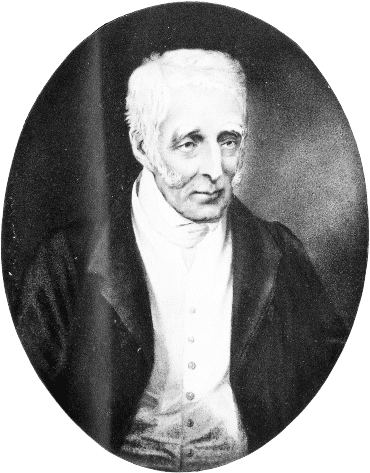
F.M. The Duke of Wellington, K.G.
From a miniature at Apsley House
To face p. 392, Vol. II.
The King of the Belgians to Queen Victoria.
THE QUEEN INHERITS A FORTUNE
Laeken, 10th September 1852.
My dearest Victoria,—... That Mr Neild39 should have left that great fortune to you delighted me; it gives the possibility of forming a private fortune for the Royal Family, the necessity of which nobody can deny. Such things only still happen in England, where there exists loyalty and strong affection for Royalty, a feeling unfortunately much diminished on the Continent of Europe, though it did exist there also....
Footnote 39: John Camden Neild, an eccentric and miserly bachelor, nominally a barrister, died on the 30th of August, bequeathing substantially the whole of his fortune (amounting to half a million) to the Queen. As there were no known relatives, the Queen felt able to accept this legacy; but she first increased the legacies to the executors from £100 to £1000 each, made provision for Mr Neild's servants and others who had claims on him, restored the chancel of North Marston Church, Bucks, where he was buried, and inserted a window there to his memory.
Memorandum by the Prince Albert.
DEATH OF DUKE OF WELLINGTON
Balmoral, 17th September 1852.
The death of the Duke of Wellington40 has deprived the Country of her greatest man, the Crown of its most valuable servant and adviser, the Army of its main strength and support. We received the sad news on an expedition from Allt-na-Giuthasach to the Dhu Loch (one of the wildest and loneliest spots of the Highlands) at four o'clock yesterday afternoon. We hurried home to Allt-na-Giuthasach, and to-day here, where it became important to settle with Lord Derby the mode of providing for the command of the Army, and the filling up of the many posts and places which the Duke had held.
Footnote 40: The Duke passed away at Walmer on the 14th of September, in his eighty-fourth year.
I had privately prepared a list of the mode in which this should be done, and discussed it with Victoria, and found, to both Lord Derby's and our astonishment, that it tallied in every point with the recommendations which he had thought of making.
I explained to Lord Derby the grounds upon which I thought it better not to assume the Command myself, and told him of the old Duke's proposal, two years ago, to prepare the way to my assuming the Command by the appointment of a Chief of the Staff, on Sir Willoughby Gordon's death, and the reasons on which I then declined the offer. Lord Derby entirely concurred in my views, and seemed relieved by my explanation; we then agreed that for the loss of authority which we had lost with the Duke, we could only make up by increase in efficiency in the appointments to the different offices. That Lord Hardinge was the only man fit to command the Army.
He should then receive the Command-in-Chief. The Ordnance which he would vacate should be given to Lord Fitzroy Somerset, hitherto Military Secretary (with the offer of a peerage).41 The Constableship of the Tower to Lord Combermere; the Garter to Lord Londonderry; the Grenadier Guards and the Rifle Brigade to me; the Fusiliers vacated by me to the Duke of Cambridge (or the Coldstream, Lord Strafford exchanging to the Fusiliers); the 60th Rifles vacated by me to Lord Beresford; the Rangership of the Parks in London to George (Duke of Cambridge); the Wardenship of the Cinque Ports to Lord Dalhousie; the Lieutenancy of Hampshire to Lord Winchester. I reserved to me the right of considering whether I should not assume the command of the Brigade of Guards which the Duke of York held in George IV.'s time, to which William IV. appointed himself, and which has been vacant ever since Victoria's accession, although inherent to the Constitution of the Guards.
Footnote 41: He became Lord Raglan.
Lord Derby had thought of George for the Command-in-Chief, as an alternative for Lord Hardinge, but perceived that his rank as a Major-General and youth would hardly entitle him to such an advancement. He would have carried no weight with the public, and we must not conceal from ourselves that many attacks on the Army which have been sleeping on account of the Duke will now be forthcoming.
Victoria wishes the Army to mourn for the Duke as long as for a member of the Royal Family.
Lord Derby proposes a public funeral, which cannot take place, however, before the meeting of Parliament in November. He is to find out how this is to be accomplished on account of the long interval.
The correspondence here following42 shows what doubts exist as to the person in whom the Command of the Army is vested in case of a vacancy. I consider Lord Palmerston's letter as a mere attempt to arrogate supreme power for his Office,43 which rests on no foundation. The Secretary at War has no authority whatever except over money, whilst the Commander-in-Chief has no authority to spend a penny without the Secretary at War.
Albert.
Footnote 42: These letters, which are of no special importance, contained a statement from Lord Palmerston to the effect that the appointment to the Commandership-in-Chief was vested in the Secretary at War.
Footnote 43: Lord Palmerston had held the office of Secretary at War from 1809 to 1828.
Queen Victoria to the King of the Belgians.
THE DUKE OF WELLINGTON
Balmoral, 17th September 1852.
My dearest Uncle,—I am sure you will mourn with us over the loss we and this whole nation have experienced in the death of the dear and great old Duke of Wellington. The sad news will have reached you, I doubt not, on Wednesday or yesterday. We had gone on Wednesday, as I had mentioned, to our little Shiel of Allt-na-Giuthasach to spend two days there, and were enjoying ourselves very much on a beautiful expedition yesterday, and were sitting by the side of the Dhu Loch, one of the severest, wildest spots imaginable, when one of our Highlanders arrived bringing a letter from Lord Derby (who is here), confirming the report which we had already heard of—but entirely disbelieved—and sending me a letter from Lord Charles Wellesley, saying that his dear father had only been ill a few hours, and had hardly suffered at all. It was a stroke, which was succeeded rapidly by others, and carried him off without any return of consciousness. For him it is a blessing that he should have been taken away in the possession of his great and powerful mind and without a lingering illness. But for this country, and for us, his loss—though it could not have been long delayed—is irreparable! He was the pride and the bon génie, as it were, of this country! He was the GREATEST man this country ever produced, and the most devoted and loyal subject, and the staunchest supporter the Crown ever had. He was to us a true, kind friend and most valuable adviser. To think that all this is gone; that this great and immortal man belongs now to History and no longer to the present, is a truth which we cannot realise. We shall soon stand sadly alone; Aberdeen is almost the only personal friend of that kind we have left. Melbourne, Peel, Liverpool—and now the Duke—all gone!
You will kindly feel for and with us, dearest Uncle.
Lord Hardinge is to be Commander-in-Chief, and he is quite the only man fit for it.
Albert is much grieved. The dear Duke showed him great confidence and kindness. He was so fond of his little godson Arthur—who will now be a remaining link of the dear old Duke's, and a pleasant recollection of him. Ever your devoted Niece,
Victoria R.
The King of the Belgians to Queen Victoria.
Laeken, 17th September 1852.
My dearest Victoria,—You will be much grieved at the loss of the Duke. It must give you satisfaction to think that you were always kind to him, and that he was very sincerely devoted to you and appreciated Albert. Since 1814 I had known much of the Duke; his kindness to me had been very marked, and I early discovered that he was very favourable to my marriage with Charlotte, then already in agitation. Since, he was always kind and confidential, even in those days of persecution against me, the result of the jealousy of George IV.; he never was influenced by it, or had the meanness of many who, in the days of misfortune, quickly leave one. The only case in which we were at variance was about the boundaries of Greece. He had some of the old absolute notions, which in that case were not in conformity with the real interests of England and of Europe. Even last year he spoke so very kindly to me on the subject of our Continental affairs. Rarely fickle Fortune permits a poor mortal to reach the conclusion of a long career, however glorious, with such complete success, so undisturbed by physical or moral causes. The Duke is the noblest example of what an Englishman may be, and to what greatness he may rise in following that honourable and straight line.
When one looks at the Manchester school, compared to the greatness to which men like the Duke raised their country, one cannot help to be alarmed for the future. You are enjoying the Highlands, but the weather seems also not very favourable; here it is uncertain, and at times very cold.... Your truly devoted Uncle,
Leopold R.
The Prince Albert to the Earl of Derby.
FUNERAL ARRANGEMENTS
Balmoral, 22nd September 1852.
My dear Lord Derby,—The Queen wishes me to answer your kind letter of yesterday.
Her letter to you and to Mr Walpole of this morning will have apprised you that she sanctions the Guard of Honour having been placed at Walmer, and the Duke's body having been taken possession of formally on the part of the Crown.
It would be a great pity if Lord Fitzroy were to be obliged to decline the Peerage on account of poverty; at the same time it may be difficult to relieve him from the payment of fees by a public grant. Under these circumstances, rather than leave Lord Fitzroy unrewarded, and a chance of his feeling mortified at a moment when his cheerful co-operation with Lord Hardinge is so important to the public service—the Queen would herself bear the expense of the fees. If this were to hurt Lord Fitzroy's feelings, you could easily manage it so that he need never know from what source the £500 came. The Queen leaves this matter in your hands. Ever yours truly,
Albert.
Queen Victoria to Mr Walpole.
Balmoral Castle, 22nd September 1852.
The Queen has just received Mr Walpole's letter of the 20th, informing her of the difficulty of having the Funeral Service, according to the Liturgy, performed twice; she trusts, however, that means may be found to enable the Queen's intentions to be carried out, as communicated to Mr Walpole in Lord Derby's official letter. Whether this is to be done by leaving the body for two months without the Funeral Service being read over it, or by reading the Funeral Service now in the presence of the family, and treating the Public Funeral more as a translation of the remains to their final place of rest, the Queen must leave to be decided by those who have the means of personally sounding the feelings of the Duke's family, the dignitaries of the Church, and the public generally.
An impressive religious ceremony might certainly be made of it at St. Paul's, even if the actual Funeral Service should not be read on the occasion....
Queen Victoria to the Earl of Derby.
Windsor Castle, 23rd October 1852.
Shortly after the formation of Lord Derby's Government, the Queen communicated to him a Memorandum respecting the necessity of attending to our national defences on a systematic plan. The Queen would now wish to hear how far we have advanced in this important object since that time. Lord Derby would perhaps call on the General Commanding-in-Chief, the Master-General of the Ordnance, and the First Lord of the Admiralty, as well as the Home Secretary, to make a report upon this. It will soon be necessary to consider what will have to be done for the future to complete the various plans. The Queen is no alarmist, but thinks that the necessity of our attending to our defences once having been proved and admitted by Parliament and two successive Governments, we should not relax in our efforts until the plans then devised are thoroughly carried out.
Queen Victoria to the King of the Belgians.
LOUIS NAPOLEON
Windsor Castle, 26th October 1852.
My dearest Uncle,—... I must tell you an anecdote relating to Louis Napoleon's entry into Paris, which Lord Cowley wrote over, as going the round of Paris. It is: that under one of the Triumphal Arches a Crown was suspended to a string (which is very often the case) over which was written, "Il l'a bien mérité." Something damaged this crown, and they removed it—leaving, however, the rope and superscription, the effect of which must have been somewhat edifying!
It is not at all true that foreign Officers are not to attend at the funeral of the dear old Duke; on the contrary, we expect them from Prussia, Austria, and Russia, and the Duke of Terceira (whom we shall see to-night) is already come from Portugal to attend the ceremony.
I must now conclude. With Albert's love, ever your devoted Niece,
Victoria R.
Queen Victoria to the Earl of Malmesbury.
Windsor Castle, 8th November 1852.
As we seem to be so near the declaration of the Empire in France, and as so many opinions are expressed on the subject of the title to be assumed by Louis Napoleon, the Queen is anxious to impress Lord Malmesbury with the importance of our not committing ourselves on this point, and not giving our allies to understand that we shall join them in not acknowledging Napoleon III.44 Objectionable as this appellation no doubt is, it may hardly be worth offending France and her Ruler by refusing to recognise it, when it is of such importance to prevent their considering themselves the aggrieved party; any attempt to dictate to France the style of her Ruler would strengthen Louis Napoleon's position; our object should be to leave France alone, as long as she is not aggressive.
All of this should be well weighed.
Footnote 44: Louis Napoleon himself claimed no hereditary right to the Imperial dignity, but only that conferred by election: he acknowledged as national all the acts which had taken place since 1815, such as the reigns of the later Bourbons and of Louis Philippe. (See Memoirs of an ex-Minister.)
The Prince Albert to Viscount Hardinge.
NATIONAL DEFENCES
Windsor Castle, 8th November 1852.
My dear Lord Hardinge,—In reference to our conversation of yesterday, and the Queen's request to Lord Derby that he should call upon the different departments of the Admiralty, Army, Ordnance, and Home Office to furnish a report as to how far the measures begun last spring to put our defences in a state of efficiency have been carried out, and what remains to be done in that direction—I beg now to address you in writing. The object the Queen wishes to obtain is, to receive an account which will show what means we have really at our disposal for purposes of defence, ready for action at the shortest possible notice, and what remains to be done to put us into a state of security, what the supply of the wants may cost (approximately), and what time it would require.
As it will be not only convenient but necessary that the Horse Guards and Ordnance should consult together and combine their deliberations, I beg this letter to be understood to apply as well to Lord Raglan as to yourself, and that you would meet and give the answer to the Queen's questions conjointly.