AMERICAN-IRISH HISTORICAL SOCIETY.
Reading edition
The American-Irish Historical Society was founded, as its constitution declares, for “the study of American history generally; to investigate specially the immigration of the people of Ireland to this country, determine its numbers, examine the sources, learn the places of its settlement; to examine records of every character wherever found; to endeavor to correct erroneous, distorted, and false views of history in relation to the Irish race in America; to encourage and assist the formation of local societies; to promote and foster an honorable and national spirit of patriotism; to place the result of its historical investigations and researches in acceptable literary form; to print, publish, and distribute its documents; to sift and discriminate every paper, sketch, document bearing on the society’s line of work, before the same is accepted and given official sanction.” The work was inaugurated by the issuance of the following invitation to prominent men throughout the country:
A Call for the Organization of an American Historical Society whose Special Line of Research shall be the History of the Irish Element in the Composition of the American People.
Dear Sir,—A number of gentlemen, interested in the part taken in American history by people of Irish birth or lineage, are about to organize themselves into an historical society for the purpose of investigating and recording the influence of that element in the up-building of the nation.
People of Irish blood have been coming to this continent, voluntarily and otherwise, since the date of its earliest settlement. While they have been a valuable addition to colony and republic in all 2departments of human activity, their work and contributions have received but scant recognition from chroniclers of American history.
Whether this omission springs from carelessness, ignorance, indifference, or design, is now of little moment. The fact that such a condition does exist makes it imperative that it should be remedied not only in the interest of historical truth, but of racial fair play. Certain elements in the make-up of the American people have not hesitated on occasion to masquerade, at the expense of the Irish, in borrowed plumes, and to pose under plundered laurels. It is the duty of honest historians to look after the rights of the lawful owners.
The history of Irish immigration to this country is of profound interest. The motive that inspired this sturdy people in coming to these shores was largely the one that animated and inspired all immigration—discontent with the existing home conditions, civil, religious, political, industrial, and the hope of living under better and nobler conditions here.
The American of English stock has his historical society; the descendants of the Dutch, Huguenot, and Spaniard have associations which specialize the historical work of the bodies they represent; and we feel that the story of the Irish element should be told before the mass of legend and fiction now flooding the country under misleading designations has completely submerged historic facts.
The work of our projected society will be influenced by no religious or political divisions, for with us the race stands first, its qualifying incidents afterwards. It matters little where the people came from, whether from the north, the south, the east, or the west of Ireland. It is of minor importance in what church they worshiped; we wish merely to concern ourselves with the work done by them here; to record the story of their settlement; to state the extent of their participation in the civil, military, and political activities of the land, and to try truthfully and fearlessly to record their achievements.
The society now in process of formation must, we believe, be made up of men who have the patience to search, the knowledge and wisdom to sift and discriminate, and the ability to place the results in acceptable literary form. Lastly, the character of the membership must be such that it will command the respect and attention of the community, so that its work will be accepted as having a definite historical value which can be used in general works treating of the growth of the republic by historians of a future date. This, in brief, is the project; it is ambitious, but it is 3worthy; it is absolutely necessary if the good name and influence of an essential, but much neglected, chapter in American history shall be perpetuated.
To place the Irish element in its true light in American history, to secure its correct perspective in relation to historic events on this soil, is the final aim of the new society. Its primal object will be to ascertain the facts, weigh them in relation to contemporary events, and estimate their historical value, avoiding in this process the exaggeration and extravagance of poorly informed writers on the one hand and the prejudice and misrepresentation of hostile writers on the other.
The organization will be constructed on a broad and liberal plan. It will be non-political, and no religious test will be required for admission to membership or the holding of office. Being an American organization in spirit and principle, the society will welcome to its ranks Americans of whatever race descent who evince an interest in the special line of research for which the society is organized.
Some of the projectors belong to other historical bodies, and it was at first believed that the work for which this new society is to be formed could better be done through the medium of those bodies and without the necessity of a separate organization. Experience, however, has led to the conclusion that this is not so. Hence the resolve to form a distinct body, with its own special object, program, and mode of procedure.
There is a place for such a society in the community; its purposes are honorable and useful, and its work should begin while yet documents, records, and historical material are available. We feel that such a work will be valuable not only to the Irish race, but to the American race also, to whose fiber this element has contributed its share.
We will be glad to have your good wishes and coöperation in the work.
The meeting for organizing the society will be held at the Revere House in Boston, Mass., on Wednesday, Jan. 20, 1897, at 6.30 P.M. Introductory to the proceedings, a dinner will be served.
Very respectfully,
John C. Linehan,
State Insurance Commissioner, Concord, N. H.
Joseph Smith,
Secretary, Board of Police, Lowell, Mass.
4Robert Ellis Thompson,
President, Central High School, Philadelphia, Pa.
James Jeffrey Roche,
Editor, The Pilot, Boston, Mass.
Theodore Roosevelt,
New York City.
Thomas J. Gargan,
Boston, Mass.
Patrick Walsh,
Ex-U. S. Senator; publisher, The Chronicle, Augusta, Ga.
Thomas Hamilton Murray,
Editor, Daily Sun, Lawrence, Mass.
Thomas A. E. Weadock,
Member of the LII.d and of the LIII.d Congress, Detroit, Mich.
John J. Phelan,
Late Secretary of State, Connecticut, Bridgeport, Ct.
Edward A. Hall,
Member, Connecticut Valley Historical Society, Springfield, Mass.
Hugh J. Carroll,
Late a Member of the Rhode Island General Assembly; Ex-Mayor
of the city of Pawtucket, R. I.
J. D. O’Connell,
Bureau of Statistics, Treasury Department, Washington, D. C.
Walter Lecky,
Redwood, Jefferson County, N. Y.
J. W. Fogarty,
Assessors Department, City Hall, Boston, Mass.; Secretary,
Charitable Irish Society (instituted 1737).
Thomas Addis Emmet,
New York City.
Dennis Harvey Sheahan,
Ex-Reading Clerk, Rhode Island House of Representatives,
Providence, R. I.
M. J. Harson,
Founder, Phi Kappa Sigma, Brown University, Providence, R. I.
James R. O’Beirne,
Late Brevet Brigadier-General of Volunteers; Ex-Commander, U. S.
Medal of Honor Legion, New York City.
St. Clair A. Mulholland,
Brevet Major-General of Volunteers; commanded Fourth Brigade,
First Division, Second Corps, Philadelphia, Pa.
5Rev. Thomas J. Conaty, D.D.,
Rector, Catholic University, Washington, D. C.
Rev. George C. Betts,
Rector, St. James Protestant Episcopal Church, Goshen, N. Y.
Rev. George W. Pepper,
(Methodist), Cleveland, Ohio.
Rev. Andrew Morrissey, C. S. C.,
President, University of Notre Dame, Notre Dame, Ind.
Osborne Howes,
(Eighth American generation), Secretary, Board of Fire
Underwriters, Boston, Mass.
Henry Stoddard Ruggles,
(Ninth American generation), Member, Sons of the Revolution and
Sons of the American Revolution, Wakefield, Mass.
Henry G. Crowell,
(A descendant of David O’Killia, who was a settler in Plymouth
Colony as early as 1657), South Yarmouth, Mass.
Richard W. Meade,
Rear Admiral, U, S. N.
John Cochrane,
President of the N. Y. Society of the Cincinnati, New York City.
Matthew Calbraithe Butler,
Late a Senator of the United States, Edgefield, S. C.
Issued at Boston, Mass.,
Dec. 26, 1896.
In response to this call, fifty gentlemen met at the Revere House on Wednesday, January 20, and organized the American-Irish Historical Society by signing the following agreement:
“We, the undersigned, by our subscription herewith, agree with the other subscribers hereto to organize ourselves into a body to be known as the American-Irish Historical Society of the United States, whose object shall be the study of American history and whose special line of work shall be the history of the Irish element in the composition of the American people, and the investigation, record and publication of the influence of that element in the up-building of the nation.”
Thomas Hamilton Murray, Lawrence, Mass.
James Jeffrey Roche, Boston, Mass.
Joseph Smith, Lowell, Mass.
6Edward A. Hall, Springfield, Mass.
Bernard E. Donigan, Lawrence, Mass.
Timothy P. Sullivan, Concord, N. H.
James F. Brennan, Peterboro, N. H.
Hugh J. Carroll, Pawtucket, R. I.
Bernard McCaughey, Pawtucket, R. I.
Edward F. Radikin, Pawtucket, R. I.
Peter J. Heffern, Pawtucket, R. I.
William Farrell, Pawtucket, R. I.
M. W. Kelliher, M. D., Pawtucket, R. I.
John C. Linehan, Penacook, N. H.
Rev. Timothy P. Linehan, Biddeford, Me.
Rev. M. H. Egan, Lebanon, N. H.
James Cunningham, Portland, Me.
M. A. Toland, Boston, Mass.
George H. Moses, Concord, N. H.
Thomas B. Smith, Lowell, Mass.
P. J. Flatley, Boston, Mass.
T. Carl O’Brien, Boston, Mass.
John A. O’Keefe, Lynn, Mass.
Daniel Donovan, Lynn, Mass.
W. J. Ahern, Concord, N. H.
David E. Murphy, Concord, N. H.
Michael J. McNeirny, Gloucester, Mass.
Jas. H. Carmichael, Lowell, Mass.
Geo. C. Dempsey, Lowell, Mass.
Thos. F. Harrington, M. D., Lowell, Mass.
Dr. Philip Kilroy, Springfield, Mass.
Thomas B. Lawler, Worcester, Mass.
Rev. John J. McCoy, Chicopee, Mass.
Dr. Patrick J. Timmins, South Boston, Mass.
J. W. Fogarty, Roxbury, Mass.
John E. Lynch, Worcester, Mass.
Francis P. McKeon, Worcester, Mass.
M. J. Harson, Providence, R. I.
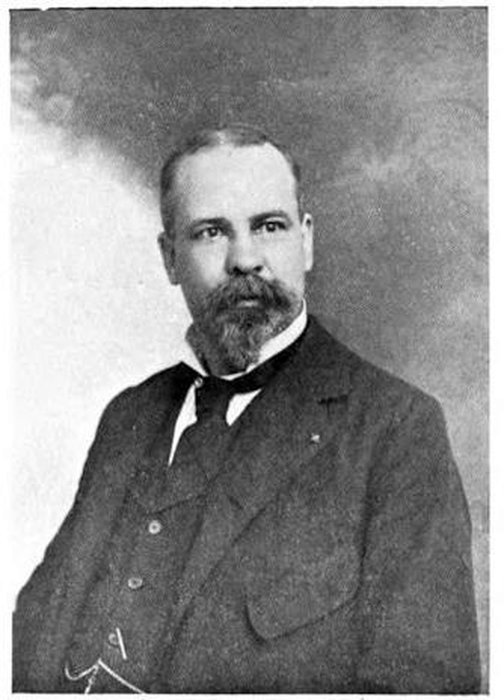
EDWARD A. MOSELEY President-General
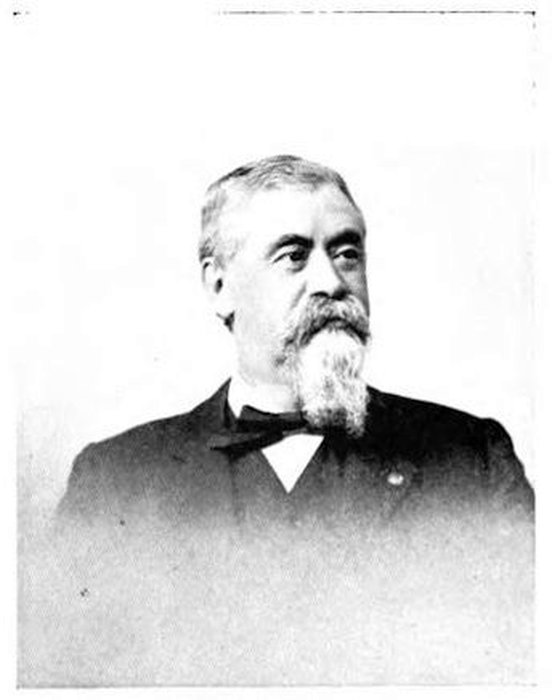
JOHN C. LINEHAN Treasurer-General
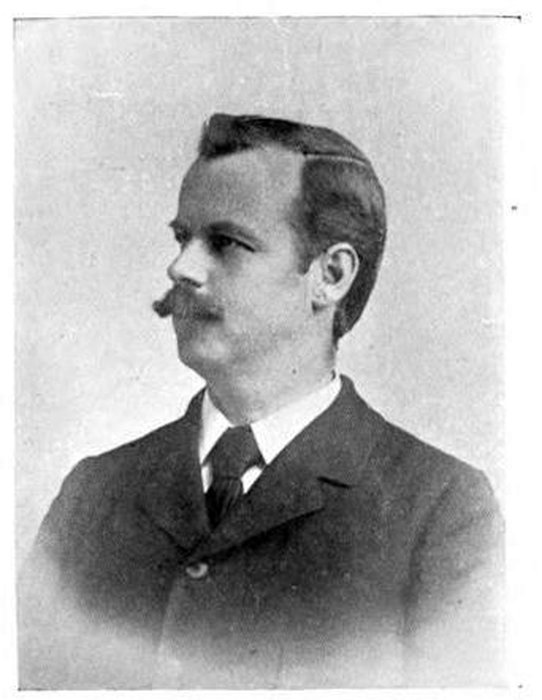
THOMAS HAMILTON MURRAY Secretary-General
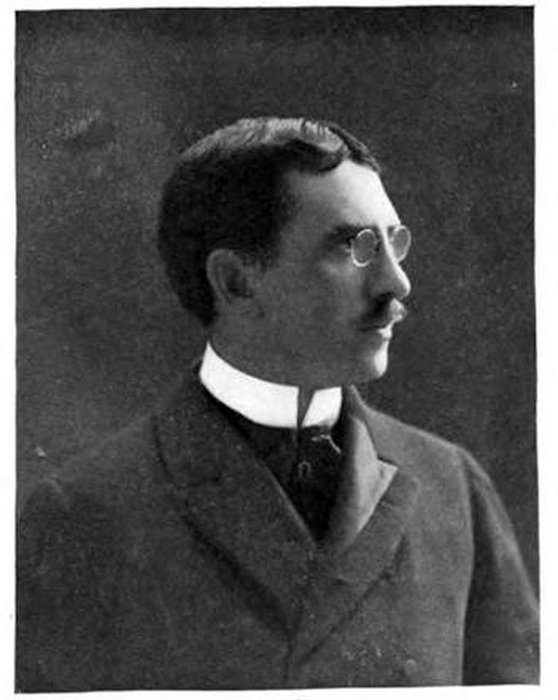
THOMAS B. LAWLER Librarian-Archivist
7Several others were also present, but, coming in later, their signatures to this agreement were not obtained. They included Hon. Thomas J. Gargan and Osborne Howes, of Boston, Mass.; Charles A. De Courcy, of Lawrence, Mass.; Dennis H. Sheahan, of Providence, R. I.; and Thomas Carroll, of Peabody, Mass. Of these, Mr. Gargan, Mr. Howes, and Mr. Sheahan were among the signers of the call for the meeting. All expressed themselves in favor of the organization and a desire to be identified with it.
The following constitution was adopted:
Preamble.
Believing that the part taken in the settlement, foundation, and up-building of these United States by the Irish race has never received proper recognition from historians, and inspired by love for the republic, a pride in our blood and forefathers, and a desire for historic truth, this society has met and organized.
Its mission is to give a plain recital of facts, to correct errors, to supply omissions, to allay passions, to shame prejudice, and to labor for right and truth.
While we, as loyal citizens of this republic, are earnestly interested in all the various phases of its history, we feel that we should be false to its honor and greatness and recreant to our own blood if we did not make a serious effort to leave to those generations which will follow us a clearer and better knowledge of the important work done by men and women of the Irish race on this continent. People of this race—men and women born on Irish soil—have been here from the first, prompted in their flight by the motives common to all immigration, dissatisfaction with the old order of things, and the resolve to obtain a freer and better life in the new land under new conditions.
And so we have come together—natives of Ireland, American sons of Irish immigrants, and descendants of immigrants even unto the seventh, eighth, and ninth American generations—to duly set forth and perpetuate a knowledge of these things.
In the days to come, that lie in the womb of the future, when all the various elements that have gone and are going to make the republic great, are united in the American,—the man who in his person will represent the bravest elements of all the old races of earth,—we desire that the deeds and accomplishments of our element shall be written in the book of the new race, telling what we did and no more; giving us our rightful place by the side of the others.
To accomplish this is the purpose of this organization; it is a work worthy of the sympathy and aid of every American who can rise above the environment of to-day and look into the broad future. Fidelity, 8truth, honor, are the watchwords of such a purpose, and under their noble influence should our work be done.
Article I.—Name.
This organization shall be known as the American-Irish Historical Society.
Article II.—Objects and Purposes.
The objects and purposes of this society are:
(1) The study of American history generally.
(2) To investigate, specially, the immigration of the people of Ireland to this country, determine its numbers, examine the sources, learn the places of its settlement; and estimate its influence on contemporary events in war, legislation, religion, education, and other departments of human activity.
(3) To examine records of every character, wherever found, calculated to throw light on the work of the Irish element in this broad land.
(4) To endeavor to correct erroneous, distorted, and false views of history, where they are known, and to substitute therefor the truth of history, based on documentary evidence and the best and most reasonable tradition, in relation to the Irish race in America.
(5) To encourage and assist the formation of local societies in American cities and towns for the work of the parent society.
(6) To promote and foster an honorable and national spirit of patriotism, which will know no lines of division, which will be based upon loyalty to the laws, institutions, and spirit of the republic to whose up-building the Irish element has unselfishly contributed in blood and treasure, a patriotism whose simple watchwords will be true Americanism and human freedom, and which has no concern for any man’s race, color, or creed, measuring him only by his conduct, effort, and achievement.
(7) To promote by union in a common high purpose a sincere fraternity, a greater emulation in well-doing, a closer confidence and mutual respect among the various elements of the Irish race in America, that, by putting behind them the asperities of the past, they may unite in a common brotherhood with their fellow-citizens for the honor of the race and the glory of the republic.
(8) To place the result of its historical investigations and researches in acceptable literary form; to print, publish, and distribute 9its documents to libraries, institutions of learning, and among its members, in order that the widest dissemination of historical truth may be obtained and placed within the reach of historians and other writers and readers.
(9) To sift and discriminate every paper, sketch, document, bearing on the society’s line of work, before the same is accepted and given official sanction, in order that its publication may be a guarantee of historical accuracy; to do its work without passion or prejudice, to view accomplished facts in the true scientific historical spirit, and, having reached the truth, to give it to the world.
Article III.—Membership.
Any person, of good moral character, who is interested in the special work of this society, shall be deemed eligible for membership in the same. No tests other than that of character and devotion to the society’s objects shall be applied to membership.
Every applicant for membership shall be recommended by two members of the society before his application shall be considered by the Secretary-General, and the application shall be accompanied by the dues in the amounts laid down in the by-laws.
Members will be elected as follows: Candidates may send their applications—for which blanks will be furnished—to the Secretary-General, accompanied by the fee as provided in the by-laws, and each application must be endorsed by two members of the society. The Secretary-General shall submit the application to the Executive Council, and a three-fourths vote of that body, by ballot or otherwise, will be necessary to elect the candidate.
Article IV.—Classes of Members.
The society shall comprise life members and annual members who shall pay dues provided by the by-laws. The society may also choose honorary and corresponding members who shall be exempt from dues but shall not have the right to vote.
Article V.—Officers.
The officers of the society shall consist of:
1. A President-General.
2. A Vice-President for each state and territory and for the District of Columbia.
103. A Secretary-General.
4. A Treasurer-General.
5. A Librarian and Archivist.
6. An Historiographer.
7. An Executive Council.
(The word “General” herein to be considered equivalent to National.)
The officers of the society shall be elected annually.
Article VI.—The President-General.
The duties of the President-General shall be to open and preside over the society during its deliberations, to see that the constitution is observed and the by-laws enforced, to appoint committees, and exercise a watchful care over the interests of the society, that its work may be properly done and its purposes adhered to. In the absence of the President-General a presiding officer pro tem. may be chosen.
Article VII.—The Vice-Presidents.
It shall be the duty of the Vice-President of each state to represent the President-General at all meetings of state chapters of the society, and for the Vice-President of the state to which the President-General belongs, or in which the meeting is held, to represent him at all meetings of the parent society when he cannot be present, and in his absence to act as chairman pro tem. In the absence of both the President-General and state Vice-President, a presiding officer pro tem. may be chosen from the assembled members of the society.
Article VIII.—The Secretary-General.
The Secretary-General shall keep a record of all the proceedings of the society and the Executive Council; he shall have charge of the seal and records; he shall issue and sign in conjunction with the President-General all charters granted to the subsidiary chapters, and shall with him certify to all acts of the society. He shall, upon orders from the President-General, give due notice of time and place of all meetings of the body; give notice to the several officers of all votes, resolutions, orders, and proceedings of the body affecting them or appertaining to their respective offices, and perform such other duties as may be assigned him.
11
Article IX.—The Treasurer-General.
The Treasurer-General shall collect and receive all dues, funds, and securities, and deposit the same to the credit of the American-Irish Historical Society, in such banking institution as may be approved by the Executive Council. This money shall be drawn to the check of the Treasurer-General for the purposes of the society and to pay such sums as may be ordered by the Executive Council of the society in meeting, said orders to be countersigned by the President-General and Secretary-General. He must keep a full and accurate account of all receipts and disbursements, and at each annual meeting shall render the same to the society when a committee shall be appointed by the President-General to audit his accounts. He shall present at annual or special meetings a list of members in arrears.
Article X.—The Librarian and Archivist.
The Librarian and Archivist shall be the custodian of all published books, pamphlets, files of newspapers, and similar property of the society. He shall have charge of all documents, manuscripts, and other productions not assigned by this constitution to other officers of the society, and shall keep the same in a place or places easy of access and safe from loss by fire or other causes.
Article XI.—The Historiographer.
The Historiographer, or official historian, of the society shall perform the duties usually pertaining to that office.
Article XII.—The Executive Council.
The Executive Council shall consist of the President-General, Secretary-General, Treasurer-General, Librarian and Archivist, Historiographer, and not less than ten nor more than twenty other members to be elected by the society. The Executive Council shall be judge of the qualifications of applicants for admission, and if satisfactory, shall elect the same. The Council shall recommend plans for promoting the objects of the society, digest and prepare business, authorize the disbursement and expenditure of unappropriated money in the treasury for the current expenses of the society; shall prepare and edit—or cause to be prepared and edited—contributions of an historical or literary character bearing on the special work of the 12society, for publication and distribution; may appropriate funds for the expenses of special branches of research for historical data and for the purchase of works to form a library for the society whenever it shall have a permanent home and headquarters. The Council shall have power to fill vacancies in offices until the annual meeting, exercise a supervisory care over the affairs of the society, and perform such other duties as may be intrusted to them. At a meeting of the Executive Council five members shall constitute a quorum.
Article XIII.—Meetings.
The annual meeting of this society shall be held on the third Wednesday in January, at a place to be selected by the Executive Council. A field day of the body shall be held during the summer of each year at such time and place as the Executive Council shall select, due regard being given to the convenience of the greatest number, and, as far as possible, the meeting place selected shall be one whose historical associations are of interest to American citizens.
The annual meeting shall be for the purpose of electing officers, hearing reports, and transacting such other business as may come properly before it. There shall be four stated meetings each year.
Special meetings may be called at any time by the Executive Council.
Article XIV.—Subsidiary Societies.
Chapters of the parent society may be established in any city or town in the United States upon the petition of ten persons for a charter, and such charter shall be issued upon payment of the sum designated for such in the by-laws.
The President, Secretary, Treasurer, Librarian, and Historiographer of all subsidiary societies shall be admitted to all meetings of the parent society as members during their term of office, with all the privilege of membership except that of voting.
Article XV.—Amendments.
Amendments to the constitution shall be submitted to the Executive Council through the Secretary-General at least thirty days before the meeting of the society. A vote of two-thirds of the members present at the meeting shall be necessary for the adoption of such amendments.
13
By-Laws.
1. The initiation fee shall be three dollars.[1] The annual membership fee shall be three dollars, payable not later than the first day of February in each year.
2. Payment of fifty dollars in advance at one time shall constitute a life membership. Life members shall be exempt from further membership dues.
3. The Executive Council shall provide for each regular meeting of the society an address, essay, or paper dealing with some topic in the society’s line of work.
4. A copy of all original productions read before the society shall be requested for deposit in the society’s archives.
5. The annual field-day program shall include an oration, poem, and dinner. Other features of an appropriate nature may be added.
6. A fraternal spirit shall be cultivated with other American historical bodies. The society shall also keep in touch with historical organizations in Ireland, France, and other countries.
7. Any person elected to membership in this society who fails to pay his initiation fee within one year from the date of his election shall, having been duly notified by the Secretary-General, be considered as having forfeited his right to membership and his election shall be canceled.
8. A member, neglecting for two years to pay his annual fee, shall be notified of such omission by the Secretary-General. Still neglecting for three months to pay the dues, such delinquent member shall be dropped as no longer belonging to the society.
9. The stated meetings of the society shall be held in January, April, July, and October. The President-General upon receiving a request in writing, signed by ten members, asking for a special meeting, shall cause the said meeting to be convened forthwith.
10. Ten members shall constitute a quorum at any meeting of the society, except stated meetings when fifteen members shall be necessary.
11. The general order of business at meetings of the society shall be as follows:
a. Minutes of previous meeting.
b. Report of Executive Council on candidates for membership.
c. Balloting on candidates for membership.
14d. Reports of officers and committees.
e. Unfinished business.
f. New business.
g. Adjournment
12. When not otherwise provided, Cushing’s Manual shall be the authority on points of procedure at meetings of the society.
13. No part of these by-laws shall be amended, altered, or repealed, unless proposition is submitted in writing covering the proposed amendment at least thirty days before the meeting when it is to be acted upon, when, if two-thirds of the members present and voting express themselves in favor of the change, the same shall be made.
After the reception and introduction of those present, dinner was served. Hon. Thomas J. Gargan presided, having as his guest Paul B. Du Chaillu, the noted explorer, author of The Viking Age, The Land of the Midnight Sun, and numerous other works.
Upon the conclusion of the dinner, Mr. Gargan arose and said:
“In the name of the committee who have issued the call for the organization of an American Historical Society, whose special line of research shall be the history of the Irish element in the composition of the American people, I congratulate you on the success of this initial movement and bid you a cordial welcome to this meeting.
“But little has yet been done to show how much the sons of Ireland and their descendants have contributed to the settlement, to the civilization and reclamation of this country, as also to its liberation from oppression.
“In our proposed work we will discard the legendary and the mythical. We recognize that we are living in a scientific age at the end of the nineteenth century, the age of the microscope and the X-ray, and we ask for the acceptance of no historical data that will not bear the modern search-light and that is not sufficiently proven.
“We claim that due credit has not been given to the Irish contributions. That through prejudice or through gross ignorance there has grown up a myth about the Scotch-Irish. Of all the myths that have crept into history this is the most mythical. Why any man should be ashamed of his honorable Irish ancestry surpasses my comprehension and subjects the man who attempts to deny it to the scorn and contempt of all honest and intelligent men.
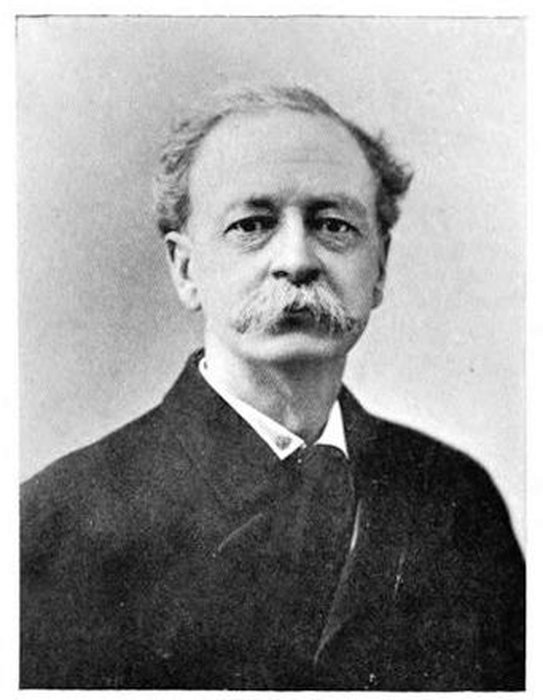
THOMAS J. GARGAN Boston, Mass.
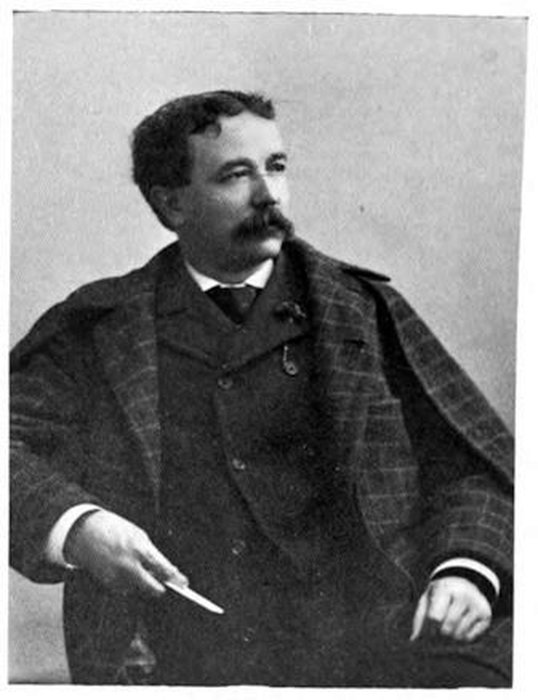
JAMES JEFFREY ROCHE Boston, Mass.
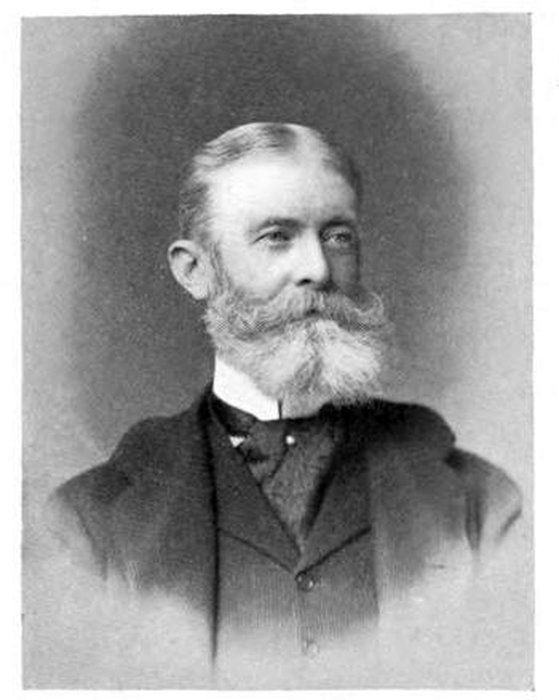
JOHN D. CRIMMINS New York City
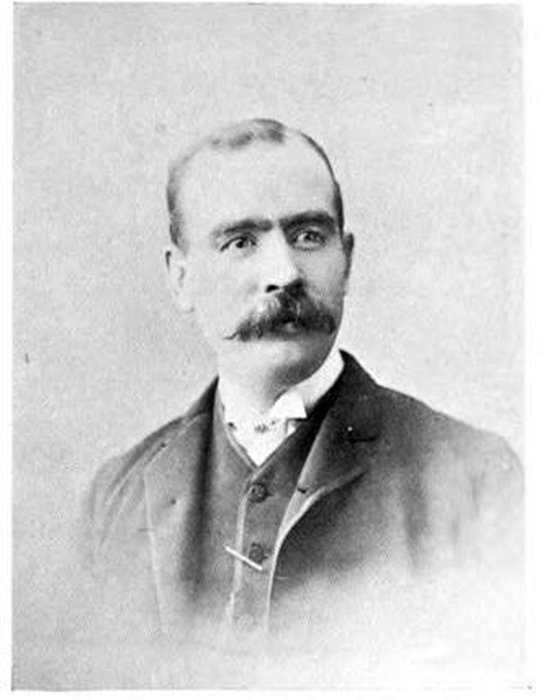
JOSEPH SMITH Lowell, Mass.
EXECUTIVE COMMITTEE
15“Descendants of Irishmen may well feel proud of the honorable part which the Irish race has borne in the settlement and development of the country. As early as 1649, Cromwell, by his cruel policy, transported 45,000 of them beyond the seas. A large number came to Barbadoes. Many of them afterwards came to the continent of North America.
“The revolution of 1688 in England, and the acts of British Parliament to discourage manufactures in Ireland, drove 100,000 operatives out of Ireland, and a writer of that time says multitudes of them went to America.
“In 1729 a writer stated that 3000 males left Ulster yearly for the American colonies. And the arrivals at the port of Philadelphia for 1729 are set down as: English and Welsh, 267; Scotch, 43; German, 343; Irish, 5655, or a proportion of ten Irish immigrants to one from all other European nations. This constant influx continued, though not in so great proportion. So we see what an important factor they were in the settlement of the colonies.
“James Logan, of Lurgan, Ire., came over with William Penn, and complaint was made against him that public Mass was permitted in the colony.
“The name of Logan has through all our history been honorably identified with every step of our progress. In 1729 several families came from Longford, Ire., who were landed at Cape Cod, but made their way to New York. Among them was Charles Clinton, whose three children became historical men in the annals of New York. The colony of Maryland was largely settled from Ireland; the Carrolls, whose names are indissolubly associated with American history, coming to the colony in 1689.
“In 1710 we find in Virginia along the Blue Ridge, in what are now the counties of Patrick and Rockbridge, the McDowells, Breckenridges, McDuffies, McGruders, and others, and the two rivers Mayo, and the towns called McGaheysville, Healysville, Kennedysville, McFarland, Lynchburg, and Kinsdale,—all names that tell us plainly what was the origin of the settlers.
“In 1737 an Irish settlement was established on the Santee River in South Carolina, and the historian of that time says none has furnished so many settlers to this province as Ireland.
“In 1746 Daniel Boone commenced the settlement of Kentucky, and had with him Hugh McGrady, also Harland and McBride.
16“In the Massachusetts Bay Colonies, prejudices against natives of Ireland existed almost from the settlement of the colony. There were restrictions as to land, and in 1720 the General Court warned settlers from Ireland to leave the colony within seven months.
“As you all know, in 1737 the Charitable Irish Society was founded here in Boston by twenty-six natives of Ireland, Robert Duncan heading the list. William Hall was the first president, and in that list of names are the founders of many distinguished Boston families, some of whom, I am sorry to say, are not inclined to own their origin, or choose rather to call themselves Scotch-Irish, an appellation which their ancestors would have despised. We find at Concord the burial place of Hugh Cargill, born in Ballyshannon, who came to this country, in 1744, a poor emigrant, acquiring no mean estate, leaving as a legacy the Stratton farm to the town of Concord to be used for the poor.
“There also came to Massachusetts the Limerick schoolmaster, John O’Sullivan, a name illustrious in our country’s annals. One of his sons was General Sullivan, of Revolutionary fame. One of his lineal descendants, Mr. Russell Sullivan, the well-known author, is one of the signers of our roll. There were Higginses and Reillys at Plymouth and along the shores of Cape Cod.
“One of the Indian transfers of land was to one of the Reillys.
“One of the most distinguished Irishmen who came to New England was George Berkely, a native of Kilkenny. Born near Thomaston, he came here to found a college for the civilization of the Indians. He is best remembered by his poems. Those of you who have visited the national capitol at Washington will see in fresco on the walls at the foot of the stairway portrayed by the brush of the artist in almost speaking pictures the story of the settlement and civilization of the United States, and you will see inscribed the lines which gave the artist inspiration, written by George Berkely:
Westward the course of empire takes its way;
The four first acts already past,
A fifth shall close the drama with the day:
Time’s noblest offspring is the last.
“Yet we should not be vainglorious. We are but representatives of many nations who from the earliest settlement of the country have helped to plant here free institutions, but we are not intruders, nor are we here by the tolerance of any party. We live here under the constitution and laws of the country, and are vitally interested in 17its well-being and future prosperity. We, of this generation, decline to accept that series of lies which English historians and their imitators have agreed upon as truthful history of what the Irish have done in this country or any other country.
“We propose to investigate facts and ask for their impartial consideration.
“The object of this association is to call to mind those noble types of men and women that the Irish race have sent here, that we may receive credit for our fair share in the development and maintenance of a government founded upon manhood.”
Hon. John C. Linehan spoke briefly, saying: “I think there is not a prouder title than that of American citizen. I am proud of it. I glory in it. But as I believe that a man who cannot love his mother cannot love his wife, a man who is false to the land of his birth can never be true to the land of his adoption. New Hampshire presents a rich field for the society’s research.
“Our first governor was an Irishman. Darby Field, an Irish soldier, discovered the White Mountains, and there was not a battle of the French and Indian wars in which Irish blood was not spilt just as freely as in the battles of the Civil War.
“If we do our work, the American people, of whatever birth, will put the present Scotch-Irish myth where it belongs.”
Joseph Smith, secretary of the Lowell Police Board, urged work on the part of every member. “We cannot deal in hurrah business,” he said. “We must produce the cold documents and facts that no one can dispute, and eliminate from history its imaginary and fictitious bluffs. All must work in investigation in their own towns and vicinity. We must organize in every town and city, and every year have a meeting of this parent society to garner and publish our discovered and compiled facts. This cold documentary evidence cannot be disputed, and falsehood and fiction will cease.”
Osborne Howes, the seventh in line from an Irish settler of Cape Cod, said it was not so much a matter of self-laudation, but to create a spirit in the people. He believed in the necessity of a race living up to its ideal, and the higher the ideal could be placed the better for all of the race; they will have something to look forward to, something to eliminate.
Paul Du Chaillu heartily endorsed the purpose as a most laudable one. “But don’t be self-laudable,” he advised, “you want the facts, the truth; unearth the truth for truth’s sake; present it to the world and don’t be afraid of opposition. Defy it.”
18Charles A. De Courcey, of Lawrence, spoke of the feeling and experience and slurs cast upon every school child of Irish parentage in the past, and to some extent to-day. “We were foreign. We did not feel at home. But we began to know. We began to feel at home. We learned of our race’s participation in the up-building of the nation. We will prove our part in America’s history; then the children as Americans can feel as Americans.”
The Rev. John J. McCoy, in an able speech, declared: “The records are so honorable that, although it is rather late to make the start, we all ought to find very pleasant work in assisting to look them up.”
Editor George H. Moses, of the Concord Monitor, Senator Chandler’s paper, ex-Mayor Hugh J. Carroll, of Pawtucket, and Hon. P. J. Flatley, of Boston, made speeches, urging the conduct of the research with true historic spirit.
Mr. Flatley, in his impromptu speech, handled the “Scotch-Irish” myth without gloves.
The following officers were elected:
Rear-Admiral Richard Worsam Meade, U. S. Navy (retired), President-General; Thomas Hamilton Murray, Pawtucket, R. I., Secretary-General; Hon. John C. Linehan, Concord, N. H., Treasurer-General; Thomas B. Lawler, Worcester, Mass., Librarian Archivist; Hon. Theodore Roosevelt, New York; James Jeffrey Roche, Boston; Augustus St. Gaudens, New York; Hon. Thomas J. Gargan, Boston; Dr. Thomas Dunn English, Newark, N. J.; Prof. Maurice F. Egan, Washington; Edward A. Moseley, Washington; Robert Ellis Thompson, Philadelphia; T. Russell Sullivan, Boston; Joseph Smith, Lowell, Executive Committee.
The vice-presidents are: Massachusetts, Osborne Howes, Boston; Connecticut, Joseph Swords, Hartford; Maine, James Cunningham; Rhode Island, M. J. Harson, Providence; Vermont, T. W. Maloney; New York, Gen. James R. O’Beirne; New Jersey, Hon. William McAdoo; District of Columbia, J. D. O’Connell, Washington; Pennsylvania, Gen. St. Clair Mulholland, Philadelphia; South Carolina, Hon. Matthew C. Butler; Georgia, Hon. Patrick Walsh; Ohio, Rev. George W. Pepper, Cleveland; Michigan, Thomas A. Weadock, Detroit; New Hampshire, T. B. Sullivan, Concord.
19The position of historiographer has been left vacant until a subsequent meeting of the executive body.
Mr. Joseph Smith, of Lowell, in behalf of the committee appointed to prepare a constitution and by-laws, submitted a report, and the same met with the unanimous approval of the gathering. The preamble is as follows:
Believing that the part taken in the settlement, foundation, and up-building of these United States by the Irish race has never received proper recognition from historians, and inspired by love for the republic, a pride in our blood and forefathers, and a desire for historic truth, this society has met and organized.
Its mission is to give a plain recital of facts, to correct errors, to supply omissions, to allay passions, to shame prejudice, and to labor for right and truth.
While we, as loyal citizens of this republic, are earnestly interested in all the various phases of its history, we feel that we should be false to its honor and greatness, and recreant to our own blood, if we did not make a serious effort to leave to those generations which follow us a clearer and better knowledge of the important work done by men and women of the Irish race on this continent. People of this race—men and women born on Irish soil—have been here from the first, prompted in their flight by the motives common to all immigration,—dissatisfaction with the old order of things and the resolve to obtain a freer and better life in the new land under new conditions.
And so we have come together—natives of Ireland, American sons of Irish immigrants, and descendants of immigrants even unto the seventh, eighth, and ninth American generations—duly to set forth and perpetuate a knowledge of these things.
In the days to come, that lie in the womb of the future, when all the various elements that have gone and are going to make the republic great are united in the American,—the man who in his person will represent the bravest elements of all the old races of earth,—we desire that the deeds and accomplishments 20of our element shall be written in the book of the new race, telling what we did, and no more; giving us our rightful place by the side of others.
To accomplish this is the purpose of this organization; it is a work worthy of the sympathy and aid of every American who can rise above the environment of to-day and look into the broad future. Fidelity, truth, honor are the watchwords of such a purpose, and under their noble influence should our work be done.
Thomas Hamilton Murray, secretary of the meeting, was then introduced and stated that letters expressive of interest in the organization, acknowledging an invitation or giving an expression of opinion, had been received from a large number of people. The list of writers included the following:
Hon. George F. Hoar,
United States senator from Massachusetts.
Rear-Admiral Richard W. Meade, U. S. N.
(Retired), Philadelphia, Pa., and Washington, D. C.
Hon. Thomas Dunn English,
Newark, N. J.
Dr. Thomas Addis Emmet,
New York City.
Samuel Swett Green,
Worcester, Mass. (of the American Antiquarian Society).
Henry Stoddard Ruggles,
Wakefield, Mass. (of the Sons of the Revolution).
Hon. Daniel H. Hastings,
Governor of Pennsylvania.
President Tyler,
Of the college of William and Mary, Virginia.
President Lee,
Of Washington and Lee University, Virginia.
President Morrissey,
Of the University of Notre Dame, Indiana.
Rev. Dr. Conaty,
Rector of the Catholic University, Washington, D. C.
Provost Harrison,
Of the University of Pennsylvania.
21H. B. Adams,
Professor of American and Institutional history, Johns Hopkins University.
W. M. Sloane,
Professor of history, Princeton College, New Jersey.
Ex-Governor Waller,
Of Connecticut.
Gen. Francis A. Walker,
Boston, Mass.
Edward A. Moseley,
Washington, D. C.
Rev. J. Gray Bolton, D. D.,
(Presbyterian), Philadelphia, Pa.
Rev. Cyrus Townsend Brady,
Philadelphia, Pa. (Protestant Episcopal archdeacon of Pennsylvania).
Rev. George W. Pepper,
(Methodist), Cleveland, O.
Rev. George C. Betts,
(Protestant Episcopalian), Goshen, N. Y.
Rev. Thomas J. Shahan,
Catholic University, Washington, D. C.
Hon. Patrick Walsh,
Augusta, Ga. (ex-United States senator).
Hon. Thomas A. E. Weadock,
Detroit, Mich. (ex-member of Congress).
Col. D. S. Lamson,
Weston, Mass.
John P. Donahue,
Wilmington, Del. (national commander, Union Veteran Legion).
Hon. John Cochrane,
President of the New York Society of the Cincinnati.
Rev. W. A. McDermott,
(“Walker Lecky”) Redwood, N. Y.
Letters of Warm Approval.
The following are the letters that were received:
From Admiral Meade.
Philadelphia, Dec. 8, 1896.
Dear Mr. Roche:—Your note of November 26 with its enclosure has only just reached me here. In reply I would say that you are at 22liberty to enroll my name as you desire. My ancestor, Robert Meade, who died in this city in August, 1754, was an Irish gentleman, who, having to choose between his conscience and his native land, chose to leave his native land for the sake of conscience and to cast in his lot with the people of the New World. He was one of the “Wild Geese.” His son, George Meade, born in this city, Feb. 27, 1741, died here in 1808. His life has been written for the volumes of the American Catholic Historical Society of this city. He was a patriot of the finest type, and his name is on the Roll of Honor in Independence Hall in this city.
Since then four generations have borne the name of Richard Worsam Meade, and all, I believe, with honor. My father’s younger brother, George Gordon Meade, is sufficiently well known to the country in connection with Gettysburg. In the life of George Meade, alluded to above, you will see what I say about “Irishmen.”
My father’s mother was Margaret Butler, of this city, and she also traced her ancestry to a famous strain of Norman-Irish blood.
No, sir! None of the Meades or Butlers are ashamed of their Irish lineage! Rather the contrary do we rejoice that our forefathers came from the Emerald Isle, the land of dauntless men and pure women, and that they represented the best blood of the Island.
Very truly yours,
R. W. Meade, 3d,
Rear-Admiral, U. S. N.
From the Governor of Pennsylvania.
January 11, 1897.
My Dear Sir:—It would give me great pleasure to unite with yourself and other gentlemen who are interested in recording the relation and influence of Americans of Irish birth or lineage to the history of our country, were it possible for me to be away from the Capitol on the 20th inst. I am in entire sympathy with the movement and hope to render assistance along the lines indicated in your letter. My father was born in Londonderry and came to this country when a youth. I believe I am entitled to membership in the proposed organization.
Very truly yours,
Daniel H. Hastings.
23
From the Rev. Dr. Shahan.
Washington, D. C., Jan. 18, 1897.
Dear Captain Tobin:—I regret to say that it will be practically impossible to go to Boston. I cannot very well leave all the work I have on hand, and I must go back again the following week, for Monday, the 25th, to Hartford. But I am entirely in favor of the good work, and I hope that from the beginning it will be a success. I regret again very much that so many duties all crowd in on the end of January, and make it impossible to be with so many men of one mind and one race next Wednesday. If members are proposed, please put me down as one.
Yours sincerely,
Thomas J. Shahan.
Judge Smith, of the Superior Court of Pennsylvania, wrote:
“I have just read the letter which you kindly sent me, giving in outline the scope and purpose of the proposed Historical Society and bearing the names of many distinguished citizens. I am very much pleased with the project and gratified to see that so many eminent gentlemen have become interested in the movement, and regret that official duties will prevent my attendance at the initial meeting. That the undertaking is needful and timely, the letter well demonstrates, and the broad foundation indicated will undoubtedly attract the moral and material support of all American citizens who want nothing but the truth recorded and preserved in the archives of history. May success attend the noble work of vindicating the worth and memory of a superior race!”
Henry Stoddard Ruggles, of Wakefield, wrote:
“Your proposal to found a society devoted to the preservation of records of the services of Irishmen in the colonization and subsequent history of America meets my approval. Although the biographies of some of the early pioneers of that race have been carefully and fully treated, owing to the devotion of their descendants to their memory, only a very small part has ever been written of the history of the stock as a whole, and some of their achievements have, through prejudice, been ascribed to another people. Many Protestants of Irish derivation are claiming a Scotch lineage for their immigrant 24ancestor, which he would have repudiated; and yet they are often innocent of intent to mislead; so thoroughly in certain quarters has the theory been nursed, that Protestant Irishmen, particularly those from the northern province, are invariably descended from the Scotch blood. As an American in the ninth American generation, who, by the services of three great grandfathers in the armies of the Revolution, holds membership in both the ‘Sons of the Revolution’ and ‘Sons of the American Revolution,’ and as a member of the ‘Essex Institute’ and ‘Roxbury Military Historical Society,’ both devoted to historical research, I naturally desire that all branches of our country’s history should receive the attention they deserve. That a race so prolific, so inwrought with the old stock of the land, so productive of men of mark and merit, should till now remain without a representative society to defend its record and its heroes, is most surprising. That it is soon to have such we may rest assured from the names of its sponsors, who are a guaranty of success.”
From Rt. Rev. Dr. Conaty.
Worcester, Nov. 20, 1896.
My Dear Sir:—I am in full accord with a movement toward the establishment of an American Historical Society, according to the lines projected by you. The object is most praiseworthy, and the results will be most valuable. It is a shame for us that so much valuable matter has been lost because of no medium of salvation. Let us save what we can, and gather together the records of our race in the fields of literature, patriotism, business, and professional life. The story has not been fully written; but when this has been done, it will be found that our people have done their share in the work of civilization, liberty, and letters in the great Republic, for the preservation of which so many generously gave their lives.
You have my best wishes, and you can depend upon my earnest coöperation.
Yours very truly,
Thomas J. Conaty.
From Dr. Thomas Addis Emmet.
New York, Jan. 4, 1897.
Dear Sir:—I am too much occupied with my professional engagements to be able to get away from home at this season, and I will therefore not be able to attend the meeting for organizing the 25society on January 20. But I am in close sympathy with the movement, and believe that there exists a large and promising field for an Irish Historical Society in this country. This opinion is based on the fact that during a long life I have devoted the greater part of my leisure time to the study of American history. Until recently I possessed probably the largest library and the largest collection of autographic documents bearing on American history ever held by one individual. From my knowledge thus gained, I am firmly of the conviction that the Irish, by birth or descent, have contributed during the past two hundred years, and from every station in life, more in number, more brain work and muscle for the development of the country at large than has been furnished by every other nationality of the world combined.
With some experience in getting up such an undertaking, I will take the liberty of making a suggestion: The success of the proposed society will rest entirely, I believe, on one feature—putting it in the hands of young men, who must be put forward with the responsibility to do the work. It is but proper that the older men should make the first move, give it their support and contribute hereafter so far as they may be able to do; but unless the young men become interested in the undertaking, and sufficiently to be willing to do the work, it will prove a failure.
Yours very truly,
Thomas Addis Emmet.
From Hon. E. A. Moseley.
Washington, January 6.
Dear Sir:—I am very glad indeed to know that there will be an American Historical Society whose special line of research will be the history of the Irish element in this country, and I will cheerfully aid in the work as far as I can.
I am ninth in descent from Lieut. Thaddeus Clark, who came from Ireland and died in Portland, May 16, 1690. He was lieutenant of a company of men engaged in the defense of Falmouth, now Portland, during the Indian War. He fell into ambuscade with his company while making a reconnoitre, and was killed with twelve of his men.
I am eleventh in descent from Deputy-Governor George Cleeves, who was the founder of Portland, formerly Falmouth. I have the impression that he was an Irishman also.
26I am sixth in descent from Lieut. John Brown, of Belfast, Me., who came with his father from Londonderry, Ire., and was one of the settlers of Londonderry, N. H. He was chairman of the first Board of Selectmen of Belfast, Me., chosen Nov. 11, 1773–75. He removed from Londonderry, N. H. While residing in Londonderry, he had been a commissioned officer in the Provincial Army, and had served in the French War. He was one of the Committee of Safety and Inspection.
If I had the time for research, I feel that I could find others of my ancestors who came from Ireland.
With kindest regards, sincerely yours,
Edward A. Moseley.
From the National Commander of the Union Veteran Legion.
Wilmington, Del., January 20.
Respected Sir:—I am in hearty sympathy with your proposed organization, and should feel myself honored by being considered a member of it, and will work to the best of my ability to accomplish the desired purpose in the limited field presented to me in this state of Delaware. I am now engaged in convention at Dover, Delaware, framing a new constitution for our state, and will have more leisure when that has been accomplished. In the meantime I beg to assure you of my sincere thanks and high appreciation at the honor conferred upon me by yourself and honorable colleagues in so worthy a movement, and have the honor to remain,
Very truly,
Jno. P. Donahoe,
National Commander.
From Samuel Swett Green, Librarian of Worcester.
“Thank you for sending me a circular regarding the historical society, which it is in contemplation to form for the purpose of promoting the study of the work which has been done by Irishmen in furthering the interests of the American Colonies and the United States. It is natural and commendable for residents of the United States, born in foreign countries or descended from persons born outside of this country, that, while esteeming the institutions of this land and having a patriotic interest in its welfare, they should at the 27same time retain warm affection for the mother country and a strong interest in the doings of its sons. Because such persons love a new country, there is no reason why they should cease to love the old country. They would show a lack of right feeling were they to do so. I heartily favor the formation of societies by studious people interested in the history of different elements of our population, and should think that Americans of Irish origin would find the study of the history of the Irish in this country especially interesting and profitable. They would find, I should think, a rich return in striving to bring to light incidents in their history by forming a society with this purpose in view.”
From Ex-U. S. Senator Patrick Walsh.
Augusta, Ga., Sept. 8, 1896.
Dear Sir:—I am in receipt of your favor of August 31, enclosing proof of an article in reference to the formation of an “American-Irish Historical Society.” I have read the announcement with pleasure, and I most cordially endorse the object in view. The history of the Irish race in America should be written. In peace and in war citizens of Irish birth have always been faithful to the United States. I regret to say that I do not very well see, at this time, how I can be present at your first meeting, but I beg to assure you of my most hearty approval of the proposed American-Irish Historical Society.
Yours very sincerely,
Patrick Walsh.
From Theodore Roosevelt.
New York, Jan. 13, 1897.
My Dear Mr. Roche:—I regret extremely that I cannot be present at the opening meeting of the Association. All these associations do good. We are a new people, derived from many race strains, and different from any one of them, and it is a good thing to have brought before us our diversity in race origin. Like most New Yorkers, whose American ancestry goes back for more than two centuries, I have an ancestral right to belong to several societies of this kind, and I enjoy equally attending the dinners of the Hollander, the Huguenot, the Scotchman, and the Irishman. It seems to me the one lesson to be remembered always by those who belong to these associations is that in time their descendants will most surely have 28the right to belong to many other similar associations; for in time the different strains of blood will all be blended together, English and Irish, German and French. When that time comes, and before it, the chief thing for all of us to keep in mind is that we must be good Americans, purely as such, no matter what be our creed or our ancestry in Europe.
Very sincerely yours,
Theodore Roosevelt.
From Senator Hoar.
Worcester, Mass., Nov. 12, 1896.
Dear Mr. Murray:—I think your plan for an historical society is excellent. The facts in regard to this most important contribution to our national life ought to be collected and preserved. If, as I am sure they will, they are collected and preserved in the true historic spirit, without concealing or slurring over, or exaggerating anything, they will be of great value. Let no Irishman be ashamed of his origin or the humble condition from which so many of his countrymen came. The Irish race has done a great service to America. They made a splendid contribution toward saving our national life during the Rebellion. The story of their generosity and affection for the kindred they left behind is one of the most touching and stirring in history. But they have had, have now, and will continue to have for a good while to come, grave faults. To say this is only to say that they are human. Do not be afraid to record their faults as well as their virtues, and the faithful portraiture will be one well deserving a place in our nation’s gallery.
I am, with high regard, faithfully yours,
George F. Hoar.
From the Protestant Episcopal Archdeacon of Pennsylvania.
Philadelphia, Jan. 8, 1897.
My Dear Sir:—I have seen a notice of the meeting called for the evening of the 21st of January, at the Revere House, Boston, for the organization of an American Historical Society, whose special line of research is to be the history of the Irish element in the composition of the American people.
Although unable to be present, to my great regret, I very much desire to be counted one of the charter members of the society when 29it is organized. I am a member of the Society of the Sons of the Revolution, and my name, as well as my family history, indicates my Celtic descent, a derivation of which I am very proud.
I think the purposes of such a society are admirable, and if I can do anything to further its objects I shall be delighted. Kindly advise me of the receipt of this letter at your convenience, and oblige,
Very sincerely yours,
C. T. Brady,
Archdeacon of Pennsylvania.
From Dr. Thomas Dunn English.
Newark, N. J., January 11.
Dear Sir:—My age and consequent infirmities prevent me from attending too many night meetings in a month. I have promised to be present on the 16th at the annual dinner of the Alumni of the University of Pennsylvania, and on the 25th to attend the Burns celebration of the Newark Caledonian Club. This is about as much as I can attend to without endangering my health. I regret, however, my enforced absence, because I have a cordial sympathy with the proposed movement. As a descendant on my father’s side through over two centuries of American ancestors from Norman-Irish stock, and more immediately on my mother’s side from the Gaelic, I naturally take an interest in all that concerns the honor and reputation of my lineage. I therefore beg of you to place my name on the list of original members when you organize.
I have a further interest in the matter as a native American desiring that our federal and state historical records should be accurate and complete. Writers covering the part played by Irishmen in this country’s history generally confine themselves to services rendered during a revolutionary and post-revolutionary wars; and these the enemies of Ireland constantly depreciate, and the friends of Ireland sometimes exaggerate. Both sides lose sight of the fact that very much is due to Irish efforts in the colonization of the country and in its civil and social development. The society proposed will be able to show how much the Quaker Irish in Philadelphia and its vicinity, the Catholic Irish in Maryland, and bodies and individuals of them elsewhere on the seaboard did to develop our civilization and promote our progress. The society will have a rich and poorly worked mine of historical wealth in another quarter. The Appalachian and Alleghanian 30ranges and their immediate valleys found large numbers of Irish settlers among the pioneers, and from Londonderry in New Hampshire to Murphy and Coleraine in Georgia, there extends a long line of settlements where many customs, terms, phrases, and modes of thought and action attest the country of the founders. “The dark and bloody ground” of Kentucky has among its residents so many with Hibernian names, though the sept mark of O’ has been dropped in many cases, the Macs being more adherent, that in calling off the assessment rolls in some quarters it would seem to the hearer as though he had dropped in upon the meeting of some Irish society.
With my best wishes for the thorough success of the proposed organization,
I am yours truly,
Thomas Dunn English.
From Gen. Francis A. Walker.
Boston, Nov. 25, 1896.
My Dear Sir:—Your letter of the 18th inst., enclosing a cutting relating to the proposed new historical society, arrived during my absence from the city. As regards the desirability of thorough investigation into the early history of the Irish element of our American population, there can be no question whatever. The confusion that has arisen regarding the several constituents of the Irish immigration—as witnessed, for example, in the general use of the word Scotch-Irish, applied indifferently to persons of pure English, pure Scotch, and pure Irish blood—shows abundantly the need of careful dispassionate research; and all should rejoice to see the work undertaken in the most effective way.
The question whether such an investigation should be begun and carried on through existing historical societies and agencies, or through the organization of a new society specifically for this object, is one regarding which my opinion would be of little value. My life has not been mainly devoted to historical investigation; and, even where I have worked by myself in this field, I have, I fear, been a very poor member of the several historical societies to which I belong.
I am, dear Sir, Faithfully yours,
Francis A. Walker.
31
From Rev. J. Gray Bolton, D. D.
1906 Pine Street, Philadelphia, Jan. 16, 1897.
My Dear Sir:—I regret that other duties will prevent me from being with you on Wednesday, January 20, 1897. I assure you that I am in hearty accord with the purpose of your organization. The Irish race owe it to themselves and their successors to leave a united history of an undivided people in America. One of the noblest characteristics of the Irishman is that he is religious, and has enough of religion to be willing to fight for it. But God forbid that this should in any way hinder in telling the united story of our people. The Irish Catholic and the Irish Presbyterian have more than once stood together for liberal government in Ireland. And the Irish Presbyterian and Irish Catholic stood together here when Washington was leading the people from under the yoke of oppressive taxation without representation. The Irish-American has a place and a name in this glorious country of ours, and as we fought for our freedom and then for the Union we will live—and, if need be, fight side by side to maintain it.
I am truly yours,
J. Gray Bolton, D. D.
From Rev. John J. McCoy, P. R.
Chicopee, Mass., Jan. 3, 1897.
Dear Sir:—For some twelve years and more I have been doing some work in looking up the records of our people here in New England, especially the records of their church building. During that time I felt the great need of some such society as you now have in intention, and I hail your work as most opportune and useful. Make me one of you and kindly tell me what is to be done to have active participation in the society’s work.
Truly yours,
(Rev.) Jno. J. McCoy, P. R.
The second meeting of the society was held in accordance with the following invitation:
Dear Sir:—You are hereby notified that the second meeting of the American-Irish Historical Society will be held at the Revere House in Boston, Mass., Monday evening, April 19, 1897 (the anniversary of the battle of Lexington, Concord, and Cambridge).
32There will be a business session of the society at 6.30 P.M., followed, at 7 o’clock, by a dinner and post-prandial exercises appropriate to the anniversary.
At the business session, action will be taken on the completion of the constitution and by-laws, the admission of new members, and on such other business as may properly come before the meeting.
The price of dinner tickets has been placed at $1.50 each. They are now ready.
The after-dinner features will include:
(1) A reading, “Paul Revere’s Ride,” by Mr. Thomas A. Santry, of Lawrence, Mass.
(2) A paper by the Secretary-General on “The Irish Bacons who Settled at Dedham, Mass., in 1640,” one of whose descendants, John Bacon, was killed April 19, 1775, in the fight at West Cambridge (battle of Lexington).
(3) An address by the Treasurer-General, Hon. John C. Linehan, of New Hampshire, on “The Seizure of the Powder at Fort William and Mary,” by Maj. John Sullivan and his associates, some of which powder was later dealt out to the patriots at Bunker Hill.
(4) Address by Mr. Edward J. Brandon, city clerk of Cambridge, Mass., during which he will read a list of Irish names borne by minutemen or militia in the battle of the nineteenth of April, when the shot was fired “Heard Round the World.”
(5) A brief essay by Mr. Joseph Smith, of Lowell, Mass., on “The Irishman, Ethnologically Considered.”
Invitations to attend the dinner have been sent to the town clerks and selectmen of Lexington and Concord; also to descendants of the patriots who stood on the green at Lexington when Captain Parker exclaimed, “Don’t fire unless fired upon.”
It is earnestly desired that every member of the society who can possibly be present at the coming meeting will attend and help make the event the great success this patriotic anniversary so richly deserves.
If each member attending the dinner will bring with him at least one gentleman as his personal guest, it will add éclat to the occasion and may be the means of acquiring a large number of very desirable new members for the society.
Fraternally, and in behalf of the
Executive Council of the Society,
Thomas Hamilton Murray,
Secretary-General.
33In response to the foregoing call, some thirty-five or forty gentlemen assembled at the time and place mentioned. The business meeting was dispensed with, and the time that would have been so occupied was devoted to introductions and general conversation.
About 8 o’clock the company proceeded to dinner. Hon. Thomas J. Gargan, of Boston, presided. Among those present were: John C. Linehan, State Insurance Commissioner of New Hampshire; Joseph Smith, Secretary of the Police Commission, Lowell, Mass.; Rev. John J. McCoy, Chicopee, Mass.; James Jeffrey Roche, Boston, Mass.; Thomas B. Lawler, Worcester, Mass.; Charles A. De Courcey, Lawrence, Mass.; Rev. George F. Marshall, Milford, N. H.; Daniel Donovan, Lynn, Mass.; Lawrence J. Smith, Lowell, Mass.; Thomas Hamilton Murray, Editor of the Daily Sun, Lawrence, Mass.; Edward J. Brandon, City Clerk, Cambridge, Mass.; Thomas A. Santry, Lawrence, Mass.; P. J. Flatley, Boston, Mass.; Robert A. Woods, Boston, Mass.; John A. Callahan, Holyoke, Mass.; M. A. Toland, Boston, Mass.; Dr. Eugene McCarthy, Cambridge, Mass.; Dr. M. F. Sullivan, Lawrence, Mass.; Edward Arundel, Lawrence, Mass.; Dr. George A. Leahey, Lowell, Mass.; Capt. P. S. Curry, Lynn, Mass.; E. B. Newhall, Lynn, Mass.; and several other gentlemen.
In opening the after-dinner exercises, Mr. Gargan referred to the anniversary on which this meeting is held, and read the following communication from Rear-Admiral Meade, U. S. N.:
220 Winona Ave., Germantown, Pa.,
Jan. 26, 1897.
My Dear Sir:—Your note of the 23d informing me that I have been unanimously chosen for the office of President-General of the American-Irish Historical Society, found me confined to my bed, where I have been since the 8th, with a severe attack of grippe. The hardships of a long naval career are beginning now to revenge themselves on me, and I have to take great care of my health.
I am, of course, deeply sensible of the honor your society confers upon me and shall accept the office with pleasure if you think the duties will not try me physically beyond my strength. I am vigorous 34enough for my years, but I am peculiarly sensitive to cold, having spent a great part of my naval life in the tropics, and I cannot travel about in winter without serious risk to my health.
I am ready to work in the ranks for the good of the new society as cheerfully as at the top. No organization is more needed than the one you have completed, and you can count on me to further its success.
Very truly yours,
R. W. Meade, 3d.
Mr. Thomas H. Murray,
Secretary-General, etc.
Letters of regret at inability to attend the meeting were received from the selectmen of Concord, Mass.; the town clerk of Lexington, Mass.; and from Governor Hastings, of Pennsylvania; Hon. Theodore Roosevelt, of New York; Osborne Howes, of Boston; Hon. William McAdoo, of Washington, D. C.; Augustus St. Gaudens, of New York; Patrick Donahoe, of Boston; the Very Rev. John Hogan, D. D., president of St. John’s Seminary, Brighton, Mass.; J. D. O’Connell, of Washington, D. C.; Robert Ellis Thompson, of Philadelphia; and others.
The addresses mentioned in the call for the meeting were delivered, and were appreciatively received.
Mr. Murray, in his paper on “The Irish Bacons,” noted that the family has reflected honor on both Dedham and Needham, as it has on other towns where representatives of it have resided.
Hon. John C. Linehan read the following paper:
John Sullivan and the Capture of the Powder at Newcastle.
The province of New Hampshire was among the first to resist the unjust exactions of the British government, and, on the authority of one of the Royal Councillors, her sons were the very first to commit an overt act against it. From the time of its early settlement, under the proprietorship of Capt. John Mason, her sturdy colonists were bound to appropriate to their own use the first fruits of their labors, and, regardless of act of parliament or magisterial edict, they were 35able to accomplish their purpose. Owing to the civil dissensions in England between 1640 and 1700, the little band of adventurers who had established themselves at “Old Strawberry Bank,” as well as their descendants who came after them, were practically, so far as the home government was concerned, left to their own resources, and obliged to defend themselves as best they could against the French and Indians, who were ever on the alert to harass and annoy them. The establishment of William of Orange on the English throne, and the complete subjugation of those who supported the unfortunate James, changed matters, however, and gave the new ruler an opportunity to bestow a little of his paternal care on the colonists who had so long prospered greatly without it.
One of his very first acts was to appoint, as governor of New York, the Earl of Bellmont, who was a native of Ireland, and a son of Sir Charles Coote, who earned an Irish estate fighting for Cromwell.
Under his administration the heirs of Captain Mason, fortified by a proclamation from the king and parliament, endeavored to establish their ownership to the property left them in New Hampshire, and, although not authorized by the act mentioned to collect arrearages of rent from the descendants of the original settlers, little progress was made in the collection of any. The men, and the children of the men who had for half a century contested every inch of New Hampshire soil with the elements, the wild beasts, the Indians, and their white allies from Quebec, did not propose to pay tribute to the grandchildren of the man whose name was but a tradition. The result was the creation of a period in the records of New Hampshire, whose history reads strangely like a page from Ireland’s annals describing landlord rule.
For in all parts of the province, and among all classes of people, the most determined efforts were made to prevent the impositions of the new proprietors. The sheriff and his officers, while engaged in the performance of their duties, were often confronted with the axe and the musket, and when opportunity offered, the women took a hand and tested the efficacy of hot water. The sacred person of the governor even was not exempt from insult and assault, for on at least one occasion, while endeavoring to shield Captain Mason, the grandson of the original proprietor, from one of his irate tenants, he was thrown into the fireplace on the burning coals, sat upon, three of his ribs broken, two teeth knocked out, and his body severely burned.
36William Vaughan, one of the Royal Councillors, and among the most influential men in the colony, for an assault upon one of the officers of the king, was arrested, and for several years kept in confinement.
The records of the province during this period, as printed in the state papers, make very interesting reading. The little rock-ribbed province was the northern picket line of New England, and in consequence her sons were equally expert with the musket, the axe, and the spade.
That these traits had been transmitted to their descendants is very clear, for the construction of the grapevine bridge across the Chickahominy in 1862, by the boys of the 5th New Hampshire, as well as the record made by the same regiment during the Civil War, is the evidence; the axe, the spade, and the rifle figuring in both, as they had in the hands of their ancestors at Bunker Hill and Bennington nearly a century before. But the demands of Captain Mason were not the only grievances. The government was bound to suppress any industry in the colonies which would in any way interfere with those already in operation at home. An elaborate project had been already planned by the Earl of Bellmont, for the production of tar and pitch in New Hampshire.
The home government was paying Denmark one hundred thousand pounds annually for these two articles. Both could, with a little perseverance and care, be produced on this side of the water, and be paid for, not in cash, but in the products of the English mills and shops, and in this manner saving the money and finding a new market for goods.
To this end, pine trees were selected and stripped, but before the scheme had matured, and the first step taken, the wicked New Hampshire men set fire to the trees, and this, with the Indian troubles, which were endless, put an end to the tar and pitch arrangement. This was not all they did, however. The governor claimed that not only did these lawless men of “Old Strawberry Bank” cut down the king’s timber which had been reserved for the Royal Navy, but that they had sawn it up into deals, and actually sold it to the enemies of the government, in the French and Spanish West Indies; and that no less a person than the Lieutenant-Governor of New Hampshire was engaged in the business, and not only engaged in it, but had boasted of his profits, and thus incited others to go and do likewise. He next tried to introduce the cultivation of flax, but this was a failure, labor costing three times here what it would in Ireland. This paternal care of the government continued under William’s successors. In 1749 an act of parliament, while encouraging the production of pig and bar iron, absolutely forbade its manufacture, and to carry its terms into effect, proclamation was made by the provincial sheriffs, and an inquiry as to the number of mills and forges in the province was instituted by the governor, to the end that steps might be taken to have them discontinued. With such an experience as this extending over three-quarters of a century, the people of New Hampshire were not only in sympathy with their fellow-countrymen in the other colonies, but stood ready as well to coöperate in any movement having for its object the welfare of the people as against the government.
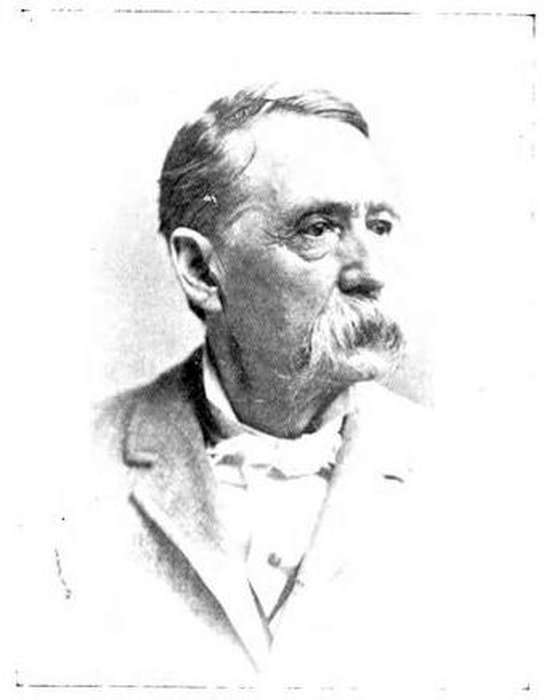
THOMAS DUNN ENGLISH Newark, N. J.
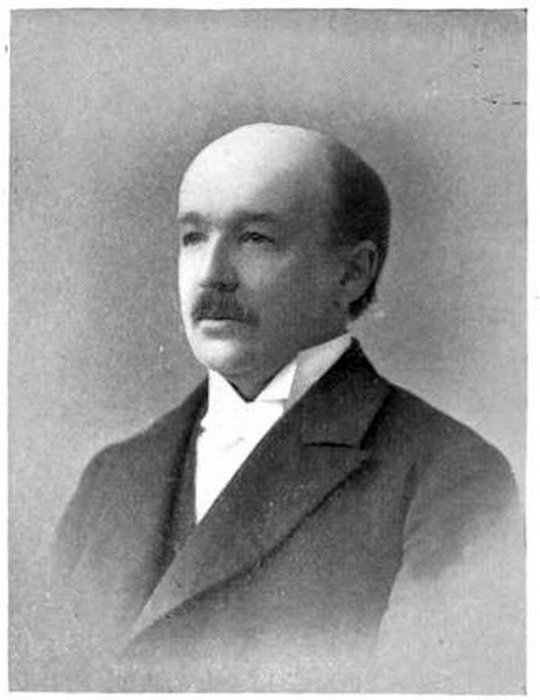
ROBERT ELLIS THOMPSON Philadelphia, Pa.
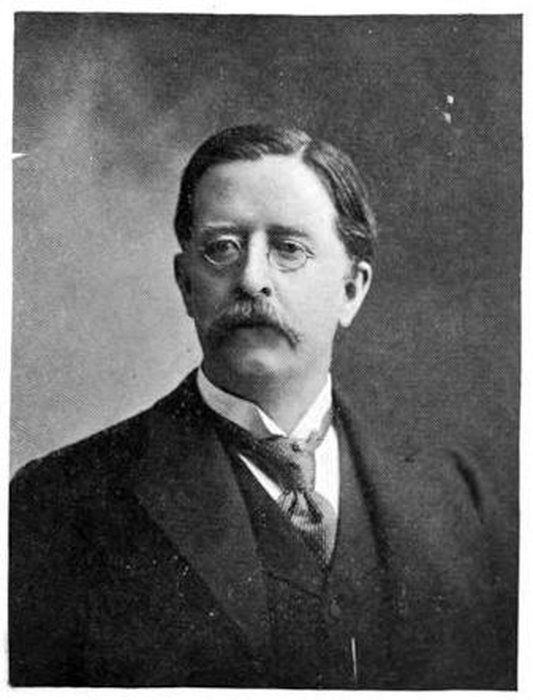
FRANCIS C. TRAVERS New York City
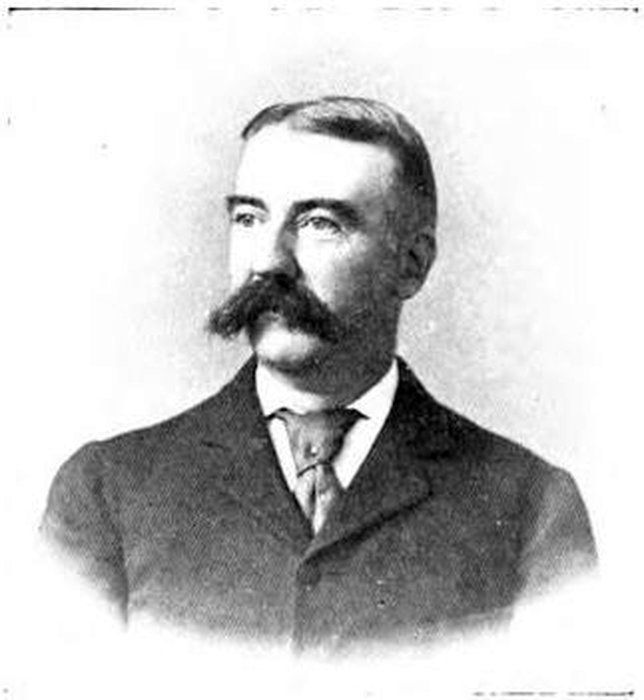
T. RUSSELL SULLIVAN Boston, Mass.
EXECUTIVE COMMITTEE
37At a meeting held in Portsmouth on Dec. 16, 1773, one of the resolutions adopted was, “That every virtuous and public-spirited freeman ought to oppose, to the utmost of his ability, every attack of the ministry to enslave the Americans.” Five months later, on May 19, 1774, a committee of the town of Portsmouth sent their sympathies to the people of Boston on the closing of their port, and for their fellow-townsmen, promised to exert themselves to carry into effect any plan which might be concerted by the colonies for the general relief, and that the interests of the people of Boston would be considered as their own.
From this time to the departure of the royal governor forever, it was a game of battledoor and shuttlecock between his excellency and the general assembly; the latter energetic and firm; the former diplomatic, but cautious and watchful, and ever on the alert to subserve the interest of the home government.
To this end he refused at first to adjourn the assembly in May, 1774, but finally acceded to the request of the members, and an adjournment was made to June 12 of the same year. Meantime the excitement increased; events at home and abroad intensifying the feeling against the government.
At the adjourned meeting in May, the House of Representatives, in common with the assemblies of the other colonies, had appointed a committee of correspondence. This Governor Wentworth tried to prevent, and when he dissolved the assembly he was fain to believe the committee of correspondence would disappear with it.
In this he was disappointed, for its very first act after the dissolution of the assembly was to issue a summons to the representatives, who again met in their own chamber. The governor, attended by the sheriff of the county, entered, and in accordance with custom 38they rose when he presented himself. He addressed them, declaring the meeting illegal, and directed the sheriff to make proclamation accordingly, ordering all to disperse. He then retired, but they resumed their seats.
On further consideration they adjourned to another house, where it was resolved to hold a convention at Exeter, which should choose delegates to the General Congress to meet in Philadelphia, and to that end, letters were sent to each town and parish in the colony, inviting the people therein to send deputies to the Provincial Congress. The last business transacted by the representatives was to recommend a day of fasting and prayer to be observed by the people of the province. According to Belknap, this was observed with religious solemnity. A request was made at the same time for funds to defray the expenses of the delegates to the Continental Congress, and this was promptly responded to.
The convention called at Exeter assembled on July 21, 1774, and is now known in history as the “First Provincial Congress” of New Hampshire. There were eighty-five members present, with the speaker of the assembly, Hon. John Wentworth, a relative of the governor in the chair.
This distinguished body, composed of the best men in the province, many of whom had seen service in the French and Indian wars, and who can justly be styled the founders of the state, chose for their first representatives to the Continental Congress Maj. John Sullivan and Col. Nathaniel Folsom; and for the first time in the history of his native state does the name of John Sullivan officially make its appearance in its legislative records. It is evident to any one who has read closely the history of the stirring events of the period that some master hand was at work directing all the movements, civil and military, occurring at the time; and that this was the hand of John Sullivan later events prove clearly. The son of an Irish exile, and the grandson of one of the ill-fated defenders of Limerick, he was born in Somersworth, N. H., at a point opposite Berwick, Me., on February 18, 1740.
He was educated by his father, who had himself enjoyed the benefits of a liberal and thorough training before he settled in America, and who, through a long life, extending to his one hundred and fifth year, was diligently employed in the education of youth. After a voyage to the West Indies he became a member of the family of Hon. Isaac Livermore, a lawyer of Portsmouth having an extensive practice, and under his instruction prepared himself for his profession. 39He early exhibited ability of a high order, gained the respect and encouragement of his instructor, and soon acquired a distinguished position at the bar of New Hampshire. Just before reaching his majority he located in the town of Durham, purchased a handsome residence, which is still in existence, and in which he lived up to the time of his death. Such was his professional success, that he married at the age of twenty, and for ten years later he was constantly employed in the most lucrative causes, thereby incurring the resentment of sundry persons in Durham and elsewhere, who petitioned the executive council in 1766, complaining of him for evil practices as attorney-at-law. This trouble, whatever its nature may have been, existed even to the end of his days, and was doubtless at the bottom of the scheme to injure his reputation years after his death; for to this day there are some who would rob him of the credit given him in the state records for planning the capture of the powder at Newcastle and leading the party that effected it.
In eloquence as an advocate he won a place in the front rank, and earned the reputation of being a sound lawyer and a judicious counsellor. This character was not confined to his native state, for in addition to the friendship of men like the Wentworths and Langdons in New Hampshire, he had secured the esteem and respect of Lowell, Adams, Otis, and other well-known legal lights in Massachusetts. Although attached to his profession, he found time to devote to agriculture and manufactures, being one of the early promoters of the latter, establishing cloth and fulling mills in Durham, and succeeding so well that on the authority of John Adams he was worth ten thousand pounds before the Revolution broke out. From his father and mother he inherited a robust constitution, and was blessed with an active, lively disposition. He had a natural taste for military life, but except an occasional bout with the Indians, generally on the defensive, he had, before the Revolutionary War, no actual experience in warfare; but all around him were the veterans of the Indian and French wars, whose descriptions of the campaigns of Louisburg and Quebec aroused all the martial spirit in his fiery nature.
To his historical studies, especially those relating to military movements, he was greatly devoted; and read them to such good purpose that he was able accurately to describe nearly all of the great battles of the world. It was natural, therefore, for him to seek the exercise of arms early; so at the age of thirty-one he held the commission of major in the Colonial militia, and spared no pains to make himself familiar with the duties connected with the position. From the first 40rumble of discontent, down to the actual outbreak of hostilities, he was one of the most active men engaged in the cause of liberty. His nature and his abhorrence of oppression, two traits transmitted by generations of heroic ancestors, marked his career from the beginning, and his extended influence and popularity marked him early as a leader in the coming contest. With a full realization of what was before him he organized a company numbering eighty-three men in Durham, and associated with him was the gallant young Scammell, who was then a law student in his office. With a knowledge of these facts it is not too much to say, especially when comparing them with the events occurring afterwards, that the “hidden hand” which directed the movements of the patriots in New Hampshire, down to the convening of the First Provincial Congress in July, 1774, was that of the grandson of the Limerick soldier, who, in little less than a century from the broken treaty, was paying with interest the debt due the government which had driven his father to the wilds of America. He was chosen by the First Provincial Congress to represent his province in the Continental Congress, being the first person to represent New Hampshire in that body. Two instances will be sufficient to show his energy and usefulness in that assemblage. On qualifying, he was at once placed on two of the most important committees, of one of which, that upon the grievances of the people, he was chairman.
“The committee of violation of rights,” says John Adams in his diary, “reported a set of articles which were drawn by John Sullivan, of New Hampshire; and these two declarations, the one of rights and the other of violations, which are printed in the journals of Congress for 1774, were two years afterwards recapitulated in the Declaration of Independence on the 4th of July, 1776.”
“New Hampshire has perhaps not remembered that the bold hand and the legal training of John Sullivan are in the immortal Declaration of Independence.”
On the adjournment of Congress, Sullivan returned to New Hampshire. During his absence the agitation had increased; nearly every town had its committee of safety, and many persons of note, suspected of a leaning towards the government, placed under arrest and kept in confinement, or sent out of the state, unless they took the test oath prescribed by the Assembly. Steps were also taken to prevent the sending of carpenters and other mechanics to Boston to build barracks for the royal troops, as men could not be secured there for that purpose. In one instance a man 41suspected of procuring workmen for General Gage, was waited on, and the charge being proven, he was obliged to go on his knees, as nothing less would be satisfactory, and make the following confession and promise:
“Before this company I confess I have been aiding and assisting in sending men to Boston to build barracks for the soldiers to live in, at which you have reason to be justly offended, which I am sorry for and humbly ask your forgiveness. And I do affirm that for the future I never will be aiding or assisting in any wise whatever, in act or deed contrary to the constitution of the country, as witness my hand.”
The military stores in Fort William and Mary at Newcastle were a constant source of anxiety to the governor, but he felt confident that no lawless act would be committed by the people without provocation, and as he was cautious in his course, no pretext could be found in that direction, but the inevitable was to happen. A report was circulated that General Gage was to send a body of troops to secure the ammunition.
The arrival of Paul Revere from Boston gave color to the rumor, and on the day following, armed men from the surrounding towns assembled in Portsmouth, and after effecting an organization and choosing their leaders, marched in broad daylight, to the number of four hundred, for Newcastle. On arriving at the fort the commander bade them to enter at their peril. No heed being paid to his words, one volley was fired from the three-pounders in position, but before the guns could be reloaded the walls were scaled and the fort captured at three o’clock P.M. on Dec. 14, 1774. The result was the possession of one hundred barrels of powder, sixty muskets, sixteen cannon, and other valuable stores.
In his letter to General Gage informing him of the event, Governor Wentworth said, “The principal persons in this enormity are well known.”
He mentioned no names, but a little over two years later Peter Livius, who was at the time of the capture, one of the Provincial Councillors, wrote thus to John Sullivan in June, 1777: “You were the first man in active rebellion, and drew with you the province you live in. You will be one of the first sacrifices to the resentment and justice of government; your family will be ruined and you must die with ignominy.”
Belknap wrote that “Maj. John Sullivan and John Langdon distinguished themselves as leaders in this affair.” Adams, in his 42annals of Portsmouth, said it occurred “under the direction of Maj. John Sullivan and Capt. John Langdon.”
Sullivan himself said: “When I returned from Congress in 1774, and saw the order of the British king and council prohibiting military stores being sent to this country, I took alarm, clearly perceiving the designs of the British ministry, and wrote several pieces upon the necessity of securing military stores, which pieces were published in several papers.” Quint said: “Sullivan, bold and daring, then an active member of the Continental Congress, and well known throughout the province by his leadership at the bar, had great influence. The seizure of the munitions at the fort, though sudden at last, was doubtless not without previous thought. The result of this act was momentous. It was the first act of armed rebellion. It preceded Concord and Lexington by four months of time. The captors of the fort entered it against the fire of fieldpieces and muskets openly, and in daylight they pulled down the royal flag, the first time in American history. They gave three cheers in honor of their success. They carried off a hundred barrels of gunpowder, some light guns and small arms which, under the care of Sullivan, were taken up the river, which was at that time covered with thick ice, through which a channel had to be cut.”
This bold and audacious act was deeply felt in Great Britain. Conciliation was now out of the question. The king’s anger was aroused. It was already bitter enough on account of the Massachusetts troubles. Governor Wentworth issued threatening proclamations.
He dismissed the offending major and captain from their posts in the militia. In answer to his edict all persons in Durham holding civil or military positions under the governor, headed by Sullivan, assembled at the tavern on the green, and there publicly burned their commissions and insignia of office. There was no further need of secrecy. The die was cast and the leaders were well known. The official positions, civil or military, held by many of those who were principals in the affair, obliged them, up to this time, to act with caution. After the burning, not of his ships, but of his commission, Sullivan boldly stepped to the front. The very next day after the capture of the powder he headed a body of men numbering between three and four hundred from Durham and the adjoining towns, and, marching to the Council Chamber, demanded an answer to the question as to whether or not there were any ships or troops expected here, or if the governor had written for any.
43His excellency meekly answered: “I know of none.”
The greater part of the powder was stored in the basement of the meeting-house in Durham. The balance, for safety, was distributed in several places, some of it going to Exeter. That stored at Durham, as well as another portion placed with Capt. John Demerritt, was taken by the latter in his own ox-cart, under Sullivan’s direction, to Cambridge, where it arrived barely in time to be dealt out to the troops at Bunker Hill. Of how much value it was there and how badly it was needed, is too well known to bear repetition. Without it and lacking the men from the old Granite State accompanying it, Bunker Hill would not have been such a serious affair for the British army.
In claiming the leadership for Sullivan in this affair there is no desire to extol him at the expense of those with whom he was associated,—men like Langdon, Weare, Bartlett, Thornton, Scammell, Thompson, Folsom, Wentworth, Gilman, and others whose names are now household words. The position was freely conceded by them at the time, and acknowledged by the best informed to-day. After the Lexington fight, and while Sullivan was in attendance at the Second Continental Congress, the gallant young Scammell, who was in his office in Durham, wrote him that, “when the horrid din of civil carnage surprised us on the 20th of April, the universal cry was ‘Oh, if Major Sullivan was here!’ ‘I wish to God Major Sullivan was here!’ ran through the distressed multitude.”
Capt. Eleazer Bennett, who died in Durham in 1852, at the age of one hundred and one, said “that at the time of the capture of the powder he was in the employment of General Sullivan, at his mill at Packer’s Falls, when word was brought in to come down to Durham, to go to Portsmouth, and to get anybody else he could to come with him.” So far as he could remember, the following persons were with him: Maj. John Sullivan, Capt. Winborn Adams, Ebenezer Thompson, John Demerritt, Alpheus and Jonathan Chesley, John Spencer, Micah Davis, Isaac and Benjamin Small, Alexander Scammell, John Griffin, James Underwood, and Eben Sullivan, the major’s brother.
On arriving at Portsmouth they were joined by John Langdon with another party. They captured the fort, took the captain and bound him, and frightened away the soldiers. In the fort they found one hundred casks of powder and one hundred small arms. A portion of the powder was taken by Major Demerritt to his house in Madbury, but most of it was stored under the pulpit of the meeting-house 44in Durham. On July 19, 1775, as a final proof of Sullivan’s leadership in this movement, Matthew Patten, chairman of the committee of safety for the county of Hillsborough, wrote to General Sullivan congratulating him on his appointment to the rank of Brigadier-General, in which he said: “An appointment which, as it distinguishes your merit, so at the same time it reflects honor upon, and shows the penetrating discernment of those truly eminent patriots from whom you received it; nor are we less sanguine in our expectations of the high advantages which must result under God to the public by your military skill and courage, as you have been indefatigable in attaining the first, and have given a recent instance of the latter, to your great honor and reputation, in depriving our enemies of the means of annoying us at Castle William and Mary, and at the same time furnishing us with materials to defend our invaluable rights and privileges. This, sir, must ever be had in remembrance, and (amongst the actions of others, our heroes of 1775) handed to the latest posterity. That the Almighty may direct your counsels, be with you in the day of battle, and that you may be preserved as a pattern to this people for many years to come, is our frequent prayer.” In Sullivan’s reply he said: “It gives me great pleasure to find so respectable a number of the worthy sons of freedom, in the colony to which I belong, have so publicly given their approbation of my conduct in assisting to secure the warlike stores at Fort William and Mary, and thereby preventing these evils which must have resulted from our enemies having possession of them.”
Nothing further need be said regarding the value of the powder captured on this occasion, or the boldness of the act itself. At Lexington and Concord the British were the aggressors, the Americans acting on the defensive; but at Newcastle the Americans were the aggressors, made the attack boldly in the open day, and as Quint said, “for the first time in American history the British flag was torn down by men in armed rebellion.” John Sullivan’s history is well known. He and his three brothers gave their best services to the land of their birth, and in memory of those services the state of New Hampshire erected a monument of Concord granite on the site of the church in Durham, under which was stored the powder, and in the presence of the governor, council, and other officials, state and national, and a large concourse of people on Thursday, Sept. 27, 1894, the one hundredth anniversary of his death, dedicated it with appropriate exercises. The inscription reads: