AMERICAN-IRISH HISTORICAL SOCIETY. (continued 3)
Reading edition
Now, as a matter of fact, the Puritan was a hard and fast bigot, who hated and persecuted everybody who differed from him religiously, and tolerated nobody; he was as priest-ridden as a Scotch Presbyterian, and he set up a system of Church and State that amounted almost to a theocracy. The climate and soil of New England made him a hard worker; his environment and neighbors, a stout fighter; but if his laws and records tell us any story, they say his morals and practices were no better than they ought to have been.
New England in colonial days produced some shrewd and levelheaded men, but if she ever produced a great one, I have failed to catch his name. When the hour of her struggle came the same phenomenon was exhibited in New England as elsewhere in the Colonies; her natural leaders, the people of education and wealth, followed the fortunes of the oppressor, and the common people took up the cause of freedom. New England in the Revolution did her whole duty, but the other Colonies did not shirk, and furnished not only men and money, but the theater of war.
Mr. Lodge is now furnishing “The Story of the Revolution” for Scribner’s Magazine, and already we can see his peculiar defects of 88historical vision in what he has written. Here is a hint of his ideas: “He [Washington] entered on the war with an army composed wholly of New England men. He ended the Revolution with an army, after seven years’ fighting, largely made up from the same New England people.” He does not say so in so many words, but he leads us to infer that the army between those two periods was made up of New England men. This sort of writing is as absurd as it would be to say New England did nothing. Has Mr. Lodge never heard of the 40,000 men on the Revolutionary rolls of New York? Has it ever occurred to him that Pennsylvania, Virginia, and other Colonies furnished some men, money, and leaders? Have his historical researches ever led him far enough to learn that Yorktown might have been a waste of blood but for the armies and navies of France? Does he know that the soldiers of America’s ally were the regiments of a brigade immortalized on every battlefield of Europe,—the Irish Brigade?
It is very doubtful. I sometimes wonder if Mr. Lodge knew what an Irishman was before he went into politics.
In his account of Bunker Hill he hasn’t a word to say of Sullivan, whose capture of Fort William and Mary with its supplies of precious gunpowder made Bunker Hill possible; yet he has much to say of the lack of powder during the siege of Boston.
He says the American soldiers engaged at Bunker Hill were “of almost pure English blood, with a slight mingling of Scotch-Irish from Londonderry.” I note among the dead killed there the following “Scotch-Irish” names: Broderick, Collins, Dalton, Dillon, Doyle, French, Haggett, McGrath; and Washington, desirous of recognizing this “Scotch” element in his army made St. Patrick the countersign on a certain evening during the siege. I recall that it was this same class of Irishmen with the Scotch prefix, from the New Hampshire town of Londonderry, called after an Irish town of that name, and which was originally planted by English and Irish, who insisted upon double rations of whiskey to celebrate St. Patrick’s day before Ticonderoga.
Mr. Lodge should learn to call a spade a spade, an Irishman an Irishman, for we will. The desire of a certain class of people to call themselves “Scotch-Irish” may be passed by with a smile; ignorance and weakness deserve pity rather than censure; but we must insist that the dead of our race shall be neither miscalled nor misrepresented, and that their laurels shall not be filched nor their glory stolen by those who have neither pride nor scruples.
89Whatever Irish came from New Hampshire—and the hills were full of them—it would be a grave mistake to imagine that Massachusetts, so English and so Puritan, did not have her share. The Puritan Alva—Cromwell—and his villainous understrappers sent many a thousand Irish victims to Massachusetts Bay as bondmen and women; and voluntary immigration brought thousands of others. The town records show this; and whole districts in western Massachusetts were settled by them; and yet we are asked to believe that when men cease to be Catholic Irishmen they become Scotch-Irishmen. I can find no other excuse for the absurd title. Here are a few of the “Scotch-Irish” names on the rolls of the minute men of the day:
Joseph Burke,
Richard Burke,
Daniel Carey,
Joseph Carey,
Peter Carey,
Patrick Carroll,
Joseph Carroll,
Cornelius Cockran,
Daniel Connors,
William Connors,
James Dempsey,
Philip Donahue,
Joseph Donnell,
John Donnelly,
Andrew Dunnigan,
John Farley,
Michael Farley,
John Flood,
William Flood,
John Foley,
Matthew Gilligen,
Richard Gilpatrick,
James Gleason,
Daniel Griffin,
Joseph Griffin,
John Hacket,
Joseph Hacket,
John Haley,
John Kelly,
Patrick Kelly,
Peter Kelly,
Richard Kelly,
Stephen Kelly,
Daniel Lary,
Michael McDonnell,
Henry McGonegal,
John McGrah,
Daniel McGuire,
Patrick McKeen,
John McMullen,
John Mullin,
John Madden,
Daniel Mahon,
James Mallone,
John Mahoney,
John Murphy,
Patrick Newjent,
Patrick O’Brien,
Richard O’Brien,
Daniel Shay,
John Shea,
John Walsh,
Joseph Walsh.
It is well to note that the English parliament of that day was looking keenly at the causes that cost England her mighty empire on this continent; and apparently they underrated the influence of Mr. Lodge’s Puritan in that struggle, and bitterly blamed the plain Irish without any Scotchery.
Mr. Lodge means well; but folklore and history are two distinct affairs.
The imaginative school of history finds its best exemplar in a gentleman from Tennessee, the home of the Cardiff giant, the Giascutus, and the Scotch-Irishman. He is known as Judge Temple, and 90has written a volume called Covenanter, Cavalier, Puritan,—a work which has shaken the earth and spoiled the apple crop. The Judge is original; he honors the Scotch-Irishman as he does all ghost dancers, but he has discovered that all the might of the republic sprang from the Covenanter. I know what a Covenanter used to be, but I can’t solve this covenanter of Judge Temple. I can explain him as he appears in this literary offspring of this intellectual Cardiff giant. If an Irishman a few years ago did anything extraordinary, wonderful, or notorious, he would have been a Scotch-Irishman; in the Temple history he is a Covenanter; if he breaks a bank, or a man’s head, or the Decalogue, he is merely an Irishman. Apply that rule to all men and you have history as it is hatched out in Tennessee. The Covenanter germ was born in Scotland and spread over America, creating miracles. As the natives of North Britain are not remarkable for national modesty and self-effacement, I am puzzled to learn how this conversion of the world to freedom and civilization has escaped the shrinking writers of Scotland. If Judge Temple is not restrained by an injunction at an early date, Professor Burgess and Senator Lodge will be compelled sorrowfully to march on Washington, there to deposit in the National Museum the Teutonic Genius and the Puritan Marvel; or they might be turned over to some of the Yellow Sundays which specialize the exploitation of freaks.
Meantime we should keep our eye on Judge Temple, the young Lochinvar of history, who has come out of the South.
In Old Virginia and her Neighbors, Vol. II, p. 391, Prof. John Fiske says: “Until recent years little has been written of the coming of the so-called Scotch-Irish to America, and yet it is an event of scarcely less importance than the exodus of English Puritans to New England and that of English Cavaliers to Virginia. It is impossible to understand the drift which American history, social and political, has taken since the time of Andrew Jackson, without studying the early life of the Scotch-Irish population of the Alleghany region, the pioneers of the American backwoods. I do not mean to be understood as saying that the whole of that population at the time of the Revolution was Scotch-Irish, for there was a considerable German element in it, besides an infusion of English moving inward from the coast. But the Scotch-Irish element was more numerous and far more important than all the rest.
“Who were the people called by this rather awkward compound name Scotch-Irish? The answer carries us back to the year 1611, 91when James First began peopling Ulster with Colonists from Scotland and the North of England. The plan was to put into Ireland a Protestant population that might ultimately outnumber the Catholics and become the controlling element in the country. The settlers were picked men and women of the most excellent sort. By the middle of the seventeenth century there were 300,000 of them in Ulster.
“That province had been the most neglected part of the island, a wilderness of bogs and fens; they transformed it into a garden. They also established manufactures of woolen and linens which have since been famous throughout the world. By the beginning of the eighteenth century their numbers had risen to nearly a million. Their social condition was not that of peasants; they were intelligent yeomanry and artisans. In a document, signed in 1718 by a miscellaneous group of 319 men, only thirteen made their mark, while 306 wrote their names in full. Nothing like that could have happened at that time in any other part of the British empire, hardly even in New England.
“When these people began coming to America, those families that had been longest in Ireland had dwelt there but for three generations, and confusion of mind seems to lurk in any nomenclature which couples them with the true Irish. The antipathy between the Scotch-Irish as a group and the true Irish as a group is, perhaps, unsurpassed for bitterness and intensity. On the other hand, since love laughs at feuds and schisms, intermarriages between the Colonists of Ulster and the native Irish were by no means unusual, and instances occur of Murphys and McManuses of the Presbyterian faith. It was common in Ulster to allude to Presbyterians as ‘Scotch,’ to Roman Catholics as ‘Irish,’ and to members of the English Church as ‘Protestants,’ without much reference to pedigree. From this point of view the term ‘Scotch’ may be defensible, provided we do not let it conceal the fact that the people to whom it applied are for the most part Lowland-Scotch Presbyterians, very slightly hibernicized in blood.”
Again, “By 1719 this hope was torn away, and from that year until the passage of the Toleration Act for Ireland in 1782, the people of Ulster kept flocking to America. Of all the migrations to America previous to the days of steamships this was far the largest in volume. One week of 1727 landed six ship loads at Philadelphia. In the two years 1773 and 1774 more than 30,000 came. In 1770 one-third of the population of Pennsylvania was Scotch-Irish. Altogether between 1730 and 1770, I think it probable that at least half a 92million of souls were transferred from Ulster to the American Colonies, making not less than one-sixth of our population at the time of the Revolution.”
The merest examination of this will show that the writer is on uncertain ground; he is begging the question; his own training and education convince him that there is a false ring to the term “Scotch-Irish”; the statements he makes, or quotes, show the earmarks of that organized humbug the Scotch-Irish Society; and he is reluctant to face the question squarely, and, by reversing the conventional concealments, evasions, and falsifications which have marked the writing of American history in the interest of the English element, acknowledge the splendid work done by the Irish in America.
Let us examine his statements in detail.
Relative to Ulster settlement he says: “The settlers were picked men and women of the most excellent sort. By the middle of the seventeenth century there were 300,000 of them in Ulster. The province was a wilderness of bogs and fens; they transformed it into a garden. They also established manufactures of woolens and linens; ... they were intelligent yeomanry and artisans.”
These extracts are the amusing myths of the Scotch-Irish Society. We have an emigration from Scotland by, say 1650, of 300,000, with no account of the English, French, Walloon, and German emigrants who were introduced, and nothing said about the original settlers of Ulster, the Irish. In 1659 Sir W. Petty, a government official in Ulster, estimated the population as follows: Irish, 63,350; English, Scotch, and other aliens, 40,571; a total of 103,921. It is very possible that Sir W. Petty’s estimate was correct; that he would find it very difficult to arrive at a correct estimate of the Irish; and much more easy to get at the numbers of those who were naturally the English supporters. It is well to recall that at the date of this estimate Ireland had gone through the horrors of twelve years of Civil War, marked by cruelty of the most ferocious kind; that the Cromwellians had added deportation and slavery in the Americas to their other crimes and abominations; that Cromwell had settled his own soldiers on confiscated lands; and that he was not particularly partial to the Scotch, whom he had fought and defeated, and whose immigration he was not likely to encourage at a time when they were parleying with the exiled Charles and plotting the downfall of the Commonwealth.
Professor Fiske’s 300,000 seem to vanish in smoke.
The character of the population introduced into a country where 93the natives are treated as outlaws and wild beasts by the government, is not hard to guess. It is not at all likely that it is going to consist of model farmers, expert artisans, pious, educated, peaceful men and women; that kind of people usually remain at home. The adventurer, the ne’er-do-well, the poor, the desperate, the homeless; those are the kind willing to face the hazards of war and fortune in a land where the natives are hard fighters and haters of the government, even though exhausted by war.
The Rev. Andrew Stewart, Presbyterian pastor of Donaghadee from 1645 to 1671, who was born and raised in Ulster, leaves this record of Professor Fiske’s selected yeomanry and artisans:
“From Scotland came many, and from England not a few; yet all of them generally the scum of both nations, who for debt, or breaking, or fleeing from justice, or seeking shelter, came hither, hoping to be without fear of man’s justice in a land where there was nothing, or but little as yet, of the fear of God.”
Such were the selected yeomanry; selected evidently by the king’s writ, by the beggarly planters who received the stolen lands from a beggarly king, and by the London guides whose gold went into the king’s pocket.
The reverend gentleman gives us a further hint of the people who came thus running from the sheriff and the heavy hand of the law. He says: “In a few years there flocked such a multitude of people from Scotland that the Counties of Down, Antrim, Londonderry, etc., were in a good measure planted; yet most of the people made up a body—and it is strange—of different names, nations, dialects, tempers, and breeding, all void of Godliness, who seemed rather to flee God in this enterprise, than to follow their mercy; albeit at first it must be remembered that they cared little for any church.”
People of many nations and dialects coming out of Scotland needs an explanation. Mr. Motley, in his history of the Dutch Republic, throws a great light on this subject. He says in effect that the religious wars of Protestant and Catholic, and the persecutions growing out of them of the ever-increasing sectaries, drove shoals of artisans from Germany, Holland, and France to England. Elizabeth of England had troubles of her own; and while she quarreled with the Pope and disputed his headship, she was jealously insistent of her own leadership of her state church and had no use for the pugnacious sectaries from across the Channel. In time, owing to the English jealousy of foreigners and rival manufacturers and the Queen’s abhorrence of rebels against divinely selected kings, Elizabeth 94shut down on the refugees and refused them asylum. In those days it was a much graver offense to insult the majesty of earth than heaven. Scotland, then in the throes of religious squabbles and the game of church plundering and under the practical guidance of the amiable John Knox, gave them a welcome as kindred spirits. When other days came, when Mary’s head had rolled from the block at Fotheringay, when her wretched son was enthroned, the foreign element found Scotland a poor land to live in. The settlement of Ulster gave them their chance, and they flocked there with Scotchmen and Englishmen, to settle down and intermarry and become—as all before them had become at that Irish crucible—Irish.
The forms of religious dissent driven out of Europe to Great Britain, like Presbyterianism, had a common basis of agreement in their common Calvinism, and the foreigners naturally drifted into that form of ecclesiastical organization. Few went into the Anglican State Church, and many of that faith drifted away from it to Catholicity and Presbyterianism; and it was a special subject of reproach later that the state-beneficed clergy caused such a state of affairs by their indifference and greed.
But it remains for American historians to find the terms race and religion synonymous, and to advise an astonished world that when an Irishman, Frenchman, Englishman, Dutchman, or Walloon, adopts Presbyterianism as his religious faith, he is at once transformed into that hyphenated hybrid, a Scotch-Irishman.
This is one of the marvels of this inventive age.
Before Professor Fiske—for whose talent and industry I have a very great respect—gives us his promised views on the Scotch-Irishman in his forthcoming work, The Dutch and Quaker Settlements in America, let me propound a question or two to him.
If, as is pretended, a certain number of Lowland Scotchmen of the Presbyterian religion accomplished so much in Ulster and America, why have not the great majority of the same people accomplished as much in their own land and elsewhere, when all the conditions were in their favor? And again, if so much was accomplished by an Irish environment and an Irish racial admixture, and so little achieved by the pure Scot under more favorable circumstances, is it not a reasonable deduction that the Irish element was the responsible factor in the achievement? If not, why not?
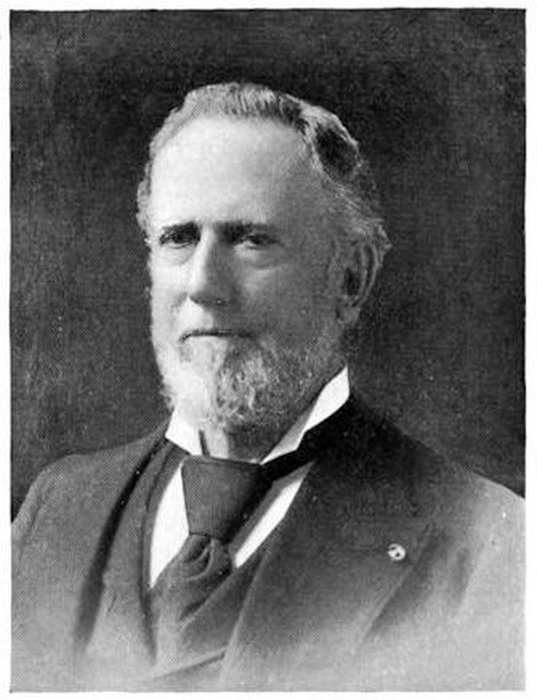
GEN. A. G. MALLOY Texas
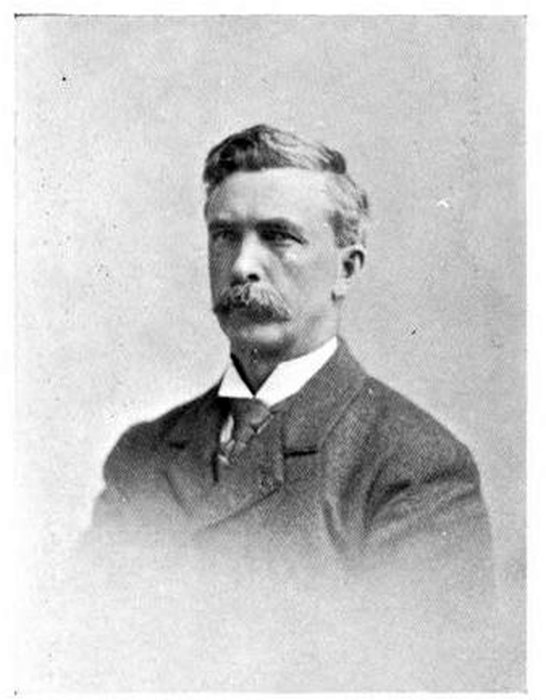
TIMOTHY P. SULLIVAN New Hampshire
VICE-PRESIDENTS
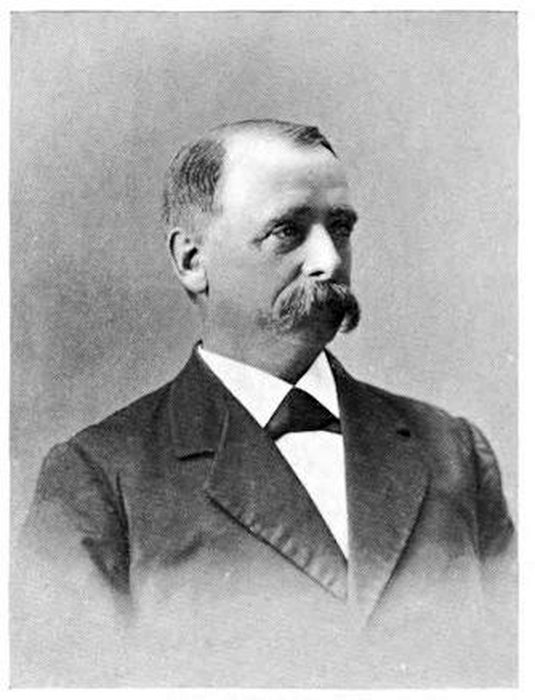
ANDREW ATHY Worcester, Mass.
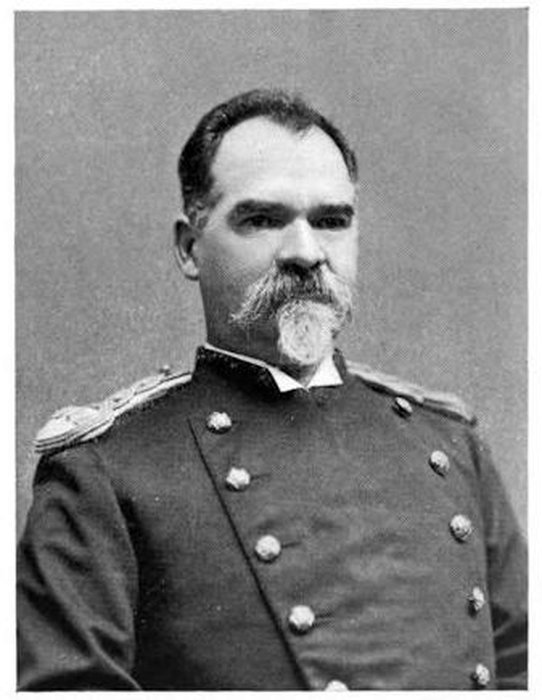
CAPT. JOHN DRUM, U. S. A.
95That invader and invaded should hate each other bitterly is not of any particular importance as bearing on nationality; it is the experience of all lands and races. Presbyterian Murphys and McManuses are no argument for Scotch Murphys and McManuses; it may indicate intermarriage and change of religious faith; it can’t indicate a change of blood. The transformation of bogs and fens into gardens is merely a fairy story; the bogs and fens are in Ulster to-day. The fertile valleys of Ulster, ready to be entered on, were the bait to catch settlers, for the defeated and disheartened native Irish had been driven to the barren hills and bogs. Men as a rule don’t risk life and fortune for the privilege of transforming bogs into gardens in a hostile country; and, moreover, Motley says England and Scotland in that age had the rudest system of agriculture in Europe. The higher system of agriculture, as well as the woolen and linen industries, came with the skilled exiles from Holland and France; and even as great a plunderer as Wentworth was wise enough to foster them. And I might ask, why didn’t these marvelous Scots make their own country famous for woolen and linen industries, when they made their own laws and could snap their fingers at English jealousy?
Finally, if these people were Scotch “slightly hibernicized,” why did they on their arrival in America organize “Irish societies”? Why did they name towns and rivers with Irish names? Why did they celebrate St. Patrick’s day rather than St. Andrew’s?
It will pay Professor Fiske to examine into the Irish emigration of the eighteenth century and learn, as less erudite people have done, that as much of this stream flowed from Limerick, Cork, Waterford, Dublin, and English Bristol as from Ulster; and that Leinster and Munster poured in nearly as many Irish to Colonial America as did the northern provinces. What he is unwittingly doing is settling up the abhorrent dividing lines of religion and marking off our race into “Irish-Irish” and “Scotch-Irish” upon the lines of Catholicity and Protestantism. I as one of the Protestant Irish most strenuously object; the name Irish was good enough for my fathers; their son is proud to wear it as they did; and we must all insist that the Irish, without prefixes, without hyphens, without any qualification, all children of a common and well-loved motherland, shall be given their full measure of credit for the splendid work done by the race in America.
If Professor Fiske is true to himself and the principles and canons of his calling, he will find the truth and tell it, and waste no valuable time chasing myths and will-o’-the-wisps.
As an indication of the great interest of the occasion it may be remarked that the exercises were not brought to a close 96until 2.30 o’clock the next morning. Before adjourning, resolutions of condolence on the loss of the U. S. S. Maine were adopted by a standing vote, and the Secretary-General was instructed to transmit a copy of the resolutions to the President of the United States and to the Secretary of the Navy.
On Friday afternoon the members of the society were given a reception by Hon. John D. Crimmins, at his home, 40 East 68th Street. It was a most charming occasion. About forty gentlemen attended, including Dr. Emmet and his son; General O’Beirne and Captain McCrystal, of New York; and P. J. Flatley, of Boston; Thomas Hamilton Murray, of Rhode Island; J. F. Swords, of Hartford; O’Meagher Condon, of Washington, D. C.; Joseph Smith, of Lowell, Mass.; James Jeffrey Roche, Thomas B. Lawler, Michael Brennan, and many others.
The company first inspected Mr. Crimmins’s fine library and were shown many books and manuscripts, some of them of great rarity and value. A lunch was then served, after which the visitors were shown the magnificent collection of paintings for which Mr. Crimmins is so well known among lovers of art.
THE AMERICAN-IRISH HISTORICAL SOCIETY.
When and where Founded.
The American-Irish Historical Society was founded on the evening of Jan. 20, 1897, at a meeting called for that purpose, and held in the Revere House, Boston, Mass. Over forty gentlemen were present. The Hon. Thomas J. Gargan, of Boston, presided. Thomas Hamilton Murray, then editor of the Daily Sun, Lawrence, Mass., was secretary of the meeting. The provisional committee that had attended to the preliminary work included Mr. Murray, just mentioned; Mr. James Jeffrey Roche, editor of the Boston Pilot; Mr. Joseph Smith, Secretary of the Police Commission, Lowell, Mass.; Mr. Thomas B. Lawler, of the publishing house, Ginn & Company, Boston, Mass.; and Hon. John C. Linehan, State Insurance Commissioner, Concord, N. H. Four states—Maine, New Hampshire, Massachusetts, 97and Rhode Island—were represented among those in attendance. Letters conveying good wishes were received from Connecticut, New York, Pennsylvania, Delaware, Maryland, Virginia, South Carolina, Georgia, Ohio, Indiana, Michigan, and the District of Columbia.
Objects and Purposes.
The society is organized for the special study of the Irish element in the composition of the American people; to investigate and record the influence of this element in the up-building of the nation, and to collect and publish facts relating to and illustrating that influence. People of Irish blood have been coming to this continent, voluntarily and otherwise, since the date of its earliest settlements. While they have been a valuable addition to colony and republic in all departments of human activity, their work and contributions have received but scant recognition from chroniclers of American history. Whether this omission springs from carelessness, ignorance, indifference, or design is now of little moment. The fact that such a condition does exist makes it imperative that it should be remedied. The society purposes to remedy it.
More in Detail.
Speaking more in detail, it may be stated that the objects and purposes of the society are: The study of American history generally; to investigate, specially, the Irish immigration to this country, determine its numbers, examine the sources, learn the places of its settlement, and estimate its influence on contemporary events in war, legislation, religion, education, and other departments of activity; to examine records of every character, wherever found, calculated to throw light on the work of the Irish element in this broad land; to endeavor to correct erroneous, distorted, and false views of history, where they are known, and to substitute therefor the truth of history, based on documentary evidence and the best and most reasonable tradition in relation to the Irish in America; to place the result of its historical investigations and researches in acceptable literary form; to print, publish, and distribute its documents to libraries, institutions of learning, and among its members, in order that the widest dissemination of historical truth may be obtained; to do its work without passion or prejudice; to view accomplished facts in the true scientific historical spirit, and having reached the truth to give it to the world.
98
Membership Requirements.
Any person of good moral character who is interested in the special work of the society shall be deemed eligible for membership in the same. No tests other than that of character and devotion to the society’s objects shall be applied to membership. The society comprises life members and annual members and may also elect honorary and corresponding members.
The Mode of Admission.
The society believes that for the present as little red tape as possible should prevail in the admission of applicants. A large membership is desired. Consequently, a request to be enrolled, addressed to the Secretary-General, to any of the members of the Executive Council, or to a member of the society who is located in the neighborhood of the applicant, will generally be sufficient to effect the desired result.
Non-Sectarian and Non-Political.
The society is constructed on a broad and liberal basis. It is non-sectarian and non-political. Being an American organization in spirit and principle, it greets and welcomes to its ranks Americans of whatever race descent and of whatever creed who take an interest in the special line of work for which the society is organized. It at present includes Roman Catholics, Protestant Episcopalians, Methodists, Presbyterians, Unitarians, and members of other denominations. Catholic priests and Protestant ministers are on its roll. Republicans, Democrats, and men of no political party affiliations are numbered among its members.
The Fees of Members.
Life members pay fifty dollars in advance at one time; they are exempt from further membership dues. Annual members pay three dollars per year each. For the present no initiation fee is required. Massachusetts, New York, Pennsylvania, and West Virginia are already represented in the list of life members. The membership roll also contains the names of gentlemen of the seventh, eighth, and ninth American generations.
99
The Society’s Officers.
The officers comprise a President-General, a Secretary-General, a Treasurer-General, a Librarian and Archivist, an Historiographer (not yet elected), and an Executive Council. The constitution also provides for a Vice-President for each state and territory and for the District of Columbia. It is proposed to eventually organize state and city chapters of the society. A list of the present officers will be found contained herein.
The First President-General.
The first President-General of the society was Richard Worsam Meade, 3d, Rear-Admiral, U. S. N. (retired). He was born in New York City, Oct. 9, 1837, at the home of his maternal grandfather, Judge Henry Meigs, which family has given many officers to the United States Navy. He was the oldest son of the late Capt. Richard Worsam Meade, 2d, U. S. N., and was a nephew of the late Gen. George Gordon Meade, who for two years commanded the Army of the Potomac. President-General Meade died in Washington, D. C., May 4, 1897. His obsequies took place in that city. The Society contributed a floral harp. Among the mourners there were present from the society: Messrs. Edward A. Moseley, J. R. Carmody, J. D. O’Connell, and Capt. John M. Tobin. The honorary bearers were: Rear-Admiral John G. Walker, Commodore Charles S. Norton, Admiral George Dewey, Commodore Norman H. Farquhar, Commodore Winfield S. Schley, Capt. A. S. Crowinshield, Capt. Charles O’Neil, U. S. N., and Col. Charles Heywood, United States Marine Corps. Eight stalwart seamen bore the body. A battalion of marines from the Washington barracks, under command of Capt. E. B. Robinson, and a delegation from Lafayette Post of New York City, escorted the body to Arlington, preceded by the United States Marine Band.
Meetings and Field Day.
Provision is made for quarterly meetings of the society and monthly meetings of the Executive Council. As far as possible, each meeting, especially those of the Council, is held in a city or state different from the one where the preceding meeting was held. This prevents the society from becoming merely local to any one state or city, and makes it what its founders intended it to be—a 100national body. A general field day of the organization is held annually in the summer or fall. The annual meeting for the election of officers is held in January.
Diploma of Membership.
Each member will be entitled to a diploma of membership, bearing the name of the society, the date of his admission, and such other appropriate matter as may be decided upon. These certificates will be signed by the President-General, the Secretary-General, the Treasurer-General, and one or two other officers, and will be suitable for display in office, library, or study.
The Society’s Publications.
The publications of the society consist of two classes—regular and special. A copy of every regular publication will be supplied free to each member. Special publications will be supplied at the actual cost price. Both classes of publications will contain a record of the society’s proceedings, papers contributed by the members as the result of original research, extracts from old documents bearing upon the Irish in this country, or similar matter of interest, much of it, indeed, of priceless value for preservation and reference. These publications will be thoroughly indexed.
101