HERMAN HOOKER, D.D.
Reading edition
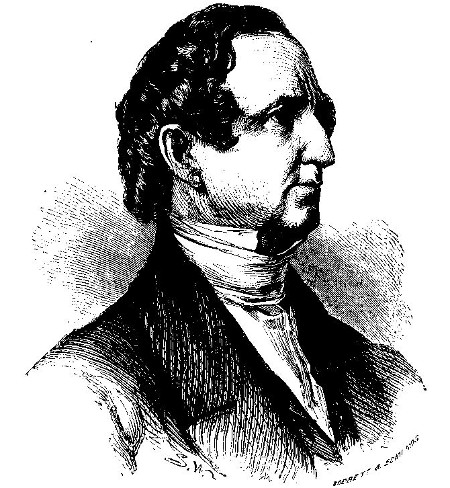
Herman Hooker is one of the most able and peculiar writers in religion and religious philosophy now living in America. Indeed, we are inclined to doubt whether the Episcopal Church in the United States embraces another author whose name will be as long or as respectfully remembered in the Christian world. If he is not mentioned in "every day's report," it is because he adds to genius an unobtrusive modesty, as rare as are the admirable qualities with which in his case it is associated.
Dr. Hooker is a native of Poultney, Rutland county, Vermont. He was graduated at Middlebury College in 1825, and soon after entered upon the study of divinity at the Presbyterian Theological Seminary in Princeton. He subsequently took orders in the Episcopal Church, and acquired considerable reputation as a preacher; but at the end of a few years ill health compelled him to abandon the pulpit, and he has since resided in Philadelphia. The distinction of Doctor in Divinity was conferred upon him three or four years ago by Union College.
Dr. Hooker published in 1835 The Portion of the Soul, or Thoughts on its Attributes and Tendencies as Indications of its Destiny; in the same year Popular Infidelity, which in later editions is entitled, The Philosophy of Unbelief, in Morals and Religion, as discernible in the Faith and Character of Men; in 1846, The Uses of Adversity and the Provisions of Consolation; in 1848, The Christian Life a Fight of Faith; and soon after, Thoughts and Maxims, a book worthy of Rochefoucauld for point, of Herbert for piety, and Bacon for wisdom.
Upon meeting with qualities like Dr. Hooker's in one not known among the popular authors of the country, we are prompted to say with Wordsworth, "Strongest minds are often those of whom the world hears least," or in the bolder words of Henry Taylor, "The world knows nothing of its greatest men." It is surprising that a voice like his should have awakened no echoes. He deserves a place among the first religious writers of the age: for he has been faithful to the great mission laid upon the priesthood, which is, not to labor upon "forms, modes, shows," of devotion, nor to dispute of systems, schools, and theories of faith, but to be witnesses of a law above the world, and prophets of a consolation that is not of mortality. When we take up one of his books, we could imagine that we had fallen upon one of those great masters in divinity, who in the seventeenth century illustrated the field of moral relations and affections with a power and splendor peculiar to that age. These great writers possessed an apprehension of spiritual subjects, sensitive, yet profoundly rational; a vision on which the rays of a higher consciousness streamed in lustre so transcending that the light of earth seemed like a shadow thrown across its course; which differed from inspiration in degree rather than in kind. The resemblance of Dr. Hooker to these great authors is obviously not an affectation. It is not confined to style, but reaches to the constitution and tone of the mind. His productions indicate the same temper of deep thoughtfulness upon man's estate and destiny; the same union of a personal sympathy with a judicial superiority, which suffers in all the human weaknesses which it detects and condemns; the same earnest sense of their subjects as realities, clear, present and palpable; the same quick feeling, toned into dignity by pervading, essential wisdom; and that direct cognizance of the substances of religion, which does not deduce its great moral truths as consequences of an assumed theory, but seizes them as primary elements that verify themselves and draw the theories after them by a natural connection. Fretted and wearied with metaphysical theologies; vexed by the self-illustration, the want of candor, the fierceness, the ungenial and unsatisfying hollowness of popular religionism, we turn with a grateful relief to this soothing and impressive system which speculates not, wrangles not, reviles not, but, while it every where testifies of the degradation we are under, touches our spirits to power and purity by the constant exhortation of "sursem corda!"
The style of Dr. Hooker abounds in spontaneous interest and unexpected graces. It seems to result immediately from his character, and to be an inseparable part of it. It is free from all the commonplaces of fine writing; has nothing of the formal contrivance of the rhetorician, the balanced period, the pointed turn, the recurring cadence. Yet the charms of a genuine simplicity, of a directness almost quaint, of primitive gravity, and calm, native good sense, renders it singularly agreeable to a cultivated taste. Undoubtedly there is in spiritual sensibility something akin to genius, and like it tending to utterance in language significant and beautiful. We meet at times in Dr. Hooker's writings with phrases of the rarest felicity and of great delicacy and expressiveness; in which we know not whether most to admire the vigor which has conceived so striking a thought, or the refinement of art which has fixed it in words so beautifully exact.