PART IV.—ISRAEL (continued 2)
Reading edition

HEBREW HISTORY IN OUTLINE A PRELIMINARY SURVEY COMPRISING A CURSORY VIEW OF THE SOURCES OF HEBREW HISTORY, THE SWEEP OF EVENTS, AND A TABLE OF CHRONOLOGY
The modern historian knows as little of the origin of the Hebrews as he knows of the beginnings of the racial history of any other nation. The Hebrew traditions, according to which the race originated in Chaldea, and migrated thence under Father Abraham, are familiar to every one through the Bible records. There is no reason to doubt that here, as elsewhere, the national tradition represents at least a general outline of the historical truth. But the scientific historian of to-day looks askance at all unverified traditions of antiquity, and it is becoming more and more common to begin the history of Israel with the Egyptian sojourn, or at least to treat the prior history of the race as merely traditional.
There are ethnologists, indeed, who regard the Hebrews as primarily of Egyptian origin; but such a theory is only tenable on the assumption that the entire Semitic race came originally from the valley of the Nile. For it is not at all in question that the Hebrews were closely related ethnically to the Semitic races of Mesopotamia. Whatever the ultimate origin of the Semites, it need not be doubted that the Hebrews were the offshoot of that portion of the race which had settled at an early day in the valley of the Tigris and Euphrates. It must be admitted, however, that the present day historian has no such tangible records of the pre-Egyptian history of the Hebrews as have been discovered for the early period of Babylonian history.
Even as regards the Egyptian sojourn of the Hebrews, our records are by no means so secure as could be wished. Despite patient searching, the monuments of Egypt fail to reveal any traces of the Jewish captivity. A few years ago it was thought that a monument discovered by Professor Flinders Petrie, in the tomb of Meneptah at Thebes, had at last furnished the long looked for mention of the people of Israel. As Meneptah, the son and successor of Ramses II, was believed to be the Pharaoh of the Exodus, this inscription naturally excited the widest curiosity and the most eager expectations. But when fully elucidated, the record was found to contain merely a somewhat doubtful reference to the Hebrews as a people existing at the time of Meneptah, throwing no light whatever on the vexed question of the Exodus. No other reference to the people of Israel has been found in the Egyptian records. Of course, such a record may exist as yet undiscovered; but as the task of searching the Egyptian monuments goes on, this becomes increasingly improbable. It would appear that national egoism, which is the birthright of every people, gave to the Egyptian sojourn an importance in the eyes of the Hebrews themselves, which it did not possess for their captors. There is little reason, therefore, to suppose that the Hebrews made any important impression on the course of Egyptian history.
It is quite otherwise, however, when we consider the probable influence of the Egyptian residence upon the Hebrews themselves. What they may have been, before going to Egypt, is only inferential; but there is no reason to suppose that they were other than an uncultivated, partially civilised, nomadic race. The contact with the high civilisation of the Egyptians may have had upon them some such effect as the contact with the Romans had in later times upon the barbaric German hordes. In any event it is notable that the Hebrews after their migration, and throughout the period of their subsequent history, were firmly imbued with some essentially Egyptian ideas. They alone, of ancient people other than the Egyptians, practised a circumcision. It is at least an open question whether the Hebrew belief in the immortality of the soul was not gained through contact with the people of the Nile. This entire subject, however, is too new and too deeply hedged in by prejudice and preconception, to be susceptible of full and satisfactory handling at the present time. Fortunately, the main facts of Hebrew political history may be discussed with greater certitude.
After leaving Egypt, the Hebrews settled in the region of the Jordan, and entered upon a localised national existence. But for several centuries they made too small a mark to be remembered otherwise than by vague tradition; and even at their best, they cut no very large figure in the scheme of political news in the ancient world. There was but one period when they attempted, with any measure of success, to rival their powerful neighbours. This was the brief period when David and his son Solomon occupied the throne. The wars of David, if not so extensive as those of some of his contemporaries, have left no less sanguinary records of pillage and plunder than the records of other oriental conquests; and Solomon, under whose government the kingdom reached its apex of political glory, so far succeeded in vying with other kings, that his name became a byword of magnificence to later generations, though it probably did not dazzle his contemporaries. If the national tendency toward exaggeration has not played false to the facts, Solomon established a record, in one regard at least, that has not been equalled to this day: his harem of a thousand wives and concubines has no historical counterpart.
Yet after all the Hebrew monarchy, in its golden age, must have seemed a petty state as viewed from the contemporary standpoint of the Egyptians, Babylonians, Assyrians, and, perhaps, even the Hittites. The absence of contemporary references is sufficient evidence of this fact. And after the death of Solomon almost every vestige of world-historical importance vanished from the divided Hebrew nation. The weak and senescent people, whose whole time of glory had compassed but two brief generations, was from this time on to struggle for national existence, with no thought of conquest; it asked only that it might be allowed to live. And this boon was vouchsafed, despite vicissitudes of fortune that would have pressed out the very life of almost any other nation.
The Assyrians and the Babylonians repeatedly put the Israelites to the sword; yet that conquered people maintained its integrity long after these persecutors had ceased to have national existence. In one sense, this time of decline had greater importance than any other period that preceded it, because its vicissitudes gave rise to that impassioned poetry of denunciation which remained, and will always remain, the chief glory of Hebrew history. Thanks largely to this poetry, the Hebrews first began to have a truly world-historical importance some centuries after the Romans effected their final dispersion. All through their life as an autonomist nation they vainly strove to vie with their neighbours in royal power, looking out upon other peoples jealously, and accepting their own insignificance with angry protest. Yet by a strange irony of fortune the despised Hebrew was to be chiefly responsible for preserving the memory of his more glorious contemporaries. For two thousand years the swords of the Assyrians and Babylonians were remembered chiefly because the stylus of the Hebrew scribe had told of their prowess.
OUR SOURCES
A little over half a century ago James Ferguson, the historian of architecture, commented on the lack of Hebrew records as follows:
“It is one of the peculiarities of the Jewish history, and certainly not one of the least singular, that all we know of them is derived from their written books. Not one monument, not one sculptured stone, not one letter of an inscription, not even a potsherd, remains to witness by a material fact the existence of the Jewish kingdom. No museum ever possessed a Jewish antiquity, while Egypt, Assyria, Greece, and all the surrounding countries teem with material evidence of former greatness, and of the people that once inhabited them.”
Half a century of investigation has altered somewhat the aspect of Hebrew archæology. It is no longer quite true that there are no Hebrew antiquities in any museum. But the number of these antiquities is so small, and their importance so slight from an historical standpoint, that Ferguson’s criticism remains true in spirit if not in letter. The most patient researches in Palestine, beginning with the famous tour of Ernest Renan, have failed to bring to light more than two or three Hebrew inscriptions, as against the tens of thousands of records from Mesopotamia. Nor is it at all probable that any startling finds will ever be excavated. In all probability the ancient records of the Hebrews have almost utterly perished, whereas in Mesopotamia there are doubtless myriads of inscribed tablets to reward the future searcher. In Palestine it is almost certain there are no such stores of buried treasure undiscovered. Nor is the reason for this paucity of antiquities hard to find. The explanation is found in the seemingly paradoxical fact that the cities of the Israelites were not destroyed in ancient times, and continued to be inhabited far into the Middle Ages, or, as in the case of Jerusalem, until the present day. It will be recalled that the Babylonian and Assyrian tablets were preserved beneath the ruins of destroyed cities, and the most important collections have come from Nineveh, the city that was overthrown in the most cataclysmic manner. It requires but a moment’s consideration to make it clear that all of the tablets that were preserved beneath the ruins of Nineveh would long since have been scattered or broken had they continued to be accessible to successive generations of that destructive animal, man. Making the application to the case of the Hebrews it is clear that their antiquities were in fact scattered and destroyed in the course of time as those of Nineveh would have been under those circumstances.
It should be added, however, that it is doubtful whether the Hebrews produced inscriptions on relatively imperishable materials in such relative abundance as did the Mesopotamians. The Hebrews came upon the historical field at a comparatively late day. It has been doubted whether any of their records were written much before the eighth or ninth century B.C.; and it is probable that they largely employed such perishable materials as the papyrus and animal skins to receive their writings. Doubtless the clay tablet of Babylonia was well known to them; indeed, they cannot have failed to be familiar with this document through the experiences of the Babylonian captivity. But it does not follow that they largely adopted the customs of their Mesopotamian cousins. There is, then, perhaps, a double reason for the paucity of ancient Hebrew inscriptions: the destructive agency of time acting upon a supply which was relatively meagre in the beginning.
All this applies to original inscriptions comparable to those which have come down to us from Egypt and Mesopotamia. But as every one knows, the story is quite different when we consider the Hebrew records that have come down to us through the efforts of successive generations of copyists. Here again we find that the case of the Israelites is sharply contrasted with that of the Assyrio-Babylonians. The records of the latter, produced in such abundance, and preserved by burial, were soon forgotten, because no lineal descendants of the people who made them were at hand to interest themselves in their preservation. The Hebrew records were passed down from one generation to another through a never ending series of copies: so that, curiously enough, the same agency which resulted in the destruction of the original documents themselves effected at the same time a permanent preservation of their contents. Thus it has happened that the oriental nation which has left us the fewest antiquities has sent down to us the most voluminous and complete literature.
It is to this literature of the Hebrews themselves that we must chiefly look for the history of that people. Contemporary nations paid but little attention to the Israelites, and the historians of Egypt, Mesopotamia, Greece, and Rome have left us only random references, which in the aggregate suffice to give only the barest glimpses of Hebrew history. Aside from the Bible, including the apocryphal books, the only considerable texts that have come down to us, even from classical times, is the work of Josephus; and that author, it will be recalled, was himself a Jew, though he wrote in the Greek language. But for that matter the oldest existing texts of the Bible itself are also in the Greek language. No Hebrew text is known from earlier than the ninth century A.D.; whereas three reasonably complete Greek codices date from the fourth century A.D.
The authenticity of the various texts of the Hebrew writings need not be discussed here. It is estimated that the various manuscripts in the Greek, Latin, Hebrew, and other languages that are to-day preserved, present, when their texts are critically compared, about one hundred and fifty thousand discrepancies. Under these circumstances there must obviously be certain doubts about the exact reading of many texts; but it is held that the discrepancies as a whole are of minor importance; and doubtless in most instances it may safely be assumed that such is the case. In the main, the chief substance of the original text has probably been preserved, even where details have been consciously or unconsciously altered.
As to the reliability of the original records thus preserved, opinions differ widely. It seems to be generally conceded that the Hebrews were somewhat lacking in the true historical sense, being in this regard comparable rather to the Egyptians, than to their relatives the Babylonians. But on the other hand, what has already been said about the general reliability of national traditions may be applied with full force here. The most sceptical historian will hardly deny that in their broad outlines the books of the Old Testament give expression to the actual facts of Hebrew history, however prejudiced the point of view, and however lacking the sense of chronology. In any event, whatever doubt may be cast upon the authenticity of any particular Bible record, the fact remains that, generally speaking, the Bible records as a whole constitute practically our sole source for ancient Hebrew history. As has been said, the references made here and there by other nations, by which the Bible records may be checked, have abundant interest, but can hardly be said to be truly consequential. There is, indeed, but a single inscription known to us in the original which makes direct reference to a specific event mentioned in the Bible. This unique monument is the famous Moabite stone, which bears an inscription in which King Mesha refers to an encounter with the Hebrews, which is told of from the other standpoint in the Bible reference. For all practical purposes, then, it is to the Bible alone that the historian must turn in attempting to reconstruct the history of Israel. No one need be reminded with what zeal this source has been investigated.
The attitude of the modern critic towards the Hebrew texts has changed very radically within the past few generations. As long ago as the year 1753 Dr. Astruc, court physician to Louis XV, pointed out that the earlier books of the Old Testament were not homogeneous. The suggestion was at that time regarded as most iconoclastic, and it had little influence. But in the nineteenth century a new school of scientific criticism arose which went back virtually to the position of Dr. Astruc, then forged ahead to still more iconoclastic conclusions. It was pointed out that two different sources had been used in the compilation of the first two chapters of Genesis. A further analysis placed the heterogeneous nature of the Pentateuch, or as one school of critics would prefer, the Hexateuch, seemingly beyond question. The upshot of the matter, so far as this can be phrased in a few words, is that many books of the Old Testament, once regarded as of undisputed authorship, are now considered by the dominant school of critics to be anonymous. Indeed, this remark applies, according to Professor Ewald, to the narrative books of the Old Testament without exception. Ewald’s views on the subject are worth quoting in extenso as showing the opinion of a recognised leader of this new school of criticism.
“There is one general token by which, in spite of its apparent insignificance, we can at once recognise with tolerable certainty the whole distinctive character of Hebrew historiography in relation to a special science of history. This token is the anonymous character of the historical books.
“The historian did not mention himself as the author nor do the readers make much inquiry after his name; this custom is persistent throughout and was only gradually changed in the last centuries, as may be concluded from the book of Ezra and Nehemiah, and from the Chronicles which question more particularly as to the names of the authors of more ancient histories. Moreover, it is only in these last days of the ancient people that names like ‘Book of Moses’ or ‘Books of Samuel’ appear, as will be shown presently. We must say that the practice of writing anonymously was established for the historical works from the very first, and that in the most flourishing times of historiography it was retained unaltered; it was just this that constituted the fundamental distinction between the writing of Hebrew history and that of both Greek and Arab (especially Mohammedan), and here was a failing from which it never properly freed itself even in later times. Much as, amongst the Indians, little inquiry has from ancient times been made concerning the author of a Purana, and the individual himself did not usually mention his own name.”
This estimate may doubtless be regarded as fairly representative of the opinions of such modern authorities as Wellhausen, Stade, Kittel, and Cheyne. It would be far afield from the present purpose to enter into a discussion of this subject in detail. Needless to say, there is scarcely any other topic that has excited more general interest or more acrimonious controversy. But for the purposes of the general historian it suffices to know that the historical writings of the Hebrews are now subjected to the same kind of analysis that is applied to the other writings of antiquity, and that, making the usual allowances for the ambiguities of an unscientific age, for the national prejudice of a peculiarly stubborn and egotistical people, and for the chronological inaccuracies of a race somewhat deficient in the historical sense, the Hebrew writings, like the writings of the old Greek historians, may be said to have stood fairly well the test of modern criticism.
Overlooking, for the present purpose, the traditional early wanderings of the race, the history of Israel as a nation properly begins with the occupation of the land of Canaan. The tribes practically occupy the territories subsequently called after them, and become consolidated into a nation. But the Philistines and Phœnicians still hold the coast land, and the Canaanites some of their central strongholds.
THE AGE OF THE JUDGES (1180-1020 B.C.)
B.C. The so-called judges are tribal chiefs, military leaders, who in this period stand at the head of the state. There is no regular transmission of authority, and no one is at the head of all the tribes at once. Sometimes they rule contemporaneously. In this age of settlement the bonds between the different tribes gradually become dissolved as they attain to security and peace. The earlier judges carry on the conquest of Canaan, and repel some outside invaders. Barak of Kadesh prompted by the prophet Deborah deals a crushing blow on the banks of the Kishor to a strong coalition of northern Canaanites under the leadership of Sisera. Gideon, one of the judges, puts a stop to the frequent incursions of the Midianites. The need of a monarchy begins to be felt. Gideon refuses a crown offered by the tribes of central Palestine, but his son Abimelech, aided by Shechemite kinsfolk, attempts to found a kingship. He is unsuccessful owing to internal dissension among his followers.
Jephthah leads the Gileadites in a successful campaign against the Ammonites, and this leads to a bloody tribal conflict between the Gileadites and Ephraimites. There are short wars with Philistia, with which the name of Samson the Danite is connected. In one of them the Israelites are 1040 badly beaten at Aphek and the Ark of the Covenant captured. The latter is returned after seven months, and sent to Kirjath-jearim for safe keeping. The tribes are rapidly becoming disorganised, though by conquest and fusion with the Canaanites they have become a large and vigorous people. The old religion is almost forgotten. In this age probably belongs the beginning of Hebrew literature, and the use of writing becomes common.
About twenty years after the battle of Aphek, Samuel, the last of the judges, calls an assembly of the tribes at Mizpeh. Law and order are restored in the community, and the covenant with Yahveh renewed. To complete the work of unification, Saul of Benjamin is elected king of Israel, and anointed by Samuel. Samuel also establishes schools of the prophets (Nebiim) in various parts of the land, whose main duties are to keep the light of religion from dying out, and to preserve the feeling of national unity.
THE MONARCHY TO THE DIVISION OF ISRAEL (1020-930 B.C.)
1020 Saul.—He delivers Jabesh-Gilead from the besieging Ammonites, and assisted by his son Jonathan, conducts a successful war against the Philistines. His leniency towards Agag, king of the Amalekites, brings about his rejection by Samuel. David, an unknown youth, becomes attached to the king’s person, probably on account of his skill as a musician. Saul finally regards David as a rival, and exiles him. David gathers his tribesmen and many malcontents about him, and makes the Cave of Adullam his stronghold. He attacks 1010 the Philistines and the Amalekites. Saul and three sons are slain at Mount Gilboa in a battle with the Philistines, and Eshbaal (Ishbosheth), a surviving son, is made king by Abner, Saul’s general. David returns to Hebron and is anointed king of Judah. After several conflicts between the forces of the rival kings, Abner quarrels with Eshbaal and makes overtures to David, but is shortly assassinated by Joab.
1002 Murder of Eshbaal. David is invited to the throne of all Israel. Judah becomes the leading tribe. The Philistines revolt. David defeats them at Baal-perazim and Rephaim. Gath becomes tributary. David dislodges the Canaanites from Jebus and refounds the city, now Jerusalem. Royal palace on Mount Zion built. The Ark is brought from Kirjath-jearim to the new capital. David goes to war to defend and consolidate his kingdom. Campaigns against Edom, Moab, and Ammon. Rabbath Ammon captured, and inhabitants barbarously put to death. His son Absalom rebels and receives such support that David flees from Jerusalem, and Absalom takes possession. The king returns after Absalom’s death. The revolt of Sheba is suppressed and punished. Through her influence, Bathsheba succeeds in having her son Solomon appointed heir over Adonijah, the eldest son. The kingdom now extends from the borders of Egypt to the Euphrates on the west, and the Orontes on the north.
970 Solomon.—King at David’s death. He puts Adonijah, Joab, and Shimei to death at once. Banishes Abiathar the high priest, and installs Zadok. Marries daughter of the Pharaoh (probably Pasebkhanu II). Makes alliance with Hiram of Tyre. Builds fortresses and institutes an elaborate system of taxation, which arouses discontent and jealousy.
966-959 Building of the temple at Jerusalem. In the luxuries of the court various forms of heathen worship creep in, and the oppression of the people to support the king’s splendour, paves the way to disruption. Hadad of Edom and Rezon of Damascus become powerful rivals.
940 Jeroboam of Ephraim, revolts with the help of Ahijah of Shiloh. The plot fails, and Jeroboam seeks refuge with Shashanq I of Egypt.
930 At death of Solomon, the ten northern tribes which get no promise of better treatment from his successor, openly revolt, and sending for Jeroboam, elect him their king. Rehoboam, Solomon’s son, retains Judah and Benjamin only.
THE DIVIDED KINGDOM
Judah (930-586 B.C.) (Judah and Benjamin) Israel (930-722 B.C.) (The Ten Northern Tribes)
930 Rehoboam attempts to win back the ten tribes; finally prevented by the prophet Shemaiah. 930 Jeroboam I becomes leader of a democratic movement looking to the abolishment of the elective monarchy. Makes Dan and Bethel the chief centres of religion, where Yahveh is worshipped in the form of a bull. A new non-Levitical priesthood started. Ahijah, the prophet, denounces these reactionary measures.
925 Invasion of Judah by Shashanq I of Egypt.
Capture and sack of Jerusalem.
920 Abijam, king of Judah.
917 Asa, king of Judah. Wars with Israel continue. Asa allies himself with Ben-Hadad I of Damascus. 917 Nadab succeeds his father, is murdered after two years by
915 Baasha, a captain of the army, while besieging Gibbethon. Baasha makes himself king, and is denounced by the prophet Jehu. Ben-Hadad invades Israel.
892 Elah, Baasha’s son succeeds him, and is slain in conspiracy by
890 Zimri, one of his officers, who, usurping the throne for seven days, is killed by
Omri, the commander of the Israelites, who takes the throne after slaying another pretender, Tibni. The capital of the kingdom is transferred from Sechem to Samaria, built by Omri. He founds the first secure dynasty in Israel—makes the Moabites pay tribute, but is hard pressed by the growing power of Damascus.
874 Jehoshaphat, king of Israel. Alliance of Judah and Israel through marriage of Jehoram and Athaliah, daughter of Ahab. 875 Ahab, king of Israel. Defeats the Syrians twice, and then, to the offence of the prophets, allies himself with them, probably to resist Assyria.
854 Shalmaneser II of Assyria invades Syria, and defeats Israelites and Syrians at Qarqar. The alliance comes to an end, and Ahab is killed the following year in attempting to recover Ramoth-gilead from Ben-Hadad. Ahab marries Jezebel, daughter of Ethbaal of Tyre, and the worship of Baal is instituted at Tyre. The prophet Elijah vigorously denounces this course. Contest between Baal and Yahveh, after which the latter is rehabilitated. Elijah flees.
853 Ahaziah, king of Israel. Elijah rebukes him for calling on Baal-zebub, the god of Ekron.
851 Jehoram succeeds his brother with help of Jehoshaphat. Attempts to recover allegiance of Moabites, but fails.
849 Jehoram, son of Jehoshaphat, succeeds his father. Athaliah attempts to introduce the heathenism and profligacy of Israel into Judah. The Edomites successfully revolt. The Philistines invade and pillage Jerusalem. Elisha, servant and successor of Elijah, comes into prominence, and makes fierce war upon Baal worship, and in the course of this anoints Jehu, an officer of the army, king. Jehu in revolt at once attacks Jehoram and Ahaziah, who are visiting him, and slays them both.
844 Ahaziah succeeds his father. Is killed by Jehu. 843 Jehu. Roots out Baal worship by fire and sword. The house of Omri is entirely exterminated. Comes to terms and pays tribute to Shalmaneser II, to protect his kingdom from Syria.
842 Athaliah usurps throne. Kills all the royal house except Joash, who is concealed by the high priest Jehoiada. The cult of Baal established in Jerusalem.
836 Jehoiada organises an insurrection. Athaliah is murdered and Joash made king. Reaction against Baal worship, although the cult still continues. Prophecies of Zechariah. Hazael of Damascus invades Judah.
815 Jehoahaz, Jehu’s son, succeeds him. Ben-Hadad III of Damascus besieges Samaria, but withdraws on approach of Assyrian army.
802 Jehoash. Defeats Syrians and recovers lost cities. Israel delivered from the Syrian yoke. Death of Elisha. Defeat and capture of Amaziah at Beth-shemesh. Enters Jerusalem.
797 Amaziah. The Edomites defeated in the valley of Salt. Declares war upon Israel and is badly defeated. Assassinated at Lachish in a conspiracy.
782 Jeroboam II, his son, succeeds. Recovers all of lost territory from Syria, reduced to impotency by Assyria, and Israel extends once more from “the entering in of Hamath unto the sea of the Arabah.”
778 Azariah (Uzziah). Builds harbour of Elath. Era of commercial prosperity. Kingdom made secure against the Philistines. Uzziah dies a leper. An era of peace and prosperity begins, although the attitude of Assyria is threatening.
Prophecies of Amos and Hosea. They denounce the corruption and heathenism of the people, and predict the fall of the kingdom.
741 Zechariah, king of Israel.
740 Jotham, his son, becomes king, after a short regency. 740 Shallum, a conspirator, murders the king and takes the throne.
738 Menahem, a soldier, kills and replaces Shallum. Levies an immense tax to purchase Tiglathpileser III’s support to his claim on the throne.
737 Pekahiah, his son, succeeds.
736 Ahaz, a man of weak character, succeeds his father. In spite of the prophet Isaiah’s warnings, calls upon Tiglathpileser III to help resist Pekah and Rezin. Religion is in a state of corrupt decay. Prophecies of Isaiah and Micah. Isaiah preaches against the consequences of the Assyrian alliance to the nation and religion of Judah, and advises a policy of quietness; Micah against the condition of the poor. 736 Pekah, an officer at the head of a military plot, slays the king and seizes the throne. Allies himself with Rezin of Damascus to attack Judah.
734 Hoshea, supported by Tiglathpileser, slays Pekah, and becomes an Assyrian vassal.
727 Hezekiah. Carries out moderate religious reforms in early years of reign. The religion centralised at Jerusalem. Many administrative improvements in the kingdom.
725 Hoshea, on Shabak’s advice, withholds tribute from Shalmaneser IV, who at once lays siege to Samaria.
722 Capture of Samaria by Shalmaneser’s successor Sargon II. The population is deported beyond the Euphrates, and replaced by Assyrio-Babylonian settlers. Absorption of the northern kingdom by Assyria.
Growing strength, in spite of Isaiah’s warning of the 702 anti-Assyrian party until finally Hezekiah withholds tribute from Assyria; his example is followed by other vassal states of Palestine.
701 Sennacherib invades Palestine. Battle of Eltekeh (Altaku). Tirhaqa of Egypt comes to Hezekiah’s assistance. The Assyrians, disabled by great pestilence, return to Nineveh without taking Jerusalem, but Hezekiah resumes payment of tribute.
695 Manasseh succeeds Hezekiah. Revival of Baal worship. Reaction against disciples of the prophets who are persecuted. Adoration of the sun and stars introduced from Assyria, where Manasseh spends some time as a hostage to Asshurbanapal.
641 Amon, king of Judah. Persecution of the faithful Jews continues.
639 Josiah, son of Amon, succeeds at age of eight. Terrible social and moral conditions exposed in prophecies of Zephaniah and Nahum.
621 Pretended discovery by Hilkiah of the “Book of the Law” leading to religious reforms. Idolatrous emblems are cast out and local sanctuaries abolished.
608 Neku II of Egypt enters Palestine on a career of conquest. Josiah meets him at Megiddo and is slain. Jehoahaz elected king by the people over his elder brother, Jehoiakim.
607 Jehoahaz made prisoner by Neku, and Jehoiakim placed on the throne. Judah, weakened and in disorder, becomes an Egyptian province.
605 Defeat of Neku by Nebuchadrezzar at Carchemish, in consequence whereof 601 Jehoiakim becomes a vassal of the Babylonian king.
597 Jehoiakim slain in a Chaldean invasion; his son Jehoiachin succeeds. After three months’ reign is carried captive to Babylon, after the surrender of Jerusalem to Nebuchadrezzar. The flower of the population is deported also. Mattaniah, Jehoiachin’s uncle, is appointed king and his name changed to Zedekiah. Jeremiah counsels complete submission to Babylon, but, 588 Zedekiah rebels, relying on the vain promise of Uah-ab-Ra [Hophra] of Egypt, and as a consequence 588-586 Siege and capture of Jerusalem by Nebuchadrezzar.
586 The Jews “except the poorest of the land” are carried into captivity at Babylon. Gedaliah is appointed governor over the remnant left behind. A few surviving leaders flee and settle in Egypt, among them Jeremiah. End of the Hebrews as a nation. Henceforth they exist as a religious community. Beginning of Judaism.
THE EXILE AND RESTORATION TO THE HEREDITARY HIGH PRIESTS (586-415 B.C.)
586-536 The Period of Exile. The Jews form the nucleus of a new people. Jehoiachin is released by Amil Marduk (Evil-Merodach) and treated with kindness. Ezekiel labours with his people to bear their burden and cheers them with the hope of restoration. They spend much time in compiling and revising the literary records of the past. The “Priestly Code” is compiled.
538 Conquest of Babylon by Cyrus. Persian dominion.
536 Cyrus issues decree permitting Jews to return to Jerusalem with their sacred vessels and to rebuild the temple. A band sets out at once headed by Zerubbabel and Jeshua.
534 The rebuilding of the temple is begun, but interrupted on account of the opposition of the Samaritans. Haggai and Zechariah exhort the Jews to complete the temple.
520 The rebuilding is renewed.
516 The temple is dedicated.
510-460 A period whose history is unknown. Zerubbabel may have been crowned king, but this is doubtful. Judea now an insignificant province of the empire, controlled by Persian satraps whose rulers are corrupt and oppressive. Religious faith again begins to decay. The Law is evaded and disobeyed, and in this condition of things a small reactionary and zealous party increase in numbers and influence.
483 Ezra, a Zadokite priest, is encouraged to visit Jerusalem on a mission of reform, by Artaxerxes I, who wishes to conciliate the Jews in Babylon, who are uneasy at the condition of religion in Judea. His mission fails.
445 Nehemiah, a Babylonian Jew, arrives in Jerusalem with Artaxerxes’ permission to repair the city’s walls. Ezra reappears. The Law Book is published and the covenant between Israel and Yahveh is renewed. The foundation stone of Judaism is laid. The Law is now the possession of each Israelite. Nehemiah improves the social condition of the poor and returns to Persia (433).
432 Second visit of Nehemiah. He finds some of the old abuses again in practice. The founding of the Samaritan colony gets rid of those opposed to Nehemiah, and unifies the loyal Jews.
415 Death of Nehemiah. The internal administration of Judea passes to the line of hereditary high priests.
THE HIGH PRIESTS TO THE MACCABÆAN RISING (415-167 B.C.)
415 Eliashib, high priest. He and his successors direct the affairs of Judea assisted by a council of elders and priests.
413 Joiada becomes high priest.
373 Johanan murders his brother Joshua, who attempts to seize the high-priesthood. The Persian satrap interferes and fines the Jews.
350 Judea ravished by Artaxerxes III, while suppressing a Syrian revolt. The temple destroyed. Many Jews deported.
341 Jaddua becomes high priest. The age of “Wisdom” literature (Khokmah).
333 Overthrow of the Persian Empire by Alexander at the battle of Issus. Israel has a new master.
323 At death of Alexander, Judea becomes a part of the satrapy of Syria.
321 Onias I becomes high priest.
320 Conquest of Jerusalem by Ptolemy Lagus. He deports some of the inhabitants to Egypt.
314-302 Judea a Syrian province.
302 Ptolemy Lagus retakes Judea.
300 Simon the Just becomes high priest. He repairs the temple and strengthens the fortifications of the city.
294-280 Judea nominally a Seleucid province.
285 Ptolemy Philadelphus succeeds his father, who abdicates. The Septuagint version of the Bible begun under his patronage.
250 Onias II becomes high priest. Tries to withhold tribute from Ptolemy.
247 Ptolemy Euergetes succeeds his father.
222 Ptolemy Philopator succeeds his father.
219 In the war between Antiochus the Great and Ptolemy Philopator, Jerusalem is pillaged and the temple profaned by the latter.
217 Simon II becomes high priest.
204 Judea lost to the Ptolemies, under whom she has been happier than any time since she lost her independence, and comes under the rule of the Seleucidæ.
198 Onias III becomes high priest. Antiochus makes a bloodless capture of Jerusalem. His treatment of the Jews is very favourable.
187 Seleucus Philopator succeeds Antiochus.
176 Attempt of Heliodorus, instigated by the viceroy Apollonius, to plunder the temple.
175 Antiochus Epiphanes succeeds Seleucus.
175 Onias, friendly to the Egyptian party, is deposed by Antiochus IV, and retiring to Egypt with his followers founds Leontopolis. Jason becomes high priest. A Greek gymnasium established at Jerusalem.
172 Menelaus ousts Jason from the priesthood.
Antiochus intervenes in the resulting quarrel. Menelaus is forcibly installed as high priest and Apollonius takes Jerusalem. Profanation of the temple. Daily sacrifice and other rites suspended.
THE MACCABÆAN RISING TO THE FALL OF JERUSALEM (167 B.C.-70 A.D.)
167 There is a rising at Modin, under the priest Mattathias, because Syrian officers try to compel the Jews to worship heathen deities. Many desperate adherents flock to Mattathias’ standard, and a large band is soon roaming the country destroying heathen altars and enforcing circumcision. Mattathias dies (166) making Judas Maccabæus his successor. A systematic campaign is now decided upon.
166 Judas Maccabæus defeats the Syrians at Emmaus.
165 Judas Maccabæus defeats the Syrians at Bethzur, reconsecrates the temple and restores daily sacrifice.
164 Antiochus Eupator. The Book of Daniel is written.
162 Judas attempts to expel the Syrian garrison from Acra, meets a crushing defeat from the Syrians at Bethzur. Alcimus, leader of the Hellenistic party, becomes high priest, to the resentment of the Maccabæans.
Demetrius I usurps the Syrian throne, and has Antiochus killed.
161 Judas defeats Nicanor, the Syrian, at Beth-horon (Adasa). Nicanor slain. Judas defeated and killed at Elasa. He had made secret overtures to Rome. Judas’ brother Jonathan succeeds to the leadership of the party.
159 Death of Alcimus. An interregnum in the high-priestship. Jonathan establishes himself at Michmash as governor of the Jewish nation.
153 Alexander Balas, a pretender to the Syrian throne, makes Jonathan high priest.
150 Death of Demetrius.
145 Alexander Balas killed by Ptolemy Philometor. Demetrius II succeeds. Confirms Jonathan in the priesthood.
142 Trypho, the general of Alexander Balas, and his son Antiochus, seize Jonathan and put him to death. Simon, son of Mattathias, assumes the leadership, and induces Demetrius to release Judea from tribute. Capture of Acra by Simon. Judea free from Syrian control.
141 Simon confirmed as high priest. A time of peace and prosperity. The Law finally re-established.
135 Murder of Simon and his two sons by his son-in-law, Ptolemy. The third son, John Hyrcanus, succeeds to the high-priesthood. The position becomes one of practically independent sovereignty. Antiochus VII attempts to recover Judea. He devastates the country and Hyrcanus is obliged to purchase the withdrawal of the army, and the immunity of the capital.
128 Antiochus killed in Parthia. Hyrcanus annexes new territory. Captures Shechem and Samaria. Era of grandeur for the Jewish commonwealth.
105 John Hyrcanus dies. His son Aristobulus imprisons his mother, kills two brothers, and assumes title of king. Conquest and annexation of Ituræa.
104 Alexander Jannæus succeeds his brother. The growing opposition of the Scribes and Pharisees to the development of the Maccabæan commonwealth into a kingdom, leads to civil war, during which the Pharisees summon assistance from Syria and drive Alexander from Jerusalem, but he recovers the throne and works bloody revenge upon the Pharisees.
79 Hyrcanus II succeeds his father Alexander.
78 Alexandra (widow of Jannæus) makes terms with the Pharisees.
69 Aristobulus II wrests power from his brother Hyrcanus. Antipater, governor of Idumæa, sides with the latter. Aristobulus defeated, and Hyrcanus nearly succeeds in 65 regaining the throne, but the Romans appear in Syria, and take sides with Aristobulus.
63 Pompey, appealed to by both princes, captures Jerusalem; Hyrcanus retains his title, but Judea is made tributary to Rome.
47 Antipater made procurator of Judea, Samaria, and Galilee by Julius Cæsar. Hyrcanus assumes title of ethnarch.
43 Assassination of Antipater. His son Phasael is governor of Jerusalem. His son Herod is governor of Galilee.
40 Phasael captured by Antigonus, son of Aristobulus II, and commits suicide. Herod flees to Rome and is made king of the Jews.
37 Herod captures Jerusalem in his war against Antigonus.
He reorganises the sanhedrim, and the Pharisees become nearly as numerous in it as the priests and elders.
35-25 Herod removes the surviving members of the Asmonæan family from his path.
20 Herod begins reconstruction of the temple. He founds the cities of Antipatris and Cæsarea.
7-6 Herod causes the sons of Mariamne to be condemned and strangled.
4 Birth of Jesus—Death of Herod. He wills his dominions to his surviving sons, Herod Antipas and Archelaus.
6 A.D. The Jews appeal to Rome on account of Archelaus’ misgovernment. Augustus deposes the ethnarch, and Judea becomes a Roman province.
7 The census of Quirinius takes place. Coponius is procurator. He is followed by Marcus Ambivius and Annius Rufus.
15 Valerius Gratus appointed procurator.
26 Pontius Pilate appointed procurator. The procurators are subordinate to the Imperial Legates of Syria and reside at Cæsarea.
29 Jesus begins his ministry.
33 Death of Jesus.
36 Marcellus appointed procurator.
37 Marullus appointed procurator.
38 Persecution of the Jews for refusing to worship Caligula.
41 The emperor Claudius commits the former kingdom of Herod to the latter’s grandson, Agrippa.
44 Death of Agrippa. Cuspius Fadus appointed procurator. The insurrection of Theudas takes place.
46 Tiberius Alexander appointed procurator.
48 Cumanus appointed procurator. Signs of revolt among the Jews appear.
52 Felix appointed procurator. The state of anarchy increases. The Zealots become the dominant party.
60 Porcius Festus appointed procurator.
62 Albinus appointed procurator.
64 Gessius Florus, the last procurator, appointed.
66 Florus seizes the temple treasure. After other atrocities the Jews revolt. The Syrian legate appears before Jerusalem, but quickly raises the siege. The emperor then appoints Vespasian to conduct the war.
67 Vespasian arrives in Galilee. Siege and capture of Jotapata. Josephus the insurgent general taken.
68 Siege of Jerusalem begins.
70 Fall of Jerusalem.
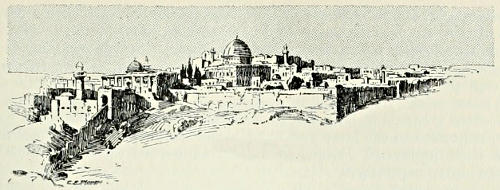
Jerusalem