Chapter X · Diseases of Farm Animals (continued 2)
Reading edition
The cause of the disease has not been satisfactorily determined, but it is definitely known that the virus which reproduces the disease comes from the ulcers and natural secretions and excretions of the body, such as milk, saliva, perspiration, feces, urine, and exhalation. The contagion is not harmful when dried. Infected animals lose the power of transmitting the disease when the ulcers of the mouth, feet, and udder have healed.
In from three to five days after infection the animal has a moderate fever. The appetite is lost and the mouth is kept closed. There is a dribbling of saliva, and in two or three days yellowish-white spots the size of a hemp seed appear on the gums, the lower surface of the tongue, lining of the mouth and on the lips. These eventually attain the size of a silver dollar. They run together, burst and form painful, foul-smelling ulcers. At this stage the saliva is more profuse and ropy and the animal makes characteristic smacking noises with the mouth.
Infected animals lose flesh rapidly, in some cases as much as 100 pounds in eight or ten days. The milk is thick, yellowish-white, has a bad taste, and is with difficulty made into cheese or butter. The reduction in milk yield during the sickness and for some time after recovery is 50 to 75 per cent.
Usually, a short time after an appearance of the disease in the mouth parts, there is a redness, heat and swelling of the skin at its junction with the hoof and especially between the toes and upon the soles of the foot. Similar ulcers to those on the mouth appear on the feet and soon burst. The animal becomes lame and moves stiffly and lies down a great deal. These ulcers ordinarily heal up in one or two weeks.
In some cases the animal dies suddenly, in others lingers a few hours with difficult breathing and discharge of blood from the nose, and finally dies of paralysis of the heart and lungs. In still other cases emaciation and reduction of milk flow is the only bad result. Sometimes ulcers form at the root of the horn and cause the horn to drop off.
Owing to the nature of the disease, its contagion and danger, treatment should be in line of prevention and in destruction of infected animals. While the disease yields to treatment, our best suggestions when the disease is suspected is in notification to the state officers and in securing the services of a veterinarian who will be able to advise what is best to do.
FOOT PUNCTURE.
—See Wounds and Their Treatment.
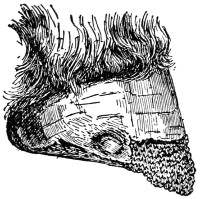
FOOT ROT
A disease usually associated with sheep. It is sometimes so serious that the entire hoof rots away.
FOOT ROT IN SHEEP.
—A chronic inflammation of the foot, marked by ulceration, softening of the hoof, lameness, and the discharge of a sticky material which has a very fetid odor. It is a contagious disease, and is produced by a germ that lives in the soil and gains entrance to the feet through wounds and surfaces chafed by barbed grasses and stones, or by gritty clay, which becomes lodged between the toes and hardens there.
The first symptom is a slight lameness. If the affected foot be examined, that part just above the horny part of the cleft of the foot, either in front or behind, will be found inflamed, feverish, and moist. Erosions or ulcers soon appear, generally on the heel. These penetrate the foot and burrow beneath the horny parts, causing fistulous tracts from which exudes a foul-smelling pus possessing an odor sufficiently characteristic to indicate the disease in a flock, even without a close examination. In time, the foot becomes greatly overgrown and deformed, the hoofs increasing in length and curling upward. In bad cases, the suffering is so great the animal lies down most of the time, but when only the front feet are diseased, it will crawl around on its knees.
That the disease is contagious is shown by the fact that it generally starts in one foot and spreads to the others, and, at the same time, the feet of other sheep in the same flock become diseased in the same way, the outbreak covering a period of several months. In cases that recover spontaneously the foot is deformed and the joint is stiffened. It is only in virulent outbreaks where all the feet are diseased, or where some complication, such as maggots, is present, that deaths occur.
Having as its cause a microbe, it is proper to take measures of prevention as well as cure. In purchasing sheep, it is highly advisable to keep them isolated for a week, as a test. All overgrown hoofs should be trimmed. Sores or wounds, from any cause, should be carefully disinfected daily. Low, boggy lands should not be used as pasture for sheep, and dirty, unsanitary pens should be made sanitary, as these all predispose to an outbreak of the disease.
As treatment, first isolate all affected animals. Mild cases are best treated by making the sheep stand for several minutes daily in a trough containing a disinfectant, or, better still, by arranging the trough of suitable length with fenced-up sides and a widened entrance, so the sheep can be easily started into the inclosure and made to wade through the disinfectant.
In bad cases and where the hoof is underrun with pus, the horn and all overgrowths must be cut away so as to expose the diseased parts to the action of the disinfectant. The foot should then be dried, dusted with finely powdered burnt alum, and bandaged to keep out the dirt. This antiseptic treatment of the feet must be kept up daily as long as the disease exists. Any of the following may be used: 1 pound chloride of lime to 12 quarts of water; 1 pound of pure carbolic acid to 4 gallons of water; a solution of creolin; a coal-tar disinfectant of the same strength; or any good sheep dip containing these substances in the proper amounts.
FOUNDER.
—An inflammation of the sensitive or soft structures between the hoof and bones of the foot. The popular belief that founder is to any extent in the legs and chest is probably an error. The disease is in the feet, and those symptoms which make it appear as a stiffness in the legs and shoulder are but the natural results of soreness in the feet. The same statement might be made regarding those cases which are popularly described as “stove up in the shoulder.” Instead of the soreness being in the shoulder in these cases, it is generally in the feet, or at least below the knee.
It is somewhat difficult to explain how those influences or causes which are known to produce founder bring about that condition, but observation shows clearly that an irritation of the digestive tract, or in fact, any extensive irritation of any mucous surface, may produce an inflammation of the sensitive laminæ of the feet; that is, founder. Therefore founder may be produced by a change of feed or excessive feeding, a change of work or excessive work which results in exhaustion, large quantities of feed or water when warm or fatigued, sudden changes of temperature such as cooling too fast when sweating, and a long drive on hard roads, especially without shoes. Excessive purging or diarrhœa may also produce it. Founder also occasionally results from irritation of foaling, but this is not common.
There is no essential difference in the nature of the disease determined by the particular agent or condition which causes it. “Water founder,” and that produced by over-feeding, concussion, or extreme fatigue are, in so far as the character of the disease is concerned, one and the same thing.
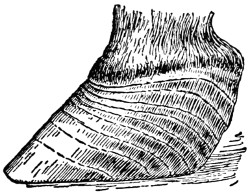
FOUNDER
In bad cases of founder the foot shrinks from the wasting of the sensitive substances. A typical foundered foot is pictured here.
Founder May Occur
in the fore or hind feet or in both; but generally the fore feet are those affected. A stiffness and disinclination to move are perhaps the first symptoms noticed. The position in which the animal stands is characteristic. The fore feet will be placed well forward, so that the weight will be borne by the heels, while the hind feet are brought well up under the body in order to take as much weight off the front feet as possible. This position gives a rather unsteady appearance to animal, and the hind feet are frequently shifted in order to maintain as steady a position as possible. From this fact founder is frequently mistaken by inexperienced persons for a disease of the kidneys. The body temperature is usually considered increased; that is, there is fever—as it is generally expressed—due to inflammation in the feet. As is usual in the first stages of inflammation, the pulse beat is increased in frequency and force. An increase of heat in the feet, with a manifestation of pain when the hoofs are tapped with a hammer, are, when taken with all the foregoing facts, sufficient evidence of founder. When founder occurs in one foot, however, as it sometimes does, the diagnosis may be more difficult for the inexperienced. When it occurs only in the hind feet the position which the animal takes will not be different from that taken with founder in only both fore feet but from different causes. The hind feet are brought well forward under the body, but for the purpose of throwing such little weight as is borne on them on the heels.
The Feet Should Be Kept Moist.
—Remove the shoes and apply moisture to the feet. The latter may be done by standing the animal in water five or six inches deep each day, several hours at a time, or by the application of a poultice of wheat bran or some such material, or by wrapping the feet with cloths and keeping them thoroughly saturated with water. The animal should always be encouraged to lie down and take the weight off his feet, which is beneficial. When this occurs, a poultice of some sort must be used to apply moisture to the feet. It may be applied by the use of a sack large enough to envelop the foot and hold sufficient of the poultice to retain the moisture for some time. This application of moisture to the feet should be continued until the severity of the inflammation and the lameness have subsided.
Unless the founder be due to excessive purgation, a quart of raw linseed oil should be given as a purgative. During the first 48 hours from 30 to 40 drops of tincture of aconite may be given every three or four hours. Four tablespoonfuls of nitrate of potash (saltpeter) should also be given three times a day in the feed or on the tongue. If the lameness continues after the acute symptoms have subsided, a rest of several weeks on a soft pasture and the application of a blister around the top of the hoof are recommended. The following mixture has been useful as a blister: Red iodide of mercury, 1 part; lard, 4 parts; cerate of cantharides, 4 parts. Apply around the top of the hoof, except at the heels, and rub for 10 to 15 minutes. The animal should be tied so that it cannot get its mouth to the blistered part for several hours after the medicine has been applied.
CHRONIC FOUNDER.
—In a majority of cases the above treatment will be followed by a good recovery, but an animal once foundered is probably more likely to suffer from a subsequent attack. If the lameness does not entirely disappear in a week or ten days, it is seldom that a complete recovery takes place. In such cases the animal is likely to remain unfit for road work and to continue to show more or less soreness. These are the cases that are later said to have “chest founder,” or “stove up in the shoulder,” owing to the fact that the muscles of the chest waste away from lack of free use.
In some cases still more serious results follow an acute attack of founder. The inflammation may be so severe that there is separation between the hoof and structures, the formation of pus, and a descent of the central organs of the foot, which causes a bulging of the sole. In such cases, even though recovery takes place to such an extent that it is advisable to allow the animal to live, it is not fit for work, and can only be used for breeding purposes.
FOWL CHOLERA.
—See Chicken Cholera.
GAPES.
—A symptom caused by worms in the windpipe; oftenest seen in young chicks and turkeys. Birds droop, cough, and lower their wings. A feather moistened, but not dripping, with kerosene or oil of turpentine is the commonest remedy. Cleanliness of food, water and quarters is the great preventive. Poultry men who keep their chicks on ground not used for chick raising the previous year, and who insist on strictest cleanliness, report highly satisfactory results in avoiding gapes.
GARGET.
—A swelling, accompanied by inflammation of the udder. It may be caused by kicks or blows, by germs getting into the udder, or as a result of holding the milk too long. Do not use the milk when the udder is affected. For garget rub with hot camphorated oil twice a day. Give as medicine 8 tablespoonfuls of hyposulphite of soda each day, either in the feed or in a drench. Keep up the treatment for two weeks.
GASTRITIS.
—A rather uncommon disease in domestic animals and the result of a disturbance in the stomach, with inflammation following, caused by irritating substances, usually of a poisonous nature. A common symptom is nausea and pain like colic. Indeed, the ordinary outward signs of colic are observed. At first the pulse is strong, which weakens, and runs rapidly, from 80 to 100 beats a minute. As the disease progresses the pulse becomes irregular and the animal dull and listless. Treatment consists of simple agents. If the disturbance is due to some potassium compound, give oil; if to ammonia, give vinegar; if from turpentine, give oil and opium, the opium in teaspoonful doses every couple hours. After recovery, let only easily digested food be provided.
GID IN SHEEP.
—A disease of the brain due to a worm in the brain substance. This worm, known as the bladder worm, is a form of the tape-worm of the dog at an early stage of its existence. The eggs of this worm, on being swallowed, are hatched in the stomach, from which they enter into the circulation, finally lodging in the brain and spinal cord. Those that lodge elsewhere, as in the heart and lungs, grow for a time and then disappear. The most conspicuous symptom is the staggering, stupefied condition of the affected animal.
In walking, if a single side is affected, a circle is described. The feet are raised as if the animal did not see well. In many cases blindness results. The growth of the worm is somewhat rapid. In about three weeks after the appearance of the disease a softened condition of the skull results, which may be found by pressing the fingers over it. From this it will be observed that there is practically no treatment for animals affected. Occasionally the skin is accidentally broken over the point where the worm is encysted, out of which it emerges and the sheep recovers.
Treatment, therefore, is along the line of this natural recovery. Find the soft spot by pressing the fingers over the skull, then introduce the trocar and canula. Withdraw the trocar, apply a syringe to the canula, and withdraw the contents of the cyst within. Of course, inflammation of the brain may set in and the sheep die from this, or another worm may be present and grow, thus causing continued disease. Inasmuch as the bladder worm of sheep is a stage of the tape-worm of the dog, it follows that destroying all affected sheep, so as to prevent the dogs from becoming reinfested from it, is the only really safe and satisfactory method of warding off the trouble.
GLANDERS.
—A contagious disease peculiar to the horse, ass, and mule, and may be communicated to human beings, and also sometimes to carnivorous animals in menageries, by means of infected horse flesh, and also by means of inoculation to field mice, guinea pigs, dogs, cats, goats, rabbits, and sheep. Pigs are not readily susceptible and cattle appear to be immune. Like all diseases of a contagious or infectious character, glanders is due to a specific organism, known as the bacillus malleus.
The external manifestations of glanders differ and consequently the disease is spoken of as glanders or farcy, depending upon the symptoms presented. The disease is known as glanders when the horse suffering from it has a discharge from the nose, ulcers on the septum nasi (the partition dividing the nasal cavities) and enlarged submaxillary glands, and is known as farcy when the affected animal has farcy “buds” or ulcers on the skin, and corded lymphatic vessels running from one “bud” to another. In farcy, the corded lymphatics, “buds” and ulcers on the skin are very apt to be on the inside of one hind leg or the other, but may appear on the inside of a fore leg, or on the neck or body.
Farcy was, in olden times, thought to be a different disease from glanders, and was believed by many to be curable, while glanders has always been generally believed to be incurable, but it is now known that farcy is simply one manifestation of glanders. It has been found that a horse with glanders may give another farcy, and vice versa. Guinea pigs inoculated with the discharge from a glandered horse’s nose will develop glanders, and pure cultures of the glanders bacillus can be obtained from them, and in a similar way if guinea pigs are inoculated with the discharge from a sore on a horse with farcy glanders may be produced in these little experimental animals, and upon post mortem examination pure cultures of the glanders bacillus can be obtained from the lesions of the disease produced in them. Glanders and farcy may again be divided into two forms, acute and chronic glanders, and acute and chronic farcy.
In the acute form the disease develops rapidly, the lesions form more speedily and with greater rapidity than in the chronic form and the animal loses strength and condition and dies within the course of a few weeks, sometimes in the course of a week or two. It is not unusual to meet with an animal showing symptoms of both glanders and farcy, especially in the acute form.
In the chronic form the symptoms are not so well marked, and a horse may go for months keeping in fairly good condition and able to do its work, the disease developing very slowly, and at times showing a tendency to recover; yet such an animal is a source of danger to other horses, and also to the man taking care of him or driving him. A horse with chronic glanders, or farcy, may give the disease to another in an acute form, especially if the other one is more susceptible for some reason, such as a less strong constitution or being run down by hard work.
Post mortem examination of horses with glanders, or farcy, nearly always reveals the presence of glanders nodules or tubercles in the lungs, and, in many instances, there is no doubt but what a horse may have the tubercles of glanders in his lungs for some time before showing outward symptoms of the disease, and in many cases the primary lesions of the infection occur in the lungs. A horse with lung glanders may be a source of danger to other horses and cause disease in them and yet go unsuspected for some time. A case is said to have occurred in Boston a number of years ago where a hack horse lost eight successive mates with glanders; he was finally killed and his lungs were found to be full of glanders nodules, and yet he never showed any external symptoms of glanders. Such cases could be cited in large numbers if space permitted, but one example will answer.
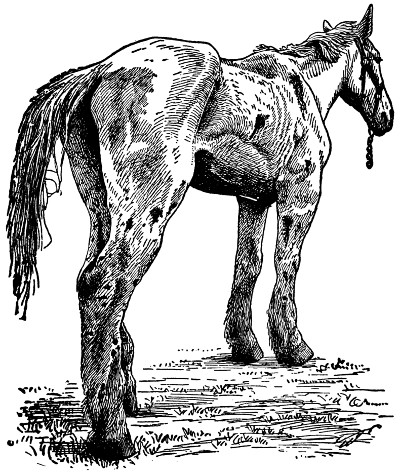
BAD CASE OF GLANDERS
The farcy form is shown here. The animal has not long to live. Except for experimental purposes, every horse having glanders should be killed as soon as the disease is discovered.
A horse with lung glanders may have a little dry, spasmodic cough, may look somewhat unthrifty, and if the temperature were taken it might be slightly above normal, say, 101 degrees to 1011⁄2, the normal temperature being 100 degrees. Yet such an animal might do its work, last for a long time and not be suspected as a source of danger until several cases had occurred in the stable, for which it was difficult to account.
While a well-marked case of glanders or of farcy is not difficult of diagnosis, there are many obscure cases which escape detection for some time. If a horse has a well-marked discharge from one or both nostrils, with characteristic chancres visible upon the mucous membrane of the septum nasi, and hard enlarged submaxillary glands in the intermaxillary space, it is not a difficult matter to diagnose such a case, and any horseman ought to recognize it. The same is true of a well-marked case of farcy. When the lymphatic vessels on the inside of a leg, especially a hind leg, are swelled and corded, with a chain of farcy buds along their course, some of which have gathered and broken, leaving a discharging open ulcer in the skin, it is quite evident that the animal is suffering from farcy.
A peculiarity of glanders seems to be a tendency for the symptoms to appear on the left side; in many cases of glanders the discharge and ulceration is in the left nostril, and the left submaxillary gland is enlarged; and in a large number of the cases of farcy met with it is the left hind leg that shows the lesions of the disease. In obscure cases of glanders or farcy the diagnosis is not always so easy, even for experts, and then other methods for determining the trouble have to be resorted to. These are the guinea pig test and the mallein test. The guinea pig test consists of inoculating one or two of these little animals with the discharge from a suspected horse’s nose, or from a farcy sore. If they should develop glanders it would be proof positive that the suspected horse had this disease; if they do not develop glanders it is not always positive proof that the suspected horse is free from the disease. Sometimes more than one test is necessary, or another method of diagnosis may have to be resorted to. This is the mallein test.
Mallein is a product made from cultures of the glanders bacillus analogous to tuberculin as made from cultures of the tubercle bacillus, and is used for testing horses for glanders much as tuberculin is used for testing cattle for tuberculosis. A horse infected with glanders will react to a mallein test in much the same way as a cow infected with tuberculosis will react to the tuberculin test. It is not customary in some states to kill a horse that reacts to mallein unless it shows some clinical evidence of disease. All horses that show clinical evidence of glanders or farcy in some states are killed by the state authority, and the law requires persons knowing or suspecting cases of this kind to report in writing to the chief of the cattle bureau of the state board of agriculture or to the inspector of animals in the city or town where the disease is believed to exist, except in some cities where the city board of health has full charge of glanders and farcy. Anyone selling, removing, transporting, or concealing a horse knowing or having reasonable cause to believe it has glanders or farcy is in most states liable to a heavy penalty.
In stables where glanders exists, in some cases, all the horses are tested and divided; the reactors are separated from the non-reactors, and those that react are tested once a month until they cease to react, or show physical indications of glanders and are killed. Used in this way mallein seems to have a curative effect on incipient cases, and has been very successfully used in freeing infected stables from the disease. When a horse is killed because it has glanders or farcy the stall should be thoroughly disinfected where it has been kept, as well as the harness, blankets, currycomb and other utensils, and anything that cannot be easily disinfected ought to be destroyed. Public watering troughs where the horse has been watered should be emptied and cleaned out, and the blacksmith ought to disinfect his shop where the horse was shod.
There are various diseases that may be taken for glanders or farcy, and there have also been numerous instances where glanders has been taken for something else; for instance, chronic nasal catarrh. What many old-time veterinarians used to call chronic nasal catarrh or nasal gleet, were, in many instances, if not in nearly all, cases of chronic glanders, and when one of these cases of nasal gleet was rounded up in a locality, glanders disappeared in that neighborhood.
A horse with a chronic discharge from the nose as the result of a decayed tooth may sometimes be mistaken for a case of glanders, and also a horse with distemper or strangles; but the latter generally recovers soon, and in strangles the gland under the jaw softens and breaks and discharges while in glanders the gland remains firm and hard and generally not sensitive to manipulation.
There is a disease that has been troublesome in Pennsylvania and parts of Ohio the last two years called suppurative lymphangitis or epizootic lymphangitis, which may be mistaken for farcy, but animals suffering from it do not react to mallein, and guinea pigs inoculated with the discharges do not develop glanders. There is not much glanders in the Eastern states, except in the cities, and the disease is not of a great deal of interest to farmers, except to avoid purchasing animals with it at some of the unreliable sales stables. Where a case occurs on a farm, except on some market gardener’s farm near a city, it is found, as a rule, that the horse was purchased at some unscrupulous dealer’s stable in the city, and, in some instances, other horses on the farm are infected, and the farmer not only loses his new acquisition, but has two or three other horses killed besides that have become infected.
Farmers buying new horses at city sales stables ought to endeavor to deal with only reputable concerns, and to avoid cheats. It is well to remember that a person cannot get something for nothing, and it is not likely that anyone can buy a horse for $50 to $75 because it is afraid of elevated railroad trains that would otherwise be worth $300 to $500, or because a widow lady wants a good home for her late husband’s old pet. Anyone buying horses from a fake coal company, or a humbug ice company, or an unknown express company that is just going out of business, is liable to invite a serious disease to his farm.
GRAVEL OR DIRT IN FOOT.
—A collection of pus, or other fluid containing gravel or dirt. It occurs most frequently in the foot, and is associated with the horse and mule almost exclusively. The cause may be from a bruise, but more frequently it is due to a punctured wound of the foot by nail, wire, or other pointed object. Nearly always there will be dirt carried into the wound with the offending object or shortly after its removal. This dirt, infected with germs, sets up an inflammation of the sensitive structures causing more or less lameness. In many instances the nail hole becomes closed up and the collected matter may have to seek an outlet above the hoof. To determine the trouble a very careful examination of the hoof should be made, looking for any opening leading into the foot, often detected by discoloration of the part, or at an over-sensitive point in the foot.
Treatment should consist in making or enlarging the opening at a dependent part of the hoof, if possible, so that all secretion formed in the wound can find a ready escape to the outside. Without free opening there is danger of tetanus (lockjaw) developing. The wound should be thoroughly cleansed, and washed with some mild disinfectant, after which a small quantity of oil of turpentine should be injected, and the wound packed with calomel or iodoform and covered with a pledget of cotton. If the wound is very deep or extensive it may be beneficial, after thoroughly cleansing the foot, to apply a hot bran or flaxseed poultice. Use poultice for several days and change daily.
GREASE HEEL.
—A form of eczema that attacks the skin of the heel and fetlock. Sometimes the disease becomes so severe as to crack open, from which blood oozes out. A crust forms and later on becomes painful and disagreeable. To remove the scurvy part that is noticed first, apply a poultice, made of wheat bran or linseed meal. Change the poultices two or three times during the day. After removal each time wash with warm water, in which has been put some carbolic acid or creolin, and then apply the poultice again. After the poulticing is ended apply a salve made of 4 tablespoonfuls of oxide of zinc and 8 tablespoonfuls of vaseline. If indigestion seems to be associated in any way, give the horse a dose of physic, aloes being best for the purpose.
GRUB IN THE HEAD.
—This condition is the presence of the larva (worm stage) of the sheep bot fly, located in the frontal sinuses (cavities) of the head. The trouble is confined to sheep and occasionally goats. The so-called “grub” of the horse is found in its stomach, while the “grub” of cattle is found along its back just underneath the skin. The adult fly, which lays the living “sheep grub,” is of a yellowish-gray color, slightly larger than a house fly. During the warmer part of the summer days the fly goes about depositing its young in the nose of the sheep. The young then work their way upward into cavities of the head between the eyes, but not into the brain cavity. Here they attach themselves to the lining, remaining when unmolested for some ten months, then lose their hold and are sneezed out to the ground. Burrowing into the ground they enter the pupa or dormant stage, when, after a month or six weeks, they emerge as adult flies to replenish their kind.
When few grubs are in the head little trouble may be observed, but if more numerous may cause free discharge of dirty white or yellowish, thick fluid, loss of appetite, frequent coughing and sneezing, tossing of head and weakened gait, and the animal may become too weak to rise, and finally dies. With a special instrument (trephine) bore a hole into the cavity containing grubs and remove them with forceps. When they are present every year the sheep should be protected by keeping the nose smeared with tar during summer months. This can be done by causing sheep to lick salt from holes in a trough after placing tar about the holes.
HAIR BALLS.
—True hair balls are seldom found in other animals than cattle, resulting either from licking themselves or others; but different kinds of indigestible balls or concretions are frequently found in cattle and other animals, particularly the horse, in the stomach or intestines. Dust balls are occasionally formed when animals are fed upon mill cleanings. In sections where crimson clover is fed, and frequently in over-ripe condition in large quantities, balls are formed of parts of the indigestible heads. Again, calcareous or mineral matter may accumulate about an indigestible substance as a nucleus. These are not well-defined, in many instances, and the balls are often present without making it known. So long as they do not irritate the bowel too much, or do not occlude the opening from one portion of the bowel to another, they are likely to escape notice. In case they do obstruct the bowel they become serious obstacles, the greater number of these cases terminating in death. The symptoms then become those of colic from obstruction. In many cases no relief can be given, but attempts should be made to cause the obstruction to pass by giving mild purgatives and copious enemas.
HEAVES.
—The term “heaves” is used to describe that disease of the horse which otherwise is known as “broken wind,” or technically as “emphysema of the lungs.” This ailment, which is incurable when thoroughly established and to which a tendency is inherited by the offspring of an affected sire or dam, is characterized by the following symptoms: Double, bellows-like action of the abdominal muscles in breathing; short, suppressed cough, usually accompanied by passage of gas from the rectum; gluttonous appetite; harsh, staring coat of hair; pot belly; weakness; lack of endurance, sweating, panting, or staggering during work; dilated nostrils; frequent passage of gas and soft, foul-smelling feces when starting from stable.
The disease begins with indigestion, affecting in time the pneumo-gastric nerve of the stomach and then the branch nerves running to the lungs. At first the air tubules and vesicles of the lungs become dilated (aneurism); later they may break down into large air spaces and the surrounding lung tissues become involved (interlobular emphysema). Air then is easily inhaled, but is exhaled with difficulty and the effort causes cough and expulsion of gas (flatus).
The distress may be relieved by treatment, but perfect recovery is impossible when the lungs have become badly affected. Treat by substituting wet oat straw for hay in winter and grass for hay in summer. Allow double the usual rest period after a meal. Work when stomach is not distended with food. Do not feed hay at noon. Use lime water to wet all food. Once or twice a week give raw linseed oil in a bran mash to open bowels. Give half an ounce of Fowler’s solution of arsenic night and morning. Do not breed from affected horses.
HEAT EXHAUSTION AND SUNSTROKE.
—The horse that is stricken with heat exhaustion or which falls from heat, apoplexy or “sunstroke,” is sick or out of sorts at the time of attack; otherwise he would withstand heat and work. The middle horse of a three-horse team suffers most and is apt to succumb to the ill-effects of the combined radiation of heat from his mates and direct rays of the sun. Attacks are most apt to happen on the third or fourth day of a spell of intensely hot weather characterized by mugginess, electrical storms and moisture-saturated air. At such times the horse that has indigestion, a heavy, unhealthy coat of hair, a skin or kidney trouble or any affection of the brain or heart is the one that must be most carefully watched and worked.
With the hope of preventing attacks feed light rations, no corn, no mashes, no ground feed other than bran; avoid green grass, unless the horses are on it all of the time; do not feed hay at noon; allow cool, pure drinking water often when horses are at work; keep stables clean, darkened, screened, and ventilated; shade the polls of the horses’ heads during work time and in such a way that air passes freely under the shading device.
In sunstroke the horse falls and soon succumbs. In heat exhaustion he lags, stops sweating, pants, staggers, skin is dry, nostrils dilated, membranes of eyes and nostrils red. High fever is present. Treat by keeping cold, wet packs to the poll of head or letting a stream of cold water run over it. Shower body with cold water from a sprinkling can. Stand horse in shady place under a tree where air passes. Give stimulants freely in water as a drench every hour at first, then less often as symptoms abate. A suitable stimulant is whiskey in half pint doses, or a mixture of one part of aromatic spirits of ammonia and two parts each of alcohol and sweet spirits of niter. Dose is two ounces in half pint water. Do not bleed horse or give aconite. Give half ounce doses of saltpeter in water twice daily as horse recovers. Call the veterinarian in sunstroke cases.
HERNIA.
—A protrusion of any portion of the bowels or their coverings through a break in the walls of the abdomen. A rupture, for that is the popular term, is most common in horses. Often at birth they are seen near the navel. These disappear in a few months without any treatment being required. In mature horses the usual causes are blows, kicks or some violent effort that tears the muscular structure.
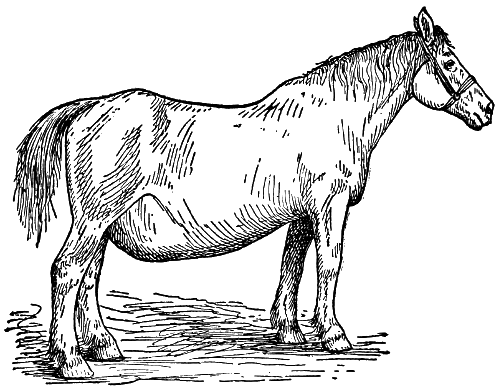
VENTRAL HERNIA
It may occur in any part of the abdomen and varies in size with the extent of the rupture.
The characteristic symptom is the bulging out of the gut, tumorlike; and this often can be slipped back where it belongs. If the rent be not closed, even if the gut is returned, the least bit of strain is liable to force it out again. Some kinds of hernia cause immense pain and the animal shows it.
In treating, work the gut back to its place. This done, place a pad—a flat piece of wood or leather will do—over the wound and fasten in such a way as to keep it in place. This should be worn for a month until recovery is complete. Such treatment will not serve in all cases of hernia. An operation may be necessary, which should be made only by a skillful veterinarian.
HIDE-BOUND.
—This is not a disease at all, but an indication of poor health, more particularly of poor nutrition; usually the result of indigestion, improper food, worms or want of proper exercise. The skin is hard, rough, papery, and cannot be picked up from the body with ease. When the attempt is made, it suggests that the body is too large for the skin. Of course treatment is in the nature of better food, that proper nourishment may be secured. A good physic will be proper to start with and then follow with a tonic, easily assimilable food of a nature that will properly nourish the body.
HIGH BLOWING.
—A sound produced in the act of breathing while the air is being expelled from the lungs during forced respiration. It is a fluttering sort of a sound. When horses are trotting or pacing the sound is essentially a nasal one, and is not to be regarded as a state of unsoundness. It is rather a measure of excitability, and associated with horses of much spirit and good breeding.
HIP JOINT LAMENESS.
—A disease of the hip, caused usually by some injury as from a fall or kick. A slight swelling is observed just over the hip, and lameness when the animal walks or trots. In severe cases, the horse will hop and catch the lame leg. The best treatment is absolute rest. Frequent applications of hot water are good. After each application bathe with a solution made of 4 ounces of water, 2 ounces of tincture of opium, 2 ounces of tincture of arnica and an ounce of belladonna. If the lameness continues, use a blister made of 2 teaspoonfuls of cantharides and 4 tablespoonfuls of lard. Allow the blister to remain for an entire day, then wash off with soap and water and apply lard or vaseline. Repeat in a couple of weeks if necessary. If the lameness disappears, give the horse rest for several weeks.
HIPPED.
—A fracture at the point of the hip. The most common cause is striking the point of the hip against a door post or pole. Sometimes a kick is responsible. While recovery follows, as a rule, from the very nature of the fracture, there is no treatment that will remedy the broken point. After the soreness has passed no inconvenience results; only a blemish is observed.
HOG CHOLERA.
—The term hog cholera has become quite ambiguous, partly on account of new discoveries concerning the cause of the disease and partly on account of what have been supposed to be two different but curiously related diseases being generally included under this general term. Until within a year or two we have supposed that there were two infectious diseases of hogs recognized under the general terms of hog cholera and swine plague. It now seems probable that we will be able to do away with the term swine plague entirely.
The disease considered here answers to the following requirements: (a) Infectious by association or other natural exposure; (b) the animal before death and the carcass after death show certain accepted symptoms which are clearly recognized as pertaining to cholera; (c) the blood is virulent and capable of reproducing the disease on inoculation into susceptible hogs; (d) attack and recovery confer immunity. It is to be understood that we might easily have diseases among swine where characteristic “a” or even “b” might be present and yet the disease be not true hog cholera.
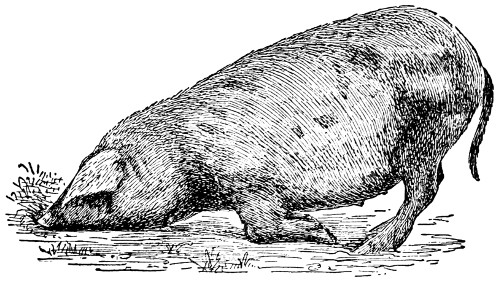
AN ATTACK OF CHOLERA
One of the familiar attitudes assumed when the hog is affected with cholera. When this far along, not many cases of recovery are observed.
Until within recent years American authorities, bacteriologists and veterinarians alike, have very generally accepted a certain germ, the bacillus of Salmon and Smith, as the specific cause of hog cholera and another somewhat similar germ as the cause of what was supposed to be a distinct but curiously related disease—swine plague. But within a few years workers in the Federal bureau of animal industry have apparently demonstrated that hog cholera is caused by a living germ so small that it passes easily through germ filters which remove all known forms of the bacillus of Salmon and Smith.
It may be interesting to note further that this new germ is so small as to be invisible to the highest available powers of the best microscope. That it is a living organism and not a chemical poison may be very easily demonstrated. The curious relations to this disease of the old bacilli of hog cholera and of swine plague are not well understood, but it seems quite possible that they may play some part in the later development of the disease after the disease processes have been started by the invisible germ. While our old theories and supposed information concerning the cause of hog cholera have been very much disturbed by newer work, it is important to remember that hog cholera is now just as much as before to be recognized as a distinctly infectious disease. It is important to remember also that this infection is absolutely necessary, or there can be no cholera no matter how susceptible animals may be. There can be no cholera without this primary and specific cause any more than there can be plants in our wheat fields without the previous presence of mustard seed. Conditions of soil and climate may favor a rank growth of mustard. Conditions of feed and keep may favor the development and spread of hog cholera. They may decrease resistance and increase susceptibility, but cannot originally cause the disease. It is a rather common experience that hogs kept closely housed and fed, especially with such foods as corn, offer less resistance than do other hogs. In our vaccine work we frequently find hogs of this type which die readily under inoculation with blood of low grade virulence. Hogs of hardier type may become slightly sick or not sick at all with inoculation from the same infectious material. Pampered show herds appear especially susceptible to both natural infection and artificial inoculation.
The farmer, and for that matter the public in general, should bear in mind that the cause of hog cholera is a living organism capable of enormously rapid self-multiplication—actual, though very minute particles of matter. This, fully understood, makes it apparent that infection may be carried in any way that other fine particles of matter may be carried. It thus becomes very apparent that the infection may be carried by sick hogs or upon the legs and bodies of hogs not sick; it may be carried in wagon boxes, in hog racks, in stock cars, or upon shoes and clothing of people. It is very evident that the infection may be carried down stream, especially in small creeks, and give rise to other outbreaks.
So far as the sick hog is concerned, we are quite sure that the blood and the manure are thoroughly infectious and there can be no question concerning the infectiousness of fresh carcasses of dead hogs. Perhaps we should say first of all that we rarely get all of the accepted symptoms of hog cholera plainly shown in one case. It is important to bear in mind that cases vary in virulence from those of very chronic type where hogs live for weeks and finally die or recover, to very acute cases where they die overnight.
The hog coming down with cholera is usually sluggish at first, lying around in the shade and refusing feed. The hair may become rough. The eyes early show symptoms of inflammation, with a sticky discharge. There is usually a suppressed cough. The gait may become irregular and uncertain, especially with the hind legs. After these preliminary symptoms have been shown for a time, the skin becomes red, changing to purple, especially noticeable in white-haired hogs. The hog is then usually within a very few days of death.
As already explained, not all cases are typical. Sometimes hogs die in an outbreak of cholera from undoubted hog cholera, and yet the ante mortem or post mortem symptoms show very little upon which to base a diagnosis. But we may easily demonstrate that these were cases of cholera by injecting their blood into susceptible hogs and by thus producing typical cholera.
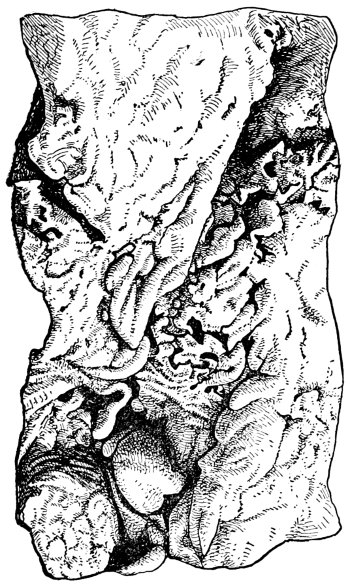
THE RESULT OF HOG CHOLERA
A post mortem of a hog dying from cholera will show ulcers like those pictured here. Look for them in the large intestine.
At the autopsy of an ordinary case of cholera the first and perhaps the most striking thing seen is the purpling of the skin. On opening the carcass small blood spots may be found under the skin and in the fat cut through. The glands along the intestines are intensely inflamed. The mucous membrane of the stomach is frequently thickened and roughened and in chronic cases there may be ulcers. On opening the intestines we see areas here and there of intense inflammation in the acute cases or numerous ulcers in cases of more chronic type. In very acute cases we find areas intensely inflamed, even bloody in places. The slow chronic cases develop characteristic hog cholera ulcers. These may appear at almost any point on the lining membrane, but more particularly in the blind pouch and around the point where the small intestine connects with the large intestine. On stripping off a very thin transparent membrane covering the kidneys, a typical case of hog cholera will usually show minute red spots on the surface somewhat resembling the covering of a turkey egg, which gives the common name of turkey egg kidney of hog cholera.
Preventing the Disease.
—Clearly there are certain things which the owner of healthy hogs in a hog cholera district should do and a good many things which he should not do. The same is equally true for the man who has sick hogs in a neighborhood where there are uninfected herds. The owner of healthy hogs and his family should keep away from public stock yards, from all pens and yards on other farms whether sickness among hogs prevails or not. It may easily occur that a neighbor’s hogs may appear well but have recently received the infection and be already capable of scattering the disease. We do not know at what period in the development of this disease infected hogs become capable of disseminating hog cholera.
During a hog cholera season the owner of healthy hogs should institute something in the way of private quarantine and pleasantly, perhaps, but firmly, ask visitors, especially stock buyers and threshing machine crews, to keep at a reasonable distance from the pens and yards. It is safer for one man to have exclusive care of healthy hogs during the hog cholera season, and this man should be very careful where he goes with reference to possible infection. Special fencing or other provisions should be made wherever practical to keep dogs out of the pens and yards, for, under certain conditions, dogs become very active agents in spreading the disease.
The owner of a healthy herd should be very careful about buying in hogs for feeding or breeding purposes, and, in the Western states especially, all public stock yards and stock cars must be regarded as possible sources of spread. Hogs coming into the herd for breeding purposes, if by rail, should be shipped in other than stock cars, and should not be unloaded so as to go through stock yards. All new hogs coming on to a farm where the disease has not appeared, should be kept carefully apart from the herd for from two to three weeks after arrival. The disease may thus have time to develop, if the animals have been infected before shipment or en route. It is decidedly worth while to be careful about clean feeding, for it seems probable that this is a common method by which infection enters the body. This being the case, troughs and feeding floors should be frequently disinfected with steam, boiling water, or a very dilute corrosive sublimate solution (1:1,000 dissolved in water), with the troughs subsequently rinsed out with plain water. Or the troughs and feeding floors may be disinfected with any of the coal tar disinfectants if they are used in sufficient strength. These are not poisonous in any probable quantity which hogs would get.
A Disastrous Experience.
—The farmer should be especially careful about buying hogs out of stock yards. Some years ago a certain Minnesota farmer purchased a lot of feeders from Sioux City and took them home to his farm. In about two weeks his hogs commenced dying. A little later hogs previously on the farm began dying. In a little while he was losing hogs at the rate of 25 a day, losing a total of about 200. This loss of 200 hogs was scarcely a drop in the bucket—too small for consideration in comparison with the loss which this outbreak cost the state, for, with some others coming into the state from Iowa and Nebraska, this outbreak cost the state, as carefully estimated, about $1,250,000 during that one year. As soon as the Minnesota farmer here referred to realized that he had cholera and was liable to lose a large portion of his herd, he shipped out a lot of fat hogs ready for market. These were yarded for a time in the public stock yards of his town, and one of them died while waiting for shipment. This hog was left for a day or so in the yard. Later a carload of feeding hogs was shipped in from a point in South Dakota, where they had never had hog cholera. These South Dakota hogs were unloaded into the yards where the fat hog had died some time before, and were sold out from there by auction.
It was a very interesting study to follow the resulting outbreaks; but a very serious matter for the owner and for that entire portion of the state. Practically every farmer who bought hogs at this sale, and very many of those who walked around the yards looking at the hogs, but without buying, had hog cholera on their farms in a very uniform period after the sale. Surely the moral of this tale is so self-evident as to need no further suggestion.
Cleaning Up.
—Troughs and feeding floors, at least, and, if practicable, the hog house also, should be kept clean and frequently disinfected during an outbreak. When the outbreak appears to be over, the owner must decide as to just what he will do in the way of disinfection and cleaning up, or whether he will stay out of the hog business for a year and allow the infection to die out. This is, of course, without regard for the possibility of putting in vaccinated and immune hogs. Feeding troughs and feeding floors and the hog house in general, may be disinfected if of reasonably good construction, by a thorough cleaning and then by one of the methods suggested under prevention. If the sick hogs have been kept in an old straw shed or in an old hog house that is about ready to fall down anyway, by all means the best method of disinfection is by burning. Without disinfection or burning the owner cannot be safe in putting in susceptible hogs within much less than a year after the last hog died or recovered. The slow old chronic cases that go dragging around at the end of an outbreak should usually be killed and safely buried, for it is rarely profitable to put such hogs in shape for market. It might possibly be worth while to hold such a one over and nurse them along, in case of valuable brood sows, for hogs having recovered from cholera are usually immune for life.
Brood sows which have had the disease and recovered usually give something more than natural immunity to their offspring. But the degree of immunity so conferred is so variable in degree and uncertain otherwise that it cannot be depended upon as a routine method of establishing immune herds. Yards may be practically disinfected by plowing or by burning off a good layer of straw.
Hog Cholera Vaccination.
—Generally stated, this vaccine consists of two parts: (a) Blood serum from the body of a specially immunized hog; and (b) virulent blood serum from the body of a hog about to die from cholera. The general theory upon which this double vaccine is used is that of giving the animal an infectious disease and at the same time a treatment which enables the animal to resist the infection. When the hog is through with it he is in exactly the same condition as though he had gone through a natural exposure and recovered.
General Method.
—We start this work with certain hogs that are immune usually because they have passed through an outbreak. It has been shown that when such immune hogs are treated with large injections of virulent blood under the skin or into a vein, that they do not usually become sick, but their own blood develops a peculiar property that gives protection to other hogs that are naturally susceptible.
When the blood or rather blood serum from this specially treated immune hog is injected into the bodies of healthy susceptible hogs, the latter becomes likewise immune, but the immunity so gained lasts only a short time, possibly four to six weeks, and is then gradually lost. If we give a small injection of virulent blood at the same time, or soon after the immunizing serum is given, then the treated hog becomes immune for a long period, perhaps for life.
The Serum Hog.
—The specially immunized hog which produces this immunizing serum is known as a hyperimmune, and to save words will be hereafter mentioned as such. The simply immune hog may be prepared for producing serum in either one of three ways. (1) By three rapidly increasing doses of virulent blood serum injected under the skin at intervals of seven to ten days; (2) by one enormously large injection of virulent serum under the skin; (3) by injecting virulent blood in smaller doses directly into the blood circulation.
In this work an ordinary immune hog weighing 100 pounds is given a quart of very virulent blood, a teaspoon of which similarly injected would kill a hog that was not immune. In other words the immune, and especially the hyperimmune hog, have developed certain properties in their blood antagonistic to hog cholera virus.
Vaccination.
—We have two possible methods of vaccinating or immunizing susceptible hogs (a) Serum only. This is by the injection under the skin of serum from the body of a hyperimmune hog and gives immediate but temporary immunity lasting, as already stated, several weeks. If this animal, during the period of immunity, is exposed to natural infection, he becomes protected for a very long period, perhaps for life. (b) Simultaneous. The second method of vaccination consists of injecting immunizing blood serum into one thigh and a small amount of disease-producing serum at the same time, or soon after, into the other thigh, thus giving the animal the cholera and a cure for it at the same time. If the immunizing serum is potent and the virulent serum is really virulent, then the animal so treated becomes permanently immune.
The serum-only method is usually preferred in actual outbreaks and for hogs not yet sick, because this gives immediate protection, and the hogs, being naturally exposed, usually develop a permanent immunity. The simultaneous method of vaccination is preferred where we are very confident of the serum’s potency against the virulent blood, and for hogs that have not yet been infected. It may yet be found wise to use this method even in outbreaks.
Vaccination Does Not Spread Cholera.
—Every intelligent stockman who reads this will probably ask if there is not danger of scattering cholera by this simultaneous vaccination into districts where it has not yet appeared. A considerable amount of direct evidence on this point is better than any amount of theorizing and personal opinions. This evidence all agrees that unless the vaccinated hogs become distinctly sick as a result of the vaccination (which can occur, and does very often), that there is practically no danger of disseminating the disease. This is especially true since all hogs on the farm are supposed to have been treated and are immune, and, therefore, incapable of developing cholera and so spreading the disease. It does occur, even with good serum, perhaps, that an occasional hog may become a little sick, and very rarely even die, as a result of vaccination. But with good serum given in standard dose and virulent blood also given in proper dose, the risk of this is so small that it may be safely disregarded and especially when all hogs on the farm or that may be exposed with such sick hogs have been treated.
HOLLOW HORN.
—A common term to denote a diseased condition of the blood. The horn is not hollow and never is. The old quack method of boring a hole in the horn with a gimlet and squirting turpentine into the orifice is both cruel and ridiculous. While in fact the temperature of the horn is low, it is because of the general poverty of the blood of the animal. There is no merit in this kind of treatment. The most common symptoms are general debility, scanty flesh, scurvy coat and coarse hair. The appetite is also irregular and at times greedy. Treatment is in line of better food and general improvement of the system. If lice are found on the body, they must be destroyed by disinfectants and washes. A tonic, consisting of 2 teaspoonfuls of sulphate of iron, 1 teaspoonful of powdered nux vomica and 4 tablespoonfuls of ground gentian root given each day in the food or as a drench, will be very helpful in toning up the system and in enriching the blood. The most important factor of the treatment, however, is in nutritious, wholesome food.
HOOF CRACKS.
—See Sand Cracks.
HORN FLY.
—A small insect about half as large as the common house flies, and very much like them in appearance. Horn flies swarm about the head and settle near the base of the horn, where they bite and cause much irritation. They also attack cattle on the back and sides and flank. The fly mixtures that are commonly advertised, and applied by means of a hand-spray, are excellent for keeping the pests away. A good home mixture to apply at the base of the horns is made of pine tar, kerosene, and fish oil. Use this in equal parts, and apply with a brush.
HOVEN.
—See Bloating in Cattle.
HYDROCEPHALUS.
—See Water in the Brain.
HYDROPHOBIA
, also called rabies and mad dog, is an infectious disease caused by some invisible organism. The disease is transmitted from one animal to another by the bite of an animal which is suffering with the disease or by direct inoculation. It is more common in the dog than any other animal, from the fact that dogs run at large and have a tendency to bite other dogs with which they come in contact while they are suffering with the disease.
The dog shows two forms, furious and dumb. In the furious form the animal at first seeks dark places, but is usually restless and will move from one place to another. This condition lasts for a day or two, after which time he becomes more restless and may go 30 miles in a day. He will drink water, eat sticks, stones, and bite other dogs, horses, and cattle, less often man. This condition will last from one to four days, and then the dog becomes partly paralyzed, so that he can no longer swallow, or his legs may be affected, so that he will lie in one place, and usually dies after a few days longer. In the dumb form, the animal seeks dark places, is rather restless, the throat and lower jaw become paralyzed, he is unable to swallow or to close his mouth and, therefore, cannot bite. Sometimes they will change from one form of symptoms to the other.
In the horse the symptoms vary somewhat from those in the dog. The horse is restless, usually violent and will kick and bite, oftentimes showing sexual excitement. He may break his teeth on the manger and oftentimes bites his own flesh at the place where he has been bitten by the dog. The symptoms usually develop in from eight to twenty-eight days after the animal is bitten, but may not develop for six months. The disease runs its course in from two to ten days, with a fatal termination.
There is no treatment for the disease after the symptoms have developed. In case man is bitten he should take the “Pasteur” treatment, which is a preventive, and it should be taken in a very short time after being bitten. After the symptoms begin to show it is too late to take treatment.
HYDROTHORAX.
—See Water in the Chest.
IMPACTION OF RUMEN.
—A continued distention of the rumen caused by large quantities of undigested material lodging in the rumen. Inflammation often results, with distress and pain manifest. If relief is not attained the walls of the rumen become paralyzed. Associated with the disturbances the animal is dull, the left side swollen, the breathing and pulse increase and the back aches. When lying down, the left side is always up. In treating, cold water dashed over the back and loins is recommended. A strong physic of Epsom salts and ginger will aid in stimulating the secretions and may bring relief. If gas accumulates so as to threaten the life of the animal, the trocar and canula should be used. If these are not available, use the knife, as described for hoven or bloat. In some cases the impaction becomes so pronounced as to resist ordinary treatment, when extreme measures will be necessary if the animal is to be saved. Better call your veterinarian and open the rumen in order to remove the contents with the hand. The operation is as follows: At the point midway between the point of the hip and the last rib, and down about four inches from the backbone, an opening is made large enough to admit the hand. After the opening is made the edges are stitched to prevent any material from getting between the skin and the rumen wall. Now remove the greater part of the accumulated material; this done, the rumen, the muscles and the skin are each in turn stitched, the wound dressed and the animal given stimulating medicines. A splendid tonic consists of 4 tablespoonfuls each of ginger, tincture of gentian and tincture of iron. Give this tonic daily and until the animal has fully recovered.
INDIGESTION.
—Failure to digest food with abdominal pains and indisposition resulting. Bad food and improper management are back of the trouble in most instances. Mild cases require no treatment. A light, laxative diet is desirable for stubborn cases. If possible turn the animals on fresh grass. Jamaica ginger is generally prescribed for indigestion. Give 8 tablespoonfuls in a pint of warm water three times a day as a drench. Follow this with condition powders, or some good digestive tonic. After recovery see that the diet is varied and that laxative and succulent foods are supplied.
INFECTIOUS PNEUMONIA.
—As the name indicates, this is an infectious trouble frequently extending over considerable areas and occurs among both horses and cattle. It is very similar in its action to ordinary pneumonia or inflammation of the lungs. However, it does not seem to be so acute in its action. The same treatment is applied to cases of this kind as to ordinary pneumonia. When its presence becomes known, it is wise to remove all healthy animals to some other quarters. This lessens the danger of infection to healthy animals. After the disease has run its course, remove all litter and manure from the stables, thoroughly air out, admit as much sunlight as possible, and disinfect all walls and floors. A coat of whitewash on the ceiling and walls is desirable. The floors should be literally wet with disinfectant fluid, which should be admitted to all cracks and open spaces.
INFECTIOUS ANEMIA IN HORSES.
—See Swamp Fever.
INFLAMMATION OF THE BOWELS.
—Sometimes this disease is called enteritis. It frequently follows severe cases of colic. It is the result of inflammation caused by indigestible material lodging in the stomach and intestines of animals. It may, however, result from other things that irritate the bowels. When first noticed, a general depression prevails, with signs of pain in the bowels; breathing is quickened and frequently a chill shows itself. The horse acts very much as if he had a case of colic. As the disease progresses the pain increases and the pulse rises. In a few hours the pain becomes very severe and the animal is in great agony all over; he breathes heavy, the legs and ears are cold and clammy and the pulse very high. In severe cases the pulse reaches to 100 and 105 beats a minute. The horse now is very ill indeed. He shows great weakness. It is very unlikely that he will survive more than a day or two. The disease usually runs from ten to fifteen hours, and unless there is a change for the better, death results.
When far advanced there is little likelihood of successful treatment. Success lies only in early work, taking the disease in time. A satisfactory drench is made of 4 tablespoonfuls of tincture of laudanum, 10 to 15 drops of tincture of aconite, 1 tablespoonful of common soda, and 1 tablespoonful of ginger. These are mixed in a pint of warm water and given as a drench. Repeat this every hour until the animal gets relief. A mustard plaster gives relief when applied to the belly. A physic is not considered advisable, as it increases the inflammation—just what is not wanted at all.
The most rational treatment consists in allaying the pain. Opium in teaspoonful doses every hour until the pain is relieved is helpful. Some veterinary practitioners use 10 grains of morphia and 4 tablespoonfuls of chloral hydrate in syrup and water for each dose. This dose is repeated every two or three hours until the symptoms abate.
The diet should be carefully watched in diseases of this kind. Bran mashes made with linseed tea or slippery elm bark are suitable. Boiled food is better than uncooked food. Good water frequently and in small quantities is desirable. Skimmed milk is excellent and may be fed for a week or two at a time. This food often effects a cure without any other aid.
INFLAMMATION OF THE LUNGS.
—This is a common disease in farm stock. The disease occurs most frequently in late fall or winter or early spring, and is due to exposure while the animal is still warm and hot; bad ventilation influences it. Authorities now generally believe it to be a germ disease and infectious. One of the first things noticed is the shivering of the animal and then a fevered condition; the animal seems to be hot, then cold; a peculiar breathing is noticed; the pulse quickens, ranges from 60 to 70 beats a minute; the eyelids on the inside take a scarlet hue. The animal does not eat, stands up much of the time with the head down and the ears lopped over; a grating sound is noticed when the ear is placed to the chest. Frequently distress is experienced in the bowels; constipation follows and the temperature rises gradually until it reaches 105 degrees, which is reached about the sixth or seventh day. If recovery does not follow the appetite will disappear, the mouth become cold, the breath heavy and disagreeable and the pulse feeble, frequently not noticeable at all.
After the case assumes a more favorable aspect, an effort should be made to keep the animal comfortable and in as good condition as possible. It is therefore advisable to keep it well blanketed, the legs bandaged and rubbed. The patient should be kept also in a warm stall where good air is available. Good food that is nourishing and easily digested should be provided. Sweet milk is good, and raw eggs mixed in the gruel are excellent also. A compress over the lungs does much good. The compress should be made out of heavy cloth, frequently rinsed in cold water and then placed over the lungs where they are covered with heavy, dry cloths. On recovery, rub the sides of the chest so as to thoroughly dry the surface. A mustard plaster, after the compress has been removed, is quite generally used. A stimulating medicine may be given during the early stages. Use a drench, consisting of 8 tablespoonfuls of whiskey to 4 tablespoonfuls of sweet spirits of niter. If the animal is in very great distress, give a drench every two or three hours consisting of 8 to 10 drops of Fleming’s tincture of aconite, 2 tablespoonfuls of laudanum mixed with a pint of cold water.
After the animal is on the road to recovery, stop the use of these medicines and give a tonic consisting of nitrate of potash or saltpeter and ground gentian root, half and half. Give a teaspoonful three times a day. While the animal is sick, a little boiled flaxseed mixed with a soft food will keep the bowels regular. It is not wise to give purgatives, hence it is wise to give an injection consisting of warm soapy water, so as to empty the bowels. From two to four weeks of rest and care should be allowed for complete recovery.
INFLUENZA.
—A specific disease of the horse affecting the mucous membrane of the air passages. When the mucous membrane of the eyelids is affected, pink eye results. Sometimes the mucous membrane of the intestines is affected, in which case colic or inflammation of the bowels results. The common cause is exposure to cold. If no work be required, plenty of fresh air be supplied, no drafts admitted and careful nursing otherwise, the disease will run its course in from two to three weeks and no medicines will be necessary. In cases where considerable cough prevails, the custom of putting a piece of camphor about the size of an egg in a pail of boiling water and holding the horse’s head over it from a quarter to a half hour at a time is to be commended. The bowels should be kept free and open. Any of the ordinary purgatives will do. If weakness occurs, give 4 tablespoonfuls each of tincture of ginger, ground gentian root and sweet spirits of niter in a half pint of water three times a day. Two tablespoonfuls of nitrate of potassium given once or twice each day in the drinking water is also desirable. As the trouble abates, the medicines suggested before may be dropped and in their place a teaspoonful of sulphate of iron and a tablespoonful of ground gentian root may be given daily in a bran mash or oatmeal gruel.
INTESTINAL WORMS IN HORSES.
—Intestinal worms may be classed as large and small. The large worms inhabit the small intestines, and the small ones the large intestines, the larger class of worms being more readily reached by worm destroyers than are the smaller ones, as the small intestines begin at the stomach and as remedies leave the stomach, the worm soon receives the dose prepared for it, while if one dose has to pass through about 60 feet of intestines before reaching the smaller worms in the larger intestines, much of the worm remedy is lost by mingling with the food, and diluted by mixing with the digestive fluids. Thus what is a remedy for the large species of worms will have little effect upon the smaller ones.
As a farmer’s dose for the larger species of worms, none, perhaps, is better than the following: Oil of turpentine, 2 ounces; extract or oil of male fern, one half ounce, mixed with 4 ounces of castor oil and 8 ounces of pure raw linseed oil, with half a pint of new milk, and given after the horse has fasted for about 14 hours. Repeat the dose in a week; then follow with two worm powders, common smoking tobacco, eight ounces; powdered worm seed, 6 ounces; powdered sulphate of iron, 4 ounces; mix with one-half pound each of salt and granulated sugar. Every morning before the horse is fed any other food, place a heaping tablespoonful of the powder in four quarts of wet wheat bran and allow the horse to eat it; continue for ten days and the horse will be practically rid of worms of the larger species. Colts should receive smaller doses in proportion to age.
The small worms need the worm powder to be given in the wheat bran every morning for fully two weeks. Then follow with an ounce dose of barbadoes aloes and a tablespoonful of ginger given by mixing with about 12 ounces of warm water and a gill of common molasses; wait a week and repeat the powder treatment and follow with the aloes. In a case of the very small or rectal worms (pin worms) always use rectal injections, a good enema being made by steeping for two hours one pound of quassia chips in a gallon of soft water; strain and add two ounces of common hard soap; use the whole at once, using at about blood temperature after the soap has dissolved. Repeat in three days and continue as long as worms are being brought away by the enemas.
INTESTINAL WORMS IN SHEEP.
—See Stomach and Intestinal Worms in Sheep.
ITCH.
—See Scab in Cattle.
JAUNDICE.
—Until of recent date the disease in the human so common at certain seasons of the year was unknown among animals, or, at least, if present had never been discovered by the veterinary profession. But be that as it may, we are now finding it in plenty among horses of all ages, from colts up to aged horses; very prevalent among sheep, and quite frequent among cattle. The early writers on veterinary science usually attributed the cause to gall stones. But that theory can hardly be tenable in this country, where we find it essentially more prevalent on low, marshy soils or on the hill lands that have been long unplowed, where animals are pastured, or hays are cut. The general symptoms of it are a general dullness, hanging of the head as though it ached, or pressing the head, if the animal be a bovine or sheep, against the barn or stall. The tongue will be found dry or covered with a thick, sticky slime. The membranes of the eyeball of a yellowish cast. In horses the tongue will usually have a black coating. The appetite in all animals is capricious. They will eat well one day and scarcely touch food the next. As a rule, they will manifest great thirst, yet will drink but little. There are exceptions to this, however. The voidings are not uniform. Sometime the urine is quite high colored; at other times not. But, as a rule, it is scanty. The feces are sometimes quite hard and covered with a shiny slime. At other times there will be extreme looseness of the evacuations. These last symptoms are to be well considered in using a treatment when the voidings are hard and slimy. In case it is a horse that is ailing, a physic of aloes should be given, one ounce being the dose for a thousand pounds of horse, and two teaspoonfuls of podophylin. Give this dissolved in water and pour down as a drench, and follow with a bitter tonic for from two to four weeks, or until the voidings are normal and all scurf is removed from the tongue. As a tonic for this none is better than a mixture of powdered gentian root, six ounces, powdered golden seal 2 ounces, powdered sulphate of iron 4 ounces, well mixed in 1 pound of common salt. Give in the feed a tablespoonful in ground oats three times a day, until improvement takes place. Then drop to twice a day and later once a day. In case of the bowels being very loose always give a pint dose of a mixture of castor oil 4 ounces, pure raw linseed oil 12 ounces. Then follow with the tonic powder named. The symptoms in cattle are quite similar to those of the horse, except the bovine’s eyes usually discharge some, yet not profusely, and there are frequently puffy swellings beneath their lower jaws. In case their bowels are abnormally loose, give the oil as for the horse. If constipated give from one to two pounds of Epsom salts at one dose as the physic, with the podophylin added as for the horse, and follow with the same tonic powder. In the case of sheep, which are by nature constipated animals, nothing equals a ten-grain dose of calomel, followed the next day with a four or six-ounce dose of Epsom salts (sulphate of magnesia), and as sheep are reluctant to eat any tonics in their feed, we are compelled to pour their medicine down them. Mix together 4 ounces each of the tincture of gentian, golden seal, ginger and iron, and give a tablespoonful twice a day in a half pint of water. But always give the calomel, as it will clean out the liver of a sheep as no other known agent will. The symptoms are much the same as in cattle. Begin treatment early or success will not follow.
KIDNEY WORMS.
—The hog is mostly affected with these worms, although they have been found in the dog also. Death does not, as a rule, follow the infestation unless in an aggravated form. Obviously there is no remedy.
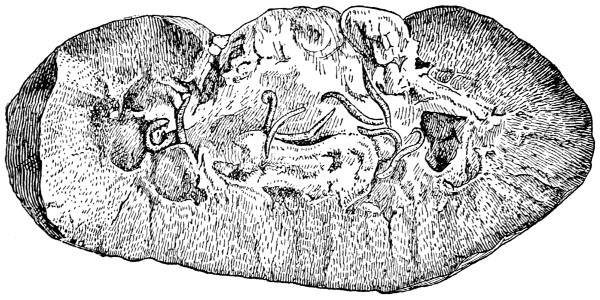
KIDNEY WORMS IN THE HOG
While worms are occasionally found in the kidneys, they do not frequently cause disease or death.
KNEE SPRUNG.
—A condition in which the knees bend forward as the result of contraction of tendons located along the back of the leg. In aggravated cases the tendons should be cut. If this is to be done only a skilled surgeon should be allowed to perform the operation.
LAMINITIS.
—See Founder.
LICE.
—Farm animals, especially those housed in stables more or less infested with insects and vermin, are commonly troubled with lice. Animals in good health resist the insects, but those already in a non-thrifty condition do not fare so well. Lice cause a good deal of annoyance to farm stock, inasmuch as they bite the skin, suck out blood, and thus cause considerable irritation. Lice can be seen with the naked eye. Infestation, as a rule, takes place in filthy quarters, and the best means of disinfecting such places is by the use of a spray of kerosene. One of the best means of applying this to hogs consists in rubbing posts, which are constantly smeared with kerosene. In this way the hogs are induced to treat themselves. Infected hogs may also be treated by pouring the kerosene directly over the infested parts, like the neck, shoulder and back. Dipping tanks made of cement or wood are frequently located in the run-yards, in which is placed some disinfectant fluid. Hogs use these small tanks as wallows, and in this way they disinfect themselves.
For horses and cattle a good remedy is made as follows: Boil for an hour 8 tablespoonfuls of arsenic, 8 tablespoonfuls of soda ash and 16 tablespoonfuls of soft soap in two gallons of water. After being prepared by boiling, add enough water to make two gallons. When cool, wet the animal all over with a little of it, using a brush or currycomb to get it into the skin. Another good remedy is made of boiling stavesacre seeds, 1 part to 20 parts of water, for an hour and let it simmer for another hour; then add water to make it up to the original bulk. This applied to the affected parts brings quick relief. It is advisable to repeat the application in a week or ten days, so as to catch any new lice from any eggs that were not caught by the first application. A very common treatment is secured by mixing a pint of linseed oil, 8 tablespoonfuls of oil of tar, and 8 tablespoonfuls of sulphur. This is then rubbed on the affected parts once a day for two days and allowed to remain for a few days, after which it is washed off with soap and water. In serious cases, the application should be repeated within a week or so.
LIVER FLUKES.
—These are parasites usually found in the liver or its ducts. At times they are present in great numbers, giving rise to a serious disease called liver rot. When the fertilized eggs are discharged in the excrement of diseased animals and fall in fresh water they hatch out and are taken into the body by sheep and cattle, either in the food or drink. In a short time thereafter they have entrenched themselves in the liver of cattle or sheep.
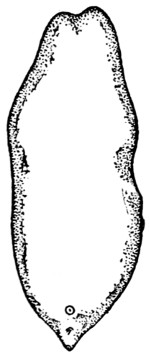
LIVER FLUKE
A few liver flukes in an animal causes little trouble, as the injury is largely mechanical anyway. No peculiar symptoms are conspicuous when only a few flukes are present. The greatest damage is done when hundreds of flukes develop in a single individual. In these cases the flow of the bike is checked. As result the health becomes impaired and the usual penalties of malnutrition follow. Swelling of the jaws and diarrhœa are often noticed in connection with the disease.
When the host is badly infected with the flukes and in a badly run-down condition the trouble is always serious, and medicinal treatment is of little real value. Tonics and good food may be given to help along—but death usually follows. Salt is helpful as the flukes are sensitive to it. If an animal that has succumbed to the disease be examined, the liver will be observed to be fairly rotten as a result of the inroads of the parasites.
Treatment is in line of prevention only. Clean, pure fresh water, free of the eggs or the parasites, is necessary if the trouble is to be eradicated. The old ponds, ordinarily filled with stagnant water, should be drained. They harbor many bad parasites, and their harm is far beyond their value. When water for sheep and cattle is taken from pure streams or wells the trouble from liver flukes and other parasites is reduced to a minimum.
LOCKJAW.
—This disease, very frequently called tetanus, is an infectious disease in which the body muscles are spasmodically contracted or stiffened. The muscles that move the jaw are frequently affected and the animal is unable to open the mouth. Because of this condition the disease is commonly known as lockjaw.
The spread of the disease does not occur through healthy animals coming in contact with animals having tetanus, but by inoculation. The germ of tetanus is present in the soil, manure and dust. It enters the body by way of wounds, especially punctured and bruised wounds. The injury may result from stepping on a nail, and the germs are planted in the deeper structures of the foot. Such a wound usually has poor drainage, the horn of the hoof closing the mouth or opening. Here the germs grow and produce a poisonous toxin that is said to be the most powerful produced by any bacteria. This toxin acts on the nerve centers of the brain and spinal cord, causing extensive spasmodic contraction of the body muscles.
Tetanus sometimes occurs in the absence of any noticeable wound. It may be in such cases that the seat of the infection is a slight abrasion of the skin, or the lining membranes of the respiratory and digestive tracts. The tetanus bacillus is a slender, spore-producing bacterium. The spore is located at one end of the rod in the form of a round head, that gives the organism a pin shape, hence the name of pin bacillus. It is very resistant to outside conditions and the action of the chemical disinfectants. It is because of its ability to resist the action of disinfectants and the fact that it develops best when protected or covered by the tissues and wound secretions, that this disease so often follows ordinary wound treatment.
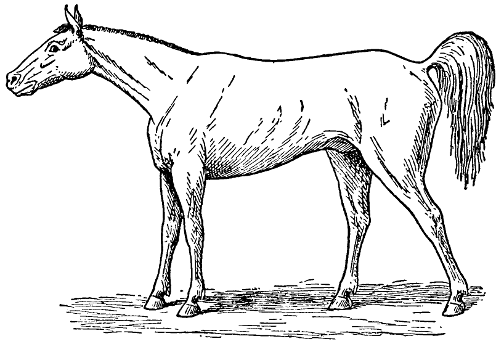
LOCKJAW
Note the rigid, tense position of the muscles.
From a few days to several weeks may lapse from the time of infection with the germs until the development of the stiffness and spasms. Sometimes the wound by which the organism has entered the tissues has healed before the symptoms of tetanus are manifested. In case the symptoms develop a few days after the inoculation the disease is severe or acute in form, and less violent or subacute if the symptoms are manifested after the second week. The above statement does not hold true in all cases, but it may be considered true in a general way.
Of the domestic animals the horse is the most commonly affected. The symptoms shown by this animal are very characteristic. Any person that has had the opportunity to see and examine a horse suffering from tetanus should have no trouble in recognizing the disease in other animals.
The Characteristic Symptom
is the spasmodic contraction of the muscles. This may vary in the different individuals, depending on the susceptibility of the animal and the quantity of poisonous toxin present in the system. There is at first a slight stiffness of the muscles of the back, neck, head, and limbs, and the animal is more nervous than common. A noise in the stable or a slap with the hand may increase the stiffness and contractions temporarily. The contracted condition of the muscles of the eye, are, perhaps, the most noticeable early in the disease. These muscles pull the eyeball backwards, the fatty cushion is pressed on and the third eyelid protrudes, covering at times from one-third to two-thirds of the front part of the eye. In the severe form of the disease the muscles feel hard, especially those of the back and neck, and the animal moves with difficulty. In addition to the muscular symptoms, the respiration and pulse beats are quickened and the body temperature higher than normal. The evidence of suffering from the contracted condition of the muscles is very marked, and, unless supported in some way, the animal may fall to the floor. If the symptoms develop a few days after infection, the animal usually dies. The acute form is very fatal, but in the mild or subacute form the chance for making a recovery is good.
Tetanus Is a Preventable Disease.
It may be largely prevented by the careful disinfection of wounds, and the use of anti-tetanic serum. In most localities the proper treatment of the wound is a sufficient preventive measure, but in localities and stables where the disease is common the anti-tetanic serum should be used. Ordinary cleansing of a wound, as practiced by most stockmen, is not sufficient to destroy the bacillus of tetanus. The wound must be carefully cleaned, disinfected and prepared for healing. This should be kept in mind when treating a wound, and instead of using an agent that we know little about, we should secure reliable information regarding the different commercial disinfectants and methods of caring for wounds. That class known as tar disinfectants is most commonly used. The better grade belonging to this class should be used.
If anti-tetanic serum is used, it should be injected as soon after the injury has occurred as possible. The injection is made hypodermically, usually beneath the skin on the side of the neck. Large doses of anti-tetanic serum given after the symptoms have developed may assist recovery. However, in the severe form of the disease this treatment is uncertain.
When the animal comes down with the disease, it should be made as comfortable as possible. The quarters should be roomy, quiet, clean, and well ventilated. It is advisable to support the horse with a sling unless the animal is worried or made nervous by it. This prevents his becoming tired and falling down. We should give the animal the best of care in the way of regulating the diet, etc., but should avoid annoying it by our attention. Medicinal treatment is of little benefit and should be given a secondary place. In fact, dosing the animal with medicine, especially if large doses are given, may do more harm than good in the treatment of this disease.
LOCO DISEASE.
—The word loco is a Spanish word, and means crazy. Loco disease is a disease of the brain and nervous system, especially of horses and cattle, but may also affect other animals. It results from eating any one of a number of poisonous plants called loco which grow upon the dry, sandy prairies of some parts of the Western United States.
In winter and early spring, when there is little or no grass, some animals acquire an appetite for this plant, and soon refuse all other kinds of food. When addicted to the weed an animal loses flesh rapidly, the eyesight becomes affected—often it has no knowledge of distance—and frequently when made to step over a board or rail will jump over it as though it were several feet high. Later, in the course of the disease, the brain becomes more affected and the animal acts more or less crazy, at times quite violent, at others depressed and dull.
Should the animal live through the first attack it may linger for months or even years, but it usually dies as a result of the attack. Frequently some peculiar “foolish” habit follows the animals through life. Some have a nervous fit when excited or warmed up, others will not lead and some you cannot drive at all. There is no cure for the trouble. All that can be done is to prevent the habit from being formed or by removing the animal from temptation and furnishing wholesome, nutritious food.
LUMPY JAW.
—See Actinomycosis.
LUNGS, CONGESTION OF.
—A filling of the lungs with blood. This is very common with horses in winter and is most frequently due to a chill. Animals that have been put to heavy work, or are in a weakened condition, are frequently susceptible if left standing in a draft while still warm. Sluggishness is noticed, first followed by trembling at the flank, heavy breathing; the pulse will be noted as quick, but weak; a gurgling sound will be noted if the ear is placed against the chest. The best treatment is such as gives quick relief. If at work, place the horse at rest at once in the stable and cover with blanket. Have plenty of fresh air admitted, but do not allow a draft to blow over the patient. Assist circulation as much as possible by rubbing of the legs and apply cold pad to the chest. A mustard plaster applied over the chest is very good. A good drench consists of alcohol in 2 ounce doses, well diluted in water; at the same time another drench consisting of 4 tablespoonfuls of sweet spirits of niter and 2 tablespoonfuls of laudanum, mixed with a pint of water, is also very good. If the conditions indicate that the lungs are full of blood, add 10 drops of Fleming’s tincture of aconite to the drench. The drenches may be given two or three hours apart until relief comes, at which time quiet is advised, although a little gentle walking for exercise is advisable.
From this time on treat the animal as a patient, giving easily digested foods. A tonic consisting of ground gentian root and nitrate of potash, half and half, is excellent. Give a teaspoonful of this in the feed three times a day.
LUNG FEVER.
—See Inflammation of the Lungs.
LUNG WORMS IN LAMBS AND CALVES.
—It has been proven in years gone by that the common spirits of turpentine, when mixed with salt in proportions of a gill of turpentine to four quarts of common fine salt and placed in a covered box so constructed that sheep and calves can get their head in and eat the salt (yet the salt be protected from the weather), will practically prevent an infection. Some have advised the mixing of a half pint of sublimed sulphur with the salt and turpentine. There can be no objection to the sulphur when added in the proportions named. This remedy is not a cure but a preventive. In fact there is no cure, as these worms are in the bronchial tubes and lungs, where no worm destroyer can reach them directly. But when the lamb or calf daily partakes of even a few drops of turpentine, the whole system becomes, to an extent, infected with the turpentine, and as the young worms come into existence, their home in the lungs becomes a very unhealthy home for them and they fail to mature. In some cases mature worms have been removed by injecting a mixture of turpentine, chloroform and olive oil into the windpipe, using about a teaspoonful of this mixture. Its effect is to stupefy the worms that it touches, and they may be coughed out by the suffering lamb or calf. The fumes of burning sulphur has also been advised by some veterinarians. But both remedies are as liable to kill as cure, and are by no means always successful. The farmer’s business should be to prevent, not cure, diseases of this class; therefore prepare the salt box.