EMANCIPATION AND IMPEACHMENT
Reading edition
RECOLLECTIONS OF THE SENATOR WHO PROPOSED THE THIRTEENTH AMENDMENT, AND WAS ONE OF THE SEVEN REPUBLICANS WHO THWARTED THE ATTEMPT TO IMPEACH PRESIDENT JOHNSON
BY GENERAL JOHN B. HENDERSON
THE “RECALL” FOR PRESIDENTS
ARTICLE II, Sec. 4, of the Constitution provides that “The President, Vice-President, and all civil officers of the United States, shall be removed from office on impeachment for, and conviction of, treason, bribery, or other high crimes and misdemeanors.” Thus the principle of the “recall,” in very broad terms, has been written into our fundamental law. Human nature is such that the idea of resorting to this remedy originates first in the minds of political opponents. As applicable to Presidents, the recall was probably much desired by the enemies of John Adams, the second President, and of Andrew Jackson, the seventh. Fortunately it has actually been invoked only against the seventeenth President, Andrew Johnson, who owed his position to the recall by assassination of Abraham Lincoln. His impeachment, I believe, was due mainly to a counter-tide of passion, prejudice, and political revenge. His trial formed a crisis in the life of the nation, the dangerous import of which may not yet be fully understood. His rescue from conviction by the narrow margin of one vote was followed by demands for the recall of the seven Republican senators who voted with the Democrats. I happened to be the youngest of the seven, though not the least berated. By the refusal of a reëlection, all of the seven were retired to private life. Then out of several years of bitterness came the wisdom of reflection. Those who had reviled began to praise and finally to utter words of thankfulness. Even some of the leaders of impeachment, in the calm of reason, have put on record frank confessions of error. Thus it has been my happiness to live to see the keenest disappointment of my public life transformed into its chief honor.
BORDER-STATE INFLUENCE AND WARFARE
IN his great wisdom Lincoln early perceived that unless antislavery sentiment could be sustained in the border States, the Federal cause was likely to fail. With that belief he sought information and counsel from those men in Congress who, like myself, had been bred in the shadow of slavery and who yet desired the extinction of the institution. Though born in Danville, Virginia, most of my early life was spent at Louisiana, a town north of St. Louis, on the Missouri side of the Mississippi. There I began to practise law in 1848 and to hear of a lawyer, Abraham Lincoln, located at Springfield, seventy-five miles to the northeast. In that year he was serving his only term in Congress, while I was beginning public life as a member of the Missouri legislature, to which I returned in 1856. Though a member of the Electoral College in 1856 which made Buchanan President, I was strongly opposed to his Kansas policy. In 1860 I was an elector on the Stephen A. Douglas ticket. I had inherited slave property, but was convinced that slavery was an economic drawback in Missouri. On her borders, east and north, white settlers were founding prosperous communities, and avoiding us because white labor would not compete with slave labor. My only purchase of slaves was made on the appeal of a black man who had built the fires in my office. He and his wife and son were sold at auction to pay the debts of their master. I bought them in for about $1400. Thereafter they never served me; but as the law required that they should be in regular employ, I hired them out, they taking the wages.
Civil war was an actual fact in Missouri before the sword and the torch were at work in the other border States. Early in 1861 our legislature, which was secessionist in sentiment, provided for a state convention to join, as they hoped, the other seceding States; but, to their great surprise, a majority of Union delegates were chosen at the special election, I being among that majority. Ex-Governor Sterling Price, then classed with the opponents of secession, became president of the convention which assembled soon after Lincoln’s first inaugural made it plain that a conflict was inevitable. As Jackson, our governor at that time, was disloyal, the life of the convention was prolonged by adjournment, during which the secession element ranged itself under Jackson and Price, and the Union element, with the continuing authority of the convention, grew strong enough to organize and to elect Governor Gamble. Under the arrangements for home defense, I organized a brigade, and in General Schofield’s command operated against the raiders who burned bridges and disturbed northeastern Missouri during the first year of the war. The conditions were such that no man could safely remain neutral. Unless he was openly for one side or the other, he was suspected by both, and doubly liable to pillage and arrest.
THE TREND TOWARD EMANCIPATION
FROM the field I was sent to the United States Senate in January, 1862, to fill the unexpired term of Trusten Polk, who had joined the South. In March, President Lincoln sent to Congress his message asking for a joint resolution favoring the gradual abolishment of slavery with compensation. A few days later he asked the border States delegations to a conference at the White House in which he urged that policy without gaining much encouragement. On July 12 he made a second direct appeal to the same delegations, in conference, and urged that if the border States would adopt measures of compensated emancipation, the war must shortly end, since then, and not till then, would the South realize that slavery was doomed. Twenty of them signed a written qualified refusal to urge his recommendation; seven assented in a prepared address; and Horace Maynard and I wrote individual replies. I had been absent from the conference on business relating to my duties as senator, but I gave the President my view that, while I had supported the measure when first introduced, I did not share his belief that it alone would bring the war to an early termination. But I added that in such a period of national distress I knew of “no human institution too sacred for discussion, no material interest belonging to the citizen that he should not willingly place upon the altar of his country, if demanded by the public good. The man who cannot now sacrifice party and put aside selfish considerations is more than half disloyal. Pride of opinion, based upon sectional jealousies, should not be permitted to control the decision of any political question. These remarks are general, but apply with peculiar force to the people of the border States at present.”
THE FAILURE OF PLANS TO PURCHASE EMANCIPATION
THESE sentiments indicated that I was drifting toward Lincoln’s position that emancipation was indispensable to the saving of the Union. After the July conference at the White House, a general bill offering aid to the border States if they would adopt compensated emancipation was introduced in Congress, but not brought to final action. In the autumn, at Mr. Lincoln’s request, I went to Missouri to take part in the agitation of the question, and the reversal of sentiment shown at the November election seemed altogether favorable. So, on December 10, I introduced a bill in the Senate appropriating twenty millions of dollars to aid Missouri if her people would adopt compensated emancipation. At the same time Congressman Noell, in the House, gave notice of a similar bill, but reducing the aid to ten millions. His bill passed the House on January 6, 1863, and was sent to the Senate, where, on February 7, a compromise of fifteen millions was adopted; but the pro-slavery members from Missouri gathered enough strength to prevent action by the House. Meantime Lincoln’s proclamation of freedom to all slaves in rebellious territory had gone into effect on the first of January.
The idea of compensated emancipation for the border States made no further progress in Congress, and probably lost ground in the North, for a reason humorously stated by Senator Jacob Collamer of Vermont. During the recess he addressed a meeting of several hundred neighbors and stated that the measure would call for the payment of about $300 each for four million slaves. He asked them to go home and consider what they would advise their representatives to do. An old leader in the town waxed eloquent over the fact that the North shared the responsibility for slavery and ought to help settle the bill, and, though poor, he declared himself willing to pay his share. But in a day or two he was back again with a different opinion.
“Senator,” he exclaimed, “me and wife and the boys figure that our share would be just about all we’ve got; so I guess you might as well let that damned Negro question alone.”
THE THIRTEENTH AMENDMENT
A YEAR later the distress of the nation had enforced a more united sentiment, and on January 11, 1864, I offered in the Senate a joint resolution to abolish slavery in the United States. After a good deal of discussion over the wording of the resolution, Senator Sumner offering one form, and Senator Trumbull suggesting the terms of the ordinance of 1787, which prohibited slavery in all the Northwest, the latter was favored. Though the requisite two-thirds vote was obtained in the Senate, the House did not acquiesce until after a whole year of discussion. The bill became a law on January 31, 1865. A hundred guns announced the event, and the rejoicing was great and spontaneous.
LINCOLN AND THE LIQUOR HABIT
AT the second inauguration of Lincoln I was chairman of the committee which escorted the President to the Capitol, and sat by his side while Andrew Johnson, after taking the oath as Vice-President, harangued the crowded senate chamber. During the painful ordeal, Mr. Lincoln’s head drooped in the deepest humiliation. As I offered him my arm for the procession to the steps of the Capitol, where he delivered the Inaugural, he turned to the marshal and said, “Don’t let Johnson speak outside.”
Senator Doolittle, who had escorted the Vice-President elect to the Capitol, told me that when they went into Mr. Hamlin’s room Johnson said to the retiring Vice-President:
“Mr. Hamlin, I have been feeling very ill. Can you give me some good brandy?”
A bottle of French brandy was found, and to brace his nerves for the task before him, he poured out the full glass that wrought the mischief. His reputation was that of a temperate man; and this was his only show of inebriety; but the scene was so deeply humiliating that a caucus of senators a few days afterward seriously considered the propriety of asking him to resign as their presiding officer.
Mr. Lincoln’s aversion to liquor and tobacco was well known. He once told me with relish of a rebuke for his abstinence given by a friendly stage-driver. During the time that he was a circuit lawyer, he sometimes walked from one county court to another. While on such a tramp a stage overtook him and the driver invited him to take a seat on the box. After they had chatted for a while the driver produced a whisky-flask, saying:
“Stranger, won’t you take a drink?”
“No, thank you,” Lincoln replied; “I never drink.”
A little later the driver drew some tobacco from his pocket and said:
“Stranger, won’t you have a chew?”
Lincoln answered:
“No, thank you, I never chew.”
After a period of reflection the driver said:
“Stranger, do you smoke?”
Lincoln replied:
“No, I never smoke.”
Looking at him quizzically, the driver exclaimed:
“So you’re one of those men I’ve heard of who have no small vices.”
To which Lincoln answered:
“It is true that I don’t use liquor or tobacco.”
Then the driver turned on him with the conclusive remark:
“Stranger, I’ll tell you what I think: those men who have no small vices seldom have any large virtues.”
I once heard Mr. Lincoln tell of another liquor experience, this time at the expense of Senator David Davis, who was present and enjoyed it as much as the rest of the company. While attending a session of court presided over by Judge Davis, the latter overtook him one morning on the road, and asked him to get into the Davis carriage, which was drawn by a pair of spirited horses, driven by a trusted coachman. They traveled at a rate which made Lincoln uneasy, and soon entered on a piece of new road abounding in ruts and stumps. As the carriage bumped and swayed, Lincoln, in much alarm, turned to the judge and asked:
“Mr. Davis, isn’t your driver drunk?”
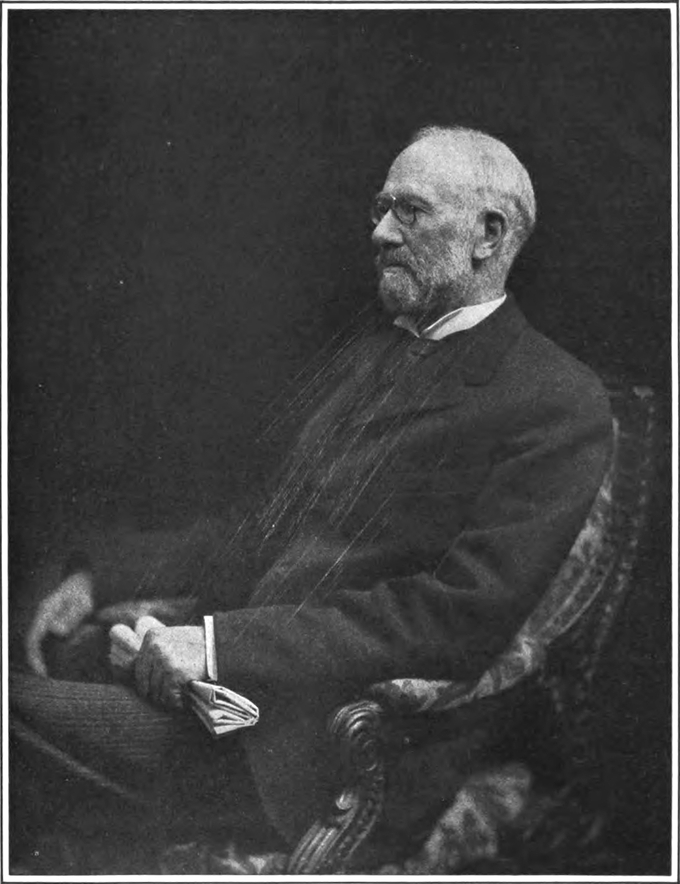
From a photograph by Prince, taken in 1908. Half-tone plate engraved by H. Davidson
GENERAL JOHN B. HENDERSON
“No,” replied the judge, “Michael is a sober man and never takes anything.”
After a jar which nearly upset them, Lincoln asked that the carriage should be stopped, so that he could get out. The judge expostulated, but when they struck another stump, Lincoln exclaimed:
“Mr. Davis, your driver is drunk!”
Thereupon Davis loudly demanded of the coachman that he should stop, and, observing him closely, saw the whole truth in the wild gleam of his eyes. The judge indignantly exclaimed:
“Michael, you are drunk!”
And Michael, with an approving leer, answered:
“Judge Davis, that’s the correctest decision you’ve rendered in the last twelve months.”
LINCOLN’S CLEMENCY
MY last interview with Mr. Lincoln occurred after the adjournment of the extra session of the Senate about the middle of March, 1865. I went to the White House to ask the President to pardon a number of the men who had been languishing in Missouri prisons for various offenses, all political. Some of them had been my schoolmates, and their mothers, sisters, and sweethearts had persisted in appeals that I should use my influence for their release. Since it was evident to me that the Confederacy was in its last throes, I felt that the pardon of most of these prisoners would do more good than harm. I had separated them according to the gravity of the offense into three classes, and handing the first list to him, I said:
“Mr. President, the session is closed, and I am about to start for home. The war is virtually over. Grant is pretty certain to get Lee and his army, and Sherman is plainly able to take care of Johnston. In my opinion, the best way to prevent guerrilla warfare at the end of organized resistance will be to show clemency to these rebel sympathizers.”
Lincoln shook his head and said:
“Henderson, I am deeply indebted to you and I want to show it, but don’t ask me at this time to pardon rebels.”
Then I offered new arguments, but he replied in a grieved tone:
“I can’t do it! People are continually blaming me for being too lenient. Don’t encourage such fellows by inducing me to turn loose a lot of men who, perhaps, ought to be hanged.”
I answered:
“Mr. President, these prisoners and their friends tell me that for them the Rebellion is over, and it will surely have a good influence now to let them go.”
He answered:
“Henderson, my conscience tells me that I must not do it.”
But I persisted:
“Mr. President, you should do it. It is necessary for good feeling in Missouri that these people should be released.”
“If I sign this list as a whole, will you be responsible for the future good behavior of the men?” he asked.
“Yes,” I said.
“Then I will take the risk and sign it.” He wrote the word “pardoned,” signed the general order of release, and returned the paper to me.
“Thank you, Mr. President,” I said, “but that is not all; I have another list here.”
“You are not going to make me let loose another lot!” he exclaimed.
“Yes,” I answered, “but I am not quite so sure of the merits of this list. However, I believe the men are not dangerous, and it will be good policy to let them go. My argument for this list is the same as for the other. The war is virtually over; the guilt of these men is at least doubtful; mercy must be the policy of peace.”
With the only word approaching profanity I ever heard him utter, he exclaimed:
“I’ll be durned if I don’t sign it!” and he signed the second list like the first. “Now, Henderson,” he said, as he handed the list back to me, “remember that you are responsible to me for these men; and if they don’t behave, I shall have to put you in prison for their sins.”
THE DISCONTENT WITH PRESIDENT JOHNSON
ON December 18, 1865, eight months after the death of Lincoln, the Thirteenth Amendment was proclaimed by Secretary Seward, it having received the indorsement of two thirds of all the States in the Union. Partly through my solicitation, President Johnson had used his great influence with the border States to gain their approval of emancipation. During the fight for the Thirteenth Amendment it was no secret that some of the leading Radicals in Congress were indifferent toward the abolishment of slavery at that time, as well as toward Mr. Lincoln’s scheme of reconstruction, out of the belief that those measures would make inevitable his renomination and election, which they did not favor. The Radicals had been sympathetic toward Andrew Johnson as senator and as military governor of Tennessee, on account of his vigorous antislavery views, but when he became President, and, as he believed, took up the work of reconstruction on the lines that Lincoln had begun, they at once realized that his success would frustrate their plans for the political domination of the South.
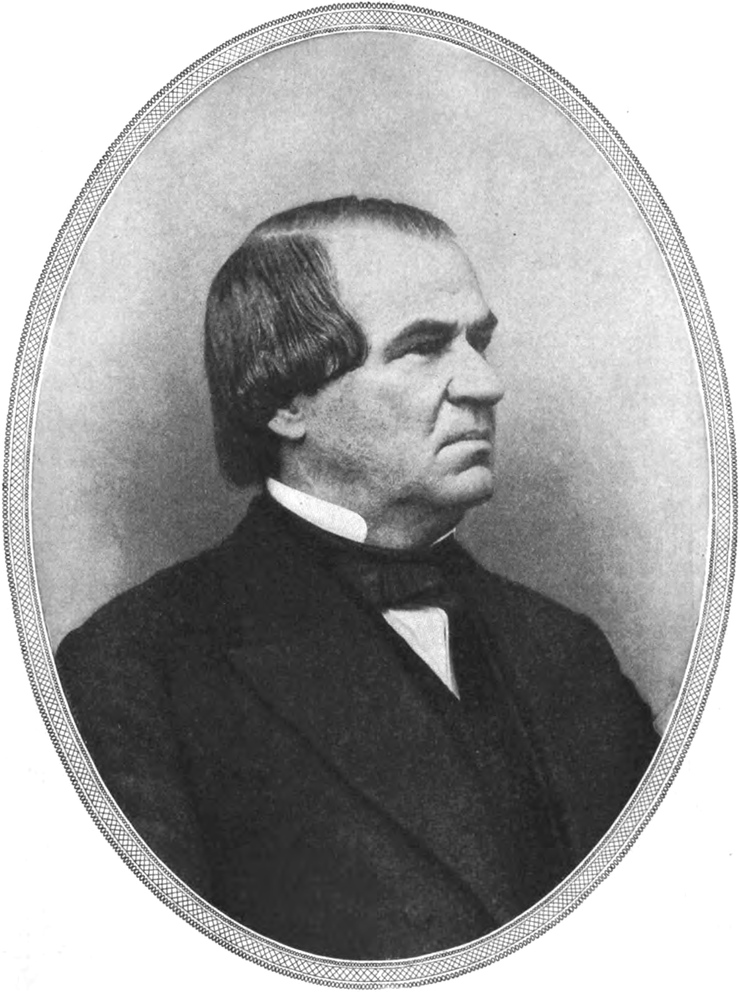
Half-tone plate engraved by H. Davidson
ANDREW JOHNSON
This portrait is from a photograph taken not long before his death.
⇒ LARGER IMAGE
Senator Sumner’s theory of “State suicide” and Thad. Stevens’s idea of “conquered provinces,” became the basis of the Radical scheme of territorializing the South by keeping the States that had seceded under semi-military rule, and condemning them to a period of probation before they should be allowed to come back into the Union on terms of self-government.
Those of us in Congress who believed that Johnson’s policy was in the main in line with the right principles were nevertheless not in entire agreement with him. He felt that he was following precedent as far as Lincoln had established it, and that he was entitled to the confidence of the conservative Union element of the country; but he was hot-headed, and as the controversy with the Radicals in Congress grew, his attitude became more and more aggressive and irritating to the majority.
Early in 1866, Congress passed a bill enlarging the powers of the Freedmen’s Bureau. Johnson vetoed it, as well as a revised bill that followed, and the latter was enacted over his head. Congress soon after enacted a measure to fortify the rights of the Negroes, known as the Civil-Rights Bill, which he promptly vetoed, and which was as promptly passed over his head. Then, to prevent the President, who was now in open conflict with the Radical Republicans, from dispossessing the office-holders who were their friends, Congress passed the Tenure of Office Act in a form which most of the Radicals interpreted to mean that the President might not supplant even a member of his own Cabinet. As another weapon against the administration, Congress passed the Reconstruction Act, which designated as illegal the State governments which had been set up by Johnson in the South, and provided that those States should be ruled by military governors appointed by the President, but really under control of the head of the army. Both these bills were vetoed by the President and Congress promptly enacted them over his head.
The President’s official advisers, who, it should not be forgotten, were those who had formed Lincoln’s Cabinet, themselves strongly objected to the Tenure of Office Act, the President’s veto being drawn up by Seward and Stanton. The latter was most emphatic in declaring that the act was unconstitutional; but it was part of the irony of the situation that Stanton was the first to feel its effects, and thereafter to become active in maintaining its validity. With Stanton’s suspension and the appointment, first of General Grant, and then of General Lorenzo Thomas, as Secretary of War ad interim, the first practical move for impeachment may be said to have begun.
PREPARING FOR IMPEACHMENT
THUS the impeachment of Andrew Johnson was the culmination of political differences which had become increasingly strained in the disturbed conditions which followed the death of Lincoln. The trial has been wrongly described as a great judicial event, but in the strict sense it was not a judicial event, since it was without sound basis in law. It was the culmination of a struggle for political advantage. Still the Radicals who brought it about were intensely in earnest. They felt that the tendency of Johnson’s reconstruction policy was toward the return of the Democratic party to power, which would have the effect of neutralizing the political results of the Civil War.
The very nature of the so-called Court of Impeachment was a monstrosity, as several of the lawyers in that body perceived, for the Senate was to act both as judge and as jury. I made several motions or orders to separate the jurisdiction of the jury from that of the judge, but in vain. I wanted a judge, preferably Chief-Justice Chase, to decide the judicial points, as the Senate was like a mob, deciding everything for themselves.
SENATOR PETER G. VAN WINKLE OF WEST VIRGINIA
SENATOR LYMAN TRUMBULL OF ILLINOIS
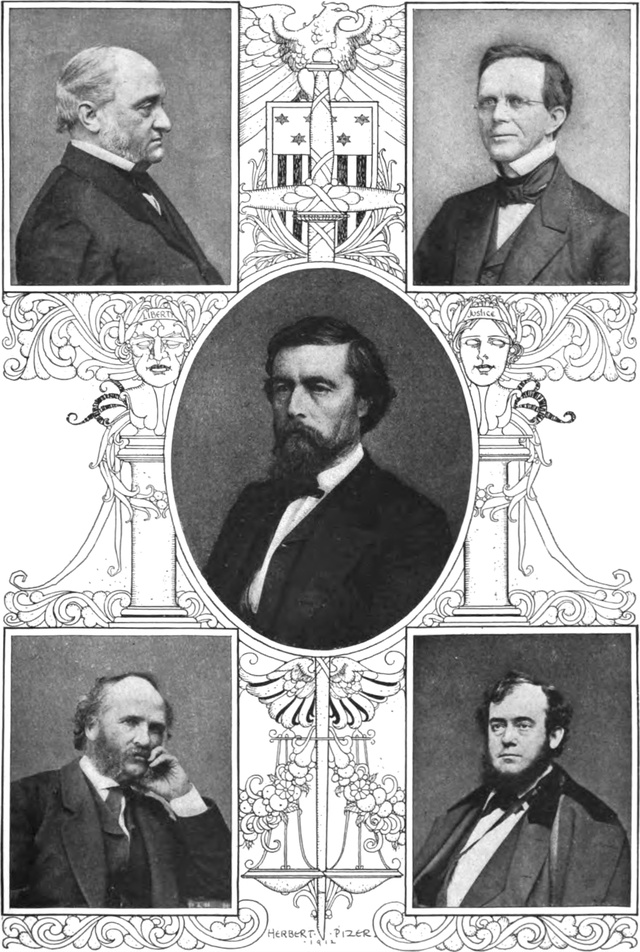
SENATOR JAMES W. GRIMES OF IOWA
SENATOR EDMUND G. ROSS OF KANSAS
SENATOR JOSEPH F. FOWLER OF TENNESSEE
⇒ LARGER IMAGE
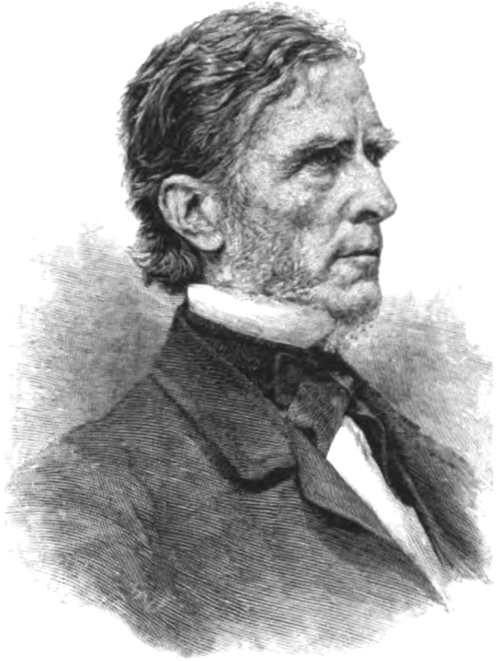
From a photograph by Brady
SENATOR WILLIAM PITT FESSENDEN OF MAINE
Impeachment was of course a matter in which personalities and personal ambitions played a large part. Without Benjamin F. Butler and Thad. Stevens, there never would have been an impeachment trial, for impeachment was chiefly a scheme to get place and power for themselves and their friends. Like many other politicians of selfish aims, they flourished under the peculiar conditions following the war—conditions in which the sole inquiry was, “Is he loyal?” and not, “Is he honest?”
Butler was able to push the impeachment scheme on the claim that Johnson was not loyal. It was even charged that Johnson was conspiring to form a new secession, despite the fact that he had been instrumental in securing the adhesion of a number of the Southern States to the Thirteenth Amendment. And this charge was fomented by Butler, the man whom I had heard vote fifty-seven times in the Charleston convention for Jeff Davis as President, and whom I heard address a group of Southern delegates in support of a declaration for the protection of slavery in all territories. On that occasion he declared that if the North undertook to raise troops to “coerce the South,” the bones of the Northern soldiers would rot upon the mountains before they reached the South. Yet this same man was the leader of one of the first regiments to march through Baltimore to “coerce the South.”
Feeling ran high in all parts of the country, and whenever a Republican senator showed a disinclination to join in impeachment he was bombarded by excited constituents. I was not slow to make my attitude known, for I would as soon have voted to condemn an innocent man to death as to vote to impeach Johnson on the articles that were presented. The Republicans in Missouri were, if possible, more aroused than in other parts of the country. Even the legislature passed a resolution requesting me to resign. I replied finally that I would hold my seat until impeachment was defeated. That position carried a great deal of significance, since the alinement of forces indicated clearly that the change of a single vote would result in the President’s condemnation.
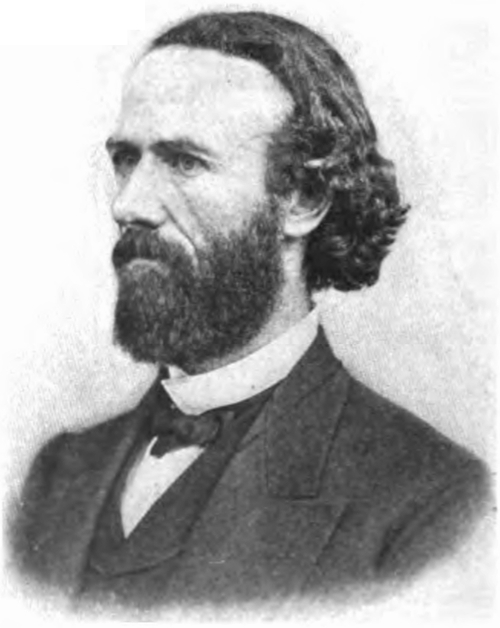
From a photograph by Brady, taken in 1867
SENATOR JOHN B. HENDERSON OF MISSOURI
All of the articles of impeachment were based on some phase of the quarrel with Stanton. The eleventh article, which accused him of violating an act of Congress in suspending the Secretary of War was the strongest, though in my view of the law, as I declared in the Senate, he had legally suspended Stanton and had undoubted authority to fill the vacancy by an ad interim appointment. When the Tenure of Office Act was before the Committee of Conference, Senator John Sherman, chairman of the committee, was asked if the bill was intended to take away the power of the President to remove his own Cabinet, and he answered, “No, it is not to interfere with his power to remove or to retain his Cabinet.” During the impeachment trial, when it was reported that Senator Sherman was in favor of convicting Johnson on the eleventh article, I had a talk with him, and asked:
“Do you remember your attitude in the Committee of Conference on the question of the power of the President to remove his Cabinet?”
He said:
“I remember it very well.”
Then I asked bluntly:
“You are not going to stultify yourself by voting for the eleventh article?”
He replied:
“No.”
That conversation convinced me that the advocates of impeachment could not depend, as they hoped, on Sherman to vote guilty on the eleventh article, and in fact, when the crucial moment came, he voted against it.
GENERAL GRANT’S CHANGE OF VIEWS
DURING most of the period of agitation for impeachment General Grant had ranged himself with those who stood by the President. Everybody believed in the honesty of his purpose, and owing to his great fame, his influence was paramount. The Radical leaders understood the difficult task of carrying out their plans without Grant’s coöperation, and they shaped their course so that he would profit by the overturn of the administration. Grant’s quarrel with the President, over the question of his relations as head of the army to the Secretary of War, afforded them a line of approach, and the talk of making Grant a Presidential candidate in the coming election suggested the reward.
About the last of April, 1868, I received an invitation to a ten o’clock breakfast at General Grant’s house, which had recently been presented to him. Commodore Porter and other guests were present. Our host asked me to remain, and after the other guests had departed, he lighted a cigar—I did not smoke—and proposed a walk.
He shortly broached the question of impeachment, and asked for my opinion as to the result, saying that there were personal reasons why he should like to know definitely what might be expected.
I said:
“General Grant, you may rest assured that impeachment will fail.”
He answered:
“Senator, I have reason to believe, from good authority, that the managers of impeachment are confident of success.”
“They have no substantial grounds for such confidence,” I replied.
“I may tell you in confidence,” he then said, “that not only is it expected that Ben. Wade will become President, but the members of his Cabinet have already been selected.”
“Can you tell me, General, who they are to be?” I asked.
“Perhaps I ought not to say,” he replied, “but I will tell you, at least, that General Butler has been designated as Secretary of State.”
I reiterated my belief that the program never would be carried out, whereupon General Grant said:
“You know that people are talking of me for the Presidency at the coming election. I have not had political ambition, but I begin to think that possibly I might be of great service to the country in bringing peace to the disturbed sections of the Union. These men who are counting on the success of impeachment offer me their influence as the nominee to succeed Wade in case he becomes President by the removal of Johnson.”
“What are the conditions?” I asked.
“That I shall agree to take over Wade’s Cabinet.”
“Good God, General!” I exclaimed, in astonishment, “you didn’t consent to that, did you?”
“No,” he replied; “I did not give them any answer.”
He expressed distrust of Butler; yet I thought he seemed to lean toward the bargain. Then I said:
“General Grant, you may feel confident of the nomination whether these men support you or not; and you may rest assured that the succession will not occur as they promise.”
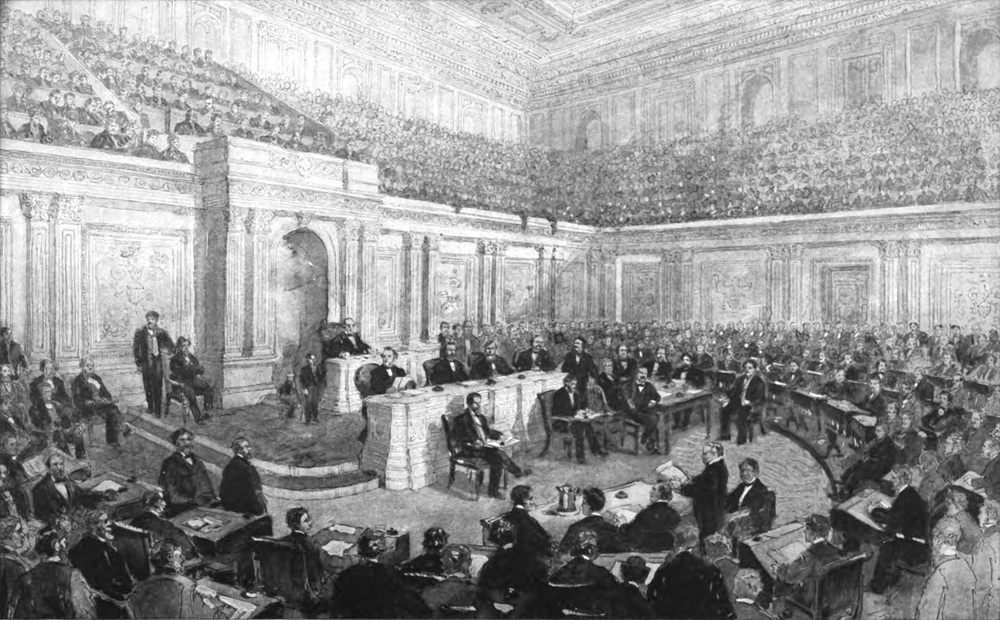
Drawn by Jay Hambidge, on the basis of a woodcut in “Leslie’s Weekly,” April 11, 1868
THE HIGH COURT OF IMPEACHMENT IN SESSION IN THE SENATE CHAMBER, MONDAY, MARCH 23, 1868
Benjamin R. Curtis of the counsel for the President is reading the answer to the articles of impeachment. At the table in the middleground are seated the Committee of Managers of the House of Representatives.
⇒ LARGER IMAGE
About a week later, as I was coming from the Capitol in a street-car, General Grant got in. The car was well filled, and the General came over and sat beside me. He asked whether I had changed my opinion about the impeachment.
“No, General,” I answered, “I am of the same mind about it.”
“Do you think you can defeat it?” he asked.
“Well, I can’t warrant that,” I replied. “We have friends enough against it to defeat it, but I cannot give a pledge that we shall actually defeat it.”
“Well,” he said, “I hope you won’t.”
“Why, General,” I exclaimed, “you wouldn’t impeach Johnson?”
“Yes I would,” he answered bruskly.
“Then you have changed your mind,” I said, “and I am sorry to hear it.”
“Yes,” he repeated, “I would impeach him if for nothing else than because he is such an infernal liar.”
“I very much regret to hear you say it,” I answered, looking at him earnestly, for his language and manner aroused my indignation. “I regret it because on such terms it would be nearly impossible to find the right sort of man to serve as President.”
He seemed annoyed, but made no further remark, and in a few minutes left the car. We never had any further conversation on the subject. I inferred that the Radicals hoped to influence me through Grant, since they knew I was ready to support him for President. When I saw how and why he had changed about, I lost respect for his opinion.
From that time a coolness entered into our relations; but during his Presidency I was paid the compliment of being asked to take charge of the Whisky Ring prosecution in St. Louis.
THE SEVEN REPUBLICAN SENATORS
ALL of the Democratic senators were ranged on the side of President Johnson, and the division of the voting power was such that seven Republican senators voting with the Democrats could defeat impeachment. We senators who were opposed to the scheme held several informal conferences. At first we numbered at least eight, since Senator William Sprague of Rhode Island joined in the talks and was frankly on our side. He was the son-in-law of the Chief-Justice who would preside at the trial, and it was no secret that Chase looked upon the articles of impeachment as flimsy. But after the opposing senators began to be deluged with appeals and threats from their constituents, Sprague evidently decided that the good of the country required that he should return to the Senate, and he absented himself from further conference. It was rumored that Senator Edwin D. Morgan, formerly Governor of New York, would have voted with us in case of the defection of one of the seven. For political reasons he finally alined himself with the Radicals.
The tension in the senate chamber during the first vote, which was on the last, or eleventh, article, was tremendous, for at least two of the seven Republicans were claimed by both sides. William P. Fessenden of Maine was the first of the seven to rise on roll-call and be questioned by the Chief-Justice, saying:
“Mr. Senator Fessenden, how say you? Is the respondent, Andrew Johnson, President of the United States, guilty or not guilty of a high misdemeanor as charged in this article?”
Fessenden responded in a clear voice, “Not guilty.” In a written opinion filed later he disposed of the suggestion that “popular opinion” demanded the conviction of the President, by saying that the people had not heard the evidence as the Senate had heard it, and that the responsibility was not on the people, but on the senators who had taken an oath “to do impartial justice according to the Constitution and the laws.”
When the name of Senator James W. Grimes of Iowa was called, Fessenden asked for a moment’s delay, in order that the senator, who was ill, might be brought into the chamber. He was carried in and placed in his seat. Before the Chief-Justice summoned him to answer he suggested that Grimes might answer from his seat; but the ill senator rose with the aid of friends and, after the summons, in a feeble voice answered, “Not guilty.” Perhaps no one of the seven was afterward so roundly abused by newspapers and politicians who had formerly been his friends.
Senator Joseph F. Fowler of Tennessee had been claimed by both sides, since he had voted on some questions favorable to the Radicals and on others favorable to the President. Though not a man of conspicuous ability, he was regarded as level-headed. After his vote of “Not guilty” he received a despatch congratulating him on the position he had taken, to which he answered, “I acted for my country and posterity, in obedience to the voice of God.”
After my vote of “Not guilty,” which created no surprise, Senator Edmund G. Ross of Kansas was the next Republican to disappoint his party friends. He had begun political life as an Abolitionist and had been appointed to fill the unexpired term of the noted senator, “Jim” Lane. He had voted with the Radicals on some questions, and the reticence he had maintained with regard to his position on impeachment subjected him to enormous pressure. Still he maintained silence, and the audience held its breath until, in a clear voice he unhesitatingly answered, “Not guilty.” As Ross had been the main hope of the Radicals, his vote made a sensation. It was claimed that a sum of money had been subscribed to reward him for taking the stand he did contrary to the sentiment of the people of Kansas, who had threatened him with expulsion from the State if he voted for the President. He was made to suffer heavily for his adherence to principle, and his immediate hardships and poverty indicated that he was not bribed. After the trial was over, he stated in the Senate that he had entertained doubts on some of the articles until a few days before the vote, but had settled the matter in his own mind, as he said, “by giving his country the benefit of his doubts.”
Senator Lyman Trumbull of Illinois, though he had voted for the resolution censuring Stanton, had been outspoken against impeachment; consequently his vote of “Not guilty” awakened no surprise. His position was based on the harm which would be done to the country by setting the example of impeaching a President, and he expressed the opinion that if Johnson were removed on such partizan grounds, “no future President will be safe who happens to differ with a majority of the House and two thirds of the Senate on any measure desired by them, particularly if of a political character.” In other words, his action was based on antagonism to the principle of the “recall” as it is being urged to-day.
Senator Peter G. Van Winkle of West Virginia was a substantial, fair-minded man, who on some questions had favored the President and on others had voted with the Radicals. Still, his vote of “Not guilty” occasioned no surprise.
During the clamor from Missouri to induce me to change my attitude, I was appealed to by the Missouri delegation in Congress, who, as a body, besought me to vote for impeachment. Under the stress of their urging I entertained momentarily the question of resigning, but as that would have brought victory to the side of the impeachers, I resolved to stay. On May 13 I received from St. Louis a despatch making a final appeal, which read:
There is intense excitement here. Meeting called for to-morrow night. Can your friends hope that you will vote for the eleventh article? If so, all will be well.
To this I immediately replied:
Say to my friends that I am sworn to do impartial justice according to law and conscience and I will try to do it like an honest man.
Every one of the seven Republican senators who voted against impeachment was relegated to private life at the expiration of his term. In addition to all kinds of printed and written abuse, I was burned in effigy at Macon, Missouri.
HOW TIME VINDICATED THE RIGHT
MY part in this crisis strained some of my friendships, particularly that with Sumner. At first he had been rather opposed to impeachment, especially to the eleventh article, remarking that no one but a Pennsylvania justice of the peace (alluding to Thad. Stevens) could have drawn that article; but he and Stevens were “thick as thieves” before the trial terminated. Meantime, as Sumner’s enthusiasm for impeachment grew, his regard for those of us who opposed it lessened. After the trial he directed a personal remark at me in the senate chamber that rankled. I was denouncing the course of the managers of impeachment for converting themselves into a committee to investigate and punish the seven senators. They sent telegrams and spies over the country. Butler was the most active in using the spy system, and it became an acute annoyance. Mr. Fessenden complained of it to me. He said, “I cannot go out at night without being pursued by spies who come behind me at every cross street.” Others told me the same. I had nothing to fear, for there was nothing they might not know about me. While I was denouncing the conduct of this committee as that of traitors, Sumner in a taunting voice exclaimed, “It is only the wounded bird that flutters.”
The coldness between us lasted for several years. In fact, it was not until the controversy over the treaty for annexing Santo Domingo arose that I had any further relations with him. At that time I had gone to Washington to argue a case before the Supreme Court, and Mr. Sumner asked me to dinner. I was a little surprised, but I went to his dinner, where I found a very good company. When I was ready to bid him good night, he insisted on my staying, as he wished to talk with me; but I was reluctant, as I wanted to do some work before I went to sleep. Still he insisted, and after Senator Thurman, who lingered enjoying his cigar, had gone, Sumner said that he had desired for several years to have a private talk with me over the impeachment of Johnson. He then said impressively:
“I want to say that in that matter you were right and I was wrong.”
“Mr. Senator,” I answered, “I am very glad to hear you say so for my own satisfaction, and also on your own account, because your course was a disappointment. I believed that you would take ground against impeachment.”
“That was my original impression,” he replied, “but Johnson talked so foolishly, and was so abusive, I came to believe it would be just as well to turn him out.” After a pause he repeated earnestly: “I didn’t want to die without making this confession, that in the matter of impeachment you were right and I was wrong. But,” he added, “if it is just as convenient to you, I would rather you would say nothing about it until I am dead—and I won’t live many years.”
In his “Recollections of Forty Years in the House, Senate, and Cabinet” John Sherman says:
I felt bound, with much regret, to vote “guilty” in response to my name, but I was entirely satisfied with the result of the vote, brought about by the action of several Republican senators.
James G. Blaine in “Twenty Years of Congress” is less apologetic and more candid. He says:
The sober reflection of later years has persuaded many who favored impeachment that it was not justifiable on the charges made, and that its success would have resulted in greater injury to free institutions than Andrew Johnson in his utmost endeavor was able to inflict.
It would be well if those who are urging the “recall” as a general panacea for mistakes and dissatisfaction in the working of elections, would study the personal motives and partizan manœuverings which were the soul and body of this enormity of injustice in American history.
INCLUDING A MASQUE IN THE MUIR WOODS
BY LOUISE HERRICK WALL
WITH PICTURES BY W. T. BENDA
EARLY in December the Angel of Peace on earth came to us, saying:
“How would you like a Christmas day deep in the woods, with no tissue-paper parcels or tinsel ribbon, with the people that you know best and like best and their children, with old English carols and games and wassail-songs and morris-dances, and stockings, and a huge bowl of innocent punch, and presents that cost fifteen cents, and no more, on pain of death? Now, how would you?”
Then we cried with one accord:
“Hath eye seen or ear heard? Can the cords of custom be loosened?”
“They can,” said the Angel, snapping her glove-clasp into its socket. She rose.
We turned questioningly to our Valiant One.
“I should like that,” she said. “I remember seventy Christmases, but none like that.”
“If I go,” said the Objector, “my Christmas-tree shall be a living tree. No cut-down, mutilated trees in a forest for me.”
The Angel frowned. Commentators spring up to amend the text almost before a miraculous visitant can catch a ferry-boat back to town. “We will see,” she said with the asperity common to women and angels.
MANY were called before our party of foresters was chosen. We were told that a little inn on a mountain-side, in a redwood grove, even in California, is a drafty place for aged parents and young children to be laid. And who would be separated from his own on Christmas day?
We found, too, that when Heaven had made the marriages between our friends, that no trouble had been taken to pair them for like qualities. Initiative and energy lay in streaks in families: the woman would, and the man would not, or the other way around, which, alas! was no way around at all, but just an impasse. Then there were aged parents-in-law who purposed to eat their turkey in the immemorial, family way or to perish forthwith of reproachful old age; others frankly confessed themselves caught in the Christmas mill: it was not that they enjoyed shopping for Christmas, or even the effects of Christmas-shopping, but to stop seemed perilous. Had it been tried?
At length forty freed spirits agreed. Muir Inn, part way up the shaggy flank of Mount Tamalpais, was to be the place; December 24 was to be the time; and sixteen young people were to do what they could toward supplying the action.
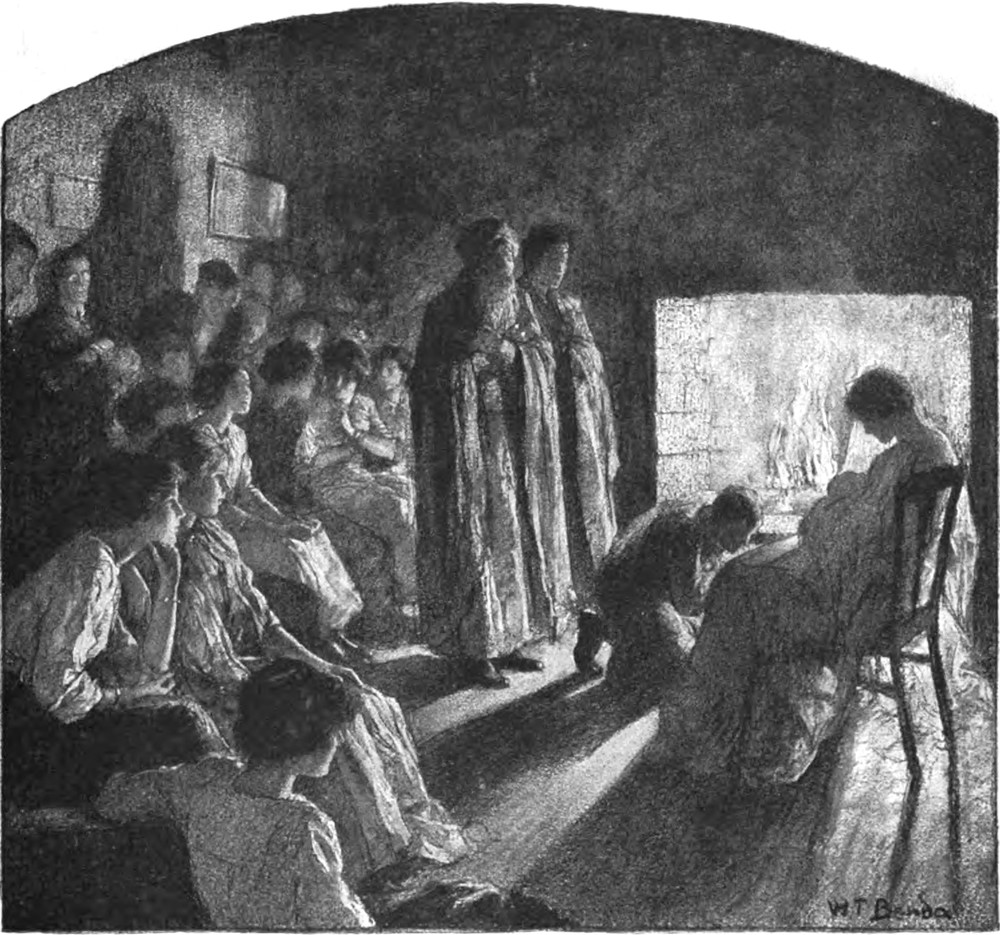
“THE GREAT FIRE WAS FED AGAIN, AND BY ITS LIGHT CHRISTMAS STORIES, IN SOBER PANTOMIME, WERE ENACTED”
On the day before Christmas seven of us, tucked in a touring-car, were climbing the foot-hills opposite the purple bulk of the mountain. A soft drizzle hung its drops on the fronds of the redwoods and made the leaves of the dwarf manzanita look ashen on their twisted, wine-red stems. As we beat up the grade, the world behind and below began to unroll, the inlets of the bay and the light-lying islands flattened to a map, while across and beyond we lifted San Francisco on her hills. The broken gray of the city houses laid washes of color, one above another, dove against rose-gray, against fawn, against pearl, and all cut by the sharper tones of the dark buildings.
At the crest of the foot-hills the car plunged down into the green-black shade of Muir Woods. Autumn and winter had touched the interior of the forest, and left sparse, lantern-like leaves of pale yellow on the bushes along the stream that gave to the wide, dim evergreen space an air of delicate and transient mortality. We ran beside the stream, the huge, shifting columns and the red, needle-silenced ground flowing past us, and on our eyelashes clung the caressing mist. Then our good cylinders labored hard to lift us by a winding, slippery grade up the abrupt side of the mountain to the inn. At a turn, without warning, we came out on a little plateau and up to the weather-stained building itself.
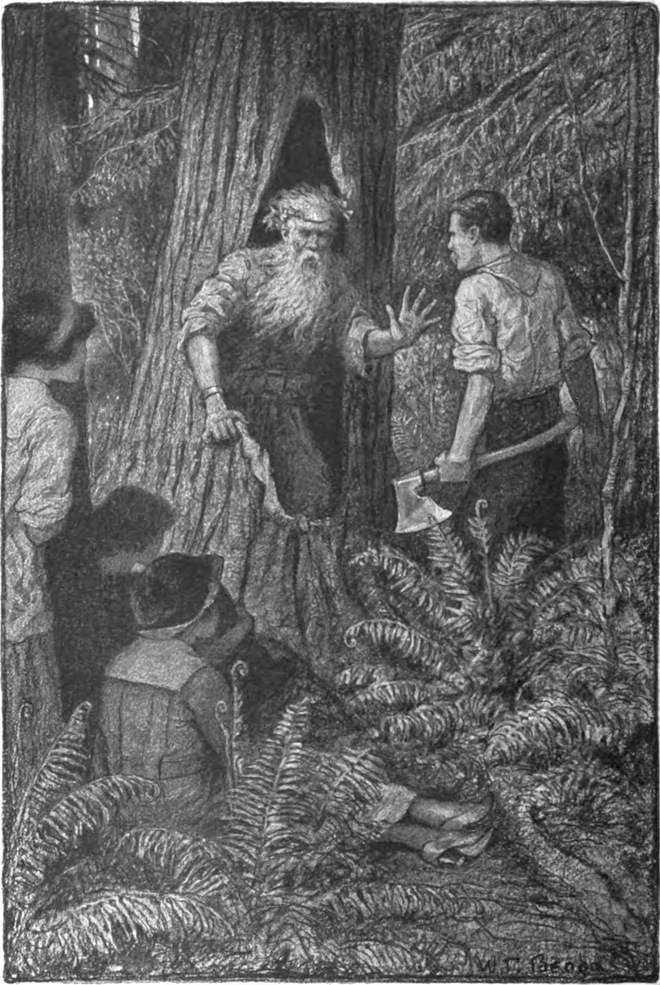
“AT THAT MOMENT FROM THE HOLLOW TRUNK OF A REDWOOD ANOTHER FIGURE STEPPED OUT”
⇒ LARGER IMAGE
As we stopped, the inn doors flew open, and out on the porches came friends, and friends, children, young girls, and men called our names, tossing us greetings and laughing. Something tightened in the throat, and we knew, before we tore the rugs off our knees, that the Muir Woods Christmas was going to be—different.
The inn was chiefly one big room of seventy feet or so smelling of evergreens. The fireplace, built for a sleigh-and-six, held a red mound of fire that just now gnawed, half-sated, at the carcass of a tree. Evergreens hung from the rafters, and all the tangle of California winter woods—wild huckleberry, manzanita, sallol, Oregon grape, rose-haws, Woodwardia fern, as tall as the tallest child, and swordfern—branched forth from jars in the corners.
We were busy at once. There were costumes to arrange for the charades, and costumes to trim in secrecy for the Christmas masque in the woods; there were stockings—each family had brought characteristic ones for its group—to make ready to be strung on the wire in front of the fire; there were derisive jingles to be written and affixed to fifteen-cent presents for one’s dearest friend; ferns, evergreens, and candies had to be tied to things; there were packages with disguised contours to be hidden. Concealment, like a worm, preyed everywhere, and people talked muffledly because of twine and tacks between the teeth. Busy, efficient men nailed things, to the envy of wives who had brought ruminative, pocket-handed men of the smoking variety. The children romped and peeped at forbidden things, and the people who were not their mothers said they were wonderfully good, and what the mothers said was not recorded. About the whole place there was such a smell of evergreens and such a mood of noisy fellowship, climbing, nailing, upsetting, and standing about, that one suddenly realized that Dickens was not a caricaturist, just a merrymaker.
When the lights were lighted and things at their busiest, so that they could not possibly be moved from the tables, the waiters came to lay the cloth for Christmas-eve dinner. This sent us all to the fire. Laps were made, two-child deep; the very little people were fed hygienic pulp and simmered into drowsiness, so that they could be put to bed; and the women, and especially the girls, went and dressed in chilly little bedrooms smelling of matting.
We got back to the warm room again, to find that the tables had been laid in the form of a great cross, red berries at every place. All seemed sweet and familiar as we seated ourselves, for every face was the face of a friend. Food came and went, songs, stories, laughter; toasts were drunk and answered, and we wagged our heads and said the inevitable thing, “There used to be a time when people had families the size of this!” and were half sad and half glad for the decline of the good old times of abundance.
After dinner, chairs and tables were pushed aside, the great fire was fed again, and by its light Christmas stories, in sober pantomime, were enacted: Joseph and Mary, foot-sore and weary, knocked at the door of the inn at Bethlehem, and found not where to lay their heads; the shepherds fed their flocks by night, and a voice sang of peace on earth, good-will to men; then came the Magi, following the star, to the manger where the Child was laid and offered gifts of frankincense and myrrh, and all the simple, reverent scenes spelled adoration for those who watched. The absence of footlights and formal costumes made the little plays seem a part of some humble worship in memory of the hallowed and gracious time. The familiar faces, with a thousand every-day associations, perhaps, under veil or turban took on a new suggestion, a shade of mystery from a time and thought not wholly ours, yet wrought with ours by centuries of faith.
“Mirth is also of Heaven’s making,” and this soberness melted into laughter with the tramping of feet as the big circle formed to play the old English ring-games that have been sung and played where children have gathered, in merrymaking times, since our speech broke into rugged, rhythmic verse. As the older children and most of the grown people played,—for only trundle-bed trash had been put to bed,—the rope in front of the fire was putting forth a grotesque fruitage of harlequin stockings, stuffed with ten-cent surprises. One giant, pink sock, decorated with carnations, was for some one’s big, red-haired nephew, and the St. Patrick green one, bound with serpents, was marked “For Rattlesnake Pete, the Sierra Snake-Destroyer.” And so all down the line the stockings mocked their owners with intimate audacities. There were genuine baby stockings, too, to melt one’s heart, so little, woolly, and shrunken from the wash.
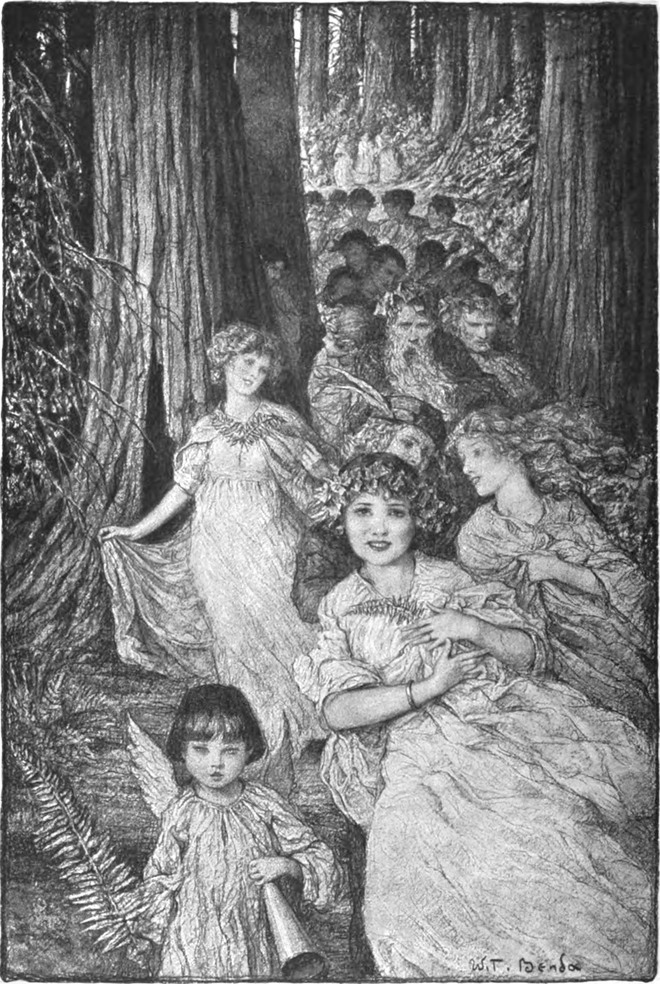
“GIVING AN ALMOST INTOLERABLE BEAUTY TO THE AGE-OLD TRUNKS”
⇒ LARGER IMAGE
It grew late; the piano, which had been beating its life out all the evening over, “Oats, Pease, Beans, and Barley Grows” and “London Bridge is Falling Down, O My Lady!” began whispering a strange, old air, a marching tune with a pulse of marching feet, more and more loudly, until suddenly we all sang in lusty unison:
“Here we come a-wassailing Among the leaves so green, Here we come a-wandering So fair to be seen. Love and joy come to you—”
when in came the large and paunchy punch-bowl, borne by the stoutest of the waiters. All in line, singing and marching, old and young, we circled in a wide detour about the room, coming to a stand, our glasses high, about the wassail-bowl.
“Christmas! God bless us!” We drank the toast, and even the lip of the abstainer was touched with the foam of egg-nog.
When at last all was quiet for the night, the big room dark and empty, and the heavy line of forty stockings sagged and bulged in front of the fire, several sober rioters stole back for a few last words.
“The only thing that could spoil Christmas now,” said an anxious Martha, stooping to pick up a string from the floor, “would be that some of the younger children who have been sending letters to Santa Claus for automobiles and hill-coasters may be disappointed by ten-cent toys.”
“I know children,” said the Chief Emancipator. “They are not half as mercenary as we think. Play is what they love. They will never think of hill-coasters on the happy day when the grown people come to their senses and give themselves up to fun.”
Noël, Noël, Noël, Noël, Born was the King of Israel!
Did you ever wake on a Christmas morning to the sound of fresh voices singing at your door and the soft swish of a redwood bough across your window-pane—eyes opening upon walls as bare as the walls of a stable, and the smell and feel of Christmas in the air of your naked little room?
The first Noël, the angels did say, Was to certain poor shepherds, in fields as they lay, In fields as they lay, keeping their sheep, On a cold winter’s night that was so deep. Noël, Noël, Noël, Noël, Born was the King of Israel!
The carolers were down from the little cabins on the hillside where they had slept with a figment of roof between them and the stars, and the cries of Merry Christmas beat upon our doors until we all came together, in noisy collision; on the porches, and swept in to strip the line of stockings. The babies dropped on the floor with their pouches, dumping their toys frankly between their outspread legs, laughing, crooning, and picking, with tiny, pointed fingers, at the mystery of things. It was with them, as the wise woman had said, all bubbling contentment and delight. Little tin wagons bounded over the floor, any side up, two babies abreast, and every mouth blew upon squeakers and trumpets the blasts of which were mercifully tempered to the short wind of the little lambs. Our own gifts unmasked, with even-handed justice, our inner foibles, but the children’s came to the breakfast table with them in a spirit of peace. Live stock surrounded every plate, and cattle fed from porcelain mangers, and became entangled in patent breakfast foods.
As breakfast ended, a call came from the doorway, “Who wants to come with me to the woods and pick out a Christmas tree?” It was she of the Yerba Buena wreath and shoe-top skirt. We all wanted to come. This finding of the tree was to be a ceremony. Though a faint mist was still a-drift, no one cared, and a few wraps made the children snug.
A dozen tangled little paths lead down among the chaparral to the redwoods, and here the children gathered from everywhere, laughing and calling among the undergrowth, scattering, breaking, and running down the steep paths exactly as a brood of quail run and call and scatter through the mesquite under the convoy of their crested leader.
“The Woodsman! The Woodsman! First we must find a woodsman with an ax to cut the Christmas-tree,” called the leader. “He used to live over here. Who can find him?”
Her brood scurried here and there, unconsciously led where she would, beating up the brush, when suddenly, shouting with delight, they came full upon a man with an ax—a flannel-shirted man with a kind face and a great, broad, shining ax.
“Yes, I am the Woodsman,” he called. “May I cut a Christmas-tree for you this morning?” He came forward, and jumped straight into the story, without preliminaries. The whole flock surged down upon him and off to find the tree, accepting his being there with his ax as children do accept pleasant things. We all went down into the winding wood road, almost roofed over by redwood plumes, the little children stopping to consult gravely with the Woodsman about the suitability of trees two hundred feet high or saplings of a century’s growth, squinting up trunks, considering, rejecting, earnestly intent, each one, upon finding the perfect tree. The older conspirators, half lost in brake and fern, kept close behind.
“This one I think will do,” cried the Woodsman at last, and he lifted his ax.
At that moment from the hollow trunk of a redwood another figure stepped out, and all the children started, he was so strange.
“I am the Spirit of the Woods,” he said in a deep voice; “I come to plead with you for the life of this tree.”
He wore a mantle bordered with fern and moss. Instead of hair, his head was closely covered with the greenish lichen that grows on the north side of trees in winter, and his beard was of long, gray moss. He spoke very earnestly, and told the children how sweet it is to live, as a tree, in the forest. They were not exactly frightened; they even drew a step nearer: in that beautiful, solemn place strange things might happen. Then the Woodsman once more lifted his ax, when a very little boy, quite unprompted, and to every one’s surprise, suddenly broke from his father, and ran to the Woodsman, clasping his arms about him, crying out for the life of the tree.
“Don’t cut it down!” he sobbed. “It wants to be a tree; it doesn’t want to be logs.”
We were quite still for a moment, then the Spirit of the Woods said: “The tree has another friend. I thought I was the only one who really loved it.” Then turning to us all, he said with authority: “Do as the child bids. Come with me, for I have something to show you.” He moved with a long stride in his long mantle, the moss wagged from his sleeves like the beard of a goat, and the children crowded nearer to the Woodsman; but at a turn of the road they all cried out and ran forward. Growing beside the road, with its branches full of gold and silver ornaments, snow and cranberries and gifts, was a lovely living Christmas-tree, bearing its shining fruitage in the thick forest.
Then all took hands and danced about the tree, and sang to it, and praised it, and called it beautiful. From the thick branches, which were not so very high in that high place, grown people took packages marked with names. There were little Robin Hood costumes for several of the children, with feathered caps and feathered bows, and a Cupid’s dress of white gauze and filmy wings for the four-year-old cherub, and green mantles for every one, that slipped over the head, and wreaths of fresh green vines for the hair. The living tree gave up toys and tinsel and everything, as other trees, that have given up their lives, have never been known to do. The children starred themselves over with its ornaments, and everybody dressed at the same moment. The pretty girls wrapped tinsel and cranberry ropes in their hair, and looked prettier than ever. It was so deep in the forest that for mirrors each must inquire of the eyes that loved her for news of how she looked.
By the time that the tree was stripped quite bare, with only a spangle here or a fleece of snow there, the whole party was peacocking in its finery down the wood road, two by two, and two by two: the Woodsman with his boy on his shoulder; the green-mantled, vine-wreathed folk; the lonely Spirit of the Woods, a hesitating child peeping up at him; the little Robin Hoods, a-chase for sparrows; and, straggling behind the rest, the Cupid-baby, like a new-born butterfly, not quite able either to run or to fly. And so, winding with the winding red road, all our brightness subdued to the dim atmosphere in which we moved,—that impalpable violet that floats about the stems of the trees in these vast groves, giving an almost intolerable beauty to the age-old trunks,—we came to recognize that about us were the real Christmas-trees; for they were fast-rooted here when homeless Mary was with child in Bethlehem.
What broke the spell was the old Edenic curse. Some one spoke of food. I think it was a man. He said, in effect, that he wished to be comforted with apples; that he was sick of love; he described a cold Christmas dinner; then a dinner burned to a crisp and served to forty empty chairs. It was a moving tale, and had that effect upon our procession.
The dinner-hour had been set early that every child might come; and one or two little heads, with their first thistle-down thatch, beside the old white ones, made the Christmas dinner seem more than ever a gracious family feast. We did not come dressed as people dining on Christmas day, but all still in our mantles of forest green and wreaths of vine. Down the tables, formed like a cross, shone the red of toyon berries, in the folds of the girls’ coiled hair and in the chains about children’s necks.
If there, was a moment of disillusionment, it was the one in which it was discovered that the Spirit of the Woods did not subsist on wood-alcohol, as had been rumored, but contrived large pieces of turkey between the fringes of moss about his lips. But this, too, had a happy influence, because it loosened some rather silent tongues, and the children’s talk burst out fluent and simultaneous.
Housed intimately in by the evergreen-hung walls, the fire-light and soft lamps bringing us into one warm group, the sense of comradeship, up there on the big, misty mountain, and the gracious presence of little children and our own, dear people, brought us to our feet to sing again the wassail-song.
“Here we come a-wassailing Among the leaves so green, Here we come a-wandering So fair to be seen.”
And as we stood, glasses lifted, we looked from the faces that had made our own first Christmases bright to the little ones, just above the cloth, and pledged the birth of this good, new way of being glad on Christmas day.
