Front matter
Reading edition
Note: Images of the original pages are available through Internet Archive. See https://archive.org/details/catalpaexpeditio00peas
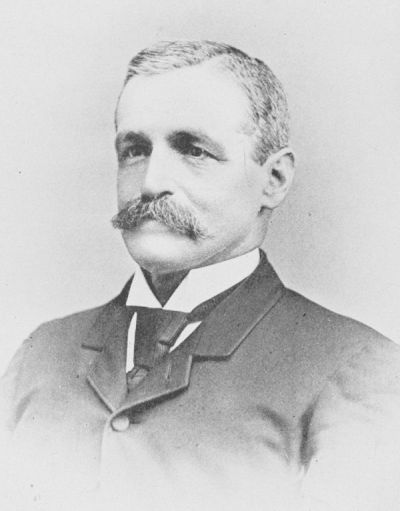
CAPT. GEORGE S. ANTHONY Commander of the Catalpa
THE CATALPA EXPEDITION
BY
Z. W. PEASE
WITH ILLUSTRATIONS
NEW BEDFORD, MASS.
GEORGE S. ANTHONY
1897
Copyright, 1897,
By GEORGE S. ANTHONY.
All rights reserved.
INTRODUCTION
One hundred years after the Declaration of Independence, an American whaling captain, George S. Anthony, commemorated the event by enforcing another declaration of independence which set free the Irish political prisoners who were sentenced to a lifetime of servitude in the English penal colony in Australia.
The story of the rescue of these prisoners in 1876 is a brave incident of history which has hitherto been told too briefly. When Captain Anthony, commanding the bark Catalpa, landed the men for whose relief the expedition was planned, at New York, public interest in the romantic voyage was very intense. The boldness of the raid upon the English colony and the remarkable features of the conspiracy, excited universal curiosity concerning the details of the affair.
At that time international complications seemed certain, and there were many reasons why those concerned in the rescue furnished only meagre information of the inception of the plan and its progress during the two years which were spent in bringing it to a successful consummation.
Brief newspaper accounts appeared at the time, and this material has been worked over into magazine sketches. The frequency with which the original newspaper story has been revived during the years which have elapsed suggested that the interest was still alive and led to the writing of the story which follows. The facts were contributed by Captain Anthony, who placed his log-book and personal records at the disposition of the writer, and the present version is authorized by the man who was most prominent in it.
Some of the incidents of history which led up to the Fenian conspiracy in 1867 are compiled from familiar sources. The records of the court-martial are from transcripts of the proceedings made in Dublin expressly for this book, and have never previously been published.
No attempt has been made to embellish the narrative. It has been the effort of the writer to tell it simply, as he knows the gallant commander would best like to have it told.
New Bedford, Mass., 1897.
CONTENTS
CHAPTER PAGE
I. Sailing of the Catalpa 1
II. Fenian History 4
III. The Irish Political Prisoners 9
IV. The Court-Martial 16
V. The Court-Martial continued 35
VI. Banishment to Australia 51
VII. O'Reilly's Escape 54
VIII. Other Escapes and Rescues 58
IX. Appeals from Australia 66
X. The Plot 70
XI. The Vessel and the Start 75
XII. Whaling 82
XIII. A Hurried Departure 91
XIV. An Awkward Meeting 96
XV. A Strange Episode 103
XVI. Arrival at Australia 107
XVII. The Land End of the Conspiracy 110
XVIII. Meeting of Anthony and Breslin 116
XIX. Arranging the Details 122
XX. A Critical Situation 127
XXI. Leaving the Ship 132
XXII. The Escape 135
XXIII. In The Open Boat 142
XXIV. An Awful Night 148
XXV. A Race with the Guard-Boat 152
XXVI. Overhauled by the Georgette 157
XXVII. Bound Home 162
XXVIII. A Cordial Reception 167
XXIX. Settlement of the Voyage 183
Appendix 186
LIST OF ILLUSTRATIONS
Portrait of Capt. George S. Anthony Portrait of John Devoy The Jail at Freemantle where the Prisoners were confined The Catalpa Outward Bound Portrait of Samuel P. Smith Portrait of John J. Breslin The Town of Freemantle, Australia The Rescued Prisoners The Race for the Catalpa The Catalpa Homeward Bound Portrait of James Reynolds A Cartoon from the Irish World
THE CATALPA EXPEDITION
CHAPTER I
SAILING OF THE CATALPA
On an April morning in 1875, the whaleship Catalpa lay at anchor in the harbor at New Bedford, ready for sea. Although the whaling industry was waning on the ebb tide, there were yet over a hundred whaleships sailing out of the port of New Bedford, and the departure seemed to call for no unusual notice.
It was a pretty spectacle, to be sure. The still waters, the green pastures running down to the shore of the lower harbor, and the ship, trim and taut. For, while a whaleship suggests to many a greasy, clumsy hulk, the outgoing whaler is actually as ship-shape and clean as a man-of-war.
The yellow sun shone on the yellow hull of the Catalpa. Her rigging was aglow with fresh tar, and her gaudy colors and signal flags gave her a holiday appearance alow and aloft.
Presently the sailors are on the yards, shaking out the sails. The captain, with his papers under his arm, the very picture of a captain, by the way, strong and athletic in figure, with ruddy cheeks and life and fire in his bright eyes, goes aboard with the agent and a few friends, who are to accompany him down the bay.
The pilot instructs the mate to get under way, the anchors are soon on the bow and the chains stowed. The vessel sails out of the harbor, for in these days tugs are a luxury which the sailor despises, and soon the Catalpa is sailing briskly under fore and main topsail, main topgallant-sail, spanker, gafftopsail and staysail and flying jib.
Late in the afternoon the captain says good-by to his friends. The wind is blowing freshly from the southwest.
"Stand on the port tack two hours longer, then tack out and you will be clear of land," said the pilot, and, with the prosaic wishes of "good luck," departs.
Later the wind hauls to the southward. Before midnight the captain has the vessel under short sail and is working off shore.
And this seemingly commonplace commencement of a whaling voyage is, in truth, the story of the departure of one of the most boldly conceived and audacious expeditions against the English government which was ever planned,—the only important Fenian conspiracy which was ever entirely successful.
Standing upon one of the wharves on the waterfront, a man in a dark frieze ulster watched the incidents of the morning with absorbing interest. His eyes said a fond good-by to the captain as he rowed out to the vessel, for he dared not risk an appearance in the group which had assembled about the captain for a handshake. He was one of the few men who knew that greater perils than those which usually await the men who go down to the sea in ships must be met by the captain if he was true to a great trust, and that the vessel was going out in response to the cry of men who were outcast and in chains because they loved their country.
CHAPTER II
FENIAN HISTORY
"This is serious business now," said a clever English literary man when he heard of the Fenian organization. "The Irish have got hold of a good name this time; the Fenians will last."
The Fenians were the ancient Irish militia organized in the third century by Fionn or Finn, who is said to be the Fingal of Ossian. In Scott's "Antiquary," Hector M'Intyre, jealous for the honor and the genuineness of Ossian's songs of Selma, recites a part of one in which Ossian asks St. Patrick, the patron saint of Ireland, whether he ventures to compare his psalms "to the tales of the bare-armed Fenians."
"There can be no doubt," writes Justin McCarthy, "that the tales of the bare-armed Fenians were passed from mouth to mouth of the Celts in Ireland and the highlands of Scotland, from a time long before that at which any soothsayer or second-sighted sage could have dreamed of the landing of Strong-bow and the perfidy of the wife of Breffni. There was an air of Celtic antiquity and of mystery about the name of Fenian which merited the artistic approval given to it."
The Fenian agitation commenced in 1858, following the Phœnix clubs in the sequence of the secret associations which have been so prominent in Irish history. Had it not been for the American civil war, it is quite likely that it would have lacked the fame which it subsequently won, but the strained relations between England and America inspired the hope that war between the two great nations might follow, and that this would afford an auspicious opportunity for the uprising for Ireland's independence, which has ever been uppermost in the minds of the Irish patriots. Then the war had created the Irish-American soldiers, who were inclined to consecrate their energies to a new purpose in behalf of their native land.
The movement was more promising than any which had preceded it. In the first place, as Mr. McCarthy points out, "It arose and grew into strength without the patronage or the help of any of those who might be called the natural leaders of the people. In 1798 and in 1848, the rebellion bore unmistakably what may be called the 'follow-my-leader character.' Some men of great ability, or strength of purpose, or high position, or all attributes combined, made themselves leaders, and the others followed. But Fenianism seemed to have sprung out of the very soil of Ireland itself. Its leaders were not men of high position, or distinguished name, or proved ability. They were not of aristocratic birth; they were not orators; they were not powerful writers. It was ingeniously arranged on a system by which all authority converged towards one centre, and those farthest away from the seat of direction knew proportionately less and less about the nature of the plans. They had to obey instructions only, and it was hoped that by this means weak or doubtful men would not have it in their power prematurely to reveal, to betray, or to thwart the purposes of their leaders."
The organization flourished in America, where the provisional government was established, and it soon had its ramifications all over Great Britain as well as Ireland. England's secret agents began to report the visitation of mysterious strangers to Ireland, strangers with Celtic features but with the bearing of American soldiers. This did not fail to attract the attention of the English government and the English newspapers. In "Saunders' News" I find an impolite reference to "the imitation Yankee rowdies who infest the streets of Dublin." The spy system flourished, and when James Stephens, the head centre of Fenianism, arrived in Ireland, he was arrested in company with James Kickham, the poet. Stephens was committed to Richmond Prison, Dublin, early in 1865, but before he had been many days in confinement he was released. Of the man who accomplished the liberation of Stephens there will be much said in ensuing chapters. The escape produced a prodigious sensation and had the effect of convincing the Irish peasantry that Stephens was the type of leader who would be adequate to the great task which had been aspired to,—the raising of the flag of an Irish republic.
Meanwhile the Fenians in America were divided on the policy of invading Canada, which was urged by some, while others pressed for operations in Ireland. A small body of men finally crossed the Niagara River on the night of May 31, 1866, and drove back the Canadian volunteers, but the United States government enforced the neutrality of the frontier line, unexpectedly to the Fenians, arresting several of the leaders on the American side. The Canadians hurried up reinforcements. Several Fenians were captured and shot, and the ill-advised invasion scheme resulted in a miserable fiasco.
Once more Stephens, who had returned to New York, declared his purpose of resuming operations in Ireland, and many Irish-Americans went across the Atlantic to await his appearance at the head of an army of insurgents. It was their presence alone which led to the poor attempt at rebellion which was finally made, for not only were the peasantry unarmed and unprepared for a war, but most of the people of the country were opposed to the wild scheme, and the Catholic clergymen were everywhere attempting to avert the certain disaster by discouraging the secret organization and the proposed insurrection.
Stephens, who was looked for to lead the men who sought deliverance from the English government, never appeared. Those who were true desperately resolved to give some sign of their sincerity. There were many wild plots, a few conflicts with the police. The government was informed of them in advance, and none were successful. The habeas corpus act was suspended, and this action was promptly followed up by arrests, court-martials, imprisonments, and banishments to the penal colony at Australia.
"In March, 1867," writes McCarthy, "an attempt at a general rising was made in Ireland. It was a total failure; the one thing on which the country had to be congratulated was that it failed so completely and so quickly as to cause little bloodshed. Every influence combined to minimize the waste of life. The snow fell that spring as it had scarcely ever fallen before in the soft, mild climate of Ireland. Silently, unceasingly it came down all day long and all night long; it covered the roads and fields; it made the gorges of the mountains untenable, and the gorges of the mountains were to be the encampments and the retreats of the Fenian insurgents. The snow fell for many days and nights, and when it ceased falling the insurrectionary movement was over. The insurrection was literally buried in that unlooked-for snow."
CHAPTER III
THE IRISH POLITICAL PRISONERS
The man who watched the ship to the line where the sea and the sky met was John Devoy.
Some time before there had come to him a voice, crying from the prisons of Western Australia, the land of slaves and bondmen, the penal colony of Great Britain. In the penal gangs were six of the comrades of John Boyle O'Reilly. Forlorn but not quite forgotten, they worked on the roads, "the weary work that has no wages, no promotion, no incitement, no variation for good or bad, except stripes for the laggard." O'Reilly had escaped from it, but he remembered the men who still toiled in the convict's garb on the government road.
"They were cutting their patient way into a forest only traversed before by the aborigine and the absconder," quoting from O'Reilly's "Moondyne." "Before them in the bush, as in their lives, all was dark and unknown,—tangled underbrush, gloomy shadows, and noxious things. Behind them, clear and open, lay the straight road they had made—leading to and from the prison."
These men had been soldiers like O'Reilly, and like him had joined the Fenian conspiracy of 1866 and 1867, when revolution was plotted in Ireland. Devoy had been the indefatigable agent of the revolutionary party, having been appointed chief organizer for the British army by James Stephens, who had been selected as chief executive of the new republic which was the dream of the Irish in 1865, as it is to-day. In a few months Devoy, quoting his own words, "laid up sufficient evidence to procure himself a sentence of fifteen years' penal servitude." Among the men were Thomas Darragh, Martin J. Hogan, James Wilson, Thomas Hassett, Michael Harrington, and Robert Cranston.
They were brave, reckless fellows who were readily converted to the doctrine of Fenianism. They attended the gatherings at the public houses, joined in the singing of Moore's melodies in the congenial company at Hoey's, and made the chorus of "We'll drive the Sassenach from our soil" inspiring to hear. Then came the arrests and the convictions for mutiny in her Majesty's forces in Ireland.
Mr. Darragh was born in 1834 in Broomhall, County Wicklow, his father being a farmer there. He was a Protestant and when he entered the army was an Orangeman, but he was subsequently converted through Fenian agencies to the national faith. He enlisted in the 2d Queen's and saw active service in China and Africa, receiving the distinction medal for gallantry displayed. Mr. Darragh had attained the rank of sergeant-major and was on the list for promotion. He became a member of the Brotherhood early in its organization and was arrested for mutiny in September, 1865, at the School of Musketry, Fleetwood, England. He was taken to Cork, where he was tried and sentenced to be shot. The sentence was afterwards commuted to imprisonment for life. He was described in the prison "Hue and Cry" as being stout, five feet six and one half inches in height, with red hair, gray eyes, round visage, and a fresh complexion.
Mr. Hogan was born in Limerick in 1839, and was a carriage painter by trade. He enlisted in the English artillery, but his discharge therefrom was secured and in 1857 he joined the 5th Dragoon Guards. He was sworn into the organization in 1864 and deserted the army early in 1865, in order to be ready to take part in the contemplated rising. He was soon after arrested, tried, and sentenced to life imprisonment. He was a finely-built man, with "the gait and appearance of a cavalry soldier," according to the official prison description.
James Wilson had lived an eventful life. His real name was McNally, but it was a common thing for Irishmen to enlist in the British army under assumed names. He was born in Newry, County Down, in 1836. He served for seven years in the Bombay, India, artillery, which he left at the time of the white mutiny, when the East India Company was abolished. He had lived in Syria and America. In 1860 or 1861 he enlisted in the 5th Dragoon Guards and was sworn into the Fenian organization in 1864. He was continually propagating Fenianism, and in 1865 deserted with Hogan. The fact that they remained in Dublin awaiting the uprising, although gazetted as deserters, is a fine tribute to their devotion. They worked under the direction of John Devoy until they were arrested in 1866. They were asleep in bed when the police came upon them, or a desperate resistance might have been looked for. Wilson is described at this time as of medium stoutness, five feet eight and one fourth inches in height, with a fresh complexion, brown hair, gray eyes, and oval visage.
Thomas Hassett was born in Cork in 1846, and was a carpenter by trade. He joined the Phœnix organization in 1859 and afterwards went out with the Papal Brigade to Italy, serving through the brief campaign. In 1861 he enlisted in the 24th Foot, and in 1864 was sworn into the Fenian Brotherhood. He, in turn, swore in 270 members of his regiment. It was his suggestion that the contemplated fight begin in Dublin by seizing the Pigeon House, which contained twenty-five thousand stand of arms. When it was considered to be in danger a guard of ninety men was placed upon it, of which number sixty were Fenians. Hassett proposed a plan of capture to his superiors in the organization, but it was rejected on the ground that they were not ready for a general fight. In January, 1865, Mr. Hassett was informed while on sentry that he would be arrested for Fenianism as soon as he came from his post. He concluded to leave at once, and, marching into the Fenian rendezvous in full uniform with his gun on his shoulder, presented himself to John Devoy.
"Most of the fellows who desert for Ireland's sake," said he, "come to you empty-handed, but here am I, ready for work."
O'Reilly presents a dramatic picture of Hassett's appearance at the meeting of organizers, whither he marched from the sentry post. He says,—
"Private Hassett walked off his post and, shouldering his rifle, proceeded confidently through the streets of Dublin, in which a soldier with arms is never questioned. It was ten o'clock at night, and it so happened that Hassett knew of a certain meeting of organizers, and other 'boys on their keepin',' which was being held that evening. Thither he bent his steps, reached the house, and, knowing how it was done, gained admission. The rebels sat in council upstairs; faces grew dark, teeth were set close, and revolvers grasped when they heard the steady stamp on the stairs and the 'ground arms' at their door."
"A moment after, the door opened and the man in scarlet walked into the room; all there knew him well. With full equipments, knapsack, rifle and bayonet, and sixty rounds of ammunition, Hassett had deserted from his post and walked straight into the ranks of rebellion. He was quickly divested of his military accoutrements; scouts went out to a neighboring clothing-store, and soon returned with every requisite for a full-fledged civilian. The red coat was voted to the fire, and the belt and arms were stored away with a religious hope in the coming fight for an Irish republic.
"The next evening one more was added to the group of strangely dressed men who smoked and drank their pots-o'-porter in a certain house in Thames Street. The newcomer was closely shaven and had the appearance of a muscular Methodist minister. The men were all deserters, and the last arrival was Hassett. Vainly watching for the coming fight, the poor fellows lived in a mysterious misery for several weeks. It is hard to realize here now the feeling that was rife in Dublin then. At last one of the deserters was recognized in the streets by the military informer,—Private Foley, of the 5th Dragoons,—tracked to the rendezvous, surrounded by the police, and every one captured."
In 1873 he escaped from prison in Western Australia, and lived on an Irish farm for a time; but it was a bad season and he could not get together an outfit. After two months he made a dash for the coast and stowed himself away on an outgoing vessel, but he was captured by the water police and brought back to the convict establishment. For two years afterward he was kept in irons with the chain gang.
Michael Harrington was forty-eight years old at this time. He was born in Cork, where his father was a merchant, and he was given the advantage of a liberal education. His tastes were for the army, and in 1844 he enlisted in the 61st Foot. He served through the Punjab war, and also through the Sikh war under Sir Hugh Gough, who made the now famous exclamation, "Magnificent Tipperary!" Mr. Harrington also took part in the Sepoy war, and then returned home with his regiment. He joined the Fenian organization in 1864 and was very active in enlarging its membership. In January, 1866, being in danger of arrest and desirous of freedom to take a more active part in the projected uprising, he deserted. Yet he remained in Dublin, was arrested on suspicion after the suspension of the habeas corpus act, identified as a deserter, tried and sentenced for life. He was described on the prison records as fairly stout, with brown hair, gray eyes, and a sallow complexion.
Robert Cranston was born in Stewartstown, County Tyrone, in March, 1844, and assisted his father on the farm previous to enlisting in the 61st Foot at the age of twenty. He joined his fortunes with the Fenian conspiracy and industriously assisted in "propagating the faith." Of his regiment at least six hundred were sworn members of the Fenian organization.
CHAPTER IV
THE COURT-MARTIAL
The court-martials of the men with whom this story deals are of interest in so far as they exhibit the extraordinary efforts which were made to convict the conspirators. This is particularly striking in the case of Sergeant Darragh, who was court-martialed at Cork, February 21, 1866. In this case an informer went so far as to receive the sacrament of the Roman Catholic Church in carrying out a deception which was to result in the betrayal of those who accepted him as a friend. The notorious informer, Talbot, testified in all, or nearly all, of the cases, of the existence of the conspiracy.
The court-martial of Darragh throws light upon the details of the conspiracy as well as the methods of the spies of the English government, and inasmuch as it is an episode which has never been printed, liberal extracts from the proceedings will be given. The charges against Darragh were:—
First: "For mutinous conduct at Cork on or about the month of April, 1865, in that coming to the knowledge of an intended mutiny in her Majesty's forces quartered in Cork barracks, he did not give information thereof to his commanding officer."
Second charge: "For conduct to the prejudice of good order and military discipline in having at Cork, on or about the month of April, 1865, joined a treasonable and seditious society, called the Fenian Brotherhood, having for its object the levying of war against the Queen, and the subverting of the government of the country."
When the prisoner was brought forward he handed to the President (Colonel Shute) a memorandum, stating that he had failed in procuring the means of employing counsel for his defense, and praying the Court to permit his solicitor, M.J. Collins, to aid him in the conduct of the case. The President said that the Court granted the application.
Colonel Addison was then examined, and swore that the prisoner had never at any time informed him of any intended meeting of soldiers in Cork barracks.
John Warner, the informer, was then produced, and, in answer to questions put through the deputy judge-advocate (Colonel Nugent), deposed: I was discharged from her Majesty's service in 1857, after coming from the Crimea.
Did you receive a pension?—Yes, sixpence a day, for the period of eighteen months.
Were you wounded at the Crimea?—Yes, in front of Sebastopol, in the month of August, 1855.
Did you join the Fenian Society?—Yes.
When did you first become acquainted with J.J. Geary?—In 1864, in the latter end of 1864, after being discharged from the militia in Kinsale—the City of Cork Artillery.
Are you aware whether he had any connection with the Fenian conspiracy? If so, what was that connection?—He was connected with the Fenian Society as a centre, which means a colonel of it.
After you were enrolled as a Fenian, did Geary give you any particular instructions for your guidance after you were enrolled?—Yes.
State what they were.
Prisoner. I object to that.
The Prosecutor (Col. Lane Fox) contended that the instructions the witness received for the carrying out of the conspiracy were not hearsay, and quoted an authority in support of that view.
Deputy Judge-Advocate. This is a statement of a third party in the absence of the prisoner.
Prisoner. I object to any instructions given by Geary. The witness can state what he did in consequence of any such instructions; but any instructions given behind my back, without my knowledge, I object to.
The court was cleared, and on being reopened it was announced the question was not to be put.
Examination by the prosecutor. You say you received particular instructions for your guidance from Geary. State what you did in consequence.—I got instructions from Geary regarding the oath. I was warned three weeks before I came up to the barracks to enroll men. I was called before the meeting for not going up to the barracks.
President. State what you did.
Witness. I came up to the barracks and met Darragh outside the gate. I asked him to go down to the North Main Street with me. He went with me to the North Main Street, to Geary's. We had some drink in the inside tap-room, and during the time there I asked would he become a member of the Fenian Society, and he said yes. Then we both went out in the back yard, and I repeated the oath to him, and he did so after me. I then gave him a Catholic prayer-book. He swore on that book to be a member of the Fenian Society. Then we came in and I introduced him to Geary as a member of the society. Geary shook hands with him. He said he was very glad to have one like him enrolled. That was all at that time.
Repeat as nearly as you can the oath which you administered to Darragh?—"I (John or James, whichever the case may be), do swear allegiance to the present republic now virtually established in Ireland; that I will maintain its independence and integrity at every risk, and I will obey the command of my superior officers. I take this oath in the true spirit of an Irish soldier at liberty to free my country. So help me God."
Did you know Darragh before that?—I did, in the regiment of the depot of the 2d Queen's.
Were you ever in the 2d Regiment?—I was. I volunteered from them.
Had you any facilities for enrolling men in the barracks?—Yes. I was told off for that special purpose, and a good many of the men knew me and would not stop me going in and out of the gate.
Were Geary and the prisoner previously acquainted when you introduced them?—I could not say they were.
Did they shake hands as if they knew each other?—They shook hands as a member should be introduced, in a manner.
Did you hear Geary give any instructions to the prisoner for his guidance?—Yes. He gave Darragh instructions in my presence to go about the barracks, and find out any men that would join the society and bring men down to Geary's house, but not to deliver the oath,—to bring them to me or to himself. If I was not there he would swear him in. Accordingly he did, and the first man he brought was Butler to Geary's house.
How long was that after you swore Darragh in?—To the best of my belief from a fortnight to three weeks.
Did the prisoner say anything about any particular corps that he would work in?—Yes, he said he would wish to work in no other regiment but his own.
Did the prisoner bring any other soldier to you or to Geary to be sworn?—He took none to me but Butler. I cannot speak as to Geary.
Did you hear Geary give Darragh any instructions relative to taking the barracks?—Darragh told him the different parts, in my presence, which were weakest and the easiest to get in. He said if there were one or two men in every passage—enrolled men—they would be sufficient with a thousand outside to take it. I heard him say that much in my presence to Geary.
Did you hear Geary say anything about what was to be done to the commanders when the signal for a rising was given?
Prisoner. I object to that.
Prosecutor. When a conspiracy is proved, the act of any one applies to the whole. I am asking the witness now what was the intention of the Fenian Society. We have already received documents which do not relate exactly to the prisoner, but to the aims and objects of the society. I withdraw the question for the present.
Prosecutor (to witness). Did you hear Geary, as a member of the Fenian Society, say anything about what was to be done to the commanders when the signal for a rising was given?—The commanders, he said, were to be destroyed if they did not take the oath of allegiance to the society. Every man that did not take the oath of allegiance would be destroyed. I heard Geary say that.
Who was it said to?—It was said to Darragh, and to different other members in my presence.
Did you keep a list of the members enrolled?—Yes, sir. (A book was produced, which the witness identified as that in which he had the names of new members enrolled.)
The court adjourned.
Cork, Thursday, February 22d.
The president (Colonel Shute) and the other officers of the court took their seats at eleven o'clock, when the trial of Sergeant Darrah, of the 2d (Queen's Own) Regiment, was resumed.
John Warner, the informer, who was under examination at the rising of the court yesterday, was again produced and gave the following further testimony:—
Are you certain that the prisoner was present when Geary said that the commanding officers were to be destroyed?—He was.
Are you quite certain?—I am.
When he said the commanders were to be killed, and all in the barracks who did not take the oath, are you quite certain that he said all the commanders who did not take the oath?
The prisoner objected to the question.
Prosecutor. Was it that the commanders especially were to be destroyed that did not take the oath of allegiance, or that every one was to be destroyed, the commanders included?—Every one, the commanders included, who did not take the oath of allegiance to the Fenian Brotherhood.
Are you able to read and write?—I can read and write a little. I can write my name.
President. Can you read print and writing?—I can read print, but not writing.
Prosecutor. Have you ever seen the prisoner at Geary's since he was sworn in, and if so, how often?—About three or four times.
Where did he generally go to when in Geary's?—Upstairs in a front room over the shop.
Is there a small room at the end of the shop on the ground floor?—There's a small room on the left hand side before you go into the shop, and two inside that.
Did you see the prisoner go into either of these rooms, and if so, how often?—Once he went to the inside one with me, before he was sworn, the inside tap-room.
Were you ever in the prisoner's room in the barracks?—I was.
How often?—Three or four times. I took tea with him there one evening.
Who was present on those occasions besides the prisoner and yourself?—Two color sergeants of the 2d Queen's and their wives.
Their names?—I don't know their names.
Did you speak of the Fenian Society in the presence of these sergeants, and of the prisoner?—No, not in the room.
President. Did you do so in the presence of those other sergeants?—No, not at all.
Prosecutor. Can you state, of your own knowledge, what rank the prisoner held in the Fenian Society?—Geary told him he would be a B, which was a captain.
Do you know if Geary and the prisoner are relations?—I could not say.
Were you acquainted with Bryan Dillon?—I was.
Had he any connection with the Fenian Society, and if so, what was his rank?—He was a centre or an A, which means colonel in the Fenian Society.
Have you seen him in the company of the prisoner?—I never did.
Do you know if Bryan Dillon was tried at the Commission for being a member of the Fenian Society?—Yes.
The prosecutor then handed in a certificate of the conviction of Bryan Dillon, at the special commission, held in Cork, when he was sentenced to ten years penal servitude.
Examination continued. Do you know a man named Thompson?—Yes.
What was his Christian name?—I can't say, but he lodged at Geary's.
Was he connected with the Fenian Society, and what was his connection?—He was a B in the society, which made him a captain.
Did you ever see him in company with the prisoner?—Once in Geary's, in the front room over the shop.
Give a description of what took place at Geary's house?—A man named Donovan, from Dublin, lectured on the rifle, showing how to make cartridges, and military and field engineering.
Did you see a rifle raffled for there?—Yes.
Was it the headquarters of the Fenian Society in Cork?—It was the principal part of the city for the Fenian Society to meet in.
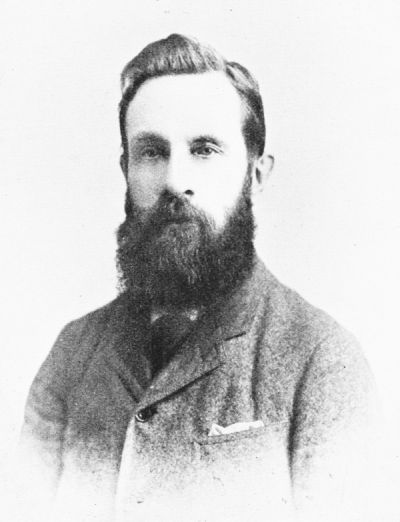
JOHN DEVOY Organizer of the Rescue Expedition
Do you recognize this book (book produced), and if so, state what you used it for?—This is the book on which I swore in Darragh and different other members besides.
Did you make any communication to Sub-Inspector Hamilton as to how your being in the barracks could be proved?
Prisoner. I object to that question.
Prosecutor contended that the question was legal.
The court was cleared.
When it reopened, the deputy judge-advocate announced that the Court ruled the question might be recorded, but not answered.
Examination resumed. Had you any communication with Mr. Hamilton in reference to your being in the barracks with the prisoner?—Yes.
Did the members of the Fenian Society carry on drill in the neighborhood of the barracks?—In a place called the Lawneys, about a mile from the barracks.
Prosecutor. I close.
Cross-examined by the prisoner. Did you know I was in Cork until the time you say you met me outside the barrack gate?—No, I did not know you were there until then.
Did you swear, in answer to the prosecutor, that you came up to the barracks for me, which is true?—I did not come up for you in particular.
Were you in the habit of coming to the Cork barracks previous to the day you say you met me at the gate? If so, for how long?—No, I was not.
Did you come to the barracks before, and if so, how often?—I have come in before, when doing Sir John Arnott's business,—conducting it.
Were you in barracks when the last detachment of the 2d (Queen's) Regiment arrived here from England?—I could not tell; I was not aware what time they came, or what place they came from.
Did you see Corporal McKillop with me marching into Cork barracks?—I did not.
Do you know McKillop?—I do not. The first time I spoke to you since I left the depot was outside the gate.
Did you not speak to me when I marched in with my detachment?—No.
Did you not go to the canteen to drink with me?—Not when you marched in, but I came in one evening to the barrack and had drink with you.
Prisoner. I wish to have Corporal McKillop produced for identification.
President. Was the meeting in the canteen before the time you spoke to him at the barrack gate?—It was a week or two after I met him outside the gate that we drank in the canteen.
Deputy Judge-Advocate. McKillop is on furlough in England.
President. You say McKillop is in the barracks; how do you know?
Prisoner. I can't know, for I have been in close custody for six months.
President. If he be a material witness, he shall be recalled by telegram.
Cross-examined. Was that the first time you drank with me at the canteen?—It was not. Geary and Butler and two more drank with us at the canteen. Geary paid for the drink.
When was the first time; how soon after you swore me in?—In some time after.
Why did you not mention that before, in answer to the Court?—I did not think of it. It is hard to think of everything at once.
You say you swore in Butler, and did you swear in any other soldier between the time you swore in Darragh and Butler?—I am not sure whether I swore in Farrell between them or not. Butler brought me a corporal and a private. I think their names are in the book.
Did you swear any and how many soldiers between swearing in Darragh and Butler?—I do not think I swore any between you and Butler except Farrell; but I don't know whether he was or not.
What was the time between swearing me in and swearing in Butler?—It may be a fortnight or three weeks.
During that time did you swear in civilians?—Yes.
State the number?—It may be two or three.
Did you swear in any soldier previous to the time you say you swore me in?—Not a regular soldier; there were militia.
You say I directly went to Geary and took a treasonable oath without the smallest reluctance. What month was that in?—It may be in the latter end of March or beginning of April.
When you joined the Fenian Society did you do so for the purpose of betraying them?—I took the oath for the purpose of betraying them, and I could not get their intentions without taking the oath.
When did you join the society?—In December, 1864.
When did you first give information?—In July, 1865. I tried before to go to Captain Tooker but was followed. Captain Tooker is a magistrate of the city of Cork.
Did you go of your own free will to give him information?—I did.
Were you from May, 1864, to September, 1865, most actively engaged in endeavoring to induce parties to become members of the Fenian Society—swearing them in and enrolling them?—I was. I should do so by orders of Geary.
How many members did you enroll?—I can't be exact; they are in the book; but about fifty altogether.
The prosecutor said that the witness was not bound to answer any question affecting his credibility.
The president said the main point was credibility.
Prisoner. It was the prosecutor who first asked the question.
The Court decided the question could be put.
Cross-examination continued. Did you not know all the secrets of the society immediately after you were admitted?—I did not until January, 1865, when I was introduced to Geary.
Did you swear information against the members of the Fenian Society in September, 1865?—Yes.
Did you mention one word about me in that?—No, I did not, but I told it to Sub-Inspector Hamilton.
Prisoner. I object to that answer.
At two o'clock the court adjourned for an hour.
On the reassembling of the court, at three P.M., the president (Colonel Shute) said that the Court had decided that the witness on cross-examination had a right to explain his answer.
The Deputy Judge-Advocate. The question was, Did you make any mention of the prisoner in your information?
Witness (Warner). I did not. On account of mentioning it to Sub-Inspector Hamilton I did not think that there was any occasion to state it in the informations.
Prisoner. Do you know that I am a Protestant and an Orangeman and a member of an Orange lodge at Delgany?—No.
Are you a Protestant and did you state to me that you were an Orangeman?—I am a Protestant and on my oath I don't think I told you anything about my being an Orangeman, because the society would come on me if I spoke of anything of the sort at all.
Were you always a Protestant, or did you cease to be one? If so, when did you cease to be one?—I was always a Protestant, but I went to Mass a few times, as I thought I would get into their graces by being a Roman Catholic and get some of their secrets.
Was the going to Mass the only thing you did about becoming a Roman Catholic?—That is all.
Did you not go to a Roman Catholic clergyman in Cork and state to him that you wished to become a Roman Catholic?—I did. One of the Fenians came with me and said I wished to become a Roman Catholic.
Did you not receive some religious books and religious instructions?—I did. He went with me to the monk, and he (the monk) gave me some religious books to read.
Did you go afterwards by yourself to the clergyman or the monk?—I went afterwards by myself to receive some instructions from the monk according to the order I received from him.
Then your answer is not true that your going to Mass is the only thing you did towards being a Roman Catholic?—There was not time, for it requires an explanation. The answer could not be given well at once.
Were you sincere in your intention of becoming a Roman Catholic, or were you only deceiving the clergyman or monk?—I was deceiving him for the purpose of getting the information I wanted to get from the society.
When you were in the depot at Templemore did you know Sergeant-Major McKinmon?—I did.
Did you desert from the depot there?—I did. He gave me money to desert, but I think it would be dishonorable to speak of that here, as he is a captain now.
Prisoner. I wish Captain McKinmon to be brought here.
President. You can summon any witness you wish, and the sooner you do so the better.
Cross-examination continued. Were you tried by court-martial for that desertion?—I was tried for being absent without leave, but not for desertion.
Were you punished for it?—Yes, I got forty-two days for it by regimental court-martial.
When were you discharged from the 42d Regiment?—Some time in 1857.
Was not the portion of the discharge which generally contains the character cut off?—No, it was not. The books of the garrison can state it. I drew my pension in this garrison.
Where is your discharge?—I lost it; but you can refer for the form to the local garrison.
What character did you get in your discharge?—The character was very good.
Were you examined at the special commission at Cork, on the trial of Colonel O'Reardon, who was charged with being a member of the Fenian Society?—Yes.
Did you not swear that he was a member of the Fenian Society?—I did.
And that he came to Ireland to inspect the forces?—He gave instructions according as he got them from John O'Mahony.
And that you put the men through their drill before him?—One night for him; but generally for a man named Captain Kelly.
Did you not further swear that he was four or five months here, and gave instructions to the Fenians in rifle practice?—I swear I saw him on several occasions in Geary's giving instructions to Fenians.
Did not the jury disbelieve you, and was he not acquitted?—He was acquitted at all events. I could not swear whether I was believed or not.
At what time did your son write the names in the book produced?—Always when I enrolled the men my little boy would put them down as I would tell him.
The witness was then examined at some length by prisoner and prosecutor as to the entering of the names.
Prosecutor. How long is it since you saw the book?—Not since I gave it to Mr. Hamilton in September last, until to-day.
Prisoner. You have stated that all you have stated is true?—I have forgotten a great many things; but all I have stated is true.
The court adjourned at four o'clock.
John Warner was recalled and questioned by the prisoner.
Prisoner. Did you at any time meet in Cork the man whom you say swore you in?—I did.
How soon after he swore you in?—I could not be exact as to the time; it was in 1865, at any rate, in Mr. O'Connor's timber yard.
How soon did you come to Cork after you were sworn in?—After the regiment was disembodied in Kinsale in June, 1864.
When were you sworn in?—In May, 1864.
Did you bring the letter from Crowley with you in June when you came to Cork?—I did not.
Did you see Crowley from the time you left Kinsale until you saw him in 1865 in Cork?—No.
When did you get the letter from Crowley, and where?—I did not get it at all.
Were you acting for the Fenian Society in Cork in 1864?—Yes. At the latter end of 1864 I attended a meeting at Geary's, the first meeting I did attend. That was in the latter part of December.
Was Geary at that meeting?—He was; I was speaking to him.
Was that the first time you spoke to him?—I don't think it was. About a week before he sent Mr. Bryan to me, and Geary then told me to attend a meeting on that night week. I was speaking to Geary in the beginning of December, or at the end of November, 1864.
Did you not swear yesterday that you never saw Geary till 1865,—which is true?—I don't think I swore that on yesterday.
Prisoner. I would ask to have the witness's evidence of yesterday read.
President. This particular portion.
The evidence of the witness on this point was referred to, and it appeared from it that Warner had stated that he did not see Geary in 1864 for the first time.
The prisoner then said he had no other question to ask Warner.
The following letter was then put in by the prosecutor and read by the president:—
My dear James,—Please add to the list of contributors to the Keane Fund the following inclosed names, for J.J., Cork. Of course you think it awkward to have the names instead of the cash, but the following reason, which is not fit for publicity, will be enough for you. Since Keane's imprisonment, on 7th Dec., I have paid for his grub about £4 10s., so instead of having anything on hand, I'm only waiting for the balance, which I hope will soon come to hand. It is so very long since I heard from you that I don't know whether you are dead or alive. Will you let me have some news, and say how is Mr. Johnson.
Yours faithfully, J.J. Geary.
The court-martial of Darragh did not conclude until March 2. The testimony against Darragh was mainly that of soldiers who testified that the prisoner introduced them to Warner, who administered the oath of the Fenians to them.
Private Michael Harrington was convicted on the evidence of a private to whom he confessed he was a Fenian, drinking to the health of the "'M.C.'s' or the 'M.B.'s,' or something like that." There was evidence that Harrington solicited men to take the Fenian oath. Another private testified to meeting Harrington at Fenian meetings when "Erin my country" and "My heart beats for thee" were sung.
CHAPTER V
THE COURT-MARTIAL CONTINUED
An incident in the trial of Private Martin Hogan is not without interest, illustrating the arbitrary manner of the Court toward the prisoners.
Private Foley was under examination, and testified to meeting Hogan at various public houses in Dublin, where the prisoner's conversation was of a treasonable and seditious character.
At one meeting an American guerrilla officer, who had served under Confederate General Morgan, discussed plans with them for mounting the men on colts, arming them with rifles, and as to the best means of carrying off their horses out of the barracks. Plans of action for the Fenian soldiers were also discussed, the prisoner being present and occasionally taking part in them.
Mr. McMechan cross-examined the witness, and the examination was proceeding, when the counsel requested that the witness be required to speak in a louder and more distinct tone, and placed nearer to the prisoner in order that his remarks might be taken down.
The president ordered the witness to move to within two or three yards of the table at which counsel and prisoner were sitting, and to speak as loud as he could.
This was done, but with no more satisfactory result to counsel for the prisoner, and a request to move nearer and speak louder was repeated.
The president said the witness had spoken loud enough for any man with even ordinary faculties to hear, and if these were not possessed by counsel, some one who possessed them ought to be procured.
Counsel then handed in a statement to the effect that he did not hear the witness, nor had he heard anything distinctly that day. He was not deaf, and was possessed of ordinary faculties. He had no wish to obstruct or delay the Court, and, that he might not do so, he had asked that the witness be directed to stand nearer. The observations made by the president tended to unfit him for the discharge of his duties, and he requested that they would be withdrawn.
Subsequently Mr. McMechan sent in the following and stood waiting a reply.
"Sir,—Having remonstrated with you for what you said, and you not noticing it, I now beg to withdraw."
The president read the first communication and said, "I am sorry that my remarks should tend to unfit counsel from attending to his duty, but I refuse to withdraw them."
Mr. McMechan immediately left the court.
The president directed Mr. Lawless, the prisoner's solicitor, to be sent for.
On Mr. Lawless entering the court, the president said that Mr. McMechan had withdrawn from the case, and he wished to tell him that he would give half an hour, or any reasonable time, to provide another counsel if he thought proper.
Mr. Lawless said he was very sorry for what had occurred between Mr. McMechan and the Court, but as he was senior counsel in all the court-martial cases, he could not, according to the etiquette of the profession, withdraw the case from him, nor was he at all inclined to do so, as he had full confidence in whatever course he (Mr. McMechan) thought right to adopt.
The President. Have you any application to make on behalf of the prisoner?
Mr. Lawless said he had no application to make.
The President. Under these circumstances the trial must proceed without counsel.
Colonel, the Hon. S.J.G. Calthorpe, 5th Dragoon Guards, was examined to prove that the prisoner had not given him notice of an intended mutiny in her Majesty's forces in Ireland.
Sergeant Alsopp and Sergeant Miller of the 5th Dragoon Guards were examined to prove the desertion of the prisoner, and the making away with regimental necessaries.
The prisoner was placed on his defense, and stated that his counsel having left him, he did not know what to do; he could get no other counsel now, and felt inclined to throw himself on the mercy of the Court.
The president said he would receive his defense in the morning, and adjourned the further hearing of the case in order to give the prisoner time to prepare it.
The trial of Martin Hogan was resumed.
Mr. Lawless was present, and handed in a written statement to the president.
The President. Before reading this, I am anxious to say, that I most emphatically disclaim any intention whatever of having said anything disrespectful, or that I intended annoying the prisoner's counsel; and I wish to say that if I should at any time—
Mr. Lawless. The prisoner's counsel is outside sir. Will you allow him to be present?
President. Certainly.
Mr. McMechan then entered the room, when the president said, "I will repeat the words I have just said, which were these: That I desire most emphatically to disclaim any intention whatever of saying anything disrespectful to the prisoner's counsel, or any other person engaged in this court. If at any time I imagined I did so, I should be very sorry for it. I would be the last to offend any one."
Mr. McMechan. I am perfectly satisfied, sir.
Mr. Lawless. We will withdraw that statement, sir.
The statement was handed back, and Mr. McMechan, instructed by Mr. Lawless, remained to defend the prisoner.
The prosecution was then closed.
The trial of Private Robert Cranston was one of the longest. It was held in the Victoria Library, Colonel Brett presiding. Cranston was arraigned on the following charges, First: For mutinous conduct in having at Dublin, on the 18th February, 1866, come to the knowledge of an intended mutiny in her Majesty's troops then quartered in Richmond barracks, Dublin, and not giving information of the said intended mutiny to his commanding officer.
Second charge: For conduct to the prejudice of good order and discipline in the following instances,—First instance: For having at Dublin, in the month of December, 1865, endeavored to induce Private Foley, 64th Regiment, to join the illegal society called the Fenian Brotherhood, having for its object the overthrow by force and violence of her Majesty's government in Ireland. Second instance: For having at Dublin, in the month of January, 1866, endeavored to induce Private Thomas Morrison, 61st, to join an illegal society called the Fenian Brotherhood, having for its object the overthrow by force and violence of her Majesty's government in Ireland. Third instance: For having at Dublin, on the 17th February, 1866, used the following language to Private Abraham, 61st Regiment: "An outbreak will take place in a few days. I am to get a sworn member of the Fenian Society in each of the barrack rooms in Richmond barracks to put a bit of sponge into the nipples of all the rifles belonging to the men who are not Fenians, and thereby render them useless. When the regiment is called out to meet the Fenians, the Fenians will advance close up to it; the men of the 61st who belong to the Fenians will not fire on them, and the others who are loyal will not be able; and the Fenians amongst the 61st will then go over to their party and at once fire on those who refuse to join the society."
Third charge: For having in December, 1865, and in January and February, 1866, at Dublin, knowingly received and entertained Thomas Chambers, 61st Regiment, a deserter from the said regiment, and not giving notice to his commanding officer.
The assistant adjutant-general, the Hon. Col. Fielding, prosecuted, assisted by Dr. Townsend.
Mr. McMechan, with Mr. Lawless as attorney, appeared for the prisoner.
Deputy Judge-Advocate. Have you any objection to be tried by the president, or by any other member of this court?
Prisoner. None, sir.
The charges having been read by the deputy judge-advocate, the prisoner pleaded not guilty.
The prosecutor having stated the case for the prosecution, witnesses were called and examined.
Head Constable Talbot was examined, and deposed that he was present at Fenian meetings in December, 1865, and January and February, 1866.
Did the soldiers take part in the proceedings of those meetings?
Prisoner objected.
Deputy Judge-Advocate. The particular part taken by soldiers cannot be specified; only the fact that they took part, if they did so.
Were they present when the objects were discussed?—Yes.
Private James Meara examined by the prosecutor: I have belonged to the 1st Battalion of the King's Regiment (8th) for five years. I have known the prisoner since August 1865; in December, after Christmas, I met him in Hoey's public house in Bridgefoot Street. On that occasion there were also present several civilians, Fenian centres, and some soldiers. I was a member of the Fenian Society. There was to have been a rising of the Irish Fenians in the army. I was at several Fenian meetings in the month of December, 1865, at Hoey's; and in January, 1866, at Barclay's public house in James's Street; and in March, 1866, at Shaughnessy's public house at Newbridge, and also at Tunny's public house, Barrack Street, in August, 1865. At Tunny's, in August, 1865, I met William Francis Roantree, the prisoner Cranston, and several others, Baines and Rynd. At Shaughnessy's I met Baines, Doyle of the 61st, and some of the 4th Dragoon Guards. At Hoey's I met Chambers of the 61st, Wilson, Hogan, and Keatinge of the 5th Dragoons, a few of the 87th, Devoy, Williams, Rynd, and Baines. At the meeting in Hoey's in December, a rising in the army was discussed. Several men of the 61st were brought down to be sworn by Devoy and Chambers, and I saw the prisoner take an active part in the meeting. I was never arrested on a charge of being connected with the Fenian Society.
Cross-examined by the prisoner. I was last examined as a witness at Green Street. I don't know whether I was believed or not. Kearney was not tried for firing a shot at me. He was not acquitted. I was sworn a Fenian by Thomas Baines. The oath I took, as I remember, was as follows: "I, in the presence of the Almighty God, do solemnly swear allegiance to defend the Irish republic, now virtually established, to take up arms in its defense at a moment's warning, to defend its integrity and independence; and further to exterminate the Saxon out of the land, to keep all secrets and truths commended to me, and to obey my superior officers and those placed over me." I swore to defend the Queen against all enemies.
Did you swear to fight against her?—I decline to answer that question.
The deputy judge-advocate told the witness that unless he apprehended that what he should say in reply would subject him to a criminal prosecution he should answer the question.
Witness. I understand you, sir. According to the Fenian oath I was sworn to fight against her, although in the heart I did not mean it.
After swearing to defend her, and afterwards swearing to fight against her, say candidly whether anything you swear is deserving of credit or belief?
Deputy Judge-Advocate. I think that is for the Court to infer.
Witness. I decline to answer the question.
The prisoner having pressed for a reply, the court was cleared, and, on reopening, the deputy judge-advocate announced the opinion of the Court to be that the question was as to a matter of inference, and not to be answered by the witness.
Cross-examination continued. I was at the Curragh in March. I was sworn a Fenian in March, 1865.
When did you first give information of an intended mutiny to your commanding officer?—I decline to answer that question.
Deputy Judge-Advocate. You must answer it.
Prosecutor. Answer the question.
Witness. I gave information in March or April, I am not sure which, this year.
Cross-examination continued. I decline for the safety of the officers to say to whom I first gave information.
State under what circumstances, without mentioning names.—For the purpose of injuring the Fenians, and the leaders, and so forth, to the utmost of my power, I came forward from the motives of loyalty and love of justice.
Reëxamined by the prosecutor. I was, in fact, fired at, as I stated in my cross-examination.
By the Court. The intentions to mutiny existed in the months of January and March, 1866, and the prisoner was aware of them. I was fired at and wounded, and the persons who did it were Fenians.
Private John Abraham examined by the prosecutor. The witness being a little deaf, the questions were, by direction of the Court, read out near to him by Major Gordon. He deposed that he had been twenty-three years in the 61st Regiment. Some time since the 17th or 18th of January he met the prisoner, whom he had known close upon two years, at Hoey's public house. On that occasion there were present Private Harrington, Foley, Kenny, Priestly, Cranston, the prisoner, and Chambers, the deserter, all of the 61st, and a lot of cavalry of the 5th Dragoon Guards, and a good number of civilians, including one that he had enlisted in the 60th Rifles. Chambers shook witness by the hand and asked him how he was getting on, and he said very well, and asked Chambers how was he getting on, and he said very well, that he had drawn £10 6s. to-day, which was better pay than he had had when he was in the 61st. The prisoner and Chambers went out to the top of the stairs, and witness did not hear what passed between them.
Had you ever any conversation on the parade-ground at Richmond barracks with the prisoner in February last.—Yes, I was on the parade-ground when the prisoner, Cranston, came up to me and said, "How are you getting on, countryman?" "Very well," said I: "Cranston, how are you getting on?" "First-rate," he said. I said, "I think things are very slow, or rather dull, this weather." "No," he said, "they are not; I think things are getting on very well, for there is going to be an outbreak in the course of two or three days, and I can destroy every rifle that is in the regiment." "Oh," said I, "that is easily enough done." Said he, "I will have a sworn Fenian to go into each room and to stuff the chambers of the nipples of the arms belonging to the soldiers who are not Fenians with fine sponge." He said that when we should be called out, we should get the word to load and the soldiers who were Fenians would fire over the heads of the civilian Fenians, and that the arms belonging to the soldiers not Fenians would then be all stopped. Of course he thought I was a Fenian at the time. At that time the sergeant-major gave the word to take up the covering, and interrupted the conversation. No other person was present at it, which to the best of my recollection took place about the 17th February. On the same evening I saw and spoke to Sergeant-Major Young of the 61st.
A few other questions having been asked the witness, the court was adjourned to this morning at half past ten o'clock.
The trial of Private Cranston was resumed yesterday morning by the court-martial sitting in the Victoria Library, shortly before eleven o'clock.
Private Abraham cross-examined by the prisoner. The last time I saw Doyle was this morning in the square of this barrack. There were five or six men present. I was enlisted in Lisburn.
Were you in the habit of going to houses frequented by Fenians?—I was after Cranston spoke to me; I don't remember when I first went to any such house. I might have been in such houses before Christmas last, but I knew nothing of their character. I saw you at the Curragh, but I can't state in whose company, as I did not look after you to see in whose company you were. It was after the depot joined headquarters. I might have conversed and drank with you there, but I don't remember if I did. I have drank with hundreds, and I don't remember every man I drank with. To the best of my belief the conversation in the canteen at the Curragh took place more than a year ago. I understood that in case of a rising the Fenians of the 61st were to fight against the Queen, when Cranston told me so. I did not when in the canteen at the Curragh understand that the object of the Fenians was to put down the Queen's government and establish a republic.
What did you then understand its object to be?—Well, I did not take any notice what it was to be then or understand anything about it. I used to hear several talking about Fenianism. I did not take any notice of it then. I was asked to become a Fenian and refused.
Why?—Why, because I thought they were no good. I thought there was harm in them. When asked to join, I had no curiosity to learn their objects. After the conversation in the canteen at the Curragh, I thought they were not loyal subjects; but when they were all talking about Fenianism, and I did not know that it might not be a humbug, I think I gave information about the conversation in the canteen at the Curragh, but I cannot answer when. My commanding officer was Colonel Redmond, and I gave him information of everything that I knew, after Cranston spoke to me about the outbreak. I reported to him in Richmond barracks, and Cranston was there then. I think that was in January. I never made any report while I was at the Currag myself. I had always plenty of conversation that I forgot. I reported all that I remembered.
Will you swear that you ever mentioned to your commanding officer anything whatever about the conversation in the canteen at the Curragh?—No, I will not. I can swear that I reported to some officer. I cannot say whether it was the commanding officer or not.
Do not you know you never did?—No, I do not. I think I made a statement to Captain Whelan. I made no statement in writing, because I can neither read nor write.
The remainder of the testimony was largely by informers whom Cranston had induced to take the Fenian oath, and charged him with treasonable language.
Private Meara, 8th Regiment, was the principal witness against Private James Wilson, whose court-martial came in August. Meara was one of the witnesses who betrayed O'Reilly. He testified in the case of Wilson that he was a sworn member of the Fenian Brotherhood, and attended meetings at various places.
He knew the prisoner and met him about Christmas, 1865, at Hoey's public house, in Bridgefoot Street; also met a man named Williams there. The prisoner went up to Williams and said there was a body of deserters in Dublin who were kicking up a row for their pay, and Williams told him that he had paid them. Williams said that he had told the deserters to kick up a row. Corporal Chambers of the 61st was present, and Devoy. Williams and Devoy were Fenian agents, the former being occupied swearing in soldiers. He was an officer of the Fenians besides. Devoy held the same rank as Williams, and higher if anything. He heard the prisoner on one occasion speak to a man in his regiment about making prisoners of Sir Hugh Rose and the Lord Lieutenant. Civilians were present at the time. The prisoner said that Sir Hugh Rose was a more important man to make a prisoner of than the Lord Lieutenant, and that it would be easily done. A man named Hogan was there, and was dressed in civilian's clothes. Corporal Chambers was also dressed in civilian's clothes. At another public house in the month of January witness said to prisoner that his regiment would soon leave Dublin, and the latter replied that it would not leave until the green flag would be flying. I have seen a man named Barrett of the 5th Dragoon Guards, at Hoey's, and other men, whose names I don't know.
Private Goggins, 5th Dragoon Guards, deposed that he was quartered in Dublin on the 17th of January, 1866. He was in a public house in Clare Lane, kept by a man named Cullen. The prisoner was there, and a man named Devoy, and another civilian who was represented as the man who was to command the Fenian cavalry when it broke out. He asked the men how they could get their horses and accoutrements out of barracks, and Wilson said by making a dash at the gate. The man said he was in command of cavalry guerrillas under General Morgan. He said that the men he commanded used to dismount and fight on foot when their swords were broken, and he asked the men in the public house if they could do so, too. Witness was in a public house in Longford, kept by a man named Hughes, in April or May, 1865. Went into the house with, the prisoner; prisoner handed witness a book, and asked him "to swear to take up arms when called upon." Witness took the oath, thinking there was no harm in it. "It's all right, now," he said, "you are a Fenian, and for your own sake, as well as mine, keep it."
Witness said: "Jim, you know I have prize money to draw, and you should not have taken me in that way."
In November, 1865, the prisoner told him to meet him at Hoey's public house in Bridgefoot Street. There were two civilians in the room who spoke of expected arrivals of Americans. There was plenty of beer there, but witness paid for none of it, and saw no soldiers pay for it. The prisoner was dressed in civilian's clothes in the public house in Clare Lane.
To the Court. I did not consider myself a sworn Fenian after taking the oath I have mentioned.
Patrick Foley, late 5th Dragoon Guards, deposed that he was in Hoey's public house on the 17th of January last, and met the prisoner there. He was a deserter from the regiment. The American captain asked how many Fenians there were in the 5th Dragoon Guards, and Devoy said about one hundred. Hogan, who was a deserter, said he could give a list of the names. The American spoke of getting horses out of the barracks, and how they should manœuvre in cavalry fighting.
Wilson declined to offer any defense. As for Private Thomas Hassett, he defiantly pleaded guilty to treason.
All the men were sentenced to death, but the penalty was subsequently commuted to life imprisonment, and was finally further commuted to penal servitude.
CHAPTER VI
BANISHMENT TO AUSTRALIA
After being convicted of mutiny in her Majesty's forces in Ireland, the men spent weary months in hideous English prisons. One day the keys rattled in the dungeon doors; they were marched out in double irons, chained together with a bright, strong chain. They were taken aboard the convict ship Hougoumont, where the chains were knocked off and they were ordered below.
There were sixty-three political prisoners on the Hougoumont, and they were the first sent out to Australia since the Irish uprising in 1848. They were likewise the last ever sent to the colony. Of these prisoners fifteen had been soldiers, and they were placed with the criminals in the fore part of the ship at night, although they were permitted to spend the days with the political prisoners.
Of the horrors of a convict ship experience it is unnecessary to say more than to quote O'Reilly, who was one of the unfortunate company on the Hougoumont.
"Only those who have stood within the bars," says he, "and heard the din of devils and the appalling sounds of despair, blended in a diapason that made every hatch-mouth a vent of hell, can imagine the horrors of the hold of a convict ship."
Strapped to the foremast was the black gaff with its horrid apparatus for tricing unruly men up for flogging, and above, tied around the foremast, ever before their eyes, was a new hempen halter, "which swung mutineers and murderers out over the hissing sea to eternity."
Every night the exiles, Catholic and Protestant, joined in a prayer which ran as follows:—
"O God, who art the arbiter of the destiny of nations and who rulest the world in thy great wisdom, look down, we beseech thee, from thy holy place on the sufferings of our poor country. Scatter her enemies, O Lord, and confound their evil projects. Hear us, O God, hear the earnest cry of our people, and give them strength and fortitude to dare and suffer in their holy cause. Send her help, O Lord, from thy holy place. And from Zion protect her. Amen."
The Hougoumont reached Freemantle, after a dreary voyage, at three o'clock on the morning of January 10, 1868. "Her passengers could see," writes James Jeffrey Roche in his "Life of O'Reilly," "high above the little town and the woodland about it, the great white stone prison which represents Freemantle's reason for existence. It was 'The Establishment;' that is to say the government; that is to say, the advanced guard of Christian civilization in the wild bush. The native beauty of the place is marred by the straggling irregularity of the town, as it is blighted by the sight and defiled by the touch of the great criminal establishment."
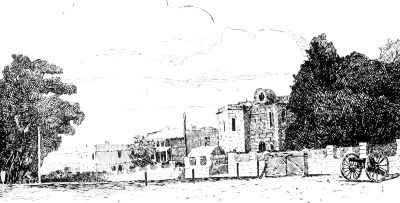
THE JAIL AT FREEMANTLE, WHERE THE PRISONERS WERE CONFINED
Then the convicts heard the appalling code of rules, with the penalty for violation, which was usually death; and then they were assigned to the road parties, and from daylight to dark, in the heat which made the cockatoos in the trees motionless and the parrots silent, they blazed their way through the Australian bush and forest.
The present was made horrid by the companionship of desperate and degraded men, "the poison flower of civilization's corruption," and the future seemed hopeless.
Meanwhile James Wilson sent out an appeal for rescue. He sent it to John Devoy in America.
CHAPTER VII
O'REILLY'S ESCAPE
The men to whom reference has been made in the preceding chapter were not the only Irish political prisoners. In 1876 there were seventeen still in prison for the attempted revolution of 1866 and 1867. The leaders had been pardoned, but this fact only emphasized the injustice to the men who had been swayed by love for Ireland to follow, and who were still paying the penalty of their devotion.
Some of them, and the number included Michael Davitt, were in prison in England. Some had been pardoned, some had been released by death. John Boyle O'Reilly had escaped. He had been in the convict settlement rather more than a year, and had been granted a few poor privileges on account of his ability and good conduct. He assisted one of the officers in his clerical work, and was appointed a "constable," with the duty of carrying dispatches from station to station and conducting refractory convicts in the road-gang to the prison.
But there was no promise of escape in this liberty, for there were but two avenues open, the trackless bush and the ocean. Suicide was better than flight to the bush; for if the convict could hide from the trained "trackers," natives with a keener intelligence and skill in tracking men than the blood-hounds of the South, the only alternative was death from hunger and thirst.
Yet O'Reilly reached a point of desperation where death seemed almost preferable to the awful associations and weary routine which made the life a horror to the poet. But when he told his plans to Rev. Father McCabe, whose parish was the bush country, and whose life work among the prisoners is a precious memory of good influence, the thoughtful man said, "It is an excellent way to commit suicide. Don't think of that again. Let me think out a plan for you."
After dreary months the good priest sent a man named Maguire, who promised to arrange with one of the New Bedford whaling captains who were expected with their vessels at Bunbury in February—it was then December—to secrete him aboard. Two months went by, and O'Reilly had now become so impatient that, hearing that three whaleships had put into Bunbury, he had determined to venture alone. That day Maguire came to him again with the information that Captain Baker of the whaling bark Vigilant of New Bedford had agreed to take him on board if he fell in with him outside Australian waters.
On an evening in February O'Reilly started for a hiding-place in the woods, and lay down beneath a great gum-tree at the woodside to await Maguire and another friend. At about midnight he heard "St. Patrick's Day" whistled.
It was the sweetest music he ever heard, for it was the signal of the men who had come to release him from a horrid captivity.
They rode for hours until they reached a dry swamp near the sea. Then they waited until a boat was brought. At daylight sturdy oarsmen had carried him almost out of sight of land, and in the afternoon they had reached the farther shore of Geographe Bay, near the place where they had arranged to await the Vigilant.
They had no water, and suffered horribly from thirst. Through the hot day which followed, O'Reilly lay on the sand, tortured with blistering pains and hunger. Maguire brought him food and water at last, and that night he slept on the boughs. In the afternoon the white sails of the whaleships were seen and the company put out, but to their amazement the Vigilant sailed away, never heeding their signals.
O'Reilly's heart was bitter. The men returned to the shore and resolved to leave O'Reilly in hiding while they returned home and arranged for his escape by one of the other whaleships. They left him in the secluded sand valley, promising to return in a week.
But O'Reilly could not wait. The next morning he put to sea alone in a dory, and at night he was on an unknown sea. The next noon he sighted the Vigilant again, and once more she sailed away. It should be said that Captain Baker did not see his boat on either of these occasions.
O'Reilly rowed all night, and in the morning reached the sand hills on the headland of Geographe Bay once more. Exhausted with fatigue and anxiety, he cared for nothing but sleep, and this he could have without stint in the secluded valley. Five days later his friends returned, having arranged with Captain Gifford of the whaling bark Gazelle of New Bedford to pick him up. In order to insure the fulfillment of this agreement, good Father McCabe had paid the captain ten pounds.
The next morning O'Reilly and his friends once more rowed out toward the headland. He was leaving Australia forever. Toward noon he was picked up by bark Clarice and subsequently was transferred aboard the Gazelle.
This is only the chief incident, briefly told, of the escape of O'Reilly. It suggested some years later a means to a more brilliant accomplishment, for the bravery and ingenuity of the officers of the New Bedford whaleship in a subsequent event, when an attempt to secure possession of the escaping prisoner at Roderique made a strong impression upon O'Reilly.
CHAPTER VIII
OTHER ESCAPES AND RESCUES
The rescue of the young Irish revolutionist, John Mitchell, was the first of the series of escapes participated in by Irish patriots. Mitchell was a talented and brave young man, whose life and history have been an inspiration to the devotees of Irish freedom. He was originally a writer upon the "Nation," but its policy was too conservative for his tastes, and in 1847 he founded a new journal called "The United Irishman." Mitchell belonged to that section of "young Ireland" which advocated immediate war with England. He believed the time was now ripe, and he set about making his paper as obnoxious to the English government as possible. He was a brilliant writer and an enthusiast for the revolution. His plan was to force the hand, first of the English government, then of the Irish people. He deliberately challenged the government to arrest the leaders of his party. Then he calculated that the Irish people would rise to defend or rescue their heroes, and rebellion would be effected.
For three years he continued his taunting tactics. He wrote in a strain of fiery sedition, urging the people to prepare for warlike effort, while he described how to make pikes and use them; how to cast bullets; and how to make the streets as dangerous for cavalry horses as Bruce made the field of Bannockburn. Some of the agencies which were suggested for the use of the people, when they should take up arms, were almost devilish in their ferocity, such as the employment of vitriol. At length the government was forced to recognize the violence of young Mitchell's newspaper attacks, and a measure was framed by the government to meet the case, enabling it to suppress newspapers like "United Irishman" and imprison the publishers. Mitchell was defiant still, and he was arrested. Greatly to his chagrin, no attempt was made to rescue him. "Had there been another Mitchell out of doors, as fearless and reckless as the Mitchell in the prison," writes a historian, "a sanguinary outbreak would probably have taken place." He was sentenced to expatriation for fourteen years, and was deported first to Bermuda and then to Australia. Smith O'Brien, Meagher, and other of the confederate leaders were likewise sent there.
In 1853 P.J. Smyth, who was known as "Nicaragua," a correspondent of the "New York Tribune," was commissioned by the Irish Directory of New York to proceed to Australia and procure the escape of Mitchell and his political associates. Mitchell was under parole, and his sense of honor would not permit him to leave without surrendering it. On June 8, 1853, in company with Smyth, he presented himself to the police magistrate in Bothwell and surrendered his parole.
"You see the purport of that note, sir," said he. "It is short and plain. It resigns the thing called 'ticket of leave' and revokes my promise, which bound me so long as I held the thing."
Then they left the magistrate, who was either stupid or afraid to make an attempt to detain them, and, mounting horses, rode through the Australian woods until Hobart Town was reached, when they sailed on the passenger brig Emma to Sydney, and in due time reached the United States. Meagher soon followed. O'Brien declined to have anything to do with any plot for escape while he was on parole, and his honorable conduct was rewarded by a pardon.
After reaching this country, Mitchell founded a paper advocating slavery, and championing the Southern cause in the Rebellion. One of his last acts here was a lecture, the proceeds of which went to swell the fund which was being raised for the Catalpa expedition. Later he returned to Ireland, where, owing to some defect in the criminal law, he could not be arrested, his time of penal servitude having expired, although he had not served it. He was elected to Parliament for Tipperary, was disqualified for a seat, and then reëlected. Some turmoil was expected, when Mitchell was withdrawn from the controversy by death.
"Weep for him, Ireland, mother lonely; Weep for the son who died for thee. Wayward he was, but he loved thee only, Loyal and fearless as son could be. Weep for him, Ireland, sorrowing nation, Faithful to all who are true to thee; Never a son in thy desolation Had holier love for thy cause than he."
The rescue of Kelly and Deasy at Manchester was daring and successful, but it was only accomplished by the killing of one man, and three were subsequently hanged for complicity in the affair. Colonel Kelly and Captain Deasy, Fenian agents in England, were captured by the Manchester police on September 11, 1867, and a week afterward were arraigned at the Manchester police office. Being identified as Fenian leaders, they were again remanded and placed in the prison van to be conveyed to the borough jail. They were in charge of Police Sergeant Charles Brett. When half way to the prison, and just as the van passed under the railway arch over Hyde Road at Bellevue, a man jumped into the middle of the road, pointed a pistol at the head of the van-driver and ordered him to stop. Immediately thirty armed men swarmed over the wall which lined the road. A shot was fired, and the driver was so frightened that he fell from his seat. One horse was shot, and the gallant police escorts scattered and ran for their lives.
An endeavor was then made to break in the door of the van. It was locked on the inside, and the key was in the possession of a police officer named Brett, who sat within. A shot was fired at the key-hole to blow off the lock, and the unfortunate police officer received a wound from which he died soon after. The doors were then opened, a woman prisoner in the van handing out the keys, which she found in the pocket of the officer. "Kelly, I'll die for you," said one of the Fenian rescuers.
He kept his word.
The prisoners were freed, and were seen to enter a cottage near the Hyde Road. They left it unfettered, and were never seen after by English officials. Several men were put on trial for the murder of Brett, and five were found guilty,—Allen, Larkin, O'Brien, Condon or Shore, and Maguire. The defense was that the prisoners only meditated a rescue, and that the death of the policeman was an accident. The five were sentenced to death, but the newspaper reporters were so certain that Maguire was not concerned in the affair that they joined in a memorial to the government, expressing their conviction that the verdict was a mistake. The government made an investigation, and found that he was not near the spot on the day of the rescue,—that he was a loyal private in the Marines, and not a Fenian. He was pardoned, but not unnaturally the circumstances caused a grave doubt with relation to the soundness of the verdict in the other cases.
Strenuous attempts were made to secure a commutation of the sentence. Mr. Bright was foremost with his exertions, and Mr. Swinburne, the poet, wrote an appeal for mercy, from which a few verses are quoted:—
"Art thou indeed among these, Thou of the tyrannous crew, The kingdoms fed upon blood, O queen from of old of the seas, England, art thou of them, too, That drink of the poisonous flood, That hide under poisonous trees? "Nay, thy name from of old, Mother, was pure, or we dreamed; Purer we held thee than this, Purer fain would we hold; So goodly a glory it seemed, A fame so bounteous of bliss, So more precious than gold.
"Strangers came gladly to thee, Exiles, chosen of men, Safe for thy sake in thy shade, Sat down at thy feet and were free. So men spake of thee then; Now shall their speaking be stayed? Ah, so let it not be! "Not for revenge or affright, Pride or a tyrannous lust, Cast from thee the crown of thy praise. Mercy was thine in thy might, Strong when thou wert, thou wert just; Now, in the wrong-doing days, Cleave thou, thou at least, to the right.
"Freeman he is not, but slave, Whoso in fear for the State Cries for surety of blood, Help of gibbet and grave; Neither is any land great Whom, in her fear-stricken mood, These things only can save. "Lo, how fair from afar, Taintless of tyranny, stands Thy mighty daughter, for years Who trod the winepress of war; Shines with immaculate hands; Slays not a foe, neither fears; Stains not peace with a scar! "Be not as tyrant or slave, England; be not as these, Thou that wert other than they. Stretch out thine hand, but to save; Put forth thy strength, and release; Lest there arise, if thou slay, Thy shame as a ghost from the grave."
The government refused to listen to the appeals, and Allen, Larkin, and O'Brien were hanged at Manchester on November 23, 1867, meeting death with courage and composure, we are told. Shore escaped, since he was proven to be an American citizen, and the English spared him lest the protection of the American government might have been invoked in his behalf.
One more incident may be added to the chapter of Fenian rescues. This was the attempt to blow up the House of Detention at Clerkenwell in December, 1867, where two Fenian prisoners were confined. This affair was farcical in conception, but its results were cruelly tragic.
"At the very time that this horrible crime and blunder was perpetrated," writes a historian, "one of the London theatres was nightly crowded by spectators eager to see an Irish melodrama, among the incidents of which was the discussion of a plan for the rescue of a prisoner from a castle cell. The audience was immensely amused by the proposal of one confederate to blow up the castle altogether, and the manner in which it occurred to the simple plotters, just in time, that if they carried out this plan, they must send the prisoner himself flying into the air. The Clerkenwell conspirators had either not seen the popular drama or had missed the point of its broadest joke."
A barrel of gunpowder was exploded close to the wall. Sixty yards of the prison wall were blown in, and many small dwellings in the vicinity were shattered. A dozen persons were killed, one hundred and twenty were wounded, and there were other serious consequences. Had the prisoners been near the wall, they would have been killed. Five men and a woman were put on trial for the crime, but only one man was convicted. He was found guilty on the evidence of an informer and executed. It was agreed that the persons who were concerned in this plot were "of that irresponsible crew who hang on to the skirts of all secret political associations, and whose adhesion is only one other reason for regarding such associations as deplorable and baneful. Such men are of the class who bring a curse, who bring many curses, on even the best cause that strives to work in secret. They prowl after the heels of organized conspiracy, and what it will not do they are ready in some fatal moment to attempt."
And this brings us back to the last and most important of Irish national rescue projects.
CHAPTER IX
APPEALS FROM AUSTRALIA
In 1870 the British government had granted conditional pardon to such political convicts in Australia as had been civilians at the time of their offense, but the military prisoners were exempted. Still the latter were not without hope, as the letter of one of them to O'Reilly, who had amnestied himself, shows. "It is my birthday as I write this," ran the letter, "and I know I am turning it to the best account by writing to such a dear old friend. Who knows? perhaps I may be able to spend the next one with you. If not, then we will hope for the following one. At all events, we must not despair."
The men were not always so calmly hopeful. Sometimes—
"There spake in their hearts a hidden voice Of the blinding joy of a freeman's burst Through the great dim woods. Then the toil accurst, The scorching days and the nights in tears, The riveted rings for years and years, They weighed them all—they looked before At the one and other, and spoke them o'er, And they saw what the heart of man must see, That the uttermost blessing is liberty."
And so it happened that Hassett, who was a man of remarkable daring, "with his eyes on the doom and danger," made his escape from the road party in April, 1869. He penetrated the bush to the sea, like O'Reilly; and after eleven months of privation he took refuge on board a ship at Bunbury. But he had "grasped the flower but to clutch the sting." As he reached the threshold of freedom he was snatched back. Discovered and recaptured, he was sentenced to three years of hard labor in the chain gang at Swan River, with six months' solitary confinement. The first part of the sentence is not without humor, since Hassett was serving a life sentence at hard labor when he made his escape, and there was no terror in the additional three years of servitude.
Upon the occasion of the Queen's accession to the title of Empress of India, one hundred and forty members of Parliament, including Mr. Bright, Mr. Plimsoll, Mr. Mundella, Mr. Fawcett, and many others of the ablest men of the House, presented a petition for the pardon of the political prisoners, but it was rejected.
And so perished the last hope of the friends of the prisoners of clemency from the government. "Delayed, but nothing altered, more straining on for plucking back," the friends of the prisoners, with an audacity which must be admired, determined then that they should be freed in spite of the government.
From time to time appeals had been sent forth from the prisoners in Australia to their friends at home and in America. Martin Hogan had written to Peter Curran in 1872, having seen Curran's name in a letter written by O'Donovan Rossa to the Dublin "Irishman." A copy of this paper had been smuggled into the prison, and suggested the appeal to America.
Then James Wilson wrote to John Devoy in New York, sketching a plan of action, and his appeal stirred the devoted man to a final gigantic effort. Devoy sent back the cheering response that steps were being taken for the execution of the plan.