How Man Learned to Write
Reading edition
It is a long time between the day of the cave-dwellers, with their instruments of chipped stone, and the present day of the pen. Yet wide apart as are these points of time, the trend of development can with but few obstacles be traced.
The story of the pen is a natural sequence of ideas between the first piece of rock scratched upon rock by prehistoric man, and the bit of metal which now so smoothly records our thoughts.
There was a time in the unwritten history of man when necessity prompted the invention of weapons, and the minds of these primitive men were concentrated upon this point. But the arts of war did not take up their entire time; some time must have been given to other pursuits. As the mind developed, and as an aid to memory, we find them carving, engraving, incising upon the rocks their hieroglyphics, which took the form of figures of men, habitations, weapons, and the animals of their period.

THE STYLUS
How Did Writing First Come About?
An apparently difficult question to answer, since without writing there can be no record of its origin, and without records no facts; yet the deduction is so clear that the answer is simple. Somewhere far, far back in the dawn of the world, back in the beginning of human history, in the epoch which we have now named the Quaternary Period, man lived in a dense wilderness surrounded by the wildest and most ferocious beasts. His home was a cave, exposed to the dangers incidental to that time and his surroundings, and he was of necessity compelled to look about for means of defense. With this idea in mind, he found that by striking one stone against another he knocked off chips, which chips could be used as arrow-heads, spears and axes. Following along these lines he discovered that by rubbing one of these chips against another there was left a mark, which was the first imitation of writing; that the sharper the edge of the chip, the deeper was the scratch, and consequently the more distinct the mark.
EARLIEST WAYS OF WRITING
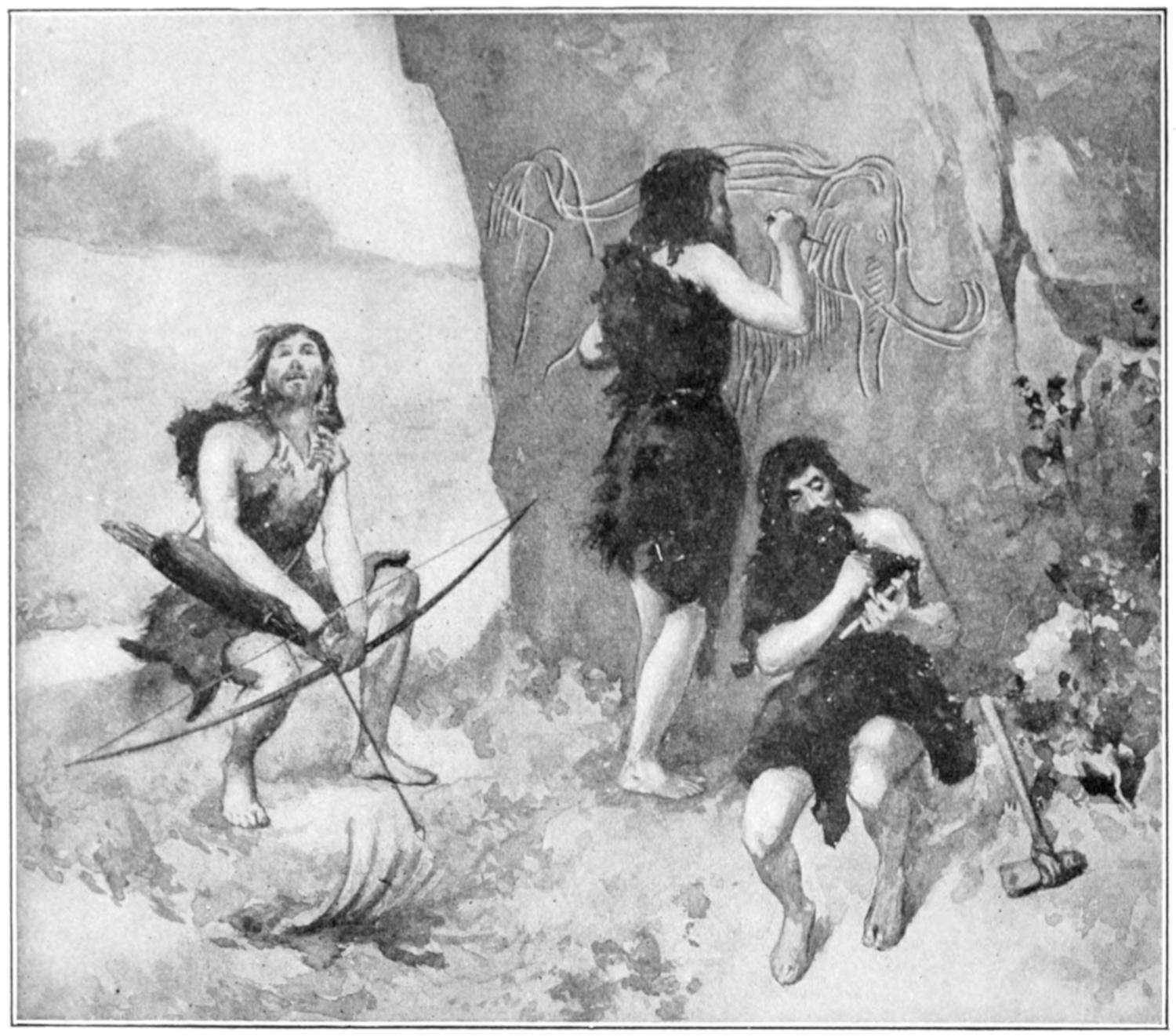
THE FIRST IMITATION OF WRITING
Next it was discovered that certain stones, such as flint, serpentine and chalcedony, marked more readily than others; that the elongated chip was handled with more facility; that by rubbing one stone against another the finest possible points and edges might be obtained. Thus in the Age of Stone was the long, tapering instrument of stone, the first pen, the Stylus, originated.
Then came the time, known as the Bronze Age, when men learned to hammer metal into shapes, and metal having many advantages over stone, the stylus of stone gave way to one of iron. So we find that in the time of the Egyptians, about fourteen or fifteen centuries B.C., an iron stylus was in use for marking on soapstone, limestone and waxed surfaces. An improvement in this metal stylus was that the blunt end was convex and smooth, the purpose of which was to erase and smooth over irregularities. In some cases it was pointed with diamonds, which gave it greater cutting properties. The iron stylus was also used by the Egyptians of that period, as well as in later times, with a mallet, after the manner of the modern chisel (which indeed it resembled) for cutting out inscriptions on their monuments.

THE BRUSH
WRITING FLUIDS HELPED DEVELOPMENT
In course of time a marking fluid was discovered, and this made necessary a writing instrument which could spread characters on parchment, tree-bark, etc. Thus it was found that by putting together a small bunch of hairs, arranging them in the shape of an acute cone, and fastening them together in some manner, an instrument could be made which would carry fluid in its path, and thus make a mark of the desired shape. The hair best adapted for the purpose was found to be camel’s hair, while that of the badger and sable was also used. A tube cut from a stalk of grass answered for a holder. The hairs were held together by a piece of thread which was then drawn through the tube, thus making the first writing instrument to be used in conjunction with ink, the Brush.
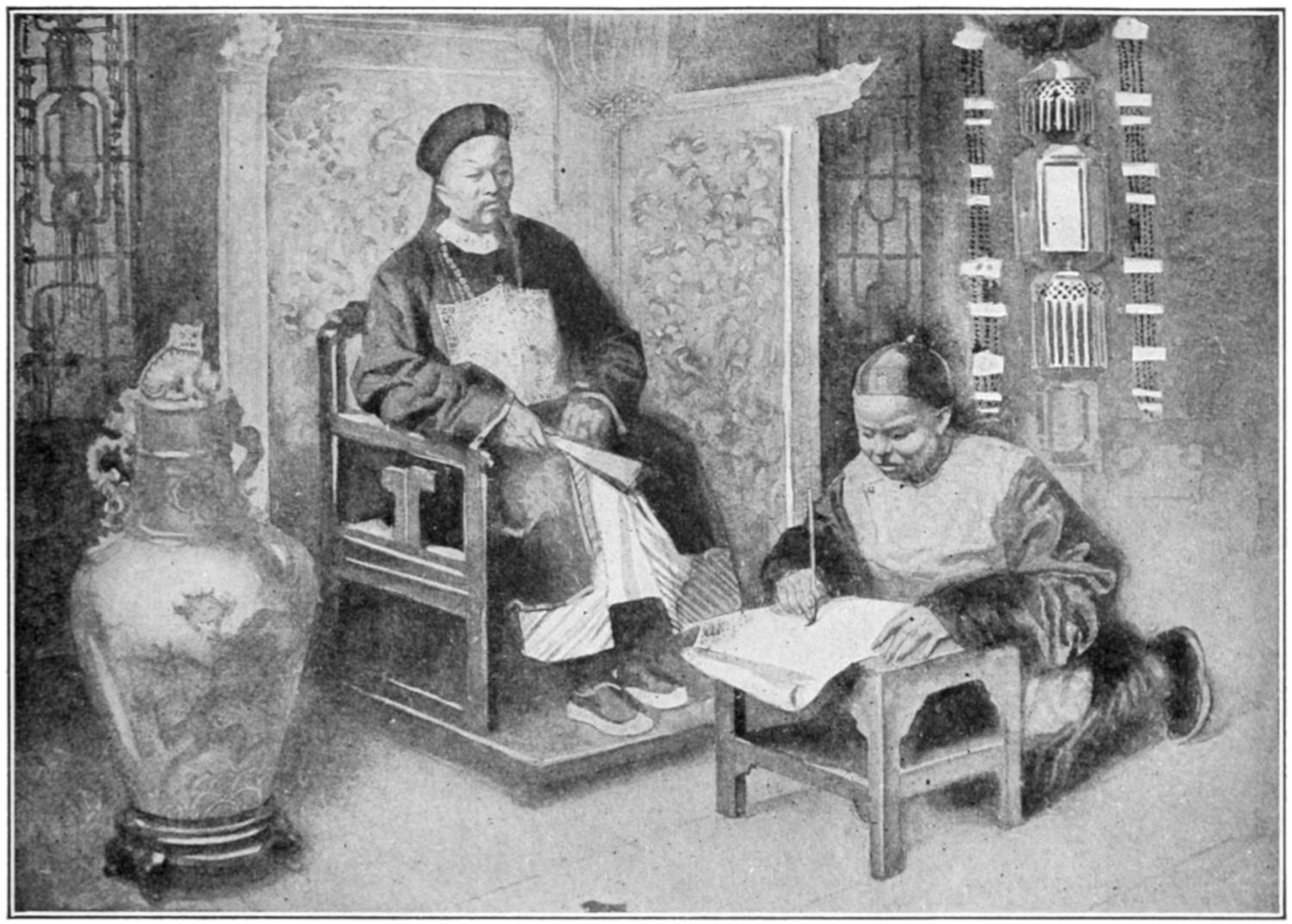
HOW THE CHINESE IMPROVED METHODS
Just when the Brush came into existence is not definitely known, but with this instrument the great Chinese philosopher Confucius wrote his marvelous philosophy. The Brush as a writing instrument is generally associated with the Chinese, because the Chinese use this instrument even to the present day, it being especially adapted to their letters and mode of writing. We have now a pen (brush), as well as an ink, but the material upon which the people of that age wrote, in lieu of paper, was still very crude, parchment and tree-bark being most commonly used.

THE QUILL
THE EARLIEST FORMS OF PAPER
Just as the discovery of an ink wrought a change from the Stylus to the Brush, so the advent of papyrus, a paper made from the papyrus plant, which was much finer and more economical than parchment, brought with it a pen better adapted for this material. It was found that the Reed, or Calamo, as it was called, which grew on the marshes on the shores of Egypt, Armenia and the Persian Gulf, if cut into short lengths and trimmed down to a point, made an admirable pen for this newly discovered paper. This was the true ancient representative and precursor of the modern pen. The use of the Reed can be traced to a remote antiquity among the civilized nations of the East, where Reeds are in use now as instruments for writing.
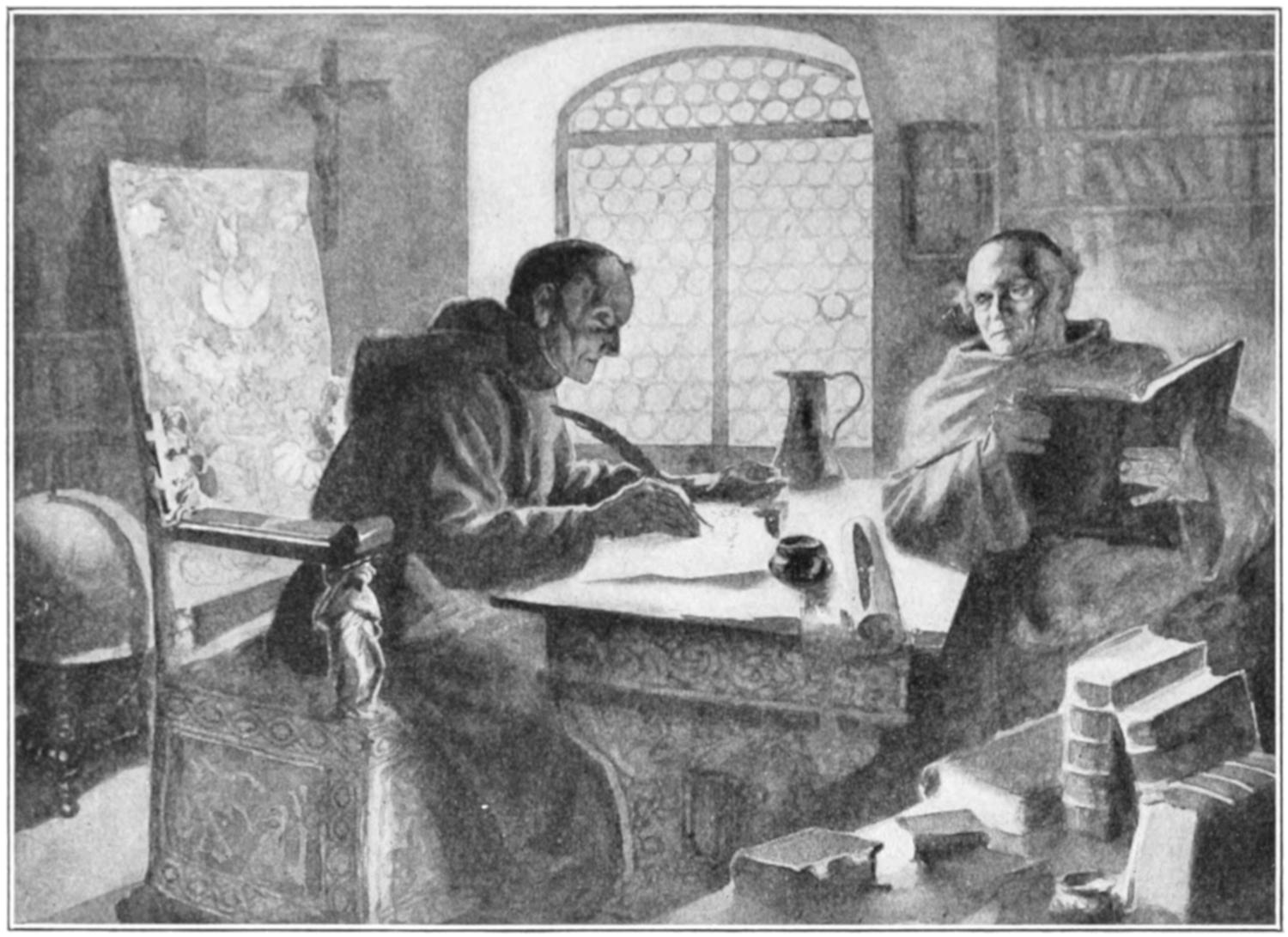
HOW THE MONKS DID THEIR WRITING
The introduction of a finer paper rendered necessary a finer instrument of writing, and the quill of the goose, swan, and, for very fine writing, of the crow, was found to be well adapted. Immense flocks of geese were raised, chiefly for their quills. The earliest specific allusion to the quill occurs in the writings of St. Isadore de Seville, seventh century, although it is believed to have been in use at an earlier period. The quill was used for many centuries. Most of the writing during its reign was done in the monasteries by the monks, and in the eighteenth century, when quill-making became quite an art, every monk and every teacher was expected to be proficient in the art of making a pen from a quill. The preliminary process of preparing the quills was first to sort them according to their quality, dry in the hot sand, then clean them of the outer skin, and harden by dipping in a boiling solution of alum and diluted nitric acid. During the last century many efforts were made to improve the quill, its great defect being speedy injury from use. Ruby points were fitted to the nib, but this was found impracticable on account of the delicacy of the work. Joseph Bramah devised, in 1809, a machine for cutting the quill into separate nibs for use in holders, thus making several pens from one quill and anticipating the form of the modern pen.

THE STEEL TUBE PEN
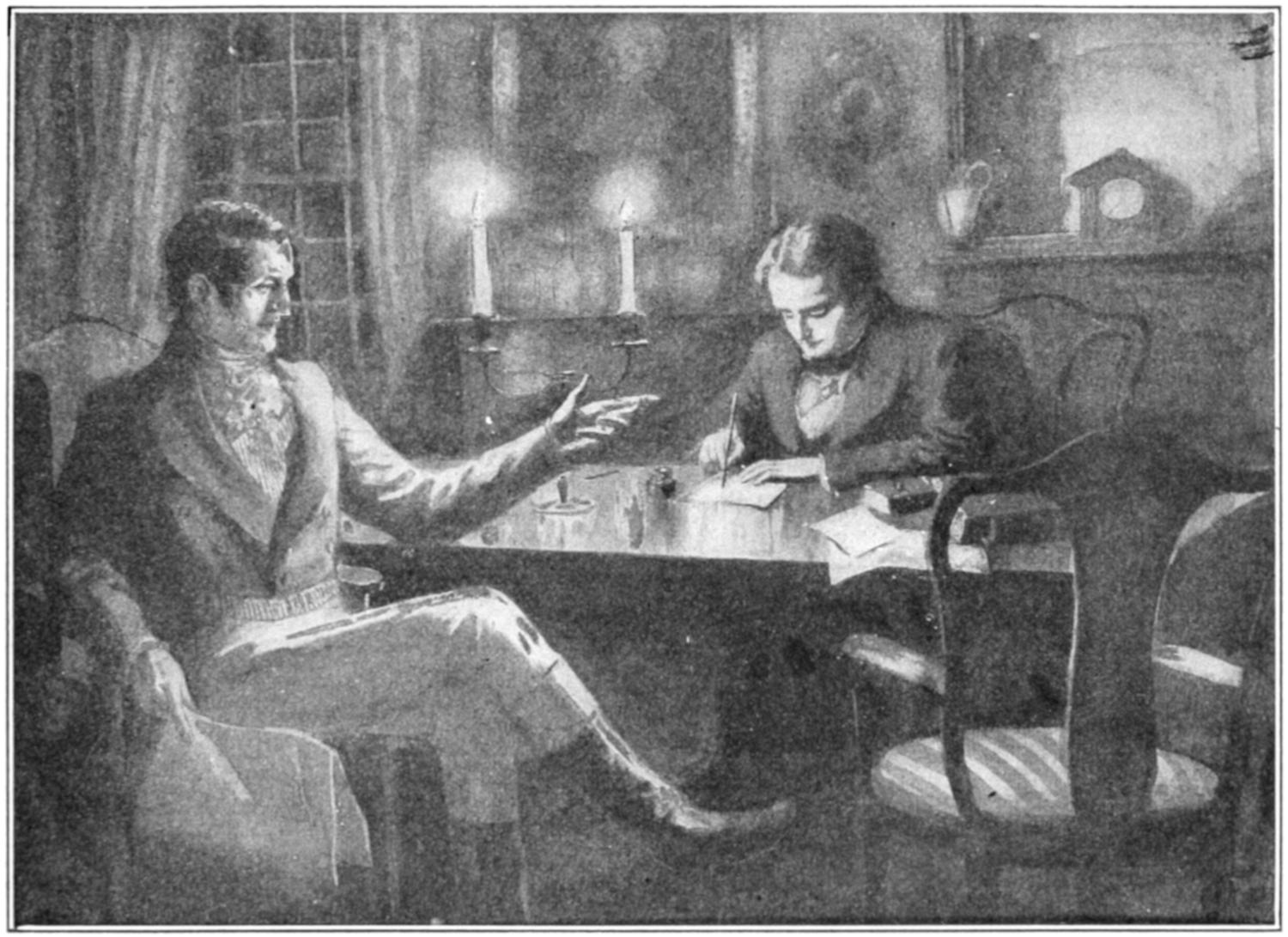
THE FIRST STEEL PEN
The quill held sway as writing instrument for many years, and with it the greatest masterpieces in literature have been written. Many attempts, however, had been made to supersede the quill by a pen not so easily injured by use, but it was not until about 1780 that, after much experimenting and numerous failures, Mr. Samuel Harrison introduced the first metallic pen.
THE INVENTION OF THE PEN
This pen was made as follows:
A sheet of steel was rolled in the form of a tube. One end was cut and trimmed to a point after the manner of the quill, the seam where both edges of the tube met forming the slit of the pen. This was soon after improved upon by cutting a rough blank out of a thin sheet of steel, which blank was filed into form about the nib, rounded, and with a sharp chisel marked inside where the slit was to be in the finished pen. After tempering, the nib was ground and shaped to a point suitable for fine or broad writing, as required.

THE MODERN STEEL PEN
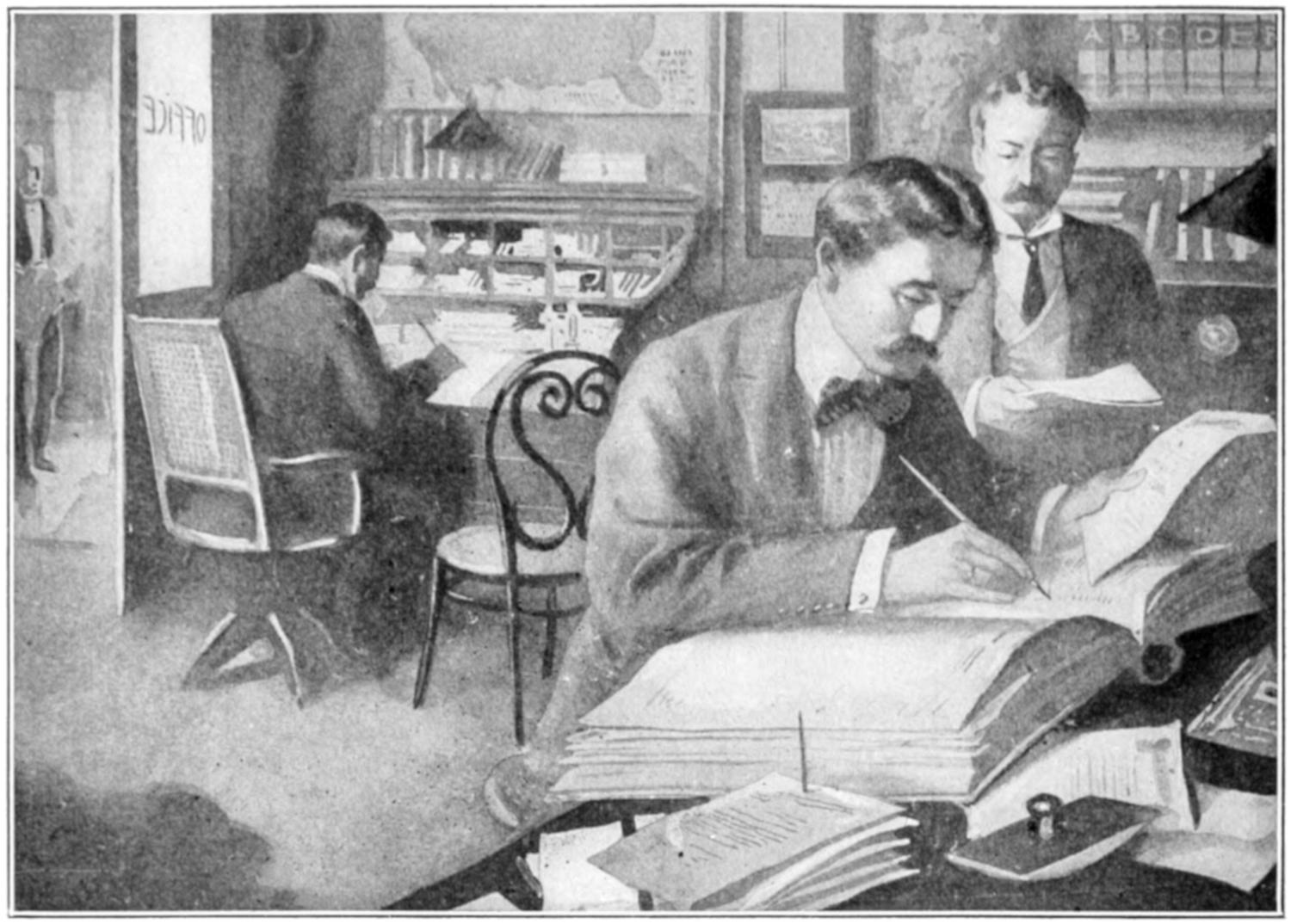
THE MODERN WRITING PEN
Once started, the steel pen made rapid strides in improvement. Mr. James Perry, in 1824, started in England the manufacture of pens on a large scale, and to him as well as Gillott is due the many improvements which followed.
Perry was the first to manufacture “slip” steel pens, up to this time the pen and holder being one piece.
“In times of yore, when each man cut his quill With little Perryian skill; What horrid, awkward, bungling tools of trade Appeared the writing instruments, home made!”
THE MODERN WAY OF WRITING
The steel pen of the present day has reached the pinnacle of perfection, and the method of manufacture of this little but mighty instrument of writing, though of extreme interest, is practically unknown by the general public. To explain in detail the development from the rough steel to the finished pen would needs make a book in itself. And as it has been our intention to dwell, not upon the manufacture of the pen, but to trace its history and development from its most crude form, the Stylus, to the perfect and smooth-writing steel pen of to-day, we will close our story with the well-worn epigram of old, grim Cardinal Richelieu:
“Beneath the rule of men entirely great, The Pen is mightier than the Sword!”
How a Steel Pen is Made
In the picture on the following page, we see the various processes required in making a steel pen, together with a description of each process:
HOW A STEEL PEN IS MADE
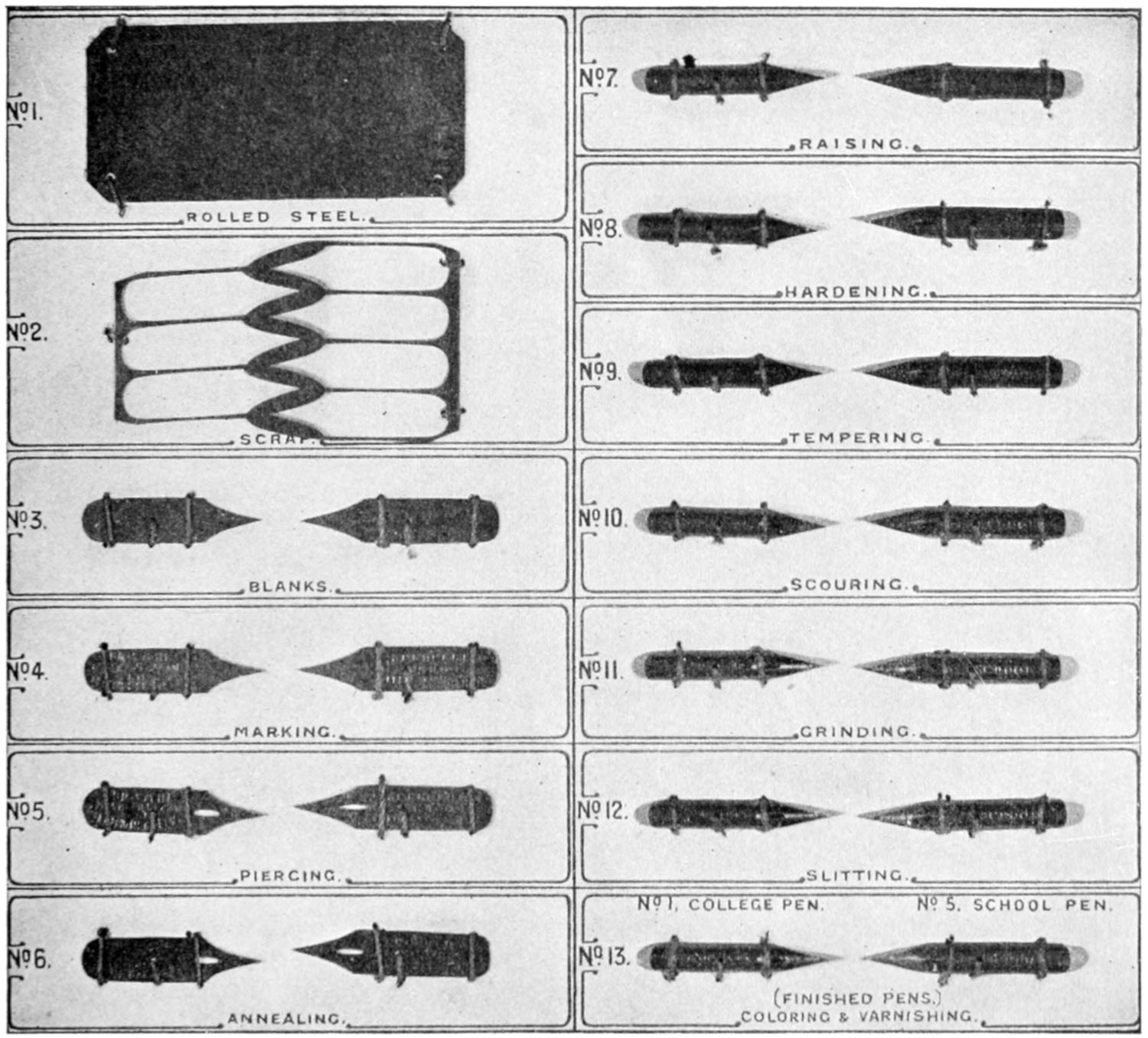
No. 1. ROLLED STEEL. No. 2. SCRAP. No. 7. RAISING. No. 8. HARDENING. No. 9. TEMPERING.
No. 3. BLANKS. No. 10. SCOURING.
No. 4. MARKING. No. 11. GRINDING.
No. 5. PIERCING. No. 12. SLITTING.
No. 6. ANNEALING. No. 1. COLLEGE PEN No. 5. SCHOOL PEN. No. 13. (FINISHED PENS.) COLORING AND VARNISHING.
The pictures herewith printed are by the courtesy of the Spencerian Pen Company
Raw Material.—The sheet steel is cut into strips of a convenient length and width, and then rolled cold to the exact gauge necessary, according to the pen to be manufactured.
Cutting the Blank.—This is a mechanical operation, and is effected with the aid of a screw press, in which a pair of tools corresponding with the shape of the pen has been fixed. On pulling a lever the screw descends, driving the punch into the bed, which cuts a blank with a scissors-like action, from the strip of steel.
Marking the Name.—This is done by means of a punch fixed in the hammer of a stamp, worked by the foot. The blanks are rapidly introduced between guides fixed on the bed of the stamp, and as soon as the hammer has fallen the blank is thrown out and a new one introduced.
Piercing.—The tools for this operation are of a delicate character. The blanks are fed by hand, as above explained, and the hole punched by a screw press. This is a most important process; the pierce hole and slide slits determine the elasticity and regulate the flow of the ink on the pen.
Annealing or Softening.—The blanks are still moderately hard and before raising, it is necessary to soften them by heating to a dull red, and allowing them to gradually cool.
Raising.—The operator places one of the soft blanks on a die to which guides are affixed to keep it in position; then by moving the handle of the press, the screw descends, forcing a die which rounds the blank into the form of a pen.
Hardening.—The pen is now too soft, and is hardened by heating and the immersing in oil while hot, after which it is thoroughly cleansed from all grease.
Tempering.—The pens are now hard but very brittle, and in order to correct this defect they are placed in an iron cylinder, and kept revolving over a gas or charcoal fire until they acquire a proper temper.
Scouring.—After soaking in diluted sulphuric acid, the pens are placed in iron cylinders containing fine stone and water, or fine sand, and revolved for several hours. When taken from these cylinders they are bright and smooth.
Grinding.—This is a process performed by hand on a “bob,” or wooden wheel covered with leather and dressed with emory, revolving at high speed. A light touch on the emory wheel grinds off the surface between the pierce hole and the point, to obtain proper action and to assist the flow of ink.
Slitting.—This is a hand process performed with a press, the cutters being as sharp as razors. The pen is placed in position by means of guides, and must be cut with utmost precision from the pierce hole to the point, the point must be divided exactly in the middle, the least variation making the pen defective.
Coloring and Varnishing.—The pens having been polished to a bright silver color are placed in an iron cylinder and kept revolving over a gas or charcoal fire until the tint required is produced. They are then immersed in a bath of shellac varnish, and afterwards dried in an oven.
Examination.—Every steel pen passing through the factory is most carefully examined before being boxed, and should the least fault be found, it is at once rejected.
Why Does a Pencil Write?
You can use a pencil to write with or to make marks, because the pencil wears off if you are scratching it on a surface that is rough enough to make it do so. Writing, you know, is only a way of making marks in such a manner as to make them mean something. You cannot write with a pencil on a pane of glass, because the glass is so smooth that when you move the pencil over its surface, the pencil will not wear off. To prove to yourself that the tip of the pencil constantly wears off when you write, you have only to recall that when you write with it a pencil keeps getting shorter and shorter. A slate-pencil will wear down short by merely writing with it, but a lead-pencil must be sharpened—that is, you must keep cutting away the wood in order to get at the lead inside.
Why Can’t I Write on Paper With a Slate-pencil?
You cannot do so, because it takes something with a rougher surface than paper to wear off the point of a slate-pencil. A slate is used to write on with slate-pencils, because slate wears off the end of the pencil easily, and also because you can rub out the writing on a slate with water. Lead-pencils are used for writing on paper, but you must have a rough surface on the paper to write on even with a lead-pencil. Some kinds of papers have such a smooth surface that you cannot write on them with a lead-pencil.
How Does a Pen Write?
Writing with a pen, however, is quite different from writing with any kind of pencil, because in writing with ink we do not wear off the end of the pen, but have the ink flow from the pen. For this purpose we must have a surface that will absorb the ink from the pen, and draw the ink down off the pen and make it flow. A slate has no power of absorption and therefore cannot draw the ink. A piece of blotting paper is the best kind of paper for absorbing ink, but it is too much so for writing purposes. For writing with ink we need a comparatively hard surfaced paper that has absorbent qualities, but not too absorbent.