THE POLLEN SUPPLY.
Reading edition
When bees collect pollen from flowers they may be engaged in this occupation alone or may combine it with nectar gathering. From some flowers the bees take only nectar, from others only pollen; a third class of flowers furnishes an available supply of both of these substances. But even where both pollen and nectar are obtainable a bee may gather nectar and disregard the pollen. This is well illustrated by the case of white clover. If bees are watched while working upon clover flowers, the observer will soon perceive some which bear pollen masses upon their hind legs, while others will continue to visit flower after flower, dipping into the blossoms and securing a plentiful supply of nectar, yet entirely neglecting the pollen.
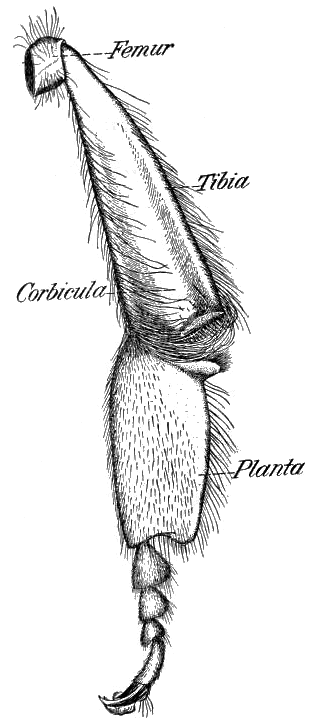
Fig. 3.—Outer surface of the left hind leg of a worker bee. (Original.)
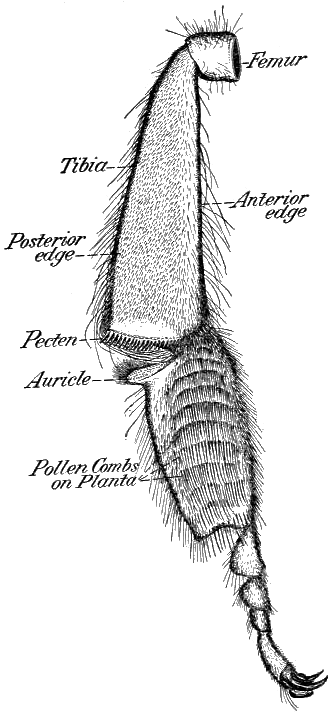
Fig. 4.—Inner surface of the left hind leg of a worker bee. (Original.)
The supply of pollen which is available for the bees varies greatly among different flowers. Some furnish an abundant amount and present it to the bee in such a way that little difficulty is experienced in quickly securing an ample load, while others furnish but little. When flowers are small and when the bee approaches them from above, little, if any, pollen is scattered over the bee's body, all that it acquires being first collected upon the mouth and neighboring parts, of a Very different conditions are met with when bees visit such plants as corn and ragweed. The flowers of these plants are pendent and possess an abundant supply of pollen, which falls in showers over the bodies of the bees as they crawl beneath the blossoms. The supply of pollen which lodges upon the body of the bee will thus differ considerably in amount, depending upon the type of flower from which the bee is collecting, and the same is true regarding the location upon the body of a bee of pollen grains which are available for storage in the baskets. Moreover, the movements concerned in the collection of the pollen from the various body parts of the bee upon which it lodges will differ somewhat in the two cases, since a widely scattered supply requires for its collection additional movements, somewhat similar in nature to those which the bee employs in cleaning the hairs which cover its body.