WAREHOUSE DEPARTMENT.
Reading edition
THE WAREHOUSEMAN.
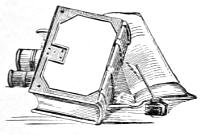
The warehouseman should be a man sober and upright, and thoroughly competent to the business, on whom entire reliance may be placed,—one who will act upon the principle of making his employer’s interest the end of all his action. The employer or foreman should frequently look to the concerns of the warehouse, and see that all the work is forwarded with despatch and accuracy.
The warehouseman should be provided with a book, termed “The Warehouse Book,” with pages annexed, on the following plan, and about the size of foolscap quarto:—
Butler’s New American Arithmetic. (No. Printed, 5000.)
DATE. RECEIPT OF PAPER, AND OF WHOM. NO. OF COPIES DELIVERED. TO WHOM DELIVERED, AND RECEIPTED FOR. FOR WHOM.
1878.
May 3. 43 reams of E. C. & P. H. Warren.
June 8. 40 ditto.
” 24. 2500 Speel & Co. J. H. Butler & Co.
” 30. 2000 R. Eyelet, binder.
Aug. 4. 300 Paul Picot. ”
” 5. With waste 230 Wm. Crouse. ”
5030
When the paper is brought, the warehouseman should at once compare it with the bill of delivery, and, if right, enter the quantity immediately into the warehouse book. The number of printed copies delivered to the binder or publisher should also be entered, and his signature be taken at the time of delivery. This plan will prevent disputes with the bookseller or author relative to the receipt of paper or the delivery of sheets.
Having entered the receipt of the paper, the warehouseman should then write on each bundle, with red chalk, the title of the book it is to be used for, and remove it into a convenient part of the warehouse, or into a store-room provided for that purpose.
GIVING OUT PAPER TO WET.
A bundle of paper consists of two reams, or forty quires, each quire containing twenty-four sheets. Formerly, the two outside quires were called cassie quires, as they were mostly made up of torn, stained, wrinkled, or otherwise imperfect sheets. At present, all the quires are considered good, although some outer sheets are injured by the twine used in tying up the bundles.
It is the general custom to print of every work what is termed an even number,—either 250, 500, 750, 1000, &c. These quantities are given out for the wetter in tokens,—viz.: for 250 sheets, one token, containing 10 quires 18 sheets; for 500, two tokens, one 11 quires, and the other 10 quires and a half; for 750, three tokens, two of them 11 quires each, and the other 10 quires 6 sheets; and for 1000, four tokens, three of them 11 quires each, and the other 10 quires. If a work is printed in half-sheets, it of course requires only half the above quantities.
It would be difficult to form any positive and invariable rule for the quantity to be given out for short numbers, as it must depend in some degree upon the quality of the paper. The more expensive papers, on which, generally, short numbers or line copies are printed, must be given out more sparingly than common paper, and the tympan and register sheets be supplied by a more common sort, cut to the size of the finer. For numbers up to 150, on ordinary paper, six sheets over will be sufficient. Some publishers are very testy on this point of allowance for waste.
In giving out paper for what are termed jobs, the amount necessary can easily be found by a simple calculation in division.
For example, a job, (label or any thing else,) 750 in number, 32 on a sheet, will require 24 sheets, which will give an overplus of 18. Where a sheet has to be cut into many parts, allowance must be made for accidents. The overplus sheets are allowed for tympan-sheets, register-sheets, and other incidents, such as bad sheets, faults committed in rolling, pulling, bad register, &c.; in any of these casualties, the pressman doubles the sheet in the middle and lays it across the heap. In laying out the paper, the warehouseman reverses every other token, to enable the wetter to distinguish the different tokens. When this is done, he labels the heap, thus: American Printer, May 10, 1878,—that the pressman may know how long it has been wet, and the state it is in for working.
32) 750 (23
64
110
96
14
HANGING UP PAPER TO DRY.
When the paper is worked off and counted, the warehouseman carries the heap to the drying-room, where the poles are fixed for the purpose of hanging the sheets upon to dry, and lays it down on a table of convenient height, with one end of the heap toward him. He then takes the handle of the peel in one hand, and lays the top part down upon the heap, so that the upper edge may reach near the middle of the sheet; then, with the other hand, he doubles over as much of the printed paper as he thinks sufficient to hang up at one lift, which should be about twelve sheets, according to the pole-room to hang them.
In hanging up the lifts, he places them so that each lift will lap about an inch over the preceding one. It is necessary, where the end of the pole is exposed to a strong current of air from a window, to lock the last lift. This is done by folding a lift two or three times, so as to concentrate its weight in a small compass, and hanging this over the last lift near the window.
TAKING DOWN SHEETS WHEN DRY.
When the sheets are sufficiently dry, the warehouseman takes his peel and begins with the last lift hung up, on account of the wrapper being with that lift, and proceeds in the reverse order of hanging them up, successively taking them down, and brushing them, if dusty, till he has finished the whole.
Another way of taking the sheets down from the poles is, to lay the flat side of the peel against the edge of that lift which hangs over the other sheets, and push the peel forward, forcing them to slide, one lift over another. But by this method the dust which settles on the sheets while hanging is rubbed in.
FILLING IN AND PRESSING SHEETS.
When the sheets are taken down, the warehouseman removes them to the warehouse, where they are filled in between smooth pasteboards made for the purpose. This operation is generally performed by boys, who, after a little practice, become exceedingly expert at it. We shall try to be somewhat minute in our description of this operation. We will suppose the pasteboards to have sheets between them, which will be the case after they have been once used. The warehouse being provided with long tables or benches, secured to the wall, and a sufficient number of movable tables about the size of the largest paper, the warehouseman places one of the small tables endwise against the long one, forming a right angle, upon which to lay the pressed sheets as they come out of the boards; the boy then takes his stand at the right side of the table, with the dry unpressed sheets at his right hand and the pasteboards at his left, somewhat elevated, leaving sufficient space before him to fill in the sheets. He then proceeds as follows. He first moistens the thumb of his right hand and reaches across to the pasteboards at his left, drawing one off with his thumb and placing it before him; he then catches a sheet of the dry paper also with his right hand and places it as near the centre of the pasteboard as possible; then, twisting his body nimbly round to the left, he slides the pressed sheet from the pile of pasteboards to the table at his left side, and, in resuming his former position, again draws off a pasteboard with his thumb; and so on, till the gross or bundle is filled. It is then laid aside, and another bundle filled and laid across the former, taking care always to keep the bundles separated until they are put in press, when they are separated by smooth boards made of cherry or other hard wood. The bundles being all filled in, the warehouseman proceeds to fill up the standing-press, putting in one bundle at a time and placing a pressing-board between them; there should also be a stout plank introduced between the top board and the platen. In case the press should not hold quite as much as desired, more may be got in by unscrewing the press after it has been once screwed down. The press is finally screwed down as tight as possible. It should remain so for at least twelve hours, when it should be entirely emptied before the sheets are taken out of the boards. The sides of the piles or heaps must be kept perfectly even. In large offices, hydraulic presses are used.
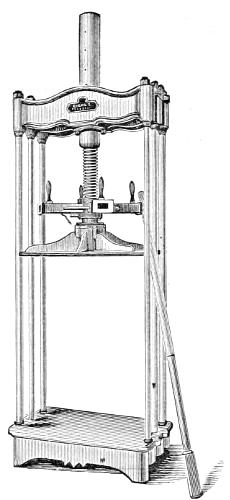
IMPROVED STANDING PRESS.
COUNTING OUT AND PUTTING AWAY SHEETS.
When the sheets are taken out, the warehouseman knocks them up, and, after counting them into quires, ties them up in wrappers, marking the name of the work and signature on each bundle. Two or three sheets of each signature should be laid aside, in case the author, bookseller, or employer should want a copy of the work or a specimen of as many sheets as are finished.
STANDARD SIZES OF MACHINE-MADE PAPER.
(Furnished by A. G. Elliot & Co., Philadelphia.)
PRINTING PAPER.
Medium inches, 19 × 24
Royal 20 × 25
Super Royal 21 × 27
Imperial 22 × 32
Royal and Half, 25 × 30
Double Medium 24 × 38
Imperial and Half 32 × 33
Double Super Royal 27 × 42
Double Imperial, 32 × 44.
Other sizes kept on hand, but without technical names, are as follows:—22 × 28; 24 × 36; 25 × 39; 26 × 40; 28 × 42.
WRITING PAPER.
Note inches, 8 × 10
Packet Note 9 × 11½
Letter 10 × 16
Commercial Post 11 × 17
Packet Post 11½ × 18½
Foolscap 13 × 16
Flat Cap 14 × 17
Crown 15 × 19
Demy 16 × 21
Folio 17 × 22
Medium 18 × 23
Royal 19 × 24
Super Royal 20 × 28
Imperial 23 × 31
Elephant 23 × 28
Columbier 23 × 34
Atlas 26 × 33
Double Elephant 27 × 40
Antiquarian 31 × 53
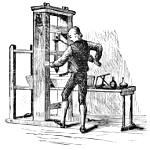
A TABLE
For ascertaining the Number of Forms for a Book of any Size, and the Quantity of Paper necessary to print a thousand copies in any form, from Octavo to 36mo, half-sheetwise.
NO. OF FORMS. 8vo. 12mo. 16mo. 18mo. 24mo. 32mo. 36mo. PAPER FOR 1000 COPIES.
PAGES. PAGES. PAGES. PAGES. PAGES. PAGES. PAGES. REAMS. QRS.
1 8 12 16 18 24 32 36 1 2
2 16 24 32 36 48 64 72 2 4
3 24 36 48 54 72 96 108 3 6
4 32 48 64 72 96 128 144 4 8
5 40 60 80 90 120 160 180 5 10
6 48 72 96 108 144 192 216 6 12
7 56 84 112 126 168 224 252 7 14
8 64 96 128 144 192 256 288 8 16
9 72 108 144 162 216 288 324 9 18
10 80 120 160 180 240 320 360 11
11 88 132 176 198 264 352 396 12 2
12 96 144 192 216 288 384 432 13 4
13 104 156 208 234 312 416 468 14 6
14 112 168 224 252 336 448 504 15 8
15 120 180 240 270 360 480 ... 16 10
16 128 192 256 288 384 512 ... 17 12
17 136 204 272 306 408 ... ... 18 14
18 144 216 288 324 432 ... ... 19 16
19 152 228 304 342 456 ... ... 20 18
20 160 240 320 360 480 ... ... 22
21 168 252 336 378 504 ... ... 23 2
22 176 264 352 396 ... ... ... 24 4
23 184 276 368 414 ... ... ... 25 6
24 192 288 384 432 ... ... ... 26 8
25 200 300 400 450 ... ... ... 27 10
26 208 312 416 468 ... ... ... 28 12
27 216 324 432 486 ... ... ... 29 14
28 224 336 448 504 ... ... ... 30 16
29 232 348 464 ... ... ... ... 31 18
30 240 360 480 ... ... ... ... 33
31 248 372 496 ... ... ... ... 34 2
32 256 384 512 ... ... ... ... 35 4
33 264 396 528 ... ... ... ... 36 6
34 272 408 544 ... ... ... ... 37 8
35 280 420 560 ... ... ... ... 38 10
36 288 432 576 ... ... ... ... 39 12
37 296 444 592 ... ... ... ... 40 14
38 304 456 608 ... ... ... ... 41 16
39 312 468 ... ... ... ... ... 42 18
40 320 480 ... ... ... ... ... 44
Example.—How many reams will be required for a 12mo book containing 408 pages? Find the number of pages (408) in the 12mo column: in the outer column on the left of the table the number of forms is seen, and in the outer column on the right the quantity of paper required is given.