The Towers, Courts, and Halls of the Alhambra.
Reading edition
“AS an Englishman approaches the Alhambra,” says Ford, “he rubs his eyes, for he finds himself in a park of real English elms. Delicious green roofs they form, but no more in keeping with the old Moorish Palace than Bolton Abbey would be with the Pyramids. But why English? Why; because this wood was the present of the Iron Duke, who had the estate of Soto de Roma, with its four thousand once pheasant-haunted acres given him reluctantly by the grateful Ferdinand VII., and who sent out these elms from England.”
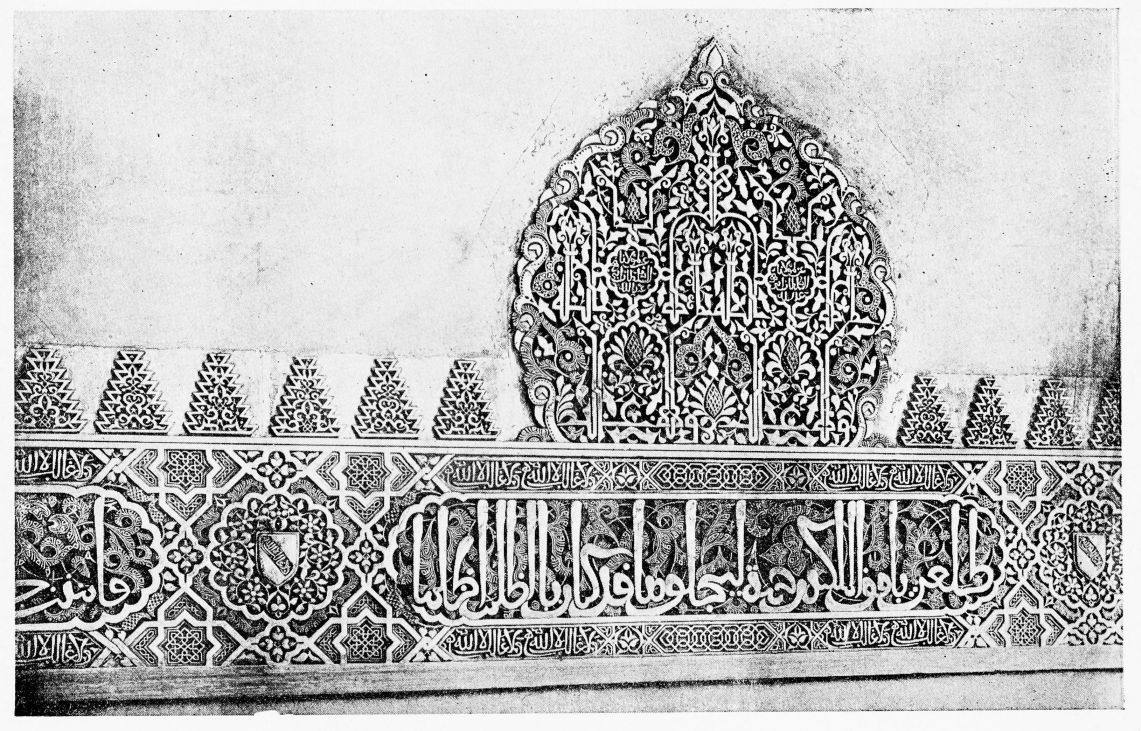
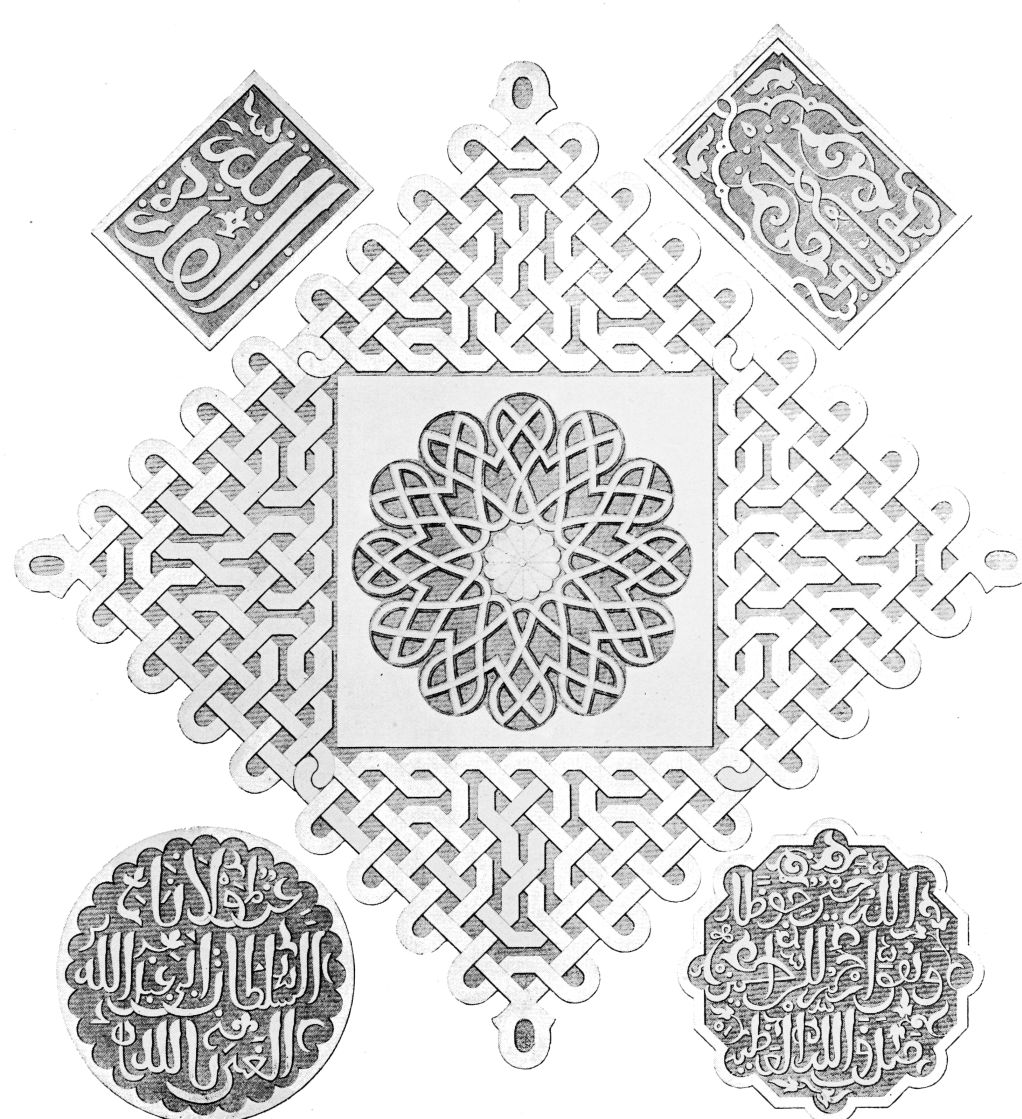
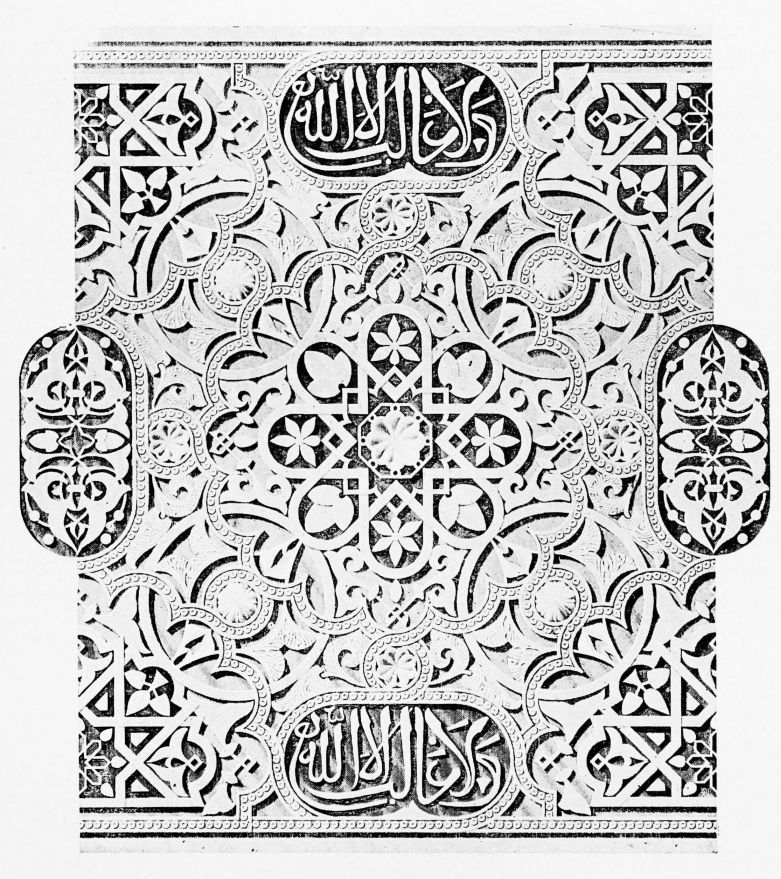
The first feeling which strikes a visitor on entering the Alhambra is one of amazement to find himself suddenly transported to fairly-land. Arches bearing upon pillars so slender that the wonder is they are able to sustain the superincumbent weight—the style differing from all regular orders of architecture—ceilings and walls incrusted with fretwork so minute and intricate that the most patient draughtsman finds it difficult to follow. Yet, although the patterns present so great variety, the compotent parts are, in their origin, the same; and it is by changing the colours and juxtaposition of the several pieces that the astonishing diversity is produced. This exquisite Moorish work appears to have been accomplished by means of moulds applied successively, the continuity of the design being preserved with greatest care. Amidst or around the complex forms are constantly disposed Arabic sentences of moral and religious tendency, the most oft-repeated homily being, “Wa la ghálib ila Alá,” that is, “There is no conqueror but God:” the sentence being sometimes enclosed within Cufic characters written twice, and forming the words signifying “Grace,” and “Blessing,” the letters so curiously interwoven that the text may be read from left to right, and from right to left.
PUERTA DE JUSTICIA—THE GATE OF JUSTICE.
The Gate of Justice has ever been the principal entrance into the fortress. Like all the other towers of the Alhambra, it is built of concrete, the jambs of the doorway being of white marble, and the elegant horseshoe arch and spandrils of brick.
The Gate of Justice was erected in 1338 by the Sultán Yúsuf, and was so called because (in accordance with ancient practice all over the East) the Kings of Granada occasionally sat under it to administer justice to every class of their subjects. The hand and key, which are seen in relievo upon the stone, have given rise to a variety of conjectures, more or less plausible.
The quaint open hand, carved over the outer arch, has a talismanic and Arabian Nights effect. Some authorities say it typifies the hand of God, the symbol of power and providence; others suppose it to be a type of the five commandments of Islam—to fast; to give alms; to smite the infidel; to make the pilgrimage to Mecca; and to perform purifications. But it is, in all likelihood, the old Roman talisman against the Evil Eye, such as we see in coral on Neapolitan lockets. The Evil Eye is especially dreaded by Orientals, and the Spaniards tremble at its influence even now.[8]
Over the inner arch is a sculptured key: there was an old legend believed in through the centuries anterior to the Expulsion, that the Christians would never take the “red castle” until the outer hand had grasped the inner key. It was also agreed that the key was an emblem of the Prophet’s power to open the gates of hell or heaven. The truth is, that the key was an old Cufic emblem, intimating Allah’s power to open the hearts of true believers. It was also a badge on the Almohades’ banners, and is seen in many Moorish castles.
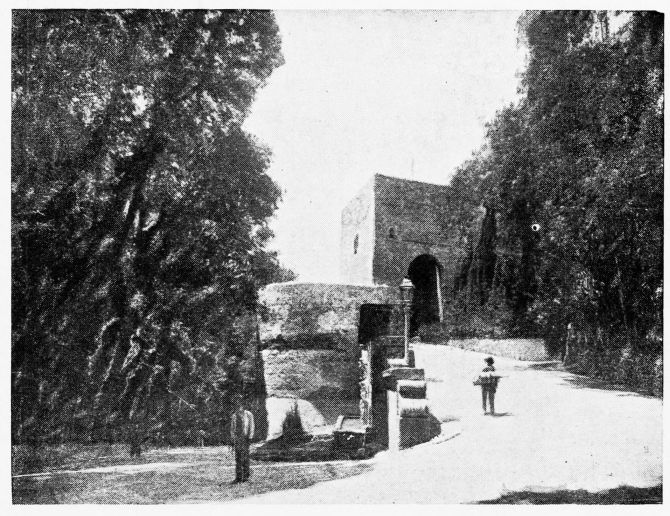
THE GATE OF JUSTICE, ERECTED BY YÚSUF I.
Washington Irving says of these strange symbols: “According to tradition, the hand and key were magical devices on which the fate of the Alhambra depended. The Moorish king who built it was a great magician, or, as some believed, had sold himself to the devil, and had laid the whole fortress under an evil spell. By this means it had remained standing for several hundred years, in defiance of storms and earthquakes, whilst almost all other buildings of the Moors had fallen to ruin and disappeared. This spell, the tradition went on to say, would last until the hand on the outer arch should reach down and grasp the key, when the whole pile would tumble to pieces, and all the treasures buried beneath it by the Moors would be revealed.”
SALA DEL TRIBUNAL—HALL OF JUSTICE.
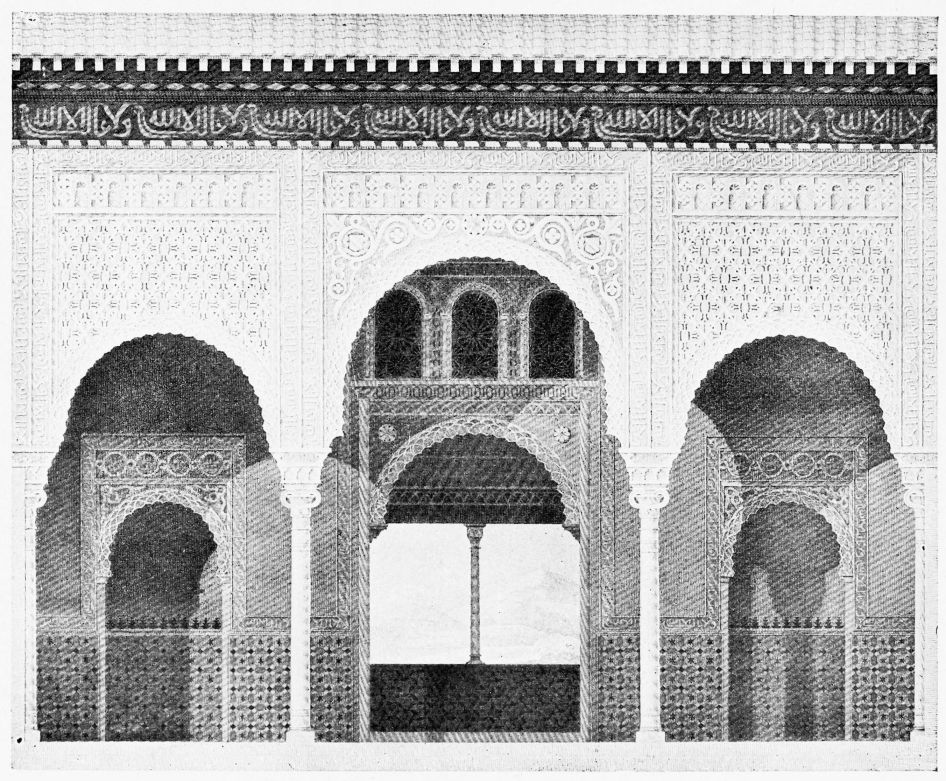
The Hall of Justice has three court-rooms, or apses, now blazoned with the royal Spanish badges of the yoke and the bundle of arrows, familiar to us as the badge of Katharine of Aragon, daughter of Ferdinand and Isabella, the first queen of our much-married monarch, Henry VIII.
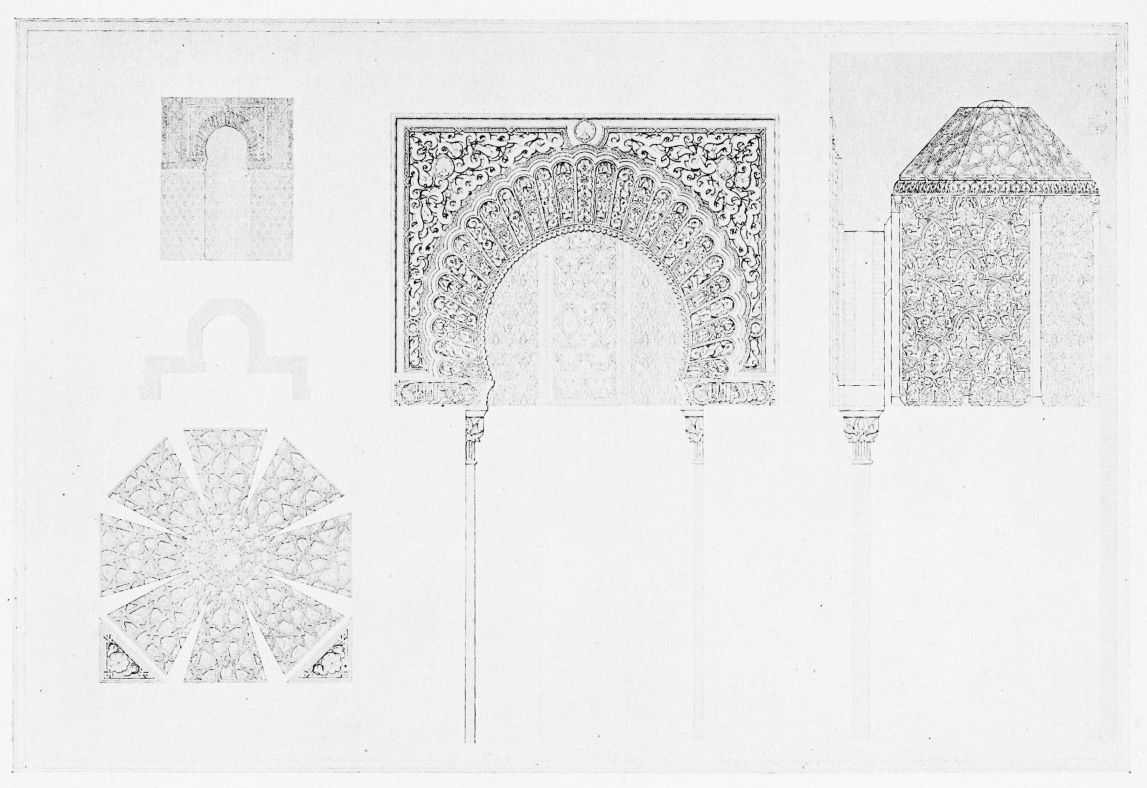
Of the many beautiful arches which adorn the Palace, the one forming the entrance to the central alcove, or divan, of the Hall of Justice is perhaps the most remarkable; the exquisite form of the arch and richly-ornamented spandril with the poetic inscription which encloses it—“May power everlasting and imperishable glory be the destiny of the owner of this Palace”—and the slender porcelaine columns from which it springs, exciting the deepest admiration.
In this Hall are the famous paintings on leather, ascribed to the end of the fourteenth century. The painting of a group of Moslems, apparently congregated in Council, merits close attention, as giving the veritable costume of the Moors in Granada of the fourteenth century, at which period the delineations were certainly made, and, in all probability, by an Italian artist working under Moslem direction. Other paintings portray various chivalrous or amatory subjects; or they may be taken to represent romantic episodes as legendary as the story of the Chinese lovers on a willow-pattern plate. One scene (see p. 47) represents a wicked magician, or wild man of the woods,
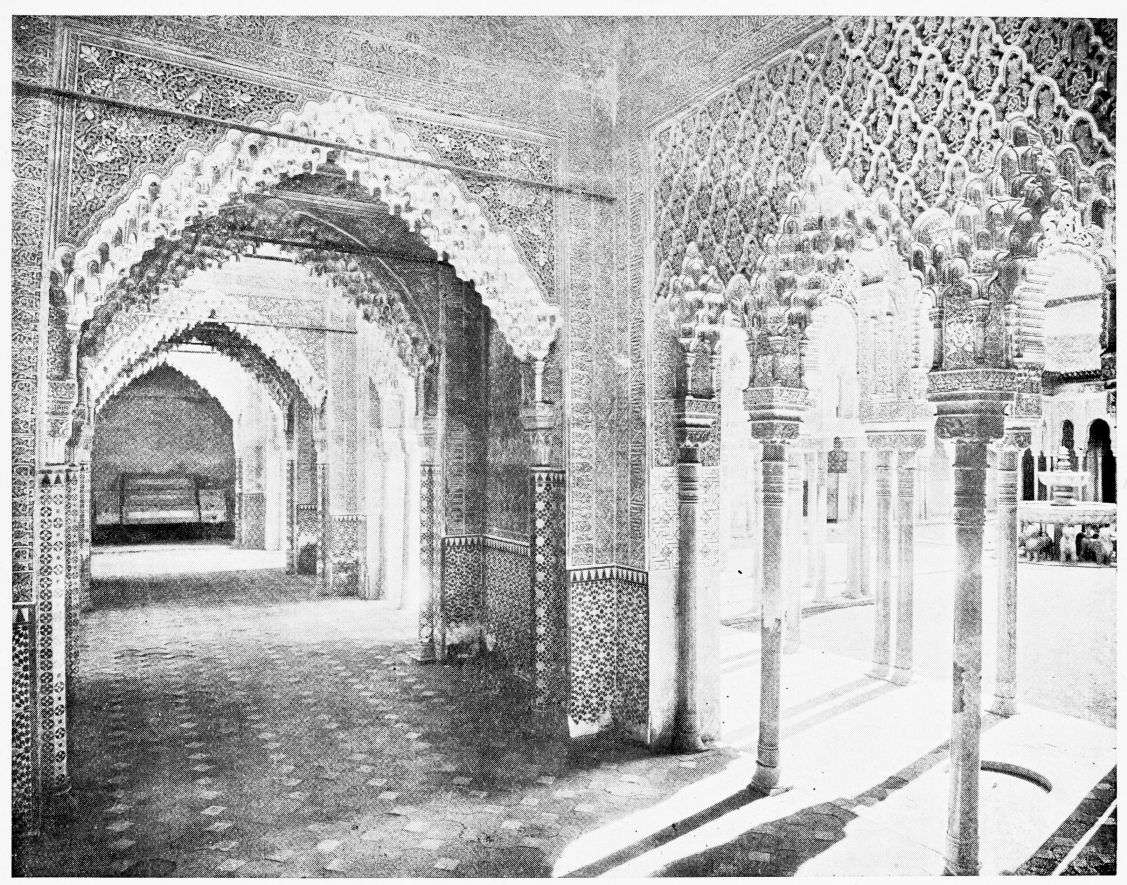
HALL OF JUSTICE AND COURT OF THE LIONS.
coercing a Christian maiden, who, nevertheless, is holding a docile lion by a leading chain; the compliant animal meanwhile permitting domestic fowl and other pretty wantons to play undismayed around him. A Christian warrior on horseback makes short work of the wild man; but, alas! for the maiden, a valiant Moor comes galloping up, at once transfixes the Christian rescuer with his spear, and presumably claims the beautiful captive as the reward of his prowess. This episode of a Moor killing a Christian may be taken as a strong presumption of the paintings being wrought under Mohammedan influence, as it appears most unlikely that it would have been so represented by a Spaniard after the conquest of Granada. Some spectators in the upper chamber of a tower in the background seem to heartily approve of the whole proceeding.
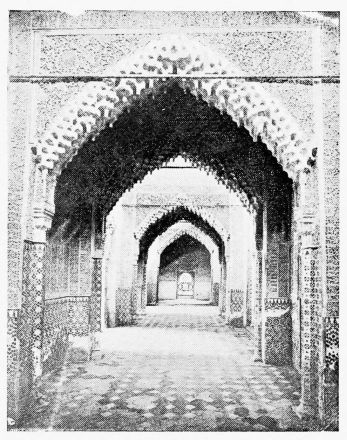
HALL OF JUSTICE.
However fantastic these pictures may be, they are at least unique, and, as such, must be regarded with the utmost interest. We may conjecture that the painter fell into the hands of the Moors by the fortune of war; or, on the other hand, came by invitation to Granada.
Much difference of opinion exists amongst writers who have described the Alhambra with respect to these three curious paintings on leather which are found in the domes of the alcoves of the Hall of Justice. It is said by many that they are not the work of Moorish artists, but were executed posterior to the Conquest of Granada by Spanish painters. This opinion is founded chiefly on the injunctions contained in the Korán, forbidding the representation of animated beings; but that this law was disregarded by the builders of the Alhambra is fully proved by the fountain of the Court of Lions, and the bas-relief which forms part of a fountain now in the Museum of the Palace.
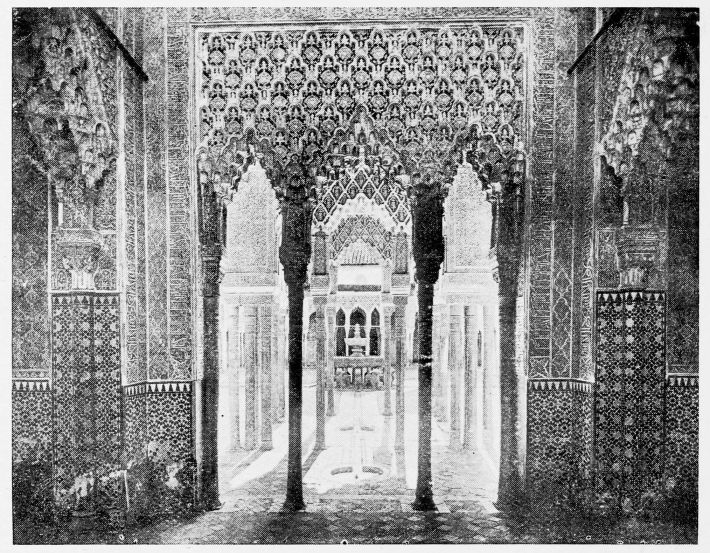
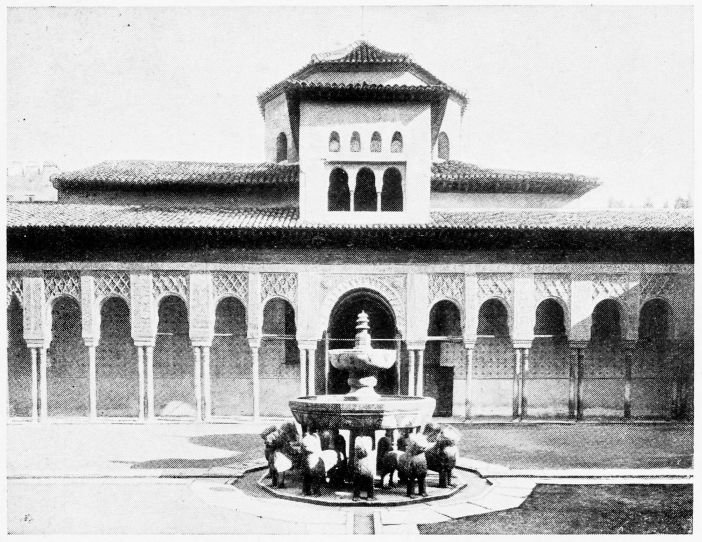
HALL OF JUSTICE, SHOWING FOUNTAIN OF COURT OF THE LIONS.
There is evidently much more analogy between these paintings and the bas-relief than between them and the works of the Spaniards after the Expulsion; witness the bas-reliefs from the royal chapel of Granada, built by Ferdinand and Isabella, which represent their entrance into the Alhambra, and evidently belong to a later period of Art.
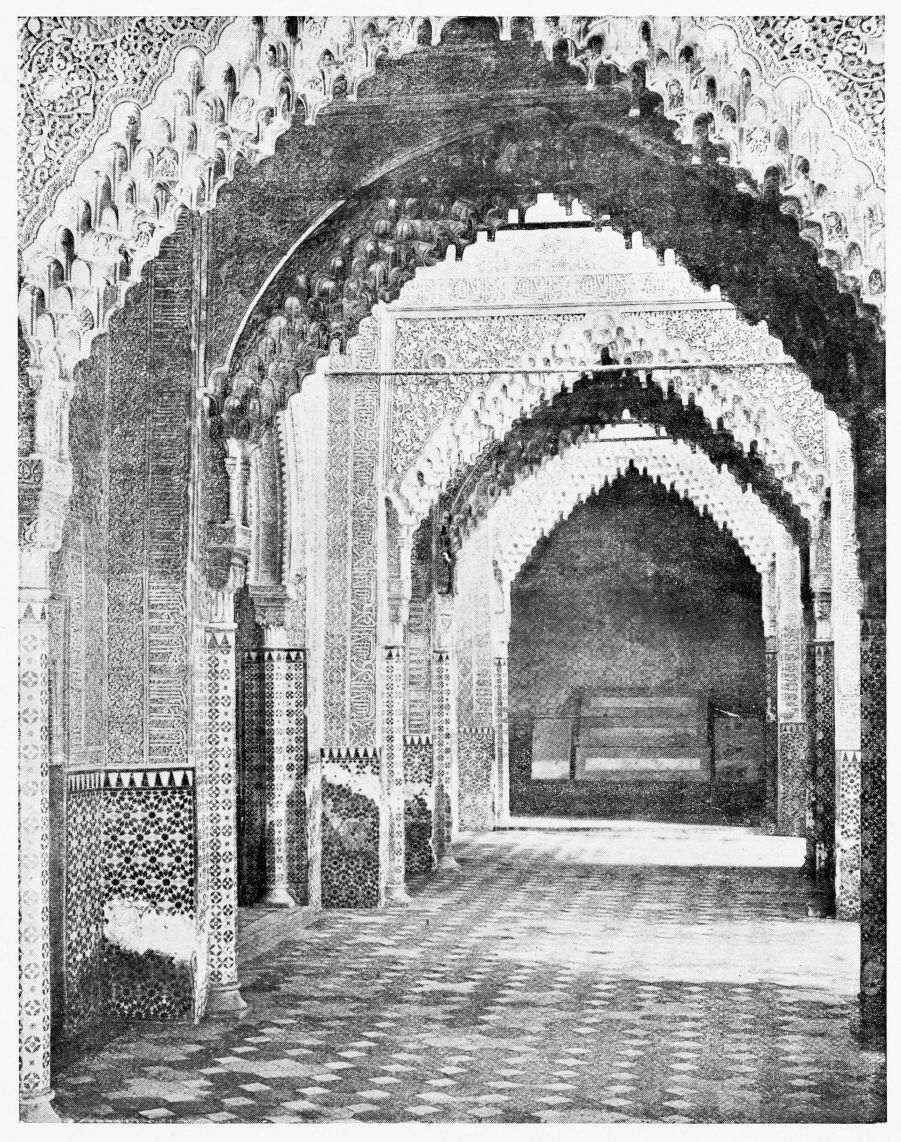
HALL OF JUSTICE.
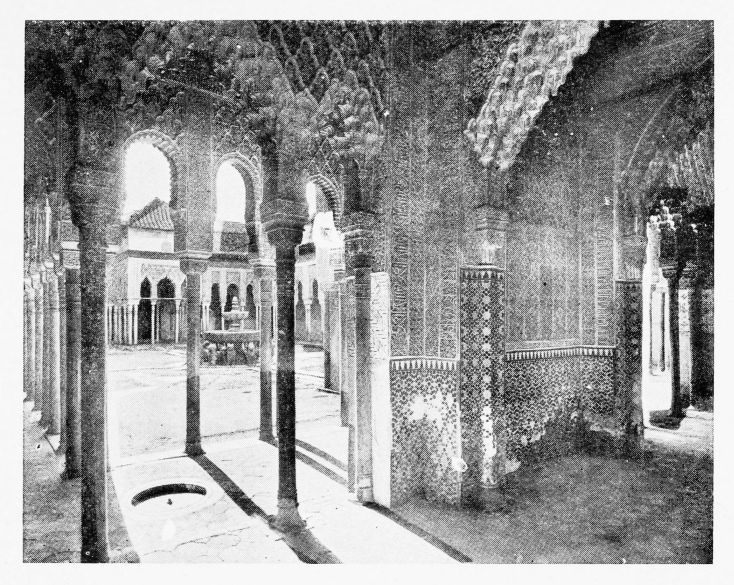
HALL OF JUSTICE AND PART OF COURT OF THE LIONS.
HALL OF JUSTICE AND PART OF COURT OF THE LIONS.
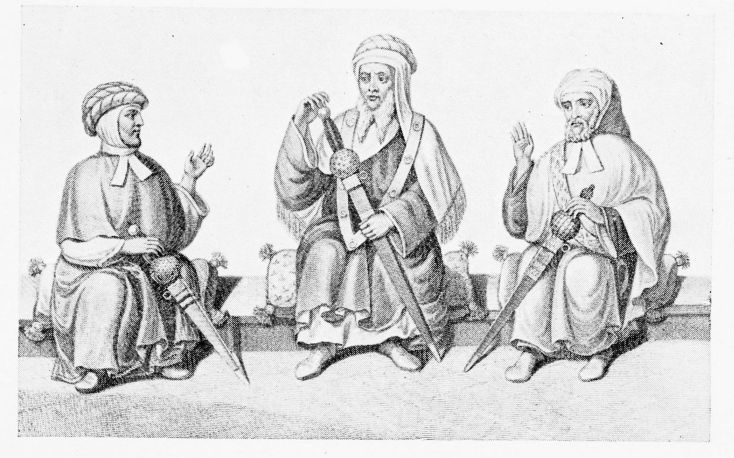
HALL OF JUSTICE.—THREE FIGURES FROM THE PICTURE OF THE MOORISH TRIBUNAL.
The ornaments, moreover, which are introduced into these paintings are strictly of a Moorish character.
The subject on the centre alcove is considered by the Spaniards to represent a Tribunal, whence they have called this Hall. From the different colours of the beards and dresses of the figures, they would appear to represent the chiefs of the
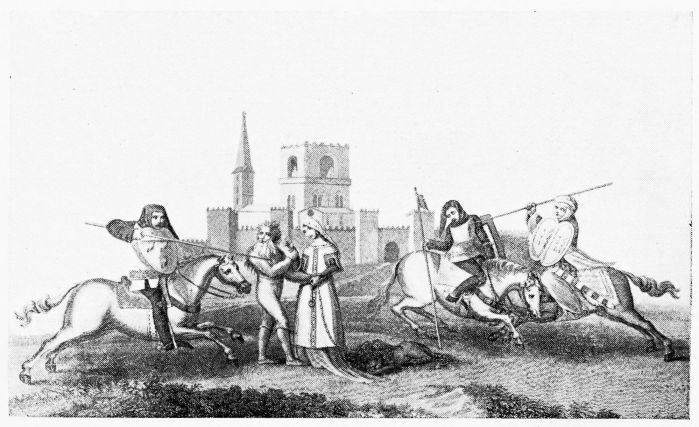
PART OF PICTURE IN THE HALL OF JUSTICE REPRESENTING A CHRISTIAN KNIGHT RESCUING A MAIDEN FROM A WICKED MAGICIAN, OR WILD-MAN-O’-THE-WOODS. THE CHRISTIAN KNIGHT IS, IN TURN, SLAIN BY A MOORISH WARRIOR.
tribes of Granada. One head traced from this picture is given on page 48.
These paintings are of bright colours, but in flat tints, without shadow, and were first drawn in outline of a brown colour. They are painted on skins of animals sewn together, and nailed to the wooden dome; a fine coating of gypsum forming the surface to receive the painting. The ornaments on the gold ground are in relief.
PAINTING ON THE CEILING OF THE LEFT ALCOVE.
To determine whether the subject of this picture be legendary or historical is difficult. Christians appear to be engaged in hunting the lion and the bear, while the Moslems confine their attentions to the wild boar. The spoils of the chase are presented at the feet of both Christian and Moslem ladies—the humility with which the Christian knight, who is upon his knees, offers his share of the spoil to his lady, may be contrasted with the more commanding attitude of the Moslem, as finely exhibiting the estimation in which women were held by their respective nations. Many hounds—one of which has the luck to fall in with a stray fox—take part in the

HALL OF JUSTICE.—MOOR’S HEAD.
(From a tracing by M. Jules Goury, a celebrated French architect, from the painting representing a Moorish Tribunal.)
chase, and the ladies are attended by lap-dogs. The huntsmen are on horseback and on foot. When the wild boar is slain, he is hoisted on the back of a mule by attendants, and borne triumphantly home. A great variety of birds and trees—amid the branches of which monkeys partially conceal themselves—make up the various scenes. In spite of the want of perspective, there is much spirit in the details, and the female figures especially are most graceful.
That these unique relics should be taken from their present
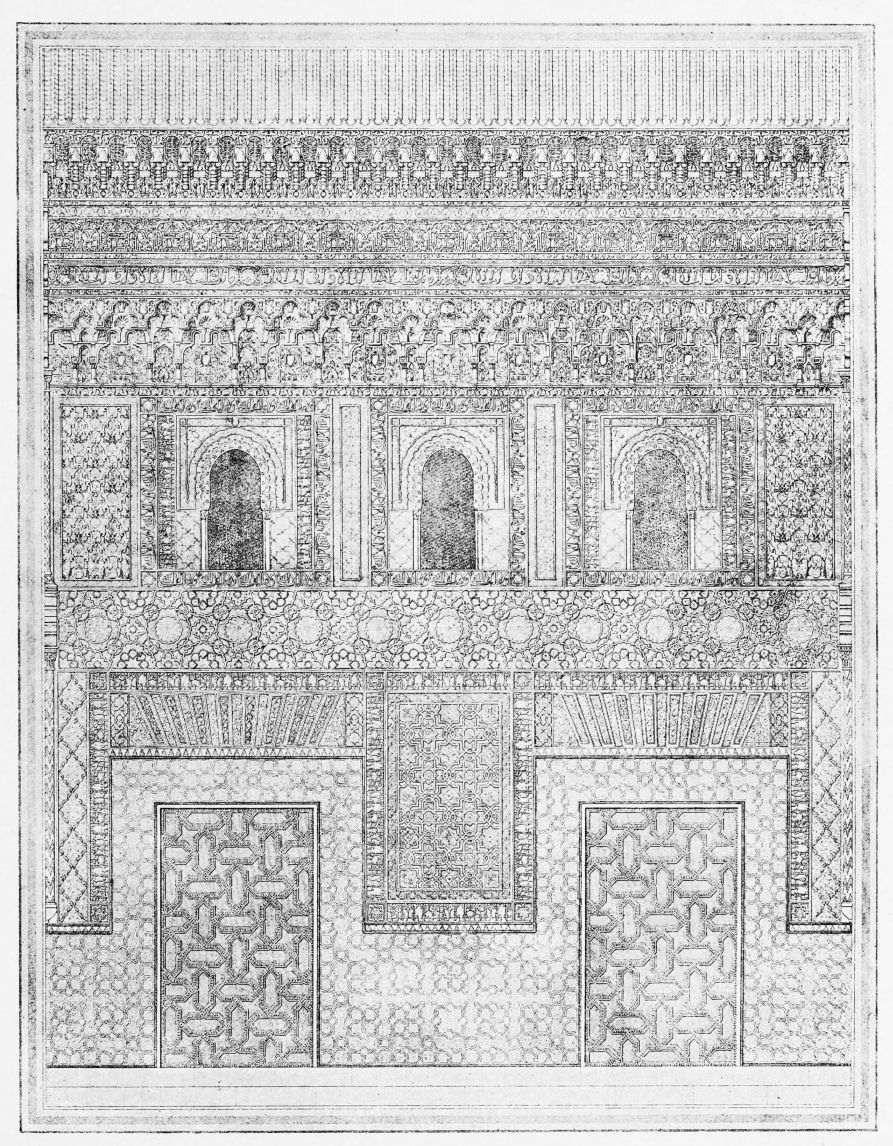
FAÇADE, COURT OF THE MOSQUE, BUILT BY YÚSUF I.
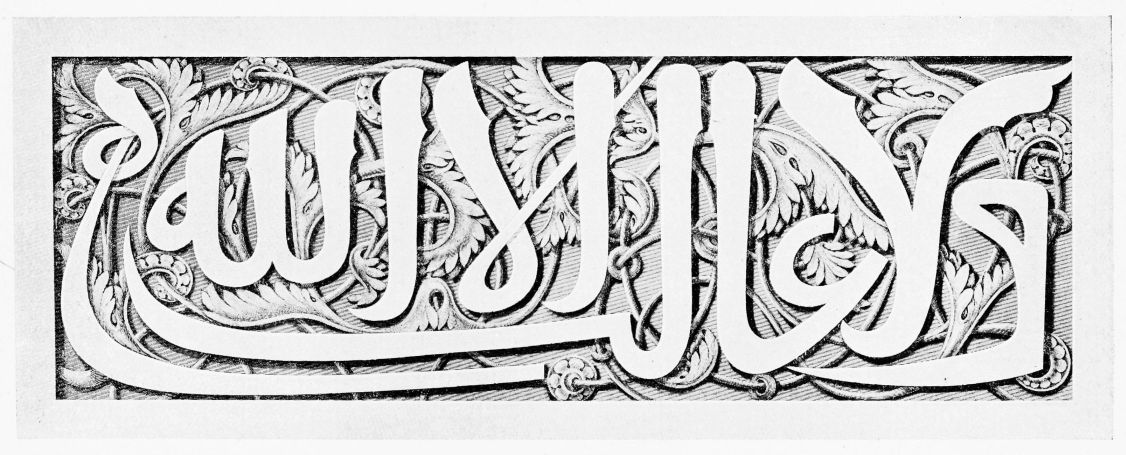
“WA LA GHÁLIB ILA ALÁ!”—THERE IS NO CONQUEROR BUT GOD!—THE FAMOUS MOTTO OF MOHAMMED I. AND HIS SUCCESSORS. AN EXAMPLE FROM THE HALL OF AMBASSADORS.
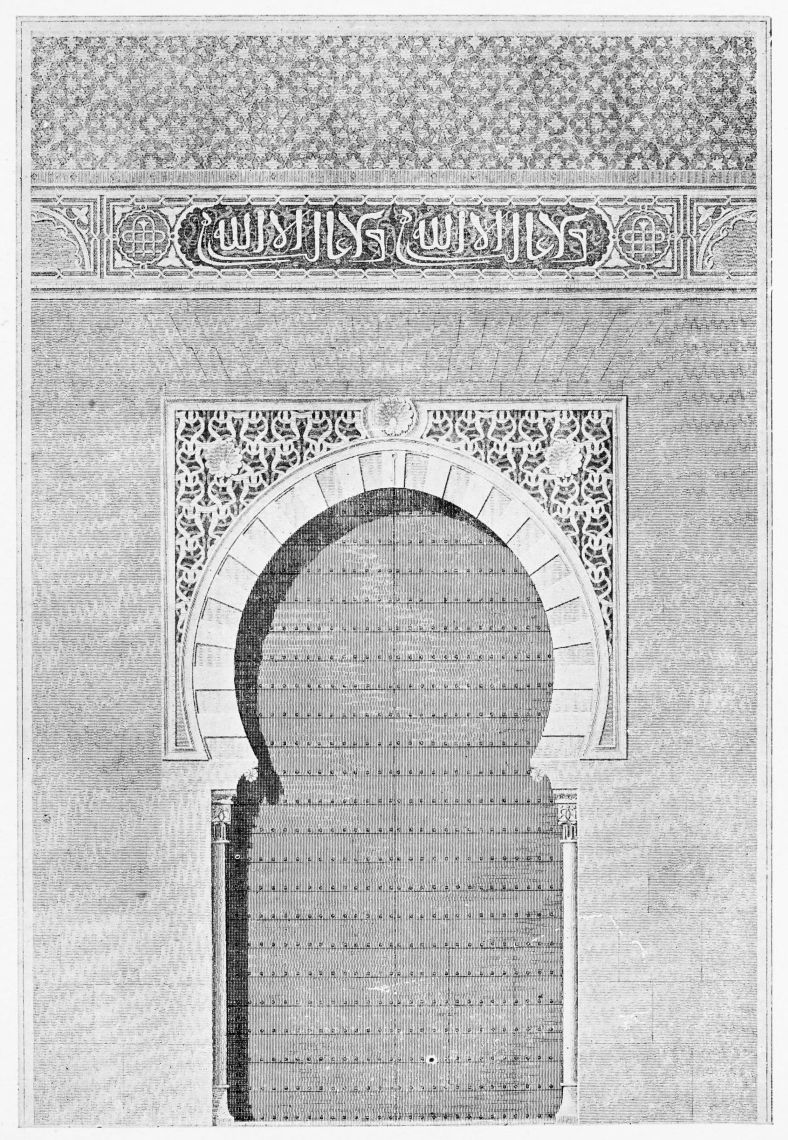
ELEVATION OF THE ANCIENT GATE OF JUSTICE.
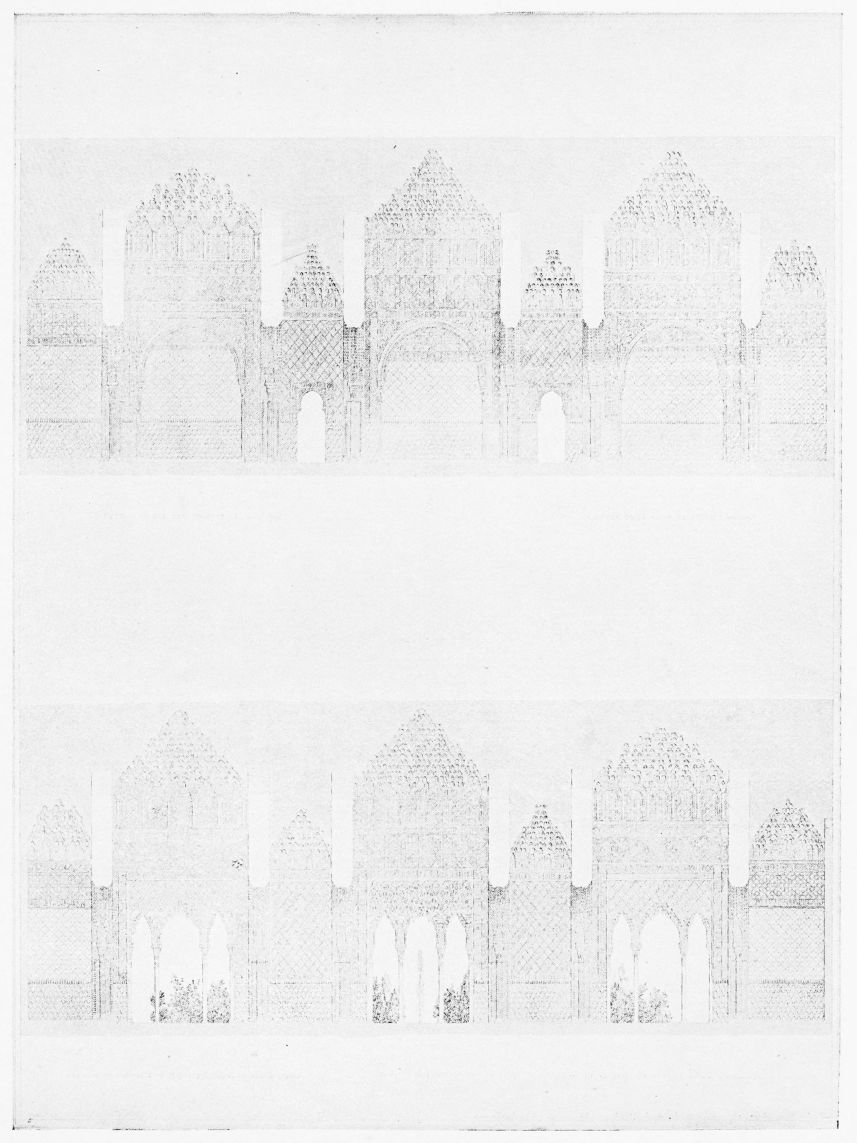
1. SECTION OF THE HALL OF JUSTICE (looking East).
2. SECTION OF THE HALL OF JUSTICE (looking towards the Court of the Lions).
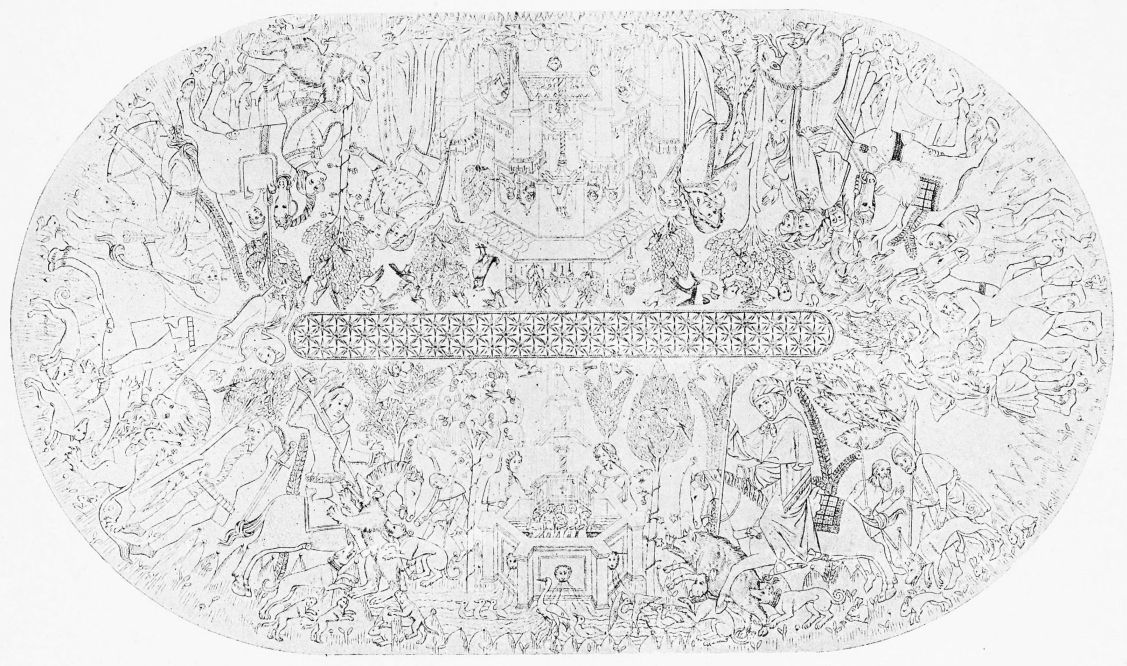
PAINTING ON THE CEILING OF THE HALL OF JUSTICE. No 1.
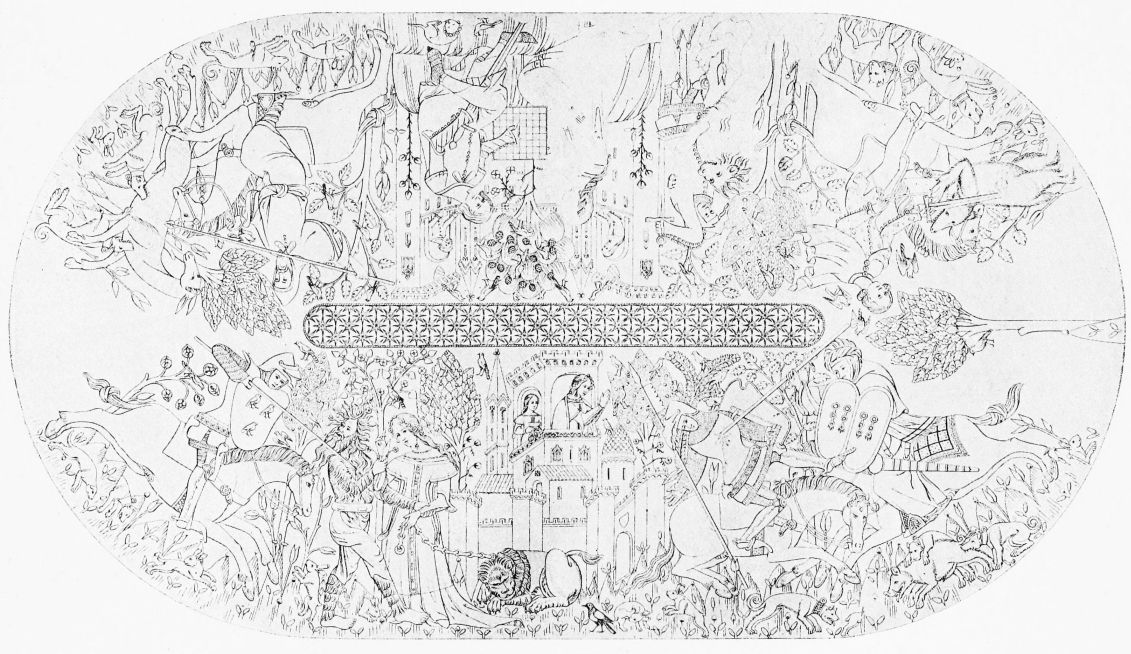
PAINTING ON THE CEILING OF THE HALL OF JUSTICE.
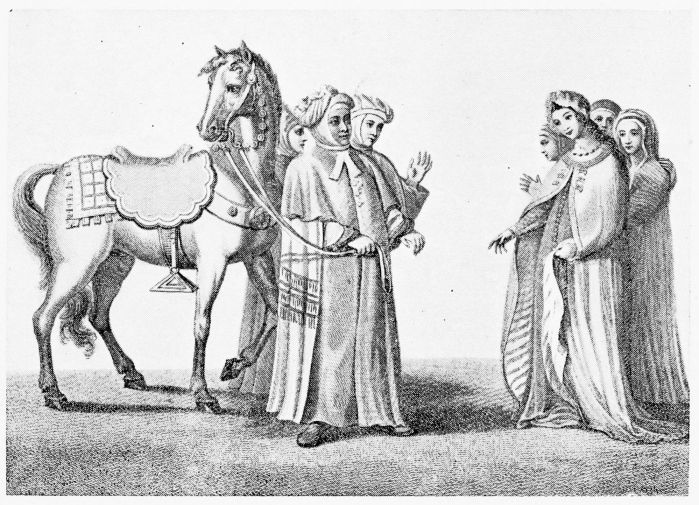
PART OF PICTURE IN THE HALL OF JUSTICE.—THE MOOR’S RETURN FROM HUNTING.
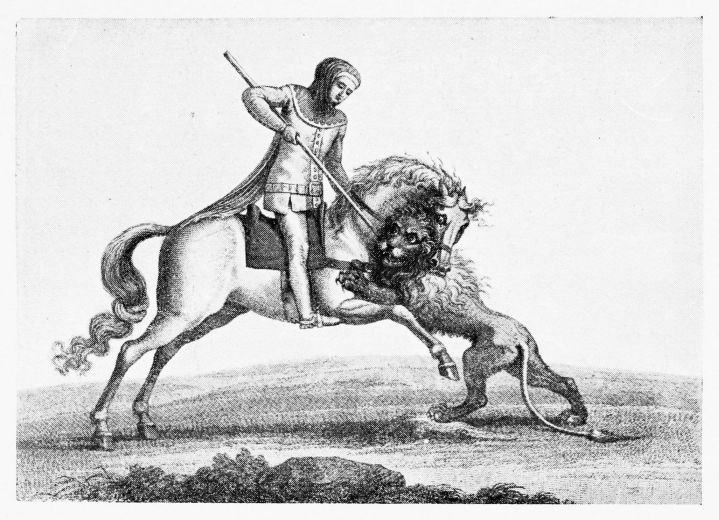
HALL OF JUSTICE—THE DEATH OF THE LION AT THE HANDS OF A CHRISTIAN KNIGHT.
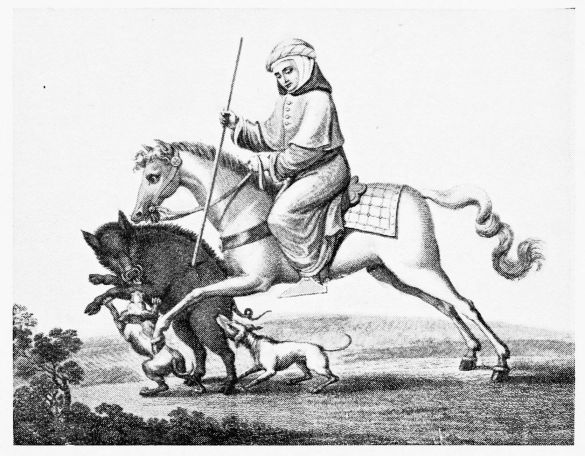
PART OF PICTURE IN HALL OF JUSTICE.—MOORISH HUNTSMAN SLAYING THE WILD BOAR.
position and preserved under glass, is a consummation devoutly to be wished.
LAS DOS HERMANAS—THE TWO SISTERS.
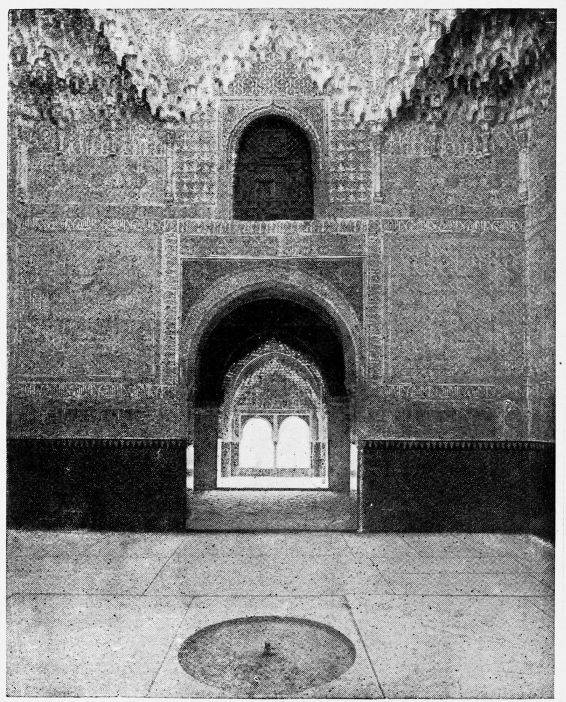
Perhaps the most interesting, as it certainly is the loveliest apartment in this palace of enchantment, is the Hall of the Two Sisters, a title, the guide books would fain have us believe,
ENTRANCE TO HALL OF THE TWO SISTERS, FROM THE COURT OF THE LIONS.
conferred by reason of two enormous slabs of white marble laid in the pavement, precisely alike in form, and without flaw or stain; but the surpassing splendour of this chamber forbids us to accept a reason so inadequate for the designation. There is nothing so very extraordinary in two huge blocks of stone, be they never so faultless; that is only a matter of quarrying: if such objects are to excite wonder, we may turn, with more profit, to the Pyramids of Egypt. Let us rather concern ourselves with the beauty and symmetry of this unequalled spot.
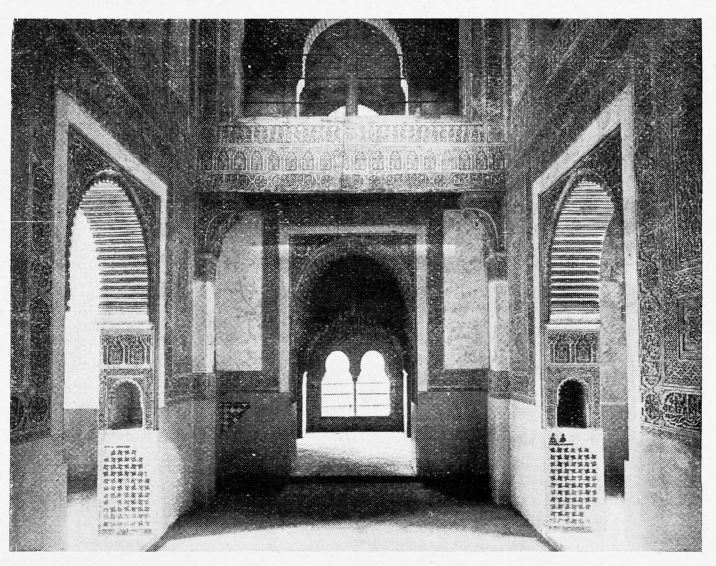
First, then, the gate of the tower exceeds all other gates in
HALL OF THE TWO SISTERS, FROM ENTRANCE DOOR.
profusion of ornament, and in the beauty of the prospect from the entrance through a range of apartments, where a multitude of arches terminate in a large window affording a view of open country. In sunshine, the variety of tints thrown upon this enfilade are surprisingly beautiful. In all probability the Hall of The Two Sisters formed part of the private apartments of the Moorish kings. The alcoves, or divans, on either side of the Hall, with the charming retiring rooms on the upper floor, give it the character of a residence; just as the Hall of Ambassadors, as its aspect shows, and its traditional name implies, was destined only for public receptions. It may reasonably be declared that the Hall of The Two Sisters, together with the corridors and alcoves which surround it, cannot be equalled even by other parts of the Palace. Its stalactite ceilings are the most perfect examples remaining of this curious and interesting kind of decoration. To preserve them, the outer walls are raised ten feet above the dome, and support an encasing roof over all. Nothing can exceed the glory of the honeycomb vaultings, with thousands of fantastic cell formations, each one differing from the other, yet all combining in uniformity. The effect
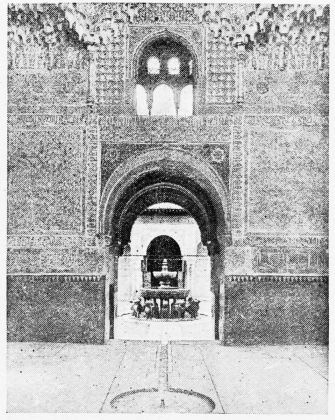
HALL OF THE TWO SISTERS.
is as if the architect had been assisted in his work by swarms of Brobdingnagian bees.
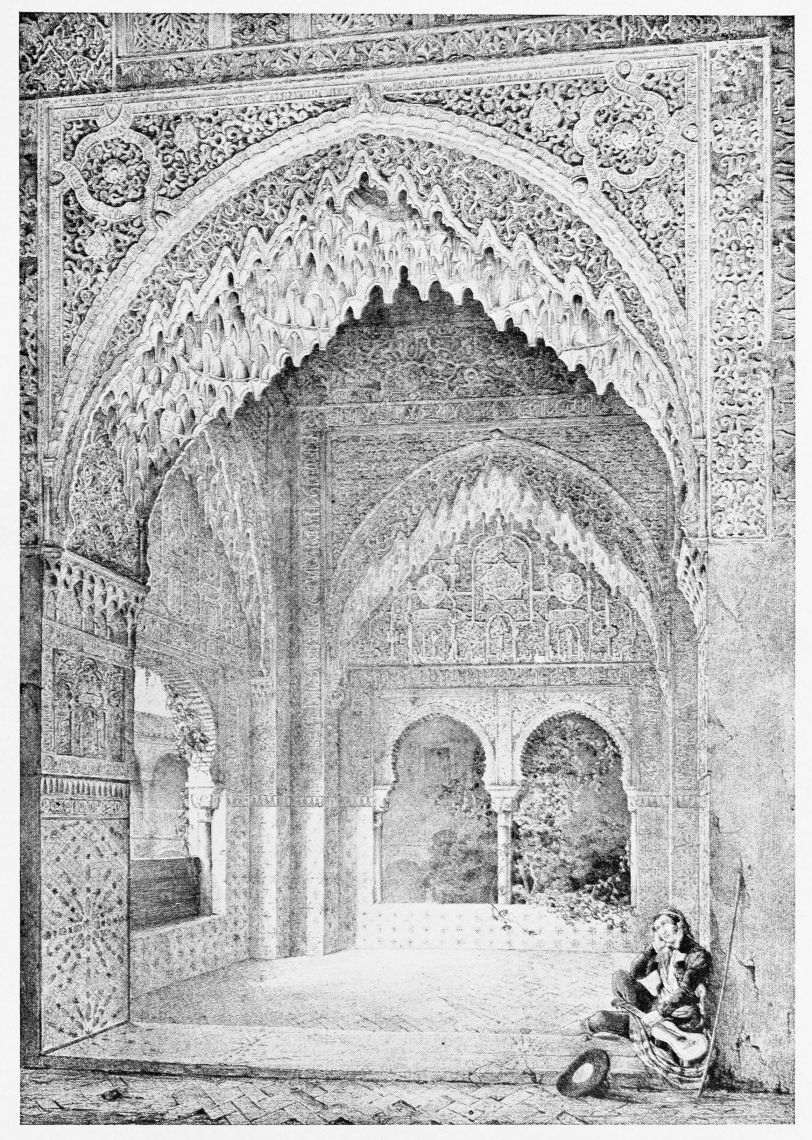
At the upper end of the Hall of The Two Sisters, but separated from it by a corridor, is an alcove, once overlooking a beautiful garden, as we learn from a verse in the room. It is known as The Mirador or Balcony of “Lindaraja.” On this favoured spot the poets, painters, and architects of that day lavished their most exalted efforts. All the varieties of form and colour which adorn other portions of the Palace have here been blended with the happiest effect. The delighted observer is spell-bound, and finds it difficult to remove himself from the fascination of the place.
The lattice window of the upper story gives light to a corridor leading to apartments appropriated to the fair odalisques. It was through these lattices that the beauties of the hareem viewed
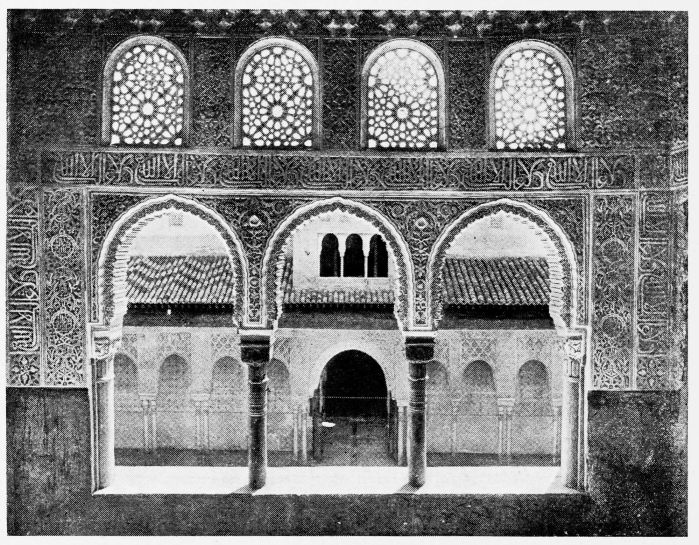
UPPER BALCONY OF THE HALL OF THE TWO SISTERS.
the splendid fêtes enacted for their entertainment in the great hall below, but in which they could participate only as distant spectators. These gratings are precisely similar in their construction to those which are now seen in the hareems of the East.
The long series of inscriptions in the Hall of The Two Sisters were much mutilated, and in some cases utterly destroyed, in a barbarous attempt at decoration—rien n’est sacré pour un sapeur—made by the Ayuntamiento of Granada in 1832, when the Infante, Don Francisco de Paula visited the city. Fortunately, so far as the text goes, the sentences may be found in Antigüedades Arabes de España.[9] The greatest pains have been expended upon the inscriptions which address themselves to the eye of the connoisseur by the beautiful forms of the characters; exercise his intellect by the effort of deciphering their curious and
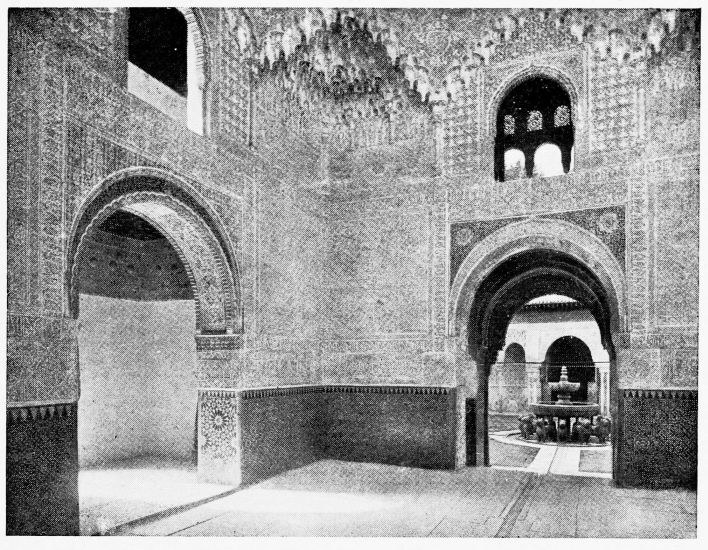
HALL OF THE TWO SISTERS, FROM THE “LINDARAJA” BALCONY.
complex involutions, and reward his imagination by the beauty of the sentiments and the music of their composition.
Many will be grateful to see some specimens of the verses from the Hall of The Two Sisters:—
“I am the garden, and every morn am I revealed in new beauty. Observe attentively how I am adorn’d, and thou wilt reap the benefit of a commentary on decoration;
“For, by Allah! the elegant structures around me assuredly surpass all other edifices by the happy presage attending their foundation.
“How many delightful prospects I enfold! Prospects, in the contemplation of which a mind enlightened finds the gratification of its desire.
“Look upon this wonderful cupola, at sight of whose perfection all other domes must pale and disappear;
“To which the Constellation of the Twins extends the hand of salutation; and, for communion, the Full Moon deserts her station in the heavens.
“Nay, more; were they to take these aisles for their abiding place, those heavenly bodies would render constant homage to their beauty.
“No wonder, then, if the stars grow pale in their high stations, and if a limit be put to the duration of their light.
“Here also behold the portico, unfolding every beauty. Indeed, had this palace no other ornament, it would still surpass the firmament in splendour:
“For manifold are the gorgeous habilaments in which thou, O Sultán! hast arrayed it, surpassing in brilliancy the lustrous robes of Yemen!
“To look at them, one would imagine them to be planets revolving in their orbits, and throwing into shade the sunburst of morning.
“Here are columns ornamented to absolute perfection; the beauty of which has become glorified: columns
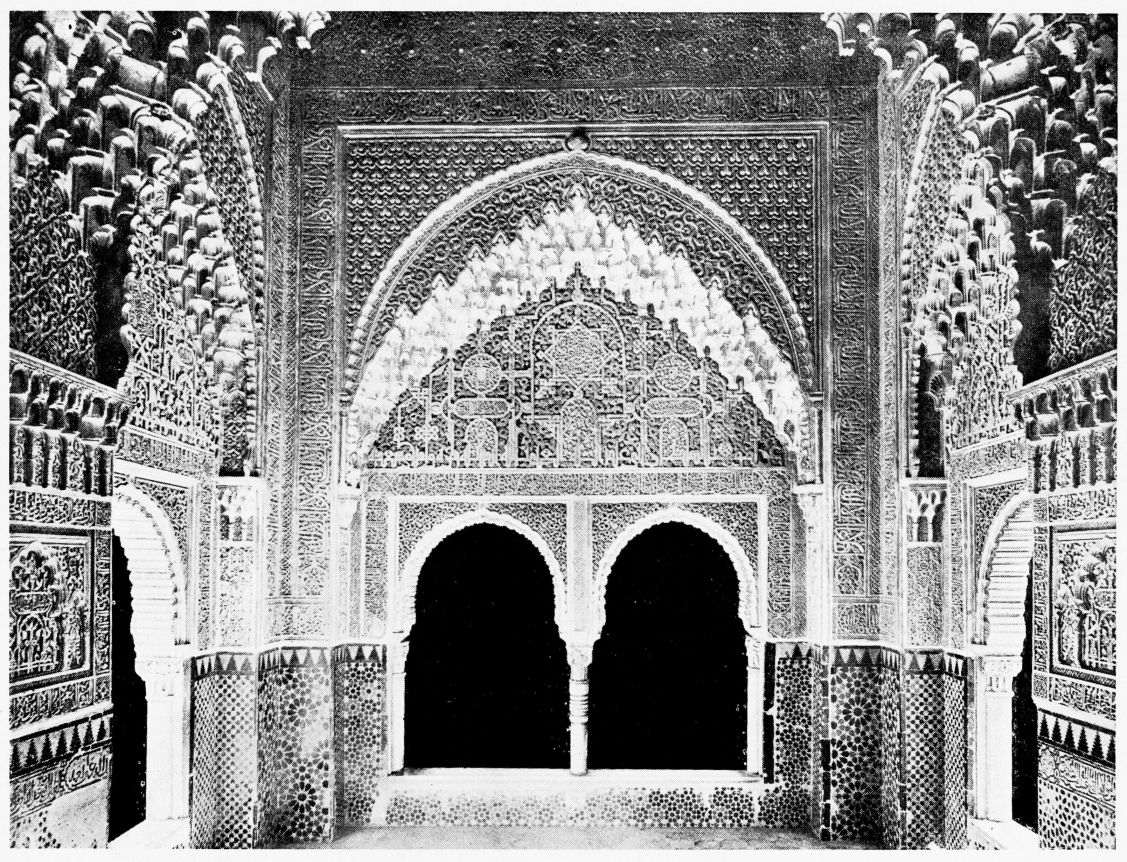
BALCONY OF THE FAVOURITE, “LINDARAJA.”
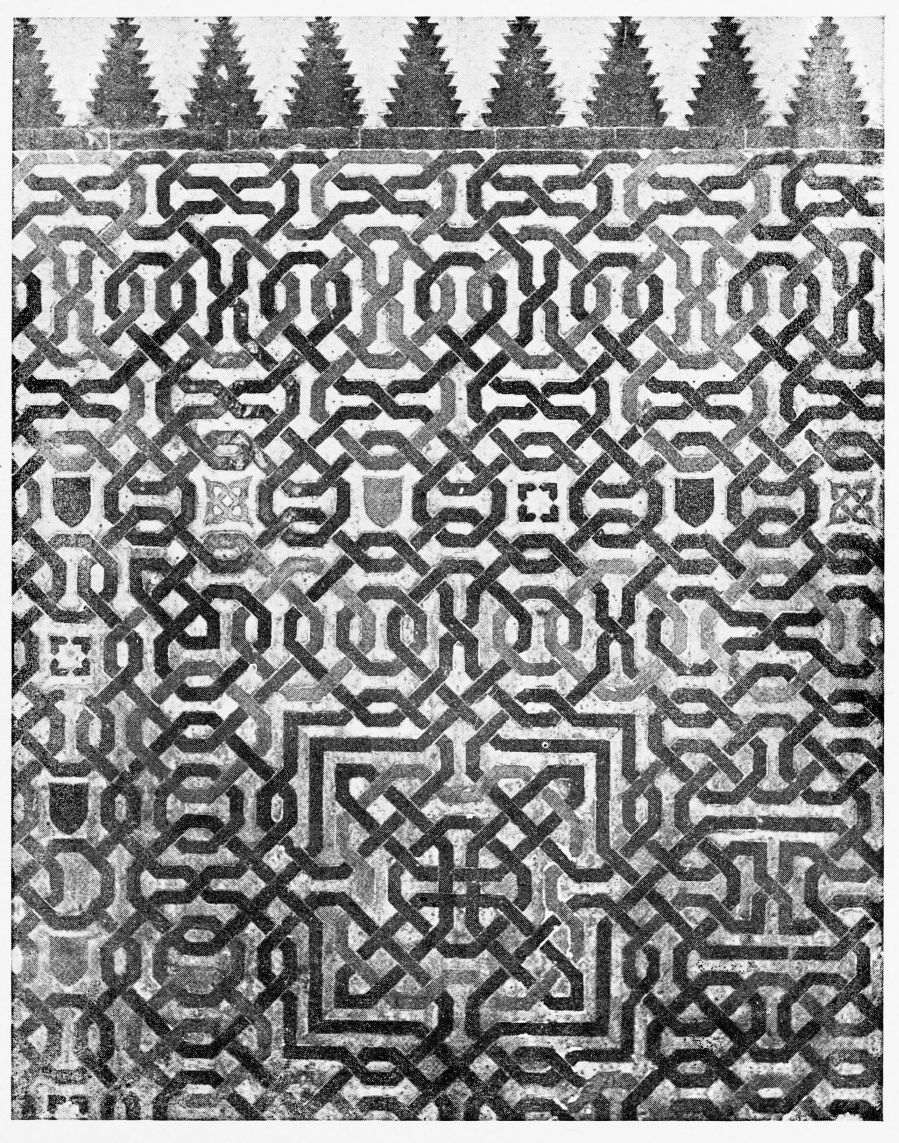
DETAILS OF THE GLAZED TILES IN THE DADO OF THE HALL OF THE TWO SISTERS.
“Which, when struck by the earliest beam celestial, may be likened, notwithstanding their vastness, to many blocks of pearl.
“Indeed, there is no palace more imposing in its elevation, nor so brilliantly decorated; nor having more extensive apartments;
“They may be compared to markets where the richest comers are overpaid in beauty, and where the arbiter of elegance presides eternally to pronounce his award;
“And where the sigh of the zephyr is inhaled by the noontide ray whose scintillating beam is more refulgent than all other light.
“Between myself and the most high fortune the closest relationship exists, and the greatest resemblance between us lies in the splendour of our destiny.
“Every art has laid its gifts upon me; nay, all have united in conferring perfection.
“By those who are permitted to behold me I am regarded as the Queen of Beauty who bestoweth the prize upon her well-beloved;
“Indeed, when the enraptured observer has feasted his eyes upon me, he will find reality surpassing the most extravagant flights of fancy;
“He will see the moon-beam start from my orbs, and its scintillation leave me only to enter the mansions of the blest.
“The palace is a palace of transparent crystal; it appears to be illimitable as the boundless ocean;
“And yet I am not the sole marvel of this heaven upon earth; for I overlook with ecstacy a garden, the like of which no human eye has contemplated.
“I was built by the Imam Ibn Nasr. May Allah uphold his majesty as a pattern to other kings!”
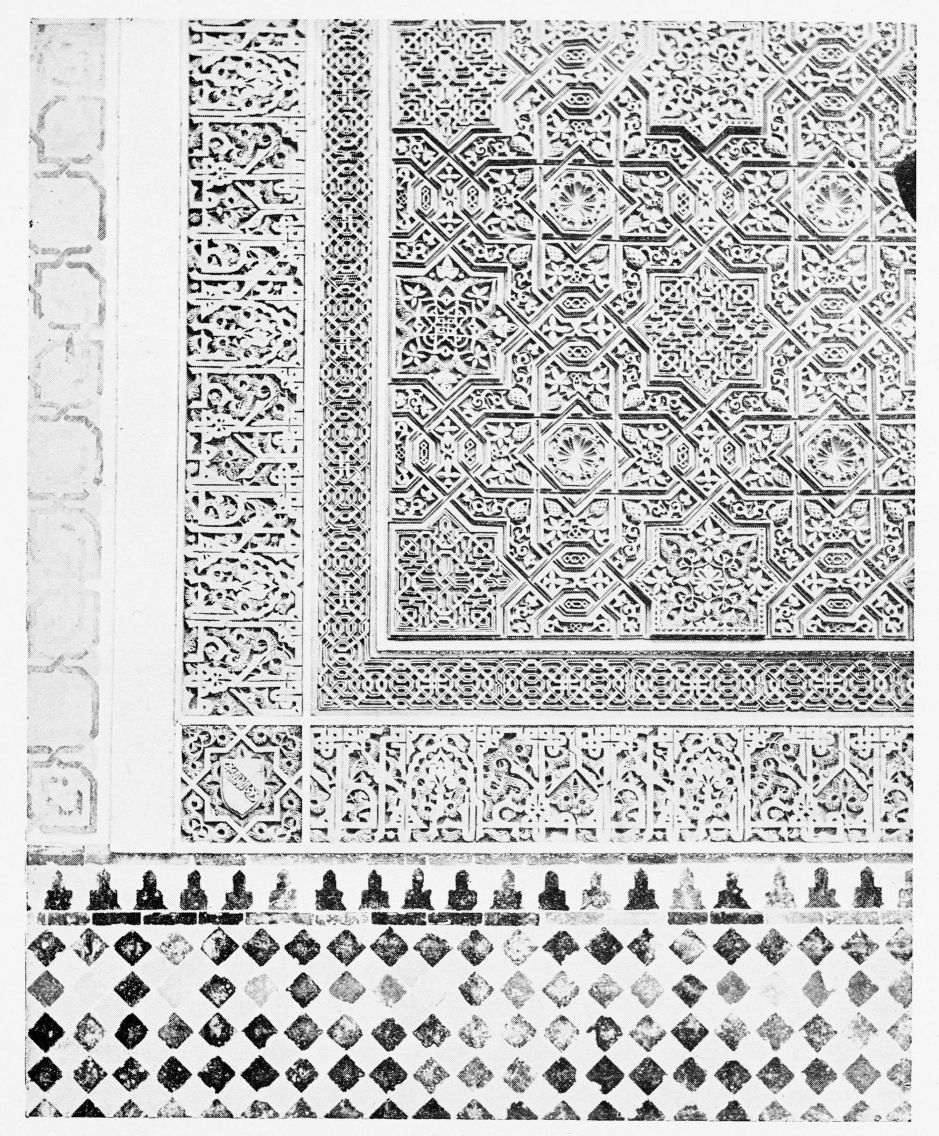
The last half-dozen verses, printed supra, are inscribed on the jambs of the doorway which gives entrance to the exquisite little chamber already described. The windows of the Mirador still overlook the garden eulogised in the penultimate verse. The dado of the Hall of The Two Sisters is a most beautiful Mosaic, presenting the same general form on all four sides of the Hall, but differing considerably in the filling up of the patterns.
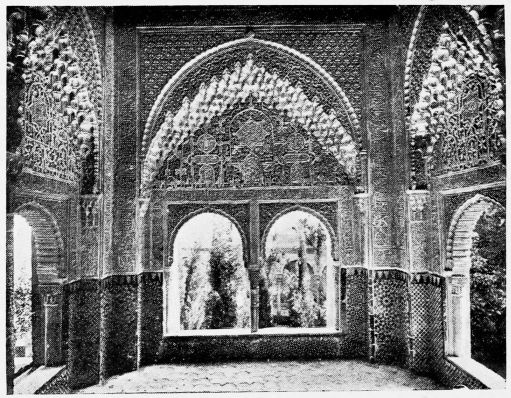
THE FAVOURITE’S BALCONY.
In the Hall of The Two Sisters formerly stood the famous Arab vase (el jarro) [see pp. 77 and 95] which tradition says was discovered in one of the subterranean chambers of the palace, “full of gold.” It is now placed in the Museum. The vase is of the fourteenth century, and is exquisitely enamelled in white, blue and gold. The decorations are Hispano-Moresque, and are fully described in the work on pottery by Peter Davillier. Another lovely amphora, is engraved in the Spanish work Antigüedades Arabes de España,[10] the equal, indeed, the companion
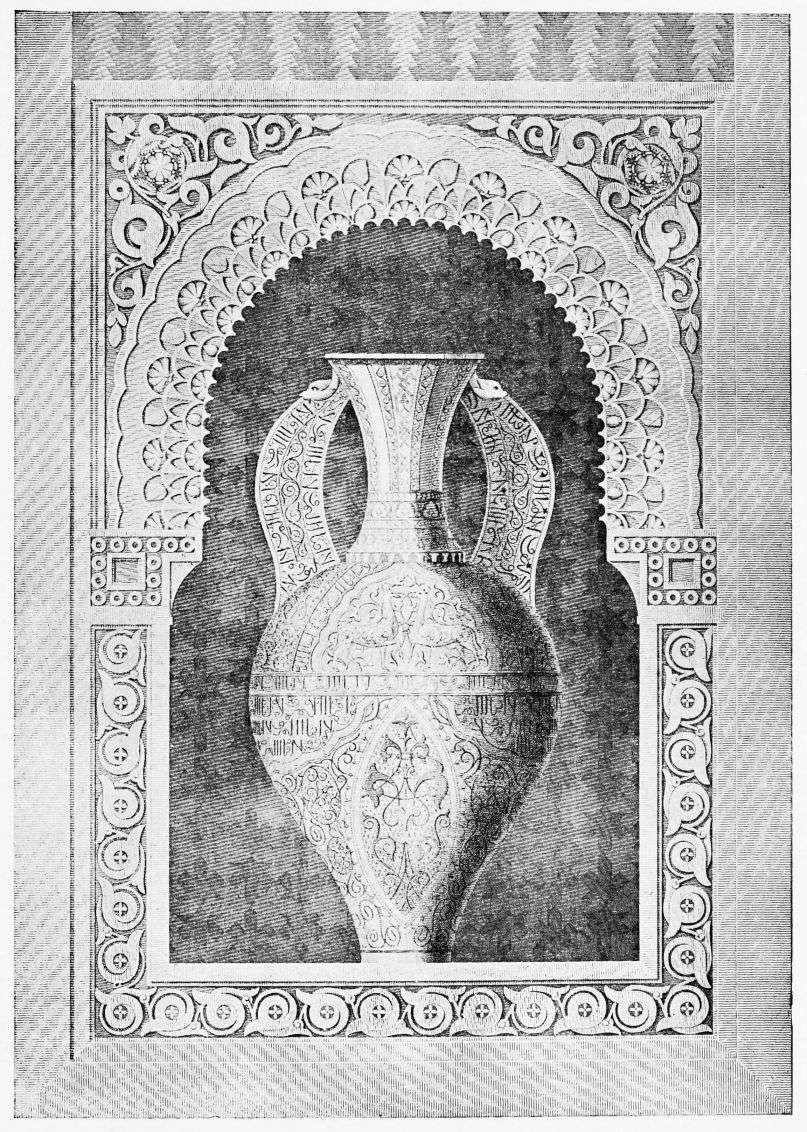
EL JARRO. THE ARABIAN VASE AND NICHE IN WHICH IT FORMERLY STOOD, HALL OF THE TWO SISTERS. THE VASE, CONSIDERABLY MUTILATED, IS NOW IN THE MUSEUM OF THE PALACE. (See p. 95.)
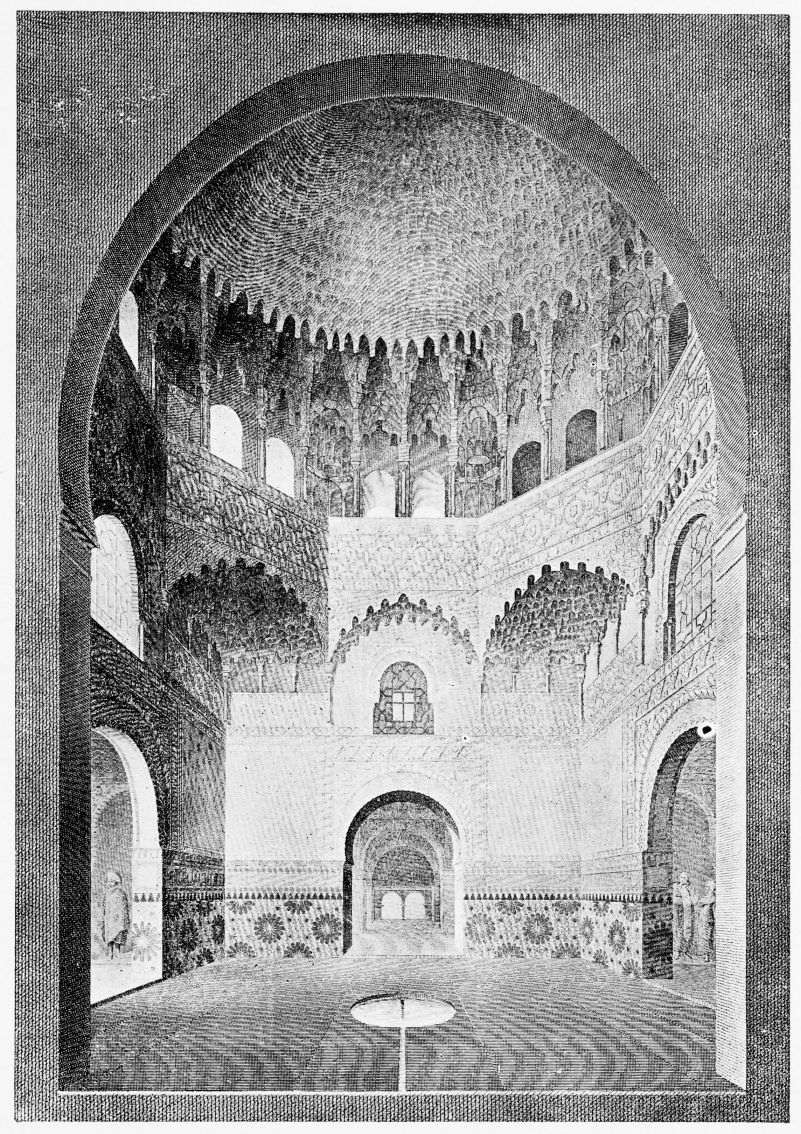
HALL OF THE TWO SISTERS.
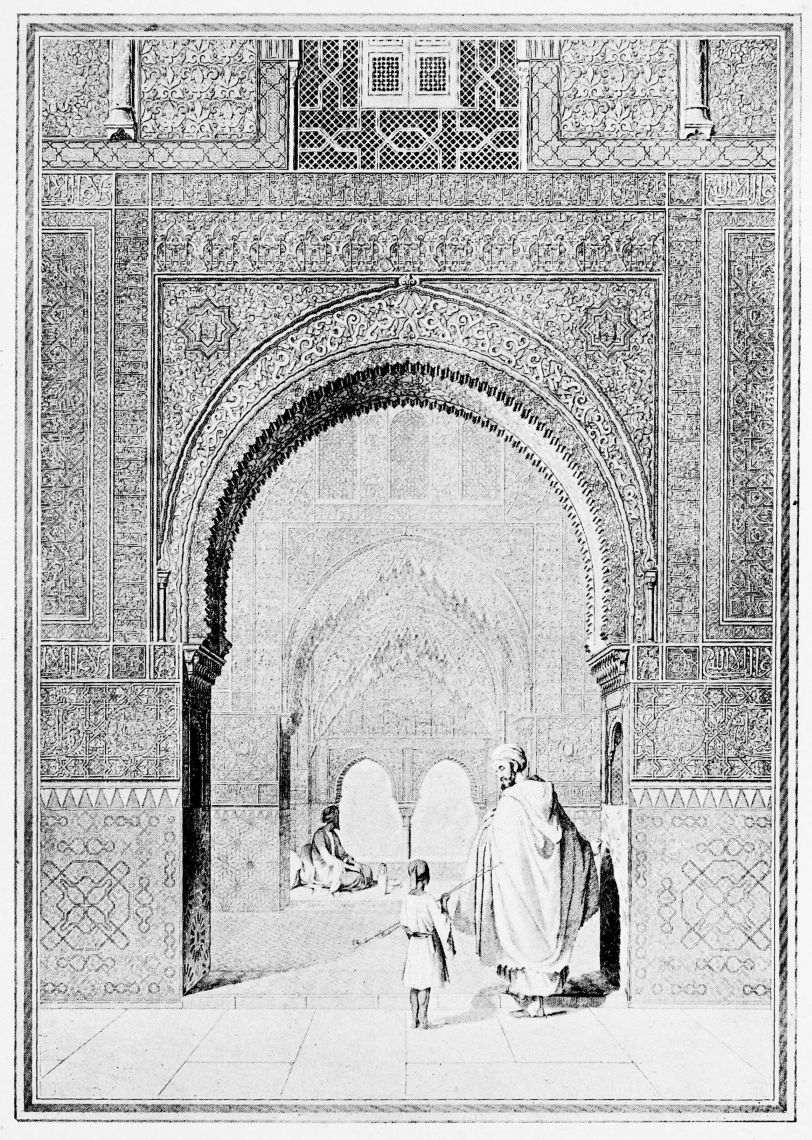
VIEW IN THE HALL OF THE TWO SISTERS.
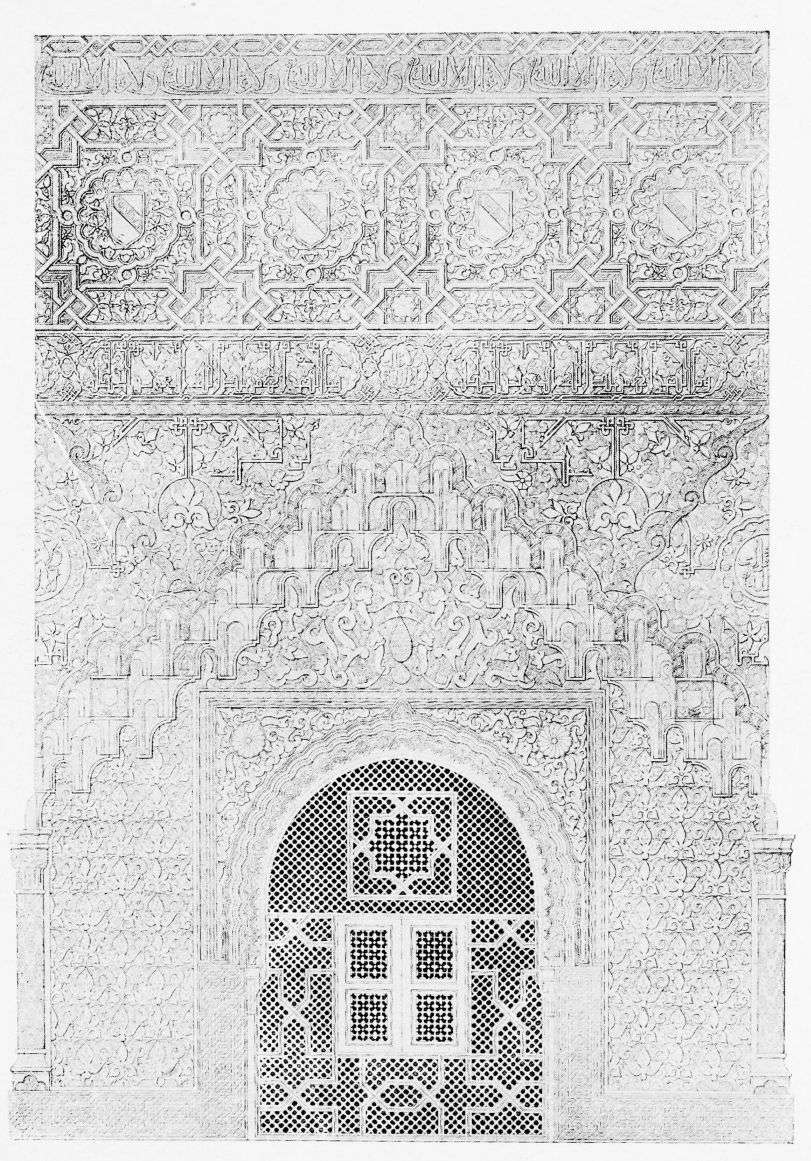
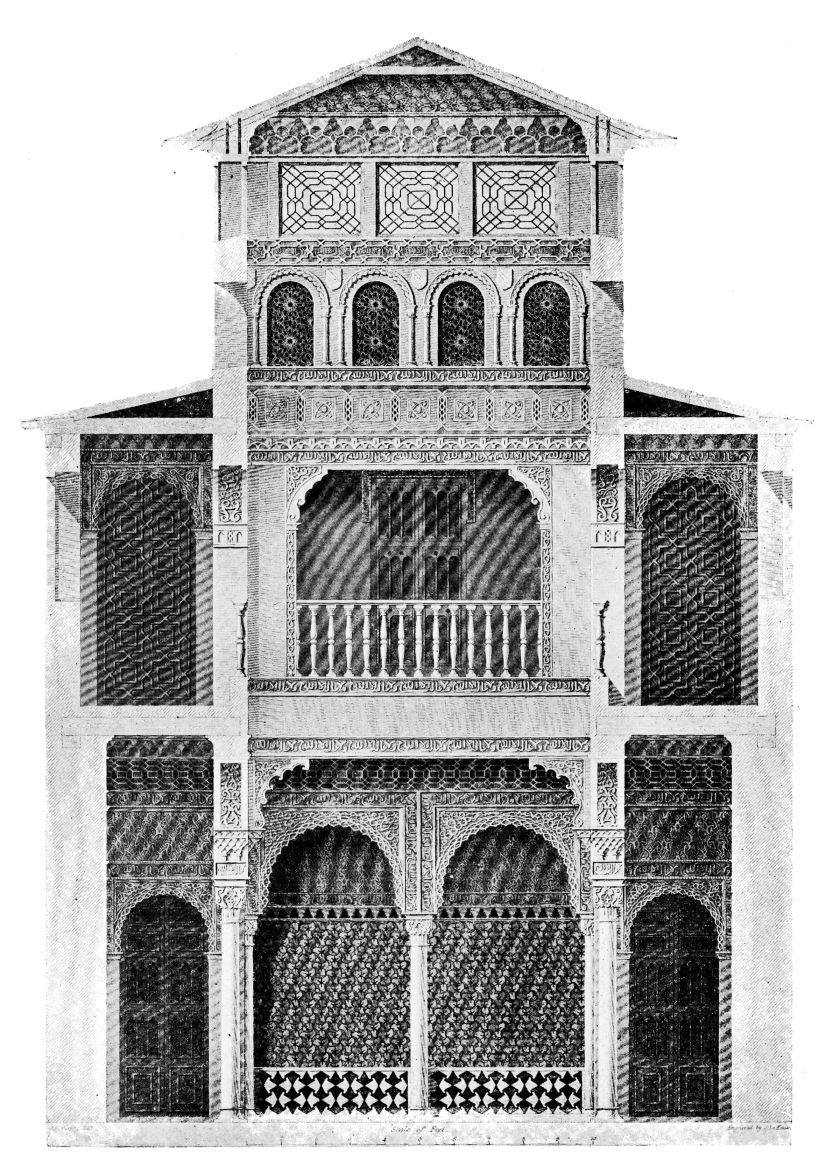
DETAIL OF THE UPPER STORY, HALL OF THE TWO SISTERS.
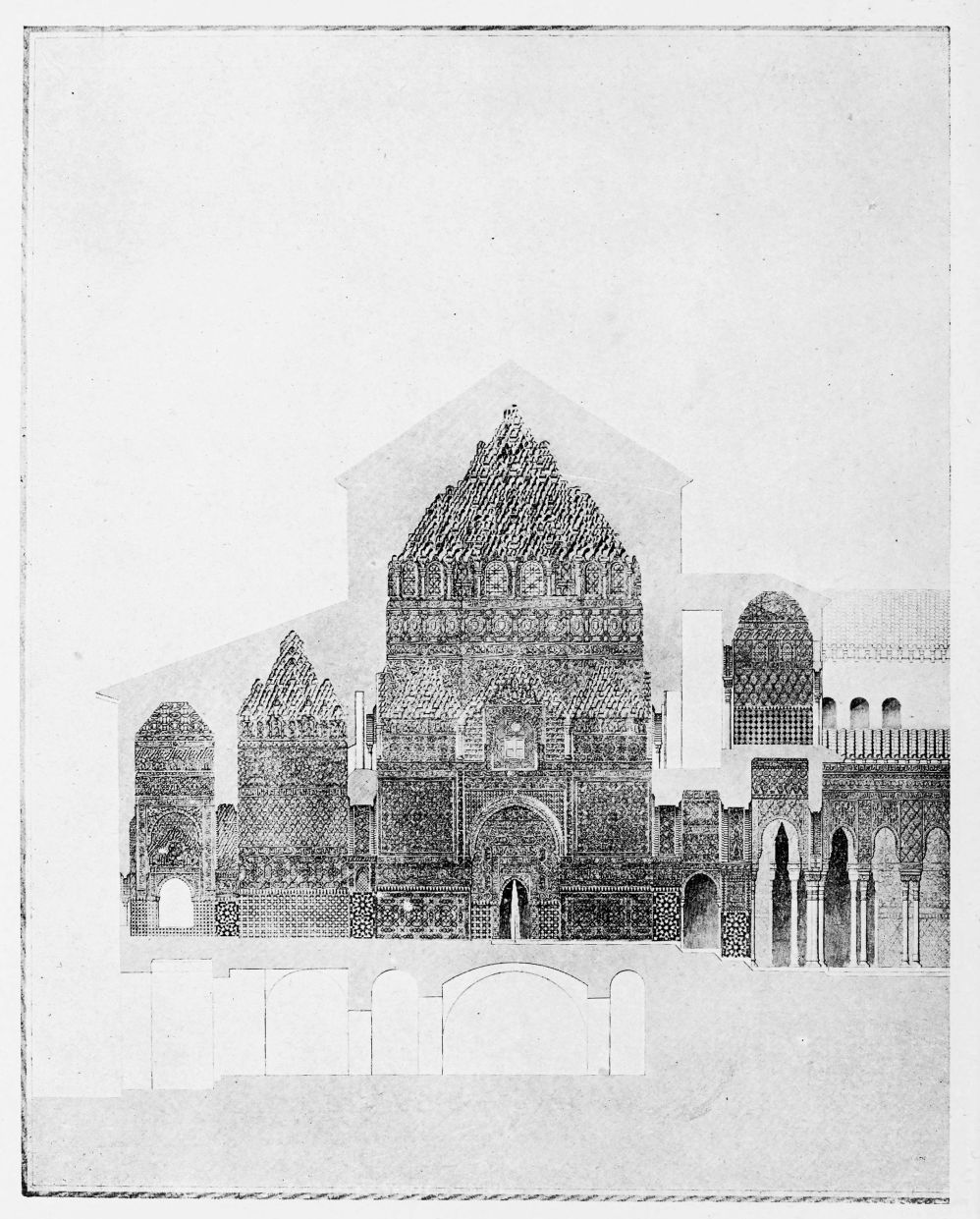
SECTION OF THE HALL OF THE TWO SISTERS, AND
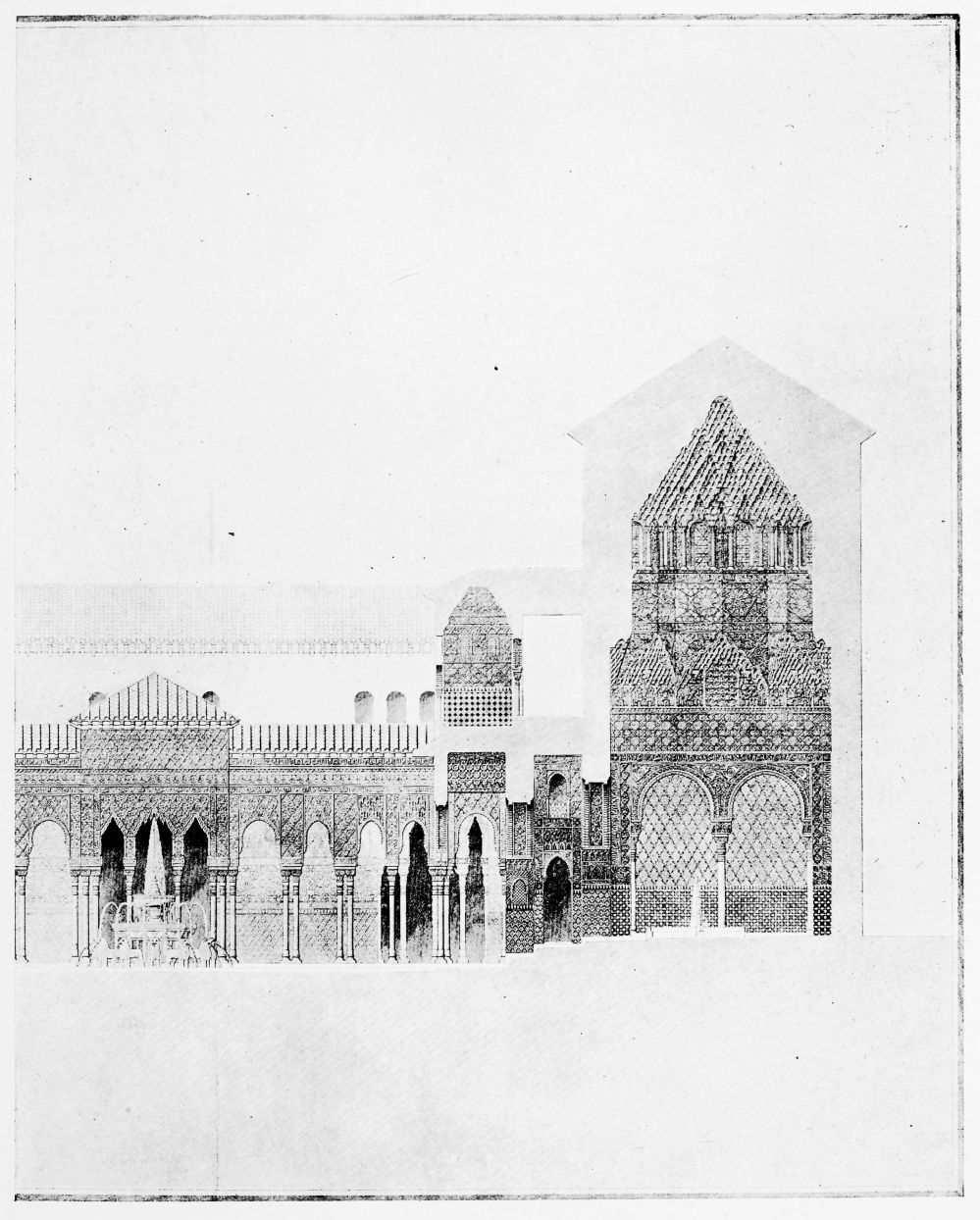
SECTION OF PART OF THE COURT OF THE LIONS.
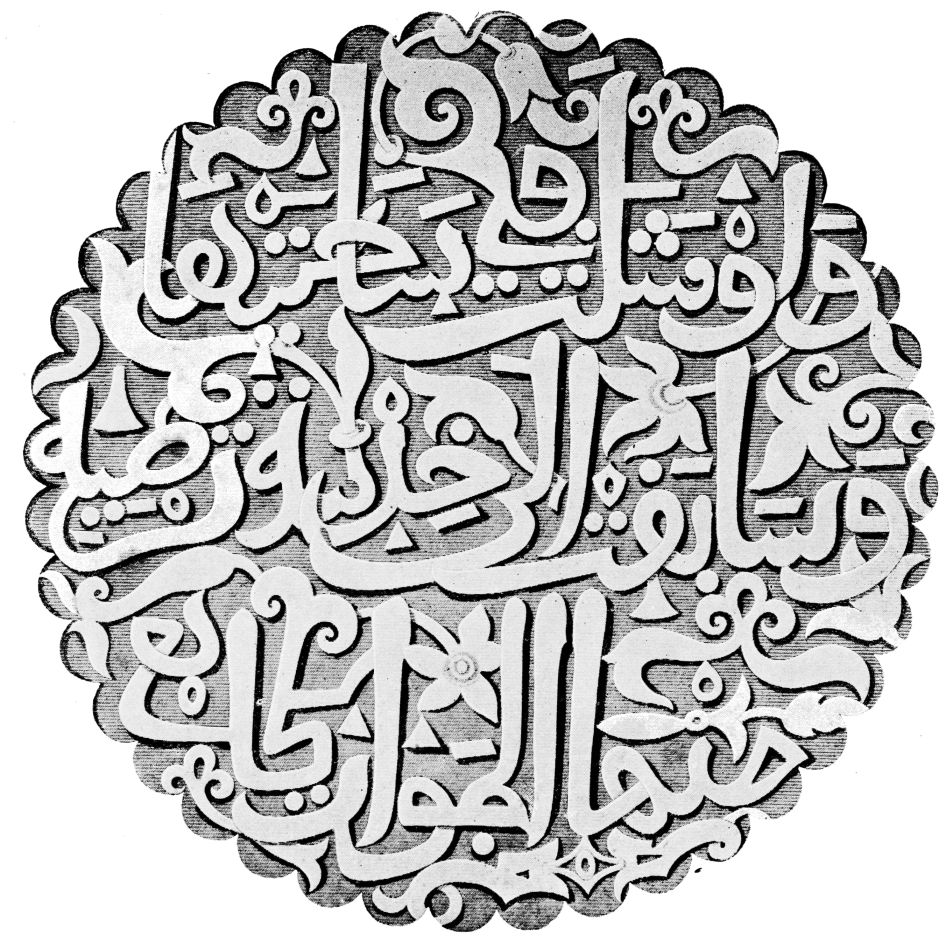
INSCRIPTION IN THE HALL OF THE TWO SISTERS.

INSCRIPTIONS IN THE HALL OF THE TWO SISTERS.
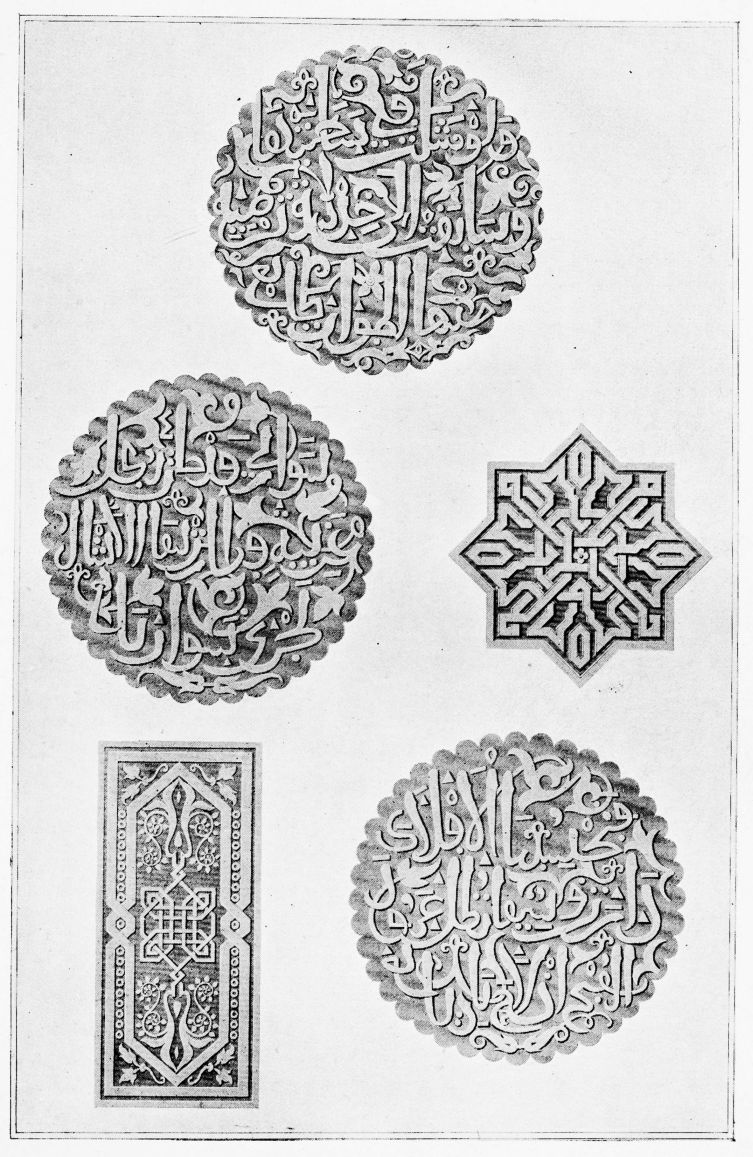
PANEL, ORNAMENT, AND INSCRIPTIONS IN THE HALL OF THE TWO SISTERS.
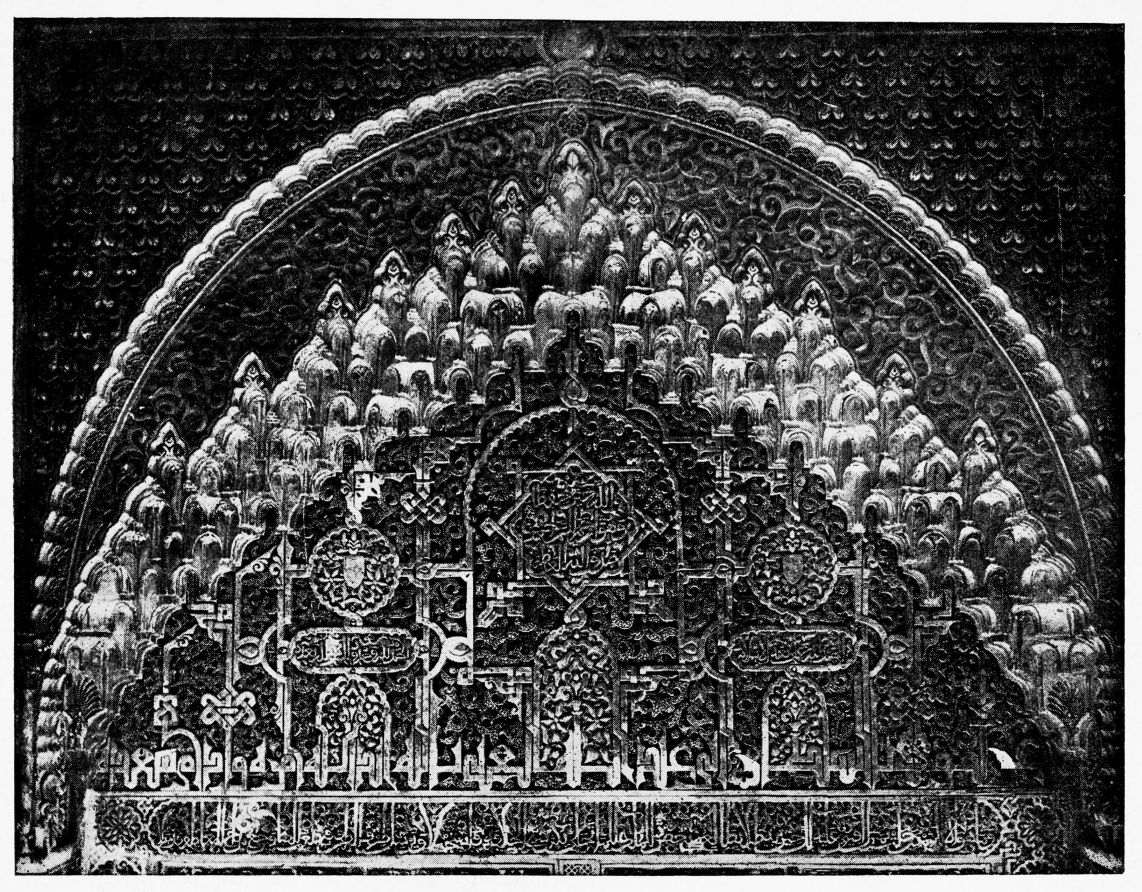
DETAILS ON THE FRONT OF “LINDARAJA’S” BALCONY.
DETAILS ON THE FRONT OF “LINDARAJA’S” BALCONY.
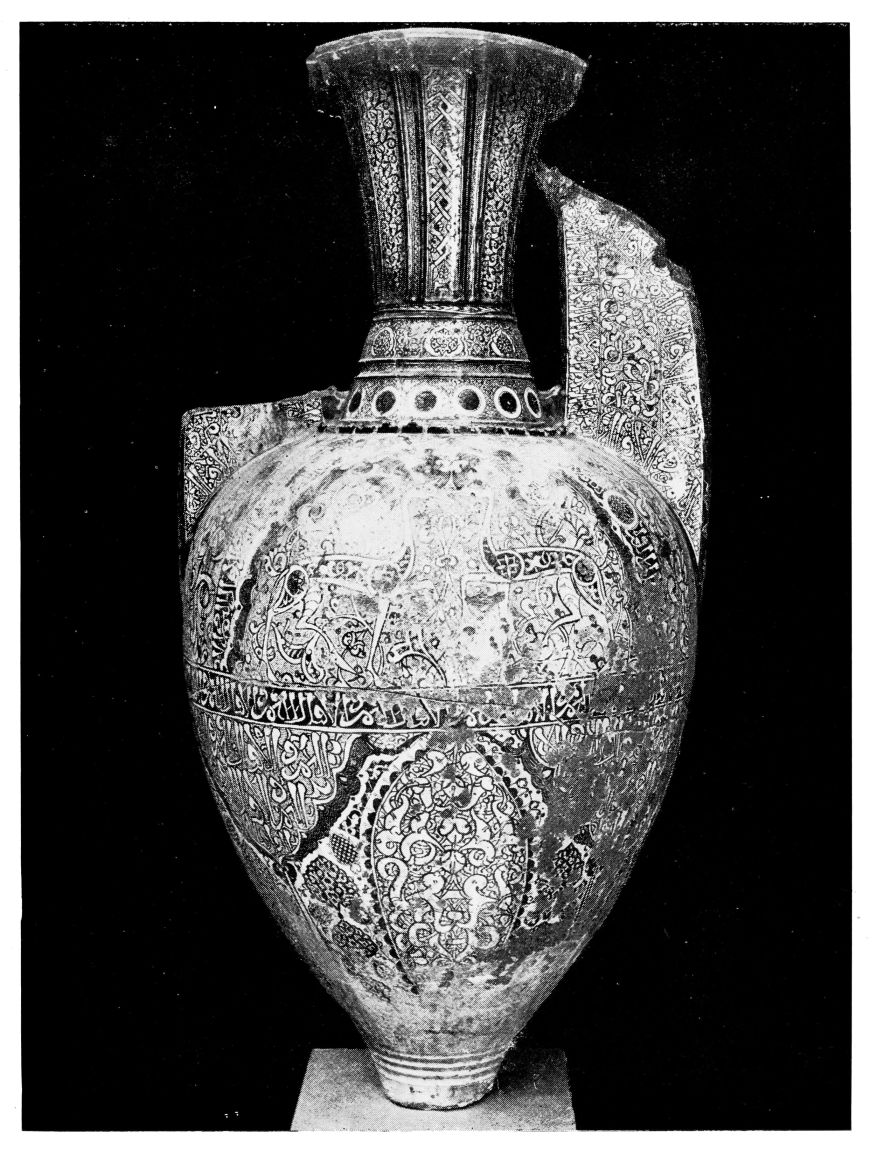
EL JARRO. ARAB VASE OF METALLIC LUSTRE, PROBABLY FROM THE BALEARIC ISLES (MAJORCA). THIS VASE NOW STANDS IN THE MUSEUM OF THE PALACE.
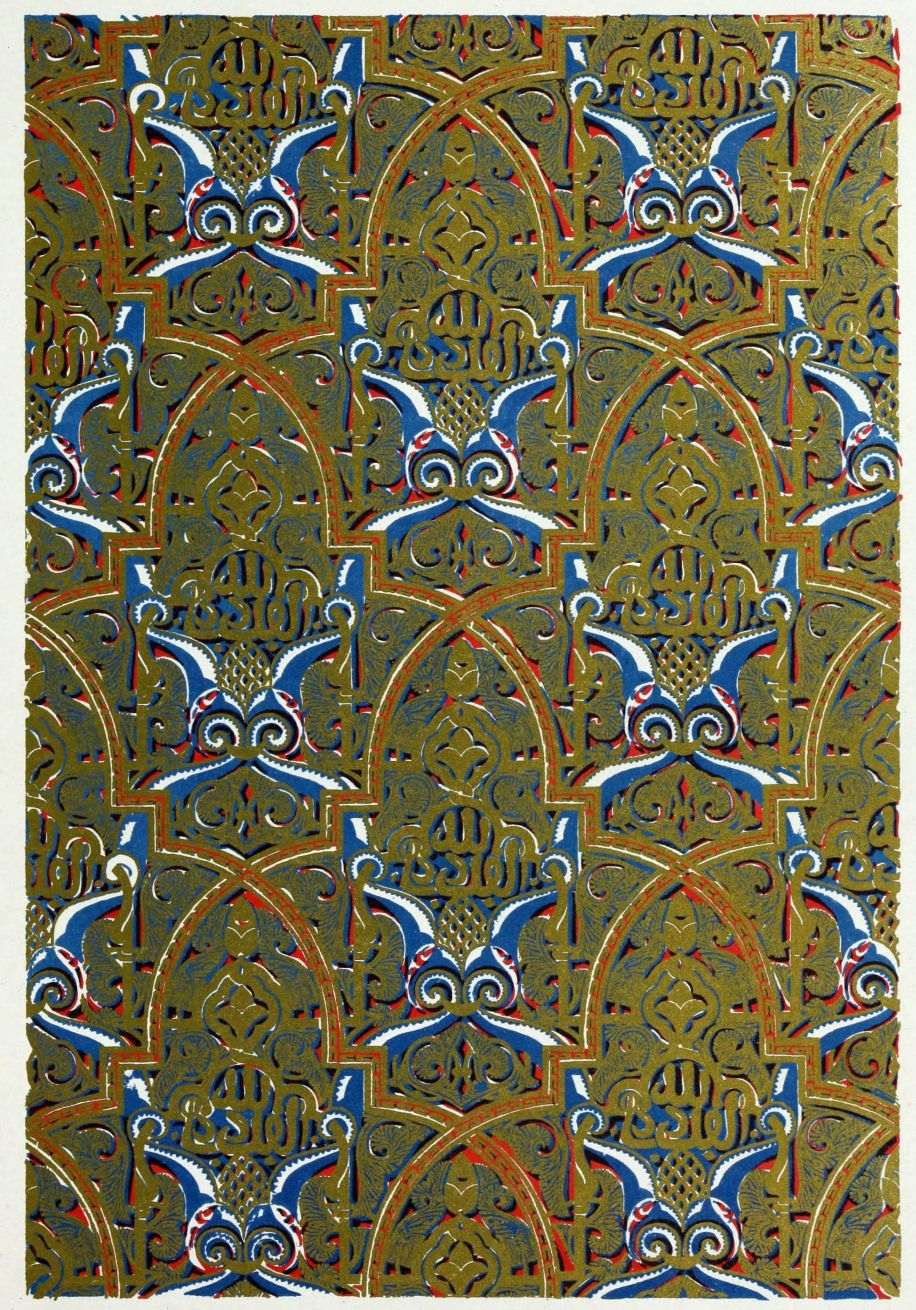
PLATE I.
No. 1.
Ornament in panels on the Walls, Hall of the Ambassadors.
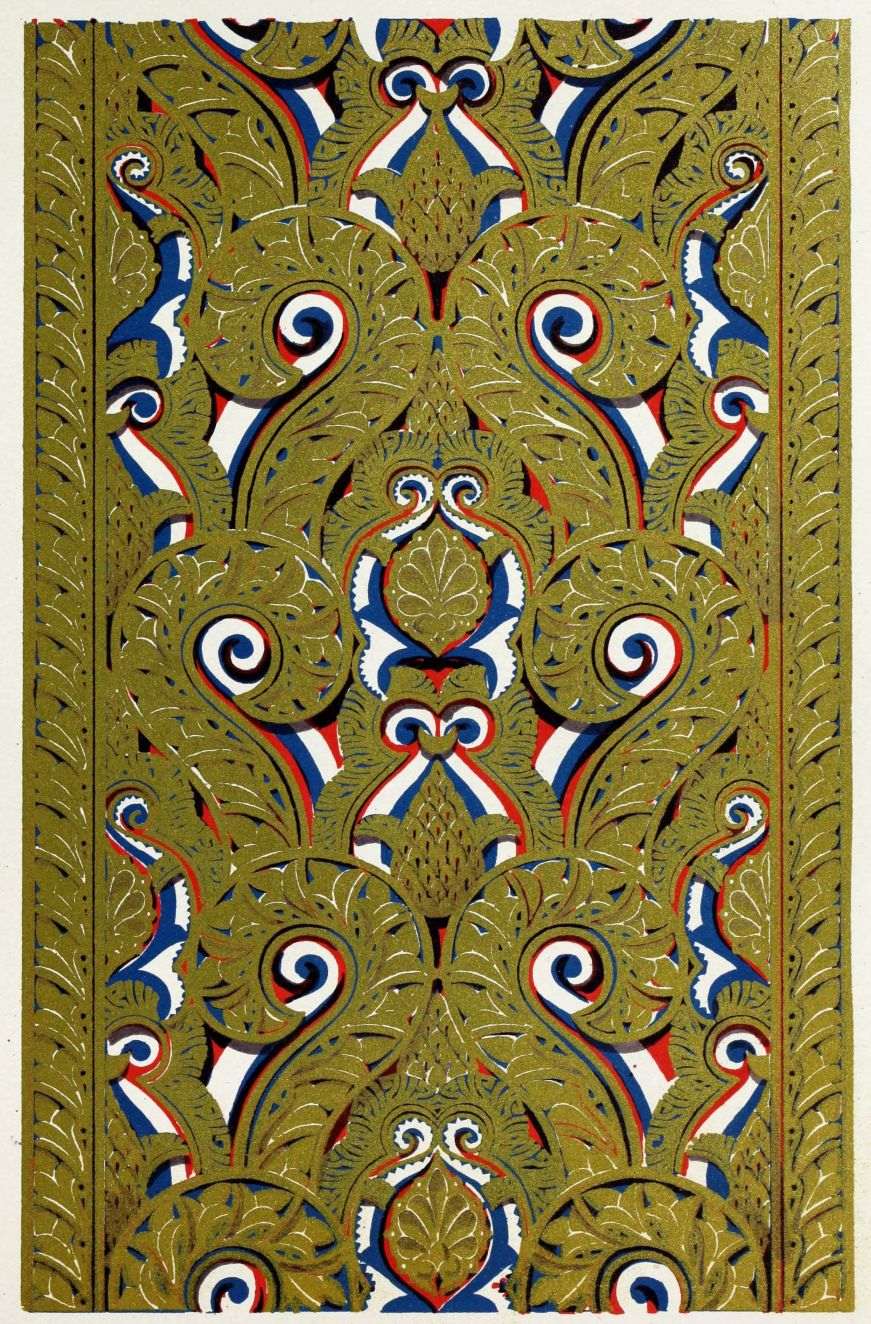
PLATE II.
No. 2.
Soffit of an arch, Court of the Fishpond.
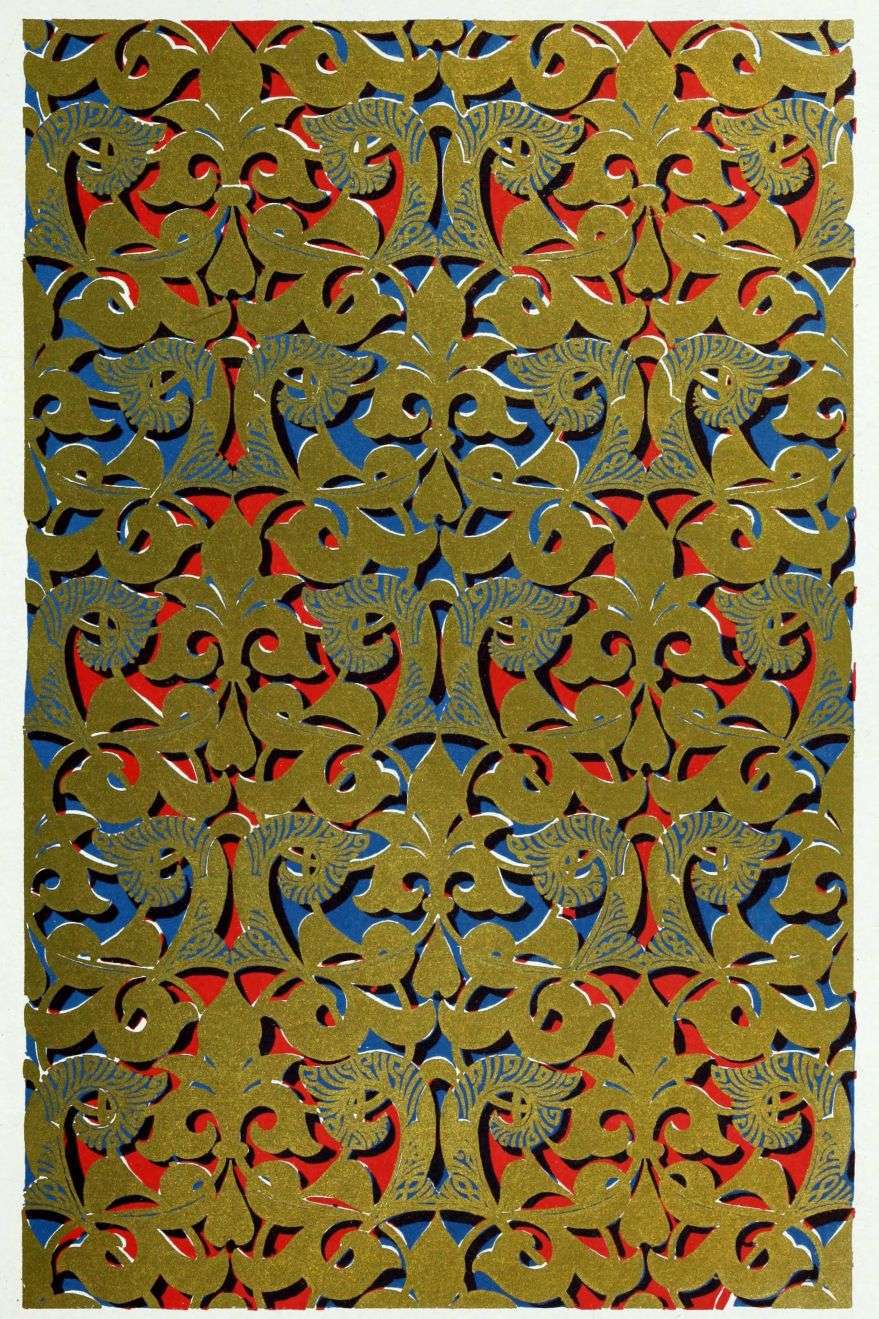
PLATE III.
No. 3.
Ornament over doorway at the entrance, Court of the Lions.
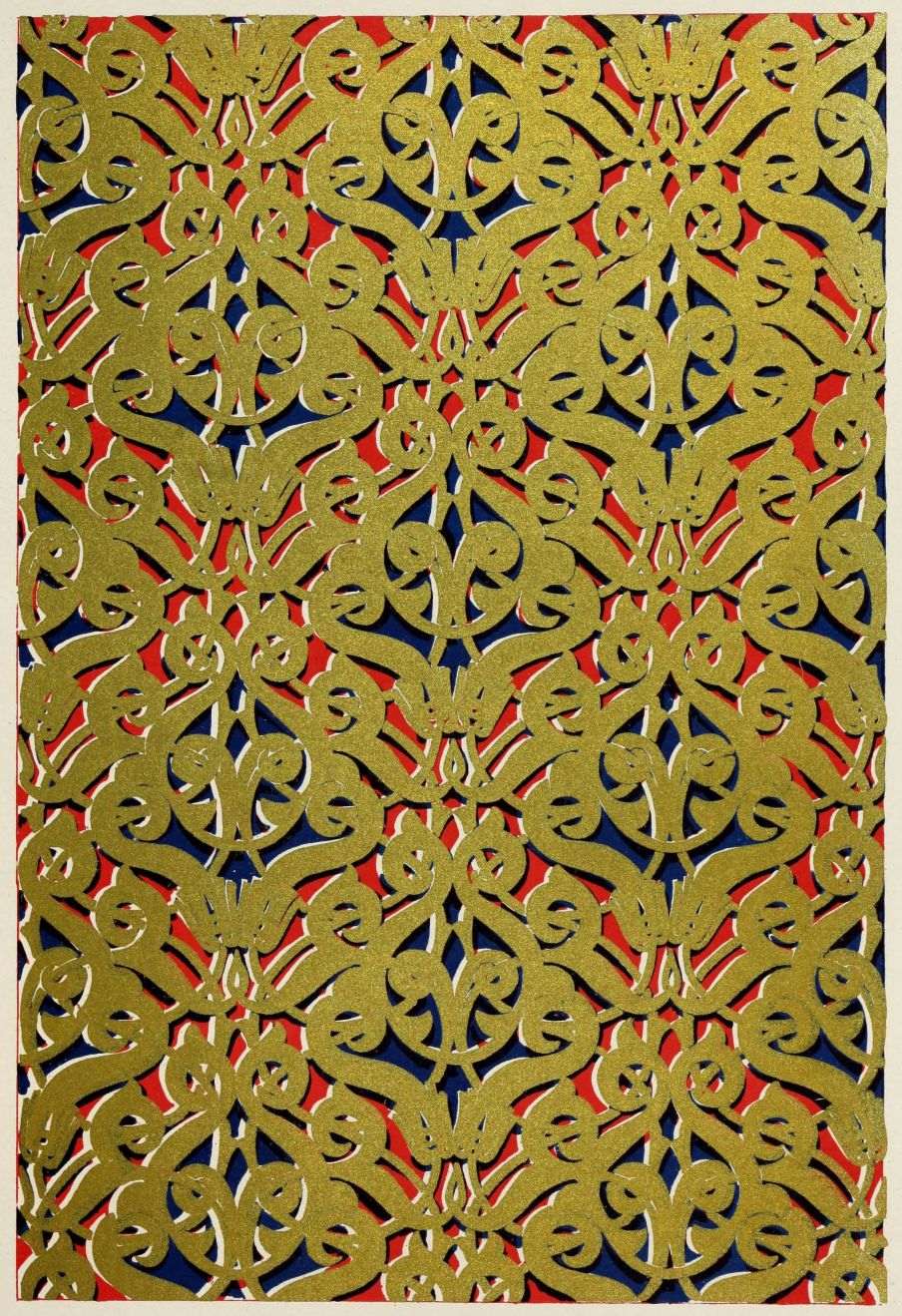
PLATE IV.
No. 4.
Ornament in doorway at the entrance to the Ventana, Hall of the Two Sisters.
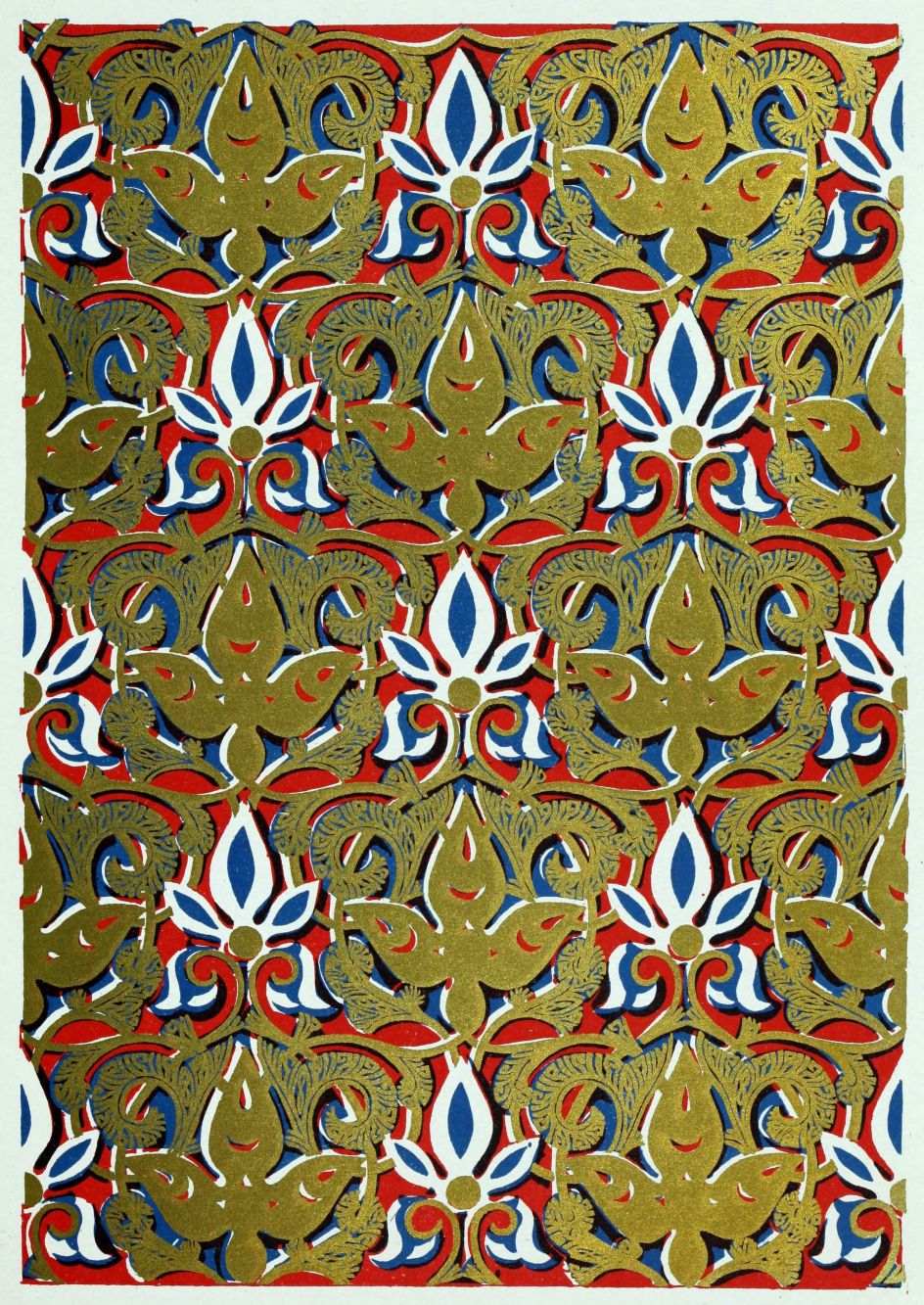
PLATE V.
No. 5.
Ornament on the side of windows, upper story, Hall of the Two Sisters.
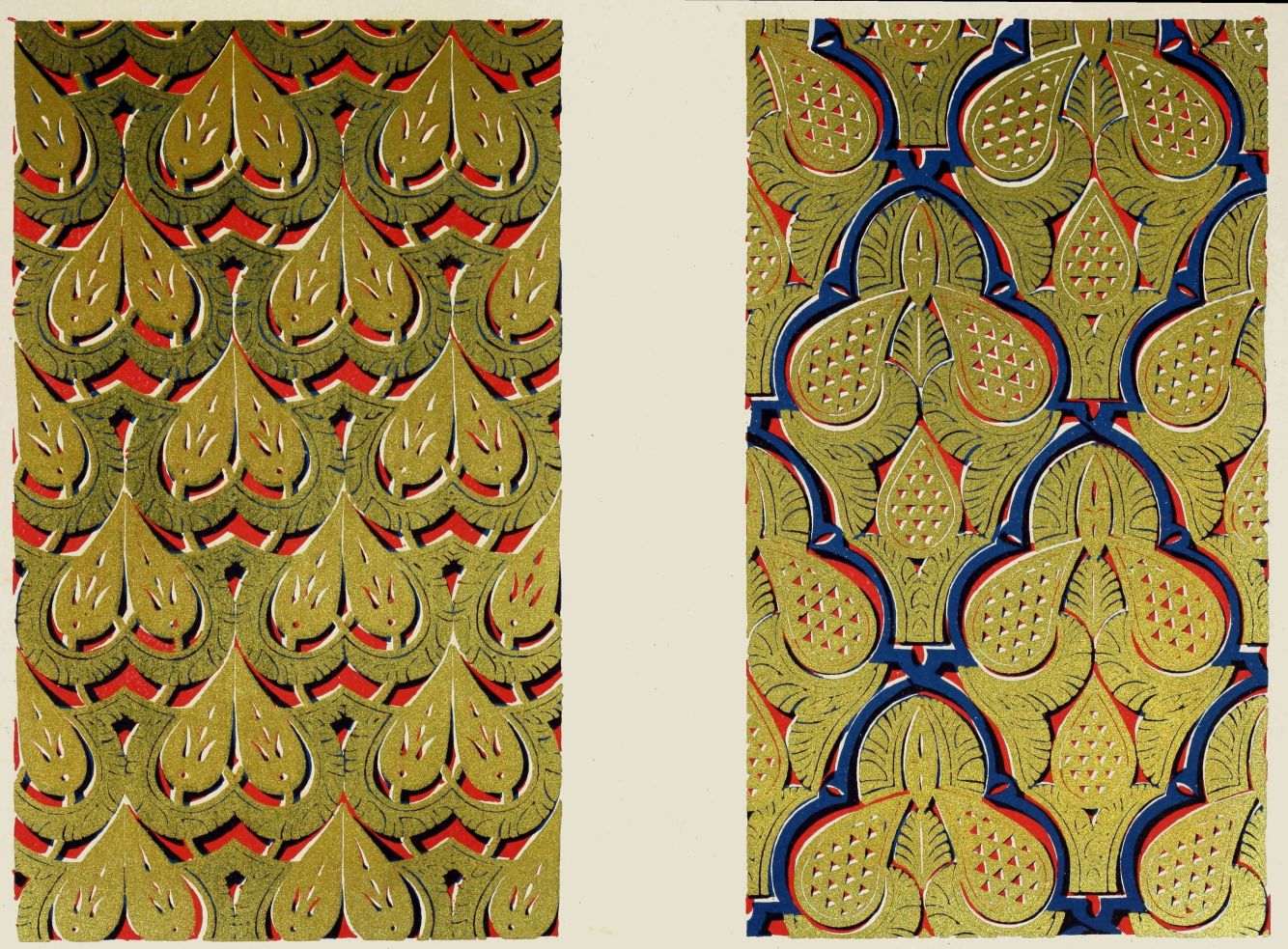
PLATE VI.
No. 6. Ornament in spandrils of arches, Hall of the Two Sisters. No. 7. Ornaments in spandrils of arches, Hall of the Abencerrages
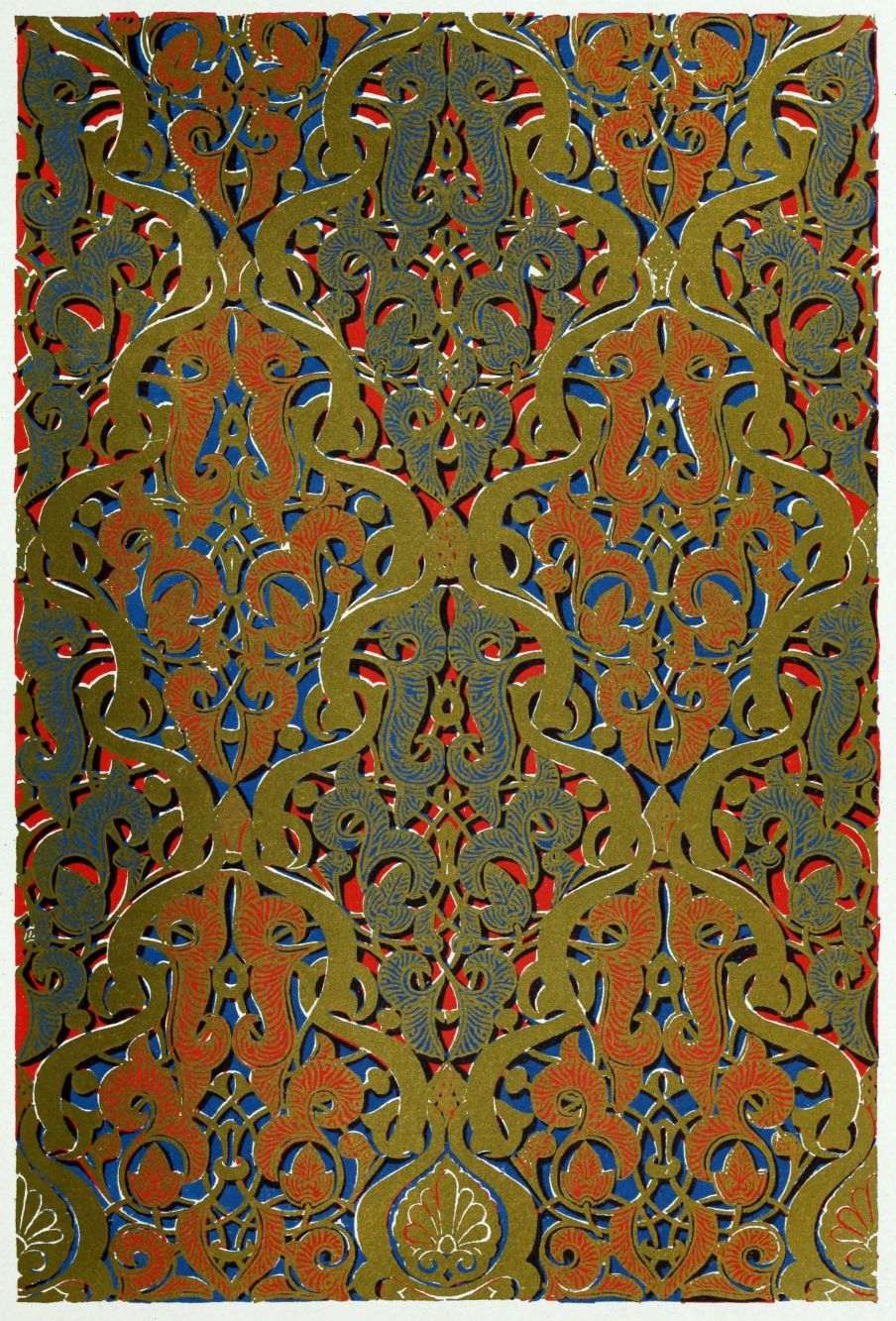
PLATE VII.
No. 8.
Ornaments in panels, Hall of the Ambassadors.
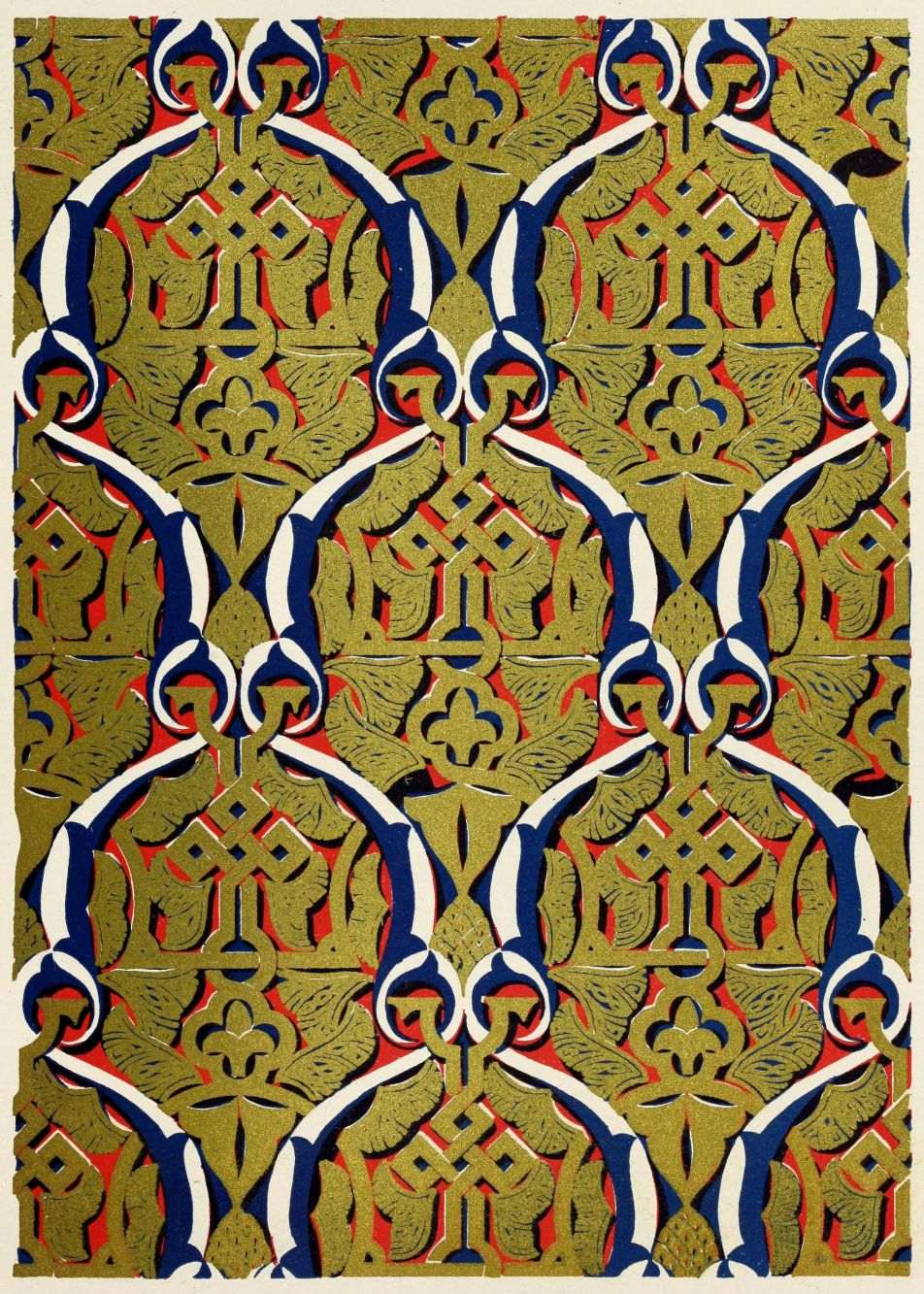
PLATE VIII.
No. 9.
Ornaments in panels, Court of the Mosque.
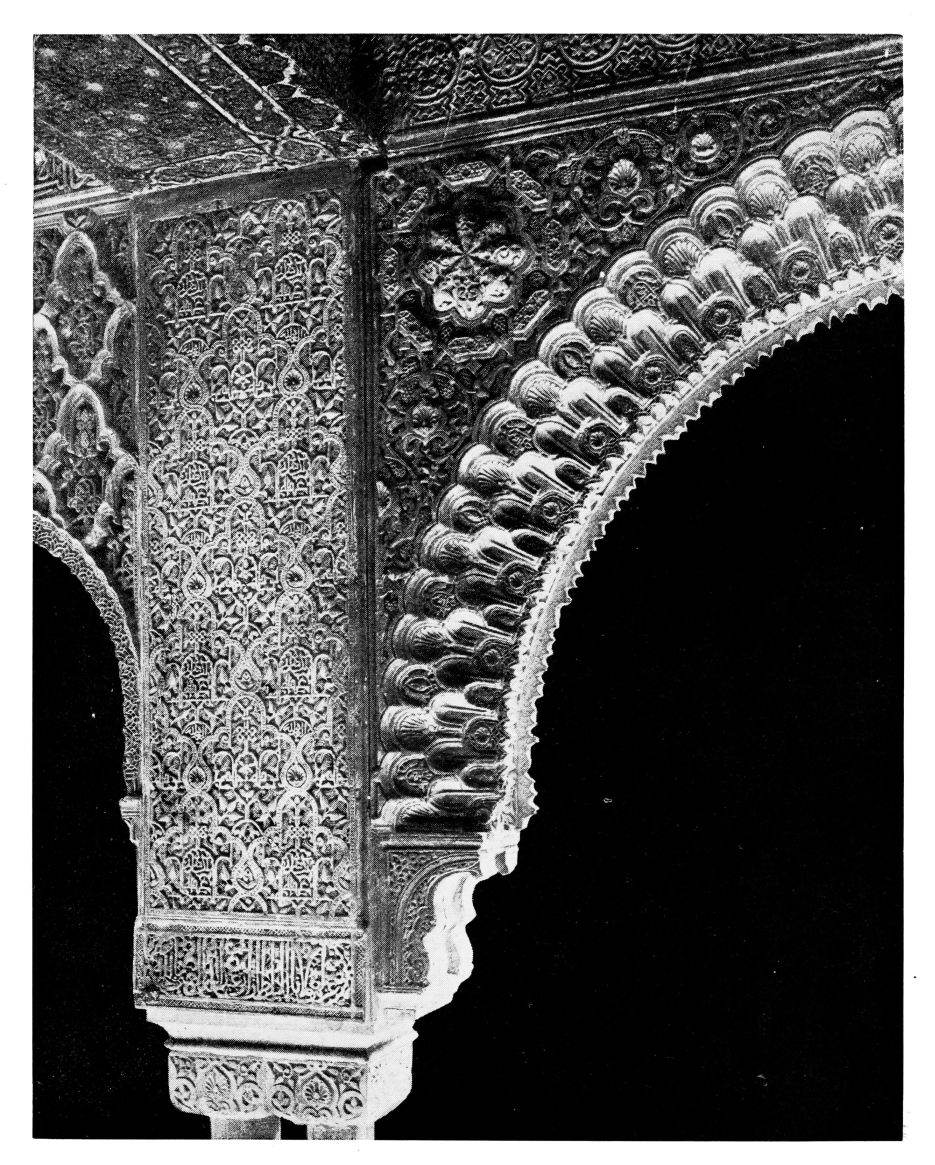
DETAILS AT THE EXIT OF THE HALL OF THE TWO SISTERS.
to el jarro, formerly existed in the Palace, but it was unfortunately broken about the year 1837, and the pieces sold to a passing traveller. It is here figured from Murphy’s Arabian Antiquities, 1815.
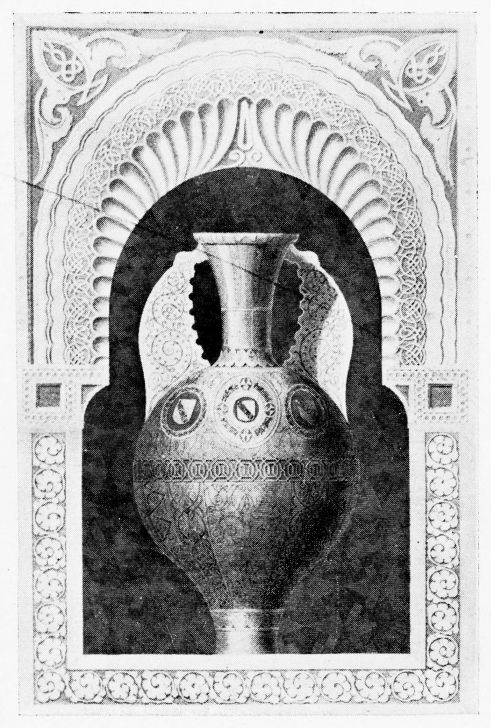
AN ARAB VASE OF THE XIVTH CENTURY IN THE NICHE WHEREIN IT STOOD UNTIL THE YEAR 1837.
The Hall of The Two Sisters fairly intoxicates one with the fragile yet imperishable beauty of the place. The eye soars upward, and flutters in and out of those flower-cup cells which seem the first creative types of some fresh world. Architects—Owen Jones amongst the number—inform us that the thing is very simple: it is a beauty put together by mere receipt proceeding from three primary figures—the right-angled triangle, the rectangle, and the isosceles triangle: capable of millions of combinations, just like the three primary colours, or the seven notes of the musical scale. “A simple receipt,” says an anonymous writer on the glories of the Alhambra; “but who, nowadays,
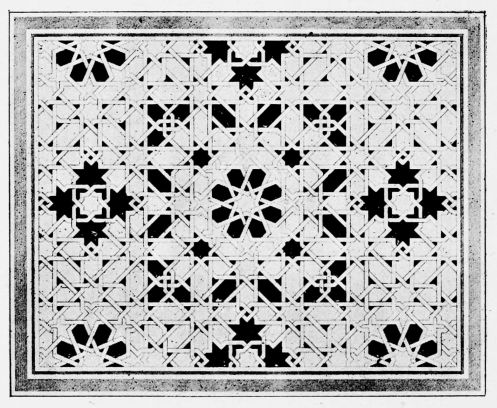
MOSAIC IN DADO OF THE ENTRANCE TO THE HALL OF THE TWO SISTERS.
can cook anything like it?” The same writer goes on to say that in devising the Alhambra, the Moors were always thinking of the Arab tent. They wanted air and lightness. The marble pillars are the tent spears, but of stone. The net-work lace veil that filigrees every wall with cobwebs of harmonious colour, is the old tent tapestry, the Córdovan-stamped leather hangings are the Indian shawls that canopied the wandering and victorious horseman’s tent. They wanted mere pendant flowers woven together into roof and gossamer-pierced panels that hardly
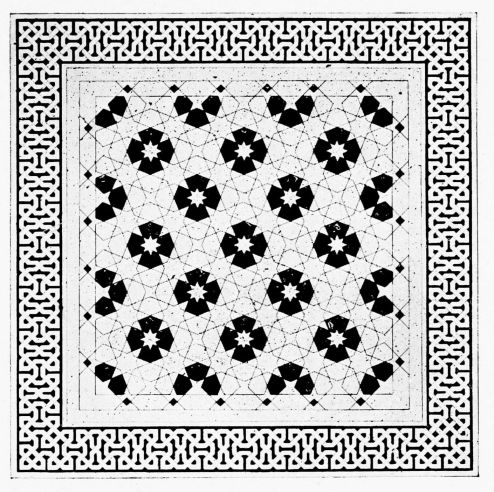
MOSAIC IN DADO OF RECESS, HALL OF THE TWO SISTERS.
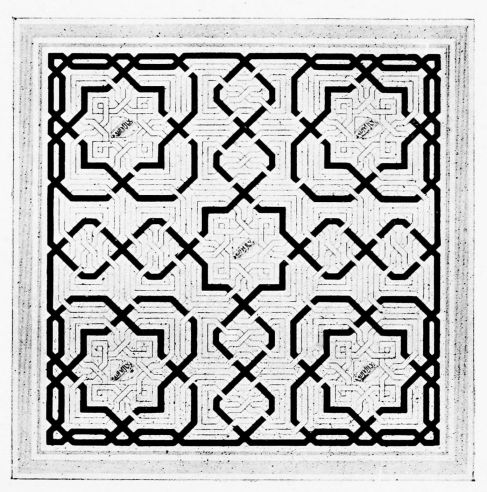
MOSAIC IN DADO, HALL OF THE TWO SISTERS.
arrest the air. Everything must float and sway; they would not bar out the chirp of the dripping silver water. They thinned and shaved the pillars till they were no longer cylinders of marble, but tender saplings, or flower-stalks, slender as spear-shafts. The spandrils are not corbelled beams, faced with gargoyle monsters, but perforated supports as to some fairy’s cabinet. There is nothing to hold up, only ivory-patterned walls, and a honeycombed dome that seems to float in mid-air.
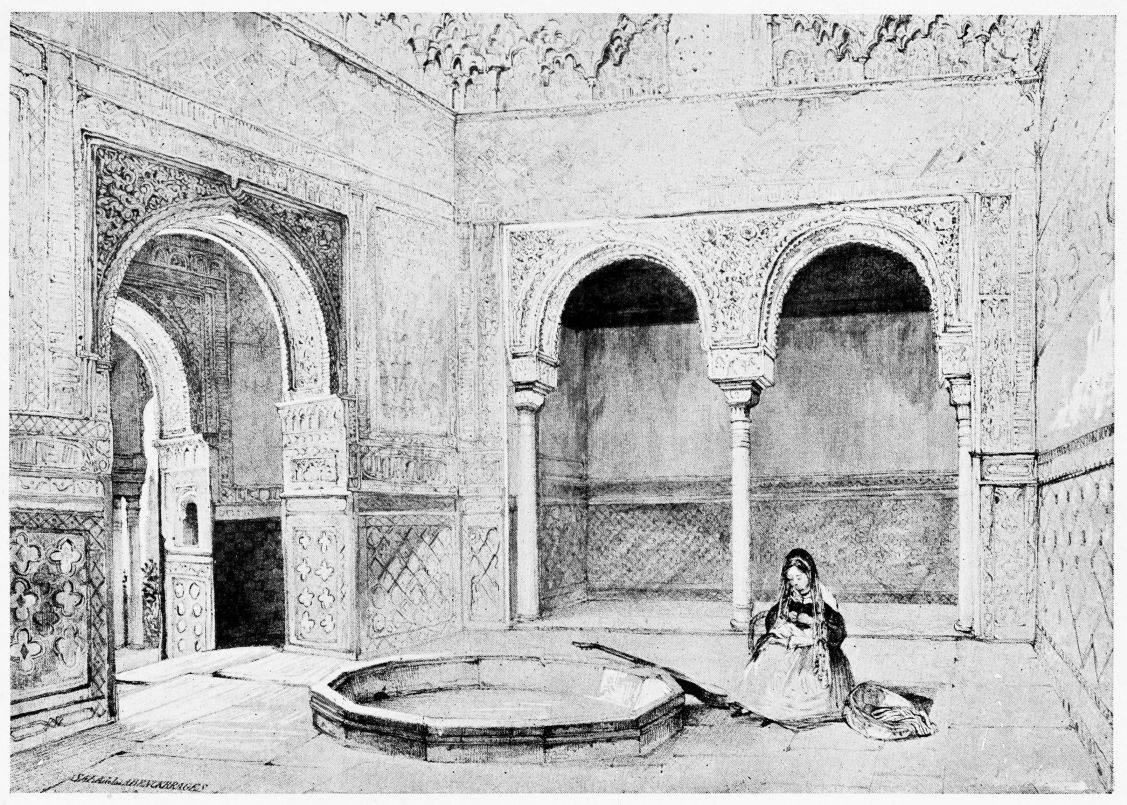
HALL OF THE ABENCERRAGES.
Here it is said that thirty-six cavaliers of the heroic line of Abencerrage were sacrificed to appease the jealousy or allay the fears of a tyrant. The fountain ran red with the noblest blood of Granada; and a deep stain on the marble pavement is pointed out by the cicerone of the pile as a sanguinary record of the massacre. The discolourations must be regarded with the same perfect faith with which one looks upon the traditional stains of Rizzio’s blood on the floor of the chamber of the unhappy Queen Mary at Holyrood. Who desires to be sceptical on such points of popular belief? The enlightenment of the happy reader of De Foe’s immortal romance—happy in the masterly illusion of the author—robbed him of one of the chief delights of his life. If there is any country in Europe where it is easy to live in the romantic and fabulous traditions of the past, it is in legendary, proud-spirited, romantic Spain, where the old, magnificent, barbaric spirit even now contends with modern innovation.
In the silent halls of the Alhambra, surrounded with the insignia of regal sway, and vivid with traces of Oriental voluptuousness, everything speaks and breathes of the glorious days of Granada when under the dominion of the Crescent. In the proudest days of Moslem domination, the Abencerrages were the soul of everything noble and chivalrous. The veterans of the family, who sat in the royal Council, were the foremost to devise those heroic enterprises which carried dismay into the territories of the Christian; and what the sages of the family devised, the young men of the name were prompt to execute. In all services of hazard, in all adventurous forays, the Abencerrages were sure to win the brightest laurels. In those noble recreations, too, which bear so close an affinity to war, still the Abencerrages carried off the palm. None could equal them in splendour of array, in gallantry of device, or in their noble bearing and glorious horsemanship. Their open-handed munificence made them the idols of the populace, while their lofty magnanimity and perfect faith gained them golden opinions from the generous and high-minded; the “word of an Abencerrage” was a guarantee that never admitted doubt.
The main facts connected with the fate of the chieftains of that generous but devoted race seem to have been ascertained, leaving little doubt of this hall having been the scene of their calamitous end. Alas! that boudoirs made for love and life should witness scenes of hatred and of death; and let none presume to “peep and botanize” over-much, for nothing is more certain than that heroic blood can never be effaced, still less if shed in most unnatural murder. Nor, according to Lady Macbeth, will “all the perfumes of Arabia” serve to sweeten the foul deed. The blood at least is genuine to all intentions of romance as that of “the gentle Lutenist” at Holyrood, or of Becket at the shrine of Canterbury. It behoves us to beware of those dull people who, deprived of imagination, pretend to judgment; and who would abolish the midsummer fairies, or proscribe old Æsop; there is no faith in them.
All who visit the Alhambra are sure to make for the fountain
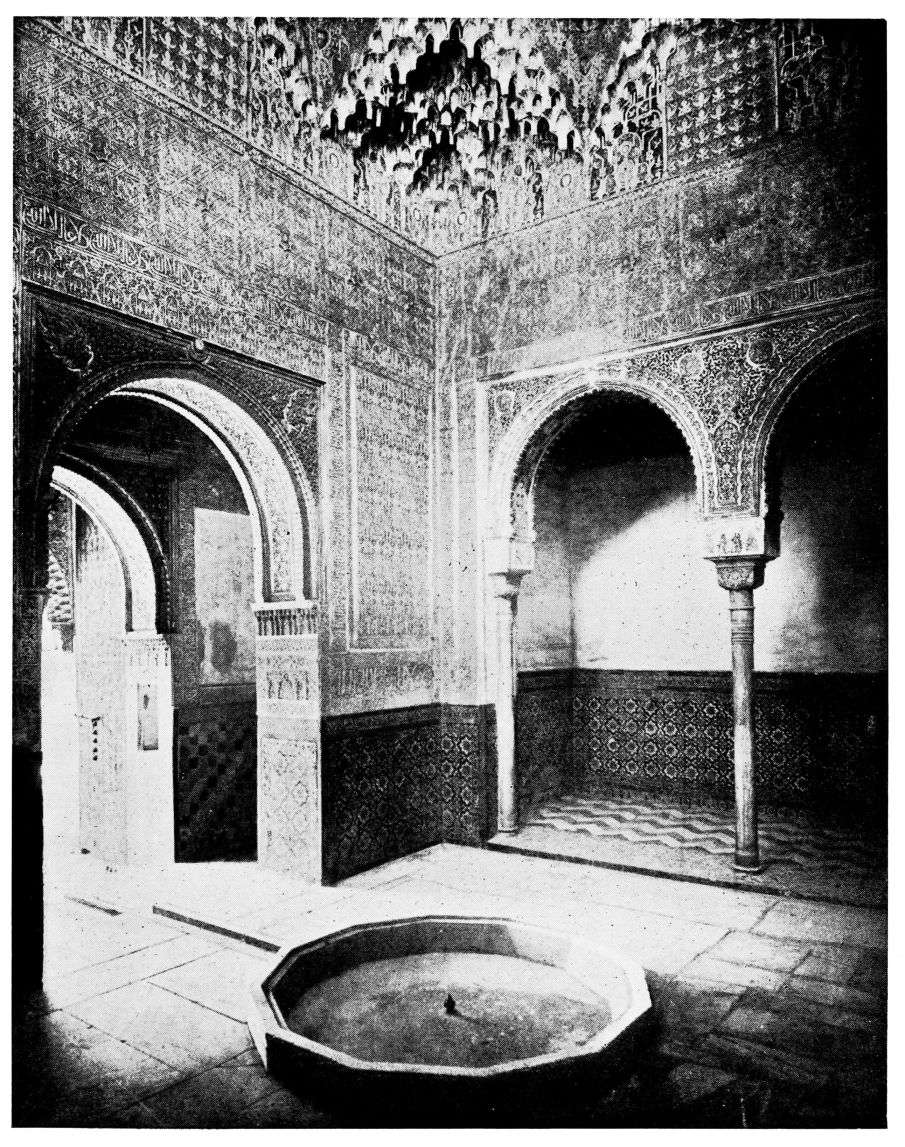
HALL OF THE ABENCERRAGES (BENI CERRAJ).
where the Abencerrages were beheaded, the more credulous looking with interest upon the natural reddish-brown veins of the marble, which are supposed to be indelible blood-stains. It is said that Boabdil resolved upon the extirpation of the noble family of the Abencerrages in consequence of the alleged discovery of an intrigue, including a false charge of infidelity against his gentle queen, and directed the decapitation of thirty-six of
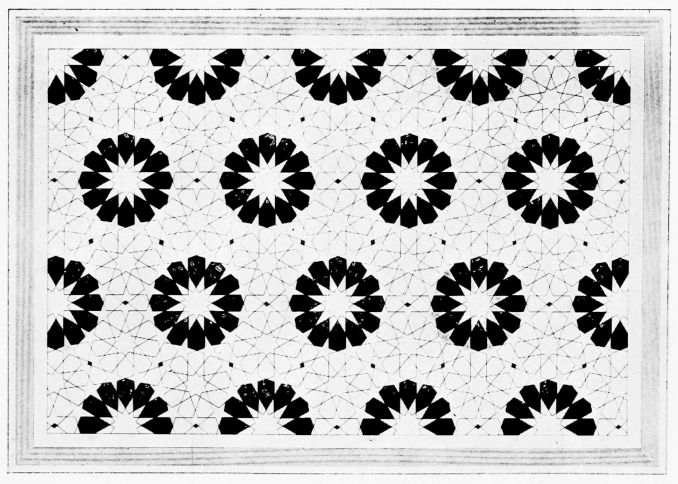
MOSAIC—HALL OF THE ABENCERRAGES.
them in this Hall. The story has passed into ballads, dramas, and romances, until it has grown too strong to be eradicated. Boabdil, however, was of a mild and amiable character, if wavering and irresolute; and too gracious to have ordered so inhuman a massacre as the execution of thirty-six of not only a gallant, but a powerful and numerous family, with many friends. The truth is, it was Boabdil’s father, Muley-Abu-l-Hasen, represented by both Christian and Arabian chroniclers as of a cruel and ferocious nature, who unjustly put to death some cavaliers of the illustrious line upon suspicion of their being engaged in a conspiracy to dispossess him.
It so happens that the fame of Boabdil the Unlucky can be cleared of such infamy as the wholesale massacre of the Abencerrages through direct evidence afforded by a contemporary Hispano-Moresque ballad, “Ay de mi Alhama!” written in 1482, and which Lord Byron has made familiar by his version, “A very mournful Ballad on the siege and conquest of Alhama.”
The fact that Muley-Abu-l-Hasen in vain invested the castle and town of Alhama[11] after its capture by the Marquis of Cadiz, and the direct reference in the ballad to its loss, ascribed to the wrath of Allah at the wickedness of the King, clearly exonerates Boabdil from the crime of his father.
* * * * * *
“By thee were slain, in evil hour, The Abencerrage, Granada’s flower; And strangers were received by thee Of Córdova the Chivalry. Woe is me, Alhama! “And for this, oh king! is sent On thee a double chastisement: Thee and thine, thy crown and realm, One last wreck shall overwhelm. Woe is me, Alhama!”
* * * * * *
With the loss of the two “Keys” to Granada—Loja and Alhama—both being forthwith heavily garrisoned by the
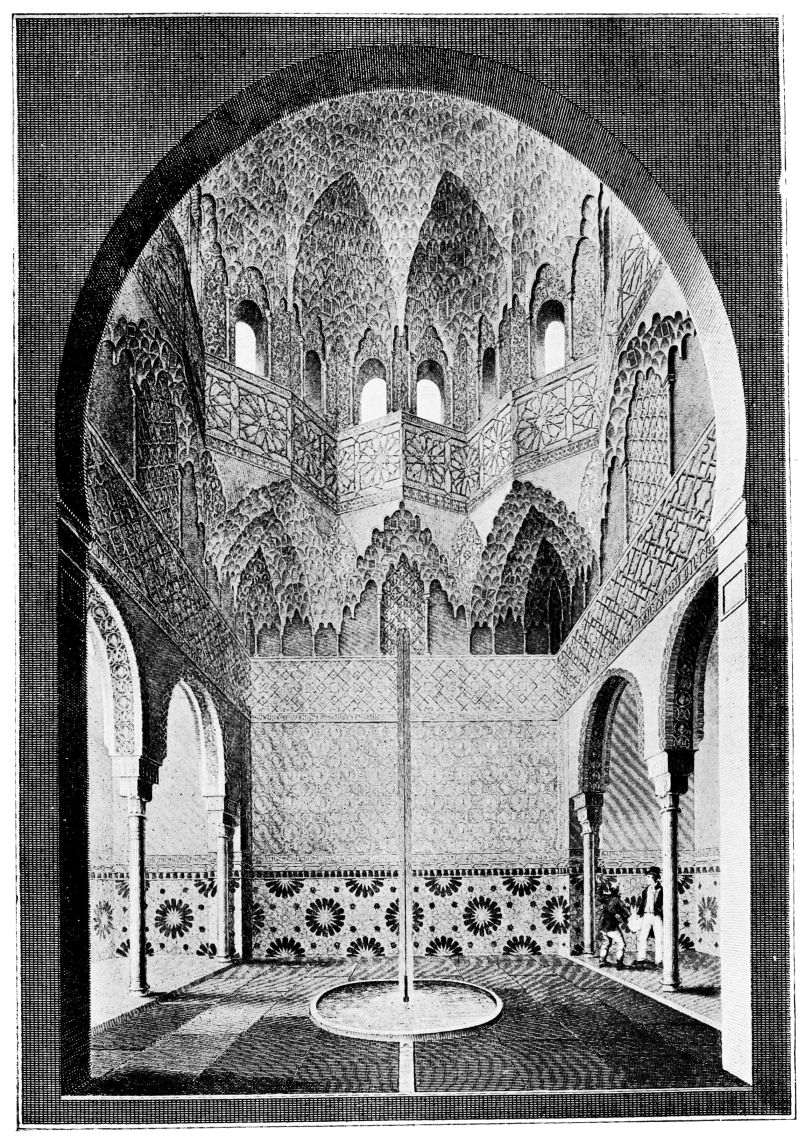
HALL OF THE ABENCERRAGES.
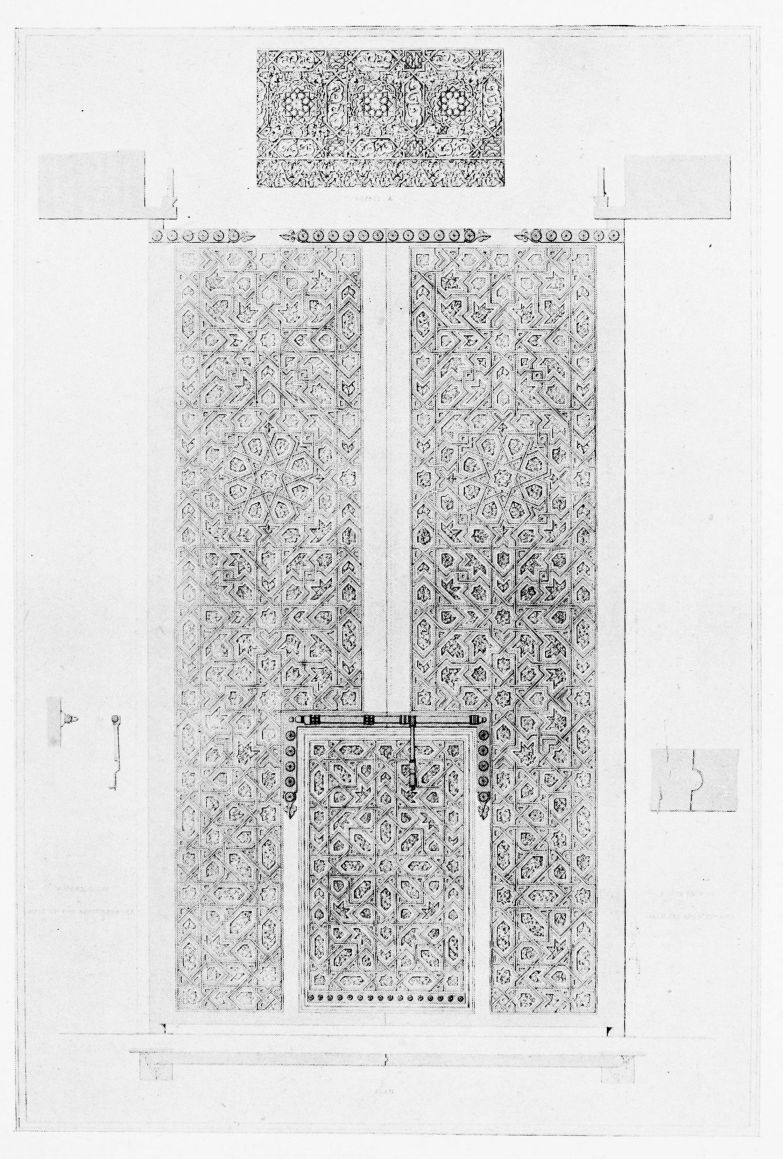
WOODEN DOOR, HALL OF THE ABENCERRAGES.
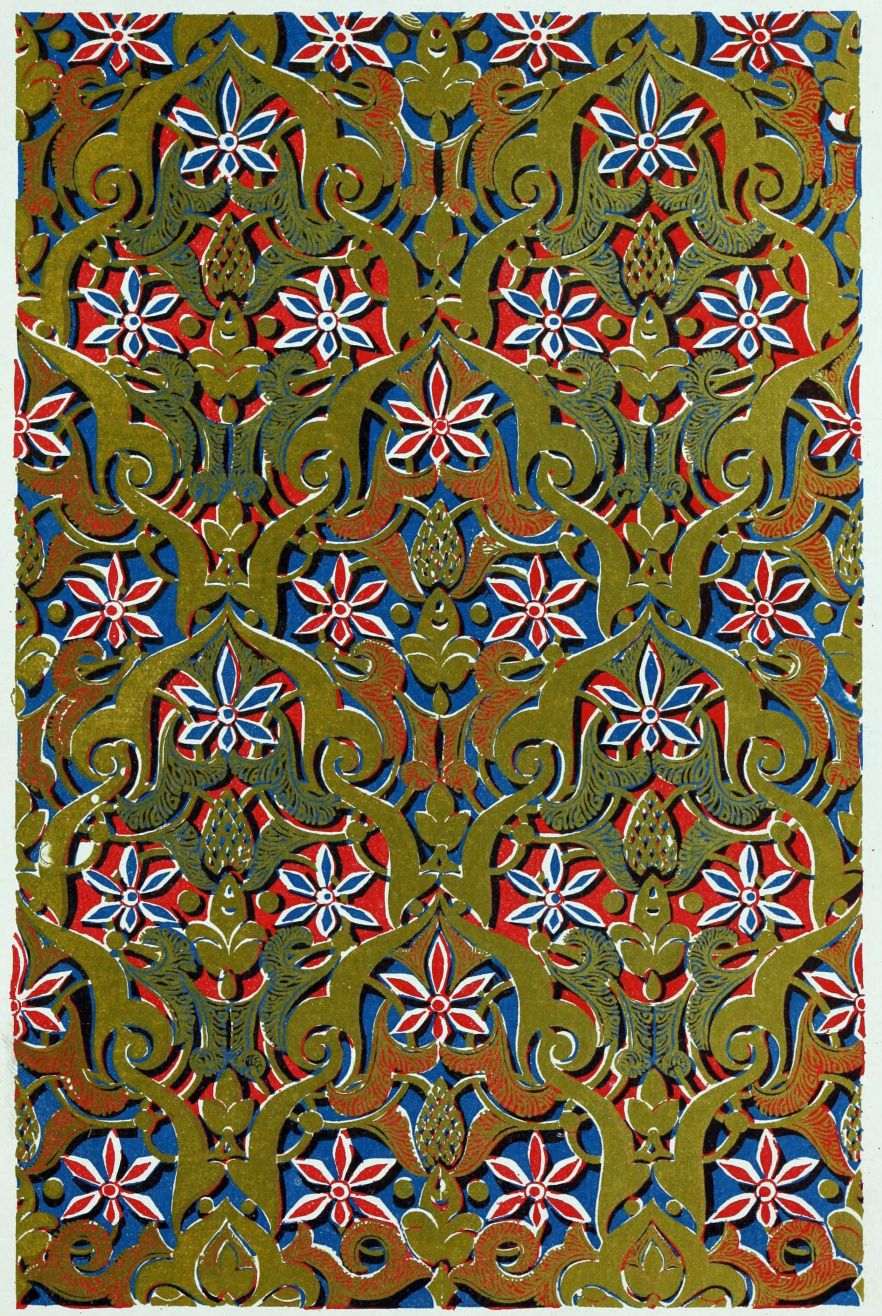
PLATE IX.
No. 10.
Ornament over arches at the entrance to the Court of the Lions.
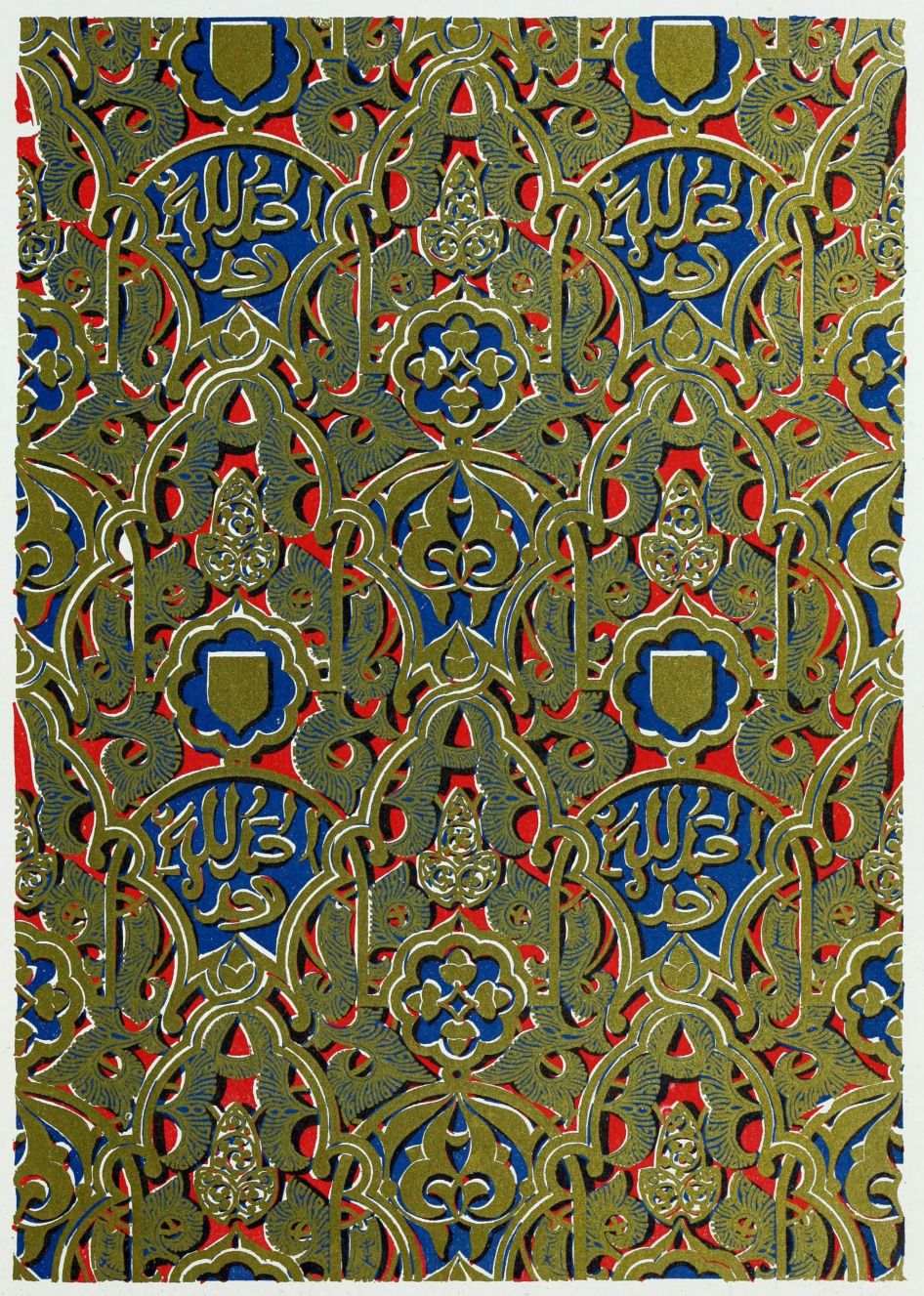
PLATE X.
No. 11.
Ornament on the walls, Hall of the Abencerrages.
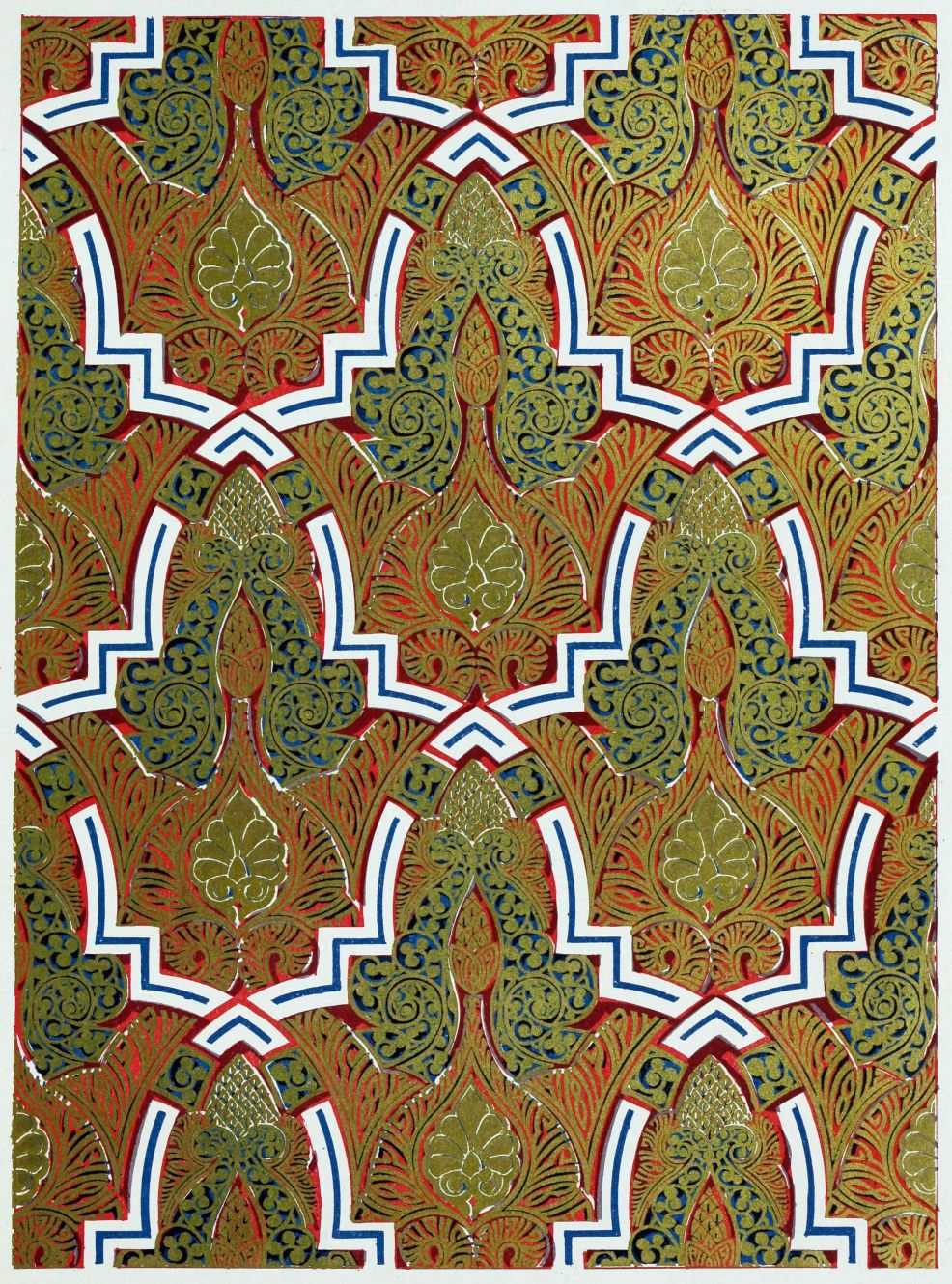
PLATE XI.
No. 12.
Ornament in panels on the walls, Court of the Mosque.
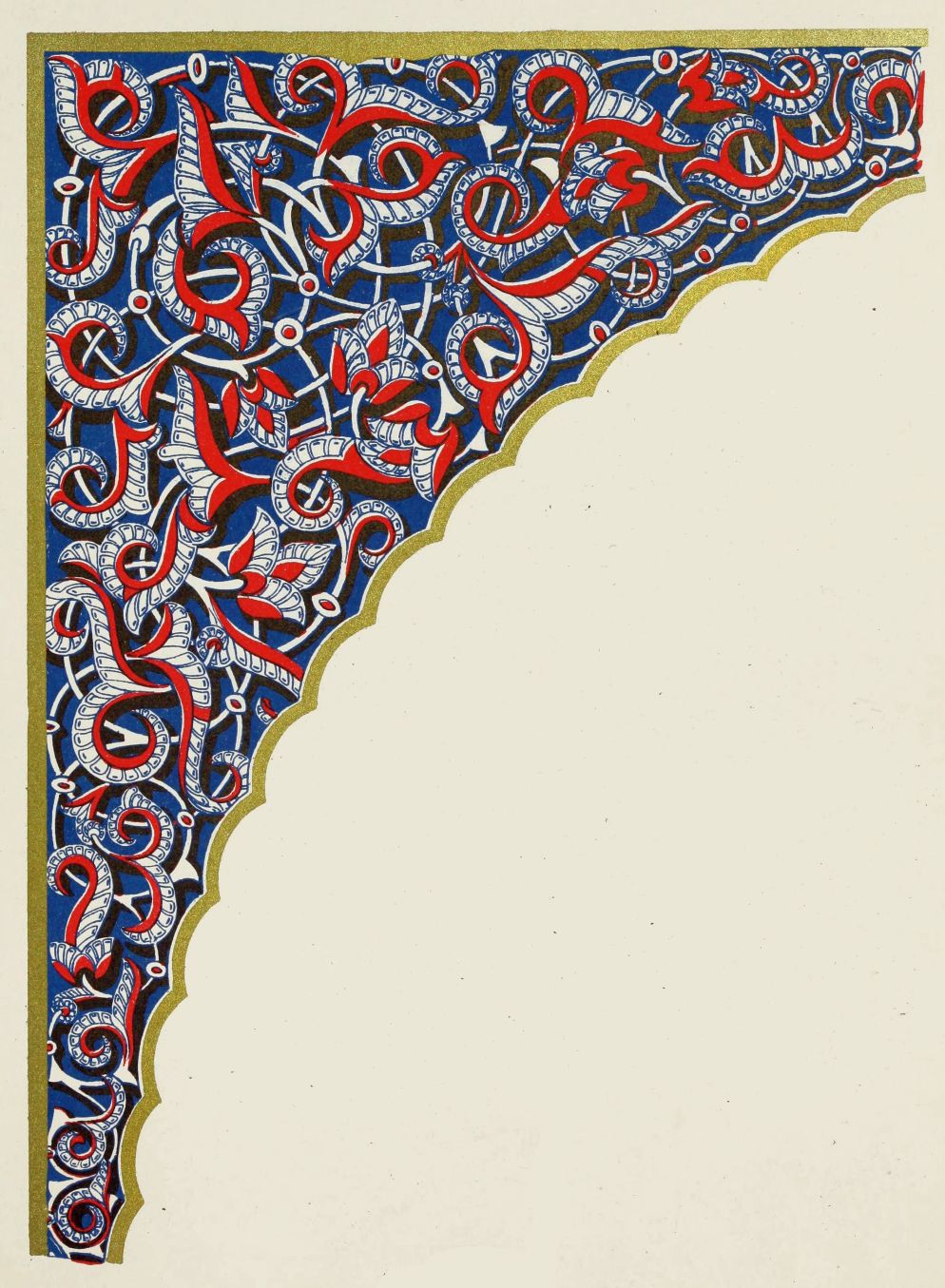
PLATE XII.
No. 13.
Spandril of an arch of window, Hall of the Ambassadors.
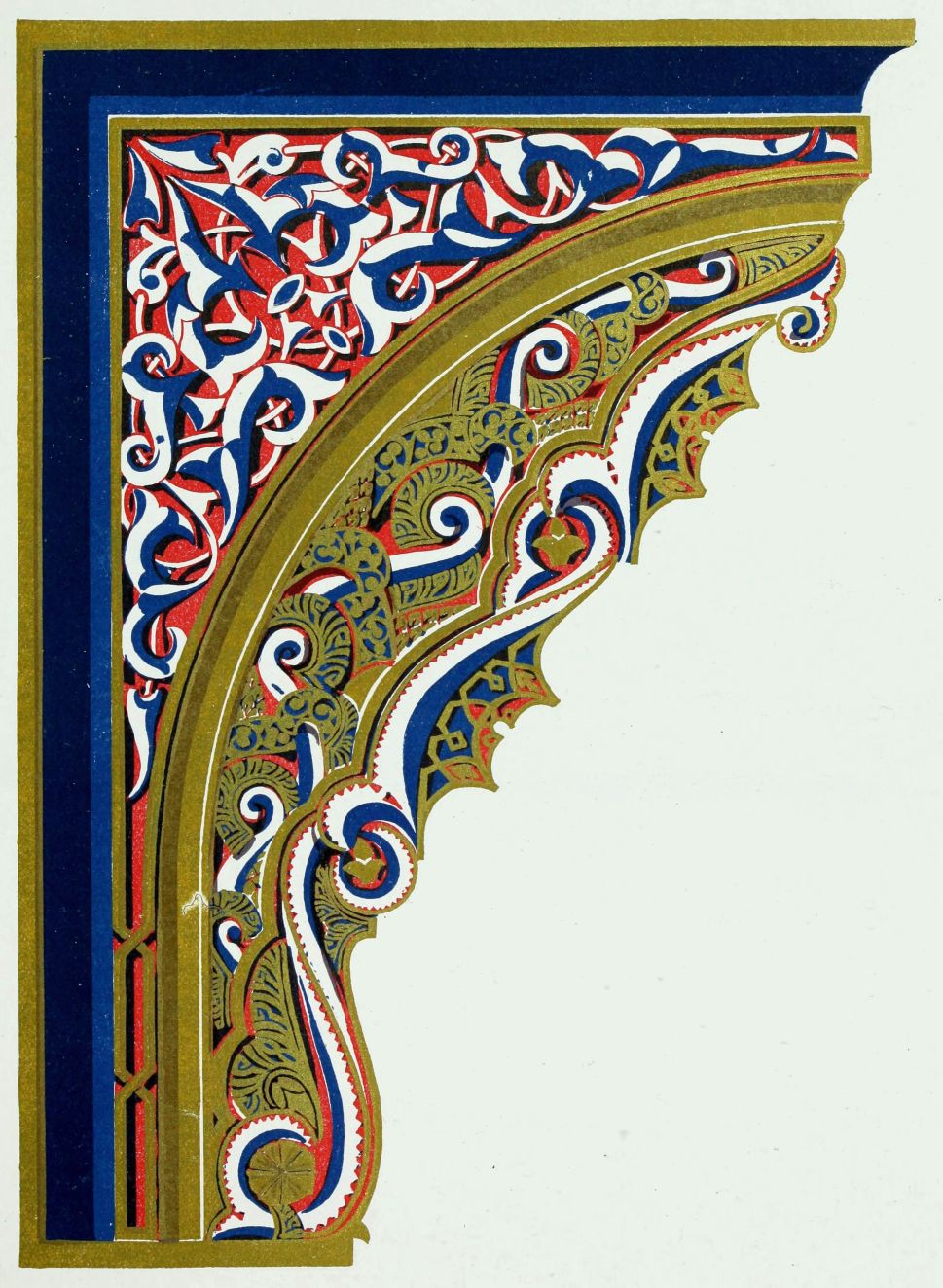
PLATE XIII.
No. 14.
Brackets supporting ceiling of the portico, Court of the Lions.
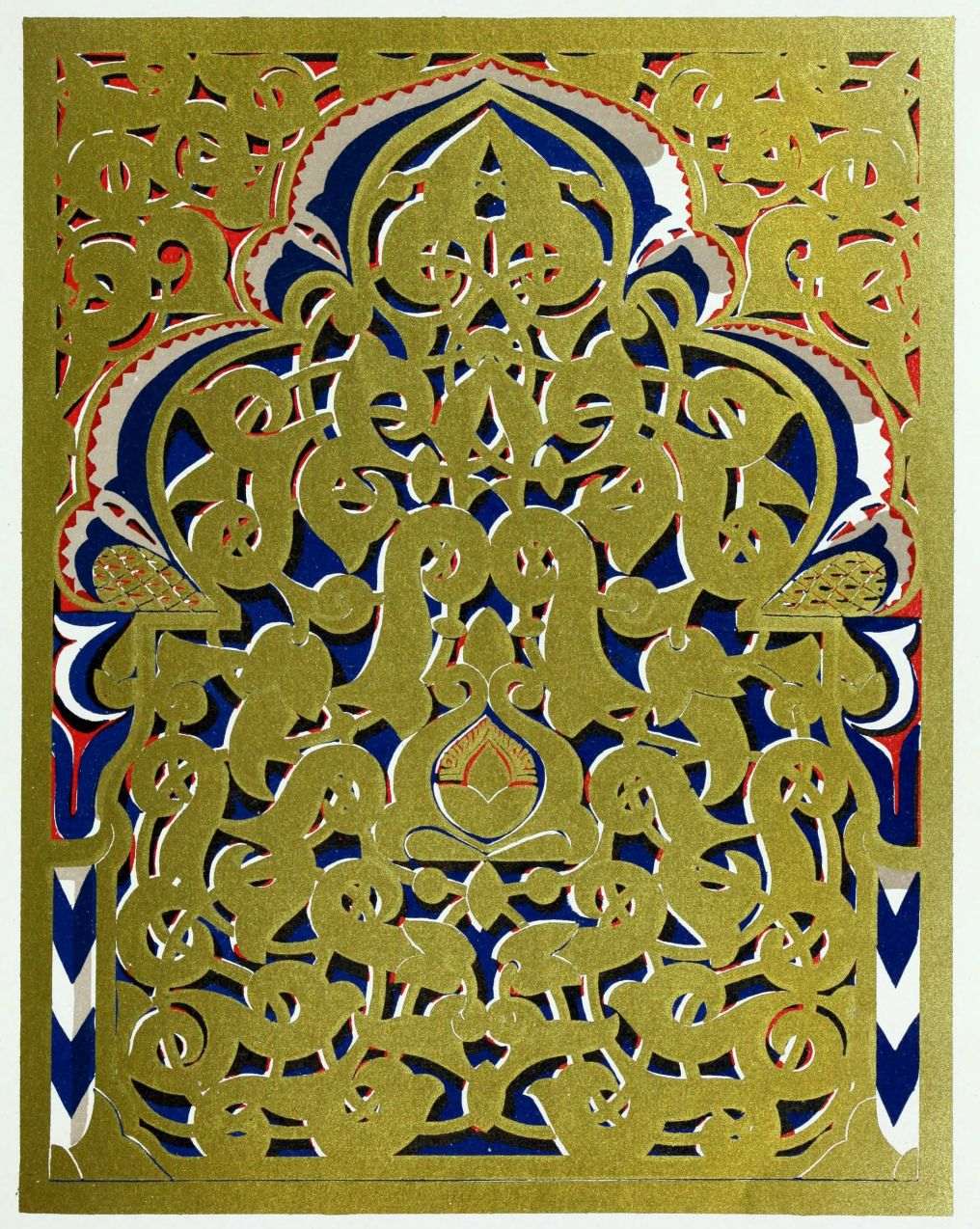
PLATE XIV.
No. 15.
Small panel in jamb of a window, Hall of the Ambassadors.
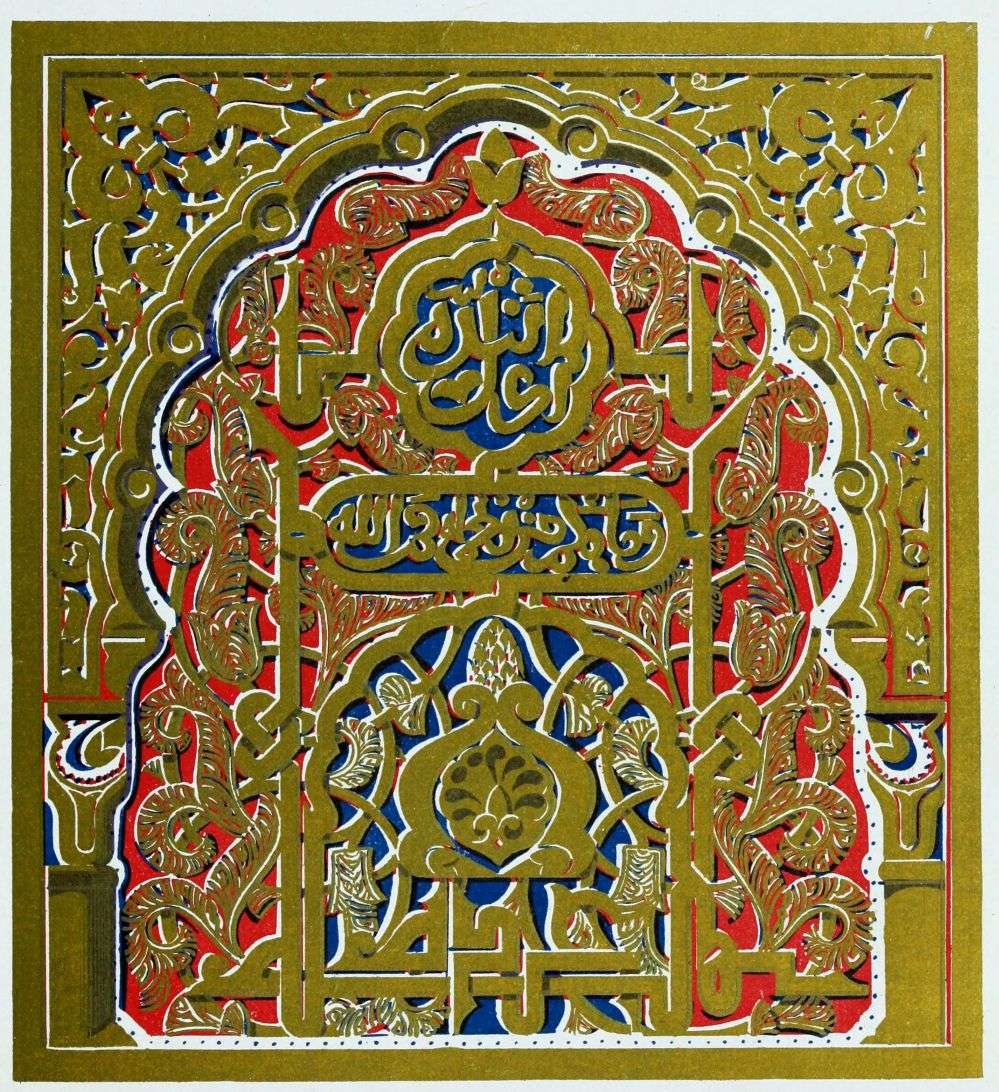
PLATE XV.
No. 16.
Small panel in jamb of a window, Hall of the Ambassadors.
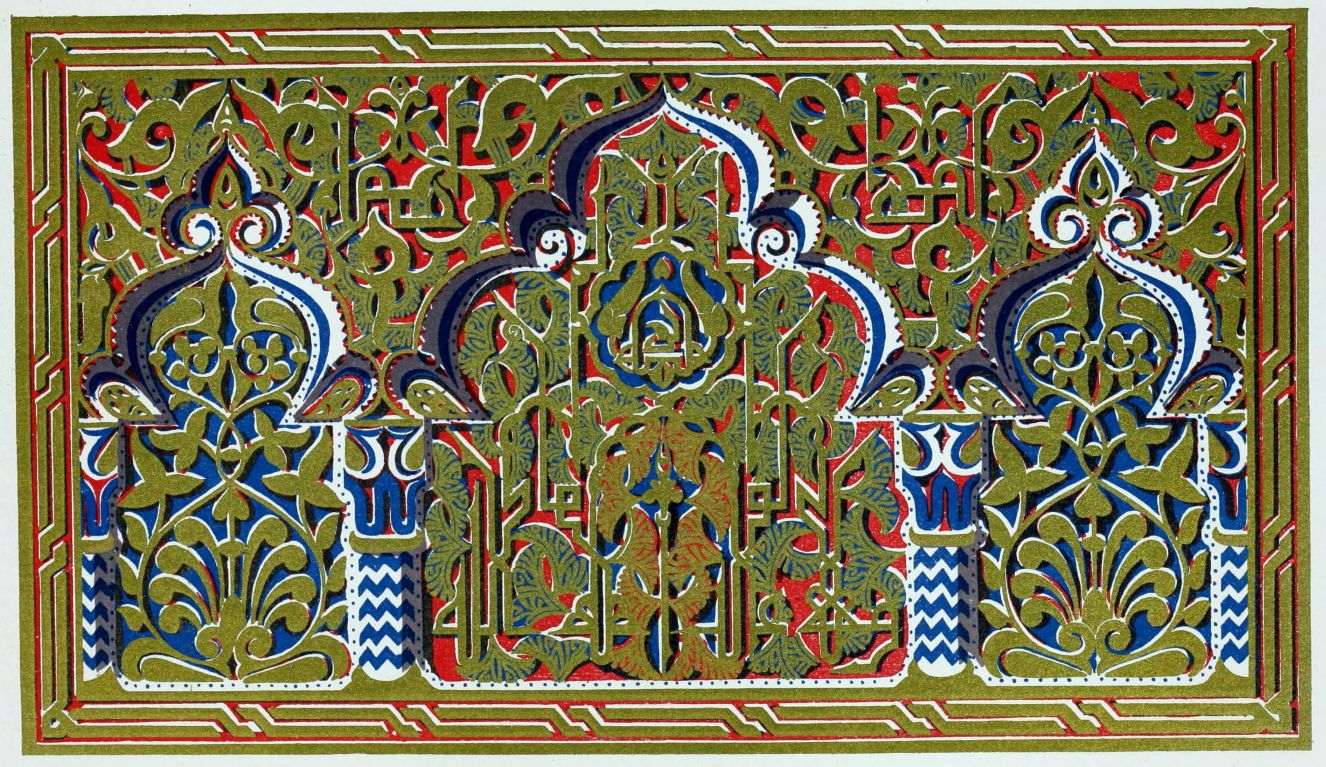
PLATE XVI.
No. 17.
Small panel in jamb of a window, Hall of the Two Sisters.
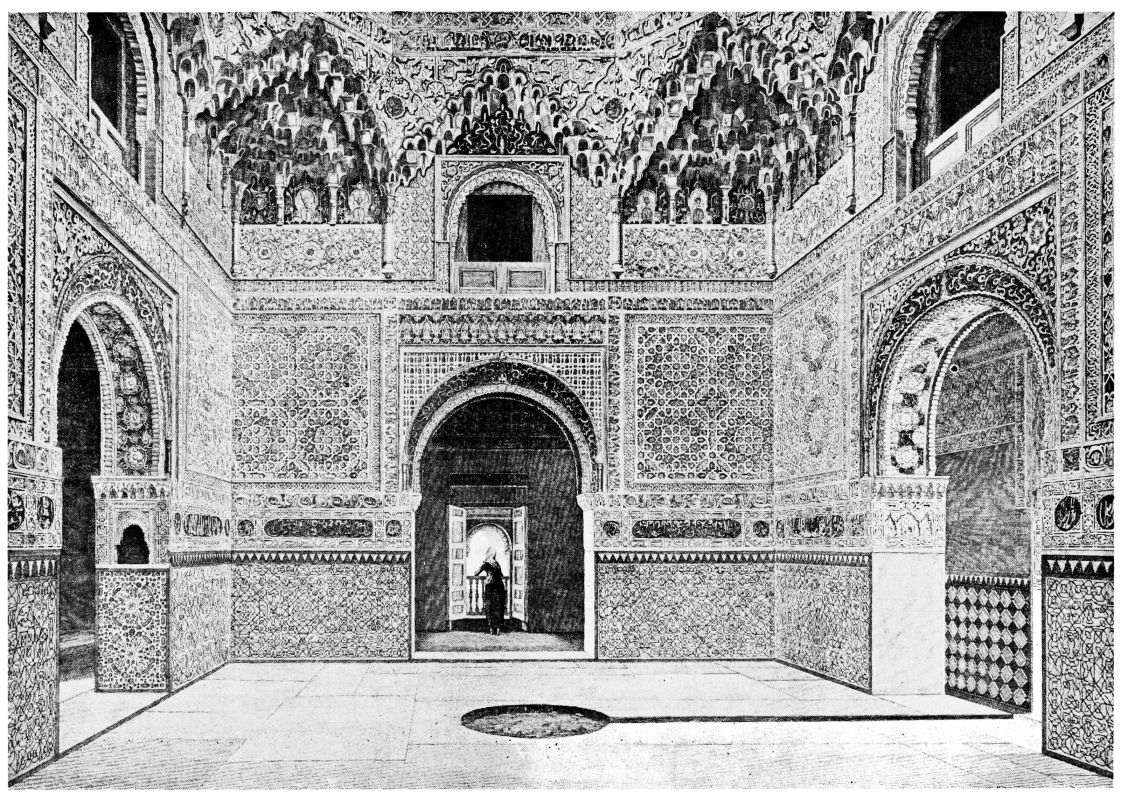
HALL OF THE TWO SISTERS.
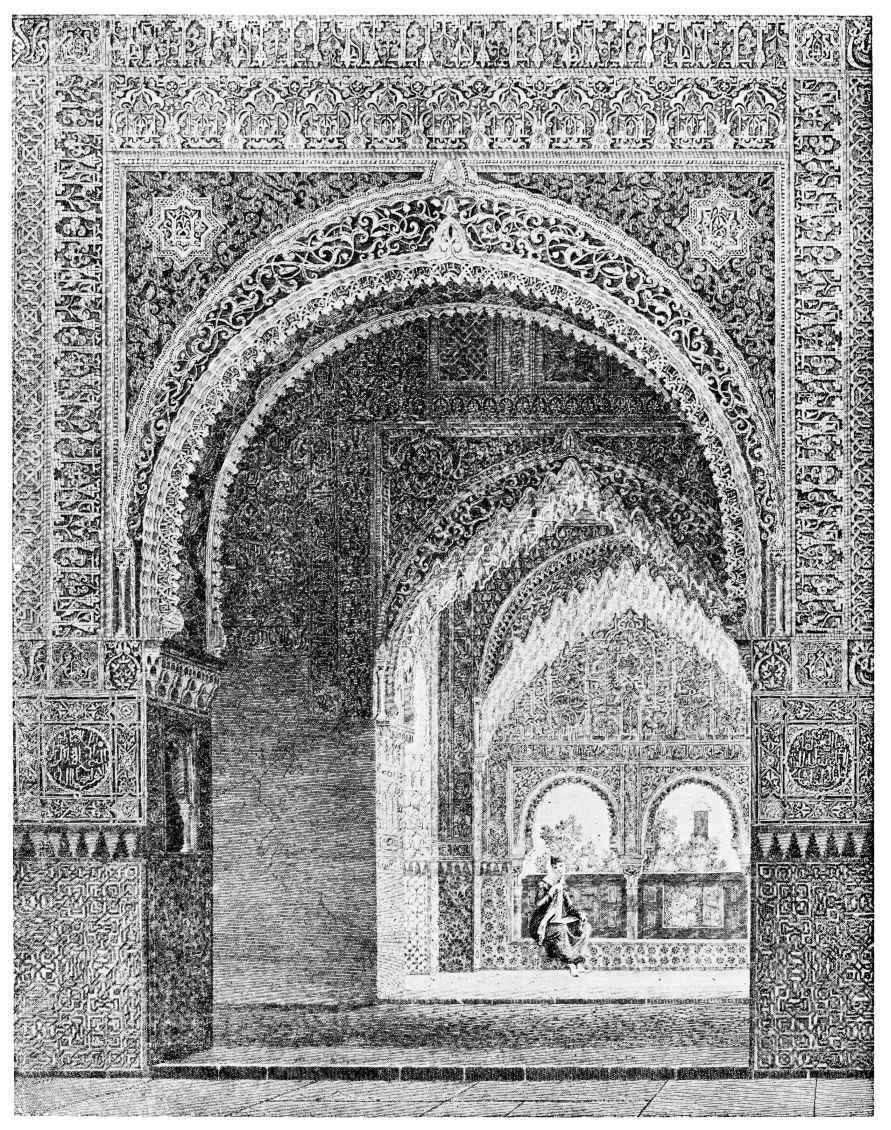
INTERIOR VIEW, TAKEN FROM THE HALL OF THE TWO SISTERS.
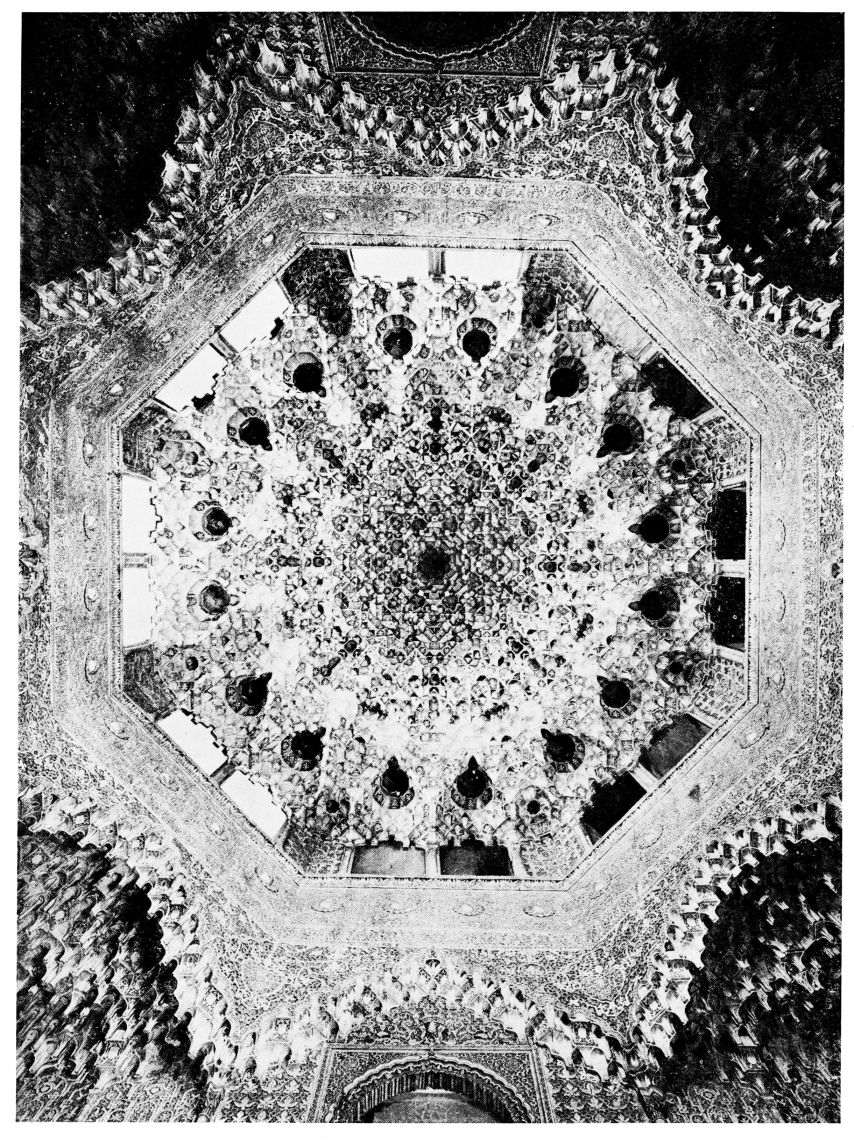
CEILING OF THE HALL OF THE TWO SISTERS.
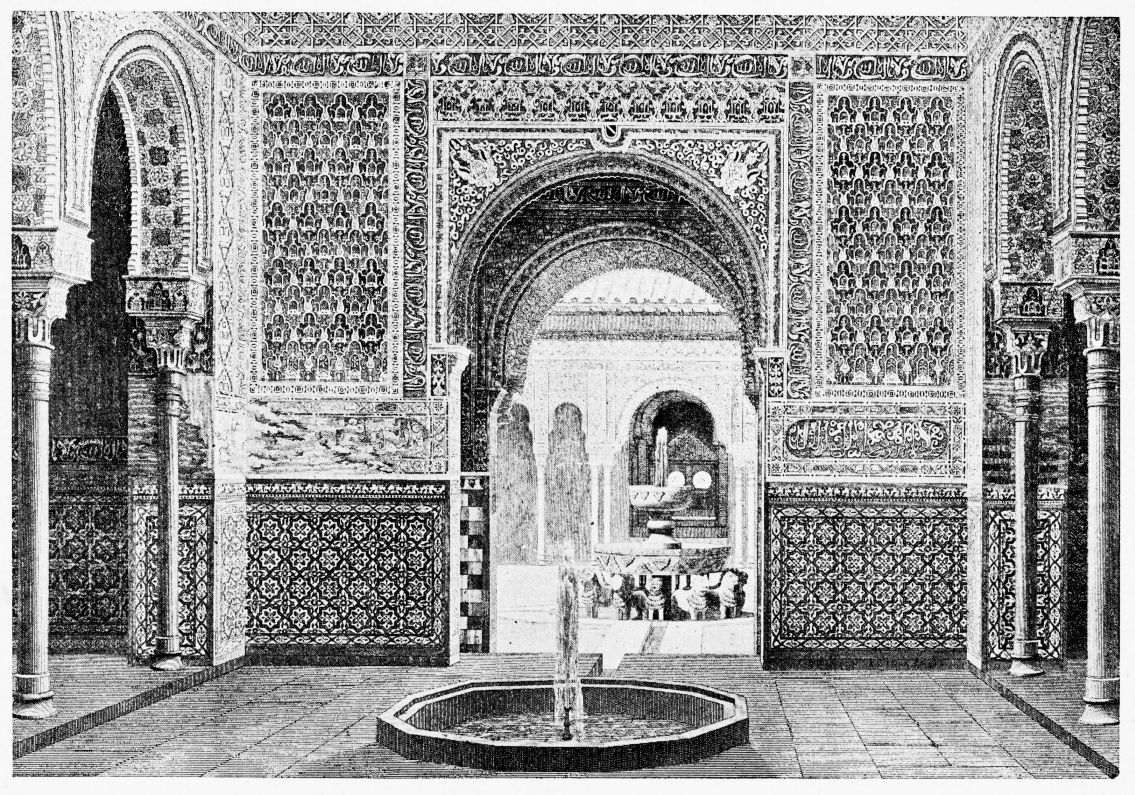
HALL OF THE ABENCERRAGES.
HALL OF THE ABENCERRAGES.
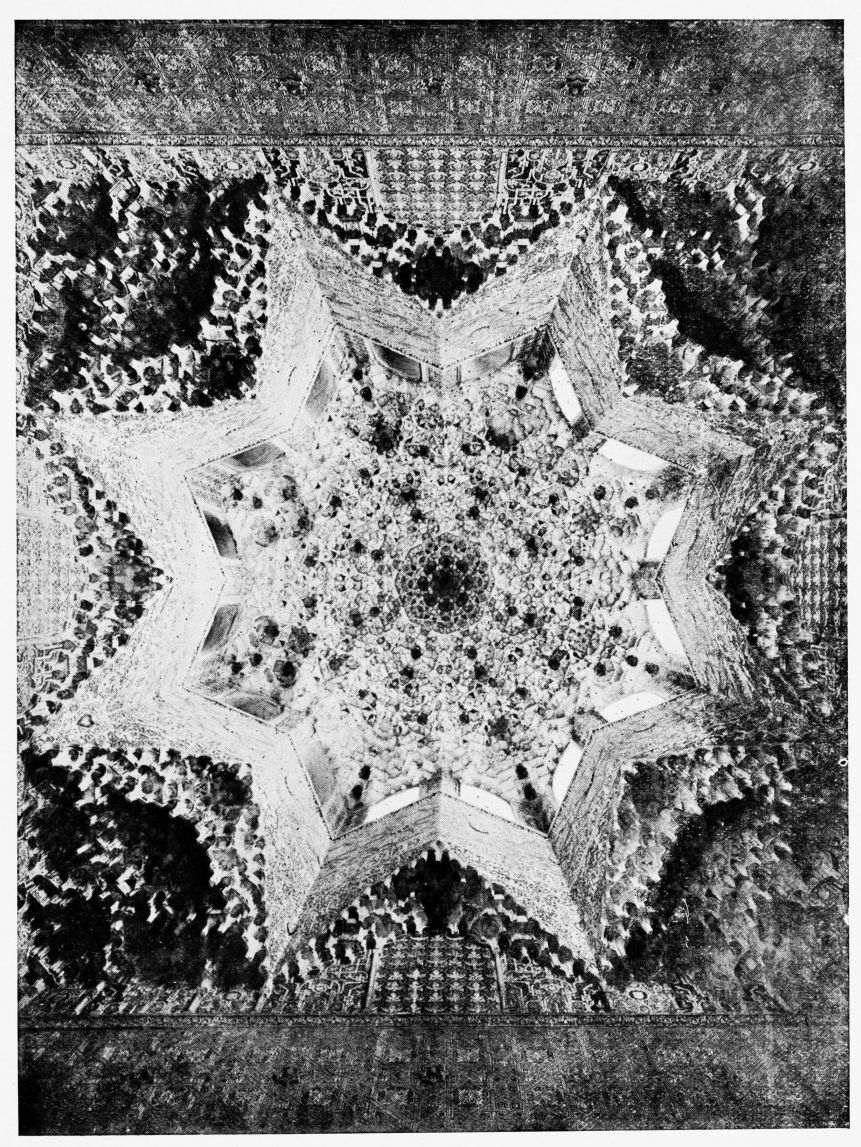
CEILING OF THE HALL OF THE ABENCERRAGES.
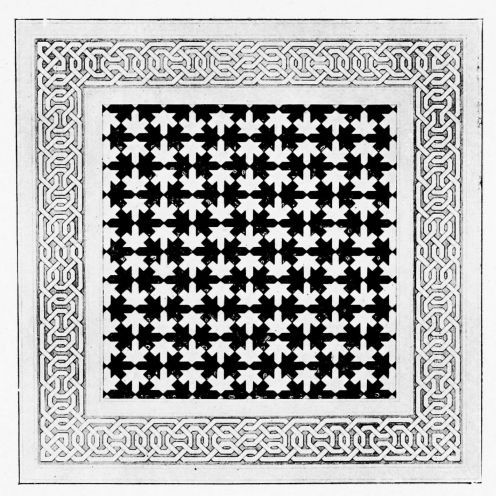
MOSAIC, FROM A FRAGMENT IN THE ALHAMBRA.
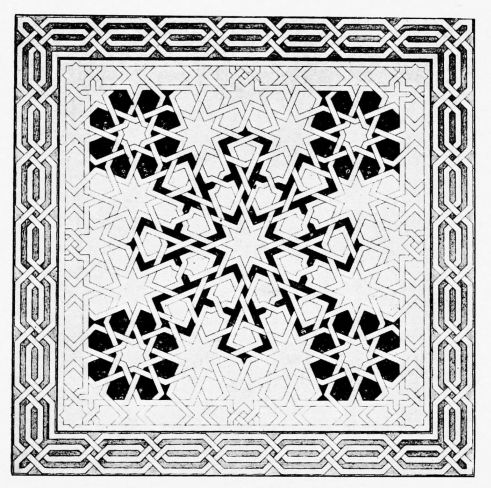
MOSAIC, NORTH SIDE OF THE COURT OF THE LIONS.
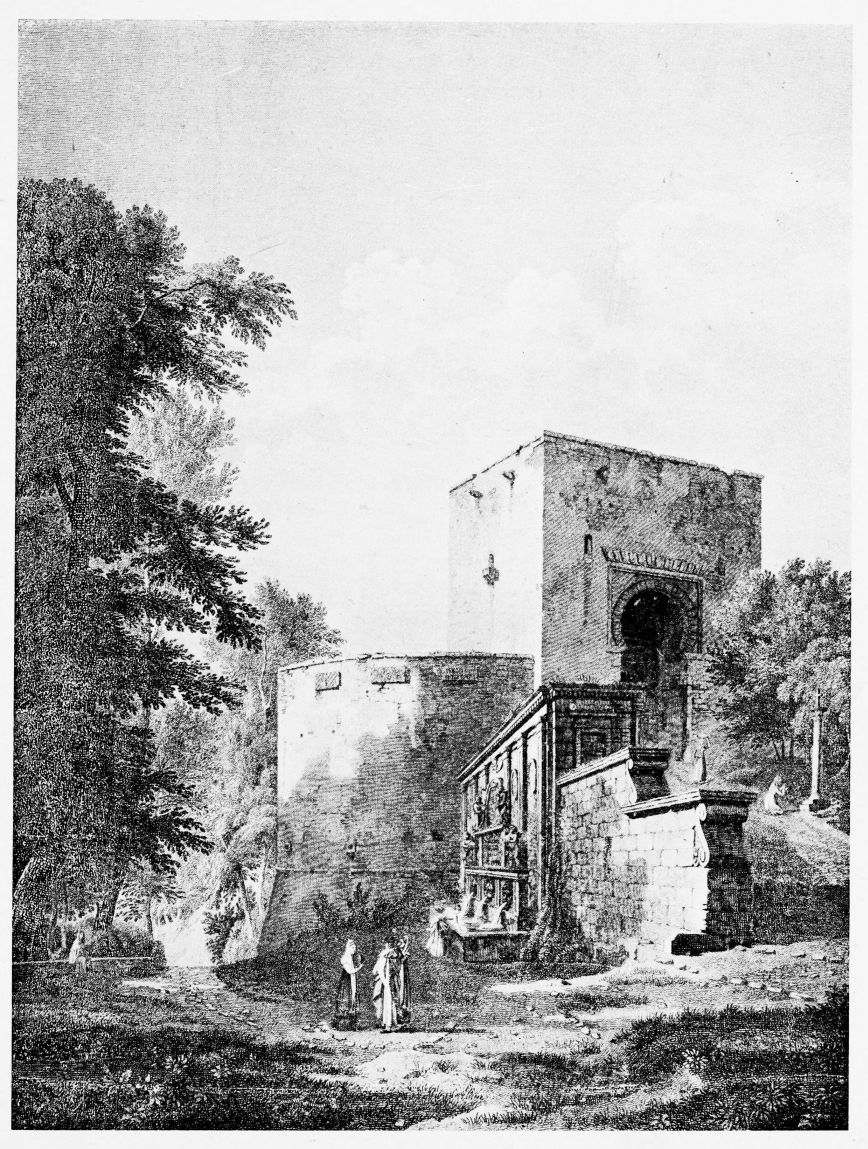
CHIEF GATE OF THE ALHAMBRA.
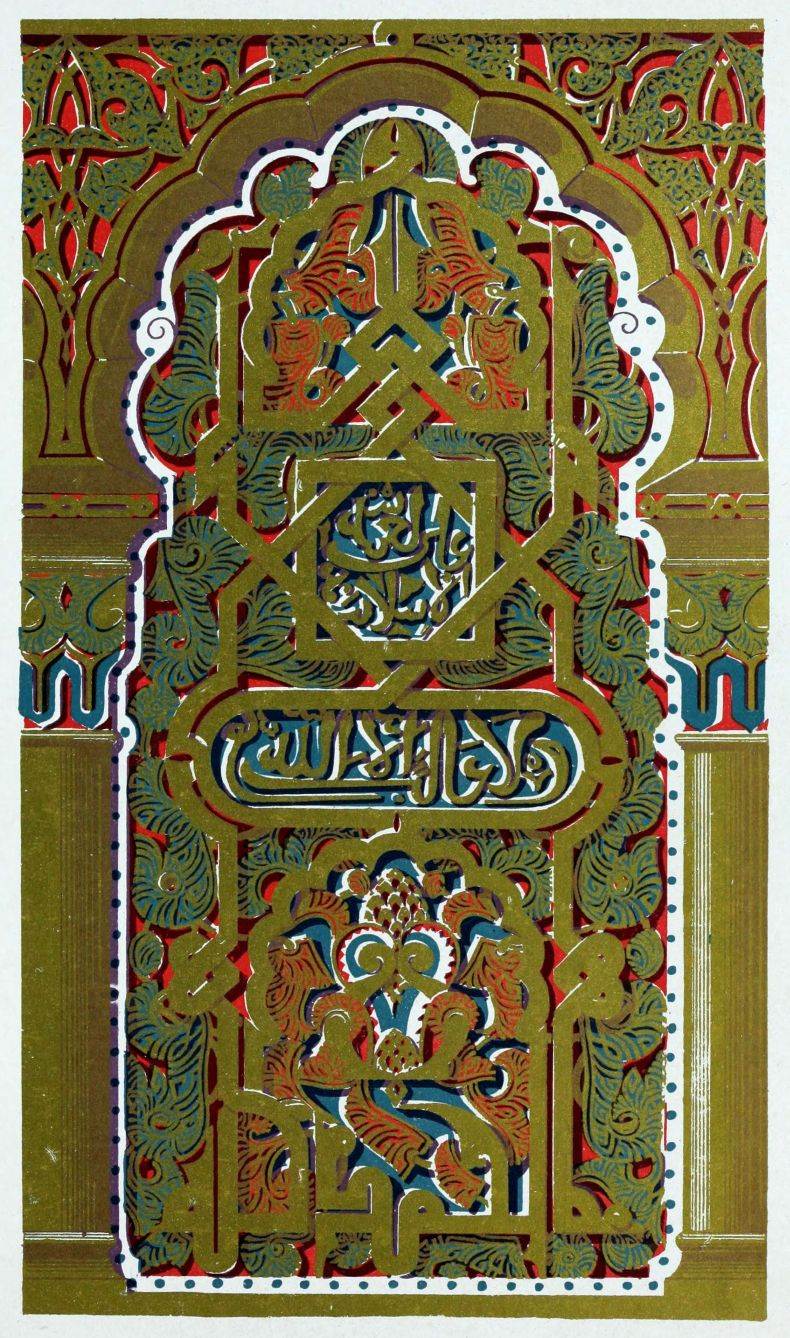
PLATE XVII.
No. 18.
Panel in the upper chamber of the House of Sanchez.
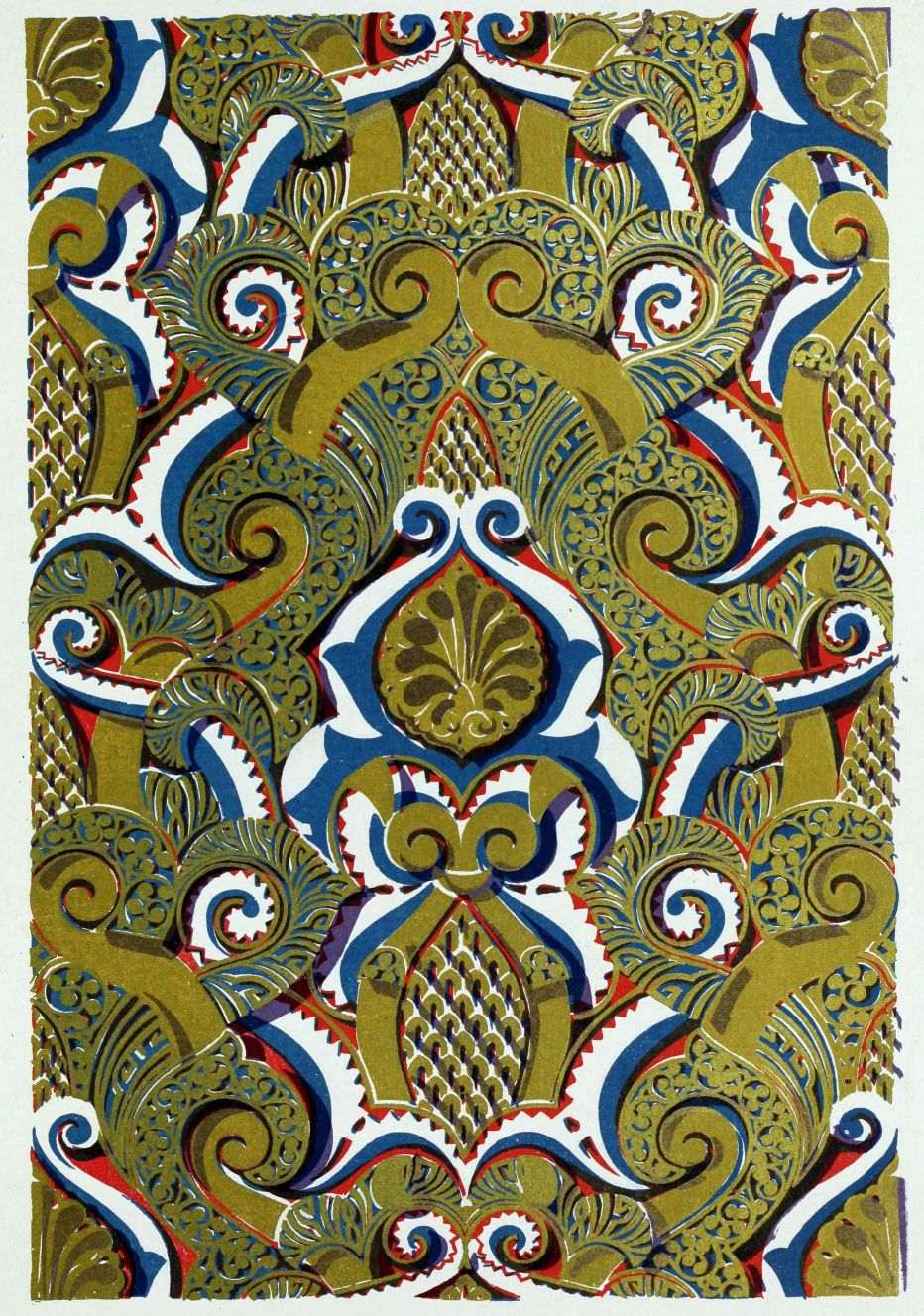
PLATE XVIII.
No. 19.
Soffit of great arch at the entrance of the Court of the Fishpond.
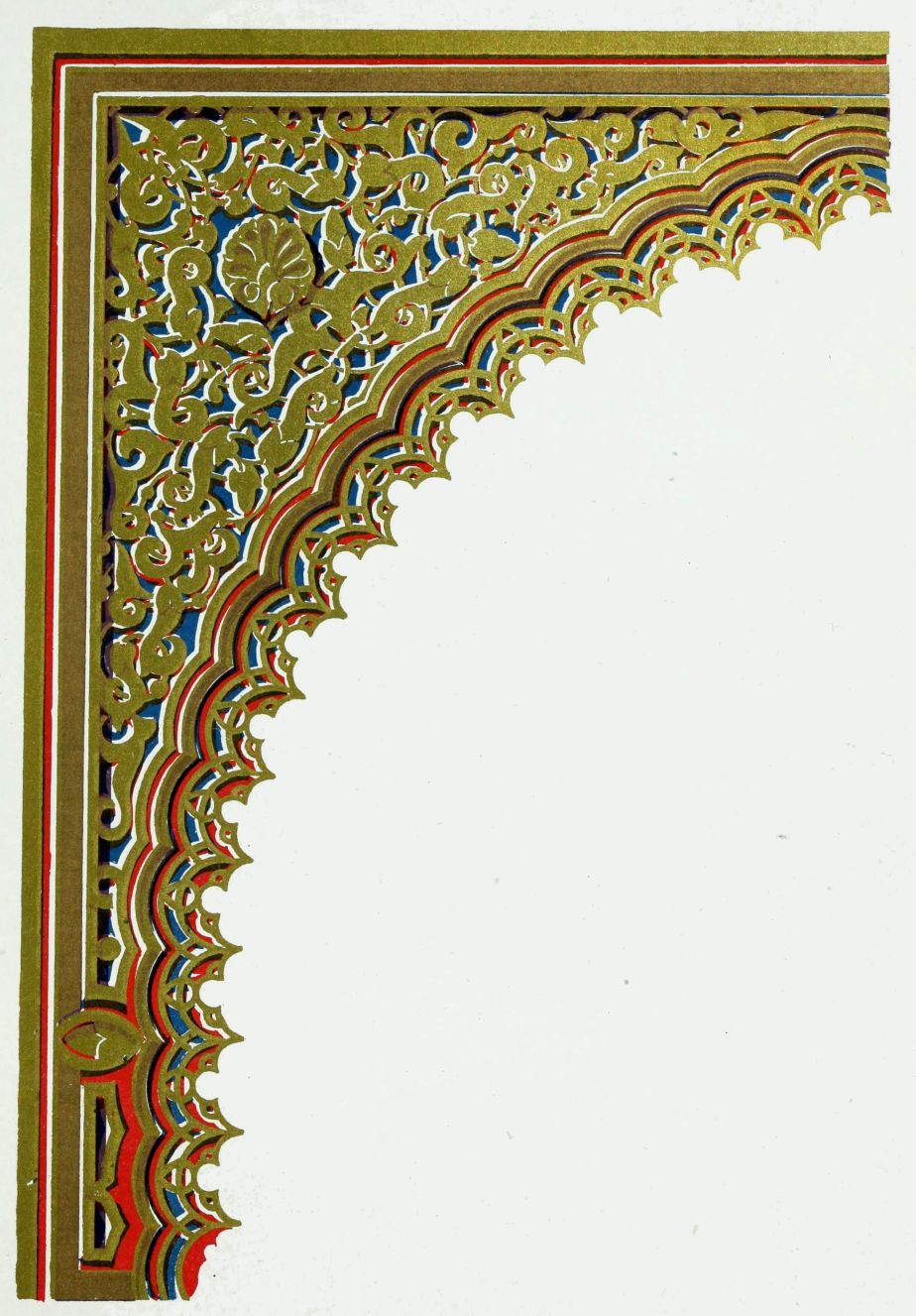
PLATE XIX.
No. 20.
Spandril from niche of doorway at the entrance of the Hall of Ambassadors, from the Sala de la Barca.
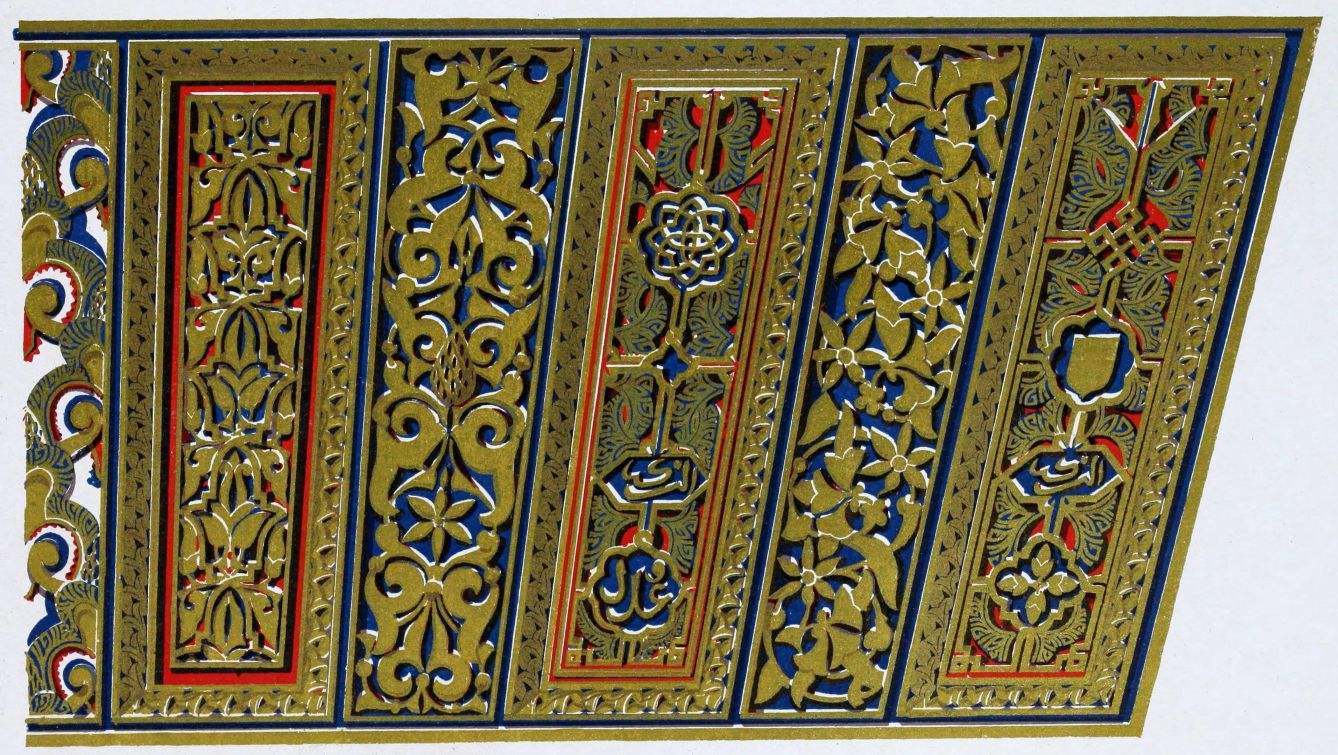
PLATE XX.
No. 21.
Lintel of a doorway, Court of the Mosque.
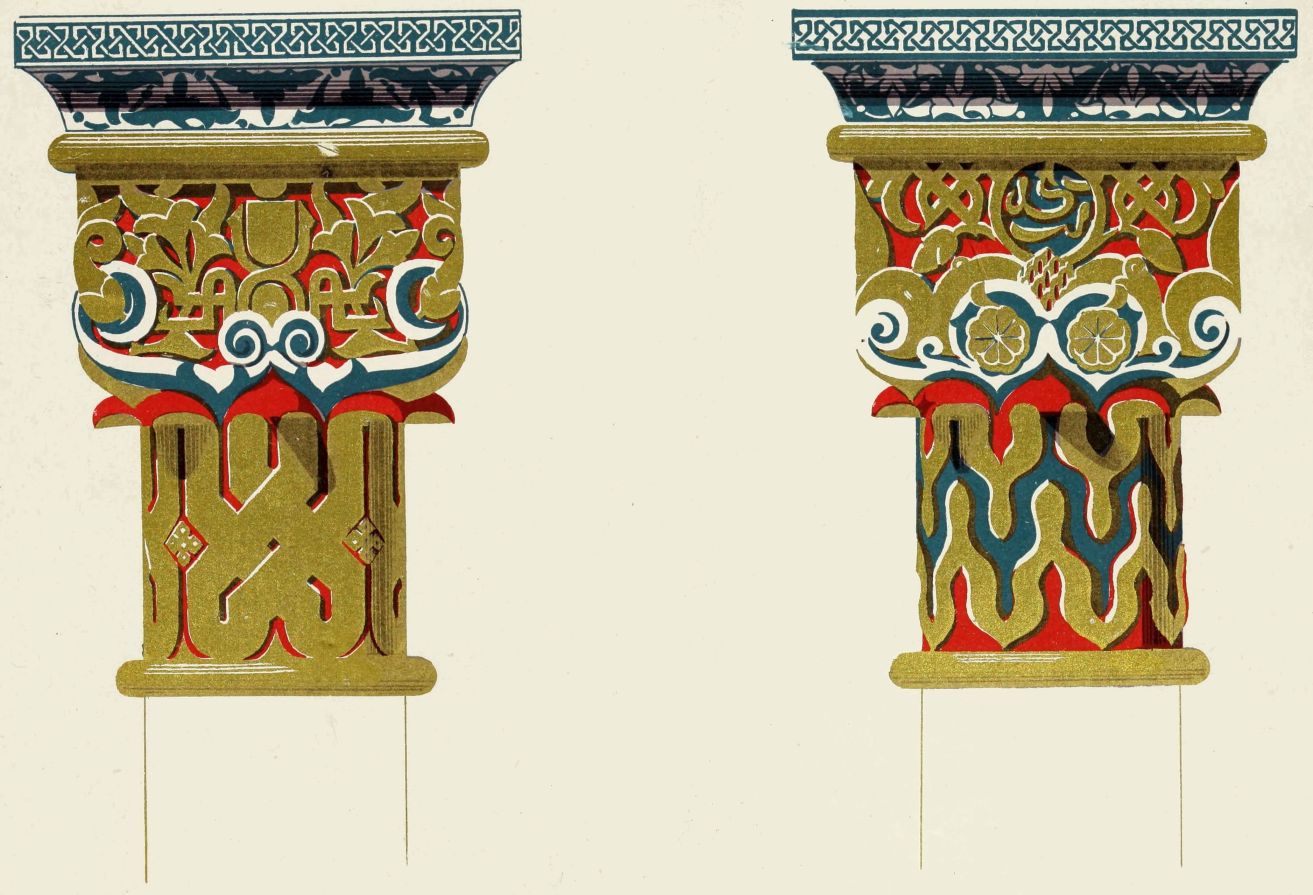
PLATE XXI.
No. 24. No. 25.
Capital of Columns, Court of the Lions.
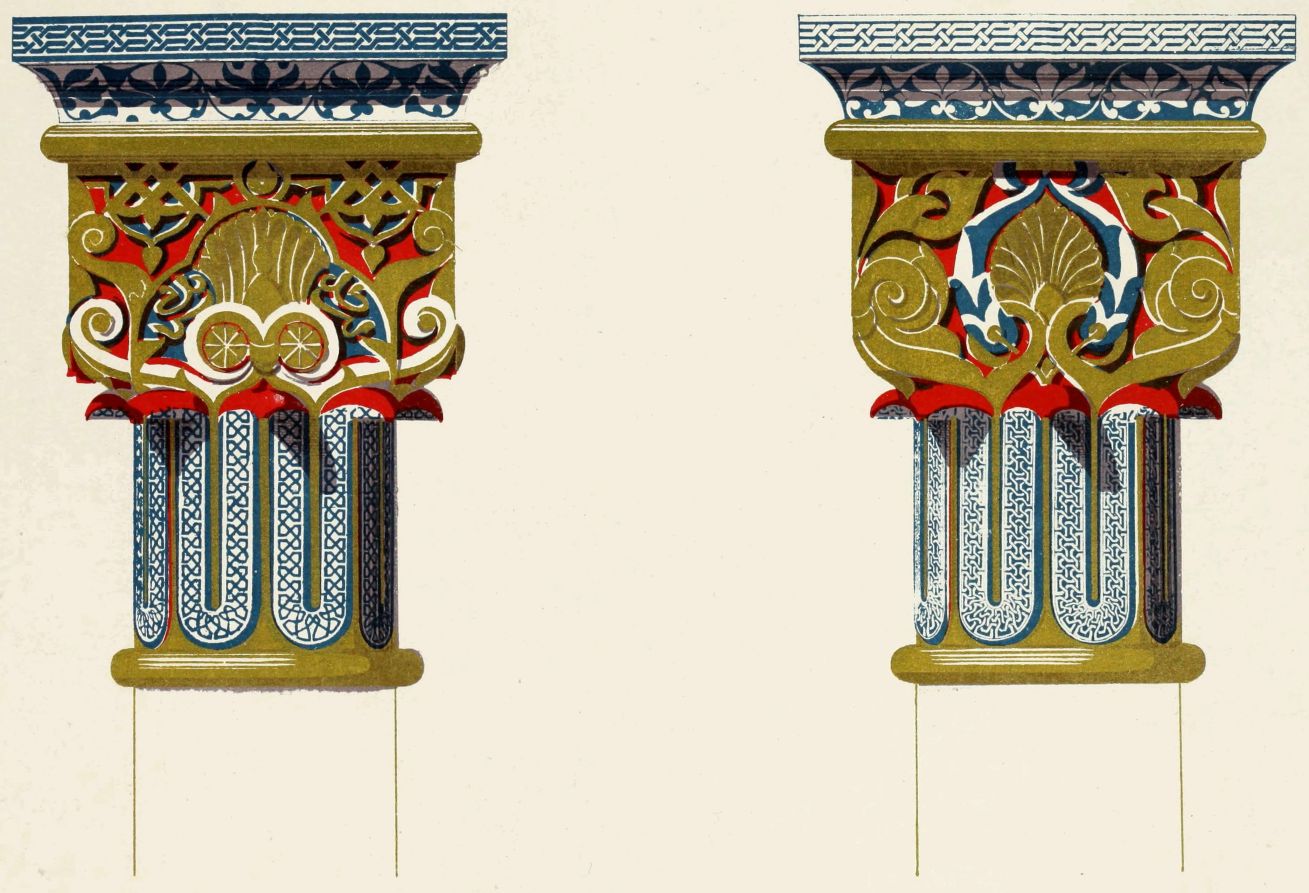
PLATE XXII.
No. 24. No. 25.
Capital of Columns, Court of the Lions.
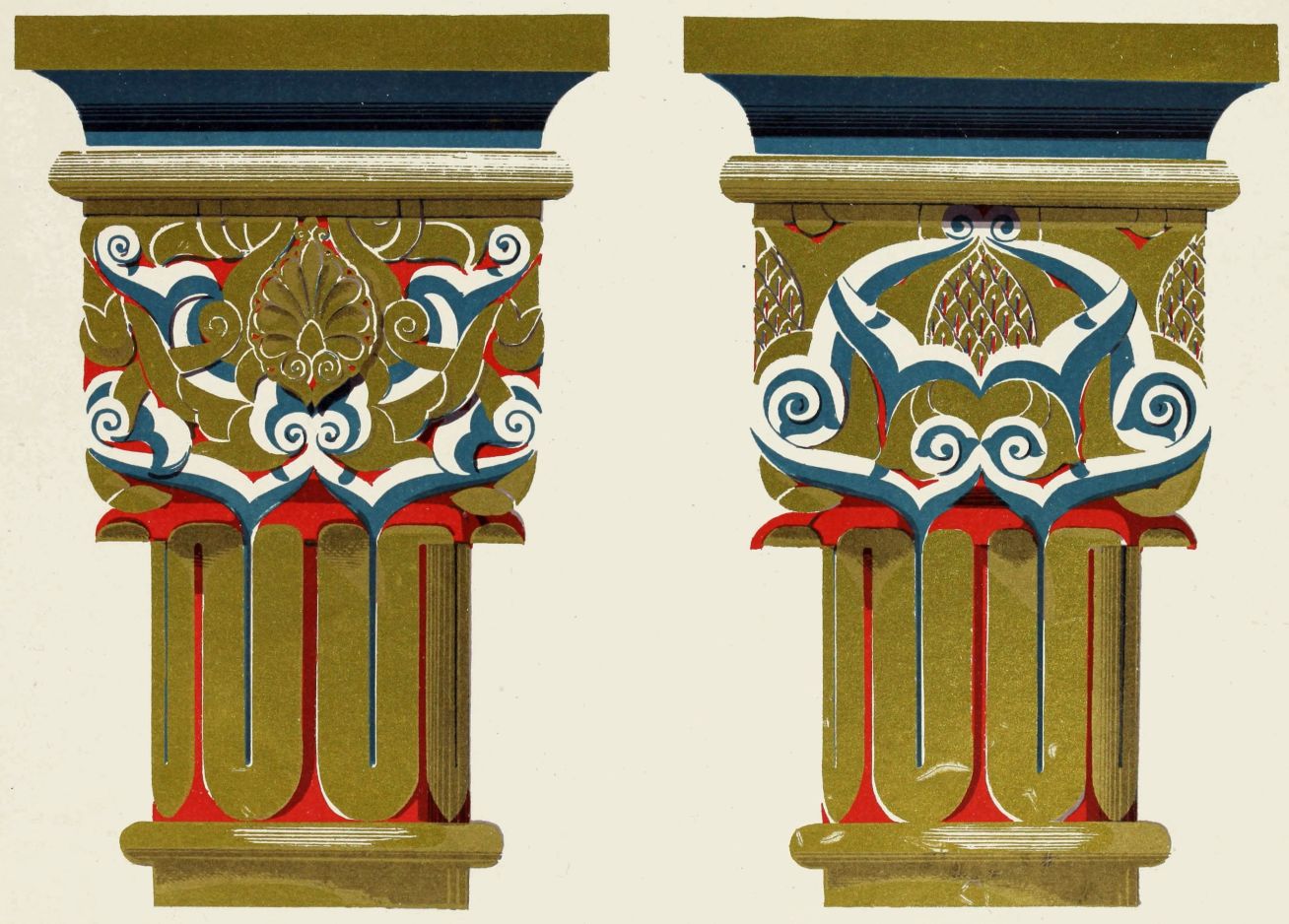
PLATE XXIII.
No. 26. No. 27.
Capital of Columns, Court of Fishpond.
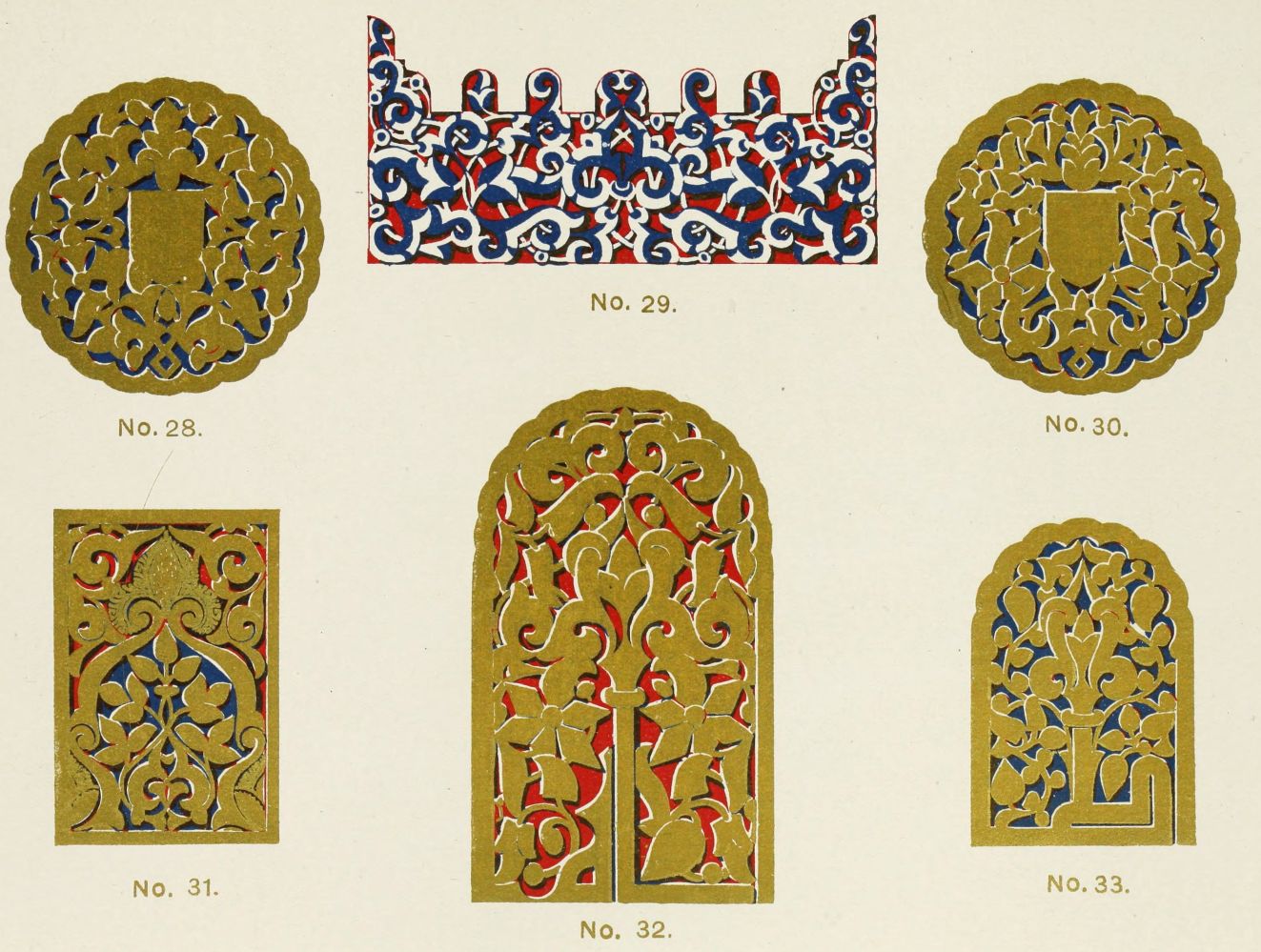
PLATE XXIV.
No. 28., No. 29., No. 30., No. 31., No. 32., No. 33.
Ornament on the Walls of the windows of “Lindaraja’s” Balcony.
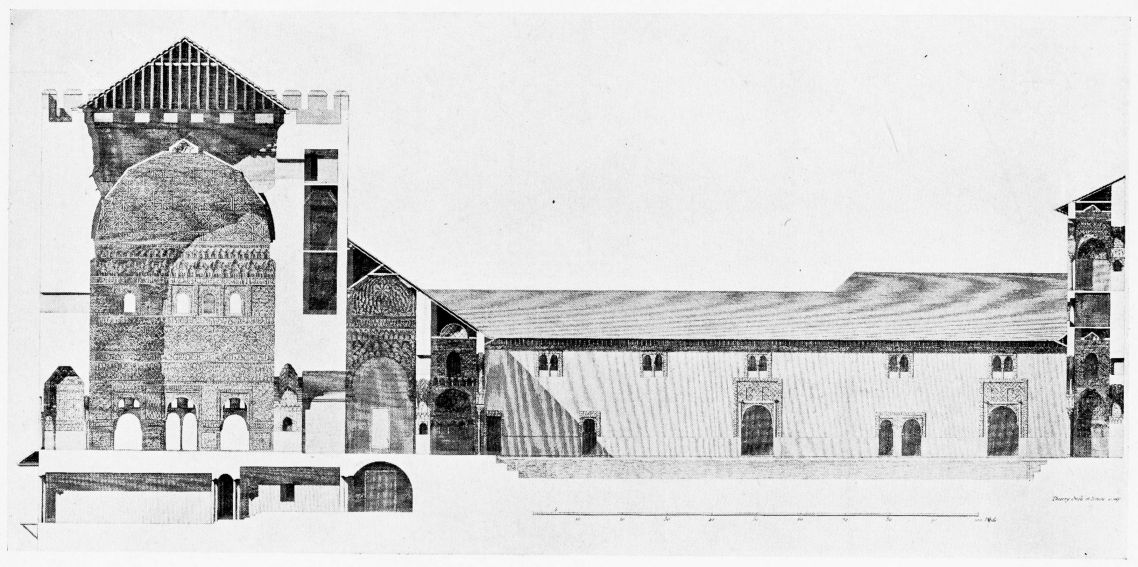
TRANSVERSAL SECTION OF THE ALHAMBRA.
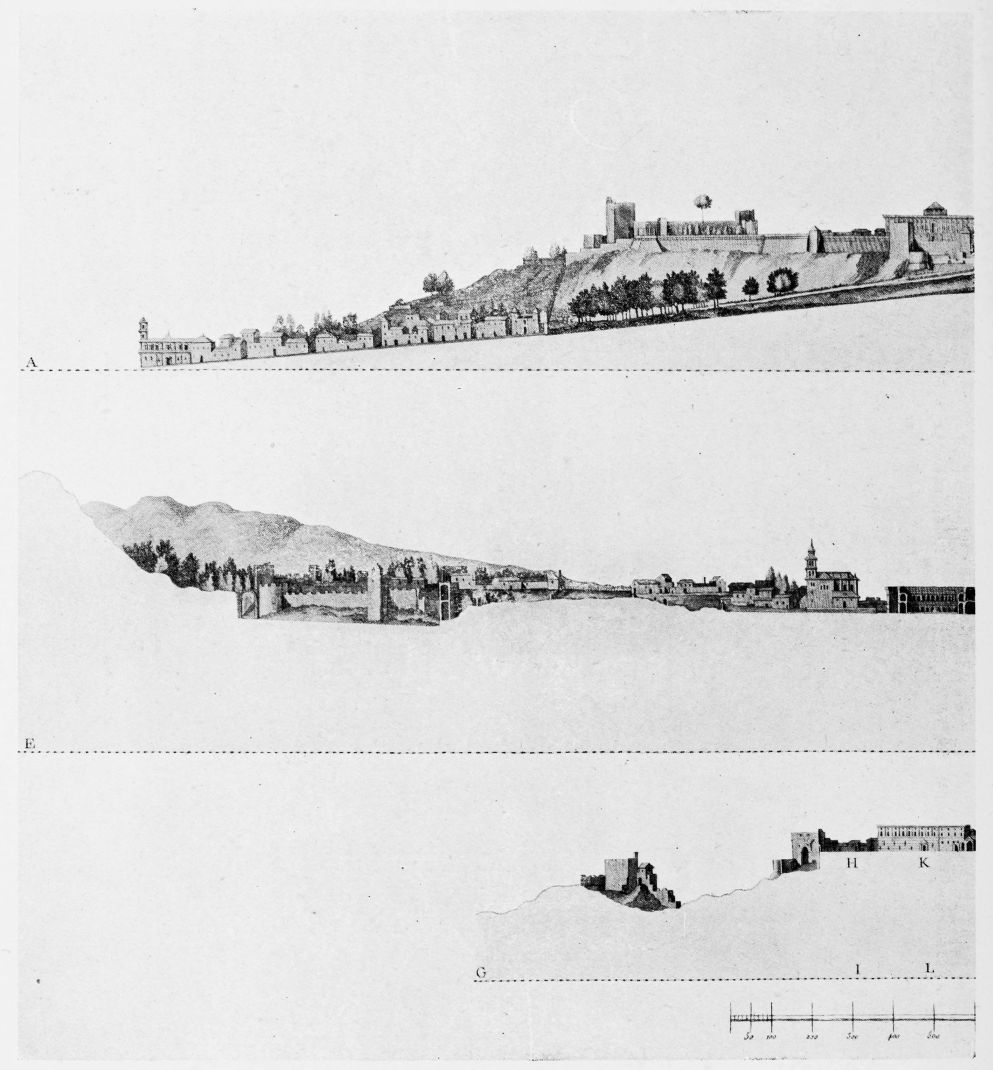
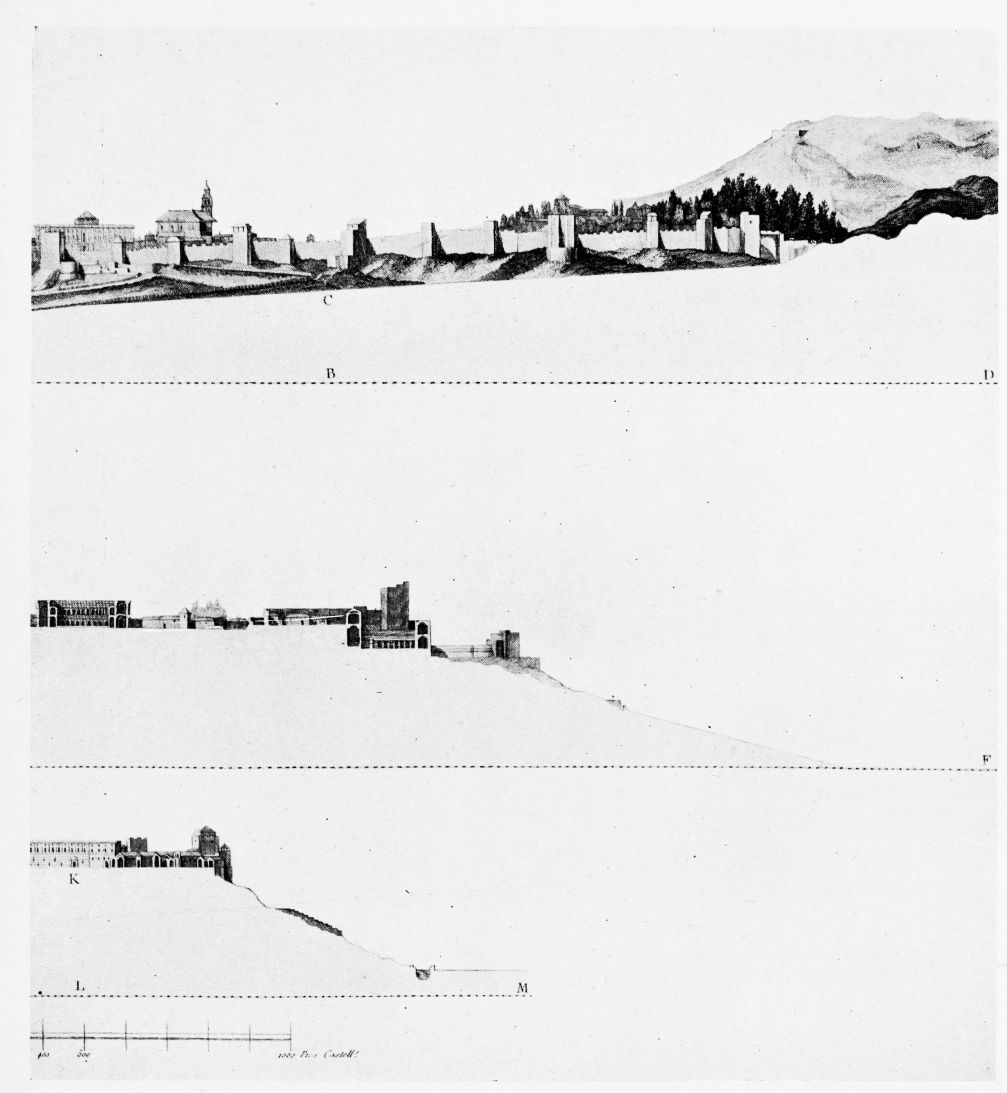
SECTION SHOWING HEIGHTS OF THE ALHAMBRA.
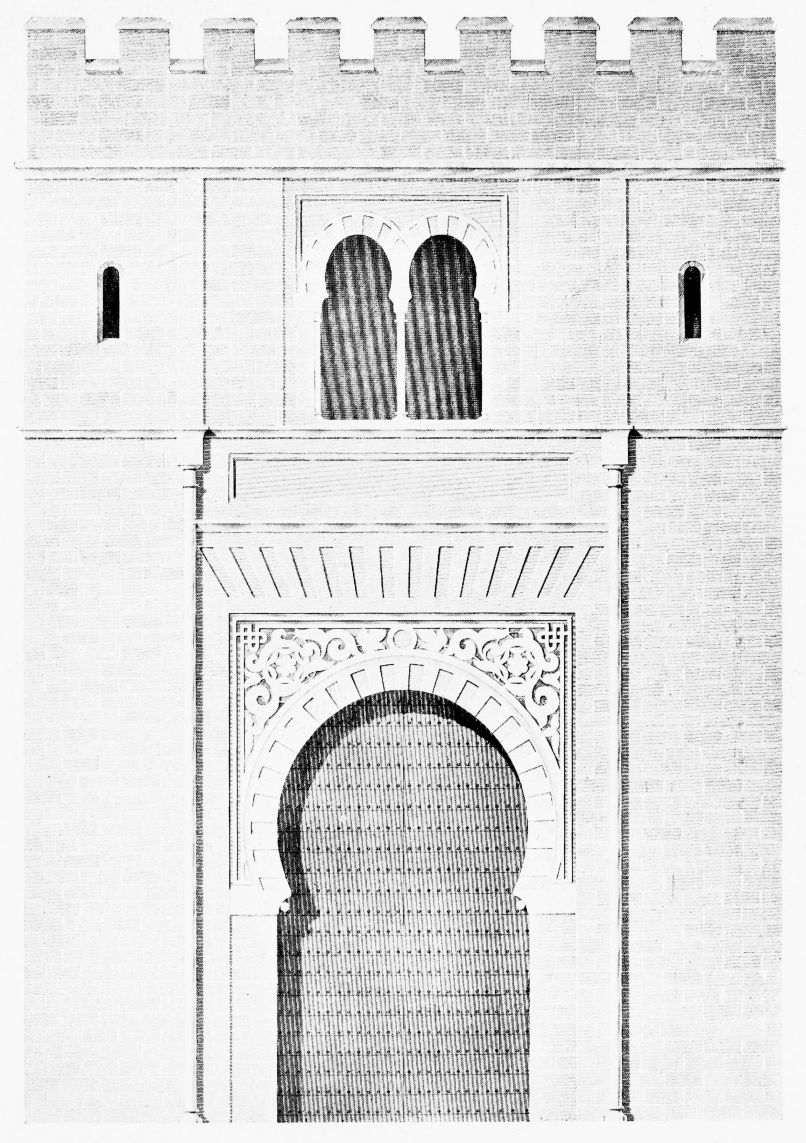
ELEVATION OF THE “WINE GATE.”
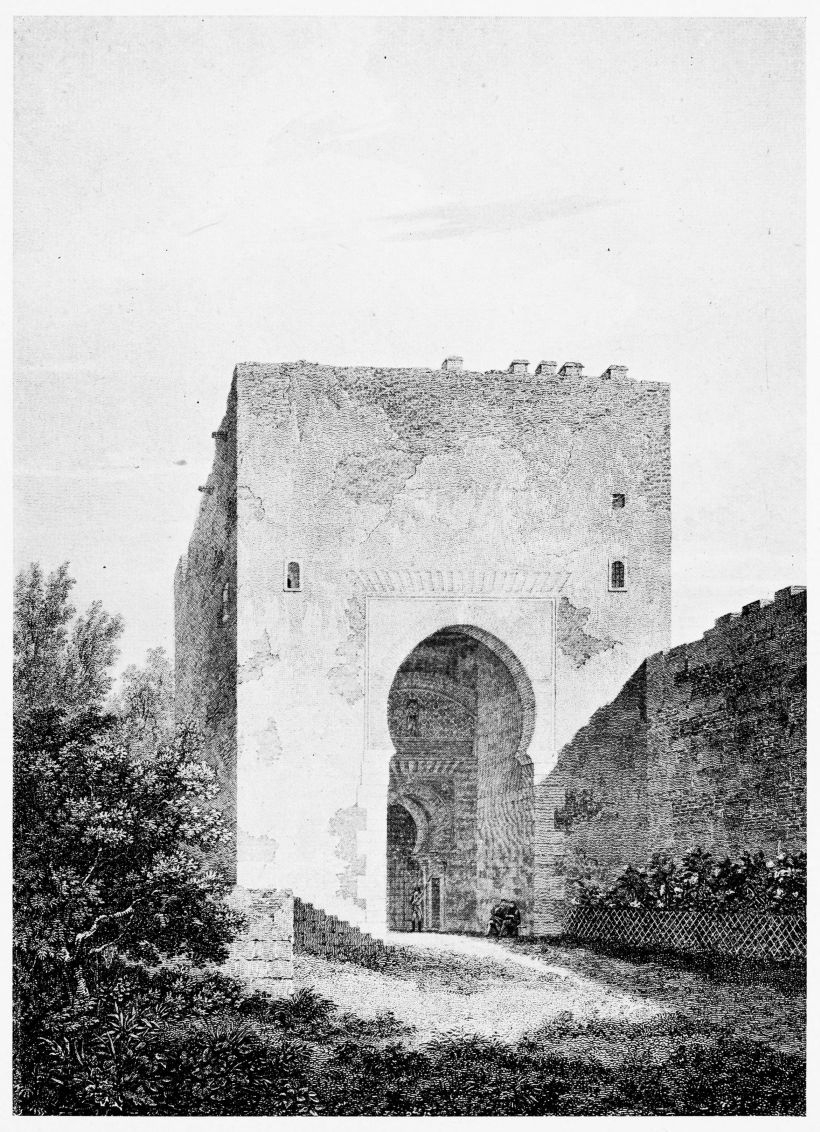
THE GATE OF JUDGMENT.
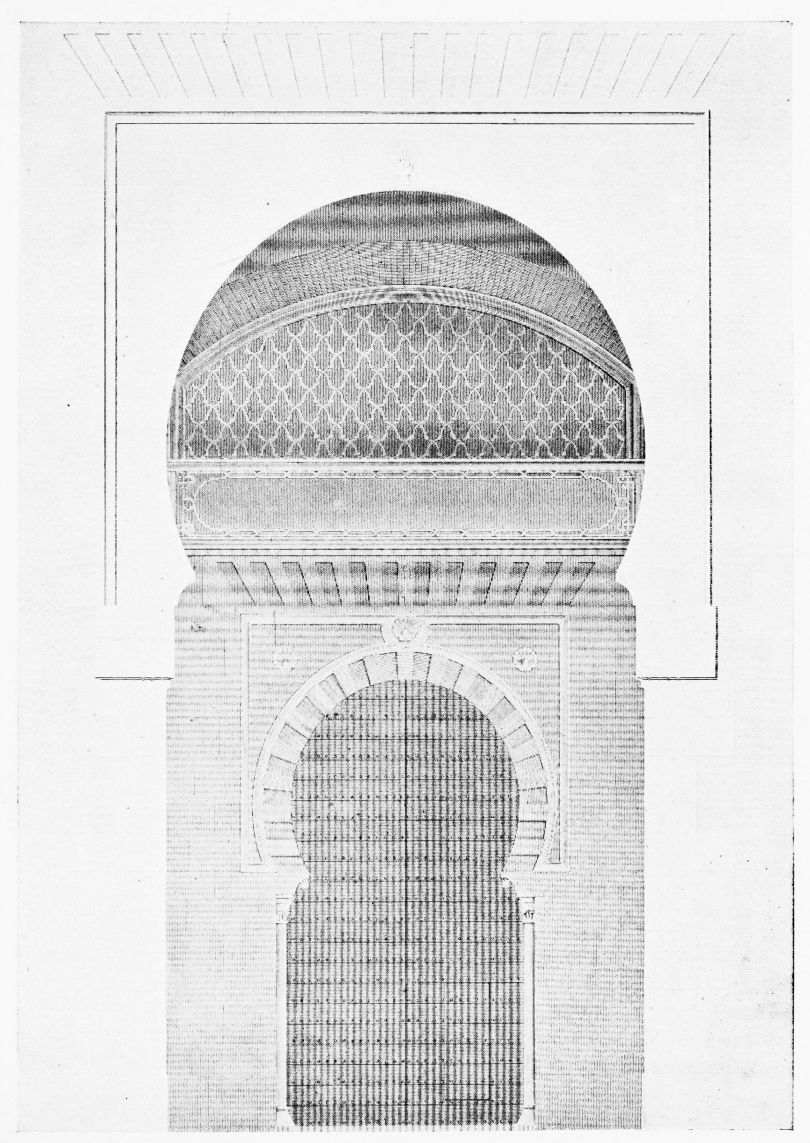
PORCH OF THE GATE OF JUDGMENT.
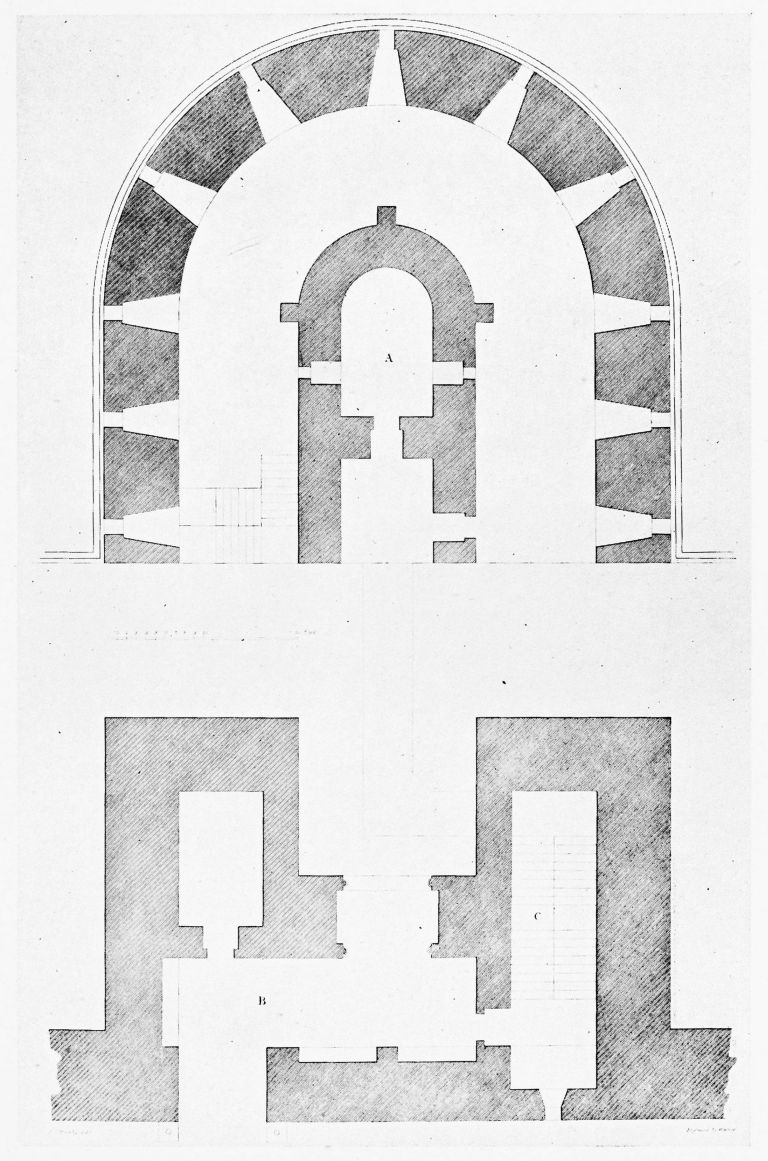
A SECTION OF THE GATE OF JUDGMENT.
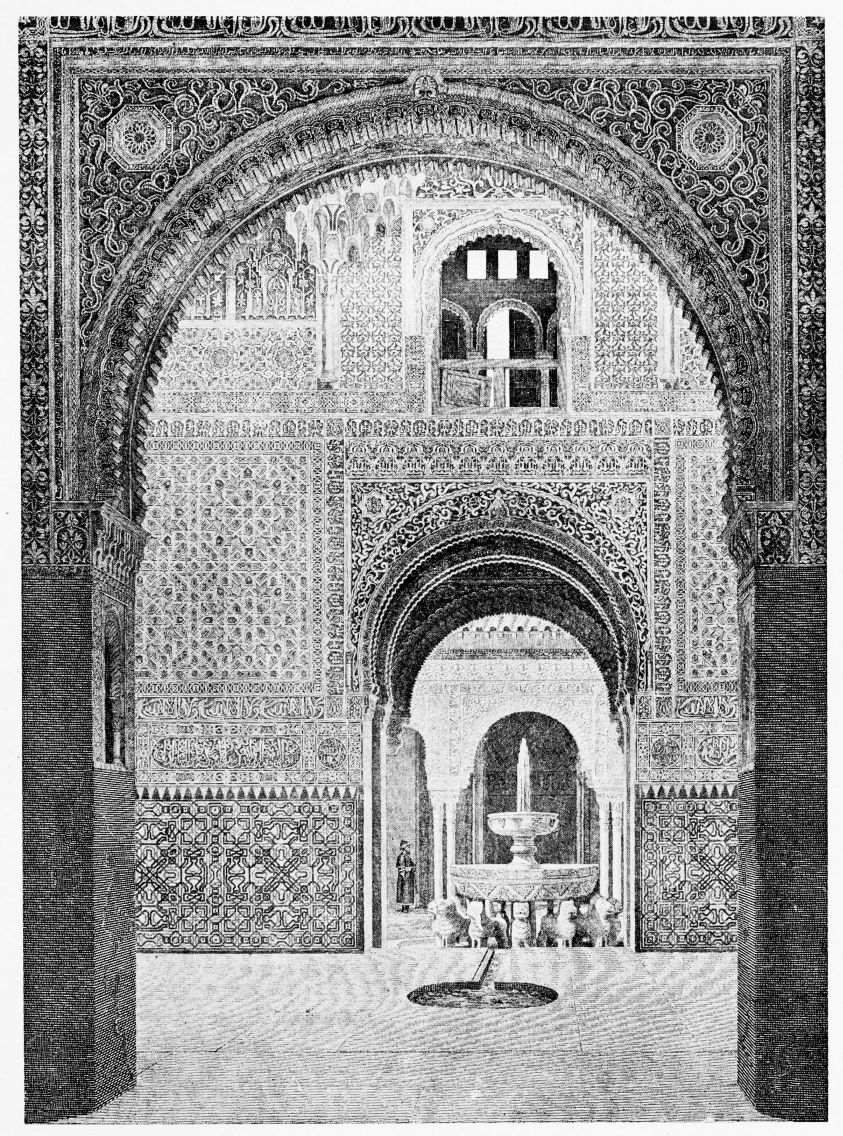
INTERIOR PERSPECTIVE OF THE ALHAMBRA.
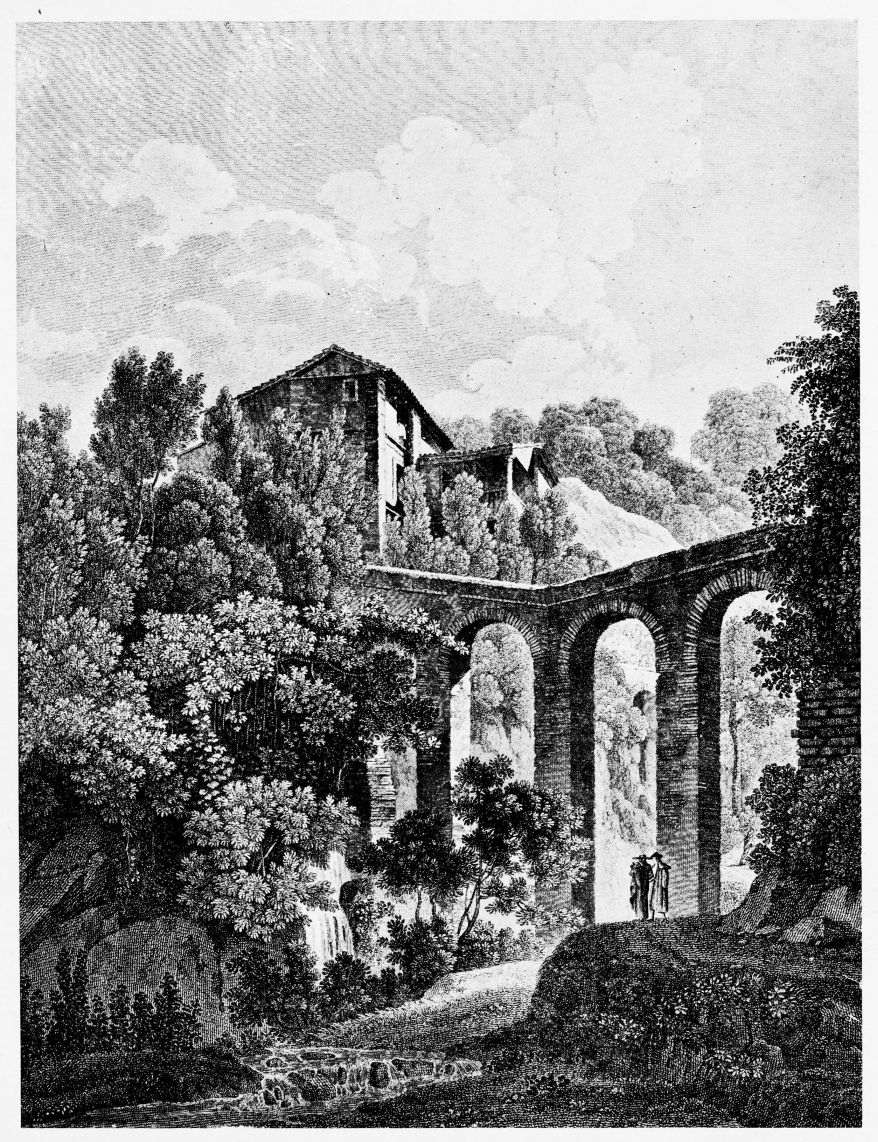
VIEW OF THE ACQUEDUCT, NEAR THE ALHAMBRA.
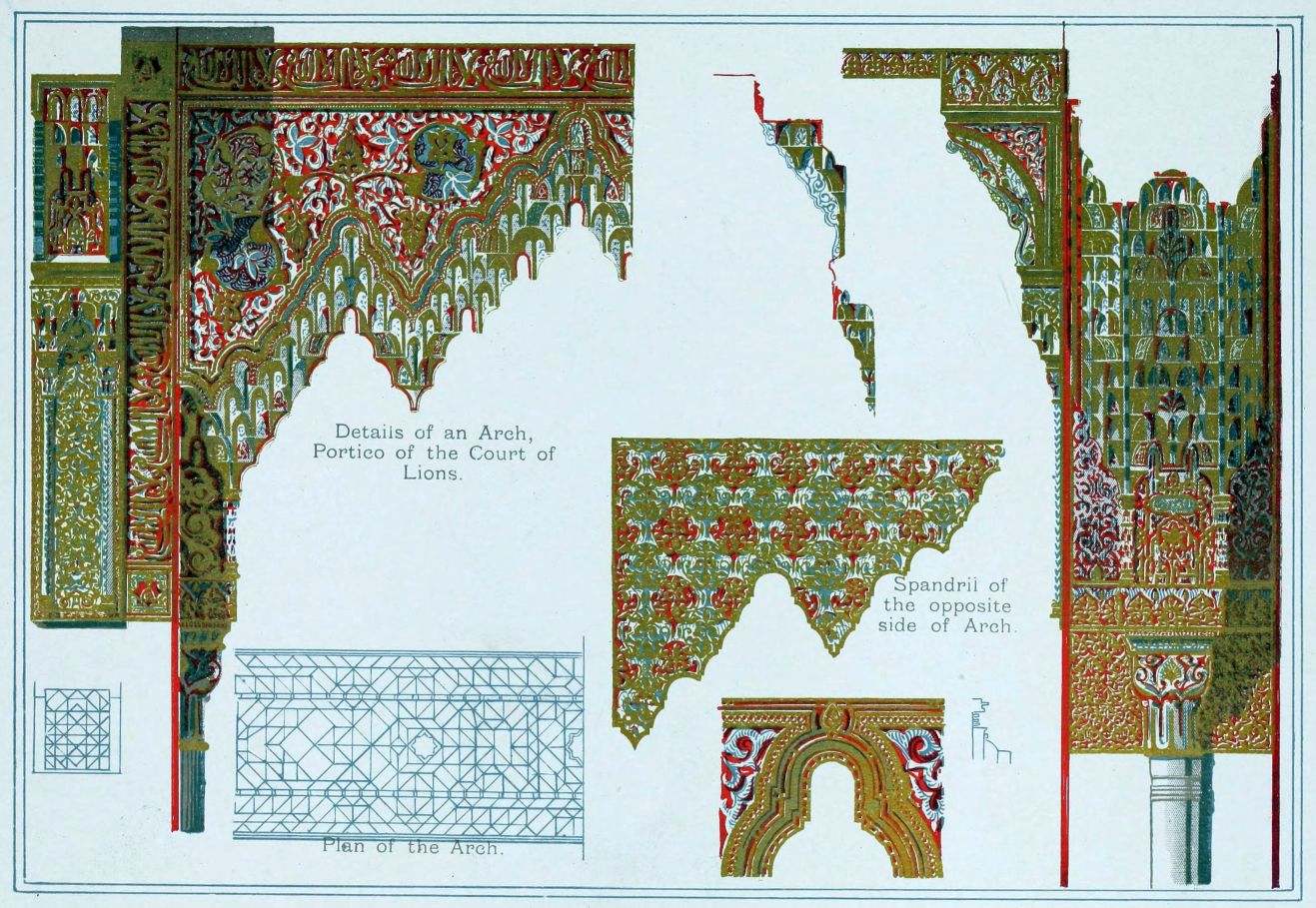
PLATE XXV.
Details of an Arch, Portico of the Court of Lions.
Spandril of the opposite side of Arch.
No. 34.
Court of The Lions.
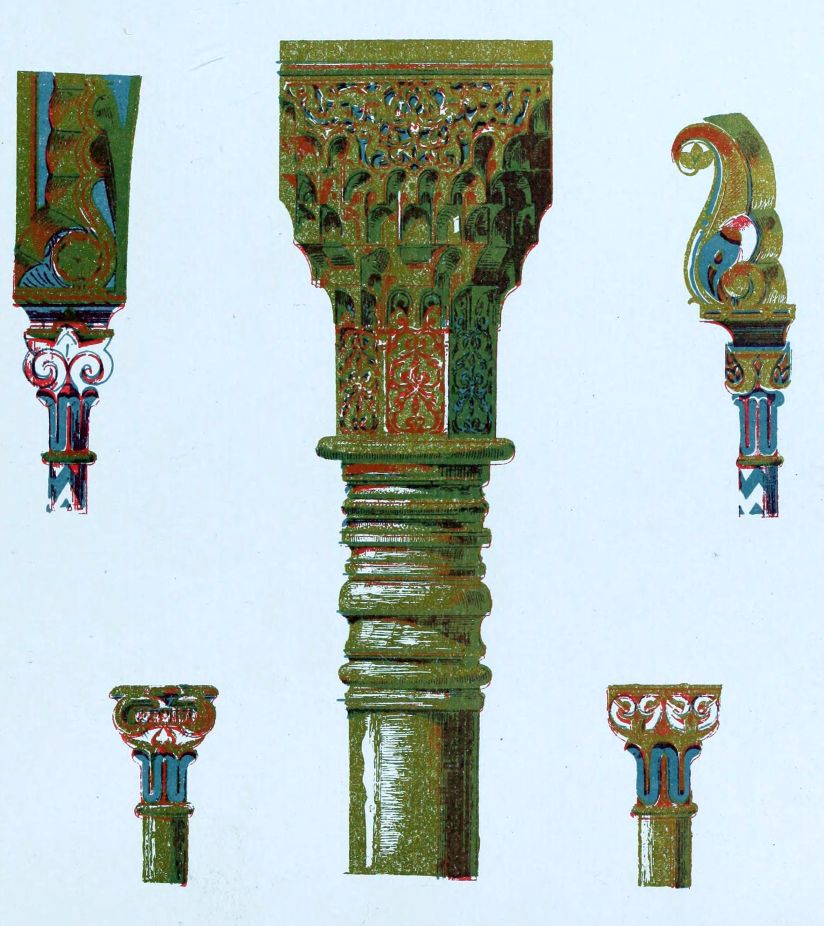
PLATE XXVI.
No. 35.
Capitals in the Hall of Two Sisters.
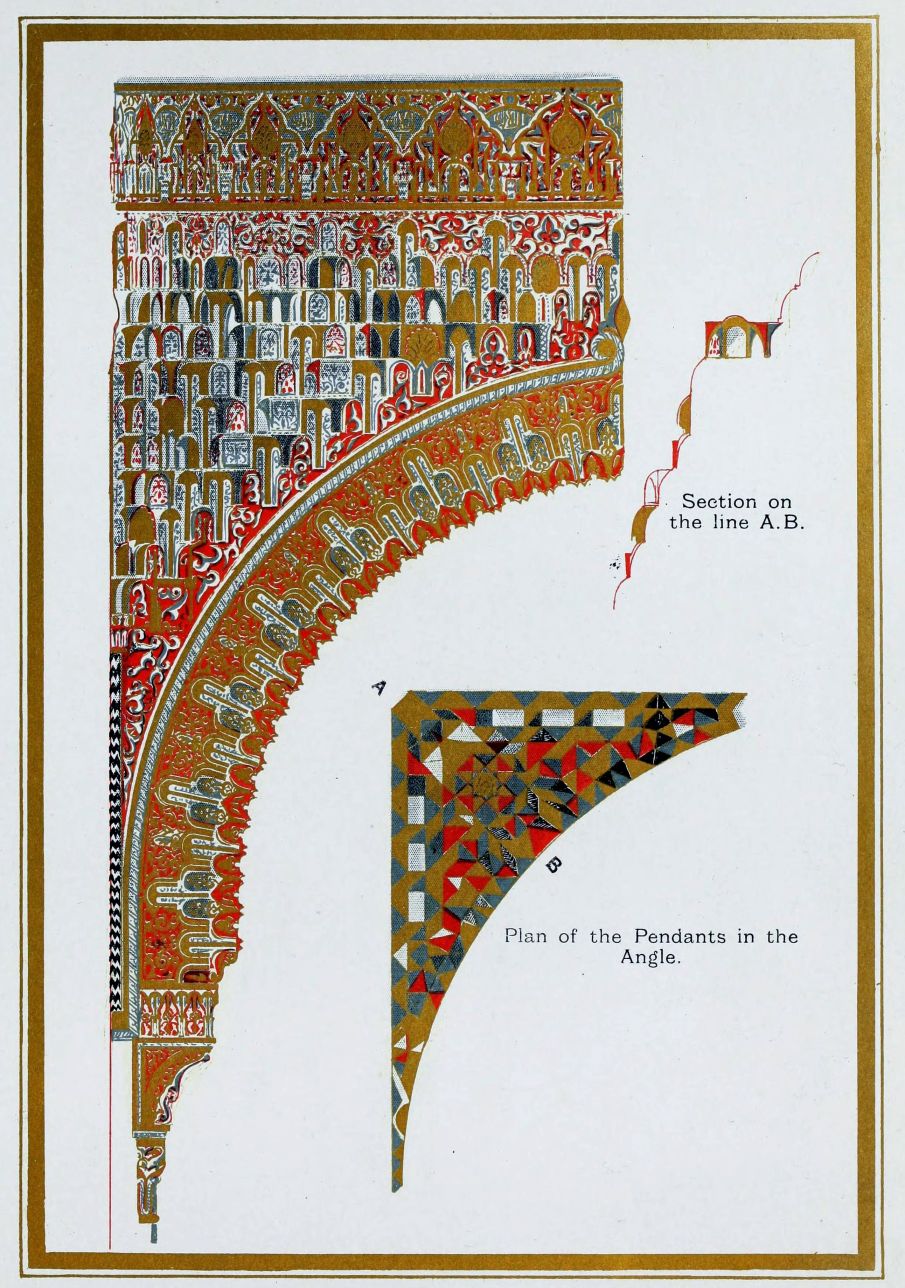
PLATE XXVII.
Details of the Great Arches in the Hall of the Bark.
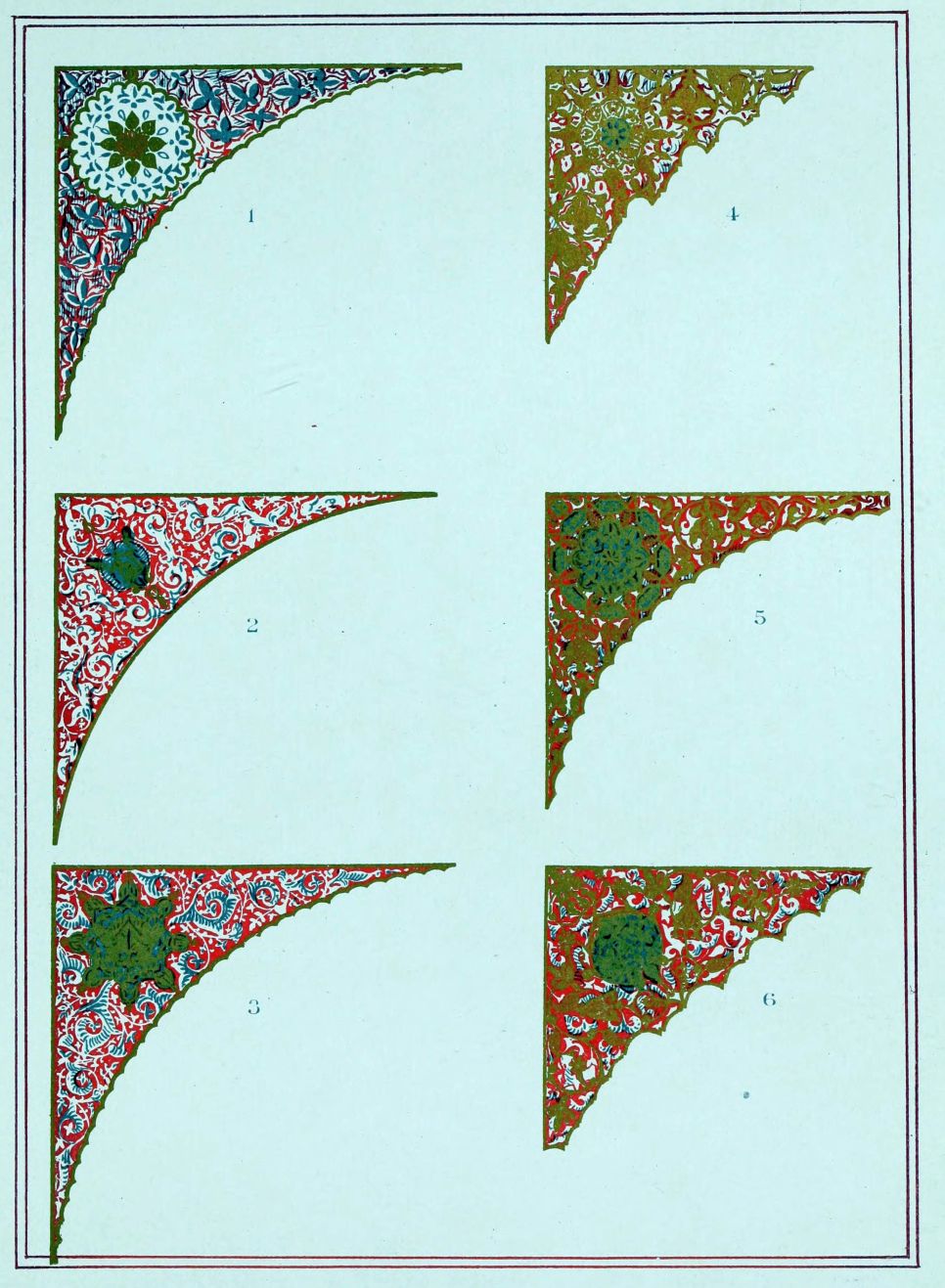
PLATE XXVIII.
No. 37.
4, 5. Arches, Court of The Lions.
1, 2, 3, 6. Arches, Hall of Justice.
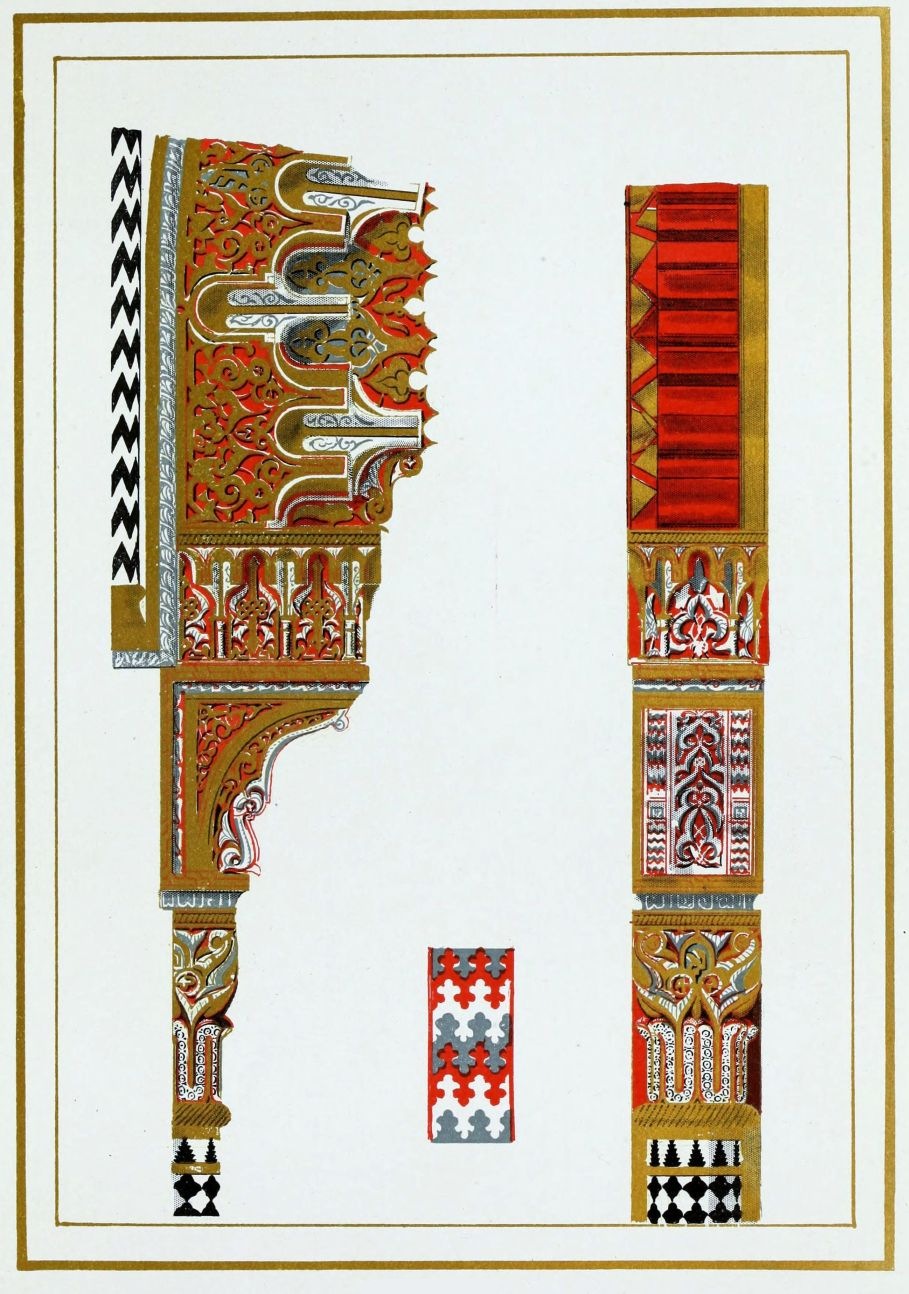
PLATE XXIX.
No. 38.
Details of The Great Arches.
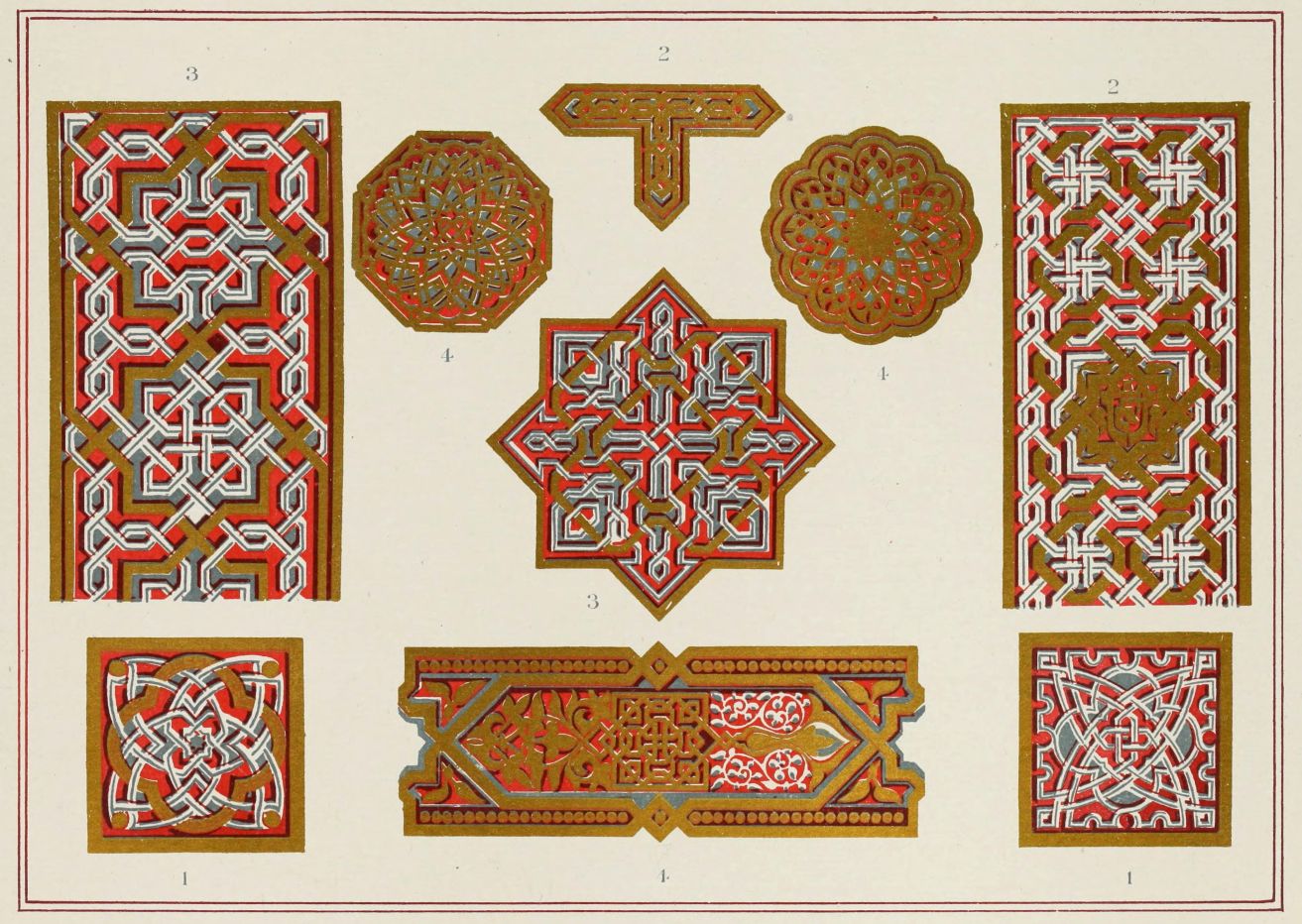
PLATE XXX.
No. 39.
1. Hall of Ambassadors. 3. Hall of The Bark.
2. Court of The Fish Pond. 4. Hall of The Two Sisters.
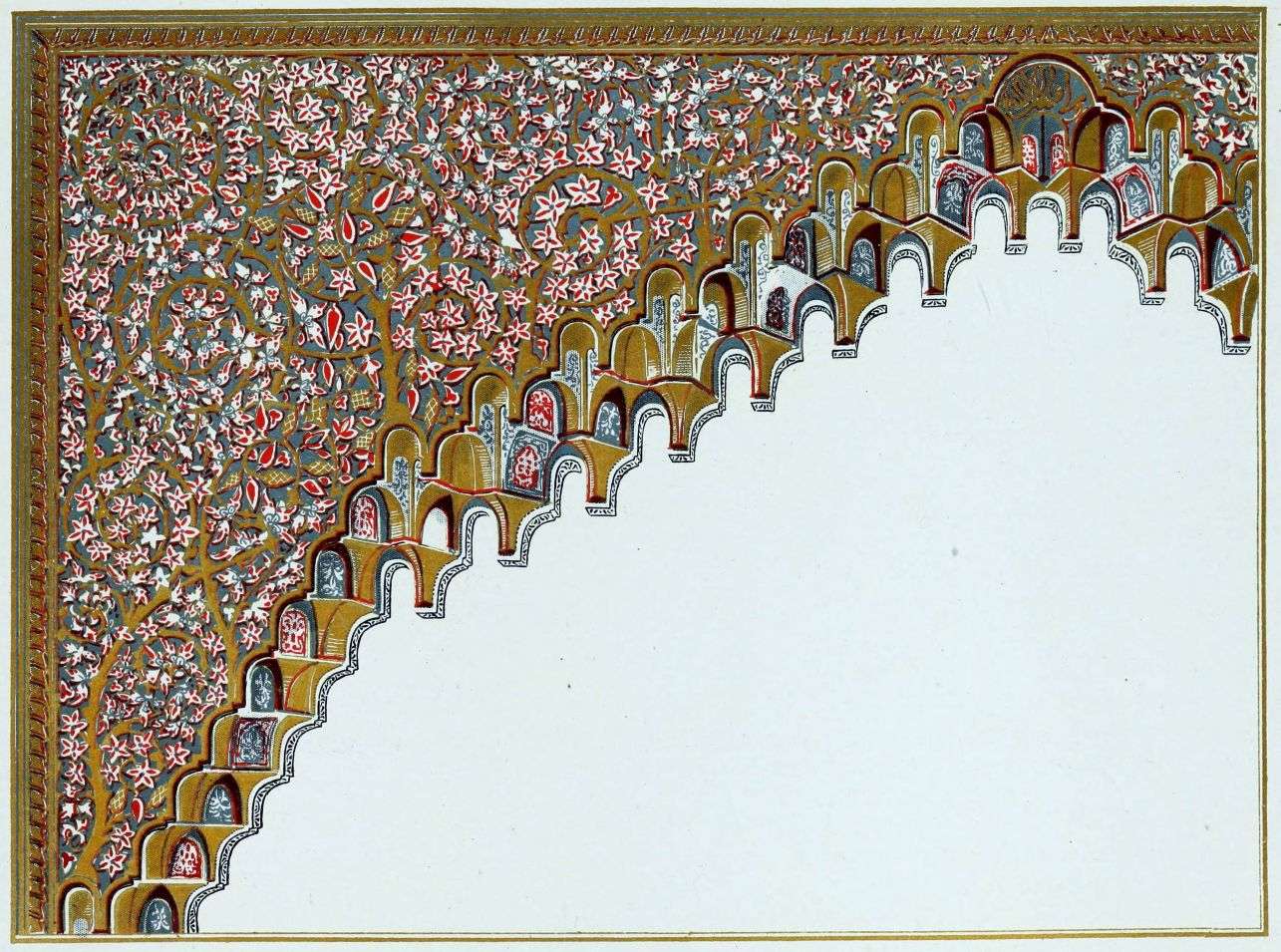
PLATE XXXI.
No. 40.
Detail of an Arch, Court of The Fish Pond.
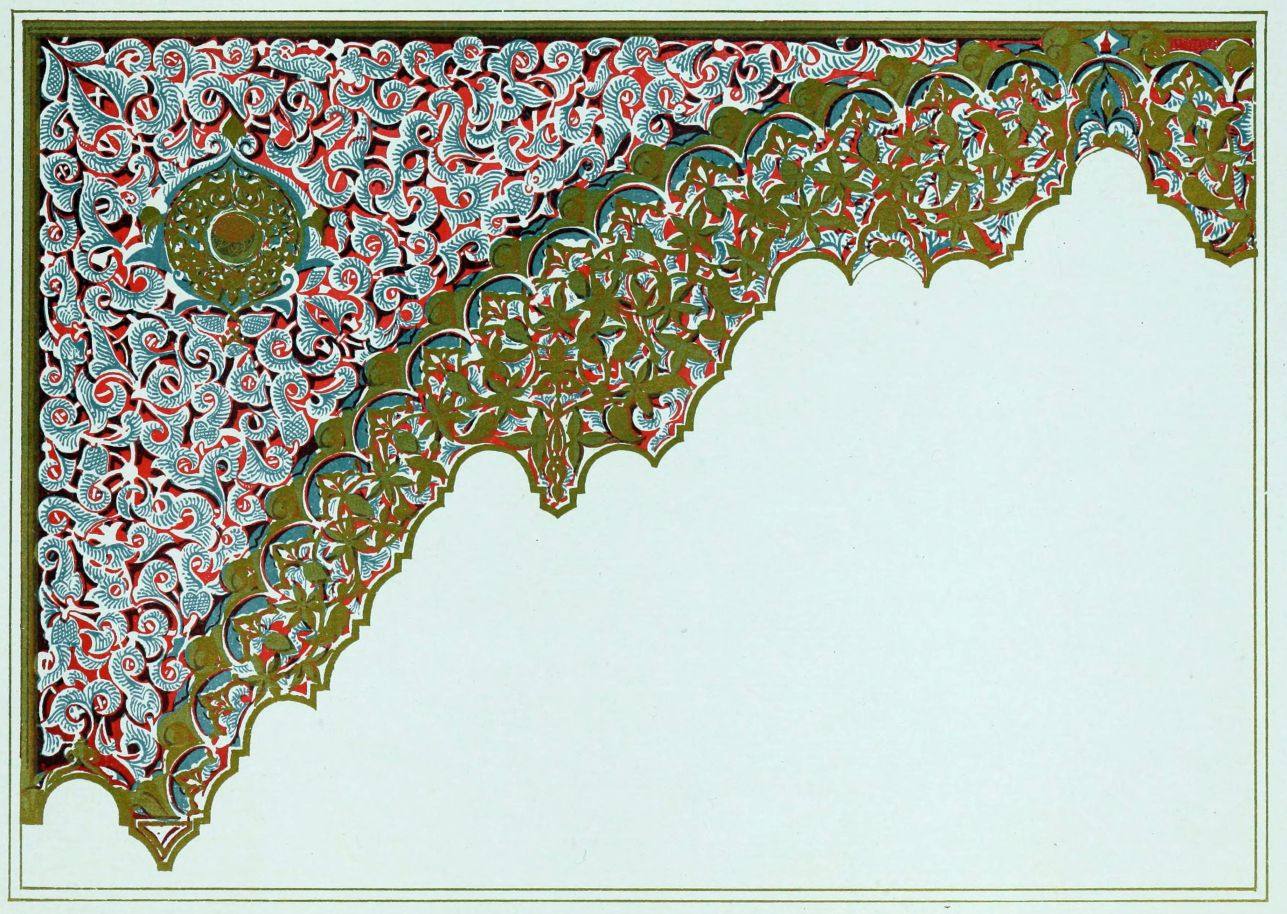
PLATE XXXII.
No. 41.
Detail of an Arch, Portico of The Court of Lions.
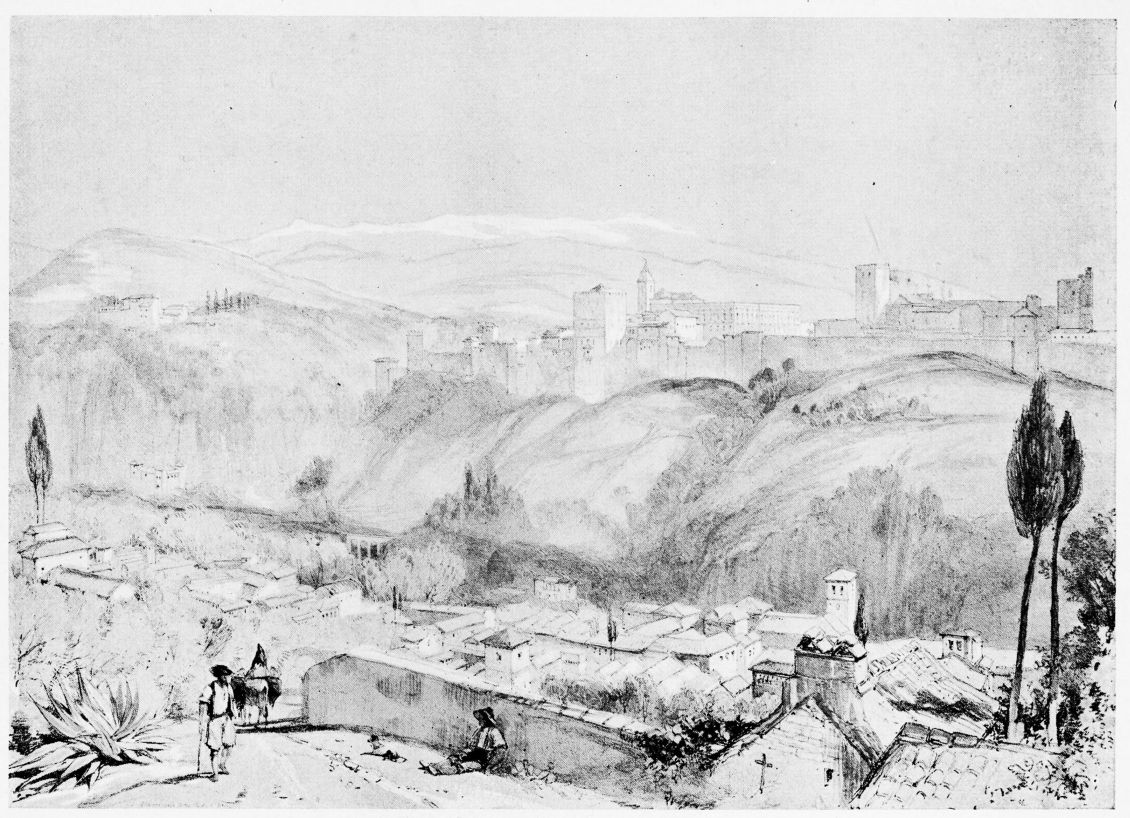
A VIEW OF THE ALHAMBRA FROM THE ALBAYCIN.
A VIEW OF THE ALHAMBRA FROM THE ALBAYCIN.
A VIEW OF THE ALHAMBRA FROM THE ALBAYCIN.
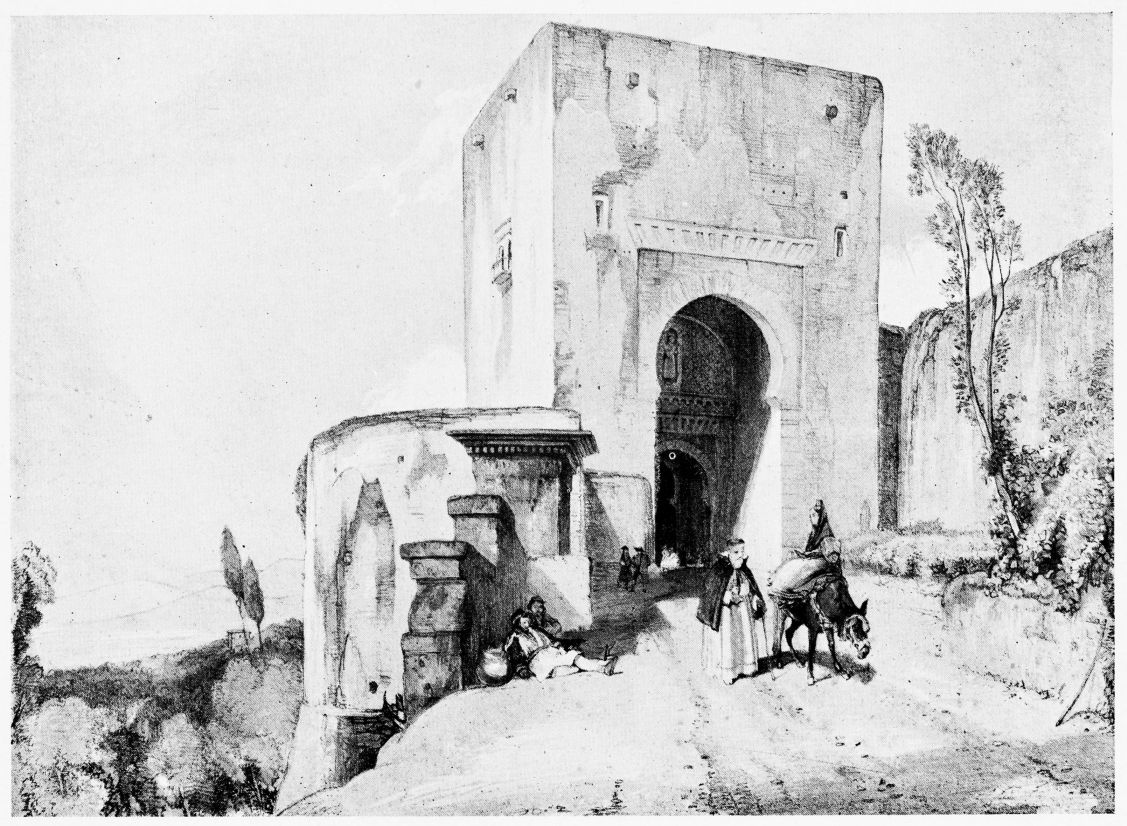
GATE OF JUSTICE.
Christians, the reduction of the last stronghold of the Moors became only a question of time. As we know, the surrender of Granada took place within four years after the fall of Loja.
But it is not the history of the Dominion and Expulsion, so much as the description of the Hall of the Abencerrages, that demands attention at present.
After the glories of the Sala de las Dos Hermanas, the Hall of the Abencerrages, elegant as it is, pales somewhat in interest. There are but few inscriptions here. It has been repeatedly “restored,” and much of the ornament which decorates the walls seems to have been transferred from the Hall of The Two Sisters. The arches, however, appear in their original state, and are most beautiful in general form, as in their surface decoration. The manner in which the arch-form gradually grows out from the shaft of the column is exquisite. In the centre of the Hall is the famous “Fountain,” with the waters of which the blood of the Abencerrage chieftains is said to have mingled.
The beautiful wooden doors to the Hall of the Abencerrages existed in their places, and in perfect condition till the summer of 1837, when they were removed and sawn in halves by the then resident Governor of the Alhambra for the purpose of stopping a gap in another part of the Palace; and, as they proved too large for the openings to which they were applied, the superfluous parts were broken up for firewood!
The doors are of white wood, with similar mouldings and ornaments on either side; the decorations were originally in colour, traces of which may still be discovered. The folding doors are hung on pivots, which are let into the socket of a marble slab below, and above into the soffit of a beam which crosses the colonnade of the Court of the Lions. This method of hanging the doors is precisely similar to that adopted in ancient temples, and is still practised throughout the East. The manner in which the bolt secures, at the same time, both flaps of the larger doors and the wicket, is full of ingenuity.
Don Rafaél Contreras caused these doors, or what remained of them, to be replaced in the position for which they were originally intended. He found the fragments amid the lumber of the palace! His own words are: “Nous l’avons restaurée en 1856, l’ayant trouvé brisée en quatre morceaux, abandonnée dans les magasins du palais”—They were found, broken into four pieces, in the lumber rooms of the palace.
PATIO DE LA ALBERCA—THE COURT OF THE FISH-POND.
This Court was called in former times Patio de los Arrayanes—the Court of the Myrtles—by reason of its beautiful flowering shrubs which gem either side of the Fishpond; trim myrtle hedges, and orange trees rising beside the water.
To enter the Court of the Fish-pond is to be straightway translated to the palace of Haroun-al-raschid: Granada changes to Damascus. The Moorish arches, springing from slender palm-tree shafts, are of bewildering beauty; the walls, no longer forbidding blocks of stone, but pierced trellises, that turn sunlight and moonlight into patterns resembling so much Venetian filigree. “Surely they are needle-work turned to stone,” says a traveller of long ago; “or some great Sultán has built them with panels cut from caskets of Indian ivory, though the piecing be not seen. The myrtles grow green and glossy round the great marble tank, 150 feet long, which flows with mellow water, in which burnished fish—some apparently red-hot, others of molten silver—steer, flirt, skim, and splash. Never stop to think that the dry, whity-brown, tubular-tiled, sloping roofs
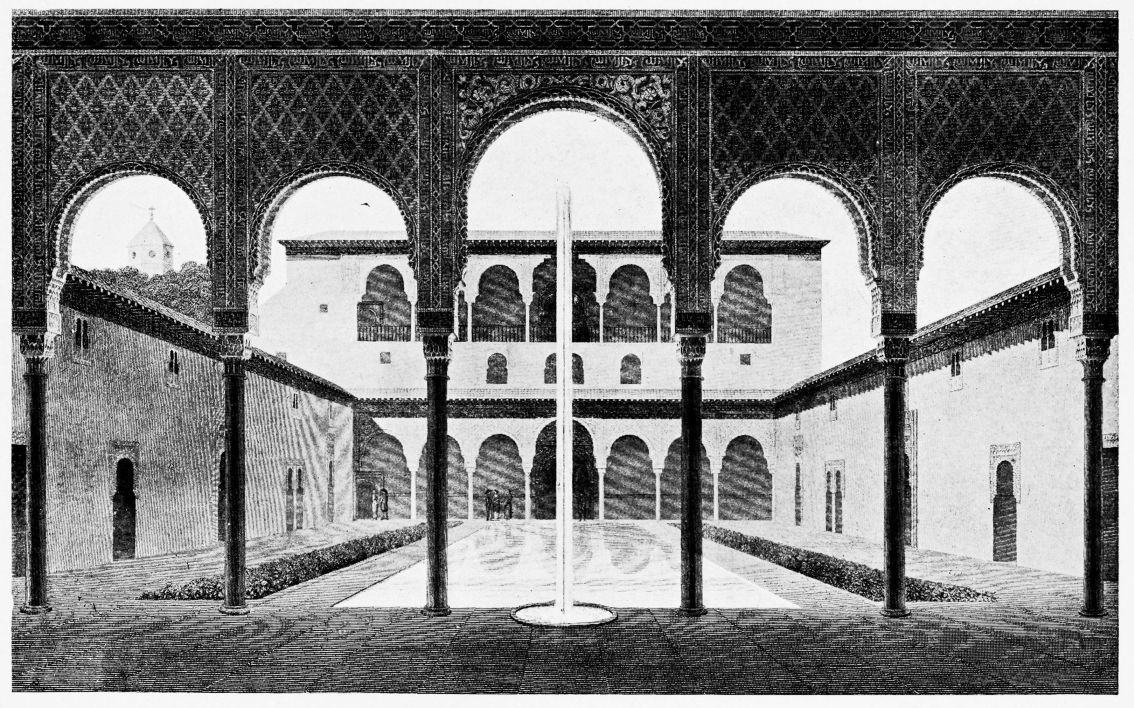
NORTH SIDE OF THE COURT OF THE FISH-POND.
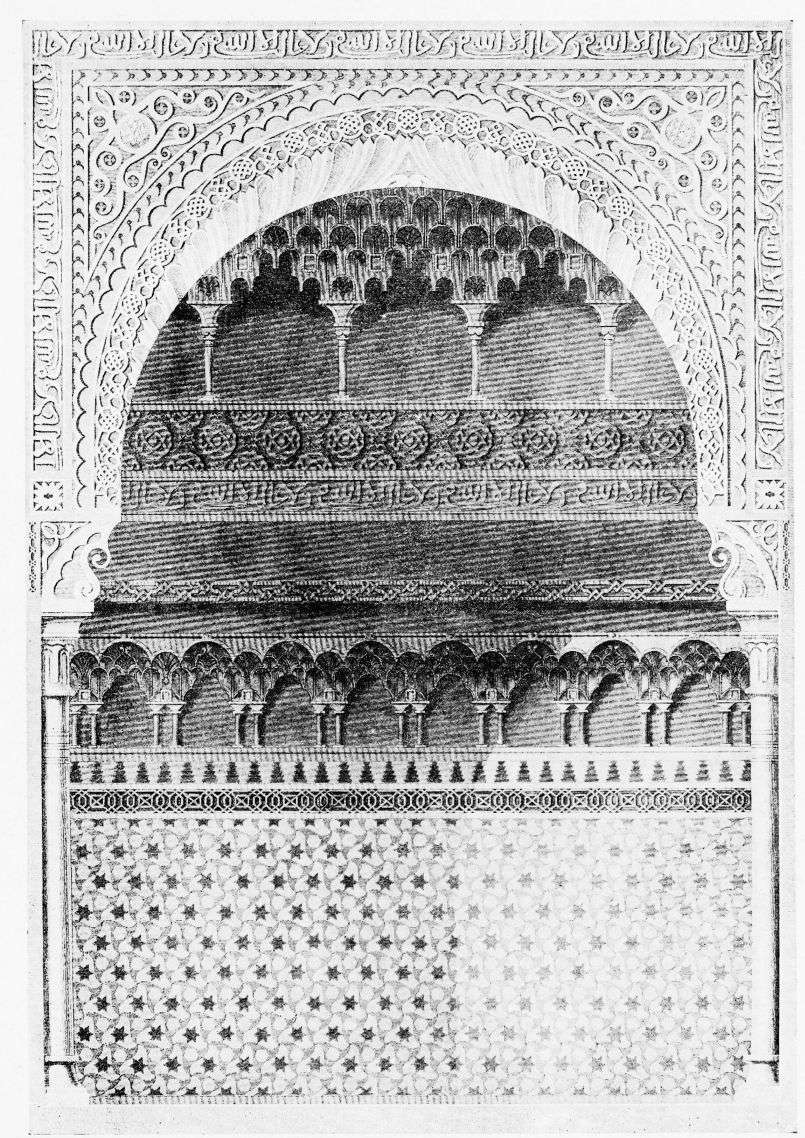
ELEVATION OF AN ALCOVE IN THE COURT OF THE FISH-POND.
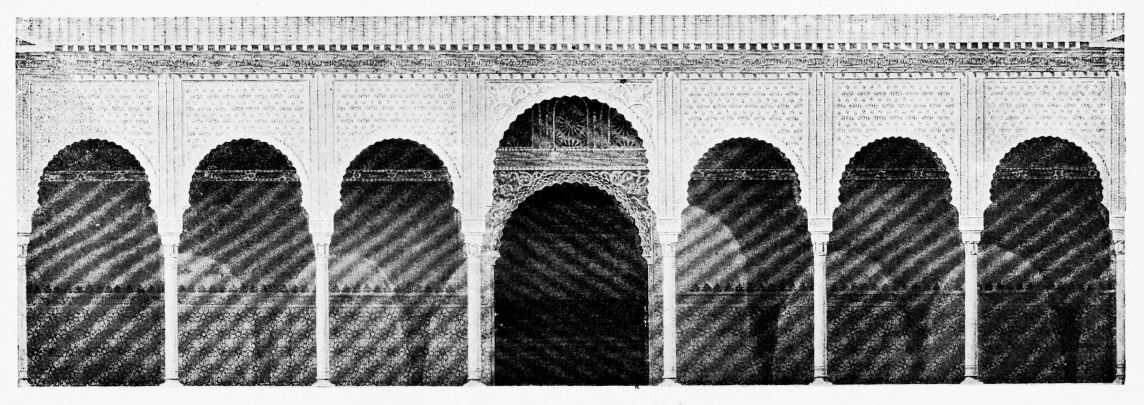
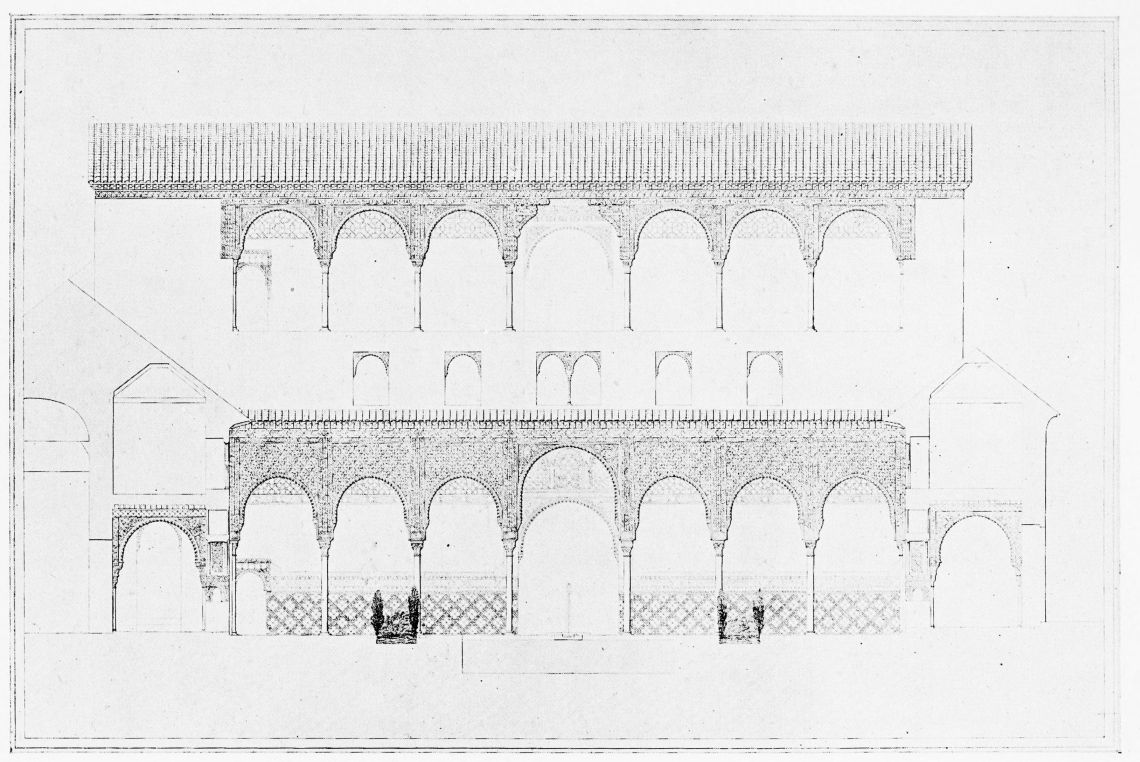
ELEVATION OF THE ARCADE ON THE NORTH SIDE OF THE COURT OF THE FISH-POND.
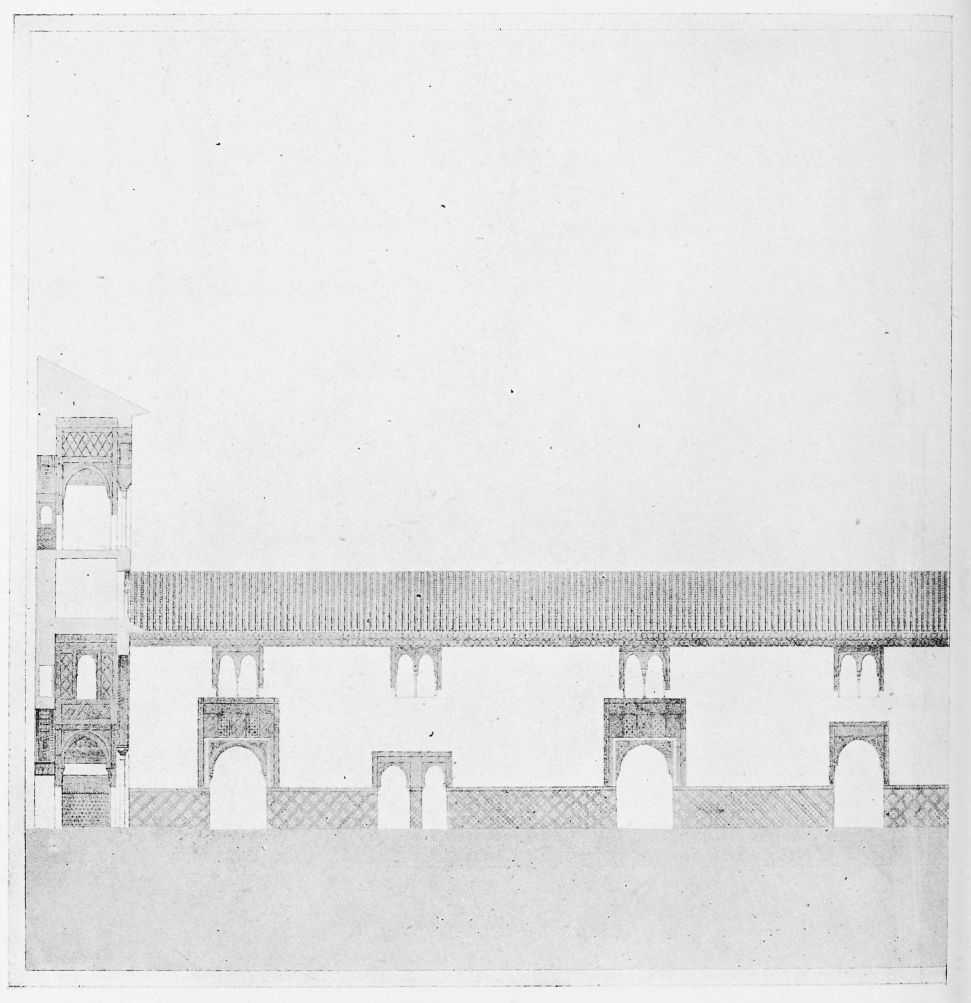
SECTION THROUGH PART OF THE COURT OF THE FISH-POND
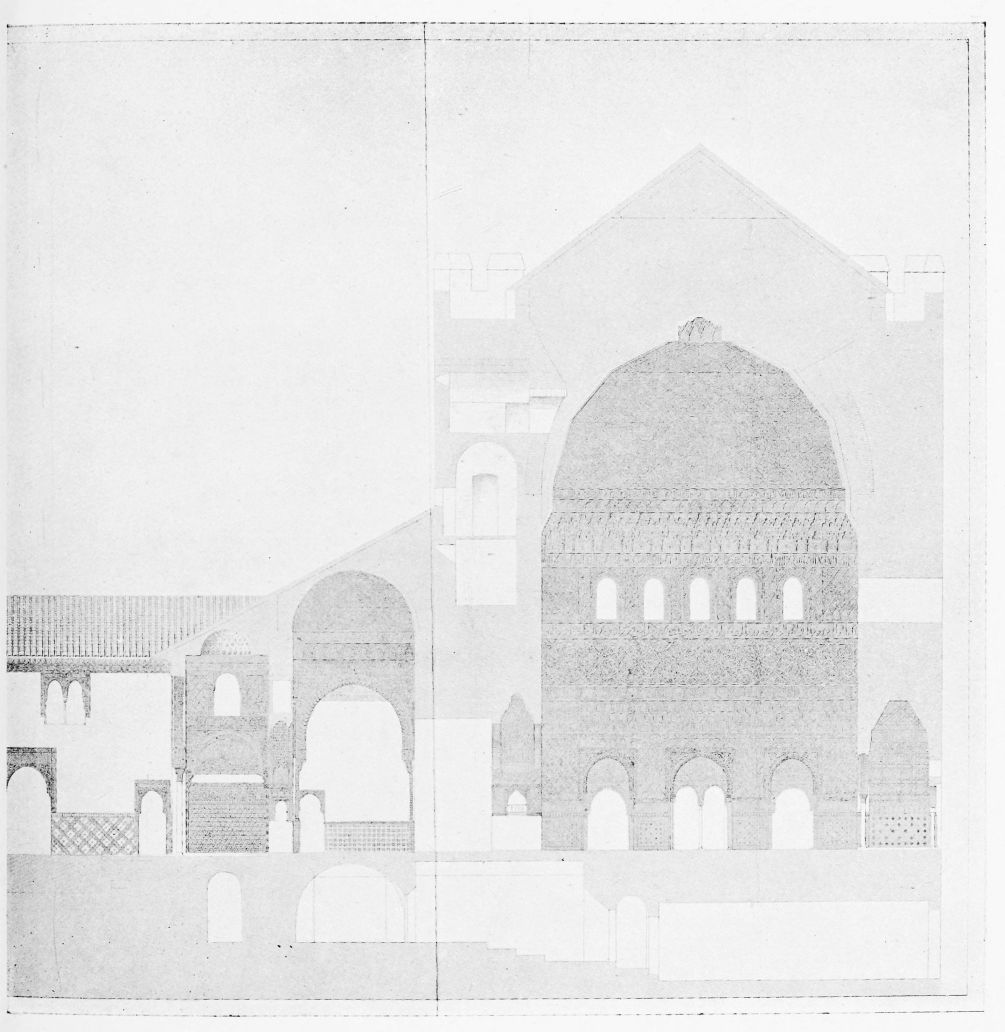
AND THE HALL OF THE AMBASSADORS.
THE BATHS, HALL OF REPOSE.
Explanation of the Letters of Reference in this Plate.
A A A. Entrances to the quarter of the Palace containing the baths.
B B B B B B. Passages communicating with the different apartments and baths.
C C. Apartments, looking into.
D D. A Court with a fountain in its centre.
E E Baths and dressing-rooms.
F F F. Warm baths.
G G G. The place where the water was heated. The copper vessels anciently employed for this purpose were sold many years ago by the then Governor of the Alhambra for the sum of 14,000 reals, about £350 sterling. From these coppers, the warm water was conducted between the walls to the different baths by means of pipes communicating with them, and which are distinctly shown by the white line.
I I I I I I. Other baths and apartments. The lines a a a a a a a a a a a designate steps by which the bathers descended into the water.
K. The great Hall of the Baths.
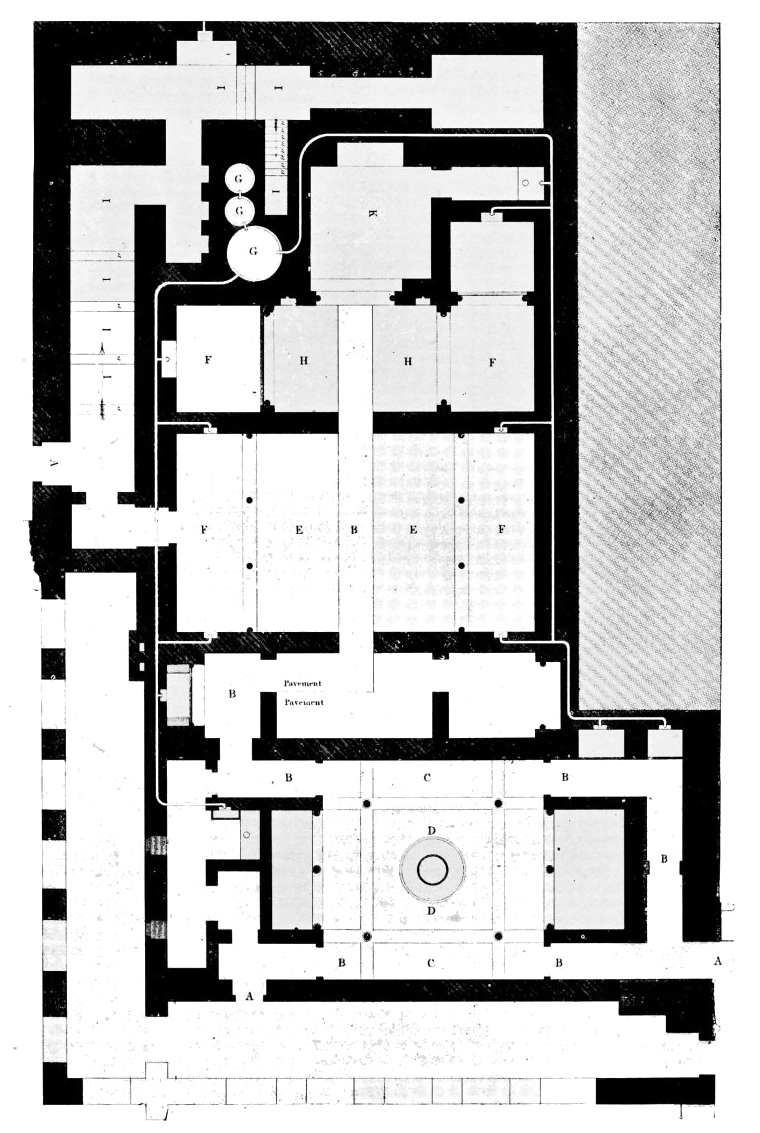
GROUND PLAN OF THE BATHS IN THE ALHAMBRA.
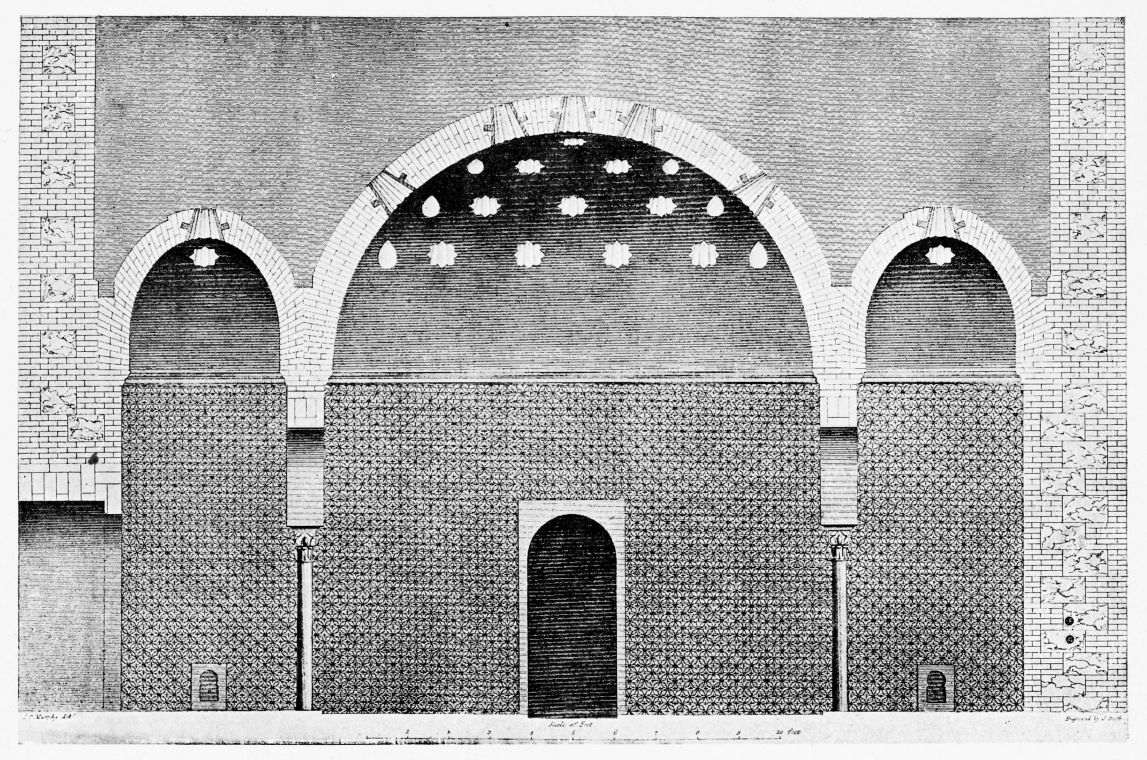
SECTION OF THE HALL OF THE BATHS.
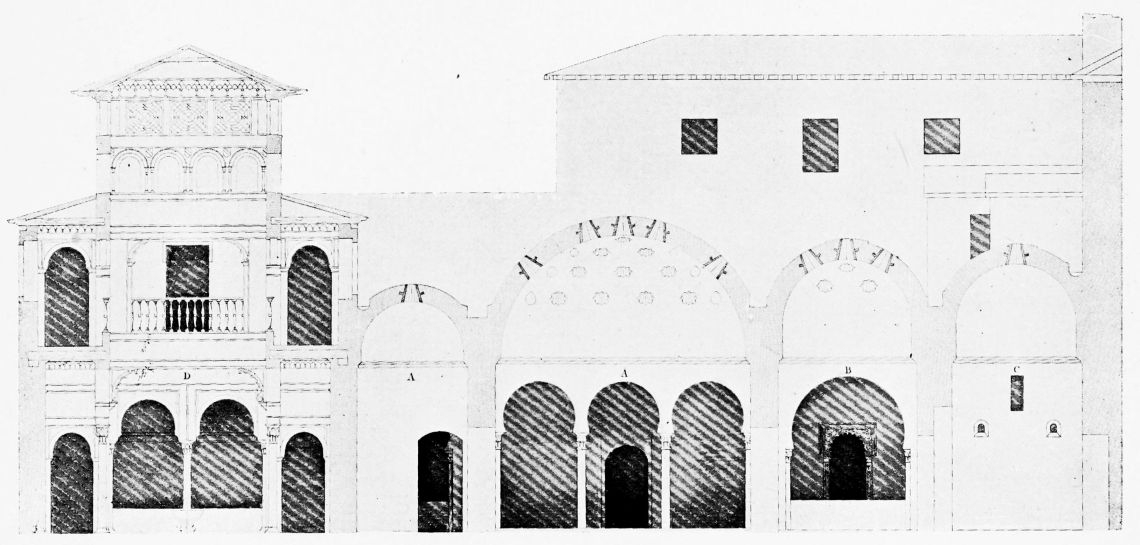
A SECTION OF THE BATHS IN THE ALHAMBRA.
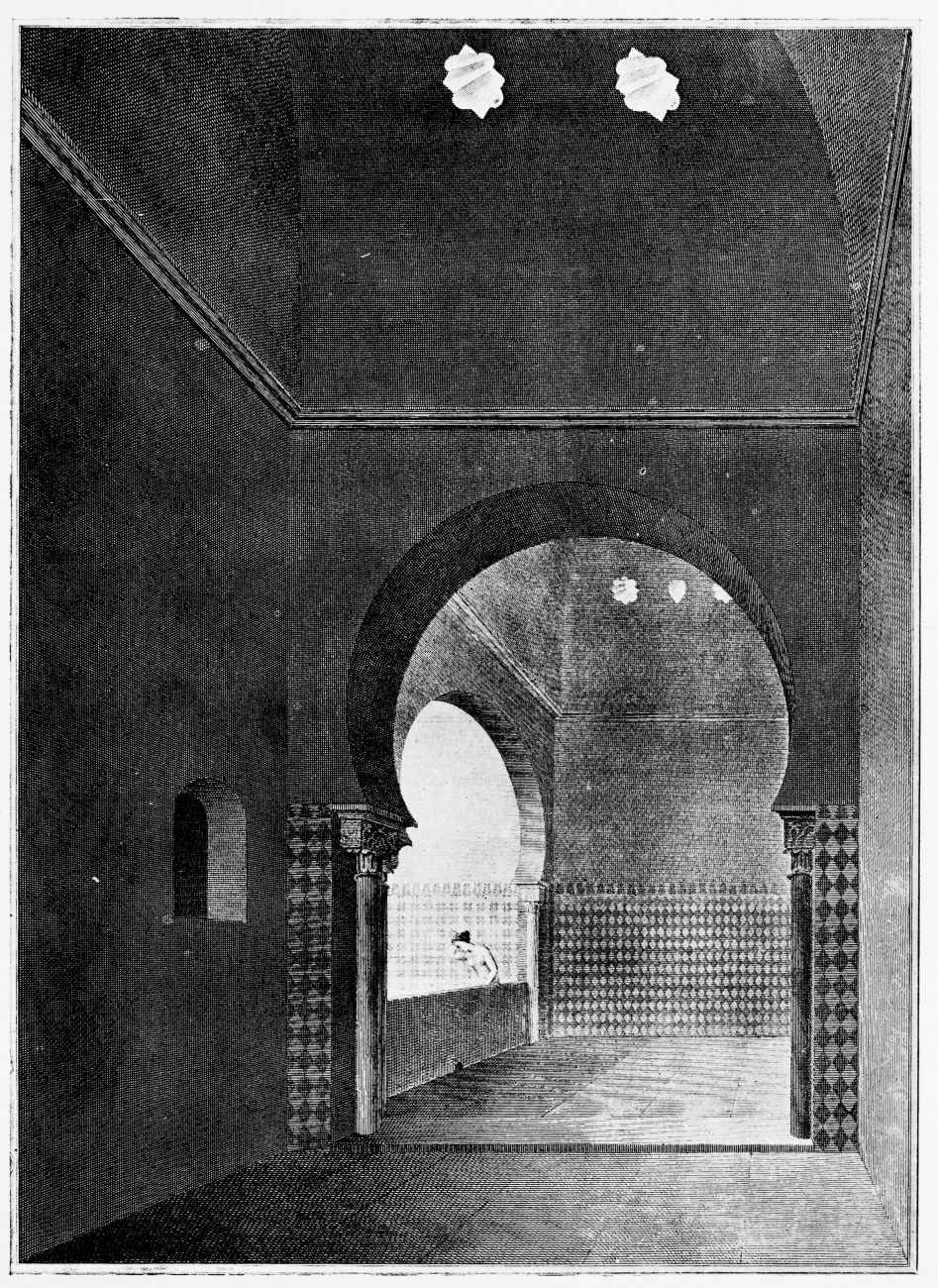
THE SULTÁNA’S BATH.
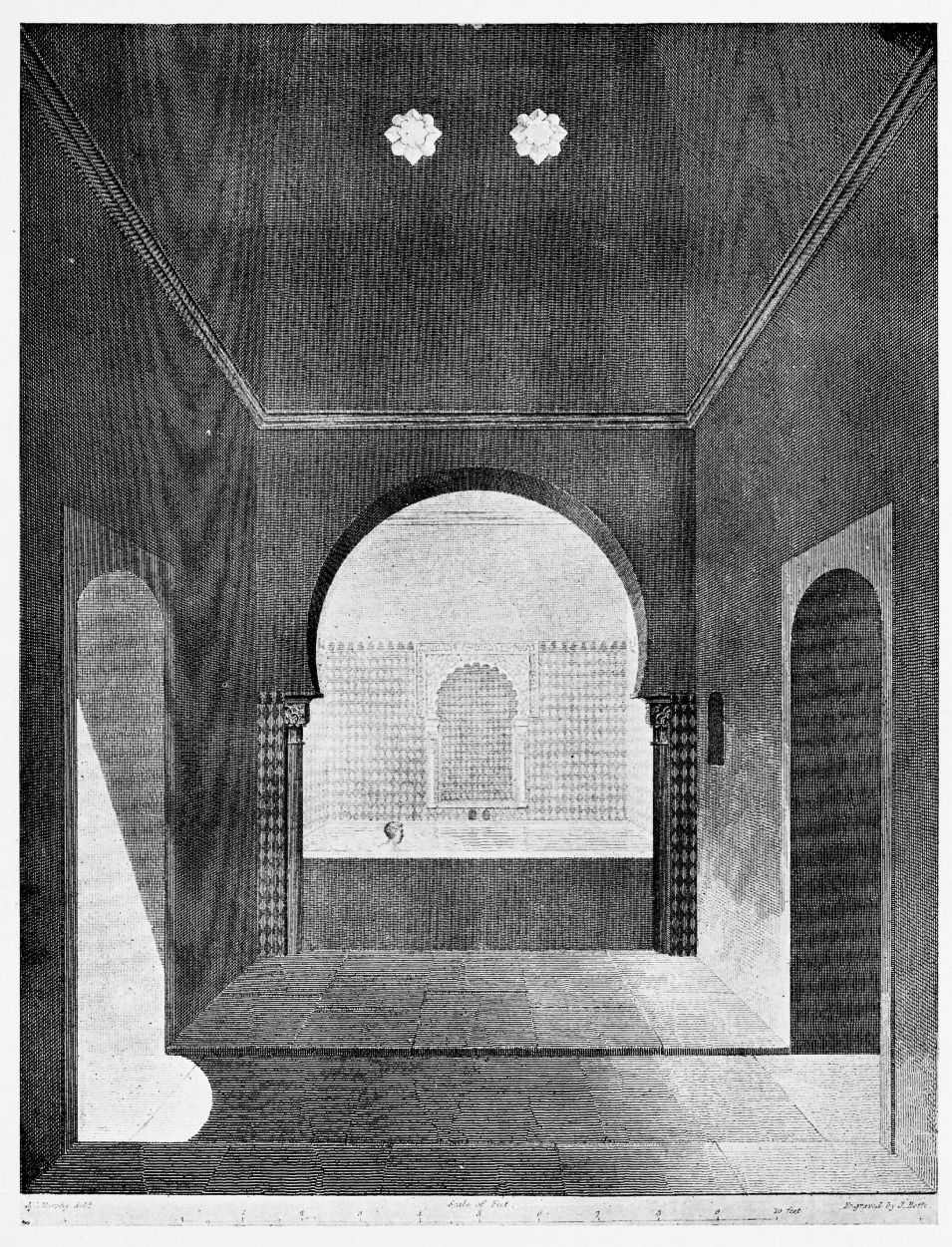
THE SULTÁN’S BATH.
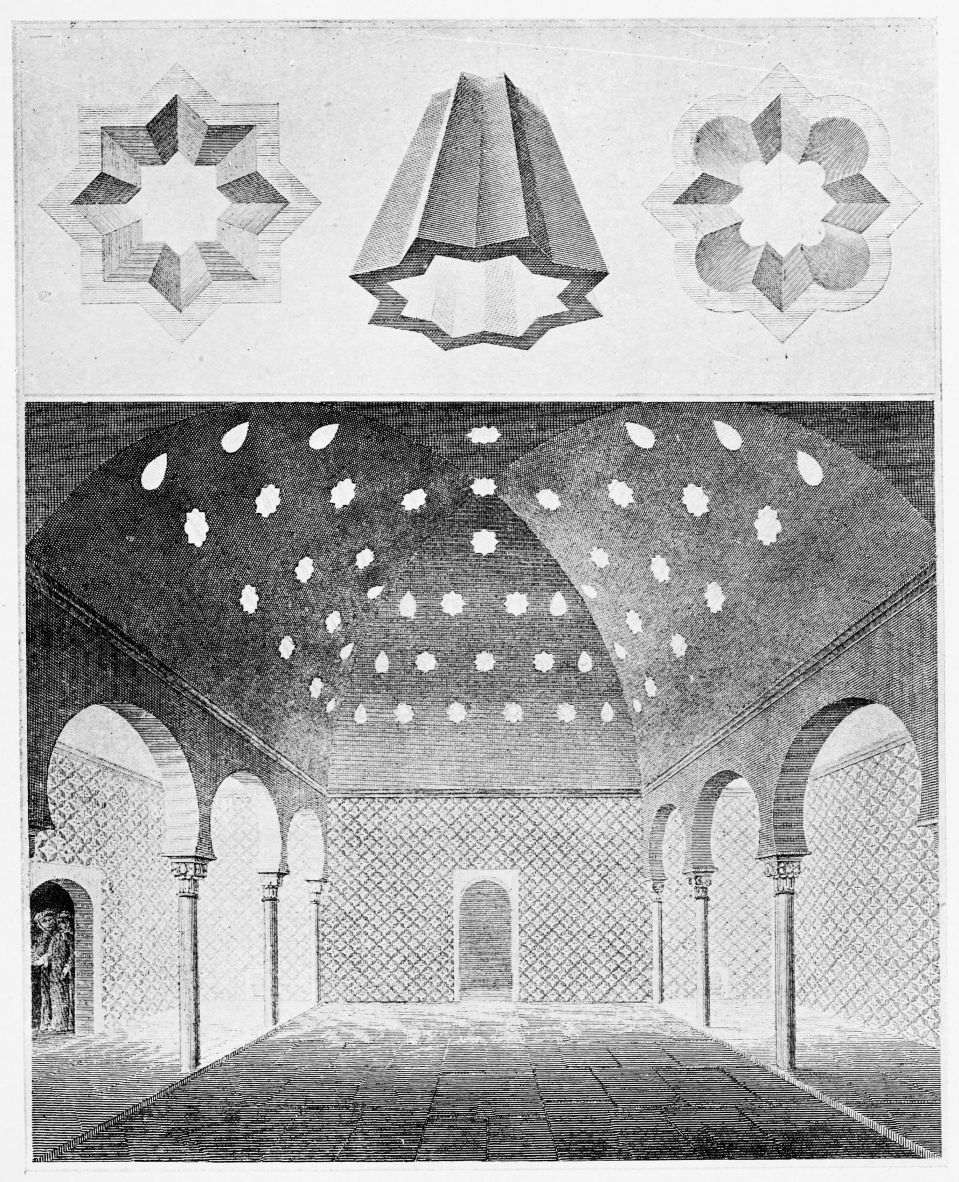
THE HALL OF THE BATHS.
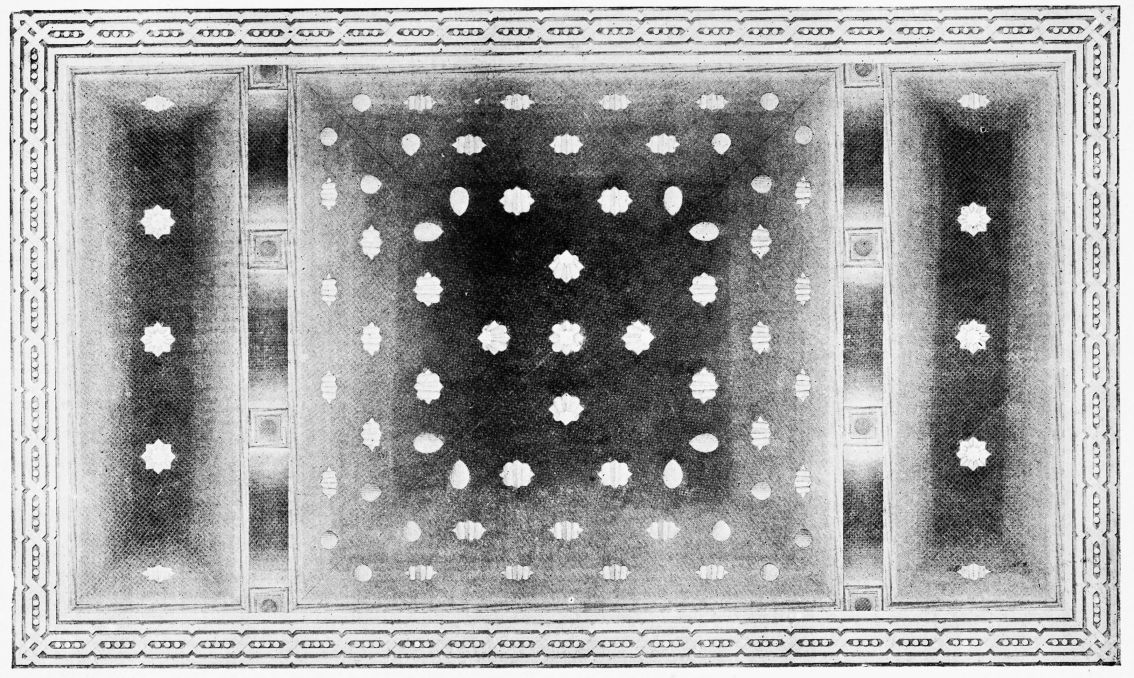
CEILING OF THE HALL OF THE BATHS.
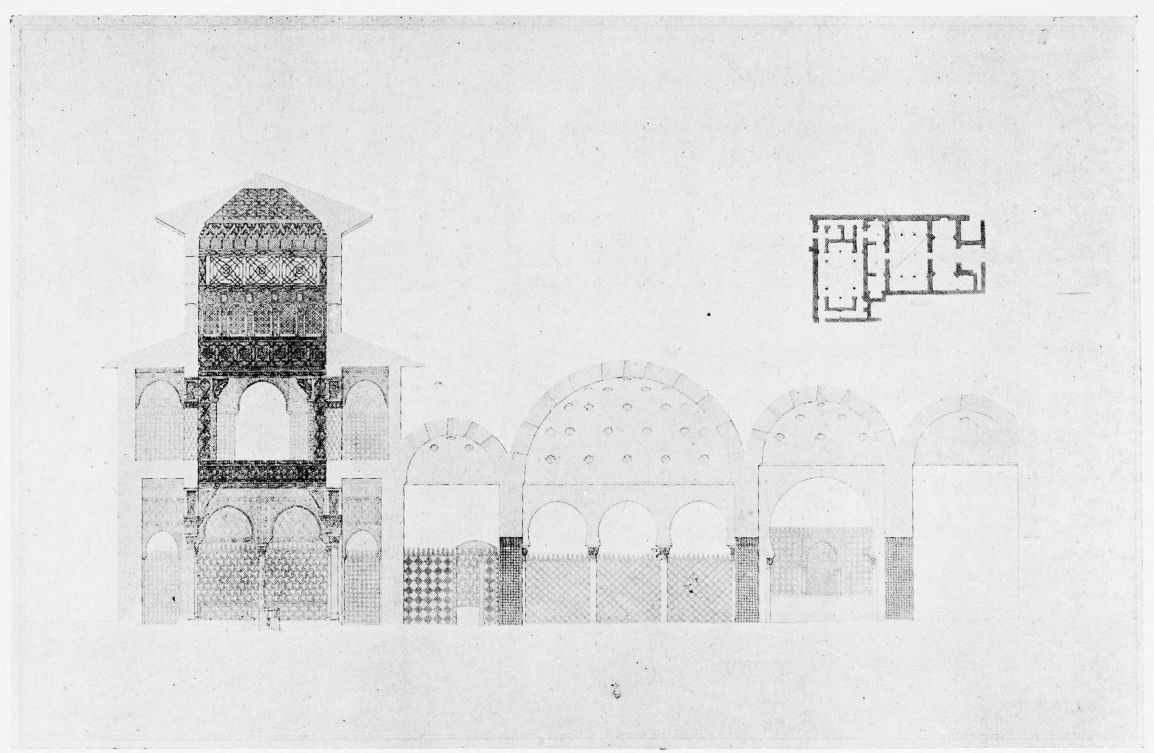
LONGITUDINAL SECTION THROUGH THE BATHS.
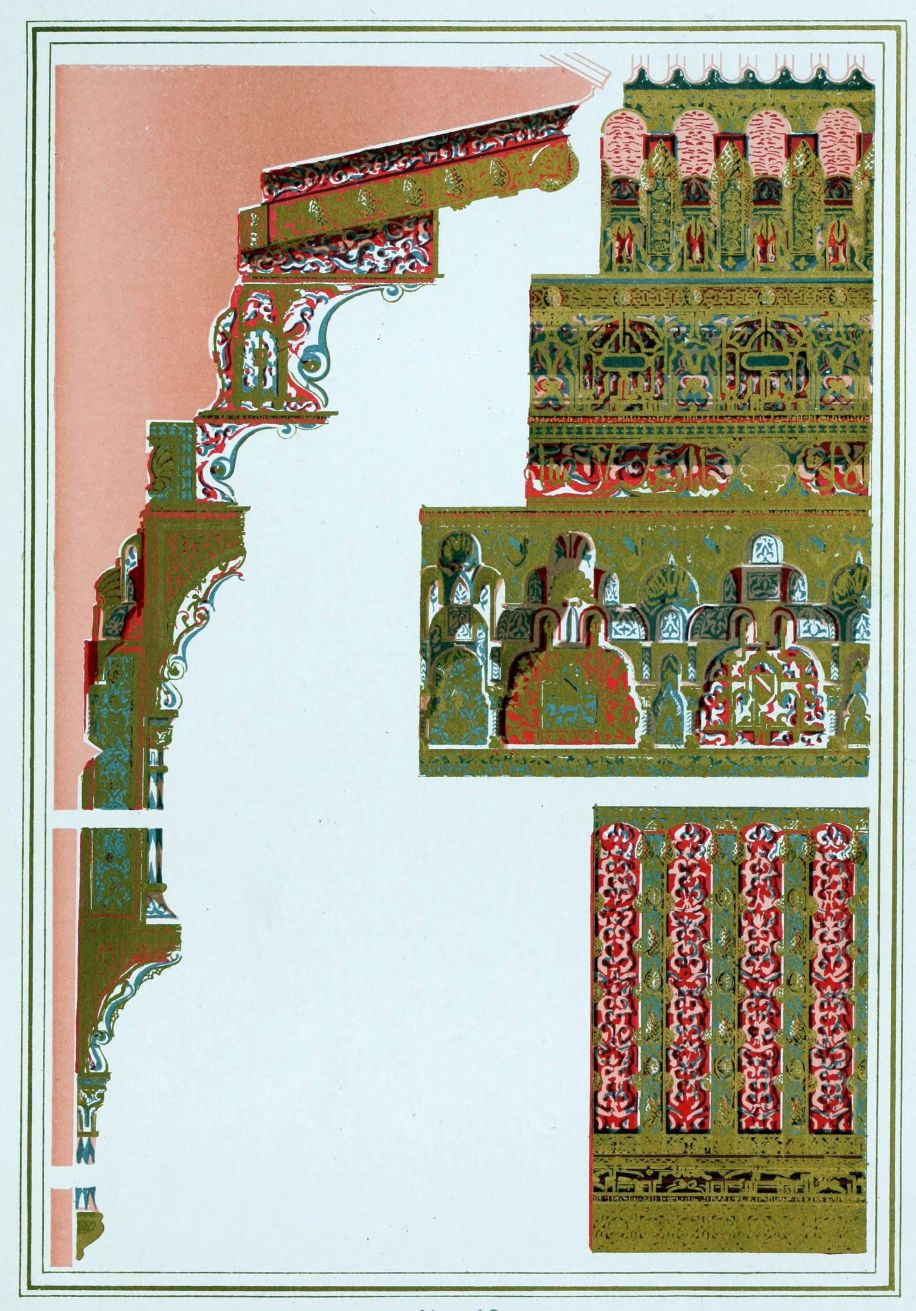
PLATE XXXIII.
No. 42.
Cornice to the roof, Court of The Mosque.
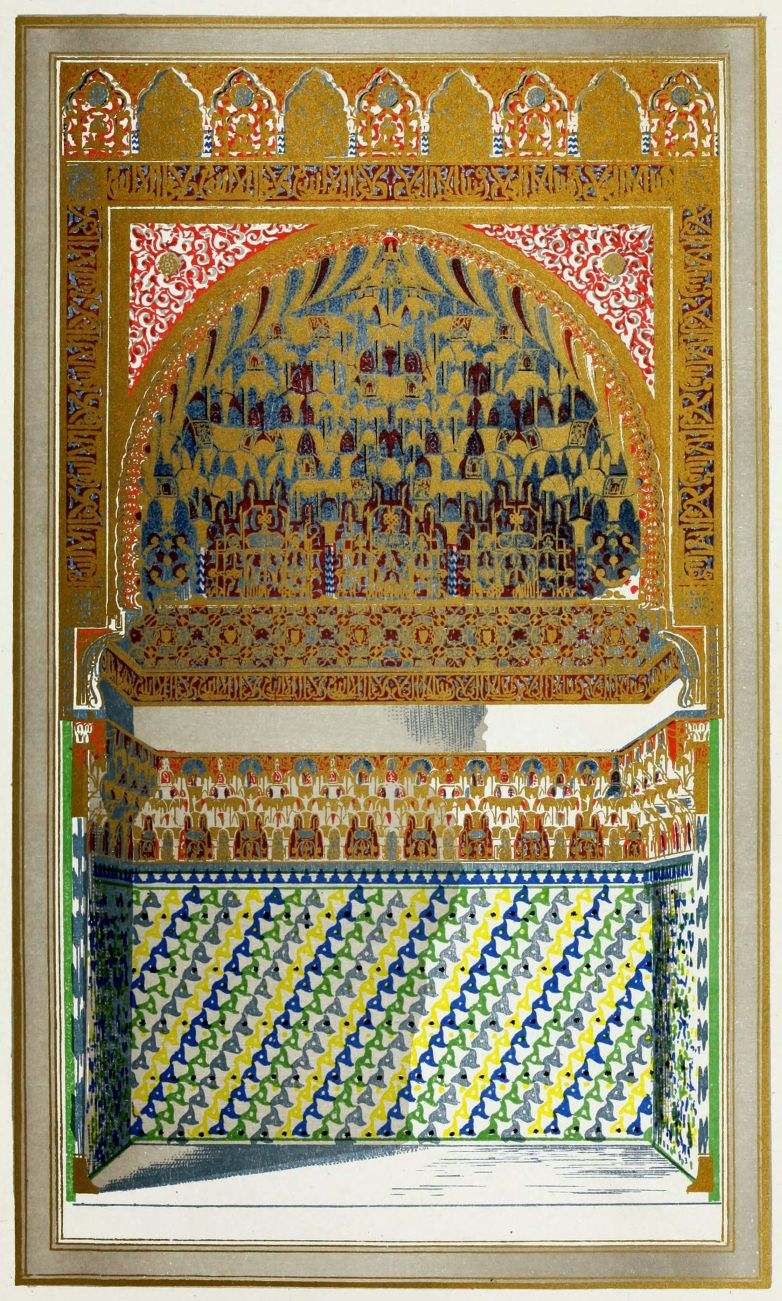
PLATE XXXIV.
No. 43.
Divan, Court of The Fish Pond.
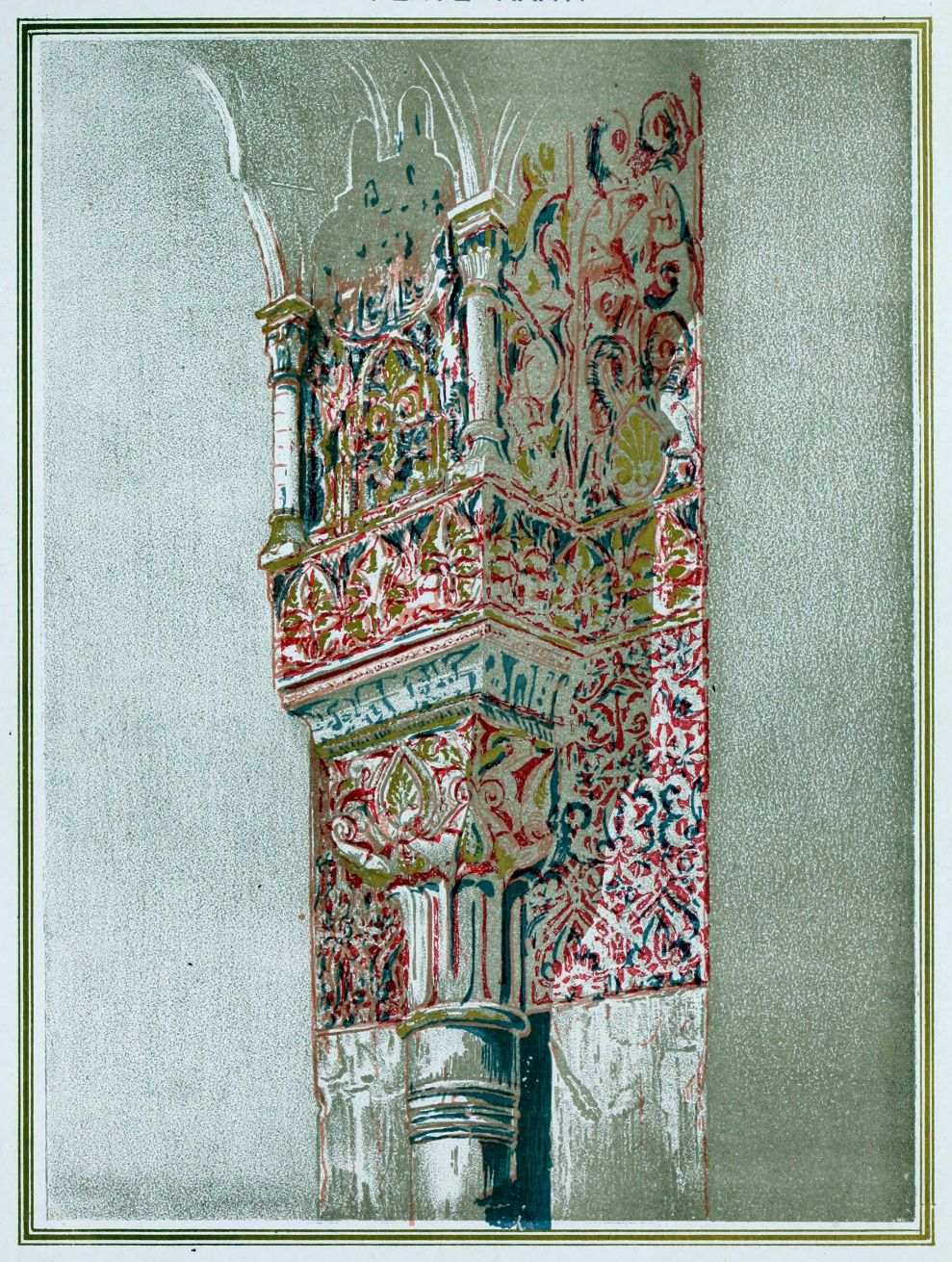
PLATE XXXV.
No. 44.
Actual state of the Colours.
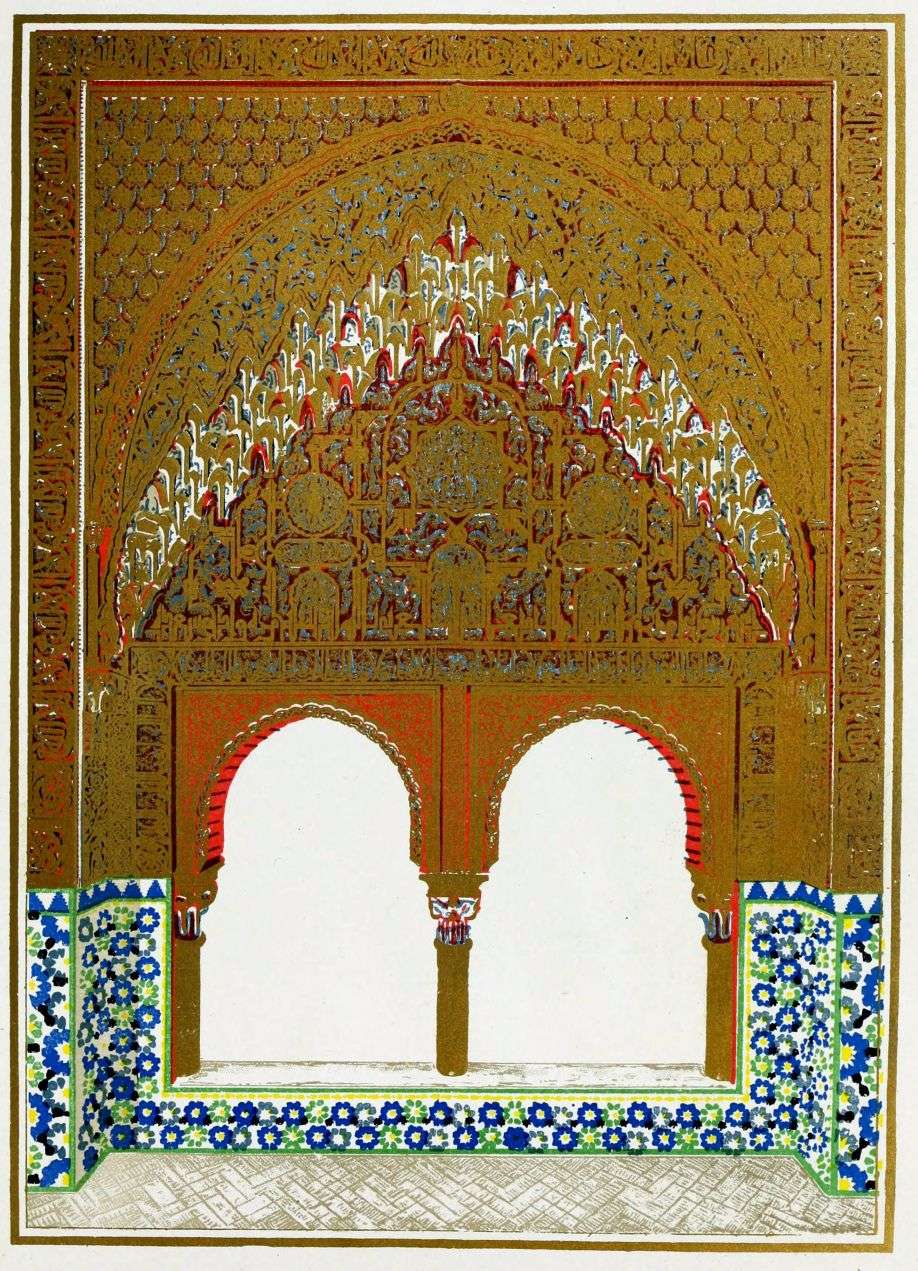
PLATE XXXVI.
No. 45.
Windows in the Alcove, Hall of The Two Sisters.
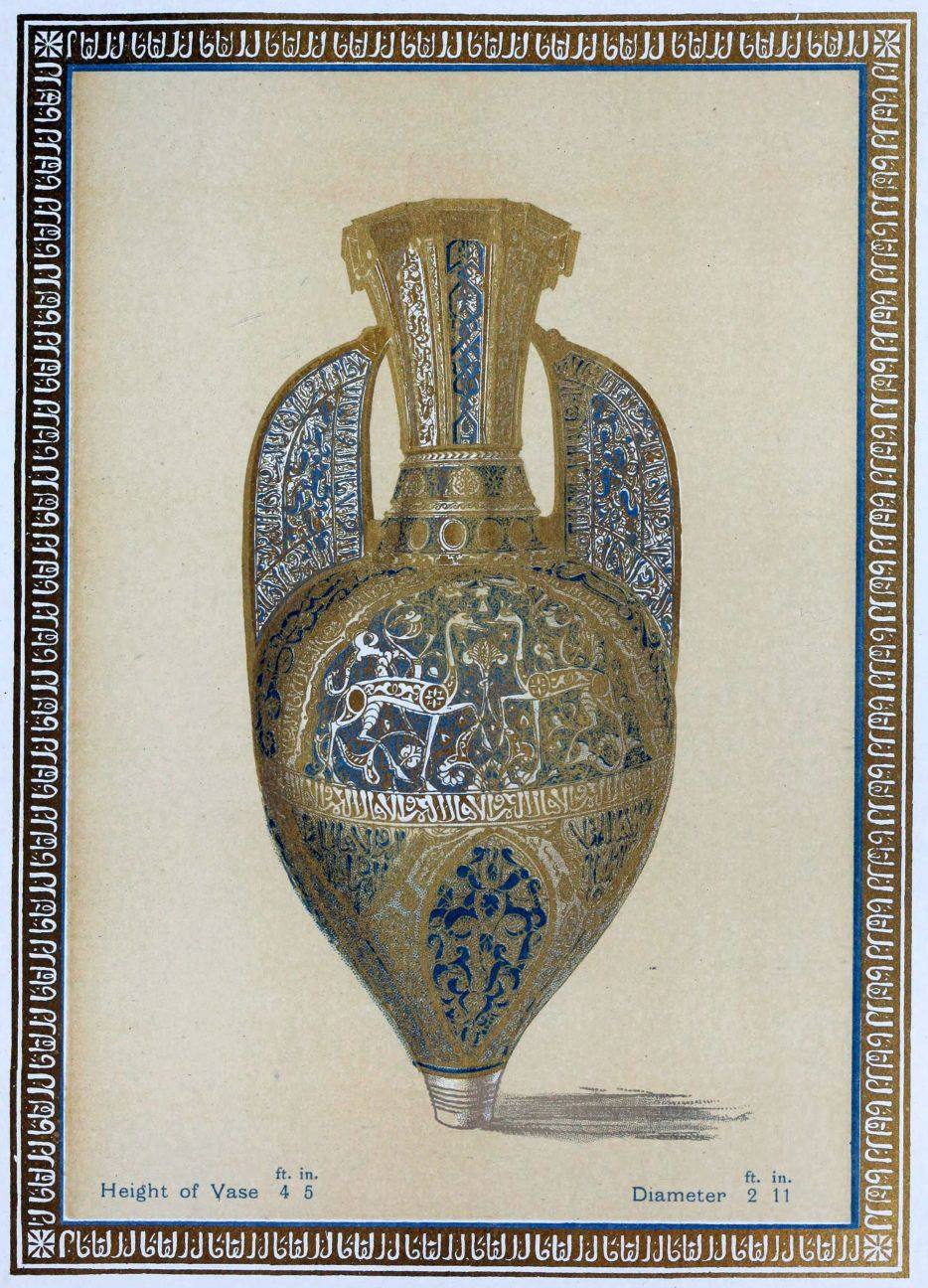
PLATE XXXVII.
No. 46.
The Vase.
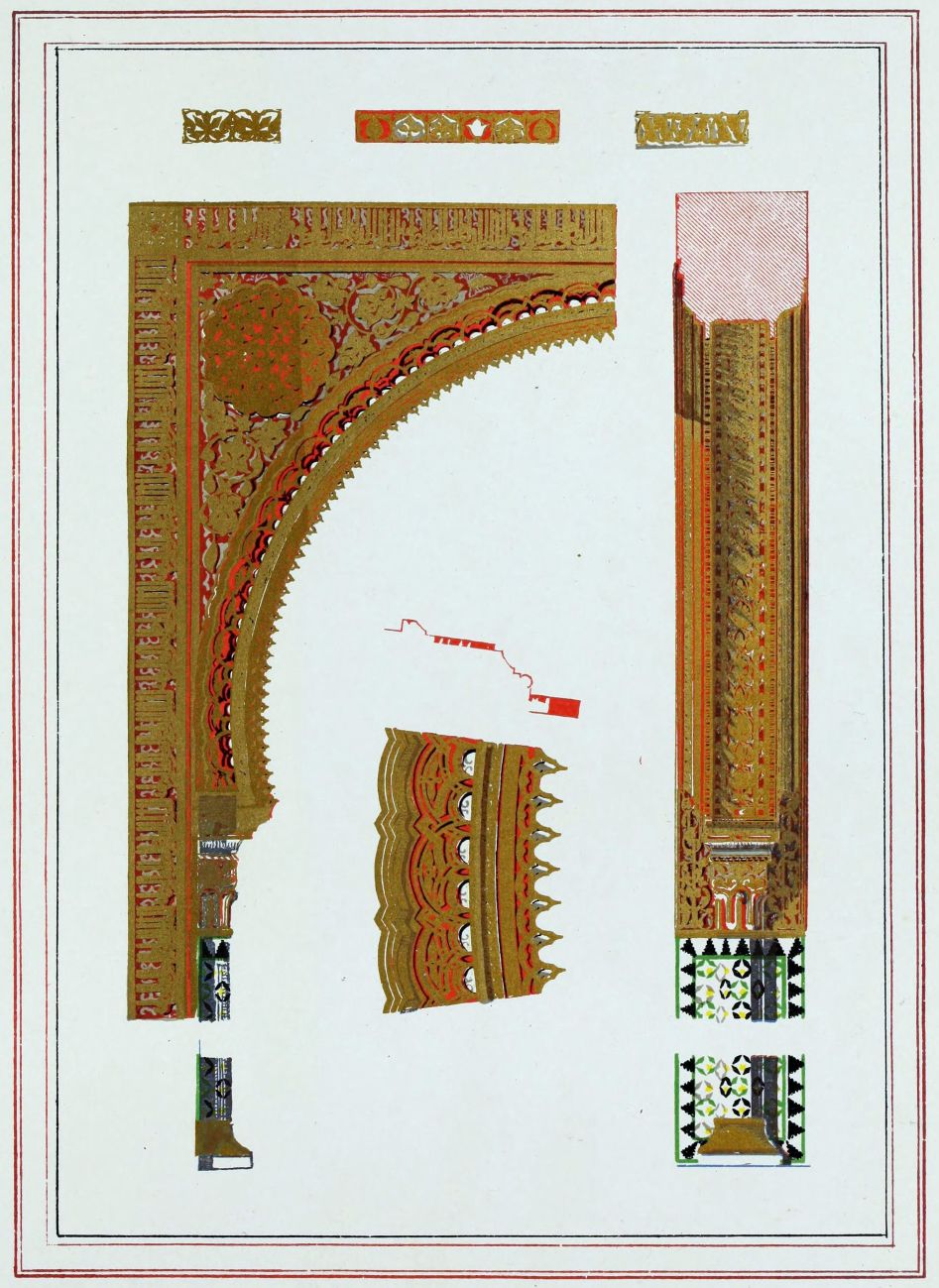
PLATE XXXVIII.
No. 47.
Details of one of the Arches, Hall of Justice.
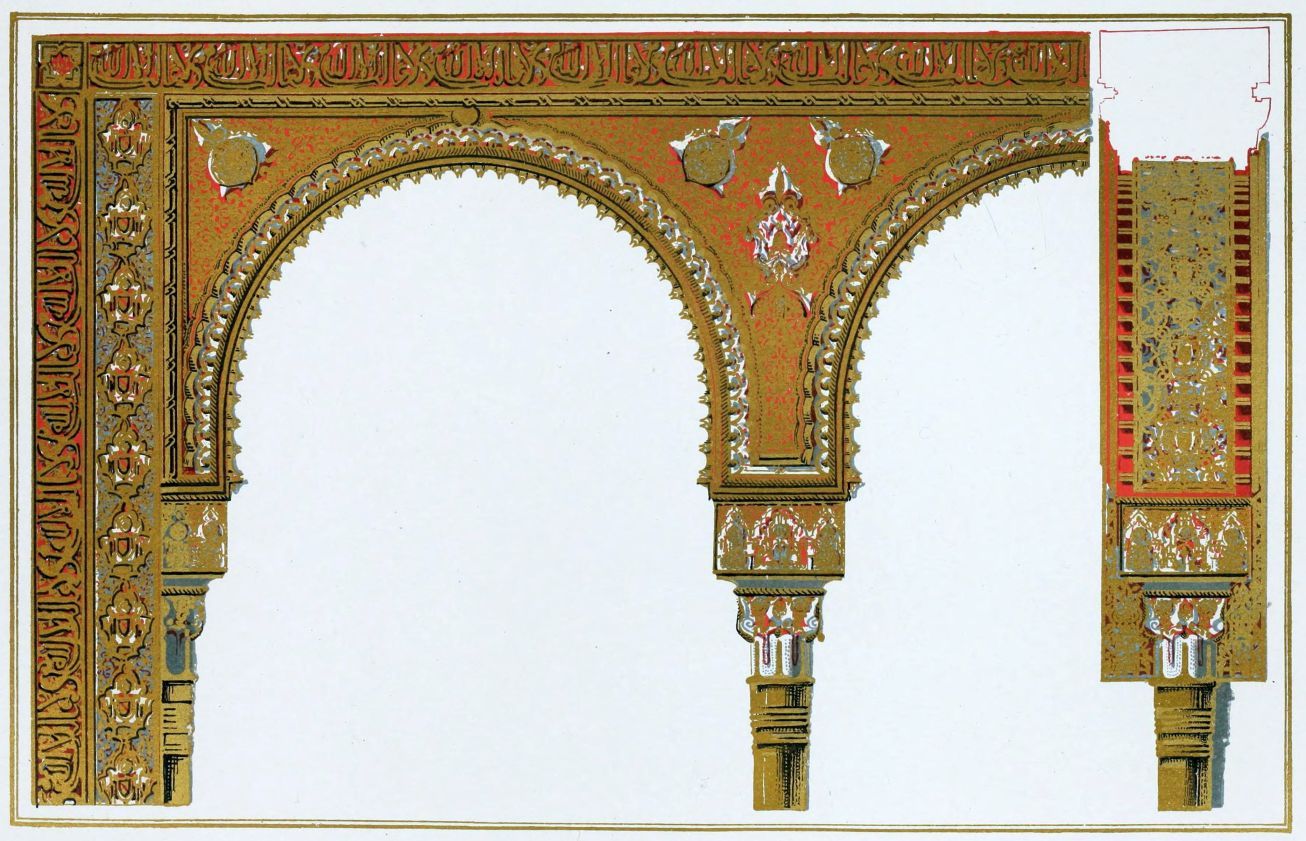
PLATE XXXIX.
No. 48.
Details of the Arches, Hall of the Abencerrages.
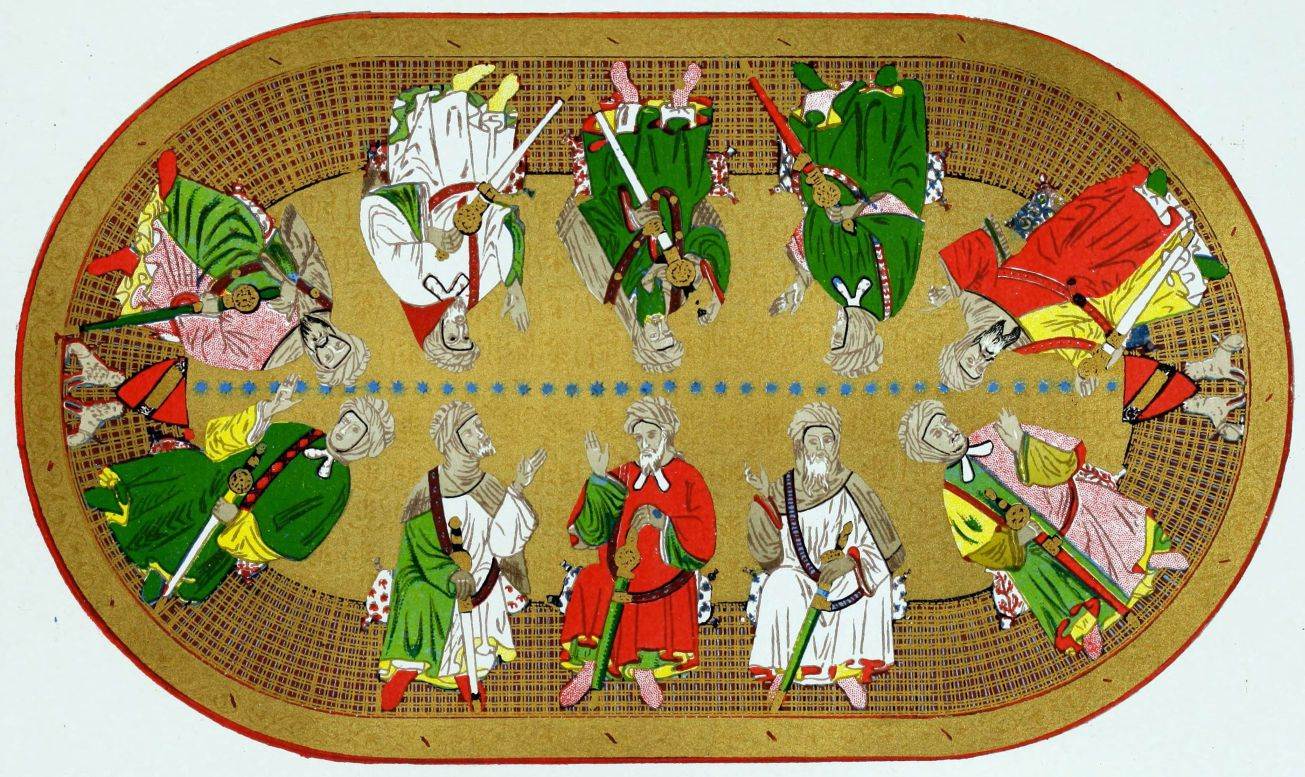
PLATE XL.
No. 49.
Centre Painting on the Ceiling, Hall of Justice.
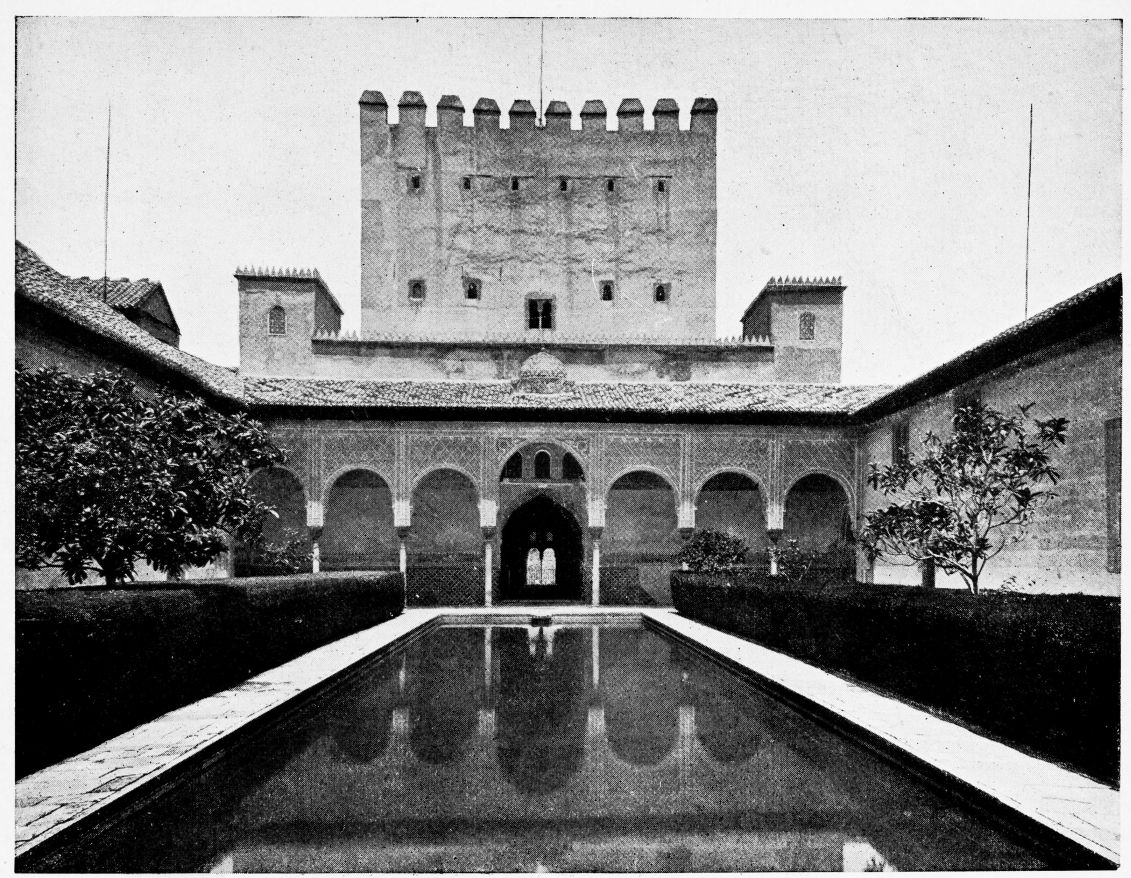
THE COURT OF THE FISH-POND; OR, OF THE MYRTLES.
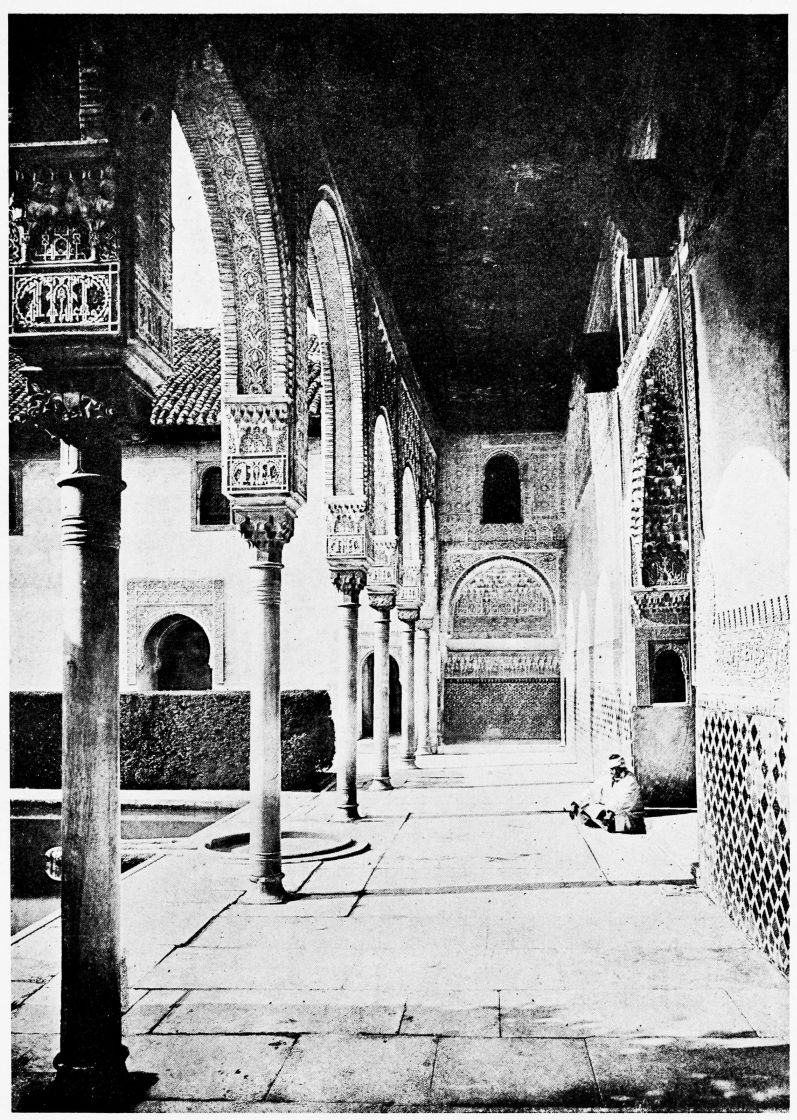
GALLERY, THE COURT OF THE MYRTLES.
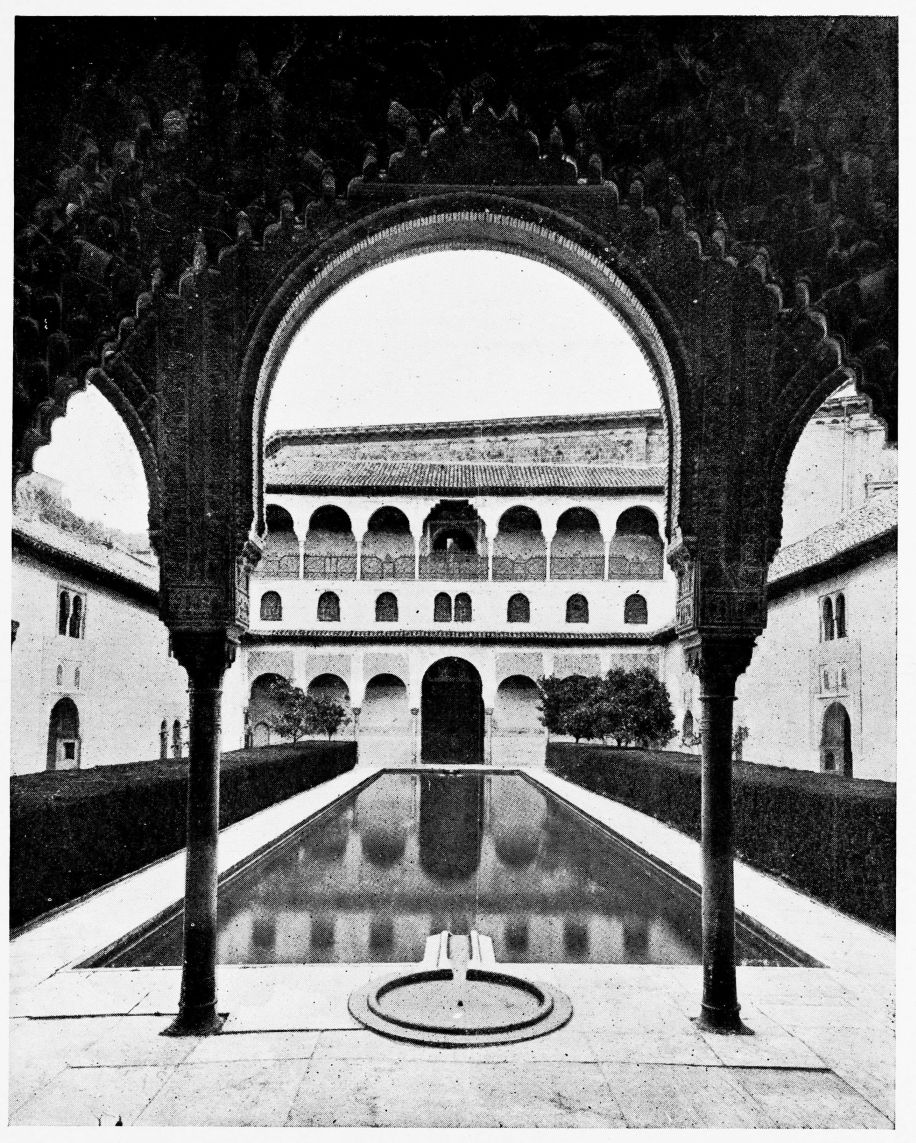
THE COURT OF THE FISH-POND; OR, OF THE MYRTLES.
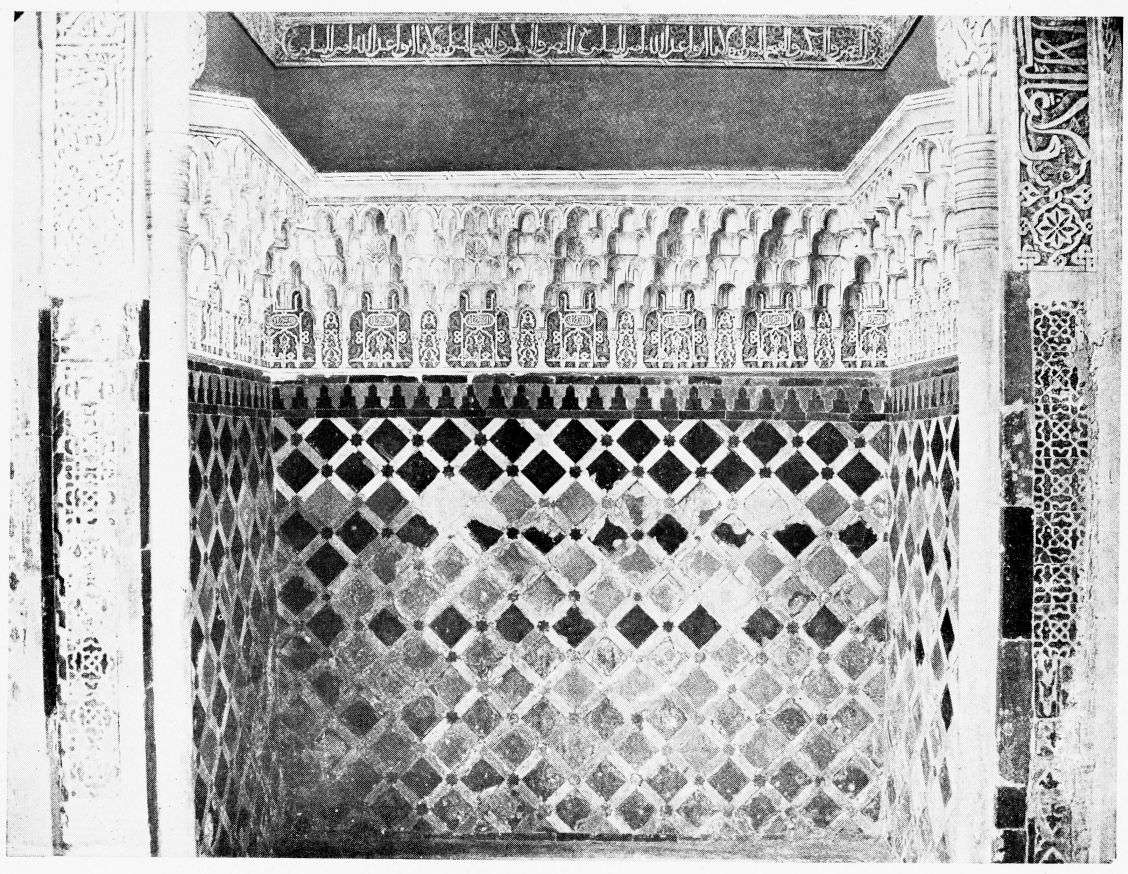
DETAILS OF THE GALLERY IN THE COURT OF THE FISH-POND; OR, OF THE MYRTLES.
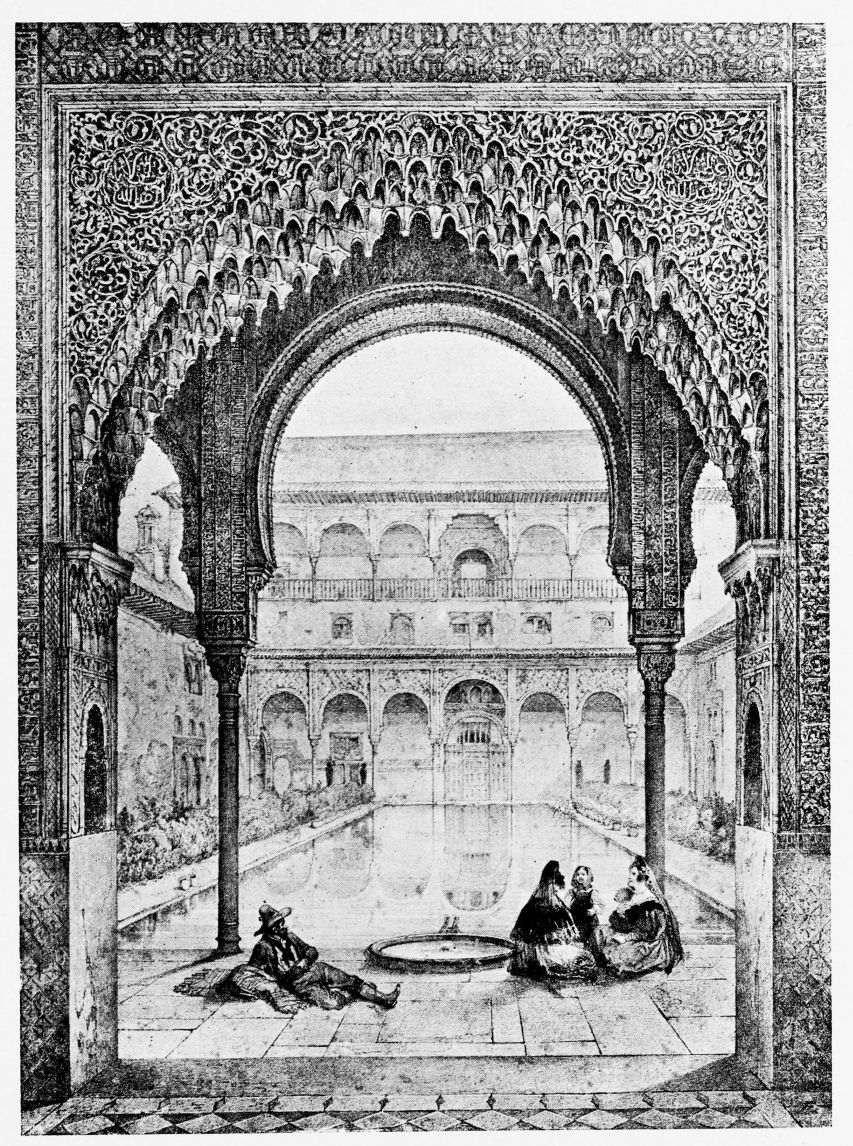
COURT OF THE FISH-POND.
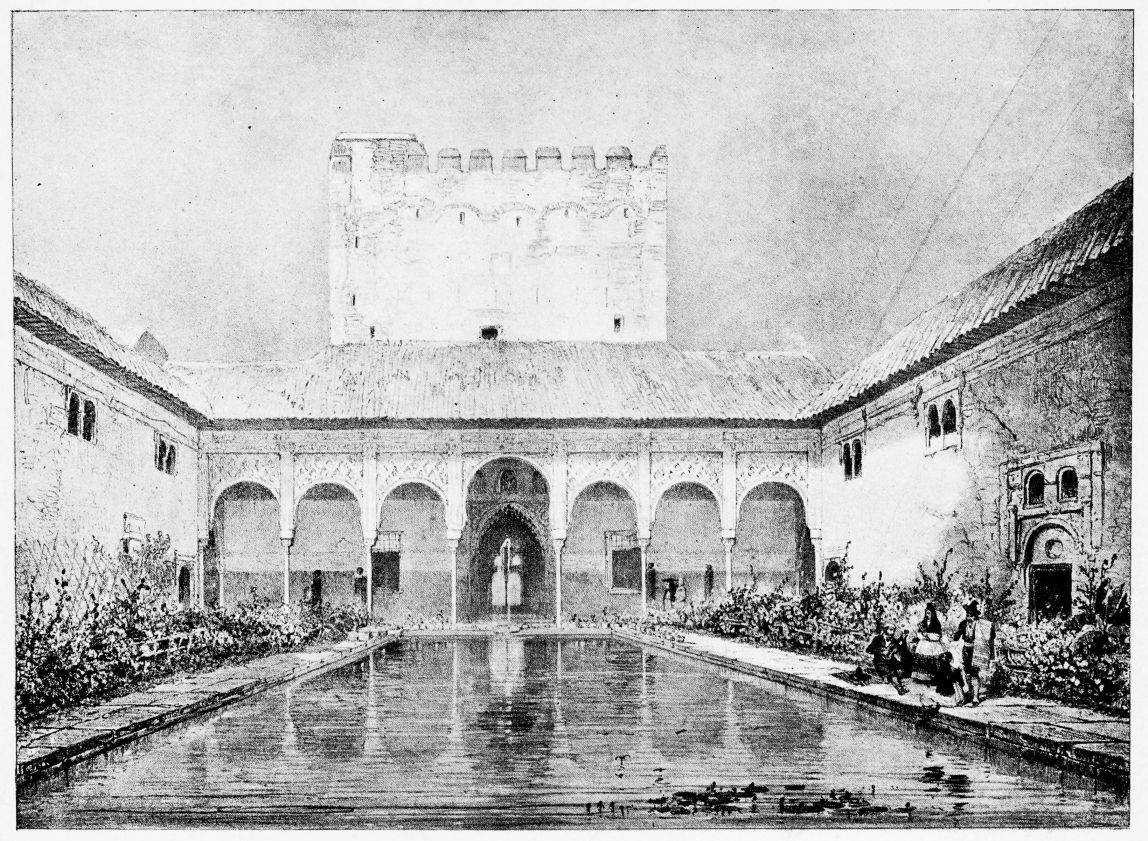
ENTRANCE TO THE COURT OF THE FISH-POND.
ORNAMENT IN THE COURT OF THE FISH-POND.
ought to be flat, and are not now Moorish; do not pause to imagine the pierced marble balustrade that once walled-in this bathing-place of the dark-skinned people; nor picture glowing Bathsebas—Rubens’ group of floating, and laughing Sultánas, with female black slaves watching their gambols from under the shady portico. Air and water are the perpetual treasures of this place, and I tasted them both gratefully as I strode under the pointed arches, away from the burning lashes of the sun that drove me under cover.”
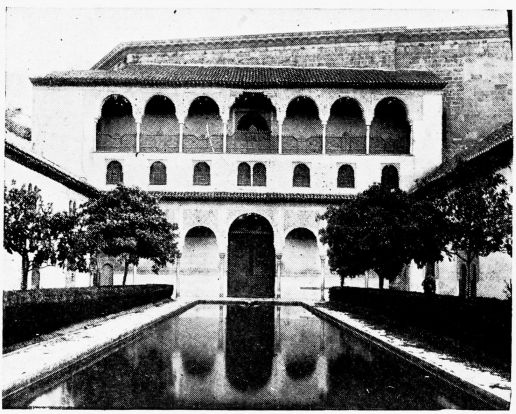
THE COURT OF THE FISH-POND; OR, OF THE MYRTLES.
The transverse section of the Court, looking towards the palace of Charles V. (see p. 356), forms a beautiful arcade: the slender columns which support the arches would appear unequal to their superincumbent weight were not the spandrils lightened by perforations. The construction of these arches is remarkable for its simplicity. Over the columns, which are of white marble, are built brick piers, and the spandrils of the arches are filled in with tiles placed diagonally. To these are attached perforated plaster ornaments, which give a singularly light and elegant appearance to the arches, and at the same time, by freely admitting currents of air, distribute a delicious coolness through the Courts.
It will be observed that the ornaments in plaster, with which the walls of the Court of the Fish-pond are covered, are in a better state of preservation than similar decorations in other parts of the Palace.
The windows over the entrance doorway are formed of ribs of plaster, and it is thought that these were once filled with stained glass. No traces of such glazing can now be discovered; the conjecture seems to have arisen from the fact that a wall here, next the Hall of Ambassadors, has similar blank windows in which small spaces are painted of various colours. Between the windows, and at the angles, are four escutcheons of the Kings of Granada with the oft-repeated motto: “There is no Conqueror but God;” the whole being enclosed within a cipher, formed by the word signifying “Grace” written twice in Cufic characters, and so interwoven that it may be read from right to left, and from left to right. On the ribs of the window is the word signifying “Blessing,” in Cufic characters, with this peculiarity, that the first two letters are enclosed within a cipher formed by the two last. This device also is so ingeniously written that the word may be read both ways. On six escutcheons, at the sides, the word signifying “Blessing” is treated in the same skilful manner.
Immediately over the Mosaic under the gallery is an inscription of twelve verses in African characters, full of Oriental hyperbole, but perhaps inferior in composition to those already selected from the Hall of The Two Sisters.
Under the galleries, at the north and south ends of the Court, are four recesses, profusely ornamented, elaborate, and
THE COURT OF THE FISH-POND.
beautiful; well preserved, and retaining much of their original colour.
From amongst the inscriptions of the Court of the Fish-pond it may be permitted to print two or three:
“Go and tell true believers that Divine help and ready victory are reserved for them. (From the sixty-first chapter of the Koràn).
“I am like the nuptial array of a bride, endowed with every beauty and perfection.
“Truly, Ibn Nasr is the sun, shining in splendour;
“May he continue in the noon-tide of his glory even unto the period of his decline.”
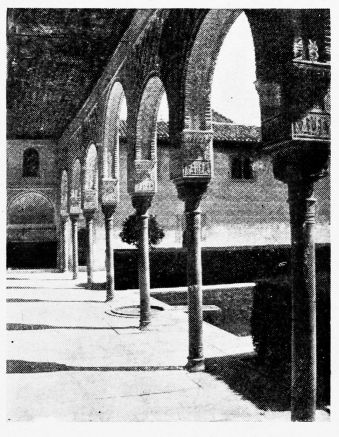
GALLERY IN THE COURT OF THE FISH-POND; OR, OF THE MYRTLES.
In the Court of the Fish-pond is an arch which differs in character from all others existing in the Alhambra: it has the peculiarity of presenting one surface only of decoration, with a principal or guiding figure made out by colours. The ornaments bear a much nearer resemblance to natural forms than in other parts of the Palace; and the whole arch has more of the Persian character of decoration.
PATIO DE LOS LEONES—THE COURT OF THE LIONS.
“From the lower end of the Court of the Alberca,” says Irving, “we passed through a Moorish archway into the renowned Court of Lions. There is no part of the edifice that
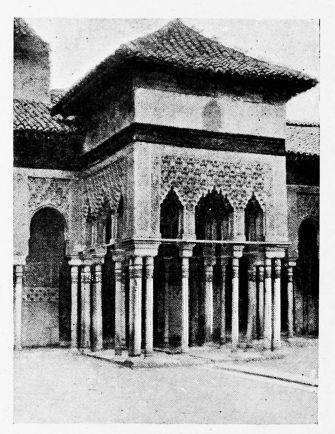
ENTRANCE TO THE COURT OF THE LIONS.
gives a more complete idea of its original beauty and magnificence, for not any portion has suffered so little from the ravages of time. In the centre stands the fountain famous in song and story. The alabaster basins still shed their diamond drops; and the twelve lions which support them cast forth their crystal streams as in the days of Boabdil. When one looks upon the fairy tracery of the peristyles, and the apparently fragile fret-work of the walls, it is difficult to believe that so much has survived the wear and tear of centuries, the shocks of earthquake, the violence of war, and the quiet, though no less baneful, pilferings of the tasteful traveller: it is almost sufficient to excuse the popular tradition, that the whole is protected by a magic charm.”
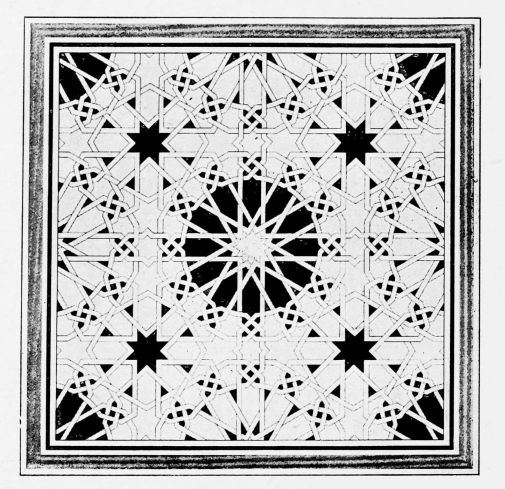
MOSAIC, SOUTH SIDE OF THE COURT OF THE LIONS.
The Court of the Lions, takes its name from the fountain in the centre supported by twelve sculptured lions. The Court is a parallelogram of 100 feet by 50 feet, and is surrounded by a portico, with small pavilions at either end. The portico and pavilions consist of 128 columns, supporting arches of the most delicate and elaborate construction, which still retain much of their original beauty. The irregularity in the arrangement of the
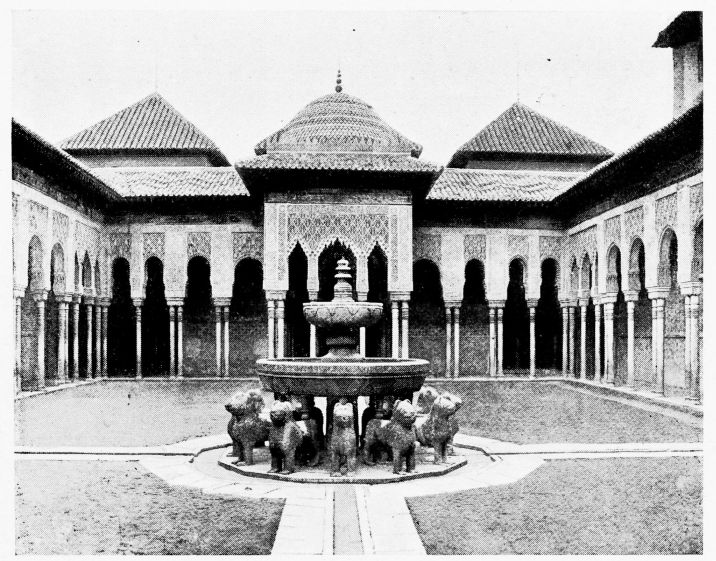
FOUNTAIN AND EAST TEMPLE IN THE COURT OF THE LIONS.
columns, which are placed sometimes singly, and sometimes in pairs, does not detract from the general harmony; but, on the contrary, a charming effect is produced by this capricious departure from uniformity. The capitals, though similar in outline, offer a great variety in their foliage; and though the same design is more than once repeated in this Court, no attempt appears to have been made towards a symmetrical arrangement.
The ceiling of the portico is decorated in the most complex manner, the stucco being laid on with inimitable delicacy—it is so cunningly handled as to exceed belief.
The walls are covered, to a height of five feet, with tiles of blue and yellow chequy, with a border of small escutcheons enamelled blue and gold, bearing an Arabic motto on a Bend.
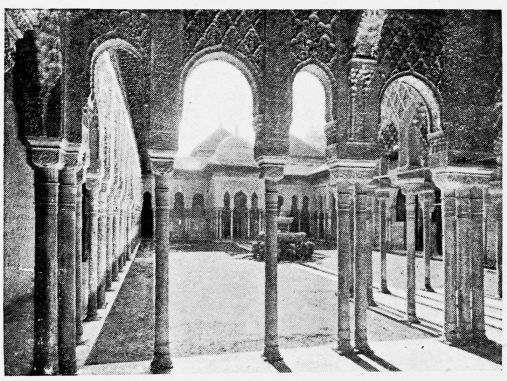
THE COURT OF THE LIONS.
About each arch is arabesque work, surrounded with a rim of characters, consisting, for the most part, of verses from the Koràn. Unhappily, a modern roof of red tiles disfigures this beautiful Court, which is the most highly-prized fountain-court in the Palace.
In the centre of the Court are the twelve marble lions, conventionally treated. Supported on the backs of the animals is the beautiful basin of the fountain—in form, a dodecagon—out of which rises a lesser basin. A large volume of water falling into
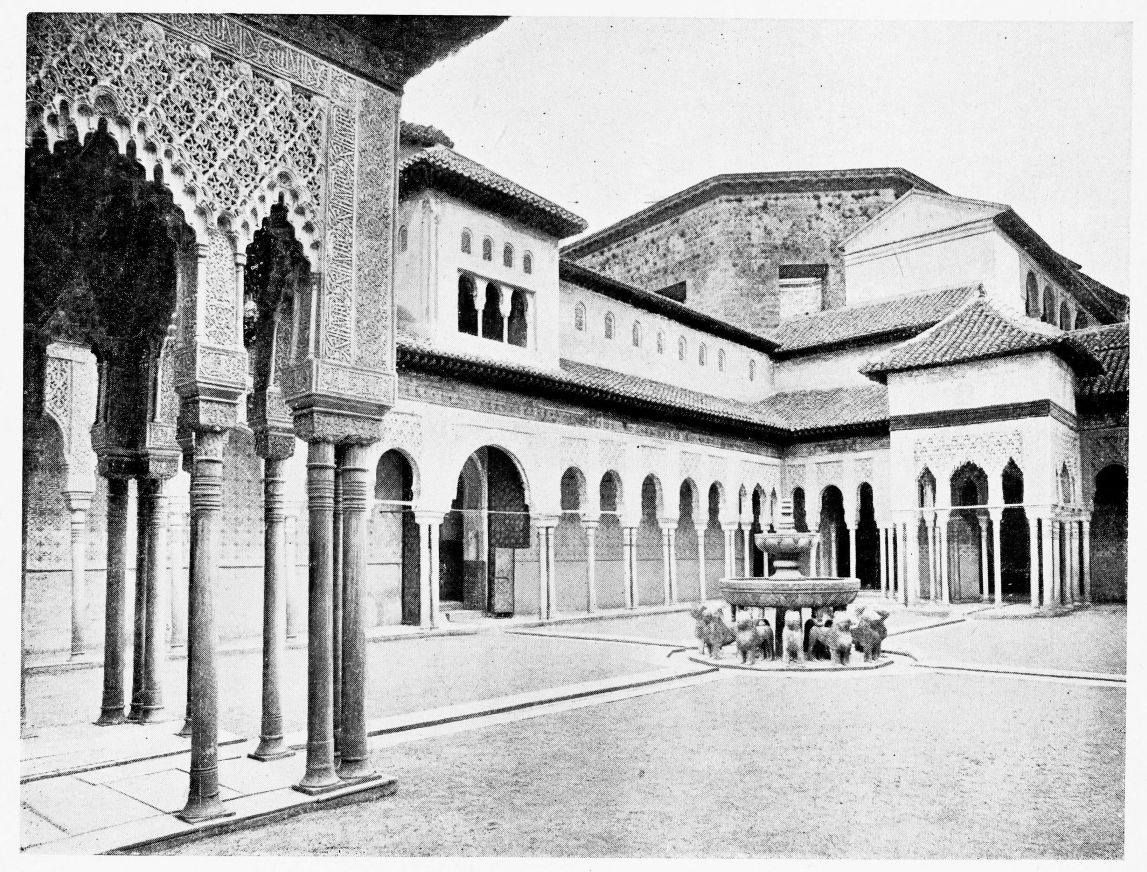
THE COURT OF THE LIONS.
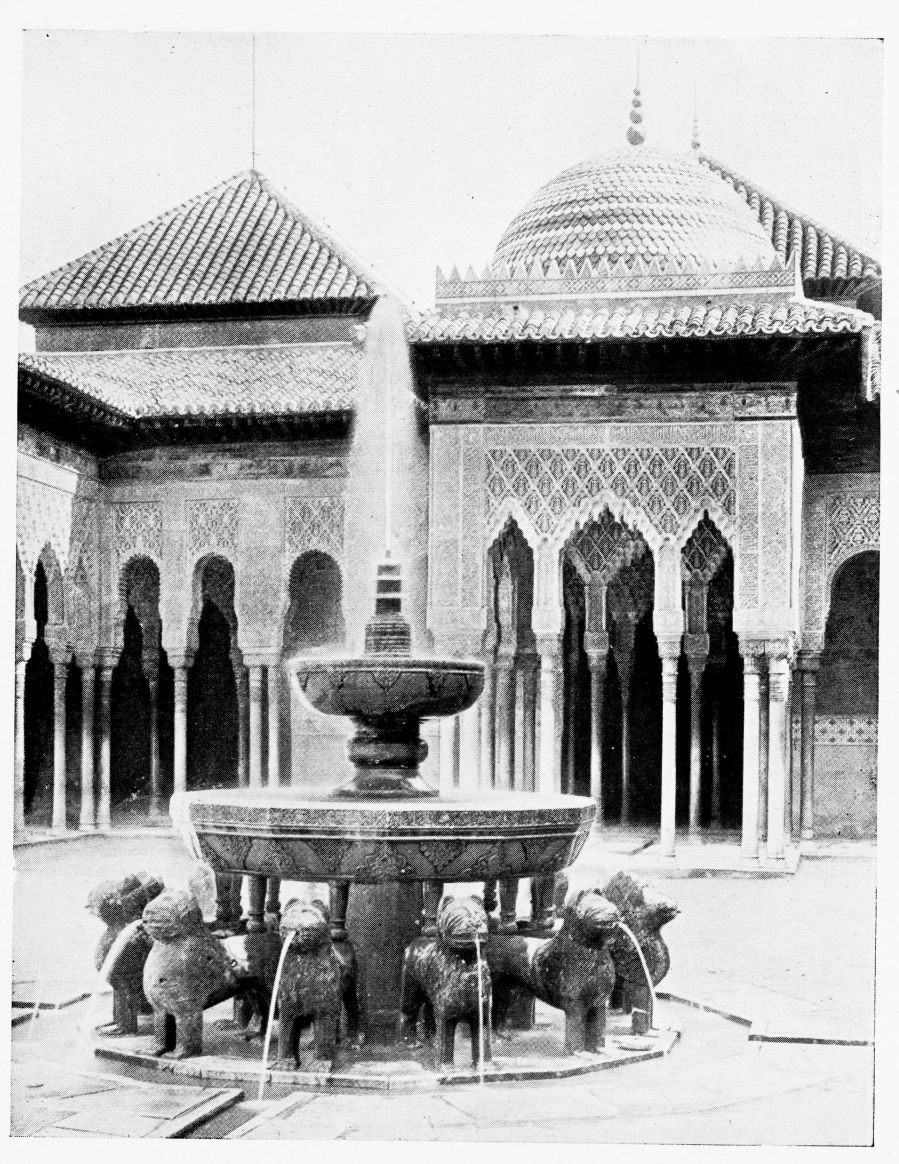
THE COURT OF THE LIONS.
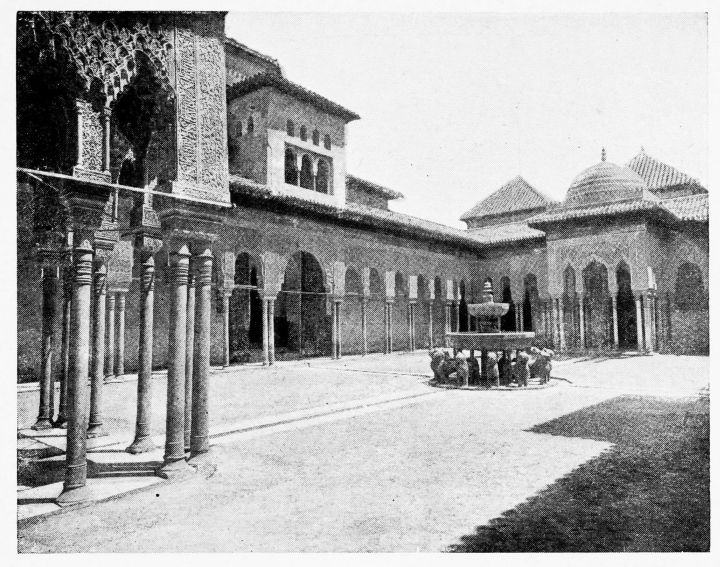
GENERAL VIEW OF THE COURT OF THE LIONS.
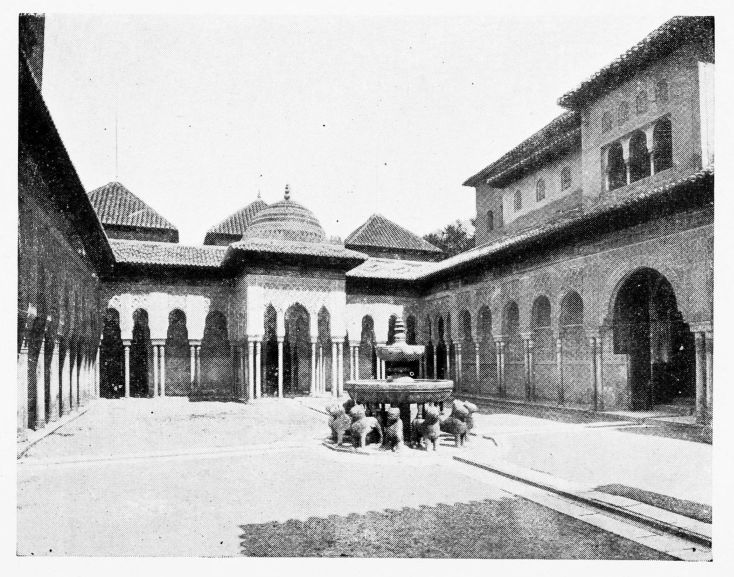
GENERAL VIEW OF THE COURT OF THE LIONS.
the basins, once issued from the mouths of the lions to a large reservoir, whence it was conveyed to the apartments of the Palace. Notwithstanding that these lions exhibit the want of development in the art of sculpture amongst the Arabs, they yet possess a spirited, if primitive, grace.
The inscription around the basin has been variously given: the rendering of Pascual de Gayángos is regarded as the most
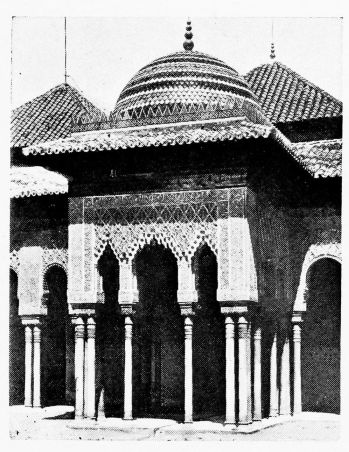
LITTLE TEMPLE IN THE COURT OF THE LIONS.
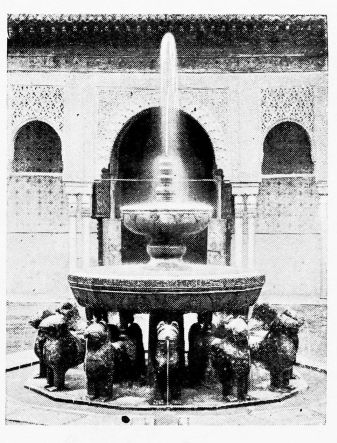
FOUNTAIN IN THE COURT OF THE LIONS.
authoritative. The verses, which may, perhaps, consist of twelve or so, are couched in the usual double-shotted language of the Oriental. Two or three are subjoined:
“Blessed be He who gave the Imam Mohammed a mansion which in beauty excels all other mansions.
“Look at this solid mass of pearl glistening all around, which falls within a circle of silvery froth, and then flows amidst translucent jewels of surpassing loveliness; exceeding the marble in whiteness, and the alabaster in transparency.
“O thou who beholdest these lions couching, fear not; life is wanting to enable them to show their fury.”
The salutary warning here given irresistibly reminds one of “the shallowest thick-skin of that barren sort” with whom the mad spirit, Robin Goodfellow, made such frolic—the immortal
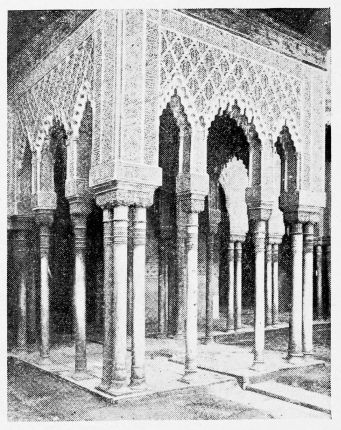
A LITTLE TEMPLE IN THE COURT OF THE LIONS.
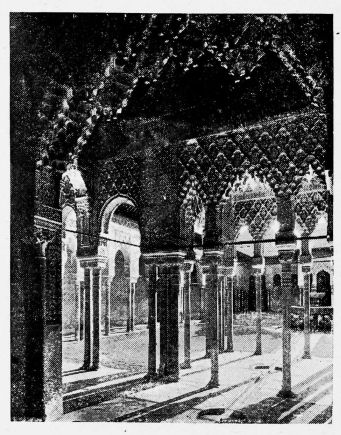
A PEEP INTO THE COURT OF THE LIONS.
Athenian weaver, who opines—“To bring in—God shield us!—a lion among ladies is a most dreadful thing; for there is not a more fearful wild-fowl than your lion living.” Yet the admonition may not have been altogether superfluous amongst the beauties of the hareem, who seldom contemplated graven images. It must not be forgotten, moreover, that the Mohammedans of Spain were somewhat lax in the matter of obedience to certain precepts of the Koràn.
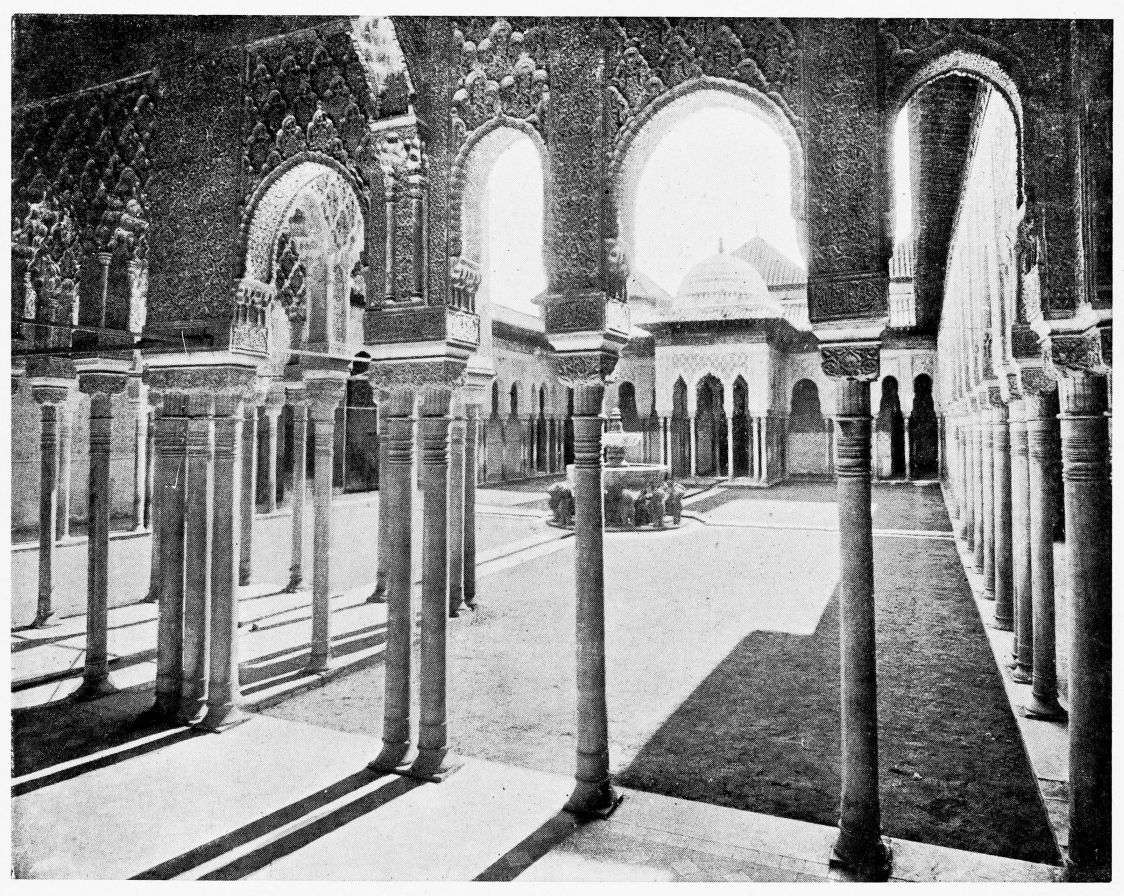
GENERAL VIEW OF THE COURT OF THE LIONS.
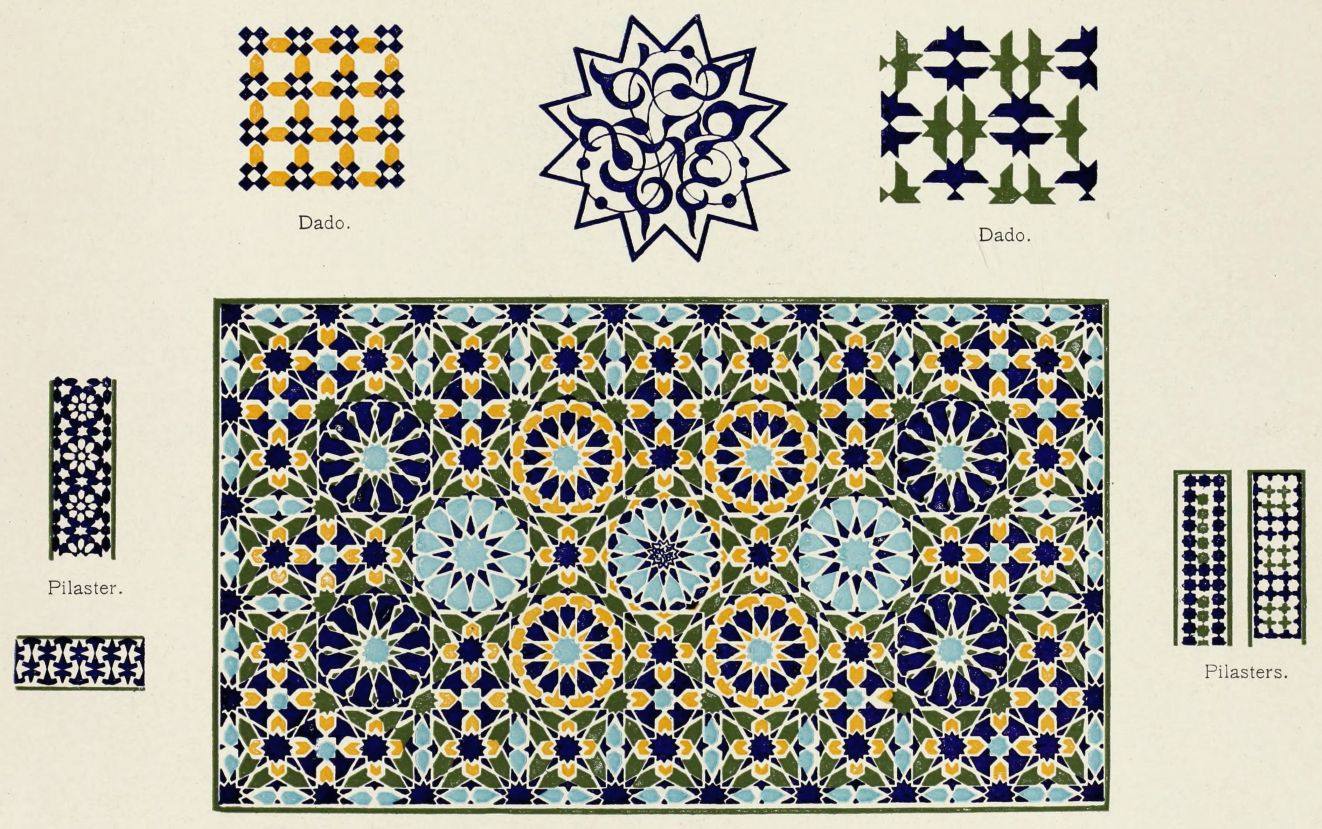
PLATE XLI.
Centre Ornament of the Window.
No. 50.
Mosaic Dado in centre window on the N. side, Hall of Ambassadors.
The recess or divan containing these beautiful Mosaics was, doubtless, the throne of the Moorish kings. The Mosaics are as perfect as when originally executed, and seem, indeed, to be imperishable. They are formed of baked clay squeezed into moulds of the different figures, glazed on the surface.
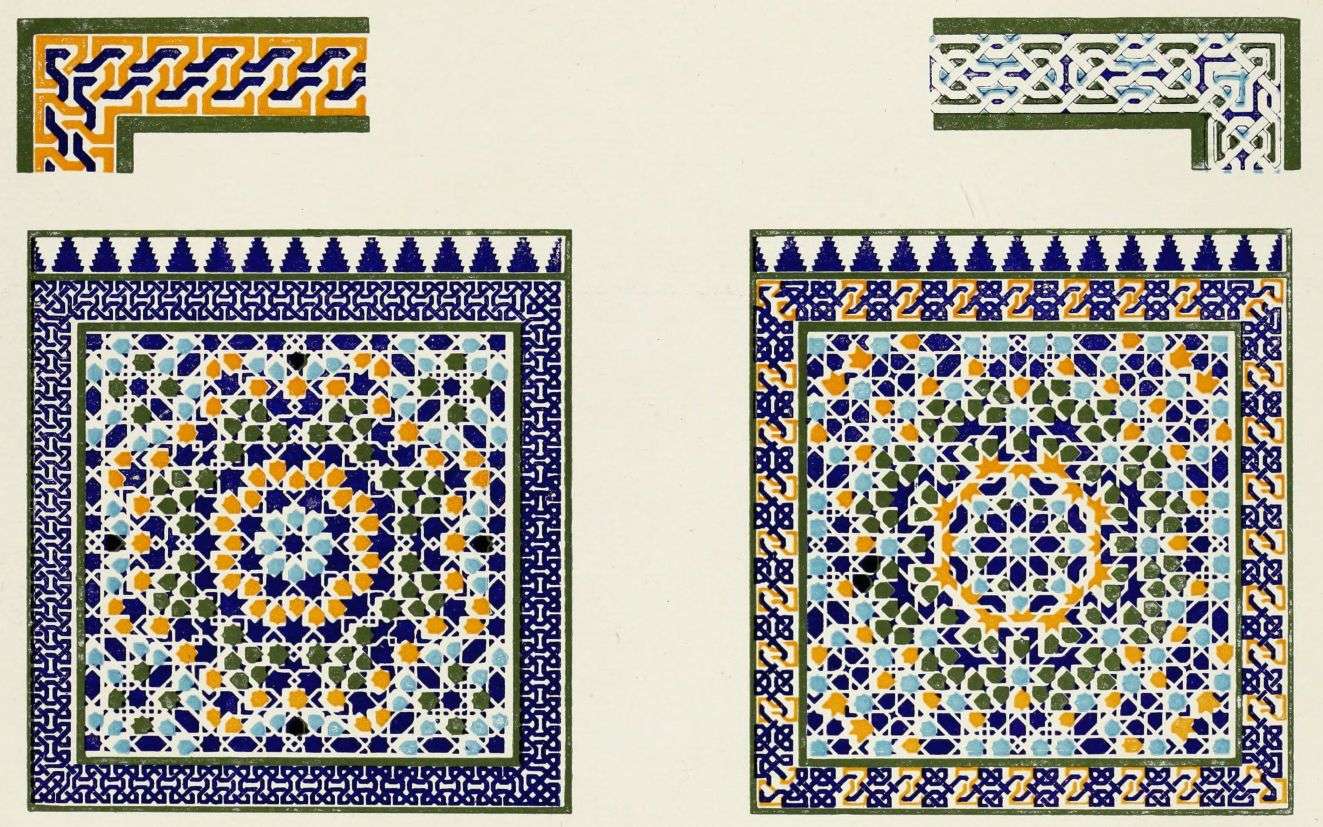
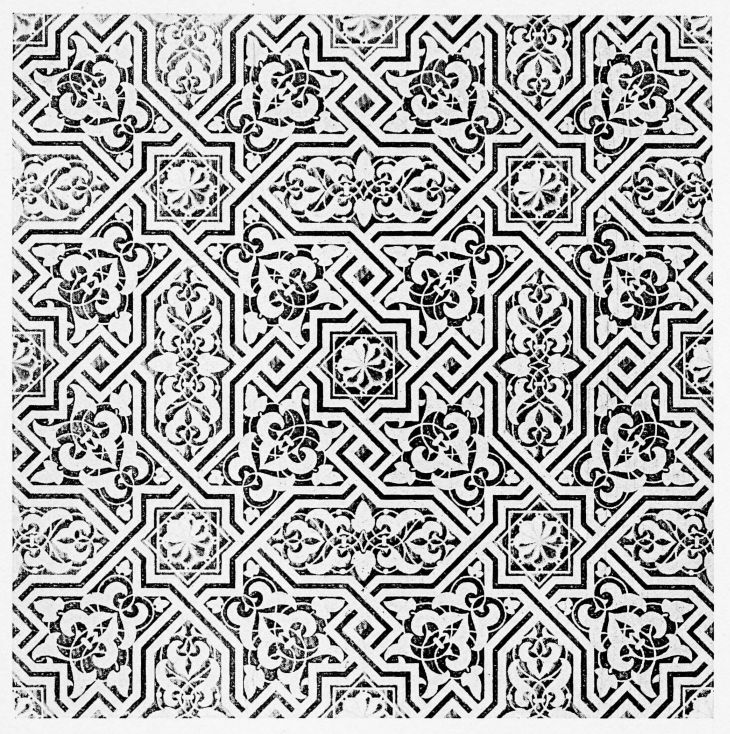
PLATE XLII.
No. 51.
Mosaic Dados on pillars between the windows, Hall of Ambassadors.
The Mosaic Dados on the pillars of the Hall of Ambassadors present a great variety in their patterns, although the component parts are in each the same.
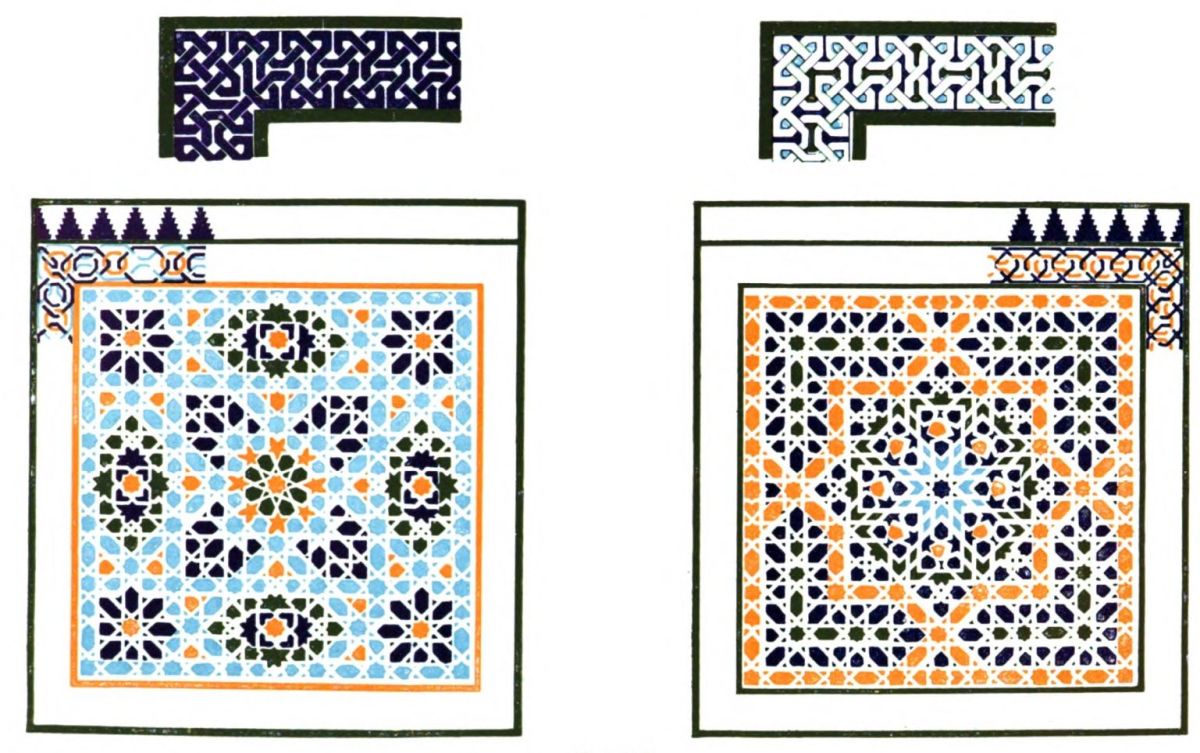
PLATE XLIII.
No. 52.
Mosaic Dados on pillars between the windows, Hall of Ambassadors.
Mosaics, though in appearance so different from those of the preceding plate, will be found on examination to be composed of the same pieces differently combined.
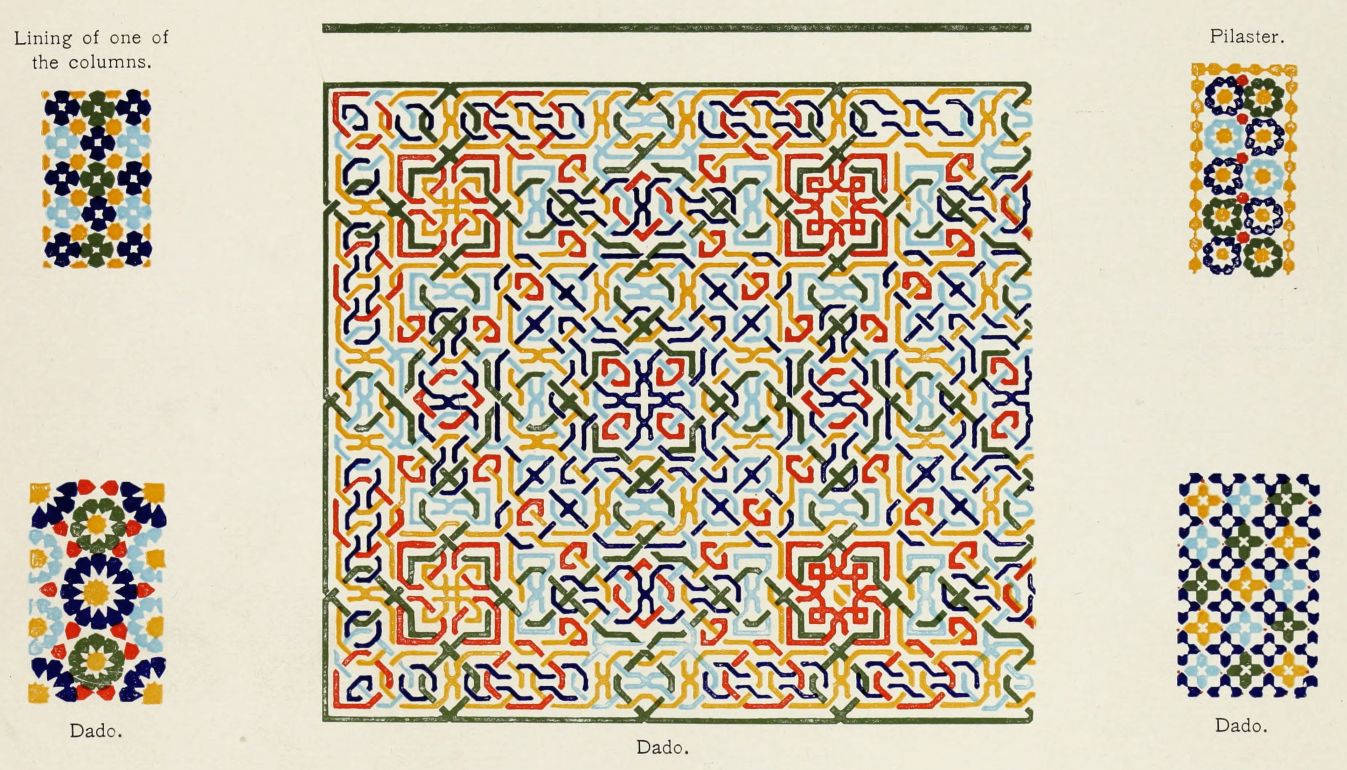
PLATE XLIV.
No. 53.
Mosaics in the Hall of the Two Sisters.
The beautiful Mosaic in the centre of this plate is part of the Dado of the Hall of the Two Sisters.
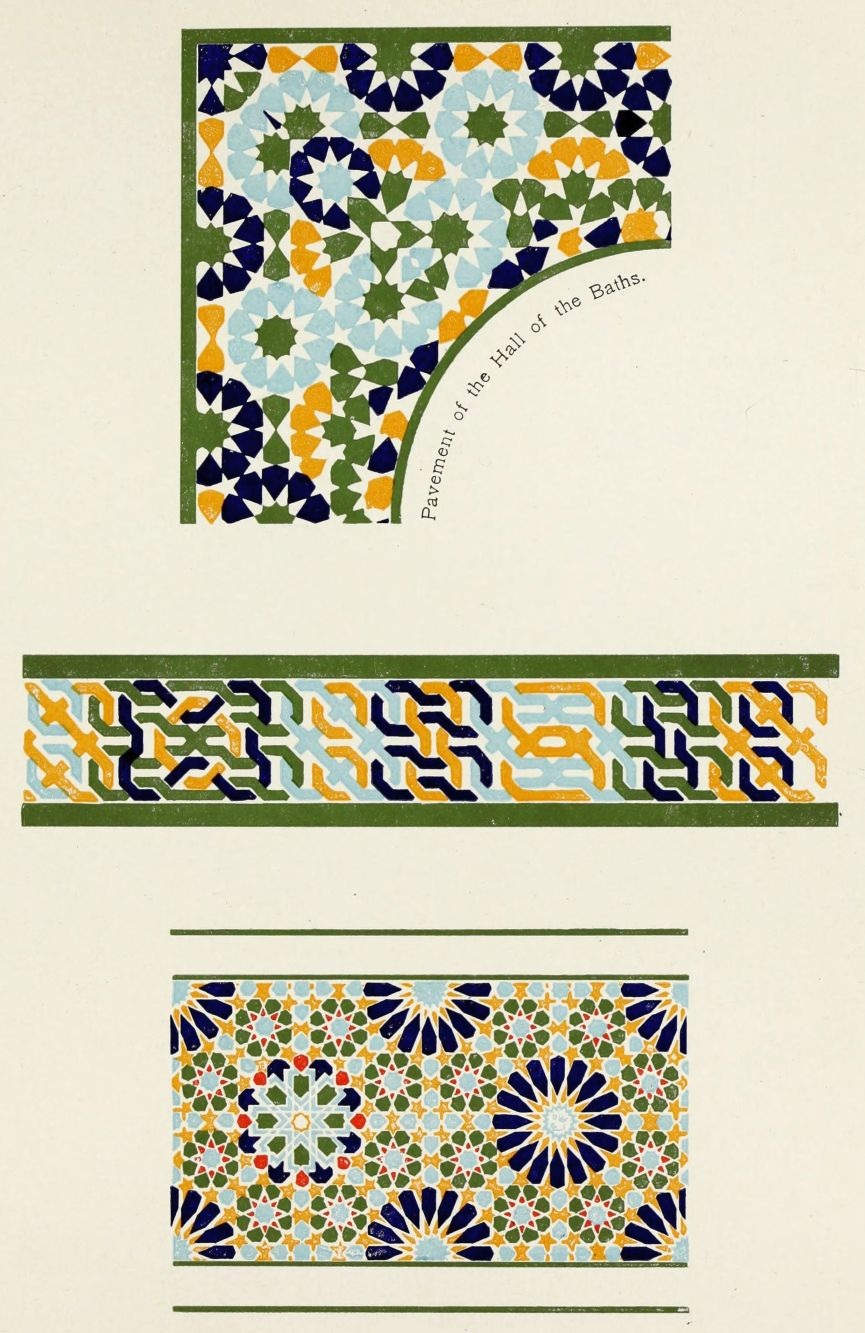
PLATE XLV.
Pavement of the Hall of the Baths.
No. 54.
Mosaic Dado round the internal walls of the Mosque.
Mosaics from the Mosque and the Hall of the Baths. The Mosaic Dados round the walls of the Mosque appear to be the only portions of the ancient private Mosque attached to the Palace which have been preserved intact in their original situation. The motto of the Kings of Granada, “There is no conqueror but God,” was replaced by “Nec plus ultra” of Charles V., when the Mosque was converted by him into a chapel. The beautiful Mosaic at the top of the plate is placed round the fountain of the Chamber of Repose of the Baths, described elsewhere.
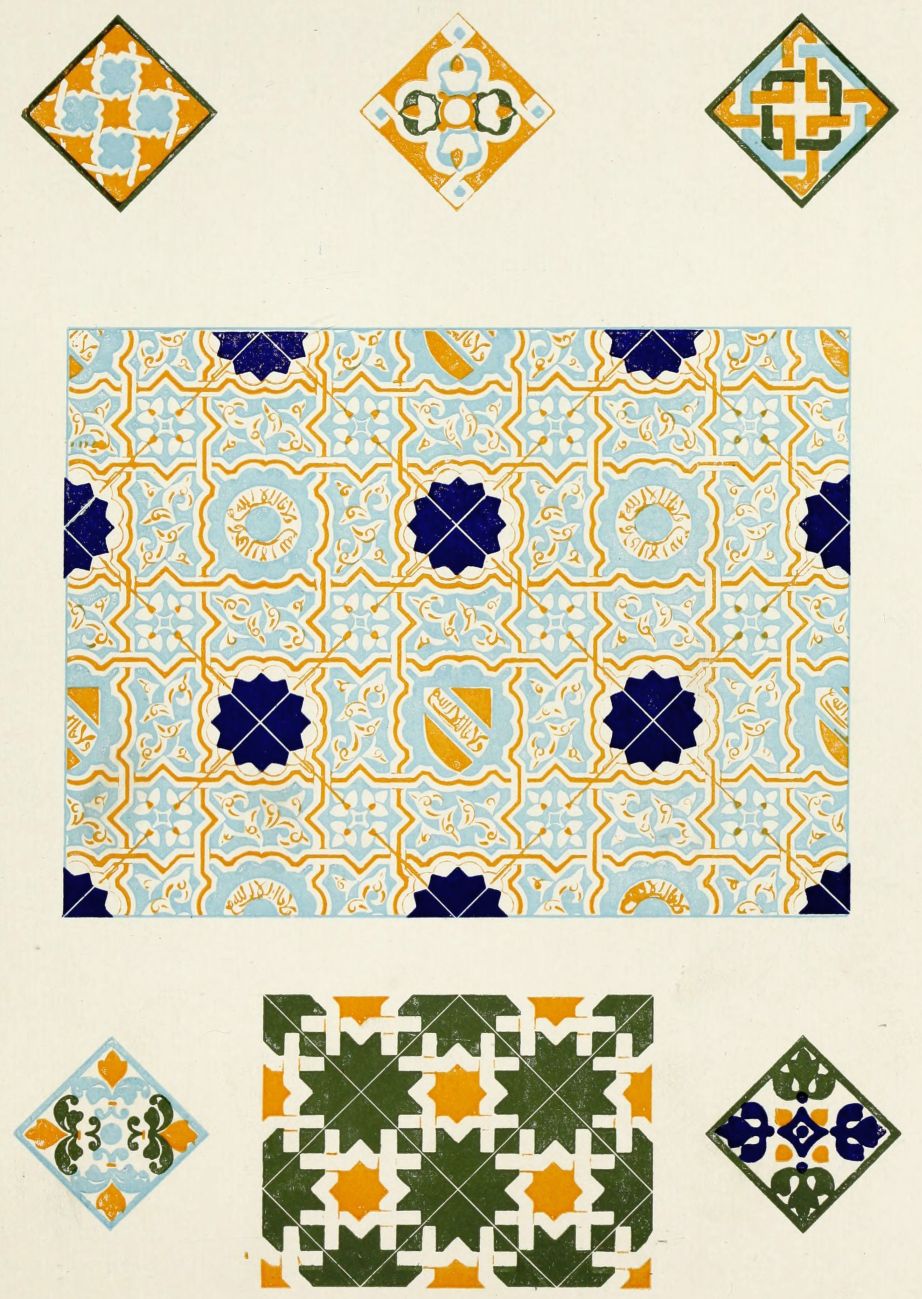
PLATE XLVI.
No. 55.
Azulejos. Painted Tiles.
On the floor of one of the alcoves of the Hall of Justice are to be seen the painted tiles delineated in the centre of this plate.
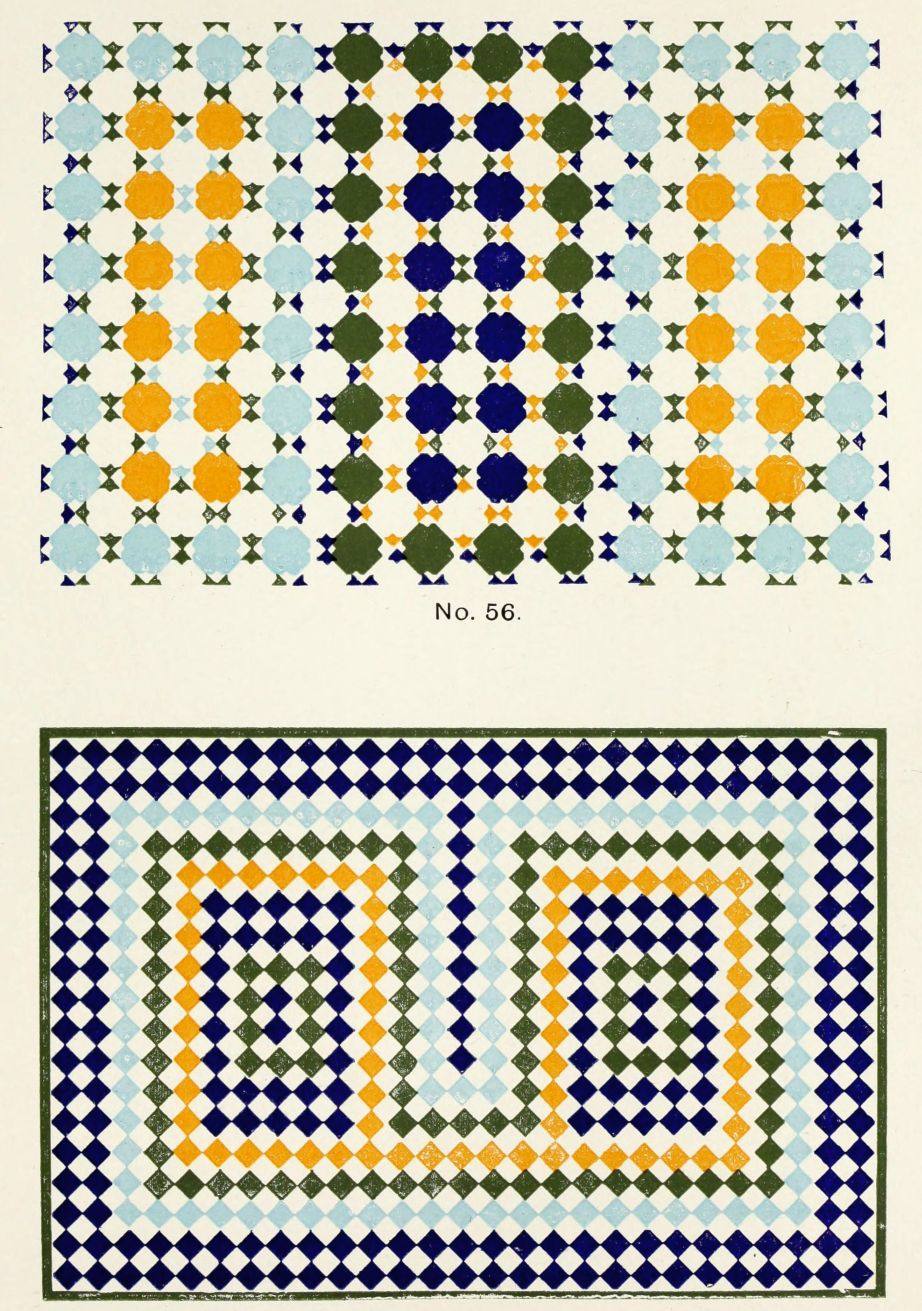
PLATE XLVII.
No. 56.
No. 57.
Mosaics in the Baths.

PLATE XLVIII.
No. 58.
Mosaic from the portico of the Generalife.
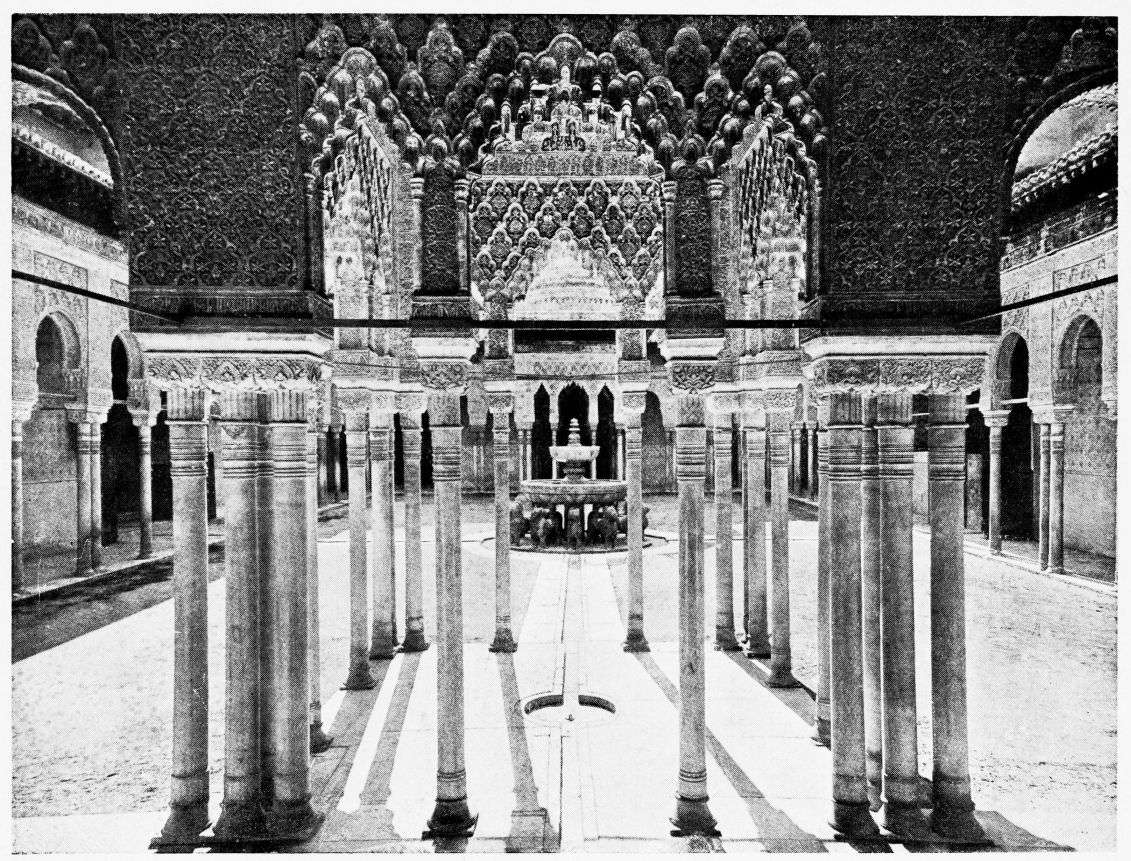
THE COURT OF THE LIONS, FROM THE WEST.
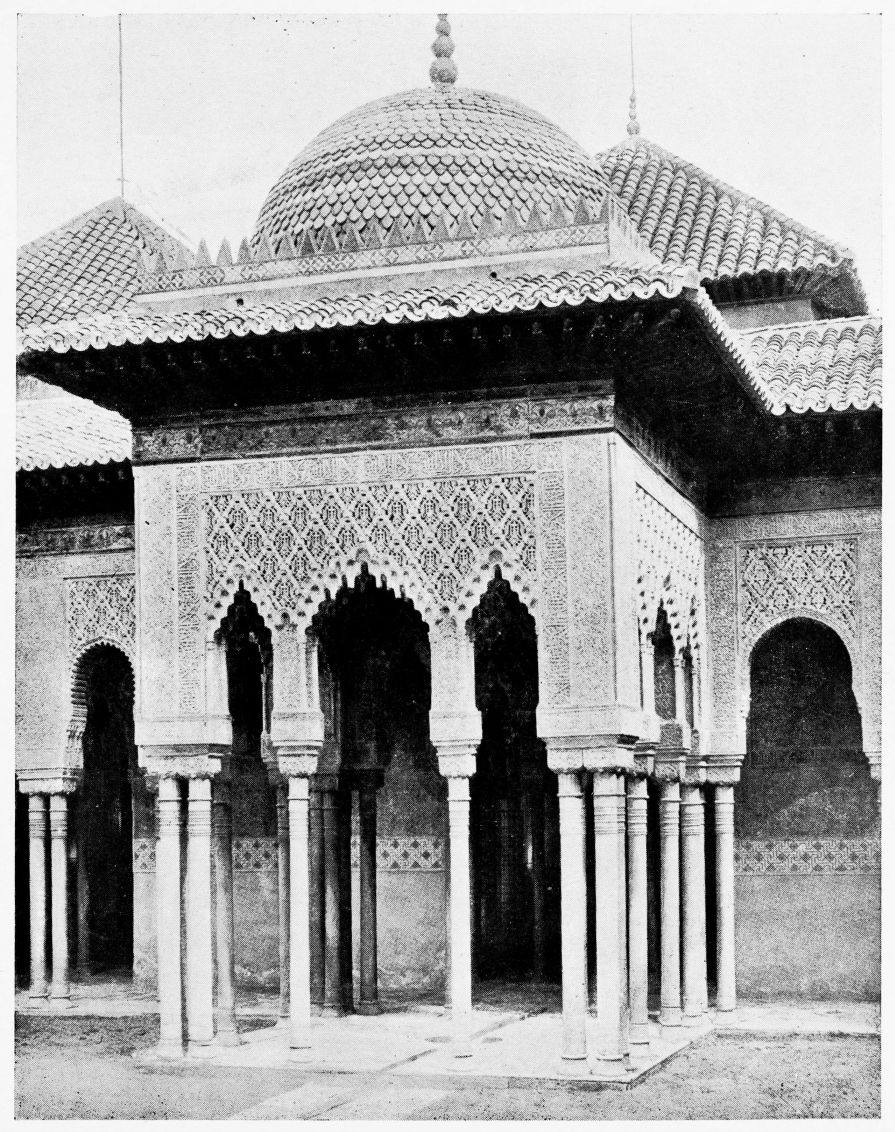
TEMPLE IN THE COURT OF THE LIONS.
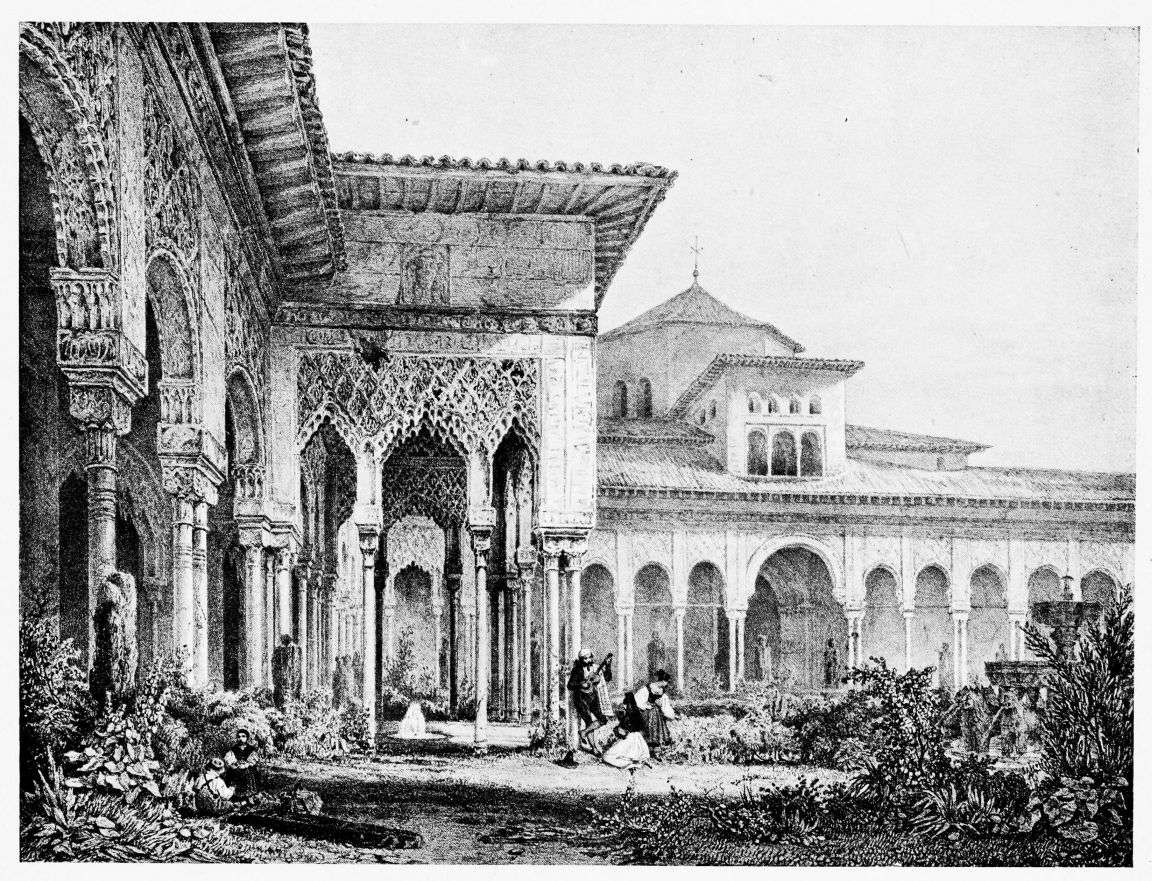
COURT OF LIONS.
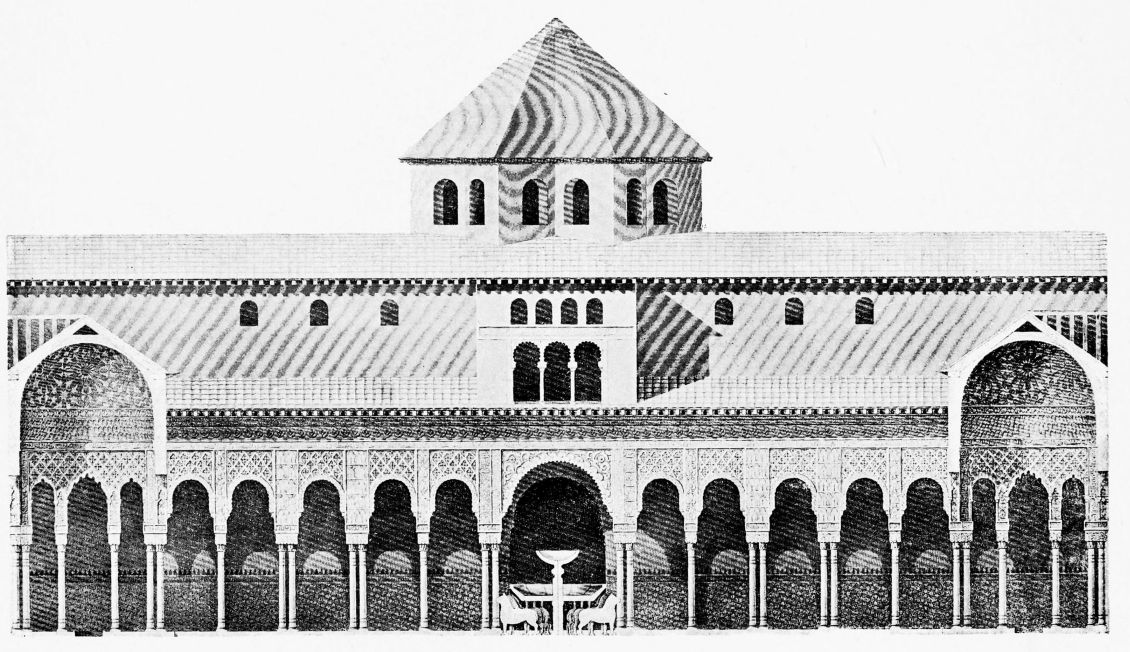
SIDE ELEVATION OF THE COURT OF THE LIONS AND FOUNTAIN.
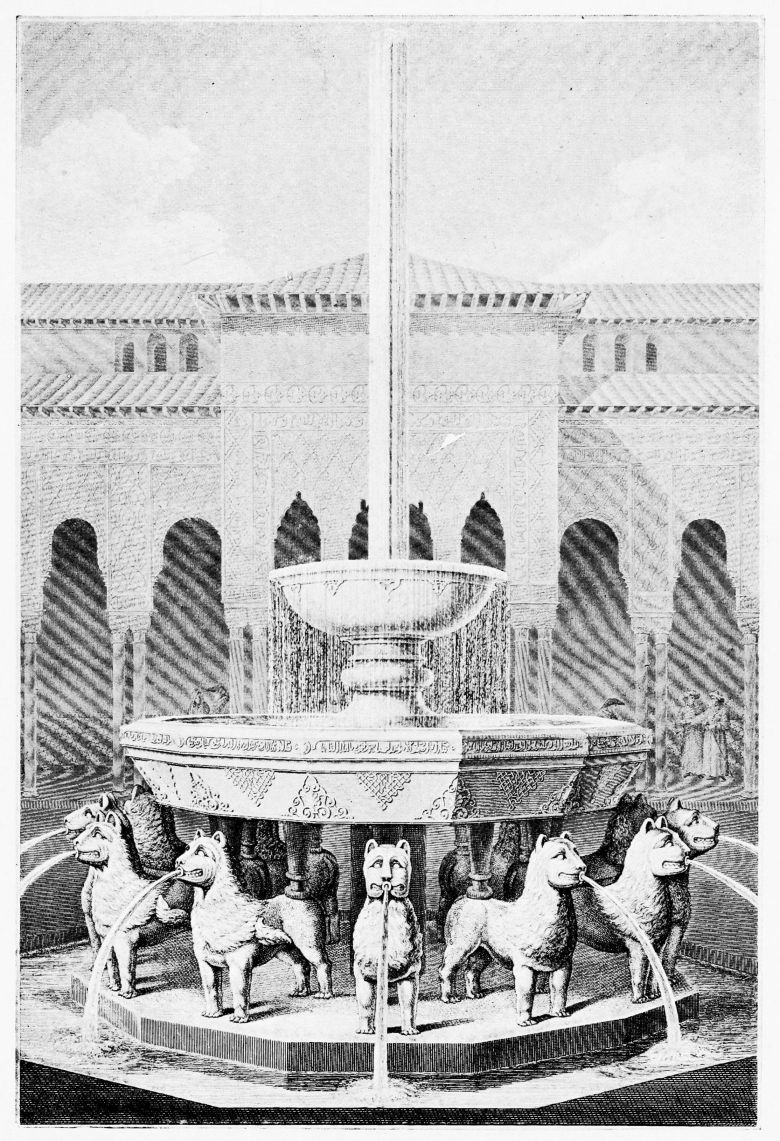
ELEVATION OF THE FOUNTAIN OF THE LIONS.
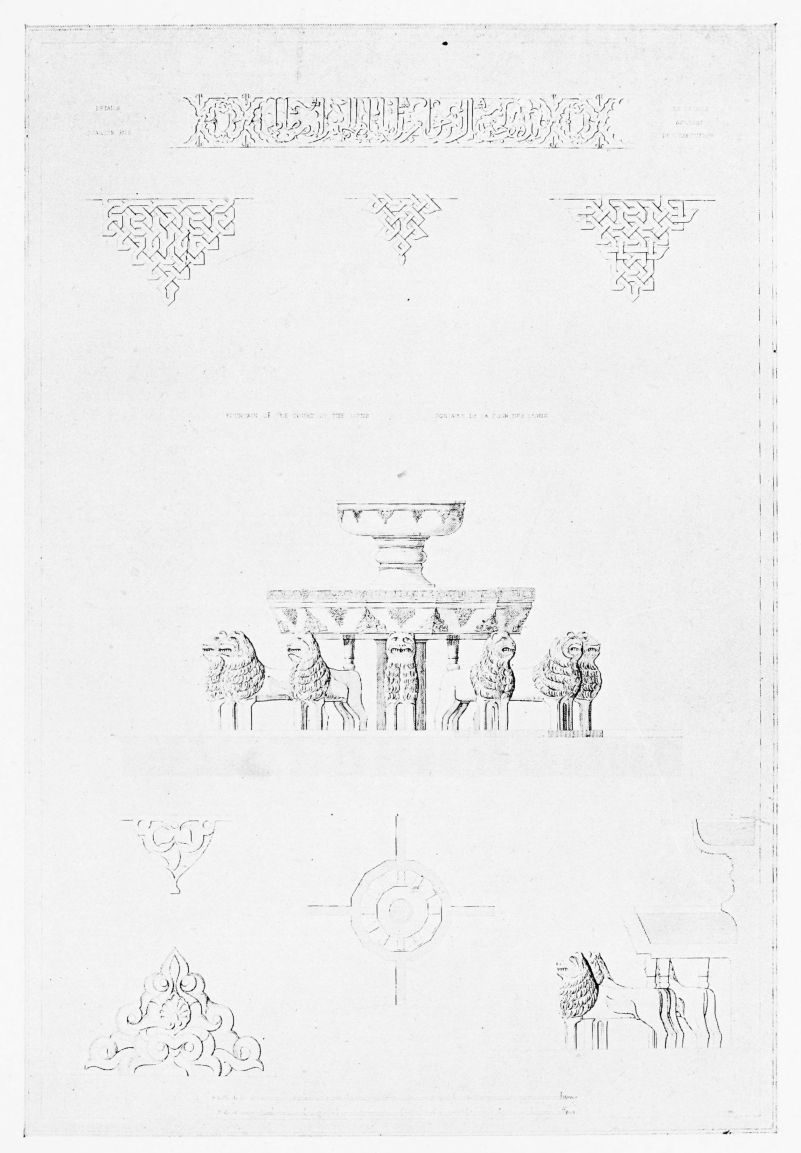
FOUNTAIN OF LIONS, WITH DETAILS OF THE ORNAMENT.
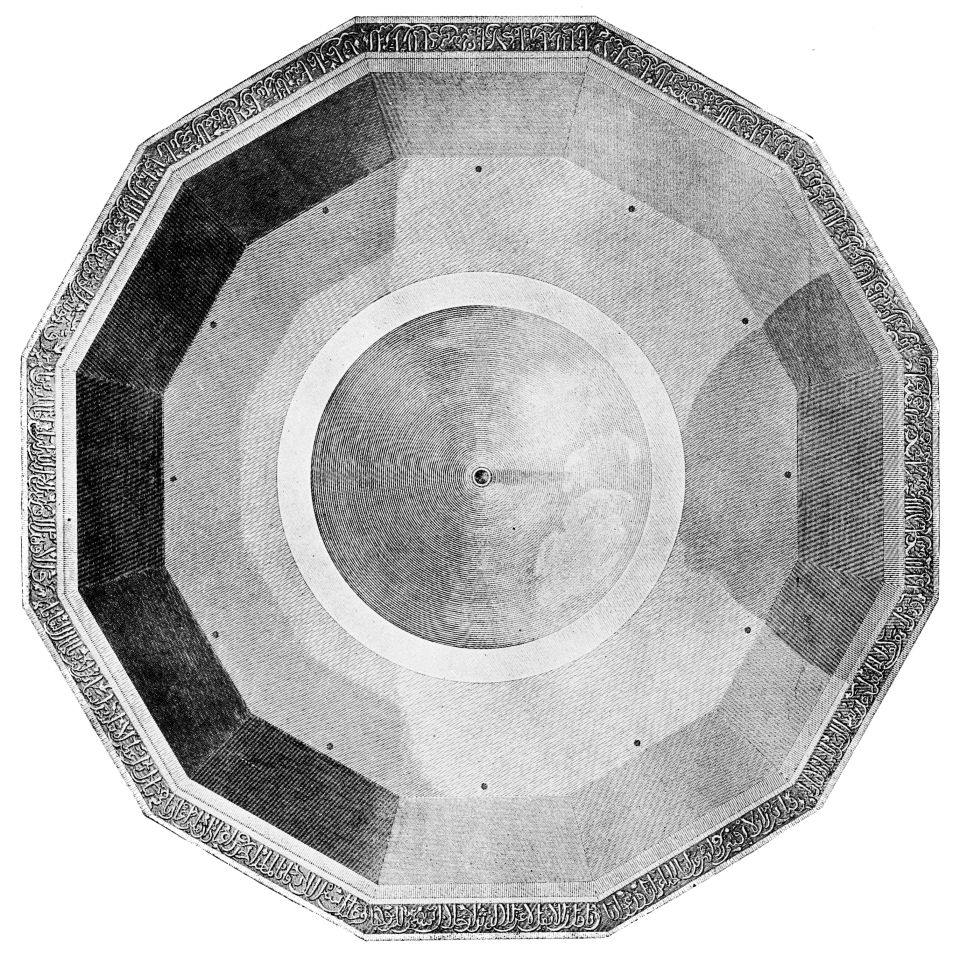
PLAN OF THE BASIN OF THE FOUNTAIN OF LIONS.
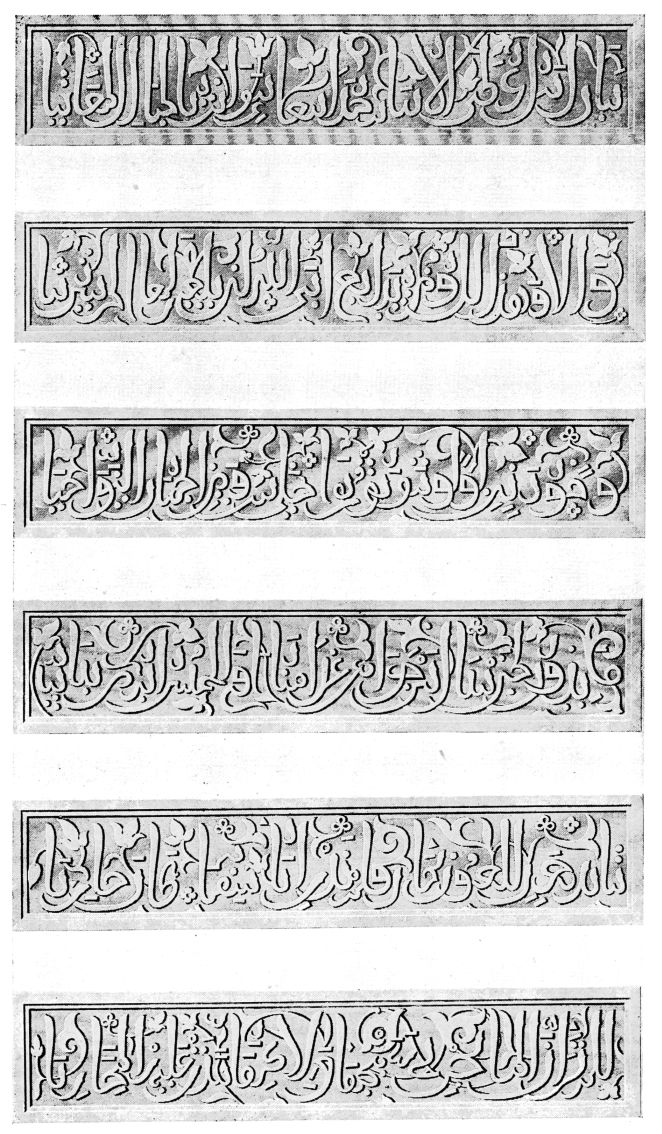
THE FIRST SIX VERSES OF THE INSCRIPTION AROUND THE BASIN OF THE FOUNTAIN OF LIONS.
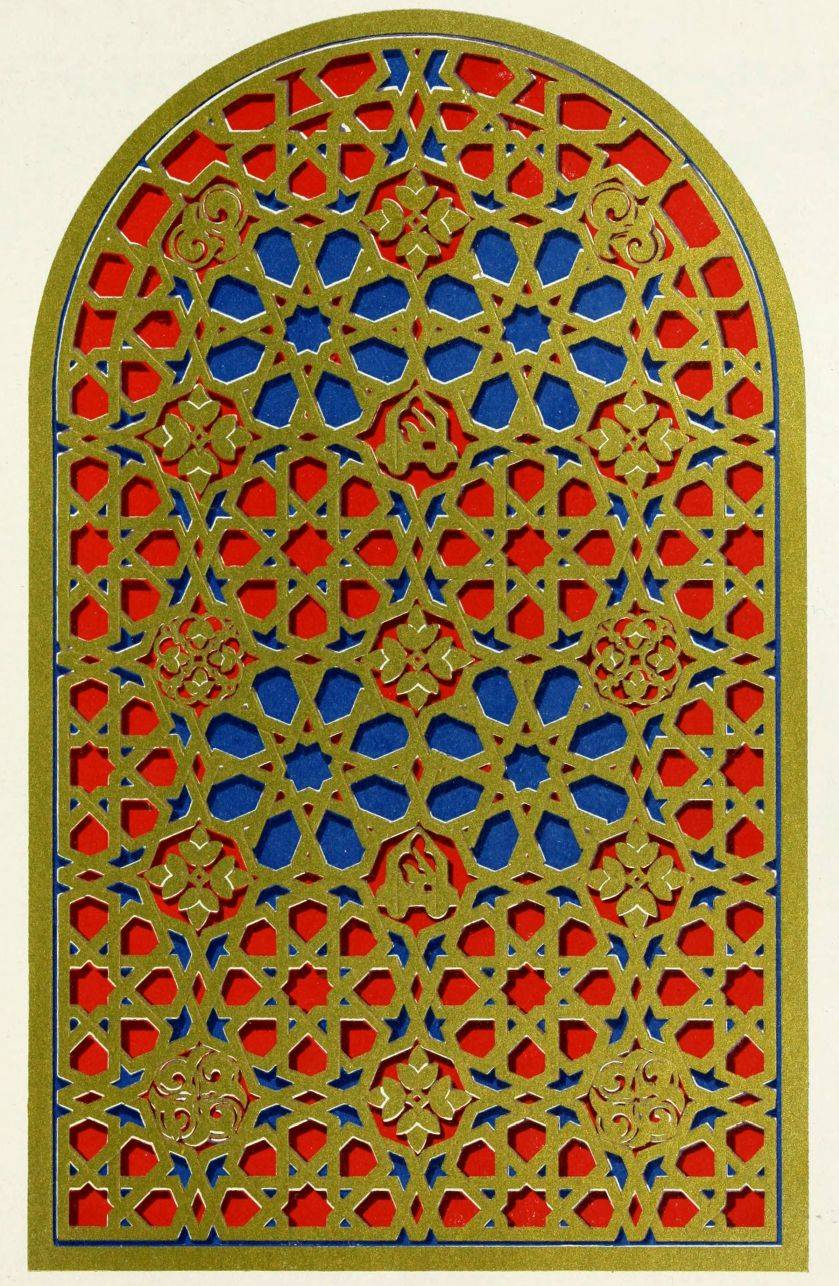
PLATE XLIX.
No. 59.
Blank window, Hall of the Bark.
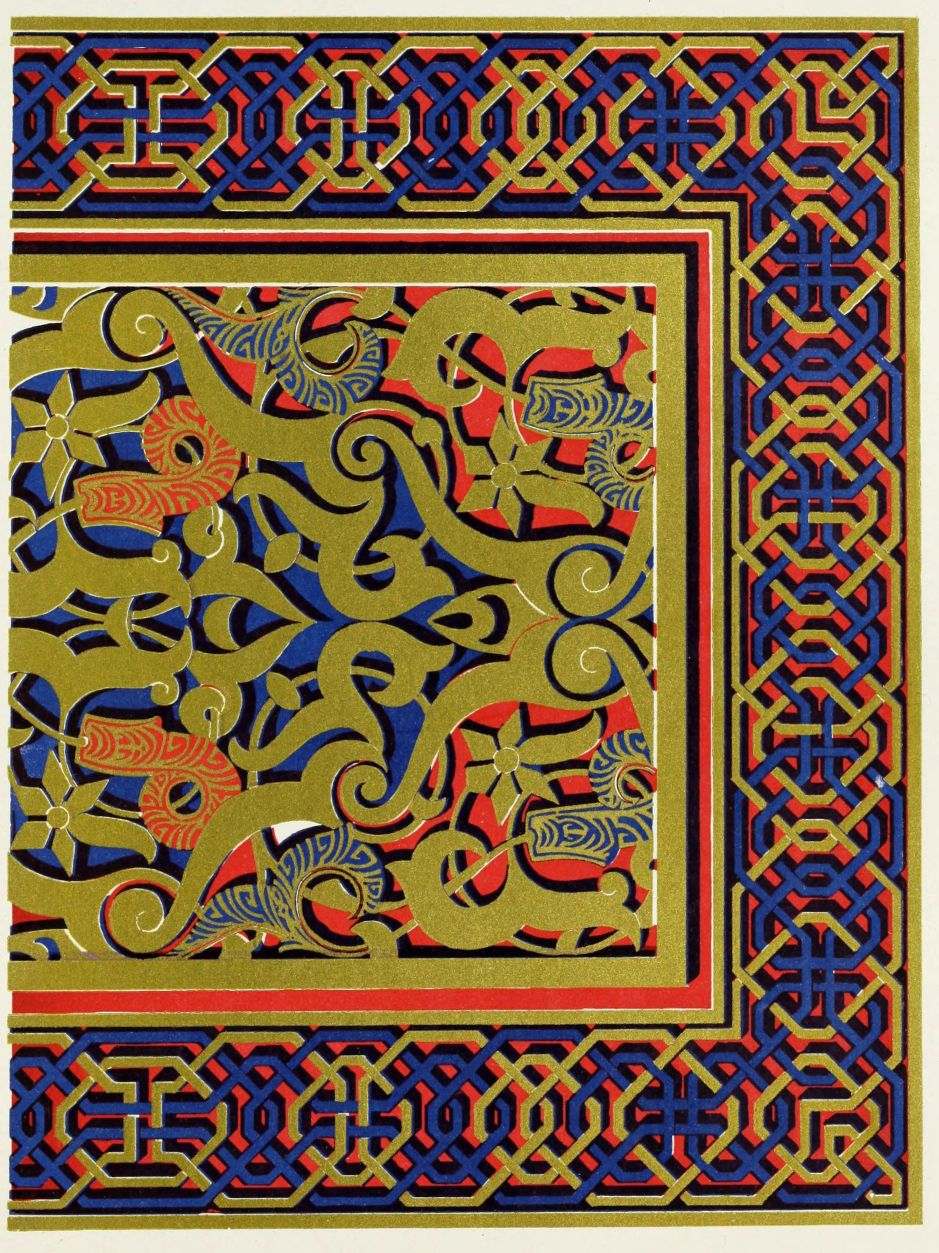
PLATE L.
No. 60.
Soffit of arch, Entrance of the Hall of Abencerrages.
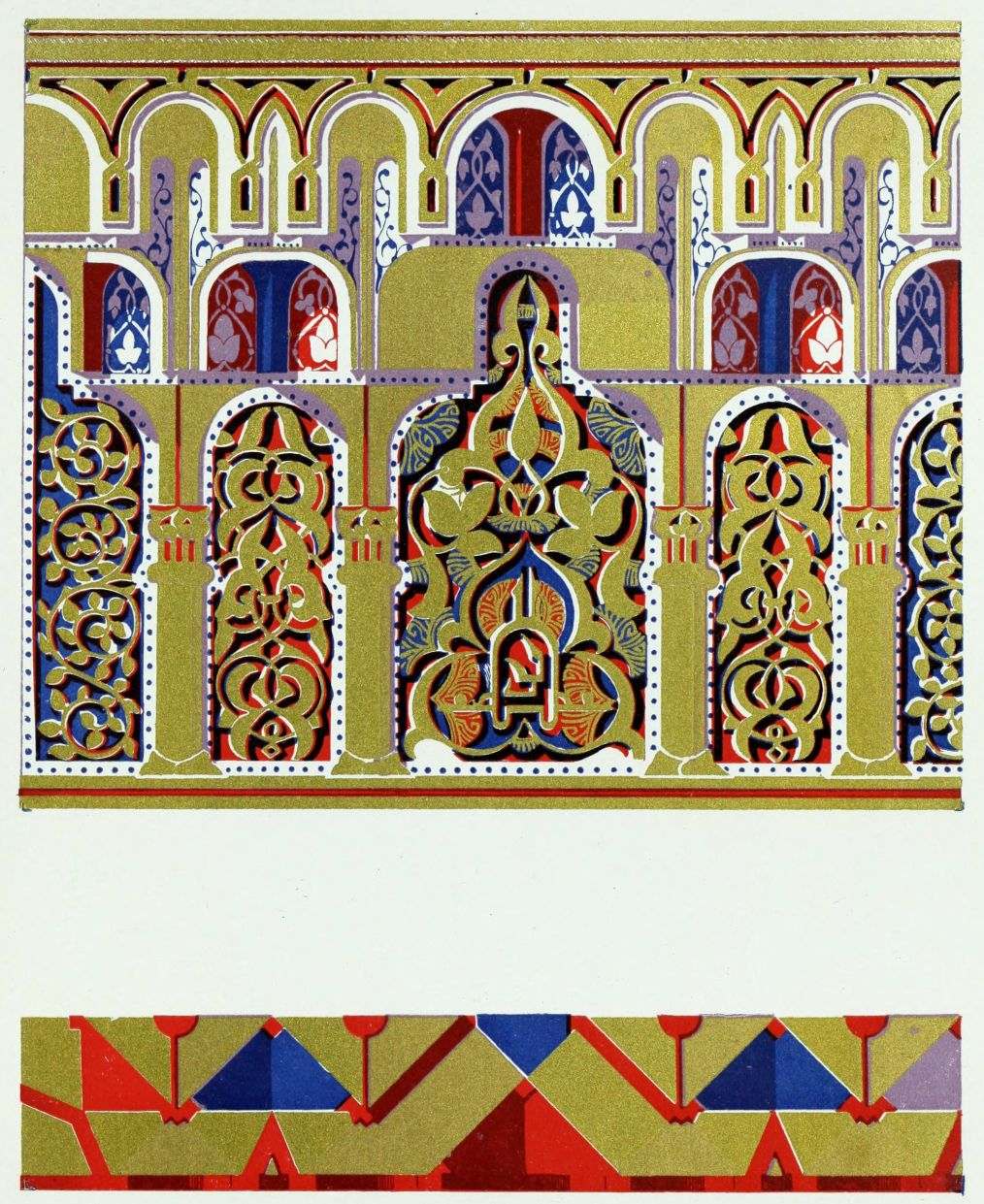
PLATE LI.
No. 61.
Cornice at springing of arch of doorway at the entrance of the Ventana, Hall of the Two Sisters.
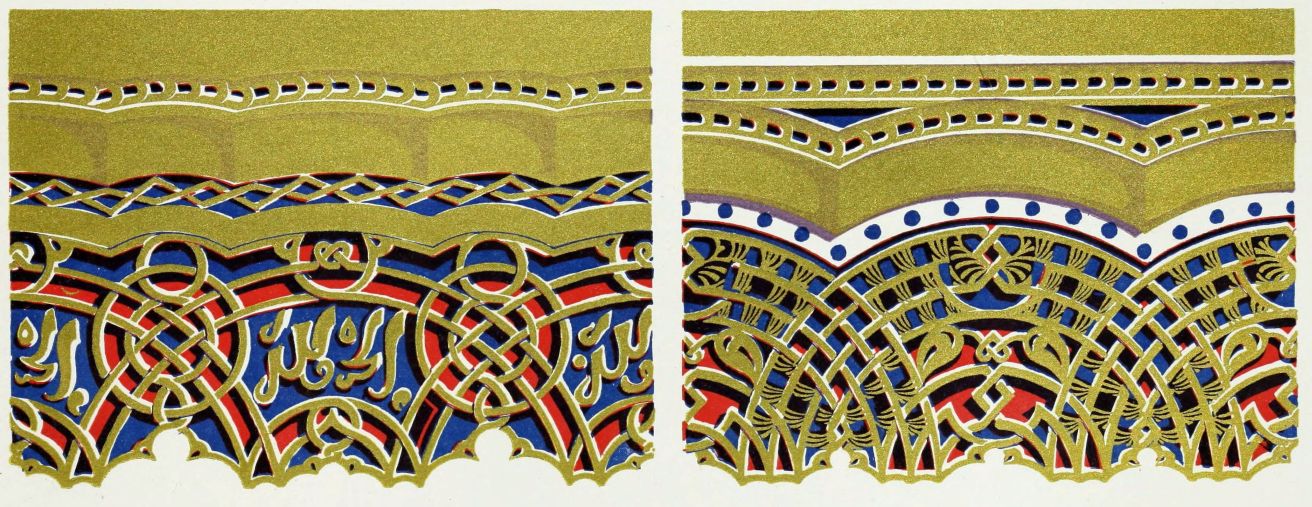
PLATE LII.
No. 62. No. 63.
Borders of Arches.
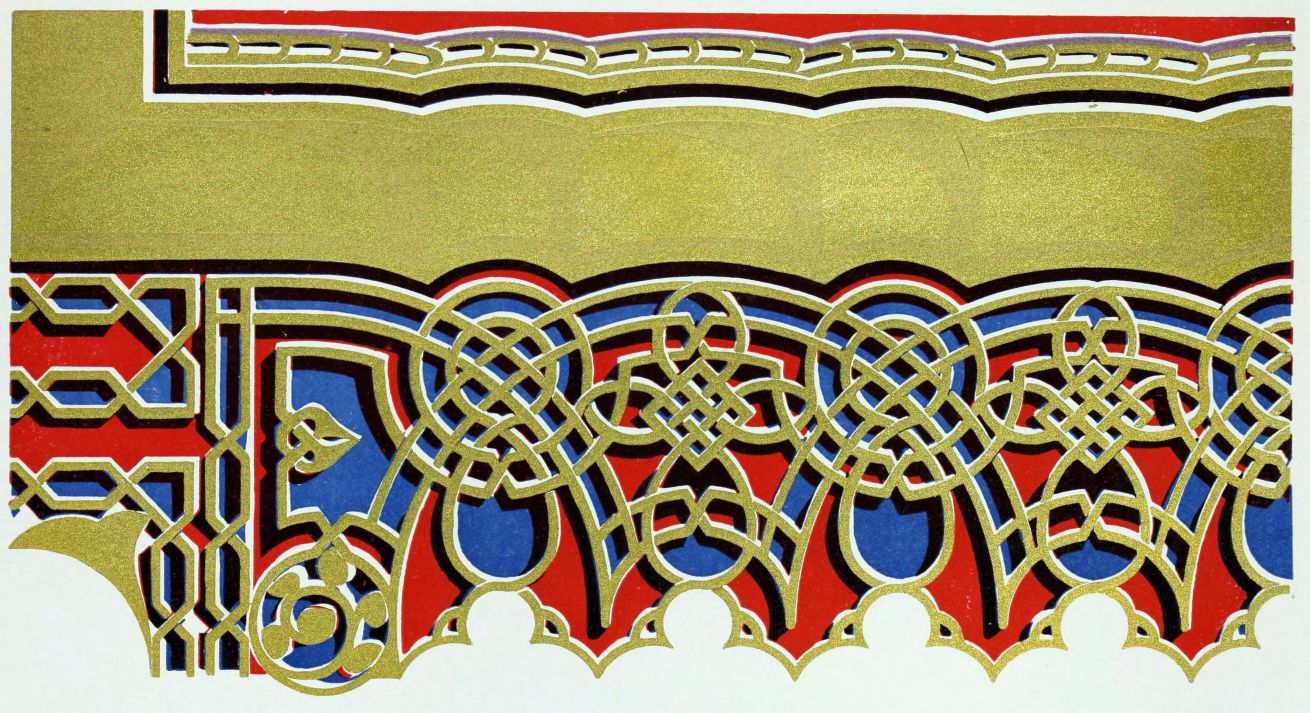
PLATE LIII.
No. 64.
Border of Arches.
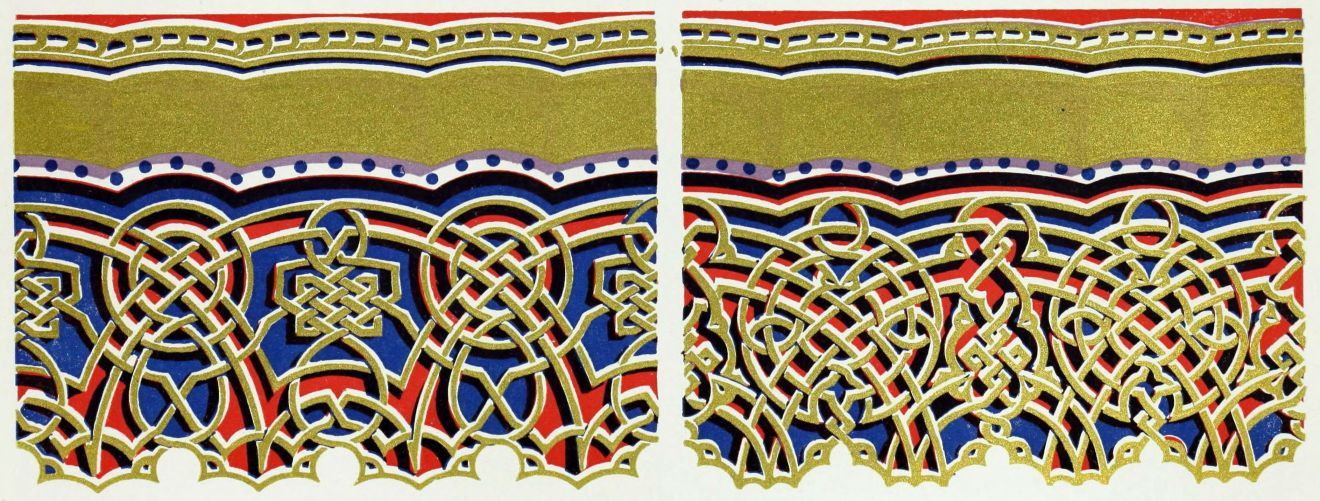
PLATE LIV.
No. 65. No. 66.
Borders of Arches.
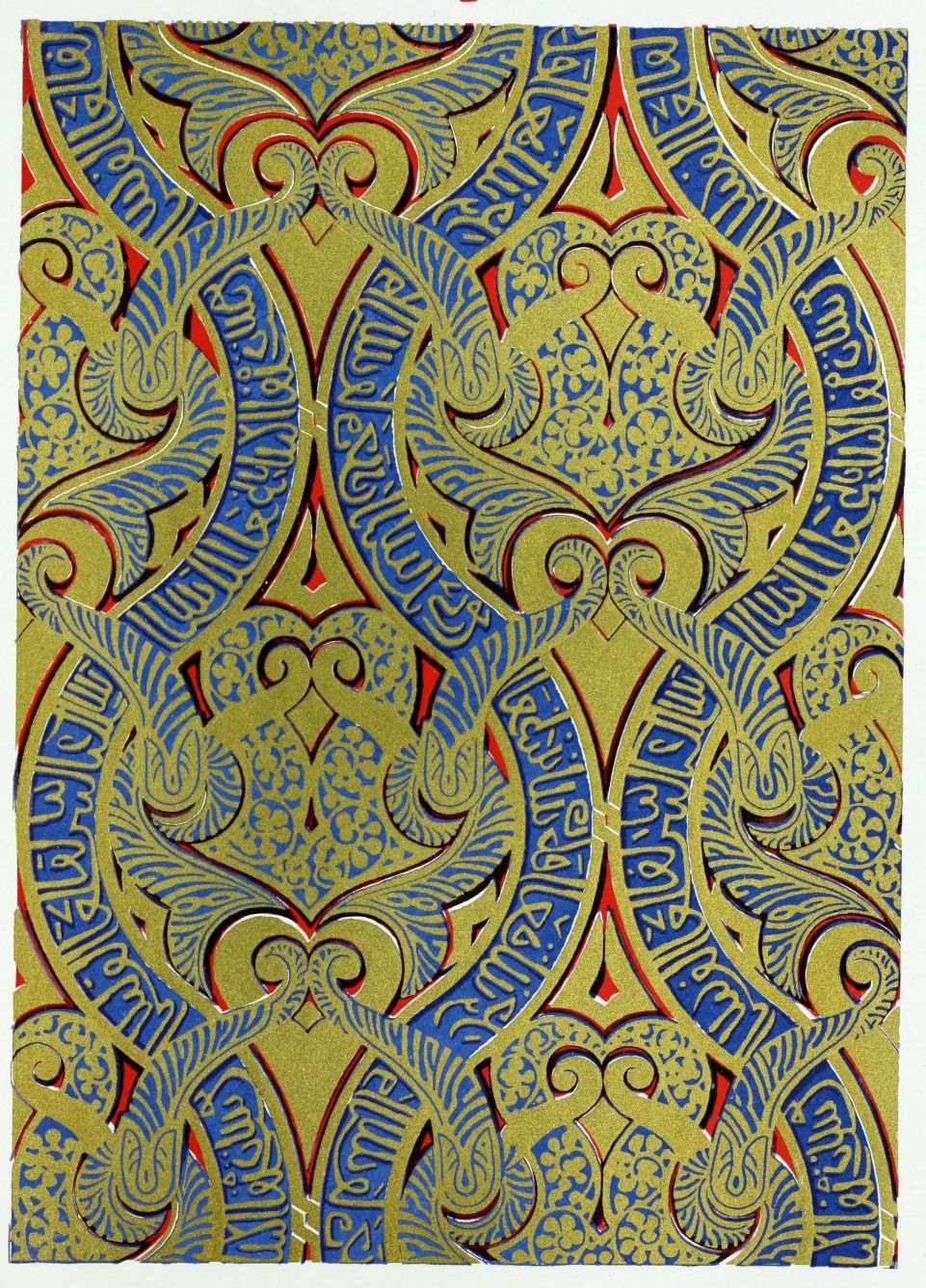
PLATE LV.
No. 67.
Ornament in panels on the wall, Hall of Ambassadors.
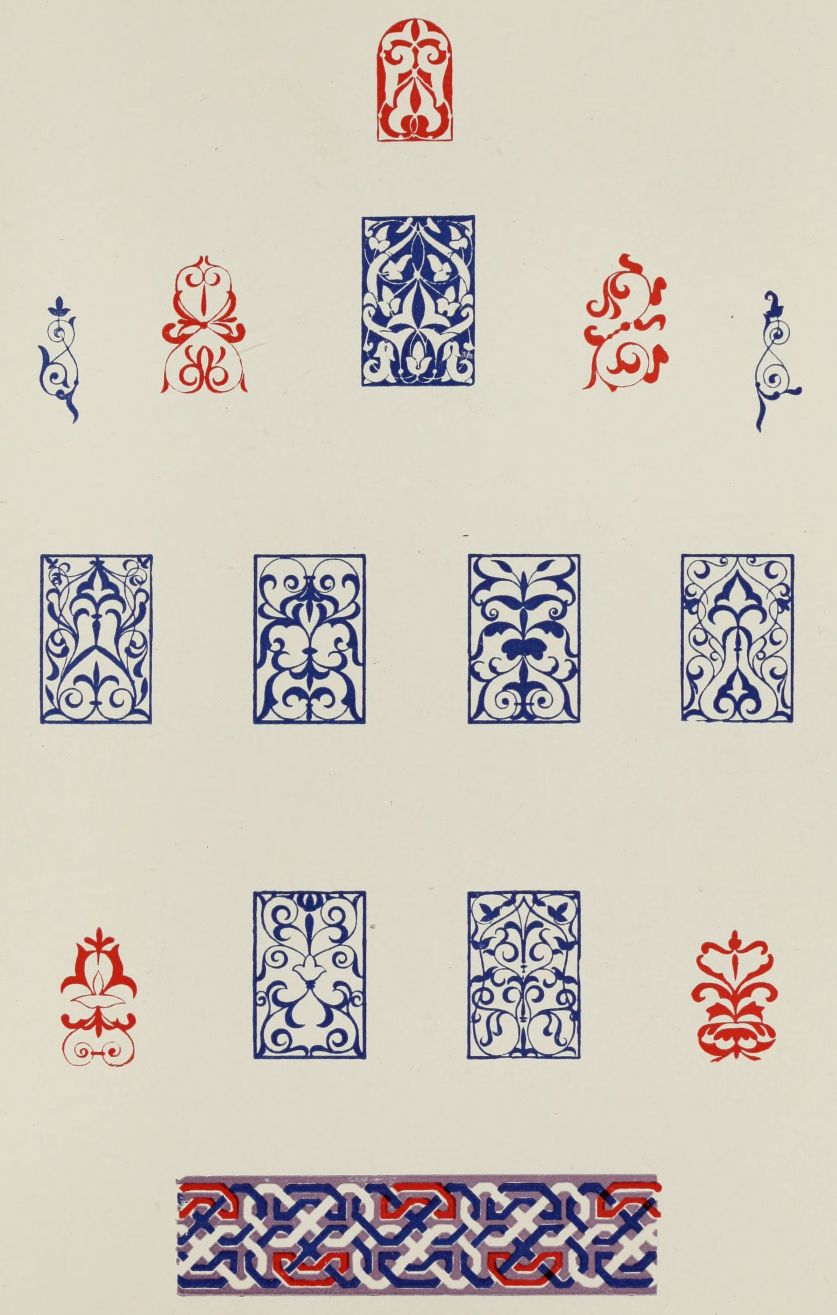
PLATE LVI.
No. 68.
Ornaments painted on the pendants, Hall of the Bark.
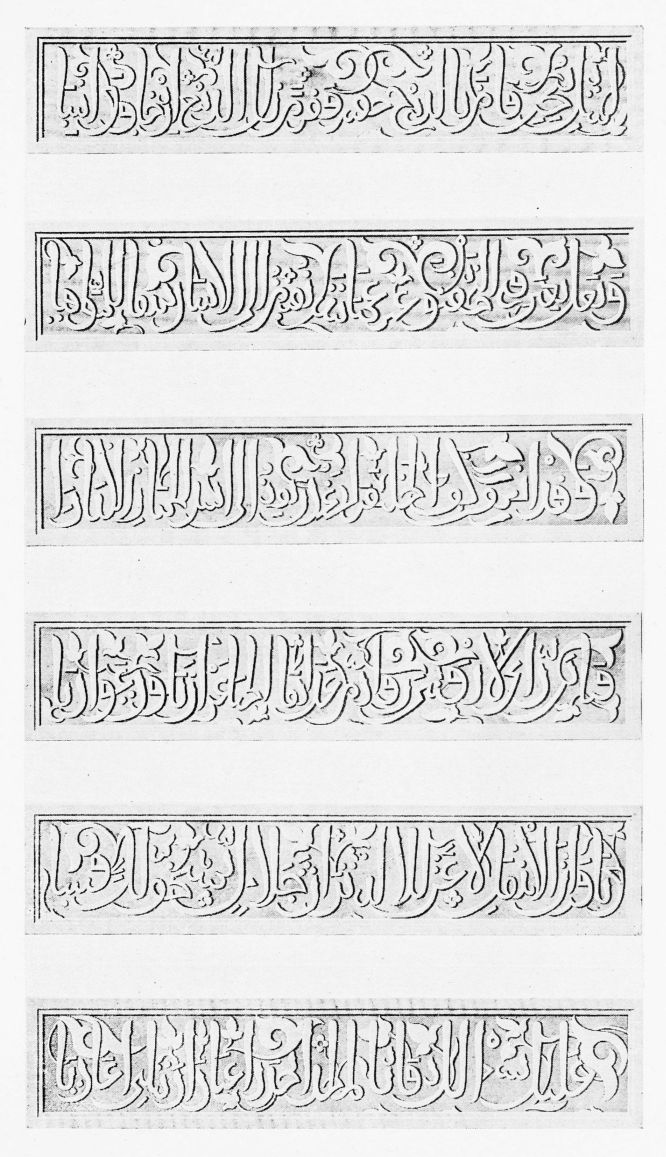
THE LAST SIX VERSES OF THE INSCRIPTION AROUND THE BASIN OF THE FOUNTAIN OF LIONS.
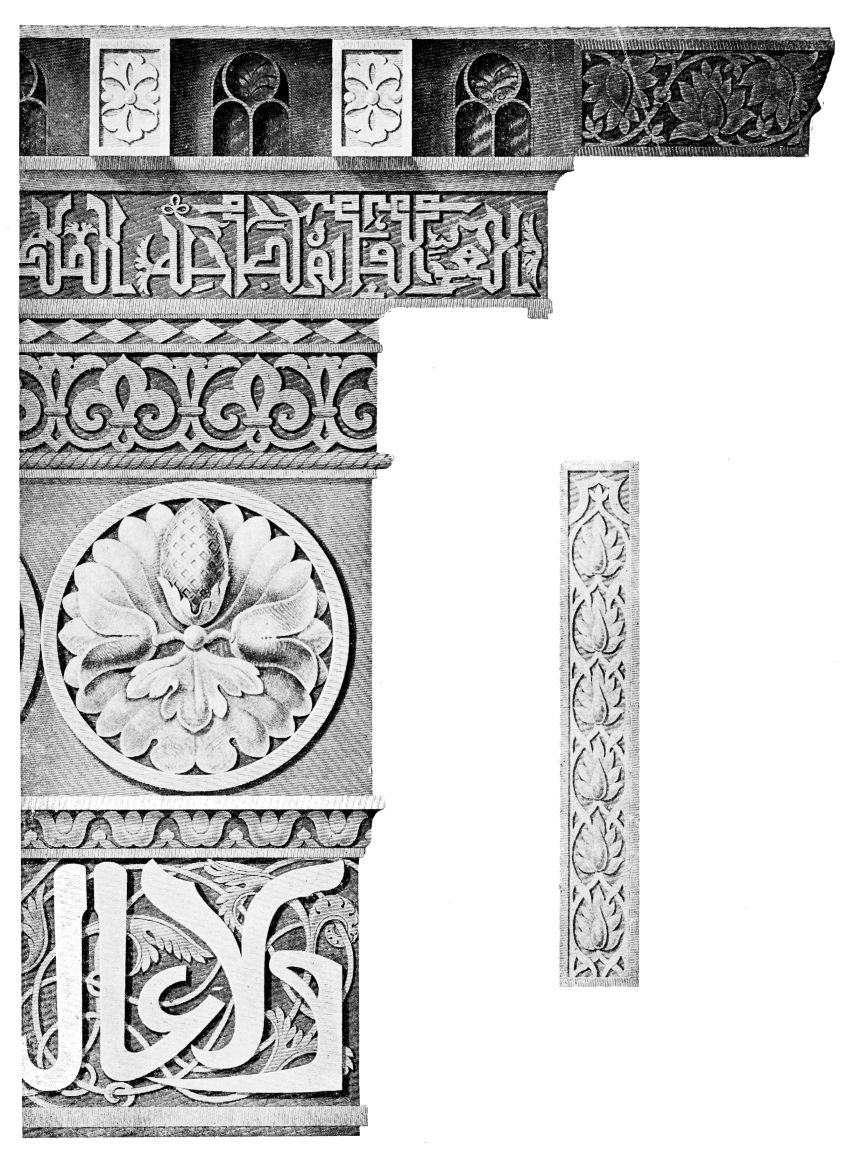
ENTABLATURE IN THE COURT OF THE LIONS.
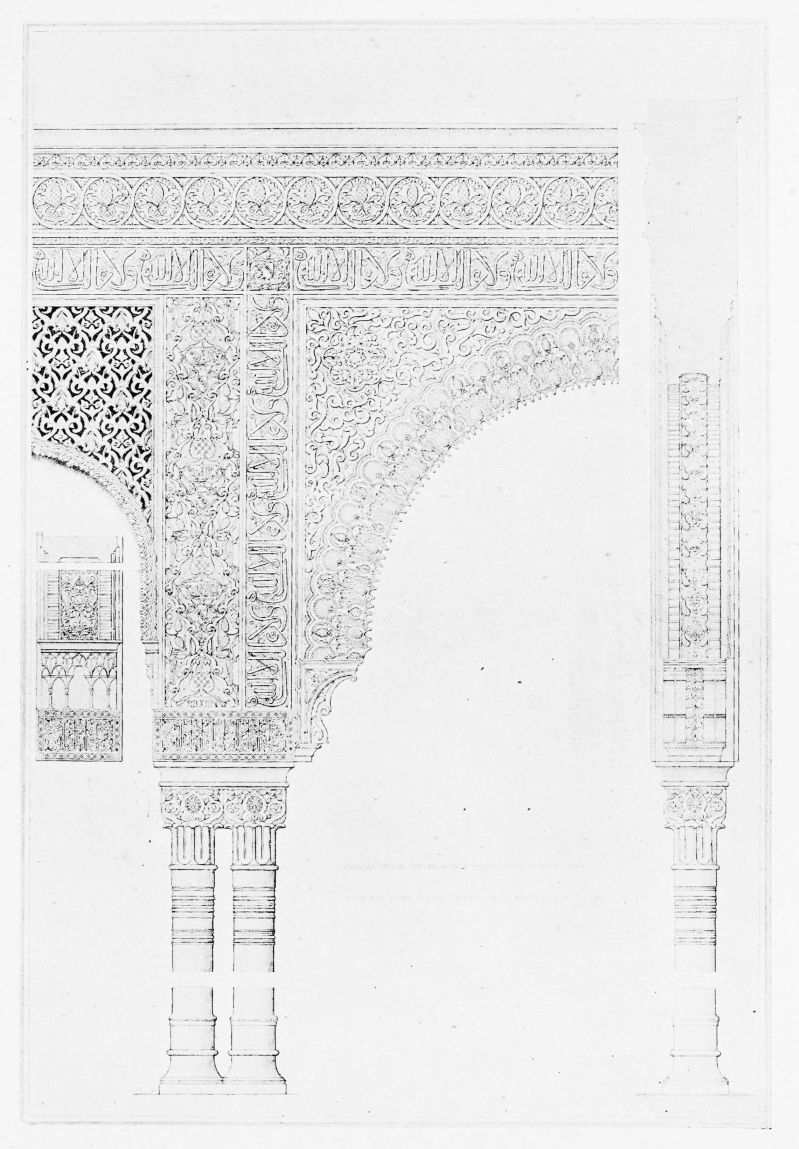
DETAILS OF THE CENTRE ARCADE OF THE COURT OF LIONS.
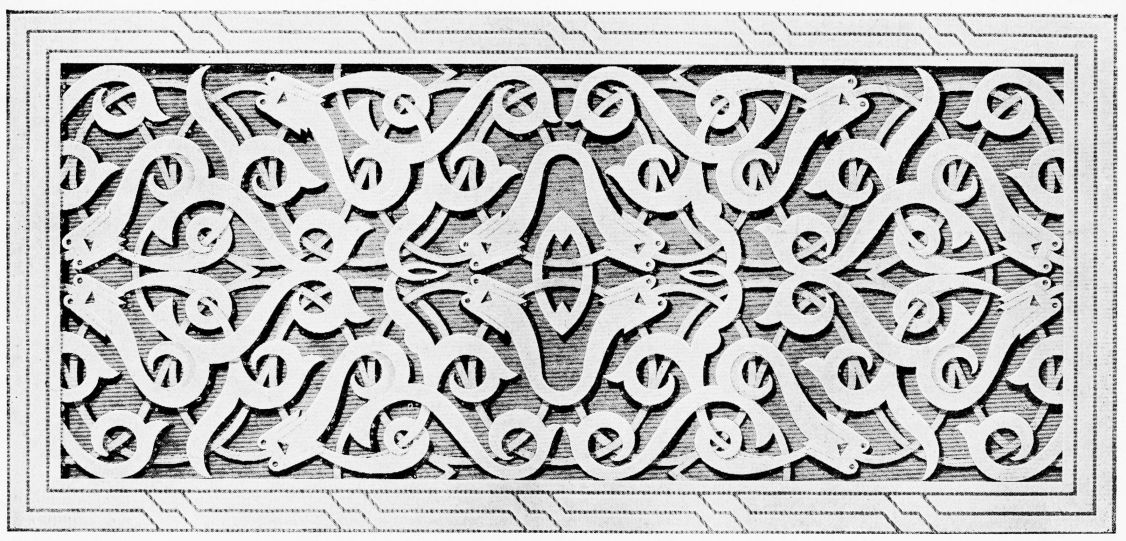
PART OF PANEL IN THE COURT OF LIONS.
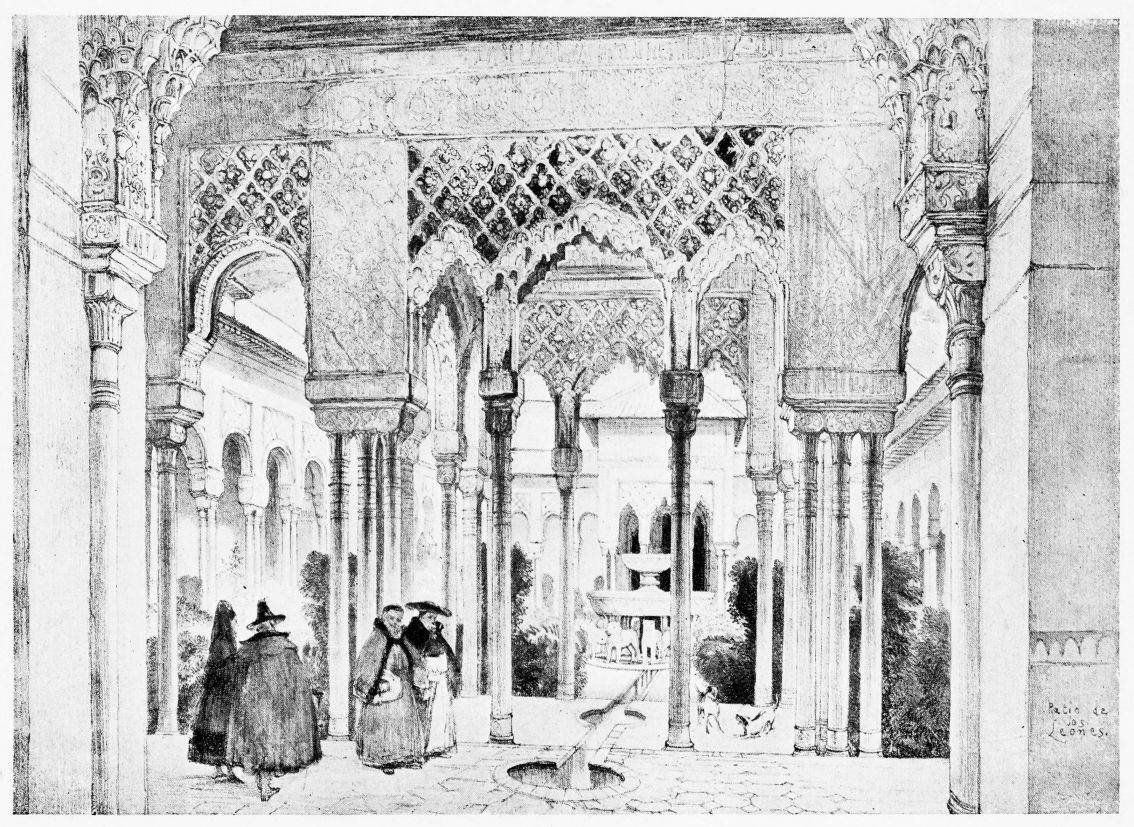
ENTRANCE TO THE COURT OF THE LIONS.
(From a drawing made about 1830).
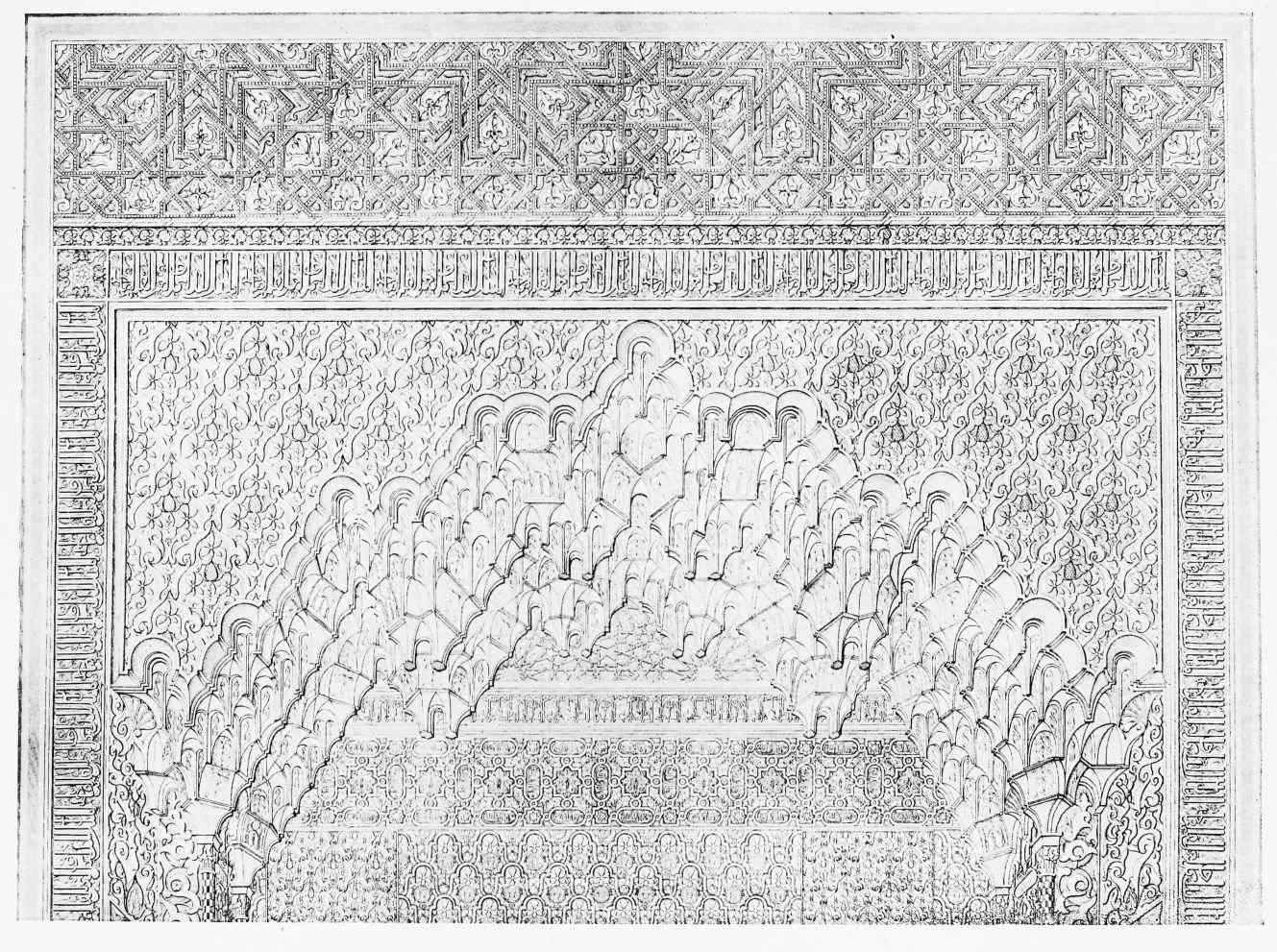
ENTRANCE TO THE COURT OF THE LIONS (UPPER PORTION).
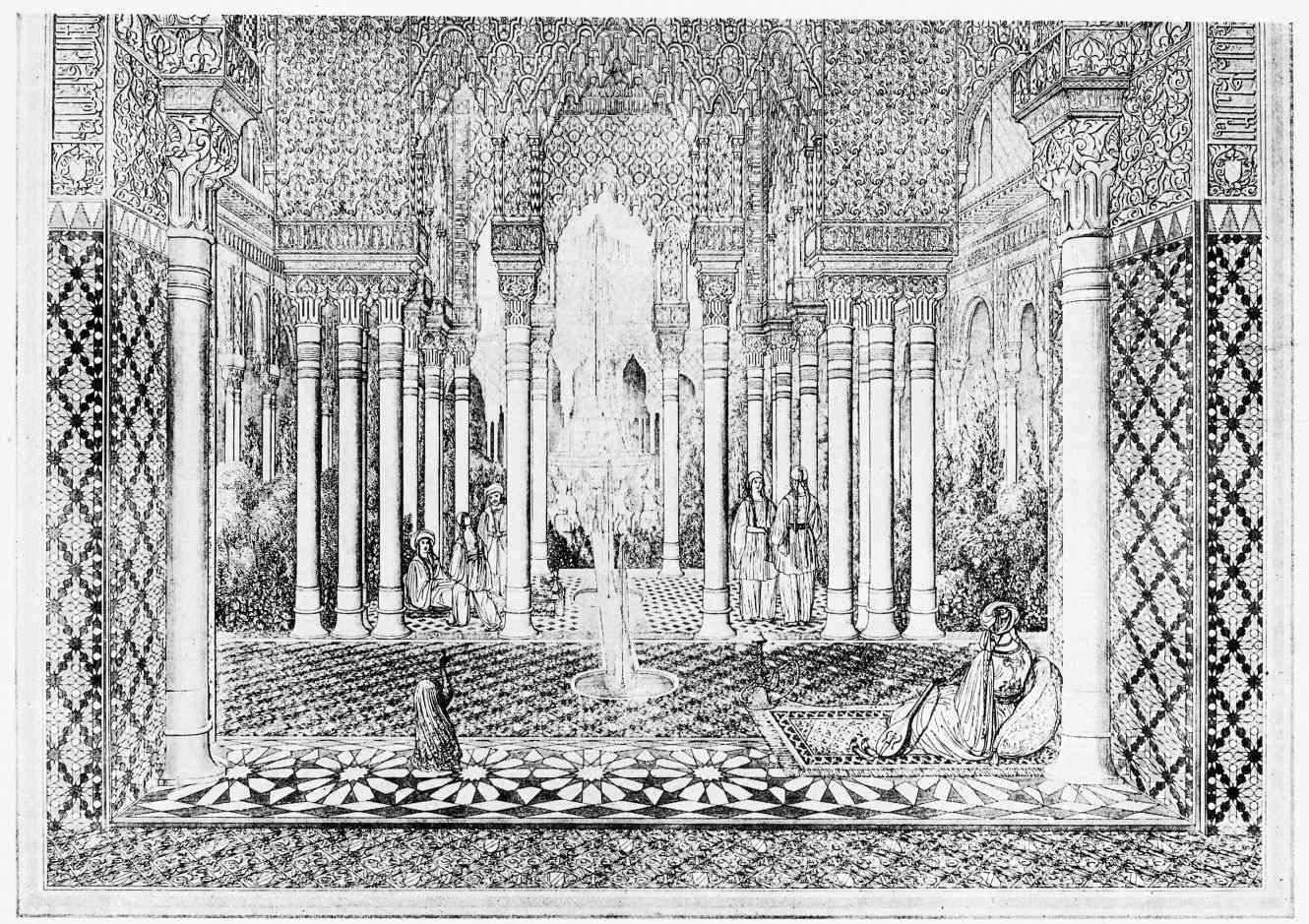
ENTRANCE TO THE COURT OF THE LIONS.
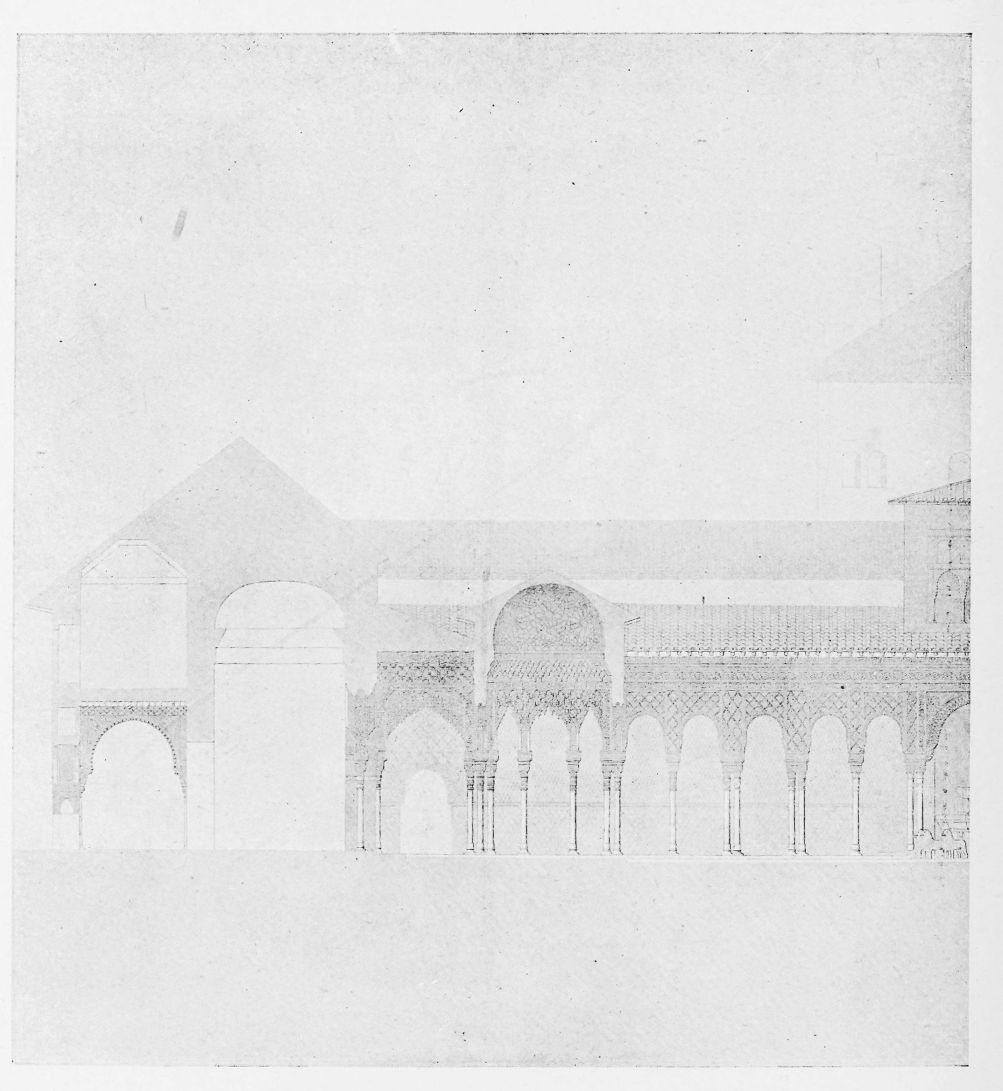
LONGITUDINAL SECTION OF THE COURT OF THE LIONS, TAKEN THROUGH THE PAVILION AT EACH END OF THE COURT, AND EXHIBITING AN ELEVATION OF THE SIDE PORTICOS.
THE ROOF IS A MODERN ONE, OF RED TILES.
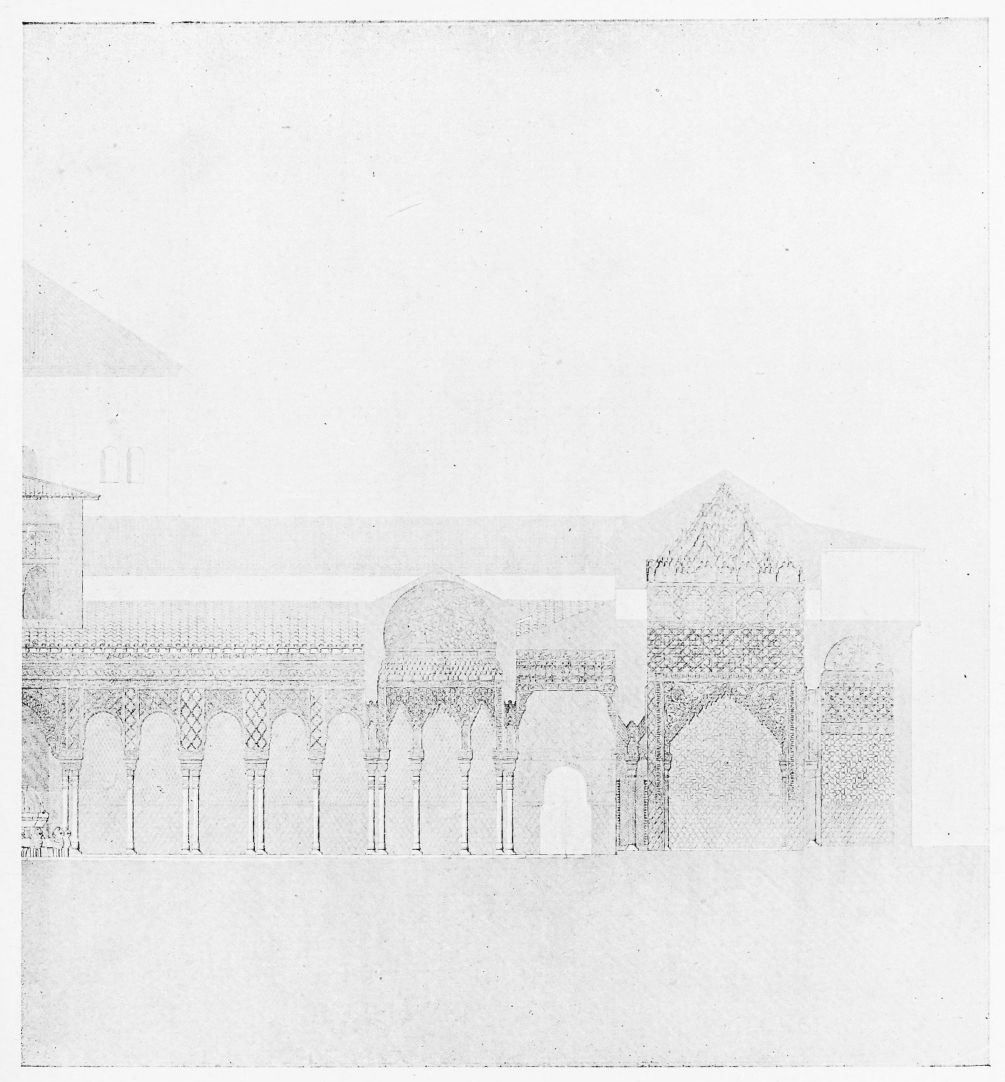
LONGITUDINAL SECTION OF THE COURT OF THE LIONS, TAKEN THROUGH THE PAVILION AT EACH END OF THE COURT, AND EXHIBITING AN ELEVATION OF THE SIDE PORTICOS.
THE ROOF IS A MODERN ONE, OF RED TILES.
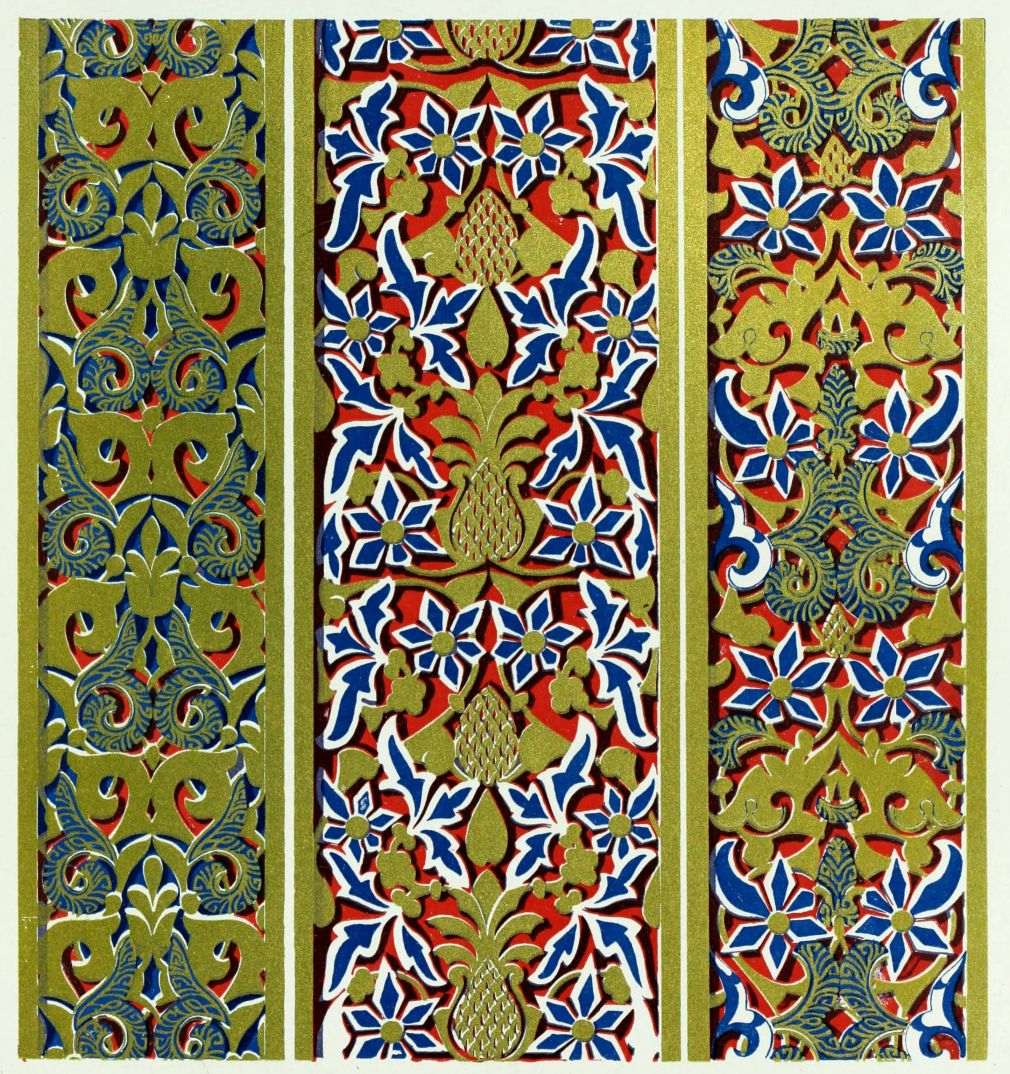
PLATE LVII.
No. 69.
Bands, side of arches, Court of the Lions.
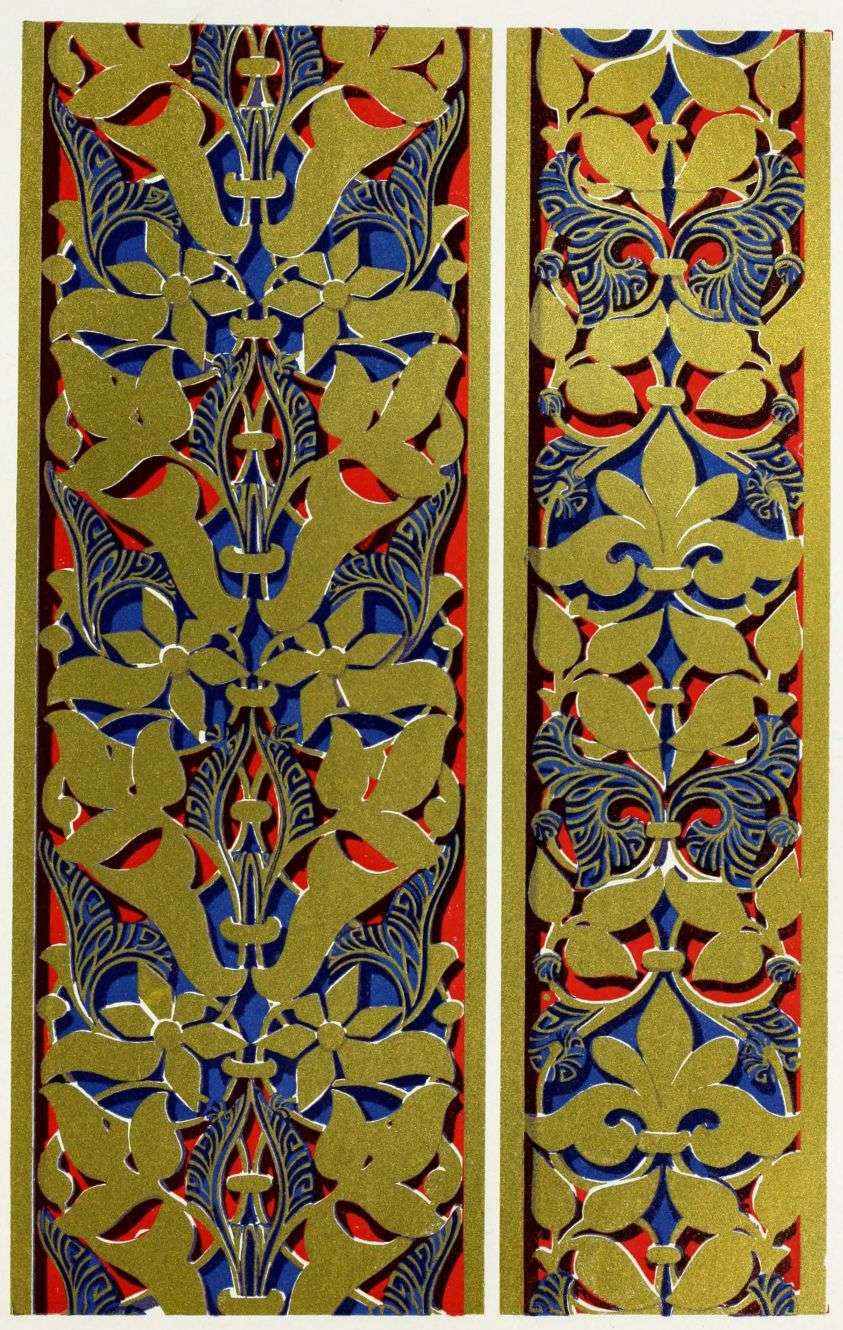
PLATE LVIII.
No. 70. No. 71.
Bands, side of arches, Court of the Lions.
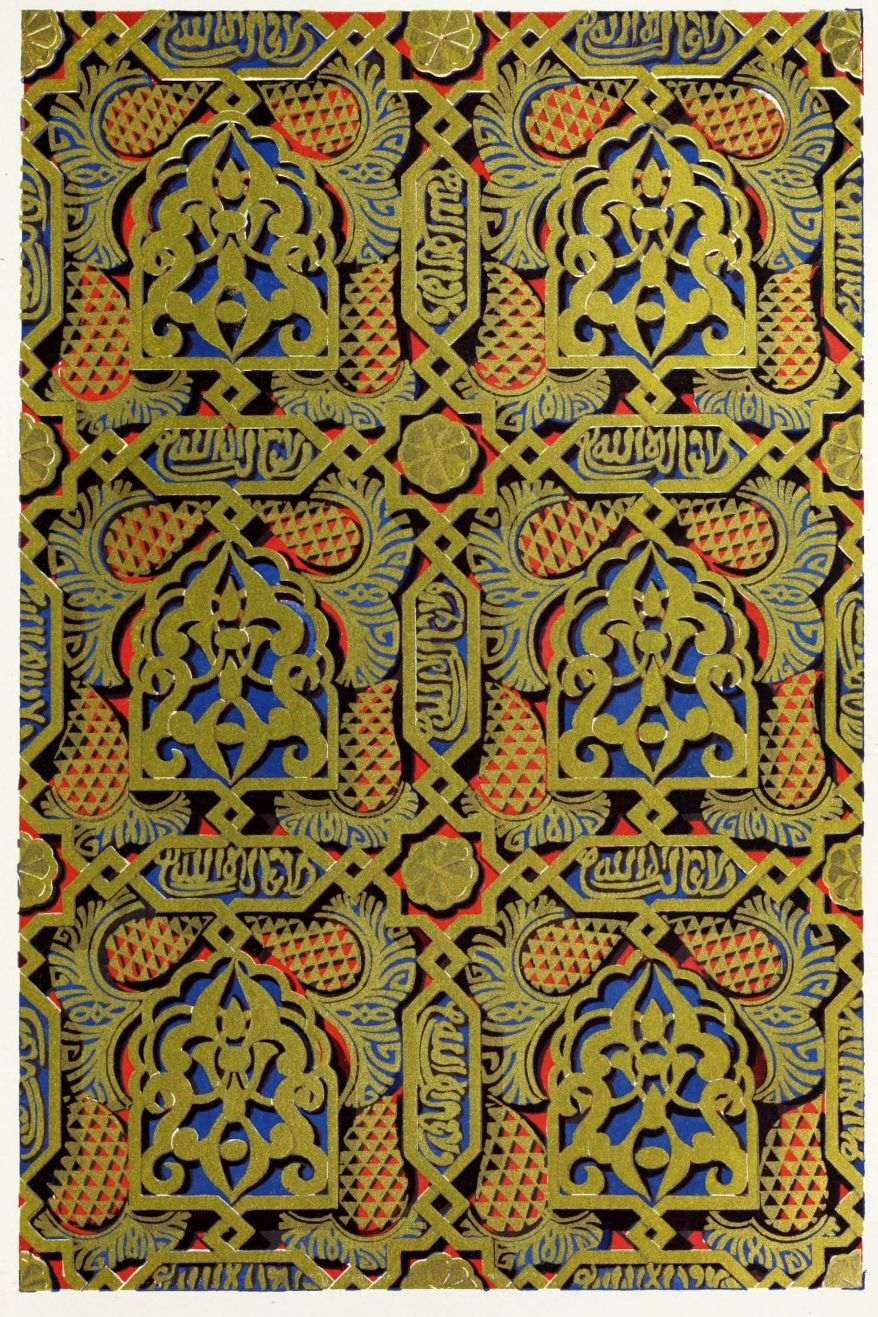
PLATE LIX.
No. 72.
Ornaments on panels, Hall of Ambassadors.
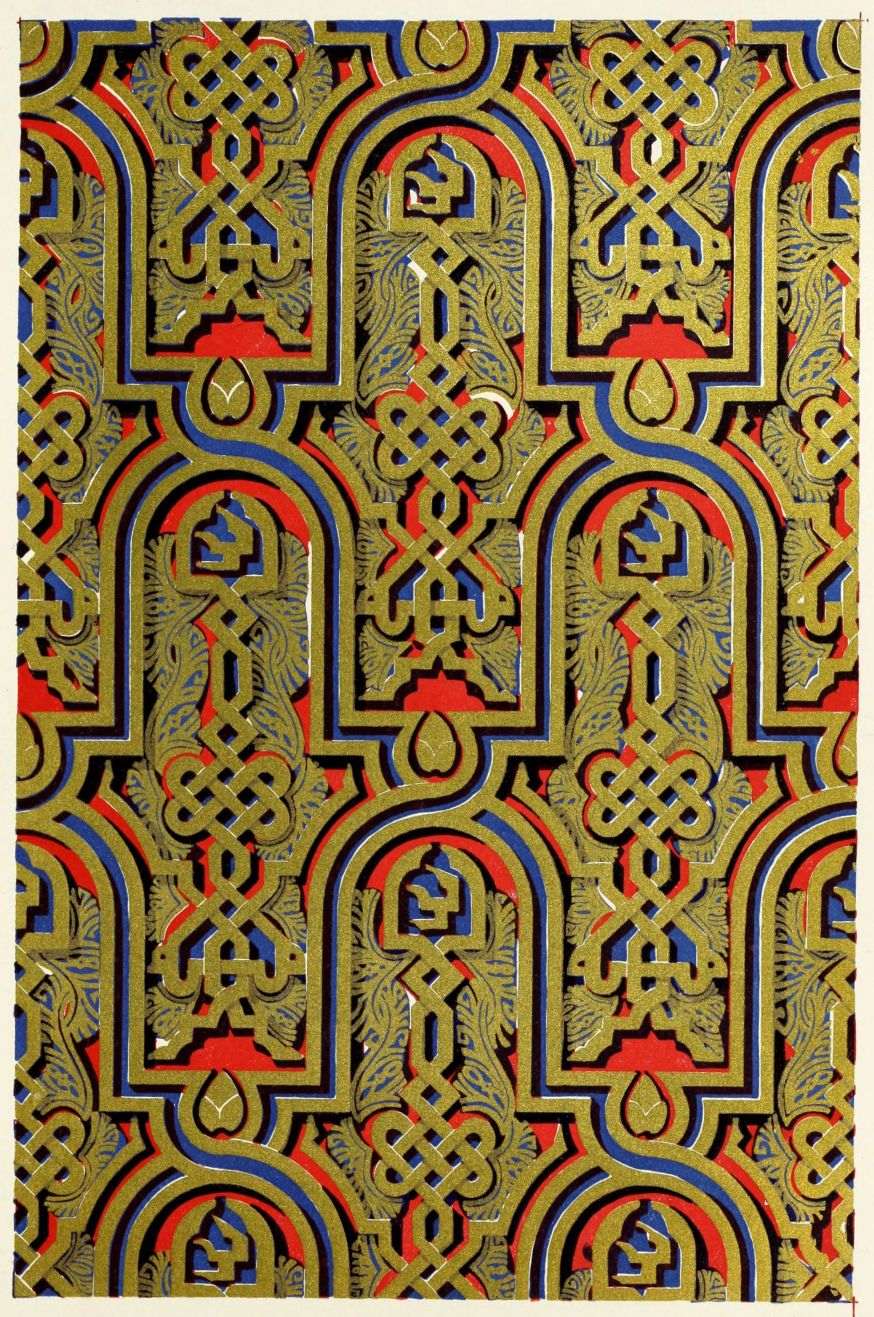
PLATE LX.
No. 73.
Ornaments on panels, Hall of Ambassadors.
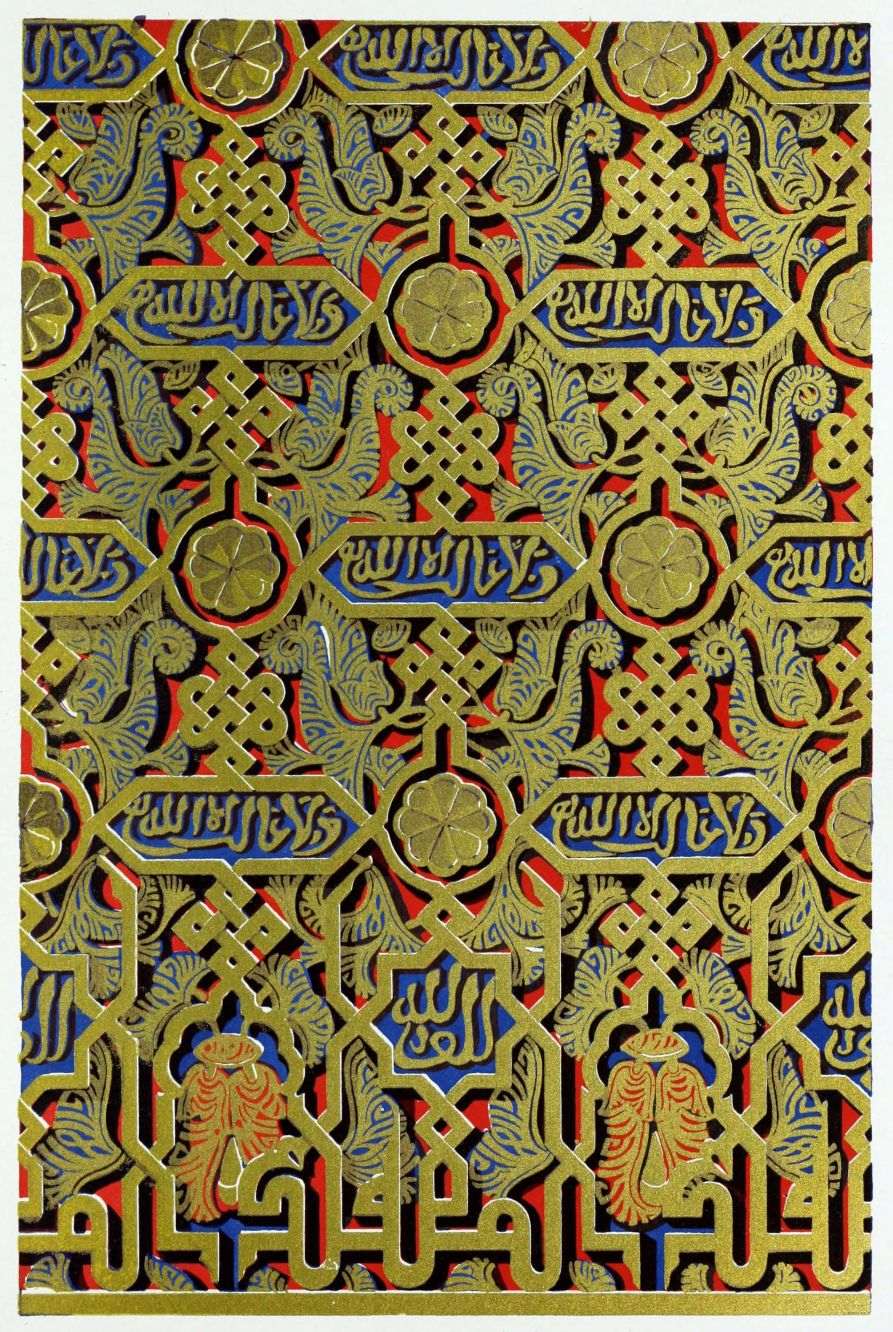
PLATE LXI.
No. 74.
Ornaments on panels, Hall of Ambassadors.
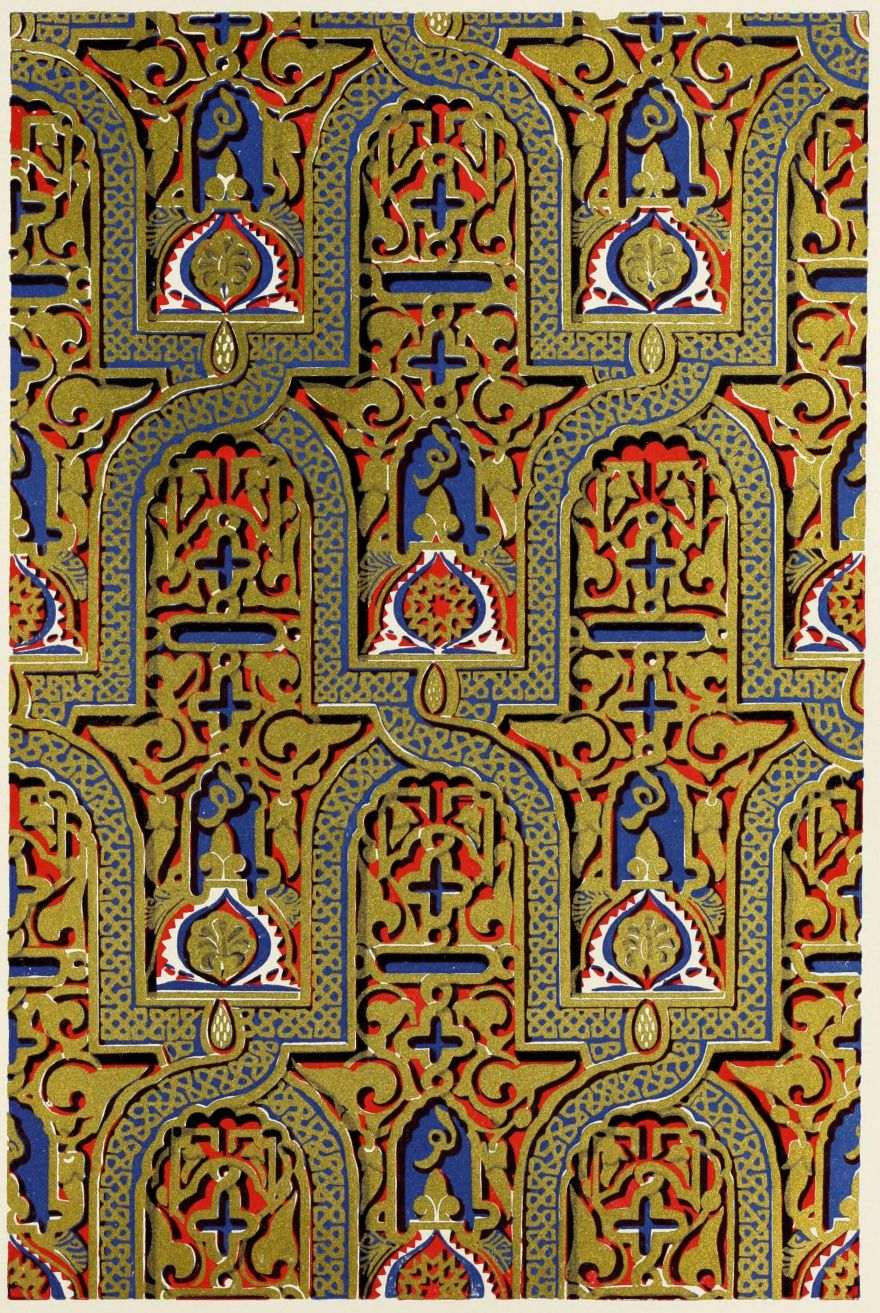
PLATE LXII.
No. 75.
Ornaments on panels, Hall of Ambassadors.
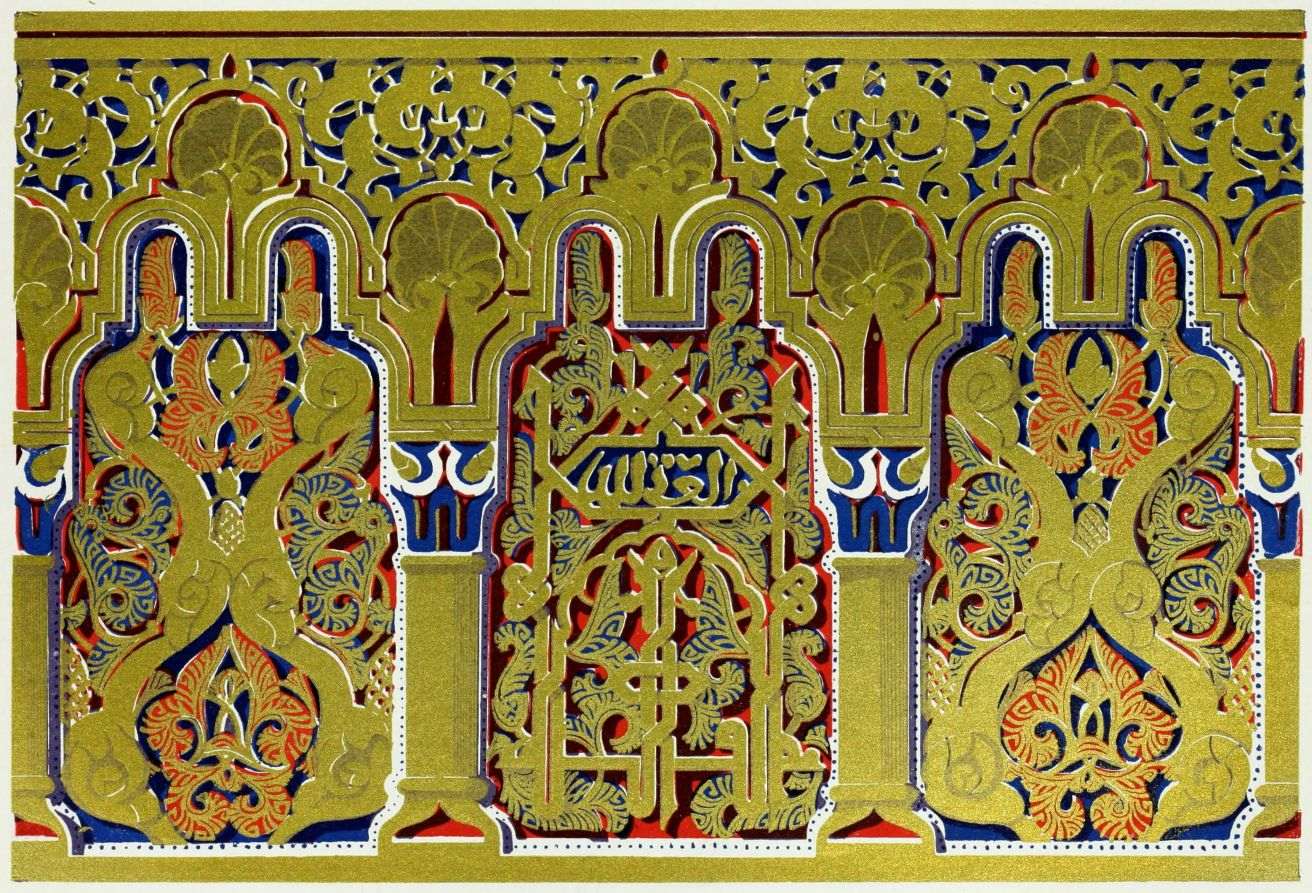
PLATE LXIII.
No. 76.
Frieze in the upper chamber, House of Sanchez.
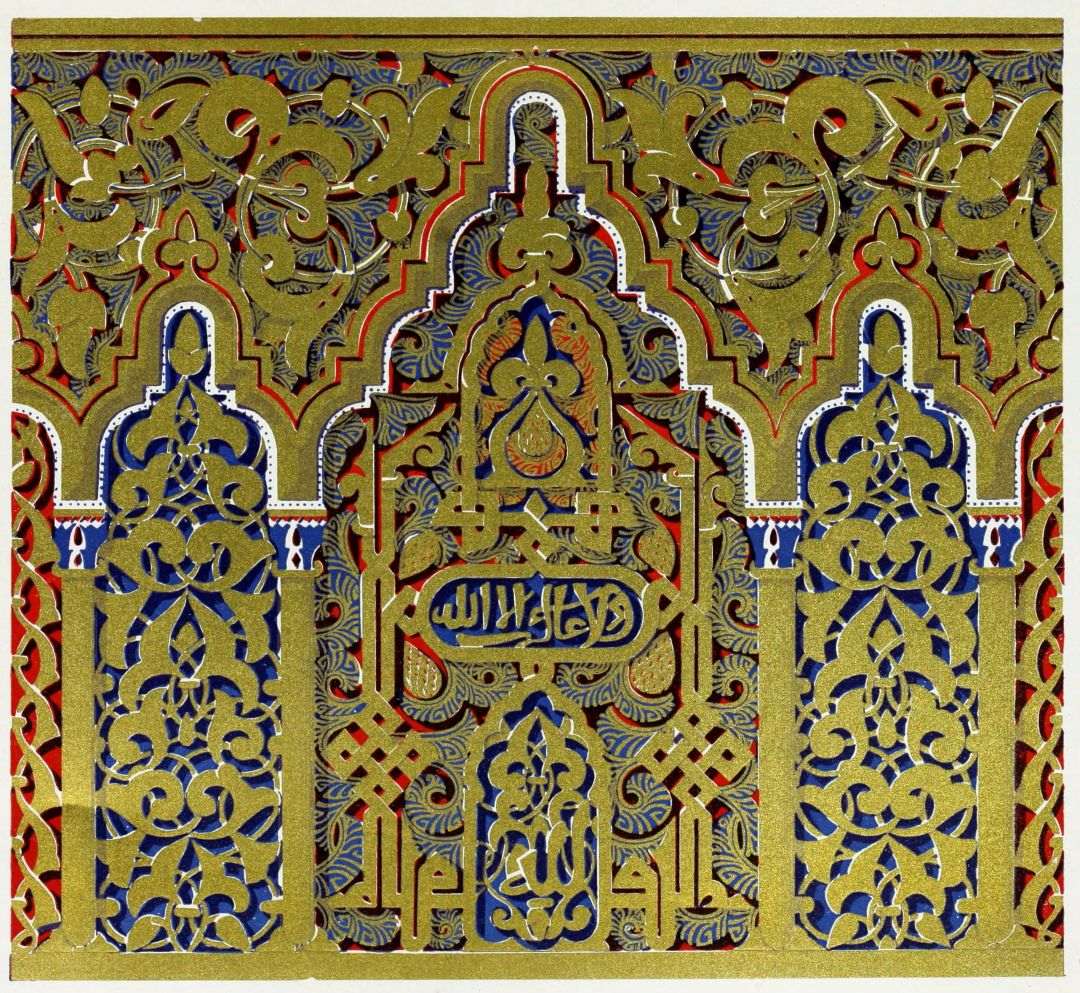
PLATE LXIV.
No. 77.
Cornice at springing of arches, windows of the Hall of Ambassadors.
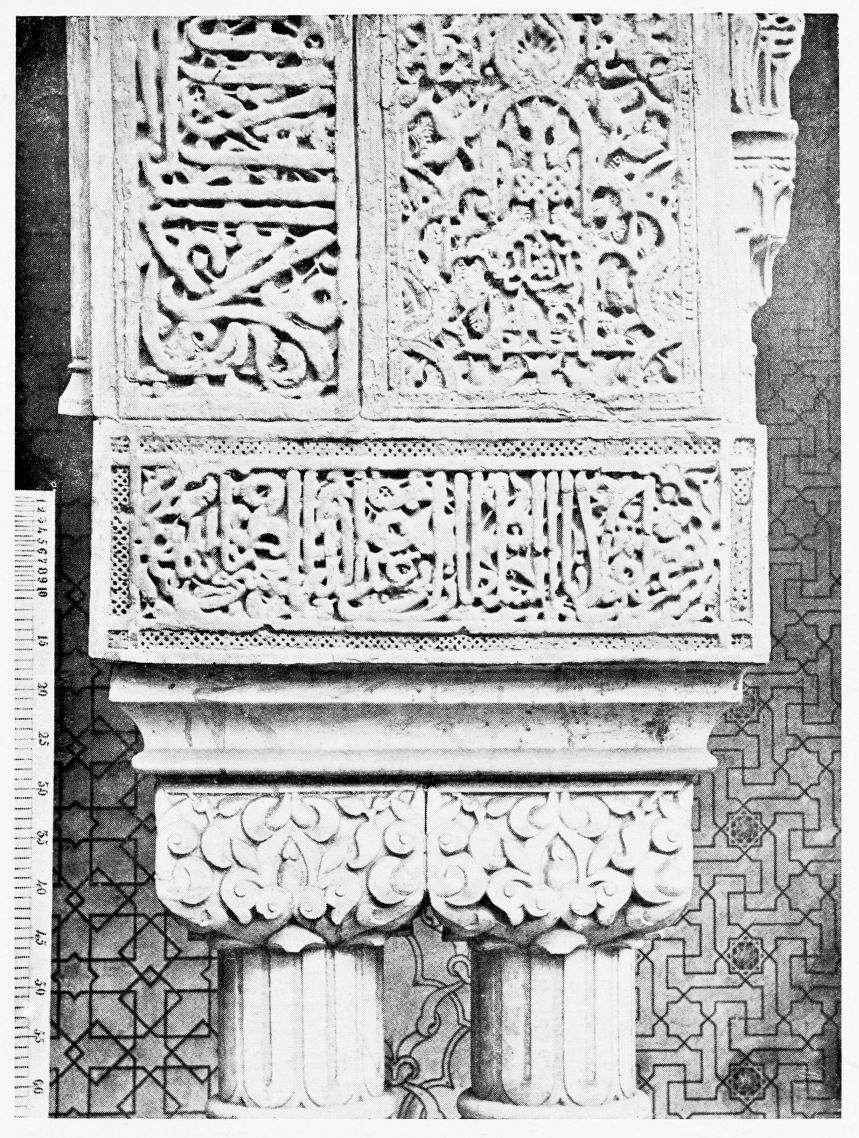
CAPITALS IN THE COURT OF THE LIONS, WITH A MEASURE OF ONE METRE.
Although the upper parts of the walls are only coated with plaster, strengthened with reeds, centuries of neglect have not sufficed to destroy this slight, “aerie, faerie” thing of filigree, which has not even the appearance of durability. Wherever the destroyer has mutilated the fragile ornaments, “the temple-haunting
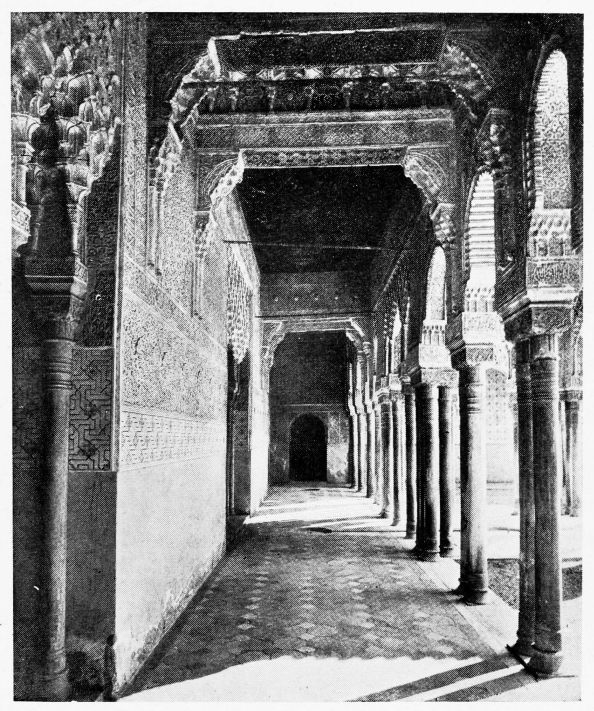
NORTH GALLERY IN THE COURT OF THE LIONS.
martlet, guest of summer,” builds his nest and careers in the delicate air, breaking, with his twitter, the silence of these sunny, now deserted courts, once made for Oriental delights, and even now the place in which to read the Arabian Nights, or spend a honeymoon—
This guest of summer, The temple-haunting martlet, does approve, By his lov’d mansionry, that the heaven’s breath Smells wooingly here: no jutty, frieze, Buttress, nor coigne of vantage, but this bird Hath made his pendent bed, and procreant cradle; Where they most breed and haunt, I have observ’d, The air is delicate. [Macbeth, Act i., sc. 6]
SALA DE LA BARCA—HALL OF THE BARQUE.
Beyond where the fountain bubbles in the Court of the Fish-pond, is the oblong Hall of the Barque, which is still as radiant with colours as the edge of fading evening cloud. The rivers of poems that fret the walls sing the praises of some long dead Sultán, who conquered twenty fortresses, and whose excellence, running clear through his great deeds, was as the silk thread that carries a necklace of pearls.
“The ceiling of the Hall of the Barque,” says Owen Jones, “is a wagon-headed dome of wood, of the most elaborate patterns, receiving its support from pendentives of mathematical construction so curious, that they may be rendered susceptible of combinations as various as the melodies which may be produced from the seven notes of the musical scale; attesting the wonderful power and effect obtained by the repetition of the most simple elements.”
Alas! it must be added that this beautiful Hall was greatly injured by a fire, which took place in September, 1890.
SALA DE LOS EMBAJADORES—HALL OF AMBASSADORS.
After traversing the Hall of the Barque, we come upon the Hall of Ambassadors—the Golden Saloon—with a dome which bursts like a flower-bell upon the sight. The most
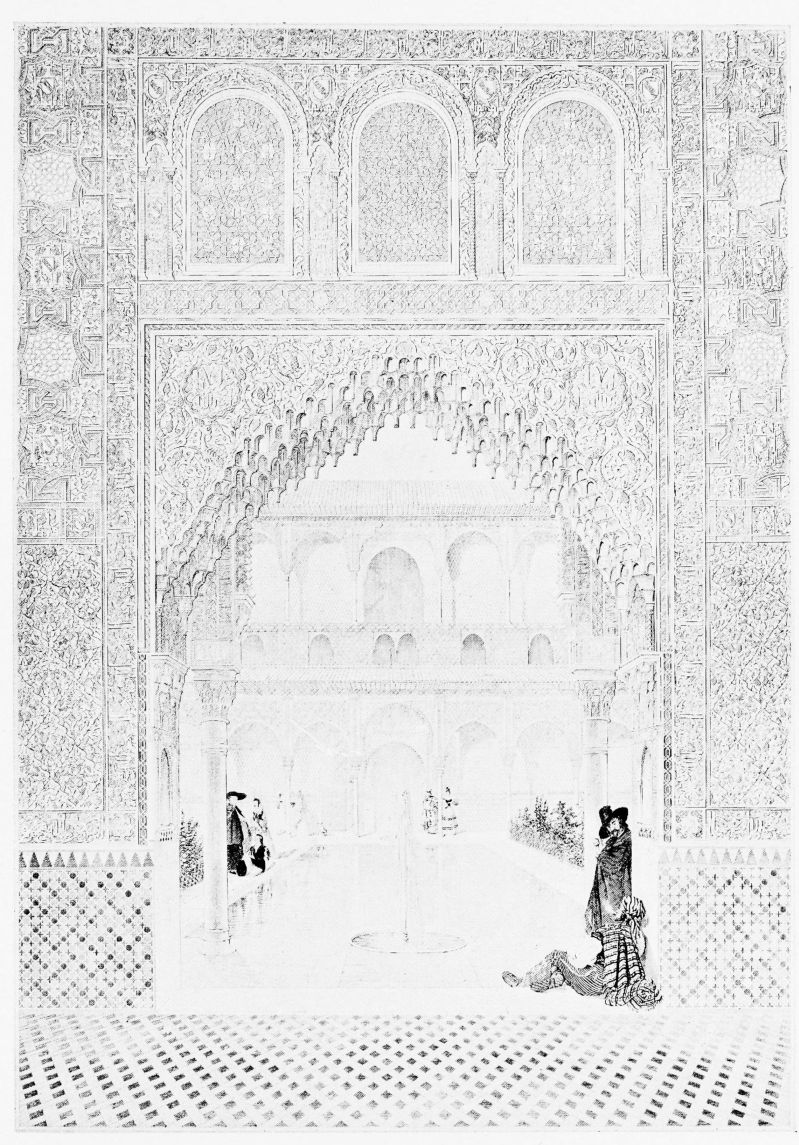
ENTRANCE TO THE HALL OF THE BARQUE, WITH VIEW OF THE COURT OF THE FISH-POND, OR OF THE MYRTLES.
beautiful thing about these Moorish domes is, not their grand poise and balance, but the airiness of them. They seem mere resting clouds swelling round you and canopying you with colour. You have no sense of their weight or means of permanency. The stalactite ornament, as it is called, seems fashioned in emulous rivalry of golden-celled honeycomb, in which honey still rests; honey, dyed by the juices of the flowers from which it has been drawn. The walls are like the leaves of illuminated missals, framed by cornices of poem and prayer.
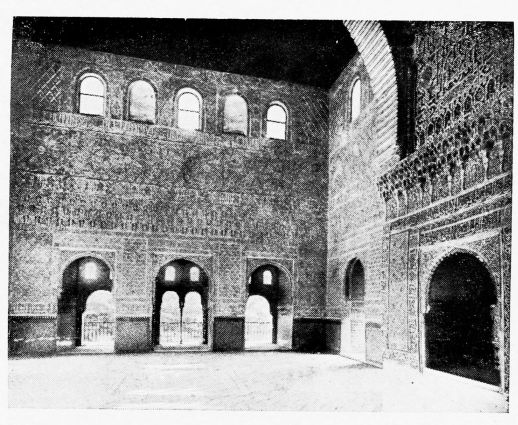
THE HALL OF AMBASSADORS.
The Hall of Ambassadors is a square of thirty-seven feet, and is sixty feet high from the floor to the centre of the dome. It is the largest, as well as the most imposing of the Halls of the Alhambra, though in arrangement and symmetry of details less perfect than the Hall of The Two Sisters.
Inscriptions of verses from the Koràn abound amongst the decorations.
The present ceiling of the Hall of the Ambassadors is a dome of wood, ornamented by ribs intersecting each other in various patterns in gold, on grounds of blue and red. The ceiling is ingenious in construction and beautiful in detail. Owen Jones thinks that an arch of brick was originally thrown across the hall, which gave way after the completion of the building, carrying with it an earlier ceiling, which was afterwards replaced by the present dome.
In the centre divan, on the north side of the Hall, there is
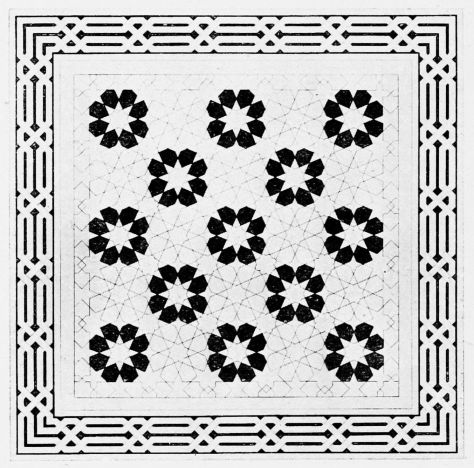
MOSAIC IN DADO, HALL OF AMBASSADORS.
a most beautiful Mosaic dado, as perfect as when originally executed, and which seems to be imperishable. It is formed of baked clay, squeezed into moulds of the different figures, glazed on the surface, and bevelled slightly on the edge. Thus, when necessary, the Mosaics were not only easily withdrawn from the moulds, but, when united, they formed a key for the mortar. In this particular recess, doubtless, was the throne of the Moorish kings, as indicated both by the inscriptions on the walls, and the extraordinary care bestowed upon the decoration of the recess.
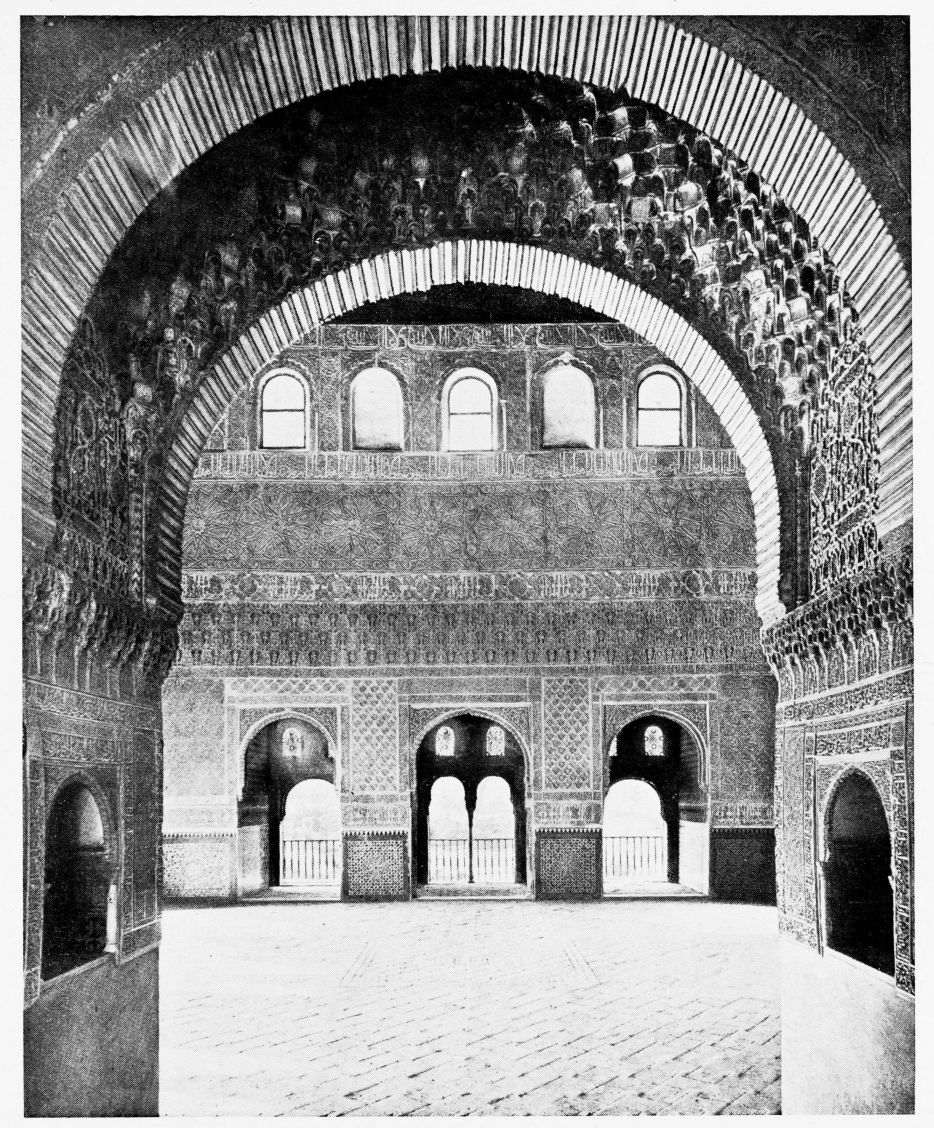
GENERAL VIEW OF THE HALL OF AMBASSADORS.
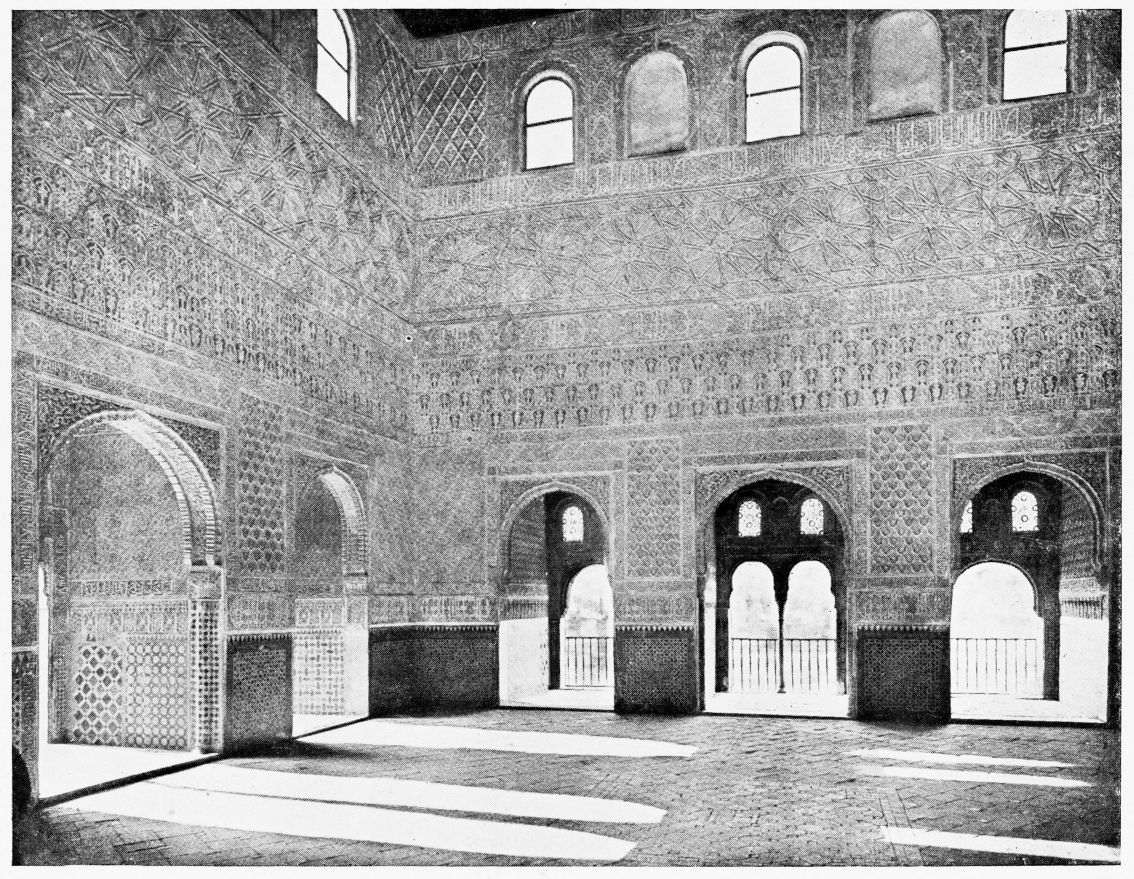
GENERAL VIEW OF THE HALL OF AMBASSADORS.
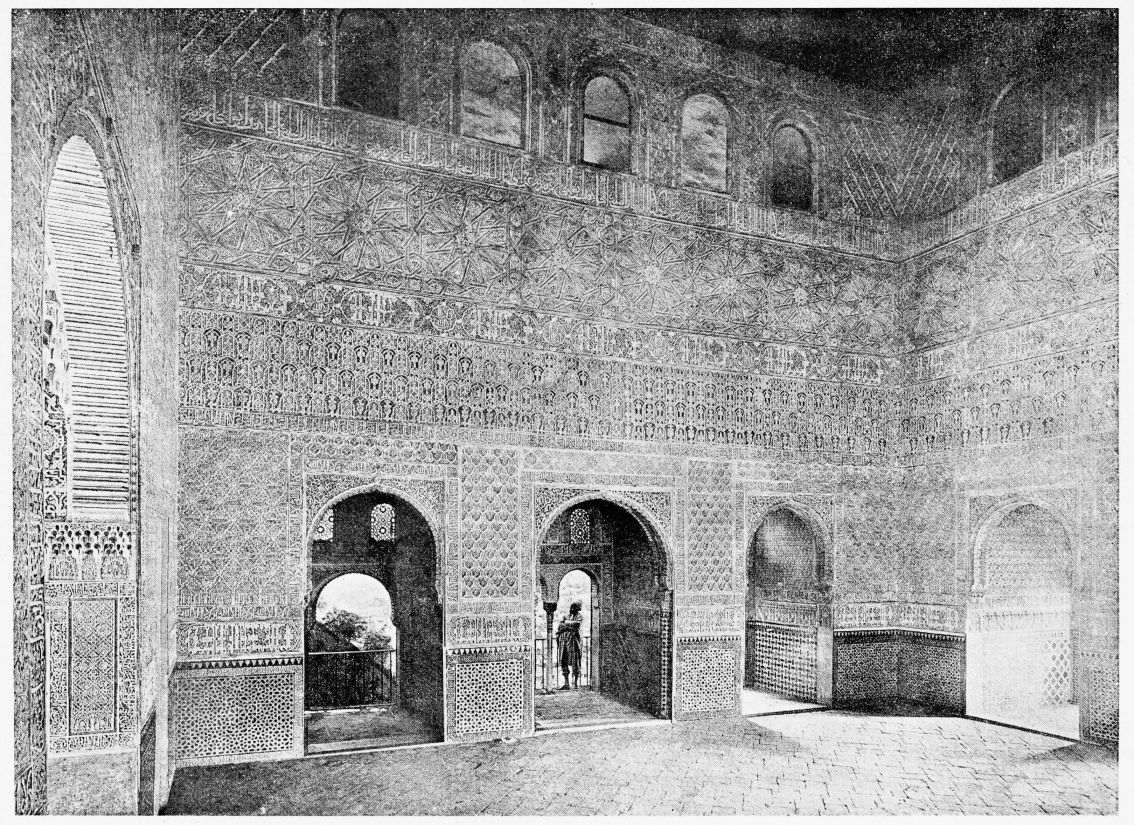
HALL OF AMBASSADORS.
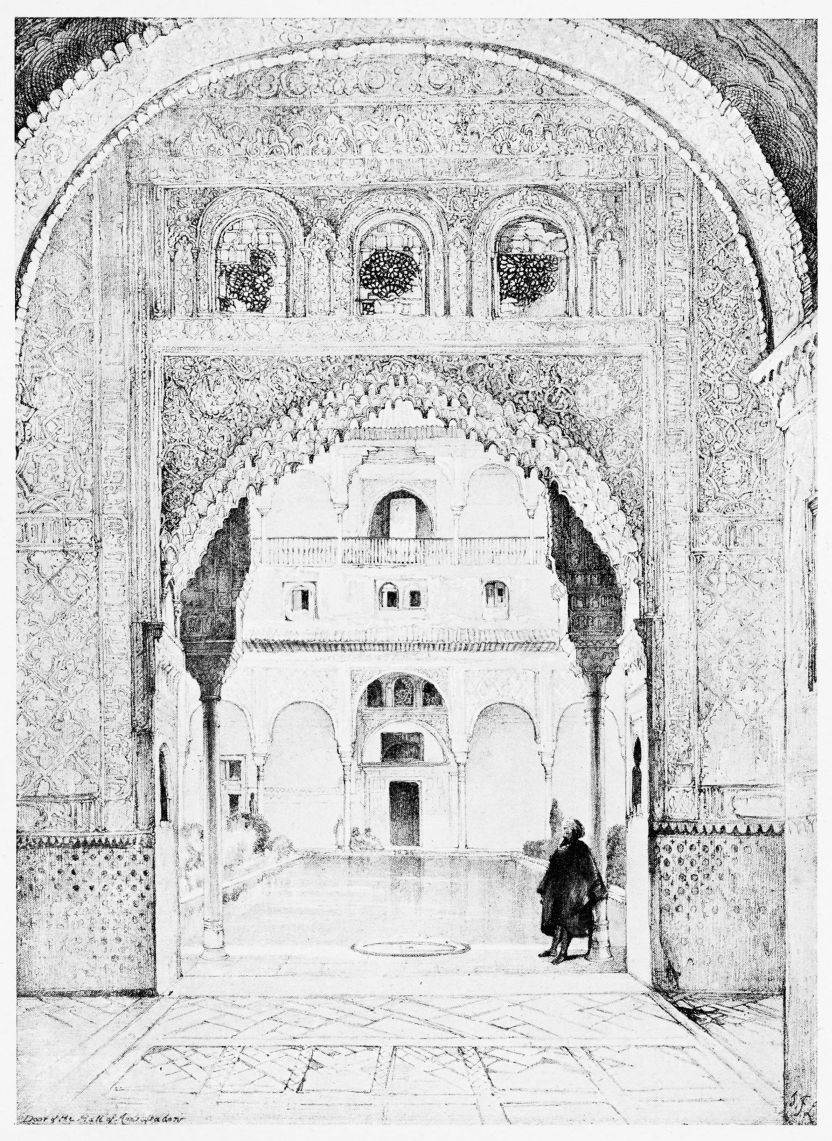
ENTRANCE TO THE HALL OF THE BARQUE, THE ANTE-ROOM OF THE HALL OF AMBASSADORS, WITH VIEW OF THE COURT OF THE FISH-POND.
(From a drawing made about 1830).
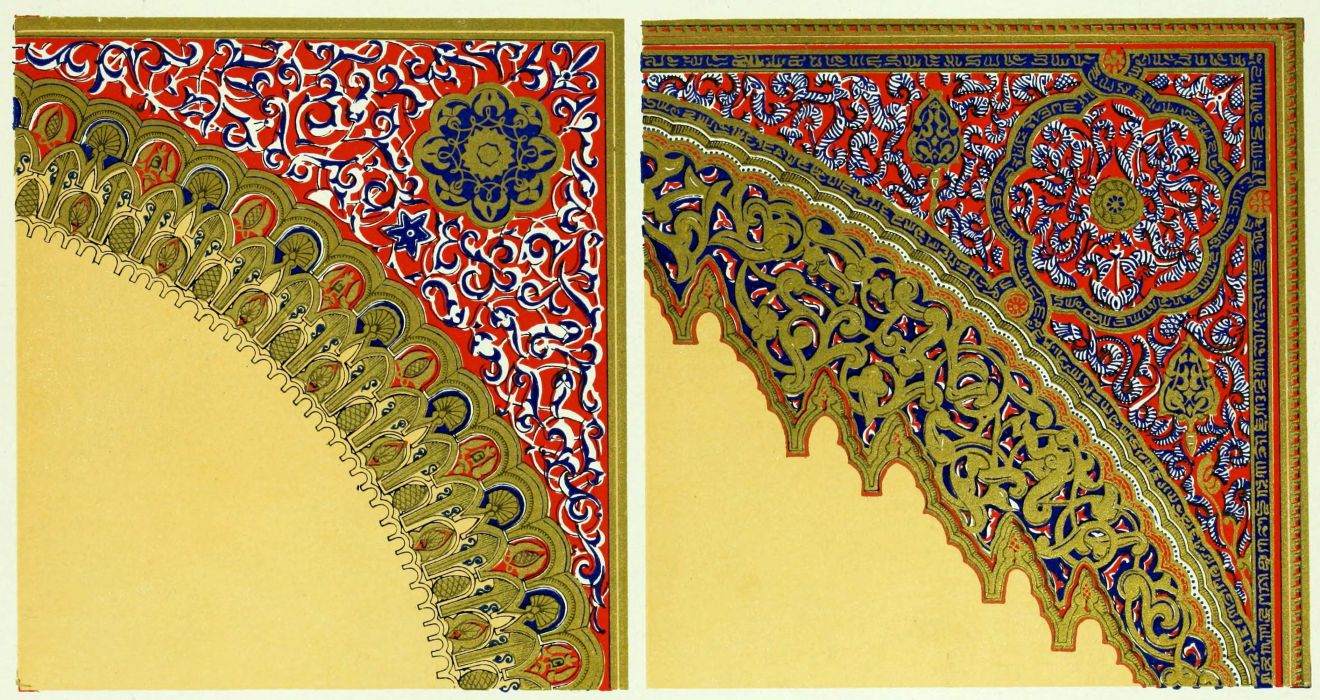
PLATE LXV.
No. 78. From the centre arch of the Court of Lions. No. 79. From the entrance to the Divan, Hall of the Two Sisters.
Spandrils of Arches.
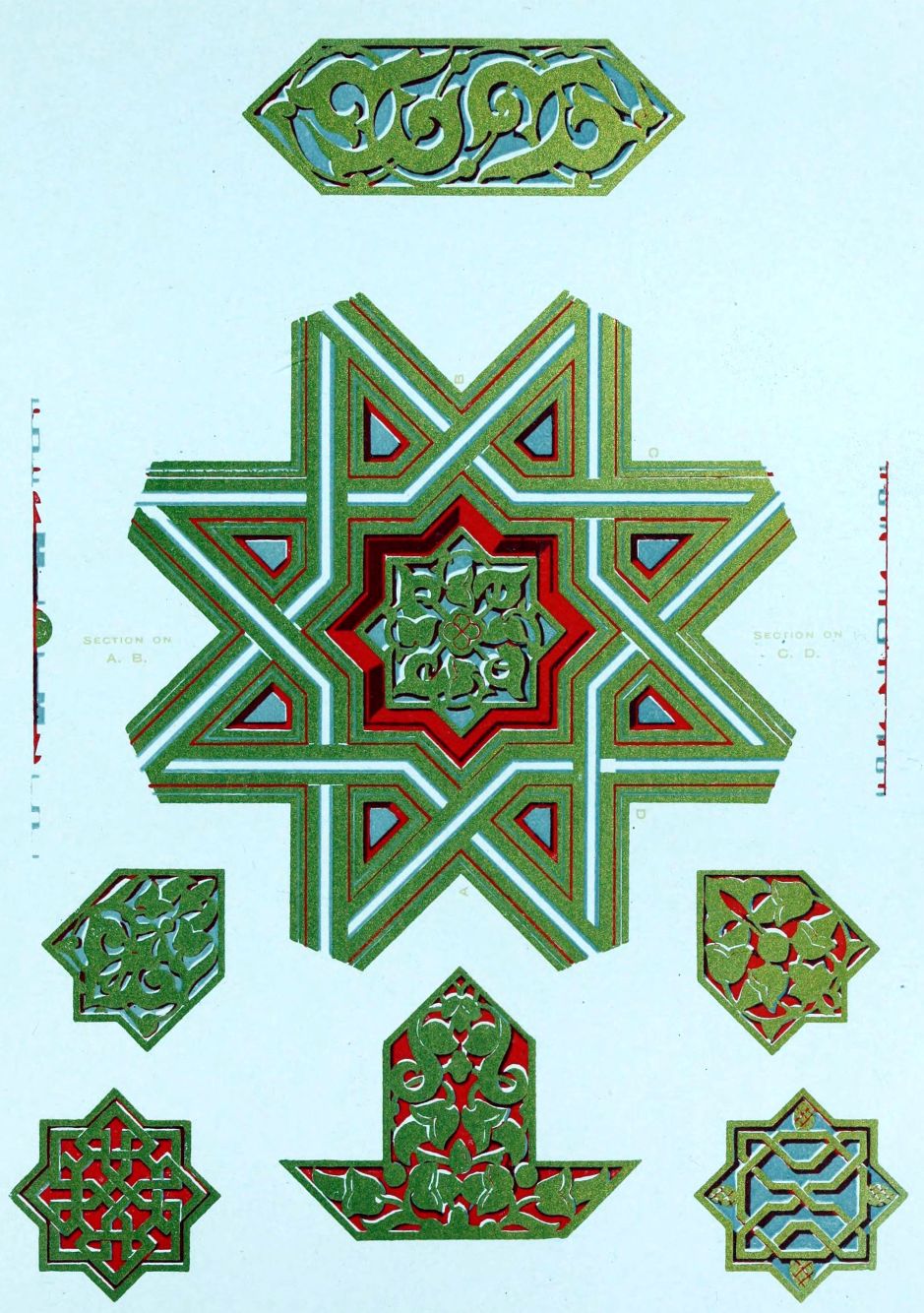
PLATE LXVI.
No. 80.
Details of the wood-work of the door to the Hall of Abencerrages.
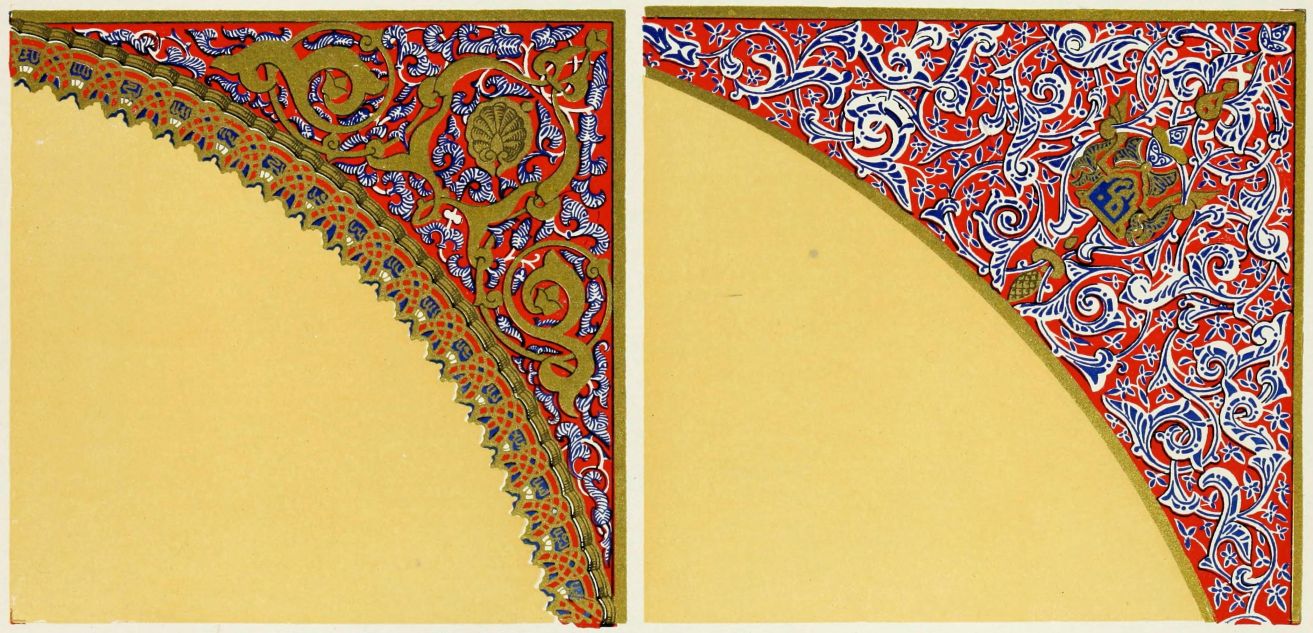
PLATE LXVII.
No. 81. No. 82.
Spandrils of Arches, Hall of Justice.
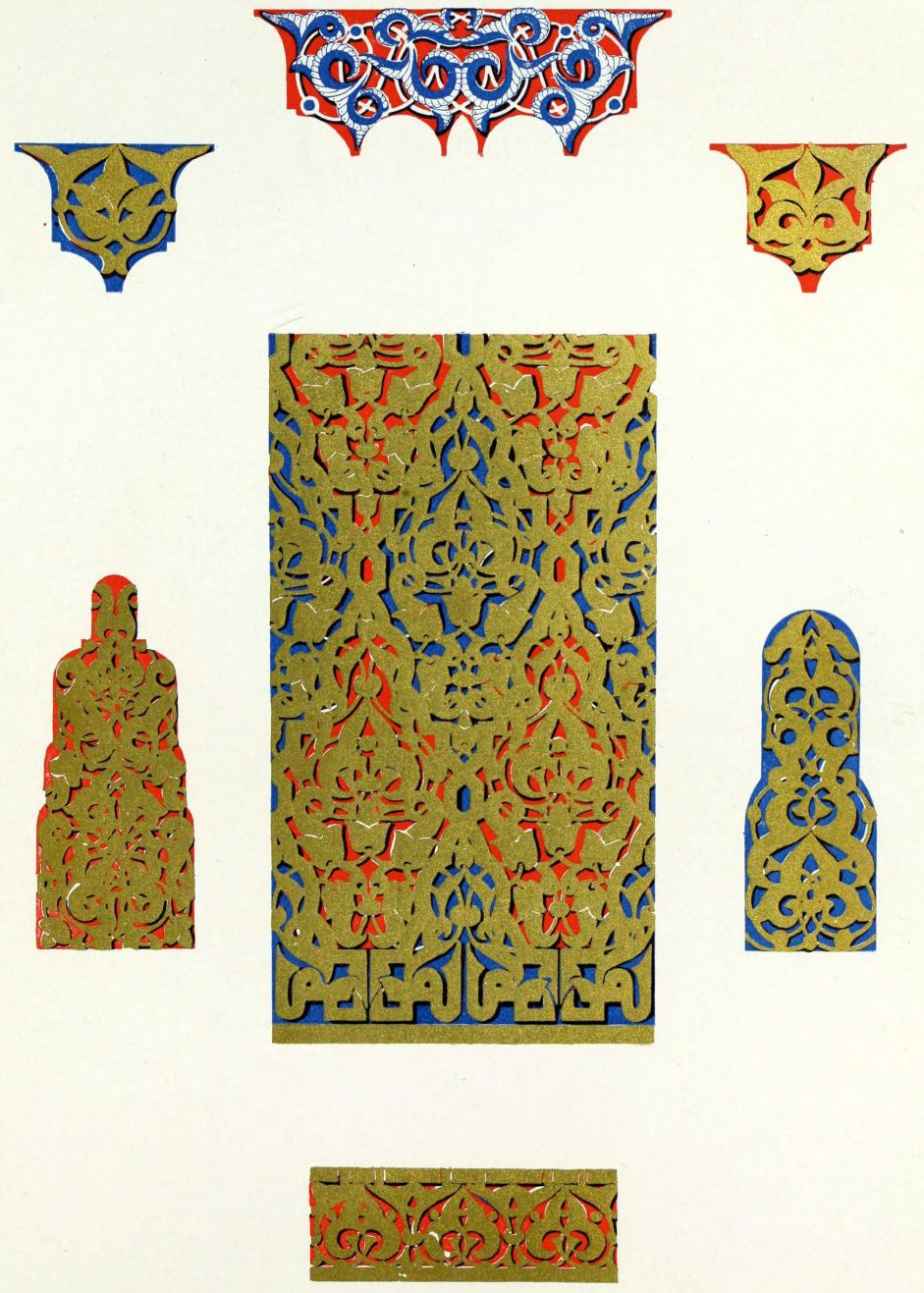
PLATE LXVIII.
No. 83.
Ornaments on the walls of the Hall of the Ambassadors.
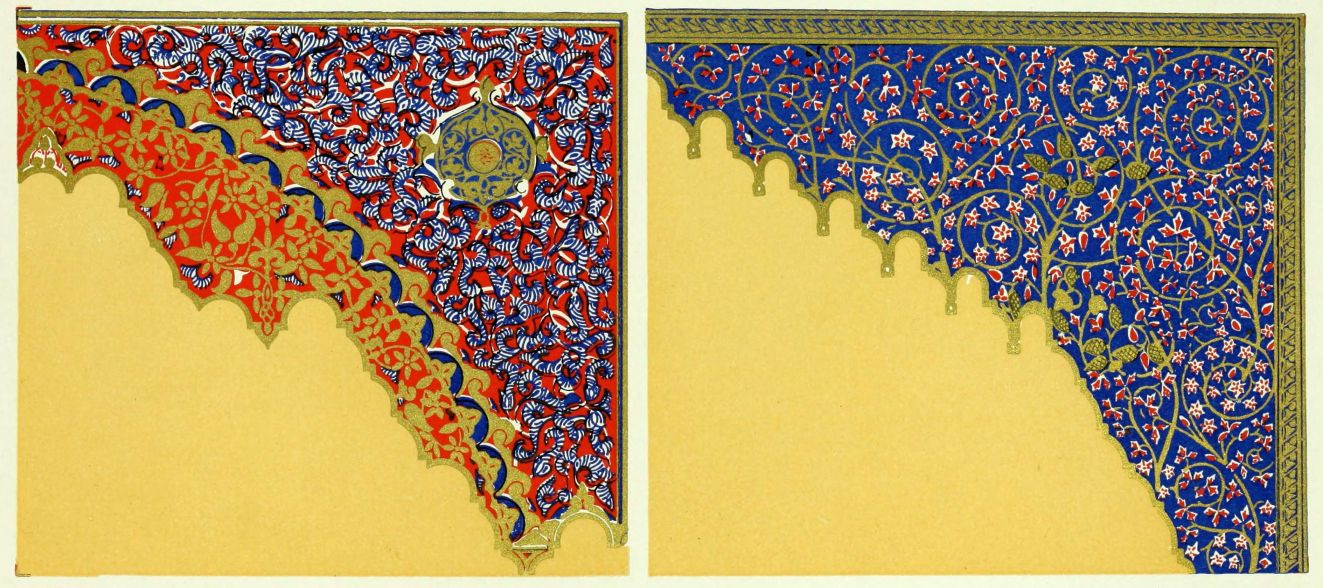
PLATE LXIX.
No. 84. From the entrance to the Court of Lions from the Court of the Fish Ponds. No. 85. From the entrance to the Court of the Fish Ponds from the Hall of the Bark.
Spandrils of Arches.
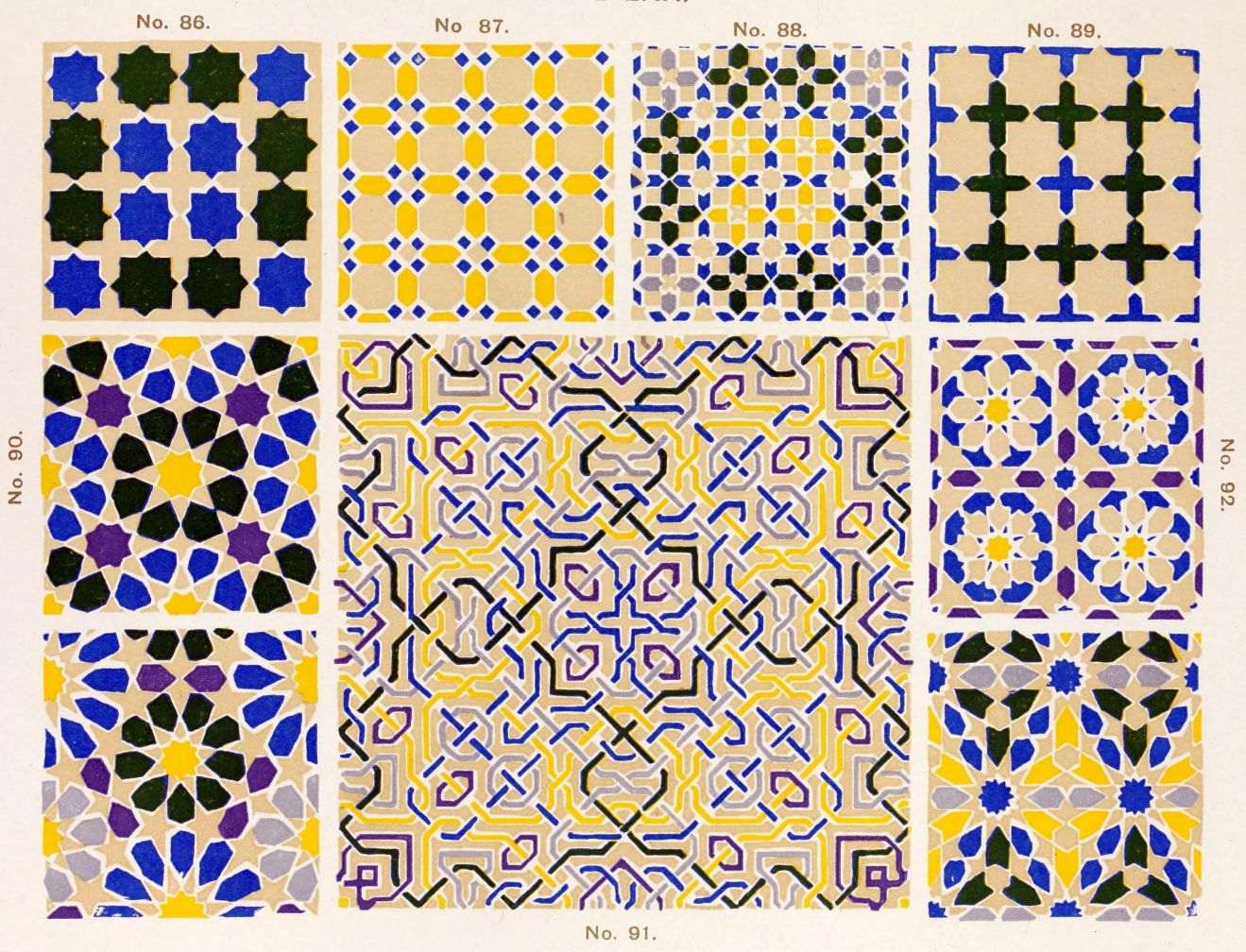
PLATE LXX.
No. 86., No. 87., No. 88., No. 89., No. 90., No. 91., No. 92.
Mosaics from the Hall of Ambassadors, Hall of Two Sisters, and Hall of Justice.
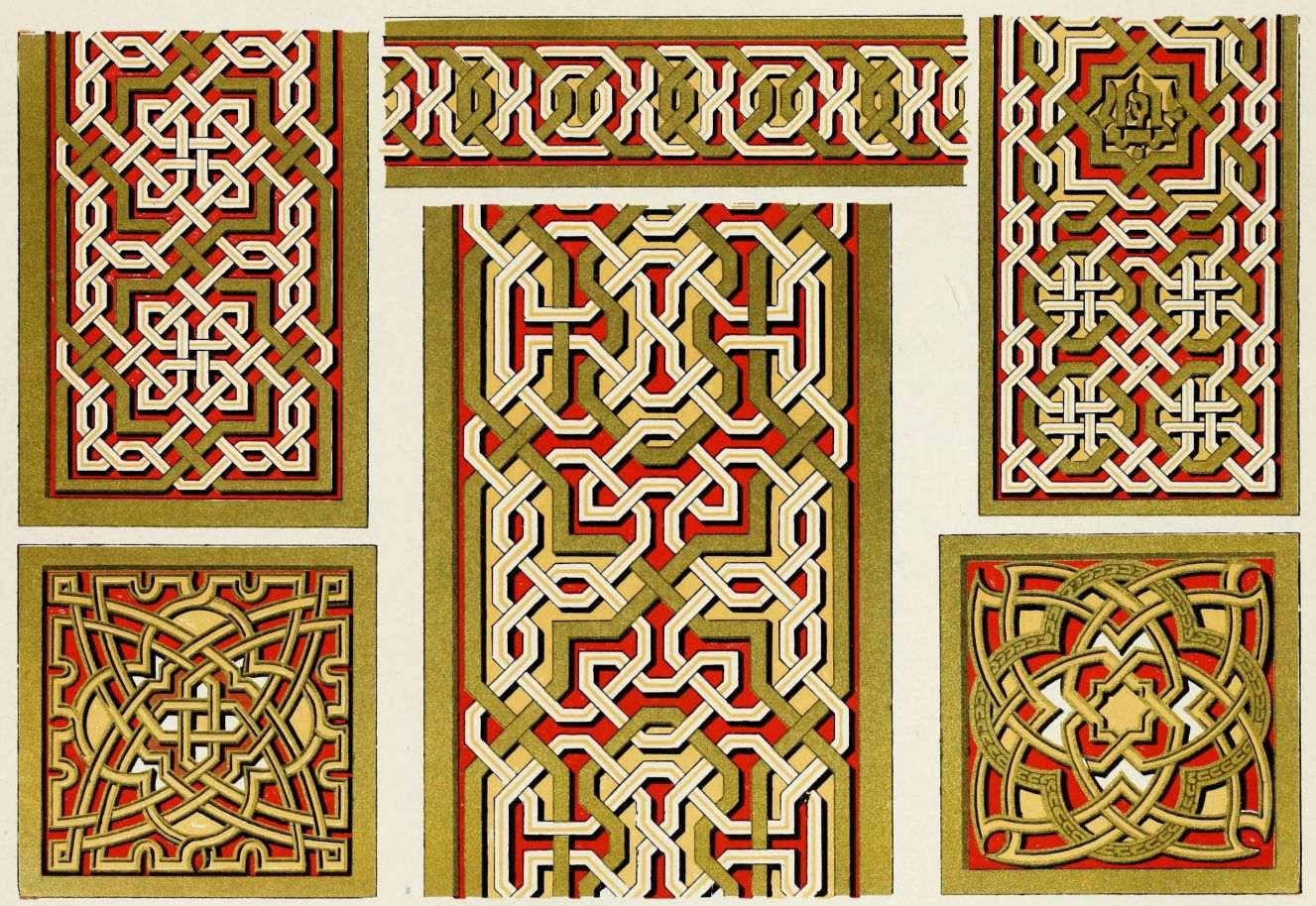
PLATE LXXI.
No. 93.
Plaster Ornaments, used as upright and horizontal bands enclosing panels on the walls.
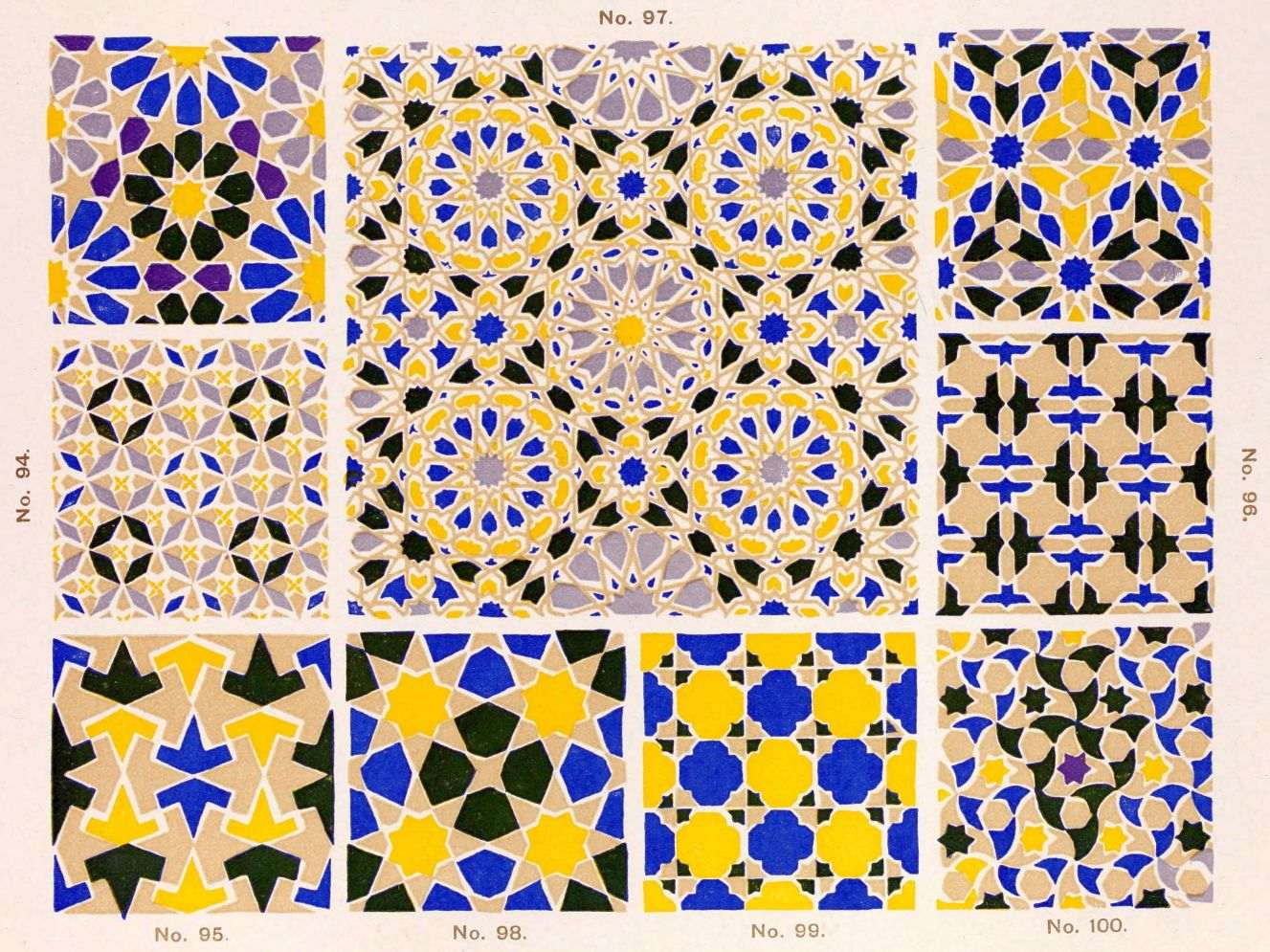
PLATE LXXII.
No. 94., No. 95., No. 96., No. 97., No. 98., No. 99., No. 100.
Mosaics from the Hall of Ambassadors, Hall of Two Sisters, Hall of Justice, and Court of the Fish Pond.
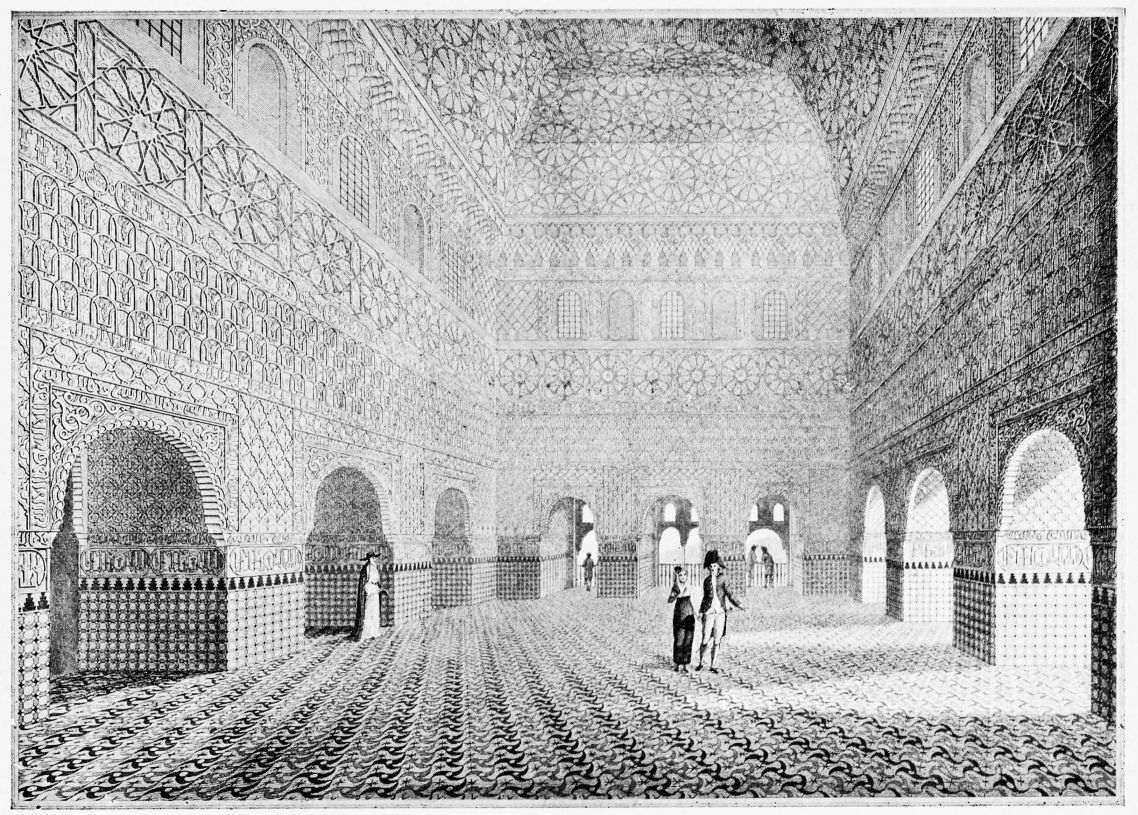
PERSPECTIVE VIEW OF THE HALL OF AMBASSADORS.
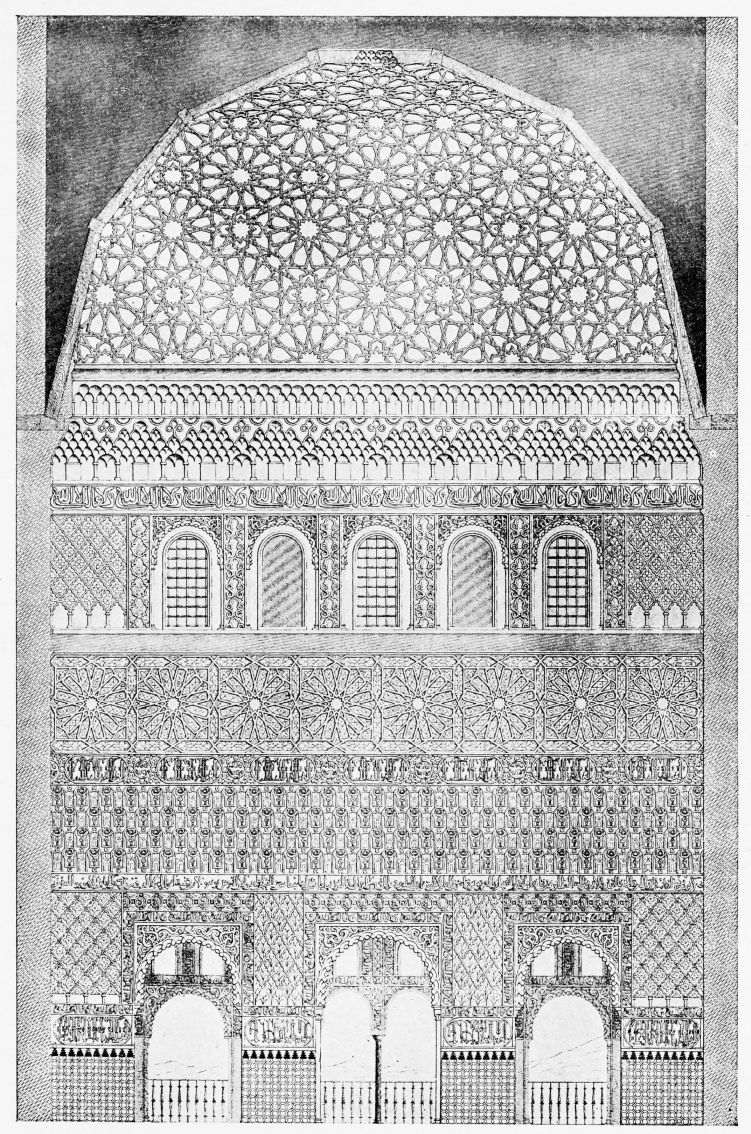
SECTION AND ELEVATION OF THE INTERIOR OF THE HALL OF AMBASSADORS.
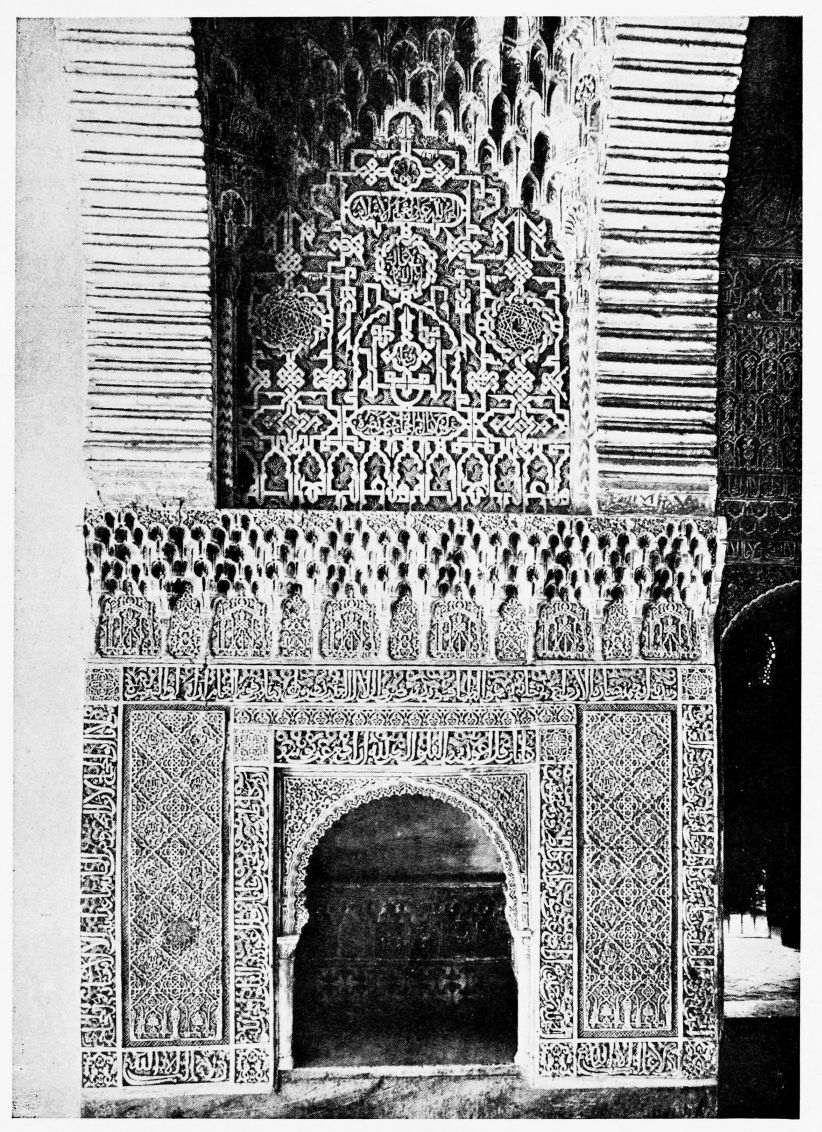
DETAIL IN THE HALL OF AMBASSADORS.
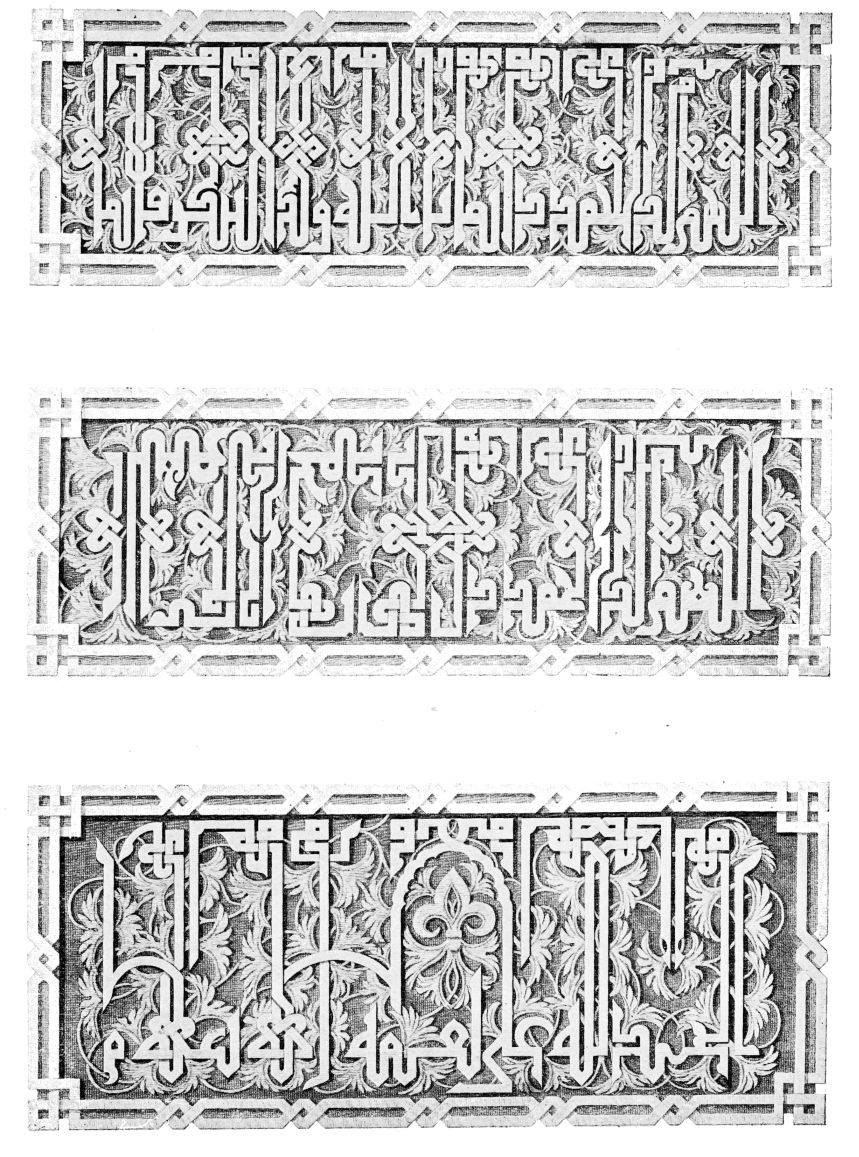
KUFIC INSCRIPTIONS, HALL OF AMBASSADORS.
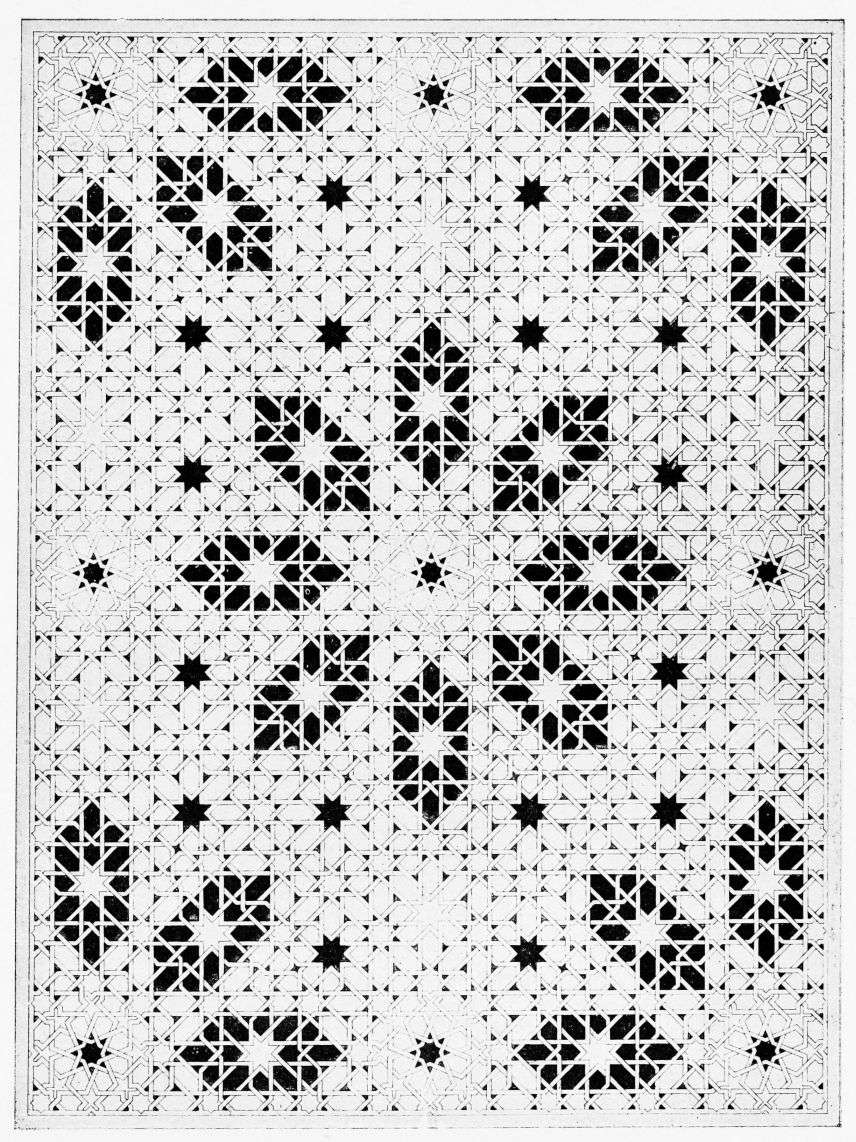
MOSAIC ON DADO OF BALCONY HALL OF AMBASSADORS
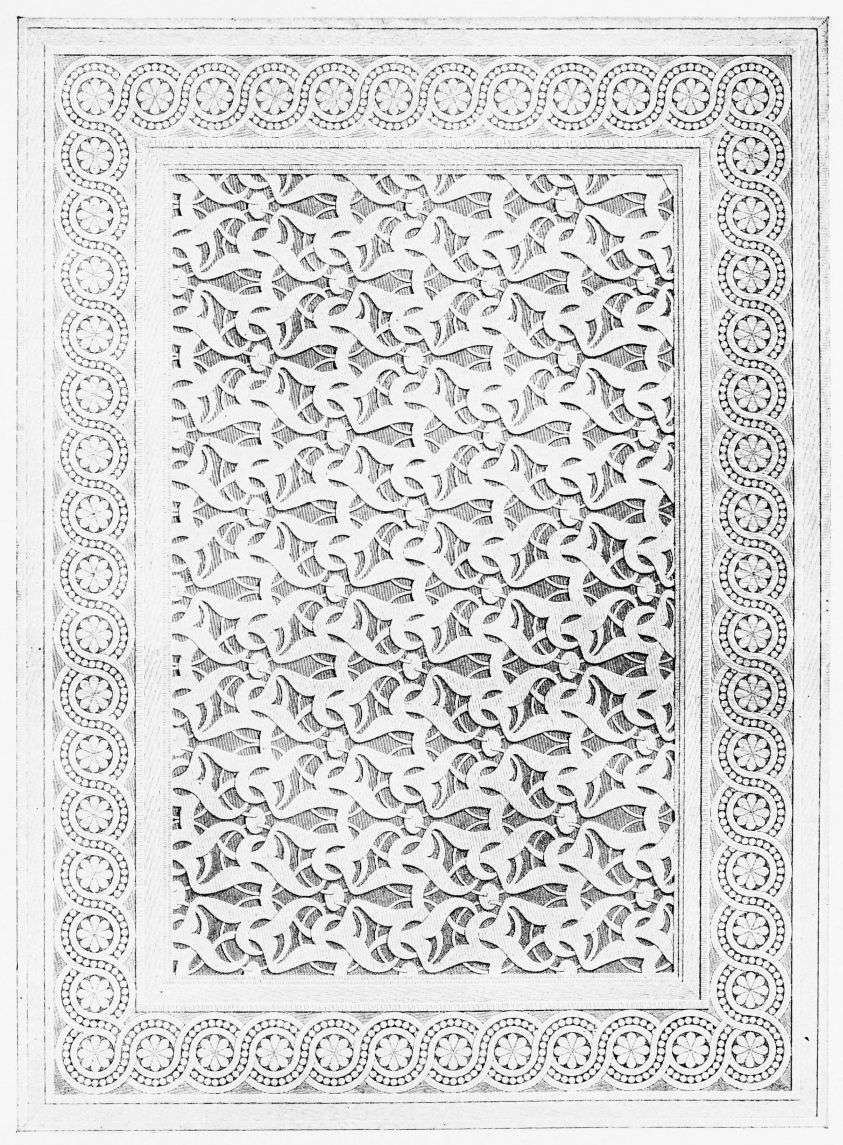
ORNAMENT FROM THE SIDE OF A WINDOW, HALL OF AMBASSADORS.
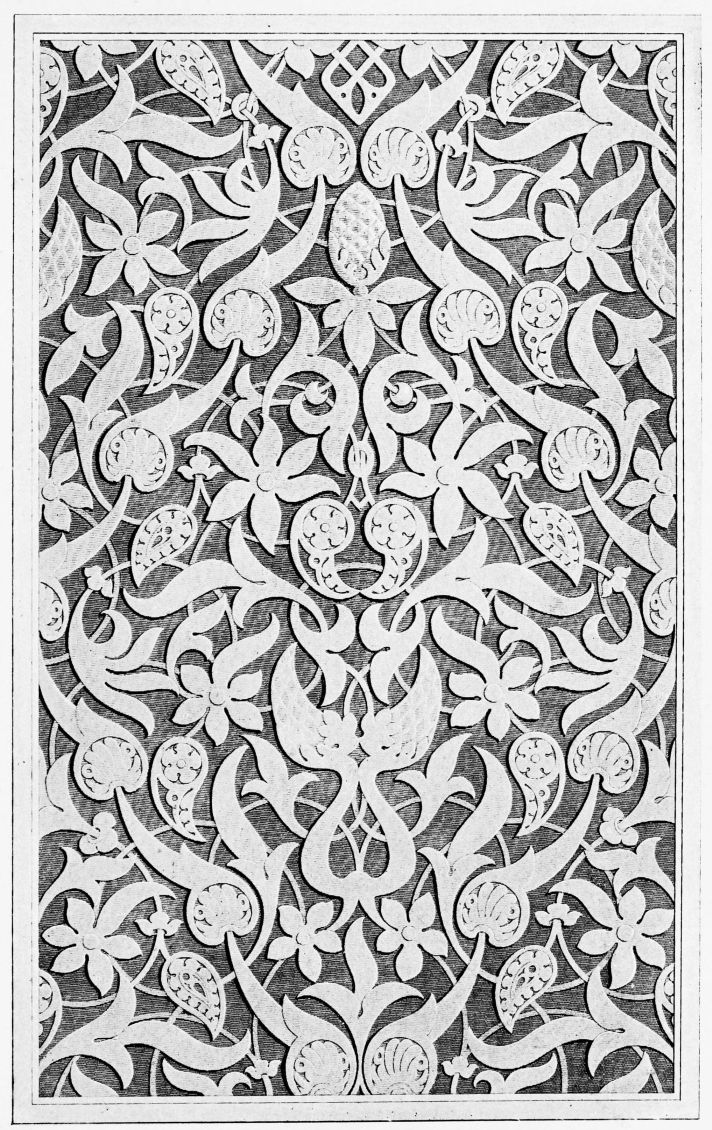
MURAL ORNAMENT, ENTRANCE TO THE HALL OF AMBASSADORS.
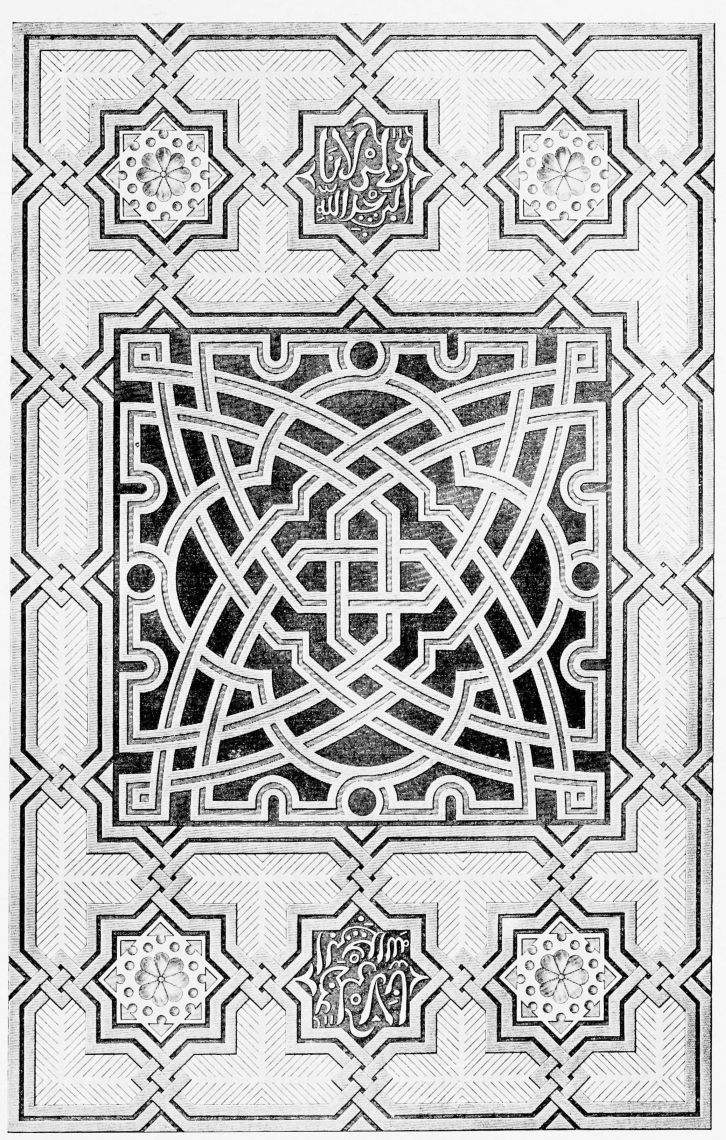
ORNAMENT AT THE SIDE OF DOORWAY, ENTRANCE TO THE HALL OF AMBASSADORS.
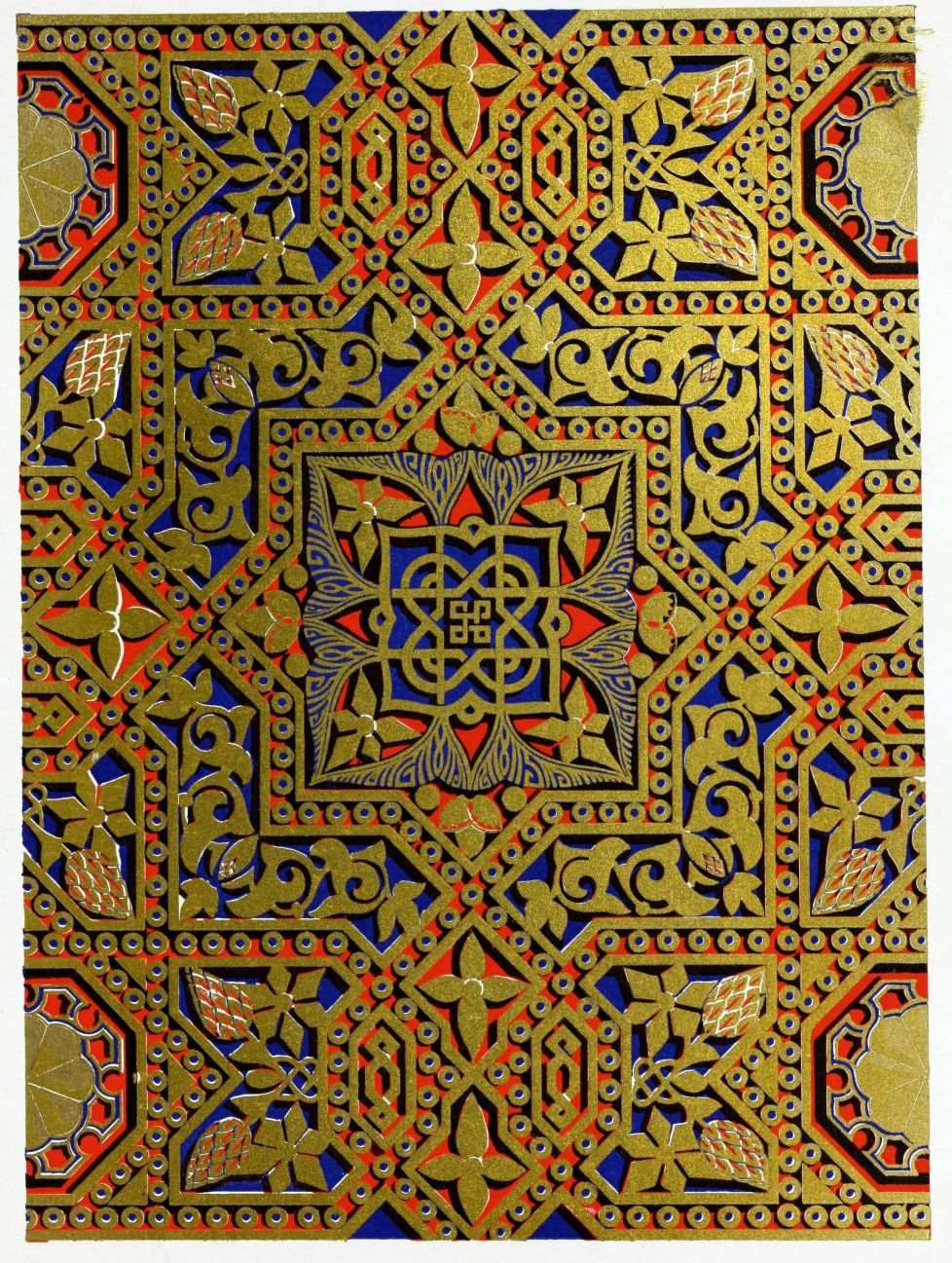
PLATE LXXIII.
No. 101.
Panels on walls, Tower of the Captive.
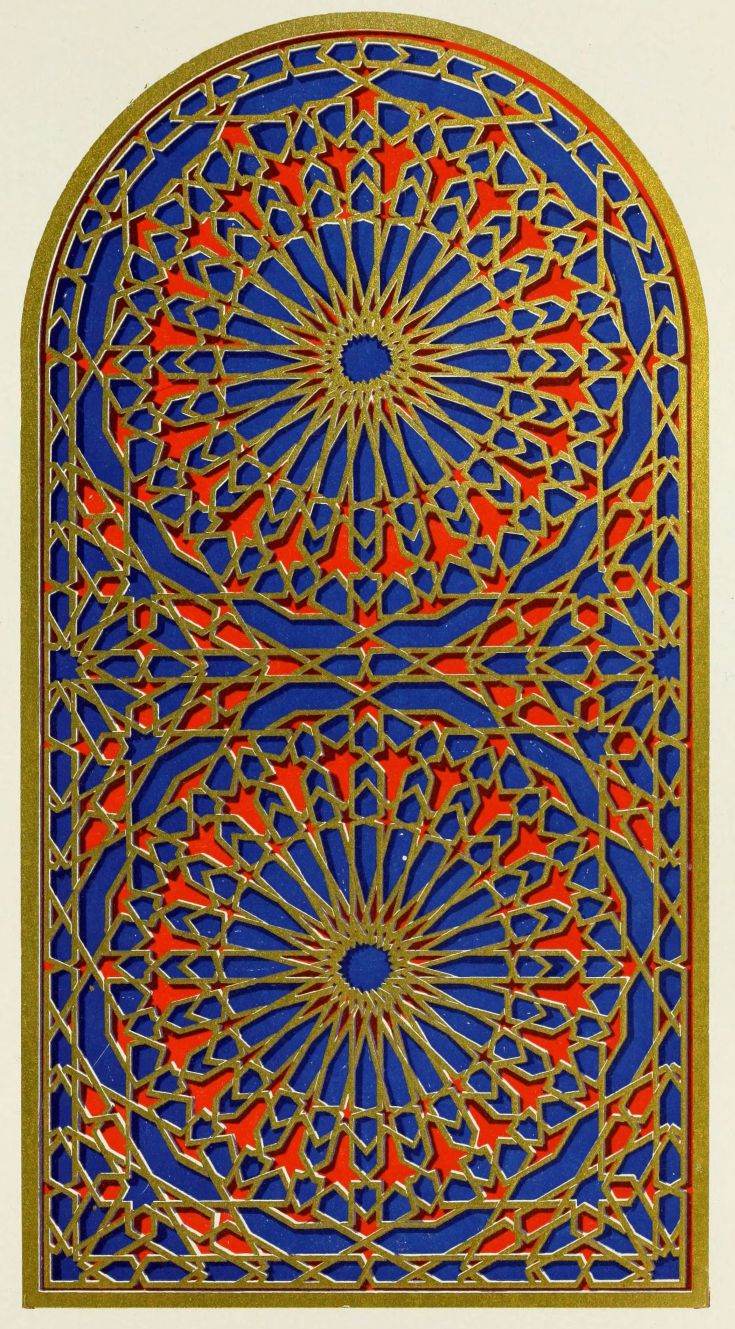
PLATE LXXIV.
No. 102.
Blank window, Hall of the Bark.
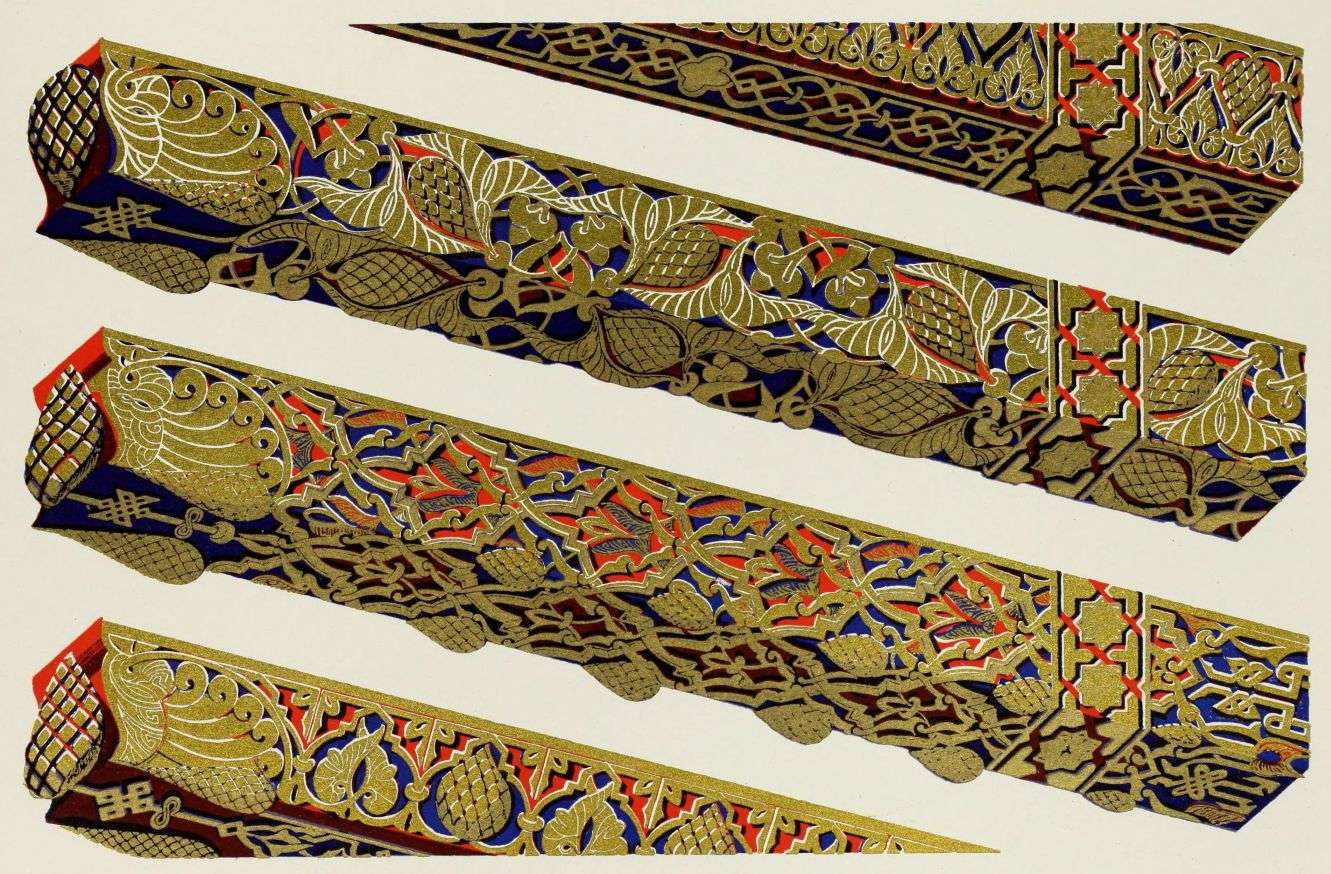
PLATE LXXV.
No. 103.
Rafters of a roof over a doorway now destroyed beneath the Tocador de la Reyna.
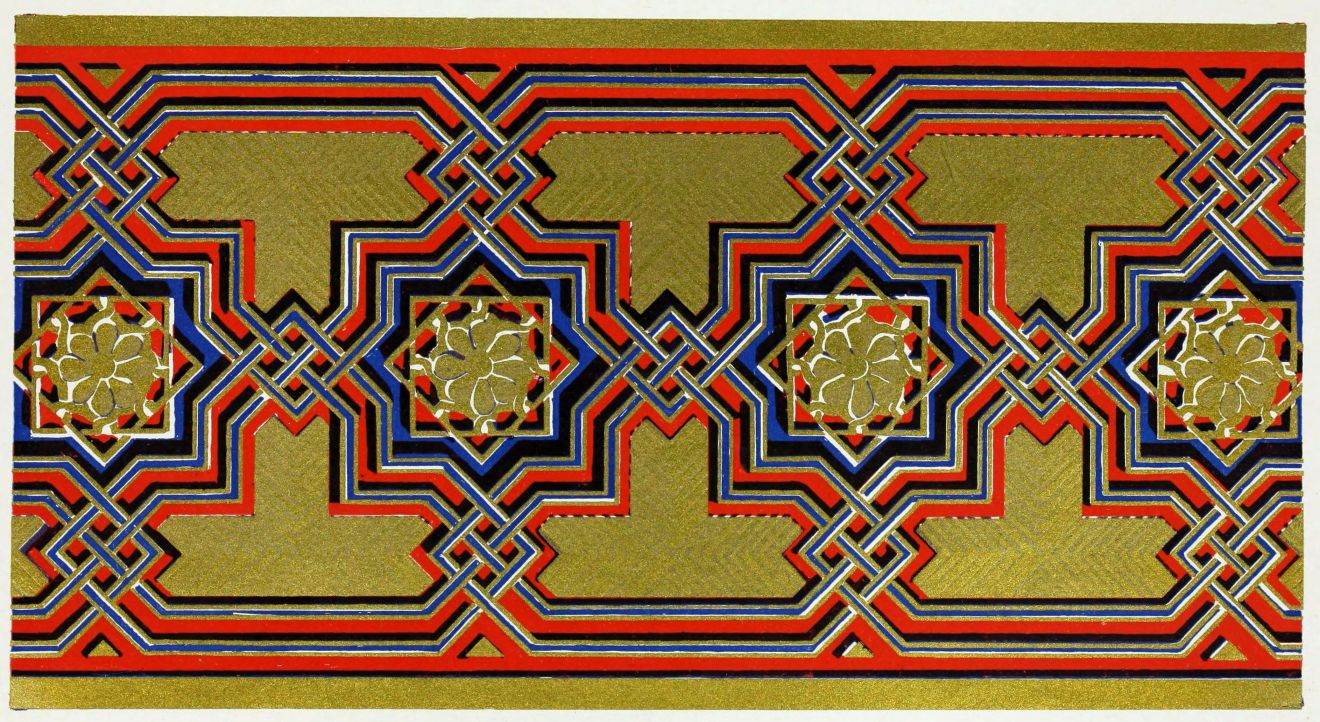
PLATE LXXVI.
No. 104
Band at springing of arch at the entrance of Hall of the Two Sisters from the Court of Lions.
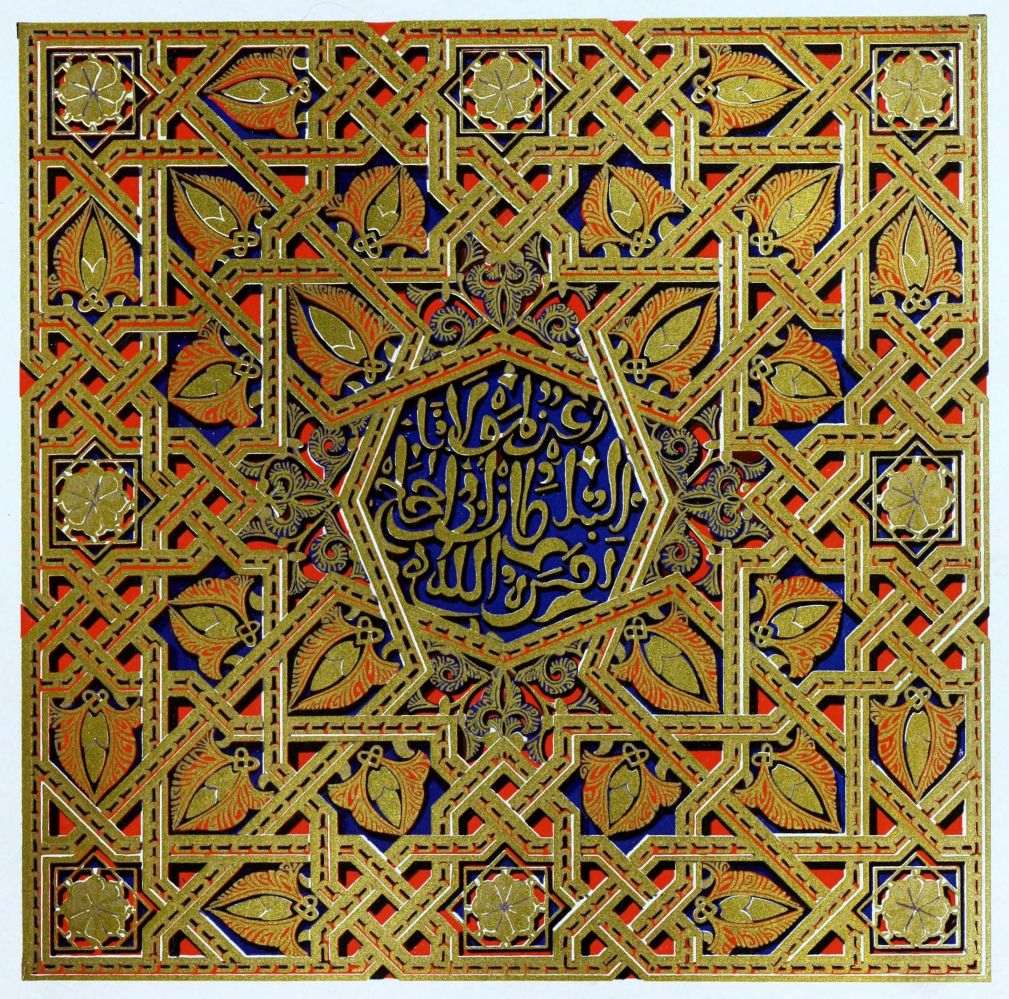
PLATE LXXVII.
No. 105.
Panelling of the centre recess, Hall of Ambassadors.
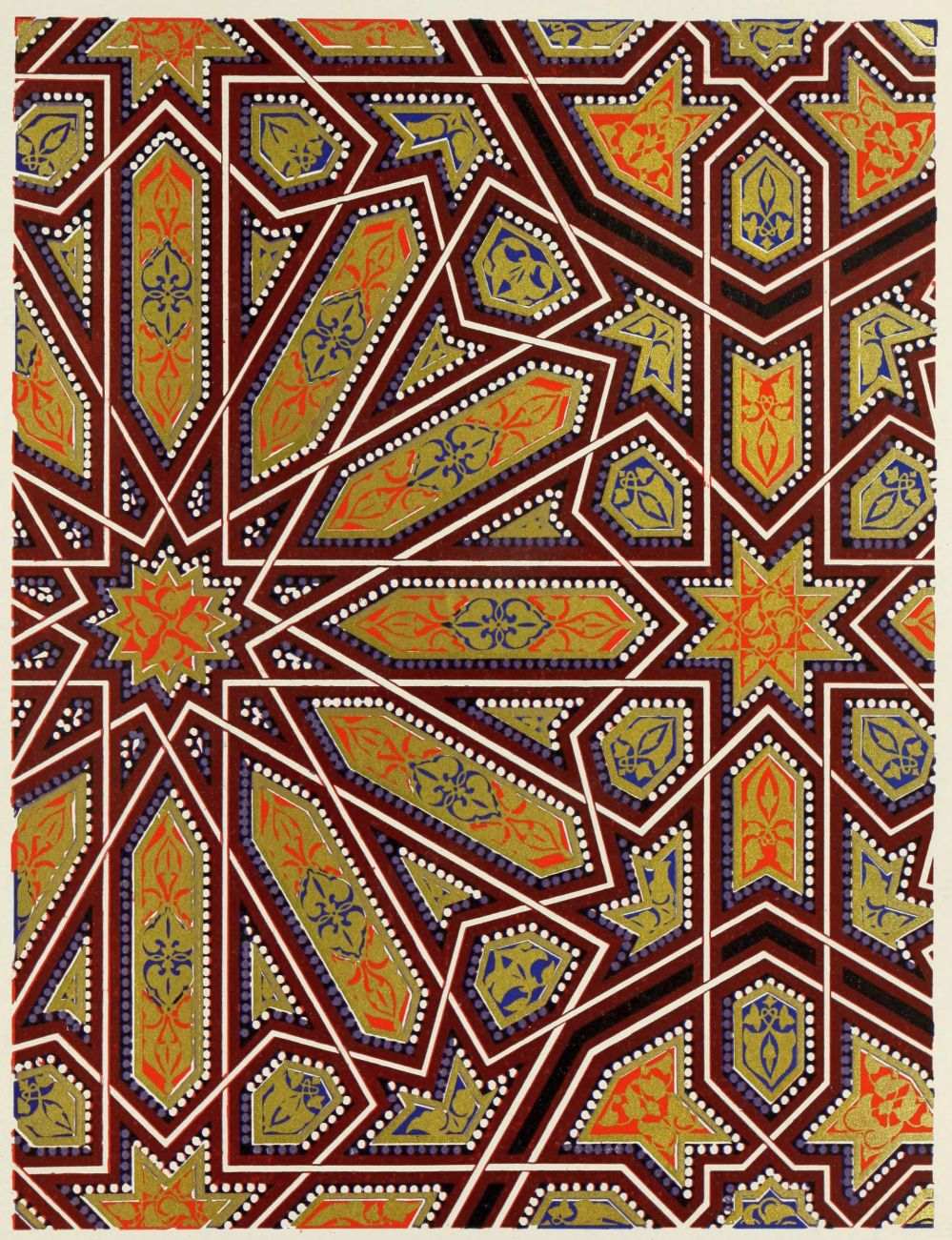
PLATE LXXVIII.
No. 106.
Part of ceiling of the Portico of the Court of the Fish Pond.
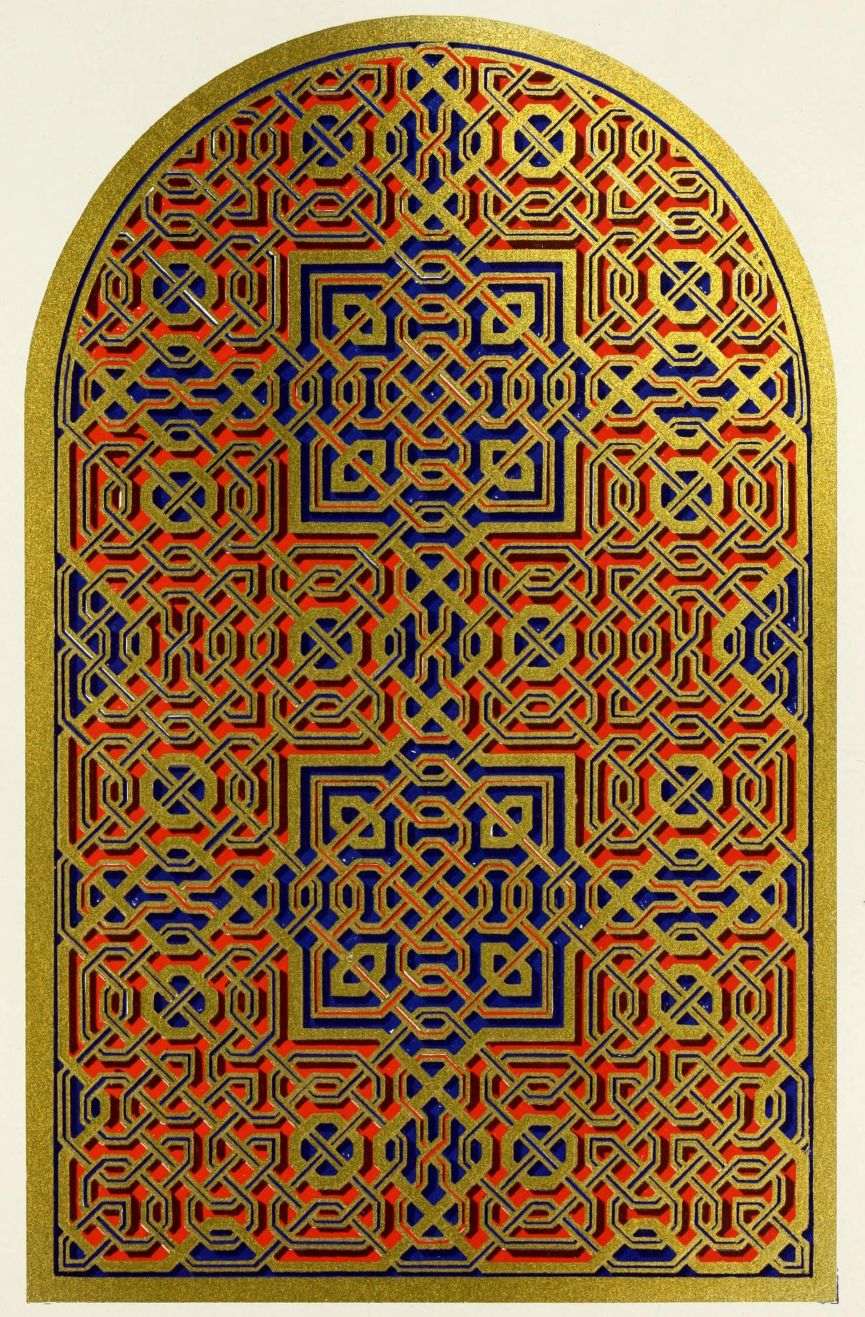
PLATE LXXIX.
No. 107.
Blank window, Hall of the Bark.
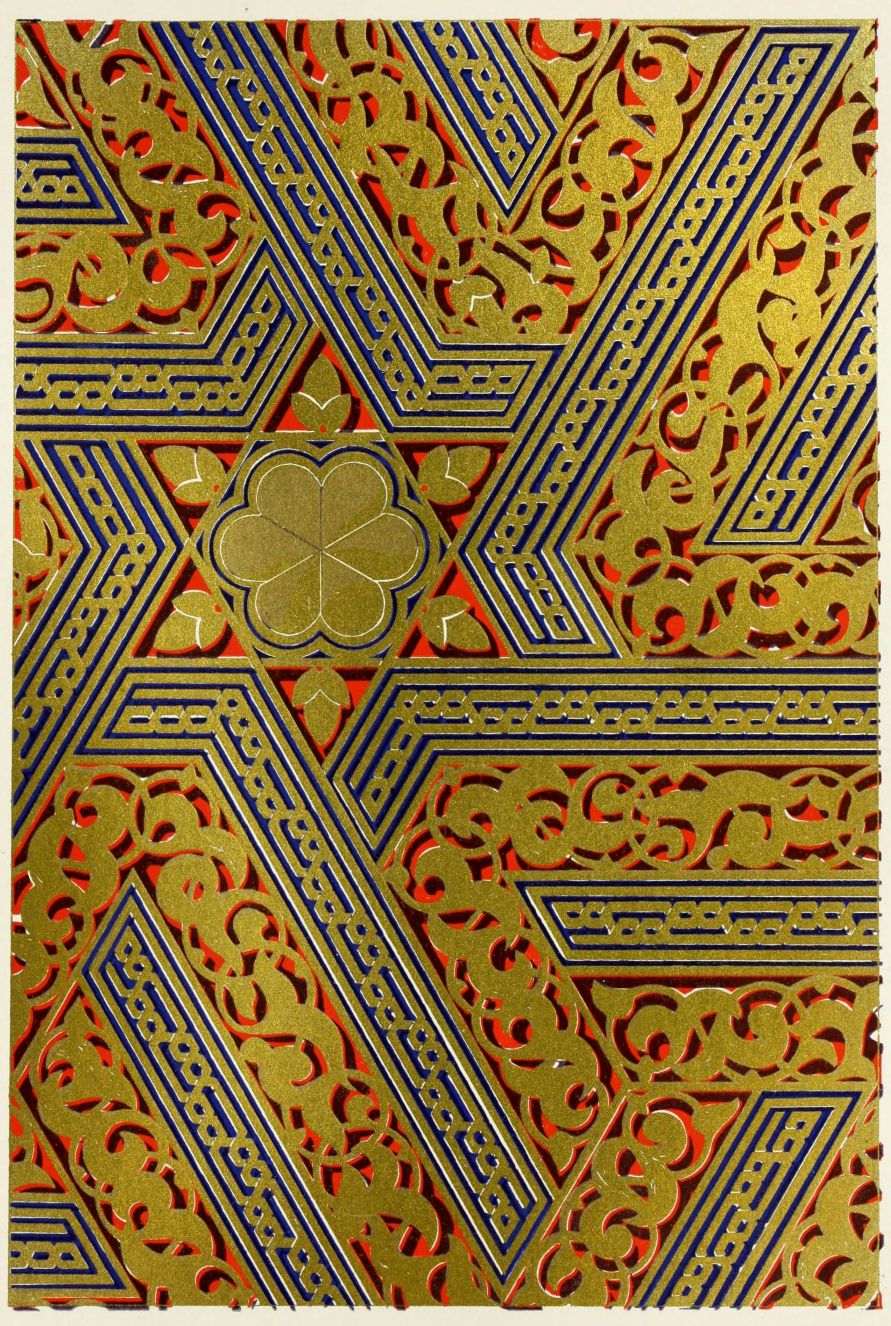
PLATE LXXX.
No. 108.
Ornaments on the walls, House of Sanchez.
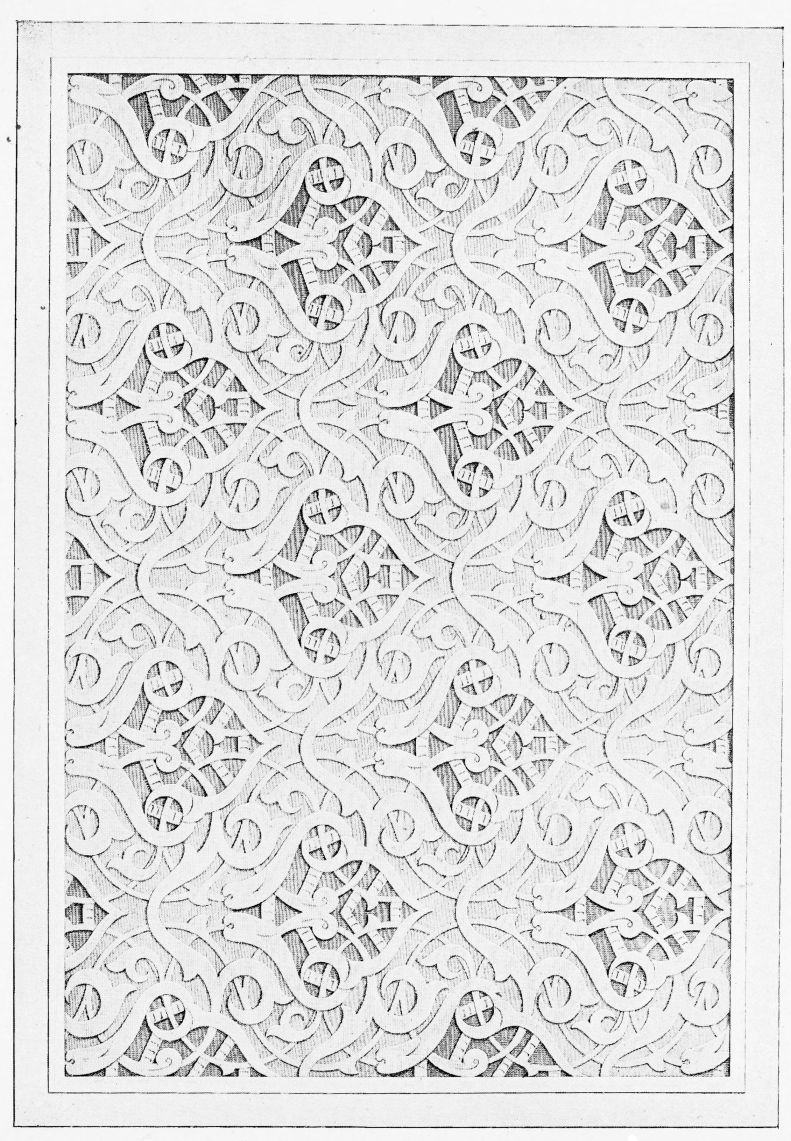
AN ARABIAN ORNAMENT, HALL OF AMBASSADORS.
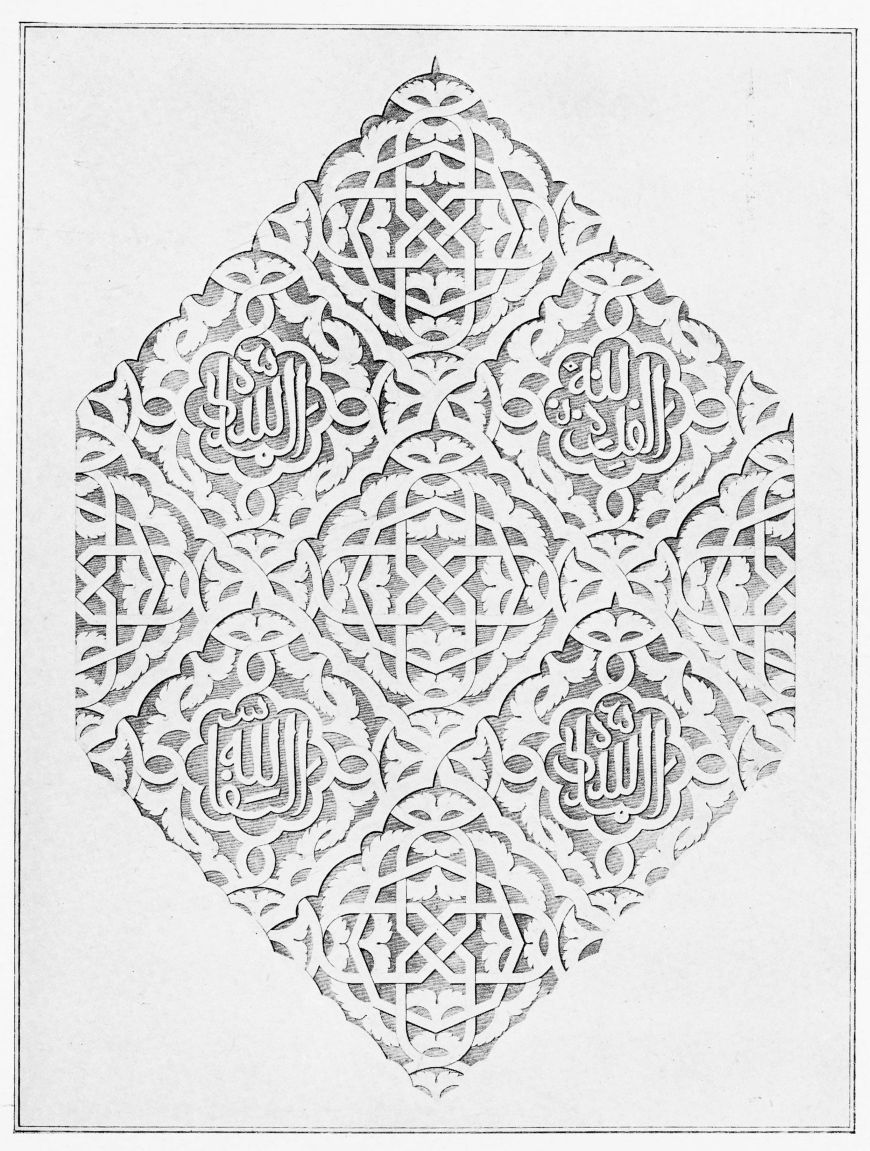
AN ARABIAN ORNAMENT, ENTRANCE TO THE HALL OF AMBASSADORS.
INSCRIPTIONS AND ORNAMENT, HALL OF AMBASSADORS.
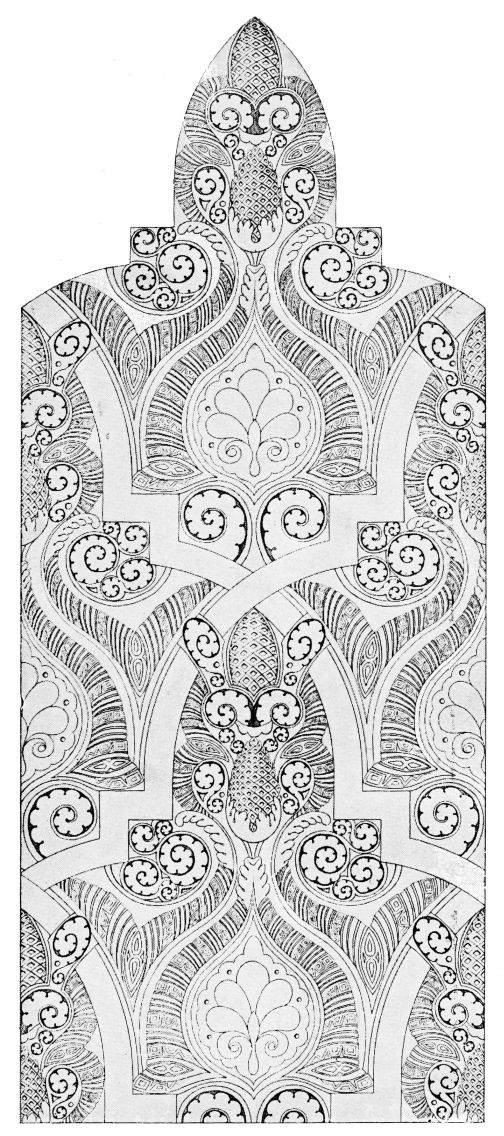
ORNAMENT FROM THE SIDE OF A WINDOW, HALL OF AMBASSADORS.
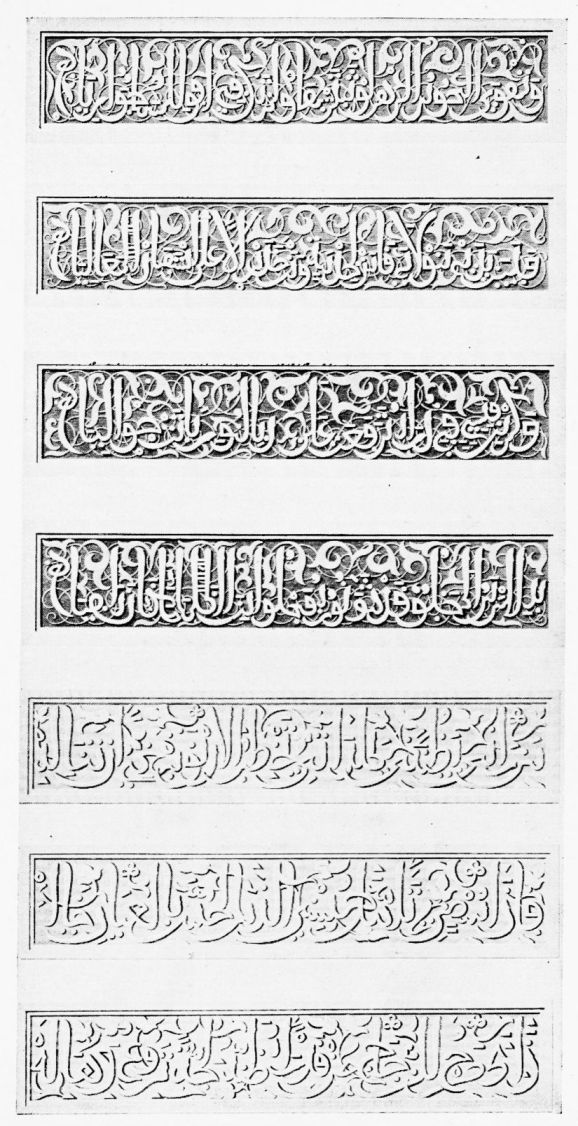
INSCRIPTIONS IN THE HALL OF AMBASSADORS.
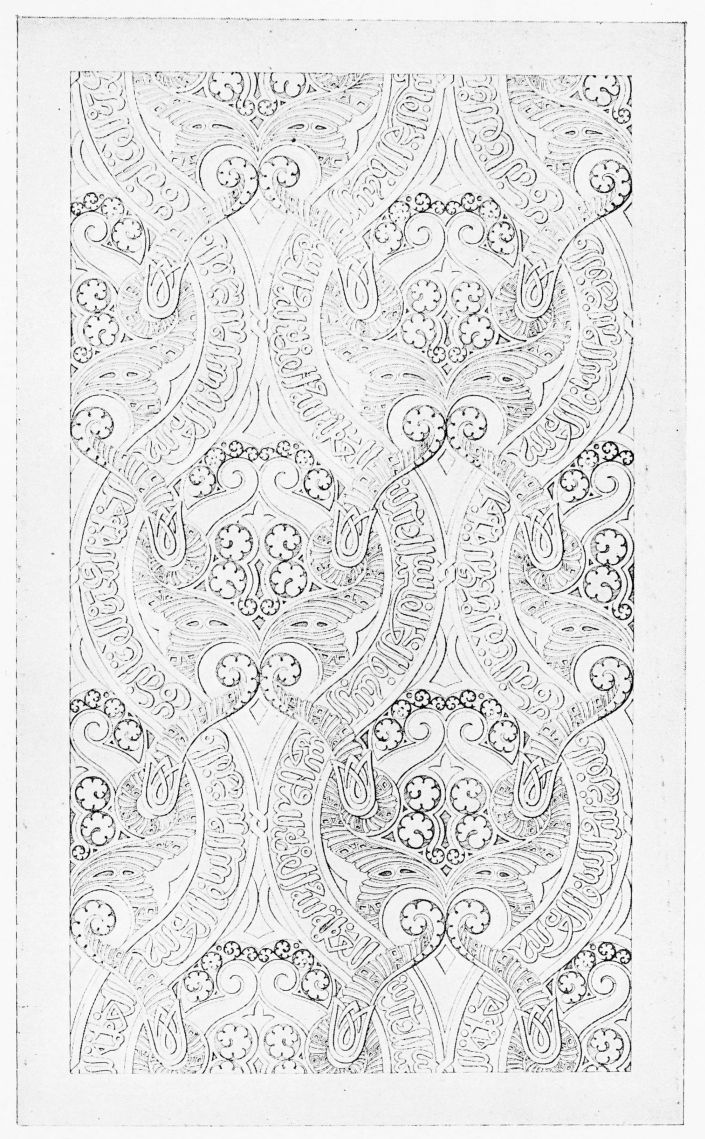
MURAL ORNAMENT, HALL OF AMBASSADORS.
ORNAMENT FROM THE SIDE OF A WINDOW, HALL OF AMBASSADORS.
ORNAMENT FROM THE SIDE OF A WINDOW, HALL OF AMBASSADORS.
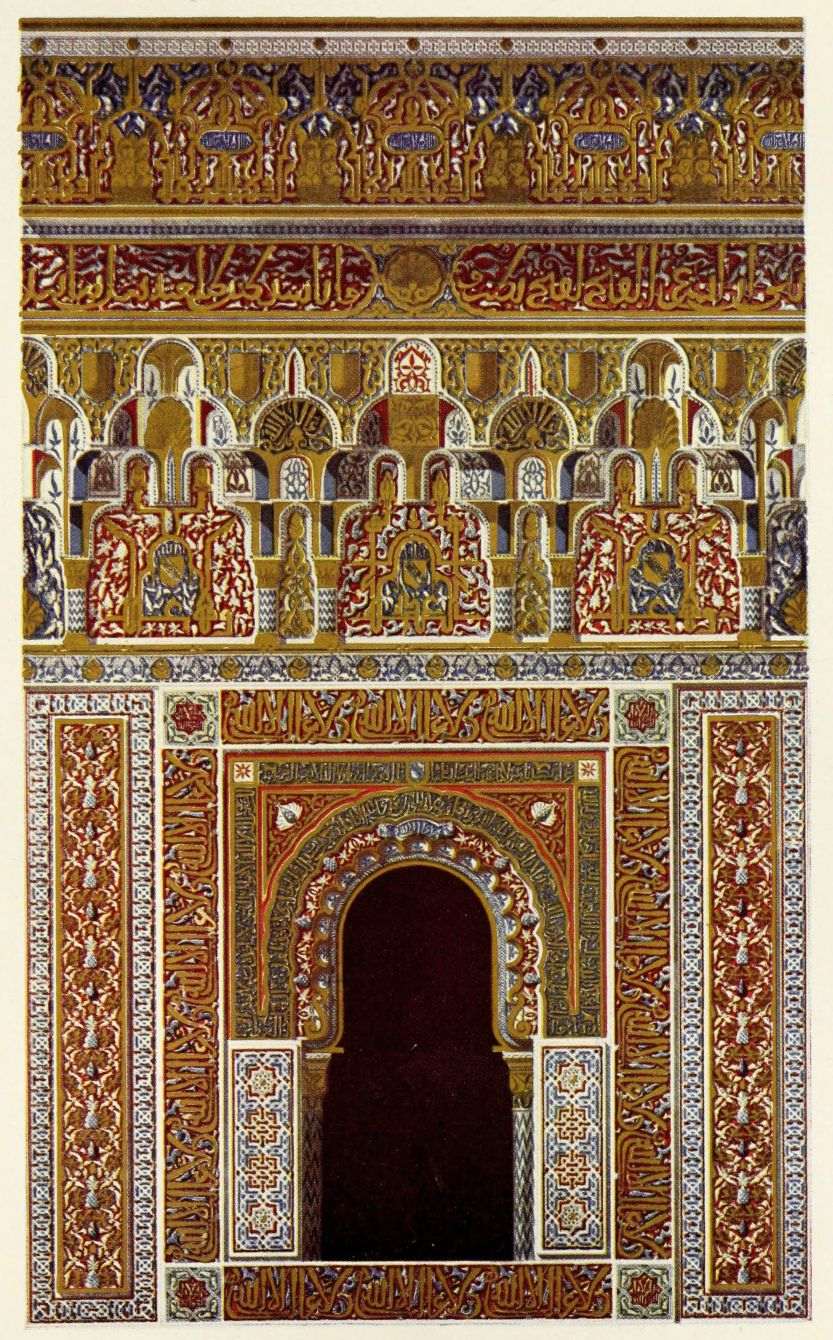
PLATE LXXXI.
Cornice and window in the centre of the Façade of the Mosque.
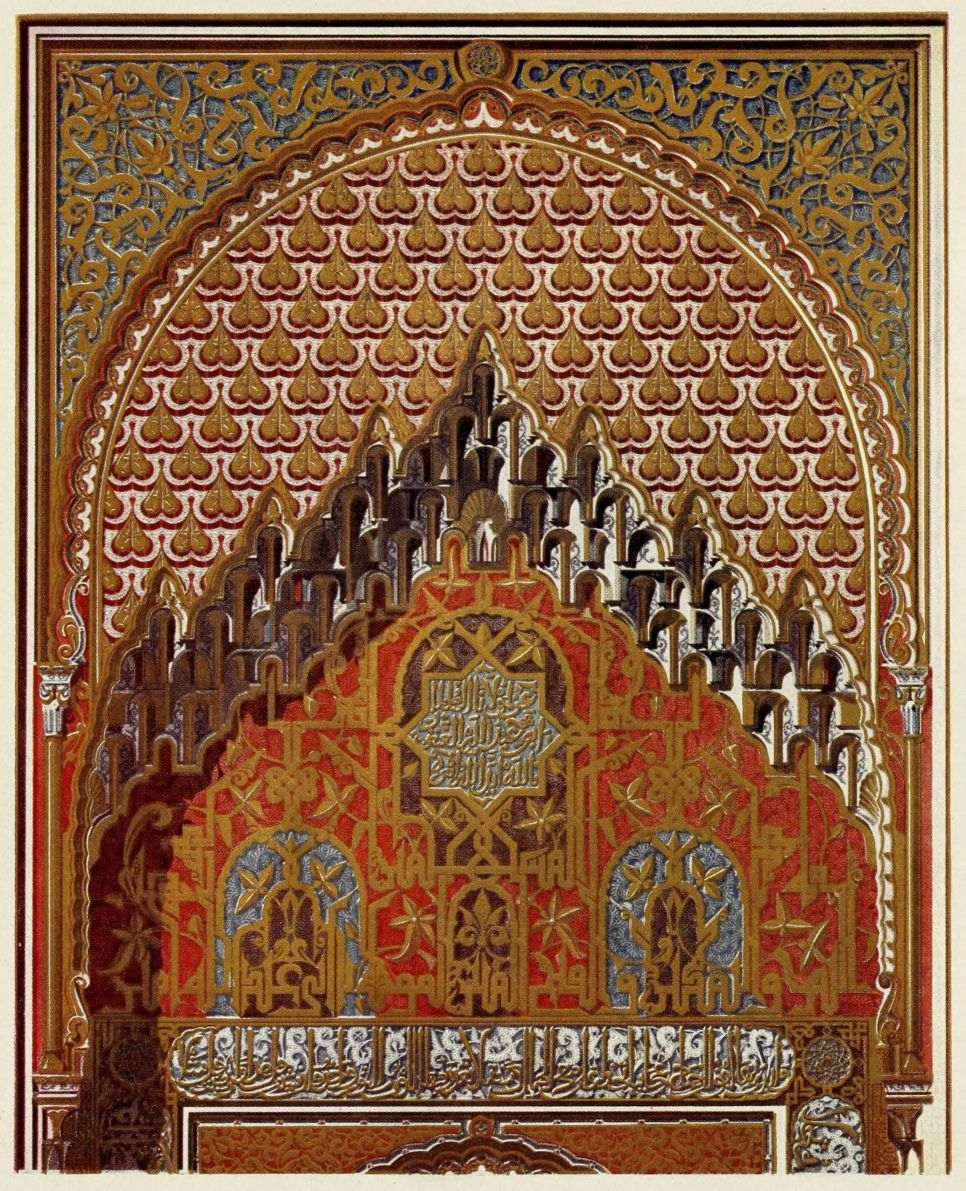
PLATE LXXXII.
Detail of the central part of “Lindaraja’s” Balcony.
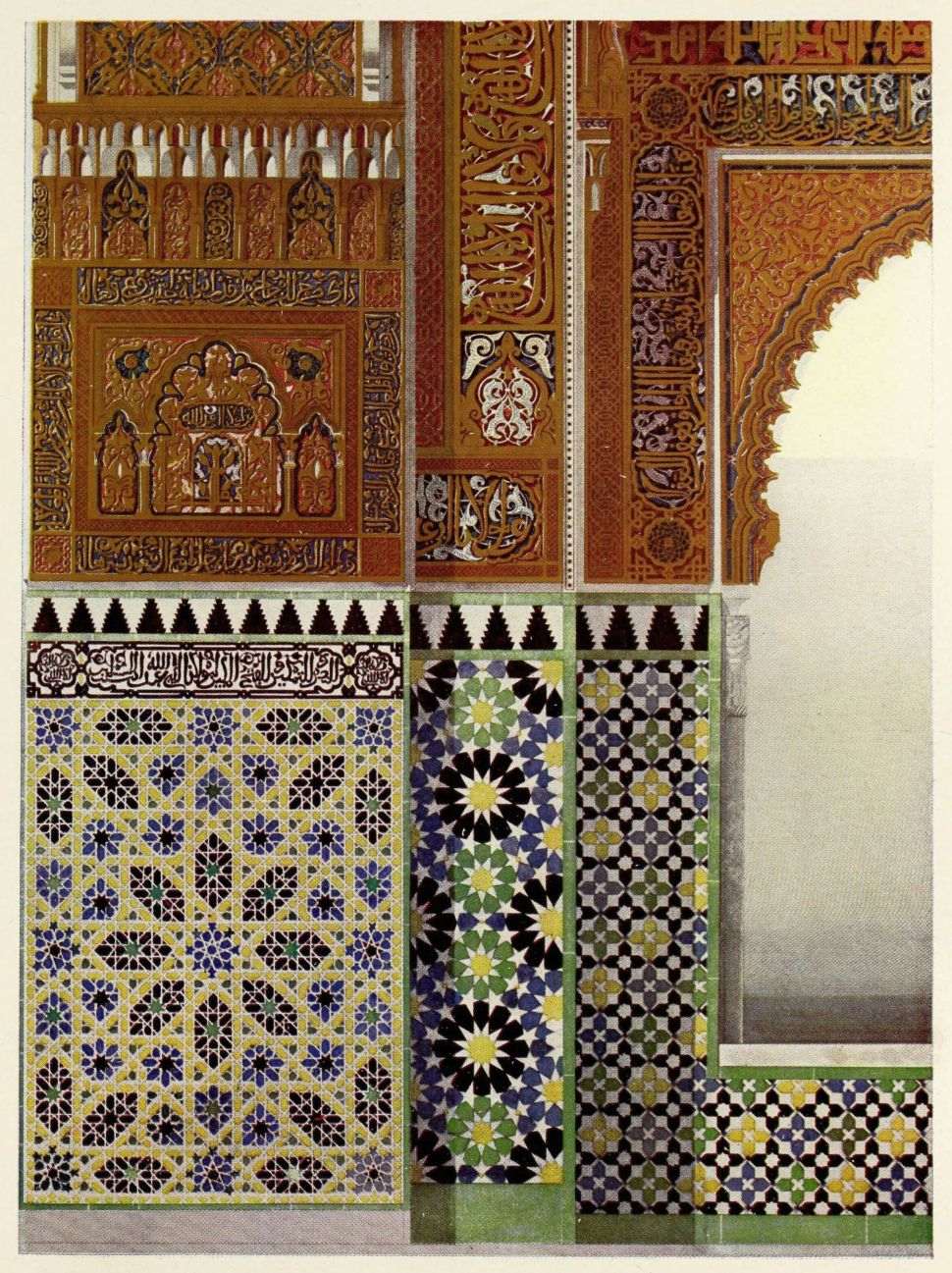
PLATE LXXXIII.
Lower part of “Lindaraja’s” Balcony.
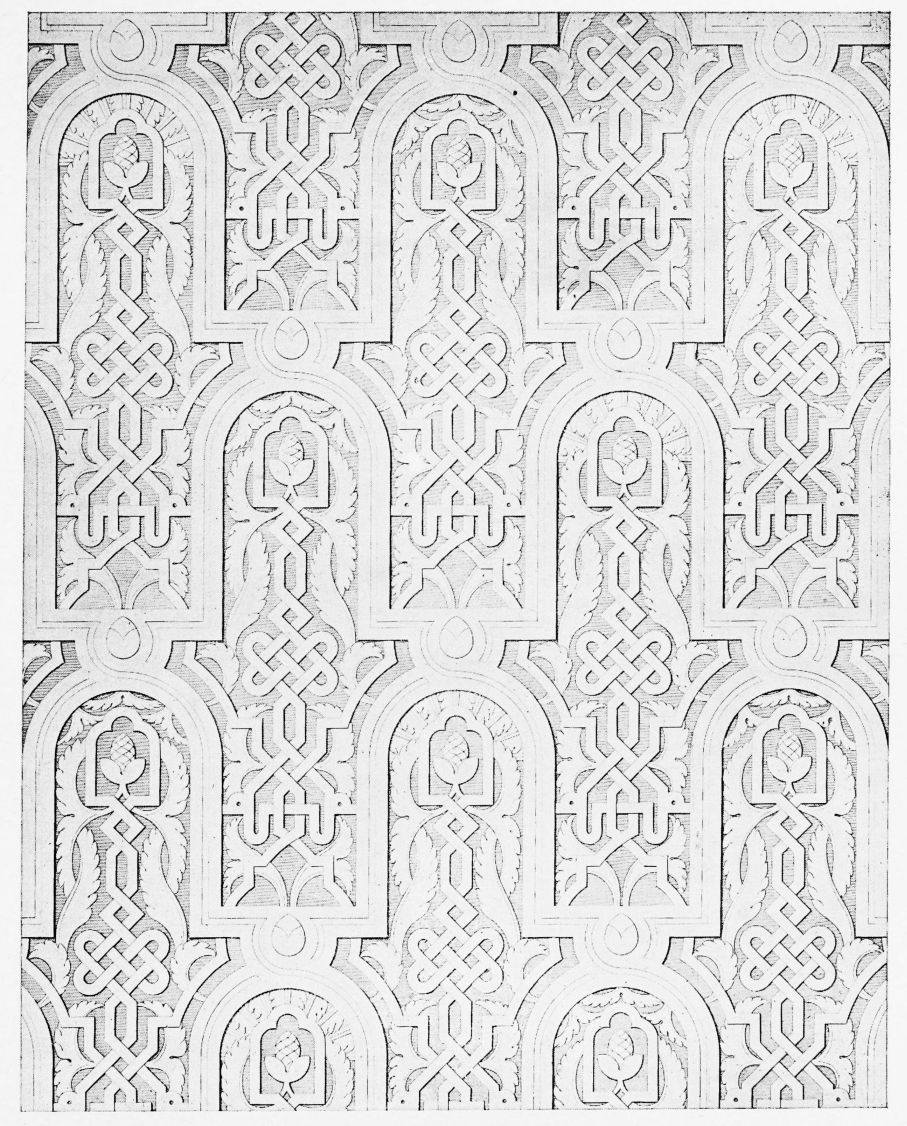
ORNAMENT FROM THE SIDE OF A WINDOW, NORTH FRONT OF THE HALL OF AMBASSADORS.
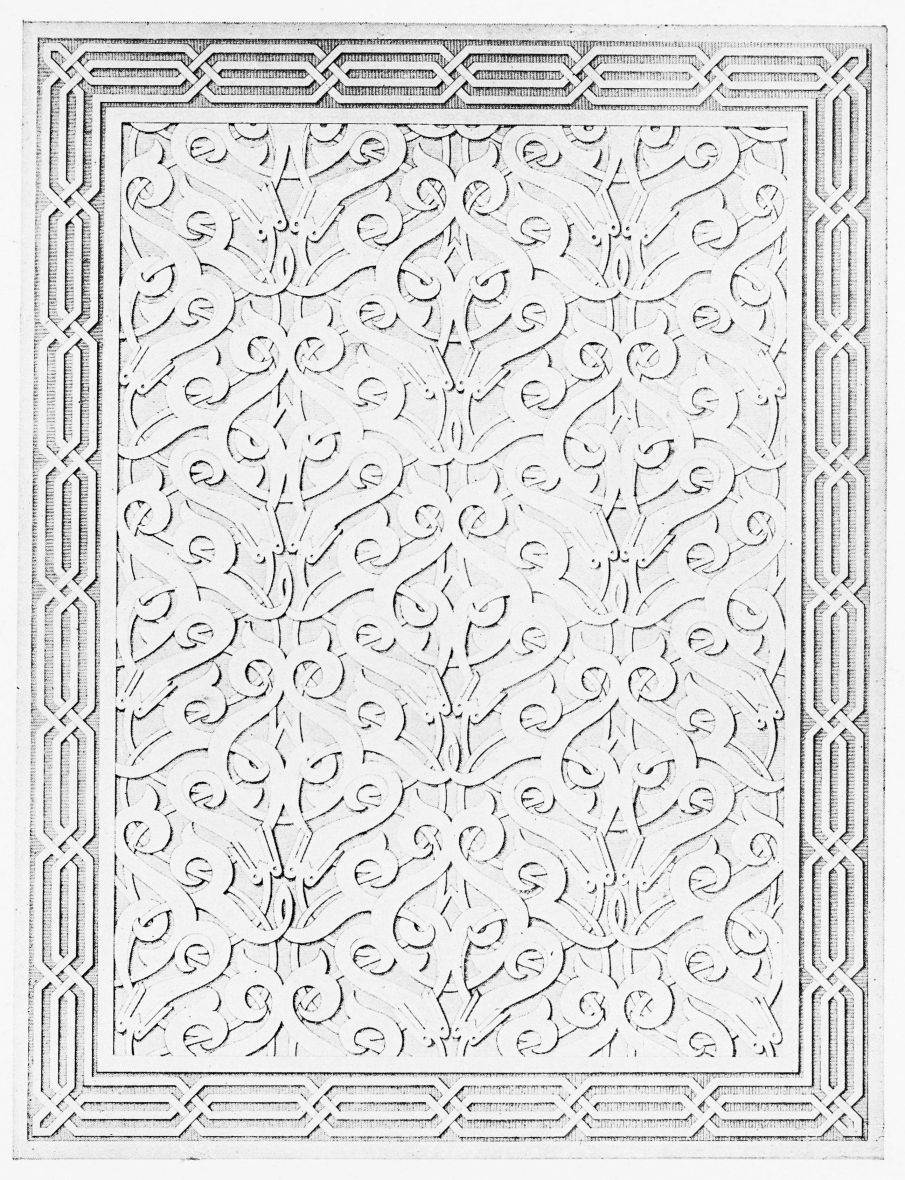
ORNAMENT IN THE SIDE OF A WINDOW, HALL OF AMBASSADORS.
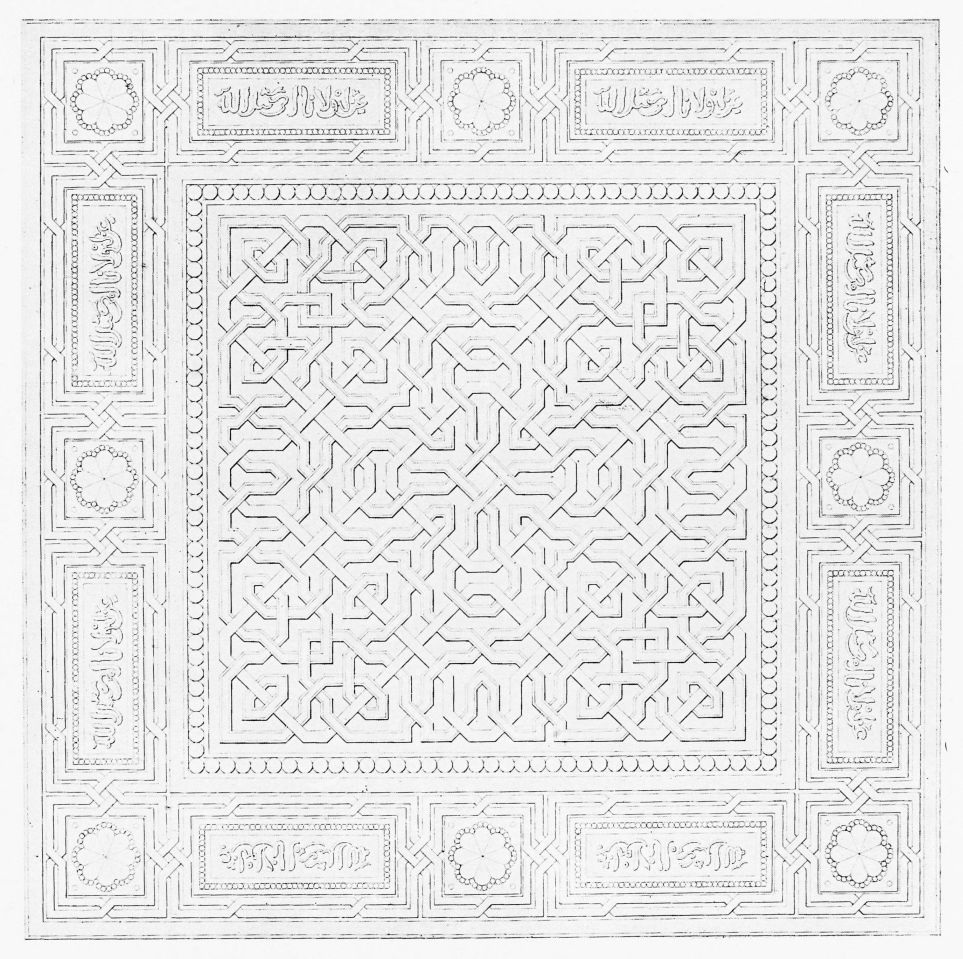
A CEILING IN OUTLINE, HALL OF AMBASSADORS.
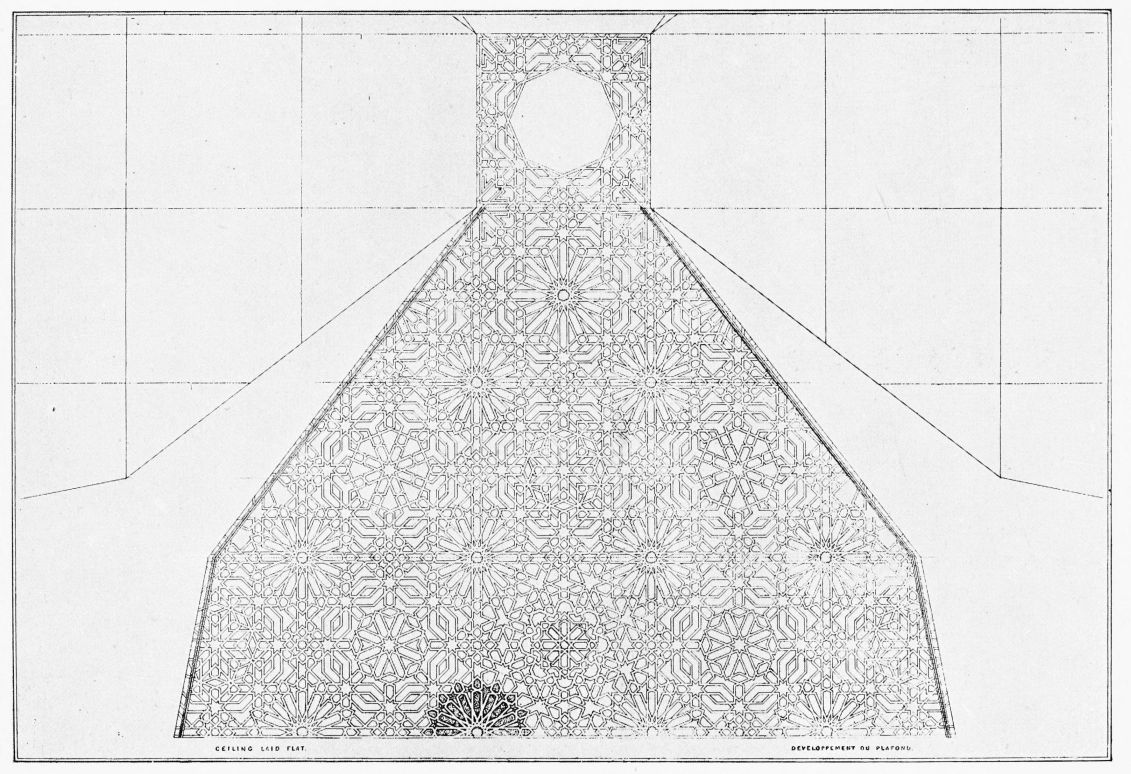
THE CEILING OF THE DOME LAID FLAT, HALL OF AMBASSADORS.
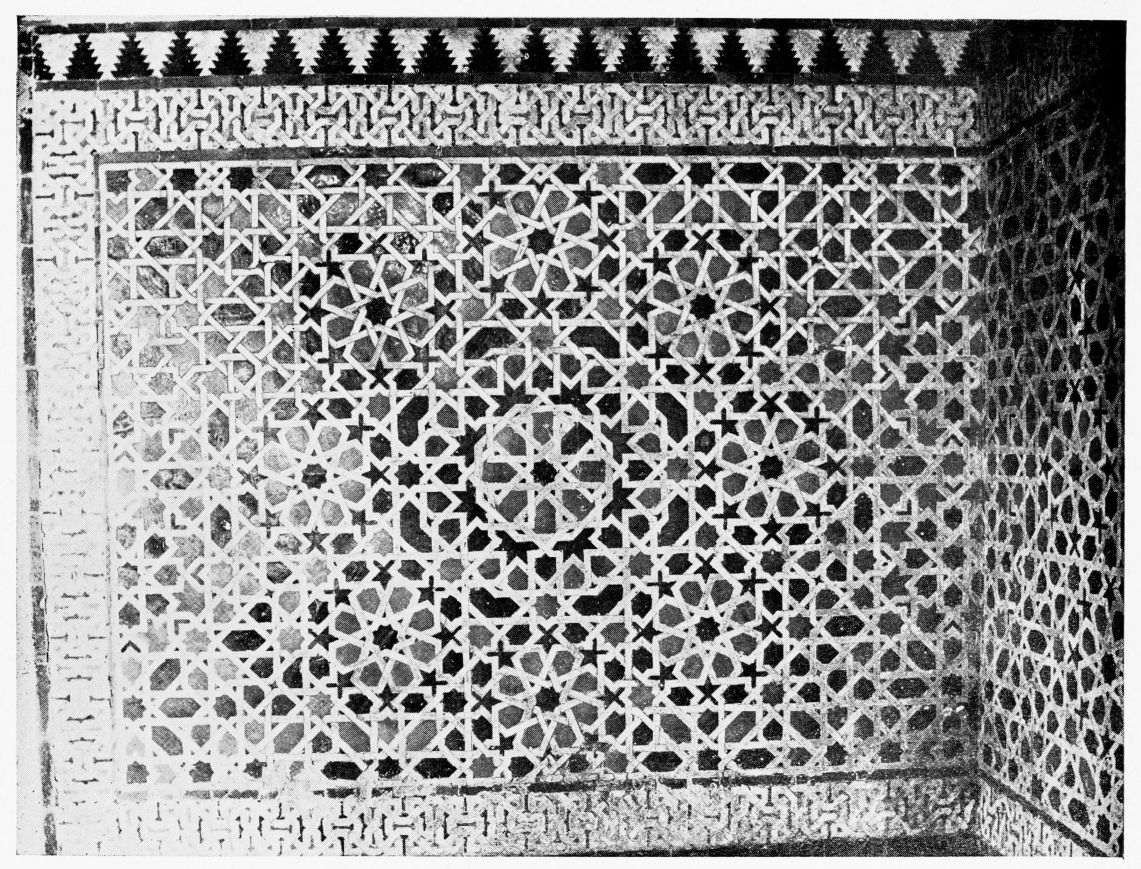
DETAILS OF GLAZED TILES IN THE HALL OF AMBASSADORS.
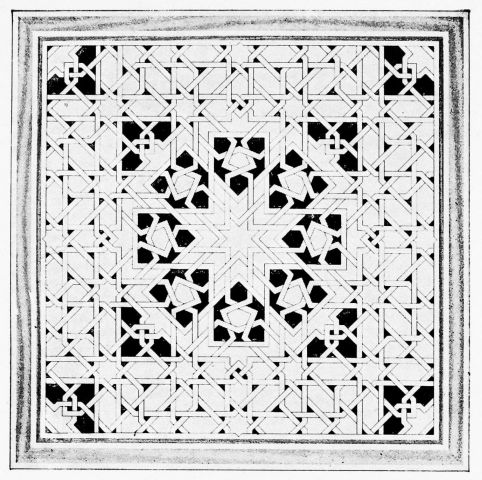
MOSAIC IN DADO, EAST SIDE OF THE HALL OF AMBASSADORS.
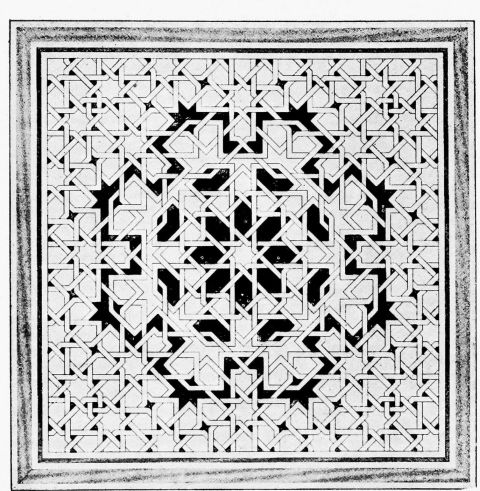
MOSAIC IN DADO, NORTH SIDE OF THE HALL OF AMBASSADORS.
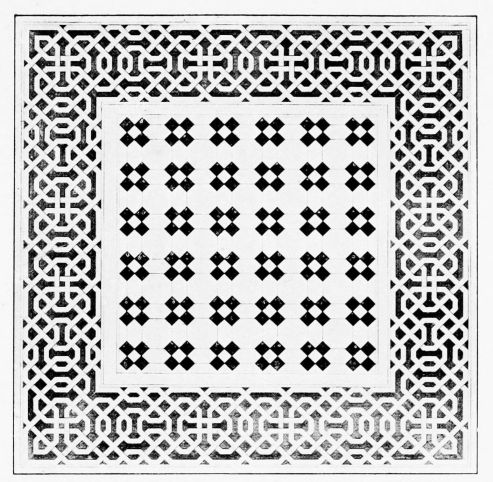
MOSAIC IN DADO, HALL OF AMBASSADORS.
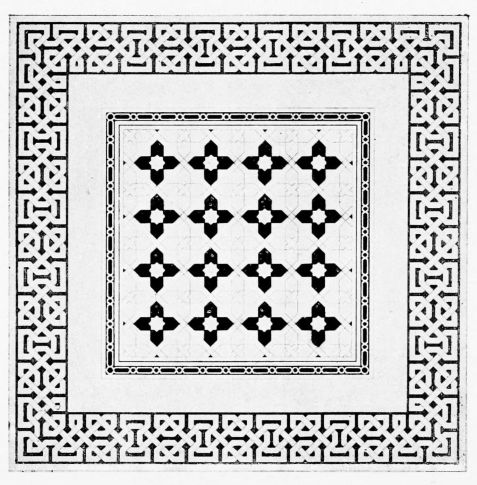
MOSAIC IN DADO, HALL OF AMBASSADORS.
The Mosaic dados present a great variety in their patterns, the combinations being endless.
“The colours of blue, red, and gold are still to be seen on the capital of the column of the centre window of the Hall, but no traces of gold, or any colour, have been discovered
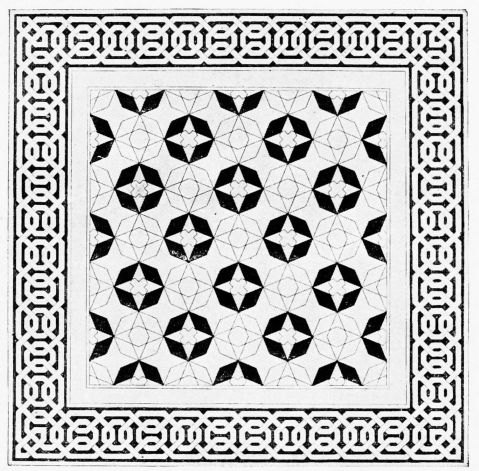
CEILING OF GALLERY, HALL OF AMBASSADORS.
on the shaft. The same thing occurs in the Court of the Fish-pond and the Court of the Lions, but, in each case, the harmony of the colouring appears to require that they should be gilt. It is probable that in the restorations which the Palace underwent during the residence of the Spanish kings, it was found much more easy to remove the gold from the columns, exposing the white marble, than to incur the expense of re-
gilding.” Such is the opinion of the famous decorative artist, Owen Jones; but the fondness of the Oriental for the spotless purity of marble, and the transparency of alabaster, so oft expressed in the inscriptions, forbids its acceptance.
In the several alcoves, or divans, which surround the Hall, the walls are covered with plaster ornaments in relief, presenting the greatest variety; the patterns in each divan being different.
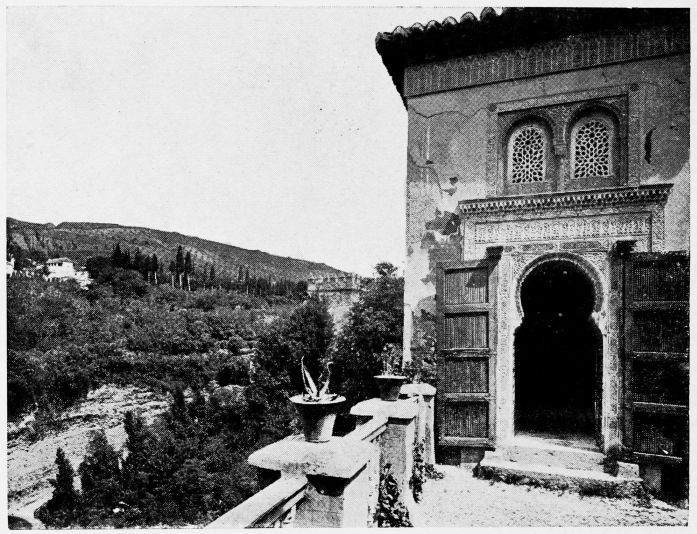
EXTERIOR OF THE MOSQUE (PRIVATE PROPERTY).
Beneath this Golden Saloon is a network of dungeon-like passages, by which, it is said, Sultáns escaped in treasonable revolts, when angry scimitars were glittering in the fountain-courts, or when the incensed populace were tossing their threatening spears in the humming city below. Here is also a prison-cell sort of room, with whispering holes at each end, which
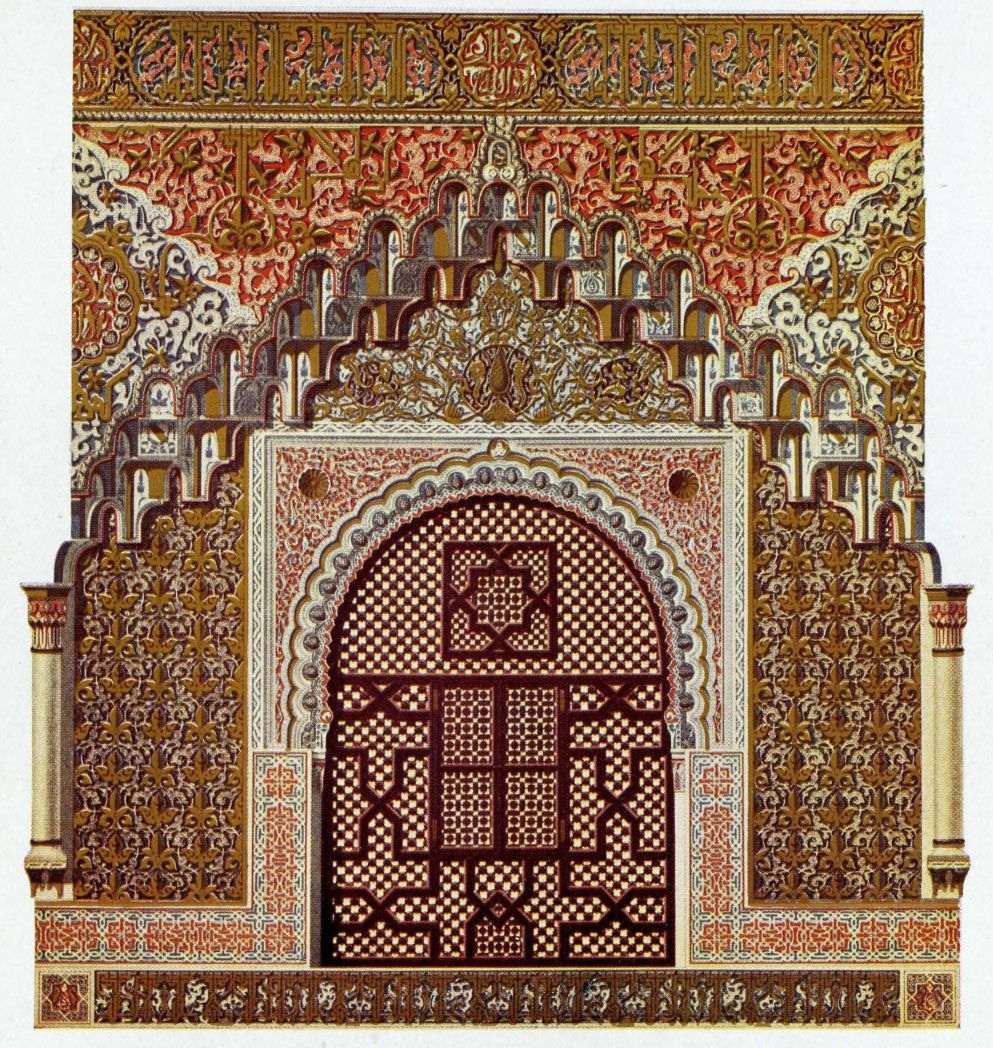
PLATE LXXXIV.
Detail of the lateral windows in the Hall of the Two Sisters.
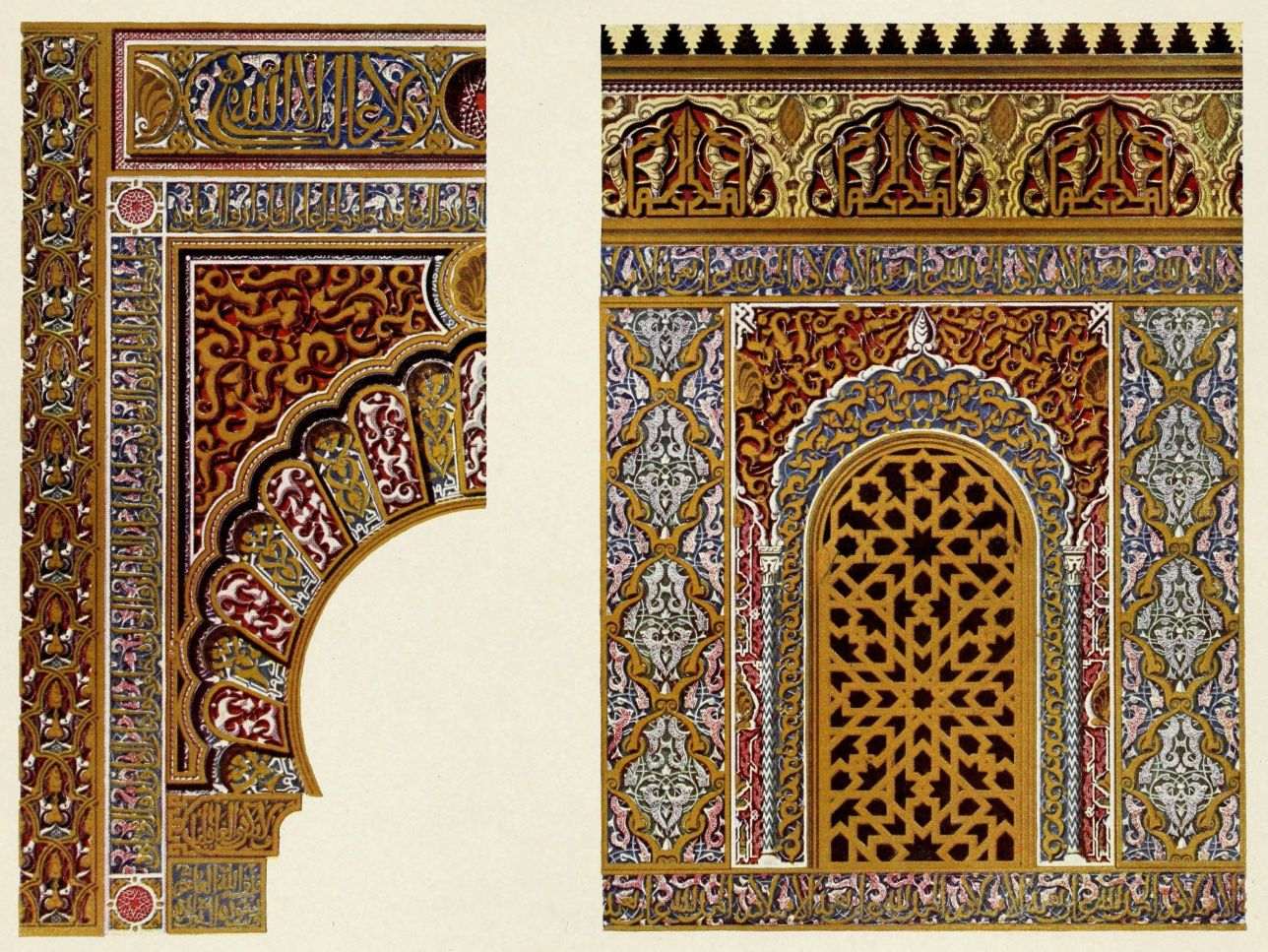
PLATE LXXXV.
Details of the front of the Mosque in the Harem.
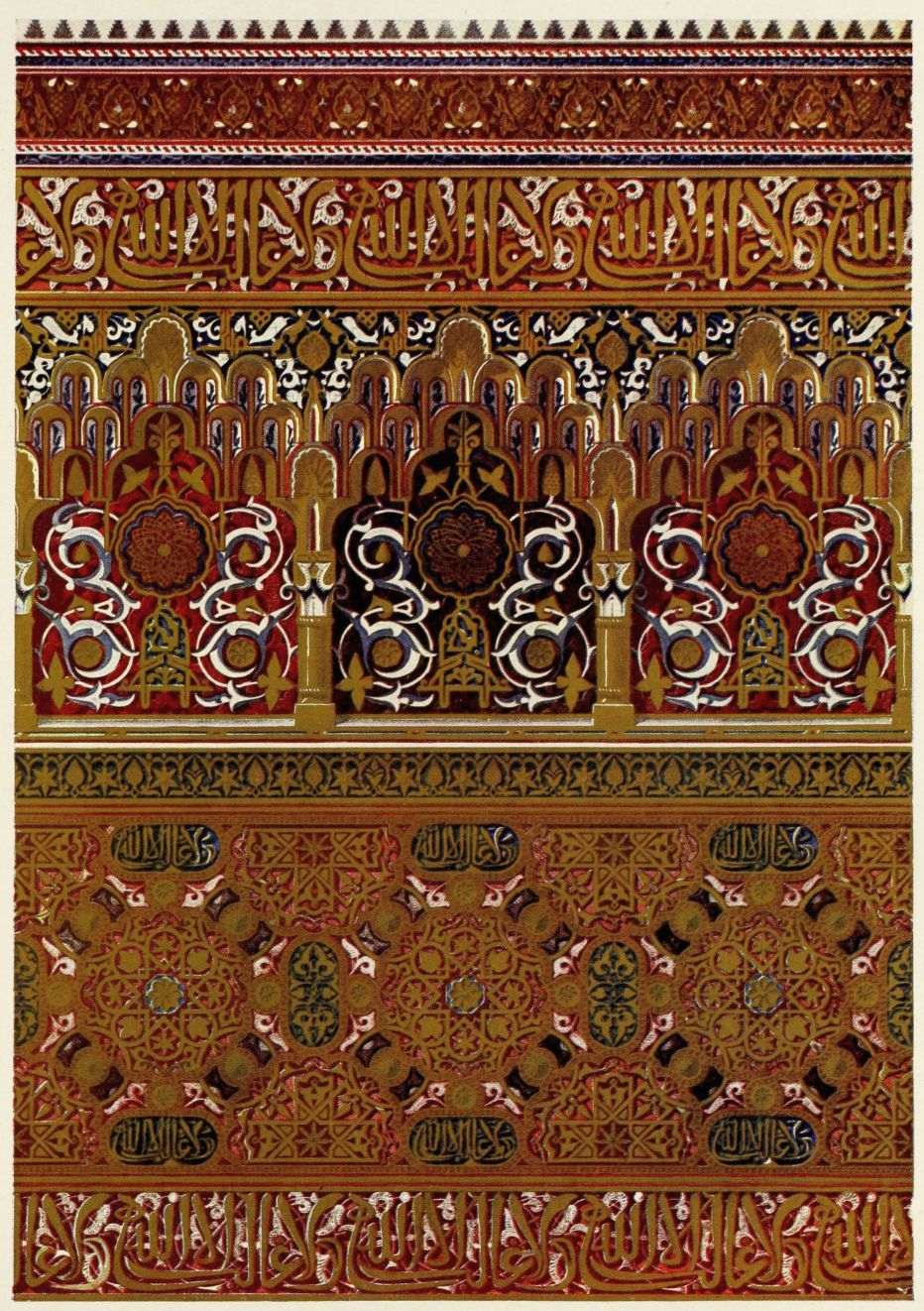
PLATE LXXXVI.
Details of the upper part of “Lindaraja’s” Balcony.
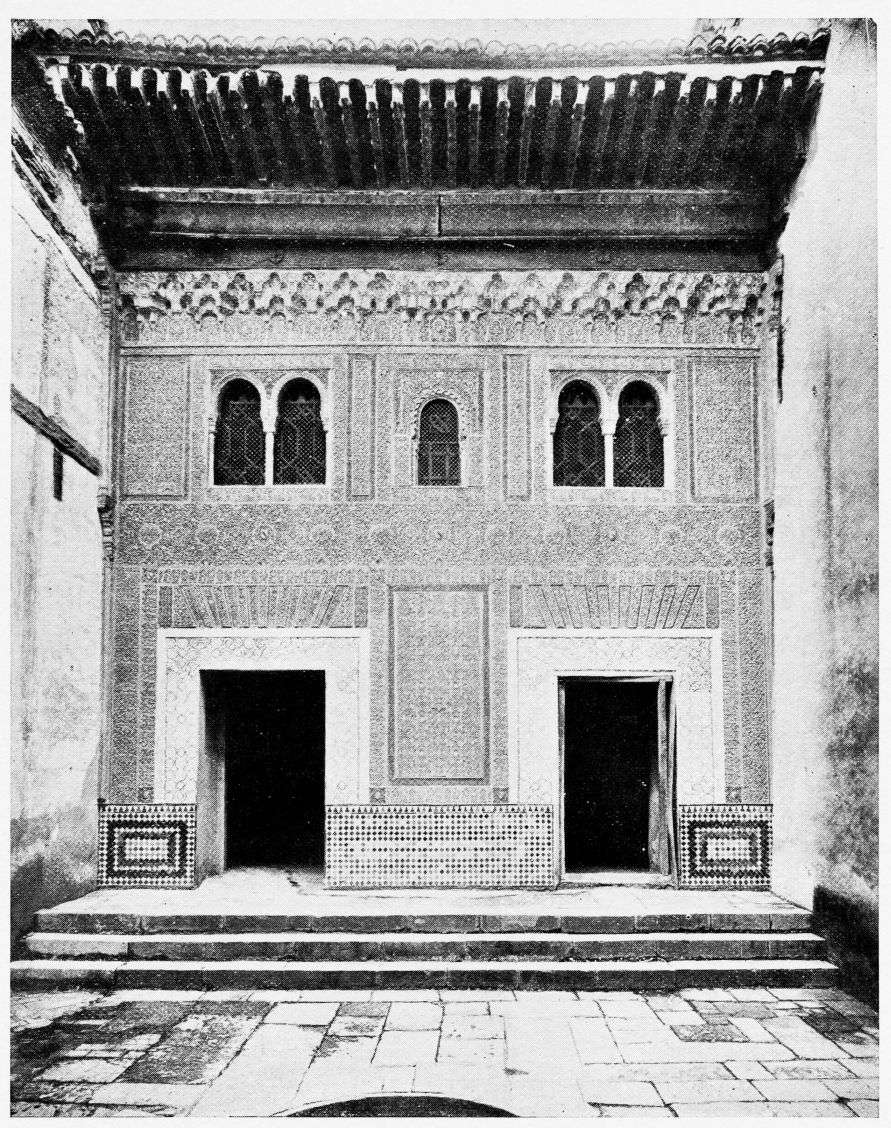
FAÇADE OF THE MOSQUE.
ELEVATION OF PORTICO ADJACENT TO THE MOSQUE.
DETAILS OF ORNAMENT OF KORÁN RECESS NEAR THE ENTRANCE-DOOR OF THE MOSQUE.
DETAILS OF ORNAMENT IN THE COURT OF THE MOSQUE.
DETAILS IN THE COURT OF THE MOSQUE, EASTERN FAÇADE.
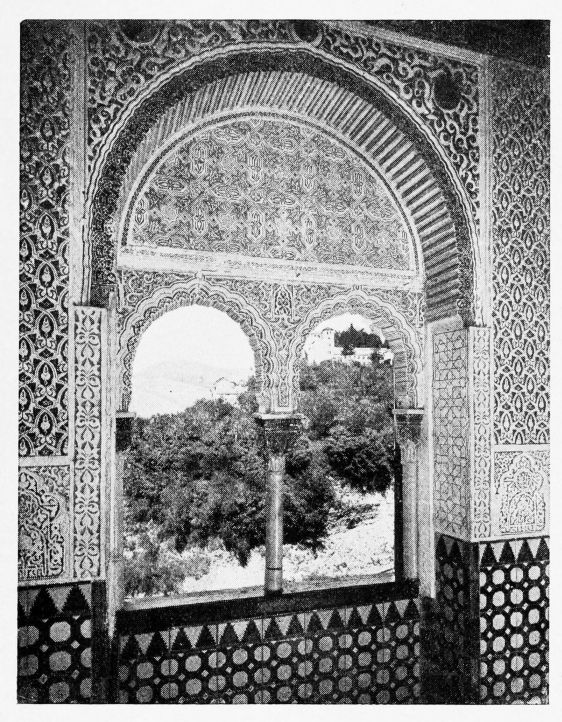
AN ARCHED WINDOW OF THE MOSQUE.
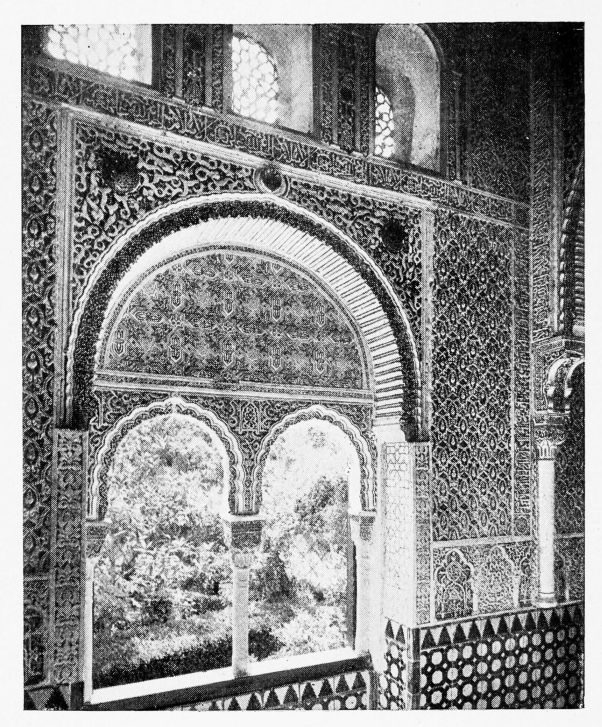
AN ARCHED WINDOW OF THE MOSQUE.
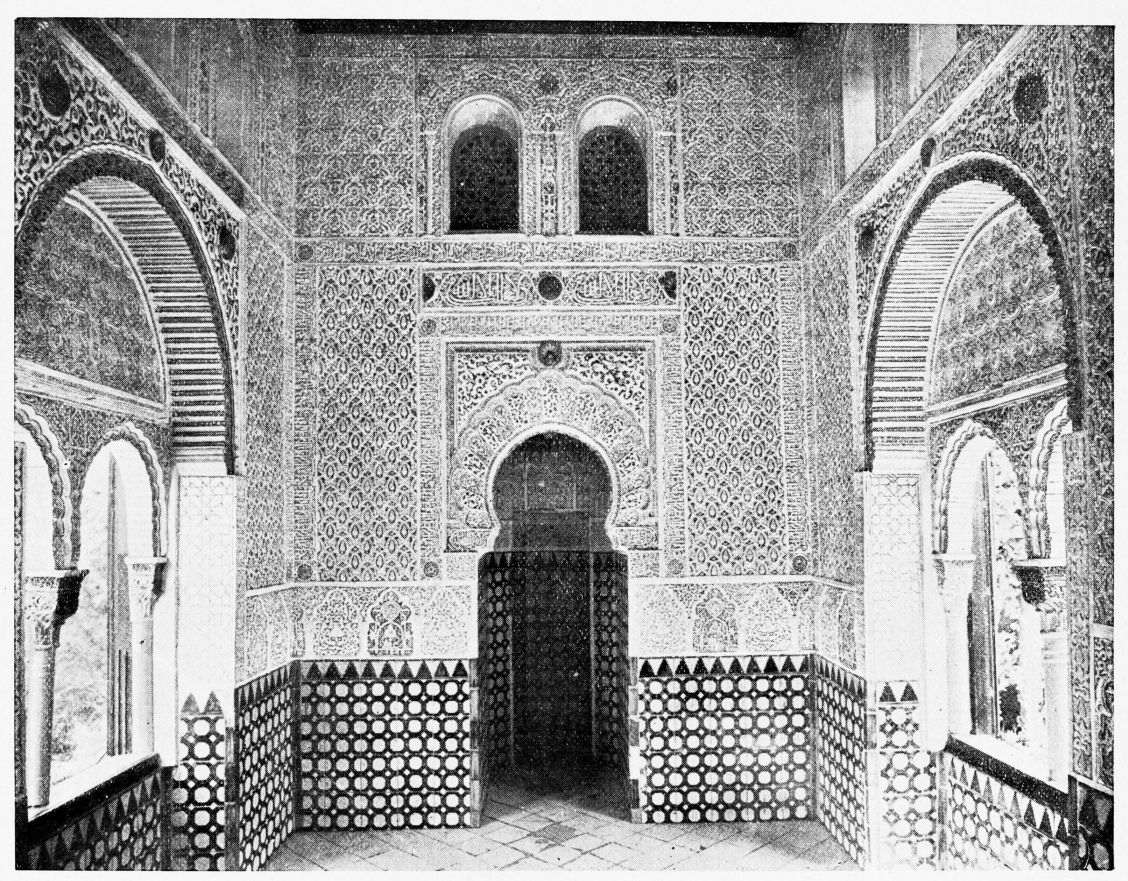
INTERIOR OF THE MOSQUE.
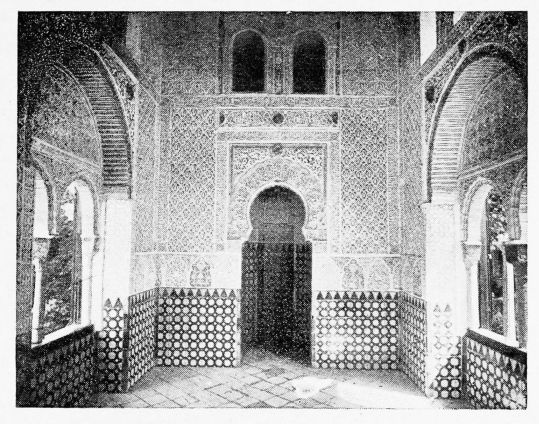
INTERIOR OF THE MOSQUE.
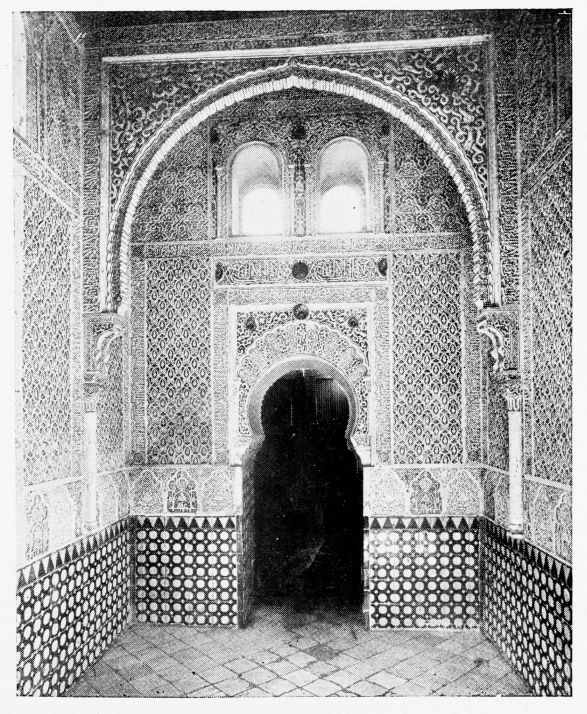
THE MOSQUE, FROM KORÁN RECESS.
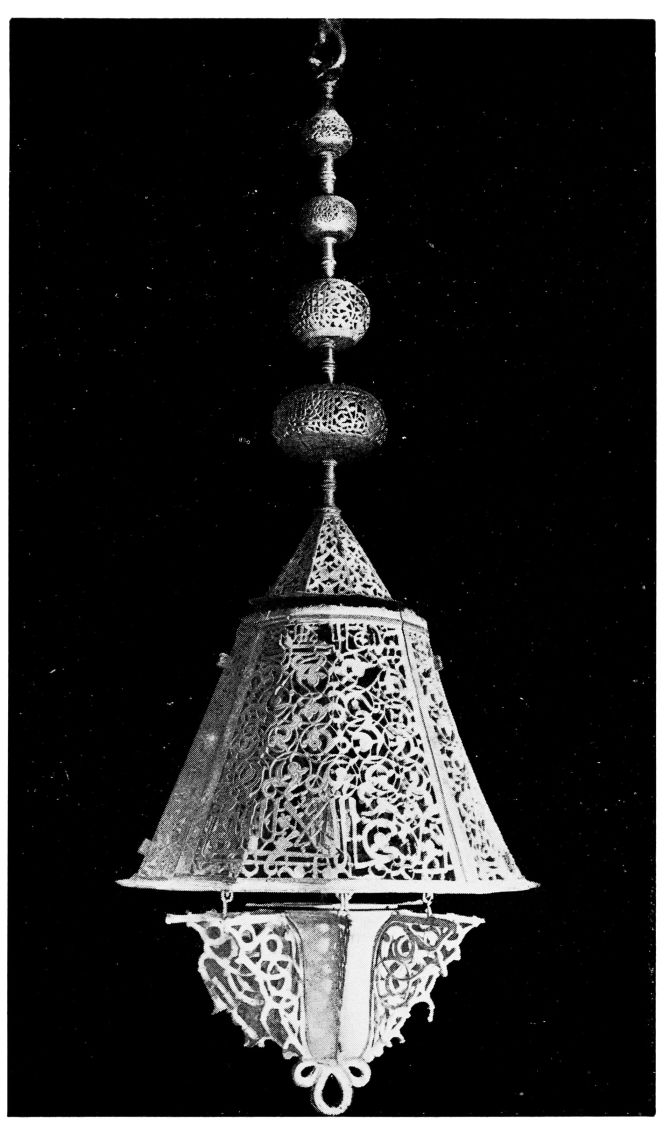
ARAB LAMP IN THE MOSQUE.
Philip the Second built to amuse the wretched child, Don Carlos. Also a vaulted cellar, where some rude sculpture has been immured by the prudish monks.
PATIO DE LA MEZQUITA—COURT OF THE MOSQUE.
The exquisite façade of this Court is much disfigured by a modern gallery. From the portions which remain, however, the general design may be traced with tolerable certainty.
The inscriptions are few and unimportant, consisting, for the most part, of the constantly-recurring motto: “There is no Conqueror but God,” and some verses from the Koran.
The grand Mosque of the Alhambra was built in 1308 by Mohammed III., and was in good preservation until the occupation of the French, who, says Don Pascual de Gayángos, entirely destroyed it. It has been thus described by Ibnu-l-Khattíb, the Grand Wizír of Yúsuf I.: “It is ornamented with Mosaic work, and exquisite tracery of the most beautiful and intricate patterns, intermixed with silver flowers and graceful arches, supported by innumerable pillars of polished marble; indeed, what with the solidity of the structure, which the Sultán inspected in person, the elegance of the design, and the beauty of the proportions, the building has not its like in this country; and I have frequently heard our best architects say that they had never seen or heard of a building which can be compared to it.”
LA MEZQUITA—THE MOSQUE.
The old Mosque, afterwards a chapel, was “purged” and consecrated by Ferdinand and Isabella, and retains but few traces of its purpose during the Moorish Dominion. The door was once overlaid with bronze, and, like all the rest of the Palace, was stripped and spoiled by generations of guardian thieves, who allowed no one but themselves to steal. Above the door is still the exquisite-laced niche where the Korán used to be placed by the green-turbaned Moollahs. Near the entrance is an elaborate and beautiful niche, which was probably the Mihráb, or sanctuary of the Mosque. Whilst at his prayers in this Mihráb, the martyred Yúsuf—he who built the Gate of Justice in 1348, and who completed the Alhambra—fell a victim to the dagger of an assassin in the year 1354. The inscriptions in the Mosque, which were dumb to the conquerors, still protest for the old faith, and cry aloud from barge-board and netted rafter, “Be not one of the negligent.” “God is our refuge in every time of trouble.”
LOS BAÑOS—THE BATHS.
The plan of these Baths is very similar to the arrangement still used throughout the East.
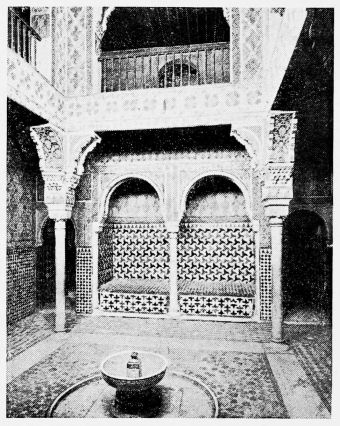
CHAMBER OF REPOSE.
From the elegant little saloon at the entrance where the bathers unrobed, and whither they resorted after the bath, we pass, by a circuitous passage, in which are two smaller baths, into the general vapour-bath, paved with white marble, and lighted with openings in the form of stars, lined with glazed earthenware. This corresponds with the apartment called by the Arabs the hararah, or vapour-bath, and described in Lane’s Manners and Customs of the Modern Egyptians; and it was under the graceful arcades which support the dome that the bathers
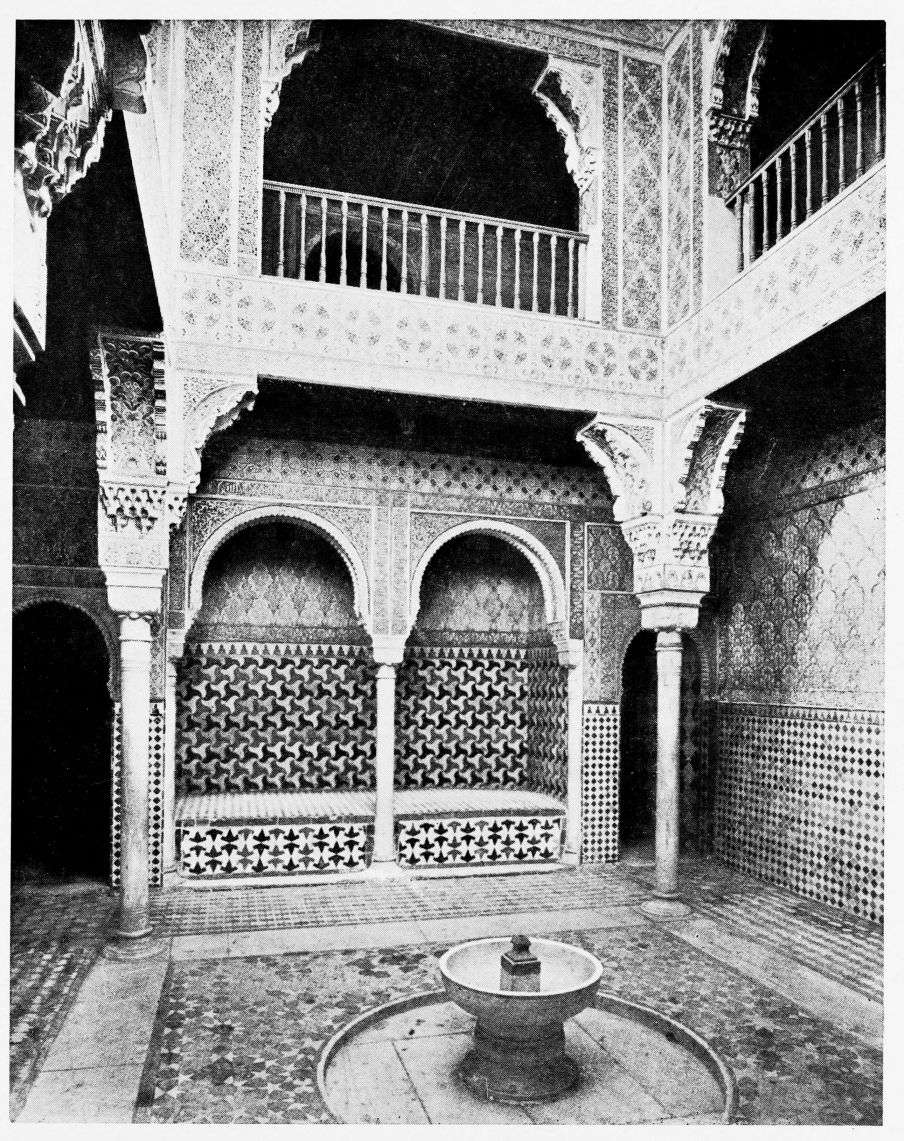
CHAMBER OF REPOSE.
underwent the attentions of the masseuses who waited on them. From the great hall we pass into a smaller one, having at each end a marble tank, used for solitary ablutions. Beyond, at the present day, an accumulated heap of ruins prevents the recognition of the means for heating the bath.
The upper part of the Chamber of Repose, which is supported on marble columns, forms a gallery with small divans, in which two persons, or, at most, four, could be accommodated at
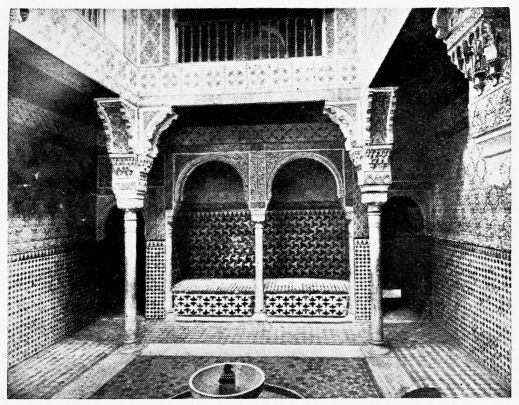
CHAMBER OF REPOSE.
the same time; from which it would appear that the bath was confined entirely to the use of the sovereign and his hareem. The floor is paved with beautiful Mosaics, which are in perfect preservation.
Inscription: “What is most to be wondered at is the felicity which awaits men in this palace of delight.”
Los Baños are well preserved, for they lie out of the way of ordinary ill-usage. The vapour-bath is lighted from above by small lumbreras, or “louvres.”
GARDEN OF “LINDARAJA.”
The Mirador—Prospect-chamber—of “Lindaraja” overlooks this secluded little court or garden, with its alabaster fountain, its cypress, orange, and citron trees rising from trim
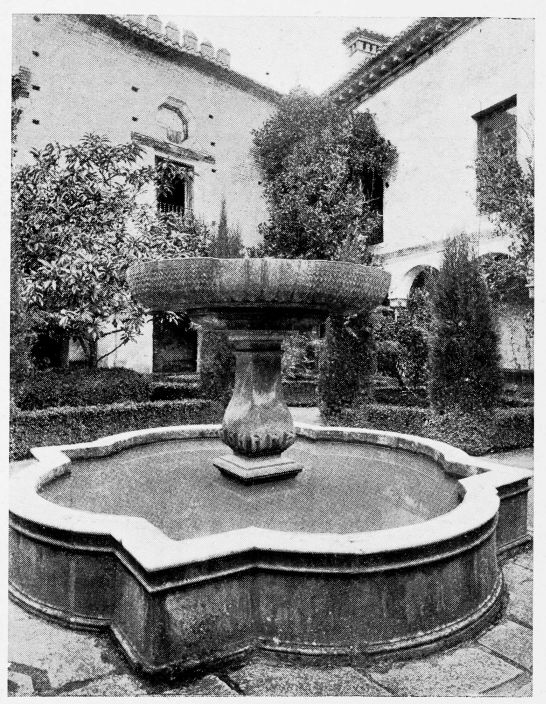
GARDEN OF “LINDARAJA,” AND THE APARTMENTS TRADITIONALLY SAID TO HAVE BEEN OCCUPIED BY “LINDARAJA,” A FAVOURITE SULTÁNA.
hedges of myrtles and roses. The Mirador is a charming little apartment of fifteen feet by ten feet, or thereabouts, with three tall windows protected by jalousies. It is ordinarily and
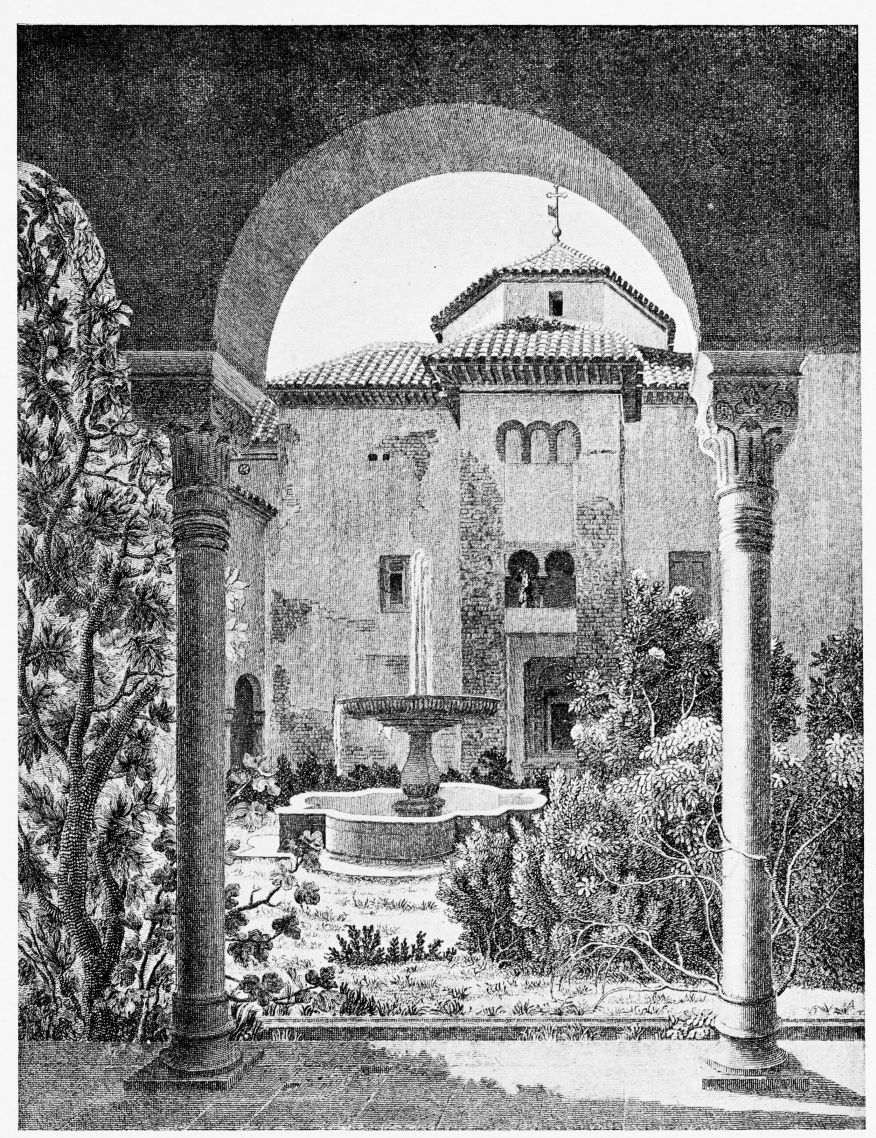
THE GARDEN OF “LINDARAJA.”
erroneously pointed out as the residence of Washington Irving during his abode in the Palace in 1829. His apartments were, however, in the Mihráb Tower, now known as the Tocador de la Reina.
TOCADOR DE LA REINA—THE QUEEN’S DRESSING-ROOM—
so called by the Spaniards, is about nine feet square. It was,
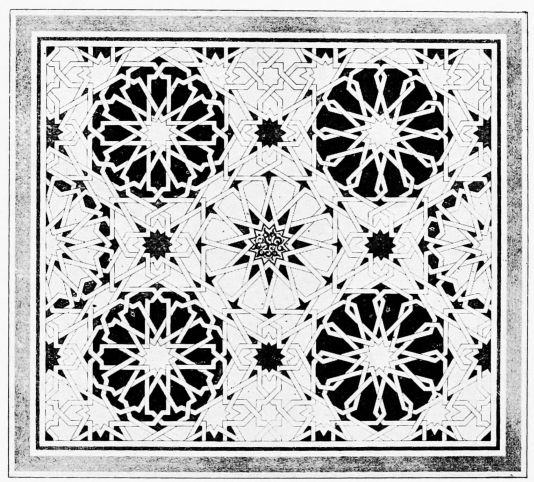
MOSAIC PAVEMENT IN THE QUEEN’S DRESSING-ROOM (TOCADOR DE LA REINA).
in part, modernised and painted in arabesque by Charles V. In a corner is a marble slab drilled with holes, through which, it is said, perfumes were wafted while the Queen was dressing.
It is not unimportant to locate precisely the dwelling-place of Washington Irving during his sojourn in the Alhambra in 1829. It was in the suite of rooms annexed to the Queen’s Dressing-room that he took up his quarters. The kindly American genius, who regarded Englishmen as his own kith and kin, makes it quite plain. He says: “On taking up my abode in the Alhambra, one end of a suite of empty chambers of modern architecture, intended for the residence of the
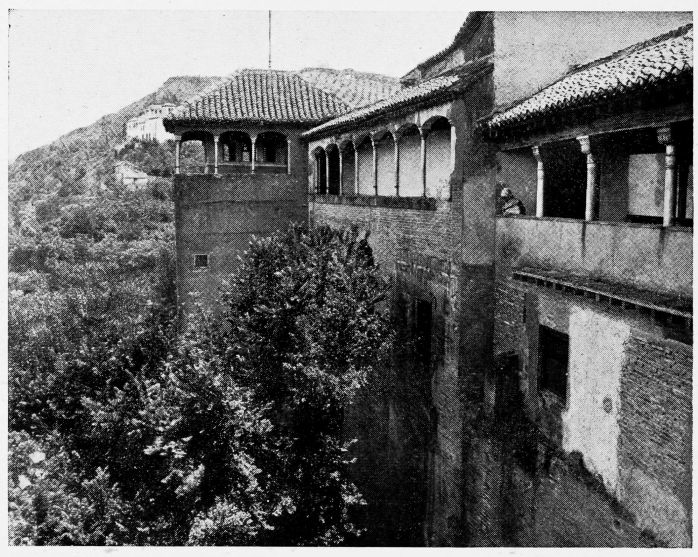
“THE QUEEN’S DRESSING-ROOM,” AT THE SUMMIT OF THE MIHRÁB TOWER, WITH DISTANT VIEW OF THE GENERALIFE.
Governor, was fitted up for my reception. It was in front of the Palace.... I was dissatisfied with being lodged in a modern apartment.... I found, in a remote gallery, a door, communicating apparently with an extensive apartment, locked against the public.... I procured the key, however, without
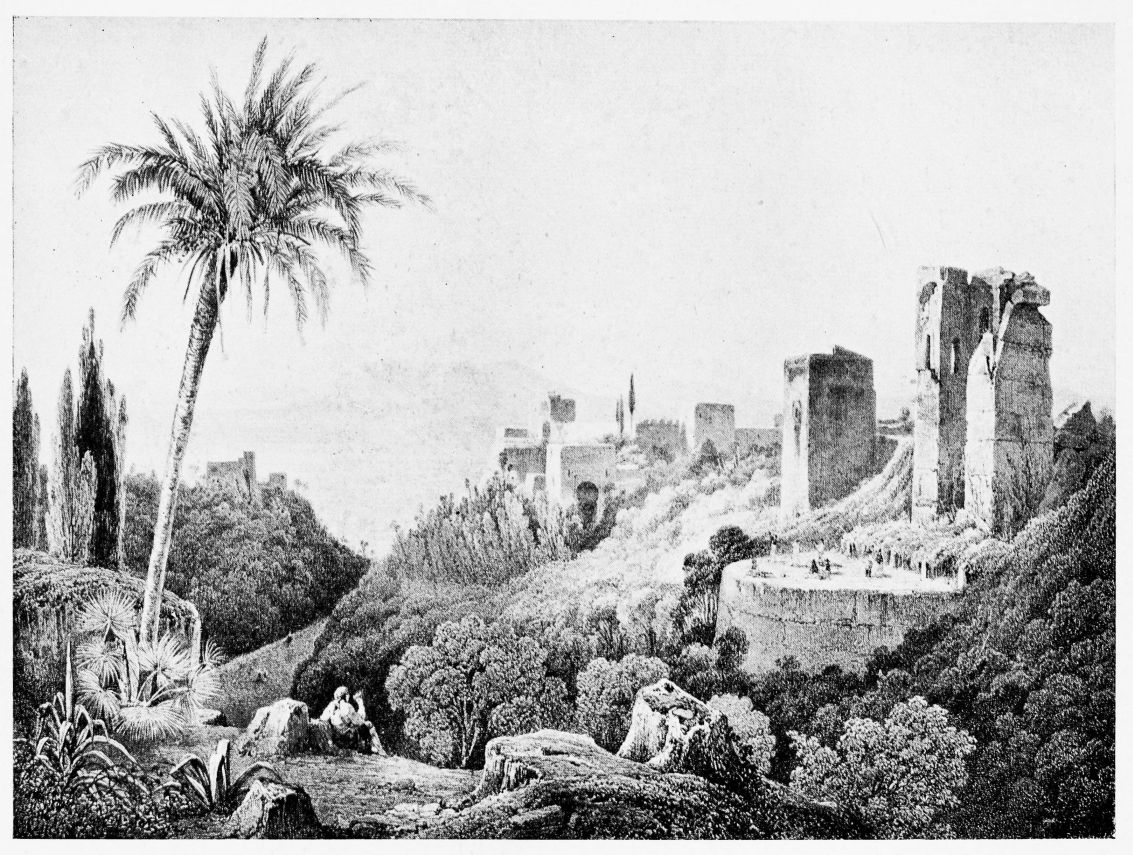
TOWERS AND PROMENADE.
difficulty; the door opened to a range of vacant chambers of European architecture, though built over a Moorish arcade.... This fanciful suite of rooms terminated in an open gallery with balustrades, which ran at right angles with a side of the garden. The whole apartment had a delicacy and elegance in its decorations, and there was something so choice and sequestered in its situation along with this retired little garden, that it awakened an interest in its history. I found, on inquiry, that it was an apartment fitted up at the time when Philip V. and the beautiful Elizabeth of Parma were expected at the Alhambra, and was destined for the Queen and the ladies of her train. One of the loftiest chambers had been her sleeping-room; and a narrow staircase leading from it ... opened to the delightful belvedere, originally a mirador of the Moorish Sultanás, but fitted up as a boudoir for the fair Elizabeth, and which still retains the name of the tocador or toilette of the Queen. The sleeping-room I have mentioned, commanded from one window a prospect of the Generalife and its embowered terraces.... I determined at once to take up my quarters in this apartment. My determination occasioned great surprise ... but I was not diverted from my humour.”
TORRE DE LOS SIETE SUELOS—TOWER OF THE SEVEN STAGES.
This Tower is said to descend seven stories under ground. Four subterranean chambers have been investigated. Divers marvellous tales are related concerning this building, in which the Moorish kings are believed to have deposited their treasures. Here, according to fable, is heard the clash of arms, and of soldiers seen stationed to guard immense treasures.
LA TORRE DE LOS PICOS—THE TOWER OF THE PEAKS—
is a Moorish postern gate crowned with minarets. The openings in the Tower for dropping missiles upon assailants are of the time of the Catholic Sovereigns. It is said that the
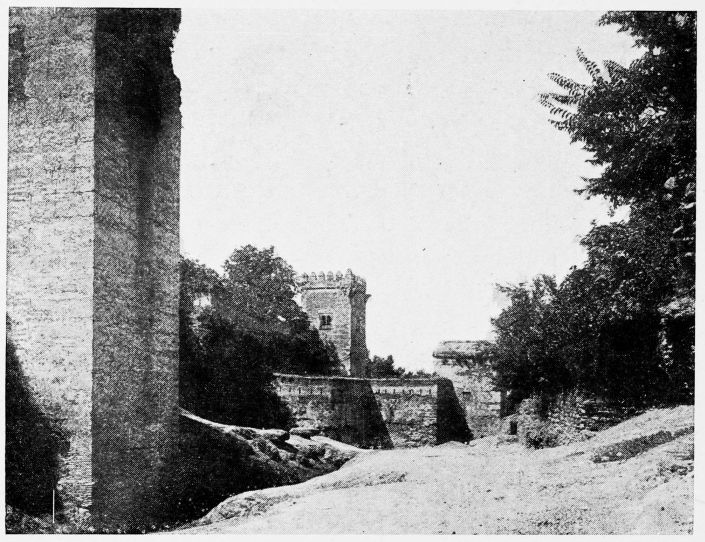
THE TOWER OF THE PEAKS.
French intended to blow up this Tower—the holes made by the sappers yet remain—but the procrastination of their agents saved the building. From this postern, a path, crossing the ravine, leads up to the Generalife.
TORRE DE COMARES—TOWER OF COMARES.
The whole interior of this gigantic Tower is occupied by the Hall of the Ambassadors which is described supra.
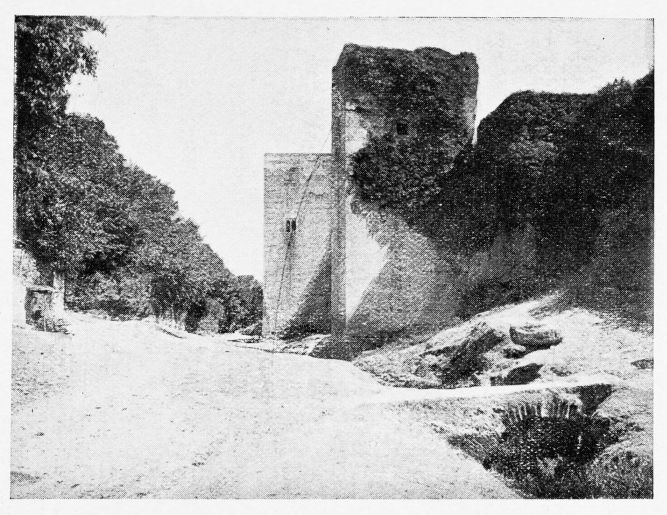
THE CAPTIVE’S TOWER.
INTERIOR OF THE INFANTAS TOWER.
THE INFANTAS TOWER.
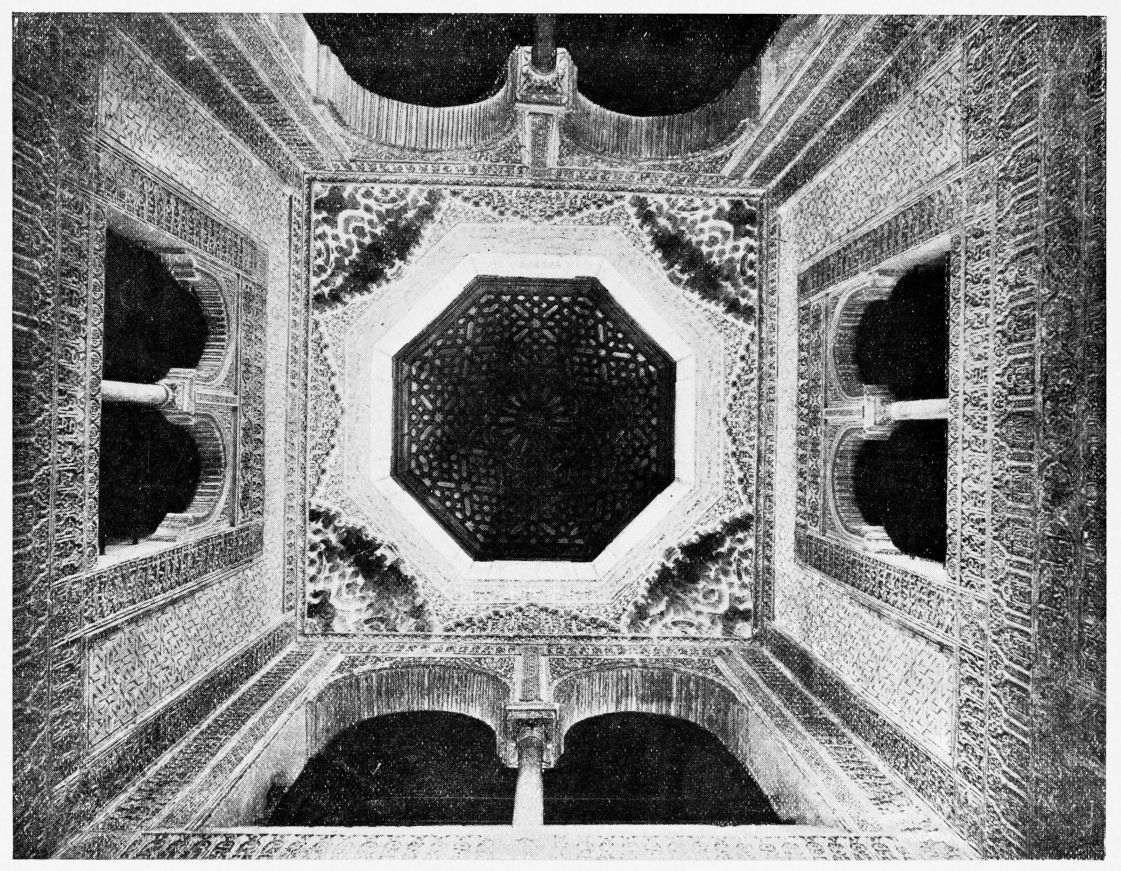
INTERIOR OF THE INFANTAS TOWER (CEILING).
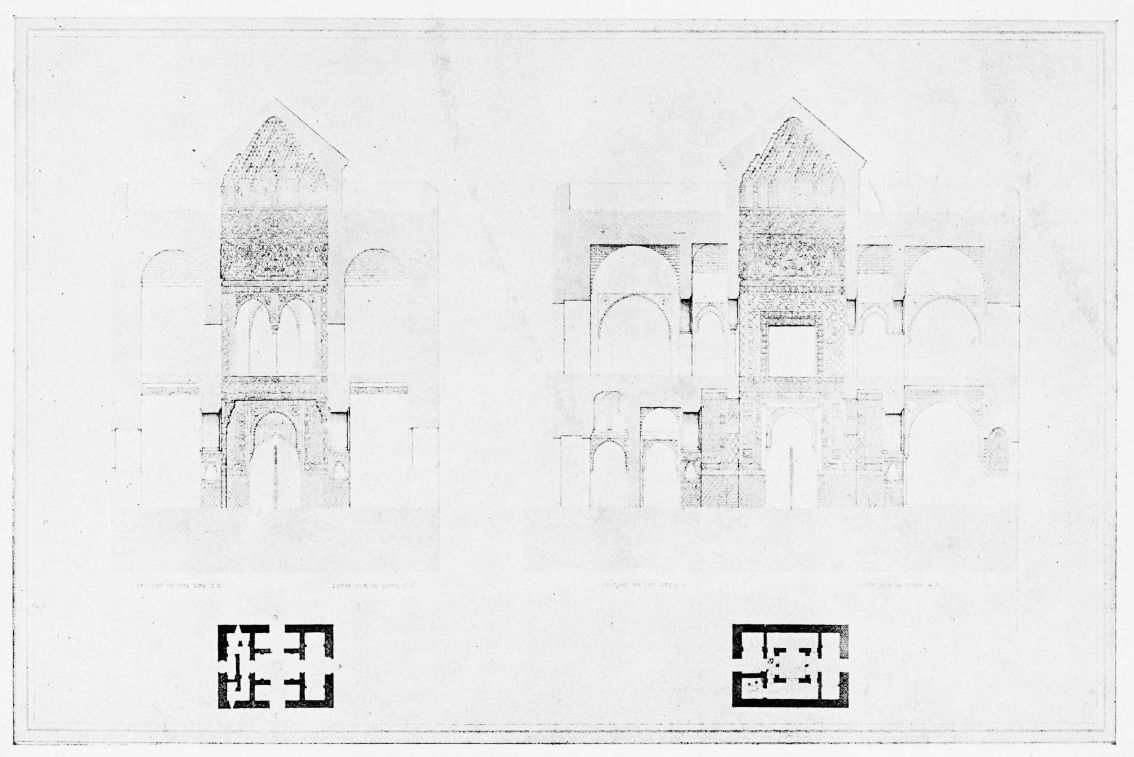
SECTION ON THE LINE C. B. OF PLAN. SECTIONS AND PLANS OF THE INFANTAS TOWER.
SECTION ON THE LINE C. D. OF PLAN.
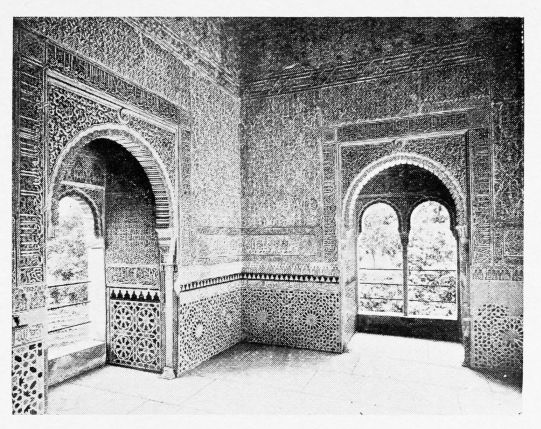
ROOM IN THE TORRE DEL CAUTIVO, OR CAPTIVE’S TOWER.
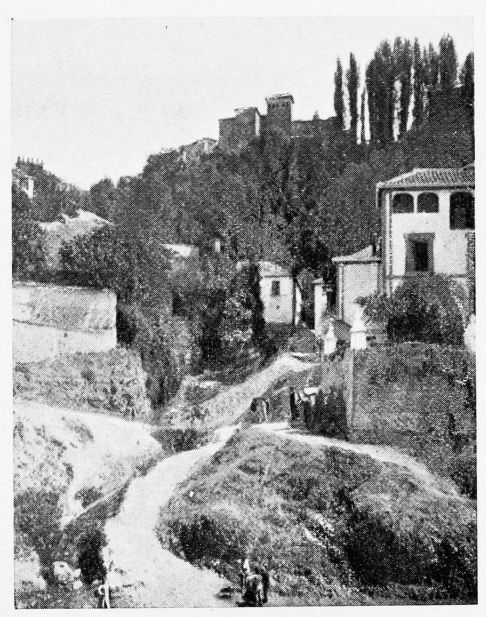
THE LADIES’ TOWER.
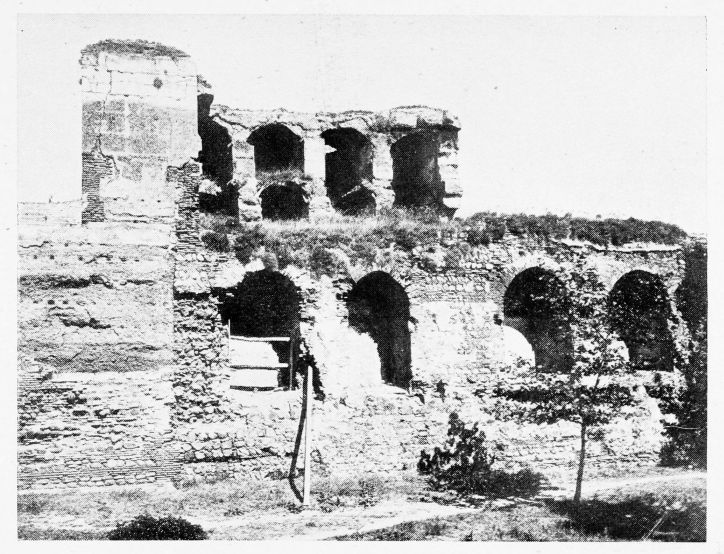
THE HOMAGE TOWER, ANCIENT ARAB RUINS IN THE ALCAZÁBA.
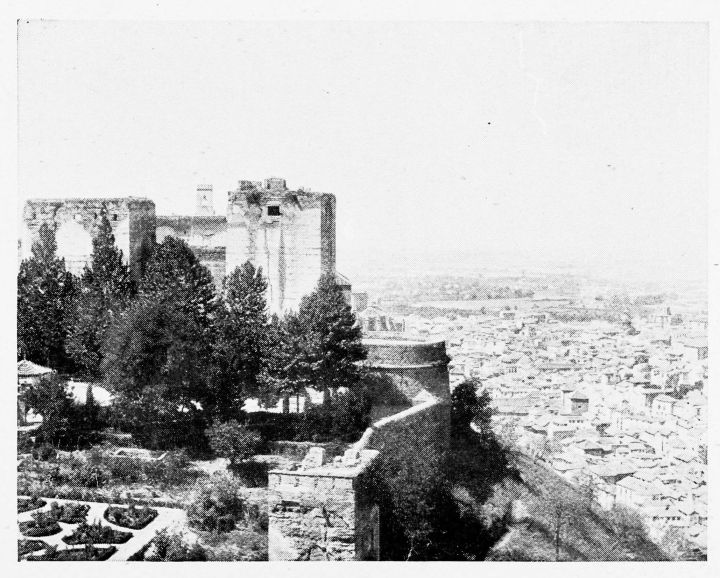
GRANADA, FROM THE HOMAGE TOWER.
TORRE DE LA AQUA—TOWER OF THE AQUEDUCT.
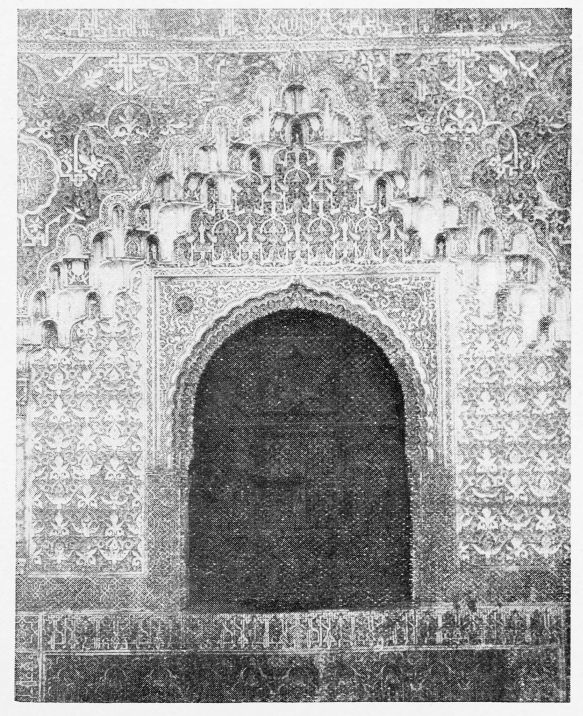
DETAIL OF THE ONLY ANCIENT “JALOUSIE” REMAINING IN THE ALHAMBRA.
TORRE DE LA VELA—THE WATCH-TOWER.
Here, an inscription records, the Christian flag was first hoisted by the Cardinal Mendoza and his brother. The panorama from the roof of this Tower is glorious. Below, lies Granada, belted with plantations; beyond, expands the Vega, guarded like an Eden by a wall of mountains. It is a scene for painters to sketch and for poets to describe.
The Torre de la Vela is so called, because on this watch-tower hangs a silver-tongued bell, which is heard on a still night even at Loja, thirty miles away. The bell is rung on 2nd January, the anniversary of the surrender of Granada. Maidens come on this day to strike the bell, which act ensures a
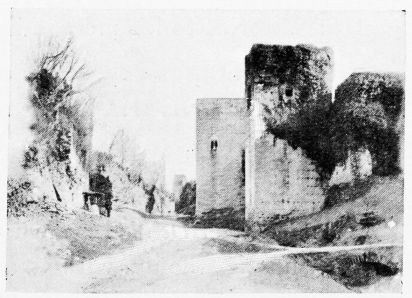
THE INFANTAS TOWER.
husband, and of excellence in proportion to the noise made, which, it need not be said, is considerable and continuous.
TORRE DE LAS INFANTAS—TOWER OF THE INFANTAS.
TORRE DEL CAUTIVO—CAPTIVE’S TOWER.
On the north-east wall of the fortress are several towers partly in ruin, which retain traces of beautiful decorations in the interior. The Torre del Cautivo and the Torre de las Infantas are the best preserved. They appear to have formed detached habitations complete in themselves; and from their position in this retired part of the fortress, and the extreme beauty of the internal decorations, there can be little doubt that they were isolated residences of favourite Sultanás.
TORRE DEL HOMENAGE—HOMAGE TOWER.
The Homage Tower rises at the end of the Pelota, or Fives, Court, the wall of which much disfigures the Place of the Cisterns. In this Homage Tower is a Roman votive altar, embedded by the Moors in the masonry, inscribed by “the grateful Valerius to his most indulgent wife, Cornelia.”
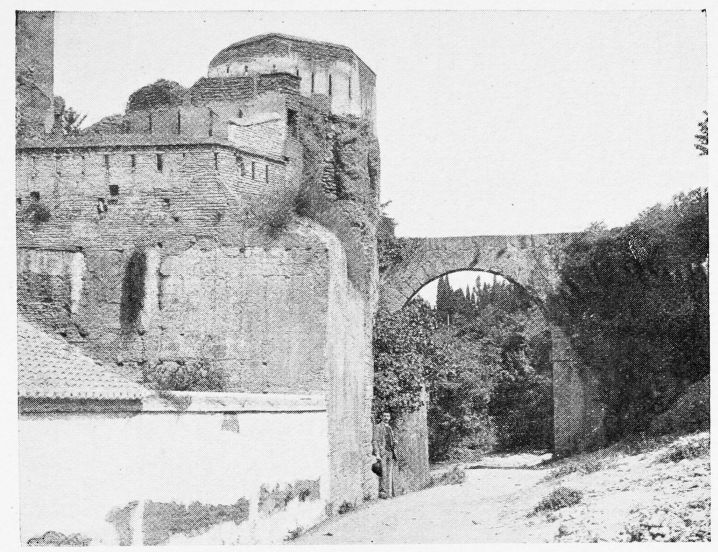
TORRE DE LA AQUA—TOWER OF THE AQUEDUCT.
Close to the two Towers, Del Candil and De la Cautiva, is the corner Tower De la Aqua, where an aqueduct, stemming the ravine, supplies the hill with water.
THE LADIES’ TOWER.
The interior of the Ladies’ Tower was formerly remarkable for an alcove of extraordinary beauty. The Tower is isolated, and, unfortunately, a tourist purchased it for a trifling sum. After stripping the marvellous decoration—a masterpiece of Yúsuf I.—the aforesaid traveller magnanimously presented the denuded carcass to the State.
THE MUSEUM.
In a chamber near to the entrance of the Court of the Lions, a collection of Moorish remains has been brought together. A conspicuous object is the marble sarcophagus, or tank, brought from the Alcazába, with basso-relievos of animals;
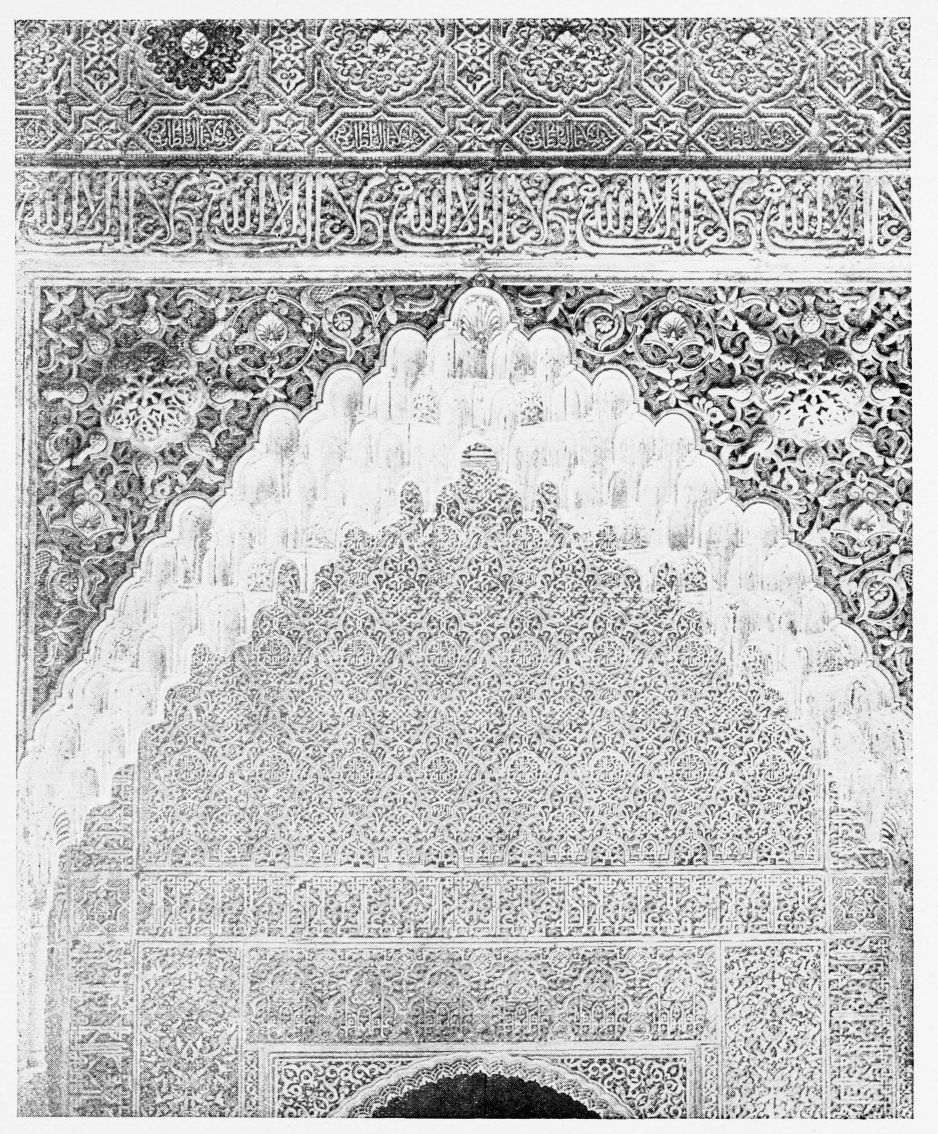
DETAILS OF THE ENTRANCE DOOR TO THE MUSEUM OF THE ALHAMBRA.
among them the “deer-slaying lion,” which occurs so often in Greek art, and, like the Mithraic daughter of the bull, may be the symbol of some hieratic mystery, possibly the triumph of the evil principle. It is difficult to say whether this rude
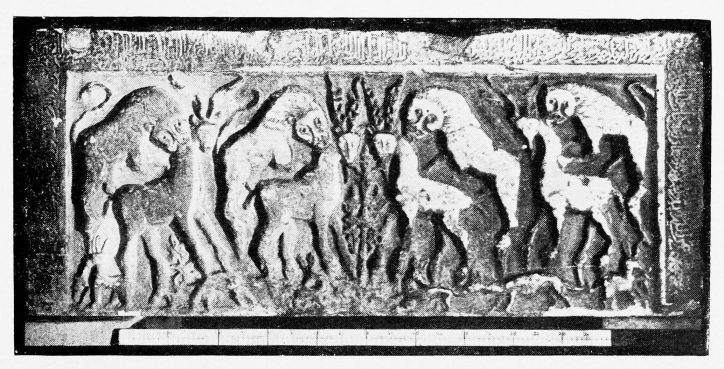
BAS-RELIEF, NOW IN THE MUSEUM OF THE ALHAMBRA.
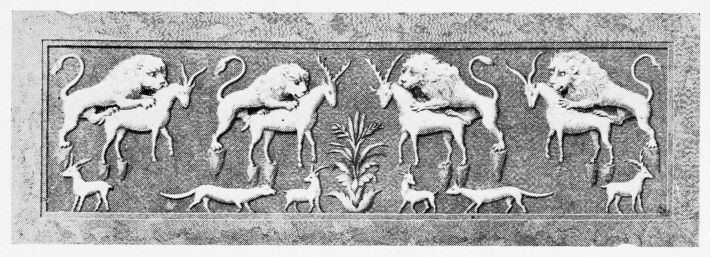
THE SAME SUBJECT FROM AN ENGRAVING IN MURPHY’S ARABIAN ANTIQUITIES.
sculpture is antique or Moorish. An Arabic inscription is carried round the border, but this may be later than the carving; at all events, stags are animals connected by the Orientals with the fountain—“As the hart panteth for the water-brooks”—and the Spanish Moors, among other departures from strict Moslem rules, did not reject either paintings or carvings of living objects. The splendid vase, el jarro, has been brought hither from the Hall of the Two Sisters, and is described at page 76, with a plate at page 95.
PALACE OF CHARLES V.
On one side of the Plaza de los Algibes—Place of the
PALACE OF CHARLES V.
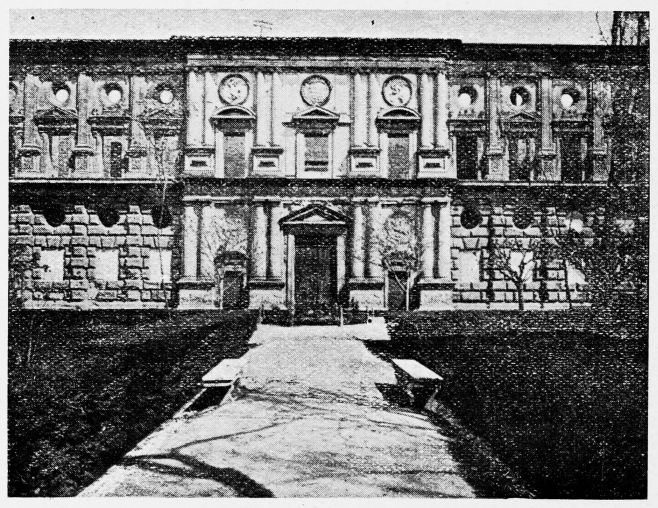
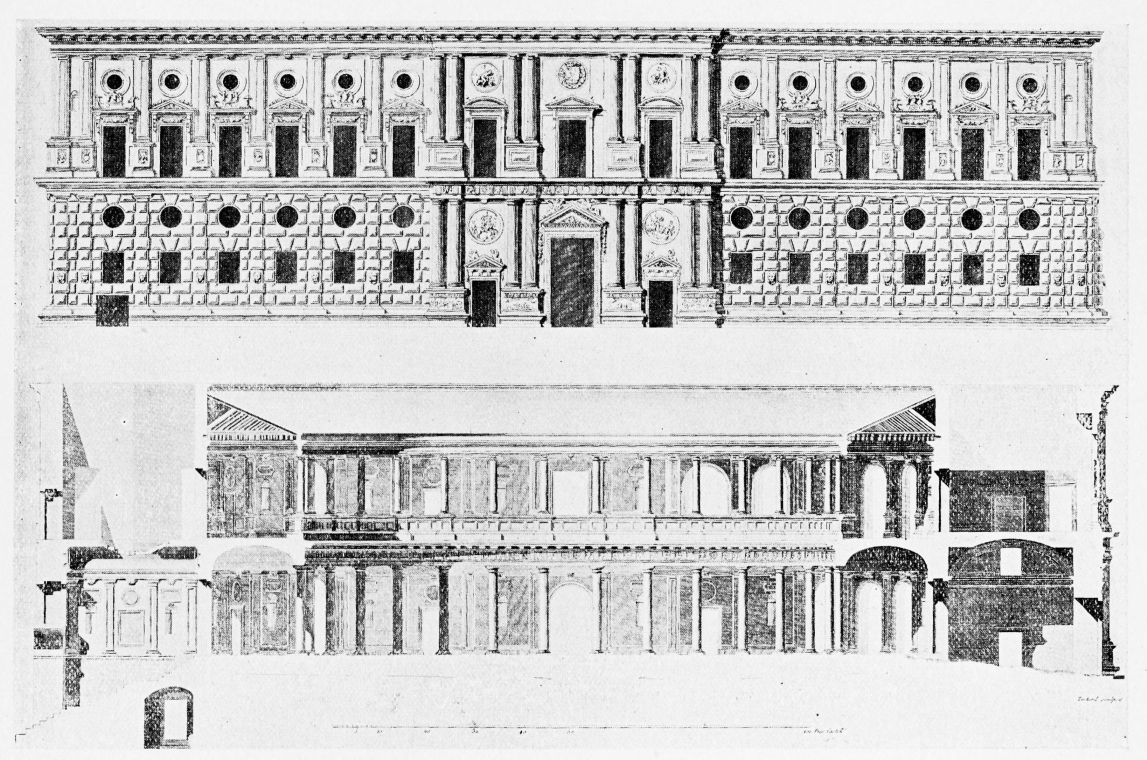
Cisterns—is an isolated Moorish tower called La Torre del Vino, built in 1345, by Yúsuf I., and remarkable for its exquisite arch, called the “Wine Gate” (see page 133). Opposite is the large Palace begun by Charles V., great in conception and impotent in conclusion, unfurnished and roofless. To make way for this edifice, Charles destroyed large portions of what the Moors had raised, tearing down whole ranges of the Alhambra.
ELEVATION AND SECTION OF THE PALACE OF CHARLES V.
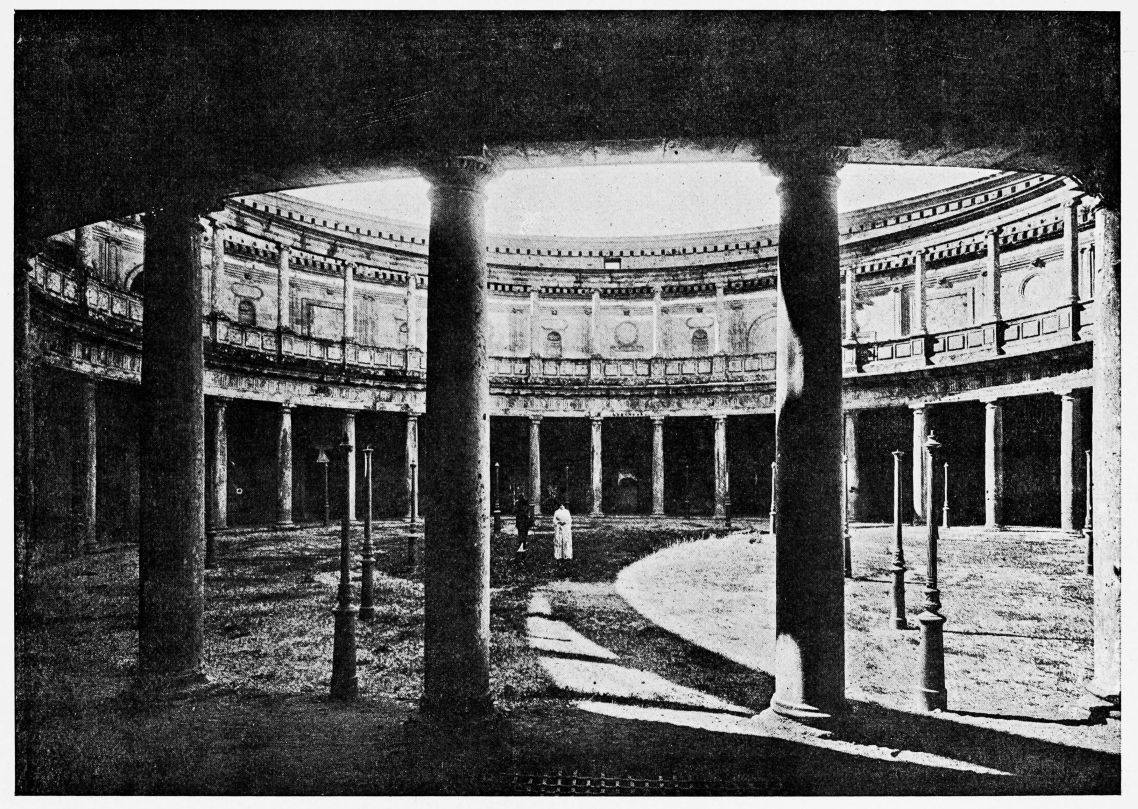
INTERIOR, PALACE OF CHARLES V.
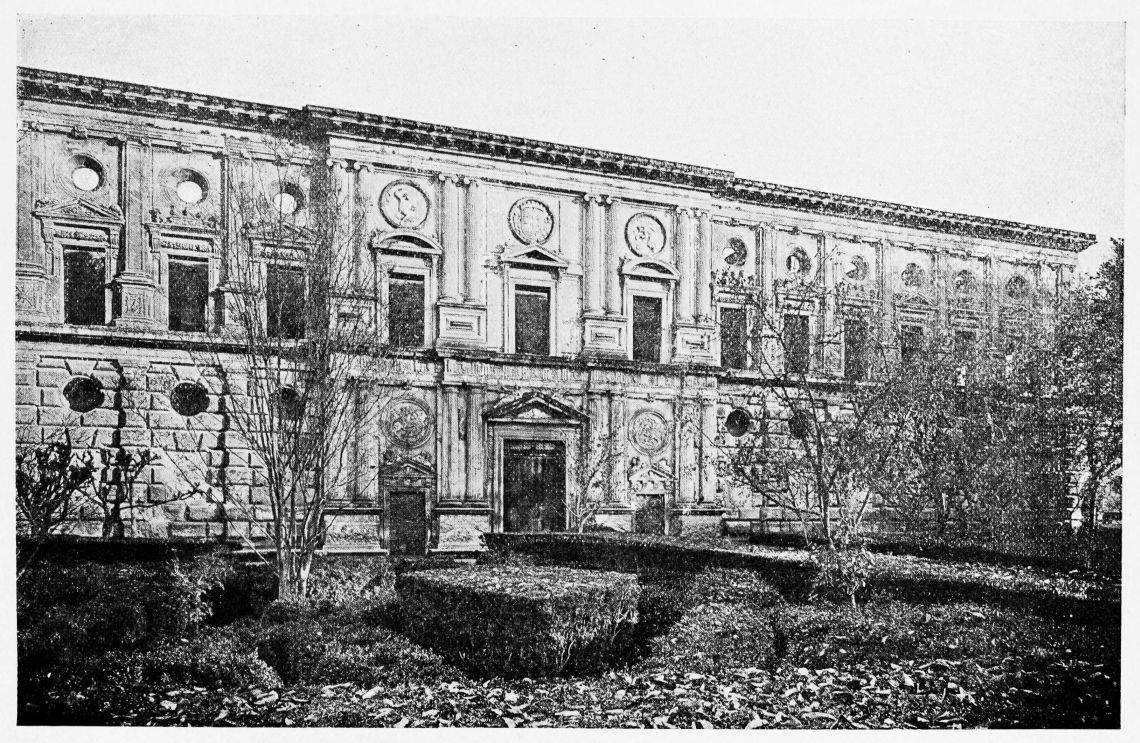
PART OF EXTERIOR, PALACE OF CHARLES V.
This pile of buildings, commenced for Charles V., was never finished, in consequence of his frequent absence, occasioned by the almost perpetual wars in which he was engaged, particularly in his efforts to suppress the insurrections of the Moors in the Alpujarras, and elsewhere.[12] The spot chosen for
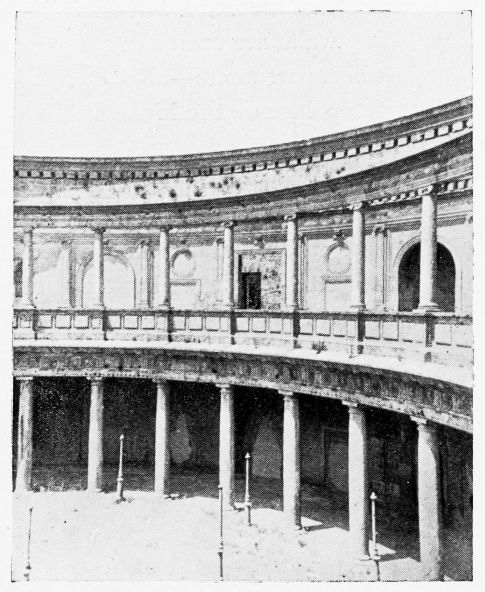
ROMAN COURT, PALACE OF CHARLES V.
the site of the Palace commands a most beautiful view of the city of Granada, as well as its surrounding Vega. As a specimen of Spanish architecture, it reflects the highest credit on Pedro Machuca, who began it in 1526. It is, in every way, adapted to the climate; and its interior, which, in its chief feature, takes a circular form, is spacious and splendid. In any other situation the Palace of Charles V. would justly excite admiration: but here it is misplaced. With all its grandeur and architectural excellence, Washington Irving could only look upon the structure as “an arrogant intrusion.” It is falling rapidly to decay. The walls are crumbling, the wood-work is rotten, and the splendid apartments—all that resulted from an intention to eclipse the palace of the Moslem kings—are given up to bats and owls.
This projected Palace, begun in 1526, progressed slowly until 1633, and was then abandoned. Whatever beauty there is in the Spanish Palace at Granada, is external. On the other hand, the Moors were content with the beauty of the interior of the Alhambra.
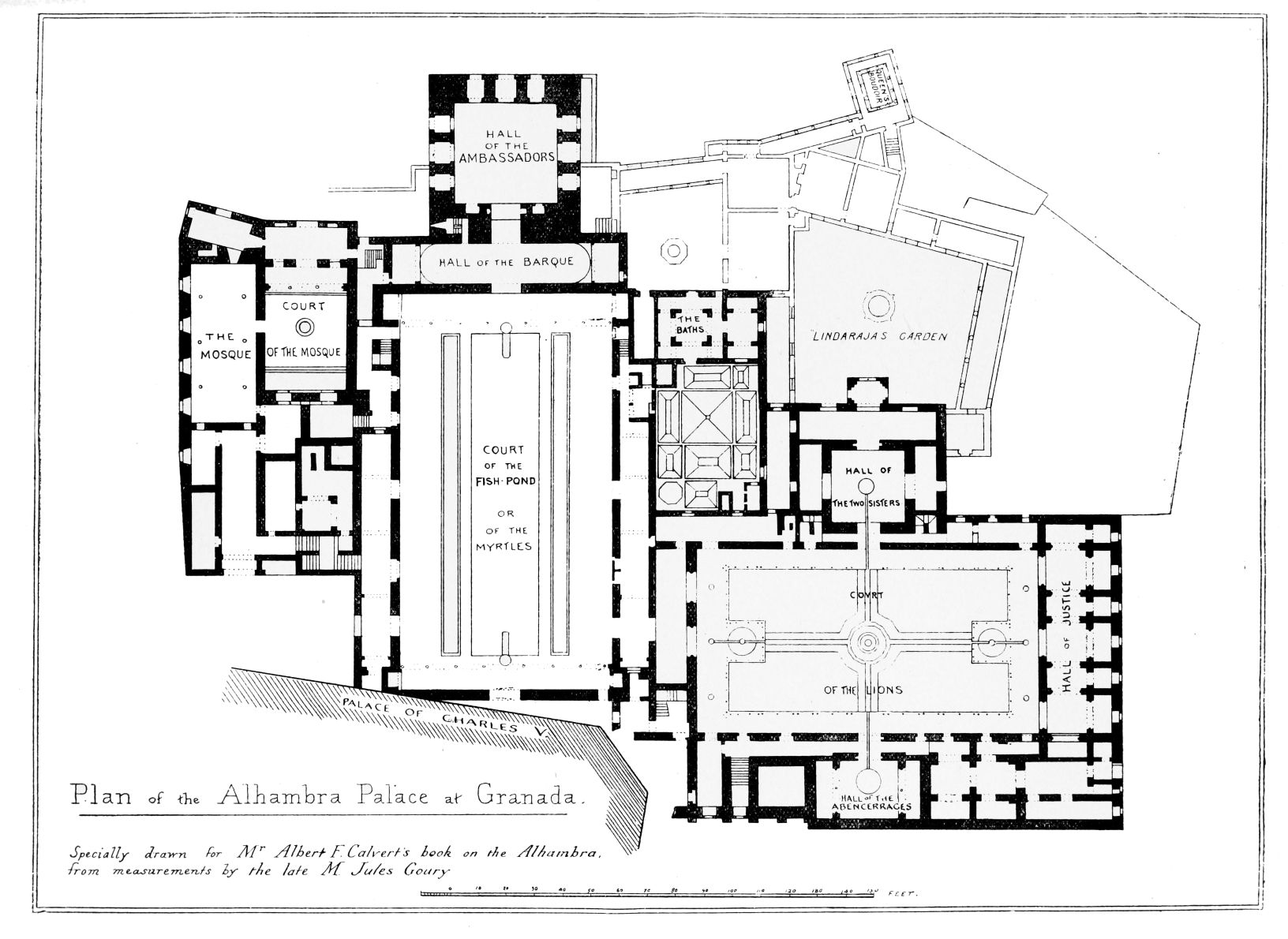
Plan of the Alhambra Palace at Granada.
Specially drawn for Mʳ Albert F. Calvert’s book on the Alhambra, from measurements by the late M. Jules Goury
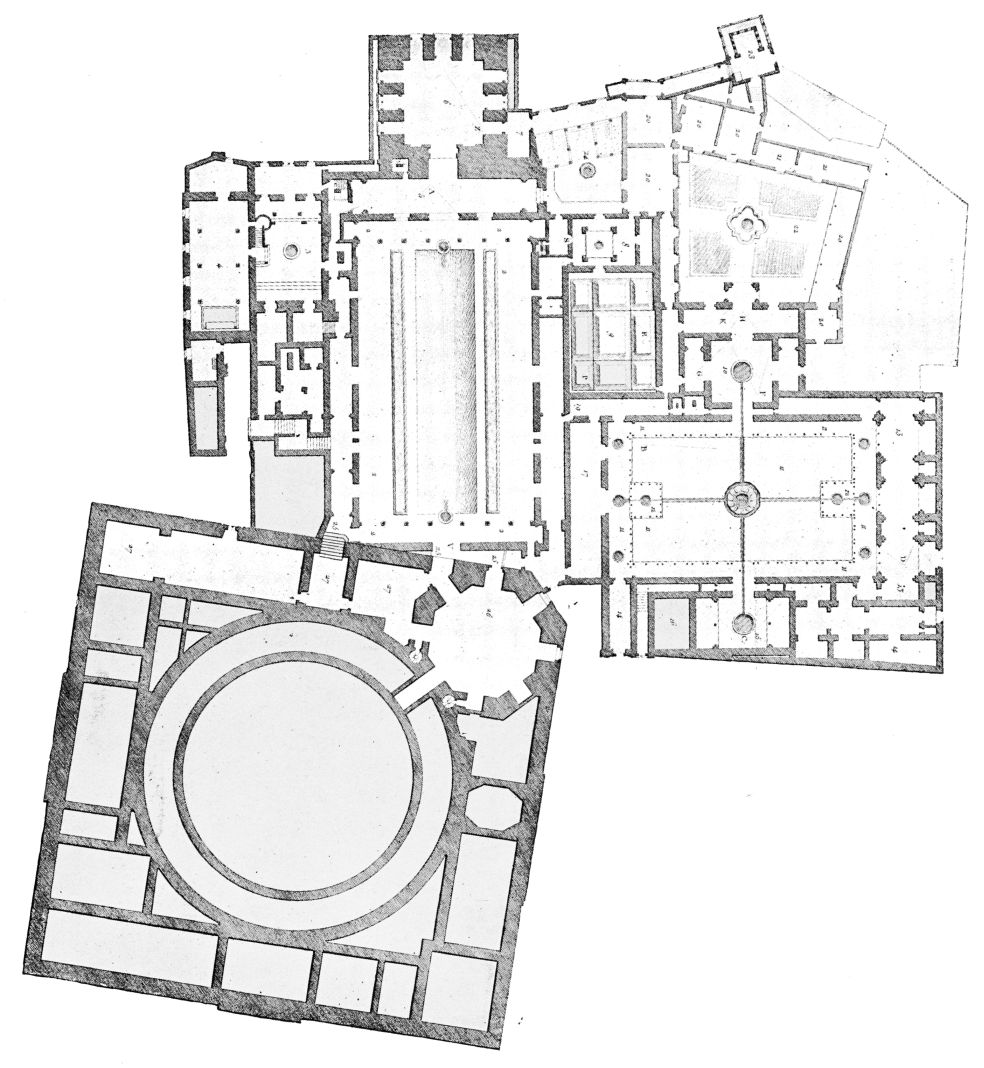
GROUND-FLOOR PLAN OF THE ALHAMBRA, AND OF THE FOUNDATIONS OF THE PALACE OF CHARLES V.
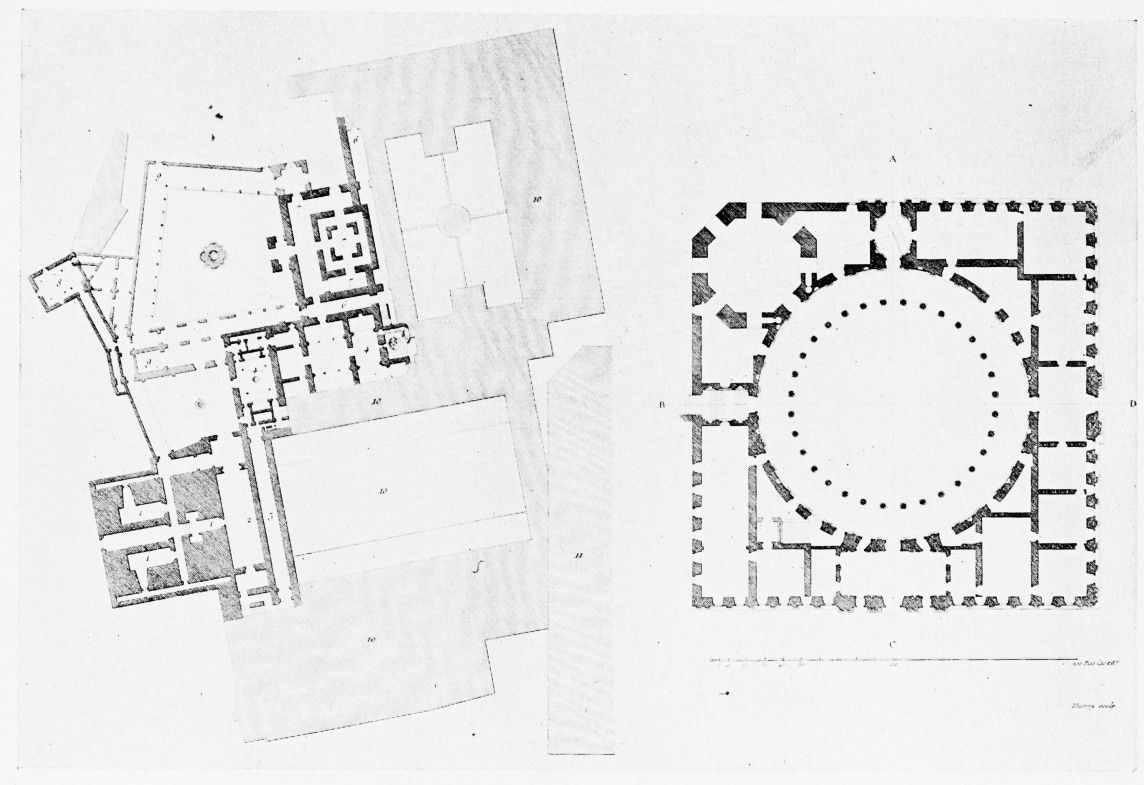
PLAN OF THE PALACE OF CHARLES V., AND OF THE SUBTERRANEOUS VAULTS OF THE ALHAMBRA.
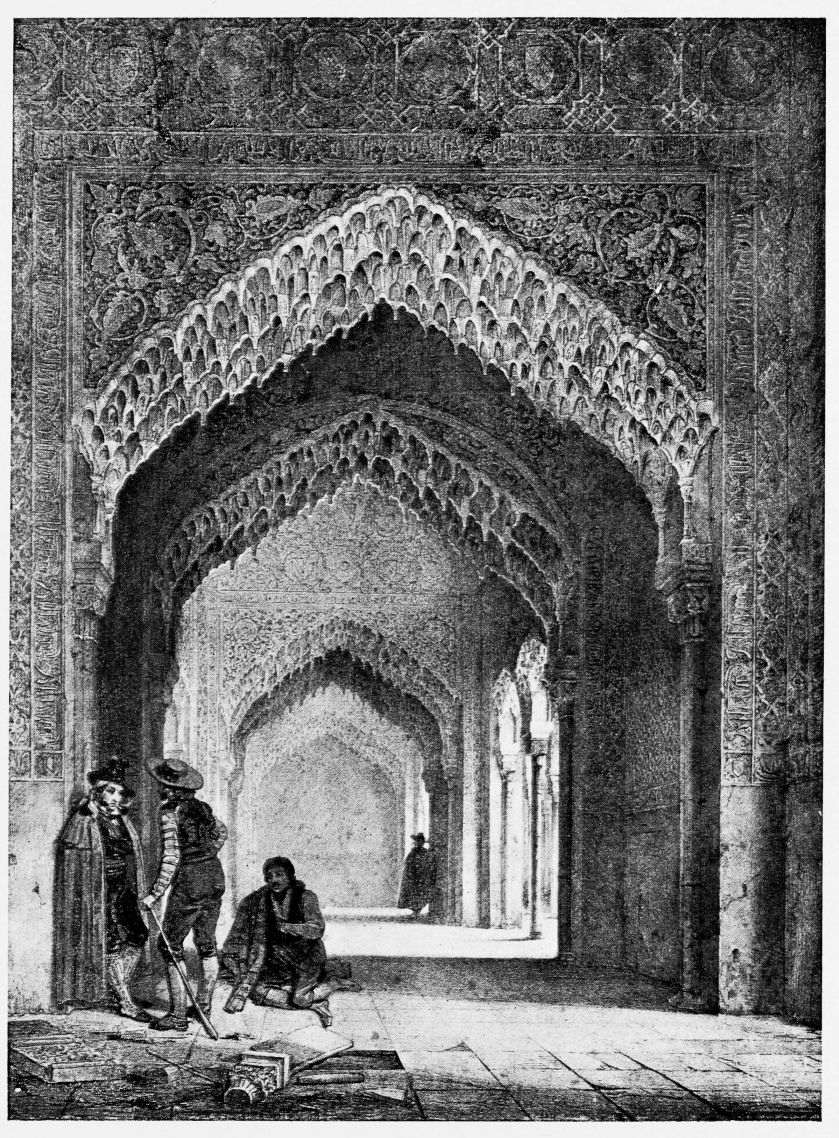
HALL OF JUSTICE.
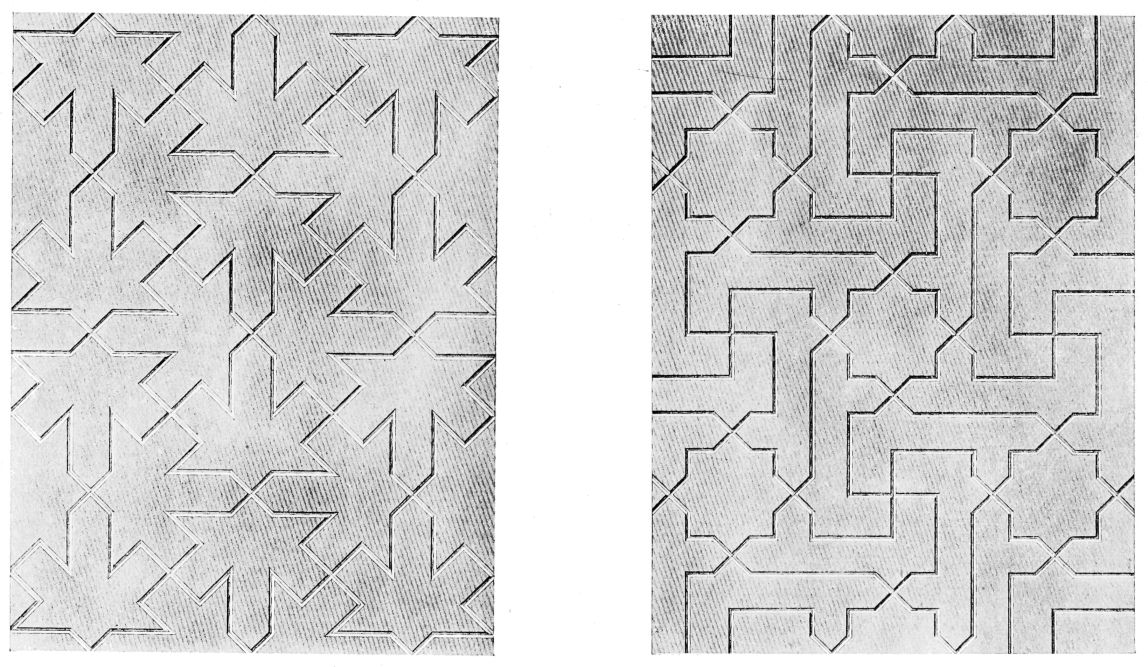
SUNK LINES ON THE WALLS, HALL OF JUSTICE AND COURT OF THE LIONS.
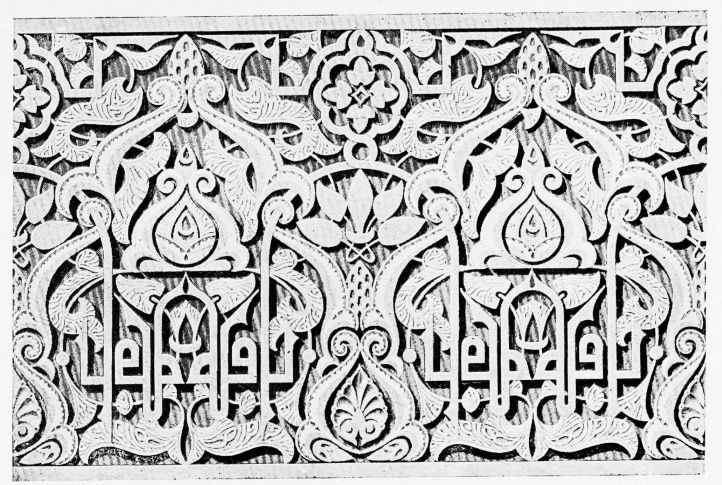
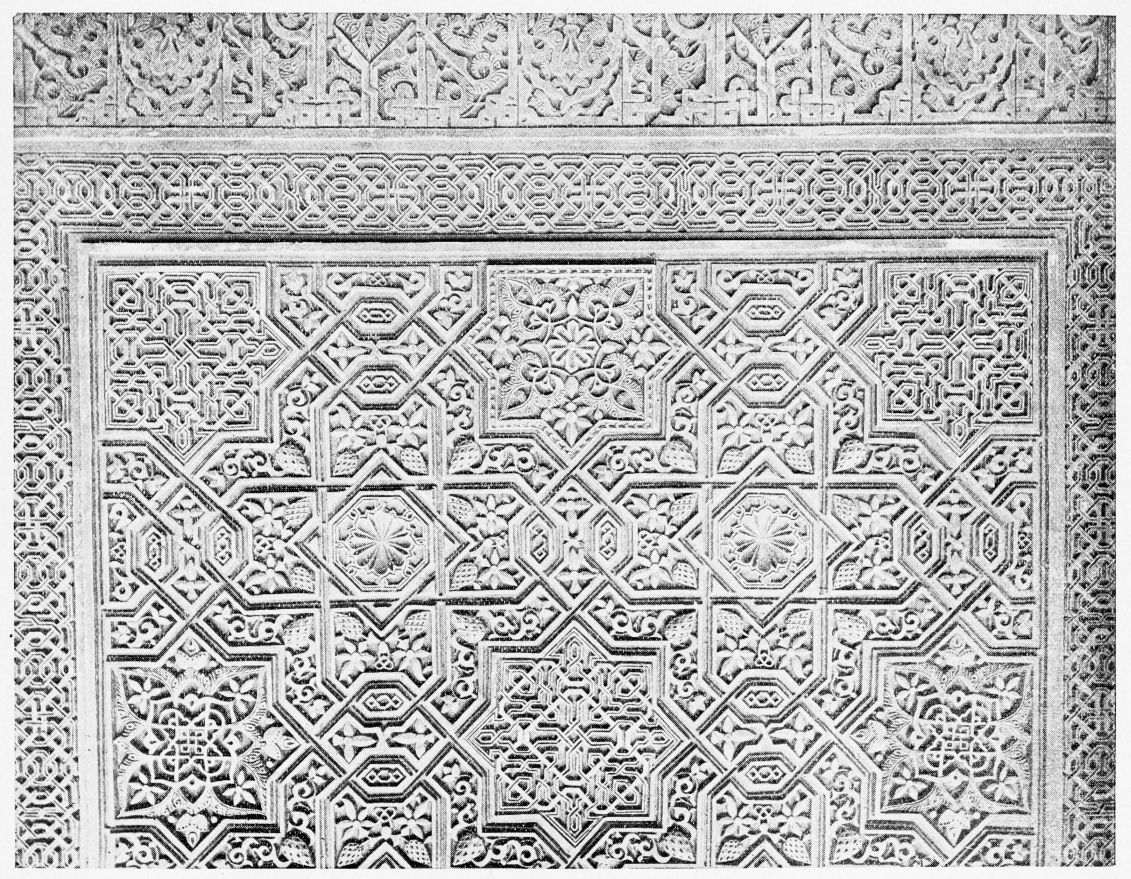
FRIEZE IN THE HALL OF THE TWO SISTERS.
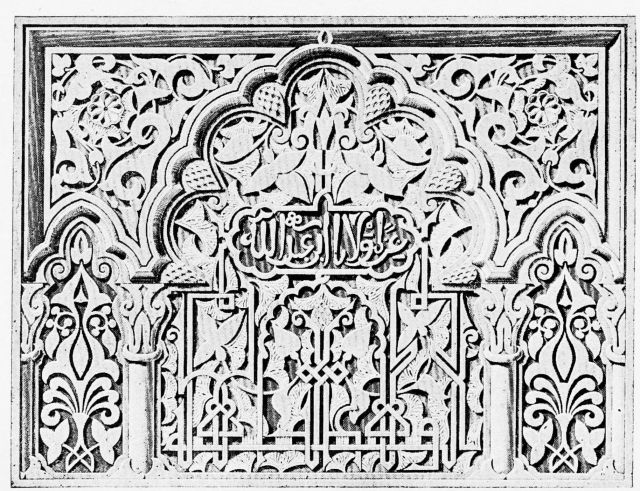
PANEL ON JAMBS OF DOORWAYS, HALL OF THE TWO SISTERS.
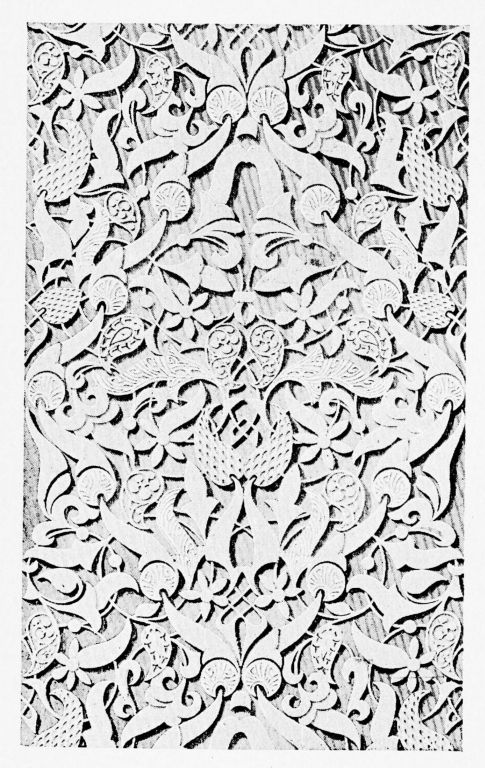
ORNAMENT IN PANELS, HALL OF THE BARQUE.
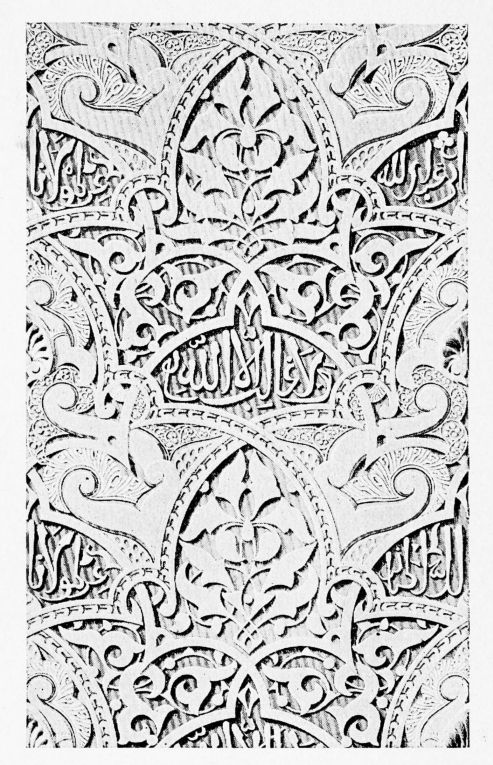
ORNAMENT IN PANELS, HALL OF AMBASSADORS.
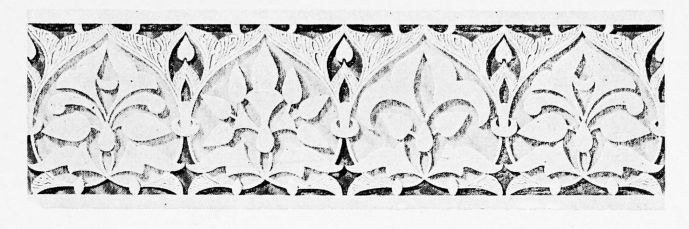
CORNICE OVER COLUMNS, COURT OF THE LIONS.
FRIEZE OVER COLUMNS, COURT OF THE LIONS.
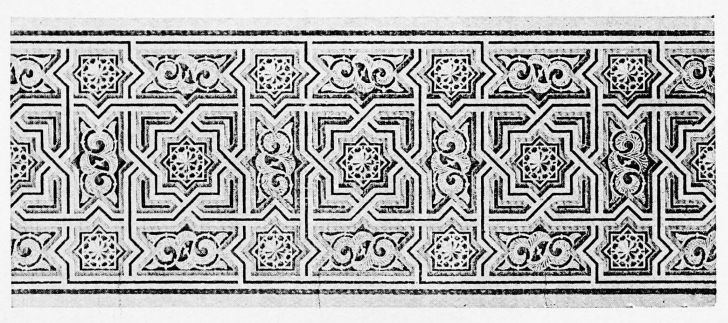
BAND ROUND PANELS IN WINDOWS, HALL OF THE TWO SISTERS.
PANELLING IN WINDOWS, HALL OF AMBASSADORS.
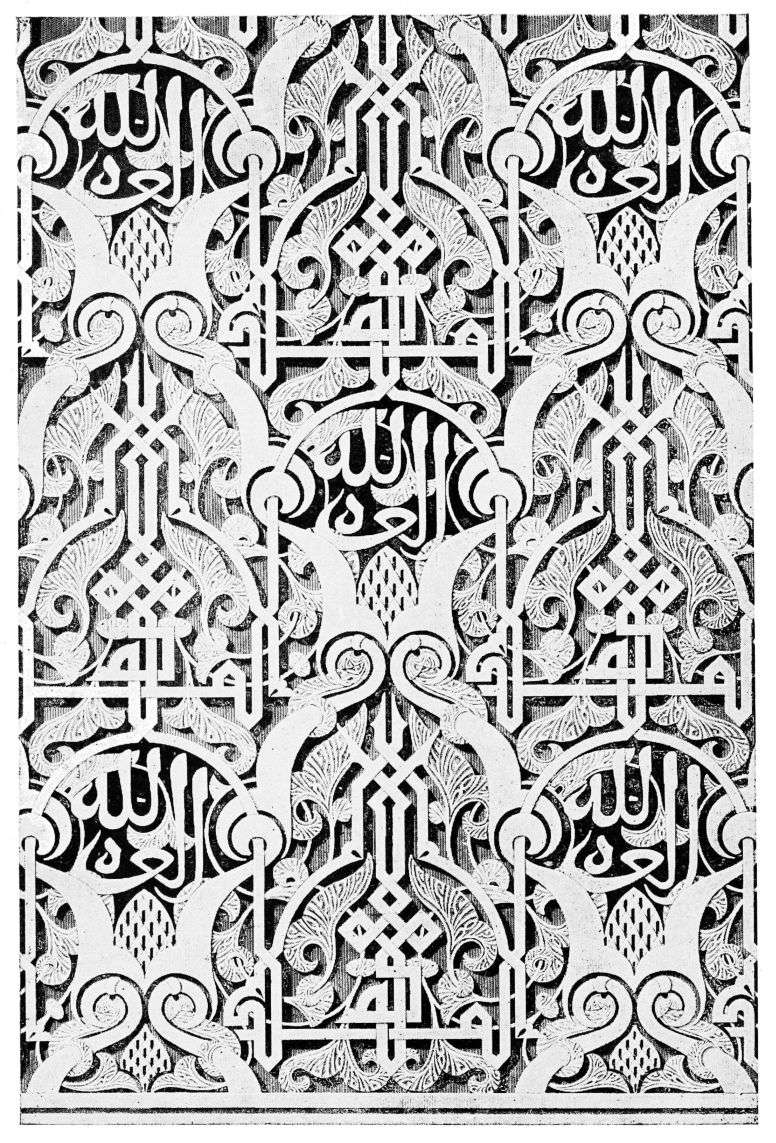
ORNAMENT IN PANELS, COURT OF THE MOSQUE.
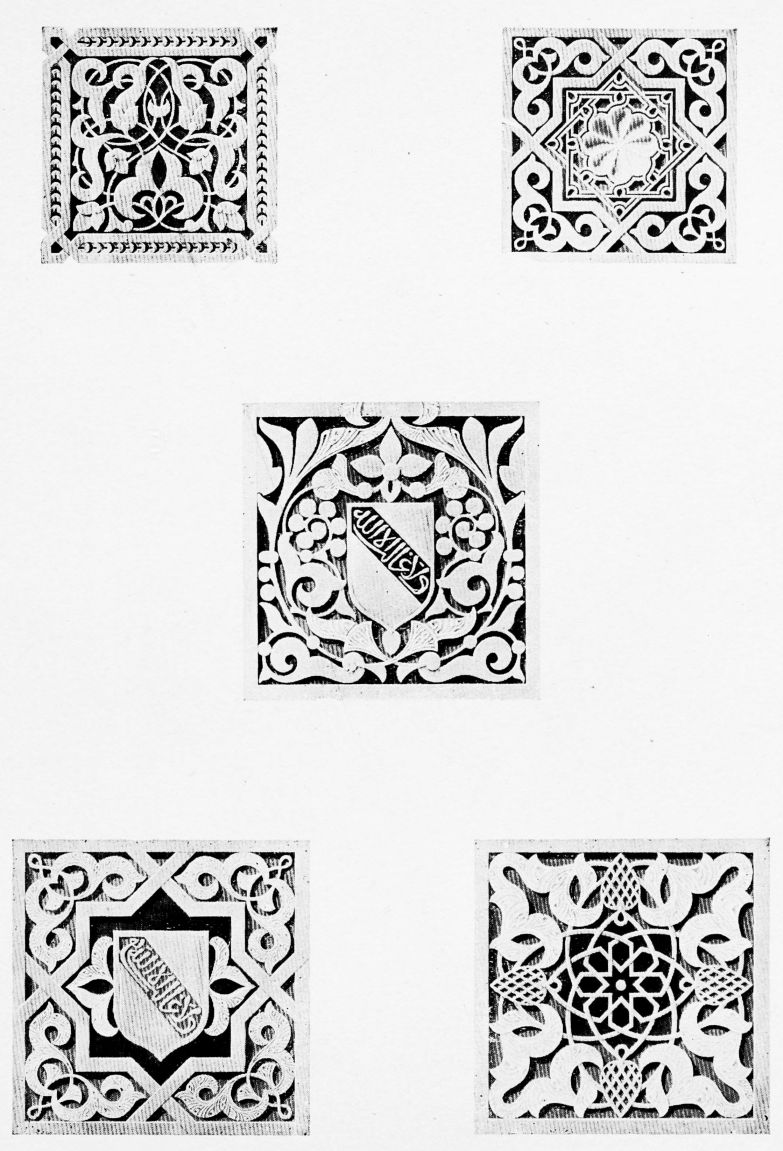
ORNAMENTS AT THE JUNCTIONS OF INSCRIPTIONS, COURT OF THE LIONS AND COURT OF THE FISH-POND.
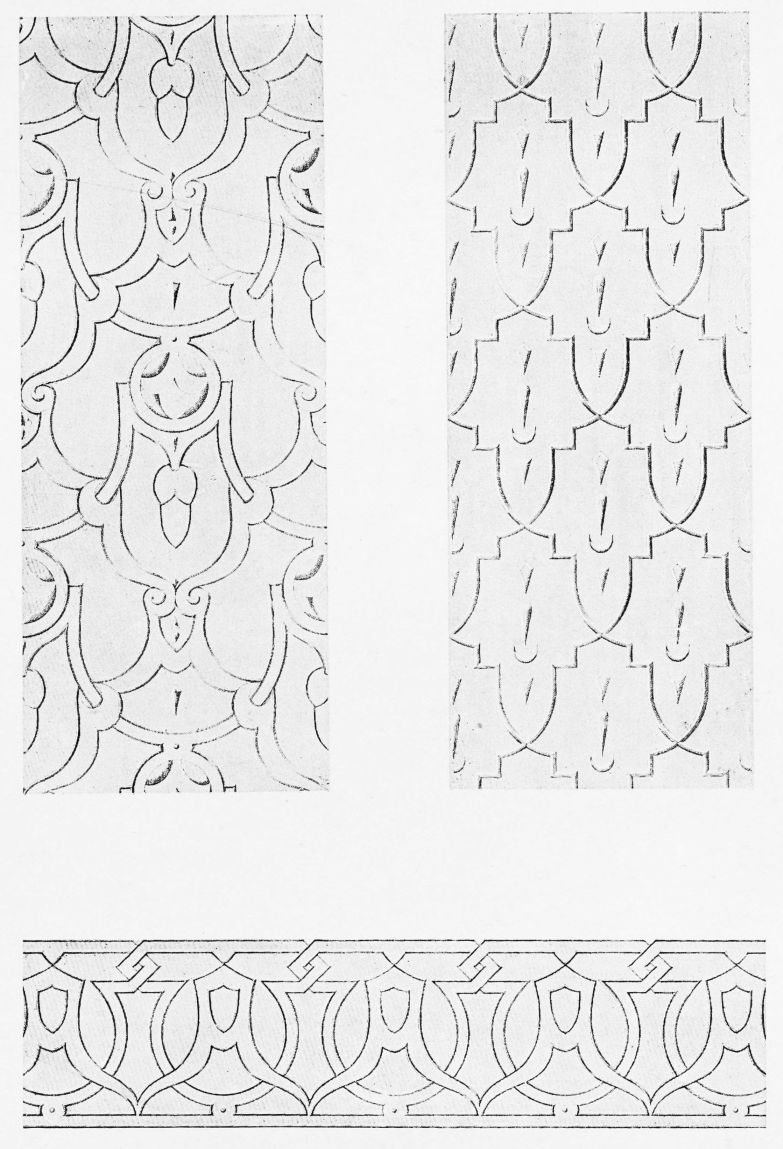
SUNK LINES ON THE WALLS, HOUSE OF THE COMMANDANT.
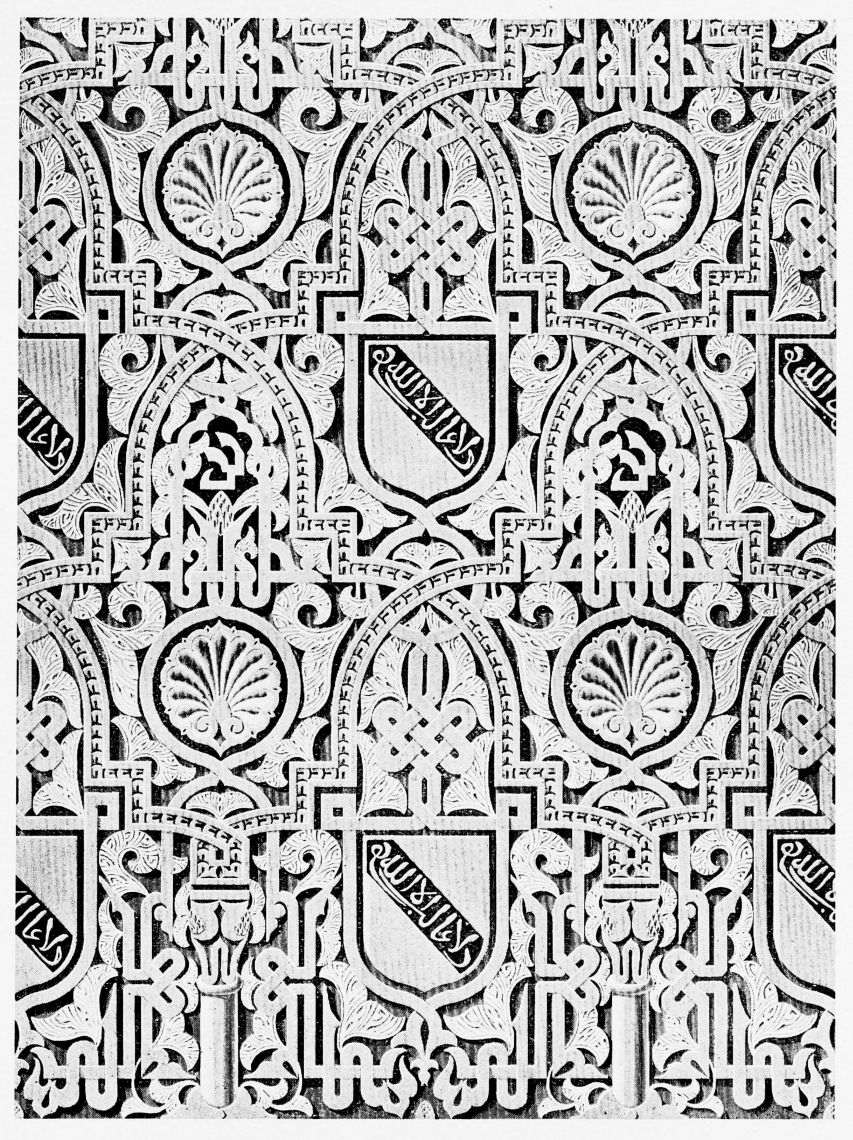
ORNAMENT IN PANELS, HALL OF AMBASSADORS.
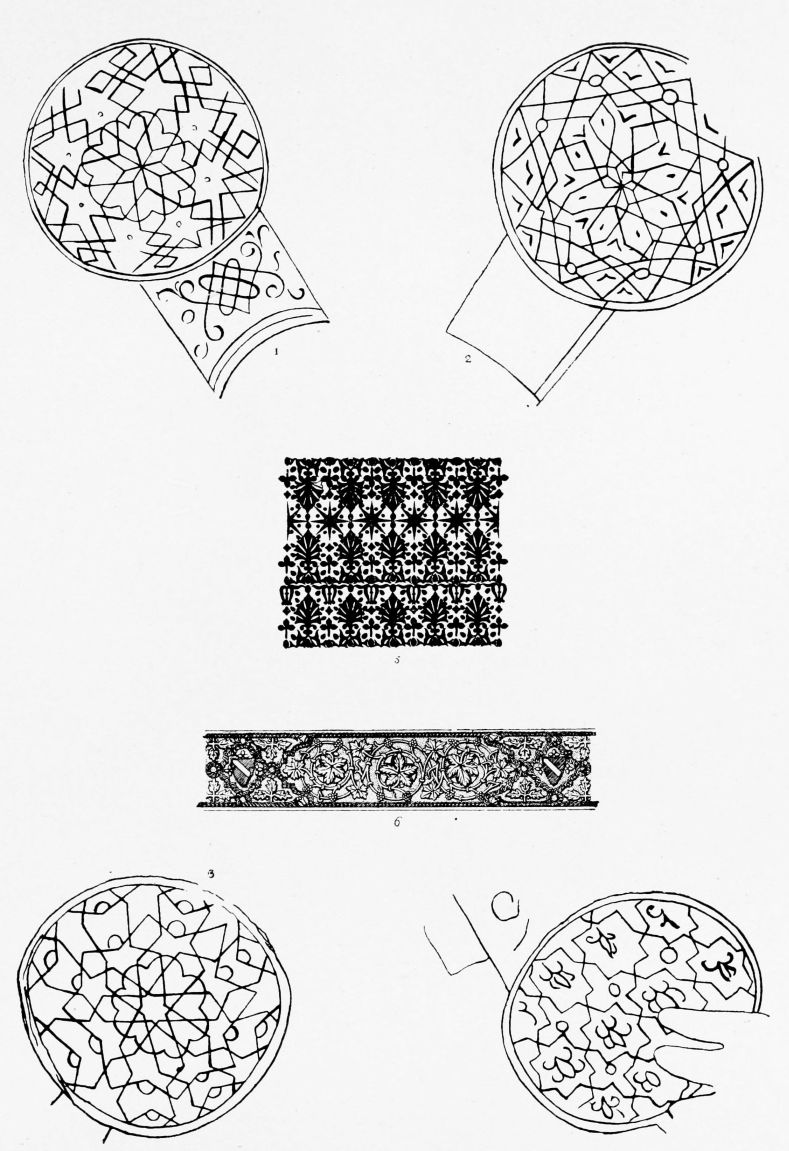
DETAILS OF THE ORNAMENTS WHICH ARE INTRODUCED INTO THE PAINTING OVER THE CENTRE ALCOVE OF THE HALL OF JUSTICE. THESE ORNAMENTS, BEING OF A STRICTLY MOORISH CHARACTER, STRONGLY SUPPORT THE OPINION THAT THE PAINTINGS ON THE CEILINGS OF THE ALCOVES OF THE HALL OF JUSTICE ARE THE WORK OF MOORISH ARTISTS.
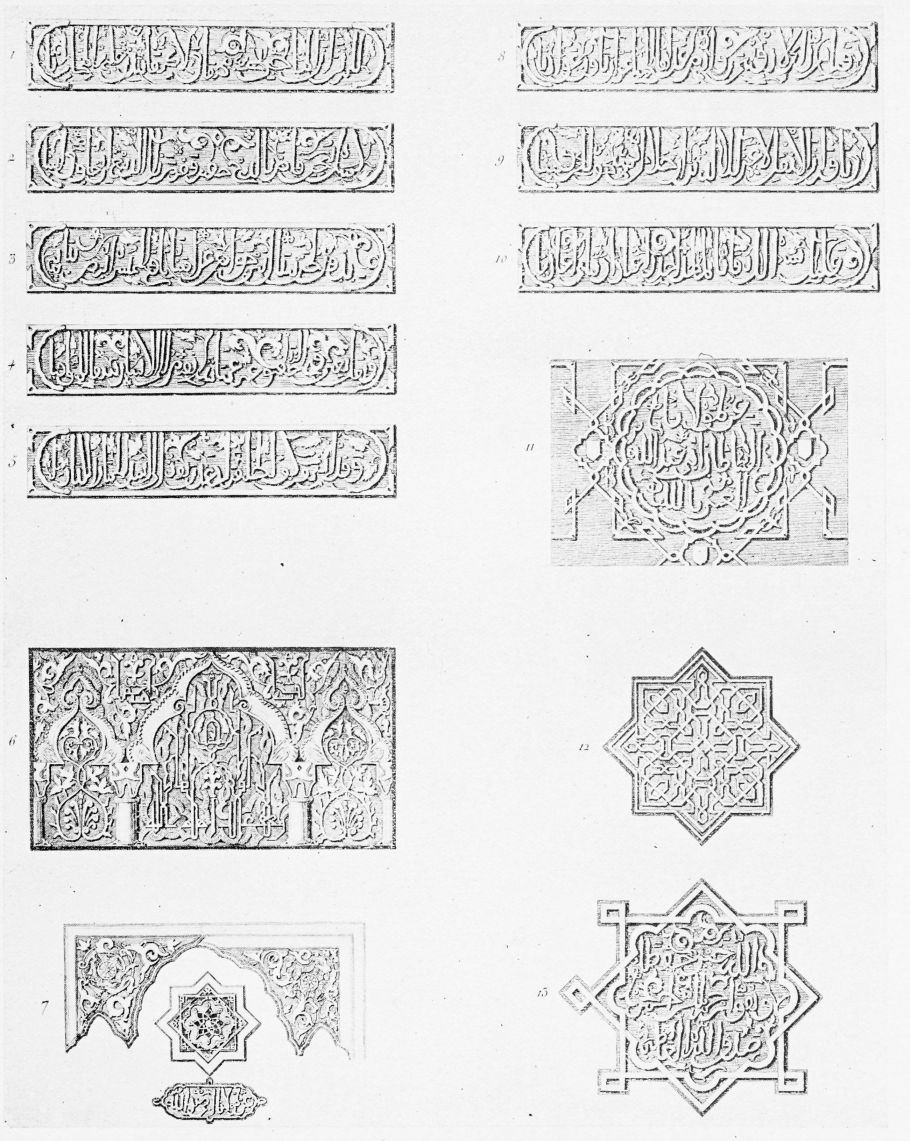
DETAILS AND ARABIAN INSCRIPTIONS.
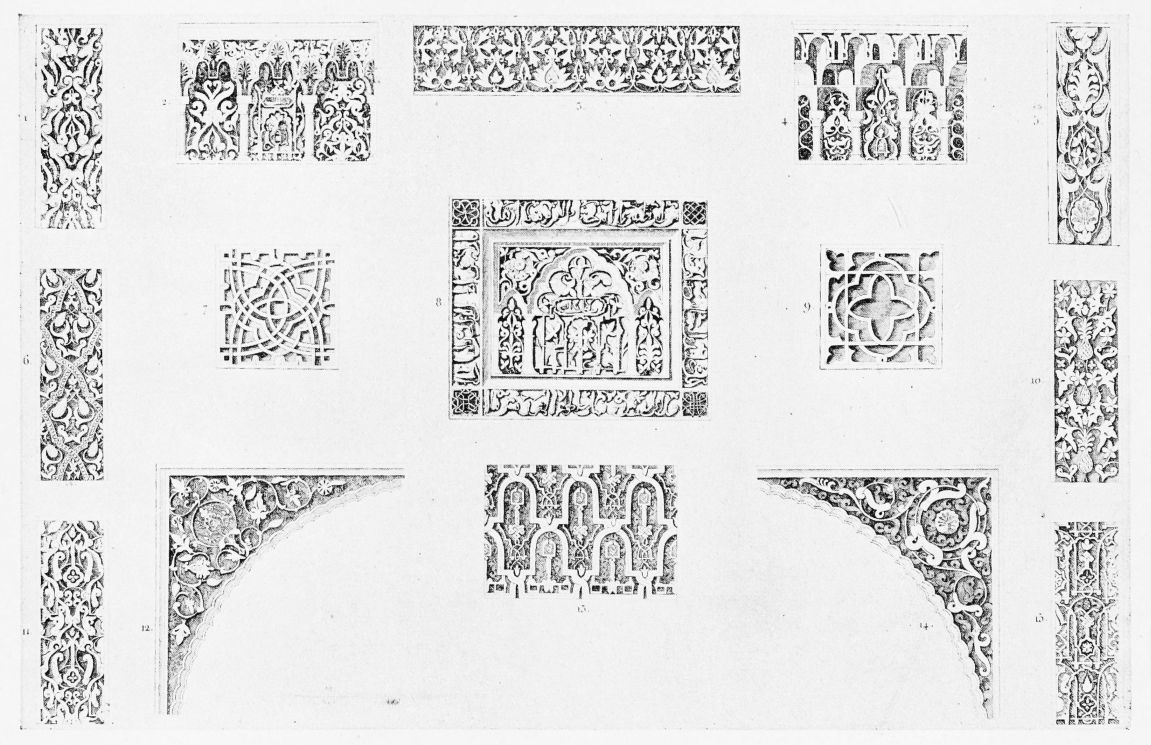
DETAILS OF ARABIAN WORK.
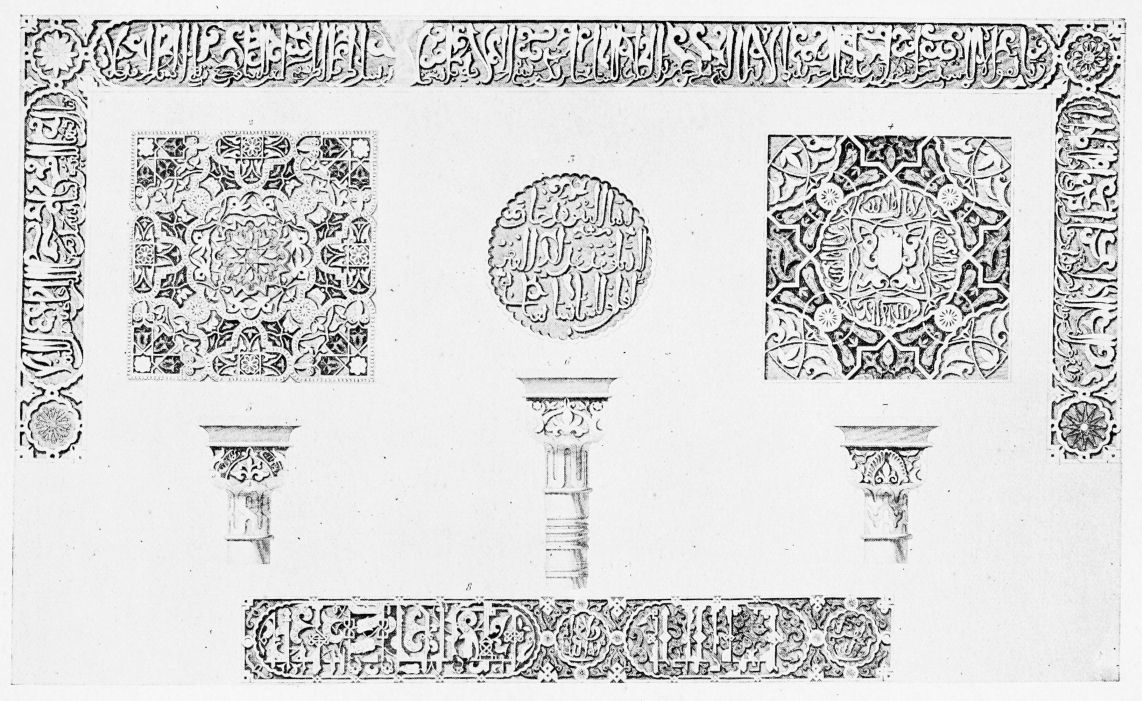
DETAILS, AND INSCRIPTIONS, AND ARABIAN CHAPITERS.
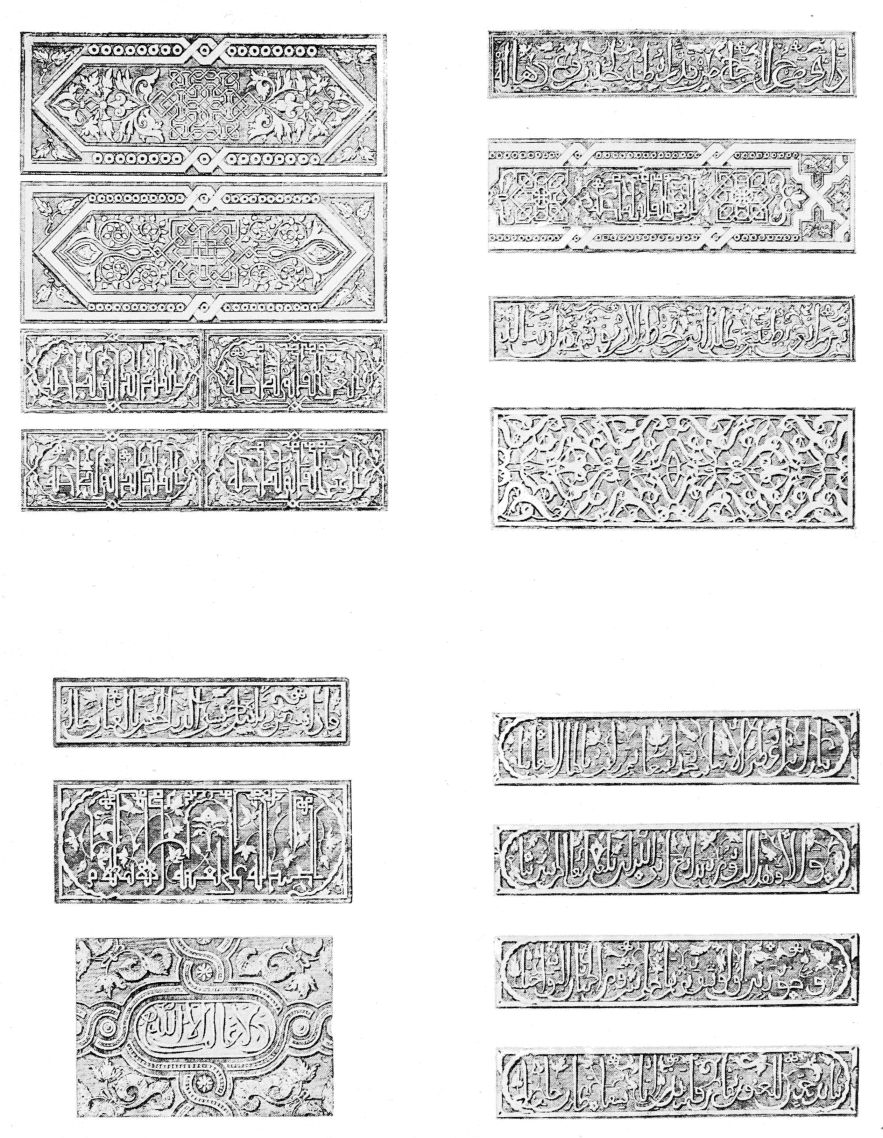
DETAILS OF ARABIAN WORK.