Part 2 — NIGERIA-NORTHERN PROVINCES
Reading edition
INTRODUCTORY REMARKS—Until 1914 the Northern Provinces of Nigeria were separately administered under the designation of Northern Nigeria, and were the largest as well as the most recent of our West African Colonies. They lie between 7° 3′ and 13° 54′ north latitude, and 2° 50′ and 14° 5′ east longitude, and are bounded on the north by the French Sudan, on the east by the Kameruns and on the west by Dahomey and French Guinea. The Southern Provinces of Nigeria almost completely adjoin the southern boundary.
The estimate of the populations and areas of the thirteen provinces given below is taken from the Colonial Office Report No. 821 for 1913:—
Area, sq. miles. Population.
Sokoto 32,600 1,300,000
Kano 29,500 3,500,000
Bornu 33,600 700,000
Central[5] 23,700 700,000
Zaria 13,320 402,000
Niger[5] 16,770 400,000
Kontagora 27,800 122,000
Ilorin 6,500 200,000
Muri 28,700 700,000
Nassarawa 16,710 600,000
Yola 11,600 300,000
Kabba 8,200 140,000
Bassa 6,700 205,000
255,700 9,269,000
The total population is thus nearly double that of the estimation of 1907-8. For convenience the Northern Provinces may in places still be referred to in this work by the old title of Northern Nigeria.
As will be seen below there is less variation in the rainfall of the different provinces than is found elsewhere in West Africa. The averages of the following centres for as many years as are available until 1913 are given for comparison:—
Av. inches. Av. inches.
Naraguta 50·28 Knepp 40·80
Ilorin 49·75 Yola 38·64
Kontagora 47·77 Kano 33·65
Zaria 46·59 Maifoni 27·85
Baro 46·56 Sokoto 24·86
Lokoja 45·77 Kataguni 19·87
Zungeru 41·67 Geidam 15·14
Of the places mentioned the highest single year’s rainfall was reached at Ilorin when 65·18 inches fell, and the lowest at Geidam in 1913 when only 5·76 were recorded. There are localities where the rainfall exceeds the highest given here and others where it is undoubtedly much lower, but no records are available. The highest shade temperatures have been at Dumjeri and Maifoni (North Bornu), where 120° was attained, the lowest being at Kano, where it fell to 39°. In Kano and Zaria rain seldom falls between November 1 and the end of March, but the distribution is more general in the south.
Administration and Political Divisions.—The administration of Northern Nigeria was taken over by the Crown in 1900, having previously been carried on by the Royal Niger Company. Protectorates were gradually assumed, and the country placed upon a secure footing by the suppression of raiding, which had constantly been carried on by the different Emirs, chiefly upon the pagan tribes. The devastation caused by these raids is still visible in the country to the south of Kontagora and elsewhere, and the fear of the raiders kept the inhabitants within or in close proximity to their walled towns, leaving large tracts of fertile country unexploited. The work accomplished by Sir Frederick Lugard, the first High Commissioner, was largely that of pacification and reassurance of the people, and until this had been completed, and facilities for transport provided, it could not be expected that the country could make much progress from a commercial standpoint.
The further opening up of the country by means of roads and railways, and the assessment of land revenue upon lines completely understood and recognised as fair by the natives, was effected by Sir Percy Girouard, who succeeded Sir Frederick Lugard’s first administration. Sir Frederick subsequently returned as Governor-General of the amalgamated Nigeria.
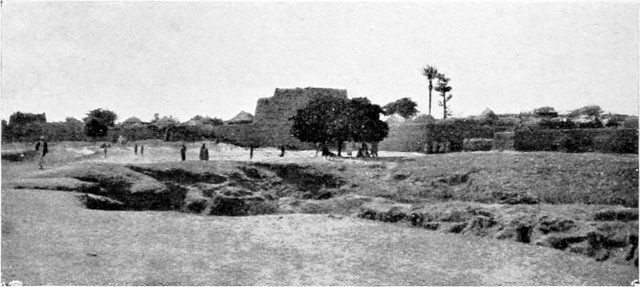
Until April 1907 the country was divided into fourteen provinces, one of which, Borgu, was absorbed in Kontagora at that time, making the thirteen mentioned above. By a later reconstruction the provincial limits of the two provinces of Bauchi and Nupe were reformed, and the provinces reconstituted under the names of the Central and Niger Provinces respectively. Groups of provinces were then placed under First-class Residents. Photographs are given of Kano and Zaria (Figs. 32 and 33).
Natural Divisions.—There is less apparent possibility of defining limits to the natural conditions of any part of the country than is found in the countries nearer the coast. There is no afforested zone in Northern Nigeria, although fairly densely wooded tracts occur in several places near the larger rivers. It may be said that grass land studded with well-separated trees is the condition of the country throughout, the trees becoming more stunted towards the northern and desert boundaries. To the north of the 11th degree of latitude, the botanical aspect becomes different; more trees of the Mimosa group, including the gum-bearing Acacias, becoming apparent. Cattle thrive well in this region, where the “tsetse” fly has not yet been observed.
Haussa Land, a term applied to the northern parts of the country, alone among the British West African territories, may be said to have been controlled by an ordered form of government from early times, and to have had a recorded history. Unfortunately these records were destroyed, wherever possible, by the Fulani conquerors, who came from the source of the river Senegal and overran the country at the beginning of the last century, and whose object seemed to be to endeavour to eliminate from the minds of the conquered people all recollection of their previous power. In spite of strenuous efforts in this direction, a few documents have been preserved, and these, combined with traditions, which have not had time to become completely distorted, show that, in spite of severe wars, famines, and other disturbing incidents, the Haussa has maintained his characteristic traits.
The origin of the Haussa race is still a matter of uncertainty, although there is some reason to suppose that it came from the east, and gradually penetrated the Western Sudan from the north. The Haussa language, which is claimed to be more in use than any other native language in West Africa, is said, by Lady Lugard, to be classed with Coptic among the Hamitic languages.[6]
History has established the fact that there were seven divisions or states in Haussa Land, the people of which, although regarded as having come from a common stock, were almost perpetually at war with one another. The mythical account of the formation of these states relates that each had particular duties assigned to it; those of Kano and Rano, to the north of Zaria, being specially industrial. At the beginning of the sixteenth century, when the Songhay kingdom was at the summit of its power, Kano and Gober, among other Haussa towns, were specially referred to by Leo Africanus on account of their cotton trade.[7]
Everywhere along the West Coast the name Haussa is associated with the idea of trade; the itinerant nature of the race inducing individuals to visit the remote parts of the pagan countries, thus creating trade routes in all directions. The Haussa trader of the present day does not necessarily bring goods from his own country for trading, but buys in one market to sell or exchange in another. It is by this means that many European manufactured goods penetrate into localities where no European trader has yet set foot.
The Haussa is also regarded as a good soldier, and is largely enlisted in the native regiments of West Africa under European officers.
The Nupes, Yorubas, Gwaris, Yauris, and others were constantly in contact with the Haussas, and to a small extent the Haussa language is spoken by them. Nupe is regarded as an ancient kingdom, occupying at one time a position of great importance. The Yorubas, who inhabit nearly the whole of the Ilorin Province and the Western Province of Southern Nigeria, trace their origin from the Phœnicians of the tribe of Nimrod, and claim that all the pagan tribes of Haussa Land are descended from them. The Gwaris, apparently, have no records, but are a scattered race living among the rocky hills and caves in the country lying to the south of Zaria.
Bornu was not evidently included in the Songhay kingdom or associated with the Haussa states, the inhabitants belonging to a distinct race with separate traditions. Their history in comparison with that of the Haussas is of recent date. In 1808, after the successful Fulani conquests of Zaria, Zanfara, Kano, Katsena, and Bauchi, Bornu was overrun. Shortly after this a sheikh, from the country extending eastwards from Lake Tchad, believing himself to be inspired to liberate the country, raised a small army, drove out the Fulani forces, and founded the present dynasty of Bornu. Some years later he attempted to expel the Fulanis from the Bauchi Province, but failed, and was compelled to come to terms.
The Haussas as well as the Bornuese are chiefly Mohammedans, but it is only among the higher ranks of the other tribes that a semblance of that religion has been adopted.
The tribes which had migrated from the East brought with them the agricultural knowledge of the Eastern nations. Among the noticeable evidences of this may be mentioned the “shaduf,” or dipping beam, used for irrigation in Egypt, which is similarly employed near Kano and Zaria. The absence of ploughs and the non-employment of cattle are, however, difficult to account for, as excellent cattle are common and thrive well in the most populous parts of the country. Tillage of the soil is still done entirely by hand, and, in those parts where the shallowest form exists, manure is extensively used. Among the many crops grown which are common to Oriental countries, as well as Northern Nigeria, are Guinea corn, maize, cotton, groundnuts, millet, benniseed, artichokes, wheat, and rice.
Agriculture shows the greatest development in the Province of Kano, where the population is dense, especially in the vicinity of the town from which the Province takes its name. The concentration of a large population in this locality was doubtless occasioned by the protection thus obtained against local enemies; and, as the realisation of the necessity for this becomes less each year, so will the inhabitants spread out into the richer lands towards the south. At a radius of thirty miles from Kano, it may be said that every available acre of ground is cultivated. It may also be said that nearly all the cultivation is continuous, and has been so for a long period, the renovation of the soil being secured each year by manuring. The mode of cultivation in these localities is for the most part shallow, and in many places the crops grown subsist entirely upon the manure applied. The Director of Agriculture, in the Bulletin of the Imperial Institute, vol. xi. (1913), p. 626, refers to the lack of fertility in the soil and to the common practice of cropping without a fallow for a number of years in succession. He also mentions, among other matters of interest, the recent expansion in cultivation of cowpeas and groundnuts; these being respectively third and fourth in order of importance among the cultivated crops.
Implements.—An illustration is given showing the method of using the three important agricultural implements employed by the Haussa cultivator (Fig. 27). The first of these is locally termed “Fatainya,” and is a curved-handled hoe with a blade of variable width. It is used for all operations of cultivation with the exception of turning up broad ridges and drilling. The implement shown in the centre is termed “Garma,” and is a broad, spade-like hoe, composed of an iron W-shaped frame, with several strips of iron riveted on the face, filling the interval between the arms. In the Zaria Province the iron strips are generally omitted, and the implement is called “Owya.” It is used for throwing up large spadefuls of soil in the preparation of the broad ridges which are made for nearly all kinds of crops. The last implement is the “Sangumi,” which is a thin rod with a small blade placed near one end and at right angles to it; its use is entirely for making drills for sowing seed.
All the fields for growing ordinary food crops, with the exception of cassava, rice, and sugar-cane, are prepared in ridge formation; the latter appearing to average about 8 in. high from the original surface. The furrows from which the loose soil has been removed increase the apparent height by the extent of their depth, and give the appearance of a good form of tillage having been practised. This is, however, seldom the case, as, except where irrigated crops are being treated, the ground is left untilled beneath the thrown-up soil. To compensate for the shallow state of the cultivation, manure is applied in large quantity, all animal refuse and ashes being carefully preserved, and often conveyed for long distances to the fields by men or donkeys.
The above conditions apparently apply only to the Haussa race, the pagan Gwaris and Bassas resorting to a much deeper form of cultivation and employing no manure. The Nupes and Yorubas do not know the use of manure for any crops except onions and tobacco, for both of which wood ashes are the chief substance applied.
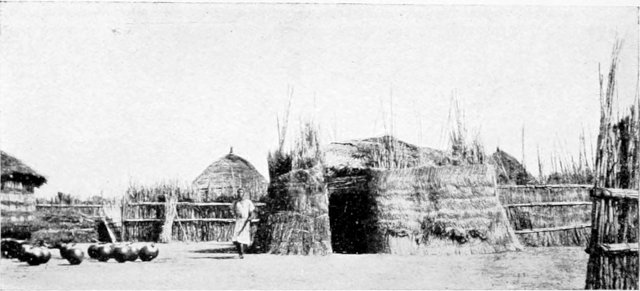
The crops of the country may be roughly divided into rainfall, irrigated, and swamp kinds. The first are sown at the commencement of the wet season, and are greatly affected by the distribution of the rain, but include the most important sources of food. These are Guinea corn, millet, maize, groundnuts, cassava, sweet potatoes, etc. An inadequate or irregular rainy season often causes famine conditions. The irrigated crops are yams, Colocasia, onions, tobacco, peppers, rama-fibre, and wheat, the last being almost confined to the country north of the 11th degree. Cassava and sugar-cane are also frequently irrigated in the drier districts to the north. Irrigation is performed in the northern localities by means of the shaduf. The swamp crops are rice, Colocasia, and sugar-cane. The first is grown upon a flat-dug surface, the second upon high ridges made of swamp mud, and the third on low ridges bordering the rice fields. The villages north of Kano are often entirely built of the stalks of Guinea corn, and Fig. 31 represents a principal hut within such a structure. The fencing of the fields in this locality is generally made of the same material, but in the vicinity of Kano itself, Euphorbia or thorn hedges are more common.
Near Rogo, fences and hedges are usually dispensed with, paths forming the boundaries between fields.
The following table of value of exports shows the progress in the last five years before amalgamation with the Southern Provinces. The subsequent years are given at the end of this chapter.
Values of Exports
1908 1909 1910 1911 1912
£ £ £ £ £
Rubber 33,050 40,000 37,900 53,511 [8]
Shea nut products 70,900 93,050 43,150 40,496 51,409
Palm kernels 47,150 41,750 66,100 52,637 64,432
Groundnuts 13,650 16,350 8,150 10,377 18,930
Gum[9] 8,850 6,650 9,750 5,436 1,785
Cotton 1,300 4,400 1,850 945 [8]
Benniseed 2,000 4,000 2,300 2,582 2,972
Fibre 1,382 4,061 — — —
Livestock 2,600 1,300 3,750 6,357 9,132
Gutta percha (“Balata”) — — 2,262 6,695 4,267
Skins and hides[10] — — 5,214 37,809 68,832
Ostrich feathers — — 2,615 7,225 12,621
RUBBER.—The extent of the export of this commodity from the Northern Provinces was less generally recognised than that from the coast countries, for the reason that the Northern Nigeria’s exports are necessarily shipped from Southern Nigerian ports, and have been included in the statistical figures of that country.
Until 1907 no separate statement was furnished indicating the quantity of rubber actually originating from the Northern Provinces; the whole produce leaving the country by the Southern Nigerian ports made it difficult to ascertain this. The following imperfect records show, however, that the production was of significant extent:
1905. The value of the rubber exported by two of the leading firms in the Northern Provinces was estimated at £101,207.
1906. The amount exported in the second half-year was given as 556,701 lbs., valued at £34,344. The year’s exports were said to be 574 tons. Estimating the whole at the same proportionate value as that given for the second half-year we have:
1906. 1,283,520 lbs. £79,185
1907. 1,187,588 lbs. £91,074
The decrease in recent years is accounted for by the fall which occurred in the price of rubber, but is probably partly due to the extermination of the vines by the wasteful process of preparing root rubber.
Sources.—The following are the trees and plants which have been used for extracting rubber:—
1. Funtumia elastica.—This is only found in a wild state in Southern Kabba and Bassa Provinces, and is recognised under the Yoruba name of “Ire.” Small pieces of fairly well-prepared rubber from this tree are occasionally brought in to Lokoja for sale.
2. Landolphia sp. (probably owariensis).—A clean “red nigger” rubber is sold, and is probably obtained from this species. It is generally of good quality, but not plentiful. It appears to be collected as a scrap rubber, and is made up in small irregular balls.
3. Landolphia sp.—“Root rubber,” termed locally “Attifufu,” and called by the trade “Brown cluster” or “Brown medium.” It is probable that several species of vines are used for this, which is not necessarily prepared from the root alone, the whole stem being pounded up. This seems to represent the commonest form of Northern Nigerian rubber, the preparation of which was at one time prohibited.
4. Landolphia florida or Thompsonii (?).—“Paste rubber,” called locally “Ebo,” is prepared from the latex of these vines by boiling with the admixture of “wood oil,” or the resinous exudation of Daniellia thurifera, until it reaches the consistency of bird-lime, when it is only capable of being handled in water, in which state it is sold to the merchants, who accumulate it in casks for shipment. It is inferior in quality, and only capable of export for cheap manufactures.
5. Carpodinus hirsutus.—“Flake rubber,” called “Aribedda,” is said to be the product of this vine, which grows commonly in Bassa. It is without resiliency and somewhat resembles the exudations of some of the species of Ficus.
6. Ficus platyphylla.—“Red Kano rubber,” or “Ballata,” known to the Nupe people as “Ogbagba.” This is prepared by boiling, without the addition of any foreign matter, and attains the consistency of a hardened paste, similar to the “guttas” made from the latex of the Shea-butter tree (Butyrospermum Parkii). It is distinguished in the Kano Province by the name “Danko Gawi,” shea gutta being known as “Danko Kadainya.”
7. Ficus trachyphylla.—This tree is called in Ilorin by the Yoruba name “Oapottoa,” and yields a latex which is discoloured pink by the sap of the tree with which it becomes mixed in tapping. When boiled and allowed to cool, the product is a reddish hardened substance, somewhat resembling guttapercha in appearance.
8. Ficus Vogelii.—Scrap rubber from this tree is said to be collected. In appearance this rubber is often good, but the shreds break up easily.
It will be seen from the above, that several of the so-called rubbers are unlike the valuable kinds in appearance and composition, and as such are, perhaps, incapable of being used in a pure state and for the most important manufactures for which rubber is employed. All kinds, however, seem to be marketable at a price which is remunerative to the exporter, so that the trade has become an extensive one.
Plantations.—It has been urged that Para rubber (Hevea brasiliensis) might be grown upon a large scale in the moist and well-watered areas, and Ceara (Manihot Glaziovii) and Funtumia elastica in the drier districts; but the country is not generally favourably adapted for growing the first and last mentioned. Ceara rubber seems to thrive well in climates similar to that of this country, and the rubber made from it is of the finest quality, but in many tropical countries it has shown great uncertainty in yield of latex, and often unaccountable cessation of flow. This has caused it to be less favourably regarded for plantation work. (Cf. Bull. Imp. Inst., 1913, 1916.)
Many parts of the country are suitable for Ceara cultivation, thriving as it does in localities susceptible to long periods of drought. In the German African Colonies the method of treating the tree seems advantageous, in view of the uncertainty of the yield after maturity is reached. In these places the plants are put out in extensive plots each year, and, after they have reached full growth, all the latex possible of extraction is taken out of them, and the exhausted trees are cut out, permitting the area to become renovated by the self-sown seedlings, which spring up in great profusion. Thus, each year a plot becomes completely renovated, without great expense being incurred. If Ceara planting should be adopted in Northern Nigeria, some such system as this might prove remunerative.
In the Lokoja forest reserve, about a hundred acres of Funtumia elastica were planted in 1906, but these have not succeeded as well as was originally expected, owing, probably, to want of moisture. A few Ceara and even Hevea plants, have been grown at Zungeru and Baro, but, as yet, no plantations have been made.
SHEA NUTS.—The shea nut is the seed or kernel contained in the green fruit borne by Butyrospermum Parkii, called locally “Kadainya.” The fruit, which ripens about May, is of variable size, from that of a pigeon’s egg to as large as a hen’s egg where only one nut is contained, but is nearly twice the size where two nuts are present in the same fruit. The fleshy rind is not more than one-sixth of an inch in thickness, is sweet to the taste, and contains a white latex, which coagulates into a product called “gutta-shea.” The natives in some places seem to regard the fruit as a delicacy, and the roads and paths, in districts where the tree is plentiful, are strewn with the nuts which have been thrown away after the fruit portions have been eaten. The nut is quite smooth, and is readily separated from the fleshy part.
The butter, which is extracted by the natives, is appreciated less than palm oil or groundnut oil for cooking, but is used as a substitute. In Europe the kernels as well as the extracted “butter” are employed, especially on the Continent, for the manufacture of vegetable butter and in candle factories.
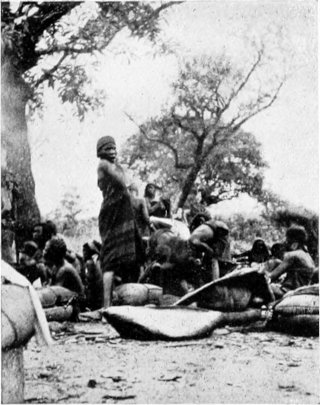
In some places the fruits are collected and put in heaps, until the fleshy parts have decomposed and left the nuts clean, after which the kernels are extracted, dried in earthen stoves, and pounded or ground into a fine flour. This is then pounded again, with the addition of a little water, previous to being mixed in hot water to separate the fat. The latter rises to the surface and solidifies on cooling, being melted again for clarification by skimming previous to being poured into moulds made from plantain leaves or maize-cob sheaths. In this form it is sold for export, and is then known as “shea-butter.” An illustration is given (Fig. 28) of some Shea nut collectors resting beneath a Shea tree in the Ilorin Province.
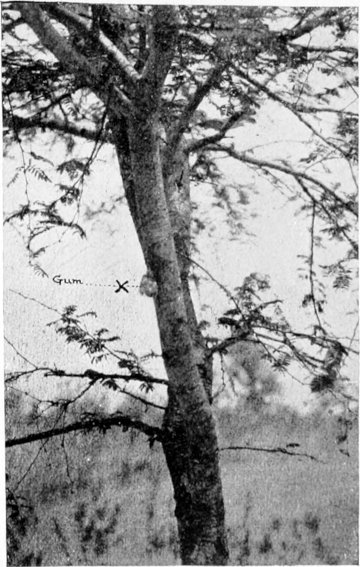
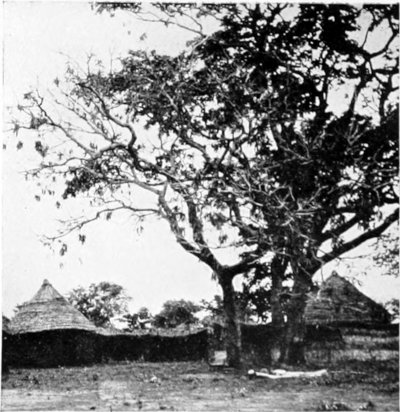
SHEA-BUTTER TREE (BUTYROSPERMUM PARKII), WITH NUT-COLLECTORS, ILORIN. Fig. 28, p. 130. YIELDING GUM TREE (ACACIA CAFFRA) AT KONTAGORA. Fig. 29, p. 131. LOCUST-BEAN TREE (PARKIA FILICOIDEA) AT ILORIN. Fig. 30, p. 162.
According to results obtained at the Imperial Institute (Bulletin of the Imperial Institute, 1908, p. 370; 1912, p. 290), the kernels contain from 40 to 50 per cent. of fat, as well as a small quantity of unsaponifiable matter resembling gutta-shea.
Where the nuts are very plentiful, and transport appears to be easy, the collection is often neglected, and the reason given is that there is some difficulty in removing the fruit from the nut, which makes the occupation unremunerative. But it is noticeable that the fleshy part quickly decomposes, and the clean nuts are frequently seen beneath the trees themselves, although in this situation the advent of heavy rain will often induce germination, and so spoil the kernel. This difficulty is obviated if the fruits are collected and placed under cover, being allowed to decompose without too much moisture.
Throughout the Ilorin and Nupe Provinces the nuts are at present collected for sale to the factories, but in size those grown in the Zaria Province are larger, and are now quite accessible. In this latter locality the double fruit, above referred to, appears to be common. In the tract of country through which the Baro-Kano railway now proceeds, after crossing the Kogin-Serikin-Pawa river, as far Zaria, localities containing very large and prolific trees are frequently met with, but the population is scanty, and collection is scarcely made for export purposes. Trees growing in cultivated areas are generally recognised as the property of the cultivator, forest trees only being common property. Women are the chief collectors of the nuts in the districts whence the supplies at present come, and their inability to penetrate far into the forests has sometimes been urged as a reason for larger quantities not being brought in to the factories. Now that the railway is present, it is probable that regular collectors will commence to exploit the forests for some distance on each side of the line, and that people from the more populous districts will be induced to visit them for the same purpose.
No record is available to show the amount of nuts and butter exported previous to 1905, but it must have been considerable, as the High Commissioner in his annual report for 1905-6 says: “The Shea nut export trade, which formerly constituted the staple of Northern Nigeria, continues to decrease in an unaccountable way, and is now an almost negligible amount.” Various reasons are given to account for a partial or gradual decrease, the most important of which is, that the people who used to rely on the collection of sylvan produce for a livelihood, have found a more lucrative employment in growing foodstuffs for the troops and Government staff, or in working upon the Government roads and railways. But, in spite of this, the value of Shea nuts and butter exported in 1907-8 reached a high figure, and placed these products second in order of value among those exported during the year. The export of Shea nuts in the two years following showed a further increase, being 3,922 and 9,085 tons for 1908 and 1909 respectively. There is a growing demand for Shea butter in Europe, and the supply is at present inadequate.
PALM OIL AND KERNELS.—The oil palm (Elæis guineensis) is almost absent from a large part of the country, and is rarely seen north of Zungeru, being chiefly confined to the vicinity of the rivers and the forests on the boundaries of Southern Nigeria.
An insignificant amount of palm oil is exported, as the local demand absorbs practically all that is produced, the kernels remaining being alone exported.
Only one variety is recognised in the country, and is that with a thin pericarp and thick-shelled kernel. It is similar to the form termed “Abe-pa” in the Gold Coast. Among the Haussa-speaking races the palm is called “Quaqua,” and in the Nupe language “Yi-ku-niche.”
Extraction of the oil for local use is generally done by boiling the fresh fruits, and a limpid product is obtained.
GROUNDNUTS.—The groundnut (Arachis hypogea), called “Geda” by the Haussas, is seen in two forms in Northern Nigeria, dependent, probably, on differences in soil and climate in the localities in which they are grown.
The form seen commonly in the vicinity of Bida, from which most of the exported nuts are procured, has a light-brown shell, and is similar to the ordinary Gambian kind. The soil in which this is grown is red, and, to some extent, this colour is imparted to the shell. The nuts growing in the northern districts near Kano, where the soil is sandy and light, resemble the kind which is considered the finest in the French Colonies, and is largely cultivated in Senegal. In this the shell is pale straw-coloured. Large exports have been made from Kano since railway facilities were provided.
Groundnuts are chiefly employed as a terminal crop in the cultivation adopted by the Nupes and Yorubas, but in the Kano and Zaria Provinces, where land is retained for long periods in cultivation and renovated annually by manure, they are often the first crop grown on opening new land, and are seldom planted later.
From an interesting article contributed by Mr. Lamb, the Director of Agriculture (Imperial Institute Bulletin, vol. xi. [1913]), entitled “Agriculture in Haussaland,” it appears that leguminous crops have recently been introduced more generally in the rotation employed among the Haussa cultivators. The author remarks that the cowpea (Vigna catjang) is now almost invariably grown with cereals, and that there is such an increase in groundnut cultivation that this has come into great prominence as an exported crop. This condition has been brought about entirely by the establishment of railway transport—a result which was foretold in the first edition of this work.
All the nuts exported at the present time are in a decorticated form, and the reason given for decortication is that there is a large saving in weight in carriage thereby. It is, nevertheless, generally admitted that in an undecorticated form the nuts are better preserved in transit, and it often happens that the price for undecorticated nuts is higher than for decorticated. It is, however, recognised that if the appearance of the shell is rusty or dirty, it should be removed before shipment, as this condition adversely affects the market value. The demand for undecorticated nuts is for confectionery, and is relatively small as compared with the amount used, chiefly in France, for the expression of oil. The weights of groundnuts exported in 1917 and 1918 were respectively 50,334 and 57,555 tons.
The Kano nuts appear to be of such a clean type that it might be found more advantageous to ship them in an undecorticated state, but this can be ascertained when transport has been facilitated sufficiently to establish a continuous trade with a particular market.
The chief markets for the product were Marseilles and Hamburg, where it was employed for the expression of oil, used principally for admixture with, or as a substitute for, olive oil. Although formerly almost entirely sent to the German port, they now come mostly to England. (Cf. Bull. Imp. Inst., vol. xvi. [1918].)
GUMS.—In the drier regions Acacia trees of several species become plentiful, but many of these do not seem to produce gum.
Some of the gum in the Sudan is said to be derived from A. arabica, Willd., which is not uncommon in certain localities, but is almost entirely unproductive in this country.
The tree known in Haussa as “Gawo,” identified as A. Albida, Delile, is perhaps the commonest species near Kano, and one which produces a small amount of reddish gum. None, however, is apparently collected from the tree in the district.
The species from which most of the gum is collected in Bornu is said to be identical with that called “Karu” in Kano, of which only immature specimens have as yet been examined. This is probably referable to A. Verek, Guill. & Perr., which is the most important source of the Senegal product, and to which Bentham refers A. Senegal, Willd.
In Kontagora a good quality of gum is obtained from a tree which has been identified as A. Caffra, Willd. This tree does not appear to occur plentifully here, but further investigation is necessary with regard to it in the dry uninhabited regions where it is found. An illustration of this tree is given (Fig. 29).
Another species which has been recorded by Barter from the Niger, and is said by him to yield “a gum like gum-arabic,” is A. mellifera, Bentham, and may be one of those from which the present exported product is collected.
On examination of the trade specimens, it is noticeable that the quality is inferior to most of the Sudan and Senegal kinds, owing, mainly, to the want of cleaning or sorting previous to sale. It has been suggested that an improvement in the quality might be effected by sorting the gum into different grades, cleaning it, and spreading it in the sun to bleach. The quantity of gum exported in 1908 is given as 789,949 lbs., and that for 1909 as 894,287 lbs.
Investigations carried out recently at the Imperial Institute show that Nigerian gum is little, if at all, inferior to Sudan gum, except that its mucilage is not quite so strong. Gums of the better class are mainly employed in confectionery, and for this purpose the cleaner, lighter-coloured gums of Northern Nigeria are quite suitable. (Bulletin of the Imperial Institute, 1908, pp. 29-60; 1910, pp. 352-65; and 1914, pp. 27-31.)
COTTON.—Three distinct forms of cotton are found in cultivation in the Northern Provinces. The best of these is that grown by the natives of the Bassa and Nassarawa Provinces, and possesses lint of rather long staple and a good colour, covering a clean seed. The seed-cotton from these Provinces is brought into Lokoja for sale. This variety seems well suited to the localities mentioned, but, although it has been tried in other parts of the country, it does not seem to thrive so successfully. In making a comparison of the lint for Liverpool market requirements, the standard employed is “Moderately Rough Peruvian,” which is a grade of higher price than “Middling American,” with which most of the West African cottons are compared.
In Ilorin, a woolly-seeded tall cotton plant is commonly cultivated, and, although yielding a fair quality of lint, it is not equal to that mentioned above. A small proportion of the cotton grown in the Ilorin Province finds its way to the Ogudu Ginnery of the British Cotton Growing Association, on the Niger, but the main crop is carried to various points on the Lagos Government Railway, and is sold for delivery to the Southern Nigerian ginneries of the Association. Small quantities of cotton belonging to this same variety are grown in Nupe, Kabba, and Kontagora, but the low ground of the Niger valley does not appear to be very suitable for cotton-growing.
In Zaria, Kano, and Sokoto Provinces, where the climate is drier, excellent conditions exist for the production of large supplies of cotton, but the population requires to become more distributed into the districts remote from the towns. In the above-mentioned Provinces, cotton has existed from the earliest times, and was long established as an important export to North Africa by caravan. A small-bolled variety with a short stem takes the place of the tall cottons of the Niger valley. The quality of the lint, although fair, is of a shorter staple, and the plant is less prolific.
In addition to the three kinds referred to, all of which are grown as field crops, single plants of a fourth are sometimes seen near villages, especially in the Bassa Province. This is the crimson-flowered tree-cotton identified as Gossypium arboreum, var. sanguineum, and is nowhere cultivated upon a large scale. The lint is silky and fine, and the seed is covered with green fuzz.
Exotic Cottons.—American and Egyptian seed have been introduced in many localities, especially in the Provinces of the Niger valley. Cotton grown from American Upland seed in Bassa Province has been well reported upon, but the deterioration of the quality of seed reproduced by this kind has proved a serious drawback to establishment. It is generally acknowledged that the indigenous cottons are hardier and more prolific than the introduced varieties, and are better able to withstand the attacks of the local insect pests. It is probable that the climate of the Northern Provinces will be found more suitable for the cultivation of American Upland cottons, as the indigenous plant of that region more nearly approximates the latter type.
Valuation of Cottons.—The following table shows the value of different cottons grown in Northern Nigeria and examined at the Imperial Institute. (See Professor Dunstan’s “British Cotton Cultivation,” pp. 34-37.)
Locality. Kind. Length of Staple. Value. Standard value at time of test.
Bassa American ·9-1·2 in. 7½d. M.A. 6·39d.
„ „ 1-1·3 „ 5½-6d. „
„ „ 1-1·3 „ 6¼d. „
„ „ ·8-1·2 „ 6¼d. „
„ „ 1-1·3 „ 6¼d. „
„ „ ·9-1·4 „ 6d. „
„ „ ·9-1·3 „ 6d. „
„ „ ·9-1·2 „ 6-6¼d. „
„ „ 1·-1·3 „ 6¼d. „
„ Native ·9-1·3 „ 6½-7d. „
„ „ 1-1·4 „ 8½-9d. M.R.P. 9·1d.
„ „ 1-1·3 „ 8d. „
„ „ ·9-1·4 „ 8¼-8½d. „
„ „ ·8-1·2 „ 7¾-8d. „
„ „ 1-1·3 „ 8¼d. „
„ „ 1·2-1·5 „ 8¼d. „
„ „ 1-1·3 „ 8d. „
„ „ ·9-1·3 „ 8½d. „
„ „ 1·1-1·6 „ 8-8½d. „
„ „ ·9-1·3 „ 6d. M.A. 6·39d.
Zaria Brazilian (?) ·9-1·2 „ 4d. „
„ Egyptian ·9-1·5 „ 6d. F.G.F.B. 10¹⁄₁₆d.
Yola Native ·8-1·2 „ 4½d. M.A. 6·39d.
„ American ·9-1·3 „ 6¼d. „
Munchi Native 1-1·5 „ 8d. M.R.P. 9·1d.
Ilorin American ·9-1·3 „ 6¼d. M.A. 6·39d.
(M.A. indicates the price ruling at the time of valuation for standard “Middling American,” M.R.P. that for “Moderately Rough Peruvian,” and F.G.F.B. that for “Fully Good Fair Brown Egyptian.”)
VILLAGE OF FOGOLA, BUILT OF GUINEA-CORN STALKS. Fig. 31. p. 126
OUTSIDE THE EMIR’S PALACE, KANO. Fig. 32, p. 137.
NEAR THE SOUTHERN GATE, ZARIA. Fig. 33, p. 137.
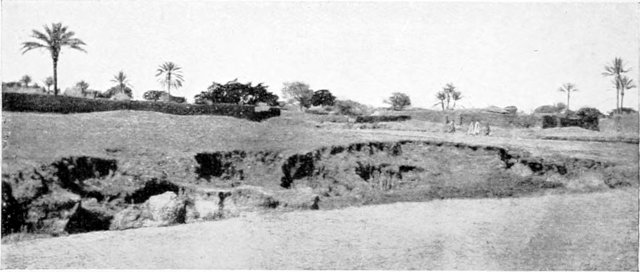
All the native cottons in the above table are from the Niger and Benue River Provinces, but it is considered probable that large quantities of the product, which are looked for for export, will be obtained from the Kano and Zaria Provinces, and after the opening of the Baro-Kano Railway, the capitals of these may become important cotton-buying and ginning centres. Figs. 32 and 33 illustrate views of Kano and Zaria.
In all the localities referred to, cotton is generally cultivated as a sole crop, in succession to food crops, and is planted upon shallow ridges from July to September, when the cotton is ready for picking from December to March. Experiments have been made at Baro and Zungeru to raise plants during the dry months by irrigation, but as this causes the fruiting season to occur about the time that the first rain and wind storms commence, the success of this is very uncertain. The necessity for the application of irrigation to this crop is not apparent except as an assistance in lieu of rain when the season of rainfall is late. There is no extreme drought throughout the year, such as is the case in Egypt, where cotton is entirely an irrigated crop.
In the Ilorin district, in the vicinity of Shari, a somewhat extensive area is seen under cotton, and the mode of planting is similar to that applied on a smaller scale near Rabba, Jebba, Bida, and Egga. A piece of land is usually selected for a cotton field upon which Guinea corn and millet crops have been grown continuously for a long period, and which has consequently become rather exhausted. This is often permitted to lie fallow for several years, after which cotton is planted in drills on ridges or mounds in July or August. No manure is applied. Generally about a dozen or more seeds are put in each drill, and in this way it is estimated that about a bushel and a half of seed per acre is required. Picking commences in December, and lasts until February, as much as 500 lbs. of seed-cotton per acre being frequently gathered.
In Kano, cotton is often grown in alternation with cassava, and is a manured crop. Large fields are not seen, as the land is chiefly required for food crops, especially in the vicinity of towns, where the population is dense. General improvements in cultivation, and the introduction of ploughing, would enable a much larger area to be put under cultivation, and would permit of the fertile tracts remote from the towns being employed largely for cotton-growing.
The above account indicates the direction in which efforts should be made to ensure the most fertile tract of Northern Nigeria, where the population is also most industrious and dense, becoming an important cotton-growing locality. It may be safely said that the land, climate, and industrious population are existent and suitable, but the population is congested, leaving large fertile areas of land untouched. Transport difficulties have up to the present prevented cultivation of products useful for export, and the non-employment of cattle for ploughing has restricted cultivation to the growth of crops entirely absorbed by local necessity.
Improvement of Plant.—In addition to these requirements, with regard to cultivation, a rather better class of cotton is necessary in the Northern Provinces. The local variety might perhaps be sufficiently improved under better cultivation and seed selection, but such a process would be gradual and require the undivided attention of an experienced European officer, working in the districts. It has previously been suggested that the introduction of one of the many Upland American kinds might be advantageous; the local variety approaching that class of plant more nearly than do the varieties occurring in the forest regions farther to the south, where the American varieties have been extensively planted with somewhat variable results. One variety only should be introduced, and this should possess cropping and lint records suitable for European requirements. Georgia or Texas quick-maturing kinds are indicated, but not the lowland kinds such as are grown in the Mississippi valley.
The foregoing remarks apply to those regions only where it seems possible that the quality of cotton which is in most general demand in Lancashire can be extensively grown, but are not applicable to the Niger Valley. As will be seen by a reference to the table of valuations, a cotton exists in the Bassa and Nassarawa Provinces which is comparable with a higher standard grade than Middling American, the type to be produced in the north. Efforts should be made to keep this latter variety free from the possibility of admixture with exotic kinds, and it is therefore advisable that improvement in this class should be confined to seed selection. American cottons have already been introduced into Bassa, but the value of the lint is lower than that of the indigenous kind.
With regard to the cotton grown in the Ilorin Province, the common variety is similar to that of the adjoining country to the south, and it is in this direction that the crop of the whole Province will be sent in the future, as it has been arranged to remove the Ogudu ginnery on the Niger, to which the northern Ilorin cotton has hitherto been sent for sale. An illustration is given showing the position of this ginnery upon the southern bank of the Niger (Fig. 34).
The most important insect pests which attack the cotton plant in Northern Nigeria are three species of Oxycarenus, or cotton-seed bugs: Dysdercus superstitiosus, a cotton-lint stainer, the American cotton boll-worm, Chloridea obsoleta, and a species of Earias,[11] identical with or allied to the Egyptian cotton boll-worm. The last mentioned has only been recorded as yet from the Bornu Province, but the American boll-worm is found at Lokoja and near the Niger in Nupe. The seed-bugs and stainer are generally distributed. In no direction have these pests assumed large proportions, but where they occur the following remedies are recommended for application. The seed-bugs and stainer can be attracted to traps of seed placed in piles upon the ground between the lines of growing cotton, and the insects then destroyed by petroleum or boiling water. In the case of the boll-worms, trap-crops of maize and Hibiscus are recommended, as well as the destruction of the moths after attraction to light at night. (See Professor Dunstan’s “British Cotton Cultivation,” pp. 35-6.)
The British Cotton Growing Association commenced work in Northern Nigeria by erecting a steam ginnery at Lokoja, followed by others at Ogudu and Zaria. The natives of the Bassa Province were induced to grow cotton upon a larger scale than before by the favourable market established near them at Lokoja, but, although the cotton brought in was generally of good quality, the supply fell off after the first year or two, and in 1908 it almost ceased. More recently there has been some return to cultivation, but the people are difficult to get into touch with, and have few needs which can be supplied by the traders, so that they have remained somewhat inactive and shy.
The ginnery at Ogudu acted as an inducement to the people of North Ilorin (Shari) to undertake cotton-growing upon an increased scale, and as the inhabitants are chiefly of a more intelligent class (Yorubas and Nupes) than the Bassa people, the cultivation of cotton developed well.
The opening of the Baro-Kano Railway created some activity in cotton growing, and satisfactory quantities were brought in to the northern ginneries. The British Cotton Growing Association will probably succeed well in the northern parts of the country where a large rural population is to be found.
An example of the development of cotton cultivation in West Africa, influenced by and following the opening of a railway, is seen in the Western Province of Southern Nigeria and in Ilorin; along almost the entire route of the line the agricultural population have taken up the cultivation of the plant. This has occurred even in those districts where other natural products were available for utilisation to a remunerative degree. It is therefore probable that the industrious population of the Northern Provinces, who have no such advantages, owing to the absence of oil palms, rubber, etc., would readily adopt cotton-growing upon a commercial scale.
The Baro-Kano Railway passes, however, through an extensive tract of thinly populated country before reaching the localities from which a large supply can be reasonably expected, and this may delay the actual results. It would be inadvisable, in the meantime, to encourage cotton cultivation in those districts which are still remote, unless it were possible to buy the crops in advance of any prospective railway extension.
The following statistical statement has been supplied by the British Cotton Growing Association, showing the production in bales from their ginneries, 1906-1909:
Year. Lokoja. Ogudu. Total. Weight of Bale. Approx. lbs.
1906. Sept. 1st, 1905, to Aug. 31st, 1906 903 903 about 200 lbs. 180,600
1907. 16 months. Sept. 1st, 1906, to Dec. 12th, 1907 1,067 815 1,882 200 lbs. each 376,400
239 239 400 lbs. each 95,600
1908 84 147 231 400 lbs. each 92,400
1909. 8 months. To Aug. 31st, 1909 133 246 379 400 lbs. each 151,600
In 1908 the rainfall was deficient in a large part of the country, and the cotton crop, among others, suffered in consequence. A temporary check to cotton-growing in Ilorin province occurred in 1909 due to the demand for labour for the railway construction, and a subsequent one occasioned by the war; but in spite of this, the increase of cotton in Nigeria is to be attributed largely to developments in the Northern Provinces. Cf. Bull. Imp. Inst., vol. x., p. 480, and vol. xi. pp. 70, 165 and 656.[12]
CAPSICUMS.—An increasing export trade seems to be becoming established in red peppers and chillies (Capsicum annuum and C. frutescens), plants which thrive well in West Africa.
In the Ilorin and Nupe Provinces, the plants are usually grown in the vicinity of houses, but in the Kano and Zaria districts they are frequently met with in irrigated fields. From the latter localities an almost unlimited supply could be obtained.
BENNISEED.—The oil seed which is exported under this name is the product of Sesamum indicum, Linn., and is identical with that known in India as “til” or “gingelly” seed. Although the specific name seems to imply that the plant is a native of India, there is evidence to show that it may have been introduced into that country from Africa, where several species of the genus occur in a wild state.
The seed is pale or dark brown in colour, and contains a large proportion of oil, for the extraction of which it is exported. In the East, the dark seeds are said to produce the better quality of oil, but this does not appear to be recognised in Northern Nigeria, and the crop grown there is composed of a mixture of the two kinds.
The oil extracted from benniseed is clear yellow and without smell, and is said to be capable of being preserved for a long time without becoming rancid. For this reason it is highly appreciated locally for alimentary purposes, and is said to be used in Europe for making butter substitutes and for mixing with olive oil. The seed cake furnishes a valuable cattle food and good manure.
Although liable to fluctuation in price on the European market, dependent upon the extent of the supply of olive and groundnut oils, the seed is always in demand, and for this reason it is worthy of special attention for cultivation in the fertile and populated tracts of Northern Nigeria.
A fair amount of benniseed is grown in the country, but the use of it is so appreciated locally that only a small quantity is yet shipped, most of this being apparently sent from Bauchi and Kabba, although Kano and Zaria probably produce much more. The value shipped from Nigeria rose from £5,225 in 1915 to £16,523 in 1916.
Benniseed is grown chiefly in separate fields, and is seldom seen in those which have been employed for a long period under Guinea corn or millet. It is a sole crop, and grown but once a year in this country. In India, it may be remarked, the plant is cultivated in both the spring (Rabi) and autumn (Kharif) rotations, and it should be possible to do this in the agricultural parts of Northern Nigeria where irrigation is employed.
KANO LEATHER.—A very large trade exists in the tanned and dyed goat and sheep skins prepared throughout the country, and generally known under the name of Kano leather, or, in Europe, “Morocco Leather.” It is said that from early times caravans have annually conveyed numbers of these skins from the Kano markets across the Sahara to the towns in North Africa, whence they were exported to Trieste and other ports of the Mediterranean.
During recent years the caravan trade has almost entirely disappeared, but some quantity of skins now come to Liverpool by way of the coast ports. The value of skins in Kano itself averages about 5½d., but the cost of transport at present has made it almost impracticable to export remuneratively, and a very small trade exists in consequence.
By far the greater number of skins, which are tanned, are dyed a bright red, yellow, or green colour, which seems to rather depreciate them in the European markets for many uses to which they might otherwise be put, undyed and even untanned skins being in greater demand. (See Bulletin of the Imperial Institute, vol. vi. [1908], p. 175; and vol. viii. [1910], p. 402.) It has also been said that the tanning is often insufficiently done, and the skins become blotched in consequence. It is noticeable that Kano leather quickly becomes spotted in the damp coast regions, and for this reason it is probable that no great direct European trade will be established until better methods are introduced and more rapid transport is arranged. There may, however, be a considerable trade done in the untanned skins.
The best class of Kano or Niger leather is valued at a high price for bookbinding.
In the country a fair amount of leather is manufactured for saddlery and horse trappings, pillows, mattress covers, sword scabbards, boots and hats, elaborate designs being often produced by the skilful introduction of pieces of differently coloured leather.
In preparing the leather the skin is stripped off the animal and usually pegged out for drying in the sun, after which it is immersed for two or three days in a liquid made by pounding the pods and seeds of Acacia arabica (“Baggarua”), and soaking them in water. The hides are then again pegged out and scraped in order to remove the hair, and when dry the best attain a creamy white colour, others being pale brownish. Palm oil or shea-butter is then rubbed in on the smooth side of the skin, which is worked and rolled until quite soft, after which a polish is obtained by drawing the smooth surface rapidly over a wooden upright blade.
The finest and lightest skins are usually reserved for making into yellow, green, or pale blue leather, and the rest are converted into red, black, dark blue or dark yellow kinds. The red dye is obtained from the stalks of a species of Sorghum,[13] which is grown for this purpose, and to which the Haussas give the name of “Karandeffi” or “Karantudi.” The dried stalks are pounded up and placed in a calabash, to which a solution of “potash” is added. A deep crimson liquid results, and in this the skin is steeped until a sufficiency has been absorbed by it to render it permanently deep red in colour. A pale yellow colour is imparted to the skin by an infusion made from the root of a kind of turmeric, which is pounded up for the purpose. A dark yellow is obtained from the root of a tree called by the Yorubas “Agbesi.” A black pigment is prepared from a mixture of honey and blacksmith’s slag; blue from Lonchocarpus cyanescens, one of the indigo producers; green or pale blue-green from brass filings mixed with lime juice, common salt, and other ingredients. More recently green aniline dye has been imported into the country, and has almost superseded the use of brass filings in all the large leather-producing districts.
FIBRES.—Owing to the demand for ropes among the cattle-keepers of the northern districts and the canoemen of the Niger and Benue valleys, it is not surprising to find that the wild fibres are considered insufficient to supply so great a necessity, and that in consequence a selected species is extensively cultivated and prepared for sale in the markets.
“Rama” or “Ramo” is the name which is applied to such a plant in the Haussa- and Yoruba-speaking countries respectively, but although used exclusively for fibre made from plants belonging to the genus Hibiscus, different species are indicated in various districts. The plant to which the name “Rama” is given in Ilorin, Nupe, Kontagora, Kano, and Zaria, is apparently the same as that generally termed “Farin (white) Rama” in Bauchi and Muri, and has been recognised as Hibiscus lunariifolius; that called “Rama” in the northern territories of the Gold Coast is said to belong to two species allied to H. Sabdariffa, and that grown by the Yoruba people of the western province of Southern Nigeria, and called by them “Ramo,” has been identified as H. guineensis.
In the present instance only H. lunariifolius is referred to, since this is the species cultivated throughout the country.
Although in the other countries the allied plants are cultivated, they are invariably grown upon a small scale, and are only seen in small patches adjoining houses, or cultivated as a mixed crop with peppers, okra, etc.; in Northern Nigeria fairly extensive tracts are planted, and the crop is treated as carefully as the food crops in the vicinity. In Ilorin, Kabba, and Bassa the seeds are sown on ridges in drills a few inches apart, each drill having four to six plants in it. The sowing in this locality is done in the middle of May, and the crop is not irrigated, being dependent upon the rainfall for development. The plants, when they have reached the height of six or more inches, do not appear to be adversely affected by a prolonged continuance of dry weather in the Niger Valley, but this is perhaps accounted for by the humidity of the atmosphere.
The conditions last referred to do not, however, apply to the northern districts, and the importance with which the crop is regarded is seen in the fact that it is worth while to irrigate it. At Fogola the plants are also sown in drills on ridges, but the drills are made at about one foot apart from one another, and ten or more plants are left in each drill. The seed is sown in April and irrigated until the rainy season commences in June.
The stalks are said to be cut after the plant has fruited, and are described as being retted in a manner similar to that employed for Indian jute. The unretted “ribbons” as well as the prepared fibre are offered for sale in the local markets, the former being employed in the rough state for twisting into rope used for fastening roofing poles, etc. The prepared fibre produces an excellent kind of rope, and is in appearance very similar to Bengal jute, although it has slightly less lustre. Specimens of Northern Nigerian rama fibre have been examined from time to time at the Imperial Institute, and have been satisfactorily reported on. As a result the fibre has been actually exported to Europe.
In the Selected Reports from the Imperial Institute, Part I., “Fibres” (Colonial Reports—Miscellaneous [Cd. 4588], p. 38), a full account is given of the composition of a specimen of the fibre received from Northern Nigeria. The character is said to be similar to jute, but it is apparently rather harsh, and therefore more suitable for use in rope-making than for spinning. The valuation placed upon it was £12 per ton, with common jute at £11—£12. A specimen of the brown ribbons was also examined and was reported on, the valuation being placed at about £4 per ton, with a remark that it would only be of use for paper manufacture.
During the last three years, since attention was first drawn to the probable value of the fibre as a jute substitute, the natives of Nupe and Muri have been urged to cultivate the plant and prepare the fibre for export. This has been done to a small extent, and the natives of the latter province are said to be willing to produce it at the local price of one penny per pound. At the valuation mentioned above it might scarcely prove remunerative to pay this local price, but it should be taken into consideration that the market price of jute was depressed at the time that the valuation was obtained. It seems that the product may be usefully cultivated, especially in the Niger Valley, where river transport is available, and it is probable that a better price would be quoted if a larger and regular supply could be relied on. The value of the fibre shipped from the country in 1908 is estimated in the Government returns at £1,382, and that for 1909 at £4,049.
Attention should be specially directed to the time of cutting the stalks for retting, and these should be treated before becoming too woody, when a much better product would result.
Experiments with Indian jute, as well as with certain Hibiscus fibres in West Africa, have shown that if the stems are permitted to become woody, the resulting fibre is harsh and coarse.
With regard to the probable production of fibre per acre, there are at present no data, but it may be stated for comparison that a good average yield of jute in India is taken as 2000 lbs. Carefully planted and treated in the same way, it is probable that rama would give as high a return, judging from the growth seen in the country. Jute in India, it should be remembered, is a manured crop, but rama in West Africa is only manured in the northern districts of Northern Nigeria, being cultivated without any special care in the Niger Valley.
WOOD OIL.—Following the order of value shown in the list of exported products, wood oil appears next. This is the oleo-resinous exudation obtained from Daniellia thurifera, a tree belonging to the Natural Order Leguminosæ, and allied to some of the species from which the West African copals are procured. This tree is commonly found in the dry country, but occurs also in the damp forests, where it frequently attains large dimensions. The wood oil is collected in many parts of West Africa, and is used as a substitute for “balsam of copaiba” in native medicine. The concreted resin formed on the trunks of the trees by the borings of coleopterous larvæ is used for burning as incense.
The native use of wood oil in place of “balsam of copaiba” induced merchants trading upon the Niger to export it, and at one time a fair quantity was sold in England. This export trade has recently diminished to a large extent.
The substance is an oleo-resin, and when free from oil has a similar appearance to copal. Upon examination of the resin, it has been found to be dissimilar in properties from the various freshly exuded resins which enter the market under the name of recent or soft copal. (Bulletin of the Imperial Institute, vols. vi. [1908] and xiii. [1915].)
The mode of collecting wood-oil is somewhat destructive, as, in order to procure an excessive flow, a hollow is scooped out in the main trunk and a fire is kindled in the hole thus made. The oil commences to flow rapidly after the fire is extinguished, which it is necessary that it should be before a large quantity of oil has exuded, on account of the inflammability of the latter.
The application of fire to the trees does not appear to kill them, but they are rendered liable to attacks of noxious insects, and are often broken off by winds.
In addition to the local use of the oil for maladies for which balsam of copaiba is generally employed, the rubber makers of Ilorin and Nupe add it to the latex of Landolphia florida or L. Thompsonii to make paste rubber. The two liquids are boiled together for some time, until the mixture attains a consistency of birdlime. The dried resin is here used for torches, and in the Egyptian Sudan for incense.
KOLA.—Although a large quantity of kola nuts is annually imported from Lagos and the Gold Coast, such a great demand exists that the price of kola in Kano and Zaria is very high. The kola tree is seldom seen in any part of the country except on the west bank of the Kaduna river, where the famous plantations of the Emir of Bida are situated. The kola nuts produced from these plantations are said to be more appreciated than any other, and, in order that the variety might not be grown elsewhere, stringent measures are said to have been enforced by the Emir, and the nuts were always exported to the north, where it was impossible to grow the tree, and where a very remunerative price was obtainable. This particular kind of kola nut is referred to as “Laboji,” and is said to be white.
The cultivation of kola could be undertaken in the Kabba and Bassa Provinces, especially in the moist valleys protected from severe winds by high plateaux, such as are commonly found in these localities.
In the export table of 1907 a small quantity of kola is shown, but this probably represents the re-export of produce from the south.
COTTON SEED.—The Lokoja Ginnery has exported a small quantity of cotton seed each year, but the trade is not a lucrative one, and the larger part of the cotton seed which is turned out of the ginnery is valueless for shipment.
FOOD CROPS.—The products which have been referred to above are those which have hitherto been exported from the country, but by far the most important agricultural products are those upon which the population itself subsists, and in relation to which the exported products are merely in the position of a surplus.
Before referring to the products regularly cultivated for food, it is necessary to mention that the seasons, which in the temperate zones are closely associated with a rise and fall in the temperature and its effect upon vegetation, are in West Africa determined to a much greater degree by the advent and cessation of the rainy period. The year is therefore divided into two seasons, roughly described as (1) that in which the conditions are hot and dry, and (2) that in which they are cooler and wet. The vegetation is so directly dependent upon the timely appearance of the rainy season and its normal distribution, that a failure of these conditions, even in a comparatively small degree, may have serious consequences and perhaps produce famine. In no part of British West Africa is a shortage or irregularity of the rainfall so severely felt, nor does it affect such a large number of people, as in the northern districts.
A table is given below showing the distribution of rain in Zaria for five years, and of that in Kano for three years. In each of these it will be seen that the fall in the year 1907 was far below the average, and that during the most important months for the growth of the staple grain crops—July, August, and September—there was a severe shortage of rainfall. The effect of this in Kano was to produce a condition of famine, which lasted for about six weeks. In a congested locality, such as exists in the vicinity of the town of Kano, the difficulty of importing sufficiently large supplies to afford relief at such a period was great, on account of lack of transport. The chief crop in this year, namely Guinea corn, was an almost complete failure in many places, but the millet
Table showing the Rainfall at Zaria for Five Years (1905 to 1909)
Month. 1905. 1906. 1907. 1908. 1909.
January nil nil nil nil nil
February nil nil nil nil ·36
March nil nil nil ·09 nil
April ·76 ·85 2·20 1·84 3·56
May 5·90 9·50 3·69 1·91 5·79
June 7·24 5·95 7·05 6·94 6·51
July 7·19 14·49 3·75 7·42 13·11
August 15·04 16·39 4·46 14·36 16·62
September 13·28 9·90 6·33 12·08 6·61
October 1·40 3·93 2·32 ·84 1·74
November nil ·04 nil nil nil
December nil nil nil nil 1·50
Totals 50·81 61·05 29·80 45·48 55·80
(Pennisetum) crop, which is an early one, and not dependent on the rainfall after June, had received a normal amount of rain to that time, and was satisfactory; the stored supplies, as well as a second sowing, of this grain to some extent made up for the failure of the other.
The above table has been made out from the meteorological reports obtained at Zaria town, and probably represents a fair average of the rainfall conditions pertaining to the cultivated country in the vicinity.
The more northern district, of which Kano is the centre, is liable to smaller rainfall conditions than Zaria. A comparison can be made by reference to the table given below.
Table showing the Rainfall at Kano for Four Years (1906 to 1909)
Month. 1906. 1907. 1908. 1909.
January nil nil nil nil
February nil nil nil nil
March nil nil ·54 ·09
April ·01 ·10 ·23 1·75
May 3·24 1·77 1·16 8·7
June 4·66 5·88 4·12 3·71
July 8·75 3·90 10·24 9·01
August 15·61 9·58 13·92 17·72
September 4·66 3·57 4·63 6·83
October ·87 ·01 ·02 ·77
November nil nil nil nil
December nil nil nil ·45
Totals 37·80 24·81 34·86 49·03
The remarks made above serve to emphasise two points in connection with the densely populated districts of the north, the first being the necessity of cultivating larger areas to permit of surplus supplies being stored, and the second the requirement of quick transport to enable supplies to be brought in from the Niger valley in cases of urgent need. The first of these also indicates the necessity for the improvement of agricultural methods by the introduction of ploughing, the extension of irrigation and dry-season crops, and the better distribution of the population. The second—the supply of quick transport—is becoming rapidly established, by means of the railway and improved roads.
The extension of irrigated crops can only be made in the vicinity of the larger rivers, or where good wells exist, and it may be found more expedient, therefore, that the inhabitants of the Niger, Benue, Kaduna, Gongola, and Gurara valleys should be urged to cultivate rice and maize under these conditions. The use of the land for two crops in each year would be made possible by the introduction of a leguminous crop as an intermediate, being sown later but in the same field with the irrigated crop, and being permitted to ripen, after the grain has been harvested, upon the stubble. A leguminous grain suitable for human food would be necessary in the river valleys where cattle are scarce, but a cattle food could be grown in the north where cattle are common, and where milk forms an important article of human consumption.
GUINEA CORN (Sorghum vulgare)—“Dawa” (Haussa), otherwise known as the Great or Indian Millet “Juar” (Hindustani), “Dhura” (Egyptian)—forms the most important food-grain of the inhabitants of the ultra-forest region of West Africa.
A large number of different varieties are recognised in Northern Nigeria, and are distinguished in the manner stated below. Most of these have a grain which is commonly used for human food, but at least two varieties are grown for other purposes.
The following list states the characters by which the various kinds can be determined from the appearance of the seed and form of the stem.
1. “Asidinono.”—Seed with white shell and black adherent envelope.
2. “Farafara.”—Seed with white shell and red adherent envelope.
3. “Boganderi.”—Seed with straw-coloured shell and red adherent envelope.
4. “Janari.”—Seed with pink shell and red adherent envelope.
5. “Kaura-ferin-sosia.”—Seed with straw-coloured shell and straw-coloured adherent envelope.
6. “Bokin-sosia.”—Seed with straw-coloured shell and black adherent envelope.
7. “Makafo-dewayo.”—Seed with straw-coloured shell and pointed straw-coloured adherent envelope, which scarcely opens.
8. “Asidigero.”—Small pink-shelled seed with red adherent envelope.
9. “Mazgua.”—Very large whitish seed with a straw-coloured envelope.
10. “Karandeffi.”—Seed with red shell and red adherent envelope. Never used for food, but employed in native medicine, as well as for the production of the red dye used for leather (Bull. Imp. Inst., vol. vi. [1908]).
11. “Takanda” or “Karantalaka.”—The seed has not been examined, but the stem contains a large quantity of saccharine juice, and the plant is grown entirely as a cattle food. Probably identical with S. saccharum.
The first four kinds are regularly employed as food, and are found growing as a mixed crop; although the white grains are more appreciated and frequently predominate. Nos. 5 and 6 are not considered so good for human food, but are largely employed for feeding cattle and horses, for which latter purpose they are greatly in demand. No. 7 is used for the same purpose as the last, but is a rarity and of no special value. These seven kinds are grown as six-months’ crops, and are harvested in October when the rains cease. No. 8 is a three-months’ cropping kind, which in this particular resembles “Gero” (Pennisetum typhoideum), as its native name indicates. The grain is much smaller than the others, and it is said to be cultivated to some extent in the Sokoto Province. No. 9 is a variety which is said to be cultivated in Bornu in the fertile depressions which retain moisture for long periods, or by means of irrigation from the rivers. (See Bulletin of the Imperial Institute, vol. iv. [1906], p. 226.)
Guinea corn is permitted to occupy the land for a number of years successively, being often grown with “bulrush millet” (Pennisetum typhoideum). In this case the millet occupies the furrow whilst the Guinea corn is on the ridge, and this is reversed when the soil from the ridge has been hoed into the furrow and the previous ridge becomes the furrow. In many parts of the northern districts it is customary to permit the Guinea corn root-stocks to remain in the ground for two or three years, and to fill in the vacancies only with new seed when the old plants die. By this system it is found that the crops are better assured, as the old root-stocks withstand a prolonged drought better than new plants. This custom, if persisted in, would be a direct hindrance to the introduction of ploughing.
Manure is applied regularly to this crop in the northern districts, but never in the Niger valley. The method of applying manure varies according to the condition of the crop. Where entirely new plants are to be grown, a shallow bed is made upon the top of the ridge or in the furrow, and the goat, sheep, and cow manure mixed with ashes, and accumulated carefully in the villages, is spread thinly upon the bed before the seed is sown. In other places, where old root-stocks occur, handfuls of manure are applied to the growing plants in May. This is sometimes adopted where young plants only are growing. Manure is so necessary for the system of cultivation adopted in the Kano and Zaria Provinces that every scrap of material which is of manurial value is carefully preserved, being carried to the fields by men and donkeys.
The heads are cut when ripe and tied in bundles to dry, after which the grain is readily beaten out in wooden mortars or with sticks. The flour made from the grain is ground between stones, and is frequently eaten in the form of a thin porridge. Two varieties of Nigerian Guinea corn have been examined at the Imperial Institute and shown to be superior to Indian Guinea corn, though not quite so good as the Syrian grain (Bulletin of the Imperial Institute, vol. vii. [1909], p. 148.)
Smut-blights, Ustilago Reiliana and Tolyposporium sp. (called in Haussa “domana”), attack the heads, and a Capnodium sp. (called “derba”), the honeydew produced on the leaves by Aphis sorghi (cf. Bull. Imp. Inst., vol. xi. [1913]).
At certain stages, green Guinea corn is poisonous to cattle, and for this reason goats, sheep, and cows are muzzled in the Kano and Zaria Provinces. Local knowledge of this fact confirms what has been observed elsewhere with regard to this species, and is explained by investigations conducted at the Imperial Institute. (Bulletin of the Imperial Institute, vol. i. [1903], and vol. viii. [1910].)
BULRUSH MILLET.—This plant, which is supposed to be of African origin and is usually called millet in West Africa, belongs to that group of grasses of which the seeding head is in a compact form and in appearance resembles the head of a bulrush, from which the common name applied to it has been derived. The botanical name is Pennisetum typhoideum, and the plant is known in the country as “Gero” or “Giro” (Haussa), and in India as “Bajra.” At least two varieties, a smooth and an awned form, are grown as three-months’ crops, and are sown either alone or as described before with Guinea corn. It is usual to plant millet seed before the Guinea corn, generally about the middle of April, or as soon as the first showers are experienced. The crop is then ready for picking in June and July. If the rainfall by this time has been deficient to such an extent that the Guinea-corn crop promises to prove a failure, a second crop of millet is often put in, and, as very much less rain is required for this crop than is necessary for Guinea corn, the severe effects of a short rainfall are minimised. The grain yielded by Pennisetum typhoideum would be classed commercially as a millet, and a sample from Nigeria examined at the Imperial Institute was valued at 22s. per quarter of 480 lb. (July 1908).
In addition to the two varieties mentioned which are employed as three-months’ crops, there is another kind with a smooth greyish-white large grain which is called “Maiwa” or “Dauro,” and is cultivated in the same manner as Guinea corn; occupying the land for from five to six months. The pagan Gwaris to the south of Zaria grow this in large quantities, but it is uncommon north of Zaria.
These grains are easily stored, and keep in good condition for a long time. Flour is made from the grain by grinding, and both the grain and leaves are used for cattle food.
From the malted grain of millet, and sometimes of Guinea corn, an intoxicating beverage is made which is known as “Gir” (Haussa).
A fine grass seed called “Acha” (Digitaria ternata) is grown in the fields with millet, and attains a height of about two and a half feet. It is used for making a sort of porridge. “Tomba” (Eleusine coracana?) and “Iboru” are grown in a similar manner. The composition, nutritive value and commercial value of several of these food grains are fully dealt with in the Bulletin of the Imperial Institute, vol. vii. [1909], p. 148.
BRITISH COTTON GROWING ASSOCIATION GINNERY, OGUDU, ILORIN. Fig. 34, p. 139.
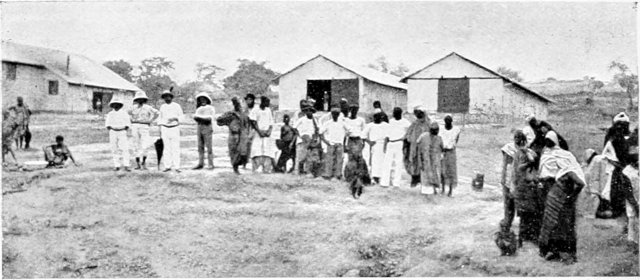
GWARI TOWN, OPPOSITE MINNA, SOUTH OF ZARIA. Fig. 35, p. 155.
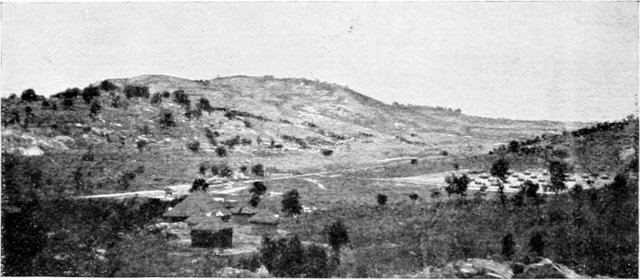
COW FULANI WOMAN SELLING MILK AT GWARI. Fig. 36, p. 163.
MAIZE.—“Mussara” (Haussa) is the name applied to this plant (Zea mays). The crop is more common in the Niger valley among the Nupe and Yoruba people than in the higher plateaux of Zaria and Kano. It is probable that maize requires a larger rainfall than the grain crops which have been mentioned above—which may account for the infrequency of its cultivation in the dry country.
Among the Gwari pagans, inhabiting the country in the vicinity of Minna, and the Nupe people to the south, fairly large quantities of maize are grown and seem to represent the chief food crop. The sowers drop only one seed, or at most two, into the drills, where they would put five or six Guinea-corn seeds. The only variety grown commonly has a bright yellow grain and is apparently a three-months’ crop; being sown at the commencement and in the middle of the rains, thus giving two crops in the year in some localities. An illustration is given at Fig. 35 showing a view of the Gwari town at Minna.
WHEAT.—The cultivation of wheat is confined to the drier parts of Northern Nigeria, where it is grown as a rainfall as well as an irrigated crop.
In Zaria it is frequently sown in October, and occupies land which may have been under rice cultivation just previously. Goat manure is especially applied to wheat, and irrigation is carried out from wells or by the employment of shadufs on the banks of streams. This crop is harvested in January.
In Kano, wheat is more generally grown as a rainfall-crop in similar situations, and is, in this case, sown in May, being harvested in September.
The variety seems to be constant throughout the country, and appears to have been established from very early times. The grain is similar in appearance to the wheat seen in the Nile valley, and may be Triticum compositum (Egyptian wheat). Specimens from Kano and Zaria have been examined at the Imperial Institute, and the analyses made show about 11 per cent. of gluten including 5 to 6 per cent. of gliadin, and the commercial experts consulted were of opinion that an unlimited quantity of this type of wheat would be readily saleable on the European market (Bulletin of the Imperial Institute, vol. viii. [1910], p. 118.) The Kano wheat in particular gave excellent results in milling and baking trials.
As a food, wheat is regarded with great favour in the country, and is bought up chiefly by the wealthy classes for making a brown flour. It makes an excellent bread, and is in demand among the European residents for mixing with European tinned flour for breadmaking.
In order to separate the grain from the ear, the dried corn is threshed by the village women; thin sticks being used for the purpose. The chaff is then winnowed in the wind. The Haussa name is “Alkama.”
In addition to Zaria and Kano districts, the grain is said to be plentiful and cheap in Sokoto and Bornu, but does not appear to be grown south of the 11th degree.
RICE.—The cultivation of rice extends over a much larger portion of the country than wheat. It is said to be especially plentiful in the low-lying districts to the south of Sokoto, where large tracts of swampy country exist, which are annually planted with the crop. On the banks of the Kaduna river, near Dakman and Dagomba, as well as in the valley of the Baku river in the Nupe country, irrigated rice fields are common, and the product from the Nupe Province is much appreciated by the inhabitants of the middle Niger. The local name for rice is “Shinkafa.”
Near Zaria and Kano comparatively little rice is cultivated, and where seen is generally found in swampy places where other food grains are not capable of being utilised. Rice in these localities is one of the few unmanured crops, and is planted at the commencement of the rainy season. The harvesting is done about November or December, and the paddy or husk-rice is cleaned by soaking the grain in hot water, drying in the sun and then pounding in a wooden mortar. The chaff is winnowed, and a fairly clean rice with a slight reddish tint remains. All the rice appears to be of the same type, and is held in high estimation for its nutritious quality. The imported white rices, which occasionally enter the country, are regarded with less favour than the local kind.
It is possible to develop the cultivation of the crop in the valleys of all the large rivers, and it seems probable that, with improved methods of irrigation, two crops might be grown annually.
A sample of rice from Ilorin examined at the Imperial Institute proved to be about equal in quality to average Bengal rice (Bulletin of the Imperial Institute, vol. vii. [1909], p. 149), but it is improbable that it would at present prove remunerative to export this rice to Europe. A good market might, however, be found for it at the coast ports of Southern Nigeria, where imported rice is in demand. It might be necessary, in order to compete with the present trade, to grow and prepare a cleaner (less red) variety, which would resemble more nearly the imported kinds, and to this end the acclimatised American rice of Sierra Leone might be tried (cf. Bull. Imp. Inst., vol. xv. [1917]).
SUGAR-CANE.—The cultivation of sugar-cane (Saccharum officinale) is confined to small patches or strips of land on the edges of rice fields, where it may be said to be under irrigation. The Haussa name is “Reke.” The preparation of sugar does not appear to be known in the country, and the sole use to which the plant is put, seems to be the consumption of the green stalks by the inhabitants and their cattle. The variety seen in Kano district appears to have a reddish stalk, and cane is said to be a feature in the Maigana district.
LEGUMINOUS PLANTS.—Several kinds of small beans are grown, of which the most valuable appears to be that known as “Wanki.” This is a white-skinned kind, similar to, but about half the size of, the white haricot of Europe. The cultivation of these beans is somewhat irregular; a few being occasionally sown among the millet and Guinea-corn crops. They are apparently never grown as a sole crop. A similar bean of a brown colour is common in the Bassa Province, but the white bean is generally distributed throughout the whole country.
The “Bambarra groundnut” (Voandzeia subterranea) is grown in a similar manner to the common groundnut (Arachis hypogea) which has been referred to among the exported products. The cultivation is similar, and the plant is seen occupying elevated ridges. The Haussa name is “Paruru.”
An unidentified bean, which is called “Girigiri,” has been described as being grown by the pagan Gwari tribes to the south of Zaria, but apart from the fact that it is much larger than the “Wanki” bean, nothing seems to be known about it.
Indian dhall (Cajanus indicus), frequently termed the pigeon pea, has been introduced into many parts of the country, with the object of inducing the native to grow a leguminous crop, which would serve the dual purpose of providing a palatable food as well as being beneficial to the soil, but in only a few localities do the natives appear to make use of the peas for food. It has been recommended to grow the plant upon land which has become somewhat exhausted by the repeated growth of grain crops, and to permit the peas to remain upon such land for two or three seasons, during which time they will yield successive crops. The beneficial action which such a plant exerts by nitrifying the soil, and the manurial value of the leaves, which are shed in thick profusion, are important reasons for its introduction, but the value will not be fully appreciated until it has been adopted generally as a food.
SOYA BEAN.—The Manchurian or soya bean (Glycine hispida or soja), which has the additional merit of yielding about 15 per cent. of a valuable oil, and which is highly appreciated as another kind of dhall in India, is being experimented with in various parts of British West Africa (see Bulletin of the Imperial Institute, vol. viii. [1910], p. 40).
The recent expansion in the cultivation of leguminous crops is a promising step.
CASSAVA.—Among the Haussas as well as the Yorubas and Nupes, the cultivation of cassava (Manihot utilissima) is extensively carried on. In Haussa cultivation it is an unmanured plant, and is usually grown in separate fields surrounded by mud walls, thorn hedges, or Guinea-corn matting. The ground from which a crop of cassava has been harvested is rarely used for Guinea corn; the succeeding crop being usually cotton, with the application of manure. In the Nupe country, near Bida, cassava is frequently employed as a shade crop for onions; in this case being planted around the onion beds and obtaining the benefit of the high state of cultivation, manuring and irrigation which is applied to that crop. Cassava grown under these conditions is planted twenty days later than the onions, and is pulled up a month later.
The pagan tribes of Zaria, and the other provinces where they are in greater numbers, do not seem to plant cassava. The Haussa name given to the plant is “Rogo.”
YAMS (Dioscorea sativa, etc.).—These climbers are commonly grown in the moist valley of the Niger and in the Yoruba country of Ilorin, but are rare and only an irrigated crop in the more northern countries. Where they are seen, they are planted from root eyes upon high mounds with ditches dammed to retain the water between them, and, until the plant has grown up as a trailer upon the ground, some feet in length, no supports are put in. At this time, however, the straw covers, which it is customary to place on the apex of the yam mounds, are removed and an elaborate system of stakes, to the top of each of which strings are tied and conducted to the ground near the growing plant, are put in, and the plants to the number of four or more are trained to grow towards the top of each stake.
The large white yam is chiefly grown, and is called in Haussa “Doya.” Yams attain large dimensions in the damp localities, but are small in the drier places.
Colocasia antiquorum, called by the Haussas “Kamu,” is usually referred to as the koko yam and is rarely grown. A few may be seen in the wet localities and near Zaria, where they are planted in swamps upon high mounds or ridges.
SWEET POTATOES.—This crop is grown everywhere, and is nearly always unmanured. It is said that it forms the occupant of the land upon which Guinea corn and millet are repeatedly grown in some parts of the Kano district in the second and eighth year—i.e. twice in a period of eight years. In the year of plantation, the ridges are said to be heightened. Near Bida very high beds are made for it, resembling flat-topped mounds, with an area of sixteen or more square feet. The Haussas apply the name “Dankali” to the root, which is usually of the small white variety.
Artichokes and small Root Crops.—The Jerusalem artichoke (Helianthus tuberosus) called “Gwaza,” as well as “Rizga” (Plectranthus sp.) and “Tumuku” (probably Plectranthus sp.) are cultivated by the people living to the south of Zaria Town.
“Gwaza” seems to be less planted than “Rizga,” the latter being carefully grown upon selected ground which has been previously hoed and levelled, the surface being covered over with branches of Bauhinia reticulata and other forest plants until the stems of the crop have reached a height of one foot or more. Single stems spring from the root eyes which are planted. “Tumuku” resembles “Gwaza” in appearance, but comes up in clusters of stems and is planted upon mounds.
All the above roots are used in the manner in which the potato is employed in Europe; cassava alone being pounded to make a kind of dough ball, in addition to being eaten in chopped up and boiled form.
Onions.—Two kinds of onions are cultivated throughout the country: Allium cepa, the large onion which is seen to perfection in the Kano markets, and Allium ascalonicum which is usually termed the shallot, and is cultivated to a larger extent in the localities where manure is scarce.
The variety of large onion grown in Kano is pink upon the outside, and for this reason, according to inquiries conducted by the Imperial Institute, is said to be quite unsuitable for the English market; the white Egyptian onion being preferred.
Cultivation.—The cultivation of onions is, perhaps, more carefully carried out than that of any other crop, and may be described from that seen at Lemu in Nupe. The seed is sown closely in beds of soil which have previously been enriched with manure, and the surface is covered with straw until the young plants are a few inches in height. Transplanting into new beds, which are strewn with cow and goat manure, is the next operation, the plants being put in at about 4-6 inches apart. The whole cultivation is done during the dry season, and the beds are irrigated by means of channels supplied with water raised from streams or wells, in the north by shadufs, or in the Nupe country by people conveying the water in calabashes.
The market price varies greatly in different districts, and is immediately influenced by any reduced supply. There is said to be a very good demand for the large onions in the Southern Nigerian markets, and there should be no difficulty in getting them to Lagos, as they have been brought from Kano to London in good condition.
Minor Crops.—Okra (Hibiscus esculentus), “Kubiewa,” a species of Solanum resembling a small tomato called “Yalo,” the sorrel Hibiscus (H. Sabdariffa) called “Yakwa,” a pumpkin called “Kubiwa,” and the aubergine (Solanum melongena), are grown upon a small scale, and chiefly in the vicinity of houses.
OTHER FIELD CROPS. Dye Plants.—Indigo is the chief dye used in the country, and is prepared in the northern provinces from a species of Indigofera, which has not been accurately determined.
In Ilorin and Kabba the plant used is Lonchocarpus cyanescens, and the wild trees of this species may be seen preserved in the cultivated fields.
Camwood, a name applied to the red wood obtained from several species of Pterocarpus and from Baphia nitida, in different parts of West Africa, is obtained chiefly from P. erinaceus in Northern Nigeria, and is used by the natives for staining the skin. It is preserved in the fields cleared for grain cultivation.
Henna is obtained from Lawsonia inermis, which is regularly planted as a sole crop in the northern provinces and Kontagora. The use of it is generally to replace camwood as a red dye where that tree is scarce.
Tobacco.—The cultivation of tobacco (Nicotiana tabacum) is carried on in almost every part of the country, but for native use is generally made into snuff or into ropes, plaits, and targets, for sale in those places where it is smoked. (Cf. Bull. Imp. Inst., vol. xv. [1917], p. 32.)
The crop is usually grown in the river valleys, and is irrigated carefully. Manure in the form of house sweepings, ashes, and cattle-shed refuse is always applied, and the crop consists of leaves of all sizes and ages stripped from the plant at the same time.
The preparation of the tobacco usually consists in drying the leaves spread upon mats or upon sand in the sun. When flaccid they are twisted into ropes or plaits in the form in which they are afterwards sold, or they are completely dried and pounded up. In Ilorin an attempt has been made to prepare the leaves tied up in flat bundles, and this method has more recently been tried at the Baro prison farm, but the previous curing has generally proved inefficient and requires more attention. It is unlikely that tobacco fit for export will be produced except under expert guidance.
MISCELLANEOUS. Beeswax.—Bees are kept in many of the large villages, and are seen in hives placed in trees near the large towns in Kano and Zaria especially. Honey is employed in the country as a substitute for sugar. The wax is not greatly valued, and is frequently thrown away, although it seems to be of fair quality.
Locust Bean.—The tree which furnishes the well-known locust bean (Parkia filicoidea) is called “Dorowa” by the Haussas. The beans, which are produced in clusters, contain a sweet-tasting yellow flour-like substance, which is used for making a beverage. In this flour-like substance the flattened seeds are placed, and these are greatly appreciated for making into cakes, in the process of which they are boiled and apparently decomposed. The empty pods of the bean are boiled and used for making a strong cement used in flooring, etc. The pods have been examined at the Imperial Institute, and appear to be unsuitable for export as a feeding-stuff owing to their fibrous nature (see Report by Professor Dunstan on “Cotton, Gum, and Other Economic Products from Northern Nigeria” (Cd. 2778 [1905]), p. 21). Fig. 30 shows a locust bean tree in Ilorin.
Date Palms (Phœnix dactylifera) and the fruit of the Run palm (Borassus flabellifer), “Giginia” (Haussa), are used for food and are sometimes sold in the markets towards the south, being commonly seen in Kano.
CATTLE.—Large numbers of cattle are moved about through the country north of the 11th degree, where the tsetse fly does not appear to occur. The “Cow Fulani” is the race whose work is confined to the care of cattle and the sale of milk and butter. These people have no fixed abode, but move with the cattle to localities suitable to the season. An illustration is given of a Cow Fulani woman selling milk at Gwari, a town south of Zaria (Fig. 36). The cattle are large and humped similar to the Indian Zebu type, although in some places the straight-backed kind, which are common in the south, are seen.
SILK.—Four kinds of silkworm are collected for the spinning of yarn used in the embroidery on the Haussa gowns. The best of these is that which feeds upon the Tamarind tree, “Tsamia,” and is termed “Tsamian tsamia.” The silk cocoons are collected in Bauchi Province and are boiled in water with wood ashes, and subsequently washed. The silk becomes nearly white, and is carded and spun into yarn in the same manner as cotton. The species of insect which produces this silk has not yet been identified, but is almost certainly referable to the genus Anaphe (cf. p. 117).