THE ARTS AND THEIR DISTRIBUTION.
Reading edition
Districts.
As space would be needlessly occupied by attempting to name each county, the area from which specimens have been obtained is, for convenience, divided into districts. These divisions are for use in this article only, and are not intended as archeologic districts.
In the tables given under each heading, the names of counties or districts show where the types described are obtained; the columns following show the number of specimens of each material mentioned in the collection of the Bureau.
Where a limited area only has been examined in any division, the name of the county is usually given; but where specimens of any kind have been obtained from different counties near one another, they are assigned to the district including those counties. The districts are as follows:
Arkansas.
Northeastern: Between White and Mississippi rivers.
Southeastern: Between White and Washita rivers from Clarendon to Arkadelphia.
Southwestern: West of Washita river and south of Arkadelphia, including Bowie and Red River counties, Texas.
Central: From Dardanelles southward and eastward to the above limits.
Alabama.
Northeastern: Bordering Tennessee river east of Decatur.
Northwestern: Bordering Tennessee river west of Decatur. Coosa: Bordering Coosa river southward to and including Dallas county.
Tuscaloosa: Bordering the Tuscaloosa and Little Tombigbee, and extending a short distance below their confluence.
Ohio.
Miami valley: The country along the two Miami rivers, including Shelby county on the north and Madison and Brown counties on the east.
Scioto valley: South of Franklin county, including Adams and Lawrence counties.
Central: Including Union, Knox, Perry, and Franklin counties, and the area within these limits.
Wisconsin.
Southwestern: The counties bordering on either side of Mississippi river from La Crosse to Dubuque (Iowa).
Eastern: The portion between Lake Michigan, Lake Winnebago, and the Illinois line.
Southern: Dane and adjoining counties.
Iowa.
Keokuk: The southeastern corner of the state and adjacent portions of Illinois and Missouri.
Tennessee.
Eastern: All the mountain district, with the extreme southwestern part of Virginia.
Western: From Mississippi river to and including the tier of counties east of the Tennessee.
Northern: The northern half of the interior portion.
Southern: The southern half of this portion.
South Carolina.
Northwestern: North and west of a line from Lancaster to Columbia. As no other portion of the state has been examined under direction of the Bureau, only the name of the state is used herein, reference being always to this section.
Georgia.
Northwestern: The portion northwest of the Chattahoochee.
Southwestern: Area contiguous to the lower Chattahoochee and Flint river.
Savannah: The vicinity of the city of Savannah, where a large collection was gathered.
Kentucky.
Northeastern: Between Kentucky, Big Sandy, and Ohio rivers.
Southeastern: From Estill and Cumberland counties to the Tennessee and Virginia state lines.
Central: Between Green and Ohio rivers, west of the last described districts.
Southern: From Green river southward and as far westward as Christian county.
Western: West of Green river and Christian county.
North Carolina.
Western: West of Charlotte.
Central: Between Charlotte and Raleigh.
Illinois.
Southwestern: From the mouth of the Cumberland to Washington county, and thence to the Mississippi.
Descriptive Terms.
The various forms of implements will now be considered. As stated above, the names given the various articles are those by which they are usually known; but it may be well to define some of the terms used.
In the grooved axes, edge refers to the cutting portion; blade, to the part below the groove; poll or head, to that above the groove; face, to the wider or flat portion of the surface; side, to the narrower part; front, to that side farther from the hand, and back, to the side nearer the hand when in use.
In celts, the terms are the same, so far as they are applicable; blade referring to the lower half of the implement; that is, to the portion on which the cutting edge is formed.
Ground and Pecked Articles.
Grooved Axes.
The implements known as grooved axes seem to be of general distribution throughout the United States; being, so far can be learned from various writers, much more numerous east of Mississippi river than west of it. It must be remembered, however, that thousands of diligent collectors have carefully searched for such things in the east, while in the west little attention has been paid to them; consequently, deductions are not to be made concerning their relative abundance or scarcity, until further knowledge is gained. The same remark will apply to every form of aboriginal relic.
In the eastern and interior states, the grooved axes are far more abundant than the celts of the same size9, because as a rule only the larger implements of this class are grooved. All the ordinary varieties of axes and hatchets are found about Lake Champlain, by far the most abundant being celts, or grooveless axes.10
According to Adair and other early observers, the southern Indians had axes of stone, around the grooved heads of which they twisted hickory withes to serve as handles; with these they deadened timber by girdling or cutting through the bark.11 According to travelers of a later generation among the western Indians, similar implements were used on the plains to chop up the vertebræ of buffaloes, which were boiled to obtain the marrow.12
These statements, which might be multiplied, show that such objects are to be found widely scattered; none, however, give information more definite than that the axes are “grooved,” no reference being made to the shape of the ax or the manner of grooving.
The various modes of mounting axes and celts in handles are illustrated in the Smithsonian Report for 1879.
Stone axes were used in Europe by the Germans at as late a period as the Thirty Years’ war, and are supposed to have been used by the Anglo-Saxons at the battle of Hastings.13
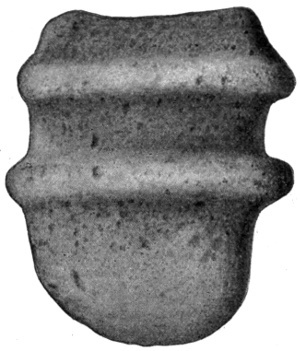
Fig. 29.—Grooved ax, showing groove projections.
Axes having two grooves occur in considerable numbers in the pueblos of southwestern United States, but they are extremely rare elsewhere and unknown in most districts; as the objects are generally small, the utility of the second groove is not evident.
The arrangement of stone axes may be based upon the manner of forming the groove. In one class are placed those which in the process of making had a ridge left encircling the weapon, in which the groove was formed. This gives the ax greater strength with the same material. Usually the groove has been worked just deep enough to reach the body of the ax; that is, to such a depth that should the projections be ground off there would remain a celt-like implement (as shown in figure 29, of chlorite-schist, from Sullivan county, Tennessee). The axes of this class in the Bureau collection are shown in the following table:
District. A B C D E F
Eastern Tennessee 9 8 4 5 1
Western North Carolina 1 1
Central North Carolina 1 1
Savannah, Georgia 4 1
Butler county, Ohio 1 1
KEY: A = Greenstone. B = Argillite. C = Sienite. D = Granite. E = Schist. F = Quartzite.
In the second class the groove is formed by pecking into the body of the ax after the latter is dressed into shape; in this pattern a regular continuous line from edge to poll would touch only the margins of the groove, leaving it beneath. An apparent medium between the two is sometimes seen, in which there is a projection on the lower side of the groove only; this is due, usually, to dressing the blade down thinner after the implement was originally worked to a symmetric outline. By continuous or long use the edge of the ax becomes broken or blunted and requires sharpening, and in order to keep the proper outline to make the tool efficient, it is necessary to work the blade thinner as it becomes shorter. No such change is required in the poll, consequently a projection is formed where originally there was no trace of one.
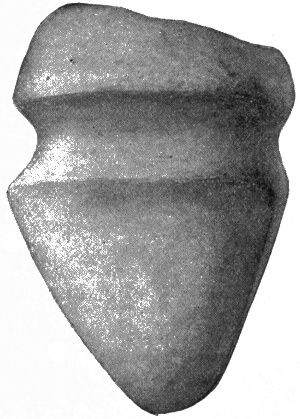
Fig. 30.—Grooved ax, showing pointed edge.
There are different methods of finishing the ax, which may appear with either form of groove. The poll may be worked into the shape of a flattened hemisphere, may be flat on top, with the part between the groove and the top straight, convex or concave, or may be worked to a blunt point, with straight or concave lines to the groove. The blade may taper from the groove to the edge, with straight or curved sides, which may run almost parallel or may be drawn to a blunt-pointed edge. This latter form is probably due to breaking or wearing of the blade, which is reworked, as shown in figure 30, of granite, from Boone county, Missouri.
There are a very few specimens, as noted below, in which the ax gradually increases in width from the poll to the edge; but such specimens seem to be made of stones which had this form approximately at the beginning, and were worked into such shape as would give a suitable implement with the least labor.
In nearly every instance the groove of an ax with a groove projection extends entirely around with practically the same depth, and the blade of the ax has an elliptical section. There are, however, a few with the back flattened; and while many of the second division may be similar in section, and in having the groove extend entirely around, yet in this class are to be placed nearly all of those only partly encircled by a groove or showing some other section than the ellipse.
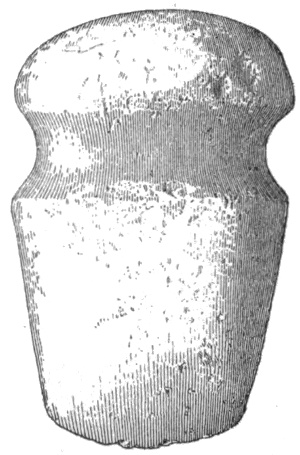
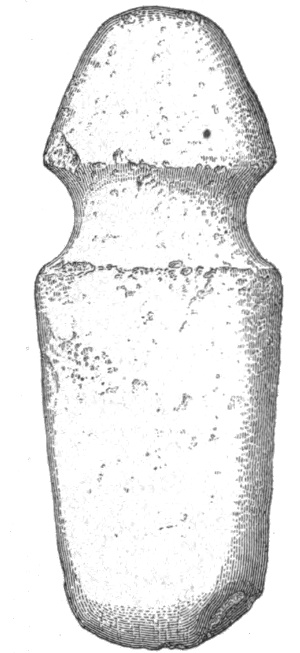
Fig. 31.—Grooved ax, showing groove entirely around.
Fig. 32.—Grooved ax, slender, showing groove entirely around.
With these exceptions, the second class of grooved stone axes comprises seven groups, which may be described and tabulated as follows:
A. Grooved entirely around, elliptical section, polls dressed in any of the ways given above; three or four have the blunt-pointed edge (figure 31, of granite, from Bradley county, Tennessee).
District. A B C D E F G H I
Southwestern Illinois 1 1 1
Eastern Tennessee 4 3 2 2 15 4 1
Central North Carolina 1 1
Western North Carolina 2 2
Central Arkansas 1 1
Ross county, Ohio 1
Green River, Kentucky 1 1
Northeastern Kentucky 1 1
Kanawha valley, West Virginia 4 1 1 1
Keokuk district, Iowa 1 1
Savannah, Georgia 1 2 6 3
Miami valley, Ohio 2 5 1
KEY: A = Greenstone. B = Granite. C = Diorite. D = Sandstone. E = Quartzite. F = Argillite. G = Slate. H = Sienite. I = Porphyry.
B. Long, narrow, and thin, giving a much flattened elliptical section. These are classed with axes on account of the grooves, although too thin and usually of material too soft to endure violent usage. The edges are nicked, striated, or polished, as though from use as hoes or adzes (figure 32, of argillite, from Bradley county, Tennessee).
District. A B C
Eastern Tennessee 18 1
Keokuk district, Iowa 1
Kanawha valley, West Virginia 1
Montgomery county, North Carolina 1
Western North Carolina 1
Butler county, Ohio 2
KEY: A = Granite. B = Argillite. C = Slate.
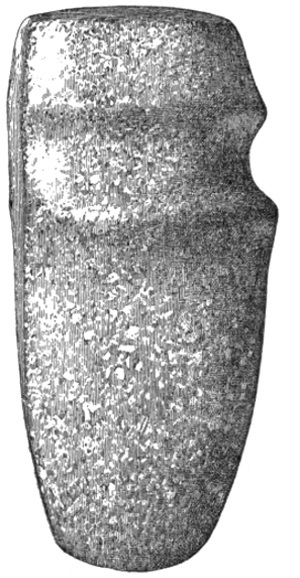
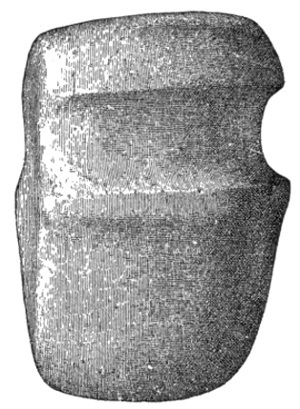
Fig. 33.—Grooved ax, showing grooved back.
Fig. 34.—Grooved ax, showing grooved back.
C. Grooved on both faces and one side; back hollowed, usually in a straight line the whole length; front drawn in from the groove to give a narrower edge (figures 33, of porphyry, from Brown county, Ohio, and 34, of granite, from Kanawha valley, West Virginia).
District. A B C D
Eastern Tennessee 1 1
Kanawha valley, West Virginia 1 1
Butler county, Ohio 1
Brown county, Ohio 1
KEY: A = Granite. B = Argillite. C = Sienite. D = Porphyry.
D. Same method of grooving; back is rounded, and may be in a straight or curved line the entire length, or a broken line straight in each direction from the groove. The type is illustrated by figure 35, of granite, from Keokuk, Iowa. This specimen is unusually wide and thin; generally the outlines are similar to those last described.
District. A B C
Eastern Tennessee 5
Butler county, Ohio 2
Keokuk district, Iowa 1 1
KEY: A = Granite. B = Argillite. C = Sienite.
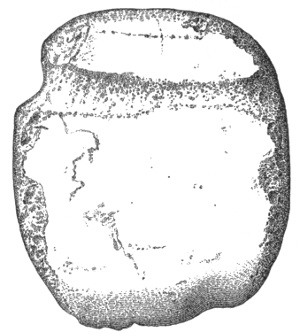
Fig. 35.—Grooved ax, showing rounded back.
E. Grooved like the last; same general form, except that the back is flat (figures 36, of sienite, from Brown county, Ohio, and 37, of granite, from Drew county, Arkansas).
District. A B C D E
Miami valley, Ohio 2 3 5
Brown county, Ohio 1
Keokuk district, Ohio 1 1
Brown county, Illinois 1 2
Eastern Tennessee 2 2
Kanawha valley, West Virginia 4 1 2
Savannah, Georgia 1 1
Northeastern Kentucky 1
Licking county, Ohio 1
KEY: A = Sandstone. B = Argillite. C = Granite. D = Sienite. E = Greenstone.
F. Grooved on both faces and one side, with both sides flat. There is only one of this form in the collection; it is of argillite, from Keokuk, Iowa.
G. Grooved on faces only, with both sides flat (figure 38, of granite, from Keokuk, Iowa). There are from the same place one of porphyry, one of argillite, and three of sienite. This and the preceding form seem peculiar to that locality.
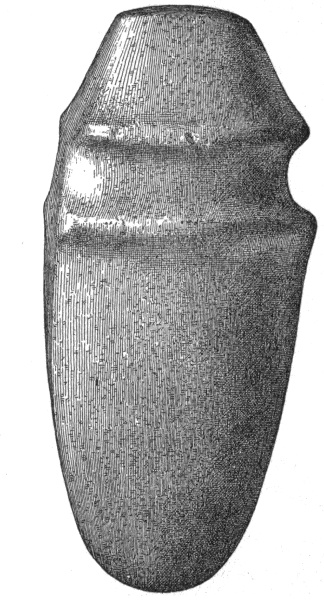
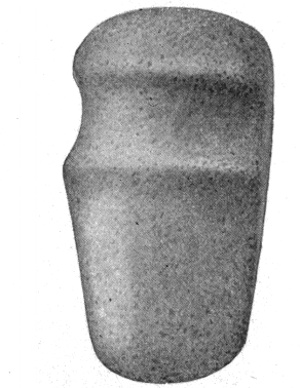
Fig. 36.—Grooved ax, showing flattened curved back.
Fig. 37.—Grooved ax, showing flattened straight back.
There are a few exceptional forms which are not placed with those just given, since they may have some features common to all except the Keokuk type, while in other respects they differ from all. Among them are some entire-grooved or grooved only on the two sides and one face; the general outline may correspond with some of the regular forms, but one face is curved from poll to edge, while the other is straight or nearly so (figure 39, of granite, from Wilkes county, North Carolina). This specimen has a depression, as if worn by the end of a handle, on the straight face at the lower edge of the groove.
None of this form are long enough for hoes, and although they may have been used for axes and hatchets, their shape seems to indicate use as adzes. Besides the one figured there are two from Savannah, Georgia; three from eastern Tennessee, one with a slight groove and very deep side notches; and three from western North Carolina, two of them entire-grooved with groove projections.
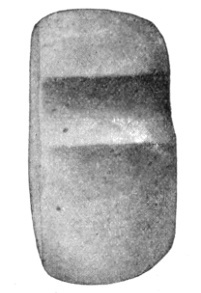
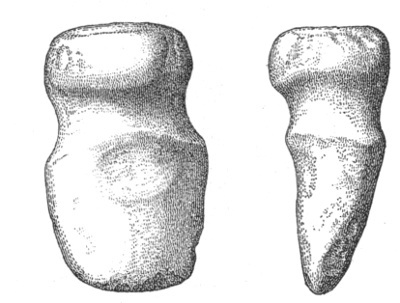
Fig. 38.—Grooved ax, Keokuk type.
Fig. 39.—Grooved ax, showing adze form.
Another unusual form, which may come under any of the foregoing figures, has the groove crossing the implement diagonally, in such a way as to cause the blade to incline backward (figure 40, of granite, from Carter county, Tennessee). Besides the specimen illustrated, this form is also represented by one of granite from northwestern North Carolina with projection for groove; two of argillite from southwestern Tennessee; one, widest at edge, from Savannah, Georgia; one from Ross county, Ohio; and two of granite, highly polished, grooved on faces and one side, with backs flat, from Kanawha valley, West Virginia.
Of the axes wider at the edge than at any point above (of which the specimen illustrated in figure 41, of granite, from a grave at Kingsport, Tennessee, may be taken as a type,) there are one of diorite from Kanawha valley, West Virginia, which seems to have been of ordinary pattern but broken and redressed to its present form; and from Savannah, Georgia, one of uniform taper with diagonal groove, and one widening irregularly until the blade is fully twice the width of the poll.
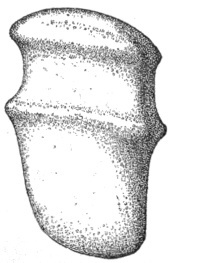
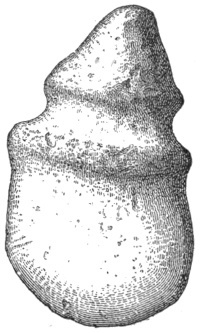
Fig. 40.—Grooved ax, showing diagonal groove.
Fig. 41.—Grooved ax, showing wide edge.
Many, if not a majority, of the entire-grooved axes have the groove wide enough for a very large handle, or for an ordinary withe to be twisted twice around. In those which have one side ungrooved, the intention was to admit a wedge between the stone and the curve of the handle. The handles were very firmly fastened; two axes in the collection have been broken in such a way that on one side, from the top half way down, the blade is gone, carrying away the groove on that side; yet the polish of the groove extends over the fractured surface, which has never been reworked, showing that the tool was long used after this accident. As the handles could easily slip off over the top in specimens thus broken, they must have been tightly lashed; perhaps gum or glue was used.
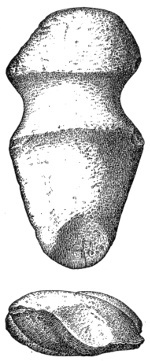
Fig. 42.—Grooved ax, showing curved edge.
Partly finished specimens show that the groove was pecked out and the edge ground before the remaining parts of the ax were worked. Some have the edge ground sharp and the groove worn smooth or even polished by long use, while all the rest of the implement retains the original weathered surface. A stone was always chosen that could be brought to the desired form with the least labor, and very often one could be found that required but little work to make a very satisfactory weapon or implement or even ornament.
Occasionally specimens indicate by the manner of wear their application to certain kinds of work. Sometimes the edge is curved by the wearing away of one face until it has almost a gouge form; sometimes the side of the blade next the hand, again that farthest away, is more worn. This in time would give the blunt-pointed edge. A peculiar finish of the lower part of the blade, which is also seen in a few celts, is shown in figure 42, of sienite, from Carter county, Tennessee. One half of each face has been left full, and the part opposite hollowed out, giving an ogee curve to the edge. Figure 43, of granite, from Jefferson county, Tennessee, seems to have a ridge on the upper side of the groove; but closer examination shows that it once had a groove projection, and that afterwards the poll was nearly all broken away and a new groove made lower down, so that what was originally the lower projection is now above the groove, the remainder of the poll being worked down to a point.
There are a few hammers which differ from the ordinary ax only in being blunt instead of sharp. They may be nothing more than broken axes, utilized as hammers instead of being resharpened.
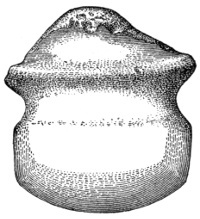
Fig. 43.—Grooved ax, showing single groove projection.
Under this head may be placed implements plainly used as adzes. They are much longer than axes in proportion to their other dimensions, have one face convex, the other straight or concave. They may be placed in the same class as the specimen shown in figure 39, and also those represented in figures 44 and 45, from McMinn county, Tennessee. There is also a similar adze from Saline county, Arkansas. All the specimens of this class are of argillite.
With the grooved axes is also placed a class of implements that may be called axes notched on the sides. Many of them were no doubt used as sinkers; but some of the same form, size, and material have the notches and sometimes portions of the face worn perfectly smooth, while frequently they are ground to a sharp edge. Again, even in those that have not the least polish, the edge shows marks that would seem to result from use as axes, adzes, or hoes.
There are three divisions of this class of implements, as follows:
A. Unworked, except notches; probably sinkers.
District. A B C D
Eastern Tennessee 1 5
Montgomery county, North Carolina 1
Northeastern Alabama 5
Kanawha valley, West Virginia 3
KEY: A = Sandstone. B = Argillite. C = Quartzite. D = Limestone.
B. Partly ground sharp edges, mostly with polished notches, sometimes with faces polished from one notch to the other (figure 46, of argillite, from Cocke county, Tennessee). In addition there are 11 examples of argillite, besides one of mica-schist from eastern Tennessee and another of sandstone from Savannah, Georgia.
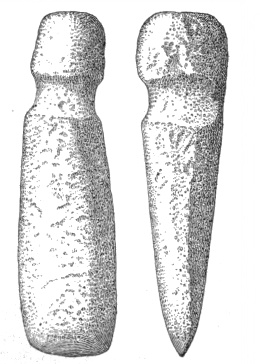
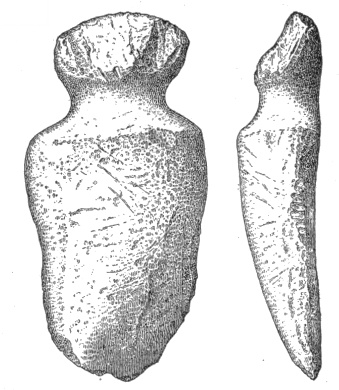
Fig. 44.—Grooved adze.
Fig. 45.—Grooved adze, showing curved blade.
C. Roughly chipped, with notches often at the middle but sometimes nearer one end. Probably most of these were sinkers; but as above stated the edges show marks of use, apparently in scraping, digging, or striking. Of these the following examples are in the Bureau collection: From several localities in eastern Tennessee, 40 of argillite; from Montgomery county, North Carolina, 24 of argillite and quartzite; from Kanawha valley, West Virginia, and from Savannah, Georgia, a few specimens of the same materials.
Celts.
What is true of the uses and distribution of stone axes applies with much the same force to what are called celts—not a good descriptive term, but one which is now given to the implement in lieu of something better. It would appear difficult or impossible to do with these rude tools any work for which we commonly use an ax or hatchet; and yet, by the aid of fire, or even without it, the aborigines contrived to accomplish a great deal with them.
The Maori of New Zealand do all their wonderful work of wood carving with only a chisel or adze (of stone or shell).14 Among the Iroquois, in cutting trees, fire was applied at the root, the coals were scraped away with a chisel, and this process was repeated until the tree was felled. The trunk was divided into lengths in the same way. Similarly canoes and mortars were hollowed out.15 The Virginia Indians at an early day employed a similar process. They also cleared ground for cultivation by deadening trees with their tomahawks,16 and used adzes made of shell in cleaning out the charred wood in making canoes.17 The Nootka of the northwestern part of the continent in felling a tree use a flint or elkhorn set in a handle, this being struck with a stone mallet. In hollowing canoes a musselshell also is used as an adze, and sometimes fire is applied. The outside is shaped by similar means.18
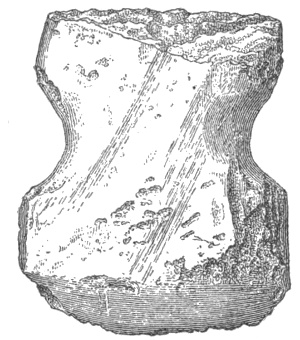
Fig. 46.—Notched ax, showing polished edge.
Stone chisels have been found in various steatite quarries, where vessels and other utensils of this material were made, and the marks of their use is plain both on the vessels in an unfinished state and on the cores, as well as on the quarry face.19
The different ways of hafting, as shown by specimens in the Bureau collection, were as follows:
(1) A hole was cut entirely through a stick and the celt was inserted so that it would project on both sides;
(2) The hole was cut partly through, and the celt was pushed in as far as it would go;
(3) The top of the celt was set in a socket of deer horn, which was put into a handle as in form 2;
(4) Small celt-shaped knives or scrapers were set into the end of a piece of antler long enough to be used as a handle;
(5) A forked branch was so cut as to make two prongs of nearly equal length, and the celt was fastened to the end of one, parallel with it, the other being used to guide and steady it, a prong being held in each hand;
(6) The fork of a root or branch was trimmed so as to make a flat face at any desired angle, to which the celt was lashed, a shoulder, against which the end of the celt was set, being sometimes cut in the wood;
(7) A stick was split its entire length and a single turn taken around the celt, the ends being brought together and tied, forming a round handle;
(8) A stick was split part way, one fork cut off and the other wrapped once or twice and tied, thus forming a round handle of solid wood.
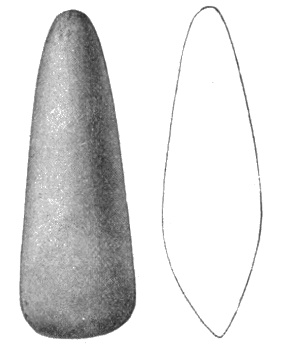
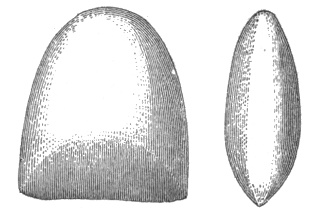
Fig. 47.—Celt, showing blade thick near edge.
Fig. 48.—Celt, showing blade thick near edge.
Forms 5 and 6 were used as adzes; forms 7 and 8 are the same methods as employed in hafting grooved axes.
A mounting similar to form 4 is seen in some Alaska specimens of celt-scrapers in which the implement is fastened to a piece of wood so as to project a short distance, and used like a plane. In all these, the celt is very firmly fastened to the handle with sinew or rawhide, which, when put on green, contracts with great force and binds like wire.
As to the forms of celts, no division is practicable based on anything but their entire appearance. The following descriptions and tabulations represent the material of this kind in the Bureau collection:
A. Round or nearly round section, pointed or flattened at the top, blade rapidly thickening from the edge; a few are polished at the top, but most of them show marks of a maul or hammer; all have been highly polished; all of this class were probably used as wedges, as their shape renders them more fit for this purpose than for any other; the battered tops indicate such usage. The few not showing such marks may have been set into a bumper of wood or horn, or used with wooden mauls. They vary in length from 2½ to 7½ inches. They are represented by the specimen shown in figure 47, of argillite, from Lincoln county, Arkansas; there are also one from a mound in Sumter county, Alabama (figure 48), and one from Kanawha valley, West Virginia, both of serpentine and elliptical in section, though the form of the edge puts them in this class. The following specimens are typical representations of the class:
District. A B C D E
Northwestern North Carolina 3 7 2
Eastern Tennessee 3
Western Tennessee 1
Southeastern Arkansas 2
Union county, Mississippi 1
Madison county, Illinois 1
Savannah, Georgia 2 1
KEY: A = Sienite. B = Argillite. C = Granite. D = Rotten limestone. E = Sandstone.
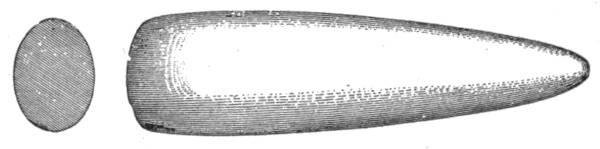
Fig. 49.—Celt, showing long, slender form.
B. Long, narrow, elliptical section, pointed top, curved or straight edges, sides straight or gently curved. None of these seem to have been put to any rough use, as the edges are quite sharp and the entire surface is well polished; length from 4¼ to 12½ inches. The type is illustrated by figure 49, of argillite, from a mound in Monroe county, Tennessee.
District. A B C D E
Eastern Tennessee 8 3
Northwestern Georgia 1
Savannah, Georgia 6 1 3
Kanawha valley, West Virginia 1
Northeastern Alabama 1
Western North Carolina 1
KEY: A = Argillite. B = Granite. C = Sandstone. D = Quartzite. E = Sienite.
C. Thick, almost round section, round-pointed top, nearly straight to sharp-curved edge, sides gently curved, widest at edge or just above. Most of these show marks of use as cutting tools or hatchets. In many the top has been roughened as if for insertion into a hole cut in a piece of wood; others have this roughening around the middle or immediately above, leaving a polish at both ends, and these were hafted probably by means of a stick or withe twisted around them. The roughening is a secondary operation, having no relation to the making of the implement; it was produced by pecking after the surface was polished. In a few cases it extends from the top well down the sides; but usually it reaches but a little way below the top, or else is in a circle around the body of the celt. Most of them have sharp edges; a few have edges either chipped or blunted and polished, showing long usage. Two from Kanawha valley (one roughened for handle) have the edges worn in on one of the faces until they almost resemble gouges; but that they were not intended as such is shown by the concavity being nearer one side and not reaching entirely across. The length ranges from 4½ to 10 inches. The type is illustrated by figures 50 and 51, both of sienite, from Lauderdale county, Tennessee.
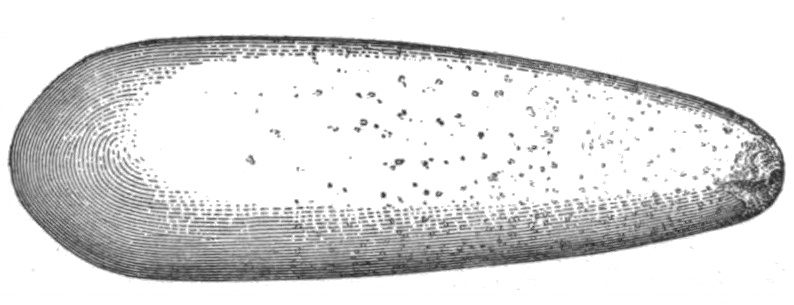
Fig. 50.—Celt, nearly round section.
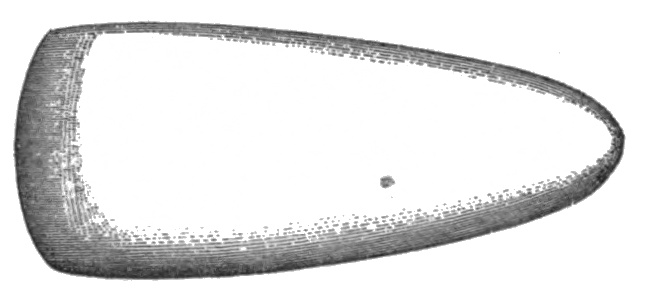
Fig. 51.—Celt, nearly round section.
This may be regarded as the typical form of celt for eastern United States, and its geographic distribution is exceptionally wide, as shown in the table.
The Bureau collection includes the following specimens of this class:
District. A B C D E F G H
Western North Carolina 4 2 9 16
Montgomery county, North Carolina 1
Coosa district, Alabama 1
Ross county, Ohio 1
Knox county, Ohio 1
Miami valley, Ohio 1 2
Eastern Tennessee 5 1
Green river, Kentucky 1
Northeastern Kentucky 1 2
Northeastern Arkansas
Kanawha valley, West Virginia 4 4 3 1
Crawford county, Wisconsin 1
Southwestern Illinois 2 1
Savannah, Georgia 3 2 2
Western Tennessee 2
KEY: A = Porphyry. B = Sienite. C = Granite. D = Argillite. E = Greenstone. F = Sandstone. G = Diorite. H = Compact quartzite.
D. Of the form last described, except in being much thinner; some have the tops battered, showing use as wedges; length from 3 to 9 inches.
District. A B C D E F G H I J
Eastern Tennessee 11 3 2 1 1 1
Kanawha valley, West Virginia 2 5 2 6
Northwestern Georgia 3 1
Savannah, Georgia 2
Green river, Kentucky 1
Northeastern Kentucky 2
Southeastern Arkansas 1
Central Arkansas 1
Northeastern Arkansas 1 1
Butler county, Ohio 2
Northwestern North Carolina 8 2 1 4
KEY: A = Argillite. B = Porphyry. C = Sienite. D = Diorite. E = Sandstone. F = Granite. G = Hornblende. H = Greenstone. I = Serpentine. J = Compact quartzite.
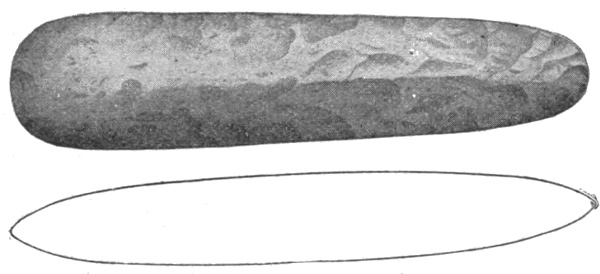
Fig. 52.—Celt, showing nearly diamond section.
E. Pointed oval, or nearly diamond section, sides straight or slightly curved; length 6 to 12½ inches. Few as these are, they vary considerably in appearance. The group is illustrated by figure 52, showing a specimen of brown flint, containing numerous small deposits of chalcedony, from Benton county, Tennessee; polished over the entire surface, the edge highly so.
In addition, there are the following examples: From Caldwell county, North Carolina, one of porphyry and one of granite, the latter roughened on sides for handle; from McMinn county, Tennessee, one of gray flint, highly polished over its surface, except the top, which is much battered; from Cocke county, Tennessee, one of argillite.
F. Elliptical section, flattened or rounded top, edge curved or nearly straight, sides straight or gently curved, tapering from edge to top or in a few cases nearly parallel. These present many variations in finish and in evidence of use. Some are well polished over the entire surface; some have only the lower part polished; while some are entirely without polish except at the extreme edge. In some the top is battered; some have the surface roughened for handle at the top, others around the middle, still others all over the upper half or even more than half. One from McMinn county, Tennessee, has a roughly pecked shallow groove at the middle. Several have the edge very blunt, the faces at the edge form almost a right angle; these are thickest very near the edge and become gradually thinner toward the top. Most of this kind are from Caldwell county, North Carolina; the same form coming also from Monroe county, Tennessee, and from Savannah, Georgia. The length is from 3 to 7½ inches. Figure 53, of compact quartzite, from Monroe county, Tennessee; figure 54, of granite; and figure 55, of sienite, from Caldwell county, North Carolina.
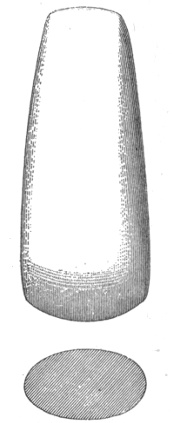
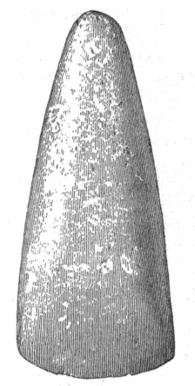
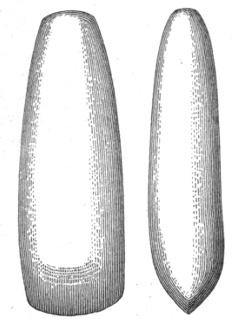
Fig. 53.—Celt.
Fig. 54.—Celt.
Fig. 55.—Celt.
District. A B C D E F G H I J K L
Eastern Tennessee 4 4 20 7 4 1 1
Western North Carolina 1 4 22 4 3 5
Montgomery county, N. C. 1
Coosa district, Alabama 2
Southwestern Illinois 1 7
Kanawha valley, W. Va. 3 7 5 10 1 1
Keokuk, Iowa 1
Southwestern Wisconsin 1 1
Miami valley, Ohio 2 3
Northeastern Arkansas 1 1 2 2
Southeastern Arkansas 1
Northwestern Georgia 1 2
Savannah, Georgia 2 2 1 7
Yazoo county, Mississippi 5 2
KEY: A = Hornblende. B = Serpentine. C = Compact quartzite. D = Argillite. E = Sienite. F = Porphyry. G = Granite. H = Micaceous sandstone. I = Diorite. J = Greenstone. K = Sandstone. L = Flint.
G. Of the same general pattern as the last, except that the sides widen just before reaching the edge, giving a “bell shape” (figure 56). The length is from 6¼ to 8 inches. In this group there are two specimens of granite, two of porphyry, and one of sienite, all from Yazoo county, Mississippi. Two have their tops roughened.
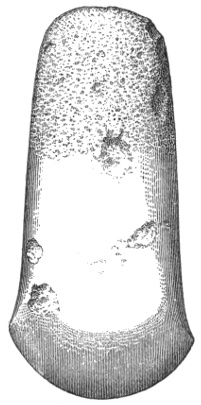
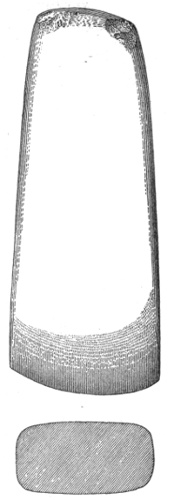
Fig. 56.—Celt, showing “bell shape” and roughening for handle.
Fig. 57.—Celt, showing rectangular section.
H. Rectangular section, occasionally with the corners sufficiently rounded to give a somewhat elliptical section; top flattened or rounded; sides straight and parallel or nearly so, sometimes very slightly curved. Most have polished surfaces; only three or four show any battering, or roughening for handle. A large one of hornblende from Lauderdale county, Tennessee, has the edge dulled and polished by use. Length is from 2 to 9 inches. Figure 57, of argillite, from a mound in Monroe county, Tennessee. The distribution of this class of celts is wide, as shown by the following table:
District. A B C D E F G H I J
Eastern Tennessee 10 10 2 1 1
Western Tennessee 1
Northeastern Kentucky 1 1 1 1 1
Green River, Kentucky 1
Southwestern Illinois 2 1
Miami valley, Ohio 2 2 1 1
Kanawha valley, W. V. 1 8 4 4 1
Northwestern Georgia 1
Savannah, Georgia 1
Central Arkansas 1
Northwestern North Carolina 1
KEY: A = Sandstone. B = Argillite. C = Porphyry. D = Granite. E = Sienite. F = Diorite. G = Hornblende. H = Limestone. I = Jasper. J = Serpentine.
I. Thickest at top (wedge form), section elliptical or nearly rectangular; sides straight or curved, widest at edge or nearly parallel. A few are roughened for handling, and one or two are battered at top by hammering; most are small. The type is shown in figure 58, of granite, from Carroll county, Indiana. This class of celts also is widely distributed and diverse in material.
District. A B C D E F G H I J
Eastern Tennessee 3 4 1
Northeastern Arkansas 1 1
Southeastern Arkansas 1 1
Butler county, Ohio 1
Green river, Kentucky 1
Northeastern Kentucky 3 1 1
Crawford county, Wis. 1
Southwestern Illinois 3 1
Savannah, Georgia 2
Kanawha valley, West Virginia 1 7 5 1 5 2
KEY: A = Hornblende. B = Granite. C = Sienite. D = Comp. quartzite. E = Argillite. F = Greenstone. G = Sandstone. H = Diorite. I = Porphyry. J = Basalt.
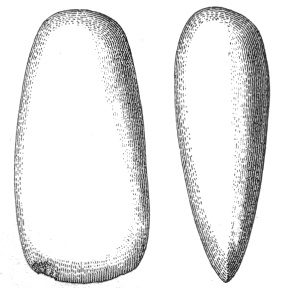
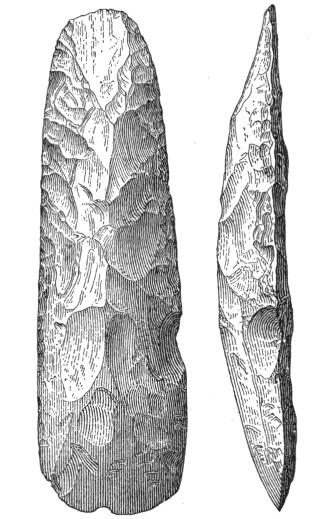
Fig. 58.—Celt, showing wedge-shape.
Fig. 59.—Celt, showing half-elliptical section.
J. Flat on one side, convex on the other, giving a semi-elliptical section; sides nearly parallel; top flat or rounded. These were evidently intended for scrapers; none are at all chipped or battered from use, and with very few exceptions the whole surface is highly polished. The flint and jasper specimens, which have been first chipped into shape, have the facets and edge as smooth as though finished on an emery wheel. Similar forms, except with flat instead of convex upper surfaces, are known to have been used as adzes, but these have no marks of such use. The length ranges from 2 to 8 inches, but most are small. The type is shown in figure 59, of brown flint, from a grave in Alexander county, Illinois.
District. A B C D E F G H
Eastern Tennessee 4 1 1
Central Arkansas 1
Northeastern Arkansas 4 1
Southeastern Arkansas 1
Southwestern Illinois 1
Butler county, Ohio 1
Northeastern Kentucky 2
Tuscaloosa district, Alabama 1
Northwestern North Carolina 1 2 1
KEY: A = Graphite. B = Argillite. C = Porphyry. D = Compt. quartzite. E = Yellow jasper. F = Gray jasper. G = Novaculite. H = Sienite.
K. Similar to last, except that the sides come to a point at the top; length, 3½ to 9 inches. Very few of either pattern are above 5 inches long, the larger ones being mostly of flint (figure 60, of sienite, from Warren county, Ohio).
District. A B C D E F
Northeastern Arkansas 2
Western Tennessee 1
Eastern Tennessee 1 2 5
Kanawha valley, West Virginia 1
Southwestern Illinois 2 1
Warren county, Ohio 2
KEY: A = Yellow jasper. B = Sienite. C = Diorite. D = Gray jasper. E = Argillite. F = Compt. quartzite.
L. Sides concave, top narrow. Nearly every specimen has the upper portion pecked rough; one from Bradley county, Tennessee, and another from Mississippi county, Arkansas, are entirely polished. The latter has the scraper-form edge to be described later and is of exceptionally large size; it measures 5½ inches, being the only one exceeding 5 inches in length.
M. Top flat, round, or pointed; the blade usually begins a little below the middle, and is perfectly smooth in every case; in some the blade is not over an inch in length, probably reduced by continual sharpening. They may have been scrapers, though they do not have that form; if used as weapons they were probably set into the end of a piece of antler, which, in turn, was set in a club. The type is shown in figure 61, of argillite, from Monroe county, Tennessee.
District. A B C D E
Eastern Tennessee 7 1 2
Kanawha valley, West Virginia 1 1
Northeastern Arkansas 1 1
Southeastern Arkansas 1
Southwestern Illinois 1 2
KEY: A = Argillite. B = Sienite. C = Granite. D = Quartzite. E = Hornblende.
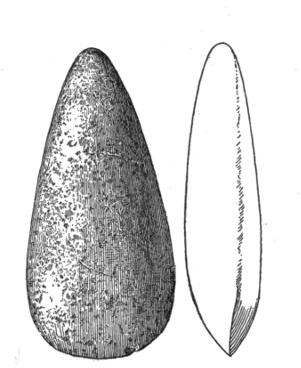
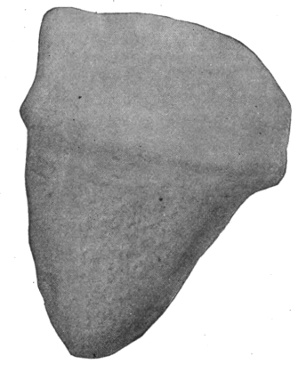
Fig. 60.—Celt showing half-elliptical section.
Fig. 61.—Celt, showing concave sides.
N. Ground down thin, with a flat-elliptical or nearly rectangular section; sides straight or slightly curved, nearly parallel or tapering considerably to the top, which is either rounded or flattened. All are polished over the entire surface; none show any marks of use as wedges or hatchets, and most of them are too delicate for such use. The longer ones can be readily grasped in the hand, and are as well adapted to stripping off the hide of an animal, dividing the skeleton at the joints, or stripping the flesh from the bones, as anything made of stone can be; while the smaller ones, set in a handle to afford a grip, would answer the same purpose. There are three which are sharp at both ends, one having one symmetrical and one scraper-form edge; one having a scraper-form edge at each end on opposite sides; and one of rather soft argillite, unfinished, which has marks of pecking, chipping, and grinding, showing that any of these methods were practiced, as was most convenient. All these are from eastern Tennessee. The features are illustrated in figures 62, of argillite, from a mound, Caldwell county, North Carolina; 63, of black flinty slate, very hard, from a mound, Poinsett county, Arkansas; and 64, of argillite, from a mound, Monroe county, Tennessee.
District. A B C D E F G H I J K L M
Northwestern North Carolina 2 2 1
Montgomery county, North Carolina 1
Eastern Tennessee 1 53 5 1 4 7 2
Western Tennessee 1
Northwestern Georgia 1 1
Savannah, Georgia 2 1 1 1
Union county, Mississippi 1
Butler county, Ohio 1
Northeastern Arkansas 1 1 1 1
Southeastern Arkansas 1
Kanawha valley, West Virginia 2 6 2 2 1 1
Northeastern Kentucky 1 1 1
Green river, Kentucky 1
Coosa district, Alabama 1 1 1
KEY: A = Marble. B = Argillite. C = Sienite. D = Quartzite. E = Serpentine. F = Diorite. G = Porphyry. H = Granite. I = Sandstone. J = Hornblende. K = Compact quartzite. L = Slate. M = Chert.
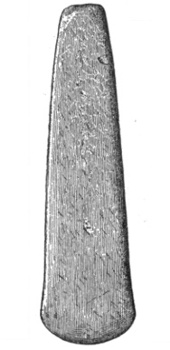
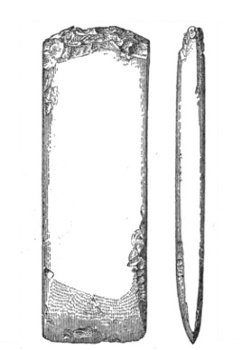
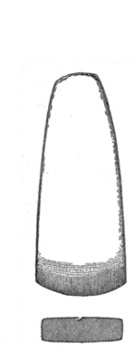
Fig. 62.—Thin polished celt.
Fig. 63.—Thin polished celt.
Fig. 64.—Thin polished celt.
Gouges.
While there are perhaps no true gouges in the collection, there are some examples of a form between a celt and a gouge, illustrated in figure 65, of serpentine, from Caldwell county, North Carolina.
Implements of this form are known to have been used to tap sugar maples, and also to hollow out wooden troughs, and are very common in the north, though less abundant in the south.20 It is in those localities in which bark instead of logs was used for canoes that they are most numerous. Sometimes they were hollowed the whole length and used as spiles.21 They were also employed instead of celts in hollowing wooden mortars and the like when a more regular concavity was desired.22
Chisels and Scrapers.
The aboriginal implements known as “chisels” are round, elliptical, or rectangular in section. The flint and jasper specimens are generally widest at the edge, the reverse being usually the case with those of other material. Most of them have marks of hammers at the blunt end, though some are polished at the top and a few, from eastern Tennessee, are sharp at both ends. The top (except in the double-edged ones) is usually flat, though a few are pointed or very thin, almost with cutting edges. Jaspers and flints are chipped, with the facets polished, the edges highly so. Any form may occur in any locality. Almost invariably they have scraper-form edges. The length is from 2 to 6 inches.
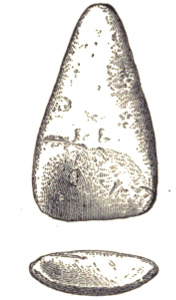
Fig. 65.—Celt, showing thin, gouge-form edge.
Typical examples are shown in figure 66, of yellow jasper, from a grave in Mississippi county, Arkansas; figure 67, of novaculite, from an unknown locality in Arkansas; figure 68, of serpentine, from Bradley county, Tennessee; figure 69, of sienite, from Caldwell county, North Carolina; and figure 70, of gray jasper, from Bradley county, Tennessee. Some specimens are sharp and worn at both ends, and could have been used only with handles.
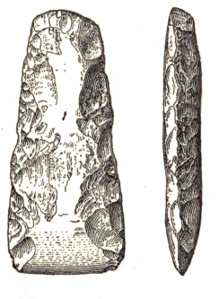
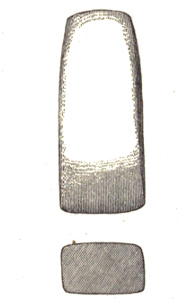
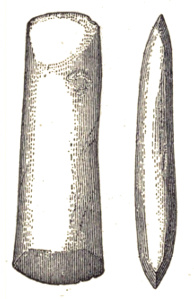
Fig. 66.—Celt, chisel-form.
Fig. 67.—Celt, chisel-form.
Fig. 68.—Celt, chisel-form.
The Bureau collection includes the following specimens:
District. A B C D E F G H I J K L M N O P Q
Northwestern North Carolina 1 2 1
Northeastern Arkansas 32 5 2 4 1 1 1
Southeastern Arkansas 1 2 3
Coosa district,Alabama 1 1
Warren county, Ohio 1
Southwestern Illinois 2 1
Eastern Tennessee 40 1 2 1 3 1
Union county, Mississippi 1
Kanawha valley, West Virginia 5
Northwestern Georgia 1
Savannah, Georgia 1
KEY: A = White flint. B = Serpentine. C = Sienite. D = Argillite. E = Granite. F = Yellow jasper. G = Gray jasper. H = Mottled jasper. I = Red jasper. J = Silicified wood. K = Quartzite. L = Black flint. M = Novaculite. N = Compact quartzite. O = Porphyry. P = Sandstone. Q = Hornblende.
The high polish sometimes found on the top of a round-pointed celt may be due to its working slightly in the socket in its handle of wood, deerhorn, or other material.
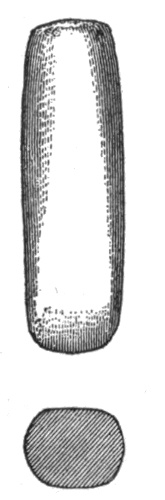
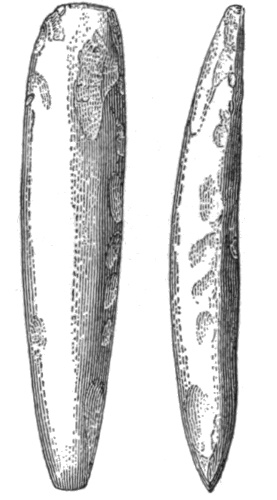
Fig. 69.—Celt, chisel-form.
Fig. 70.—Celt, chisel-form.
By celts having a scraper-form edge is meant those having the edge to one side of the median line, due to constant use of one face. This face, at the edge, is in a straight line from side to side; it may have a chisel-like flattening, or may curve toward the middle of the celt for a short distance and then have the same form to the top as the other face, which is convex or curved, as in the ordinary hatchet-celt. They form a medium between celts whose faces gradually curve from top to edge, and the celt-scrapers which are flat on one side. Among the thicker celts this form is quite rare, though several, especially one from Kanawha valley, West Virginia (represented in figure 74), are quite pronounced. In the thinner specimens, however, a majority are of this pattern, while in some types, nearly all indeed, even those up to 6 inches long, are so beveled. The type, of which an illustration is shown in figure 71, is of very hard black slate; the same form is presented in figures 66 and 70.
From Bartow county, Georgia, is a scraper made from the edge of a celt which has been broken diagonally across from one face to the other. A stem like that of a spear-head has been formed by chipping away the sides of the part broken, which gives a convenient attachment for a handle; the original edge is unchanged except in the wear which has resulted from its new use.
The specimen shown in figure 72 (of argillite, from McMinn county, Tennessee) is introduced on account of its undoubted use as a scraper, and because it is much smaller than some of the chipped flints thus classified, the edge being less than an inch wide; the sides are roughly incurved.
In Bradley county, Tennessee, there were found over 200 specimens of very small, thin, flat, waterworn sandstone pebbles, which were mostly in their natural condition, except that they had one side rubbed to a sharp edge. A few, more slender, were ground to a point. Some of them have a handle chipped out on the side opposite the edge, sometimes with nicks in it, made for attachment to a handle by means of a cord. Most of these specimens are less than 2 inches in length. No suggestion is offered as to their use.
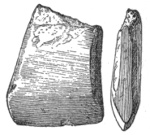
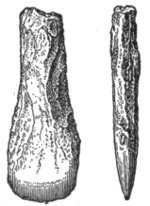
Fig. 71.—Celt, showing scraper-form edge.
Fig. 72.—Scraper.
A granite implement from Union county, Illinois, with nearly rectangular section, slightly curved sides, rounded corners, and high polish over the entire surface, having nearly the same thickness (about an inch) at every part, would seem to be a polishing or rubbing stone. There are, however, one from Warren county, Ohio, and three from Kanawha valley, West Virginia, of almost exactly the same size and pattern, which have had one end ground off to a sharp edge; so the specimen may be only an unfinished celt. One of those from Kanawha valley has had the edge partly broken away, and one face has been pecked considerably in an attempt to restore it for use; but the intention was not carried out. Some celts, not of the scraper pattern, which have the edge to one side of the median line, are perhaps broken or blunted specimens redressed on one side only.
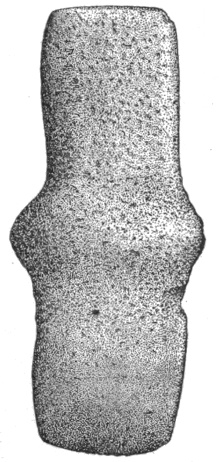
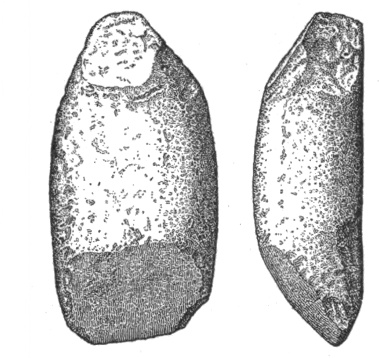
Fig. 73.—Scraper or adze, with projecting ridge.
Fig. 74.—Adze or scraper.
Figure 73 exhibits a specimen of argillite from Carter county, Tennessee, probably an adze or scraper, with a projection to keep the implement from being forced into the handle. The edge is symmetrical, though much striated. The specimen shown in figure 74 (of granite, from Kanawha valley, West Virginia) represents a peculiar form. There are several like it in the collection, all but this one from islands in the Pacific.
Chipped Celts.
On account of their shape and undoubted use, a class of celts, although neither pecked nor ground, is introduced. Many of them resemble, in most respects, the so-called paleolithic implements, though sometimes of better finish. They are made with a rounded top and nearly parallel sides; rudely triangular; or with the sides curved to a point at the top. The edge may be straight or curved, and is usually chipped, though sometimes ground; a few are chisel-shaped. Usually they show no signs of wear; when they do, it is always in the form of a polish at the larger end, or on the exposed facets. One of black flint, 8 inches long, from Kanawha valley, has a scraper-form edge, smoothly polished. Many, even of those scarcely changed from their original form and natural surface, have the edges dulled and polished from use as scrapers or adzes.
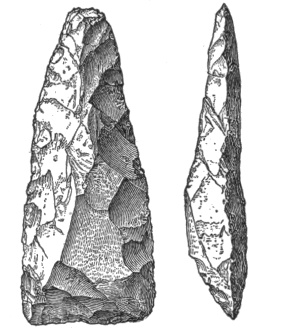
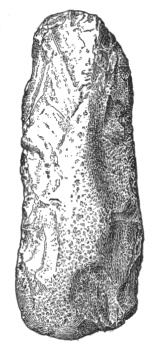
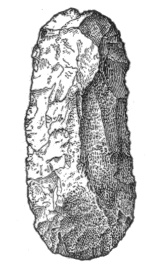
Fig. 75.—chipped celt.
Fig. 76.—Chipped celt.
Fig. 77.—Chipped celt.
The collection includes the following examples: 36 of argillite, flint, porphyry, and compact quartzite, from Montgomery county, North Carolina, some with the wider edge sharp (figure 75, of flint); 12 of limestone and flint from Mason county, Kentucky; 70 of argillite, a few with the edges ground, from southeastern Tennessee (figure 76, from McMinn county); over 300 from Kanawha valley, nearly all of black flint, a few being of diorite or quartzite—some are partly polished, or have ground edges (figure 77, of black flint, from a mound).
Hematite Celts.
With the exception of two from Iowa and a few from Preston county, West Virginia, the hematite celts in the collection are from Kanawha valley, and are small, ranging in length from 1 to 2¾ inches, except one 4½ and one 5½ inches. They are illustrated in figures 78, 79, 80, and 81, the last from a mound. Nearly all have been ground directly from the nodule or concretion in which this ore of iron so frequently appears. Occasionally one of homogeneous structure has been chipped into form before grinding, the facets in some cases being rubbed nearly away. Sometimes they have a rectangular outline, but usually the sides taper from the edge to the top by a gradual curve, or are parallel a part of the way and then taper either by a straight or, oftener, by a curved line. The section is rectangular or elliptical.
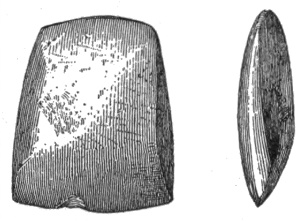
Fig. 78.—Hematite celt.
These implements were probably used as knives or scrapers, being set into the end of a piece of antler, which may in turn have been set into a larger handle of wood. That some were knives is shown by the edge which is dulled to a flat polished surface extending from side to side; and that many were scrapers is shown by their celt-scraper shape, a half elliptical section, or by the scraper-form edge, seen in the largest specimen. Some, however, have the edge symmetrical, as in the hatchet-celts. One has incurved sides, and is roughened on the sides and on the faces near the top.
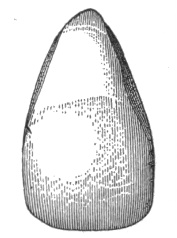
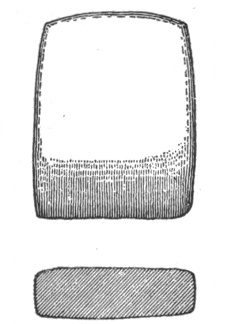
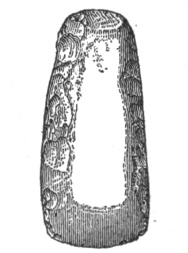
Fig. 79.—Hematite celt.
Fig. 80.—Hematite celt.
Fig. 81.—Hematite celt.
Pestles.
The fact of the ordinary conical or bell-shaped, long-cylindrical, or somewhat pear-shaped stones having been used for pestles is so well settled that no confirmatory references are needed. A few citations may be given in regard to certain forms sometimes differently classed, especially some of the discoidal stones to be hereafter described.
According to Stevens, the corn crushers used by the Swiss lake dwellers are spherical; some are flattened on two sides, like an orange, others almost round with depressions on four sides. They are about the size of a man’s fist or rather smaller. The Africans have a piece of quartz or other hard stone as large as half a brick, one side of which is convex, to fit the hollow of a larger stone used as a mortar.23 Evans observes that disks sometimes show marks of use as hammers or pestles;24 one found at Ty Mawr was thick, with a cavity on each face.25 In preparing pemmican, the American Indians are known to have pounded the dried meat to a powder between two stones.26 This gives the impression that any suitable stones may have been used; and the ancient California Indians worked out a round stone as an acorn sheller, modern tribes using any smooth stone.27
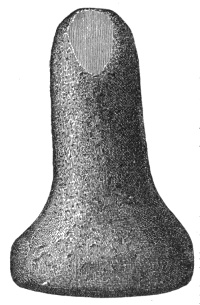
Fig. 82.—Handled pestle, with expanding base.
The pestles which have the bottom round or convex are generally found in the same localities as the hollowed stone mortars. Several forms of pestles are represented in the collection. They may be grouped as in the following description and tabulation.
A. With expanding base; bottom flat or slightly convex, often with a slight depression in the middle. Handle tapering, or of uniform diameter to the top; in a few, slightly swelling above as if to give a firmer hold. Top rounded, flat, or pointed. Bottom may be very little expanded or may have twice the diameter of the handle. Probably used for pounding grain or seeds on a flat stone, as it could not be used in a mortar even slightly hollowed. None seem to have been used as mullers or rubbers. They may have served for hammers, and would be excellent for cracking nuts, as the pit in the bottom would tend to keep them from flying out to the side. The type is shown in figure 82, of quartzite, from Sullivan county, Tennessee. The distribution is moderately wide, and the material chiefly granite and quartzite, with a few of other rock varieties, as shown in the table:
District. A B C D E F
Northeastern Kentucky 2 2 1
Eastern Tennessee 3 6 1
Ross county, Ohio 2 1
Miami valley, Ohio 1 7 1 2
Southwestern Illinois 1
Kanawha valley, West Virginia 1 1 1 1
KEY: A = Quartzite. B = Granite C = Sienite D = Diorite. E = Sandstone. F = Argillite.
B. Almost cylindrical, from 6 to 18 inches long and about two inches in diameter. Some of the larger ones were probably rolling-pins, as the ends, either from some fancy finish, or because worked to a point, are of a shape that would make their use as pestles impracticable. Even as rollers, some must have been used for crushing grain that had previously been softened or was not fully matured, as they are of a soft stone that would wear very easily. The shorter ones are blunt at the ends, and may have been used in a shallow wooden mortar; none are adapted for use in stone. The class is illustrated by figure 83, of soft clay slate, from Cherokee county, Georgia.
District. A B C D E
Montgomery county, North Carolina 1
Northwestern North Carolina 1
Eastern Tennessee 3 2 3 1
Butler county, Ohio 1
Northwestern Georgia 1 1
Hopkins county, Kentucky 1
KEY: A = Argillite. B = Soft slate. C = Clay slate. D = Mica-schist. E = Quartzite.

Fig. 83.—Pestle, long cylindrical form.
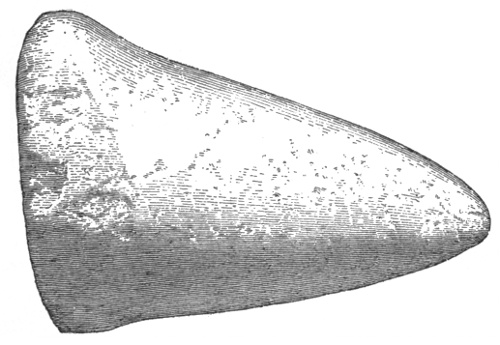
Fig. 84.—Pestle, conical.
C. Conical, or truncated cone, bottom flat, convex or curved from one side to the opposite. Some are quite smooth on the bottom as if from rubbing either back and forth or with a rotary motion; while many have the bottom pecked rough, showing use as hammers or pounders. For those with curved bottoms a rocking motion seems best adapted; with the palm resting on the longer side, good work could be done in any of these ways. Typical specimens are shown in figures 84, of quartzite, from Monroe county, Tennessee; 85, of granite, from Warren county, Ohio; and 86, of quartzite, from Saline county, Arkansas. A somewhat aberrant specimen, shown in figure 87, of granite, from Carter county, Tennessee, has an elliptical base, rounded top, and flat bottom; the longer sides grooved for handle. A similar one, of quartzite, came from Warren county, Ohio. There is considerable variety of material, quartzite largely predominating. Although the geographic range is wide, the distribution is rather sparse, and several districts are not represented.
District. A B C D E F G
Southeastern Arkansas 2
Central Arkansas 1 1
Eastern Tennessee 12 1 1
Miami valley, Ohio 3 1 3 2
Montgomery county, North Carolina 1 1
Kanawha valley, West Virginia 2 1
KEY: A = Quartzite. B = Marble. C = Sienite. D = Hornblende. E = Granite. F = Diorite. G = Sandstone.
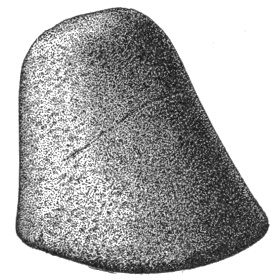
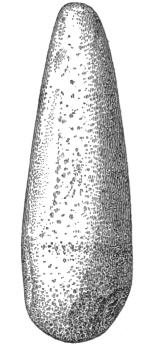
Fig. 85.—Pestle.
Fig. 86.—Pestle.
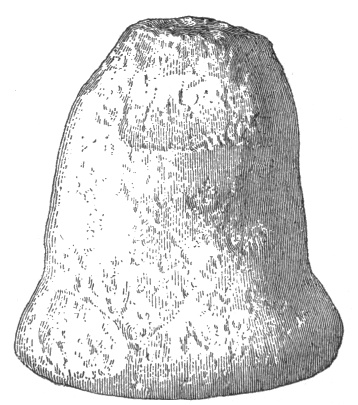
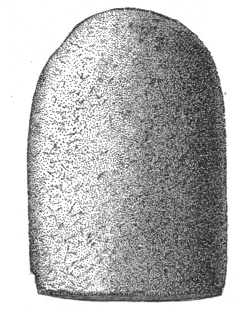
Fig. 87.—Pestle, grooved for handle.
Fig. 88.—Pestle.
D. Conical, or truncated cone, with top more or less rounded, very little worked, a stone of approximate form having been chosen and the angles and corners pecked off; bottom flat, and in some quite smooth; used as pestles or mullers. The group is represented by 17 specimens of quartzite, all from southeastern Tennessee.
E. Not dressed at all on the sides, but with both ends worn to a convex shape. Represented by two specimens of quartzite from southeastern Tennessee.
F. Cylindrical, flat bottom, dome-shaped top, these portions having been carefully pecked into shape. Some are smoothly polished on the bottom, but none elsewhere. Those from Miami valley, and one from Kanawha valley are much longer than the others. The type illustrated in figure 88 is of quartzite, from McMinn county, Tennessee.
District. A B C D
Eastern Tennessee 5 1 1
Kanawha valley, West Virginia 1 3
Miami valley, Ohio 1 1
KEY: A = Quartzite. B = Porphyry. C = Sandstone. D = Limestone.
Pitted Stones.
There is scarcely a locality in the country where pitted stones are not found; they are indeed of such frequent occurrence that they are seldom considered worth the trouble of gathering.
There can be no “type” among such crude implements; they are almost invariably waterworn sandstone pebbles, with a pit varying from a slight roughening of the surface to a hollow half an inch in depth pecked in each face. They probably belong with hammerstones, as they seldom show other marks of work, the edge in some being only slightly marked in one or two places, while in others it is much worn.
Various numbers of the Journal of the Anthropological Society of Great Britain and Ireland refer to pitted stones as found in every part of the world. According to Evans, slight pits aid in holding stone hammers; they also prevent the jar to a large extent. If used to pound meat or break bones, it would be hard to hold them when greasy without pits.28 Such implements may have had handles of wood with projections to fit the pits,29 though this is not probable; but if so a piece of buckskin on the handle opposite the pits would do better and be more convenient to apply.
Cupped Stones.
Conjecture and theory have had full sway in regard to the uses of cupped stones; but the question is apparently far from solution. There is a prevalent idea that they were used for cracking nuts; but why should an Indian make a large number of holes in a great many stones for such purpose? It is true there would be an advantage in having the nut stand on one end; but very few stones have depressions that will allow this.
Of the southern Indians Adair observes:
They gather a number of hiccory-nuts, which they pound with a round stone, upon a stone, thick and hollowed for the purpose. When they are beat fine enough, they mix them with cold water, in a clay basin, where the shells subside. The other part is an oily, tough, thick, white substance ... with which they eat their bread.30
Lawson’s language regarding the Indians of North Carolina is even more definite. He says:
[They gather] likewise hickerie nuts, which they beat betwixt two great stones, then sift them, so thicken their venison broth therewith, the small shells precipitating to the bottom of the pot, whilst the kernel, in the form of flour, mixes it with the liquor, both these nuts [hickory and chinquapin] made into meal makes a curious soup, either with clear water, or in any meat broth.31
Neither of these statements seems to have any reference to cupped stones. The first is a good description of a mortar with a round pestle, while the second says nothing about any particular form of stone; yet they have been referred to time and again as proof of the nut-stone theory. There would be some difficulty in pounding nuts fine in small holes half an inch or more below where the pounding stone could reach.
C. C. Jones32 was satisfied that cupped stones were used for cracking nuts because great numbers of nut-bearing trees grow where they are found; while Whittlesey, noting the fact that hundreds of them are found throughout northern Ohio, considered them as sockets in which the end of a spindle rested. Dawson33 speaks of “stones having deep hollows in the sides which were mortars for grinding pigments, or sockets for fire drills.”
The cupped stones in the Bureau collection are almost invariably of reddish sandstone, of varying texture, from a few ounces to 30 pounds in weight. The holes are from one to twenty-five in number, of various sizes even in the same stone, and follow the natural contour of the surface even when that is quite irregular; the stone is never dressed or flattened to bring the cups on a level; none show any marks of work, but are the rough blocks or slabs in their natural state.
Many of the holes are roughly pecked in, but the larger ones are usually quite smooth, as if ground out, and almost complete hemispheres. They range from a pit only started or going scarcely beyond the surface to one 2 inches in diameter. The smaller ones with one cup pass into the pitted stones. Occasionally at the bottom of a large cup there is a small secondary hole as though made by a flint drill.
The polished cups may have been used for fire-drill or spindle sockets, though why there should be a number of holes when but one could be used at a time awaits explanation. The rough ones may have been for holding nuts, and so long as they were on the same plane any number could be utilized; but when they are on different parts of the stone, even on opposite sides, as many of them are, the question remains open. Slabs or thin pieces nearly always have cups on both sides, while blocks or thick slabs have them on one side only. On the former a number of nuts could be cracked with one blow of a flat stone and thrown into a receptacle of some kind, either side of the stone being used at pleasure; but there would be no economy of time or work in this method, and it would be very strange that any one should not learn with so much experience that a nut should never be laid on the flat side in cracking. No theory yet advanced accounts for the greater number of such relics, namely, the irregular fragments of stone with cups at varying intervals and different levels.
No division can be made in regard either to size or material of the stone, or to form or finish of the cups. Many of the smaller ones were no doubt paint mortars. One well finished specimen of this class is shown in figure 89; it is of quartzite from 4 feet beneath the surface in Crittenden county, Arkansas.
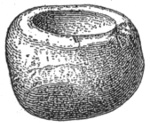
Fig. 89.—Cupped stone or paint cup.
Cupped stones are found wherever representatives of the Bureau have worked, and numerous references might be given concerning their existence in other localities.
Mullers.
The objects known as mullers are generally flat and smooth on one side and convex on the other, sometimes with a pit in one side or both, mostly of granite, quartzite, or sandstone; rarely of other materials.
A fine specimen of white quartz from Elmore county, Alabama, has the bottom flat and highly polished, the edge perpendicular to bottom and rounding off into the slightly convex top, with a pit at center. Figure 90 represents a muller of marble or crystalline limestone from a grave in Randolph county, Illinois. It has a smooth, flat bottom, with convex top somewhat smaller than the base; around the circumference there is a depression polished by wear. A similar specimen, of diorite, from Carter county, Tennessee, seems to be the lower part of a pestle with expanding base, whose top or handle has been lost, the part remaining having a place for a handle pecked around it.
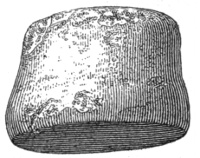
Fig. 90.—Muller, showing polished surface.
The discoidal stones with this shape were probably used as mullers; they were also used as pestles in the hollow mortars, as the edge is often chipped or pecked, which would account for the pits on the faces. Figure 91 represents a muller of granite from Savannah, Georgia. Sometimes the base has an elliptical instead of a circular outline, as seen in other specimens from Savannah.
Mullers are found wherever there are indications of occupancy for any considerable length of time.
Grinding and Polishing Stones.
Stones evidently used for grinding and polishing need only to be mentioned, as they are of widespread occurrence. Implements used for the former purpose are made of any siliceous stone of convenient size and suitable texture, from a coarse quartzite to a very fine close-grained sandstone, according to the class of work to be done. The markings on them range from the narrow, sharp, incised lines due to shaping a small ornament, to the broad grooves resulting from grinding an ax or celt into form. Nearly all of those in museums are small specimens used for rubbing; but there are many large blocks in various localities, sometimes several feet square, marked and scored in every direction by grinding or sharpening the large implements on them.
Among the polishers may be included a number of small pebbles of very hard siliceous stone, generally some form of quartz, which by the high polish show long use. The larger ones may have been used for rubbing skins in tanning, as they can easily be grasped in the hand. Very few have changed from their primitive form to a greater degree than would naturally result from the wear upon them. A few very small ones, long-ovoid in shape, usually not over 2½ or 3 inches in length, were probably paint mullers, as they are well fitted for use in small paint cups. Many of the discoidal stones—which will be spoken of under the proper head—may have had these functions. The highly polished specimens are all from the southern states. There is one rubbing stone of pumice from Craighead county, Arkansas.
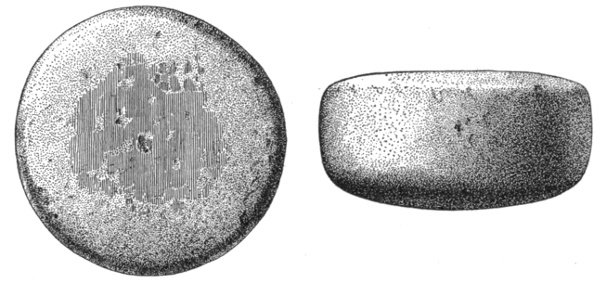
Fig. 91.—Muller, showing polished surface.
Hammerstones.
Hammers or hammerstones show every stage of work, from the ordinary pebble or fragment, with its surface scarcely altered, to the highly polished round or ovoid “ball.” They are usually of the hardest available material, and seem to be of more frequent occurrence in the northern districts than in the southern states, though found everywhere. Used in their earlier stages merely as tools with which to fashion other implements, they were assigned to specified purposes when brought to a better finish or form. A typical example, shown in figure 92, is of granite, from Ross county, Ohio.
The Sioux used an oval stone, with a piece of rawhide covering all but the point and attaching it to a withe handle,34 while the Shoshoni and Ojibwa made use of a round stone, wrapped in leather, attached by a string of 2 inches to a handle 22 inches long covered with leather; this was called a poggamoggan.35 Rounded stones are said to have been used by the California Indians as bolas,36 though it is more probable that they were slung-shots. The ancient Californians worked out a round stone for an acorn-sheller; the present Indians use any smooth stone.37 Elaborately carved round stones, mounted in handles as clubs, are known to have been used by the Queen Charlotte Island Indians for killing fish,38 and other northwestern Indians have been observed to use a round stone inclosed in a net and attached to a line as a sinker.39
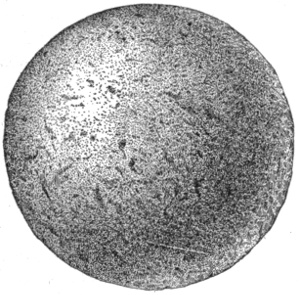
Fig. 92.—Hammerstone.
It is not necessary to quote references to the well-known fact that the Eskimo and the Patagonians made use of round stones of various sizes as bolas. There is no evidence that our Indians ever used anything of the sort.
Grooved Stones Other Than Axes.
Three subclasses of grooved stones, differing in essential features from axes, may be discriminated. They are as follows:
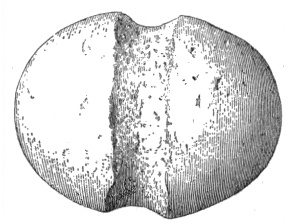
Fig. 93.—Grooved round stone.
A. Slightly or not at all worked, except the groove; often showing marks of violent usage. With these may be classed the large stone hammers of the Lake Superior region.
B. Round or ellipsoid stones; in the latter the groove may follow either axis. The type (figure 93) is of sandstone from Carter county, Tennessee.
C. Resembling axes in all but the edge. Of class A there are none in the collection; their form and size are such that they could have been for no other purpose than hammerstones. Of class B there are some from Savannah, which may be sinkers or club heads. According to Morgan, oval stones with grooves were secured in the heads of war clubs,40 and Carver observed that the southwestern Indians used as a slung-shot a curiously worked stone, with a string a yard and a half long tied to it, the other end being tied to the arm above the elbow.41
The specimens of class C may be broken axes. Figure 94 (granite, from Butler county, Ohio) shows a form quite common throughout central and western Ohio. They are generally small, have evidently never been sharp, and were in all probability intended for hammers from the beginning.
Mortars.
The Indian mortars in the collection are nearly always of sandstone of varying degrees of fineness. As is the case with cupped stones, when made of slabs, both sides have been worked; when of rough blocks, only one.
The Senecas and Cayugas are said by Morgan to have used wooden mortars in which to pound corn after it was hulled,42 and it is possible that the long pestles of soft stone were used with wooden mortars, though some are not well adapted to this use. The Iroquois women pounded in stone mortars the stony material used in tempering the clay for their pottery.43 The California Indians made mortars by knocking a segment off a bowlder, making a flat surface, and working out with a hammer and chisel,44 while the tribes of the interior worked directly from the surface of a suitable rock. The Yokuts, according to Powers, use tolerably well made stone mortars, and sometimes place a basket-like arrangement around the top to prevent the acorns from flying out.45
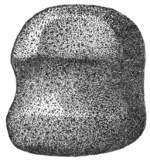
Fig. 94.—Grooved hammer.
No two specimens of the mortars and metate-like stones in the Bureau collection are alike; the nearest approach that can be made to a classification is as follows:
A. Smooth and flat on one or both sides; for use with mullers; from McMinn county, Tennessee, and Allamakee county, Iowa.
B. With round cavities on one or both sides; for round or cylindrical pestles; from McMinn county, Tennessee. A cobblestone from Bradley county, Tennessee, has a shallow cavity in either side and a pit in the center of each. From Kanawha valley there is a slab weighing about 25 pounds, flat and smooth on one side, as though primarily used with a muller and the regular even cavity afterward made; on the other side a cavity and a cupped hole have been worked in from the natural surface. A slab from Warren county, Ohio, has a shallow cavity worked into one side and a cupped hole in the other. From Union county, Mississippi, there is a flattened bowlder with a shallow cavity on each side; a shallow cup has been pecked on the edge of one of them. From Caldwell county, North Carolina, comes a bowlder of water-worn mica-schist, with a shallow cavity and a deeper one on one side, and on the other a cupped hole opposite each of these cavities.
C. With one side hollowed out, the other flat and smooth. Specimens of this type come from Caldwell county, North Carolina; McMinn county, Tennessee, and Bradley county, Tennessee, the last with a pit in the center and another on the edge of the flat side.
D. With a long, narrow depression on each side. A very large specimen of fine-grained sandstone from Lincoln county, Arkansas, represents this type.
There are, in addition, two pieces of fine-grained sandstone with uniform thickness of less than an inch and about 10 inches across, from Kanawha valley, West Virginia, and Hale county, Alabama, respectively. Both sides are ground perfectly smooth, and flat. The objects were probably for some culinary purpose.
Sinkers.
The sinkers in the collection may be divided into four classes, viz: A, entirely unworked; B, notched on the sides; C, encircled by a groove; and D, perforated. Conversely, stones under all these different heads may have served other and widely different purposes.
Of the functions of class A, only those who have seen them in use can speak. Stevens mentions that some tribes inclose a round stone in a sort of net and attach it to a line in fishing;46 and no other use can be imagined for some of the specimens in the Bureau collection.
Specimens of class B are found along water courses in such situations as to leave no doubt of their use as sinkers;47 they were attached to grapevines and dragged on the bottom of streams to frighten fish into nets or traps.48 Those in the collection are made of ordinary flat water-worn pebbles, with notches rudely chipped in the sides; a number are from southeastern Tennessee.
Of class C, while many were perhaps sinkers, more were club heads and slungshots or hammers. A number have been obtained from Savannah, Georgia, more or less worked, some being rounded, with grooves of varying depths and sizes. Small stones of this form are used by Greenland fishermen as sinkers;49 and according to Thatcher, a large stone is by the Indians made fast to a sinking line at each end of a net, and the net is spread in the water by sinkers at different parts of it.50
Class D will be referred to under the head “Perforated stones,” from which they can be discriminated only arbitrarily.
A number of roughly chipped, somewhat crescent-shaped specimens of argillite, from half a pound to 2 pounds in weight, collected in Montgomery county, North Carolina, may have been used as sinkers.
Perforated Stones.
Only the larger or rougher perforated stones used as implements are included in this class.
Several perforated pieces of steatite, some mere rough fragments, others with the edges smooth and dressed to a somewhat symmetrical outline, have been collected about Savannah, Georgia. Some of these have been drilled, others gouged through apparently with a slender flint. In the latter group the little projections left by the tool have been worn smooth. The hole may be near one end or about the center. Similar pieces have been found in Forsyth county, Georgia; one of these is worked to an irregular pentagon and smoothly finished. From Haywood county, North Carolina, there are some very rough fragments, apparently just as they were picked up, except for the perforation; and a number of pieces of perforated pottery are from Montgomery county, North Carolina.
Perforated stones were used by the southern Indians to drag along the bottoms of streams and frighten fish into their nets and traps.51 Four disks 4 to 5½ inches in diameter, with handles from 13 to 17 inches long, were found in a cave at Los Angeles, California,52 and objects of this character were, according to Schumacher, used by the Santa Barbara Indians as weights for wooden spades.53 According to Abbott many perforated stones are found close to rivers and on shores in such positions as to leave no doubt of their use as sinkers.54 Similar stones were used as sinkers by the Scandinavians in comparatively recent times; by the Bechuanas for grinding grasshoppers, spiders, etc., and also as weights for digging-sticks; by some savages in the Pacific islands as clubs; by the Icelanders for breaking up salted fish.55 They were used by the Iroquois as weights for fire drills;56 by the Eskimo as clubs, having a rawhide handle secured by a knot.57 According to Dale,58 Layard,59 Griesbach,60 and Gooch,61 they were used by natives of southern Africa as root-diggers (to remove earth from the roots), as weapons, and to give weight to digging-sticks. They were also used by the Peruvian Indians to be thrown with a stick. Disk-shaped and cylindrical throwing stones, perforated for the stick, are found among the Swiss lake dwellings.62 According to Evans63 they were used mostly as hammers or clubs. They are hard and battered on the edges; sinkers would be of softer stone.
The most complete article that has yet been given concerning the forms and uses of perforated stones is that by H. W. Henshaw.64
Discoidal Stones.
There are numerous references to discoidal stones by various writers, but a majority of the objects do not fall under any explanation that has so far been given.
The Choctaw Indians used disks two fingers wide and two spans around in playing “chungke,”65 and the Indians of North Carolina were much addicted to a sport called “chenco,” played with a staff and a bowl made with stone.66 The same kind of game was, or still is, played with hoops or rings of wood or rawhide by the Iroquois,67 the Pawnee,68 the Apache,69 the Navajo,70 the Mohave,71 and the Omaha;72 also, with rings of stone, by the Arikara,73 the Mandan,74 and other tribes.
The game of chungke, however, will account for only a small part of the great number of stones of this form. The Indians of southern California, in manufacturing pottery, make the clay compact and smooth by holding a rounded and smooth stone against the inside.75 The Fijians, in making pottery, use a small, round flat stone to shape the inside,76 while the Indians of Guiana use ancient axes or smooth stones for polishing the clay in making their vessels.77 According to Evans,78 pitted disks were used as pestles, hammers, or mullers; a thick one with pitted ends was found in a mortar at Holyhead.79 Under the head of pestles and of perforated stones further references will be found that may apply as well to this form of implements.
No kind of relic is more difficult to classify. From the smooth, symmetrical, highly-polished chungke stone they gradually merge into mullers, pestles, pitted stones, polishers, hammers,80 ornaments, and the ordinary sinker or club-head, so that no dividing line is possible. Theories constructed on a basis of their use may be far from correct.
They present various forms and degrees of finish; many have the natural surface on both sides with the edge worked off by grinding or pecking, the latter being produced probably by use as a hammer; the sides may be ground down while the edge remains untouched; or the sides may be pecked and the edge ground, being probably of a thick pebble originally. Some of the finer grades, as chalcedony and quartz, that have received the highest finish, appear to have had all the work done by grinding or rubbing, as even those only slightly worked bear no signs of hammering or pecking. When of the harder materials they are generally made of water-worn pebbles as nearly the desired form as can be found; in fact, some specimens which are in their natural state, entirely unworked, require a very close examination to distinguish them from others whose whole surface has been artificially produced. In the jasper conglomerates from Arkansas, however, there is a regular series from a roughly chipped disk to one of the highest polish and symmetry. The larger ones of quartz, particularly those with concavities in the sides, must have been patiently wrought for years before brought to their present state. Many of the smaller ones, especially sandstone, seem to have been designed for grinding or polishing.
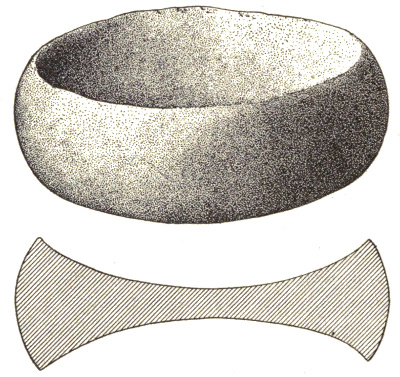
Fig. 95.—Discoidal stone.
The following groups are represented in the collection:
A. Sides hollowed out, edge convex; 2 to 6 inches diameter, seven-eighths to 2¾ thick.
1. Edges of concavity sharp.
a. Cavity a regular curve from side to side. The type (figure 95) is of quartz, from Cherokee county, Georgia. There are also, from Kanawha valley, West Virginia, one of sandstone, of which one side has been worked out by a flint, the little pits being distinctly visible, while the other side has natural surface; from Loudon county, Tennessee, one of quartzite, 6 inches diameter, which has been used as a mortar, the cavities being roughened, with their edges broken and scarred (the edge of the stone is battered entirely around midway between the sides as though used for a hammer); from McMinn county, Tennessee, one of quartzite, about the same size as last, with a slight pit in the center of each cavity, the edges of the concavity being considerably chipped, and the edge of the implement very smooth; from Polk county, Tennessee, one of quartzite, 3½ inches in diameter, with the edge polished except in one spot, where it shows marks of use as a hammer or pestle—it has been used also as a mortar, the edges of the concavity being much chipped and broken; one each from Craighead county, Arkansas, of novaculite; Randolph county, Illinois, of granite; Cherokee county, Georgia, of quartz; and Obion county, Tennessee, of sandstone. In the four last mentioned the entire surface is quite smooth or even highly polished.
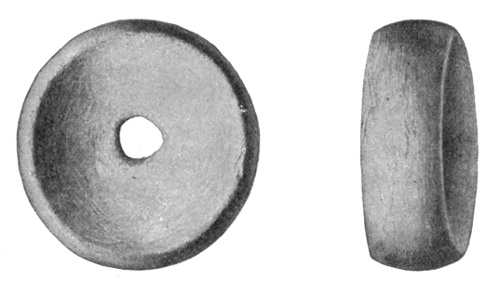
Fig. 96.—Discoidal stone, with perforation.
b. With a small perforation at the center. The type is shown in figures 96 (of sandstone, from a grave in Union county, Illinois), and 97 (of granite, from Virginia). There is another specimen, of sandstone, from Red River county, Texas.
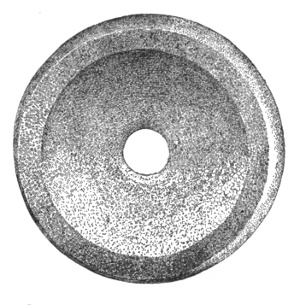
Fig. 97.—Discoidal stone, with perforation.
c. With a secondary depression in each cavity. Figure 98 (yellow quartz, highly polished, from Fulton county, Georgia) is typical. There is also one of quartzite, with a secondary depression in one side only, from Roane county, Tennessee, which may be supposed, from this and other imperfections, to be unfinished.
2. Edges of concavity rubbed off blunt. These are grouped simply by form, as the specimens from Kanawha valley, West Virginia, and northeastern Kentucky are nearly all roughly finished, quite different from the smooth or polished ones from farther south. Some are worked out into the form of a ring, and there is every stage between that form and the flat disk whose sides show no trace of pecking. Figure 99 (quartzite, from Sevier county, Tennessee) illustrates a typical example, roughly worked but entirely perforated, and figure 97 shows the same type in another form.
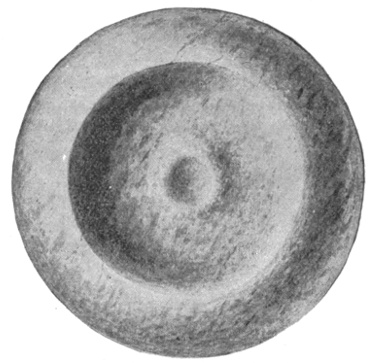
Fig. 98.—Discoidal stone, with secondary depression.
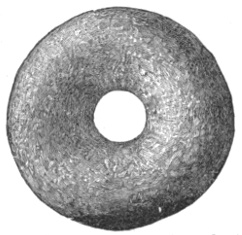
Fig. 99.—Discoidal stone, in form of a ring.
District. A B C D E F
Caldwell county, North Carolina 1
Crittenden county, Arkansas 1
Drew county, Arkansas 1
Randolph county, Illinois 1 2
Eastern Tennessee 1 1
Bartow county, Georgia 1
Kanawha valley, West Virginia 1 1 1
Northeastern Kentucky 22
KEY: A = Quartz. B = Novaculite. C = Flint. D = Quartzite. E = Sandstone. F = Granite.
B. Flat or slightly concave sides, edges straight and at right angles to the sides; diameter, 1⅝ to 5 inches. The type shown in figure 100 is of sandstone from Lauderdale county, Alabama.
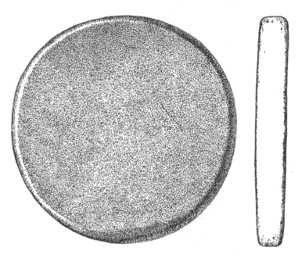
Fig. 100.—Discoidal stone.
District. A B C D E
Lauderdale county, Alabama 1
Mississippi county, Arkansas 1 1 1
McMinn county, Tennessee 1 4
Kanawha valley, West Virginia 1
KEY: A = Sandstone. B = Quartzite. C = Very fine schist. D = Yellow jasper. E = Argillite.
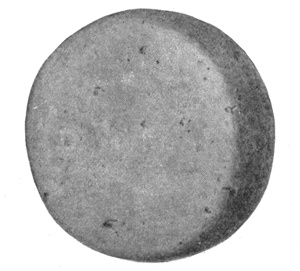
Fig. 101.—Discoidal stone.
C. Sides flat; edges straight, sometimes rounding off into the sides; diameter, 2¼ to 6 inches; thickness, three-quarters to 2¼ inches. A number from southeastern Tennessee, especially the smaller ones, are quite rough, being merely pecked or chipped into shape with no subsequent rubbing. Figure 101 (chalcedony, from a mound in Monroe county, Tennessee) represents the type. The material is variable.
District. A B C D E F G H I
Southeastern Tennessee 5 5 1 3 1 9
Western Tennessee 1 1
Savannah, Georgia 1 7 1
Mississippi county, Arkansas 1
KEY: A = Quartz. B = Sandstone. C = Argillite. D = Chalcedony. E = Limestone. F = Marble. G = Granite. H = Jasper conglomerate. I = Quartzite.
D. Like the last, except much smaller. Very few are polished over the entire surface; some are rubbed more or less on the edges or sides, but a majority have the edge rough as it was chipped or pecked out; many have either the edge or sides in the natural state. From those smoothly polished to those very rudely worked the gradation is such that no dividing line can be drawn. This is true, also, of the smaller specimens of other types. Some of the quartzite specimens are very loose in texture. From seven-eighths to 2 inches in diameter and one-fourth to three-fourths of an inch thick.
District. A B C D E F G H I J
Eastern Tennessee 1 54 64 32 1 12 4
Bartow county, Georgia 1 1 1 4
Savannah, Georgia 2
Kanawha valley, West Virginia 7 20 1
Northeastern Kentucky 14 5
A = Marble. B = Sandstone. C = Argillite. D = Granite. E = Red jasper. F = Quartzite. G = Micaceous sandstone. H = Limestone. I = Quartz. J = Cannel coal.
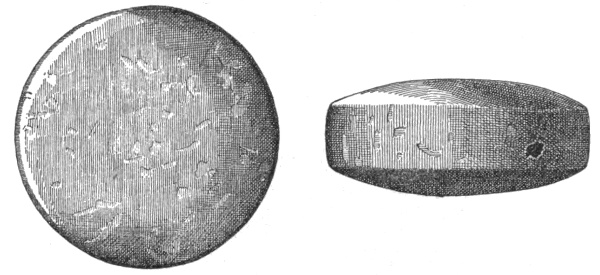
Fig. 102.—Discoidal stone, convex.
E. Convex on both sides, edges straight. One of white quartz from Caldwell county, North Carolina, has the sides much curved, making the stone very thick in proportion to its width; there is a deep pit on each side, the entire surface being highly polished. Diameter, 2 to 3½ inches; thickness, three-fourths to an inch and a half. Illustrated by figure 102 (of porphyry, from a grave in Caldwell county, North Carolina).
District. A B C D E F G H I J K L M N O P Q R S
Eastern Arkansas 3 1 1 1 4 7 1 7 1 1
Eastern Tennessee (many of these rough and entirely without polish) 1 88 29 1 1 31 27 8 1 1 2
Kanawha valley, West Virginia (rough) 1
Savannah, Georgia 1 3
Union county, Mississippi 1
Caldwell county, North Carolina 1 10 4 1 2 1 2 1
KEY: A = Yellow jasper. B = Iron ore. C = Mica schist. D = Novaculite. E = Jasper conglomerate. F = Quartzite. G = Quartz. H = Hornblende. I = Marble. J = Clayey limestone. K = Argillite. L = Sandstone. M = Limestone. N = Sienite. O = Granite. P = Chalcedony. Q = Steatite. R = Black flint. S = Porphyry.
F. Same form as the above; 1¼ to 2 inches in diameter, one-half to seven-eighths of an inch thick.
District. A B C D E F G H I J
Elmore county, Alabama 2 1 1 1
Western North Carolina 1 2
Eastern Tennessee 2 1 9 1
Bartow county, Georgia 1 1 1 2
Savannah, Georgia 3
Kanawha valley, West Virginia 4
Drew county, Arkansas 1
KEY: A = Jasper. B = Mica schist. C = Micaceous sandstone. D = Quartzite. E = Quartz. F = Marble. G = Argillite. H = Sandstone. I = Limestone. J = Steatite.
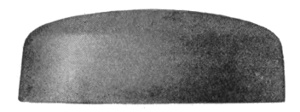
Fig. 103.—Discoidal stone.
G. Flat or slightly convex on one or both sides, edge straight, one side wider than the other. Some have the edge battered or chipped and it is always at the angle of the edge with the wider side. From 1⅝ to 3½ inches in diameter, and three-fourths to an inch and a half thick. The specimen shown in figure 103 (of compact quartzite, from Bartow county, Georgia) is typical. The material is quite diverse.
District. A B C D E F G H I J K
Eastern Tennessee 2 1 2 2 1
Savannah, Georgia 1 3
Bartow county, Georgia 1 1
Kanawha valley, West Virginia 2 1
Caldwell county, North Carolina 3 1 1 2
Mississippi county, Arkansas 1
KEY: A = Sandstone. B = Marble. C = Quartzite. D = Quartz hornblende. E = Granite. F = Quartz. G = Compact quartzite. H = Sienite. I = Chalcedony. J = Schist. K = Flint.
There are also of this type, one of very hard black stone (not identified) from Red River county, Texas, three-fourths of an inch in diameter; one of barite from Bartow county, Georgia, one inch in diameter, three-fourths inch thick; and one of granite, from Chester county, South Carolina, an inch in diameter. There are also one of quartzite from Drew county, Arkansas, with a shallow pit on each side; one of the same material from southeastern Tennessee, with a deep pit gouged in smaller side; and from the same locality, three of quartzite, one of quartz, and one of sandstone, each with a deep pit in the larger side. All of these are small and none of them polished.
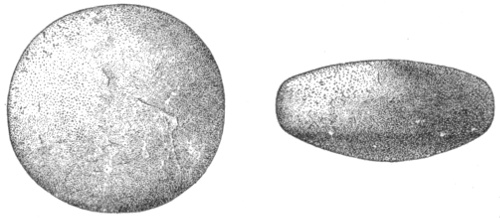
Fig. 104.—Discoidal stone.
H. Convex sides and curved edges; size as in group G. The type (figure 104) is of quartz, from Caldwell county, North Carolina.
District. A B C D E F
Catahoula parish, Louisiana 1
Eastern Tennessee 2 3
Caldwell county, North Carolina 2 1
Northeastern Arkansas 1 1
KEY: A = Jasper conglomerate. B = Quartz. C = Limestone. D = Quartzite. E = Sandstone. F = Conglomerate.
I. Same form, rough and not polished; 1 to 2¾ inches in diameter, one-half to 1 inch thick.
District. A B C D E F
Eastern Tennessee 50 3 11 10
Northeastern Arkansas 1 3 3
Caldwell county, North Carolina 1
Kanawha valley, West Virginia 36 1
KEY: A = Quartzite. B = Flint. C = Yellow jasper. D = Argillite. E = Quartz. F = Sandstone.
J. Sides slightly convex, edge slightly curved; 2¼ to 3½ inches in diameter, three-quarters to an inch and a half thick.
District. A B C D E F G H
Kanawha valley, West Virginia (evidently used for a hammerstone) 1
Eastern Tennessee 2 3 4 1 2 1
Lauderdale county, Tennessee 1
Caldwell county, North Carolina 2 1
Fulton county, Georgia 1
KEY: A = Sandstone. B = Quartz. C = Quartzite. D = Chalcedony. E = Argillite. F = Clayey limestone. G = Steatite. H = Sienite.
K. Sides flat; edges convex; roughly finished, no polish; 1⅛ to 2¼ inches in diameter, three-eighths to three-fourths of an inch thick.
District. A B C
Kanawha valley, West Virginia 1 1
Eastern Tennessee 4 1 7
KEY: A = Sandstone. B = Quartz. C = Quartzite.
L. Not polished; roughly chipped edges; 2 to 3½ inches in diameter.
District. A B C D
Mississippi county, Arkansas 1 1 1 3
Bartow county, Georgia 1
Union county, Mississippi 3
KEY: A = Sandstone. B = Quartzite. C = Chalcedony. D = Yellow jasper.
M. Edges V-shape; 1¾ to 2½ inches diameter, 1 to 1½ inches thick. The type (figure 105) is of granite, from Randolph county, Illinois, with insunk pecked sides and polished edge. A specimen from Kanawha valley, West Virginia, is of flint, with only the edge worked; apparently a hammer. One from Craighead county, Arkansas, has flat sides and the entire surface polished; another from McMinn county, Tennessee, is also polished entire. A good specimen from Cocke county, Tennessee, is of flint, one side rubbed flat, the other a rounded cone, highly polished.
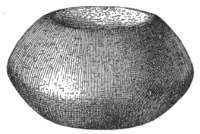
Fig. 105.—Discoidal stone, with V-shaped edges.
N. Sides hollowed out; edges straight or slightly curved; very thick; used as mortars, hammers, or pestles. This form gradually merges into disk-shaped, pitted, or entire dressed hammers, which in turn run into the ordinary hammerstones. The types are figures 106 (quartzite, from Bradley county, Tennessee) and 107 (quartzite, from Nicholas county, Kentucky). There are in this group from eastern Tennessee three of quartzite, 2¼ by 4½ inches, 4¼ by 5¾ inches, and 1¾ by 3¼ inches, and one of granite, 2¾ by 3 inches; from Caldwell county, North Carolina, one of granite; and from Montgomery county, North Carolina, three of quartzite. The last four are evidently hammers or pestles. In addition there is a specimen from Jackson county, Illinois, of ferruginous sandstone, 3 inches in diameter. On one side there is a pit and on the other a shallow, mortar-like cavity extending entirely across.
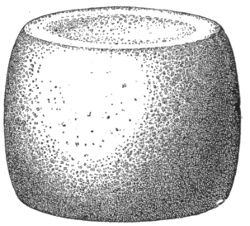
Fig. 106.—Discoidal stone, used as mortar.
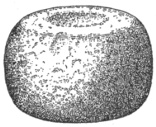
Fig. 107.—Discoidal stone, probably used as hammer.
O. One side flat, the other rounded; of convenient size for grasping. In some the bottom is quite smooth. There is sometimes a pit in one or both sides, more frequently in the bottom. They were used as mullers or pestles; in the latter, either the side or the edge may have been the pounding surface. The line between these implements and the cylindrical, dome-topped pestles can not be drawn (see figure 91).
District. A B C D
Eastern Tennessee 1 2
Southwestern Wisconsin 2 1 1
Kanawha valley, West Virginia 1
Crittenden county, Arkansas 1
Jackson county, North Carolina 1
Warren county, Ohio 1
Savannah, Georgia 2 1 2 8
KEY: A = Quartzite. B = Quartz. C = Sandstone. D = Granite.
P. Sides flat; edge convex; same size and use as last.
District. A B C D
Southeastern Tennessee 1 1
Kanawha valley, West Virginia 3 5
Warren county, Ohio 1
Madison county, Alabama 1
KEY: A = Quartzite. B = Quartz. C = Sandstone. D = Granite.
Q. From southeastern Tennessee and northwestern Georgia there are many disk-shape fragments of pottery, small, thin, and coarse, with the edges roughly chipped; and from northeastern Kentucky there are similar pieces, except that they have been fashioned from fragments of limestone and sandstone. These specimens are illustrated by figure 108 (pottery, from a mound in Bartow county, Georgia).
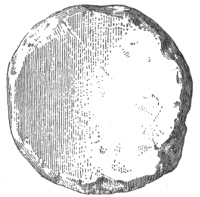
Fig. 108.—Discoidal pottery fragment.
Spuds.
It has been a puzzle to archeologists to assign to any class the peculiar stones called “spuds.” They are usually of a comparatively soft material, carefully worked and polished, and bear no marks of rough usage. On the other hand, they seem too large for ornament. Perhaps their office may have been in some ceremony or game. Something similar in form seems to be denoted in the following extracts:
Col. James Smith81 says, speaking of the Indians of western Pennsylvania, that as soon as the elm bark will strip in spring, the squaws, after finding a tree that will do, cut it down, and with a crooked stick, broad and sharp at the end, take the bark off the tree, and of this bark make vessels. The Twana Indians, who formerly lived at the south end of Hoods canal, Washington, in barking logs use a heavy iron implement about 3 feet long, widened and sharpened at the end;82 and the tanbark workers of our day use an instrument of somewhat similar form.
The ordinary spud is too weak to endure such usage, though it is claimed by old people living in the Shenandoah valley, Virginia, that in the last century the Indians in that locality used an implement of this pattern for stripping the bark from trees. The implement may have been used in dressing hides, the hole being for attachment of a handle.
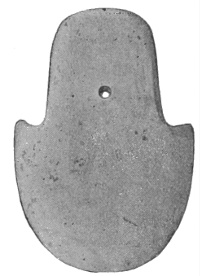
Fig. 109.—Spud.
A celt of argillite, highly polished, from Loudon county, Tennessee, of the pattern shown in figure 64, has a neatly drilled cylindrical hole about a third of the way from the top; but such cases are unusual. The spuds may be divided into three general classes, as follows:
A. Blade circular in outline, including 180 degrees or more, or semielliptical with either axis transverse; sides of stem straight or slightly curved, parallel or slightly tapering to top, which is either straight or slightly rounded; shoulder nearly at right angles to stem, with sharp or rounded corners or sometimes barbed; stem and blade not differing greatly in length. The type of the class, presented in figure 109, is of clay slate, from a mound in Monroe county, Tennessee. The other six specimens in the collection were distributed as shown in the table.
District. A B C D E
Western North Carolina 1 1 1
Monroe county, Tennessee 1 1
Phillips county, Arkansas 1
Pulaski county, Arkansas 1
KEY: A = Green slate. B = Mica-schist. C = Compact quartzite. D = Clay slate. E = Quartzite.
B. Lower part of the blade a half circle or less; top square or slightly rounded; stem rapidly widening, with increasing curve to the blade, making an angle with it; stem and blade nearly the same length. A specimen of green slate, from Mississippi county, Arkansas, is illustrated in figure 110. Another, of compact quartzite, comes from Loudon county, Tennessee.
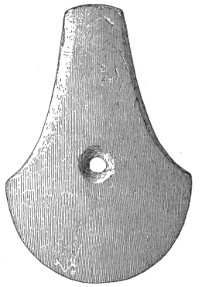
Fig. 110.—Spud.
C. Handle or stem round; very much longer than the blade, which is semicircular or semielliptical, with square or barbed shoulders. Illustrated in figure 111 (probably of chloritic slate, from Prairie county, Arkansas).