II THE PRESS TO-DAY
Reading edition
§ 1. The Press at Oxford

The main building of the Oxford Press, erected 1826-30, consists of three sides of a quadrangle. The two main wings, each of three floors, are still known as the Learned Side and the Bible Side, though their appropriation to Bibles and secular books has long since ceased in fact. On the Learned Side are the hand composing rooms, both the book department and the jobbing department, where some readers and compositors are employed in setting up the official papers of the University, examination papers, and other miscellaneous work, and the more difficult and complicated books produced for the Delegates or other publishers.
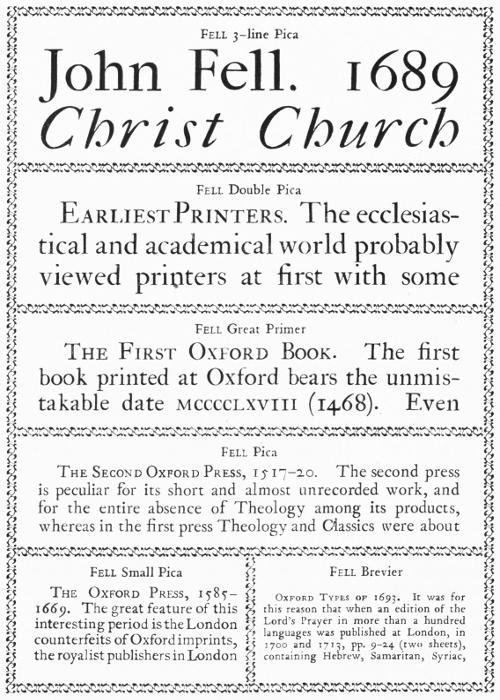
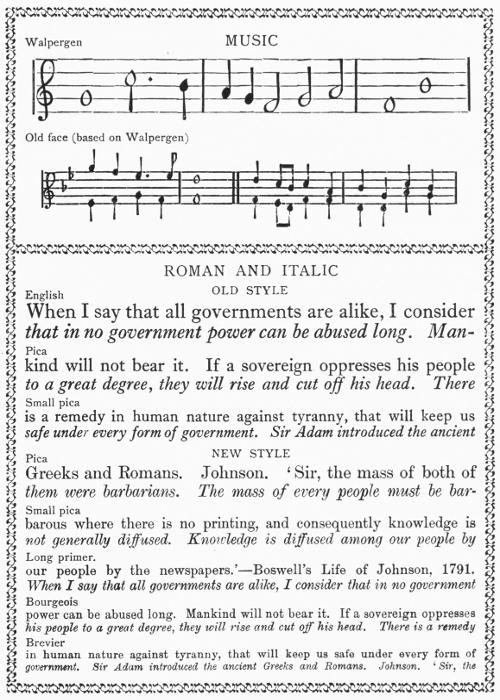
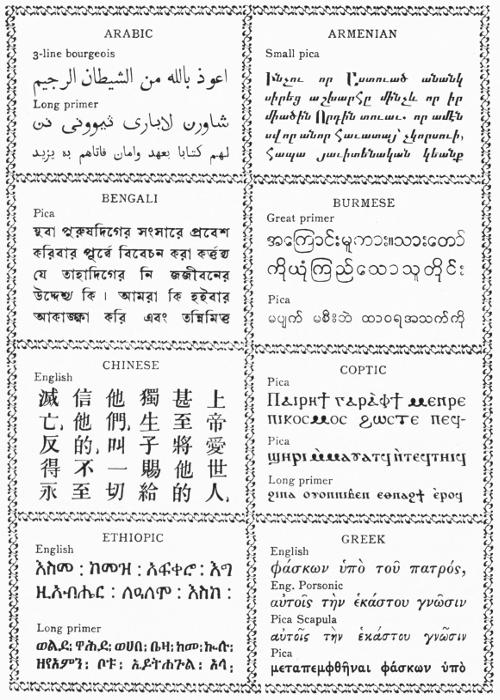
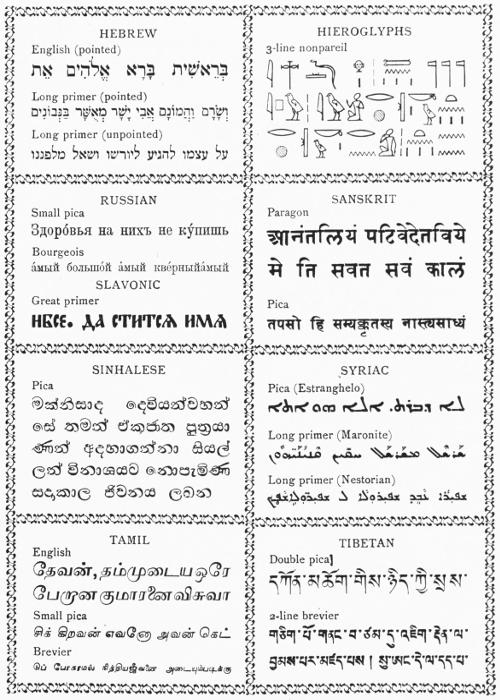
The total quantity of type in the Press is estimated at over one million pounds of metal, and includes some 550 different founts of type in some 150 different characters, ranging from the hieroglyphic and the prehistoric ‘Minoan’ (cast to record Sir Arthur Evans’s discoveries), to the phonetic scripts of Sweet and Passy; and including Sanskrit, Greek, Roman, Hebrew, Arabic, Syriac, Ethiopic, Amharic, Coptic, Armenian, Chinese, Tibetan, Burmese, Sinhalese, Tamil, Gothic, Cyrillic. Here, too, are the famous Fell types acquired by the University about 1667. These are virtually the same as the founts from which were printed the first edition of The Faerie Queene and the First Folio Shakespeare; and their beauty makes them still the envy of printers all the world over. Here compositors are still daily engaged in setting the Oxford Dictionary (with its twenty-one different sizes or characters of type), which has been slowly growing since 1882. One compositor has a record of thirty-eight years’ continuous work on the Dictionary.
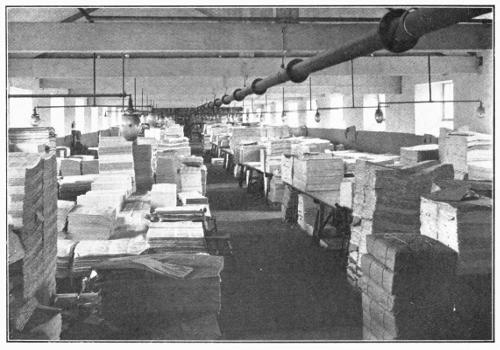
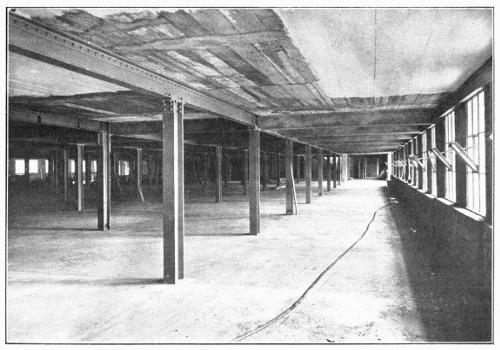
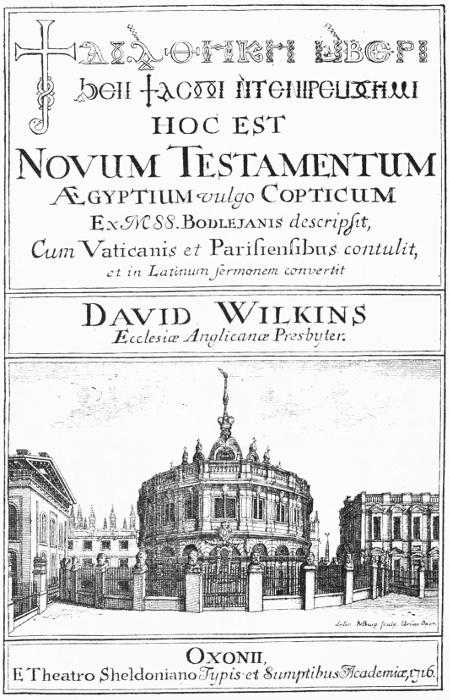
In part of the same wing is the Delegates’ Warehouse. Here, and in a number of annexes, including the old Delegates’ School built about 1840, repose the oldest and most durable of the Delegates’ publications. They are stored for the most part in lofty stacks of unfolded sheets, like the piers of a Norman crypt. From these vaults was drawn into the upper air, in 1907, the last copy of Wilkins’s Coptic New Testament, published in 1716, the paper hardly discoloured and the impression still black and brilliant. It is estimated that these warehouses contain some three and a half million copies of about four thousand five hundred distinct books.
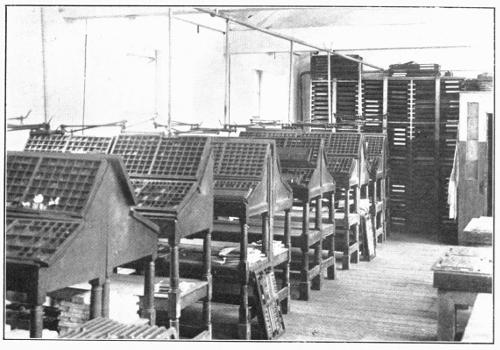
Ancient Oak Frames in one of the Composing Rooms
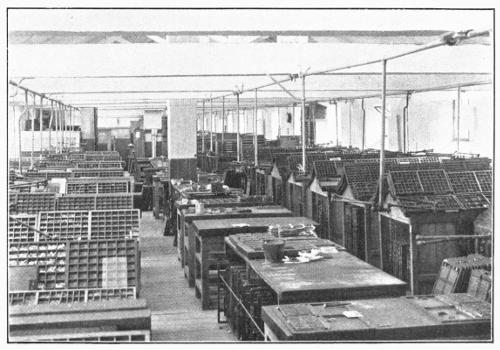
The Upper Composing Room
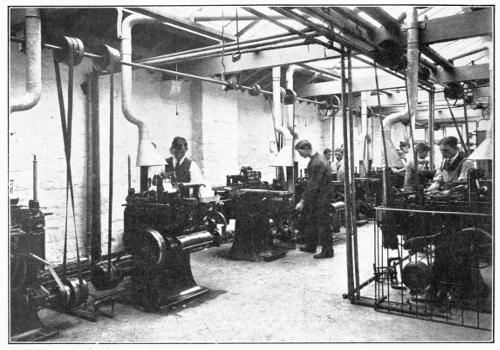
Monotype Casters
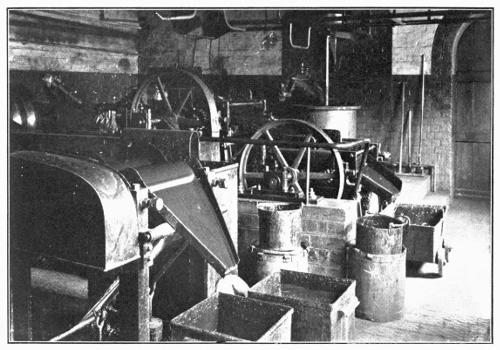
Ink-making
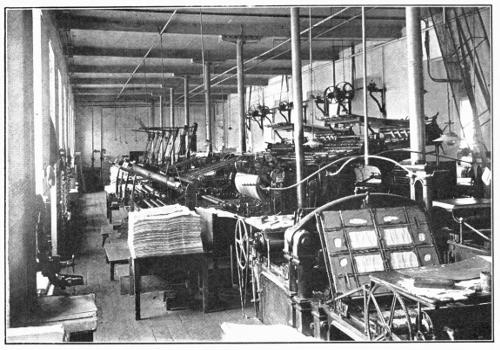
The Old Machine Room
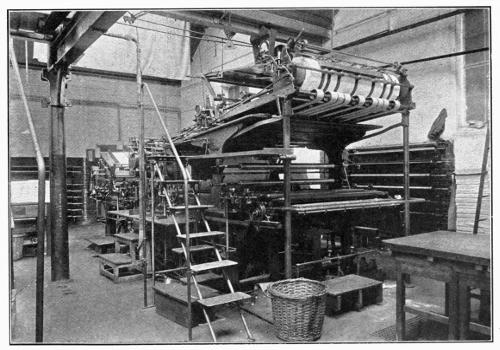
A Perfecting Machine with Self-feeder
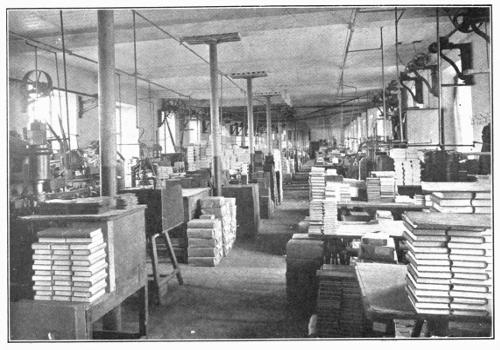
The Old Bindery (now a Warehouse)
One of the Warehouses
Of the Bible Side the ground floor is now the press room or Machine Room, which, with its more recent extensions, holds about fifty machines, from the last survivor of the old flat-impression double Platens to the most modern American double-cylinder ‘perfecting’ presses with their automatic ‘feeders’. All kinds of printing are done here, from the small numbers of an oriental book or a Prayer Book in black and red to the largest impression of a Bible printed in sheets containing 320 pages each. The long experience of printing Bibles on thin paper and especially on Oxford India paper has given the Oxford machine-minder an unrivalled dexterity in the nice adjustment required to produce a fine clean effect on paper which will not stand a heavy impression.
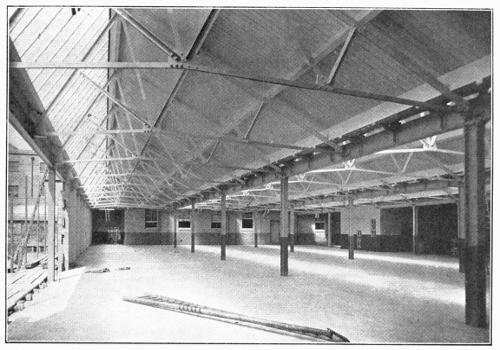
As the sheets come from machine they are sent to the Bindery. This was until recently on the floor above the machine room, but has lately been transferred to a larger and more convenient building erected in the old garden behind the Press. The Oxford Bindery deals with most of the Clarendon Press books in cloth bindings, and prides itself upon the fine finish of the cases and gilding of such beautiful books as the Oxford Book of English Verse, as well as on being able to turn out artistic and attractive cloth and paper bindings for books sold at the lowest prices. It still deals with a part only of the books printed under the same roof; but a large expansion is looked for in the near future.
Between the two wings, and across the quadrangle, are two houses once occupied by the late Horace Hart and by Dr. Henry Bradley, now the senior of the three editors of the Oxford Dictionary. The houses became some years ago unfit for habitation from the encroachment of machinery; but one of them was a welcome refuge during the years of war to the staff of the Oxford Local Examinations, who on the 5th of August 1914 were turned out of their office at an hour’s notice to make room for a Base Hospital.
Adjacent to the houses are the fire-proof Plate Room, where some 750 tons of metal are stored, the Stereotype and Electrotype Foundry, and the Monotype Rooms, a department which has lately added to its equipment and bids fair to pass the ancient composing rooms in output. Other departments in and about the old building are the Photographic Room, famous for its collotype printing, the Type Foundry, where Fell type is still cast from the old matrices, and the Ink Factory.
The front of the building on Walton Street consists chiefly of packing rooms, where books are dispatched by rail or road to the City of London and elsewhere, and of offices—those of the Printer to the University on the ground floor and those of the Secretary to the Delegates above. Here are reference libraries of books printed or published by the Press, and records ranging from the oldest Delegates’ minute-book of the seventeenth century to modern type-written correspondence arranged on the ‘vertical’ system of filing.
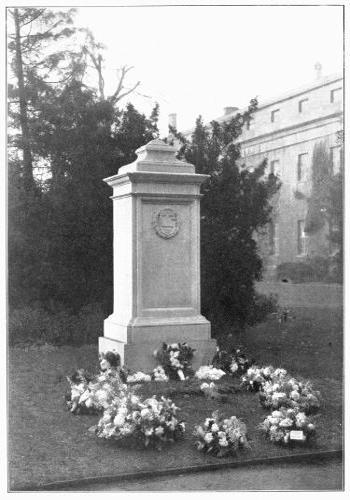
As the visitor enters the main gate the first object which catches his eye is a plain stone monument on the lawn. There are inscribed the names of the forty-four men of the Oxford Press who gave their lives in the War. Beyond the memorial is the quadrangle, made beautiful by grass and old trees; and from upper windows it is still possible to look over the flats of the Thames Valley and see the sun set behind Wytham Woods.
Corporate feeling has always been strong among the workers at the Press, and though the Delegates and their officers have done what they could to promote it, it is essentially a natural growth. Many of the work-people come of families which have been connected with the Press for generations; and they are proud not only of the old traditions of fine and honest work, but also of the usefulness and scholarly excellence of the books on which their labour is spent. The Press is, in all its parts, conscious at once of its unity and of its relation to the University of which it is an integral part.
THE NAGEL BUILDING
The New Bindery
The Crypt
THE WAR MEMORIAL
This spirit is well shown by the history of the Press Volunteer Fire Brigade, constituted in 1885. The Brigade now numbers thirty-two officers and men, who by regular drills and competitions have made themselves efficient firemen, and able to assist the Oxford City Brigade in case of need. The Press possesses also a branch of the St. John Ambulance Brigade, and first aid can be given at once if any accident happens.
Various Provident and Benevolent Societies exist at the Press, and the principle of co-operation by the employer was recognized for many years before the passing of the National Health Insurance Act. The Hospitals Fund makes substantial yearly contributions to the Radcliffe Infirmary and the Oxford Eye Hospital, and in view of the pressing needs of these institutions the subscription to the Fund has recently been doubled.
The common life naturally finds expression in the organization of recreation of all kinds. There is a Dramatic Society, the records of which go back to 1860; an Instrumental Society, dating from 1852; a Vocal Society, a Minstrel Society, a Piscatorial Society; Athletic, Cricket, Football, and Bowls Clubs, now amalgamated; and, not the least useful nor the least entertaining, the Gardening Association, formed during the war to meet the demand for more potatoes. Such of the men of the Press as were obliged to content themselves with the defence of the home front, responded with enthusiasm in their own gardens and allotments; and the Food Production Exhibition which crowned their efforts in the summer of 1918 became an annual event. In peace, as in war, there is need for all the food we can produce; and the Gardening Association has very wisely not relaxed its efforts.
The Clarendon Press Institute in Walton Street, close to the Press itself, provides accommodation for lectures, debates, and dramatic and other entertainments, as well as a library, a reading room, and rooms for indoor games. The building was given by the Delegates, who contribute to its maintenance, but its management is completely democratic. The members appoint their own executive and are responsible for their own finances.
The Council have since 1919 issued a quarterly illustrated Magazine, printed ‘in the house’. The Clarendonian publishes valuable and entertaining records of the professional interests and social activities of the employees of the Press, as well as affording some outlet for literary aspirations.

§ 2. The Press in the War
The Press made to the prosecution of the War both a direct and an indirect contribution. In August 1914 about 575 adult males were employed at Oxford; of these sixty-three, being members of the Territorial Force, were mobilized at the outbreak of war; and of the remainder some 293 enlisted in 1914 or later. Considering the number of those who from age or other causes were unfit for service, the proportion of voluntary enlistment was high. The London Office and Wolvercote Mill also gave their quota to the service of the Crown.
Those who were obliged to remain behind were not idle. The Oxford historians at once engaged in the controversy upon the responsibility for the War; and in September 1914 the Press published Why We are at War: Great Britain’s Case, a series of essays closely and dispassionately reasoned, and illustrated by official documents including the German White Book, reproduced exactly from the English translation published in Berlin for neutral consumption and vitiated by clumsy variations from the German original. Why We are at War rapidly went through twelve impressions, and at the instance of Government was translated into six languages. The profits were handed over to the Belgian Relief Fund. At the same time was initiated, under the editorship of Mr. H. W. C. Davis, the series of Oxford Pamphlets on war topics, of which in a short time more than half a million copies were sold all over the world. Later, when the public appetite for pamphlets slackened, and the world had leisure for closer study, the series of Histories of the Belligerents was founded, which is noticed elsewhere.
‘The Clarendon Press,’ writes Sir Walter Raleigh in his Introduction to the Oxford University Roll of Service, ‘though deprived of the services of virtually all its men of military age, was active in the production of books and pamphlets, most of them written by Oxford men, setting forth the causes and issues of the War—a mine of information, and an armoury of apologetics.’
Not the least of the services rendered by the Press was the printing done for the Naval Intelligence Department of the Admiralty directed by Admiral Sir Reginald Hall. Both secrecy and speed were essential to the usefulness of this work, and to secure them the Printer to the University made special arrangements involving a severe strain upon himself and those to whom the work was entrusted. Admiral Hall, when unveiling the Press War Memorial in October 1920, declared that the work done was unique in kind, and that without the help of the Press the operations of his Department could not have been carried out with success.
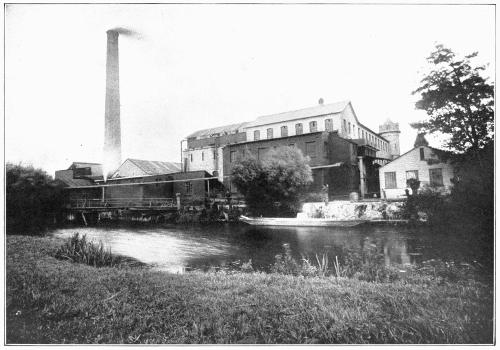
WOLVERCOTE PAPER MILL
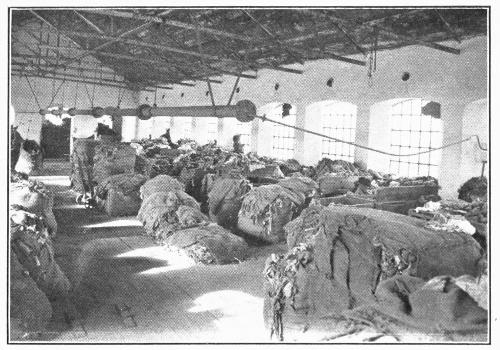
Rag Sorting
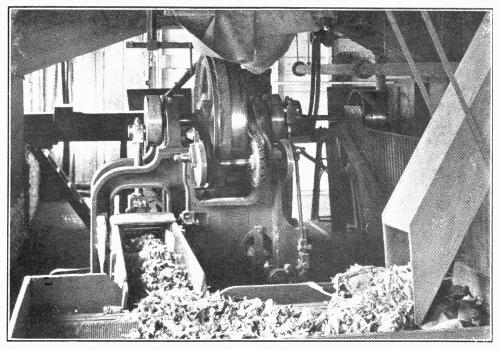
Rag Cutting
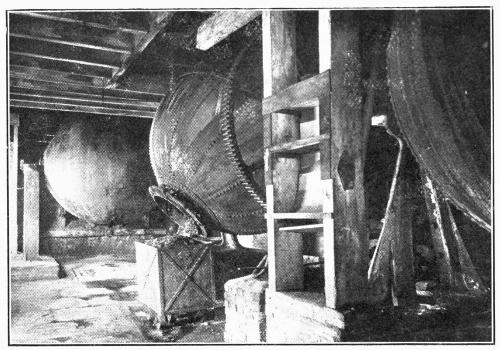
Rag Boiling
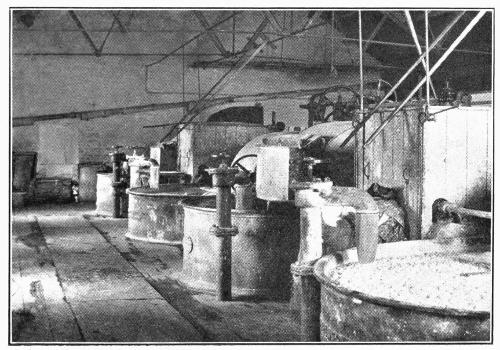
Rag Breaking
As the War dragged on, the numbers employed at the Press steadily declined; the demands of Government as steadily increased; the shortage of materials of all kinds became more and more acute. None the less the Bible Press met an unprecedented demand for the New Testament by supplying within three years four and a half million of copies for use in the field. The Learned Press, too, continued to produce, though the volume of production became less and less. The machinery of the Dictionary, though its movement was retarded, never came to a standstill. The scientific journals continued to appear, and not a few learned books were published. A greater number, however, were placed in the Delegates’ safes, in expectation of the increased facilities which the end of the War has hardly brought. The manufacturing powers of the Press, indeed, have virtually reached their pre-war level; but the ever-rising cost of labour and materials has made it as yet impossible to restore to its old volume the output of books which could at no time have been remunerative. It may be added that the Delegates, like other publishers, have had to consider that the purchasing power of the public on which they rely has not kept pace with the rise in costs. The price of books has of course risen very greatly; but the ratio of increase has been substantially lower than that of commodities in general.


§ 3. Wolvercote Paper Mill
The first mention of paper-making in or near Oxford is a story of one Edwards, who about 1670 planned to erect a mill at Wolvercote and was encouraged by Fell. In 1718 Hearne the antiquary wrote that ‘some of the best paper in England is made at Wolvercote Mill’. It was bought by the Press in 1870.
The Mill stands on a branch of the Thames, on the edge of the quiet village of Wolvercote, and near the ruins of Godstow Nunnery. The water-wheel has long ceased to play more than a very minor part in the driving of the mill, which now has two modern paper-making machines, 72 and 80 inches wide respectively. The power used is partly steam, but a large part of the plant has quite recently been electrified.
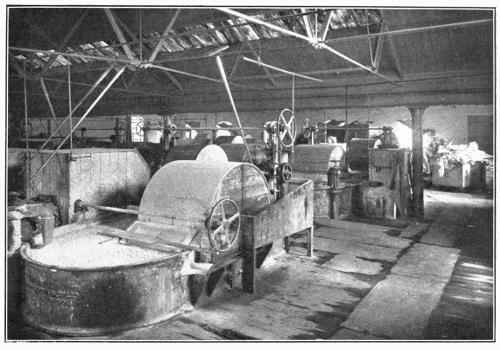
Beater Room
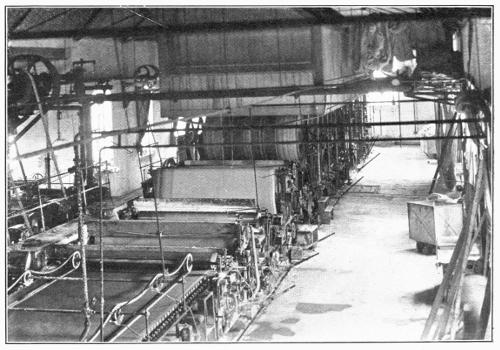
Machine Room
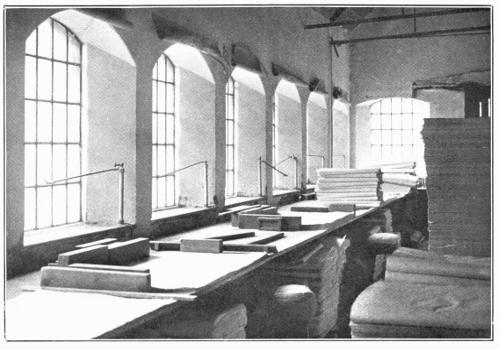
Paper Sorting
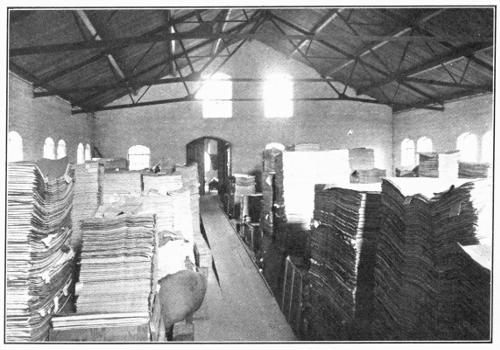
Paper Stock Warehouse
Most varieties of high-class printing paper are made at Wolvercote, which besides feeding the Press does a considerable trade with other printers. The paper made for the Oxford Dictionary and some other books is of the finest rag and is probably as durable as the best hand-made paper of former times. But the Mill is best known for its ‘Bible’ papers, exceptionally thin, tough, and opaque, with a fine printing surface. Paper of this kind reaches its acme in the famous Oxford India Paper, the invention of which made revolutionary changes in the printing of Bibles. A great many Oxford books are now printed in two editions, an ordinary and an India paper. If the saving of space is an important consideration, the convenience of the thinner editions of such books as the Concise Oxford Dictionary, the Concise Dictionary of National Biography, or the Oxford Survey of the British Empire is obvious; and many people like to read the Poets and the Classics in thin and light volumes. The Oxford Homer will go into a pocket, though it has 1,374 pages; and the India paper Shakespeare and Oxford Book of English Verse are delightfully easy to carry and handle.
The Controller of the Mill is Mr. Douglas Clapperton (a name well known in the paper trade), who succeeded Mr. Joseph Castle in 1916.


§ 4. The Press in London
The association of the Oxford Press with London booksellers—the publishers of former days—goes back to early times. Apart from the negative agreement with the Stationers’ Company, not to print Bibles and Almanacks, we find, at the end of the seventeenth century, Oxford Bibles bearing the imprint of various London booksellers. In 1776 Dr. Johnson wrote to the Master of University College a letter, printed by Boswell, in which he sets forth with knowledge and perspicacity the philosophy of bookselling; the moral of the discourse is that the University must offer more attractive discounts to the book trade—a doctrine which has been adopted in modern times, though in 1776 it perhaps fell upon deaf ears.
Not later than 1770 a Bible Warehouse was established in Paternoster Row. But it was not until a century later that the Press undertook the distribution in London of its secular books. In 1884 these books, formerly sold by Messrs. Macmillan, were taken over by the Manager of the Bible Warehouse, Mr. Henry Frowde, who thus became sole publisher to the University; an office which he continued to hold with great skill, devotion, and success until on his retirement in 1913 he was succeeded by Mr. Humphrey Milford.
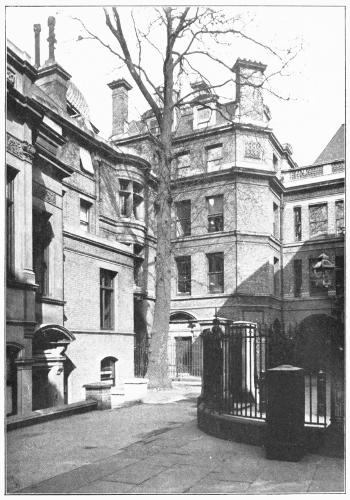
AMEN CORNER LONDON
To-day the activities of the Press in or near Amen Corner, London, E.C. 4, are multifarious. From his bound stocks Mr. Milford is ready at short notice to supply to the booksellers or booksellers’ agents any Clarendon Press book, any Bible or Prayer Book, any of the books published by himself as publisher to the University, such as Oxford Poets, World’s Classics, Oxford Elementary Books, or by himself and Messrs. Hodder and Stoughton—the Oxford Medical Publications—or for the numerous learned bodies and American Universities for whom he is agent whether in the United Kingdom or universally.
In the premises at Amen Corner alone it is estimated that upwards of three quarters of a million books are at any one time in stock. Packing and distribution is carried on in the basement and also at Falcon Square, where the large export department operates. Mr. Milford also maintains at Old Street a ‘quire’ department from which books in sheets are given out to his own or other binderies, and in Aldersgate Street a bindery from which many of the finest Bibles and other leather books are turned out.
The offices at Amen Corner are the centre of the selling activities of the Press; from them is directed the policy of the branches of the business at home and abroad. An institution so far-flung naturally causes some confusion in the public mind. Inquiries from India have sometimes been addressed to New York, and Mr. Horace Hart treasured an envelope addressed to The Controller of the Universe. In general, however, it is now widely understood that inquiries for books should be addressed (by booksellers, or by the public, if the usual trade channels fail) to Oxford University Press in London or at the nearest Branch (New York, Toronto, Melbourne, Cape Town, Bombay, Calcutta, Madras, Shanghai, Copenhagen); questions about printing to Controller, Clarendon Press, Oxford, and proposals for publication either to the nearest Branch or direct to the Secretary, Clarendon Press, Oxford.

§ 5. The Administration of the Press
All the activities of the Press may be described as a function of the corporation known as the Chancellor, Masters, and Scholars of the University of Oxford, acting through the Delegates of the Press. The constitution of this Delegacy is in some respects peculiar. So long ago as 1757 the statute promoted by Sir William Blackstone for the better management of the Press established the principles of continuity and of expert knowledge by the constitution of Perpetual Delegates; and these principles have been maintained.
The Delegacy is now composed of the Vice-Chancellor and Proctors for the time being ex officio, and (normally) of ten others, of whom five are Perpetual. Delegates are appointed for a term of years by the Vice-Chancellor and Proctors, by whom they may be re-elected; but when a vacancy occurs among the perpetual Delegates, the Delegates as a whole are enjoined by statute to ‘subrogate’ one of the junior Delegates to be perpetual, ad supplendum perpetuo numerum quinque Perpetuorum Delegatorum.
The roll of the Delegates contains the names of many famous scholars. Among those of recent times may be mentioned William Stubbs, Ingram Bywater, Frederick York Powell. Within the last few years the Press has sustained very heavy losses in the death of some of the most experienced of its Delegates. William Sanday, Lady Margaret Professor of Divinity, took an active part in the many works of profound learning upon New Testament criticism, by which Oxford has maintained its fame for the prosecution of Biblical learning. Henry Tresawna Gerrans, Fellow of Worcester College, was active in financial administration and in the organization of educational publications. David Henry Nagel, Fellow of Trinity College, gave invaluable advice on scientific books and on technical processes of manufacture. He was chiefly responsible for the plan of the new Bindery, recently completed, which bears his name. The services of Sir William Osler, Regius Professor of Medicine, and of Charles Cannan, of Trinity College, for over twenty years Secretary to the Delegates, are noticed elsewhere in these pages.
The composition of the board on 1 December 1921 was as follows:
The Vice-Chancellor (Dr. L. R. Farnell, Rector of Exeter College) and the Proctors; T. B. Strong, Bishop of Ripon and formerly Dean of Christ Church (extra numerum, by Decree of Convocation); C. R. L. Fletcher, Magdalen College; P. E. Matheson, Fellow of New College; D. G. Hogarth, Fellow of Magdalen College and Keeper of the Ashmolean Museum; N. Whatley, Fellow of Hertford College; Sir Walter Raleigh, Fellow of Merton College and Professor of English Literature—all perpetual Delegates: H. J. White, Dean of Christ Church; Sir Archibald Garrod, Student of Christ Church and Regius Professor of Medicine; Cyril Bailey, Fellow of Balliol College; H. E. D. Blakiston, President of Trinity; and N. V. Sidgwick, Fellow of Lincoln.
The principal officers are: in Oxford, R. W. Chapman, Oriel College, Secretary; J. de M. Johnson, Exeter College, Assistant Secretary; F. J. Hall, Printer to the University; in London, Humphrey Milford, New College, Publisher to the University; in New York, W. W. McIntosh, Vice-President of the American Branch; in Toronto, S. B. Gundy, Manager of the Canadian Branch; in Bombay, G. F. J. Cumberlege, Worcester College, Manager of the Indian Branch; in Melbourne, E. R. Bartholomew, Manager of the Australian Branch.

§ 6. The Finances of the Press
For some two centuries from the time of Fell the Press was partly controlled by private partners; since the last of these was bought out by the efforts of Bartholomew Price, the University has been completely master of all its printing and publishing business. The Press to-day has no shareholders or debenture-holders, and subserves no private interest. On the other hand it possesses virtually no endowment. The whole of its great business has been gradually built up by the thrifty utilization of profits made by the sale of its books or in a minor degree from work done for outside customers. The maintenance of the Learned Press, with its output of scholarly and educational books, many of which are in their nature unremunerative, depends and has always depended upon the profitable management of the publications of the Press as a whole. In the last century the revenue devoted to learning was supplied mainly from the sale of Bibles and Prayer Books; but changing conditions led the managers of the Press to the conclusion that if the promotion of education and research were to keep pace with the growing volume and range of the demand, it would be necessary to expand the general activities of the business in many directions.
In prudent pursuance of a far-sighted policy, the overseas Branches of the Press were established to increase the sale of Oxford books; new departments of the publishing business were created, such as the very extensive series of cheap editions of the English Classics, and, more recently, the Oxford Elementary Books and the Oxford Medical Publications; and in the course of years the publications of the Learned Press itself have gradually become more popular in character and addressed to a wider audience. In the event, the Press to-day possesses a business of such magnitude and variety as will, it may be hoped, enable it to surmount the formidable obstacles which the increased cost of manufacture opposes to the production of all works of learning.
The demands made upon the Press for the organization and publication of research are now at least as great as ever. It has again and again been pointed out by the friends of research, that organization and encouragement are idle unless the publication of valuable results is guaranteed; and in the past scholars in this country, and not in this country only, have looked to the Presses of Oxford and Cambridge to do the work which in Germany was carried out by Academies subsidized by Government for this purpose. But the fulfilment of such expectations is far more onerous than formerly. The tenth and last volume of the great English Dictionary, now more than half printed, will when it is complete have cost at least £50,000. The revised edition of Liddell and Scott’s Greek Lexicon, upon which the Delegates embarked some years before the war, is now estimated to cost £20,000. These are enterprises in the successful conclusion of which the honour of the University is concerned; and they will be concluded; but the date of completion, and therefore the initiation of other projects of learning, have inevitably been retarded by the events of the last seven years.
The endowment of research is a difficult subject, and nobody is more conscious than are the Delegates of the Press, that results of lasting value are not achieved by the mere expenditure of money. Yet they cannot but be aware that by the possession of the machinery and traditions of such works as the English Dictionary, and by their intimate association with experts in many fields, they are in a position to promote research and co-operative enterprise in the most effective and economical way. The support given to the Press in the past, whether by individuals or by other institutions devoted to learning, has been trifling in consideration of the work which it has produced. The need of such support is now far more urgent; and the record of the Press is proof that financial support would be turned to good account.
§ 7. Oxford Imprints
The imprints used by the Press as printers and as publishers are various, and their import is not always understood. Oxford at the Clarendon Press is historically and strictly a printer’s imprint, and it is confined to books printed at Oxford; but it has come to mean more than this, and to be appropriated to such books as are not only printed at Oxford, but are also published auctoritate Universitatis, their contents as well as their form being certified by the University, acting through the Delegates of the Press. A book with this imprint may in general be assumed to be published at the expense of the Delegates; but the ‘Clarendon Press imprint’ has come to be so prized as carrying the Oxford ‘hall-mark’ that its use has occasionally been solicited and accorded for works of learning produced under the patronage of government or of learned societies within the Empire and the United States of America.
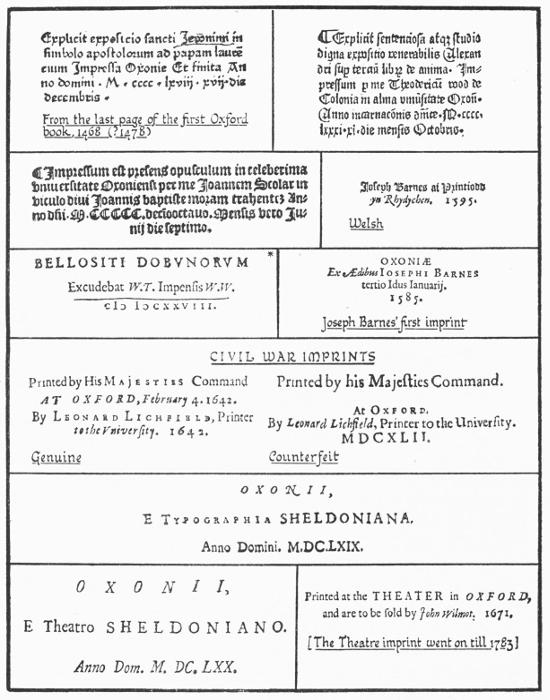
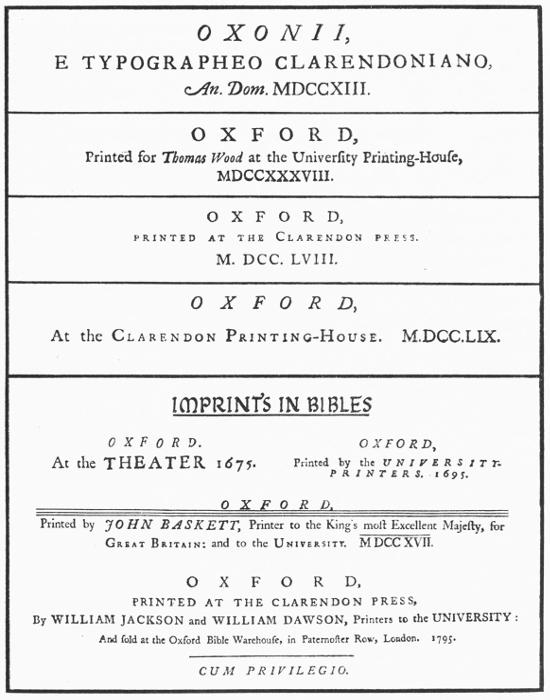
The Press publishes also, in the ordinary course of business, large numbers of books for which the Delegates assume a less particular responsibility; these are issued with the London imprint of the Publisher to the University (Oxford University Press: London, Humphrey Milford) or those of its branches abroad (Oxford University Press American Branch, Oxford University Press Indian Branch and so on), or on behalf of the numerous universities, learned societies, or private publishers for whom the University Press publishes either universally or in certain parts of the world. Among the bodies for whom the Press acts as publisher are the British Museum, the British Academy, the Early English Text Society, the Chaucer Society, and the Philological Society; the Egypt Exploration Society, Society of Antiquaries, the Pali Text Society, the Church Music Society, and the Royal Society of Literature; the Universities of St. Andrews, Bombay, and Madras; the University Presses of Harvard, Yale, Columbia, and Princeton; the Carnegie Endowment for International Peace, the Carnegie United Kingdom Trust, the American Historical Association, and the American Scandinavian Foundation. The Oxford Medical Publications and some other books are issued with the joint imprint of Henry Frowde (Mr. Humphrey Milford’s predecessor as Publisher to the University) and Hodder and Stoughton. The Press is publisher in Australia to many English houses.


§ 8. Catalogues and Advertisement
Until recent years the Press has relied on its trade catalogues and special lists, and on the skilled assistance of the bookseller, to make known to the public the great number and variety of its issues of the Bible, the New Testament, Prayer Books, Hymn Books, and kindred works, as well as of its general publications—reprints, medical books, elementary books and so on; while the Clarendon Press Catalogue of learned and educational books was a relatively modest affair of under 200 pages. The need of a single general catalogue for the information of librarians and book-lovers had long been felt, but pressure of business delayed its preparation until the late Mr. Charles Cannan addressed himself to the task, and with the devoted co-operation of his daughters (who had replaced the members of the office staff gone forth to war) and the advice of many scholars, produced in 1916 the first edition of the General Catalogue, comprising over 500 pages of close print and including under one comprehensive classification all the secular books sold by the Press, wheresoever printed, and whether published by the University on its own account or on behalf of other University Presses or learned bodies; together with a representative list of Bibles, &c. (useful to the inquirer though not intended as any substitute for the elaborate trade catalogues or for the indispensable guidance of the expert bookseller), and a very full alphabetical index.
The General Catalogue has in the second edition been brought up to January 1920, and a third edition is in preparation. Supplements are also from time to time issued comprehending the books published since the current edition of the Catalogue. The Supplement now current comprises all books published in 1920.
For the convenience of specialists the Catalogue is also issued in sections—History, Literature, the Classics, Natural Science, Cheap Reprints—and special lists have recently been made of books on such subjects as the British Empire, International Law and Politics, India, Modern Philosophy. Schoolmasters and University teachers are asked to apply for the Select Educational Catalogue issued at frequent intervals, which by omission of the larger and more elaborate books allows of illustrative information for which there is no room in the general catalogue.
The General Catalogue has been computed to contain over 8,000 distinct books or editions of books. These vary from such works as the New English Dictionary and the Dictionary of National Biography, with their 15,000 and 30,000 pages, to the smallest and cheapest pamphlets and school-books. The total may be guessed to comprise something like two and a half millions of printed pages of which no two are identical.
The issue of the Catalogue has secured a wide and increasing recognition of the comprehensive character of Oxford publications. ‘There are publishers and publishers, but there is only one Oxford University Press’, exclaims a writer in the Athenaeum; and many reviewers have noted with sympathetic admiration the value of the Catalogue, not as a mere price list but as a work of reference and as a book to read. Though it necessarily requires revision as new publications accrue, it is hoped that the Catalogue will not be treated as ‘throw-away literature’. It is a well-printed and solidly bound book, and the cost of supplying free copies to book-buyers all over the world is not inconsiderable.
The Press produces two periodicals descriptive of its publications: the official Bulletin distributed to booksellers, librarians, and other professional buyers, and the unofficial Periodical addressed to amateurs. Number 1 of the Bulletin (4 April 1912) consisted of a single page; but the desire for more information was widely expressed, and a recent number contains in eight pages a classified list of books published during four weeks, with bibliographical and other particulars, a statement of the various catalogues obtainable on application, extracts from reviews, and a list of books which have gone out of print since the current issue of the catalogue. This list is designed to protect booksellers and the public against the assumption, too frequently made, that any and every book is ‘out of print’ which cannot be produced at a moment’s notice. The public are asked not to believe too easily that books are unobtainable. A provincial bookseller (in a University town) recently declared himself ‘unable to trace’ an Oxford book, published in 1920, reviewed at length by the leading literary papers, and advertised nearly every other week in the Times Literary Supplement. Many books no doubt (though not many Oxford books) have been and still are out of print; and in the absence of an up-to-date index of current books, the difficulties of the bookseller have been great. Now, however, when the 1920 edition of the trade Reference Catalogue is available, with its single alphabetical index (of 1,075 pages in double column), the ascertainment of the facts is not difficult except in so far as the catalogues indexed have themselves become obsolete. All information about Oxford books that is not in the 1920 Reference Catalogue may be found in the Supplement of Books published in 1920, or in the cumulative list of Price Changes, or in the Bulletin; all of which every bookseller has, or may have for the asking.
With the Bulletin is issued from time to time a supplement calling the attention of librarians and others to Oxford books in some special field. The circulation of the Bulletin is about 2,000.
The Periodical is a ‘house magazine’, perhaps the first of its kind. It was first published in December 1896, and now appears five times a year. Its contents include extracts, of sufficient length to be readable, from new Oxford books, specimen illustrations, quotations from reviews and other newspaper comment on the productions of the Press, obituaries and other honorific notices of authors (on appointment, decoration, or the like), and a certain amount of quasi-literary gossip; for even authors have their foibles. The original editor, who has compiled every number for a quarter of a century, is still at his post, and the popularity of the little paper increases. The demand comes from all over the world—the United States takes nearly half the total and the number of copies distributed gratis of each issue now exceeds ten thousand.
Oxford Bibles and Prayer Books can be inspected in mass at many booksellers’, as well as in the Depository at 116 High Street, Oxford, and in the showrooms at Amen Corner, in Edinburgh and Glasgow, and in the Branches overseas. Lack of space has everywhere made it impossible to exhibit the far greater number of Clarendon Press and other secular books on the same scale, but the books may be seen on application at any of the Press offices, and the popular series, gift books, &c., are always displayed. It is hoped before long to increase the space available for this purpose in the Oxford Depository, and to exhibit there all Clarendon Press books, arranged by subjects as in the Catalogue, so that members of the University and visitors may be able to inspect at one time and place all the books offered in any subject that may concern them. It is hoped to find room for separate exhibits of school-books, maps, and ‘juvenile’ books, so that the busy schoolmaster, with half an hour to spare in Oxford, may make a rapid survey of the contents of the Educational catalogue.


§ 9. The Press and its Authors
The Index to the General Catalogue contains the names of some three thousand living authors and editors. With almost all of these the Press deals direct, and not through agents, and their friendly co-operation is of immense service to the Delegates and their officers both in planning books and in securing for them the widest publicity.
Many of the books accepted by the Press are such as in the ordinary way of business would not secure a publisher except under subvention from the author or some favourer of learning; and of these the remuneration (or at least the direct remuneration; for the publication of solid books, like the knowledge of Greek in former times, ‘not infrequently leads to positions of emolument’) is recognized as being nominal, and necessarily inadequate to the labour and skill lavished upon the work. But for books commanding a remunerative sale, if they are of a suitable kind, the Press is prepared to pay the full market value; and it is believed that not many of its authors are dissatisfied with the bargains they have made.
‘It is an immense advantage to an author to be printed by a famous Press’, is the opinion of a veteran of letters, whose name appears in many publishers’ catalogues. It is the aim of the Oxford Press to place at its authors’ service its capacity for accurate and beautiful printing and binding, the goodwill attached to the University imprint, and the selling power enjoyed by its very large organization in the United Kingdom and throughout the world. Publication by the Press gives to an author the further security that his book will not be remaindered, pulped, or allowed to go out of print on the mere ground that it does not enjoy a rapid sale.
It is still sometimes said that ‘the Press does not advertise’. It is believed that Oxford books, in an exceptional degree, advertise themselves and each other—‘the Oxford book’, says an American advertisement, ‘is half sold already’; but the magnitude and variety of its business enable the Press to maintain an elaborate organization of ‘publicity’, which directs its efforts both to the booksellers and to the public at large. It relies largely upon the distribution, in many thousands of copies annually, of its catalogues and bulletins, on the direct dispatch of prospectuses to a large yet carefully selected constituency of buyers in various fields, and on the incalculable factor of public and private discussion. The value of judicious newspaper advertisement is not overlooked, as readers of the Times Literary Supplement well know.

§ 10. Bibles and Prayer Books
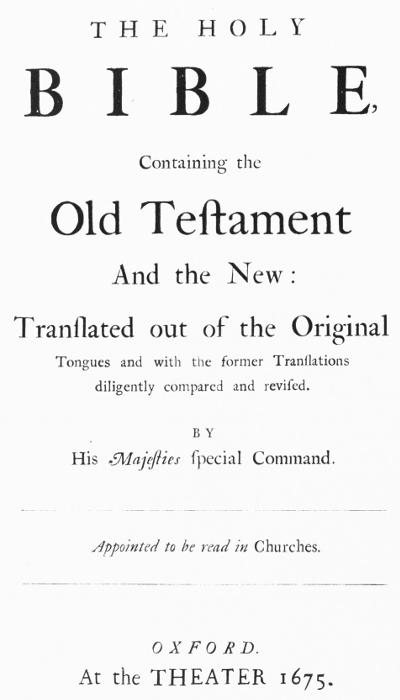
Some account has already been given of the exercise by the University of its privilege of printing ‘the King’s books’ in early times. The modern history of the printing and publishing of the Bible and the Book of Common Prayer is a large subject. The University of Oxford, like the other privileged printers, has appreciated the obligations attached to the privilege as well as the opportunities which it affords. Every attention has been paid to accuracy and excellence of printing and binding, to the provision of editions suited to every purpose and every eyesight, and to the efficient and economical distribution of the books all over the world at low prices. In all these respects a standard has been reached which is unknown in any other kind of printing and publishing, and which is only made possible by long experience, continuous production, and intensive specialization. The modern Bible is so convenient to read and to handle that its bulk is not always realized; it is actually more than four times as long as David Copperfield. A reference Bible is, also, a highly complicated piece of printing. Accuracy is secured by the employment of highly-skilled compositors and readers—a new Bible is ‘read’ from beginning to end many times—and by the use of the best material processes; for all Bibles are printed from copper plates on the most modern machines, and the sheets are carefully scrutinized as they come from the press. The Oxford Press offers a guinea for the discovery of a misprint; but very few guineas have been earned.
The bulk and weight of Bibles are kept down by the use of very thin and opaque paper, specially made at the Press Mill at Wolvercote. The use of such paper, and especially of the Oxford India paper, the combination in which of thinness with opacity has never been equalled, may be said to have revolutionized the printing of Bibles, by making possible the use of large clear type in a book of moderate size and weight.
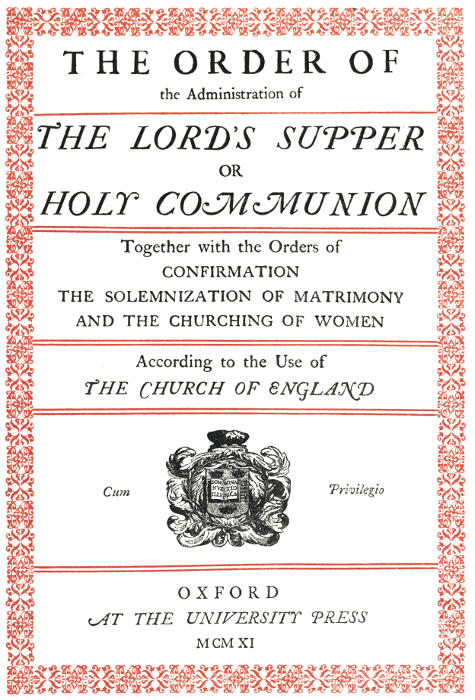
Of the Prayer Book as of the Bible a large number of editions is offered to suit all fashions and purposes, and this in spite of the serious risks arising from the liability to change of the ‘royal’ prayers. A demise of the Crown, or the marriage of a Prince of Wales, makes it necessary to print a large number of cancel sheets, which have to be substituted for the old sheets in all copies held in stock or in the hands of booksellers.
A hundred years ago there were nineteen Oxford Bibles and twenty-one editions of the Book of Common Prayer. There are now more than a hundred of each. The Revised Version of the Bible, the copyright of which belongs to the Universities of Oxford and Cambridge jointly, is also published in a large variety of editions.
§ 11. Clarendon Press Books
By Clarendon Press Books are meant the learned, educational, and other ‘Standard’ works produced under the close supervision of the Delegates and their Oxford Secretariate, and printed at Oxford. These books have a long history, and the Catalogue contains very many titles which have been continuously on sale for nearly a century. The Coptic New Testament of Wilkins, published in 1716, is believed to have been continuously on sale at the original price of 12s. 6d. until the last copy was sold in 1907, only a few years short of the second century. The current edition of the General Catalogue mentions as ‘the oldest Oxford book still on sale’ another edition of the Coptic New Testament by Woide, published in 1799 and now sold for two guineas; but it has since been noticed that an injustice had been done, and that pride of place should have been given to the Gothic Gospel, a magnificently printed quarto published in 1750, of which some dozen copies (at 30s.) still remain.
These are extreme examples; they are, however, the result not of oblivion or of indifference, but of a policy which has long been and is still being pursued. The Press produces many works of learning which are so securely based that it is known that the demand, however small, will persist as long as there are copies unsold; and it is the practice of the Press to print from type large editions of such books. Clarendon Press books are neither wasted nor sold as remainders, and when a book goes out of print, some natural tears are shed.
This is one end of the scale; at the other are books commanding a large and rapid sale, books like the Oxford Book of English Verse or the Concise Oxford Dictionary and livres de circonstance like Why We are at War, which was published in September 1914 and in a few months went through twelve impressions and was translated into six foreign languages. Books of this kind are produced in mass, as cheaply as is consistent with a high standard of workmanship, and are sold all over the world in competition with rival publications and by the employment of appropriate methods of advertisement.
Between these two classes lies a great mass of miscellaneous books, too general in character to admit of description here. They are in many languages, ancient and modern, of the East and of the West; of all fields of knowledge, divine, human, and natural; and of all stages of history from the Stone Age to the Great War. It follows necessarily that Clarendon Press books appeal to widely different publics and call for the application of various instruments of distribution and publicity. All, however, benefit by the widely diffused appreciation of the standards of scholarship and of literary form which the Press has set itself to uphold. The public expects much of any Oxford book, and the satisfaction of that expectation is often onerous; but the necessary effort is justified by the results—‘the Oxford book is half sold already’.