Part 2 — ILLUSTRATIONS (continued 4)
Reading edition
"Then I gits me a li'l man. He works for master in the store and I works round the house. Master give me two dresses and a pair of shoes when I married. We lived with him a year or two and then come to Marshall. My husband worked on public work and I kept house for white folks and we saved our money and buyed this li'l farm. My man's dead fourteen years now and my gal and her husband keeps the farm goin'.
"Me and my man didn't have nothin' when we left Nacogdoches, but we works hard and saves our money and buyed this farm. It 'pear like these young niggers don't try to 'cumulate nothin'.
420226
Moses Hursey
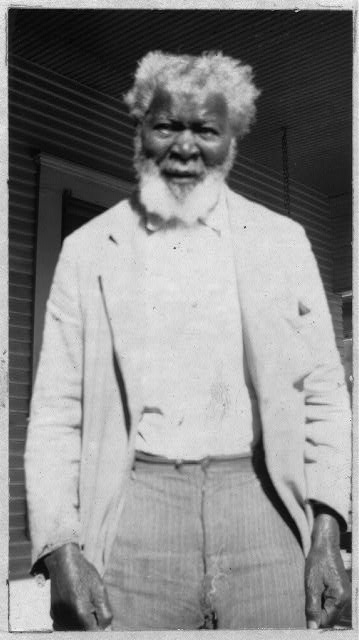
MOSE HURSEY believes he is about eighty-two years old. He was born in slavery on a plantation in Louisiana, and was brought to Texas by his parents after they were freed. Mose has been a preacher most of his life, and now believes he is appointed by God to be "Head Prophet of the World." He lives with his daughter at 1120 Tenth St., Dallas, Texas.
"I was born somewhere in Louisiana, but can't rec'lect the place exact, 'cause I was such a little chap when we left there. But I heared my mother and father say they belonged to Marse Morris, a fine gentleman, with everything fine. He sold them to Marse Jim Boling, of Red River County, in Texas. So they changes their name from Morris to Boling, Liza Boling and Charlie Boling, they was. Marse Boling didn't buy my brother and sister, so that made me the olderest child and the onliest one.
"The Bolings had a 'normous big house and a 'normous big piece of land. The house was the finest I ever seen, white and two-story. He had about sixty slaves, and he thought a powerful lot of my folks, 'cause they was good workers. My mother, special, was a powerful 'ligious woman.
"We lived right well, considerin'. We had a little log house like the rest of the niggers and I played round the place. Eatin' time come, my mother brung a pot of peas or beans and cornbread or side meat. I had 'nother brother and sister comin' 'long then, and we had tin plates and cups and knives and spoons, and allus sot to our food.
"We had 'nough of clothes, sich as they was. I wore shirttails out of duckings till I was a big boy. All the little niggers wore shirttails. My mother had fair to middlin' cotton dresses.
"All week the niggers worked plantin' and hoein' and carin' for the livestock. They raised cotton and corn and veg'tables, and mules and horses and hawgs and sheep. On Sundays they had meetin', sometimes at our house, sometimes at 'nother house. Right fine meetin's, too. They'd preach and pray and sing—shout, too. I heared them git up with a powerful force of the spirit, clappin' they hands and walkin' round the place. They'd shout, 'I got the glory. I got that old time 'ligion in my heart.' I seen some powerful 'figurations of the spirit in them days. Uncle Billy preached to us and he was right good at preachin' and nat'rally a good man, anyways. We'd sing:
"'Sisters, won't you help me bear my cross, Help me bear my cross, I been done wear my cross. I been done with all things here, 'Cause I reach over Zion's Hill. Sisters, won't you please help bear my cross, Up over Zion's hill?'
"I seed a smart number of wagons and mules a-passin' along and some camp along the woods by our place. I heared they was a war and folks was goin' with 'visions and livestock. I wasn't much bigger'n a minute and I was scared clean to my wits.
"Then they's a time when paw says we'll be a-searchin' a place to stay and work on a pay way. They was a consider'ble many niggers left the Bolings. The day we went away, which was 'cause 'twas the breakin' up of slavery, we went in the wagon, out the carriage gate in front the Boling's place. As we was leavin', Mr. Boling called me and give me a cup sweet coffee. He thought consid'ble plenty of me.
"We went to a place called Mantua, or somethin' like that. My paw says he'll make a man of me, and he puts me to breakin' ground and choppin' wood. Them was bad times. Money was scarce and our feedin' was pore.
"My paw died and maw and me and the children, Nancy and Margina and Jessie and George, moves to a little place right outside Sherman. Maw took in washin' and ironin'. I went one week to school and the teacher said I learned fastest of any boy she ever see. She was a nice, white lady. Maw took me out of school 'cause she needed me at home to tend the other children, so's she could work. I had a powerful yearnin' to read and write, and I studied out'n my books by myself and my friends helped me with the cipherin'.
"I did whatever work I could find to do, but my maw said I was a different mood to the other children. I was allus of a 'ligious and serious turn of mind. I was baptised when I was fifteen and then when I was about twenty-five I heared a clear call to preach the Gospel-word. I went to preachin' the word of Gawd. I got married and raised a family of children, and I farmed and preached.
"I was just a preacher till about thirty years ago, and then Gawd started makin' a prophet out of me. Today I am Mose Hursey, Head Prophet to the World. They is lesser prophets, but I is the main one. I became a great prophet by fastin' and prayin'. I fast Mondays and Wednesdays and Fridays. I know Gawd is feedin' the people through me. I see him in visions and he speaks to me. In 1936 I saw him at Commerce and Jefferson Streets (Dallas) and he had a great banner, sayin', 'All needs a pension.' In August this year I had a great vision of war in the eastern corner of the world. I seen miles of men marchin' and big guns and trenches filled with dead men. Gawd tells me to tell the people to be prepared, 'cause the tides of war is rollin' this way, and all the thousands of millions of dollars they spend agin it ain't goin' to stop it. I live to tell people the word Gawd speaks through me.
420081
Charley Hurt
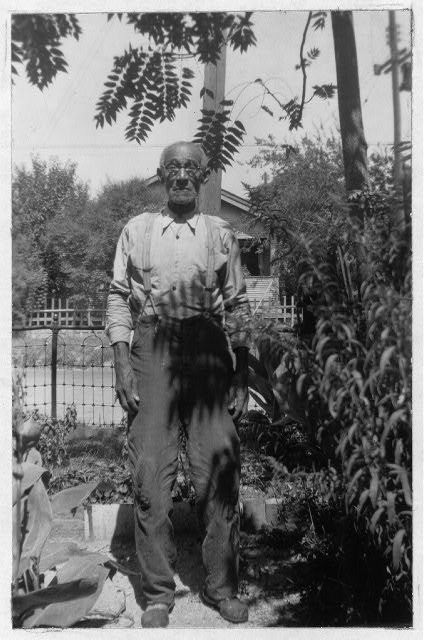
CHARLEY HURT, 85, was born a slave of John Hurt, who owned a large plantation and over a hundred slaves, in Oglethorpe County, Georgia. Charley stayed with his master for five years after the Civil War. In 1899 Charley moved to Fort Worth, and now lives at 308 S. Harding St.
"Yes, suh, I'm borned in slavery and not 'shamed of it, 'cause I can't help how I'm borned. Dere am folks what wont say dey borned in slavery.
"Us plantation am near Maxie, over in Oglethorpe County, in Georgia, and massa am John Hurt and he have near a hunerd slaves. Us live in de li'l cabin make from logs chink with mud and straw and twigs am mix with dat mud to make it hold. De big chimley am outside de cabin mostly, and am logs and mud, too. De cabin am 'bout ten by twenty feet and jus' one room.
"Would I like some dem rations we used to git, now? 'Deed I would. Dem was good, dat meat and cornmeal and 'lasses and plenty milk and sometimes butter. De meat am mostest pork, with some beef, 'cause massa raise plenty hawgs and tendin' meat curin' am my first work. I puts dat meat in de brine and den smokes de hams and shoulders. When hawg-killin' time come I'm busy watchin' de smokehouse, what am big, and hams and sich hung on racks 'bout six feet high from de fireplace. Den it my duty to keep dat fire smoulderin' and jus' smokin'. De more smoke, de better. Den I packs dat meat in hawgs heads and puts salt over each layer. Dat am some meat!
"I mus' tell you 'bout dat whiskey and brandy. Massa have he own still and allus have three barrels or more whiskey and brandy on hand. Den on Christmas Day, him puts a tub of whiskey or brandy in de yard and hangs tin cups 'round de tub. Us helps ourselves. At first us start jokin' with each other, den starts to sing and everybody am happy. Massa watches us and if one us gittin' too much, massa sends him to he cabin and he sleep it off. Anyway, dat one day on massa's place all am happy and forgits dey am slaves.
"De last Christmas 'fore surrender I gits too much and am sick. Gosh a-mighty! Dat de sickest I ever be and dat de last time I gits drunk. Yes, suh, dat spoil dis nigger's taste for whiskey.
"Now, 'bout whuppin's, dere am only one whuppin' what am give. Jerry gits dat, 'cause he wont do what massa say. He tie Jerry on de log and have de rawhide whip.
"Dere am system on dat plantation. Everybody do he own work, sich as field hands, stock hands, de blacksmith and de shoemaker and de weavers and clothes makers. I'm all 'round worker and goes after de mail, jus' runnin' 'round de place.
"When de war start, all massa's sons jines de army. He have three. John am de captain and James carry de flag and I guesses August am jus' de plain sojer. Dey all comes home 'fore de war am finish. August git run over by de wheel of de cannon truck and it cripple he legs so he can't walk good. James gits sick with some kind fever misery and he am sent home. Den John am shot in de shoulder and it stay sore and won't heal. One day Jerry say to massa he want to look at dat sore. Him see somethin' stickin' out and he pull it. It a piece of young massa's coat and de bullet have carry it into de flesh and it am dere a whole year. De sore gits all right after dat out.
"'Fore de boys goes to fightin' dey trains near de place where am de big field for to train hunerds of sojer boys. I likes dat, 'cause de drums goes, 'ter-ump, ter-ump, ter-ump, tump, tump,' and de fifes goes, 'te, te, ta, te, tat' and plays Dixie. One day Young massa trainin' dem sojers and he am walkin' backwards and facin' dem sojers, and jus' as him say, 'Halt,' down he go, flat on he back. Right away quick, him say, ''Bout face,' 'cause him don't want dem sojers to laugh in he face, so he turn dem 'round.
"When surrender come, all dem what not kilt comes home and dey have a big 'ception in Maxie. Dey have lots of long tables and de food am put on 'fore de train come in. Dere was two coaches full of de boys and dey doesn't wait for dat train to stop. No, suh, dey crawls out de windows. Well, dere am huggin' and kissin' of de homefolks, and dey all laughin' and cryin' at de same time, 'cause of de joy dey's feelin'. Den dey all sets down to de feast. Massa make de welcome talk. I done hide in de wagon full of hams and cakes and pies and dere a canvas over dat stuff, and dat how I gits to dat welcome home.
"I crawls out 'fore dey unloads de wagon and 'fore long massa see me and him say, 'Gosh for hemlock! Boy, how comes you here?' I lets my face slip a li'l, 'bout half a laugh. I says, 'I rides under dat canvas.' Dat start him laughin' and he tells de people dat I'm a pat'otic nigger. After dey all eats us niggers gits to eat. For once, I gits plenty pie and cake.
"Us never have much joyments in slave time. Only when de corn ready for huskin' all de neighbors comes dere and a whole big crowd am a-huskin' and singin'. I can't 'member dem songs, 'cause I'm not much for singin'. One go like dis:
"'Pull de husk, break de ear; Whoa, I's got de red ear here.'
"When you finds de red ear, dat 'titles you to de prize, like kissin' de gal or de drink of brandy or somethin'. Dey not 'nough red ears to suit us.
"I'm thirteen year when surrender come. Massa don't call us to him like other massas done. Him jus' go 'mongst de folks and say, 'Well, folks, yous am free now and no longer my prop'ty, and yous 'titled to pay for work. I 'member old Jerry sings, 'Free, free as de jaybird, free to flew like de jaybird. Whew!'
"Some de cullud folks stays and some goes. Mostest dem stays and works de land on shares. I stays till I'm eighteen year and den I works for a farmer den for a blacksmith den some carpenter work and some railroadin'. De fact am, I works at anything I could find to does. I does dat most my life.
"It good for me to stay with Massa Hurt after freedom, 'cause den day plenty trouble in every place. Dere am fightin' 'twixt white and cullud folks over votin' and sich. Dey try 'lect my brudder to Congress one time, but he not 'lect, 'cause de white man what am runnin' 'gainst him gits a cullud preacher to run 'gainst dem both. Dat split de cullud votes and de white man am 'lect. I votes like de white man say, couple times, but after dat I stops votin'. It ain't right for me to vote 'less I knows how and why. I larns to read and den starts votin' 'gain.
"After de war de Ku Klux am org'nize and dey makes de niggers plenty trouble. Sometimes de niggers has it comin' to 'em and lots of times dey am 'posed on. Dere a old, cullud man name George and he don't trouble nobody, but one night de white caps—dat what dey called—comes to George's place. Now, George know of some folks what am whupped for no-cause, so he prepare for dem white caps. When dey gits to he house George am in de loft. He tell dem he done nothin' wrong and for dem to go 'way, or he kill dem. Dey say he gwine have a free sample of what he git if he do wrong and one dem white caps starts up de ladder to git George and George shoot him dead. 'Nother white cap starts shootin' through de ceilin'. He can't see George but through de cracks George can see and he shoots de second feller. So dey leaves and say dey come back. George runs to he old massa and he takes George to de law men. Never nothin' am done 'bout him killin' de white caps, 'cause dem white caps goes 'round 'busing niggers.
"I comes to Texas 'bout 40 year since and gits by purty good till de depression comes, den it hard for me. My age am 'gainst me, too, and many de time I's wish for some dat old ham and bacon on de old plantation.
"First I marries Ann Arrant, in 1898 dat was, and us have three chillen but dey all dead. Us git sep'rate in 1917 and I marries Mary Durham in 1921, and us still livin' together. Us have no chillen. Mammy have ten chillen but I'm de only one what am livin' now, 'cause I'm de youngest.
420088
Wash Ingram
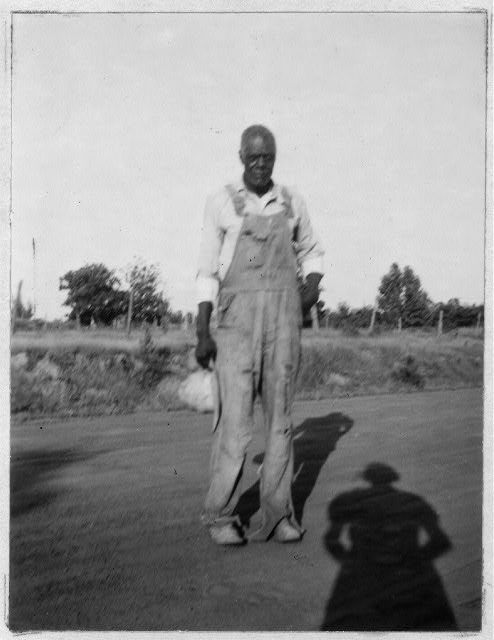
WASH INGRAM, A 93 year old Negro, was born a slave of Capt. Jim Wall, of Richmond, Va. His father, Charley Wall Ingram, ran away and secured work in a gold mine. Later, his mother died and Capt. Wall sold Wash and his two brothers to Jim Ingram, of Carthage, Texas. When Wash's father learned this, he overtook his sons before they reached Texas and put himself back in bondage, so he could be with his children. Wash served as water carrier for the Confederate soldiers at the battle of Mansfield, La. He now lives with friends on the Elysian Fields Road, seven miles southeast of Marshall, Texas.
"I don' know just how ole I is. I was 'bout 18 when de War was over. I was bo'n on Captain Wall's place in Richmond, Virgini'. Pappy's name was Charlie and mammy's name was Ca'line. I had six sisters and two brothers and all de sisters is dead. I haven't heard from my brothers since Master turn us loose, a year after de war.
"Pappy say dat he and mammy was sold and traded lots of times in Virgini'. We always went by de name of whoever we belonged to. I first worked as a roustabout boy dere on Capt. Wall's place in Virgini'. He was sho' a big man, weighed more'n 200 pounds. He owned lots of niggers and worked lots of land. The white folks was good to us, but Pappy was a fightin' man and he run off and got a job in a gold mine in Virgini'.
"After pappy run away, mammy died and den one day de overseer herded up a big bunch of us niggers and driv us to Barnum's Tradin' Ya'd down in Mississippi. Dat's a place where dey sold and traded Niggers jus' lak stock. I cried when Capt. Wall sold me, 'cause dat was one man dat sho' was good to his niggers. But he had too many slaves.
"Cotton was a good price den and dem slave buyers had plenty of money. We was sold to Jim Ingram, of Carthage. He bought a big gang of slaves and refugeed part of 'em to Louisiana and part to Texas. We come to Texas in ox wagons. While we was on the way, camped at Keachie, Louisiana, a man come ridin' into camp and someone say to me, 'Wash, dar's your pappy.' I didn' believe it 'cause pappy was workin' in a gold mine in Virgini'. Some of de men told pappy his chillen is in camp and he come and fin' me and my brothers. Den he jine Master Ingram's slaves so he can be with his chillen.
"Master Ingram had a big plantation down near Carthage and lots of niggers. He also buyed land, cleared it and sol' it. I plowed with oxen. We had a overseer and sev'ral taskmasters. Dey whip de niggers for not workin' right, or for runnin' 'way or pilferin' roun' master's house. We woke up at four o'clock and worked from sunup to sundown. Dey give us an hour for dinner. Dem dat work roun' de house et at tables with plates. Dem dat work in de field was drove in from work and fed jus' like hosses at a big, long wooden trough. Dey had to eat with a wooden spoon. De trough and de food was clean and always plenty of it, and we stood up to eat. We went to bed soon after supper durin' de week for dat's 'bout all we feel like doin' after workin' twelve hours. We slep' in wooden beds what had corded rope mattresses.
"We had to learn de best way we could, 'cause dere was no schools. We had church out in de woods. I didn' see no money till after de surrender. Guess we didn' need any, 'cause dey give us food and clothes and tobacco. We didn' have to buy nothin'. I had broadcloth clothes, a blue jean overcoat and good shoes and boots.
"De niggers had heap better times dan now. Now we work all time and can't git nothin'. Sat'day night we would have parties and dance and play ring plays. We had de parties dere in a big double log house. Dey would give us whiskey and wine and cherry brandy, but dere wasn' no shootin' or gamblin'. Dey didn' 'low it. De men and women didn' do like dey do now. If dey had such carryin's on as dey do now, de white folks would have whipped 'em good.
"I 'member dat war and I sees dem cannons and hears 'em. I toted water for de soldiers what fought at de Battle of Mansfield. Master Ingram had 350 slaves when de war was over but he didn' turn us loose till a year after surrender. He telled us dat de gov'ment goin' to give us 40 acres of land and a pair of mules, but we didn' git nothin'. After Master Ingram turn us loose, pappy bought a place at De Berry, Texas, and I live with him till after I was grown. Den I marry and move to Louisiana. I come back to Texas two years ago and lived with my friends here ever since. My wife died 18 years ago and I had a hard time 'cause I don' have no folks, but I's managed to git someone to let me work for somethin' to eat, a few clothes and a place to sleep.
420047
Carter J. Jackson
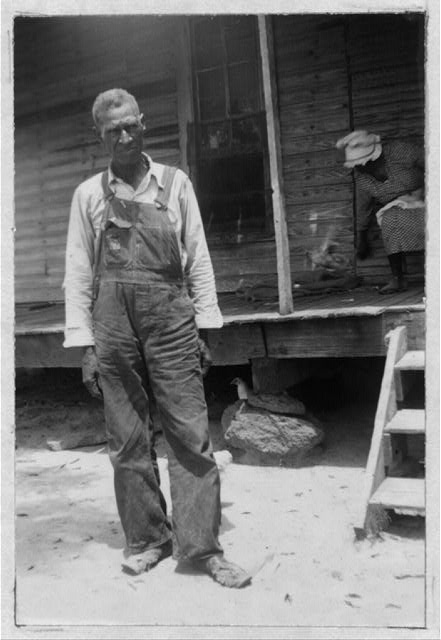
CARTER J. JACKSON, 85, was born in Montgomery, Alabama, a slave of Parson Dick Rogers. In 1863 the Rogers family brought Carter to Texas and he worked for them as a slave until four years after emancipation. Carter was with his master's son, Dick, when he was killed at Pittsburg, Pa. Carter married and moved to Tatum in 1871.
"If you's wants to know 'bout slavery time, it was Hell. I's born in Montgomery, over yonder in Alabama. My pappy named Charles and come from Florida and mammy named Charlotte and her from Tennessee. They was sold to Parson Rogers and brung to Alabama by him. I had seven brothers call Frank and Benjamin and Richardson and Anderson and Miles, Emanuel and Gill, and three sisters call Milanda, Evaline and Sallie, but I don't know if any of 'em are livin' now.
"Parson Rogers come to Texas in '63 and brung 'bout 42 slaves and my first work was to tote water in the field. Parson lived in a good, big frame house, and the niggers lived in log houses what had dirt floors and chimneys, and our bunks had rope slats and grass mattress. I sho' wish I could have cotch myself sleepin' on a feather bed them days. I wouldn't woke up till Kingdom Come.
"We et vegetables and meat and ash cake. You could knock you mammy in the head, eatin' that ash cake bread. I ain't been fit since. We had hominy cooked in the fireplace in big pots that ain't bad to talk 'bout. Deer was thick them days and we sot up sharp stobs inside the pea field and them young bucks jumps over the fence and stabs themselves. That the only way to cotch them, 'cause they so wild you couldn't git a fair shot with a rifle.
"Massa Rogers had a 300 acre plantation and 200 in cultivation and he had a overseer and Steve O'Neal was the nigger driver. The horn to git up blowed 'bout four o'clock and if we didn't fall out right now, the overseer was in after us. He tied us up every which way and whip us, and at night he walk the quarters to keep us from runnin' 'round. On Sunday mornin' the overseer come 'round to each nigger cabin with a big sack of shorts and give us 'nough to make bread for one day.
"I used to steal some chickens, 'cause we didn't have 'nough to eat, and I don' think I done wrong, 'cause the place was full of 'em. We sho' earned what we et. I'd go up to the big house to make fires and lots of times I seed the mantel board lined with greenbacks, 'tween mantel and wall and I's snitched many a $50.00 bill, but it 'federate money.
"Me and four of her chillen standin' by when mammy's sold for $500.00. Cryin' didn't stop 'em from sellin' our mammy 'way from us.
"I 'member the war was tough and I went 'long with young massa Dick when he went to the war, to wait on him. I's standin' clost by when he was kilt under a big tree in Pittsburg, and 'fore he die he ask Wes Tatum, one the neighbor boys from home, to take care of me and return me to Massa George.
"I worked on for Massa Rogers four year after that, jus' like in slavery time, and one day he call us and say we can go or stay. So I goes with my pappy and lives with him till 1871. Then I marries and works on the railroad when it's builded from Longview to Big Sandy, 'bout 1872. I works there sev'ral years and I raises seven chillen. After I quits the railroad I works wherever I can, on farms or in town.
420092
James Jackson
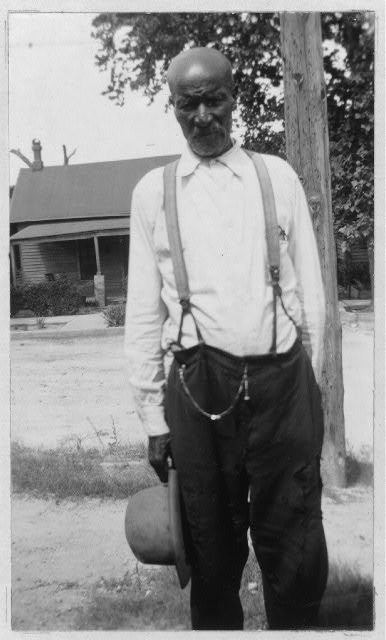
JAMES JACKSON, 87, was born a slave to the Alexander family, in Caddo Parish, La. When he was about two, his master moved to Travis County, Texas. A short time later he and his two brothers were stolen and sold to Dr. Duvall, in Bastrop Co., Texas. He worked around Austin till he married, when he moved to Taylor and then to Kaufman. In 1929 he went to Fort Worth where he has lived ever since.
"I was bo'n at Caddo Parish, dats in Louisiana, on de Doc Alexander plantation. My mother says I was bo'n on de 18th day of December, in de year of 1850. I guess dat's right, 'cause I's 87 years ole dis comin' December.
"Jus' 'bout dat time dey started shippin' de darkies to Texas. My marster moved to Travis County, Texas, and tuk all his slaves wid him. I was too young to 'member, but my mother, she told me 'bout it.
"It wasn' long after we was on Marster Alexander's new place in Travis County, till one night a man rode up on a hoss and stole me and my two brothers and rode away wid us. He tuk us to Bastrop County and sold us to Doc Duvall. Marster Duvall sold my brother right after he bought us, but me and John, we stayed wid him till de slaves was freed.
"On Marster Duvall's plantation de slaves all lived in log cabins back of de big house. Dey was one room, two rooms and three room cabins, dependin' on de size of de family. Most had dirt floors, but some of 'em had log slabs. We had dese ole wooden beds wid a rope stretch 'cross de bottom and a mattress of straw or cotton dat de niggers got in de fiel'. We had lots to eat, like biscuit, cornbread, meat and sich stuff. Most times dey made coffee outta parch cornmeal. We had gardens and raised most of de stuff to eat.
"I herds sheep and is houseboy most of de time. When I was ole enough, I picks cotton. I was jus' learnin' when de slaves was freed. Marster Duvall had over 500 acres in cotton and he kep' us in de fiel' all de time, 'cept Saturday afternoon and Sunday.
"Dey had meetin' and dances Saturday nights. I was too young to 'member jus' what de songs was, but dey had a fiddle and played all night long. On ever' Sunday de niggers went to Church in de evenin'. Dey had a white preacher in de mornin' and a cullud preacher in de evenin'.
"Marster Duvall would whip de niggers who was disobedience and he jus' call dem up and ask dem what was de trouble, den he would whip dem wid a cowhide or a rope whip. We could go anywhere iffen we had a pass, but if we didn' de paddlerollers would ketch us. They was kinda like policemen we got today.
"In slavery, dey traded and sold niggers like dey do hosses and mules. Dey carry dem to de court house and put dem on de block and auction 'em off. Some sold for roun' $3,000. It was hard to sell one wid scars on him, 'cause nobody wanted him. I seen 'em come by in droves, all chained together.
"When de slaves was free dey was sho' happy. Dey all got together and had a kin' of cel'bration. Marster told dem if dey wanted to stay and help make de crop, he'd give 'em 50 cents a day and a place to stay. Some tuk him up on dat and stayed, but a lot of dem left dere. Me and my brother, we started walkin' to Austin. In Austin we finds our mother, she was working for Judge Paschal. She hires us out to one place and den another.
"Since freedom I done most everything anybody could do. I been porter and waiter in hotels and rest'rants. I been factory hand, and worked for carpenters and in de roun' house. I picked cotton and worked on de farm.
"I been married 61 years. I gits married at home, like civilize folks do. I raised a big family, 12 chillen, but only five is alive today. I moved here in 1929 and looks like I's here till I die.
420188
MAGGIE JACKSON was born a slave of the Sam Oliver family, in Cass Co., Texas, near Douglasville. She is about 80 years old and her memory is not very good, so her story gives few details. She lives with her daughter near Douglasville, on highway #8.
"I am about 80 years old and was a chile during slavery times. My papa's name was Tom Spencer Hall and my mama's name was Margaret Hall. My brothers and sisters was Maria and Barbara and Alice and Octavia and Andrew and Thomas and Hillary and Eugenia and Silas and Thomas. We was a big fam'ly.
"My mama was Sam Oliver's slave, but my papa lived a mile away with Masta Sam Carlow. We lived in box houses and slep' on wood beds and we et co'nbread and peas and grits and lots of rabbits and 'possums. Mama cooked it on the fireplace.
"Masta Sam's house was big and had six big rooms with a hall through the middle and the kitchen sot way off in the ya'd and had a big cellar under it. Masta Sam had a big orchard and put apples and pears in the cellar for the winter. My brothers use' to slip under there and steal them and mama'd whip 'em.
"The big house set 'mong big oak trees and the slaves houses was scattered roun' the back. Masta Sam had a ole cowhorn he use' to blow for the niggers to come outta the fiel'.
"Mos' all us chillen wen' fishin' on Saturday and we'd fish with pins. One day I slipped off and caught a whole string of fish.
"We learned to read and write and we wen' to church with the white folks. Masta Sam was good to us and gave us plenty food and clothes.
"I never was 'fraid of haints and I never see none, but I know some seen 'em.
"I married John Jackson in a white muslin dress and we was married by Dan Sherman, a cullud preacher from Jefferson. I married John 'cause I loved him and we didn' fuss and fight. I has five chillen and five grandchillen.
420083
Martin Jackson (A)
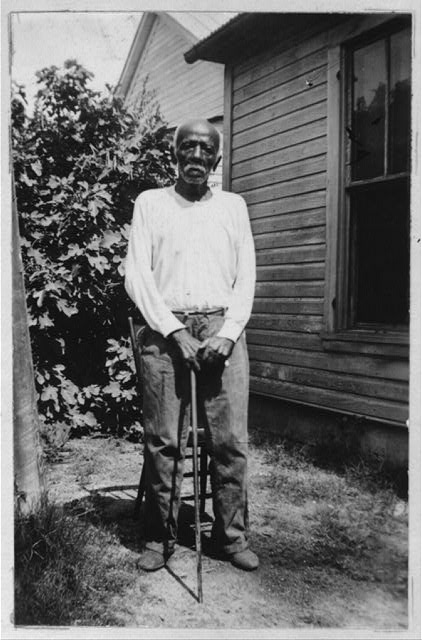
Martin Jackson (B)
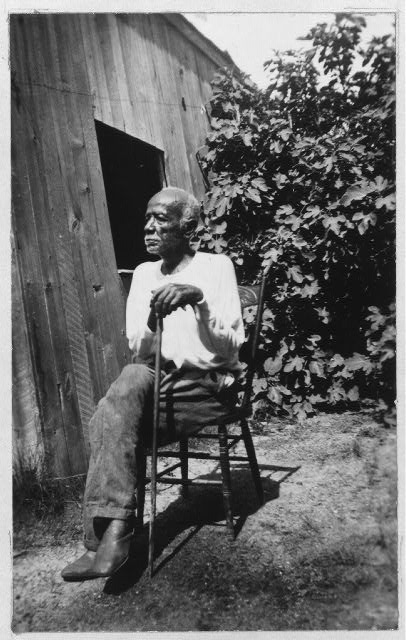
MARTIN JACKSON, who calls himself a "black Texan", well deserves to select a title of more distinction, for it is quite possible that he is the only living former slave who served in both the Civil War and the World War. He was born in bondage in Victoria Co., Texas, in 1847, the property of Alvy Fitzpatrick. This self-respecting Negro is totally blind, and when a person touches him on the arm to guide him he becomes bewildered and asks his helper to give verbal directions, up, down, right or left. It may be he has been on his own so long that he cannot, at this late date, readjust himself to the touch of a helping hand. His mind is uncommonly clear and he speaks with no Negro colloquialisms and almost no dialect.
Following directions as to where to find Martin Jackson, "the most remarkable Negro in San Antonio," a researcher made his way to an old frame house at 419 Center St., walked up the steps and through the house to an open door of a rear room. There, on an iron bed, lay a long, thin Negro, smoking a cigarette. He was dressed in a woolen undershirt and black trousers and his beard and mustache were trimmed much after the fashion of white gallants of the Gay Nineties. His head was remarkably well-shaped, with striking eminences in his forehead over his brows.
After a moment the intruder spoke and announced his mission. The old Negro, who is stone blind, quickly admitted that he was Martin Jackson, but before making any further comment he carried on an efficient interview himself; he wanted to know who the caller was, who had directed the visit, and just what branch of the Federal service happened to be interested in the days of slavery. These questions satisfactorily answered, he went into his adventures and experiences, embellishing the highlights with uncommon discernment and very little prodding by the researcher.
"I have about 85 years of good memory to call on. I'm ninety, and so I'm not counting my first five years of life. I'll try to give you as clear a picture as I can. If you want to give me a copy of what you are going to write, I'll appreciate it. Maybe some of my children would like to have it.
"I was here in Texas when the Civil War was first talked about. I was here when the War started and followed my young master into it with the First Texas Cavalry. I was here during reconstruction, after the War. I was here during the European World War and the second week after the United States declared war on Germany I enlisted as cook at Camp Leon Springs.
"This sounds as if I liked the war racket. But, as a matter of fact, I never wore a uniform—grey coat or khaki coat—or carried a gun, unless it happened to be one worth saving after some Confederate soldier got shot. I was official lugger-in of men that got wounded, and might have been called a Red Cross worker if we had had such a corps connected with our company. My father was head cook for the battalion and between times I helped him out with the mess. There was some difference in the food served to soldiers in 1861 and 1917!
"Just what my feelings was about the War, I have never been able to figure out myself. I knew the Yanks were going to win, from the beginning. I wanted them to win and lick us Southerners, but I hoped they was going to do it without wiping out our company. I'll come back to that in a minute. As I said, our company was the First Texas Cavalry. Col. Buchell was our commander. He was a full-blooded German and as fine a man and a soldier as you ever saw. He was killed at the Battle of Marshall and died in my arms. You may also be interested to know that my old master, Alvy Fitzpatrick, was the grandfather of Governor Jim Ferguson.
"Lots of old slaves closes the door before they tell the truth about their days of slavery. When the door is open, they tell how kind their masters was and how rosy it all was. You can't blame them for this, because they had plenty of early discipline, making them cautious about saying anything uncomplimentary about their masters. I, myself, was in a little different position than most slaves and, as a consequence, have no grudges or resentment. However, I can tell you the life of the average slave was not rosy. They were dealt out plenty of cruel suffering.
"Even with my good treatment, I spent most of my time planning and thinking of running away. I could have done it easy, but my old father used to say, 'No use running from bad to worse, hunting better.' Lots of colored boys did escape and joined the Union army, and there are plenty of them drawing a pension today. My father was always counseling me. He said, 'Every man has to serve God under his own vine and fig tree.' He kept pointing out that the War wasn't going to last forever, but that our forever was going to be spent living among the Southeners, after they got licked. He'd cite examples of how the whites would stand flatfooted and fight for the blacks the same as for members of their own family. I knew that all was true, but still I rebelled, from inside of me. I think I really was afraid to run away, because I thought my conscience would haunt me. My father knew I felt this way and he'd rub my fears in deeper. One of his remarks still rings in my ears: 'A clear conscience opens bowels, and when you have a guilty soul it ties you up and death will not for long desert you.'
"No, sir, I haven't had any education. I should have had one, though. My old missus was sorry, after the War, that she didn't teach me. Her name, before she married my old master, was Mrs. Long. She lived in New York City and had three sons. When my old master's wife died, he wrote up to a friend of his in New York, a very prominent merchant named C.C. Stewart. He told this friend he wanted a wife and gave him specifications for one. Well, Mrs. Long, whose husband had died, fitted the bill and she was sent down to Texas. She became Mrs. Fitzpatrick. She wasn't the grandmother of Governor Ferguson. Old Fitzpatrick had two wives that preceded Mrs. Long. One of the wives had a daughter named Fanny Fitzpatrick and it was her that was the Texas' governor's mother. I seem to have the complicated family tree of my old master more clear than I've got my own, although mine can be put in a nutshell: I married only once and was blessed in it with 45 years of devotion. I had 13 children and a big crop of grandchildren.
"My earliest recollection is the day my old boss presented me to his son, Joe, as his property. I was about five years old and my new master was only two.
"It was in the Battle of Marshall, in Louisiana, that Col. Buchell got shot. I was about three miles from the front, where I had pitched up a kind of first-aid station. I was all alone there. I watched the whole thing. I could hear the shooting and see the firing. I remember standing there and thinking the South didn't have a chance. All of a sudden I heard someone call. It was a soldier, who was half carrying Col. Buchell in. I didn't do nothing for the Colonel. He was too far gone. I just held him comfortable, and that was the position he was in when he stopped breathing. That was the worst hurt I got when anybody died. He was a friend of mine. He had had a lot of soldiering before and fought in the Indian War.
"Well, the Battle of Marshall broke the back of the Texas Cavalry. We began straggling back towards New Orleans, and by that time the War was over. The soldiers began to scatter. They was a sorry-lookin' bunch of lost sheep. They didn't know where to go, but most of 'em ended up pretty close to the towns they started from. They was like homing pigeons, with only the instinct to go home and, yet, most of them had no homes to go to.
"No, sir, I never went into books. I used to handle a big dictionary three times a day, but it was only to put it on a chair so my young master could sit up higher at the table. I never went to school. I learned to talk pretty good by associating with my masters in their big house.
"We lived on a ranch of about 1,000 acres close to the Jackson County line in Victoria County, about 125 miles from San Antonio. Just before the war ended they sold the ranch, slaves and all, and the family, not away fighting, moved to Galveston. Of course, my father and me wasn't sold with the other blacks, because we was away at war. My mother was drowned years before when I was a little boy. I only remember her after she was dead. I can take you to the spot in the river today where she was drowned. She drowned herself. I never knew the reason behind it, but it was said she started to lose her mind and preferred death to that."
At this point in the old Negro's narrative the sound of someone singing was heard. A moment later the door to the house slammed shut and in accompaniment to the tread of feet in the kitchen came this song:
"I sing because I'm happy, And I sing because I'm free— His eyes is on the sparrow And I know He watches me."
The singer glanced in the bedroom and the song ended with both embarrassment and anger:
"Father! Why didn't you say you had callers?"
It was not long, however, before the singer, Mrs. Maggie Jackson, daughter-in-law of old Martin Jackson, joined in the conversation.
"The master's name was usually adopted by a slave after he was set free. This was done more because it was the logical thing to do and the easiest way to be identified than it was through affection for the master. Also, the government seemed to be in a almighty hurry to have us get names. We had to register as someone, so we could be citizens. Well, I got to thinking about all us slaves that was going to take the name Fitzpatrick. I made up my mind I'd find me a different one. One of my grandfathers in Africa was called Jeaceo, and so I decided to be Jackson."
After this clear-headed Negro had posed for his photograph, the researcher took his leave and the old blind man bade him a gracious "good-bye." He stood as if watching his new friend walking away, and then lighted a cigarette.
"How long have you been smoking, Martin?" called back the researcher.
"I picked up the deadly habit," answered Martin, "over seventy-five years ago."
420137
NANCY JACKSON, about 105 years old, was born in Madison Co., Tennessee, a slave of the Griff Lacy family. She was married during slavery and was the mother of three children when she was freed. In 1835, Nancy claims, she was brought to Texas by her owner, and has lived in Panola Co. all her life. She has no proof of her age and, of course, may be in the late nineties instead of over one hundred, as she thinks. She lives with her daughter about five miles west of Tatum, Tex.
"I's live in Panola County now going on 102 year and that a mighty long time for to 'member back, but I'll try to rec'lect. I's born in Tennessee and I think it's in 1830 or 1832. I lives with my baby chile what am now 57 year old and she's born when I's 'bout 'bout 33. But I ain't sho' 'bout my age, noways.
"Massa Griff fetches us to Texas when I a baby and my brudders what am Redic and Anthony and Essex and Allen and Brick and my sisters what am Ann and Matty and Charlotte, we all come to Texas. Mammy come with us but pappy was sold off the Lacy place and stays in Tennessee.
"Massa had the bigges' house in them parts and a passel of slaves. Mammy's name was Letha, and we have a purty good place to live and massa not bad to us. We was treated fair, I guesses, but they allus whipped us niggers for somethin'. But when we got sick they'd git the doctor, 'cause losin' a nigger like losin' a pile of money in them days.
"Massa sometimes outlines the Bible to us and we had a song what we'd sing sometimes:
"'Stand your storm, Stand your storm, Till the wind blows over, Stand your storm, Stand your storm, I's a sojer of the Cross, A follower of the Lamb.'
"We was woke by a bell and called to eat by a bell and put to bed by that bell and if that bell ring outta time you'd see the niggers jumpin' rail fences and cotton rows like deers or something, gettin' to that house, 'cause that mean something bad wrong at massa's house.
"I marries right here in Panola County while slavery still here and my brother-in-law marries me and Lewis Blakely, and I's 'bout nineteen. My husban' 'longed to the Blakely's and after the weddin' he had to go back to them and they 'lowed him come to see me once a week on Saturday and he could stay till Sunday. I works on for the Lacy's more'n a year after slavery till Lewis come got me and we moved to ourselves.
"I 'member one big time we done have in slavery. Massa gone and he wasn't gone. He left the house 'tendin' go on a visit and missy and her chillen gone and us niggers give a big ball the night they all gone. The leader of that ball had on massa's boots and he sing a song he make up:
"'Ole massa's gone to Philiman York And won't be back till July 4th to come; Fac' is, I don't know he'll be back at all, Come on all you niggers and jine this ball.'
"That night they done give that big ball, massa had blacked up and slip back in the house and while they singin' and dancin', he sittin' by the fireplace all the time. 'Rectly he spit, and the nigger who had on he boots recernizes him and tries climb up the chimmey."
420259
Richard Jackson
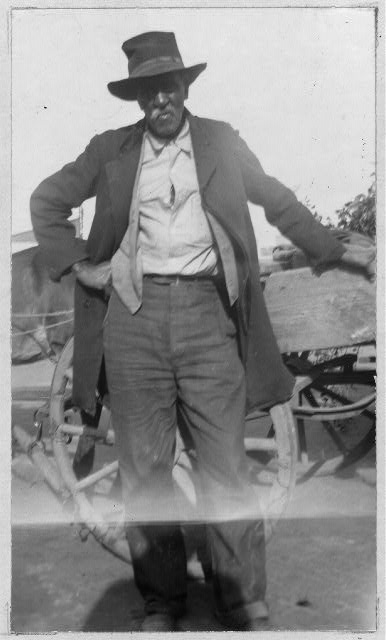
RICHARD JACKSON, Harrison County farmer, was born in 1859, a slave of Watt Rosborough. Richard's family left the Rosboroughs when the Negroes were freed, and moved to a farm near Woodlawn. Richard married when he was twenty-five and moved to an adjoining farm, which he now owns.
"I was born on the Rosborough plantation in 1859 and 'longed to old man Watt Rosborough. He brung my mammy out of North Carolina, but my pappy died when I was a baby, and mammy married Will Jackson. Besides me they was six brothers, Jack and Nathan, Josh and Bill and Ben and Mose. I had three sisters named Matilda and Charity and Anna.
"I 'members my mammy's father, Jack, but don't know where he come from. I heared him tell of fightin' the Indians on the frontier, and one mammy's brothers was shot with a Indian arrow.
"The plantation jined the Sabine river and old man Watt owned many a slave. The old home is still standin' cross the road from Rosborough Springs, nine miles south of Marshall.
"They was a white overseer on the place and mammy's stepdaddy, Kit, was niggerdriver and done all the whippin', 'cept of mammy. She was bad 'bout fightin' and the overseer allus tended to her. One day he come to the quarters to whip her and she up and throwed a shovel full of live coals from the fireplace in his bosom and run out the door. He run her all over the place 'fore he cotched her. I seed the overseer tie her down and whip her. The niggers wasn't whipped much 'cept for fightin' 'mongst themselves.
"I 'members mammy allus sayin' the darkies had to pray out in the woods, 'cause they ain't 'lowed to make no fuss round the house. She say they was fed and clothed well 'nough, but the overseer worked the lights out of the darkies. I wasn't big 'nough to do field work, but 'member goin' to the field to take mammy's pipe to her. They wasn't no matches in them days, and I allus took fire from the house and sot a stump afire in the field, so mammy could light her pipe.
"None of our folks larnt to read and write till after slavery. My oldes' brother was larnin' to read on the sly, but the overseer found out 'bout it and stopped him. He found some letters writ on the wall of the quarter with charcoal and made the darkies tell him who writ it. My brother Jack done it. The overseer didn't whip him, but told him he darns't do it 'gain.
"After surrender my folks left the Rosboroughs right straight and moved clost to Woodlawn. My oldes' hired out in Shreveport. When they asks him what he's worth, he told them he didn't know, but he was allus worth a heap of money when anyone wanted to buy him from the Rosboroughs.
"The Ku Kluxers come to our house in Woodlawn, and I got scart and crawled under the bed. They told mammy they wasn't gwine hurt her, but jus' wanted water to drink. They didn't call each other by names. When the head man spoke to any of them he'd say, Number 1, or Number 2, and like that.
"I thunk I heared ghosts on the Driscoll place once, up in the loft of the house. I heared them plain as day. My step-pa done die there and might of been his ghost. We moved away right straight, and old man Driscoll had to burn that house down after that, 'cause wouldn't none the darkies live in it.
"The only time I voted was when they put whiskey out. I heared a white man one time in Marshall, makin' a speech on the square. He said he was gwine tell us darkies why they didn't low us to vote. He didn't tell us, 'cause the law come out and made him git out the wagon and leave.
"This young race is sho' livin' fast, but I guess they's all right. Things is jes' different now to when I was a boy. When I was a boy, folks didn't mind helpin' one 'nother, but now they is in too big a hurry to pay you any mind.
420016
John James
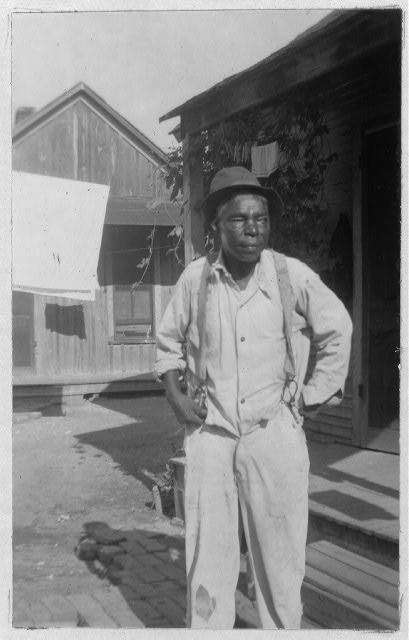
JOHN JAMES, 78, was born a slave to John Chapman, on a large plantation in East Baton Rouge Parish, Louisiana. John took the name of his father, who was owned by John James. John and his mother stayed with Mr. Chapman for six years after they were freed, then John went to Missouri, where he worked for the M. K. & T. Railroad for twenty years. He then came to Texas, and now lives at 315 S. Jennings Ave., in Fort Worth.
"I doesn't have so much mind for slavery days, 'cause I's too young then, but I 'members when surrender come and some befo' dat. I 'members my mammy lef' me in de nursery with all de other cullud babies when she go work in de field. De old nurse, Jane, tooks care of us.
"Dat were de big place what Massa John have and dere 'bout fifty cullud families on de place, so it am more'n a hunerd slaves what he own. I's runnin' round, like kids am allus doin', first one place, den t'other, watchin' everything. De big bell ring in de mornin' and you'd see all de cullud folks comin' from dey cabins, gwineter de kitchen to breakfast. Dat allus befo' daybreak, and dey have to eat by de light of de pine torch. It am de pineknot torch. De meals am all cooked dere and dey eat at long tables. De young'uns from six to ten year eats at de second table and little'r den dat, in de nursery.
"I sho' 'members 'bout dat nursery feedin'. I never forgits how dat cornmeal mush and milk am served in de big pans. Dey gives we uns de wooden spoon and we'uns crowds round de pans like little pigs. I can see it now. Us push and shove and de nurse walk here and dere, tryin' to make us eat like humans. She have to cuff one of us once in a while. If she don't, dem kids be in de pans with both feet. When dey done eatin', dey faces am all smear with mush and milk.
"Massa allus feed plenty rations, only after war starts de old folks say dey am short of dis and dat, 'cause dem sojers done took it for de army.
"After breakfast I'd see a crew go here and a crew go dere. Some of 'em spin and weave and make clothes, and some tan de leather or do de blacksmith work, and mos' of 'em go out in de field to work. Dey works till dark and den come home and work round de quarters.
"Dem quarters was 'bout ten by fifteen feet, each one, with a hole for de window dat am not dere and de floor am de ground, and de straw bunks for to sleep on. In us cabin am mammy and us three chillen and our aunt. My pappy done die befo' I 'member him. Some kind stomach mis'ry kilt him.
"One day Massa Chapman call all us to de front gallery. Us didn't know what gwine to happen, 'cause it not ord'nary to git called from de work. Him ring de bell and dat am sho' 'nough de liberty bell, 'cause him read from de long paper and say, 'You is slaves no more. You is free, jus' like I is, and have to 'pend on yourselves for de livin'. All what wants to stay I'll pay money to work, and a share of de crop, iffen you don't want money.' Mostest of dem stays, and some what goes gits into troublement, 'cause den dere's trouble 'twixt de white folks and de cullud folks. Some de niggers thinks they am bigger dan de white folks, 'cause dey free, and de Klu Klux, what us call white caps, puts dem in de place dey 'longs.
"I gits chased by dem white caps once, jus' befo' us leave massa. Dat am when I's 'bout thirteen year old. I's 'bout a mile off de place without de pass and it am de rule them days, all cullud folks must have de pass to show where dey 'longs and where dey gwine. I has no business to be off de place without de pass. 'Twas a gal.. Sho', day am it. Us walks down de road 'bout a mile and am settin' 'hind some bushes, off de plantation. Us see dem white caps comin' down de road on hossback and us ain't much scart, 'cause us think dey can't see us 'hind dem bushes. But dat leader say, 'Whoa,' and dey could look down on us, 'cause dey on hossback. Well, gosh for 'mighty! Dere us am and can't move den us so scart. One dem white caps says, 'What you doin', nigger?' 'Jus' settin' here,' I telt him. 'Yous better start runnin', 'cause us gwine try cotch you,' dey says.
"Us two niggers am down dat road befo' dem words am outten he mouth. Dey lets de hosses canter 'hind we'uns and us try to run faster. Fin'ly us gits home and dat de last time I goes off without de pass.
"Mammy moves to Baton Rouge soon after dat and works as de housemaid. Us stay dere two year and I gits some little jobs and den I goes to work for de railroad in Sedalia, up in Missouri, and dere I works as section hand for de Katy railroad for twenty year. Den I gits through and comes to Texas.
"I works at anything till eight year ago and den I's no count for work so I's livin' on de pension, what am $15.00 de month.
"I's never married. I jus' couldn't make de hitch. Dem what I wants, don't want me. Dem what wants me, I don't want, so dere am never no agreement.
"No, I's never voted, 'cause I done heared 'bout de trouble dey has over in Baton Rouge 'bout niggers votin'. I jus' don't like trouble, and for de few years what am left, I's gwine keep de record of stayin' 'way from it.
420190
THOMAS JOHNS, 508 Knopp St., Cleburne, Texas, was born April 18, 1847, in Chambers Co., Alabama. He belonged to Col. Robert Johns, who had come to Alabama from Virginia. After Johns was freed he stayed with his old owner's family until 1874, when he moved to Texas.
"My father's name was George and my mother's name was Nellie. My father was born in Africa. Him and two of his brothers and one sister was stole and brought to Savannah, Georgia, and sold. Dey was de chillen of a chief of de Kiochi tribe. De way dey was stole, dey was asked to a dance on a ship which some white man had, and my aunt said it was early in de mornin' when dey foun' dey was away from de land, and all dey could see was de water all 'round. She said they was members of de file-tooth tribe of niggers. My father's teeth was so dat only de front ones met together when he closed his mouth. De back ones didn' set together. W'en his front teeth was together, de back ones was apart, sorta like a V on its side.
"My mother was born a slave in Virginia. She married there and had a little girl, and they was sold away from the husband and brought to Alabama. She said her mother was part Indian and part nigger. Her father was part white and part nigger, but he look about as white as a white man.
"My brother's names was John, Jake and Dave. My sister's names was Ann, Katie, Judie and Easter.
"I belonged to Col. Robert Johns. He owned 30 or 35 slaves. We was well treated and had the same food the white folks did, and didn' none of us go hongry. Col. Johns didn' have his niggers whipped, neither.
"Marster's place had 500 acres in it. We raised cotton, corn and rice, vegetables and every sort of fruit that would grow there, a lot of it growin' wild. We et mostly hog meat, but we had some beef and mutton, too. When we'd kill a beef, we'd send some to all the neighbors.
"We done a good day's work, but didn' have to work after night 'less it was necessary. We was allowed to stop at 12 o'clock and have time for rest 'fore goin' back to work. Other slave owners roun' our place wasn't as good to dere slaves, would work 'em hard and half starve 'em. And some marsters or overseers would whip dere niggers pretty hard, sometimes whip 'em to death. Marster Johns didn' have no overseer. He seed to the work and my father was foreman. For awhile after old Marster died, in 1862 or 1863, I forget which now, we had a overseer, John Sewell. He was mean. He whipped the chillen and my mother told Miss Lucy, old marster's oldest girl.
"We was allus well treated by old marster. We was called, 'John's free niggers,' not dat we was free, but 'cause we was well treated. Jesse Todd, his place joined ours, had 500 slaves, and he treated 'em mighty bad. He whipped some of 'em to death. A man sold him two big niggers which was brothers and they was so near white you couldn' hardly tell 'em from a white man. Some people thought the man what sold 'em was their daddy. The two niggers worked good and dey hadn' never been whipped and dey wouldn' stand for bein' whipped. One mornin' Todd come up to 'em and told de oldest to take his shirt off. He say, 'Marster, what you wan' me to take my shirt off for?' Todd say, 'I told you to take your shirt off.' De nigger say, 'Marster, I ain' never took my shirt off for no man.' Todd run in de house and got his gun and come back and shot de nigger dead. His brother fell down by him where he lay on de groun'. Todd run back to load his gun again, it bein' a single shot. Todd's wife and son grabbed him and dey had all dey coul' do to keep him from comin' out and killin' de other nigger.
"Marse Johns had 12 chillen. De house dey lived in was Colonyal style and had 12 rooms. I was bo'n in dat house.
"De slaves had log cabins. We wore some cotton clothes in de summer but in de winter we wore wool clothes. We allus had shoes. A shoemaker would come 'round once a year and stay maybe 30 days, makin' shoes for everybody on de place; den in about 6 months he would come back and half-sole and make other repairs to de shoes. We made all our clothes on de place. We wove light wool cloth for summer and heavy for winter.
"I could take raw cotton and card and spin it on a spinnin' wheel into thread, fine enough to be sewed with a needle. We woun' de thread on a broche, make like and 'bout de size of a ice pick. De thread was den woun' on a reel 'bout de size of a forewheel of a wagon, and de reel would turn 48 times and den 'cluck'. Dat was for dem to be able to tell we was workin'.
"Dere was plenty wild game, possums, rabbits, turkey and so on. Dere was fish, too, in de creek. I was de leader of de bunch. We would ketch little fish in de creek. We'd cook a lot of fish and den we'd put a rag rug in de yard under a big mulberry tree and pour de fish out on dat and den eat 'em.
"Old marster never beat his slaves and he didn' sell 'em. But some of de owners did. If a owner had a big woman slave and she had a little man for her husban' and de owner had a big man slave, dey would make de little husban' leave, and make de woman let de big man be her husban', so's dere be big chillen, which dey could sell well. If de man and woman refused, dey'd get whipped.
"Course whippin' made a slave hard to sell, maybe couldn' be sold, 'cause when a man went to buy a slave he would make him strip naked and look him over for whip marks and other blemish, jus' like dey would a horse. But even if it done damage to de sale to whip him, dey done it, 'cause dey figgered, kill a nigger, breed another—kill a mule, buy another.
"I'll never forget de rice patch. It shore got me some whippin's, 'cause my daddy tell me to watch de birds 'way from dat rice, and sometimes dey'd get to it. It jus' seem like de blackbirds jus' set 'round and watched for dat rice to grow up where dey could get it. We would cut a block off a pine tree and build a fire on it and burn it out. Den we would cut down into it and scrape out all de char, and den put de rice in dere and beat and poun' it with a pestle till we had all de grain beat out de heads. Den we'd pour de rice out on a cloth and de chaff and trash would blow away.
"Our marster he drilled men for de army. De drill groun' was 'bout a mile from our place. He was a dead shot with a rifle and had a rifle with an extry long barrel.
"De Yankees told us niggers when dey freed us after de war dat dey would give each one of us 40 acres of land and a mule. De nearest I'se ever come to dat is de pension of 'leven dollars I gets now. But I'se jus' as thankful for dat as I can be. In fac', I don't see how I could be any more thankful it 'twas a hun'erd and 'leven dollars.
"A man told me a nigger woman told his wife she would ruther be slave than free. Well, I think, but I might be wrong, anybody which says that is tellin a lie. Dere is sumpin' 'bout bein' free and dat makes up for all de hardships. I'se been both slave and free and I knows. Course, while I was slave I didn' have no 'sponsibility, didn' have to worry 'bout where sumpin' to eat and wear and a place to sleep was comin' from, but dat don't make up for bein' free.
420191
AUNTIE THOMAS JOHNS, 508 Knopp St., Cleburne, Texas, was born in Burleson Co., Texas, in 1864. She was only two when her mother was freed, so knows nothing of slavery except stories her mother told her, or that she heard her husband, Thomas Johns, tell.
"I was two years old when my mama was set free. Her owner was Major Odom. He was good to his niggers, my mama said. She tol' me 'bout slavery times. She said other white folks roun' there called Major Odom's niggers, 'Odom's damn free niggers,' 'cause he was so easy on 'em.
"He was never married, but he had a nigger woman, Aunt Phyllis she was called, that he had some children by. She was half white. I remember her and him and five of their sons. The ones I knowed was nearly all white, but Aunt Phyllis had one boy that was nigger black. His daddy was a nigger man. When she was drunk or mad she'd say she thought more of her black chile than all the others. Major Odom treated their children jus' like he treated the other niggers. He never whipped none of his niggers. When his and Aunt Phyllis'es sons was grown they went to live in the quarters, which was what the place the niggers lived was called.
"One of Major Odom's niggers was whipped by a man named Steve Owens. He got to goin' to see a nigger woman Owens owned, and one night they beat him up bad. Major Odom put on his gun for Owens, and they carried guns for each other till they died, but they never did have a shootin'.
"Colonel Sims had a farm joinin' Major Odom's farm, and his niggers was treated mean. He had a overseer, J.B. Mullinax, I 'member him, and he was big and tough. He whipped a nigger man to death. He would come out of a mornin' and give a long, keen yell, and say, 'I'm J.B. Mullinax, just back from a week in Hell, where I got two new eyes, one named Snap and Jack, and t'other Take Hold. I'm goin' to whip two or three niggers to death today.' He lived a long time, but long 'fore he died his eyes turned backward in his head. I seen 'em thataway. He wouldn' give his niggers much to eat and he'd make 'em work all day, and just give 'em boiled peas with just water and no salt and cornbread. They'd eat their lunch right out in the hot sun and then go right back to work. Mama said she could hear them niggers bein' whipped at night and yellin', 'Pray, marster, pray,' beggin' him not to beat 'em.
"Other niggers would run away and come to Major Odom's place and ask his niggers for sumpin' to eat. My mama would get word to bring 'em food and she'd start out to where they was hidin' and she'd hear the hounds, and the runaway niggers would have to go on without gettin' nothin' to eat.
"My husban's tol' me about slavery times in Alabama. He said they would make the niggers work hard all day pickin' cotton and then take it to the gin and gin away into the night, maybe all night. They'd give a nigger on Sunday a peck of meal and three pounds of meat and no salt nor nothin' else, and if you et that up 'fore the week was out, you jus' done without anything to eat till the end of the week.
"My husban' said a family named Gullendin was mighty hard on their niggers. He said ole Missus Gullendin, she'd take a needle and stick it through one of the nigger women's lower lips and pin it to the bosom of her dress, and the woman would go 'round all day with her head drew down thataway and slobberin'. There was knots on the nigger's lip where the needle had been stuck in it.
420911
Gus Johnson
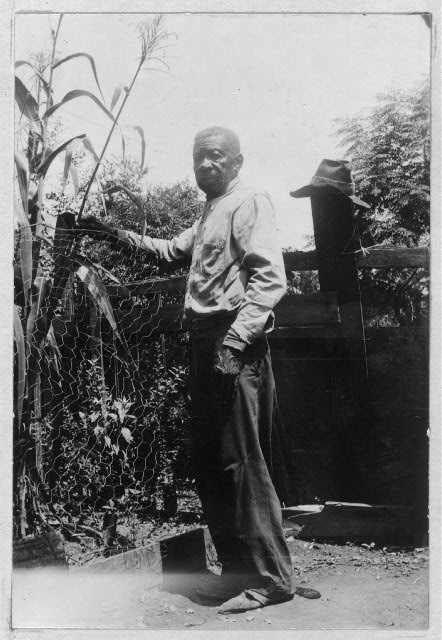
GUS JOHNSON, 90 years or more, was born a slave of Mrs. Betty Glover, in Marengo Co., Alabama. Most of his memories are of his later boyhood in Sunnyside, Texas. He lives in an unkempt, little lean-to house, in the north end of Beaumont, Texas. There is no furniture but a broken-down bed and an equally dilapidated trunk and stove. Gus spends most of his time in the yard, working in his vegetable garden.
"Dey brung thirty-six of us here in a box car from Alabama. Yes, suh, dat's where I come from—Marengo County, not so far from 'Mopolis. Us belong to old missy Betty Glover and my daddy name August Glover and my mammy Lucinda. Old missy, she sho' treat us good and I never git whip for anything 'cept lyin'. Old missy, she do de whippin'.
"Old missy she sho' a good woman and all her white folks, dey used to go to church at White Chapel at 'leven in de mornin'. Us cullud folks goes in de evenin'. Us never do no work on Sunday, and on Saturday after twelve o'clock us can go fishin' or huntin'.
"Dey give de rations on Saturday and dat's 'bout five pound salt bacon and a peck of meal and some sorghum syrup. Dey make dat syrup on de plantation. Dey's ten or twelve big clay kettles in a row, sot in de furnace.
"We have lots to eat, and if de rations run short we goes huntin' or fishin'. Some de old men kills rattlesnake and cook 'em like fish and say dey fish. I eat dat many a time and never knowed it. 'Twas good, too.
"Dey used to have a big house where dey kep' de chillen, 'cause de wolves and panthers was bad. Some de mammies what suckle de chillen takes care of all de chillen durin' de daytime and at night dey own mammies come in from de field and take dem. Sometime old missy she help nuss and all de li'l niggers well care for. When dey gits sick dey makes de med'cine of herbs and well 'em dat way.
"When us left Alabama us come through Meridian to Houston and den to Hockley and den to Sunnyside, 'bout 18 mile west of Houston. Dat a country with lots of woods and us sot in to clean up de ground and clean up 150 acres to farm on. Dere 'bout forty-seven hands and more 'cumulates. Dey go back to Meridian for more and brung 'em in a ox cart.
"My brother, Bonzane Johnson, was one dey brung on dat trip. I had 'nother brother, Keen, what die when he 102 year old. Us was all long-life people, 'cause I have a gran' uncle what die when he 136 year old. He and my grandma and grandpa come from South Carolina and dey was all Africa people. I heered dem tell how dey brung from Africa in de ship. My daddy he die at 99 and 'nother brother at 104.
"Us see lots of sojers when us come through from Meridian and dey de cavalry. Dey come ridin' up with high hats like beavers on dey head and us 'fraid of 'em, 'cause dey told us dey gwine take us to Cuba and sell us dere.
"When us first git to Texas it was cold—not sort a cold, but I mean cold. I shovel de snow many a day. Dey have de big, common house and de white folks live upstairs and de niggers sleep on de first floor. Dat to 'tect de white folks at night, but us have our own houses for to live in in de daytime, builded out of logs and daubed with mud and nail rive out boards over dat mud. Dey make de chimney out of sticks and mud, too but us have no windows, and in summer us kind of live out in de bresh arbor, what was cool.
"Us have all kind of crops and more'n 100 acres in fruit, 'cause dey brung all kind trees and seeds from Alabama. Dey was undergroun' springs and de water was sho' good to drink, 'cause in Mobile de water wasn't fitten to drink. It taste like it have de lump of salt melted in it. Us keep de butter and milk in de spring house in dem days, 'cause us ain't have no ice in dem time.
"Old massa, he name Adam and he brother name John, and dey was way up yonder tall people. Old massa die soon and us have missy to say what we do. All her overseers have to be good. She punish de slaves iffen day bad, but not whip 'em. She have de jail builded undergroun' like de stormcave and it have a drop door with de weight on it, so dey couldn't git up from de bottom. It sho' was dark in dat place.
"In slavery time us better be in by eight o'clock, better be in dat house, better stick to dat rule. I 'member after freedom, missy have de big celebration on Juneteenth every year. [Handwritten Note: '?']
"When war come to Texas every plantation was conscrip' for de war and my daddy was 'pinted to selec' de able body men offen us place for to be sojers. My brother Keen was one of dem. He come back all right, though.
"When freedom come missy give all de men niggers $500 each, but dat 'federate money and have pictures of hosses on it. Dat de onlies' money missy have den. Old missy Betty, she die in Sunnyside, Texas, when she 115 year old.
"When I's 18 year old I marry a gal by name Lucy Johnson. She dead now long ago. I got five livin' chillen somewhere, but I done lost track of 'em. One of dem boys serve in de last war.
"I used to hear somethin' 'bout rabbit foot. De old folks used to say dat iffen de rabbit have time to stop and lick he foot de dog can't track him no more and I allus wears de rabbit foot for good luck. I don't know if it brung me dat luck, though.
"I been here 36 year and I work mos' de time as house mover, what I work at 26 year. I'll be honnes' with you, I don't know how old I is, but it mus' be plenty, 'cause I 'members lots 'bout de war. I didn't see no fightin' but I knowed what was goin' on den.
"I belong to de U. B. F. Lodge, what I pays into in case I gits sick. But I never can git sick and I ain't have no ailment 'cept my feets jus' swoll up, and I can't git nothin' for that.
420139
HARRY JOHNSON, 86, whose real name was Jim, was born in Missouri, where he was stolen by Harry Fugot, when about twelve years old, and taken to Arkansas. He was given the name of Harry and remained with Fugot until near the close of the Civil War. Fugot then sold him to Graham for 1,200 acres and he was brought to Coryell Co., Texas, and later to Caldwell Co. He worked in Texas two years before finding out the slaves were free. He later went to McMullen Co. to work cattle, but eventually spent most of his time rearing ten white children. He now lives in Pearsall, where he married at the age of 59.
"I come from Missouri to Arkansas and then to Texas, and I was owned by Massa Louis Barker and my name was Jim Johnson. But a white man name Harry Fugot stoled me and run me out to Arkansas and changed my name to Harry. He stoled me from Mississippi County in de southern part of Missouri, down close to de Arkansas line, and I was 'bout 12 year old then.
"My mama's name was Judie and her husban' name Miller. When I wasn't big 'nough to pack a chip, old Massa Louis Barker wouldn't take $400 for me, 'cause he say he wants to make a overseer out of me. My daddy went off durin' de war. He carried off by sojers and he never did come back.
"Dey 'bout 30, 40 acres in Massa Barker's plantation in Missouri. He used to hire me out from place to place and de men what hires me puts me to doin' what he wanted. I was stole from my mammy when I's 'bout 10 or 12 and she never did know what become of me.
"O, my stars! I seed hun'erds and hun'erds of sojers 'fore I stole from Missouri. Dey what us call Yankees. I seed 'em strung out a half-mile long, goin' battle two and three deep. Dey never did destroy any homes. Dey took up a little stuff. I had five sacks of meal one day and was goin' to de mill and de sojers come along and taken me, meal and all. De maddes' woman I ever saw was dat day. De sojers come and druv off her cows. She told 'em not to, dat her husban' fightin' and she have to make de livin' off dem cows, but dey druv de cows to camp and kilt 'bout three of 'em. Dey done dat, I knows, 'cause I's with 'em.
"But down in Arkansas I seed de southern sojers and I's plowin' for a old lady call Williams, and some sojers come and goes in de house. I heered say dey was Green's men, and dey taken everything dat old woman have what dey wants, and dey robs lots of houses.
"It don't look reas'able to say it, but it's a fac'—durin' slavery iffen you lived one place and your mammy lived 'cross de street you couldn't go to see her without a pass. De paddlerollers would whip you if you did. Dere was one woman owns some slaves and one of 'em asks her for a pass and she give him de piece of paper sposed to be de pass, but she writes on it:
"'His shirt am rough and his back am tough, Do, pray, Mr. Paddleroller, give 'im 'nough.'
"De paddlerollers beat him nearly to death, 'cause that's what's wrote on de paper he give 'em.
"I 'member a whippin' one slave got. It were 100 lashes. Dey's a big overseer right here on de San Marcos river, Clem Polk, him and he massa kilt 16 niggers in one day. Dat massa couldn't keep a overseer, 'cause de niggers wouldn't let 'em whip 'em, and dis Clem, he say, 'I'll stay dere,' and he finds he couldn't whip dem niggers either, so he jus' kilt 'em. One nigger nearly got him and would have kilt him. Dat nigger raise de ax to come down on Polk's head and de massa stopped him jus' in time, and den Polk shoots dat nigger in de breast with a shotgun.
"Dey had court days and when court met, dey passed a bill what say, 'Keep de niggers at home.' Some of 'em could go to church and some of 'em couldn't. Dey'd let de cullud people be baptized, but dey didn't many want it, dey didn't understan' it 'nough.
"After de war ends, Massa Fugot sells me to Massa Graham for 1,200 acres of land, and I lives in Caldwell County. He was purty good to he slaves and we live in a li'l old frame house, facin' west. I sleeps in de same house as massa and missus, to guard 'em. One night some men came and wake me up and tells me to put my clothes on. Missus was in de bed and she 'gin cryin' and tell 'em not to take me, but dey taken me anyway. We called 'em Guerrillas and dey thieves. Dey white men and one of 'em I had knowed a long time. I's with dem thives and hears 'em talk 'bout killin' Yankees. Dey kep' me in de south part of Missouri a long time. I didn't do anything but sit 'round de house with dem.
"When I's sold to Massa Graham I didn't have to come to Texas, 'cause I's free, but I didn't know dat, and I's out here two years 'fore I knowed I's free. Down in Caldwell County is where de bondage was lifted offen me and I found out I's free. I jus' stays on and works and my massa give me he promise I's git a hoss and saddle and $100 in money when I's 21 year old, but he didn't do it. He give me a li'l pony and a saddle what I sold for $3.00 and 'bout eight or nine dollars in money. He had me blindfolded and I thought I gwine git a good hoss and saddle and more money.
"I looks back sometimes and thinks times was better for eatin' in slavery dan what dey is now. My mammy was a reg'lar cook and she made me peach cobblers and apple dumplin's. In dem days, we'd take cornmeal and mix it with water and call 'em corn dodgers and dey awful nice with plenty butter. We had lots of hawg meat and when dey kilt a beef a man told all de neighbors to come git some of de meat.
"Right after de war, times is pretty hard and I's taken beans and parched 'em and got 'em right brown, and meal bran to make coffee out of. Times was purty hard, but I allus could find somethin' to work at in dem days.
"I lived all my life 'mong white folks and jus' worked in first one place and then 'nother. I raised ten white chillen, nine of de Lowe chillen, and dey'd mind me quicker dan dey own pappy and mammy. Dat in McMullin County.
"De day I's married I's 59 year old and my wife is 'bout 60 year old now. De last 20 years I's jus' piddled 'round and done no reg'lar work. I married right here in de church house. I nussed my wife when she a baby and used to court her mammy when she's a girl. We's been real happy together.
420928
James D. Johnson
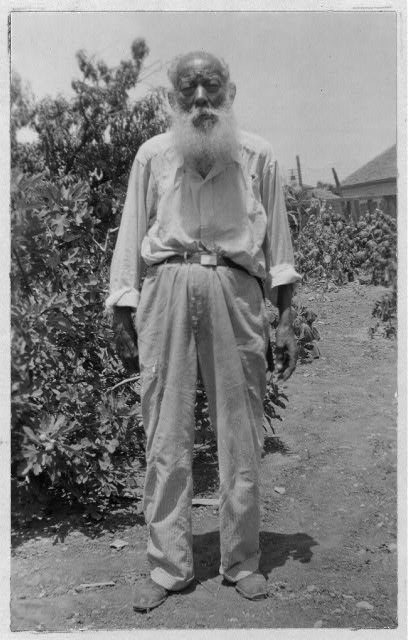
JAMES D. JOHNSON, born Oct. 1st, 1860, at Lexington, Mississippi, was a slave of Judge Drennon. He now lives with his daughter at 4527 Baltimore St., Dallas, Texas. His memory is poor and his conversation is vague and wandering. His daughter says, "He ain't at himself these days." James attended Tuckaloo University, near Jackson, Mississippi, and uses very little dialect.
"My first clear recollection is about a day when I was five years old. I was playing in the sand by the side of the house in Lexington with some other children and some Yankee soldiers came by. They came on horseback and they drew rein by the side of the house and I ran under the house and hid. My mother called to me to come out and told me they were Federal soldiers and I could tell it by their blue uniforms. One of the soldiers reached into his haversack and pulled out a uniform and gave it to me. 'Have your mammy make a suit out of it,' he said. Another soldier gave me a uniform and my mother was a seamstress in the home of the Drennons and she made me two suits out of those uniforms.
"Judge Drennon had married the daughter of Colonel Terry and he had given my parents to his daughter when she married the judge. My father and mother both came from Virginia. Colonel Terry had bought them at separate times from a slave trader who brought them from Virginia to Mississippi. They had a likeness for each other when they learned both came from Virginia. Both of them had white fathers, were light complected and had been brought up in the big house.
"When they told the Colonel they wished to marry he only said, 'Julia, do you take William,' and 'William, do you take Julia?' Then they were man and wife. He gave them the name of Johnson, which was the family name of my father's mother and the name of his father.
"When my parents lived with Judge Drennon they had a house in the yard quarters. The Drennon home was the most beautiful house I ever have seen. It was a big, brick mansion with tall, white pillars reaching up to the second story. The yards and grounds were so beautiful the white folks used to come from long ways off to see them.
"After the surrendering we lived with the Drennons four or five years. They paid my parents for their work and I had an easy time of it. I was youngest of eight children and there was ten years or more between me and the next older child. My mother wanted to make something special out of me.
"I went to three different schools down in the woods before I was nine. White people would come and put up schools for the colored children but the white people in Mississippi said they were not good people and would criticize them. Sometimes the schools would get busted up. We studied out of the Blue Back speller and an arithmetic and a dictionary. I could spell and give the meaning of most nigh every word in that dictionary.
"When I was thirteen they held an examination at Lexington for colored children to see who'd get a scholarship at Tuckaloo University, eight miles from Jackson. I was greatly surprised when I won from my county and I went but didn't finish there. Then I went a little while to a small university near Lexington, called Allcorn University. I loved to go to school and was considered bookish. But my people died and I had to earn a living for myself and I couldn't find any way to use so much what I learned out of books, as far as making money was concerned. So I came to Texas, doing any kind of labor work I could find. Finally I married and went to farming 35 or 40 years and raised five children.
"I'm the only one left now of my brothers and sisters and it won't be long until I'm gone, too, but I don't mind that. We lived a long time. Some of it was hard and some of it was good. I tried all the time to live according to my lights and that is as far as I know how to do. I don't feel resentful of anything, anymore.
"When there is sun, I just sit in the sun."
420132
MARY JOHNSON does not know her age but is evidently very old. Paralytic strokes have affected mind and body. Her speech, though impaired, is a swift flow of words, often profane. A bitter attitude toward everything is apparent. Mary is homeless and owes the necessities of life to the kindness of a middle aged Negress who takes care of several old women in her home in Pear Orchard, in Beaumont, Texas.
"Now, wait, white folks, I got to scratch my head so's I kin 'member. I's been paralyze so I can't git my tongue to speak good. It git all twist up.
"I don't know how old I is. My daddy he have my age in the big Bible but he done move 'round so much it git lost long ago. He used to 'long to them Guinea men. Them was real small men and they sho' walk fast. He wasn't so tall as my mommer and he name John Allen and he a pore man, all bone. He sold out from the old country, that Mississippi. My mama name Sarah and she come from Choctaw country, 'round in Georgia. I have grandma Rebecca, a reg'lar old Indian woman and she have two long black braid longer'n her waist and she allus wore a big bonnet with splits in it. You know de Indian people totes they chillens on they back and my mommer have me wrop up in a blanket and strop on her back.
"I's the firstborn chile and my mommer have two gal chillen, me and Hannah, and she have seven boy. Where I's born was old wild country and old Virginny run down thataway. Everything was plenty good to eat and I seed strawberries what would push you to git 'em in your mouth.
"Clost to where I's born they's a place where they brung the Africy people to tame 'em and they have big pens where they puts 'em after they takes 'em outta they gun ships. They sho' was wild and they have hair all over jus' like a dog and big hammer rings in they noses. They didn't wore no clothes and sometime they git 'way and run to them swamps in Floridy and git all wild and hairy 'gain. They brung preachers to help tame 'em, but didn't 'low no preacher in them pens by hisself, 'cause they say them preacher won't come back, 'cause some them wild Africy people done kill 'em and eat 'em. They done worship them snake bit as a rake handle, 'cause they ain't knowed no better. When they gits 'em all tame they sells 'em for field hands, but they allus wild and iffen anybody come they duck and hide down.
"My old missy she name Florence Walker and she reg'lar tough. I helps nuss her chile, Mary, and Mary make her mommer be good to me. Us wore li'l brass toe shoes and I call mine gold toe shoes. Them shoes hard 'nough to knock a mule out. After young missy and me git growed us run off to dances and old missy beat us behind good. She say us jes' chillen yet and keep us in short, short dress and we pull out the stitchin' in them hems so us dresses drags and she sho' wore us out for that.
"Did us love to dance? Jesus help me! Them country niggers swing me so hard us land in the corner with a wham.
"My brudder Robert he a pow'ful big boy and he wasn't 'lowed to have no pants till he 21 year old, but that didn't 'scourage him from courtin' the gals. I try tease him 'bout go see the gals with dat split shirt. That not all, that boy nuss he mommer breast till he 21 year old. He have to have that nussin' real reg'lar. But one time he pesterin' mommer and she tryin' milk the cow and the cow git nervous and kick over the bucket and mommer fall off the stool and she so mad she wean him right there and then.
"Old massa he never clean hisself up or dress up. He look like a vagrant thing and he and missy mean, too. My pore daddy he back allus done cut up from the whip and bit by the dogs. Sometime when a woman big they make a hollow out place for her stomach and make her lay down 'cross that hole and whip her behind. They sho' tear that thing up.
"Us chillen git to play and us sing
"'Old possum in the holler log Sing high de loo, Fatter than a old green frog, Sing high de loo, Whar possum?
"That church they have a 'markable thing. They a deep tranch what cut all 'round the bottom and clay steps what lead all the way to the top the mountain and when the niggers git to shoutin' that church jes' a-rollin' and rockin'. One the songs I 'member was
"'Shoo the devil out the corner, Shoo, members, shoo, Shoo the devil out the corner, Shoo, members, shoo.'
"Us li'l gals allus wore cottanade dresses ev'ry day. Them what us call nine-stitch dresses. Mammy make fasten-back dresses and fasten-back drawers and knit sweaters and socks for the mens. She git sheep wool what near ruint by cockle burrs and make us chillen set by the hour and pick out them burrs.
"Us houses like chicken coops but us sho' happy in that li'l cabin house. Nothin' to worry 'bout. Mammy cook them grits, that yaller hominy. She make 'ash cat', cornbread wrop in cabbage leaf and put ashes 'round it.
"The old plantation 'bout on the line 'tween Virginny and Mis'sippi and us live near the Madstone. That a big stone, all smooth and when a dog bite you you go run 'round the Madstone and wash yourself in the hot springs and the bites don't hurt you.
"I seed lots of sojers and my daddy fit with the Yankees and they have a big fight close there and have a while lots of dead bodies layin' 'round like so many logs and they jus' stack 'em up and sot fire to 'em. You seed 'em burnin' night and day. They lay down and shoot and then jump up and stick 'em and sometimes they drunk the blood outten where they stick 'em, 'cause they can't git no water.
"After freedom us go in ox team to New Orleans and daddy he raise cotton and sell it and mommer sell eggs. My daddy a workin' man and he help build the big custom house in New Orleans and help pull the rope to pull the boats up the canal from the river. That Canal Street now. He put he name on top that custom house and it there to this day. You can go there and see it. He help build the hosp'tal, too.
"One time us live close to the bay and that gran' and us take a stove and cotch catfish and perch and cook 'em on the bank and us go meet oyster boats and daddy git 'em by the tub.